Category Archives: Melbourne history

Conversing about Judge Willis

Well, I wasn’t struck dumb with nerves, so now I can divulge that I was on the Conversation Hour this morning, with Jon Faine and Damien Carrick (from RN’s Law Report)  along with Richard Broome and Simon Smith.

Should you wish to hear it, you can listen at

http://www.abc.net.au/local/audio/2014/09/19/4091057.htm

My part starts at 12.22.  The first section features Damien Carrick discussing assisted suicide in Belgium, so if you might find this topic distressing, you may want to skip ahead.


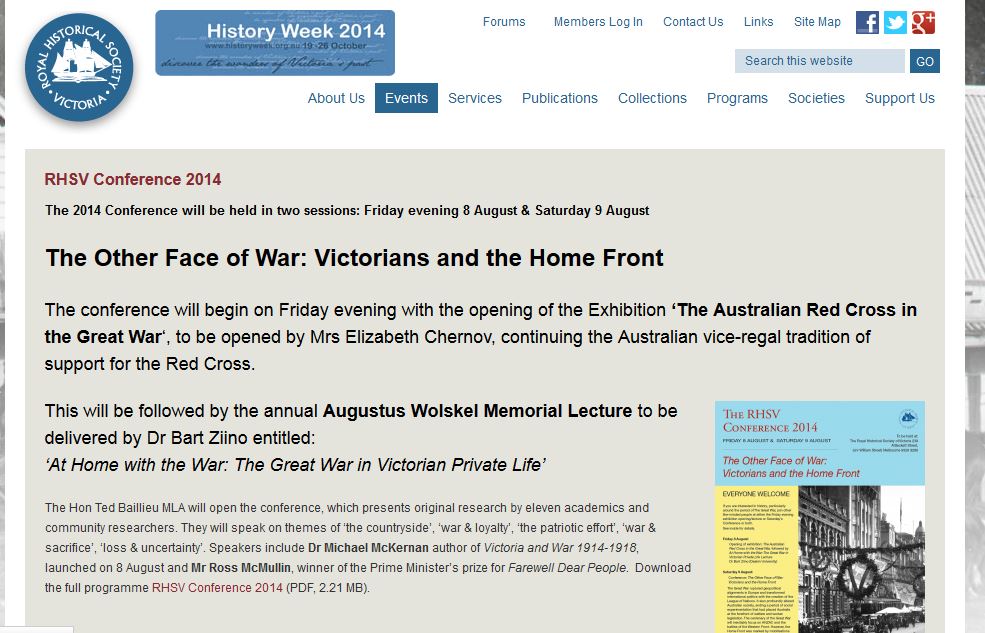
RHSV Conference: The Other Face of War: Victorians and the Home Front

[A personal reflection]

A good  conference has a scope broad enough to bring multiple perspectives to the topic, but it is also defined closely enough for the threads and themes that emerge out of individual papers to weave something larger.  The Royal Historical Society of Victoria (RHSV) conference on Friday 8th August and Saturday 9th August 2014 succeeded on both counts. Continue reading

The Other Face of War: Victorians and the Home Front, RHSV Conference 2014

I’m going to this on 8th and 9th August.  More information (and downloadable program) at http://www.historyvictoria.org.au/rhsv-conference-2014

RHSVconference


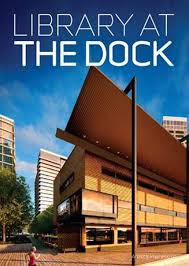
Enterprize-ing at the Dockland Library

docklands

A brand-new library opened down at Docklands at the end of May.  Not before time, say I: the benighted place desperately needs some sort of civic and communal infrastructure to bring people together as distinct from commercial businesses and high-rise apartments.

I notice that on the fourth Thursday of the month, the Docklands History Group hosts a talk between 6.00-7.00 p.m.   Last month they had the always-fascinating Robyn Annear, and this coming Thursday 24th July they are featuring the Enterprize.  The original Enterprize was John Fawkner’s vessel that warped upstream along the Yarra to finally tie up at William Street on 30th August 1835.

Michael Womack, Jess Murphy and Helen Ebsworthy will be talking about the Enterprize (in both its original and replica forms, no doubt), John Fawkner and the early settlement of Melbourne.

It’s free, but you can register here.  And how do I know about such things? Because I met a lovely woman on the train and she told me about it!


Moomba: the dodgiest festival of them all

Labour Day is celebrated on different days in different states.  Today, it’s celebrated in Victoria, and also in Tasmania under the name of its earlier incarnation as Eight Hours Day.

There are many (including me) who lament the loss of the radical and working-class focus on this holiday, but I was surprised to learn today that the original Eight Hours Day was not celebrated on this weekend in any event.  The stonemasons of Melbourne achieved the eight hour day on April 21st 1856 and had their first celebration on 12 (or maybe 15th?) of May that year.  Subsequently it was celebrated on 21st April each year, and declared a public holiday in 1879.  However, over time May Day assumed more importance as an international labour celebration, and the increasing significance of Anzac Day on 25th April sidelined the Eight Hour Day celebration held four days earlier .  Numbers attending and viewing the Eight Hour Day procession declined after World War I  and the date of the public holiday was changed to March in 1927 ( I can’t find why- this excellent article here deals with Eight Hour Day between 1928-1935 but does not explain the change in date.)  The name ‘Eight Hours Day’ itself changed to ‘Labour Day’ in 1934.  The date was changed yet again in 1949 (and again, I don’t know why).

However, while it might be ‘Labour Day’ on the calendar,  for many Melburnians it’s better known as ‘Moomba weekend’.  This Moomba celebration is particularly auspicious because it is the sixtieth anniversary of this rather retro and often unloved procession.  However, as with much involving this ” invented tradition” (to use Eric Hobsbawm’s phrase), even the ’60 years’ date is dodgy, given that the first parade occurred in March 1955.

The name ‘Moomba’ is dodgy as well.  I had taken some pleasure in the story that Moomba actually means ‘up your bum’ in Koorie English.  ‘Moom’ certainly does mean ‘bum’ and is still in use in Victorian communities in that way today (e.g. ‘shift your moom’ when asking someone to move up).  Lin Onus, the son of Victorian Koorie elder Bill Onus claimed that his father had offered up the name as a joke when the idea of a commerce-backed parade (which Moomba certainly was originally) was first mooted, mischievously suggesting that the name meant ‘Let’s get together and have fun’.

However, even this rather subversive story seems to be dodgy as well. Lin Onus later tried to recant it, pointing out that his father had been instrumental in the staging of An Aboriginal Moomba: ‘Out of the Dark’ at the Princess Theatre on 23-27th June 1951 with an all-Aboriginal cast drawn from local and interstate communities.  The core dance group came from Cherbourg, where the term ‘moomba’ did have connations of show or celebration, and it is possible that Bill Onus and his wife Mary referenced this in naming the stage show and later offered it as the name for the planned Autumn festival.

The fact that there are to be seven floats today is being loudly trumpeted but as a child who grew up in the 1960s, the heyday of Moomba, that seems a particularly paltry offering.  It’s somewhat better, I suppose, than the tortured ‘community’ parades of recent years which seemed to involve a whole lot of kids either dressed up in stiff and embarrassing national costumes to mark their parents’ migrant origins, or the presence of every circus and dance school in Melbourne.  Fun if you were participating, I guess, but not really the sort of thing you’d want to line the footpath to watch.  You can read this rather celebratory history of Moomba as a downloadable PDF published under the auspices of  City of Melbourne here, or a rather more critical view of Moomba from 1985 here (try logging in through the State Library of Victoria)

As a child, I can remember going to Moomba, being lifted onto my father’s shoulders or pushed to the front of the crowd for a better view.  I can remember the smell of the brewery one year, and I’ve located some photos from 1961.

I’m mystified to know where we were standing.  I think that the domed church in the right hand corner of the Coles ‘horse’ float is Sacred Heart Catholic Church in Rathdowne Street, and certainly the terrace houses behind the parade look as if they are in Carlton.  The tall chimney perplexes me- the brewery wasn’t up there, was it?  The parade has changed its route on several occasions, especially as its popularity has declined.

We certainly loved it.  With the booming of the drums still throbbing in our ears, we’d come home from Moomba and make our own Moomba procession out in the street with billy-carts and bikes, wobbling along on paint-tin stilts and banging an old saucepan.  Seems all rather innocent and sweet now.

Anyway, happy Moomba!  Embrace the dodginess of it all and enjoy the holiday!

The Ghost of Job Warehouse

I was saddened to read some time ago that Job Warehouse was closing down.  Melburnians will know what I’m talking about: a grubby, shambolic fabric shop up the Parliament House end of Bourke Street that seems have been been there forever.

For those who have never been inside Job Warehouse, think wall to wall fabric, double the amount you were just thinking of, double it again, then arrange the bolts from floor to ceiling, from back wall to shopfront display window, with the haphazard flair of a kid playing pick-up-sticks. Think rich fabrics. Think poor fabrics. … Think the finest and the rarest. Think dead flies and the odd stray sandwich.  Think bridal, suits, opera, army. Think every type of material you’ve ever heard of then double that too… Think of a leaking masonite-patched roof.  Think colour as far as the eye can see- which in the dimly-lit clothy claustrophobia of Job Warehouse isn’t very far. [ Tony Wilson ‘No looking with the hands’ The Monthly, August 2005]

Job Warehouse (54-62 Bourke St) was spread over several shops in a double storey row that was constructed in 1848-9.  As such, it is one of a handful of pre-gold rush buildings still standing in Melbourne.  It is constructed of rendered stucco on a basalt plinth.  The western part of the building, nos. 60-62 Bourke Street, was built by a well-known butcher William Crossley as a shop, slaughter yard and residence, and the landscape artist Eugene von Guerard lived in number 56. It is registered on the Victorian Heritage Database. [Check out the pictures on the database entry]. I should feel reassured by that, but after my Banyule Homestead adventures,  I don’t.

[Click to enlarge the pictures]

I must confess that I never stepped foot inside Job Warehouse while it was open.  Two reasons: first, it was very rarely open and second, I’d heard terrifying tales about the owners.  They were two brothers, Jacob and Max Zeimer, who arrived in Melbourne in 1948 as penniless Polish refugees. All their family had perished in the Holocaust.  Their salesmanship was idiosyncratic:

“He [Mr Zeimer” took one look at me,” recalls Erin, a disgrunted shopper, “and yelled ‘Out! No browsing, just buying!” Another short-lived customer claims that in trying to access a particular material she once had to move an errant banana that had been left lying on a bolt of cloth.  She was spotted with the banana and shown the door: ‘No food in shop! You will have to leave’…..’You had to know what you wanted’ says Gaby, another regular ‘but if you were looking for individual, vintage and unusual fabrics it was the place to go.  Some of the stuff was water-damaged and rotting. Some was just beautiful’  [Tony Wilson, ‘No Looking with the Hands’ The Monthly August 2005]

There’s even a video from the Late Show where Tony Martin and Mick Molloy get kicked out and try to re-enter in typical Chaser fashion.  It starts at 3.00 minutes in and goes to 4.30.

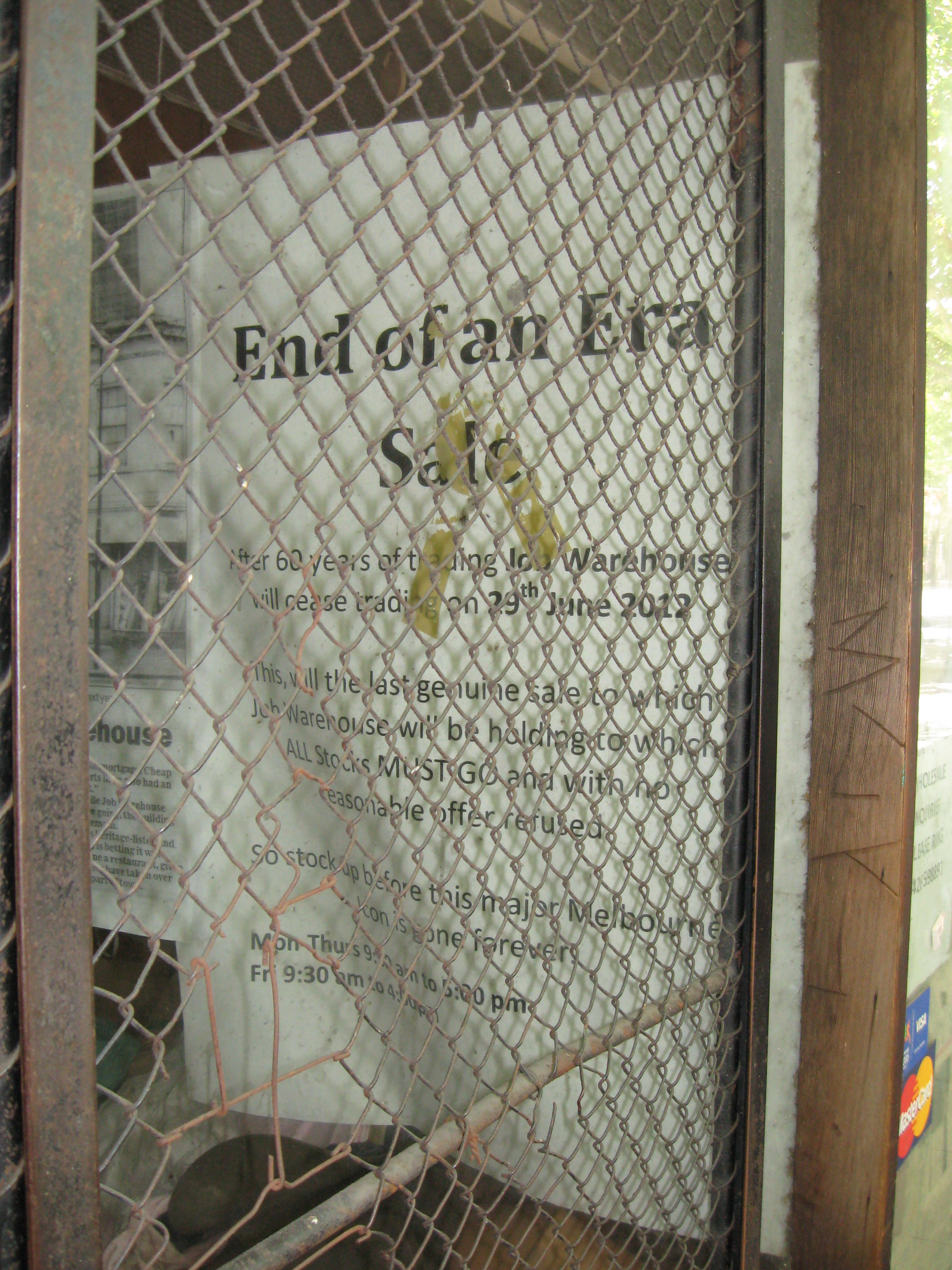
When Max died in 1988,  Jacob continued on in the business, closing the haberdashery section that Max had run as a mark of respect.  Jacob died in 2005 aged 91.  His sons decided to close the business in 2012 and lease the building, possibly for restaurants.

IMG_5043

Well, that hasn’t happened yet.  Job Warehouse is closed but not gone completely.  Walking up Bourke Street, I was surprised that it still looked much the same, and if I pressed my face up against the grimy windows (that, to be honest, were not much grimier than when the shop was in full operation), I could see that it looks much as it always did.  There are still bolts of material, great snarls of lace, yellowing papers and dust.

Just for now, I can imagine that it’s still operational.  After all, it was always shut when I saw it, and a new owner could step right in and take over where the Zeimer brothers left off- if he or she had a mind to.

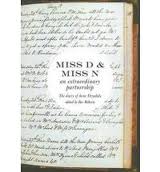
‘Miss D and Miss N’ by Bev Roberts

If I were a well-travelled person, at this point I would wave airily and announce that I always try to read a book set in a place that I am visiting.  Alas, I am not;  I can claim that I read Henry James’ The Bostonians while in Boston, and Dickens while in London…but that’s about it, I’m afraid.

So, a couple of weeks ago when we went down to Geelong (a whole 100 kms away!), I decided that of course I must read a Geelong book!!  But where to find a Geelong book? you ask.  The answer is: Miss D. and Miss N.  In fact, there’s a chance that if you’re on the Bellarine Peninsula that you’ll drive right through the areas named for them: Drysdale and Newcomb.

missdmissn

2009, 326 p.

The two women share an entry in the Australian Dictionary of Biography.   Drysdale was twenty years older than her friend Caroline Newcomb.  Anne arrived in Port Phillip in 1840, aged forty-seven, with the experience of farming in Scotland under her belt, capital at hand, and determined to take up sheep farming in the booming pastoral industry of early Port Phillip.    Caroline Newcomb had arrived in Hobart in August 1833 and found a position as a governess with the family of John Batman, one of the members of the Van Diemen’s Land- based  Port Phillip Association that looked across Bass Strait to establish pastoral runs in what they perceived (incorrectly) as land for the taking.   When she arrived in Port Phillip on April 19 1836, she was one of only thirty-five women in the settlement, out of a white population of 177.  In March 1837 she shifted to Geelong, presumably as governess to  Dr. Alexander Thomson.  The two women met at Dr Thomson’s house where they formed a strong friendship, despite the twenty year age difference between them.   This friendship became a partnership that lasted twelve years when Anne asked Caroline to join her as a pastoralist on Boronggoop, a squatting run on the Barwon River at Geelong.  In August 1849 they achieved their wish “to have a piece of land &c a stone cottage” when they moved to Coriyule, a beautiful stone house that they had built (and which, it seems, still exists).

This, then,  is Anne’s diary, commenced from on board ship in Scotland in September  1839 going through to 1852 and 1853 when she fell ill and the writing of the diary was taken over by Caroline. Continue reading

Happy 200th birthday Redmond Barry!

Oooffggh! I’m all “Barry”-ed out after celebrating Redmond Barry’s birthday on Friday 7th June (well, 200 years on) by visiting the exhibitions and attending a symposium to celebrate one of Melbourne’s worthies.
IMG_4847

First stop, the exhibition at the Supreme Court.  This display is a chronological account of Barry’s life and is mounted along the length of a long corridor in the Supreme Court building, with further historical artefacts along adjoining corridors.  I entered from William Street, where you need to go through airport style security, but once in you can wander around the corridors quite freely. The display is clear, well-laid out, and probably gave the best overview of his life of the exhibitions I saw.

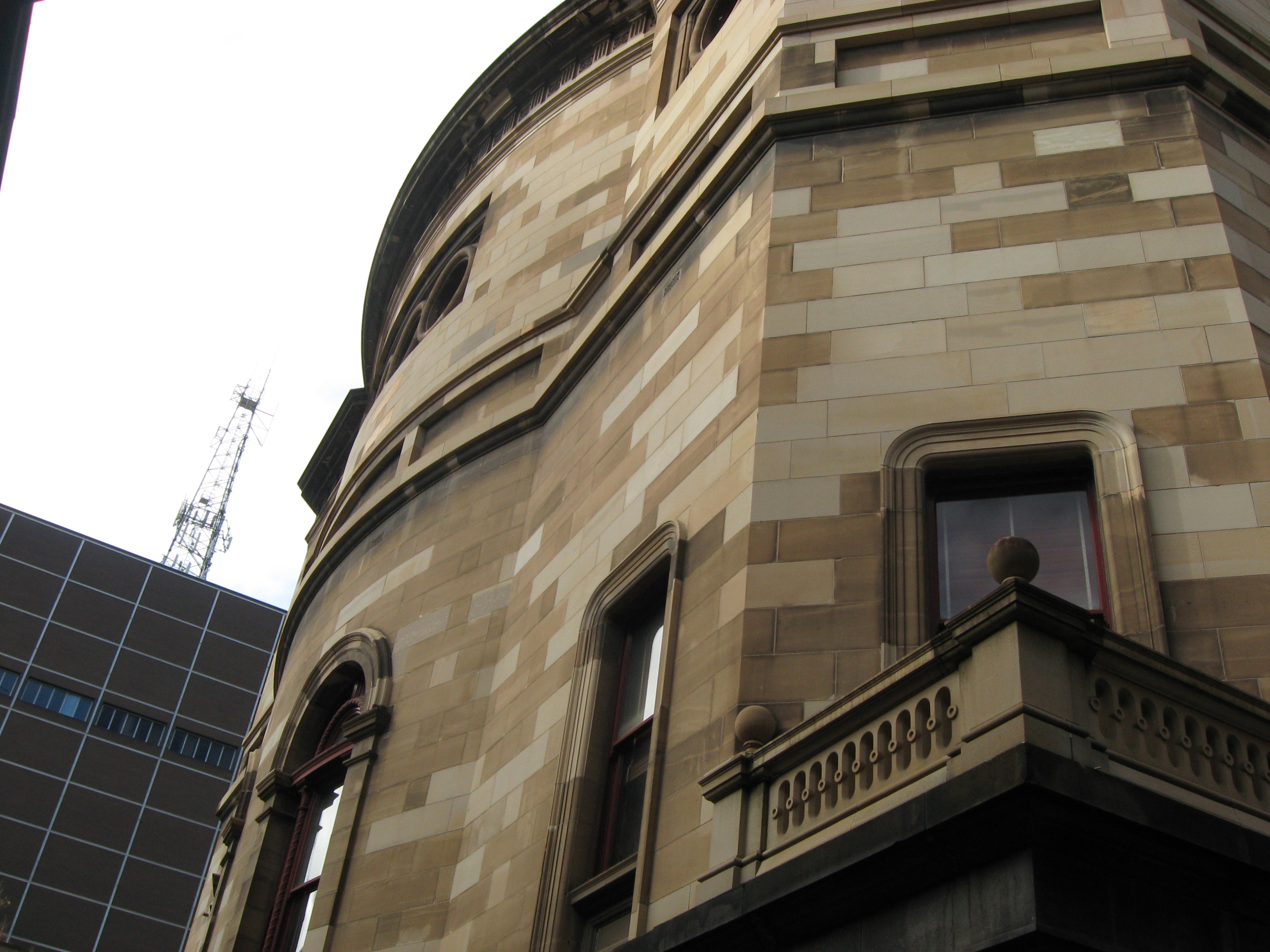
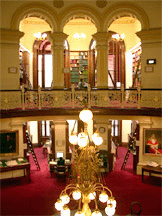
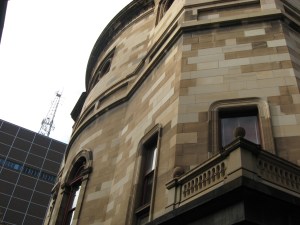
I’d never been inside the Supreme Court building and I’d always assumed that the dome visible from the street covered the courtrooms inside.  I was wrong: the domed building is actually the Supreme Court library and what a beautiful building it is.  You can go in (despite the gold lettered sign on the door that says that you can’t) and it’s spectacular.  Their website has information and a brief history of the library.

Redmond Barry was instrumental in establishing the library which was, and still is, funded by the fees that lawyers pay to be admitted to practice in the Supreme Court.  The library he established was situated in the old, since-demolished Supreme Court building on the present site of the old City Court (now owned by RMIT)- (the court that Judge Willis was so proud of but never sat in because it opened just after he left the colony).  So, too, although Redmond Barry was deeply involved in the design of this library, he didn’t get to see it, because he died before it opened.

Next stop the State Library to see their ‘Free, Secular and Democratic’ exhibition, which is on display until 2 February 2014.  The library was initially established as the Melbourne Public Library, and unlike many other libraries of the time, there was no vetting process and “every person of respectable appearance is admitted, even though he be coatless…if only his hands are clean”.  Redmond Barry was the driving force in establishing this library too, which at the time consisted of the Queen’s Reading Room at the Swanston Street frontage, designed in the style of the libraries that Redmond Barry had frequented in Ireland and England before coming to Australia.  The display has a heavy emphasis on the architecture of the “The Institution” which eventually came to include the library, the museum, the National Gallery of Victoria. The exhibition explores the idea of ‘display’ more broadly, with a section on Exhibitions as well- a real cultural phenomena of industrialised nations, empire, patriotism and competition.  There’s a good slideshow on the SLV site.

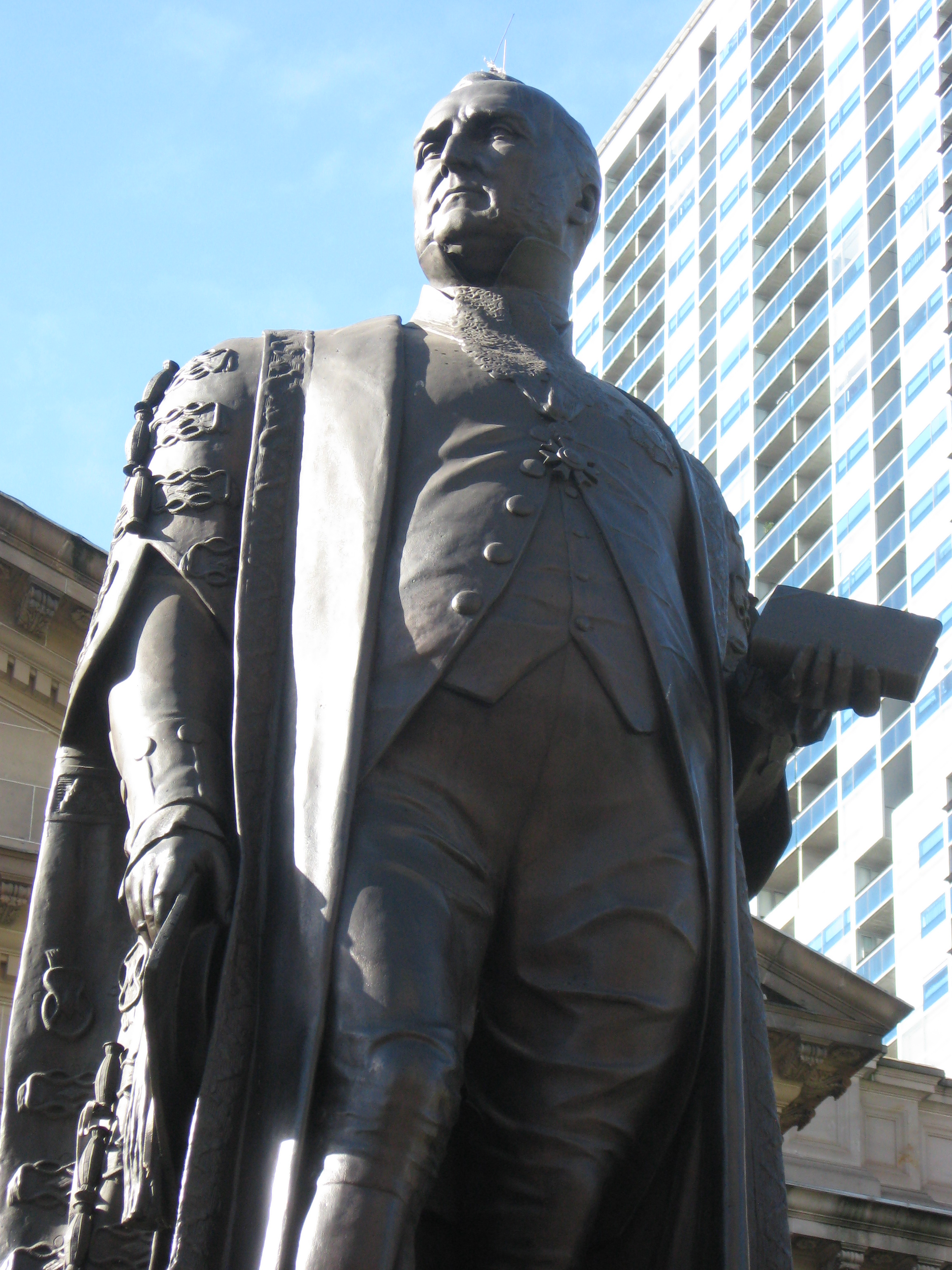
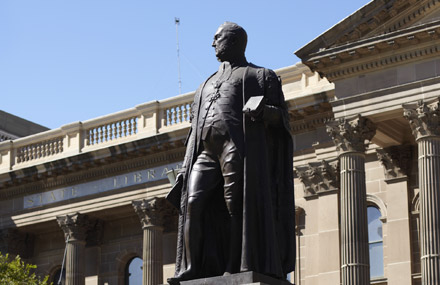
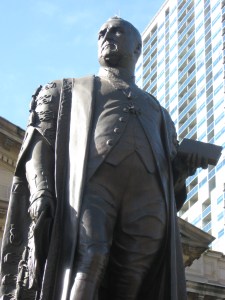
I bid farewell and ‘Happy Birthday’ to the man himself out in forecourt and caught a tram up Swanston St to Melbourne University for the symposium in the Baillieu libarary
IMG_4850

There were four speakers at the symposium, each exploring a different facet of Redmond Barry.  Stuart McIntyre,  Ernest Scott Professor of History, University of Melbourne started with an exploration of Redmond Barry as the inaugural university chancellor.  He portrayed him as a hands-on administrator, with a strong ceremonial presence.  He made the study of the classics compulsory for all student, which was rather old-fashioned at the time, but as the basis of a broader curriculum in the professions like law and medicine.  He battled with the professors and with the university senate, and insisted  that the professors not comment on religion, and later politics, for fear of sectarianism.

John Waugh Honorary Senior Fellow, Melbourne Law School spoke of Redmond Barry’s contribution to legal education. In England  (and in many other places throughout the empire)  at the time, a  legal education was part of being a gentleman, but it was not professional training as we know it.  Lawyers would undertake an apprenticeship with other lawyers and undertake self study. Barry derided the practical, technical nature of this system, although he was later to exhort law students to simplicity and logic in their arguments- something rather at odds with his own love of rhetoric.  In 1857, in his dual role as chancellor and sitting first puisne judge, he ensured that law students from the University of Melbourne were exempt from sitting the examinations of the Board of Examiners. In 1872 university education was made compulsory for barristers, thus in effect delegating entry to the profession to the universities: a very unusual practice that was found only in South Australia.

The Chief Justice, Marilyn Warren spoke about Barry as a Judge.  She noted that Barry’s reputation as a harsh, conservative judge is dominated by the Ned Kelly trial.  She described him as a detached, black letter lawyer, who was a judge of his times.  She suggested that in the Ned Kelly trial, he saw Kelly as symptomatic of an ignorant, ungovernable youth culture that needed to be stamped out.  In other cases, e.g. the Eureka case, he was more liberal. She noted that contrary to popular belief, he was only ever first puisne judge and never Chief Justice. He had good reason to believe that he would be appointed to replace William a’Beckett when he retired, but he was overlooked.  She suggested that this was because he aggravated people; the government could not be quite sure of how he would act in the position, and because his long-term liaison with Mrs Barrow was a matter of scandal.

Finally, Sue Reynolds, Senior Lecturer in IT and Logistics at RMIT spoke of Redmond Barry’s contribution to the four main libraries that he has been associated with: the Supreme Court library, what is now the State Library of Victoria, the Parliamentary Library, and the library at the University of Melbourne.  She has written a book about the early years of the Supreme Court  library called  Books for the Profession.  Barry was a prominent member of the board for each of these four libraries, and very much involved in the sourcing and  purchasing of books and production of catalogues. Being so involved in each of them, he was able to guide the development of their collections to reflect the unique purpose of each one and its relationship with the others.

And so, talks presented and cakes eaten, it was time to head home. On the way out of the Baillieu library, I stopped to look at their display which was drawn from their own archives and which reflected Barry’s wide range of interests.

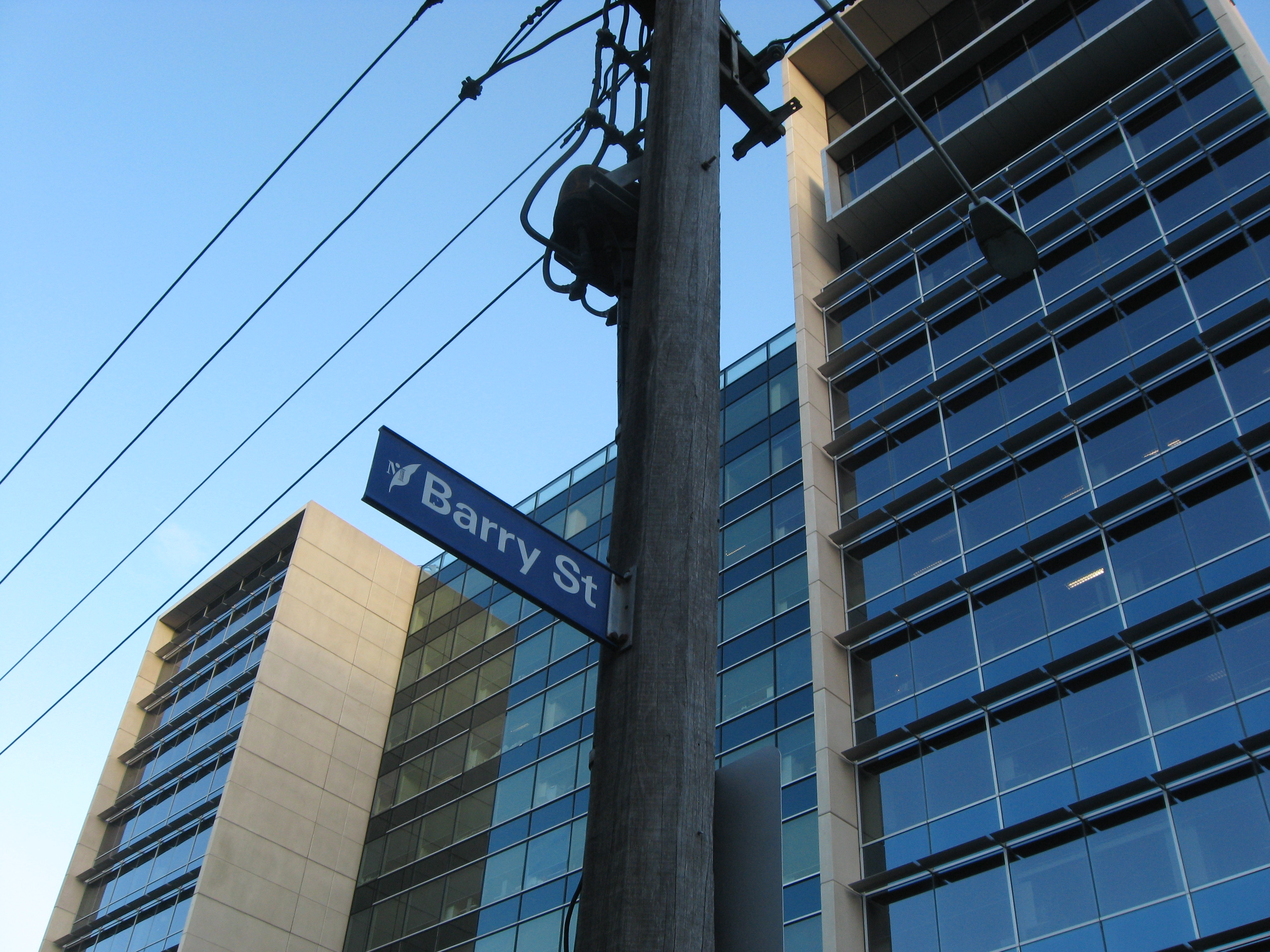
Time for one more- the small display in the Law School library situated- how appropriately, on the corners of Barry and Pelham Streets in Carlton.
IMG_4863

Ye Gods! What is this excessively palatial university building???  (Not from the outside- go inside to the foyer.) I’d seen the beautiful Supreme Court library that day, and I’ve been into Queen’s  Hall at SLV and they too are lavish buildings in their pompous, 19th century way, but this one just seemed too slick, too “look at us-we’re world class”, too corporate- especially compared with the often overcrowded and primitive accommodation given to other faculties.  Needless to say, when I arrived home and saw the three ‘begging’ letters from the University of Melbourne addressed to the three Melbourne Uni alumni who reside at this house, they went straight into the bin.

I wonder what Redmond Barry would make of the building?  I really don’t know. Anyway, happy birthday Sir Redmond.

Redmond Barry Bicentennial coming up

BarryHeader

Big celebrations over the next few weeks to commemorate the birth of Sir Redmond Barry (1813-1880).  It looks as if 6th and 7th of June are the big days and I’m thinking I might go along for some of it at least.

The official site is here.

EXHIBITIONS:

Redmond Barry Bicentennial Exhibition – Supreme Court Library

210 William St Melbourne 17 May -11 June 2013. Free admission  Mon-Friday 8.30 -6.00  (5.00pm. on Friday)  Inquiries 96039197

You can read about Redmond Barry’s role in the establishment of the Law Library here.

Redmond Barry and the Melbourne Law School Exhibition

Melbourne Law School Library, Level 3, 185 Pelham St Carlton South

18 May- 22 June 2013  Free admission  Inquiries 8344 6177

You can read more about the teaching of law in Melbourne at the Melbourne Law School’s site here.

Evidence of a fruitful life: Redmond Barry and the University of Melbourne exhibition

Ground floor, Baillieu Library, University of Melbourne

4-10th June 2013 Free admission

Sir Redmond Barry was founding father and first chancellor of the University of Melbourne.  There’s a rather clever interactive timeline of the history of the university here.

Free, secular and democratic: building the Public Library 1853-1913

Keith Murdoch Gallery, State Library of Victoria

30 May 2013- 2 February 2014  (so no hurry for this one….) Free admission.

There’s several guided tours during June listed here.

A BICENTENNIAL WALKING TOUR

Friday 7th June 9.30-12.30 starting at the Supreme Court and finishing at Melbourne General Cemetery.  Conducted by Isobel Simpson. $25.00  Inquiries 8344 2016

EVENTS

Redmond Barry: visionary or scoundrel?

Chaired by Damien Carrick from Radio National, the panel includes Justice John Smallwood, historian Robyn Annear and barrister Ken Oldis.

Thursday 6th June 6.00- 7.15 followed by drinks and canapes until 8.30 p.m. Book by Monday 3 June $35 full/ $30 concession/$25 SLV member. 9884 7099.

Redmond Barry symposium

Baillieu Libary University of Melbourne, Friday 7 June 1.30-4.30 p.m. Free admission but RSVP essential – http://go.unimelb.edu.au/6d6n

So much Barry!!! Let’s see- I could do a couple of the exhibitions on Thursday afternoon, then go to the Panel Discussion at the library that night and eat canapes; get up bright and early on Friday morning for a walk around Melbourne to walk off the canapes; then go to the symposium that afternoon.

redmond_barry_statue

An interesting little slideshow Port Phillip early days

I found this slideshow of images of Port Phillip and its early settlers.  It seems that it was prepared by members of the Port Phillip Pioneers group for their annual Pioneers Church Service held at St James Old Cathedral in Melbourne a few years back.

There’s some here that I haven’t seen before.

http://www.slideshare.net/PortPhillipPioneersGroup/glimpses-of-the-past-presentation