Category Archives: Life in Melbourne

Off to the Anzac Day footy

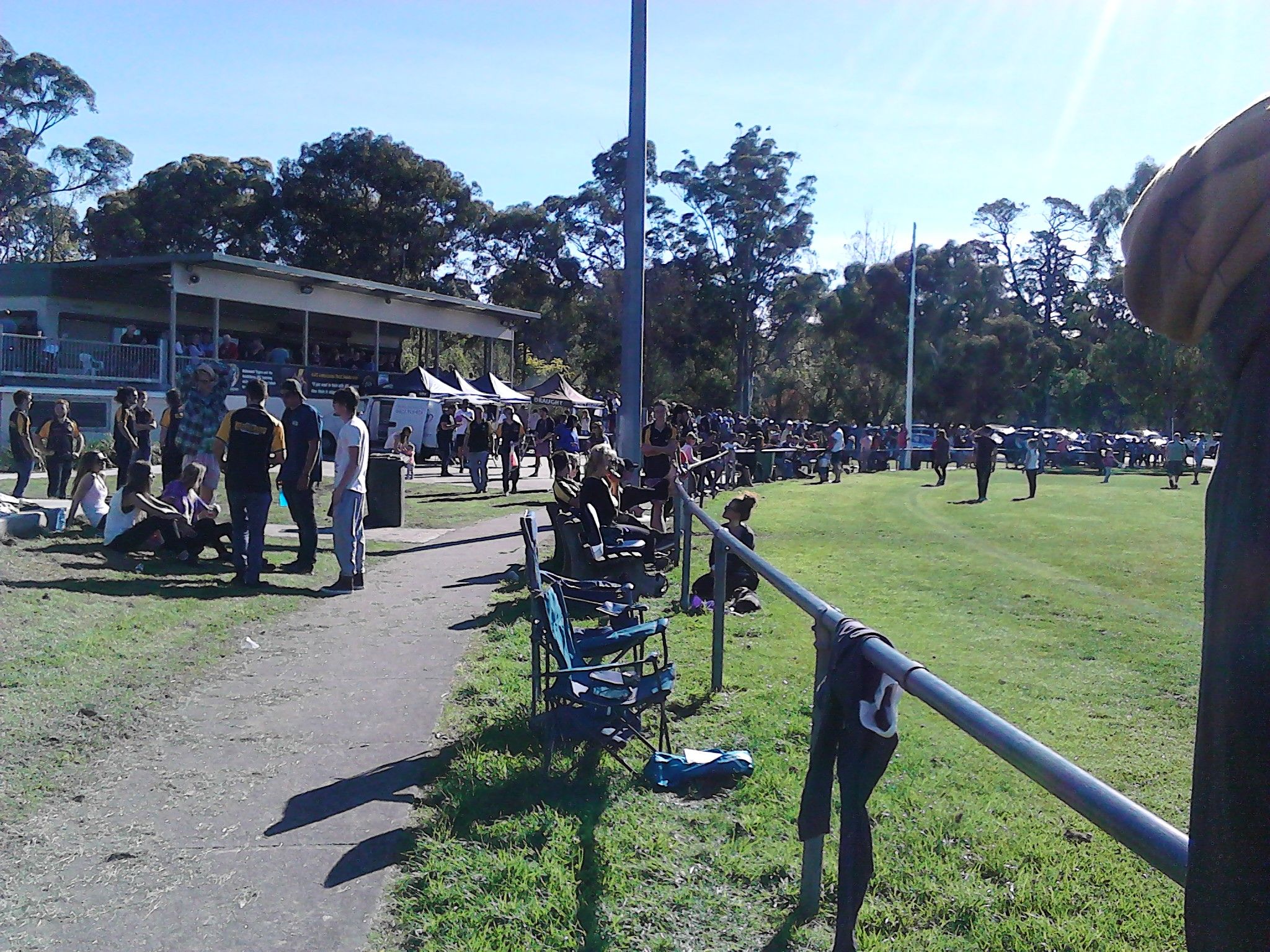
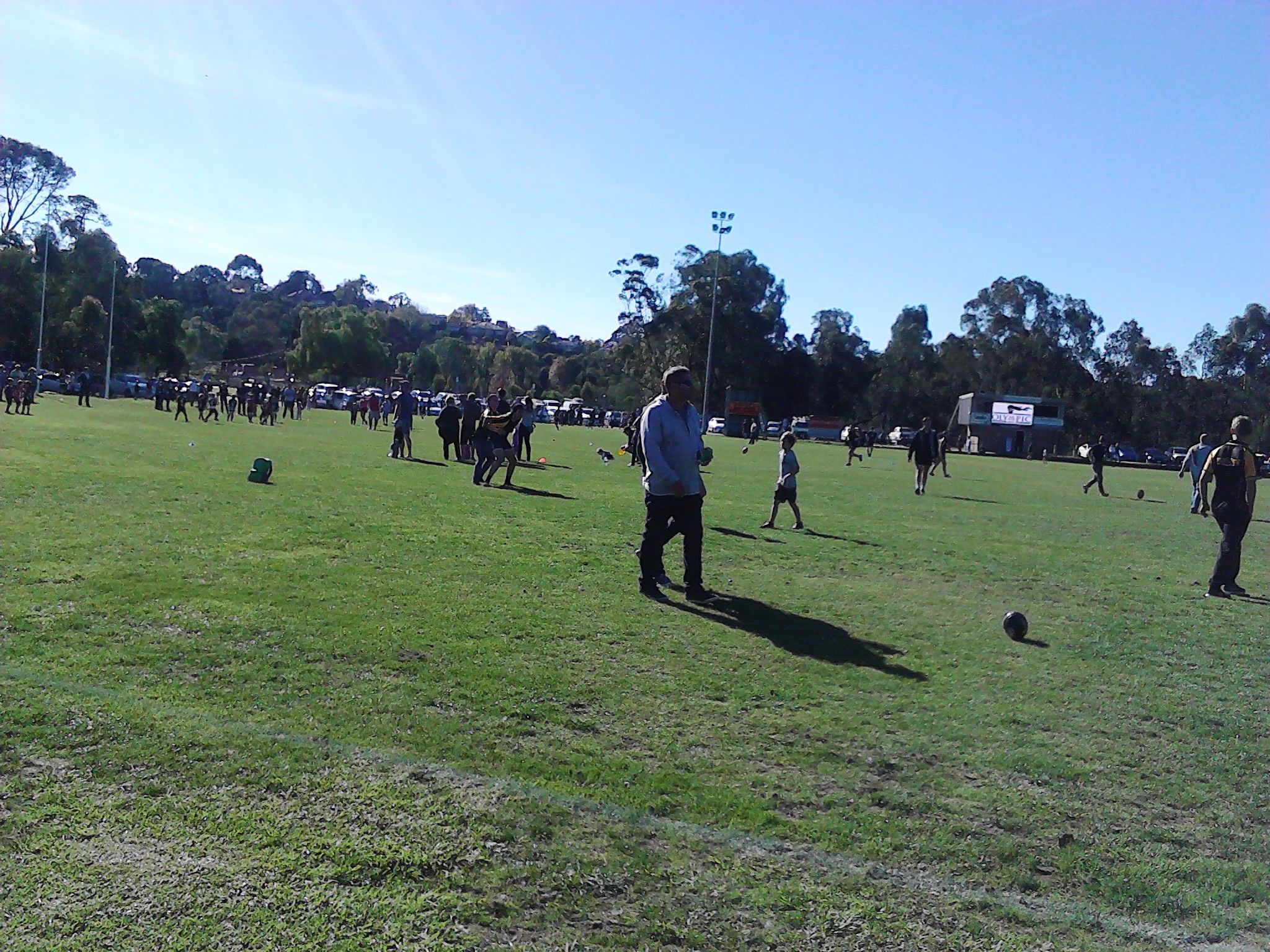
It’s a beautiful, 20 degree late autumn Anzac Day, so off to the footy we go….

No, not that confected, corporate spectacle at the MCG- we’re off to the REAL footy down at Warringal Park with the Heidelberg Tigers playing the Northcote Park Cougars.

Oval2

Real footy. Where ‘the boys’ are all called Johnno and Jacko.  Where the numbers on the backs of jumpers go up to 71.  Where the cars still front-park around the oval and horns are tooted when a goal is kicked.  Where a bloke does his hammy and has to hobble off the field alone clutching the back of his leg, sit on the sidelines for a minute or two, then limp off to sit on the bench without a single trainer or physio [are any such people even attending?] in sight.

Oval

Real footy.  Where at half time and three quarter time everyone streams onto the ground to have a bit of kick-to-kick or to crowd around to hear what the coach has to say.  Where the little league kids form a line and clap the team back onto the ground after half-time, before they go up to get a sausage and a drink, “only after yer tell Mum and Dad where y’are!”  Where the winning tickets for the slab of beer and the meat tray are displayed on the scoreboard, and the winner can pick them up at the bar. Where kids ride their bikes around the outside of the oval, where dogs are tethered on leads attached to the fence, where you can get a snag in bread for $2.50 and a VB that doesn’t come in a plastic cup.

You remember, real footy.   Go Tiges!!

Moomba: the dodgiest festival of them all

Labour Day is celebrated on different days in different states.  Today, it’s celebrated in Victoria, and also in Tasmania under the name of its earlier incarnation as Eight Hours Day.

There are many (including me) who lament the loss of the radical and working-class focus on this holiday, but I was surprised to learn today that the original Eight Hours Day was not celebrated on this weekend in any event.  The stonemasons of Melbourne achieved the eight hour day on April 21st 1856 and had their first celebration on 12 (or maybe 15th?) of May that year.  Subsequently it was celebrated on 21st April each year, and declared a public holiday in 1879.  However, over time May Day assumed more importance as an international labour celebration, and the increasing significance of Anzac Day on 25th April sidelined the Eight Hour Day celebration held four days earlier .  Numbers attending and viewing the Eight Hour Day procession declined after World War I  and the date of the public holiday was changed to March in 1927 ( I can’t find why- this excellent article here deals with Eight Hour Day between 1928-1935 but does not explain the change in date.)  The name ‘Eight Hours Day’ itself changed to ‘Labour Day’ in 1934.  The date was changed yet again in 1949 (and again, I don’t know why).

However, while it might be ‘Labour Day’ on the calendar,  for many Melburnians it’s better known as ‘Moomba weekend’.  This Moomba celebration is particularly auspicious because it is the sixtieth anniversary of this rather retro and often unloved procession.  However, as with much involving this ” invented tradition” (to use Eric Hobsbawm’s phrase), even the ’60 years’ date is dodgy, given that the first parade occurred in March 1955.

The name ‘Moomba’ is dodgy as well.  I had taken some pleasure in the story that Moomba actually means ‘up your bum’ in Koorie English.  ‘Moom’ certainly does mean ‘bum’ and is still in use in Victorian communities in that way today (e.g. ‘shift your moom’ when asking someone to move up).  Lin Onus, the son of Victorian Koorie elder Bill Onus claimed that his father had offered up the name as a joke when the idea of a commerce-backed parade (which Moomba certainly was originally) was first mooted, mischievously suggesting that the name meant ‘Let’s get together and have fun’.

However, even this rather subversive story seems to be dodgy as well. Lin Onus later tried to recant it, pointing out that his father had been instrumental in the staging of An Aboriginal Moomba: ‘Out of the Dark’ at the Princess Theatre on 23-27th June 1951 with an all-Aboriginal cast drawn from local and interstate communities.  The core dance group came from Cherbourg, where the term ‘moomba’ did have connations of show or celebration, and it is possible that Bill Onus and his wife Mary referenced this in naming the stage show and later offered it as the name for the planned Autumn festival.

The fact that there are to be seven floats today is being loudly trumpeted but as a child who grew up in the 1960s, the heyday of Moomba, that seems a particularly paltry offering.  It’s somewhat better, I suppose, than the tortured ‘community’ parades of recent years which seemed to involve a whole lot of kids either dressed up in stiff and embarrassing national costumes to mark their parents’ migrant origins, or the presence of every circus and dance school in Melbourne.  Fun if you were participating, I guess, but not really the sort of thing you’d want to line the footpath to watch.  You can read this rather celebratory history of Moomba as a downloadable PDF published under the auspices of  City of Melbourne here, or a rather more critical view of Moomba from 1985 here (try logging in through the State Library of Victoria)

As a child, I can remember going to Moomba, being lifted onto my father’s shoulders or pushed to the front of the crowd for a better view.  I can remember the smell of the brewery one year, and I’ve located some photos from 1961.

I’m mystified to know where we were standing.  I think that the domed church in the right hand corner of the Coles ‘horse’ float is Sacred Heart Catholic Church in Rathdowne Street, and certainly the terrace houses behind the parade look as if they are in Carlton.  The tall chimney perplexes me- the brewery wasn’t up there, was it?  The parade has changed its route on several occasions, especially as its popularity has declined.

We certainly loved it.  With the booming of the drums still throbbing in our ears, we’d come home from Moomba and make our own Moomba procession out in the street with billy-carts and bikes, wobbling along on paint-tin stilts and banging an old saucepan.  Seems all rather innocent and sweet now.

Anyway, happy Moomba!  Embrace the dodginess of it all and enjoy the holiday!

How my Daddy saved the Birthday Beacon

It’s Australia Day today.  I’ve blogged about Australia Day before,  here and here and here and here. I think I’ve said all that I can think of to say about Australia Day, especially as I feel rather ambivalent about the whole thing. So today, I’ll take a different but related tack about Australian patriotism and its expression.
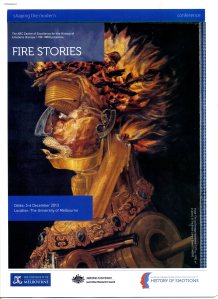
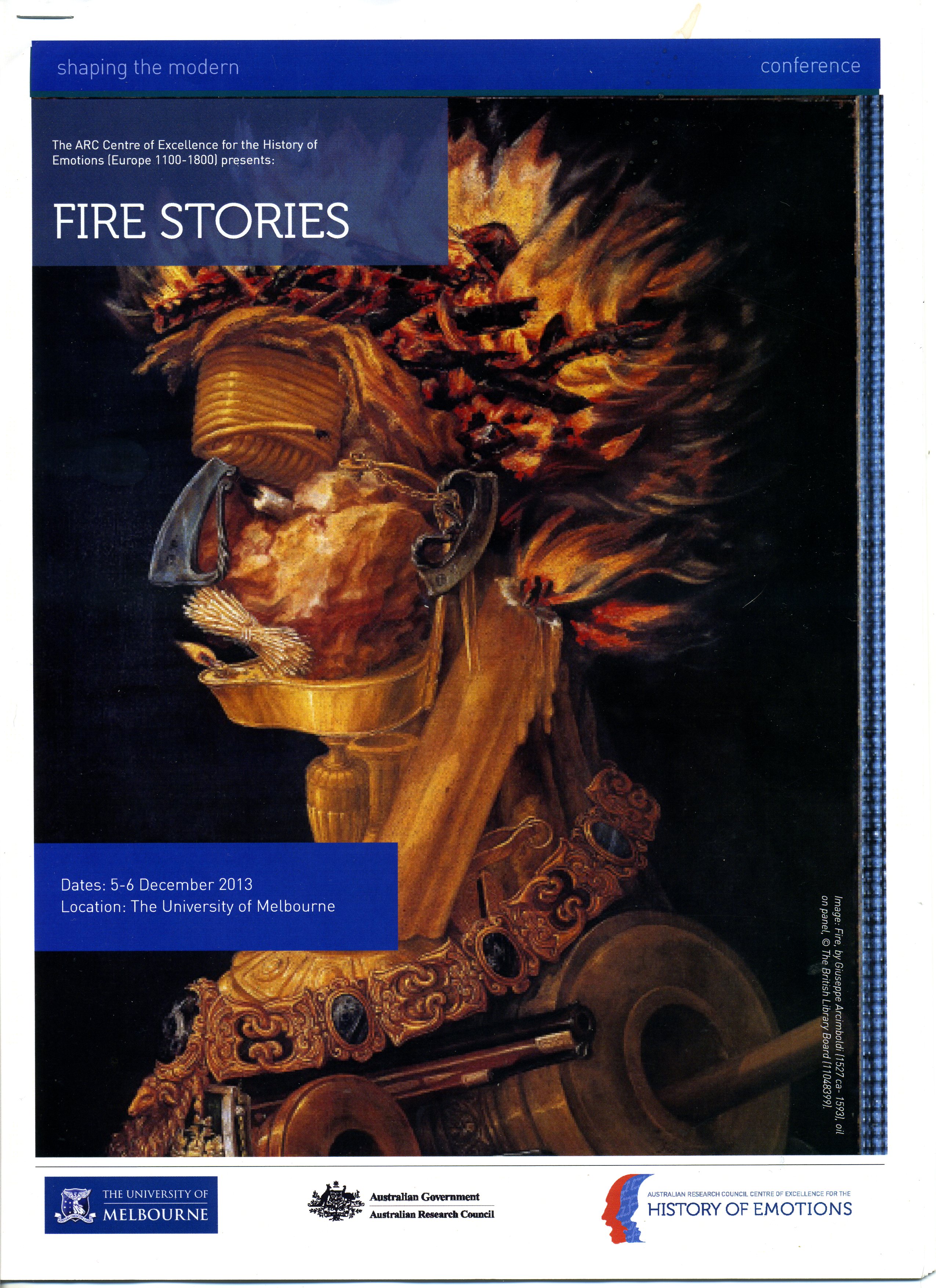
firestories

Some weeks ago I attended a seminar called ‘Fire Stories’ presented by the ARC Centre of Excellence for the History of the Emotions, held at the University of Melbourne.  I intended blogging about it but found myself caught yet again between the desire to take time to reflect before putting fingers to keyboard, and the inexorable march of days rendering the whole post irrelevant and undermining my confidence that, after such a long time,  I could render the presentation or  my responses faithfully.  So it remained a blog post unwritten.

I particularly enjoyed Associate Professor Alan Krell’s presentation on beacons where he juxtaposed the grand beacons of antiquity, the splendid imagery of the Beacons in the Lord of the Rings trilogy and the more prosaic beacons of Queen Elizabeth’s Diamond Jubilee, before moving on to Turner’s little known painting The Beacon Light [1840]. From his abstract:

SMALL FIRES, BIG MEANINGS: IMAGINING THE BEACON FIRE

Functioning variously as guidance, warning and inspiration, the Beacon Fire may also be turned to ill use.  Embodying fire’s paradoxical character, the beacon fire lends itself to multiple representations in text and image, the subject of this paper.  From the lingering evocations of the Greek tragedian, Aeschylus, describing the progress of the beacon fires that carried news of the fall of Troy, to the thrilling spectacle provided by the film director Peter Jackson, who describes another type of ‘progress’ in his Lord of the Rings: The Return of the King [2003], the beacon fire flares triumphantly.  These grand scenarios are countered by the prosaically patriotic lighting of over 4000 beacons (around the globe) to celebrate the British Queen’s 60 years on the throne [2012].

We were sitting watching the final scene of Broadchurch on television some months back- if you saw it, you’ll remember where the town assembled on the beach to light the first of a string of beacons around the bay to mark their support for Danny Latimer’s family.
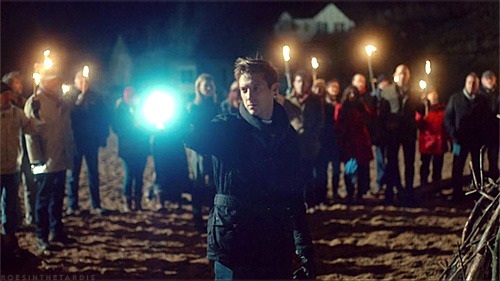
Broadchurch Beacon

“What was that beacon I helped with again?” asked Dad.  Beacon? What beacon? we said.  It was up at La Trobe University (my university, very close by) during the 1980s, he said.  A real schemozzle, apparently.  We had no idea what he was talking about.  Off to Google we went, as you do- and there it was, Australia’s very own “prosaically patriotic” Bicentennial Beacon Project.

According to the IPA review (I can’t believe that I’m quoting this source), the Bicentennial Birthday Beacons project arose from “concern at the direction the Bicentennial was taking”.

When the Australian Bicentennial Authority first published its national program of projects and events, it was a product of modern special interest politics.  It had a special program on multiculturalism to satisfy the ethnic lobby; another to satisfy the feminists; another for the trade unions; another for the Aborigines; a program for youth and a program for the handicapped and so on.  It emphasized the diversity of Australians without a balancing emphasis on the overarching unity and identity of the nation. (Ken Baker p. 48)

As the ‘Bicentenary Battles’ chapter in Stuart Macintyre and Anna Clark’s book The History Wars points out, Ken Baker’s rather snide and waspish comments above reflect a concern that he had expressed as early as 1985 that the bicentenary was turning into an apology rather than a celebration.

And so, headed by Claudio Velez from La Trobe University, the birthday beacon project was born, comprising 550 official sites around Australia on the night of 18-19th June 1988, with an estimated two million Australians taking part.  None of this special interest stuff: this was something that ‘ordinary Australians’ could embrace and be part of.  La Trobe University, as the administrative heart of the whole project, was to have its own beacon.

So, what was my daddy’s involvement?  Dad was Lumley’s Loaders, Lumley’s Constructions and Lumley’s Farm Machinery with a sizeable collection of low loaders, caterpillars, graders etc. based at Thornbury, just a few kilometres away from La Trobe University.  He can’t recall just how he became involved- he remembers it as a phone-call (the extracts below notwithstanding)- because the Glen College site is not visible from public roads, and he was unlikely to see it just driving past.  But what he does remember was that it was an “absolute schemozzle”  in the pouring rain and that if he hadn’t brought along his heavy artillery, there was no way that the La Trobe beacon would have eventuated, let alone flared.

I’ll let Shaun Patrick Kenaelly in Australia’s Birthday Beacons: The Story of June 18-19th 1988 tell the story.   He puts it down to “Beacon luck…the kind of luck which found Mr John Lumley of Lumley Loaders in Thornbury, driving by in the afternoon.” (p.25)  He quotes from Dr Richard Luke, the President of Glenn College:

There was a special incentive to build a beacon at La Trobe University, as Glenn College had been ‘home’ for “Birthday Beacons” since the beginning of the concept itself grew out of meetings held in the College.  Initially it was thought that students of the College might prepare a simple beacons, and a talk by the Executive Officer, Wayne Jackson, on 13 April, provided further impetus.  Then followed involvement of community groups, notably 1st and 3rd Rosanna Scouts and Rosanna Primary School, and the goals became more ambitious! Decision to provide entertainment meant that sponsorship became necessary and this was provided by local firms and Councils.

Weeks prior to the event, under the watchful eyes of the University’s Landscape Manager, material for the bonfire was delivered to the site by employees of Preston City Council.  No attempt was made to arrange the rather unsightly heaps into a bonfire until the actual day and the experience of a nearby group whose bonfire was prematurely lit TWICE vindicated this approach…

Anxious attention to weather forecasts for days before the event was a waste of time! The day itself dawned clear and full of promise that the forecast of a fine evening would be borne out.  How misplaced was such optimism.  As a small band of people struggled with increasing weariness and legs which were beginning to object to climbing ladders (“…what, not again…!”), the clouds began to gather and the clock began to go even faster.  Then [a] miracle occurred! A stranger who had been driving past and had stopped to help, quietly asked whether some heavier equipment would be of use.  An unambiguous ‘yes’ from the builders was followed a little later, by the arrival of a low loader and Drott.  Our ‘welcome stranger’ turned out to be a local earthmoving contractor! For the  next couple of hours the unsightly pile got smaller, the bonfire got larger and our ‘saviour’ got wetter and wetter! As the rain got heavier and the ground got softer under foot, the organizers (along with many others in Victoria!) wondered whether anyone would brave the elements to see whether liberal applications of diesel would enable a bonfire to be lit in the pouring rain!

By dusk the weather had cleared a little and the CFA brigades from Diamond Creek, Eltham and Epping were able to stage a most impressive torchlight procession.  The large marquee, which was to have been the focus of bush-dancing was full of people trying to stay warm(ish) and dry.  The unlit bonfire was surrounded by a large number of more adventurous people interested to see whether the torches borne by the shivering runners could, in the hands of two Mayors and the University’s Vice-Chancellor, find the ‘priming’ hidden under a mountain of sodden vegetation! The deep laid plans of the organizers…! Where were those air vents so cunningly constructed according to…instructions? Answer…buried under the material moved by the Drott!

Well after a few minutes (which seemed much longer to at least this organizer!) and repeated use of the flame-thrower, the fire ‘took’.  The remainder of the evening was greatly enjoyed by the estimated 2000 people in attendance… The last pole did not fall until the small hours of the morning (by which time there was a cloudless, star-filled sky!) and the fire was still burning days later.  (p. 25)

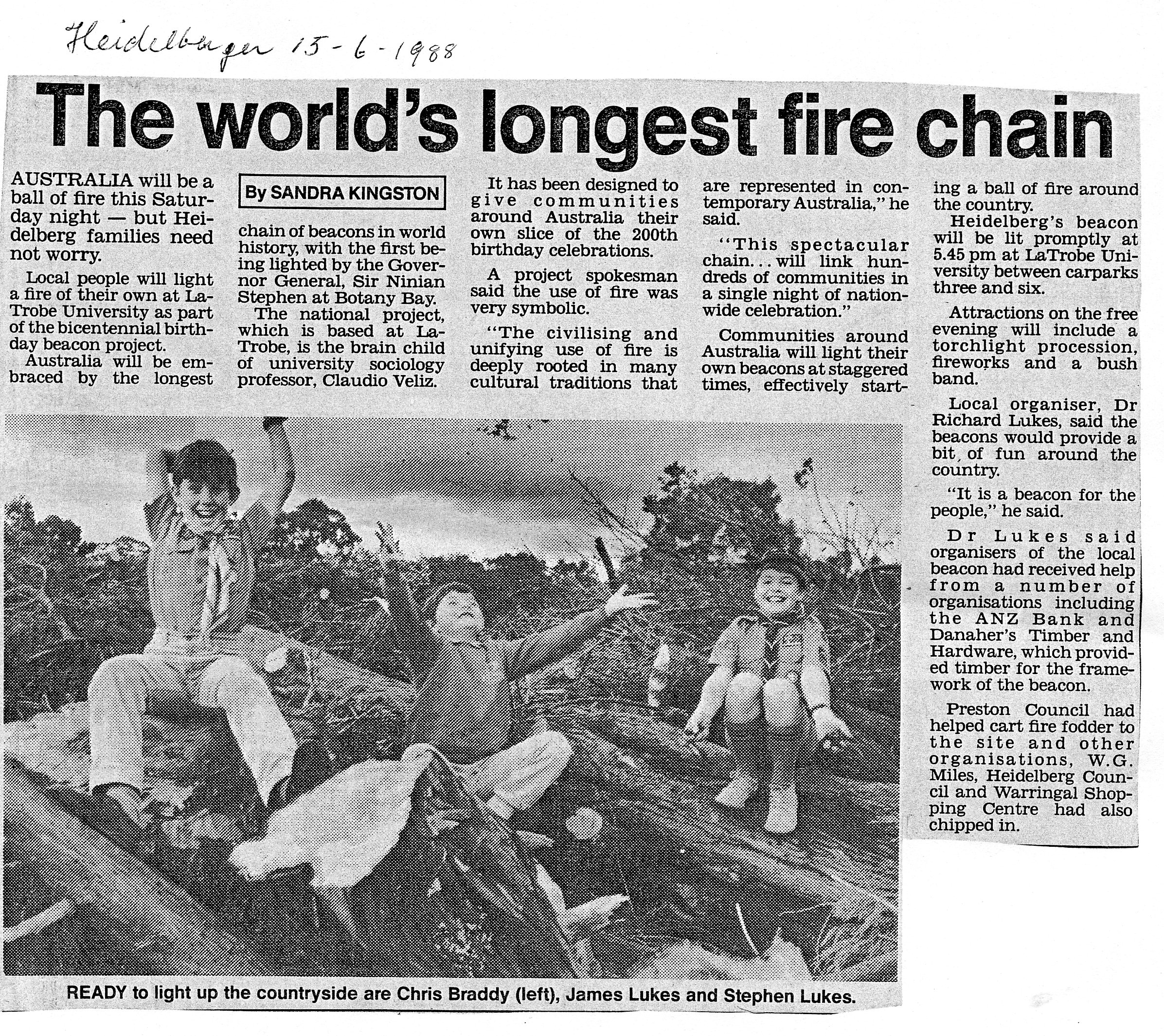
The local newspaper, the Heidelberger talked it up: (you can click to enlarge)
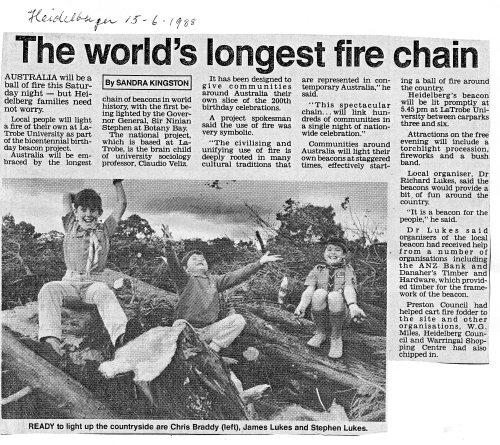
img091

A quote:

Australia will be a ball of fire this Saturday night- but Heidelberg families need not worry.  Local people will light a fire of their own at La Trobe University as part of the bicentennial birthday beacon project.  Australia will be embraced by the longest chain of beacons in world history, with the first being lighted by the Governor General Sir Ninian Stephen at Botany Bay. The national project, which is based at La Trobe, is the brain child of university sociology professor Claudio Veliz. It has been designed to give communities around Australia their own slice of the 200th birthday celebrations…

Communities around Australia will light their own beacons at staggered times, effectively starting a ball of fire around the country.  Heidelberg’s beacon will be lit promptly at 5.45 at La Trobe University between carparks three and six.  Attractions on the free evening will include a torchlight procession, fireworks and a bush band.

Another article in the Heidelberger of 15 June noted that Rosanna Primary School children were selling commemorative programs for $3.00.  The beacon would be lit by three torches to be handed to the mayors of Heidelberg (Cr. Hec Davis) and Preston (Cr. Gary Jungwirth), and the Vice Chancellor of La Trobe University Professor John Scott.

The Heidelberger of the following week (22nd June) carried the rather anti-climactic news of the evening- with no pictures.  More than 2000 had braved the cold, wet and windy weather, it reported.  Costs were just covered by sponsorship, and some money was made from food sales.  To add insult to injury, thieves stole a $500 chainsaw, owned by the university.

But Dad had his fifteen minutes of anonymous fame:

Mr Braddy paid tribute to an anonymous man who had turned up with a front end loader to help build the beacon after seeing the organizers were having trouble.

Trouble? A schemozzle, in Dad’s words.  It puzzles me, actually, why I didn’t attend this.  Did Dad even tell me about it at the time? I had a 4 year old and 2 year old who would have enjoyed it but perhaps the weather was just too daunting.  In fact, I remember nothing about it at all, and it would have slipped from family memory completely had the sight of the Broadchurch beacons not triggered Dad’s recollection.

Postscript:

We were going through old pictures and I found this one. Here it is!  On the right you can see the ‘Celebration of a Nation’ van, with the marquee beside it. On the left you can see the bare bones of the beacon, with all the tree branches around it.  And sure enough, it’s sunny then but those high clouds are a bit of worry.  And yes, given that the beacon was about to be lit that night, there was quite a bit of work to be done!
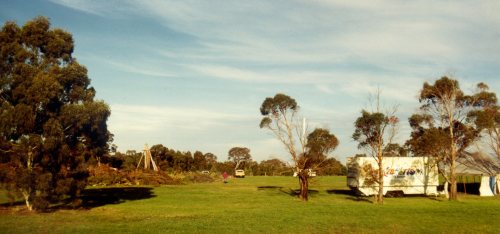
beacon2

Photographer: John Lumley
Hot, wot?

We Melburnians can think of little else but the weather at the moment as we are enduring a hot spell of four consecutive days with temperatures over 40 degrees. But then again, we’re always a bit weather-obsessed, as our temperatures often fluctuate wildly.  In summer,  over two or three days we build up to a hot (usually mid-low thirties) day, then have a cool change that plunges us back to 20 degrees before gradually building up to the mid-thirties again.

Now, as many of you will know, I am very fond of my newspaper. A friend asked me recently “what makes you get out of bed?” and my answer then and now is “getting the paper”. I am distraught when it’s late: going out every five minutes, checking under all the plants in my increasingly bushy cottage garden, checking again…and again…and again. Even when I already know most of what appears in it through the internet or BBC World Radio overnight, I still like opening up new pages and reading the paper cover to cover. It takes hours on the weekend (and yes, I am very tempted by Morry’s Schwartz’s  forthcoming Saturday Paper as well)!

When I settle down every morning to read the paper, I always read the death notices.  I always read the Odd Spot.  And I always read the weather pages.  I look at the international weather reports and I mentally transport myself to each of the places I’ve been and try to imagine them under the current weather conditions.  I look at Kenya because my boy’s there, where there is either “increasing sunshine” or “showers”; I look at Paris and think of myself sitting on a bench at Versailles; I look at London and think of myself standing opposite the Tower of London; I look at New York and think of Central Park; I look at Toronto and think of the streetcar running past our college at the University;  I look at Wellington and think of standing at the harbourside; I look at Christchurch and I grieve for its cathedral in the city square.  I have all these pictures in my mind like a series of mental postcards and I riffle through them in my imagination, superimposing that day’s weather report onto them.

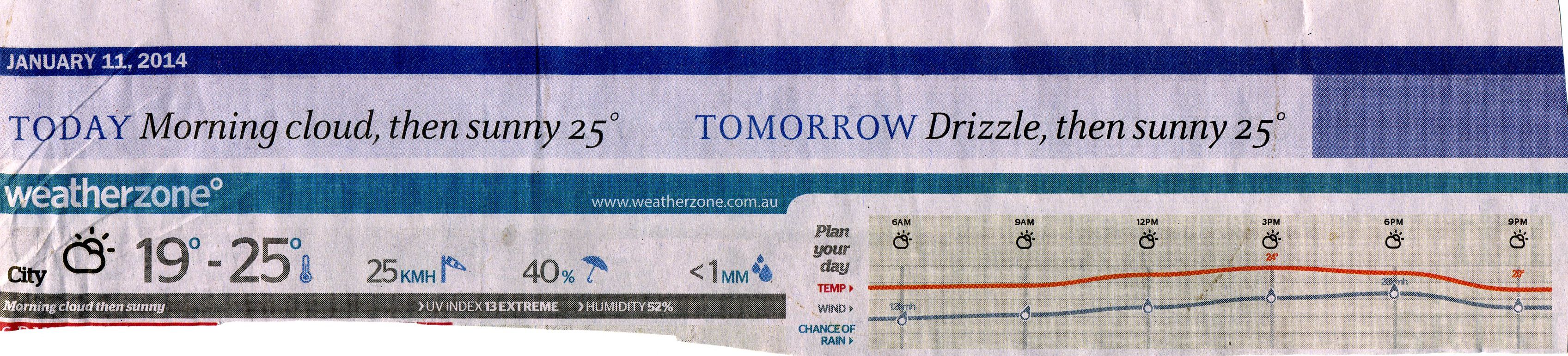
Then there are those weather graphs for our own weather in Melbourne for that day. Every day I sigh and say “I don’t GET this graph”.  I know that they’re working on probabilities and scales. I’m certain that there’s some mathematical and scientific rationale to this display that my very unmathematical brain cannot understand, and has no interest in trying to do (so explaining it to me in words of one syllable probably won’t help.)

Here’s one for a pleasant summer’s day, (Saturday Jan 11)  with little variation between the minimum and maximum.

GRAPH 1 SATURDAY JAN 11

img094

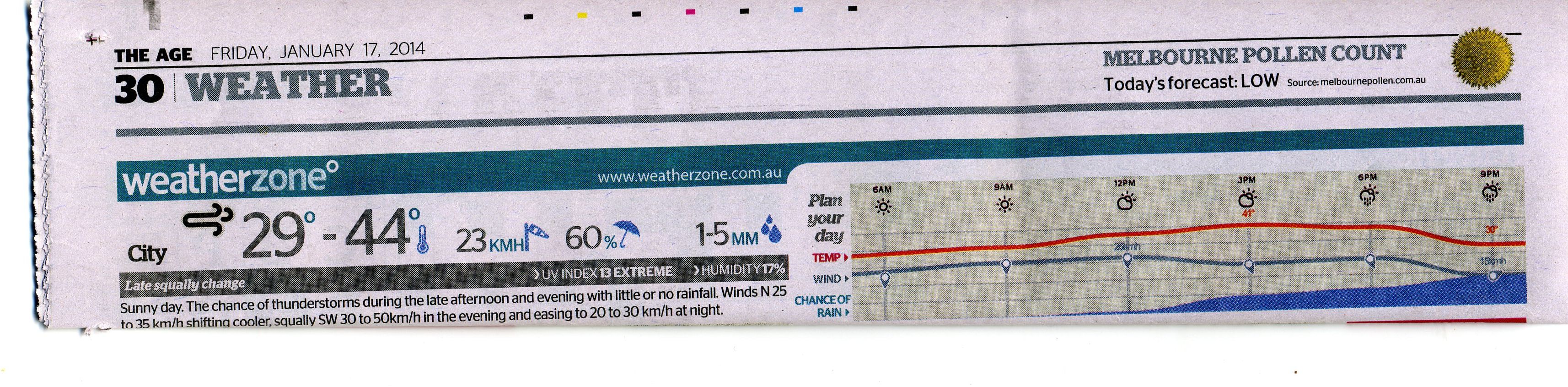
My first problem is that even though the prediction shows 19 – 25, the graph  shows a high of 24 (the highest part of the graph) and a low of 20.  In every graphic, every day, the temperatures shown never match what is predicted on the left hand side of the page.

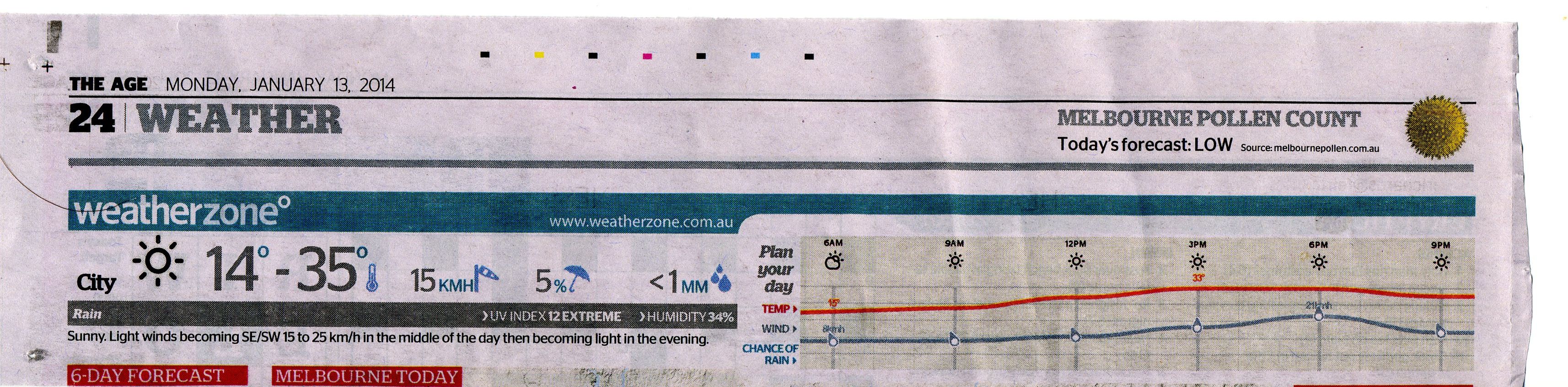
GRAPH 2 MONDAY JANUARY 13

img098

But here we are on Monday Jan 13 where the temperature more than doubles- from 14 to 35 degrees (or as the graph depicts, from 15 to 33). Here’s my second problem- wouldn’t you think that this graph with a vast range between minimum and maximum would look very different from the day where the temperature barely moves?

And here we are for today (Friday Jan 17) , when there’s a sharp cool change predicted tonight (alleluia!)

GRAPH 3 FRIDAY JANUARY 17

img096

To be sure, it does show a dip between 6.oo p.m. and 9.00 p.m. but it doesn’t reflect the prediction that the temperature will fall 10 degrees within an hour.  It shows a high of 41 at 3.00 pm but doesn’t indicate when it’s going to go even higher to reach 44 (and believe me, once you’re over 40, the single degrees DO matter!)

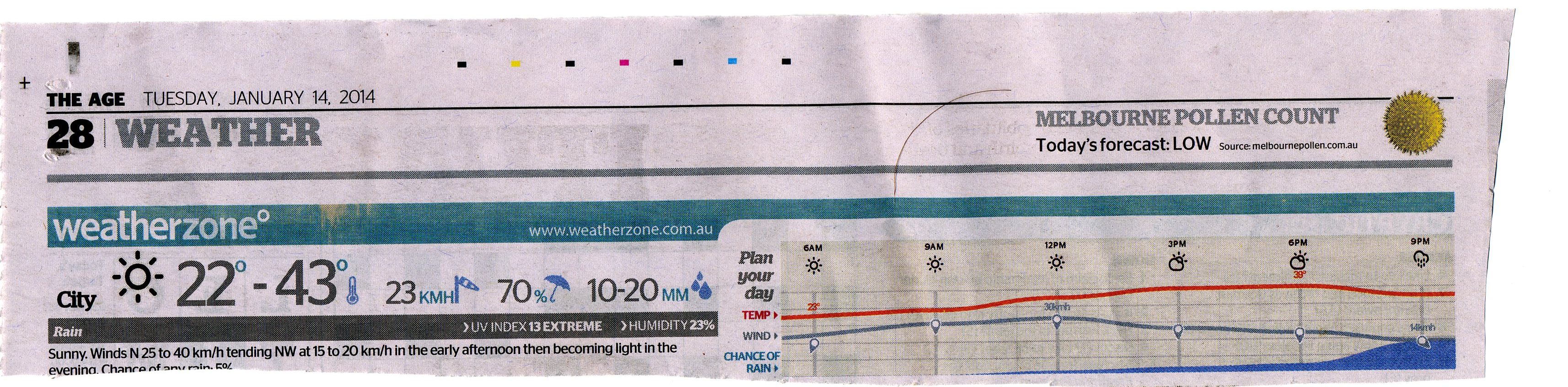
Moreover, the rain predictions confuse me. Here’s a graph from Tuesday 14th where the temperature almost doubled (which is not immediately obvious) with rain forecast in the evening with a 70% likelihood of between 10-20 mm.

GRAPH 4 TUESDAY JANUARY 14

img099

Yet if you compare the appearance of the rain prediction for the January 14th graph with today’s ( Graph 3 January 17th), it looks as if we’re due to get more rain today, yet it’s a 60% likelihood of between  1-5 mm.  If it’s only 1 mm, then it barely counts.

While I do appreciate information about the predicted time of a cool change (so that you know whether to take a cardi or not), I am bemused, confused and amused by these graphs every single morning. Gives me something to get out of bed and grumble about every day.

P.S. I wrote about the last heatwave in 2009 here, with a backward glance toward early-Melbourne commentaries on the weather.

Trains and skeins

I don’t like tagging.

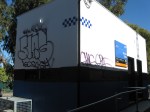
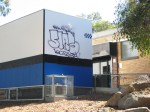
But I don’t like the PSO (Protective Services Officer) hutch at my railway station either.  It sits up against the entrance, so that everyone has to squeeze past it.  These dongas are part of a state government law-and-order policy to put armed security guards on every station after dark.  No staff, mind you, to sell you a ticket or tell you when the next train’s coming.  Just two goons with guns.  Of course, there’s nothing to do on these very quiet, deserted stations between the trains, so they need a shed. And the powers that be have decided that at Macleod, it has to be right in the doorway.  That’s nice, isn’t it?

As I said, I don’t like tagging.  It’s ugly. It’s offensive.  It’s rude.

But so is that PSO hut.

And so, with great pleasure, I see that it has been tagged.  It’s the only one on the Hurstbridge line that has been so ‘adorned’.  I hope they do it again and again and again.  And I hope that they take this ugly, offensive and rude building away.

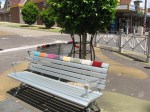
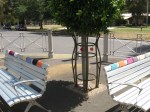
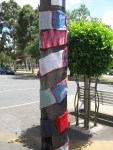
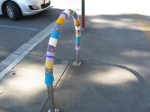
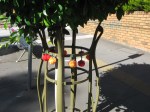
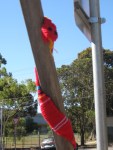
On a happier note, I see that someone who loves Macleod is yarn-bombing it.  How appropriate for Macleod- the home of the nannas.  It’s good to think that young ones are knitting away, with a sense of humour, with a light touch that harms no-one and brings only pleasure. Thank you.

The Ghost of Job Warehouse

I was saddened to read some time ago that Job Warehouse was closing down.  Melburnians will know what I’m talking about: a grubby, shambolic fabric shop up the Parliament House end of Bourke Street that seems have been been there forever.

For those who have never been inside Job Warehouse, think wall to wall fabric, double the amount you were just thinking of, double it again, then arrange the bolts from floor to ceiling, from back wall to shopfront display window, with the haphazard flair of a kid playing pick-up-sticks. Think rich fabrics. Think poor fabrics. … Think the finest and the rarest. Think dead flies and the odd stray sandwich.  Think bridal, suits, opera, army. Think every type of material you’ve ever heard of then double that too… Think of a leaking masonite-patched roof.  Think colour as far as the eye can see- which in the dimly-lit clothy claustrophobia of Job Warehouse isn’t very far. [ Tony Wilson ‘No looking with the hands’ The Monthly, August 2005]

Job Warehouse (54-62 Bourke St) was spread over several shops in a double storey row that was constructed in 1848-9.  As such, it is one of a handful of pre-gold rush buildings still standing in Melbourne.  It is constructed of rendered stucco on a basalt plinth.  The western part of the building, nos. 60-62 Bourke Street, was built by a well-known butcher William Crossley as a shop, slaughter yard and residence, and the landscape artist Eugene von Guerard lived in number 56. It is registered on the Victorian Heritage Database. [Check out the pictures on the database entry]. I should feel reassured by that, but after my Banyule Homestead adventures,  I don’t.
[Click to enlarge the pictures]

I must confess that I never stepped foot inside Job Warehouse while it was open.  Two reasons: first, it was very rarely open and second, I’d heard terrifying tales about the owners.  They were two brothers, Jacob and Max Zeimer, who arrived in Melbourne in 1948 as penniless Polish refugees. All their family had perished in the Holocaust.  Their salesmanship was idiosyncratic:

“He [Mr Zeimer” took one look at me,” recalls Erin, a disgrunted shopper, “and yelled ‘Out! No browsing, just buying!” Another short-lived customer claims that in trying to access a particular material she once had to move an errant banana that had been left lying on a bolt of cloth.  She was spotted with the banana and shown the door: ‘No food in shop! You will have to leave’…..’You had to know what you wanted’ says Gaby, another regular ‘but if you were looking for individual, vintage and unusual fabrics it was the place to go.  Some of the stuff was water-damaged and rotting. Some was just beautiful’  [Tony Wilson, ‘No Looking with the Hands’ The Monthly August 2005]

There’s even a video from the Late Show where Tony Martin and Mick Molloy get kicked out and try to re-enter in typical Chaser fashion.  It starts at 3.00 minutes in and goes to 4.30.

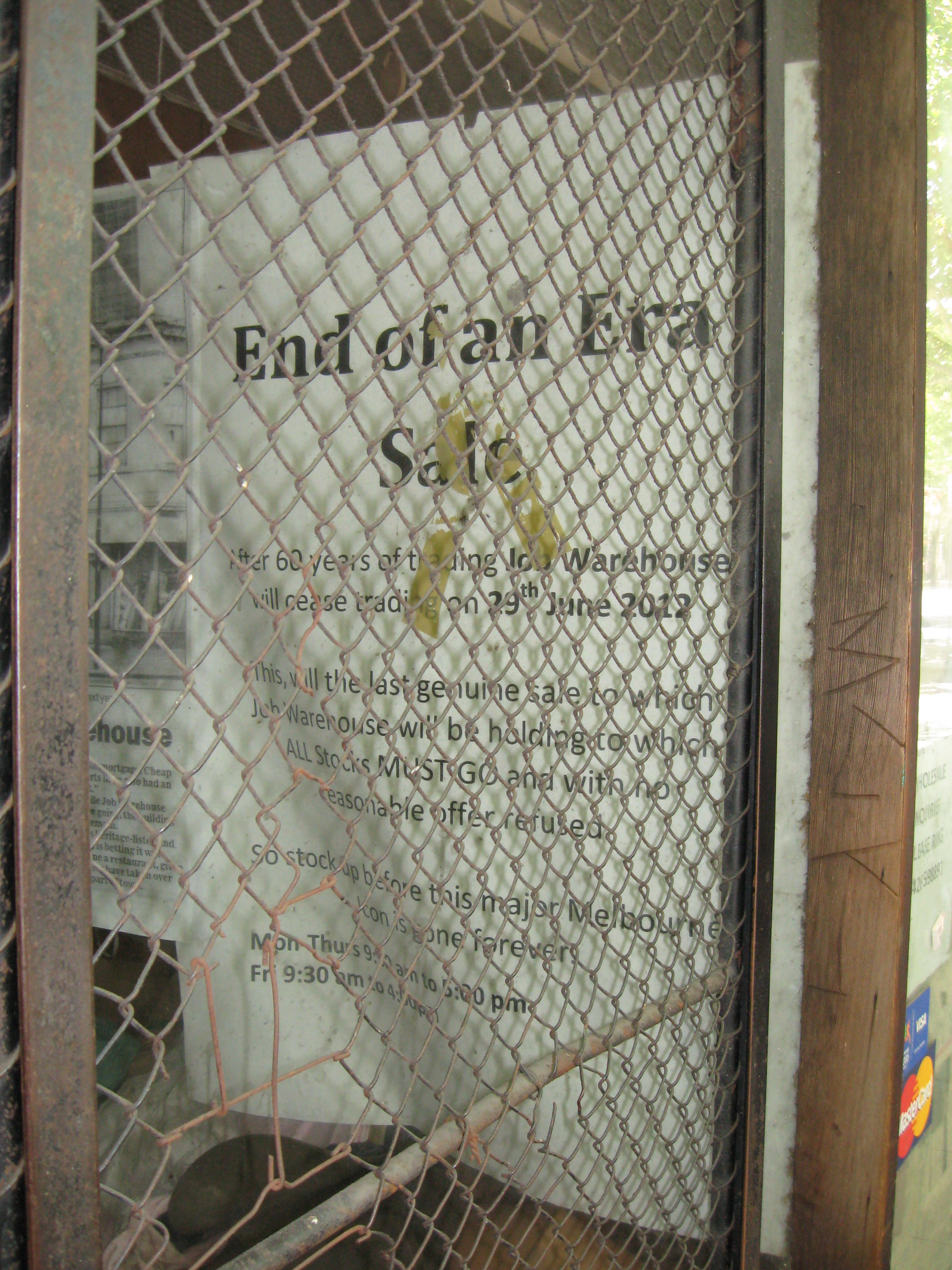
When Max died in 1988,  Jacob continued on in the business, closing the haberdashery section that Max had run as a mark of respect.  Jacob died in 2005 aged 91.  His sons decided to close the business in 2012 and lease the building, possibly for restaurants.

IMG_5043

Well, that hasn’t happened yet.  Job Warehouse is closed but not gone completely.  Walking up Bourke Street, I was surprised that it still looked much the same, and if I pressed my face up against the grimy windows (that, to be honest, were not much grimier than when the shop was in full operation), I could see that it looks much as it always did.  There are still bolts of material, great snarls of lace, yellowing papers and dust.

Just for now, I can imagine that it’s still operational.  After all, it was always shut when I saw it, and a new owner could step right in and take over where the Zeimer brothers left off- if he or she had a mind to.

‘Streets of Melbourne’ at the Old Treasury Building

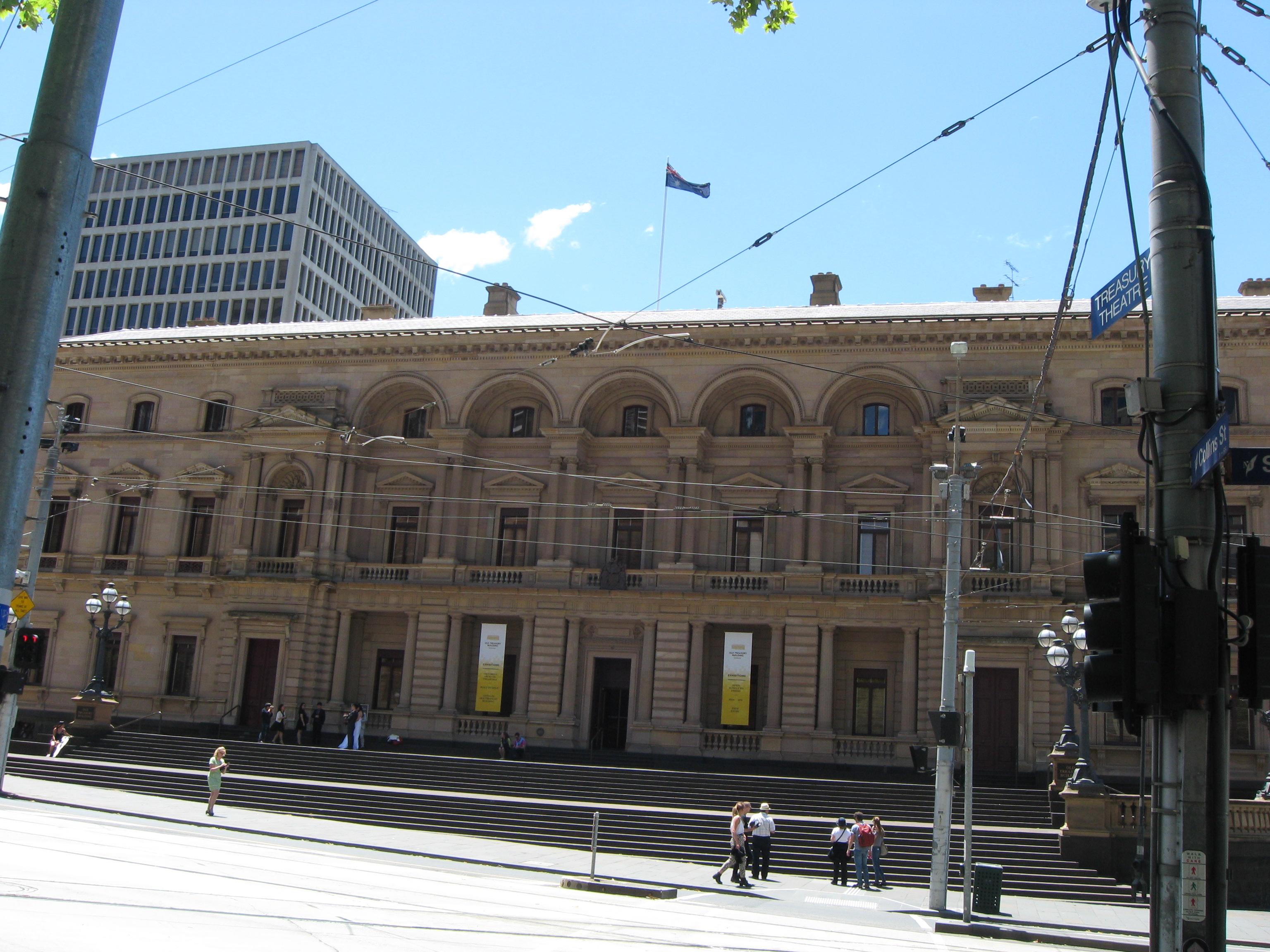
While I sometimes feel as if I am the only person who’s not away at the beach, the mountains or where-ever everyone else goes, there are some advantages in being home during the close-down around Christmas and New Year.  Off into town we went yesterday, feeling like tourists in our own town, to see the ‘Streets of Melbourne’ exhibition at the Old Treasury Building.  It’s on until May 2014, so there’s plenty of time to catch it!

IMG_5042

If you haven’t been to the museum in the Old Treasury, I strongly suggest that you pop in.  It’s FREE, it’s grown-up and it gives a much better narrative of the history of Victoria than the House of Fun that pretends to be the Museum of Victoria.  It’s open every day except Saturday between 10.00 – 4.00 each day, and its website is here.

The building itself was designed by J. J. Clark, who was only 19 when he started work on it.  It is a three-story Rennaisance Revival- style building, constructed between 1858 and 1862 at the cost of approximately 75,000 pounds.  It’s a proud building that boasts of the wealth that gold bequeathed to Victoria.  It was built to store gold in the vaults below (which you can access) and originally provided office facilities for the Governor, the Premier (then called the Chief Secretary), the Treasurer and the Auditor General.   It is still used today for Executive Council meetings.  The left hand side of the building usually has a bride or two hovering around it because it’s the home of the Victorian Marriage Registry (as you can see if you click to enlarge the image above).

We were fortunate to see the Executive Council rooms upstairs because they’re not always open. I’ve obviously been dwelling in pre-Responsible Government days for too long, because I’m rather ashamed to admit that it hadn’t occurred to me that there even IS an Executive Council any more.   In Port Phillip during Judge Willis’ time (i.e. prior to Separation), the executive council of New South Wales consisted of about 5-7 men, all appointed by the Crown and on the Executive Council by virtue of their substantive positions i.e. the Governor himself, the Commander-in-Chief of the Forces, the Lord Bishop of Australia, the Colonial Secretary, the Colonial Treasurer, the Chief Justice and the Attorney General.   You don’t tend to hear much about it, because the Legislative Council was much more significant in the granting of Responsible Government.   But here we are, 170 years on in the separate state of Victoria, and the Executive Council, which meets in this room,now  consists of the governor and the senior ministry (although I do wonder how they all crowd around the table).  It was pleasing to see photographs of the current-day Executive Council with both men and women, compared with the rather dour and serious men-in-suits in some of the older pictures in the corridor outside.

The exhibition of early Melbourne paintings is also on the first floor.  You can only see them through a tour (Mondays 2.00pm. from Jan 20th or other times by appointment $8.00). I purchased the catalogue because there’s images there that I have never seen before.  Many of them are from the Roy Morgan Research Centre collection.

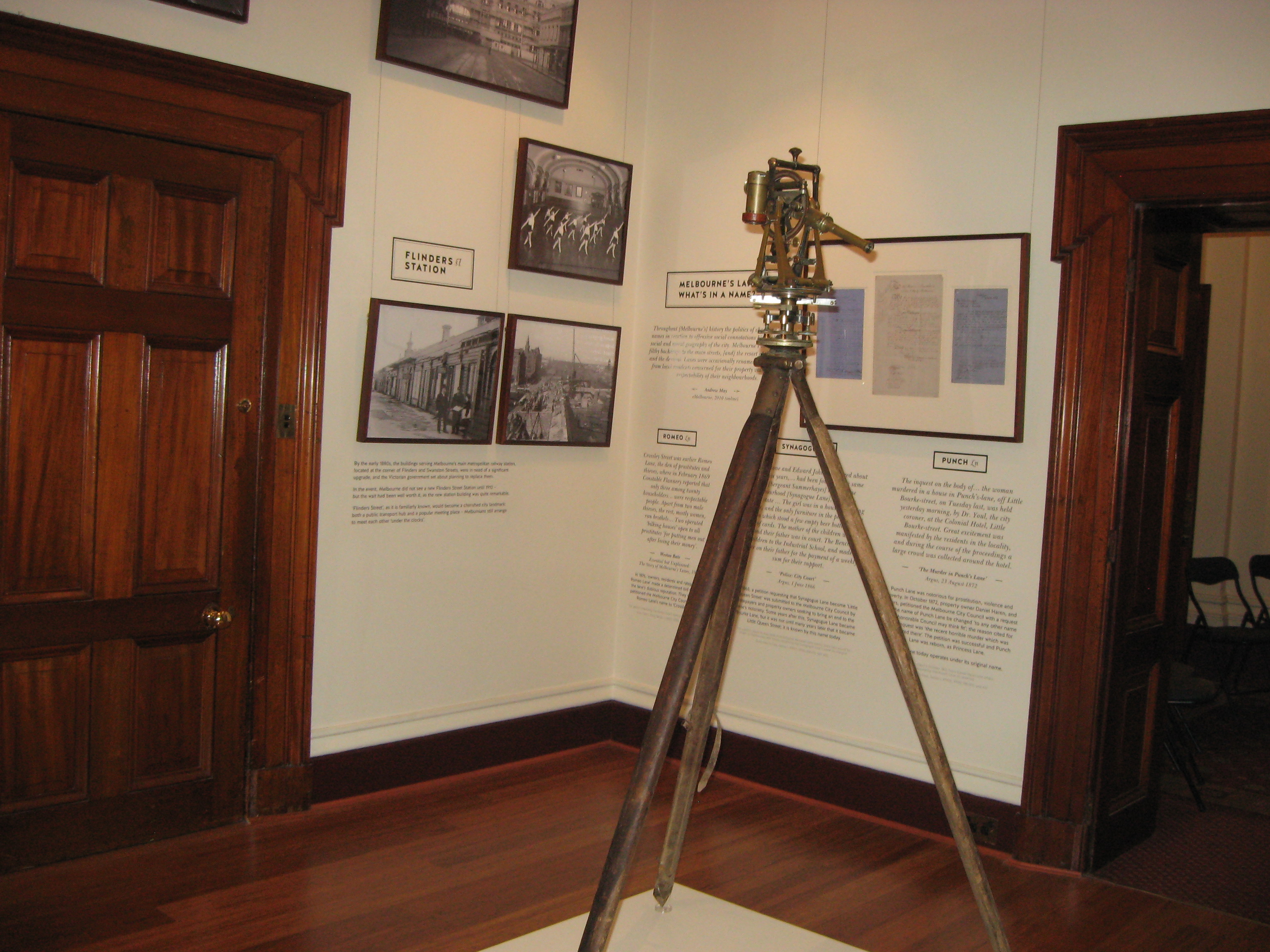
The museum downstairs has a large permanent display, but the first two rooms have special displays, and at the moment it’s of the streets of Melbourne, with an emphasis on the Hoddle Grid.  There are some fascinating maps there, and various surveying instruments and artefacts.

IMG_5040

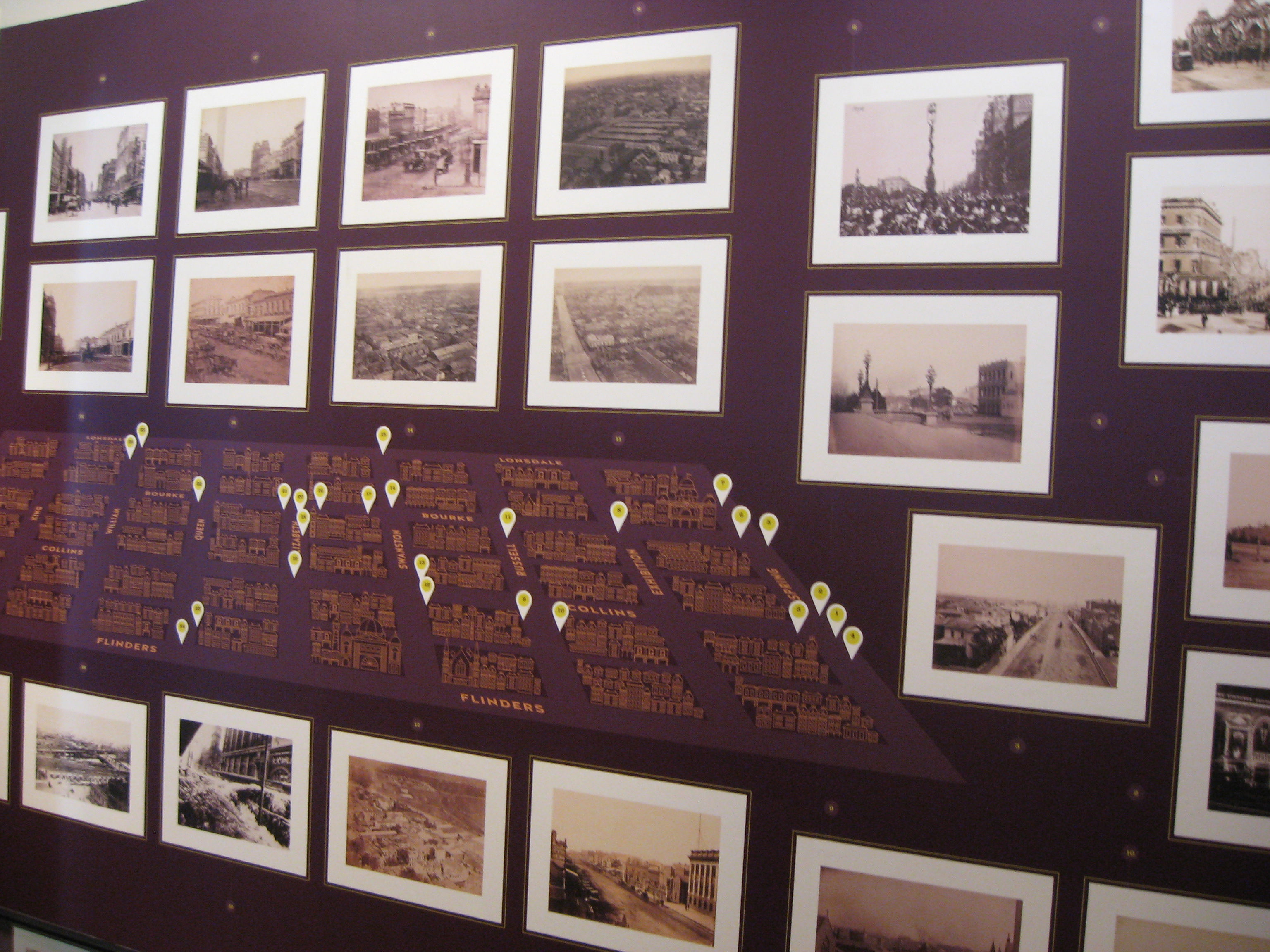
We probably spent 90 minutes poring over a large map of the grid on the wall that has numbered street scape photos surrounding it.  There were photographs that I hadn’t seen before here as well, and we spent much time picking out buildings and arguing about which direction the photograph was taken from  (a compass and directional arrows on the map, which we suggested, would resolve such disputes!)

IMG_5041

This is a fantastic museum and I’m pleased that it has survived and is still free after the earlier City Museum closed there.  You can see (and purchase) a terrific video of a trip on a cable car just before it closed during WWII, the exhibitions change frequently, and there’s actually something real in the museum to see,  as distinct from a series of ‘experiences’ and ‘immersions’ that we seem to be fobbed off with in museums these days.

Redmond Barry Bicentennial coming up

BarryHeader

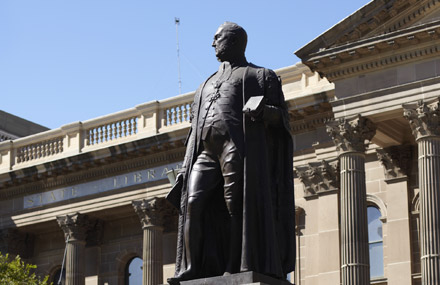
Big celebrations over the next few weeks to commemorate the birth of Sir Redmond Barry (1813-1880).  It looks as if 6th and 7th of June are the big days and I’m thinking I might go along for some of it at least.

The official site is here.

EXHIBITIONS:

Redmond Barry Bicentennial Exhibition – Supreme Court Library

210 William St Melbourne 17 May -11 June 2013. Free admission  Mon-Friday 8.30 -6.00  (5.00pm. on Friday)  Inquiries 96039197

You can read about Redmond Barry’s role in the establishment of the Law Library here.

Redmond Barry and the Melbourne Law School Exhibition

Melbourne Law School Library, Level 3, 185 Pelham St Carlton South

18 May- 22 June 2013  Free admission  Inquiries 8344 6177

You can read more about the teaching of law in Melbourne at the Melbourne Law School’s site here.

Evidence of a fruitful life: Redmond Barry and the University of Melbourne exhibition

Ground floor, Baillieu Library, University of Melbourne

4-10th June 2013 Free admission

Sir Redmond Barry was founding father and first chancellor of the University of Melbourne.  There’s a rather clever interactive timeline of the history of the university here.

Free, secular and democratic: building the Public Library 1853-1913

Keith Murdoch Gallery, State Library of Victoria

30 May 2013- 2 February 2014  (so no hurry for this one….) Free admission.

There’s several guided tours during June listed here.

A BICENTENNIAL WALKING TOUR

Friday 7th June 9.30-12.30 starting at the Supreme Court and finishing at Melbourne General Cemetery.  Conducted by Isobel Simpson. $25.00  Inquiries 8344 2016

EVENTS

Redmond Barry: visionary or scoundrel?

Chaired by Damien Carrick from Radio National, the panel includes Justice John Smallwood, historian Robyn Annear and barrister Ken Oldis.

Thursday 6th June 6.00- 7.15 followed by drinks and canapes until 8.30 p.m. Book by Monday 3 June $35 full/ $30 concession/$25 SLV member. 9884 7099.

Redmond Barry symposium

Baillieu Libary University of Melbourne, Friday 7 June 1.30-4.30 p.m. Free admission but RSVP essential – http://go.unimelb.edu.au/6d6n

So much Barry!!! Let’s see- I could do a couple of the exhibitions on Thursday afternoon, then go to the Panel Discussion at the library that night and eat canapes; get up bright and early on Friday morning for a walk around Melbourne to walk off the canapes; then go to the symposium that afternoon.

redmond_barry_statue

More worthies at the Boroondara Cemetery

It surprised me that the Boroondara Cemetery was established as early as 1858.  I’m well aware that graveyards were established on the outskirts of cities because of fears of contagion, but Kew seems so suburban for 1858.  The surrounding houses seem to be Edwardian in design, and the fence and rotunda that give the cemetery such a  High Victorian/Edwardian appearance date from the 1890s as well.

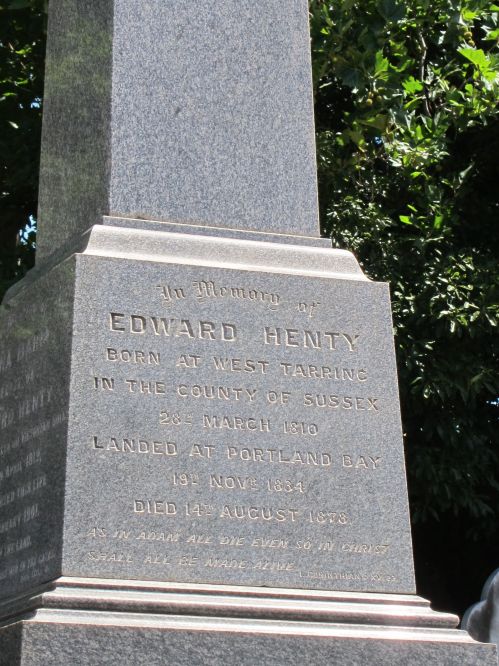
Because of the strong turn-of-the-century aspect of the cemetery,  I was startled to find the graves of very early Victorian settlers there.  Here’s Edward Henty from Portland, one of the earliest permanent settlers

IMG_0173

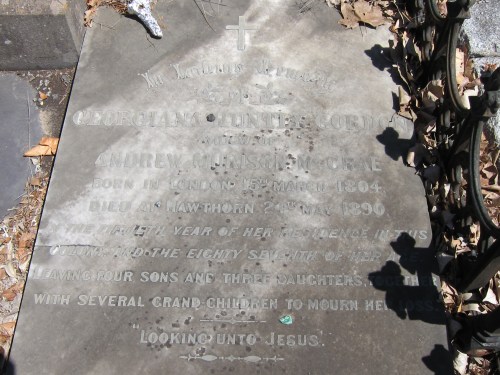
Georgiana McCrae is buried here as well.

IMG_0175

There’s some very large memorials here- none rivalling the Springthorpe Memorial in beauty, but striking nonetheless.

There’s the Syme memorial for David Syme, proprietor of The Age

IMG_0158

IMG_0161

and the Cussen Memorial was erected by Supreme Court judge Leo Cussen for his son Hubert.

Cussenmemorial

Somehow, compared with these, the Howett memorial looks rather -um- utilitarian.  Still, time may be kind to it.

IMG_0172

I quite liked this one.

IMG_0171

While speaking of death, I noticed this death notice in The Age yesterday.  I do not know the woman at all, and mean no offence by posting this.  I was very touched by it.

WEST Verna Rae. Passed away peacefully at Munday Court, Skye on December 27 2012 aged 88…. A feisty savvy survivor of the Old Beechworth Asylum who never stopped searching for our mother, with whom she was lovingly reunited in 1991.  Moved to a Singleton Equity house in Skye in 1992 with loving care from DHS.  We were glad to be able to embrace Verna in our family.

Therein lies a tale, I suspect.

Love and death: The Springthorpe Memorial at Boroondara (Kew) Cemetery

On a beautiful 24-degree summer afternoon, where more perversely pleasant to visit than a cemetery?  So off we went to Boroondara Cemetery in High Street Kew, primarily to see the Springthorpe Memorial which I’d seen many times in photographs but never actually visited.

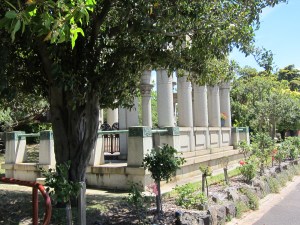
Boroondara Cemetery was established in 1858 as a garden cemetery and, with imagination, you can just sense the Victorian conceptions of death and mourning that underpinned its design.  The original plan, since abandoned, was for curved paths and winding roads, but it nevertheless maintains its rather forbidding red brick perimeter wall, caretaker’s lodge with slate roof and a clocktower, and rotunda.  Its most famous monument is the Springthorpe Memorial, completed in 1907 after ten years’ construction and described in 1933 in The Age as “one of the most beautiful and most costly in the commonwealth”.

It was erected by Dr. John Springthorpe to commemorate his wife Annie, who died in childbirth with her fourth child, Guy, who survived to become a well known Melbourne psychiatrist, following in his father’s footsteps.  Dr. John Springthorpe had arrived in Australia as an infant and had a successful career with positions at the Beechworth Lunatic Asylum, the Alfred and the Melbourne Hospitals. He enlisted during World War I with the Australian Army Medical Corps, and on his return to Australia after the war, worked on post-war repatriation and psychiatric care (hence his commemoration in the name of ‘Springthorpe’ housing estate on the site of the old Mont Park/Bundoora Repatriation hospital). The breadth of his professional involvements is wide: training and registration of dentists, nurses, masseurs, ambulance work, maternal and child welfare. He was very much the clubbable man, and a supporter and collector of the nascent Australian artist scene of the turn of the twentieth century.  It’s ironic, then, that a man who had such a rich life should be best known for a memorial that he created to commemorate death.

As a thirty-one year old, he had married the 20-year- old Annie Inglis on Australia Day 1887 and they moved into a house at 83 Collins Street east- the fashionable, doctors’ end of town.  She was a first cousin to the a Beckett family, and hence the Boyd family who are so interwoven into Melbourne cultural life.  Ten years later she died, giving birth to her fourth child.  Disconsolate with grief, Dr Springthorpe sent his children away to live with relatives, and poured his sorrow into his diaries, transforming his house into a shrine to Annie with photographs and paintings to commemorate their married life, and leaving the house just as it was- even to the blood stain where his wife hemorrhaged to death.  In the days immediately following her death, he turned to the artistic circle of Melbourne and commissioned the sculptor Bertram Mackennel to design

a piece of sculpture, all in white marble, a sarcophagus, richly traced, with certain inscriptions on the sides; on the top, a sculptured figure, as much like Annie as she lay in the drawing room as possible

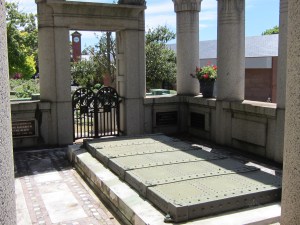
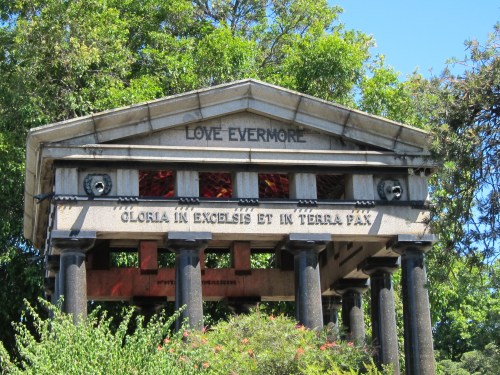
And here it is

IMG_0163

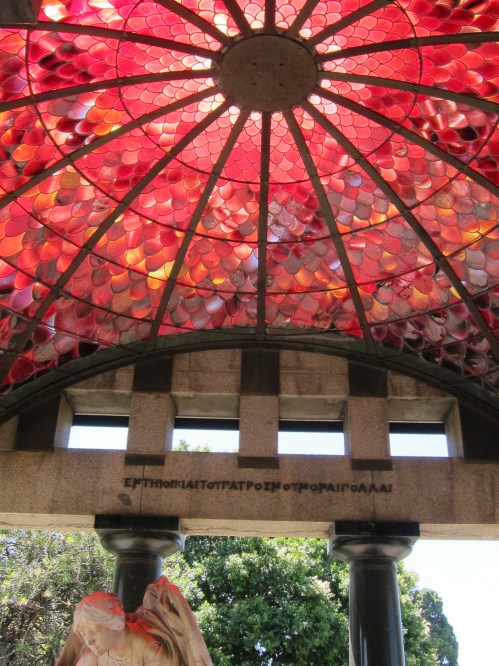
The memorial took nearly ten years to complete.  The roof, made of red glass that bathes the marble in a rosy glow, was designed by Harold Desbrowe Annear.

IMG_0164

The memorial was originally surrounded by gardens designed by William Guilfoyle, the designer of the Botanic Gardens.  Later work on the garden saw the installation of two works by Charles Web Gilbert- my husband’s grandfather (and to be honest, our main reason for seeking out the Springthorpe Memorial in the first place).  One of these was of a brolga defending her chicks against a snake rearing up to strike, and the other of a monk.  Neither of these sculptures have survived, and it is unsure whether they were ever positioned where they were intended.  However, this picture from 1929 seems to show some sort of bird with outstretched wings, and interestingly, the marble figures seem to be enclosed in a glass case.  The gardens were subsumed into the rest of the cemetery when, after Springthorpe’s death, it was found that the transactions for the land had not been completed.

[Later insertion: please see the comments below regarding the further design of the gardens surrounding the memorial by Luffman/Loughman]

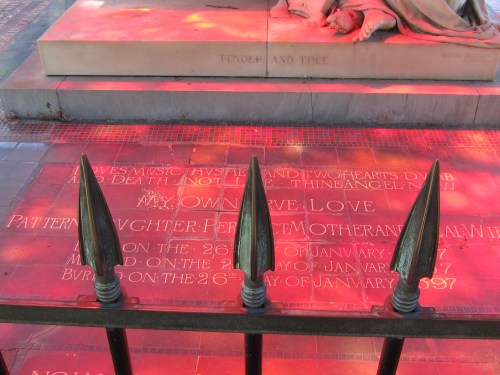
The whole memorial is heavily freighted with symbolic references, including quotations and adaptations from the Bible, the Greek classics, Walt Whitman, Wordsworth, Dante, Browning, Riley, and Dante Gabriel Rossetti.  There’s something just a little bit creepy about the idealization of his wife- especially given that she is not named anywhere on the memorial:

My own true love
Pattern daughter perfect mother and ideal wife
Born on the 26th day of January 1867
Married on the 26th day of January 1887
Buried on the 26th day of January 1897
IMG_0165
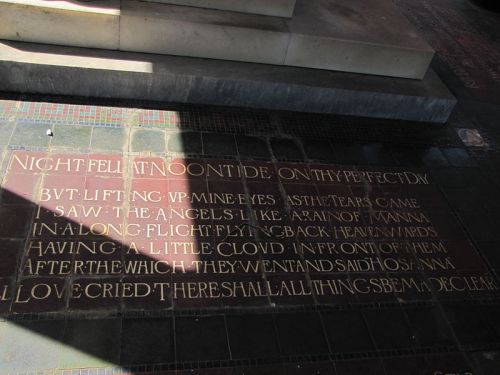
It is a memorial deeply engraved by text:
springthorpe_inscription
I found myself thinking of the pre-Raphaelites and their heavy emphasis on beauty and death.  To our eyes today, there’s something rather unhealthy about it all.  Maybe people even then were discomfited by such fervent obsession as well: apparently Mackennell himself warned Springthorpe that the etching of deeply symbolic and overwrought text on every possible surface might be over the top.  The Bulletin concurred:

Turning for a last look, the tremendous monument loads the emotions, insistent, almost blatant, one thinks dully of the dead woman, ten feet below, on whose brow it must press so heavily. Only its artistic beauty, only Mackennal’s consummate genius, could have saved it from descending to the level of a gorgeous advertisement.

The monument cost a huge amount, although it is uncertain what the final cost amounted to with figures ranging  from £4,500 to £8,000-£10,000 bandied about:  in today’s currency, somewhere between $700,000 and $1.3M.
IMG_0178
There’s a fascinating article by Pat Jalland exploring the Springthorpe Memorial as a masculine expression of grief. She wrote Australian Ways of Death. A Social and Cultural History 1840-1918  and you can access her article from The Age here.    And Anne Sanders from the National Portrait Gallery delivered a wonderful presentation on Springthorpe himself and the video and transcript are well worth a look.