Category Archives: History writing

Margaret and Maggie

Some time ago, in reviewing Peter Cochrane’s book Colonial Ambition, I made an offhand reference to Margaret Kiddle’s book Men of Yesterday and had obviously intended writing a more considered post about Kiddle’s book at some later date.  Now that I come to write about it, I find myself flicking through my reading journals that predate this blog (which has largely usurped their function) and I am surprised and regretful that I didn’t write an entry about it.  It was a book that deeply affected me at the time and the only explanation I can think of for its omission is that I must have considered it ‘work’ reading as distinct from ‘leisure’ reading.  I’m increasingly finding that there is no boundary between the two- I don’t know whether that’s a good thing or not!
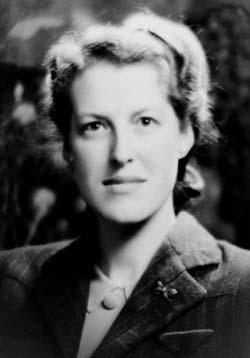
Men of Yesterday is framed by the poignancy of the circumstances by which it posthumously reached publication.  Its author, Margaret Kiddle was a tutor at the University of Melbourne, but described and downplayed herself as “not an academic”.  She died of renal failure, after years of illness and a decade of dialysis, at the age of 44 with her manuscript finished but unrevised.  She left for her literary executors (including Max Crawford and John Le Nauze)  a list of what she saw as essential revisions and this note:

I guess this is just another ‘Melba farewell’ but if not-

Max, as you will be going to Wisconsin, I suggest that if he will, John takes over the revision.

John- I should be very grateful if you would do it for me.

Acknowledgements: The file correspondence and comments on notes will help you- don’t forget to thank yourselves!…This book has been finished in dramatic circumstances- for publicity purposes cash in on them as much as you like- it may earn some money!  (cited in MacKellar, see below)

But this was no ‘Melba farewell’– it was the real thing, and the book needs no cashing in.   Margaret Kiddle was proud of her pioneer ancestors, and the book is almost an act of love to the experiences of her forebears.  It is a very human book and it has attracted its share of critique. As the pointedly-titled thesis What Kiddle forgot reminds us,  aboriginal dispossession and women’s roles were kept in the  background,  and it has attracted (perhaps unfairly)  a reputation  as  a book of its time and historiography.

I’ve been reunited with Margaret Kiddle through a beautifully written opening chapter in a book by Maggie MacKellar called Strangers in a Foreign Land.  It has been generously- indeed rather TOO generously??- downloaded into Google Books and the opening chapter, at least, is a cracker.  MacKellar describes her  rediscovery of Kiddle’s work as part of her own project on the Niel Black diaries and the book that follows is an edited and interwoven transcription of Niel Black’s diaries.   In her introductory chapter she reprises early Port Phillip and Western District history, interweaving it with Major Mitchell’s acclamation of Australia Felix as the culmination of his journey that started just several kilometres from her own home.  She explains, as all historians experience and many (too many?) describe, the rush of emotions in dealing with primary documents, with her consciousness of what she is reading heightened by the elemental summer smell of bushfire that seeps into the cloistered space of the State Library reading room.  Despite my own as yet unresolved feelings about historians’ use of themselves in the history they are telling,  I have no such qualms about  edited diaries and letters.  It is in the historian’s interaction and shaping of the primary documents that the engagement with larger historical questions emerges:  it is obtuse to pretend that the historian is not there reading, absorbing, making connections and talking back to the material.

Just from the extracts available online, this looks a beautifully presented book.  Time, and an awareness that I am becoming distracted,  prevent me from reading further, but the opening chapter is a delight in itself.

References

Kiddle, Margaret Men of Yesterday: A social history of the Western District 1834-1890 Melbourne, Melbourne University Press, 1961

MacKellar, Maggie Strangers in a Foreign Land: The Journals of Niel Black and Other Voices from the Western District,  Carlton Vic., Melbourne University Publishing, 2008
Writing home

Read a good article last night:

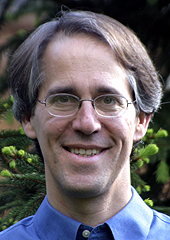
David A. Gerber “Acts of Deceiving and Withholding in Immigrant Letters: Personal Identity and Self-Presentation in Personal Correspondence.”  Journal of Social History, Vol 39, No. 2 (2005) pp 315-330. I accessed it through my university library, but I see that it’s available through SLV as well.

With the current trend to write the “I” into history ( something that I am ambivalent about and will no doubt explore one day in another post)  you’ll often read about the emotional rush that researchers feel when holding a letter.  The precariousness and contingency of its journey into your hands, the physicality and smell of the paper and the knowledge that your subject had picked up a pen, smoothed out that very sheet, re-read it on finishing-  it all gives the act of reading the letter an edge of sanctity that is lost when reading it on microfilm, or digitally.

In this article, the author has obviously moved beyond that initial response- as must we all eventually. Instead of attending to the content of the letter, he looks instead at the immigrant letter as a strategy in maintaining interpersonal relationships across distance.  We know for ourselves that what we project and present in letters is not necessarily the case, and he focusses on what is not made explicit, what is hidden and held back.  Perhaps that’s part of the uneasiness about an online communicative presence now- that the interconnectedness of different online genres means that our different personae are no longer quarantined from each other. We may intend to remain silent, but instead earlier conversations are overheard.

Gerber’s research involves immigrant letters written between Canadian and American migrants and their families in Britain.  They were separated by a sea-journey of approximately 7-10 days which could stretch out to as long as 4-6 weeks: whatever the range it was certainly of a different magnitude to the voyage to Australia.  He describes his immigrants as “venturesome conservatives”, pessimistic about Britain’s future after the Napoleonic Wars and hostile to modernity and again I find myself wondering whether this also applied to Australia.

In these letters there is a psychological need to continue the relationship they are seeking to maintain in some way.  It’s often a collaborative exercise, even though in the archives we often only read one side of the communication.  Of course there is the issue of incompleteness and representativeness: letters may not have been collected or saved; they may be in private hands; they may have been culled; and the illiterate or those with completed families may not appear at all.

He explores the reasons – using examples from his letters- of outright lies and misrepresentations, but also untruths and silences.  Letter-writers might not want to cause worry to those at home; perhaps they had been discouraged from emigrating and have the need to save face.  On the other hand, perhaps it suited their purposes to exaggerate their situation.  Either way, there was the danger of being found out.  As Gerber points out “Gossip became transnational” as letters were shared between family and acquaintances in both settings.  Even silence is itself a type of communication.  It was a way of changing the tenor of the relationship.  For example, a child could take her time in replying to a parent and there is nothing at all that the parent could do about it.

Often the reason that we come to a body of correspondence is because we need the content that we hope they contain, or because the writer or recipient is important to our research in some way.  We become swept up in the details they offer, and the relationships that we try to reconstruct from them.  This article reminded me of the relationships that underpin the artefact itself, as a genre, that lie at the bottom of the act of writing and reading at a distance.


Writing the second book first

I read an interesting article recently in Rethinking History Vol 14 Issue 1, 2010.  It was called ‘A letter from an emeritus historian c.2049’, written by Jeffrey Wasserstrom, Professor of History at University of California, Irvine.

The framing device of the article was that it was written by a retired professor in 2049 who had been approached by a younger historian who had uncovered articles of his written back at the turn of the twentieth century- around 2009 or thereabouts.  The elderly professor, conscious of not wanting to be seen as doddery or rambling (but probably not succeeding!), has written to the younger researcher reminiscing about historiography fifty years earlier,  recalling his own publishing career, and expressing some regrets about history-writing seen in retrospect.

It took me back to the time in the 1980s when I was frustrated (albeit not for the same reasons as those the author describes) by wanting to ‘write my second book first’ (a lovely phrase). And to moments in the 1990s and early noughts, when I found myself admiring books by young professors of history who, more daringly than me, began their careers by writing ‘second books’ immediately.

Writing the second book first- the book that you wanted to write all along, but were dissuaded from writing. I must admit that at the moment the idea of my writing ANY book seems in the realm of the far-away, but I’ve been thinking a lot recently about the constraints of the traditional thesis genre.  I feel as if I am receiving mixed messages about this.  On the one hand we are pressured early to map out a chapter plan, no doubt to give some direction to our writing.  Where a PhD has been published later as a book (and I know that there’s often much rewriting that goes into this) it seems that often the traditional thesis chapter structure is so integral to the thinking that it follows the work into its new incarnation where, to me, it often reveals the academic DNA of the original.

But at the same time, we’re being told that the door is ajar to do things differently- although, tellingly, those who are calling us from the other room are no longer supervising students directly. I attended a workshop given by John Hirst a couple of weeks ago called ‘Must History Have Chapters?’ where he distributed the tables of contents of a range of history books and theses including Michael Roe’s The Quest for Authority in Eastern Australia,  Garrett Mattingly’s The Armada (1959) , and the more recent Pistols! Treason! Murder! by Jonathan Walker – and wow!  check out the website!

I feel as if I’m being enticed to be courageous- but not quite yet: to be brave- within limits.  I’m not really sure how I want to write my thesis and having upgraded it to encompass Willis’ whole career opens up options that I hadn’t considered before.  Another post for another day will explore my own feelings about the use of “I” in my thesis, and I’ll be attending a writing retreat in late October that I know, already, will push my writing- or at least help me clarify where I don’t want to go.  I’m pleased that I’m still at a stage where I haven’t ventured so far in any one direction that I can’t head off somewhere completely different.

Uplifting Quotes for the Uninspired Historian #6

History is made up of a multitude of whispery but insistent voices from the past, each filled with its own imaginings and fond hopes, cynicism or despair, its own way of understanding an endlessly complex world, of explaining the inexplicable, of articulating an imperfect, subjective grasp on an historically determined existence. This conglomerate of contested, contingent meaning making that we call experience must be caught in a finer mesh, in the analysis of the webs of life as lived by individuals in relation to each other, as well as in the broader web of discourses that shaped and sought to define those lives. In analysis of the particular, and in the complexity of its relationship to the general, lies the recurring fascination of history.

Penny Russell, ‘Cultures of Distinction’ in Hsu-Ming Teo and Richard White Cultural History in Australia, Sydney, UNSW Press, 2003  p. 169

Uplifting Quotes for the Uninspired Historian #5

‘Being there’ for an historian is the feeling for the past that can only be matched by the hours, the days, the weeks, the months, the years I sit at the tables in the archives. It is the assurance that my extravagance with time here is rewarded with a sensitivity that comes in no other way. It is an overlaying of images one on the other. It is a realisation that knowledge of the past is cumulative and kaleidoscopic, extravagantly wasteful of my energy.

Greg Dening ‘Culture is talk. Living is story’  in Hsu-Ming Teo and Richard White Cultural History in Australia, Sydney, UNSW Press, 2003  p. 232

Quote? Unquote?

I’m reading and very much enjoying a book by Jane Errington called The Lion, The Eagle and Upper Canada: a developing colonial ideology.  The book was awarded the Corey Prize in 1988, a prize for the best book on Canadian-US relations, jointly sponsored by the American Historical Association and the Canadian Historical Association.  Reviews that I have read about the book at time of publication have not been universally glowing, but I’m enjoying it nonetheless, oblivious as I am at this stage of the nuances of US-Canadian historiography and politics.

One thing I have noticed, though, is that she does not use block quotes but instead snips them up and integrates them into a paragraph. For example:

On 3 June 1814 Rev John Strachan preached a Thanksgiving Service to his congregation in York celebrating the deliverance of Great Britain from the devastating conflict in Europe. “Thankfully and devoutly” he declared, we “acknowledge the mercy and goodness of Almighty God; for protecting His Majesty and His dominions during the whole of this arduous contest; and for the signal and glorious victories obtained by its armies.” “Our joy is full,” he continued, “when we reflect that … Great Britain has been chiefly instrumental, through the blessings of God, in bringing about the happy changes which we now contemplate.” “Truly” she was “the preserver of the independence of Europe” and “the proclamation of peace,” he declared, would triumphantly bring her to “a new era of glory.” And though peace had yet to be won in North America, Strachan called upon Upper Canadians to “rejoice”. We have earned “the happiest time…now rising upon us,” he maintained. (p.97)

This quote is duly footnoted as “Strachan, A Sermon Preached at York on the third day of June, Being the Day Appointed for General Thanksgiving, 1814, 22-3, 38, 34.  It reads smoothly, and it’s only when you look closely that you notice the rather clunky double inverted commas.

Still, I find myself a little uneasy about it.  It reminds me of the technique of “The Week” magazine, to which I subscribe largely because of the generous discount for subscriptions.  As a way of distilling the essence of commentary (and perhaps to avoid copyright issues), the magazine likewise uses snippets of sentences in inverted commas, although sometimes I wonder why they choose such banal words to highlight in this way. For example, it summarizes Rex Jory’s column from “The Advertiser” in this way:

The perfect monopoly has struck again, says Rex Jory. The price of postage stamps “crept up” 5c to 60c last week, and what could we do about it? Nothing.  This is preposterous and outrageous. It’s bad enough that Australia Post can charge “pretty much what it likes” but it also “contemptuously” refuses to provide a weekend service.   etc etc.

Errington’s integration of snippets into a prose summary probably does justice to the sentiments expressed- possibly better than verbatim slabs would have done, but I feel wary- what if she’s misrepresenting what is said?  Although, short of slavishly writing out the whole document, how is any reader to know that paragraphs are not chosen selectively and skewed by ellipses and omissions?

I think, too, of the advice given in Ann McGrath and Ann Curthoy’s recent book How to Write History that People Want to Read that examiners and readers always skip over slab quotes anyway.  Do they? Do I?  I must admit that I think I do sometimes.  I think I’m looking for the analysis rather than the evidence.  Yet the fear of plagiarism or sloppiness prods me into backing myself up when I am writing, even though I don’t always read the evidence when somebody else backs themselves up the same way.  Errington’s technique weaves the analysis and evidence together in a way where it is less easy to skip.  I think I like it, but I’m still not sure.  A little writing challenge to meet, I’m sure.

Clippings and nodes

The London Review of Books has a fascinating article by Keith Thomas, a fellow of All Souls College in London (Vol 32, No. 11 10 June 2010). Keith Thomas is an historian of the early modern period, and a student of Christopher Hill whose books I remember vaguely from an undergraduate subject over 35 years ago on Puritans and Quakers, Shakers and other tremblers in the English Civil War.

I enjoy  reading about how other historians “do it” and enjoy reading biographies and autobiographies of historians generally- and they are legion!  I’ve been in enough historians’ offices to glimpse their shoeboxes of index cards and rolls of paper, and I must admit that I’ve always been bemused by what they do with them.   Even before reading Thomas’ article, I’ve been aware of Beatrice Webb’s  adage of “one fact, one card” and I’ve always wondered how that would work with a multi-layered fact that could be categorized in so many different ways.  [ One spin-off of reading Thomas’ article has been that I went to my bookshelves and picked up Beatrice Webb’s book My Apprenticeship which I must have bought 35 years ago and have never even opened. What impelled me to buy it for the princely sum of $2.10 I wonder?  It may just find its way to the pile of books beside the bedside table.]  But Thomas has enlightened me- you place a punchhole in the margin of the card for a particular category and then, using a knitting needle you can locate all the cards that have been punched in the same place on the card under that category.  Well I never!

Thomas himself writes on sheets of paper on one side only, notes down the bibliographical details (and is honest enough to admit that he often gets them wrong!), then cuts up the pieces of paper and files them in envelopes, with a separate envelope for each topic.  He then keeps an index of all the envelope-topics.  His envelopes include jottings, newspaper articles etc.  Some of the envelopes become voluminous enough to migrate to a box or drawer.

For myself, I’m an NVivo gal.  I returned to history after a period working as a researcher in education which has somewhat of a social-sciences bent, with quite a bit of work on interviews and protocol analysis.   It was in this context that I became aware of Nud*ist, the early incarnation of NVivo.  Basically (and I suspect that most qualitative research programs do a similar thing), there are the source documents which remain intact, then the “nodes” that are tags that you attach to the text in the source document- a bit like highlighting them with different coloured pens.   You can group the tags together into trees of associated nodes,  merge nodes that ended up being similar, or split nodes into categories that you weren’t originally aware of when you started your research.  Its plasticity is intentional: it is assumed that your categories will be shaped by the research you undertake.

Although my research doesn’t have the model and theory-building aspect that is encouraged by NVivo, I find it invaluable for just keeping track of what I have.  As I read Thomas’ article, I could see how NVivo encourages and supports the same activities.  For example, where Thomas would open his envelope and have a little shuffle through the assorted things he found in it, I open a node and am amused by the things I’ve found to put in it. Where C.Wright Mills wrote of the pleasures of rearranging his filing cabinet as a way of reorganizing his intellectual index, I can see that on the (admittedly rare)  occasions that I’ve sat down and merged or split my nodes, or arranged them into trees that I’m doing an intellectual form of rearranging the furniture.   I like that I can easily go back and find the complete document from which a particular paragraph or dotpoint emerged,  and that a single paragraph can be categorized in any number of ways.

It’s certainly not foolproof, as evidenced by my chagrin over the missing letter (which, by the way I have never found, but I did find a document similar which I now wonder if I misinterpreted on my initial reading).  I live in terror of the whole edifice of NVivo collapsing. While I am not in danger of being drowned, as Anatole France warned, by an avalanche of index cards,  my increasingly towering spindle of backups on DVD  at home and work, and the steady accumulation of portable hard drives and data sticks must be contributing to Harvey Norman’s stellar profits.

Once you’ve started down a particular route, there is an element of commitment and momentum that keeps you on it.  Thomas obviously finds that his envelopes work: those who use card files obviously do too.  There’s the danger of constantly searching for the perfect system instead of actually sitting down and using it.  The corridors of academe are crowded with scholars who found their system and made it work for them.  I do find myself wondering if the availability of key-word searching and micro-tagging will change the sorts of histories we write- will the ease of locating the detail alter the process of creating a big-picture argument?  Or does the propensity to be either a hedgehog or a fox drive the systems and processes that academics set up for themselves?

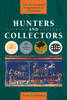
‘Hunters and Collectors’ by Tom Griffiths

1996, 282 p

I finished reading this book, sitting up in bed.  I clapped it shut and burst out “Bloody brilliant!”. Now I love my history books as much as anyone, but I don’t always react with such enthusiasm.  The book came with high credentials- the string of medals across its front cover indicated that it was going to be pretty special ( winner of the NSW Premiers Literary Award 1996, the National Book Council’s Club Banjo Shortlist 1996, the winner of the Premier’s Literary award- not sure which state- 1996, and the Eureka Science Book Prize 1996.)  I wasn’t disappointed one little bit.

The book’s full title is “Hunters and Collectors: The Antiquarian Imagination in Australia”.  Griffiths describes the antiquarian imagination as  “a historical sensibility particularly attuned to the material evidence of the past and possessing a powerful sense of place”. (p1).  His book explores the tensions between two groups of people in relation to history: Aboriginal and non-Aboriginal Australians, and amateurs and professionals.

He explores these tensions by focussing on a handful of 19th and early 20th century Victorian (as in the state of Victoria) antiquarians and collectors.  For example – R. E. Johns collected a huge number of Aboriginal skulls and his drawing-room collection ended up at the Beechworth museum.  Alfred Kenyon was a collector of stone artefacts and involved in societies like the Anthropological Society, the Prehistoric Club, and was heavily involved in Port Phillip history. For the family historians among you, you’ll know that  the  Kenyon index in at the State Library is a well-thumbed card index of the pastoral pioneers of the district.  Then there were the nature writers of the early 20th century like Donald McDonald  who wrote nostalgia-based nature columns like “Village and Farm” or “Nature Notes and Queries” for the Argus, or Charles Barrett who wrote for New Idea and the Victorian Naturalist.

We might feel uneasy about gentlemen amassing aboriginal skulls and artefacts for their drawing-room collections, but Griffiths points out that as well as the acquisitive aspect of their activities, there was a political and intellectual strand as well.  Although they were not academics – indeed many were hostile and suspicious towards academia as a whole- they did correspond with other collectors internationally and were particularly  interested in the classifying aspect of anthropology.  For the collectors based in Victoria, there was a tension between their interest in “real” Aborigines, preferably far distant in central Australia, and their eagerness to distance themselves from urban and what they would see as “half-caste” Aboriginal political activism in the present.   For example, Barrett and Kenyon’s book Blackfellows of Australia, written in or around 1936 in available online here.  It’s well worth a look, and sobering to consider that it’s being written at about the time of the Aborigines Advancement League, William Cooper and  the  Day of Mourning.

Then there’s the issue of amateur and professional historians, and the tension between memory and history.  This was of real interest to me, because as I may have mentioned, I am fairly heavily involved with my local historical society.  It was established in 1967, just in advance of the flood of historical societies that commenced between 1970 and 1990.  Local historical societies are grounded in a powerful sense of place and at first tend to revolve around key people and a “keep it under the bed” mentality.   This section of the book was particularly pertinent to me, as Kenyon lived in Heidelberg with his daughter, and I’ve caught several references to him in our collections.   There has always been, as Griffiths points out, an uneasy relationship between universities and local historians, and I confess to feeling that tension from time to time, overlaid as it now is by friendships and local loyalties.  And as Griffiths also points out, universities too have increasingly been repackaging their course offerings into  “public history” as a more saleable income stream in the face of decreasing funding.

I hadn’t particularly considered before the proliferation of history and nature societies and mentalities that still lingered in the 1960s education system that I grew up in.  For example, many of the antiquarians he writes of were involved in the different commemorative days that school children were involved in (Wattle Day, Arbor Day etc) and groups like the Gould League of Bird Lovers.  In particular, there was a link with the School Paper that all Victorian school children received regularly as a supplement to their School Reader.  There’s copies of the April 1911 School Paper devoted to Australian History on the SLV site here– again, well worth looking at-  for its emphases in telling Australian History.

Griffiths brings the antiquarian imagination right up to the present day with his description of “history towns” like Maldon in Victoria, and planning and demolition battles over what bureaucrats vs. locals might regard as significant buildings.  He writes of the modern wilderness movement and the contradictions of attempting to maintain a “pristine” environment which is nothing of the sort.

He closes his book with a personal reflection of his own role as a collector for the Museum of Victoria, and how it intersected with the activities of the earlier antiquarian collectors he describes in this book.  In this epilogue you can detect the influence of the historian Greg Dening in particular, whom he names almost first up in his acknowledgements.  The epilogue really is masterful: it returns our gaze to the men and their intentions on which the book is based, and reminds us how they have been interwoven into our own history-making today.   And, in case you haven’t picked it up, this really is a bloody brilliant book.

Reading the whole thing

I was rather startled by a fellow student admitting at our history post-grad seminar the other night that she has only read one history book from cover to cover.  Quite apart from her- well, is bravery the right word?- in disclosing this, I was surprised that the technique had obviously served her well enough to bring her to postgraduate studies at all.

I can barely bring myself not to finish a fiction book, but there are times when I hunt-and-peck my way through a non-fiction book using the index, as she said she did.  Undergraduate courses encourage chapter-only reading by the handbooks they use and the links they provide to online readings, which are in turn circumscribed by academic copyright regulations.   Conventions of academic writing like abstracts and keywords are an open invitation to browsing, and the demands of word limits require whole tomes to be noted but dismissed with a footnote, or a doff of the argumentative cap in passing.

But in areas that directly impinge and overlap with my own thesis, not only do I feel as if I should read the whole book, but I want to read it to pick up on the nuances of the argument, how it is framed, and where I want to distinguish myself.  These things don’t lie at the level of the fact, easily pinned down in an index entry, but instead permeate the work as a whole.  They’re built into the chapter structure of the work and they’re flagged in the introduction and burnished further in the conclusion.  I want to be part of the conversation with other historians who are saying the things I want to hear- I want to hear the whole conversation facing them directly, not just snippets and muttered asides .

I’ve been thinking quite a bit recently about the overarching structure of a historical work.  The book that my fellow-student had read (Inga Clendinnen’s Dancing with Strangers) has very short chapters and it was suggested that perhaps it was this quality that added to its readability. Even though, as you may have gathered, I think Dancing with Strangers is a wonderful book, I am not usually enamoured of short chapters.  I’ll count Clendinnen as an exception but too many chapters to my way of thinking often suggests that the historian has not stepped sufficiently far away from the argument to see its broader contours.  But it can go too far the other way too.   One of the things that disconcerted me a little with John Hirst’s Convict Society and its Enemies was the imbalance in the chapter structure with one very long chapter comprised of several sub-sections.  On the one hand, this was entirely appropriate as they were elaborations on the central argument ; but on the other hand, as a reader it felt rather unbalanced and unwieldy.

I am usually grateful for the Part structure (i.e. Part I, Part II) of a book that traces the trajectory of the argument at its broadest level. And even though it can be clunky and contrived in less skilled hands, I like an opening up and rounding off at the end of each chapter.  While I like to be nudged into reading the next chapter,  the use of cliff-hangers can be melodramatic if not handled well.

I felt a little sorry for my fellow-student that her appreciation of history was so utilitarian.  I don’t only read history related to my thesis, as you can probably tell and no doubt much to the chagrin of my supervisors.  On the other hand, I’d like to think (and I think they would agree) that when a historian, or any reader for that matter, reads another historian’s work it’s not just for the facts alone.  Among other things, it’s for sitting back and watching how they write their history: how they set up their question; how they keep it moving along and how they  project themselves as an authorial voice (a topic for another post one day).

Uplifting Quotes for the Uninspired Historian #1

From J. G. A. Pocock ‘Tangata Whenua and Enlightenment Anthropology’ in The Discovery of Islands: Essays in British History p. 201

…the historian is not concerned to show that belief systems are ridiculous, but to discover why they were not ridiculous once.