Category Archives: Current events

Bishopscourt

It was Melbourne Open House on Sunday, and on such a magnificent winter day, I just had to call into one of the locations while I was in the area.  We had come across Toronto’s Open House while we were there, and London’s too for that matter, but I think that Open House days are meant for the residents of a city rather than visitors.  Some of the sites are open year round so there was no great appeal there (unless you went to parts of the building not normally accessible), but I was more drawn to places that are not normally open to the public.  I was walking past Bishopscourt and had always been intrigued by it- so Bishopscourt it was!
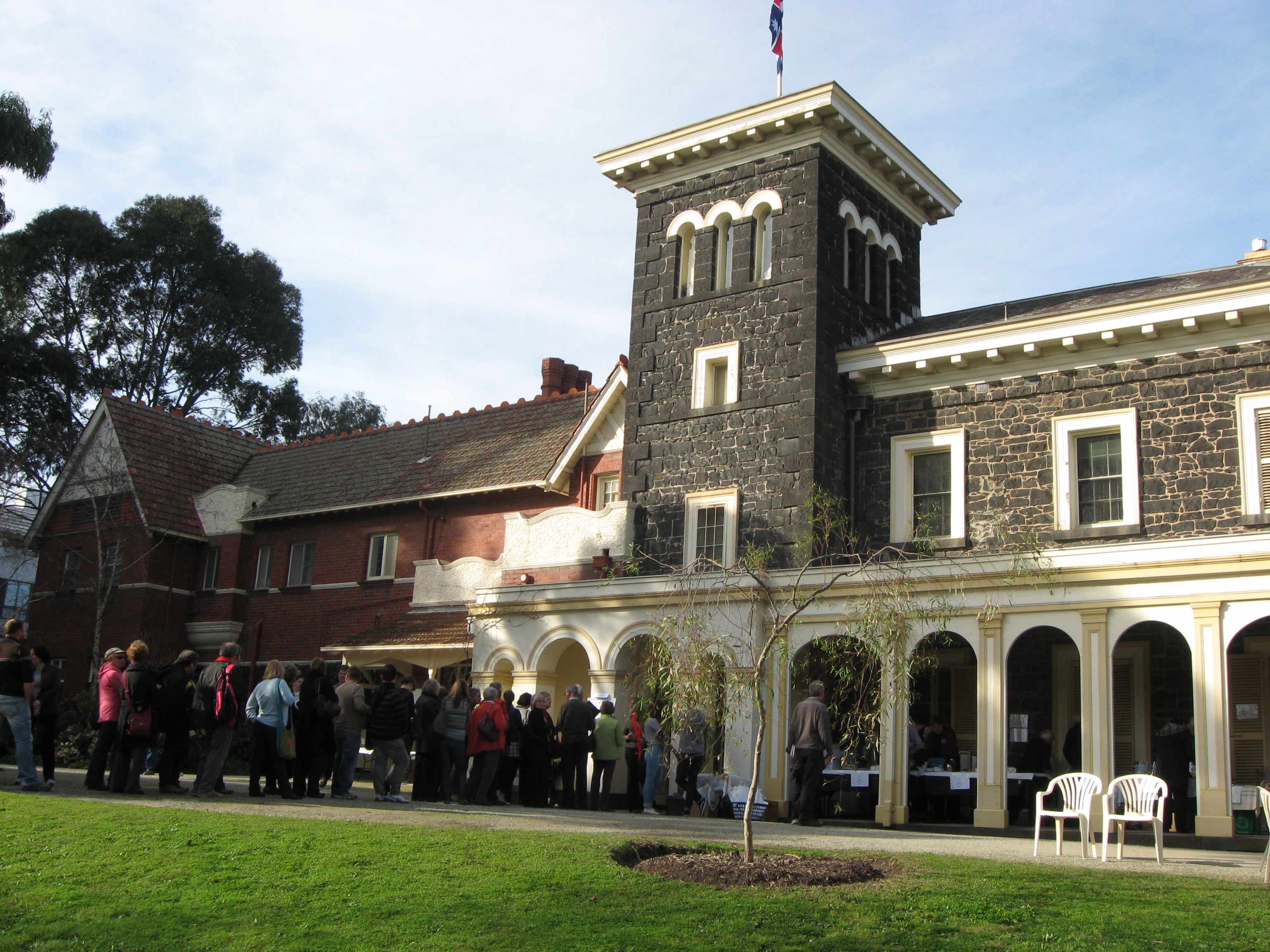
Bishopscourt is located in Clarendon Street, opposite the Fitzroy Gardens.  It has been the family home of the Anglican Bishop and later Archbishop of Melbourne since it was built in 1853.

If it looks a bit of a hodge-podge, that’s because it is.  The first Bishop of Melbourne, Bishop Perry, selected the location so that he could walk into Melbourne itself, while being close to the site that was originally considered for the Cathedral between Hotham and George Streets in East Melbourne .  It was later decided to construct the Cathedral in its present location on the corner of Swanston and Flinders Streets. Construction of  Bishopscourt began in 1851 but because of the shortage of building labourers in these goldrush years, the house was not completed until 1853.  Sixty years later it was decided that a grander house was required. One of the bluestone wings was demolished in 1903 and replaced with the rather discordant red-brick wing, resulting in its rather schizophrenic  appearance.

Although constructed in wealthier gold-rush days,  the design of the bluestone section evokes an earlier, more Georgian influence with its French windows and shutters, wide doors and simple architecture.
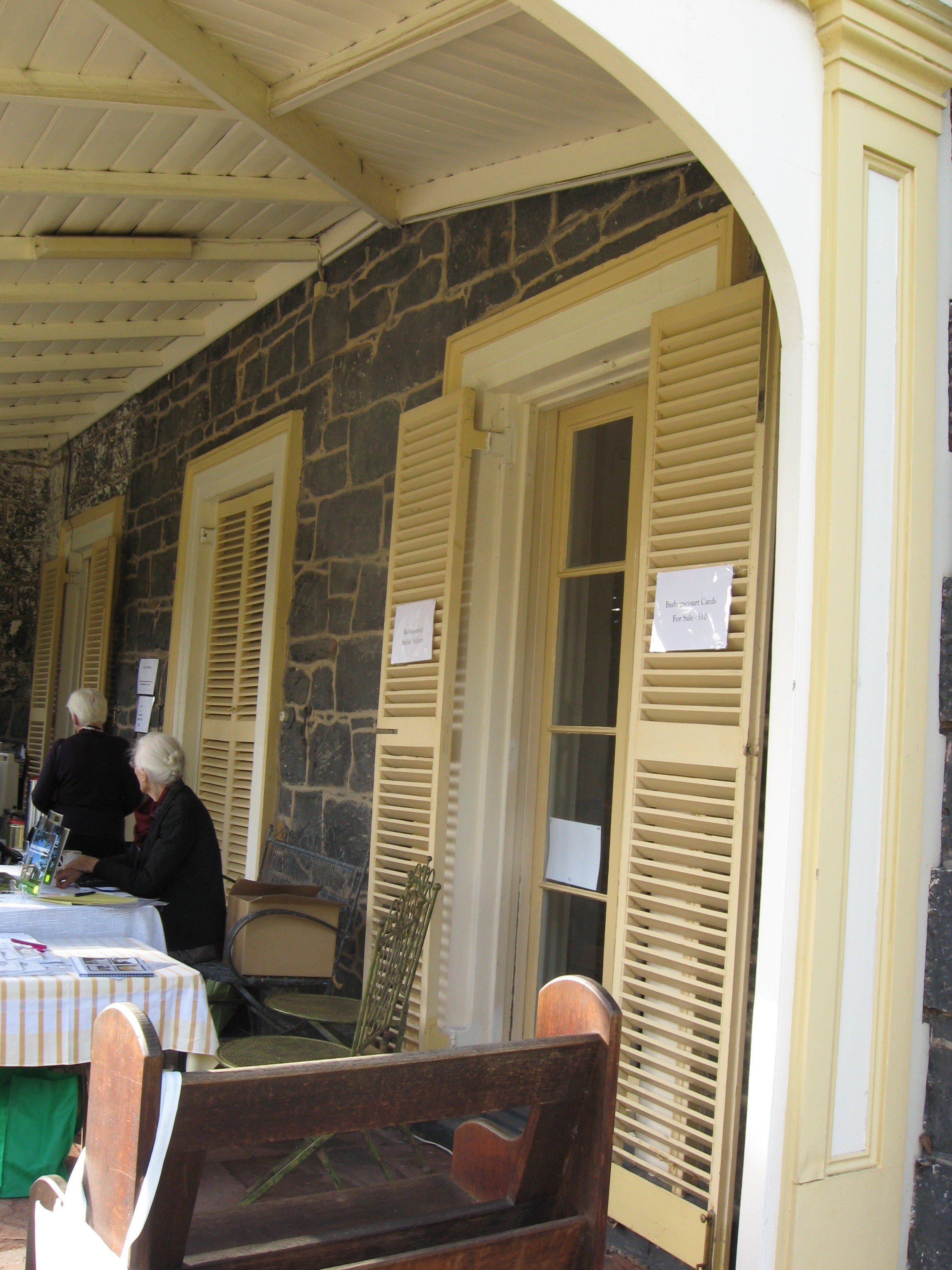
The bluestone is rather roughly laid on the front and side of the house, and it has been suggested that perhaps it was intended that the facade be stuccoed at a later time.  The new red-brick section included a large dining room and a private chapel which was a warm, intimate space that might hold perhaps twenty people.  I wish they had let us take photographs, because the chapel was very special place, with many of the furnishings and decorations donated by previous occupants.
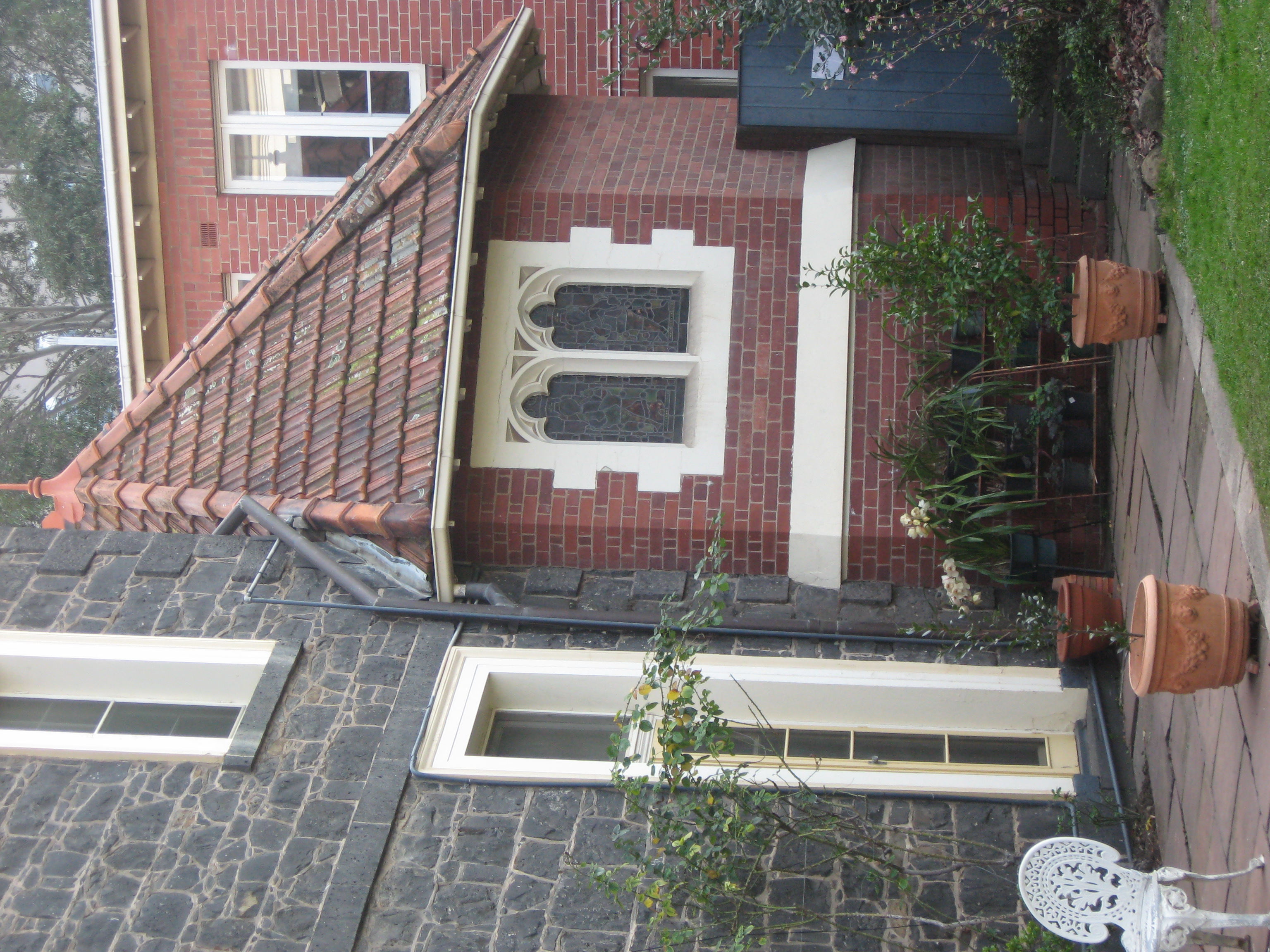
The chapel from the outside

Tours ran approximately every half hour and you were ushered from one room to another, where someone who had previously lived at Bishopscourt spoke about their memories of the room as part of their family home.  The Archbishop of Melbourne was there in the drawing room, decked out in his purpleness, and the daughters and daughter-in-law of the former Archbishop Frank Woods spoke in the morning room, dining room and chapel.  Unfortunately we were restricted to the ground floor- I was intrigued by the staircase which was carved with silhouettes of bishops’ mitres- but I suppose that some privacy was in order as the house continues to be used as a family home: the only pre-gold rush estate still to be used for its original purpose.

The gardens have been rescued from disrepair by a dedicated band of volunteers and they were in beautiful condition.
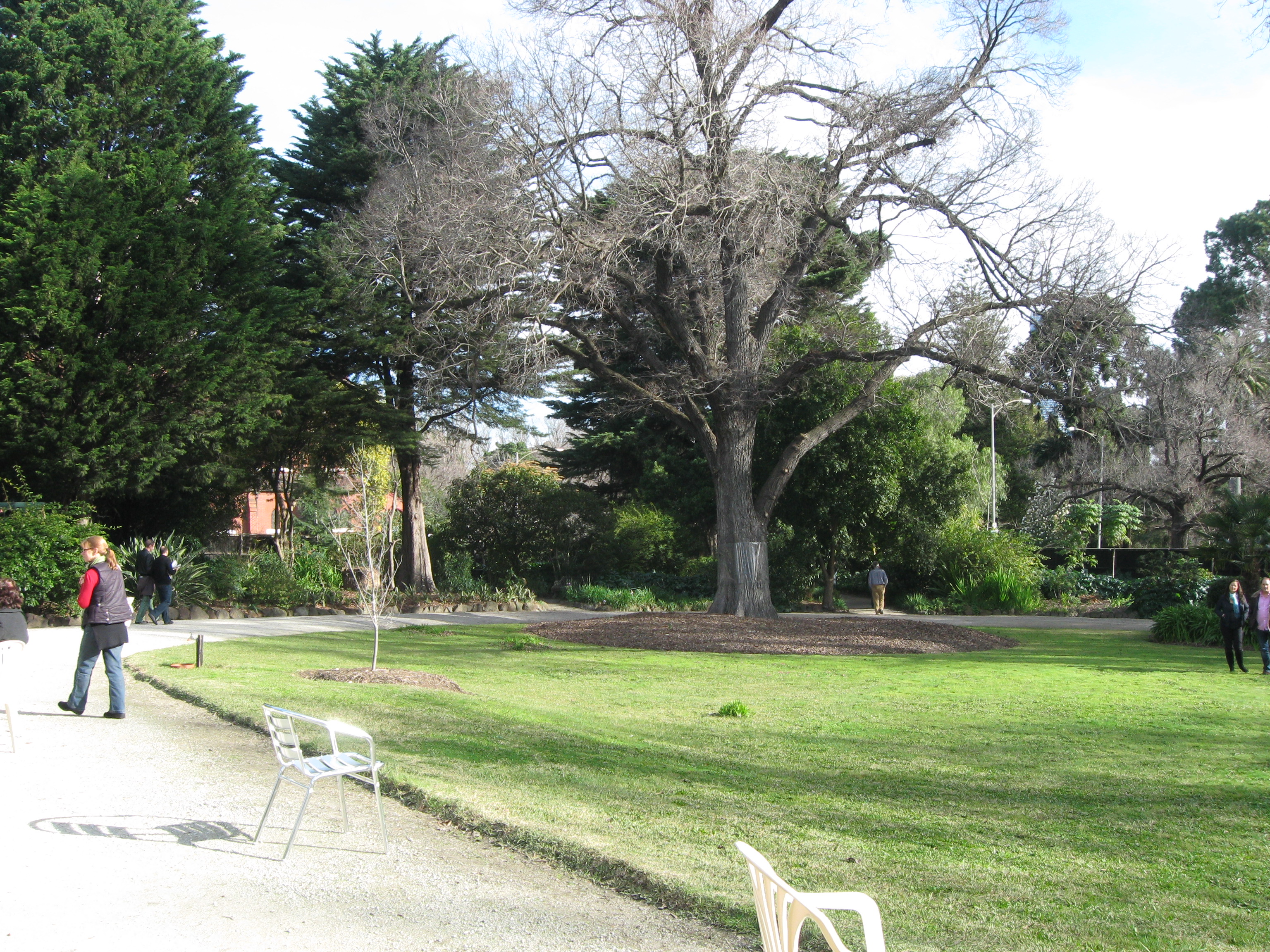
As I left, there was a religious pilgrimage of a different type through the Fitzroy Gardens as the crowds headed towards the MCG for the Collingwood/Essendon match.
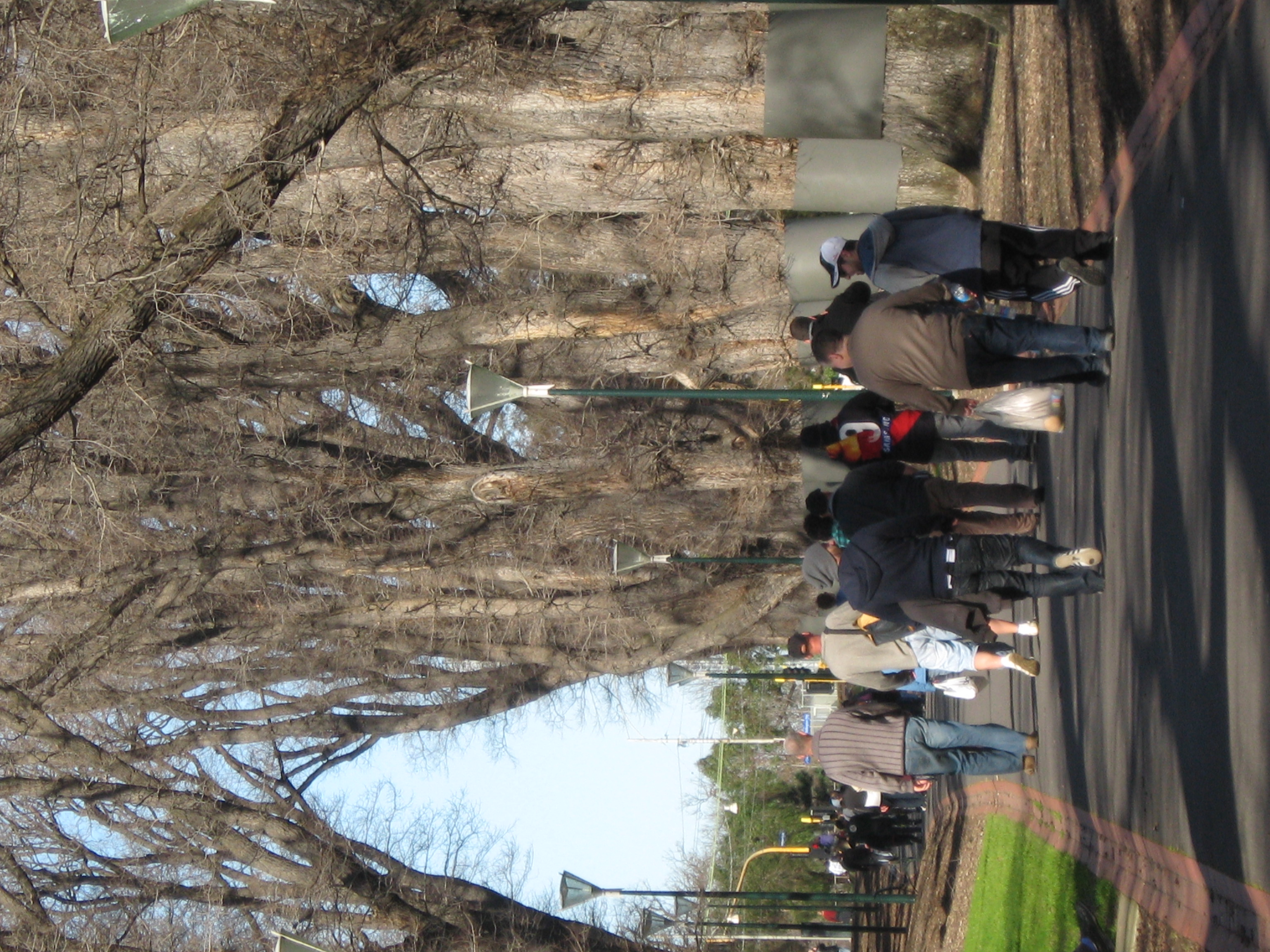
The processional to the 'G
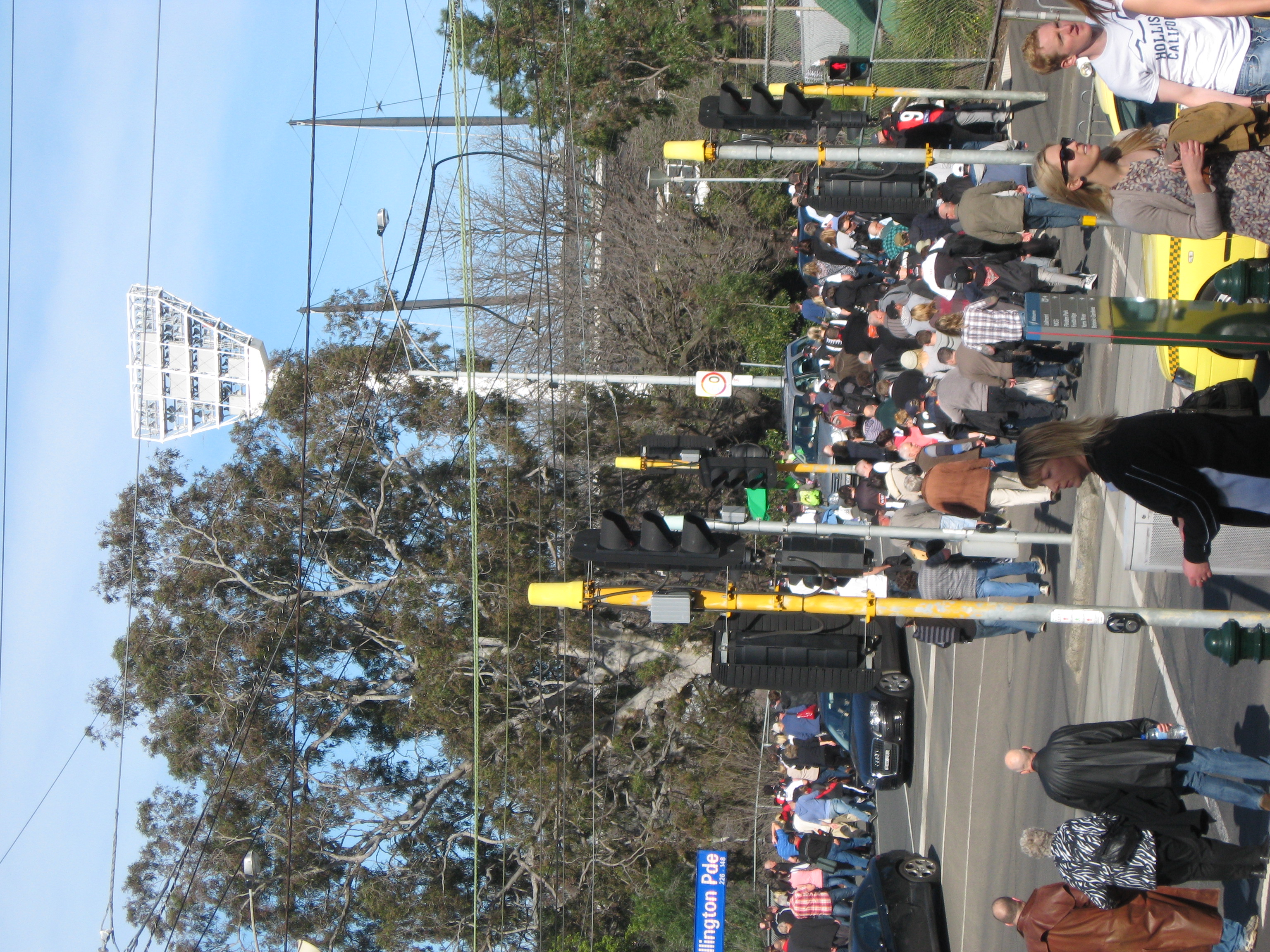
Ah- the footy and the MCG on a sunny winter afternoon- hot pies (unfortunately), seagulls, the Footy Record and Jolimont railway station. Who could want for more?

By the way, I wasn’t the only one checking out Melbourne Open House.  Andrew at High Riser had a very busy day and more success photographing than I did.

‘New Voices’ at Eltham

On Saturday I went up to the “New Voices” Writers’ Festival up at St Margaret’s Church in Eltham.  Apparently it’s been running for a number of years but to be honest, I hadn’t heard of it before- or perhaps I just didn’t notice.

I was attracted by the first two sessions in particular that focused on the memoir as a genre: Rodney Hall- twice Miles Franklin winner- speaking about his memoir Popeye never told you, followed by cultural historian David Walker conversing with the biographer and historian Jim Davidson about Walker’s own memoir/reflection Not Dark Yet: A Personal History.

Although distrustful of autobiography as a genre, Hall was spurred to write Popeye never told you mainly for his siblings.  The book covers his childhood in wartime Britain from the ages of 5 to 9, and he intentionally adopted the voice of a child with short sentences, and a child’s eye perspective of size, relationships and causality.  Hence, he chose episodes  for their impact on him rather than their historic or narrative significance, and drawing on the rather linear and black-and white reasoning of a child, he limited his conjunctions to words like “and” “but” “so” etc. It’s a brave, and perhaps rather contrived narrative stroke, and one that could fail disastrously.  However, this review suggests that Hall succeeded well.

The second speaker of the day, David Walker, also moved out of his accustomed genre in writing Not Dark Yet: a Personal History.

After a long career in academe, Walker’s eyesight deteriorated suddenly in 2004 as a result of macular degeneration.  With the term “A personal history” as the rider to his title, this book is not just a memoir (or perhaps an ‘auto-ethnography’ as Walker himself has described it) but also a reflection on family history, history more generally,  memory and storytelling.    When he was  (rather chummily) discussing the book with fellow-historian Jim Davidson, it brought to my mind Inga Clendinnen’s Tiger’s Eye, one of the most personally influential books I have ever read.  In fact, it’s not going too far to say that you would not be reading this blog, at least in the guise it is,  had I not read Tiger’s Eye. Historians, I think, approach memoir and autobiography with a particular wariness and cannot completely divorce their professional academic skills from the shaping of their own life-story, so I’m interested to read this book. Certainly Tom Griffiths’ review (another historian I deeply admire) suggests that it will be well worthwhile.

I’m not really a writers’ festival sort of person, which may surprise you, given that I love reading so much.  I do, however, enjoy hearing non-fiction writers talking about grappling with a body of evidence in some form (lived experience, research, primary sources) and shaping it into an argument and narrative.  There’s an independence of the material beyond the author, and a  responsibility on the author’s part for some degree of fidelity.

However,   I’m less drawn to hearing fiction writers speak about their craft.   For me, it’s a bit like reading an artist’s or art critic’s statements about a work in a gallery: a self-consciousness and layering of meaning that seems sometimes contrived and retrospective.  Listening to fiction authors talking about their work- a creation of their own making-  is a discussion that really requires you to have read the book in question, in a way that is not necessarily true for a non-fiction book, and so after a rather good lunch, I left early in the afternoon.

As well as drawing on sponsorship from publishers  and the local council, the day was conducted under the auspices of the Eltham Bookshop. I was saddened to read in the local paper that after 14 years this bookshop, like so many others, is really struggling.  Its proprietor, Meera Govil, is a generous contributor to the cultural and literary life of Eltham and surrounding districts, and the leafy north would be the poorer for her shop’s demise.  I shift a little uncomfortably in my chair as I write this: I rarely purchase books but instead borrow them from libraries or buy them second hand.  I’ve bought from Amazon and Book Depository, and I am drawn by 10% loyalty schemes for the few books that I do buy.  Although I’m still chafing at the e-reader experience, I know that I’ll succumb increasingly if the digital versions are priced attractively enough.  At one stage I promised myself that I would buy one book a month, but that resolution has gone out the window.  I look in despair at the deluge of new books that keep on tumbling into the market, and I am saddened to hear of such small print runs and the out-of-print status of so many precious works. Perhaps print-on-demand might be one form of salvation, but it’s  such a bland and stripped down product in its present form.  It’s all beyond me.

Seeing my city with new eyes

One of the things about being away for any considerable length of time is the way that you view your own home once you return.  I came home to a house that was cleaner than I left it (ah, the joy of adult children!) and a recently-planted garden that is not only still alive but growing like topsy! But today was the first time that I’ve been into Melbourne itself, and I felt as if I were seeing it after a long absence.

It’s a beautiful clear, sunny but cold winter day today, and the city absolutely sparkled.  I don’t know if I just fluked it, but the trains both to and from the city were clean, warm and with little graffiti.  I had been opposed to the proposal to remove seats from the trains to provide more standing room, but having now used public transport in Toronto, Boston, New York and London, the carriages did seem particularly cluttered with seats.  There was little rubbish on the stations- in fact, our streets generally seem clean in comparison with streets in the cities above.   The underground stations in particular seemed light and modern. The trains were on time, the trams were predictable only in their unpredictability.

It’s the infrequency of our public transport that’s the sticking point.  Other cities do not have the same emphasis on time- in fact, you were often hardpressed to find a clock- because trains arrived so often that it didn’t really matter if you missed this one, because the next would soon arrive.  Not so for us here in Melbourne- 20 minutes is too long between day time services.  It seems that every tram and bus stop has a disconsolate little clutch of would-be passengers, stepping out onto the street, craning to see if something -anything- is coming.

And Melbourne itself: look- the Darebin and Merri creeks are running high! That sparse and artificial planting on the banks of the Merri, beside the over-engineered bike path, is looking a little better.  People have moved into the high-rise opposite Heidelberg station (although I’m still cross that it dominates the hill as much as it does).

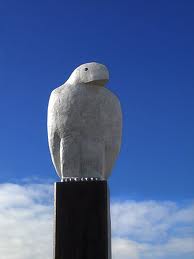
I read in this morning’s paper that they’re thinking of moving the statue of  Bunjil the eagle in order to, no doubt, build yet another high-rise in Docklands. Other than Colonial/Telstra/Etihad stadium (which I always make a point of calling ‘Docklands Stadium’ on principle) I’ve only been down to Docklands once, and it seemed a particularly godforsaken place.

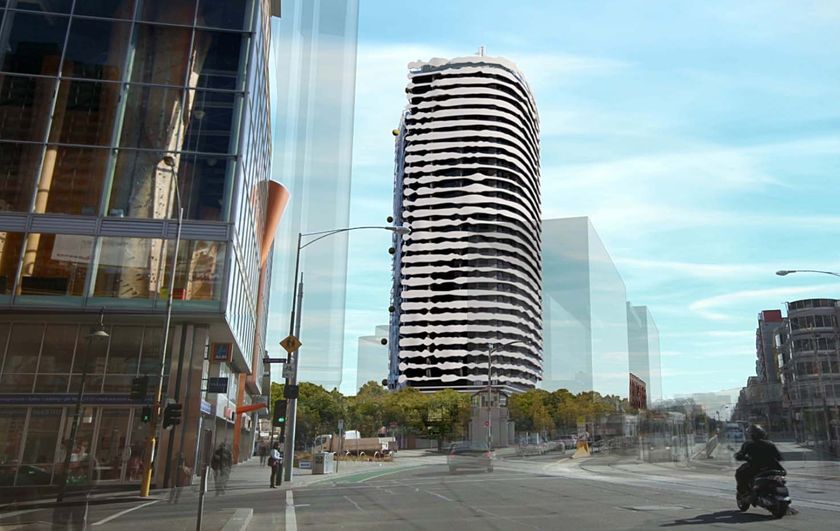
I noticed, too, that the building on the old CUB site is finally going up as well. This is the one that is planned to have an image of William Barak on it.

Artists impression of the finished building

I really don’t know quite what to think of these modern representations of aboriginal presence.  Appropriation? Acknowledgment? Tacky? Reverential? Is the CUB building a fitting juxtaposition to the Shrine of Remembrance at the other end of Swanston St/St. Kilda Rd?  Or an ironic one?

Most of all today, I noticed our beautiful, big bowl of sky.  Yes, I know that it’s the same sky,but somehow it seems bigger here. I think that I must be glad to be home.

Just say No at the MCG

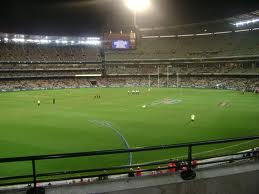
Off to the MCG last night with my son, a long-time and long-suffering Tigers supporter to watch Richmond v St Kilda.  A draw- hah! I say.  At least a draw in Aussie Rules is not one of those dour nil-all matches in the other codes, and everyone, whether black/yellow or black/red/white left saying “That was a good game!”

Now, I don’t think that I’m turning into a gun-toting libertarian (yet) and perhaps it’s just my Grumpy Old Lady stirring, but one comes away from the MCG feeling put-upon and nagged.  Apart from the live-betting scores that flash up on the screen to enrage me at the ubiquity of corporatized gambling,  there is also a string of prohibitions and admonitions all aimed, no doubt, at lessening the MCG’s  public liability and protecting their assets. Here, according to the messages on the scoreboard, is  what you can’t do at the MCG

1. Smoke

2. Run onto the ground during a match

3. Go onto the ground after the game for a bit of kick to kick (a time-honoured tradition and the only way that a lot of us would ever get onto the MCG turf)

4. Take alcohol out of the stadium (or bring it in for that matter. Or drink full strength beer)

5. Stand on the seats

6. Put up an umbrella (flashed onto the screen the very minute a gust of virga eddied onto the MCG in its own little micro-climate)

7. Fall on the steps because it’s wet (ditto)

8. Be anti-social, and they gave a handy dob-a-hoon SMS number so that you could report them – quite a good idea actually.

I’m sure that there were more, and I’ll add them as I think of them (and you suggest them).  I was surprised that there wasn’t one about racial vilification  and they’ve obviously given up on people photographing, filming etc.  But my goodness, do we really need to be harangued and nagged the whole way through a match?  Do I dare say the words ‘nanny state’?


169th Anniversary

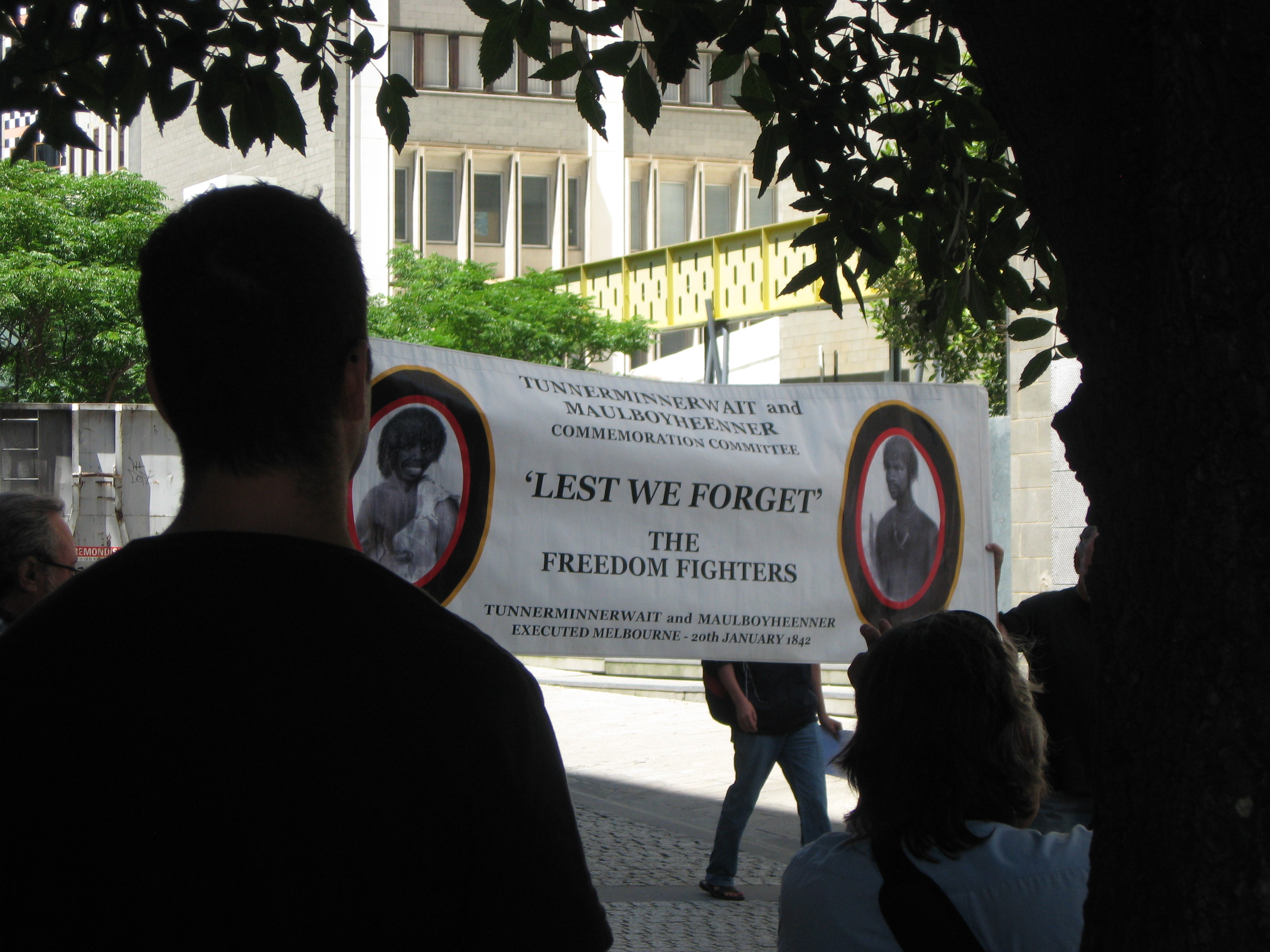
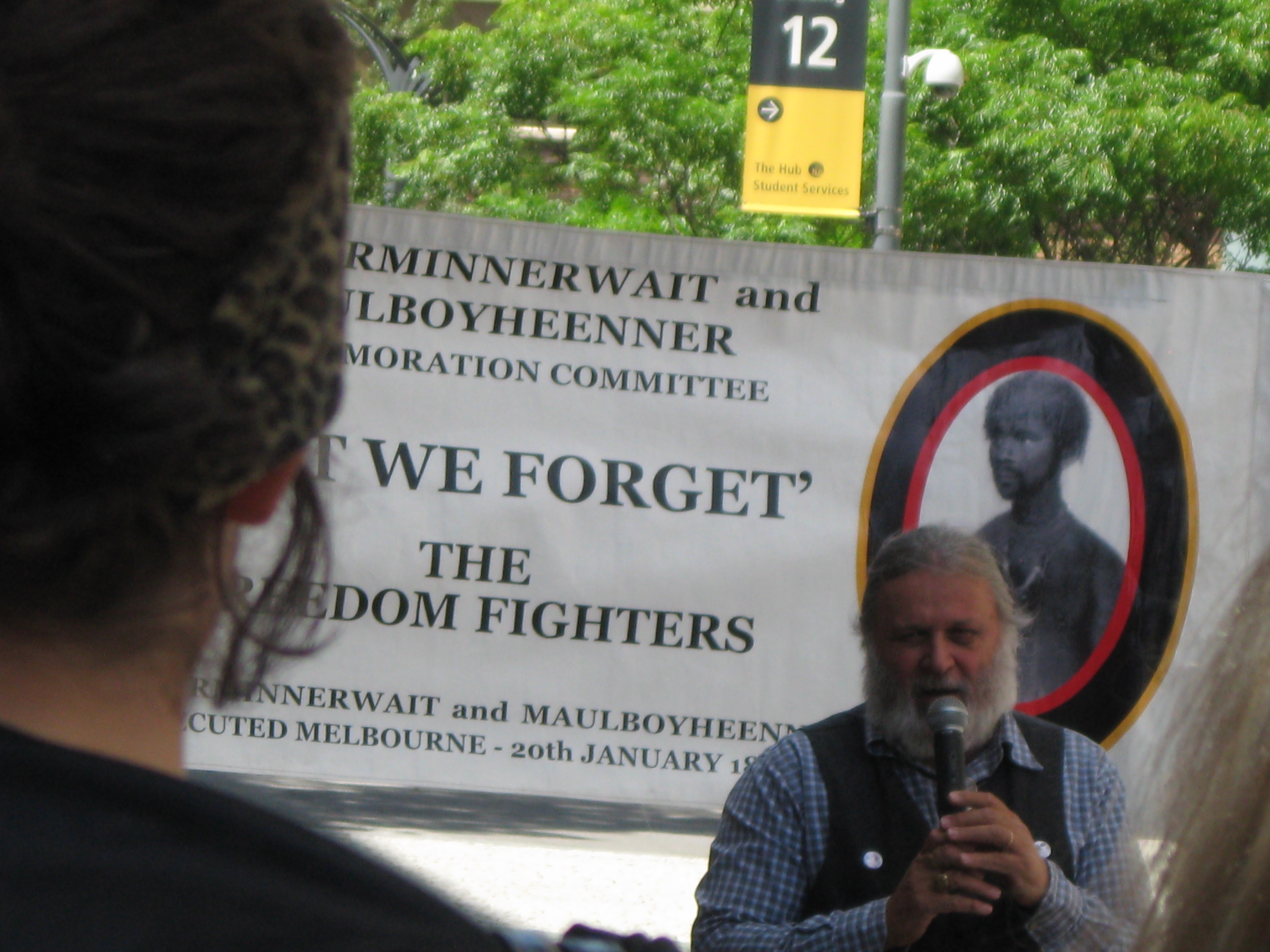
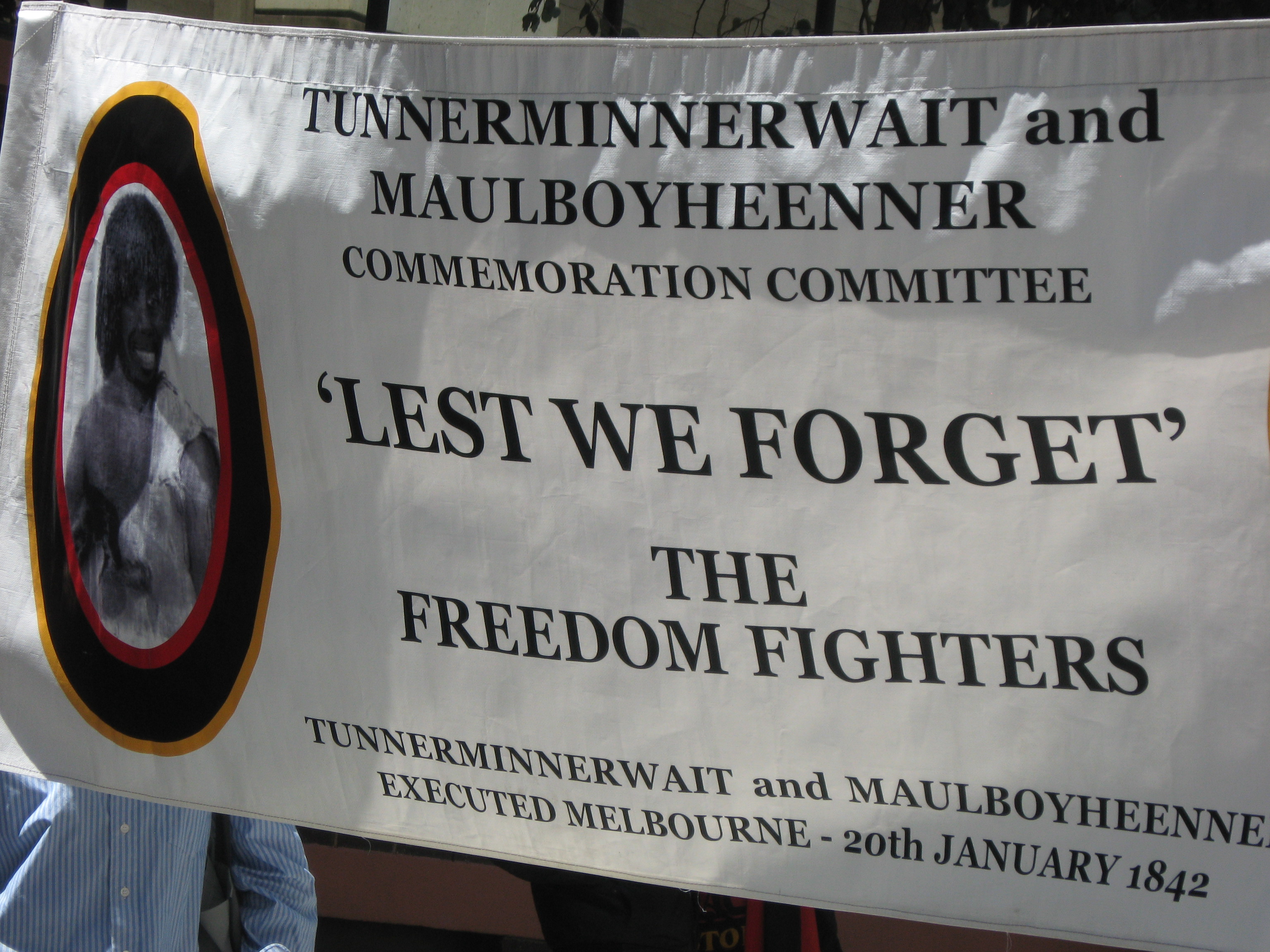
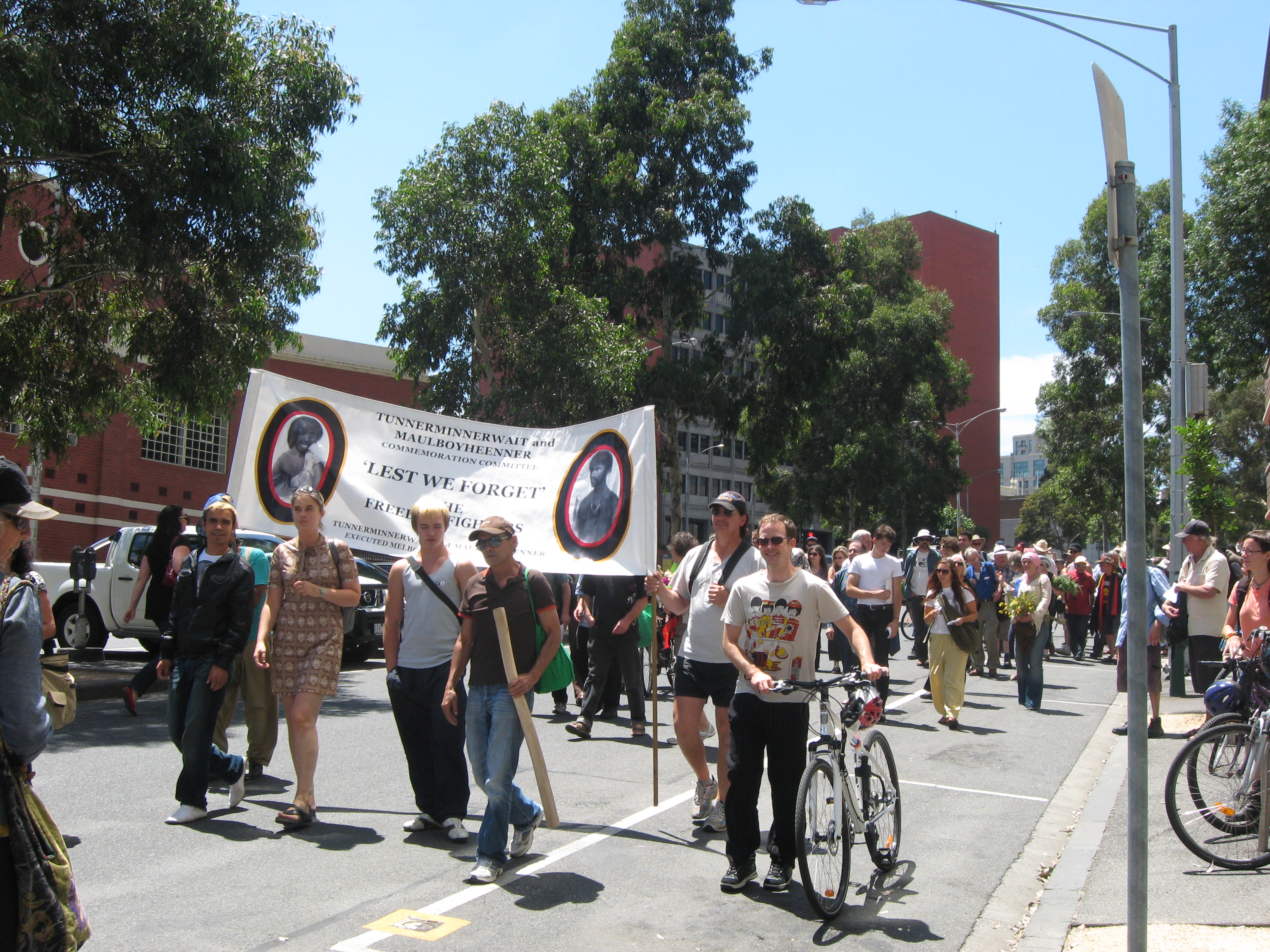
If you go into Melbourne on Thursday 20th January at 12.00  and head up to the corner of Bowen and Franklin Streets, you’ll see the 169th anniversary of the hanging of Tunnerminnerwait and Maulboyheener.  These commemorations have been conducted for several years now- in fact, the Lord Mayor Robert Doyle spoke at the 2009 commemoration.

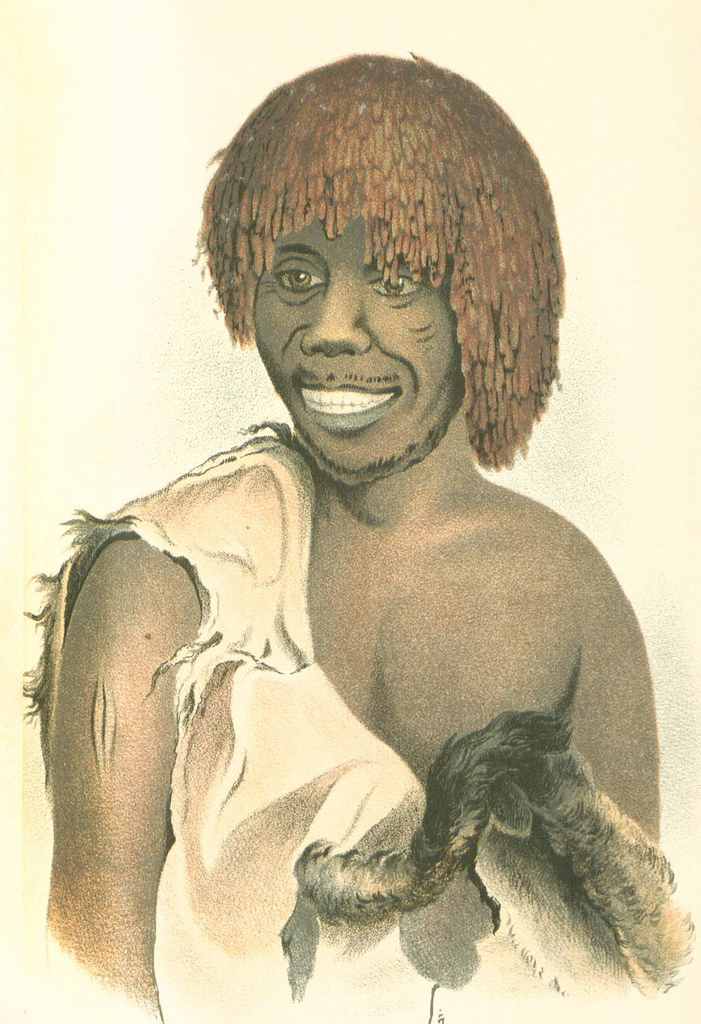
I’ve heard it said that once a blog starts to cannibalise itself, then the end is nigh- I hope this is not the case.  But just this once I’ll refer you back to an earlier post that I wrote on this anniversary two years ago and a post on images of Tunnerminnerwait in  the Robert Dowling exhibition at the Geelong Gallery and later National Gallery of Australia last year.

The smile in this image – so unusual amongst depictions of Aboriginal people at the time- is explored by Leonie Stevens in her article ‘The Phenomenal Coolness of Tunnerminnerwait’ published in the Victorian Historical Journal, Vol 81, Number 1, June 2010.  If you belong to a library that has access to Informit, then it’s well worth following up.

Abstract: There have been numerous historical constructions of Tunnerminnerwait, alias Cape Grim Jack, who was publicly executed along with his friend, Maulboyheener in Melbourne in January 1842.  This paper revisits the documentary record and historicizing of the two young Tasmanians, and asks, were they victims of colonial indifference, freedom fighters, or simply wild Tasmanians enacting the final stages of the Black Wars?

The commemorations on 20th January that have been held over several years now certainly claims them as freedom fighters, but I’m not particularly comfortable with that characterization.  I concur with Stevens that they were defiant, independent actors, and her article highlights the difficulty in ascribing any one motive to their actions when dealing with  such a partial and complex historical record.  For me the connotation of politicized, communal action denoted by 20th century term ‘freedom fighter’ does not ring true for a small group of Aboriginal people cast adrift from their country and tribal structure and utter strangers to the land they found themselves in.

I’m puzzled, too, by the recommendation to mercy by the jury: a recommendation that  that was not supported by Judge Willis and disregarded by the colonial authorities.  The Van Diemens Land Blacks encapsulated the two huge and very sharp anxieties of the frontier- blacks AND bushrangers rolled into one- yet there was obviously some disquiet about the death penalty among the jurors at least.  Nonetheless,   large crowds witnessed the execution outside the jail but here too, we can only guess at what motivated them to come out in such numbers:   curiosity? sense of occasion? 19th century popular culture? crowd behaviour?-  close to the spot where the commemoration on 20th January will take place.

Postscript:

And here it was:

Corner Bowen and Franklin Streets, Melbourne

What's a demo without good old Joe Toscano?

Up Franklin Street on the way to the Vic Market

I swear (not)

Yesterday The Age had a four letter word on the front page of the newspaper.  Not the f- word, but the other one. It’s  perhaps not quite as offensive, but it’s nonetheless  a word that I consider to be a swear-word.

It was in an article about the Labor  government’s ferocious prosecution of whistleblowers and leakers.  A former senior federal police source told The Age that if the government wanted to investigate the leaking of Government material, the Australian Federal Police would do so:

If the government wants us to do it, they’re our masters, so we do it.  And that’s not just a particular government- both Labor and Liberal and everyone in between gets the shits when their policies are undermined or their big announcements appear on the front page of the newspapers 24 hours before they announce it.

Using the s- word on the front page is no great crime, although I did raise an eyebrow.  But I found myself using the s- word and the f-word as well when viewing the footage of the cars being washed away in Toowoomba.  You’ve probably seen it by now.

What strikes me, though,  is that the young people taking the video are not swearing at all- not a single “Oh my God” or 4-letter word in the whole video.  The commentary under the YouTube version perhaps gives an explanation-  the photographer suggests that donations be directed to a  Church of Christ appeal, and asks for prayer.  I wonder if these wholesome young people are working in an office associated with the church?  I can only assume that the video was shot from the back windows of the office, hence their only vague concern about their own cars ‘out the front’.    While their commentary is rather awe-struck and banal, it’s better than a string of expletives and OMGs.

I never keep my New Years Resolutions.  Each year I say that I will exercise more, lose weight, and work harder on my thesis instead of blogging (hmmm…..). But perhaps this year I will really try to swear less.  It’s very unattractive; I don’t like listening to it from other people and I’d like to really work on it.

So where does the buck stop?

We’ve had the rather unedifying spectacle of our airports filling up with disgruntled would-be passengers, unable to book into their Virgin Blue flights because the computer is down.  But it’s not Virgin Blue’s fault- oh no- it’s Navitaire, the company contracted to run the reservation system.  And who are Navitaire? Ah!  They’re a subsidiary of the outsourcing company Accenture.  Is this where the buck stops? Are we there yet?

Ah, footy!

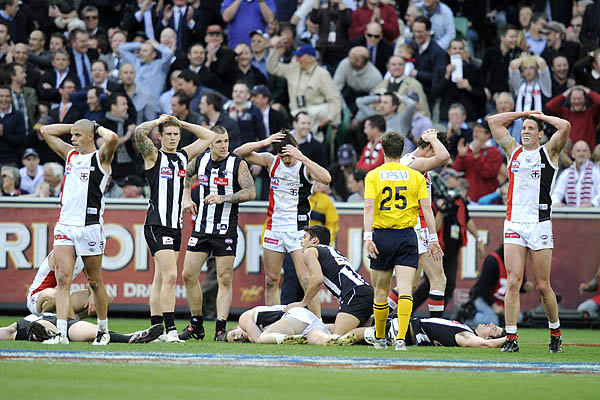
Simon says “Hands on Heads!”

What a beautiful game! We didn’t lose! And we get to do it all again next week!

Hanging around with the naturalists

I see that more than 600,000 plant species have disappeared.  No, not by logging, global warming, pesticides etc. etc., but because botanists have been combing through the listing of plant species, weeding out the duplicates.  I was interested to read that

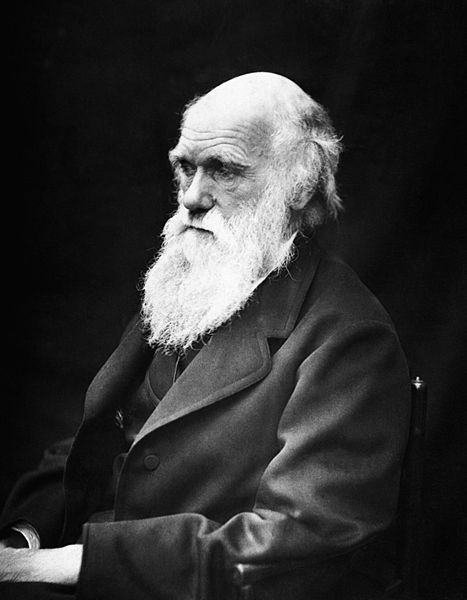
One of the databases was established using 250 pounds left in the will of naturalist Charles Darwin

I’m sure that Charles would have approved wholeheartedly.  Although, looking at his will, most of his goodies seem to be divided up amongst family. Perhaps it was established later.

Speaking of Charles Darwin, he certainly has a prodigious online presence, spurred on no doubt by the anniversary recently.  There’s Darwin Online – huge! And have you seen the repository of all the letters that Darwin wrote and received up to 1867 at the Darwin Correspondence Project?

Apparently Darwin had over 2000 correspondents from across the globe, and he was not the only one.  Naturalism and collecting was a favoured gentlemanly past-time and for colonial civil servants scattered across the globe, providing information and samples for their highly-placed naturalist patrons was a way of keeping connections open with men in positions that might prove useful in the future.

And so we see our  Resident Judge of Port Phillip- Judge Willis- sitting down and packaging up samples for his patrons at home.  Like other men of his time, Judge Willis  was not averse, as Rolf Boldrewood reminds us, to a bit of the old huntin’ and shootin’  on the Yarra Flats-

This not undistinguished legal celebrity we had known in Sydney, and he presented himself to my youthful intelligence as a good-natured, mild-mannered old gentleman, with whom I used to go quail and duck shooting in the flats and bends of the Yarra over Mr Hawdon’s and the neighbourhood estates.  On these occasions the late Mr Archibald Thom, who rented part of Banyule from Mr Hawdon, often accompanied us.  And a very deadly shot he was.
The judge shot fairly well, and after a decent morning’s sport was genial and generous in a marked degree. But when he doffed the russet tweeds and donned the ermine, he became utterly transformed. It was averred, too, altogether for the worse. ( Rolf Boldrewood, Old Melbourne Memories, p. 159-60)

But he also indulged in- or at least arranged for someone else to indulge in- a bit of naturalistic hunting as well.  Here he is, in April 1843, writing to Derby, the father of the Secretary of State (how convenient!)- sending a- ye Gods, what on earth IS he sending him?

I have the pleasure of sending by the “Arab” an animal, temporarily stuffed, which is not common even here; I think is seems a commixture of Monkey, Opossum and Sloth, more like the Sloth perhaps than any other.  It has a pouch.  I do not forget the Musk Duck & hope my efforts to obtain them may yet prove successful.

And then, on board ship on the way home

The hurry in which I left Australia prevents me collecting such Natural curiosities as might possibly have been acceptable to your Lordship.  I enclose however a good specimen of the Flying Mouse, possibly as curious an animal as inhabits those regions, & a fair illustration of many larger animals of the same Genus.  It can only fly in an angle of 45 degrees- It has a Pouch & the featherlike tail is not a little remarkable. On our voyage we put in at Bahia and I have a few Brazillian Seeds & Roots, which the English Chaplain gave me very much at your Lordship’s Service, if they be worth acceptance.  I have also some of the Wattle Tree, or Mimosa of Australia Felix, which I have no doubt will grow in the Open Air in England with a little care & be a great ornament in a Garden or Shrubbery.  The Bark of it is become a profitable article of Export for Tanning being stronger and preferable to English OakBark.  The flower of the Wattle is fragrant and pretty.

I wonder if the Mimosa of Australia Felix was one of the expunged varieties?  And the flying mouse- probably a pygmy glider of some sort.  Though I prefer this one-

We won!

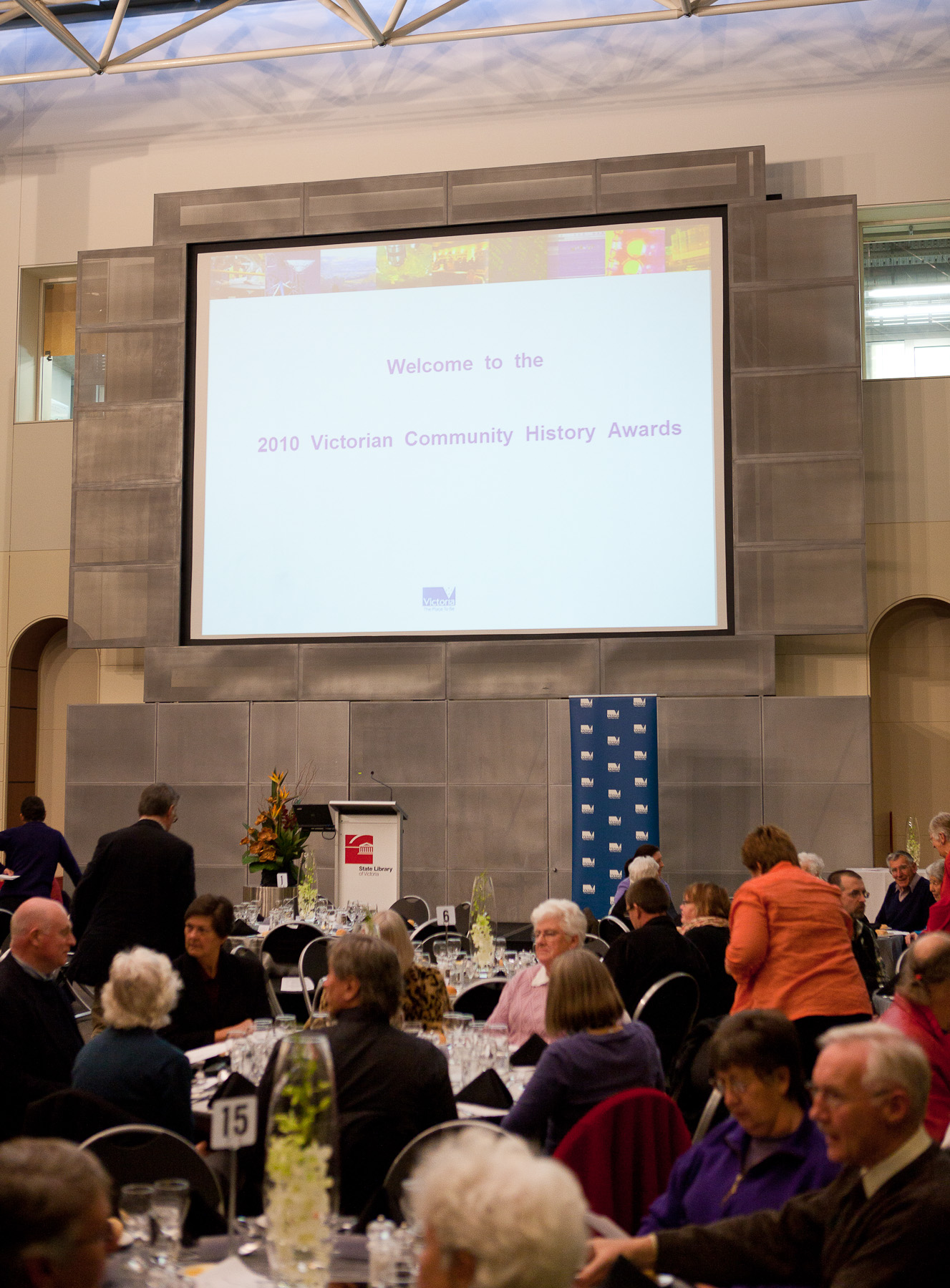
Well, I have already shameless spruiked our “Invitation to the Ball” exhibition at the Heidelberg Historical Society: now I’m going to barefacedly brag. Guess who won the Best Exhibit/Display prize at the recent Victorian Community History Awards?  We did!!!

Here’s how the citation described our entry:

Category:  Best Exhibit / Display

Winner:  An Invitation to the Ball: Heidelberg Historical Society

It is inspirational for a local historical society to present an exhibition that not only is rich in material culture of this quality and nature but is of relevance in a broader social history context.  An Invitation to the Ball beautifully presented a topic steeped in social and cultural tradition, and one which continues to have contemporary relevance. The exhibition’s strengths is that it complied with high quality museology standards, including the use of different interpretive techniques, strong local content peppered with personal stories, sensible design and engaging graphic presentation.

As you can imagine- we’re delighted.  The exhibition will be open, probably until the end of the year at the Heidelberg Historical Society Courthouse Museum, cnr. Jika St and Park Lane Heidelberg,  on Sundays between 2.00- 5.00 p.m. Entry $5.00 adults, $2.00 children.