Category Archives: Current events

Frocking up for the theatre

For a little treat the other night (well…a rather expensive treat actually) it was off to see the MTC production of The Importance of Being Earnest.  To get ourselves in the mood we watched Wilde starring Stephen Fry the night before, and sitting in the Sumner Theatre on Tuesday night, I was very much aware that we were laughing away at the same lines, probably delivered in much the same way to the audience at its opening night on St Valentine’s Day 1895.  It was a very traditional performance- no postmodern trickery or contemporary insertions here- and I felt rather overawed to be three rows away from one of the world’s greatest actors, Geoffrey Rush, right here in our shared home town.

What a striking, imperious and handsome Lady Bracknell he makes! (even though I don’t particularly think of Geoffrey Rush as handsome.)  He clearly relished rolling around in  the language, and being so close, we could see every raised eyebrow and every moue.  The rest of the cast was very good too, although if I had to name any criticism it would be at the slightly over-rehearsed delivery of Algernon’s lines. I recall Fry’s character in Wilde issuing the injunction that the lines should be delivered as sparkling, off-the-cuff repartee, rather than something that had been memorized and enunciated, and I think that the same observation could be made here too.

Two odd things about our night at the theatre though.  One was the sight of a very pushy woman, approaching everybody in the front row, asking them if instead of enduring their front row seat, they would be willing to swap with her seat at the back (“See, where the man is waving?”). When someone asked her if there was a particular reason, she said that she liked to be able to see their faces close up- well, don’t we all?  What amazed me was that someone actually did swap with her.

The second odd thing was an email we received a couple of days prior to the performance.  We have just endured a couple of hot days, and the email cautioned that the stage was heavily airconditioned for the comfort of the actors on stage in heavy costumes, and that as we were sitting in the front rows, we might want to bring a jacket or shawl.  It was good advice- it did get chilly after a while.

Patrons might have appreciated advice about their big night out at at Melbourne’s first theatre during the 1840s too.  The Pavilion, later renamed the Theatre Royal, was located on the east side of Bourke Street, between Elizabeth and Collins Street.  Garryowen describes it as:

one of the queerest fabrics imaginable.  Whenever the wind was high it would rock like an old collier at sea, and it was difficult  to account for it not heeling over in a gale.  The public entrance from Bourke Street was up half-a-dozen creaking steps; and the further ascent to the “dress circle” and a circular row of small pens known as upper boxes or gallery, was by a ladder-like staircase of a very unstable description. Internally it was lighted by tin sconces, nailed at intervals to the boarding filled with guttering candles, flickering with a dim and sickly glare. A swing lamp and wax tapers were afterwards substituted, and the immunity of the place from fire is a marvel.  It was never thoroughly water-proof, and, after it was opened for public purposes, in wet weather the audience would be treated to a shower bath. Umbrellas were not then the common personal accompaniment they are now in Melbourne, but such playgoers as could sport a convenience of the kind took it to the theatre, where it was often found to be as necessary within as without. The expanded gingham would of course, very seriously incommode the comfort and view of the adjacent sittings, but that was a consideration so trifling as to be scarcely thought about.  (Garryowen ‘Chronicles of Early Melbourne’ p. 452)

I know that we often complain about people with their mobile phones in the theatre, but there are worse things:

… the Pavilion would at times be turned into a smoking saloon, and even when some of the more mannerly persons in the pit would take off their hats and place them on the floor, the bell-topper, cabbage-tree, or pull-over, whichever it was, would be utilized as a spittoon for shots expectorated with sure aim from the dress circle.  If any of the unhatted individuals happened to present a bald pate, the spot was regarded as a justifiable target for hitting at short range, and terrible would be the indignation with which an unoffending spectator, somewhat sparse in hair, would find himself patted on the bald crown-piece with something analogous to a molluscous substance “shelled” at him from one of the side boxes.  In hot weather or cold the moist application was an unpleasant sensation, and naturally resented. The person so “potted” would pull out his handkerchief, wipe his head, jump up, and “rush the batter” whence he would be probably repelled with a black eye or enlarged nose. (Garryowen, p. 456)

So, are we ready and all frocked up for our night at the theatre? Let’s see …  umbrella, hat, handkerchief….I’ll settle for the shawl or jacket thank you.

At the NGV: ‘The Mad Square: Modernity in German Art 1910-1937’

Some months ago we went to the NGV to see the Vienna Art and Design exhibition.  As you walked around that exhibition, which took a largely chronological approach, the 20th century works in the final rooms became increasingly fractured, subversive and unsettling, and the political chill of the approaching Nazism was almost palpable.

However, entering this current exhibition, part of the Art Gallery of NSW’s travelling exhibition program,  what had seemed to be subversive in the Vienna exhibition now appeared defiant and brave.  As a child, one of my favourite stories was The Snow Queen by Hans Christian Anderson, where a shard from an evil, broken mirror enters the eye and makes everything appear ugly.  Shards have warped the vision of the world here- a perverted, edgy, dissonant world- but it’s also a world clearly responding to the ugliness outside of  war, defeat, inflation, radicalism and increasing totalitarianism.

The shadows of World War I are long, and they manifest themselves through confronting depictions of maimed soldiers, pushed to the margins of society.  Were disfigured soldiers found in English art of the same period?- I’m not aware that they were.  I’m sure that the wounded were just as present but their meaning was different for the side that ‘won’ the war.

There is also the underlying menace of sexual violence, exemplified by Davringhausen’s painting of Der Lustmorder (The Sex Murderer) where a sickly, boyish prostitute lies on a bed oblivious to the murderer lying underneath (see here)  and there are film clips of abducted women in The Cabinet of Dr Caligari, and debased women in Metropolis.  This is an ugly world.

The last room of the exhibition has archival footage showing Hitler’s Degenerate Art exhibition, where works such as these were collected and shown, captioned with ridicule, before being destroyed or sold off onto the international market.  One of the final paintings in the exhibition is The Mad Square, from which the exhibition takes its name, by Felix Nussbaum, depicting artists protesting against their exclusion from the Prussian Academy of Arts, their artworks tucked under their arms.  It is sobering to remember that Nussbaum and his entire family perished in the concentration camps.

This is an unsettling exhibition.  After a while, the blockbuster exhibitions tend to merge into a bit of an blur  (did we see that at The Impressionists? or Vienna? or Dutch Masters?) but I think that this exhibition stands alone. Well worth seeing.

There’s an excellent companion website here at the Art Gallery of NSW.

‘Pioneers of Bushwalking’ Exhibition at the RHSV

I’m up to my habitual practice of catching an exhibition in its closing days again. This time it is the ‘Pioneers of Bushwalking’ exhibition at the Royal Historical Society of Victoria.  It was officially launched on the 24th of October by that intrepid bushwalker, Tim Holding M.P. and closes this coming Friday 9 December.

Between 2004 and 2010 the RHSV was donated archival material from the Melbourne Walking Club  including photograph albums, maps and archival material. The club was founded in 1894 as a male-only enterprise: a status which it (rather surprisingly)  still holds today, although women are welcome to attend ‘many’ of their events as ‘visitors’.  Early on it encouraged race-walking, and the exhibition shows two Edwardian gentlemen strutting along in that curious gait. However, it seems that a major part of their activities involved bushwalking, particularly in the high country mountain areas.

The photograph albums in particular are fascinating.  They are beautifully presented and labelled, and they document trips particularly in the 1930s around Healesville, Gippsland and the snowfields.  It looks to be a damned uncomfortable hobby, sleeping on groundsheets under the stars, or under tents with do-it-yourself waterproofing.  There’s a curious flavour to the exhibition though- lots of jolly-ho, rather private-boys’-school humour, and an unsettling hint of homophobia in one particular publication discreetly placed on a lower display shelf.

Looking at the names of the stalwart members, I was attracted by the name ‘Chris Bailey’, a now-deceased but well known Ivanhoe resident who was, among many other things, President of the Heidelberg Historical Society and heavily involved in conservation of the Yarra River. My husband noted R. H. Croll, prominent in athletic, literary and arts circles.

I thought of both these men whose names seem to pop up in varied contexts as I browsed the glossy magazine that came with The Age this morning.  It lists Melbourne’s 100 most “influential, inspirational, provocative and creative” people for 2011.  The 100 are arranged by theme: ‘provocateurs’ (the men and women shaking things up around this place); ‘power partnerships’ (when two heads are much better than one); ’cause and effect’ (the people encouraging us to give a little bit- or a lot; ‘social glue’ (Who brings everybody together to make things happen?); ‘bright ideas’ (Why didn’t we think of that?) ; ‘My first time’ (i.e. people’s debut events);   ’20/20′ (twenty inspirational people all in their twenties); ‘global sensations’; ‘changing lives’ (making a difference to people’s lives; ‘music’ and ‘from these hands’ (creative people).  Just flipping through, there is a strong entrepreneurial theme running through them, along with activism, sport, politics,and an emphasis on youth- although that may well just be me getting older!

I wonder what themes a similar list for the early 1900s would emphasize?  I think that early 1900s examples could be found under each of these headings- for example, there would be examples of young men, clever inventions, and provocateurs- but I think that the language to talk about them would have been different.   I’m sure that formal clubs and societies, organized with archives and meetings (just like the Melbourne Walking Club), would be far more prominent than the more ephemeral and individual-based networks that we see today.

‘The River’ at Bundoora Homestead

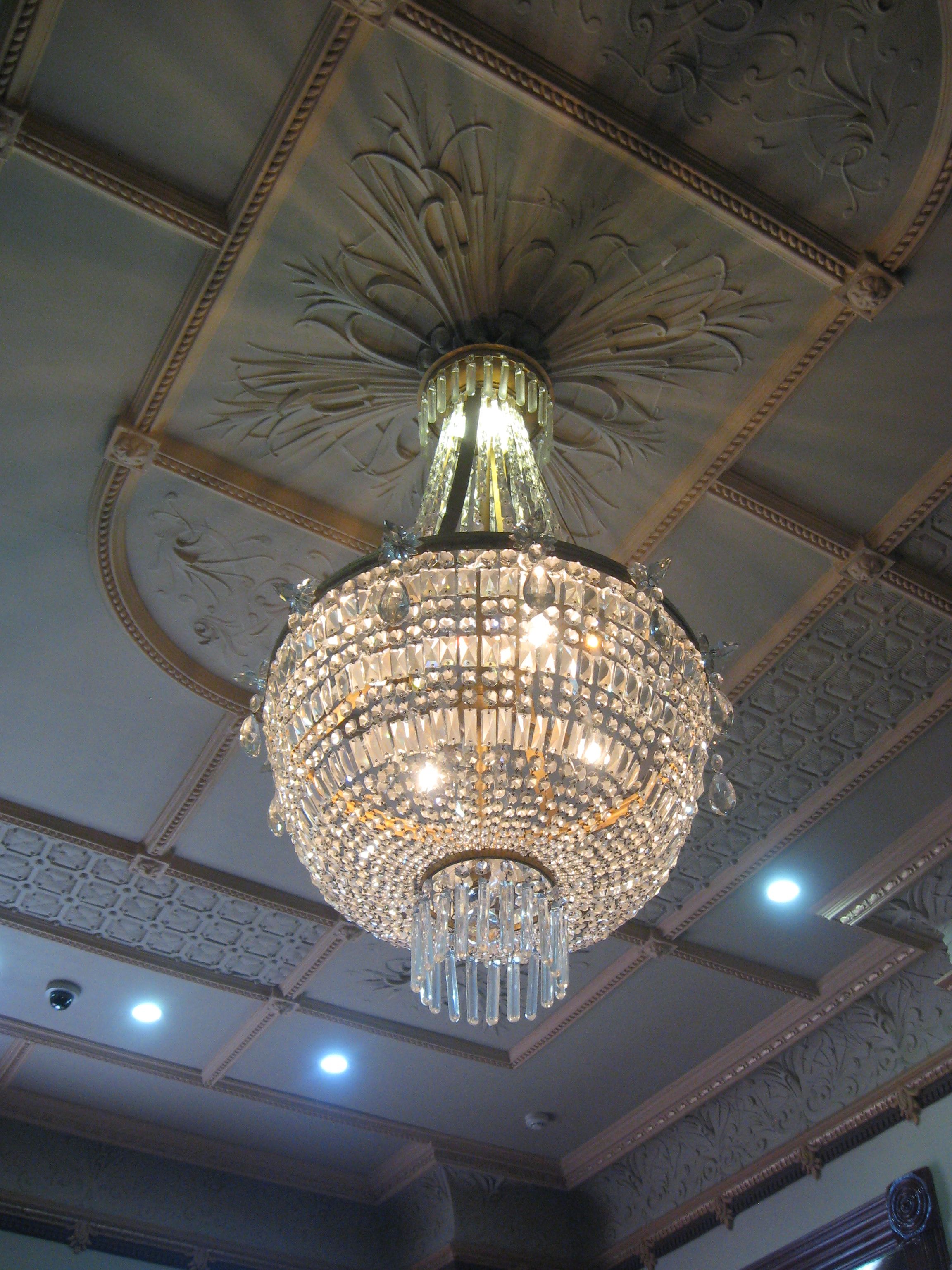
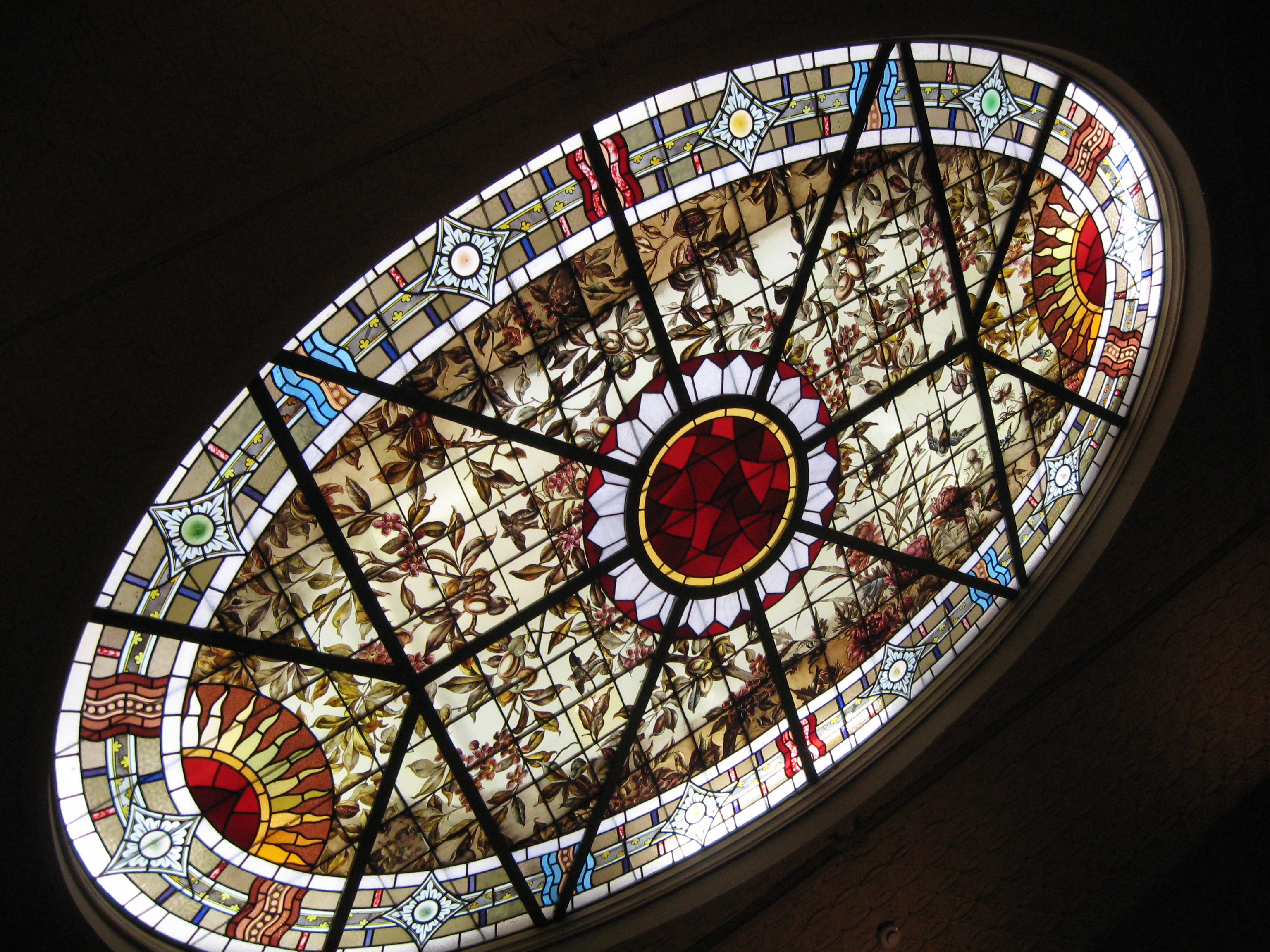
A wet, humid day and nothing to do on a Saturday afternoon so up we went to Bundoora Homestead to see their current exhibition ‘The River’. I’ve written about Bundoora Homestead previously.  It’s a beautiful Federation-era house, well worth seeing in its own right.

Chandelier in dining room, Bundoora Homestead

Another homestead that was once a gallery, Banyule Homestead, is very much in my thoughts at the moment.  More than ever I realize that if you value a gallery or a library or a museum,  then you need to visit it- you need to walk right through that door and go in.  In the case of Bundoora Homestead, it’s free and it literally costs you nothing: the gain is all yours.

Stained glass skylight, Bundoora Homestead

The current exhibition is called ‘The River’ and it centres on Melbourne rivers (well, creeks) the Merri  and the Darebin Creeks. In recent years of drought these creeks have dwindled to small puddles connected by a fitful ribbon of water.   One of the joys of the recent rains this year has been to look down from a train into the city, as you cross over the creek, and to see the water gushing and tumbling along waterways that had seemed so dismal just a few years ago.

The exhibition contains well-known works, most particularly Burtt’s depiction of the purported signing of the Batman treaty and several Heidelberg school paintings of river scenes around Melbourne, as well as 19th century photographs and engravings.  These are juxtaposed against more recent works on the Merri and Darebin Creeks, including reflections on the ‘treaty’ painting and more surreal and threatening depictions of these urban places.  There will be a lecture panel this coming Thursday 24th November at 2.00 discussing Burtt’s painting.

This is a terrific exhibition. I’ve seen reproductions of the Batman painting before, but not the original, and I was delighted to see Sarah Susannah Bunbury’s painting of her house on the Darebin Creek in 1841.  I liked the sense of fun in many of the modern depictions, and it was lovely to see it in a beautiful suburban gallery, close by to the two rivers featured in the exhibition itself.


Vale Diana Gribble

Many of us will have heard or read that Di  Gribble, of the now-defunct McPhee-Gribble publishing house died several weeks ago.  I read and reviewed Hilary McPhee’s book Other People’s Words a few months back here and when I heard the news, I wondered what had happened after McPhee’s book had been published.  How did Di Gribble react? I wondered.  How did they feel about each other’s career in the wake of McPhee-Gribble’s demise?

Hilary McPhee answered many of my questions in a tribute that she wrote for The Drum recently.  I urge you to read it here.


Surprising things: a costume museum

Should someone suggest to you a visit to a private costume museum out at Bulleen,  then just say yes.

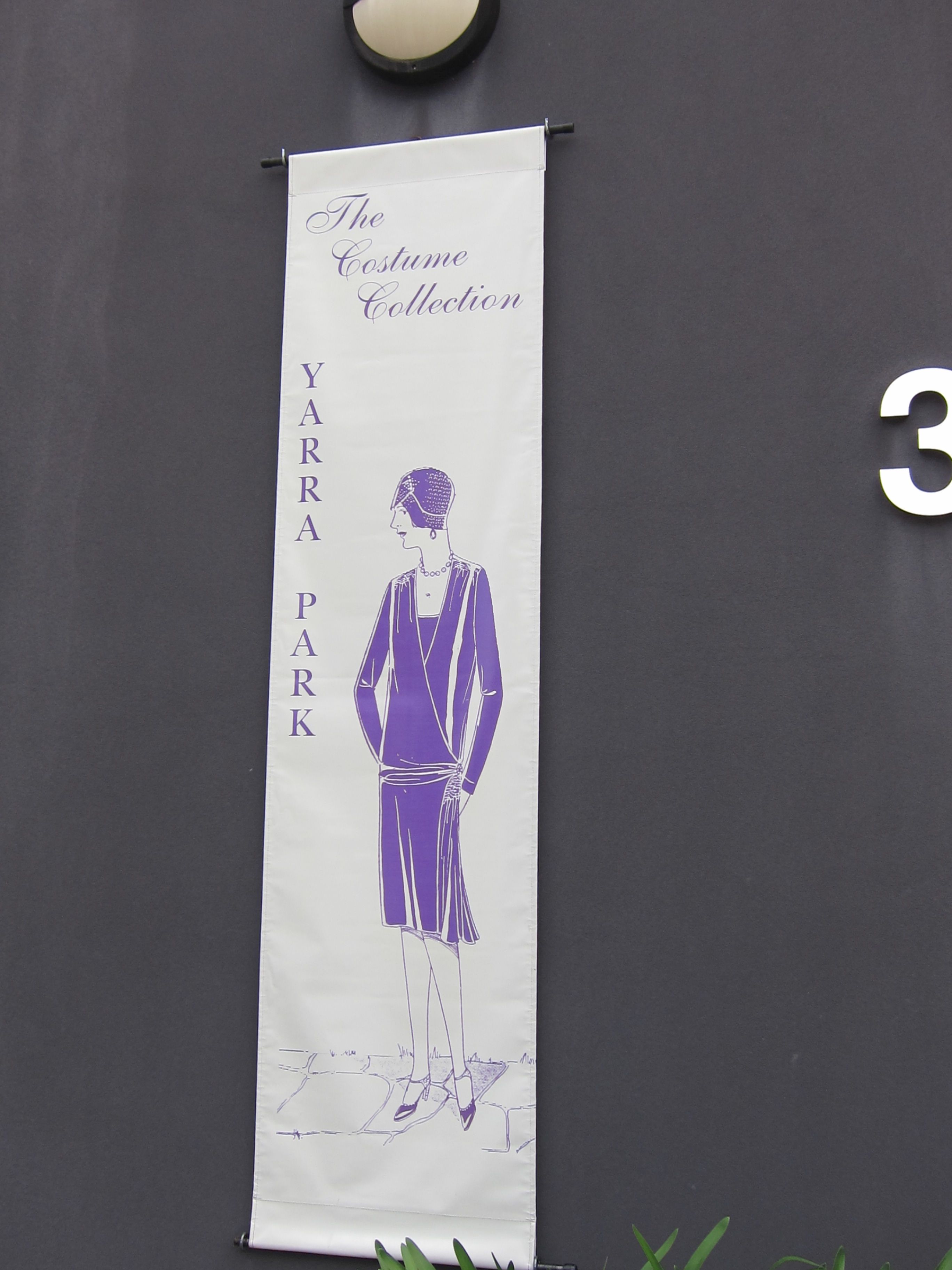
They’ll mean The Costume Collection, Yarra Park in Greenaway Street Bulleen.  You’ll drive down Greenaway Street (named for an early farmer in the district), past the factories and chain wire fences and you’ll think “This couldn’t possibly be right”.  But it is.

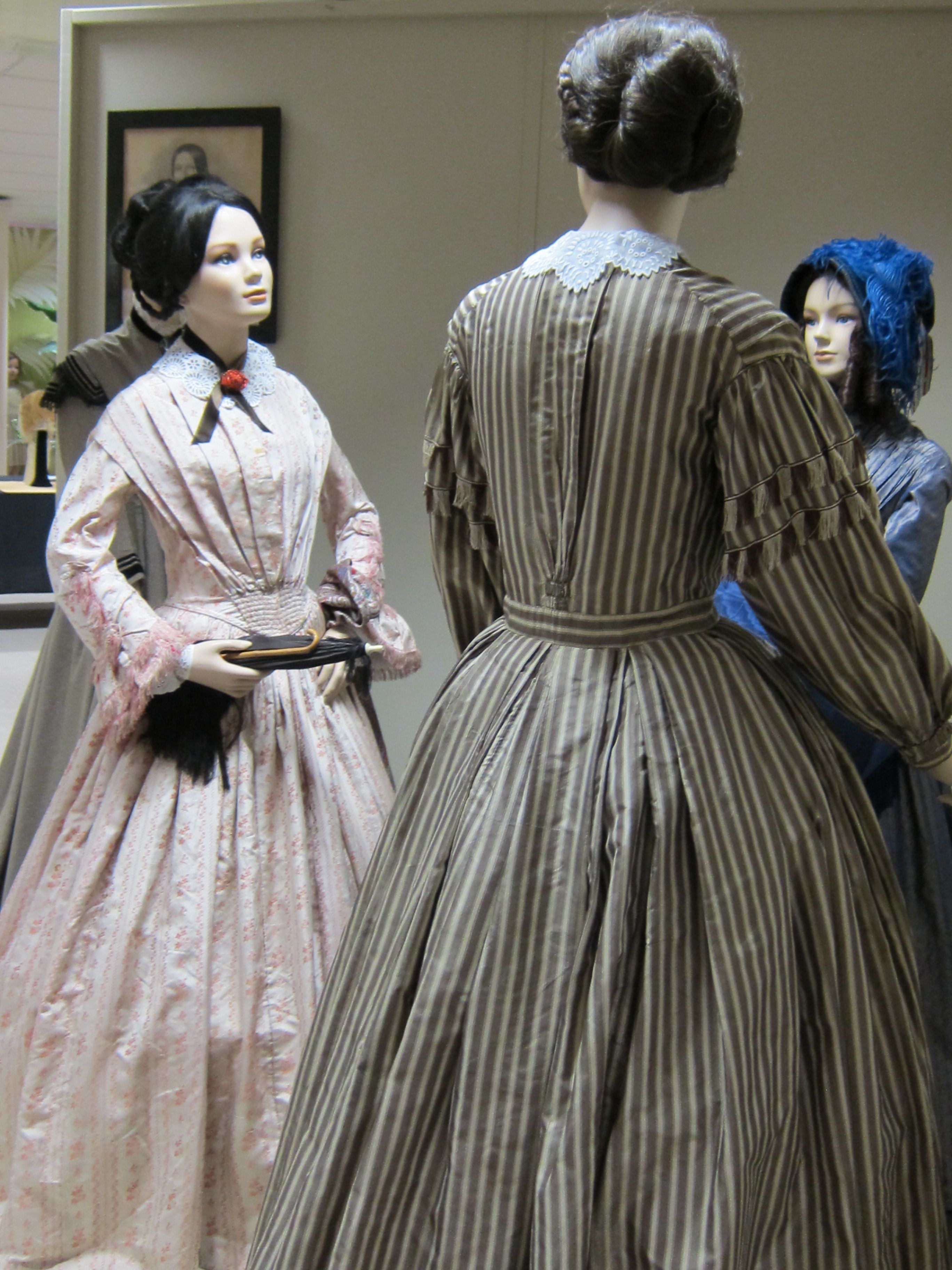
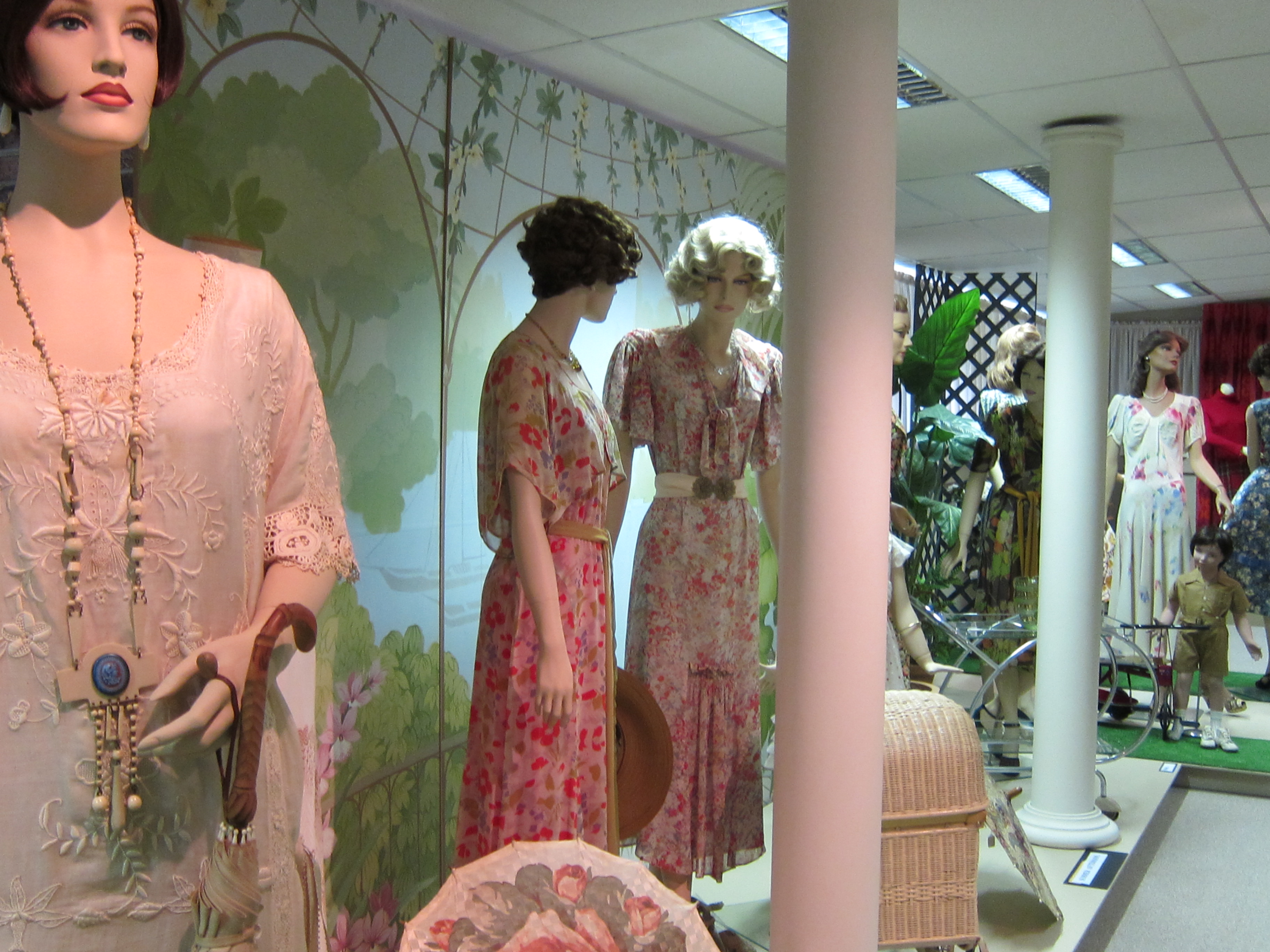
The owner and curator, Loel Thomson, describes her museum as “a hobby that grew”- hence the rather unconventional setting in a factory in a small industrial pocket beside the Yarra River.  The factory, however, provided many of the things her costume museum needed- space, few windows and an airconditioned and filtered atmosphere.  She has more than 10,000 items in her collection, though only a fraction of them are on display at any one time, and the display changes regularly.

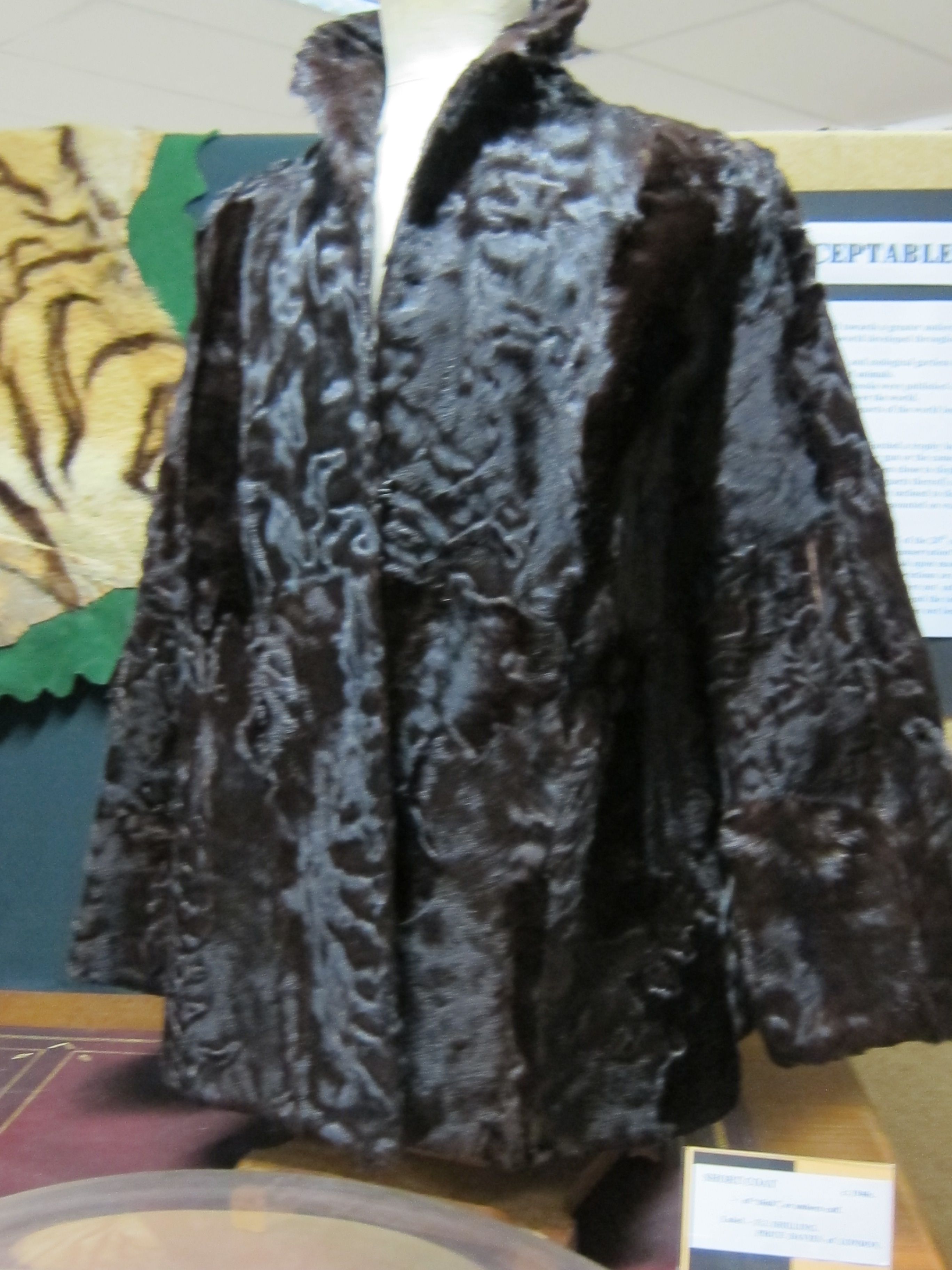
I loved the way the costumes were displayed.  Mostly you could walk around them to see them from all sides, and for those that were less accessible she had wardrobes and furniture of the period arranged so that mirrors reflected the costume from the side or rear.  There was a strong chronological aspect to the display, and it included children’s and men’s clothes as well.   A fascinating section featured ‘things we wouldn’t wear today’ showing furs and jewellery made from animal parts. There was  this ‘slink’ jacket-

that looked like fur jackets that I remember women wearing.  It’s only when you read the sign that you realize that ‘slink’ means ‘unborn calf’.  What travesties euphemisms cover!

Her aim in creating the museum is to collect everyday clothes that people wore.  Obviously the clothes were treasured enough for them to be preserved by family, or put away ‘for good’.  Many of them are purchased, commercially-produced items (she shows the labels) and although there are some formal wear costumes, most of them are day clothes.  She has a large library of magazines, pictures and books in order to research her displays, and in many cases she has been able to match private photographs of people wearing similar clothes,  or magazine advertisements,  to the costumes on show.

The museum is open only by appointment, so you’ll need to ring Loel Thomson herself on  9852 1794 and if there’s only a few of you she may be able to join you up with a larger group.  There’s a small entry charge by donation, which goes to charity.  It’s worth every cent and more.

There’s more photos from her collection here in a blog from February 2010- they are all beautiful too, and most of them were new to me so the display obviously changes quite substantially from time to time.  So- if you’re offered an opportunity to see it, or if you’d like to organize a trip for a group yourself- do!

Banyule homestead again

An article in the Age on Saturday 8th and my response to it.  You’ll need to scroll down a bit- obviously it wasn’t headline material!


We are Geelong

Thank you Red Symons- you’ve verified something for me.

Whenever I listened to the Geelong Football Club song (and we’ve heard it once or twice over the last 48 hours), I found myself puzzled by the first couple of lines. Was it being sung in unison? Why did it sound a bit “off”- as if it was supposed to have two parts, but only one was being sung? I kept trying to sing a different melody in my head over the top.  But in Red’s program this morning (heard rather fuzzily in my daylight-savings time dislocation where 7.30 a.m. was really only 6.30 a.m.) he mentioned that the Geelong song was inexplicably recorded – I can’t remember the correct musical expression- down a third (is that how you say it??) for the first lines.

Here’s the Geelong song  and here’s the way it is in Carmen.  I’m pleased to hear that it IS different- it’s not my imagination: just my paucity of musical theory and terminology to explain what I’m hearing.

I don’t need theory or terminology to hear that something is very, very wrong with Meatloaf (or Mr. Loaf as an article in The Age designated him last week).

Anyway, good on you Geelong.  Anything, anything to stop that triumphalist “Coll-ing-wood” chant.  It still turns my stomach after St Kilda’s grand final loss last year.

I don’t like the look of this

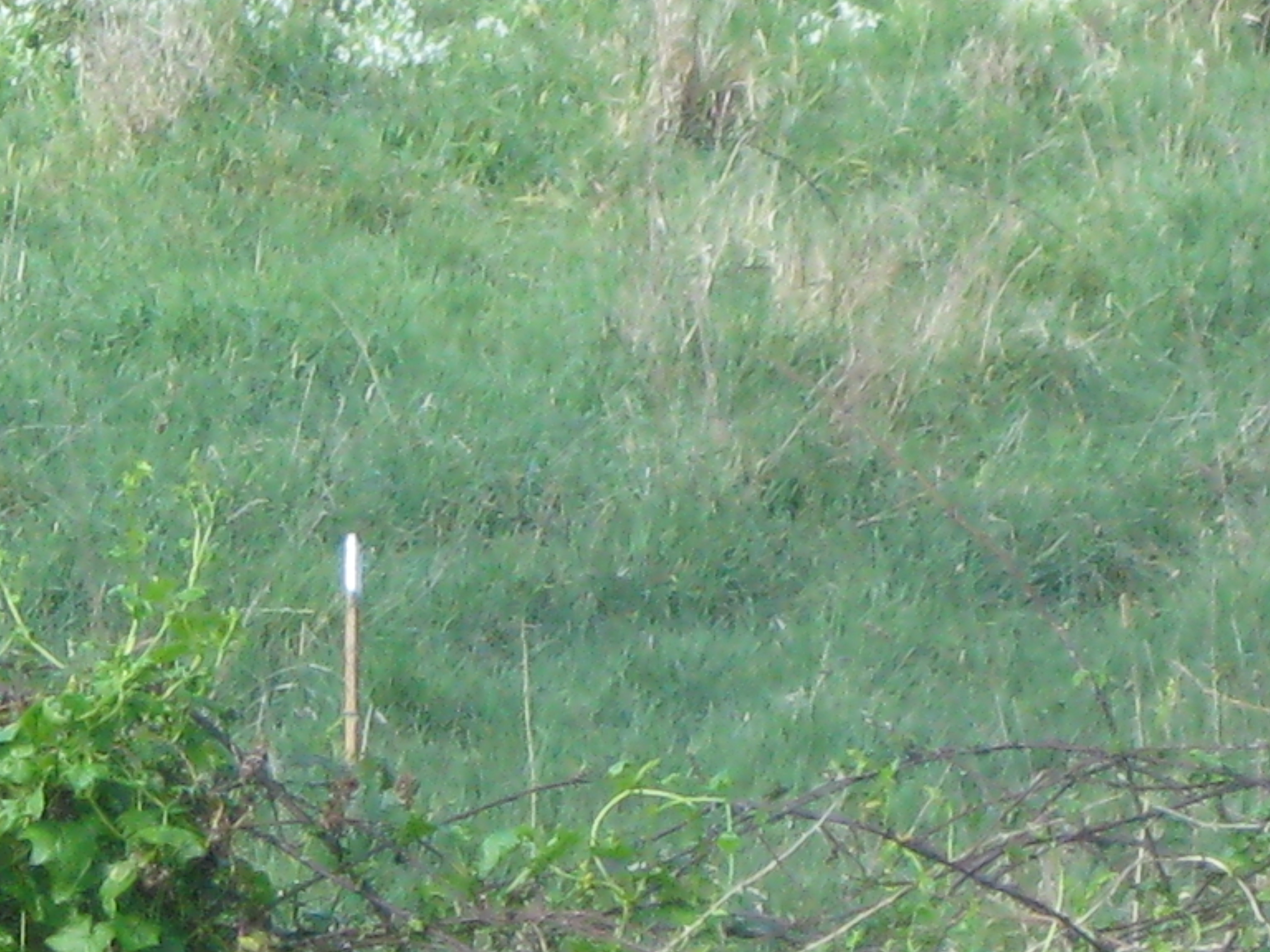
What’s this peg doing in the middle of the Banyule wetlands?

Is this the harbinger of the Eastern Freeway/Ring Road extension?

There’s a lot to lose….

Why I’m mad as hell about Banyule Homestead

Update October 2019: One of the things that I wished most for Banyule Homestead was that it would end up in the hands of a family who love it and who see themselves as custodians of a very special building. And I think I may have had my wish granted! Welcome, new owners.

Update April 2019: Banyule Homestead was on the market again.

Update August 2018: VCAT upheld Banyule Council’s refusal of a permit for use of Banyule Homestead as a function centre. The case ran over ten days, and Banyule Council and numerous neighbours ran a well-organized and well-researched case.  You can read VCAT’s decision here.

Update August 2016: Applications by the owners have been made to Heritage Victoria to make changes to Banyule Homestead in order to fit it out as a functions venue.  Go to http://banyulehomestead.wordpress.com for more information about this latest chapter.

Update May 2015: I have decided to archive the site that was ‘Banyule Homestead Matters’. It can now be found at http://banyulehomestead.wordpress.com

And now, back to the original post that was in this blog entry from September 15, 2011, nearly five years ago:

September 15, 2011

The risibly named Heritage Victoria this week approved the subdivision of land surrounding Banyule Homestead for the construction of three townhouses.  I am appalled.

Banyule Homestead has long been one of the landmark buildings in Heidelberg. The gothic-style mansion was constructed in 1846 by one of the overlanders from Sydney, Joseph Hawdon and it is, in fact, one of the oldest surviving houses in Victoria.  Construction of an early, single-story building commenced in 1842 and so, yes, our Judge Willis would have been able to see the first buildings of Banyule as he stood in his driveway on the hill above what is now Warringal Park.

Heidelberg, with its fertile flood plains and views attracted men who became squatters, and indeed, it was the quality and reputation of his wealthy neighbours  that attracted Willis to living in the area, even though it was some ten miles from the court.  You can almost plot the houses out on a map- on all the high peaks around Heidelberg, the houses attached to large properties would have been visible to each other.  Willis’ rented house on Rose Anna Farm looked across east to  Joseph Hawdon’s Banyule in what is now Buckingham Drive;   south towards D.C. McArthur’s house Charterisville along what is now Burke Rd Nth,  and west to  the Boulden Brothers property at the top of the hill leading up to Upper Heidelberg Road.His friend William Verner lived in the valley between Willis’ house and Banyule, while Viewbank Farm stood on a raised area on the Yarra Flats, clearly visible from Banyule.  These houses, as they stood in the early 1840s, were not the mansions that they were later to become with further additions and alterations, but they did form an important network of the pre-gold rush ‘gentryin Port Phillip.

You need imagination to visualize the sightlines between these houses today (where they still exist) because they have been largely obscured by trees. But you don’t need imagination to see Banyule as it was from the river, because as an aspect it is still largely unchanged today.  Until Heritage Victoria’s decision, that is.

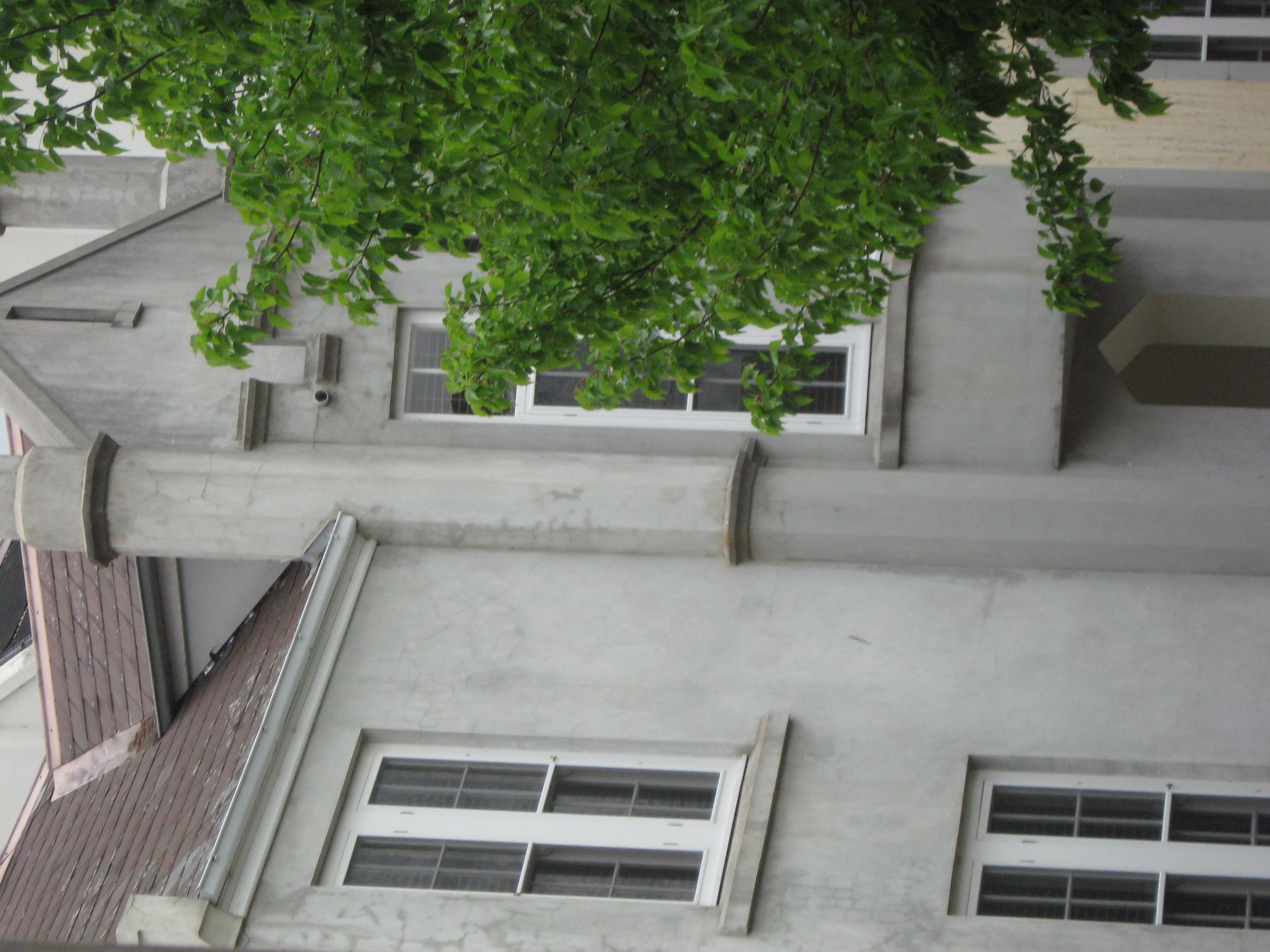
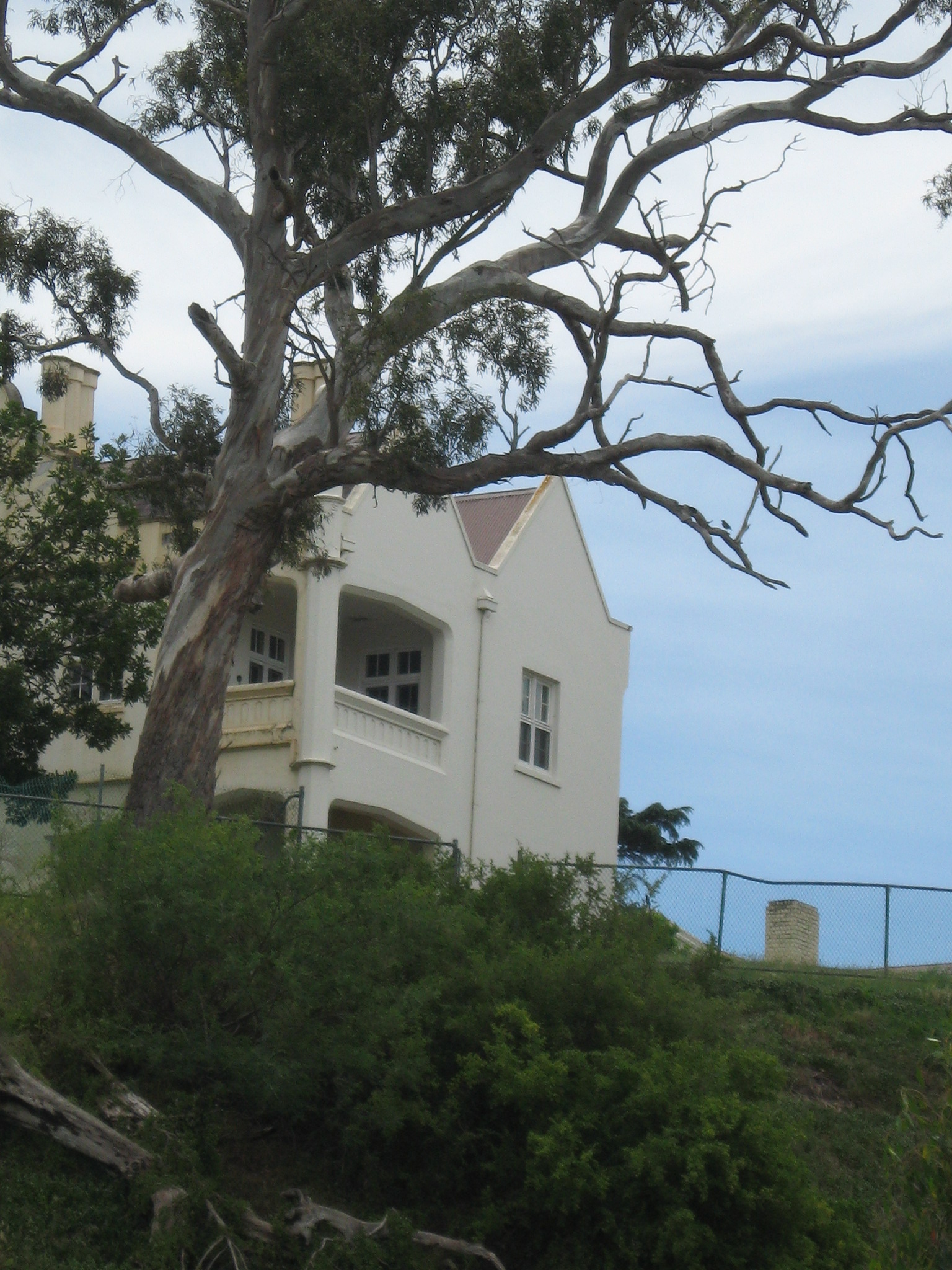
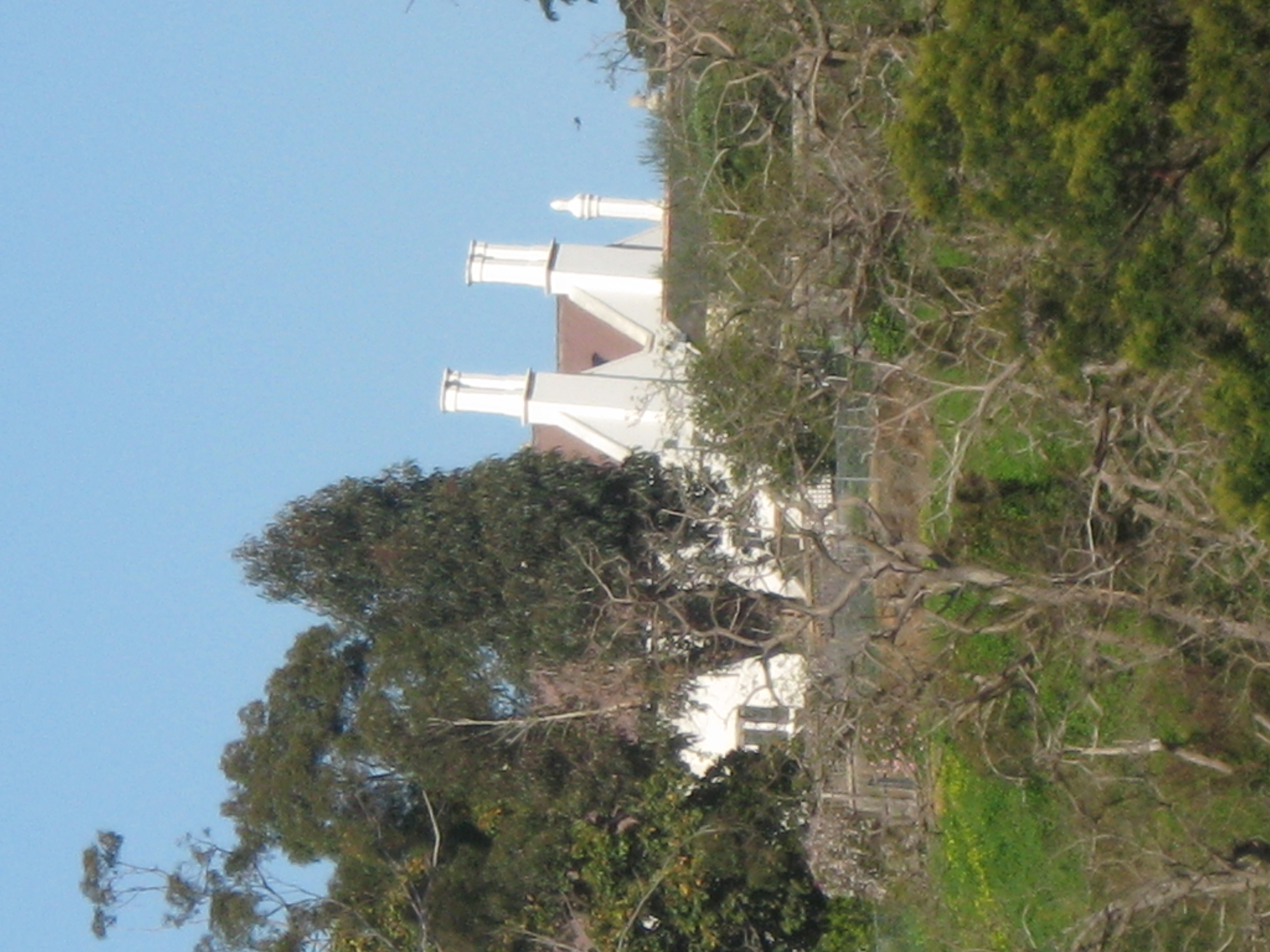
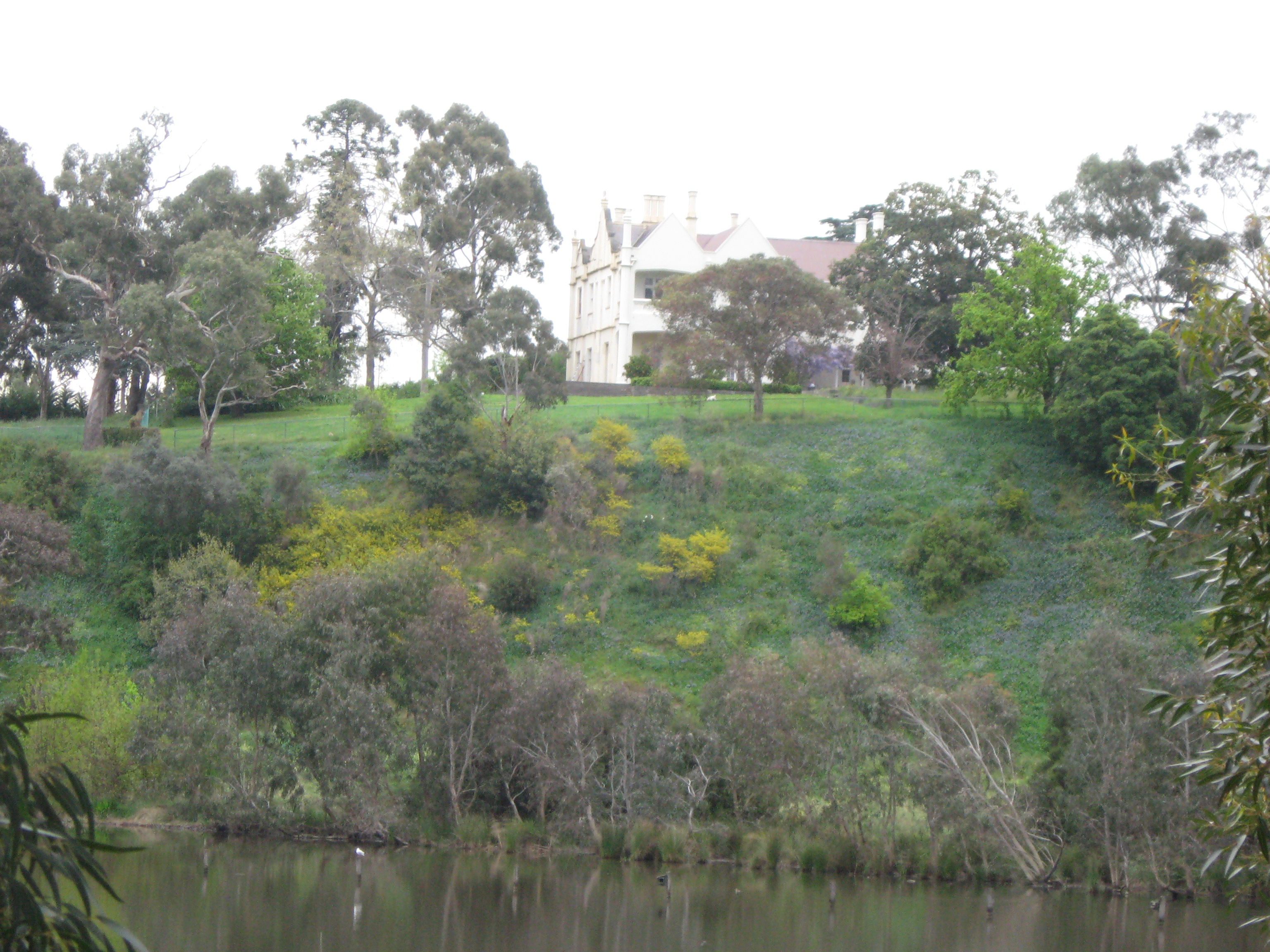
Banyule stands on a cliff, overlooking the Yarra flats below.

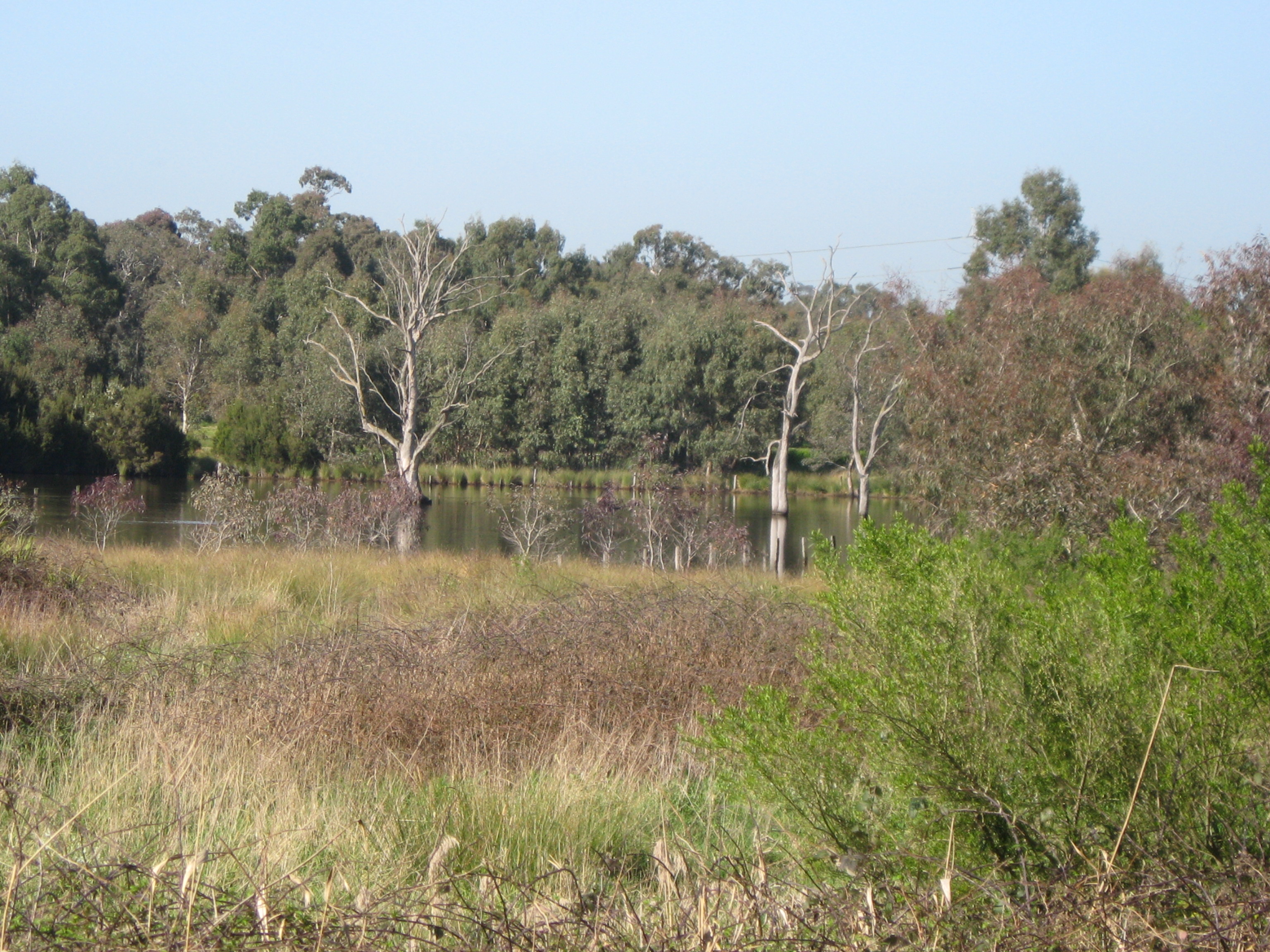
It can be seen from across the billabongs…

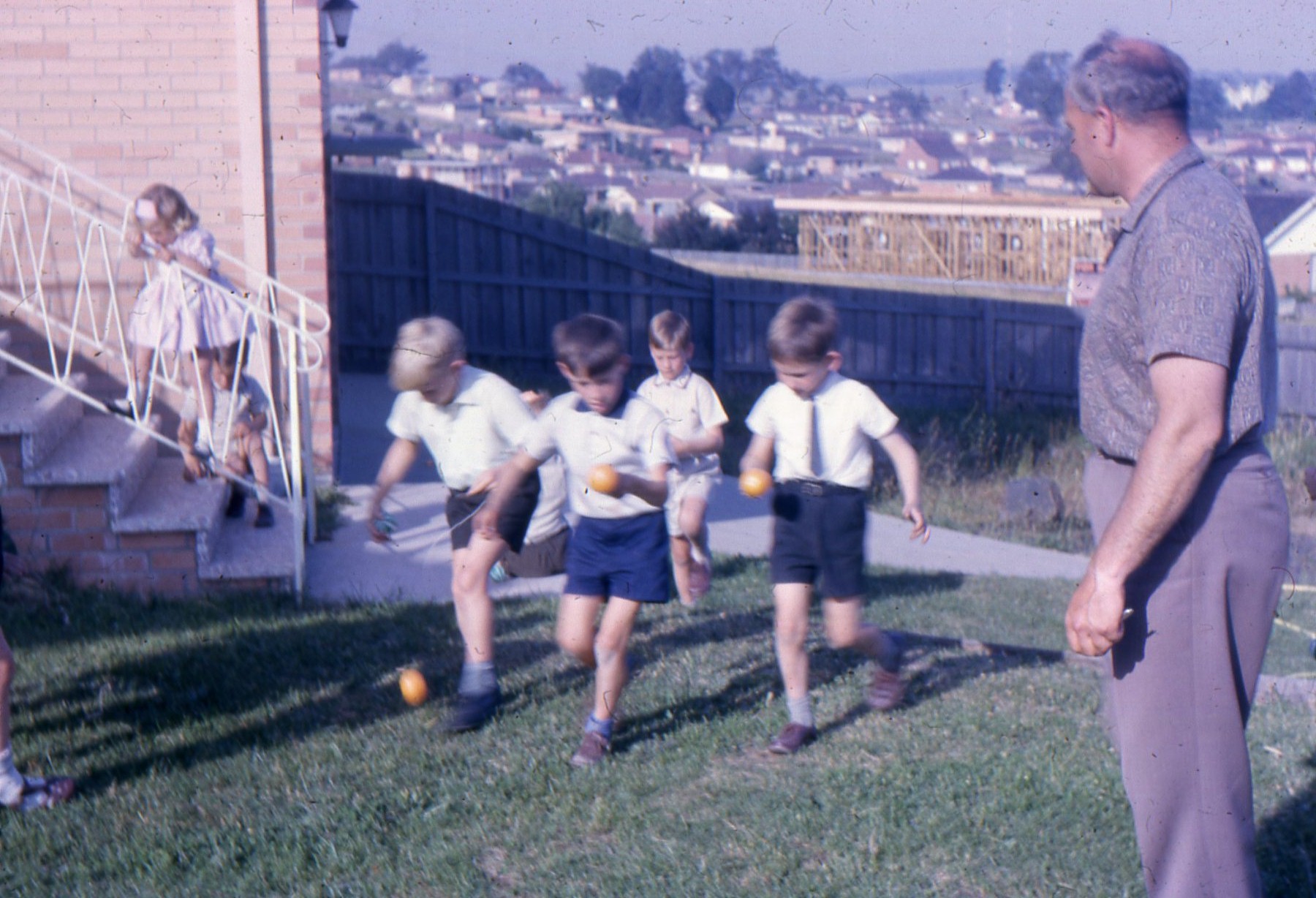
…and  it was visible from my front garden, just to the right of  my father’s head in this 1960s photo of party games on the front lawn (how quaint!)  In fact, this is how I know that Judge Willis could see Banyule because his house stood on the hill immediately behind my childhood home.

It is the house that gives my local council its name: I went to Banyule High School and I go to the Banyule Festival. The Victorian Heritage Database shows that it is listed as being of National Significance by the National Trust; it is on the Victorian Heritage Register and it has local council heritage listing.  These are long-standing listings, already in place when Banyule (shamefully) returned to private hands after being in public ownership as an art gallery.  How can all these listings count for nothing?  Is anything safe? Obviously not.

As it is, the gardens that surrounded Banyule have been degraded and surrounded on three sides by houses. A slice here, a slice there. Enough has been lost already, and it can never be regained.  We can put a stop to further loss now.  One of the oldest mansions in Victoria should not be further nibbled away by development.  A house might be privately held, but its aspect belongs to all of us.  Most large houses in suburban Melbourne have been hemmed in by other houses and hunker on truncated, remnant blocks, with all scale and sense of position lost. But with Banyule,  we don’t have to rely on our visual imagination to see it as it was.  We can stand on the wetlands on the Yarra Flats and look up- and there is it.

P.S. Update April 2012. If you share my concern about Banyule Homestead, please go to Banyule Homestead Matters . It is located at http://banyulehomesteadmatters.wordpress.com . At the moment, it is just celebrating Banyule Homestead, but the moment that anything changes, you’ll read about it there.

P.P.S Update 29 December 2014. I have decided not to renew the premium status of the Banyule Homestead Matters website.  The site is still available, but the URL now includes ‘wordpress’  (i.e. it used to be banyulehomesteadmatters.com  and now it is banyulehomesteadmatters.wordpress.com) You will probably see a screen telling you to contact the administrator to renew the registration.  There’s no need to do that- I know that the registration has lapsed.  If you click on the small X, the warning will disappear and you’ll be able to access the site as before.  You may need to use the menu on the right hand site to negotiate the site as the Home page no longer shows all the posts in chronological order.

P.P.P.S. Update again. I’ve archived the Banyule Homestead Matters website and moved it all across to a new site. The website address is now http://banyulehomestead.wordpress.com

It might be worth keeping an eye on the Friends of Banyule website, and the Heidelberg Historical Society has information about Banyule as well.

P.P.S. Good places to see Banyule Homestead. The homestead  is located at 60-74 Buckingham Drive, but it’s not easily seen from the street.  Click for a Google Map showing good vantage spots here.