Category Archives: Book reviews

‘Memoirs recorded at Geelong by Foster Fyans’ ed. Phillip L Brown

“What is the use of a book, ” thought Alice “without pictures and conversations?”  I’m with you, Alice.  I  certainly wasn’t expecting conversations in Foster Fyan’s memoirs, and I very much appreciated the maps and illustrations.

Foster Fyans is well known in Geelong as the first police magistrate there (1837-40), then he became Crown Land Commissioner in the district.  The area just out of Geelong known as Fyansford is named after him, and there’s a Fyans Street in Geelong itself.  After visiting Geelong a fortnight ago for the Robert Dowling exhibition I seem to be rather Geelong-conscious at the moment, and I’ve been reading Fyans’ memoirs for a paper that I’ll be giving much later in the year.

As his entry in the Australian Dictionary of Biography suggests, there is not much known about his early life beyond that he was Irish and brought up by an uncle.  In these memoirs he springs from the page as a fully-formed army man, in charge of taking bringing a band of recruits to Portsmouth.  From the start he portrays army life full of masculine humour, eating and drinking, marching and high-jinks- almost a dead ringer for Lydia Bennett’s Mr Wickham and his mates.   His description of the Peninsular War likewise emphasizes life amongst his fellow soldiers, with more distress ascribed to the illness that swept through the camps rather than actual combat.  Then off to India for several years where again, life revolved around hunting and carousing and little mention of actual soldiering.  After a short time in Cape Colony (more parties and shooting), he arrived in Sydney where he spent a short, restless, lonely time before reporting to his regiment and joining his fellow soldiers at Parramatta.  Although he attended Government House, the jocular hail-fellow tone falters here, as the realities of convict settlement and official responsibilities become more apparent to him.  He is sent to the high-security  Norfolk Island where he eventually becomes Acting Commandant, and from there as commandant to Moreton Bay (now Brisbane) which was also a penal settlement at the time.  While  in Moreton Bay he oversaw the rescue of  Eliza Fraser.   His response to the convicts probably reflects the contradictions thrown up by the system- an uneasy wariness of violence that runs just below the surface co-existing with close day-to-day proximity with men not so different from oneself.

From there he was sent as Police Magistrate to Geelong, which is about fifty miles from Melbourne and rich pastoral land.  His memoirs become even quieter at this stage.  He spends quite a bit of time describing an expedition to the port settlement of  Portland, the first recognized land journey between the two settlements.  With only two mounted police and the surveyor Mr Smythe and no maps, they set off in what seemed to be atrocious weather, greeted each morning by the “flying jackass” (kookaburra), the “chanticleer of Australia”.   By 1840 he had been appointed Commissioner of Crown Lands, responsible for maintaining order among the squatters and investigating clashes between the settlers and the displaced aboriginal groups.  Here is a sad litany of violence,  where he mainly sides with the settlers in sympathy for what they perceive as needless stock loss. Like the settlers he is critical of the Aboriginal Protectors and the nearby mission station that he feels only attracts more aborigines to the area and imbues them with a misplaced sense of inviolability.

What started out as a military romp has become a nomadic police-like existence, accompanied mainly by his aboriginal “boy” Bon Jon (the purpose for my reading these memoirs).  It has become much quieter and more isolated.  Perhaps it’s the memoirist running out of puff too, because the memoirs stop abruptly in the bush in 1842.

The editor has written an introduction, where he describes the provenance of the manuscript and the various branches of the Fyans family tree, then gives a brief summary of the content of the memoirs.  I always enjoy hearing about how a manuscript comes to be published. The original, scrawled across five hundred foolscap pages had been typed up by Fyans’ great grand-son and it was donated by his descendants to the State Library of Victoria in 1962.   Although Fyans himself did not divide it into chapters, he did create sections by inserting a page with rough headings for the pages that follow. The  editor has created chapter headings and provided notes  at the end of each chapter.  These rather dour and punctilious annotations to the entries, which are painstaking in their detail, remind the reader of the fallibilities of memory and chronology, and the infelicities that arise when a raconteur is  telling a good story.

I think that it’s almost certain that anyone working exhaustively on an archive of memoirs, diaries or letters comes to build some sort of a relationship (albeit completely one-sided) with the author.  The editor, P. L. Brown (who also wrote the ADB entry) seems rather disenchanted by the many inconsistencies and errors he found

Fyan’s reminiscences had to be checked in order to assess their worth as historical material. This checking disclosed considerable and frequent divergence between actual and remembered events, and made it clear that the text, unless fully annotated, must be more entertaining than instructive. Hence the presentation of archives, both British and Australian, from the latter of which Fyans emerges as an energetic, conscientious public servant, rather let down by his rambling old self, who nevertheless conveys the authentic atmosphere of his historical period, and told few stories which lacked a germ of truth (p. xv)

The memoirs themselves ended abruptly, and the notes themselves end with the transcription of assorted letters and returns, and further details about wills and inheritances.  I found myself wishing that P.L. Brown had returned at this point to round out the picture somewhat and to help me, as reader, to bid farewell to Fyans.  After all, he’d been a rollicking companion for the first 100 pages or so, and despite infelicities and distortions in his retelling, he sure had a story to tell- Spain, India, Cape Colony and Australia- as did many of those peripatetic colonial civil servants.

‘Upper Canada: The Formative Years’ by Gerald M Craig

My research has moved onto another stage: Judge Willis’ Adventures in Upper Canada.  My Australian readers will no doubt agree with me that Canadian history does not figure highly in the Australian history curriculum and that I probably shouldn’t feel as embarrassed as I do by my ignorance about all things Canadian.

This book was suggested to me on a Canadian history blog as a good, if somewhat dated, starting point in researching Upper Canada.  Where’s Upper Canada? you may ask.  (I certainly did).  As one of my first surprises, it’s not particularly “Upper” at all- it’s the area of Southern Ontario, north of Lake Erie and Lake Ontario. To my antipodean eye “Lower Canada” was actually closer to the north pole (and hence, upper)  than “Upper Canada” was.   It only officially existed until 1841, when Upper and Lower Canada were merged.

This, for me, was Revelation No 1- the river/lake eye view.  In his book, The Tyranny of Distance, Geoffrey Blainey emphasizes the importance of the lack of long inland waterways in Australia.  When you look at a map of Australia, there are none of those meandering rivers that weave , branching and converging across a continent.  Instead, apart from the Murray-Darling system,  there are stubby little twigs that start and break off, seemingly without reason.  No wonder explorers dragged their canoes with them into the Australian desert: their experience in other continents would have reassured them that there would be a river system somewhere, waiting to be discovered.  It also explains why early British settlement in Australia hugged the coast so tightly, and why they were keen to annex strategic harbours rather than the continent as a whole. (p. 122-3).  With a Canadian river-eye view, “Upper” refers to the reaches of the river, not the lines on a map, and “development” involves canals and river engineering works.

Revelation No 2 was the importance of borders, and here I remembered echoes of John Hirst’s first year Australian History subject where he emphasized the importance of Australia not having to share a border with any other colonial power.  I hadn’t considered before the significance in the time of the Napoleonic Wars of having French-Canadian neighbours, or the implications of “loyalists” coming across the border after the War of Independence, and the uneasiness that would evoke.  The book was a salutary reminder.

Revelation No 3 was the familiarity of policies across the empire. I was prepared for this, but it was still an “aha!” moment for me to see migration, land and church policies that I had thought of as “Australian” being applied in another context.  Our “national” history is not as unique as we might want to think it is- much of  it was part of what we would now deride as “one size fits all” empire-wide approach.  Policies that seem puzzling, like the insistence on restricting settlement around the Sydney area, make more sense in the face of Upper Canada’s experience when settlement was allowed to become too dispersed, a phenomenon exacerbated by the policy of reserving large tracts of land for clergy and Crown needs at a later date.  Of course “one size” didn’t fit all, and policies were subverted and ignored, but it’s interesting to observe the empire’s “corporate learning”, even if it only existed on paper.

Revelation No 4 was not strictly a revelation either: more a confirmation of the mobility of colonial careers.  For here we see George Arthur popping up as Lieutenant Governor of Upper Canada, having completed an earlier stint in Van Diemen’s Land- and there’s Charles Buller– I thought he was supposed to be “our” man in Whitehall!

The book was clearly written, with a strong chronological structure.  I found myself raising a sceptical eyebrow at the comment that unlike the United States, Upper Canada was never an “angry” Indian frontier- is that true?  The emphasis on the book was on politics and economics rather than social history, and I don’t think that there was a single woman in the whole book.  That’s fine: I’ve just started reading and plenty of time to rectify that.  There’s an almost laconic view of causality running through the narrative of this book: rebellions and ructions, when they occurred,  are portrayed as almost unnecessary, as structures would have collapsed under their own weight and events would have unspooled anyway.

The book, published in 1963,  was the first cab off the rank in the Canadian Centenary Series.  It concentrates on a defined geographical area within a clearly designated timespan.   The book ends optimistically, looking to the future and further progress.  The concept and premise of “Upper Canada” seems to be a phase in Canada’s history, and I sense that it has been left behind without regret or nostalgia in the march towards other things.

‘Writing Lives: Principia Biographica’ by Leon Edel

1984, 272 p

When I first started on my research on Judge Willis, my intention was to examine his dismissal from Port Phillip in 1843.  I had a bifocal vision: looking at the Port Phillip context and the local trajectory of events that led to his removal, while at the same time evaluating Willis’ own personality and behaviour.  I was often at pains to distance what I was doing from biography.

But now that I’ve upgraded to a Ph D,  I’m looking at his career as a whole, in Upper Canada then in British Guiana, as well as in the interludes ‘back home’ and his eventual retirement as a Worcestershire gentleman.  My emphasis has shifted from a localized event into an analysis of a whole career, and now I find myself more closely drawn into writing a biography.

I don’t know why I find myself squeamish about saying that I’m writing a biography.  After all, I enjoy reading biography , and I have always been attracted to human agency in history whether it be individuals operating within the structure of an institution, or “history from below” that takes the lived experience of humans as its touchstone.  From a methodological point of view, I’ve very much enjoyed reading Richard Holmes’ work here and here, and now I’ve read Leon Edel’s book which Holmes quoted often.   Both Holmes and Edel are literary biographers – i.e. they write biographies about other writers- so they find themselves working both with text and life.  Nonetheless, much of what they say applies to biography more generally.

Edel commences his book with an “Introduction in the form of a manifesto” which over four or five pages encapsulates his principles of biography- a document that will yield up many “Uplifting Quotes for an Uninspired Historian”. He has several biographical heroes, whom he mentions often. There’s Boswell (of course!) who, although denying “melting down” Johnson’s conversations did in fact manipulate his subject by setting up situations where Johnson would display himself.   He quotes Lytton Strachey, Andre Maurois, Van Wych Brooks, and spends a long time on Virginia Woolf, herself the daughter of the Big Daddy of Biographers, Leslie Stephen. In particular he counterpoints her fictional work Orlando, which jibes at biography and mocks chronology, against her ‘straight’ biography of Roger Fry where, like all biographers she bemoaned:

how can one make a life out of six cardboard boxes full of tailor’s bills, love letters and old picture postcards?”

Edel speaks often of the “new biography” (which doesn’t seem so new anymore) which experiments with form, and draws on art and fictional techniques in creating its narrative while remaining true to the sources.  He is open to psychoanalytic techniques and finding “the figure under the carpet”, while acknowledging that of course the biographer and her subject cannot be equated at all to therapist and patient.  Nonetheless, drawing on psychotherapeutical approaches,  he is attuned to the life-myth that drives human action, and the mask that individuals adopt to confound it.

We must consider two kinds of myth: the myth we perceive with our eyes and sense of observation; and the covert myth, which is a part of the hidden dreams of our biographical subjects, and which even they would have difficulty to describe because these are lodged in the unconscious, in the psyche.  The covert myth has to be deduced from the public myth, and from the stray bits of psychological evidence offered us by our subjects, the little hints, the casual remarks, or the poetry or prose set down out of themselves…

….  In an archive, we wade simply and securely through paper and photocopies and related concrete material. But in our quest for the life-myth we tread on dangerous speculative and inferential ground ground that requires all of our attention, all of our accumulated resources.  For we must read certain psychological signs that enable us to understand what people are really saying behind the faces they put on, behind the utterances they allow themselves to make before the world. (p. 161, 162)

Many people have warned me off “psychological history”.  I haven’t read much of it at all- in fact, probably only Judith Brett’s Robert Menzies’ Forgotten People. I’m not particularly comfortable with the language and theory of Freudianism and Lacanism and other “isms” in general- I find them smothering.  But much of what Edel is stretching for in the dilemma of the biographer’s art does ring true in my own research, just in Port Phillip, and I’m excited to see if it is a way of drawing together my story of this colonial servant in three different colonies where there are so many commonalities.  I think that I really do need to swallow hard and admit that, yes, I’m writing a biography.

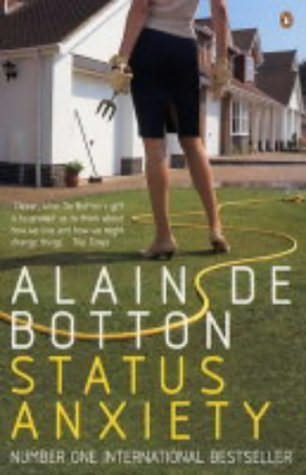
‘Status Anxiety’ by Alain de Botton

2005, 314 p.

What’s not to like about a book that reassures you that your malevolent feelings are basically unfounded and then goes on to give you a string of ways to get over it?  At a very boiled-down level, this is what Status Anxiety by Alain de Botton does.

The book is divided into two halves: causes and solutions.  What a sane, philosophical way of looking at the world!  We feel anxious, belittled, despondent and envious of others because the snobbery and superiority of others undercuts our self-image and sense of being loved.   Comparing ourselves with those around us will only make us unhappy,  our expectations are closely related to our level of happiness, and our insecurity is tied up with our dependence on an impersonal economy.  So why on earth do we buy into it, and how do we break free?

There wasn’t really much here that I hadn’t heard before- it’s all become rather ho-hum and in my mind becomes mixed in with Clive Hamilton, Affluenza, Bhutan, Gross National Happiness etc. as explored by weekend magazine articles.

The stronger part of this book is the second section: solutions.  He gives us five to choose from: philosophy, art, politics, Christianity and bohemia.  The Philosophy chapter reminds us that  we can, through reason, choose to acquiesce in status anxiety and it dusts off all the old philosophers- Aristotle, Epictetus- to reassure us that the power rests with us.  We can even cultivate a Schopenhauerian misanthropy and shrug that most people are stupid and ignorant, and their good opinion isn’t worth having anyway.  In fact, that’s what my mother always told me.

I enjoyed his Art chapter, liberally interspersed with landscapes, ruins and towering masonry. The Christianity chapter reminds us of Jesus’ softer teachings while choosing to overlook that the Church has been just as, if not more strenuous in ensuring its own wealth (and hence status) than family dynasties and entrepreneurs have been.  The Politics chapter points out that the  criteria by which status is judged alter over time, can be contested and overthrown.  The Bohemia chapter was interesting, but I suspect that many of his poets, artists and bright young things could only choose to reject wealth, work and responsibility because in the background there was a family who would save them in extremis if they would let them.

The book is lavishly interleaved with art work throughout and presented as a mindset that you can choose to adopt or reject.  It is written in a beguiling, reassuring conversational tone far removed from the aggressive, egotistical point-scoring that struts as ‘philosophical discussion’.

‘The Good Man Jesus and the Scoundrel Christ’ by Philip Pullman

2010, 245p.

As a good Unitarian girl, I thought that I was going to enjoy this book.  After all, there’s lots to like about Jesus’ anti-materialist, subversive teachings: it’s all the St Paul baggage and the tottering pile of theology, misogyny and hypocrisy  piled onto Jesus’ words that repels me.  So the idea of separating out the “good” Jesus from the rest of it quite appeals to me.

But I was disappointed in this book.  It’s told in the simple, passionless, slightly patronizing tone of the Good News bible, divided up into short chapters with a heading.  It catches the biblical tone so well that when you’re reading Pulman’s version of a bible story you’ve heard many times, you find yourself having to think hard about whether the nuances he introduces change the meaning substantially or not.

As you probably know about this book, Jesus and Christ are twin brothers and, despite appearances to the contrary at the start of the book,  the rather namby-pamby Christ finds himself the onlooker as his more feisty brother Jesus gets all the attention.  Jesus’ activities attract a string of miracle-seekers,  the opprobrium of the  authorities and a rather curious Stranger.  We are led to suspect that this Stranger may (or perhaps not) be Satan as he co-opts Christ as an informant on Jesus’ activities  and encourages him to document Jesus’ sayings  so that they can be tweaked later on, once the church is up and running.  In this regard, the book is like a sober version of The Satanic Verses, with an earnest discussion that pops up in several chapters about the relationship between truth and history.

The polemic heart of the book lies in the long chapter about Jesus’ tussle in the garden of Gethsemane where he trots out the usual string of qualms about Christianity and the Church.  The book ends with a thoroughly unconvincing explanation of Christ’s participation in the creation and manipulation of the resurrection-that-never-happened, and the conflation over time of Jesus and Christ into one historical identity.

It was probably this narrative leap at the end of the book that lost me completely.  Until then I’d been lulled by the familiar tone, ho-hummed through the debating jousts, and nodded at the arguments about spin, creation and truthtelling.

Apparently this book was written as part of the Canongate Myth Series where authors commissioned to reimagine and rework ancient myths from varied cultures, and it certainly fits the bill in this regard.  The device of splitting Jesus in this way is an inspired one that reinforces Jesus’ humanity and radicalism.  The problem for me was the act of putting them back together again, and it was at this point that I felt as if I’d been conned.

‘A Manifesto for New South Wales” Edward Smith Hall and the Sydney Monitor’ by Erin Ihde

Who’s Edward Smith Hall, you say?

He was the editor of the Sydney Monitor between 1826 and early 1840, which makes him exceptional among the highly fluid editorial scene in colonial New South Wales.  Many editors lasted only two or three years before their papers either faltered or merged and transformed themselves into yet another entity. So as Erin Ihde points out in this book, the Sydney Monitor under the editorship of just one man provides us with

…not just a newspaper but a most important manifesto, one which outlines a complex social vision as it evolved, on deeply laid principles, over a period of fourteen years.  In it we see revealed more clearly than in any other accounts, including the works of Wentworth and Macarthur, the intellectual problems faced by one person in their quest to clarify their hopes for New South Wales. (p. 244)

Edward Smith Hall was born in London in 1786, one of six sons of a bank manager.  He arrived in Sydney on 10th October 1811 bearing a letter of recommendation from Peel, the under-secretary for War and the Colonies, citing contacts with two other M.P.s   On the basis of this recommendation, he received several land grants but the life of a pastoralist was not for him. He became involved in merchant shipping and banking, then in 1826 established the Sydney Monitor.

Ihde’s book is an intellectual history, and it draws mainly on Hall’s editorials and articles over a 14 year period.  Hall seems to be a hard man to pin down intellectually, given often to puzzling logic and outright contradiction.  In a time without official political parties as such, over such an extended period of time, and under the pressure to generate two, and by 1836 three issues a week, it’s perhaps not surprising that his stance shifted on the hot topics of the day.  Moreover, many of these topics were just as thorny and contested and “wicked” as, for example, climate change and asylum seekers are today.  They were, as our ex-Prime Minister might have said, the great moral challenges of their time.  Nonetheless, Ihde has set out to try to trace Hall’s underlying philosophy and having attempted a similar endeavour with Judge Willis, I have some appreciation of how difficult this can be.

Hall operated from a practical Evangelical, yet surprisingly liberal Christianity- a contradiction right from the start.  He placed more emphasis on moral character than status; he believed strongly in the “moral economy” and the rights of free-born Englishmen and did not accept that convictism cancelled out these rights.  He strongly supported the continuation of transportation, and yet was seen as being an advocate for emancipists.  He acknowledged the Aborigines as the original possessors of the land, and yet accepted as part of the natural order of things that the Aborigines would be usurped- or rather, than the superiority of Englishmen would lead to their ‘adoption’ of the land.

He has been characterized as “changeable” by later historians, but Ihde argues instead that

…Hall’s stances on various issues prevent his easy classification as a supporter of any single ideological or political grouping for any length of time.  The complexity of his views and his struggles to find solutions to fundamental moral problems meant that while on the surface he appeared to be subject to abrupt changes of mind, in reality he was driven by a clash of circumstances and principles.  His contradictions were the result of his search for all-encompassing solutions…Hall has been portrayed by historians as having a very changeable attitude.  Such a view is unfounded. (p 245)

Ihde largely restricts his analysis to the columns of the Sydney Monitor.  His book commences and closes with biographical details about Hall himself, but Hall as a living, breathing Sydney man does not come through clearly through the body of the work.  I suspect that Ihde would say that this was not his intention: the book emerges from his doctoral thesis, and the blurb on the back of the book tells us that he is working on a full-scale biography of Edward Smith Hall- an admission that this book has not told all there is to tell about Hall.   Ihde consciously decides not to enter into Hall’s imprisonment for libel because, as he points out, other historians including C.H. Currey and Brian Fletcher have already ploughed this field.   I found myself disappointed by this.   Along with interest in how Ihde dealt with the intellectual beliefs of a “changeable” public figure, I was curious to see how Hall, bearing the religious, philosophical and intellectual beliefs that Ihde has analysed,  reacted as a man and public figure when they had real-life, physical consequences.  While Currey and Fletcher may have already described the situation, they did so from the perspective of Forbes and Darling, not from Hall himself.

So is it fair to judge a work by what the author has made a conscious decision NOT to deal with? There’s always a tussle between what a reader wants from a book, and what the author him/herself has marked out as the territory in which they want to excavate.  Part of the argument lies in convincing the reader stay with the author in that part of the field instead of gazing over the fence and wondering what’s over there instead.  I’m not sure that Ihde managed to do this with me completely , but in terms of technique, I gained much from watching a historian dealing with inconsistency and contradiction in the search for a philosophical bedrock in a public figure.

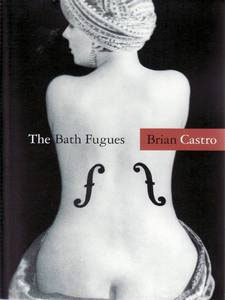
‘The Bath Fugues’ by Brian Castro

2009, 354 p.

As you might guess from the title, Castro is an author who plays with language and I finish this book feeling deluged by words, allusions and puns.  This book speaks of “bath fugues”, not “Bach fugues” but Castro’s own description of the Bach fugue gives a good preview of what this book is about and what it does:

Bach wrote fugues.  The important thing about a fugue or ‘flight’ is that all the voices are equal and independent in counterpoint.  They are all relative to each other, and in this organised complexity, they speak together, drop out, become fellow travellers, form pairs of dialogues, and in general, mutilate the subject by inverting, augmenting, truncating or copying it. (p. 274)

The book comprises three interlinked novellas, and the resonances reverberate between them.  Characters from one novella bob up in another and references recur between all three- bicycles, Montaigne, Baudelaire, forgery, baths-  and  clang associations send the writing off in unexpected directions.  This is clever, clever writing, a virtuosic performance.

The first novella is narrated by Jason Redvers, an aging art forger who is convinced that his old friend, the academic and writer Walter Gottlieb had appropriated his family history as the basis for his own writing.  The second novella focuses on this ancestor, the Portuguese poet and judge Camilo Conceicao,  self-exiled in Macau during the 1920s, surrounded by his mistresses and sinking deeper into opium addiction.  The final novella revolves around Dr Judith Sarraute,  a doctor now living on the North Queensland coast who numbers amongst her earlier patients Jason Redvers, her cabinet of collected exotic venom and plans for an art gallery that itself may hold the counterfeit, or at least reworked, paintings that have emerged earlier in the book.

Complex? Yes, and  I found it hard to work my way through the book.  I marvelled at it, but was not swept up by it.  I suspect that this book itself  is an intricate, elaborated work that fits into a larger oeuvre because I kept detecting echoes of Castro’s other works – The Garden Book and Shanghai Dancing, which like this book received critical acclaim, awards and shortlisting. They are books that, like this one,  made me wonder if I’d understood them as well as I should and which likewise revelled in language and their own complexity.

It’s a book of the head, not of the heart.  I feel as if I should read it a second time, and I’m sure that a second reading would yield even more discoveries.  But – and here’s the rub- I can’t find it in myself to want to read it a second time.

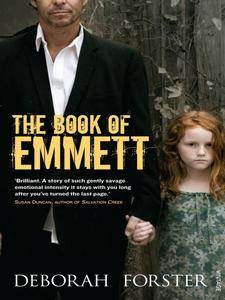
‘The Book of Emmett’ by Deborah Forster

2009, 304 p.

This book opens with a funeral.  It is a stinking hot day and four adult children mill with their mother outside one of those drab suburban funeral parlours that just seem to have always been there in small strip shopping centres, easily ignored until you actually attend a funeral there. These children are clearly ambivalent about their father and as the book unfolds, you learn why.

The first chapters of this book are striking.  Forster writes about the 1960s Menzies years and working-class Footscray so clearly that you feel as if you have been there.  She captures the tensions of an unhappy family and I could feel myself becoming taut and anxious too, almost cowering as I read.  She writes in the present tense, a technique that even though I am using it right now, often makes me feel on edge.  In this case, it worked well to heighten even further the brittleness of the story she is telling.

But what about the bigger picture?  She does pointillism so well, but I’m not sure that she carried it across into the broader arch of the story.   Even though this book is fiction (and, rather disconcertingly ‘vaguely autobiographical’, according to the author), in some ways it felt like a non-fictional biography of a family.  One of the arts of biography is to develop a narrative that keeps moving, even though the day-to-day events in themselves are not momentous.  This book covers a span of probably forty years, but it unspools slowly without any obvious shape to the telling.

The book is presented as sixty fairly short chapters – sometimes only a couple of pages each.   On occasions these already short chapters were further divided into scenes, separated by an asterisk.  I felt while I was reading it as if I were being offered a series of anecdotes and that the broader narrative was only inching along slowly.  There is a shaping to the long-term story, but I found it rather dissatisfying, as  it petered into a sullen powerlessness and acquiescence, rather than giving me the dramatic act of revenge I craved.  I felt this at the structural level, as well as at the intellectual level.  How do you break out of a cycle of pain, pain and more pain? Is forgiveness a form of surrender rather than an act of will?  Can family dysfunction come to an end through any one definitive act, or is it inevitable that it goes on and on, shifting shape, but slowly poisoning everyone?

This book rather reminded me of Sarah Watts’ movie My Year Without Sex.  It’s not just the western-suburbs setting that they have in common: they also share a slow, intimate gaze on domestic family life , albeit dealing with two very different families.  The movie, however, had the month-by-month structure to draw it together. Although this book had a structure too, (starting with the funeral then rewind and play through until we reach the funeral again), I felt as if it was stuck in the one miserable place, and it was not a place that I wanted to be.

So- Miles Franklin material?  Not yet, and not with this book although I’d give it the nod for the short-list on the strength of its evocation of time and place and acute ear for voice.  So far, I’d put my money on Lovesong, although I’m now reading The Bath Fugues and it’s shaping up as a worthy contender.  Watch this space- only ten more sleeps!

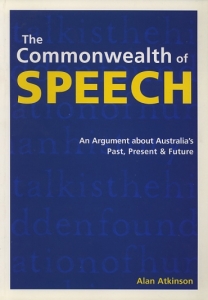
‘The Commonwealth of Speech’ by Alan Atkinson

2002, 136 p & notes.

The full title of this book is The Commonwealth of Speech: An Argument about Australia’s Past, Present and Future . The extended title gives a better indication of the book’s flavour because it is a wide-ranging publication that meanders between history, politics, rhetoric and methodology.  Many of the chapters were originally presented as speeches or lectures in their own right, thereby complicating for us the relationship between speech and writing from the start.

Talking and writing were fundamental in the founding of Australia, Atkinson argues, and indeed the first chapter of Atkinson’s intended-trilogy The Europeans in Australia is titled “Talk”.  When the Aborigines came across from Timor or Sulewesi, they must have used language to plan their trip, and by the time the English made their own journey in 1788  the logistics and implementation of the First Fleet was a product of detailed bureaucratic talk and writing.  Unlike any other people in the world, the convicts and soldiers of the New South Wales penal settlement were recorded in writing from the very inception of the colony,  in convict indents and admiralty documentation.  Frontier life demanded writing, in the form of overseers’ orders, information from agents’ letters and the provincial newspapers that quickly emerged. When the early forms of democracy arrived,  their introduction was largely unproblematic because of this underlying basis of literacy.

Early white  settlers recognized that Aboriginal people were highly attuned to speech.  They noticed, even if they didn’t fully understand,  that when aboriginal people spoke among themselves, there were nuances of affability, tact, respect and authority. This is something that white Australians are still learning today.   Despite the ubiquity of text, talk is still important in both black and white communities.  Atkinson spends quite a bit of time on Australia’s bi-centenary in 1988, examining the speeches given by Bob Hawke, Prince Charles and Galarrwuy Yunupingu for the occasion, and notes the power-plays jostling amongst the three speeches and the paradoxical symmetry between the speeches given by Charles and Yunupingu.

In another chapter, Atkinson discusses what he calls “vernacular history”.

Vernacular History rests on a body of assumptions about the ethnic or national past which exists, mostly unquestioned, as part of common conversation and common judgement….They regularly seep into popular, everyday writing.  And the more familiar they become on the printed page, the more they belong to everyday talk. (p. 27) …..Vernacular History always throws up moral themes.  It establishes, or it tries to establish, a uniform moral message.  It offers moral contrast, sometimes even melodrama, with the evocation of heroes and villains, of golden ages and dark days. (p. 31)

I’m still not sure whether he approves of vernacular history or not:  he describes it as a

peculiarly powerful combination of formulas, old and new, a vivid mix of subtle tones and heavy patterning. (p.33)

He proposes three examples of Vernacular Historians: Manning Clarke, Robert Hughes and Henry Reynolds.  All three, he says, presented themselves as unique figures, somehow independent of the community of scholars.  Their histories burst off the page and broke out of the academy to become integrated into the talk of ‘ordinary’ Australians (albeit often at a fairly simplistic level).  He spends quite a bit of time on Henry Reynolds in particular, whose history, Atkinson argues, is a history told from the perspective of “we” whites that relies on the tension borne of the moral relationship between current-day blacks and whites.

I enjoyed reading this book, and I can see that I’ll be using it later in my thesis.  I’ve been aware, in my work on Judge Willis, of the importance of talk-  the talk of power in the courts, the middle-class respectable talk of men’s debating societies, and the gossip of the streets.  I enjoyed spectating while Atkinson joustedwith other historians (an acquired taste, I admit) and his discussion of the use of history by politicians.

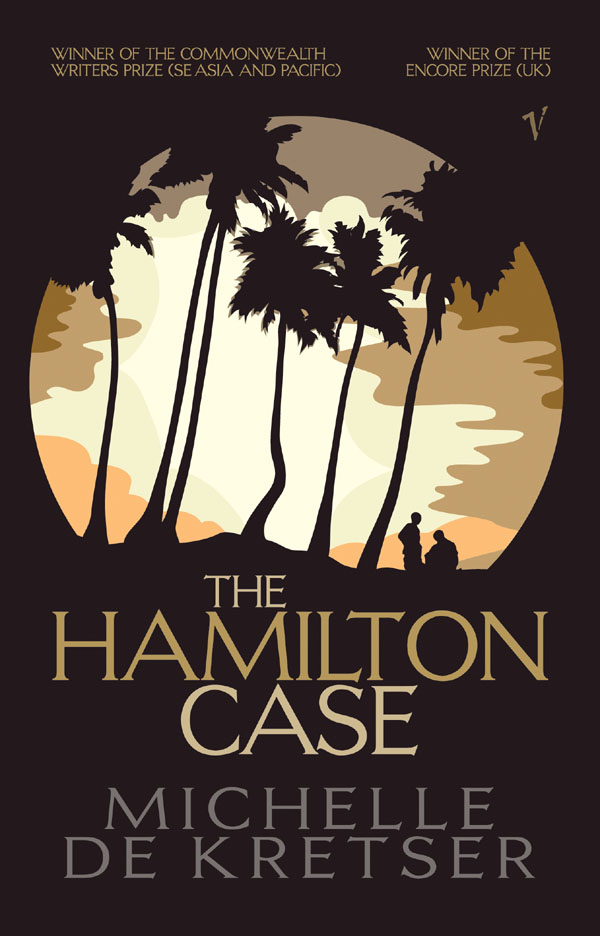
‘The Hamilton Case’ by Michelle de Krester

2003, 367 p.

Three puzzling books in a row.  My dear daughter, bless her, says that I’m just getting stupider.  That may be the case (I blame Judge Willis), but in my own defence in my last three fiction reads I think that I’ve read

  1. a wilfully abstruse  book (House of Splendid Isolation)
  2. a genre high-wire act (Truth)
  3. and now a carefully constructed, unsettling book that I feel satisfied to puzzle over.

This was my face-to-face book group read for the month.  It was my selection (“Who chose THIS book?”) and I was rather disappointed to find when I was flipping through my reading journal that I’d actually read it before, in 2004.  I now realize that what I meant to nominate was her next book The Lost Dog which she wrote in 2007.  It didn’t matter though- I really could not remember much about The Hamilton Case at all.  I was interested to see that the comments I made six years ago are pretty much the same comments I’m going to make now.

This is a clever, clever book.  It commences with an autobiographical fragment, written by the elderly Ceylonese lawyer Sam Obeysekere, reminiscing about The Hamilton Case which he prosecuted many years previously.  The case was emblematic of Sri Lanka’s colonial past: it occurred on a tea-plantation where the white manager was murdered and two labouring coolies were accused of the murder.  Our narrator is a pompous, deluded, rather pathetic character, reminiscent of the narrator of  Ishiguru’s The Remains of the Day.  This section ends abruptly and the narrative broadens to an omniscient third-person perspective.  This is perhaps a little unfair as we have been repelled by Sam’s character in the first section, just as other characters in the book had been repulsed by him for other reasons.  What follows is a narrative of Sam’s family- his mother, sister and son- and what a steaming, foetid family this is.  De Kretser  evokes vividly the rampant Sri Lankan jungle- it reminded me a little of One Hundred Years of Solitude– and the book is drenched with colonial decay.   Much though I was enjoying this section, I did find myself wondering about the title, given that the Hamilton Case itself had taken up only a small part of the book.  But I was in confident hands, and sure enough the last section of the book, written as a letter from an author who had fictionalized (or had he??) the Hamilton Case, disrupted completely Sam’s telling of the case in the book’s opening.

Confusing?  It might read that way in my summary of it, but it didn’t feel confusing while reading.  Certainly, as a reader, you felt distrustful of all the characters and alert to the nuances and tricks of memory but at no stage did I feel that the author was losing control of her own narrative.  On the contrary, it was very assured, clever writing, very careful and well worth a second (or in my case- third!) reading.