Category Archives: Book reviews

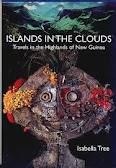
‘Islands in the Clouds: Travels in the Highlands of New Guinea’ by Isabella Tree

1996, 256 p.

I must admit that I’ve never really understood the appeal of the travel-book genre but this was the selection for my face-to-face bookgroup this month. Just as I would entreat my children “Just a little taste…”, so too I had to be nudged into reading this book, but just like broccoli, it wasn’t too bad after all- in fact I quite enjoyed it.

The book itself is a compilation of three different journeys to New Guinea: the first in 1986, the second in 1991 and the epilogue in 1993. The author tries as much as possible to erase herself from the narrative.  We do not know why she is there, what her expectations are, and what other experiences she brings to her observations.  The fact that she is a young woman traveling alone into remote and partially traditional tribal homelands is largely left unremarked, and the trips she describes are not lengthy at all- each one lasting barely a week.

Her travel companion for much of her journey was Akunia, an Eastern Highlander man, who had had a Western education, courtesy of various aid and diplomatic  schemes. Over the years he had been involved in both local politics and development projects, and he provided another lens through which to view the places and events they encountered.  However, the author soon realized that Akunia’s expertise was largely limited to his own local region: once they moved the Western highlands, and even further into Irian Jaya, he was almost as much of a stranger as she was.  Perhaps even more so, because he knew enough to be apprehensive, and was at various times frightened, racist and dismissive.

In crossing into Irian Jaya (West Papua), they were indeed entering another country, and were not allowed to forget it.  All entry was by air only and under heavy border scrutiny.  However, once they moved away from the Indonesian-dominated coastal area into the highlands of West Papua, the tribal people were both amazed and delighted to find commonalities in customs and appearance between themselves and Akunai, a rare venturer from the other side of the border.  She makes no secret of her uneasiness over the Indonesia domination- and I believe that there is much to be uneasy about.

Her criticisms of the rapaciousness of the mining companies rang even more true for me having witnessed the ruthlessness of the mining lobby here in Australia against a democratically- elected, first-world government. A young democracy, wobbly on its feet, wouldn’t stand a chance.  Akunai and the author both share an ambivalence over the inevitability of consumerism and ‘progress’ at all levels: cultural, spiritual, environmental.  The violence, it seems, abated under the influence of missionaries, but there too is another conundrum.  I found myself reading the newspaper reports about the commencement of their election process this week with more interest than I would have previously.

The book is well-written and very easy to read.  It had a good useful map at the start, which would have been even more useful had her journey been marked on it. She integrated pidgin into her chapter headings and within the dialogue of the book, and although she provided a glossary, I found myself able to work it out for myself if I spoke it out loud.

So- this book, published under the  the Lonely Planet imprint, was a pleasant surprise really. Not enough, however, to tempt me northwards…

My rating:  7/10

Sourced from: CAE

Read because: it was the June selection for my face-to-face bookgroup

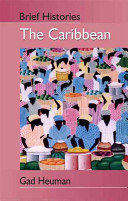
‘The Caribbean’ by Gad Heuman

2006, 184 p. & notes

This is the second short history of the West Indies that I have read- so any comments I make about this book will be in reference to a grand total of TWO books!  However, reading two similar books within a short period of time does allow some comparisons to be made, and the very act of comparison highlights the differences in approaches that can be utilized in writing a short history.

This book forms part of a “Brief Histories” series published under the Hodder Education umbrella. Other books in the series cover Modern Greece, Czechoslovakia and Eastern Europe 1939-2000. I strongly suspect that it has been written as an undergraduate introductory text by its layout, level of generality and in the reference section which is divided at a chapter level into primary and secondary sources.

The Perry, Sherlock and Maingot book that I reviewed earlier focused on  political and economic forces, particularly those emanating from Europe, and their effect on the West Indies.  They highlighted the island nature of the West Indies, and heavily emphasized the maritime nature of the West Indian economy, and the place of the Caribbean within the jostling for naval supremacy between empires.   This book is almost a polar opposite.  It focuses on the topography of land on these islands, rather than the seas that separate them, and is largely a social history of the plantation system and the slave and coloured community that arose in response.

It is, of course, a far more recent book than Perry et al , which came out in first edition in 1956.  Recent scholarship is reflected in Heuman’s book in terms of indigenous people, resistance, agency and women. He devotes a chapter to  the Tainos people, the Amerindian people who moved to the Caribbean c 2000 BC to establish a relatively sophisticated, hierarchical agricultural society- a group largely dismissed in a couple of pages in Parry et al’s book.  Heuman highlights the resistance to plantation conditions and the apprenticeship system conceded grudgingly in the wake of the abolition of slavery, especially among women.  This book explores the nuances of colour, especially among the Free Coloureds who, despite the legal equality with whites  granted just prior to the abolition of slavery, always found the social and economic  line between slave and coloured more permeable than that between coloured and white.

The book does not have a strict chronological order, and it takes the Caribbean as a whole rather than carving out separate French, Spanish and Dutch spheres of influence.  As Heuman notes in the preface:

All these territories have experienced similar histories of slavery, colonialism and exploitation and share a common history, despite their linguistic cultural and geographic differences (p. xii)

He argues that although they developed at different times and under different European powers, slave societies in the Caribbean followed a similar trajectory.  What happened in Barbados was repeated in Jamaica and Saint Domingue (Haiti) in the 18th century, and Cuba and Puerto Rico in the 19th century.  Likewise, the planter class structure was largely replicated across different settings, despite the different nationalities represented.

Slavery, emancipation, resistance and revolution take up the body of the work, and form the narrative skeleton of the book.  I must admit to skim reading the latter parts of the book dealing with the twentieth century,  which  in terms of page numbers alone is less detailed than the eighteenth and nineteenth centuries.  The book draws on primary sources and visual representations as a way of providing a far more human perspective than Parry et al’s book.  It does not particularly engage with the historiography of the Caribbean, beyond the fairly recent challenge to Eric Williams’ reappraisal of slavery and abolition through his Capitalism and Slavery published in 1944.

There are only limited footnotes in each chapter, although a ‘further reading’ list is provided at chapter level as well as a more general bibliography.  And it has a beautiful, clear, well-labelled map!


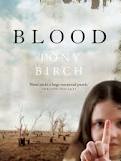
‘Blood’ by Tony Birch

2011, 264 p.

Every Friday night we settle down in front of the TV for the ABC Friday night splatter-fest.  I’m usually quite nonchalant about the gore except when it depicts eyeballs (a long standing phobia), torture and violence to or about children.  These things are likely to propel me out of my chair to quickly escape to the kitchen to make a ‘hot drink’, calling out “Is it over yet?” before I return.

Reading about (as distinct from watching) torture and violence about children upsets me too.  I found Rocks in the Belly a difficult read, and while it’s not so much about violence to a child (mmm…maybe?), it seems that most people who have confronted the book  We Need to Talk About Kevin shudder at the thought of watching the movie as well.

Blood by Tony Birch fits into this category as well.  It is told from the perspective of  a thirteen year old boy, who along with his younger half-sister, is falling through the welfare and schooling gaps largely through the weakness of his drunken, dissolute mother Gwen.  They move between caravan parks, motels and sleeping in the car, ricocheting between country towns, cities and states as Gwen takes up with one dropkick after another.  There is a brief hiatus of normality when she dumps the kids with her  own father, himself a recovering alcoholic with the rigidities and stripped-down asceticism of a life dominated by poverty and AA meetings.    “Is it realistic that two kids could be so invisible to the authorities like this?” I asked Mr Resident Judge who knows about such things.  Ah yes, he replied.  The  transience opens up too many questions that are too hard to address. Should these children be taken into care? Are they being abused? (I think I’d answer ‘yes’ to both questions)

Birch sustained the voice of thirteen year old Jesse well, with short sentences and a mixture of naivete and knowing too much.  You sense that Jesse is turning, no longer pretending that he doesn’t know how his mother earns her money, and becoming hardened to the wrecks of masculinity that she is drawn to. It is only his sister Rachel who anchors him.  There’s a lot of dialogue in the book, and it would transfer well onto the screen.  The descriptions of  blasted, tawdry broken-down landscape are  evocative- rather too evocative.  It’s a little bit like the world of Tim Winton’s ‘The Turning’, viewed from a child’s perspective.

Jesse and Rachel see ‘To Kill a Mockingbird’ at a theatre (a rather implausible scenario- surely a late night cable movie in one of the tatty motel rooms that they’d been left in would have been more likely?)  Birch uses the film as a motif, and the two children draw comfort from the characters of Jem and Scout.  But Gwen is certainly no Atticus, and this book has little of the redemption or sense of community in TKAM.   I’m not sure whether the allusion to the movie adds much to Birch’s narrative: while it throws up a strong contrast, there is an element of riding on the coat-tails of a much more nuanced book as well. There is the theme of blood, too, from which the book draws its title: the shared blood of commitment, the blood of  family ties, and the blood of violence.  And yet another motif is the tarot cards that the feckless Gwen plays with, that provide as much (or little) direction as anything else in her life.

Despite the plaiting together of these motifs, there’s nothing tricksy about this book.  It is straightforward and simple, with few flashbacks and a single narrative voice.  I found myself wanting to know what happened, but I knew within one or two pages that it wasn’t going to end well.  I found it easy to put down after each of the five sections, and was almost reluctant to pick it up again because it was painful and raw.

It is short-listed for the Miles Franklin. While I reacted at an emotional level to the book- grief for these children, anger and an element of self-righteous disgust at their mother- I’m not really sure whether the book carries the complexity sufficient for the Miles Franklin.  And I cringe at the thought that it might represent ‘Australian Life in all its stages.’

My rating: 8/10

Sourced from: Yarra Plenty Regional Library

Read because: It is short-listed for the Miles Franklin

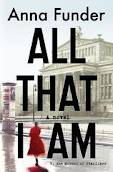
‘All That I Am’ by Anna Funder

2011, 363 p.

No wonder this book is garnering award after award.  So far it has won the Indie Award Best Debut Fiction and Book of the Year Award, the Australian Book Industry Award for best literary novel and Book of the Year, the Barbara Jefferis Prize for “the best novel written by an Australian author that depicts women and girls in a positive way or otherwise empowers the status of women and girls in society”  and it has been shortlisted for the Miles Franklin and the Prime Ministers Prize .

This is Anna Funder’s first foray into fiction, but she does so with one foot still in the non-fiction camp.  Her earlier, much acclaimed non-fiction book Stasiland explored individual lives within the pervasive and intrusive panopticon of  East German communism.  This book traverses similar territory in a fictional mode by imagining the lives of real-life socialist dissidents who sought refuge outside Germany during  Hitler’s rise.  Ernst Toller, Dora Fabian, Hans Weserman, Berthold Jacob and Ruth Becker are all real-life historical characters, and indeed Funder herself knew, and was friends with, Ruth Becker (by then Ruth Blatt) in Sydney before her death in 2001.

But the book is most certainly fictional in terms of its structure and in its exploration of the emotional space of love, fear and betrayal.  It uses the device of two alternating narrators.  The first is the elderly Ruth in Sydney, whose memories of the 1930s are bleeding into her present-day life as an increasingly frail post-war immigrant who has had a successful career in teaching, but is sliding towards a lonely and regretful death.  A week earlier she had received a manuscript from an American university that had acquired a box of documents written by Ernst Toller, the poet, in 1939  that had been addressed to her.  The narrative swings between the present-tense description of an old woman in the drug-induced half world of pain and confusion, and the past-tense reminiscence evoked by this manuscript, received from a time fifty years earlier.

The second narrator is Toller himself, in 1939, in the act of writing that very same manuscript in a hotel room in New York.  His narrative, too, swings between the present-tense in describing the act of rewriting an earlier autobiographical manuscript to acknowledge the impact of Dora Fabian and other dissidents in his life, and the past-tense narrative that was to become the document delivered in Sydney  sixty years later.  He dictates to a young female notetaker, herself wracked with fear for her brother, marooned on the refugee ship the St Louis which was denied entry to Cuba, America and Canada.

This narrative quadruple act is complex, and throughout the book I found myself marvelling at how deftly she managed it.  I found her characters thoroughly convincing at the emotional level: in fact, it was only an epigraph by W. H. Auden that marked Part II that stopped me in my tracks with the realization that it was very much based on real-life people.  I resisted the temptation to rush off to Google the characters; indeed I have not yet done so (and probably will not do so) because I’m happy for them to exist in the rounded, fleshed out fictional form in my mind.  Somehow, to see them rendered into black-and-white again will flatten them somehow.  I note, however, that Simon Schama the historian in his review of the book in the Financial Times  felt that the “knottily knitted time line snags the narrative at every turn” and that there were “points where the research somehow clots the blood flow of the plot rather than transfusing it with vitality.”  Yet he suggested that the real-life Ruth’s later life story, which is sketched only briefly in Funder’s book, is even richer with fictional possibilities, thus wanting to draw her back to real-life again.  I don’t agree with him.  Schama warns that “the ball and chain of history can hobble the gait of the imagination if the novelist isn’t ruthless about knowing when to cut it loose” and yet I feel that Funder has been completely disciplined (in both senses of the word) by restricting her focus to the political and emotional claustrophobia of the time, instead of paying homage to the historical ‘afterwards’ of her real-life characters.

Yet her book is very much about the historical issue of memory and forgetting.  “I am a vessel of memory in a world of forgetting” says Ruth the narrator. “Most people have no imagination. If they could imagine the sufferings of others, they would not make them suffer so” wrote Ernst Toller. But as Ruth the narrator (and I suspect, Funder the author) says:

   Imagining the life of another is an act of compassion as holy as any….But Toller, great as he was, is not right.  It is not that people lack an imagination.  It is that they stop themselves using it.  Because once you have imagined such suffering, how can you still do nothing? (p. 358)

It is also a book about the weight of an individual against the wider scale of history.  At a personal level,  we grapple with our measure of those we love-

When you are in love with someone, you cannot see around them, you cannot get their human measure. You cannot see how someone so huge to you, so miraculous and unfathomable, can fit, complete, into that small skin. (p 150)

And yet we ourselves have to think about our own value in the world:

Though it is the hardest thing, to work out one’s weight and heft in the world, to whittle down all that I am and give it a value. (p. 299)

This is a beautifully written book, although there are the odd jarring notes.  The awkwardly introduced date of Toller’s narrative was clumsy and heavy-handed, and  I don’t think that she handled the authorial problem of bringing her two first-person narratives to a close very well because she had painted herself into a narrative corner.

But in other places, her descriptions are crystal sharp, as for example, in this description of a Weimar nightclub-

The doors of the TicTacToe opened into a floor-length leather curtain drawn against the cold.  We parted it.  The entry level was on a mezzanine; below us lay a vast, ornate room hollowed out into the earth.  I moved to the balcony rail.  Pools of light shone on a hundred tables, bright circles into which hands moved, gloved or ungloved, for a drink, to ash a cigarette, touch an arm.  The air was filled with trumpet notes and smoke, the chinking sounds of cutlery, laughter, something smashing at the upper bar.  At my shoulder a vase of lilies breathed, open-tongued.  P. 105

I’m not sure whether this book will win the Miles Franklin, even with the slightly widened criteria that allow an ‘Australian’ sensibility without necessarily being set in Australia.  I’m not sure that the Sydney section of the book is a sufficiently sturdy anchor to describe it as ‘Australian’, but I am not cynical enough to  think that the Australian section was included only with the Miles Franklin in mind.   It’s a beautifully written opening up of the imaginative space around real-life people, and it should be celebrated as such.

Read because: It is short-listed for the Miles Franklin Prize.  Also posted on the 2012 Australian Womens Writing Challenge

Sourced from: La Trobe University Library

My rating: 9/10
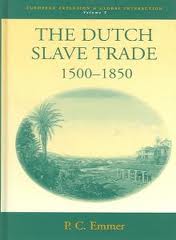
‘The Dutch Slave Trade 1500-1850’ by P.C.Emmer

2006, 153 p. & notes. Translated by Chris Emery.

One of the things that surprised me when looking at the history of slavery in the West Indies (and the map of Caribbean slavery I showed in a recent blogpost) was the involvement of  countries that I don’t readily associate with slavery or the West Indies for that matter-  Sweden and Denmark for example.  I was aware of the English, French and Spanish involvement, the long classical history of slavery, and the participation of Africans themselves, but I didn’t think of Scandinavian countries  which somehow seem so ‘white’ and Northern European.

In reading this book, it seems however, that the Dutch people themselves do not suffer any widespread moral malaise about slavery. As the author, P.C. Emmer of Leiden University writes:

The Netherlands was clearly guilty. Between 1600 and 1860, almost without exception, the Dutch allowed Africans to be bought and traded, and they would never have treated each other or any other Europeans in such a way.  Admittedly they share that guilt with some of their Europeans neighbours.  But, if we start from the premise that the Dutch, both past and present, see their country not just as any country but as a particularly moral and principled oasis in the middle of a wicked world, then their guilt has surely incurred a debt of honour. (p. 147)

This slim book examines the Dutch slave trade as a historical event, but the book itself is firmly located within the current historiography that deals with memory, commemoration and reparation.  In his foreword, the author mentions:

Incidentally, several scholarly observations about the slave trade have aroused high emotions in the past, as indeed have some conclusions in this book.  Twenty years ago I had to climb onto a table to make myself heard among students, who accused me of falsifying history and of being a reactionary and a racist. (p. ix)

In reading this book, I was reminded of the response to John Hirst’s Convict Society and its Enemies, a similarly punchy book.  Hirst argued that right from the planning stages of the First Fleet there were slippages in the intent and practice of New South Wales as a penal colony, and that the system had freedoms and rights designed into it from the start.  It’s a prickly argument to run: Hirst admitted that there were cases of brutality, but that the extreme had become seen as the norm, and that the historical record of a more prosaic, adaptable system had been obscured.   Likewise in this book, Emmer clearly states that slavery was wrong, but that it was never as large, politically influential, or financially lucrative as in other European countries.  For both historians, the major point is conceded, and rather than spending time reiterating it, the argument moves to the nuances of a more complex treatment.  It’s not so much down-playing, as moving to a different line of argument, but their opponents might see this as dismissal or special pleading.

Emmer points out that the Dutch used few slaves on their own holdings in the Dutch Antilles, which were not suited to large-scale plantation agriculture, or in what was to become New York. They first became involved supplying slaves, purchased in Africa from African slave traders, for the Spanish gold and silver mines, but this expanded over time to a market in supplying slaves sourced from the African slave-traders for the Dutch plantation colonies of Berbice, Essequibo, Demerara and Suriname.  The first three of these were later to become British Guiana in the territorial merry-go-round after the Napoleonic Wars (and hence my interest in them).

The middle part of this small book focuses on the trade itself: the crossing from Africa to the West Indies, then the nature of plantation slavery in the Dutch colonies.   However, unlike the English and French colonies, the West India Company and Dutch plantations were not profit-making enterprises, and formed only a marginal part of Dutch commerce.  When the end of slavery came, it was with a whimper because the trade itself was unsuccessful, and any reparations to slave-owners were easily covered by a system of forced-farming in Java, where villages were forced to pay a tax of coffee and sugar, thereby bolstering the coffers of the treasury in the Netherlands.

The relative economic insignificance of slavery to the Dutch economy (especially compared with the English situation) raises the question of why the Netherlands did not take a strong lead in the abolition of the slave trade, and then slavery itself.  The reality is that slavery did not end in the Dutch colonies until 1863, long after the other slave-trading European countries had done so, and that it was only English pressure that led to half-hearted acquiescence to the abolition of the slave trade in the early 19th century.  Emmer attributes this to a defensiveness on the part of Dutch politicians, who did not share the English openness to change but instead adopted a shield of conservatism and self-preservation.

Emmer locates the slave trade among other ‘debts of honour’ that the Netherlands owe- a phrase that he thinks particularly apposite given the Dutch emphasis on finance. These debts revolve around treatment of Dutch Jews during WWII; about actions in Indonesia; and the Dutch slave colonies.  He raises a number of difficulties to the question of reparations, but suggests instead that 1 July should be commemorated as the date in 1863 when slavery was finally abolished in Dutch colonies.

I have no idea how the politics of this plays out in the Netherlands, and how and if the situation has been complicated by the increase in far-right politics in Europe.  You can find a good review of this book, and Emmer’s response to the review at Reviews in History.     There’s also an article available here online that gives a taste of Emmer’s approach.

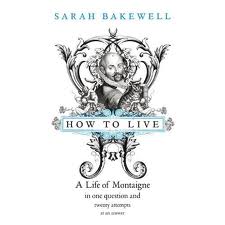
‘How to Live’ by Sarah Bakewell

Sarah Bakewell How To Live or A Life of Montaigne in one question and twenty attempts at an answer. 2010, 331 p. & notes

I think that all readers have their own literary bucket list of books that they want to read before they die.  Mine are all big baggy things that I want to gorge myself on: James Joyce’s Ulysses,  Anthony Powell’s Dance to the Music of Time, Frank Moorhouse’s ‘Edith trilogy’, Eleanor Dark’s Timeless Land trilogy, and Proust’s À la recherche du temps perdu (I’ve read two, but I’d like to read them one after the other).  I did have on this list Montaigne’s Essays, but it has occurred to me that Montaigne doesn’t require the big Christmas holiday commitment like these other books do.  He’s better read in small snatches, and is indeed tailor-made for an e-reader because, after all,  who’d want to cart that hefty volume around on the off-chance of the quick dip?

In fact, it occurs to me that Montaigne would have made a fantastic blogger, because his Essays are quirky and digressive, just as a good blog is. [An aside- one of my favourite, digressive, informed and very Montaignesque blogs is Historians are Past Caring] This book, How to Live, is a biography in the quirky and digressive spirit of Montaigne too.  It, like Montaigne, takes the question “how to live?” and distills twenty answers that Montaigne might have given, as prisms onto Montaigne the man and his work.

The twenty  attempts at an answer? Don’t worry about death; pay attention; be born; read a lot, forget most of what you read, and be slow-witted; survive love and loss; use little tricks; keep a private room behind the shop; be convivial, live with others; wake from the sleep of habit; live temperately; guard your humanity; do something no one has done before; see the world; do a good job but not too good a job; philosophize only by accident; reflect on everything but regret nothing;  give up control; be ordinary and imperfect; let life be its own answer.

As you might sense from these chapter headings, this is a biography, but it doesn’t read as such.  At the end of the book the author includes a chronology of Montaigne’s life- even the placement of this chronology at the back of the book rather than at the front is surprising- and I was comforted to find that I had somehow gleaned the major trajectories of Montaigne’s life, even though the author had zig-zagged chronologically throughout the book. The book is generously peppered with artwork- black and white, unfortunately- but in good Montaignian spirit it is not captioned, leading you to wonder what it is, and why it’s there.  The notes at the back provide the details, as well as full footnotes and references.  This is a well-researched book, but it wears the research lightly and plays with it in good humour, just as Montaigne himself might have done.

Bakewell places his life within the political and cultural milieu of the time, and locates it within a broader philosophical palette. I particularly liked her exploration of  Montaigne as a Phyrrhonian Sceptic- someone who is happy to suspend judgment, as a sort of mental calm and openness to uncertainty.

We, and our judgment, and all mortal things go on flowing and rolling unceasingly.  Thus nothing certain can be established about one thing by another, both the judging and the judged being in continual change and motion. (Essays, II,  12, p552 Frame version)

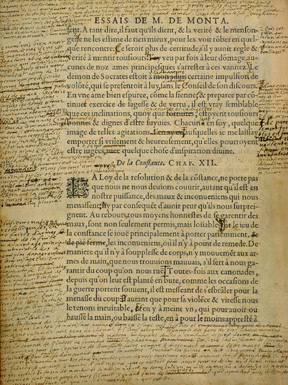
It is this diffidence and openness to question that makes Montaigne such delightful company.  In a world of braying certainty from the media, fundamentalist religions and partisan politics, it’s refreshing to watch someone walk around a topic, trailing off into tangents and viewing it from different angles.  In good blogger fashion, Montaigne was willing to go back to adjust his ideas, modify his stance and raise questions with himself- much as bloggers often go back to tweak a post.  Of course, this wrought havoc with the different editions of his essays as they were released, as he changed words, qualified his opinions and inserted paragraphs.

Montaigne’s annotations, corrections and insertions to his own text prior to republication of a new edition, Bordeaux copy.

She also traces the history of the Essays as an artefact through its different editions and translations.  In a very Montaignian spirit, it seems that there is no absolutely definitive edition, and that each has its drawbacks and advantages, and might have been changed yet again had Montaigne had opportunity to publish yet another edition.

So Montaigne’s Essays have moved up the menu on my e-reader for the quick dabble.  Somehow, I think that’s just the way he’d like them to be read, too.

Read because:  I felt like it

Sourced from: Yarra Plenty Regional Library

My rating: 9/10
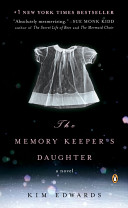
‘The Memory Keeper’s Daughter’ by Kim Edwards

2006, 414 p.

I’ve seen this book in bookshops for several years now, but I must admit that I wasn’t particularly tempted to read it.  Perhaps it was the pink back cover, the book-group questions at the back, or perhaps it was the shelf-company it kept… oh, alright, call me a literary snob.  I do read and like Anne Tyler and Sue Miller who write American family-based fiction similar to this one, but you’re probably better off classing this with Jodi Picoult.  It was selected for my face-to-face bookgroup (so its marketing strategy of the bookgroup questions at the back was probably spot-on), and I probably wouldn’t have read it left to my own devices, but I have to admit to being thoroughly drawn in right from the opening pages.

It probably speaks volumes about the plot-driven nature of this book to say that it’s impossible to review it without spoilers.  So I won’t, other than to say that structurally, it makes decade-wide leaps as it traces through a decision made in the in 1960s as it unravels through the lives of two different families.  It is a fairly long book at over 400 pages, and particularly near the end I felt it dragged a bit with just a few too many plot-lines introduced and a heavy reliance on reminiscence to develop her characters.  I realized in reading this book how rarely I read a book that relies so heavily on plot (I’m not, for example, much into crime books or murder-mysteries) and I found myself raising questions like “But what about…?” and “I don’t believe that….”

Still, I must admit rather grudgingly that it generated a good book-group discussion (as no doubt it was intended to), and whatever frustrations I may have felt about length or plausibility did not stop me from reading it to the very end.  But I still kept wondering, rather guiltily, (and as I often had cause to say to my children when I perceived that they were wasting their time) “Is this the best use of my time?”  Probably not, but I enjoyed it anyway.

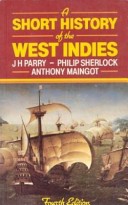
‘A Short History of the West Indies’ by J.H.Parry, P.M. Sherlock and A. P. Maingot

1987, 306 p.

One of the things that I love about doing my thesis on the colonial career of a 19th century judge- and yes, I did just (still?) use the word ‘love’- is that it has taken me to three and a half very different colonial settings in my research.  [Three and a half because Port Phillip was officially part of New South Wales, but I see it as a qualitatively different type of society to Sydney.]  The self-imposed need to knuckle down to start to write thematically has prodded me to turn to the West Indian aspect of my judge’s career- and so, where to start other than a Short History of the West Indies?

In 1968 the New Zealand historian Keith Sinclair wrote a cheekily-titled article called “On Writing Shist”.  No, it’s not a typo- ‘Shist’ is an abbreviation for “Short History”: all countries have them (often with “Short History” in the title), and many eminent historians tackle them.  Even though, as Keith Sinclair points out, a short history is written for an “educated non-specialist”, the reality is that often they’re read by people wanting an overview of their own history, and especially by other historians coolly interested to see how their colleagues, already known by their other work, tackle the task.  It’s a quite different readership when the reader is a complete outsider who knows very little about the topic beyond a vague idea of the country being “over there somewhere”.

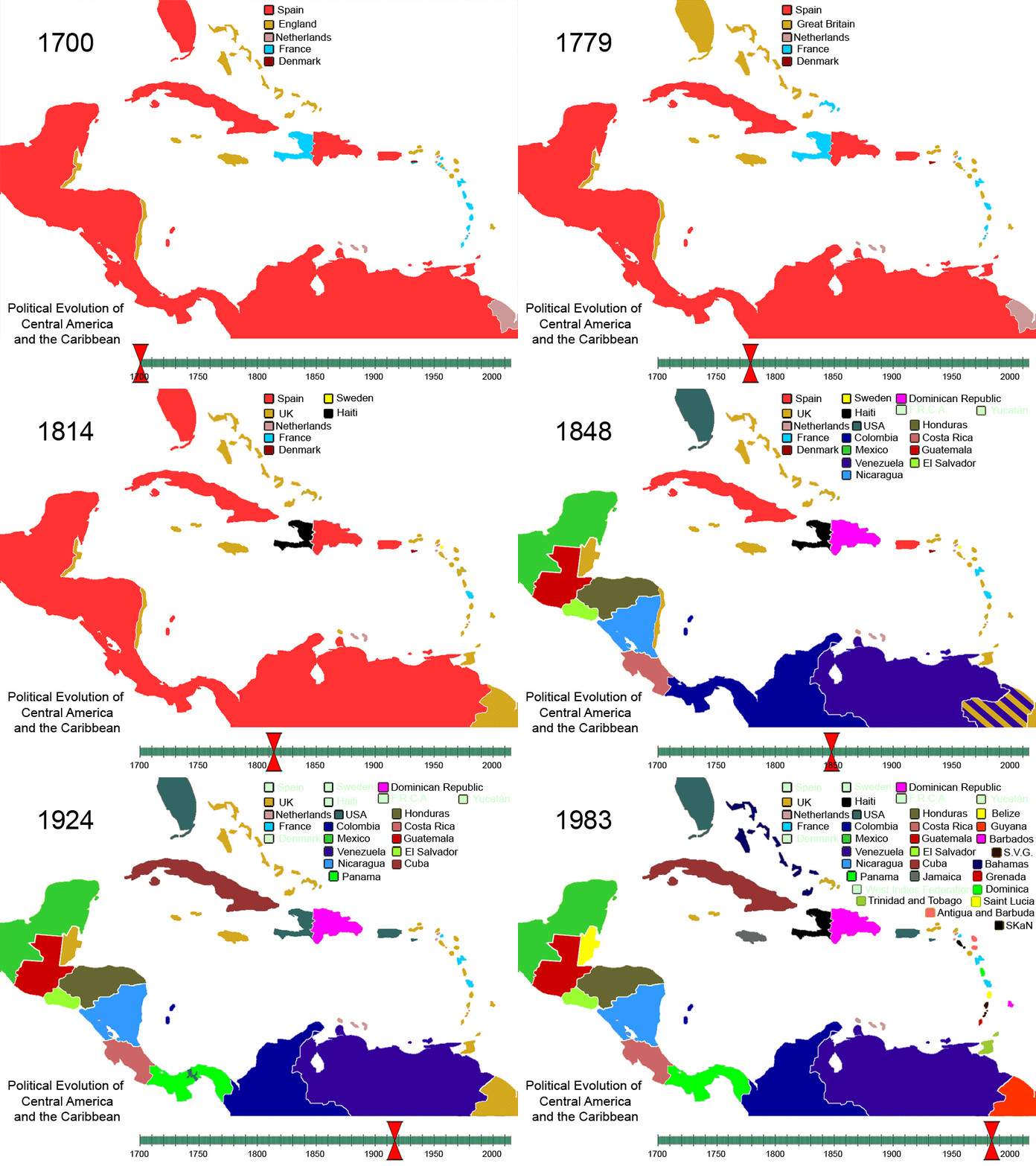
For this reason, it’s a good thing for a Short History to have a map or two. In this regard A Short History of the West Indies  fails dismally with not one single, solitary clear map beyond a picture of an antique map as artefact that was illegible.  I found myself craving a good series of historical maps showing which European nation owned what, which port towns were important when, and how and when locations changed their names.  Thank heavens for Lord Wikipedia, which provided this fascinating animated map here.  I am embarrassed to confess how long I spent, playing this over and over, watching islands swapping from one nationality to another, and moving in and out of significance. (How clever- it seems to run by itself!)

Political_Evolution_of_Central_America_and_the_Caribbean_1700_and_on.gif

Keith Sinclair described  Shist as a “summary interpretation of a topic, intended to make it understandable… an extended kind of explanation”.  In such a book, facts form a “very thin hard skeleton…[ selected]… in relation to the pattern of the whole book”.  The tag cloud in the Google books description is quite pertinent here because it emphasizes that the book is largely concerned with places (Jamaica, Cuba etc) rather than people or events.  The book is arranged chronologically, as you might expect, and as the first edition was published in 1956, it would appear to have had extra chapters added as it spawned its second edition in 1963, third in 1971 and this final one in 1987.   Given that the book has been reprinted so many times with 16 reprints and 4 editions, it has been disconcerting and rather confidence-sapping to find so many typographical and date errors in the text.

In a Shist, Sinclair said, the problem is not so much what to include, but what to leave out.  Themes are established, dropped, and picked up again.  Authors have to deal with the twin narrative problems of shape “the over-all pattern of ideas, facts and prose, woven into a unity” and span- “how one chapter, one hill, will roll gently into the next.  How to present, now and again, an unexpected or dramatic vista”.

In this regard, what I gleaned from this book- which may or not be what the authors intended, and may or may not be what someone more familiar with the topic might detect- is first, that West Indian history didn’t really begin until the fifteenth century. The indigenous Arawak people are dispensed with in a couple of pages. Second, that this is very much a sea-based history, both in terms of the geographic sprinkling of islands across the West Indian basin, as well as in the maritime prowess of the European powers that plied their influence there. Third, that the history of the West Indies is completely wound up in the machinations of these European powers- the Dutch, the Spanish, the French and the English- and their wars, treaties and truces.  Fourth, that the monoculture crop of sugar profoundly affected the history of the region as a whole in terms of slavery, social structure and power relationships and the economy.  Fifth, that a history of the West Indies needs to be seen within the context of U.S. history of power. Sixth, that even though the islands tended to see themselves in a closed loop tied to their metropolitan power, it is important to look across these different historical metropolitan affiliations to see the rhythm and pace of change across the region as a whole.

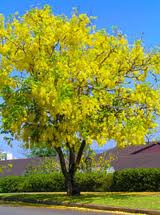
I don’t know enough to detect what is new or different in this short history compared with others that have been written before and since. Nonetheless, it had me thoroughly engrossed, with many ‘aha!’s as the pieces fell into place, especially in regard to the Dutch influence in European history.  I note that the authors describe the slave rebellions in Haiti, Jamaica and St Vincent as “The Second war of American Independence”.  I liked their use of the cassia tree as an emblem for West Indian history following emancipation- the leaves and bark are lost, then suddenly it bursts into golden flower.

I suspect that the maritime emphasis reflected the enthusiasms of the historian J.H. Parry in particular, and that there is a political thread running through the commentary on seeing the region as a whole, and on the relationship with the United States.  It is probably a history of its time in terms of the sidelining of indigenous history and women. This is a history of big powers and big forces, rather than individuals. I’m full of enthusiasm to wade further into the mud flats of British Guiana history!

References:

J. H. Parry, Philip Sherlock and Anthony Maingot  A Short History of the West Indies London, Macmillan, 1987 (4th edition)

Keith Sinclair ‘On writing Shist’ Historical Studies, Vol 13 No. 51, 1968 pp.426-432

‘Bunyip Aristocracy’ by Ged Martin

Ged Martin Bunyip Aristocracy: the New South Wales constitution debate of 1853 and hereditary institutions in the British Colonies, Sydney, Croom Helm, 1986, 198 pages & notes.

To understand the past in its full roundness, the historian must acknowledge that the ideas and plans which did not come to fruition are sometimes as significant as those which did.  Any other approach is tantamount to accepting that what has happened had to happen, it which case there is really no point in writing history at all. (p. 197)

“Bunyip aristocracy”- what a delicious phrase! It was coined by Daniel Deniehy to describe the squatters and pastoralists who, if they got their way in the constitutional debates of the early 1850s,  would style themselves as earls and lord it over the rest of the people. He was speaking  at a protest meeting held at the Victoria Theatre (in Sydney) on 15 August 1853, on the eve of the Select Committee of NSW’s debate about a hereditary aristocracy.

People may have laughed at the idea of a jumped-up bunyip aristocracy  but, as Ged Martin points out

From the standpoint of modern Australia the scheme is exotically bizarre. To men who saw themselves as a resident outpost of a British world, it was eminently appropriate… In many ways, New South Wales and 1853 were the logical place and year for the idea to surface.  As a colony of large pastoralists it had a superficial similarity to landed society in Britain. Its convict past had accustomed its landowning and conservative classes to equate the defence of political control with social exclusivism.” (p. 195, 196)

The idea of a hereditary colonial aristocracy that could sit in an upper house was not new, however, and nor was it confined to New South Wales alone.  In the early chapters of this book, Martin examines the idea of hereditary institutions across the empire.  Hereditary honours for Canadian colonists were mooted in the British parliament during the debate over the 1791 Canadian constitution, but the suggestion was not acted upon.  The governor of British Guiana, Sir James Carmichael Smyth, urged the establishment of a colonial order of knighthood in 1831 and again in 1837.  It was an idea that bubbled up from time to time, only to subside again when derided or frowned upon at either the London or colonial end.

In its favour was the argument that as British subjects, colonists should be able to be considered for imperial honours.  It was felt that by instituting a framework of honours, not-quite-aristocratic-but-close-enough families would be encouraged to migrate to the colonies, where they would improve the temper of society.  An upper house composed of hereditary peerages, with perhaps the odd lifetime peer thrown in to give people something to aspire to, would act as a brake on democratic excess. After all, the colonial lords would have the long-term interests of their families and their dignity at heart, and so could be trusted to do the right thing.

But should they be ‘proper’ titles, that had good standing back home? What if England was flooded with newly minted lords, flaunting their new titles when there was such demand for titles in Britain itself?  Was it possible to invent an instant aristocracy, or was it the outcome of centuries of slow growth?

These problems were never really resolved, and by the time the British government considered the new constitution for New South Wales, the proposal for a hereditary upper house had been withdrawn at the colonial end.  Not that it was envisaged that it would be an instant House of Lords in New South Wales: instead, it was envisaged that an order of baronets, uniting wealth and merit, would be established by nomination, which over time would become an electoral college for the upper house.

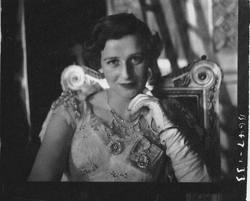
As Martin points out, it turned out that Australian politics ended up with a number of legislators styled ‘Sir’ and a number of families that developed a tradition of political service anyway : Sir Robert Menzies, Sir Richard Casey and political dynasties like the Anthonys, the Downers, the Jenkins, the Cains and the Newmans.   It was sobering to remember the occasional re-emergence of quaint ideas of Australia as a cadet monarchy with suggestions that Prince Charles might become governor-general, or a rather weird suggestion that Princess Alexandra might become Queen of Australia.  Sir Robert Menzies was her first son’s godfather, and his middle name was Bruce (after Sir Stanley Bruce, I assume, and not because the name ‘Bruce’ summons up a broad-shouldered farmer with big hands?)

Queen Sandy of Australia?

Apparently this idea was treated with derision, with critics suggesting that Sir Robert Menzies or Sir Richard Casey could be appointed governor-general of Great Britain instead.

In many ways this book is a good counterpart to Peter Cochrane’s Colonial Ambition, although it lacks the rollicking characterizations of Cochrane’s book. The typesetting is of its time and awful: dense, single-spaced, typed pages with footnotes jammed up against the lines of text.   It’s not a what-if history, but it does finish by noting the things that could have brought a hereditary honours system or a cadet monarchy into existence, had they fallen differently.  And had a more systematic association with the royal princes developed,

Historians would still have gently derided the whole thing, because historians are usually good-humoured progressives.  But historians are also very good at being wise after the event.  If the persistent rhetoric of transferring British institutions to the colonies had actually led to an attempt to imitate the distinctively hereditary features of Britain’s constitution, no historian today would express much surprise. (p. 198)

‘Forecast: Turbulence’ by Janette Turner Hospital

2011, 232

I find it hard to review a collection of short stories.  Usually the stories themselves have been written over a period of time and published in multiple journals, rather than written with a themed collection in mind.  If there is a theme, it is detected more in the act of collecting than in the act of writing.  That said, writers often work out a theme in a variety of ways, as if they are circling it, coming at it from different directions.  It’s also difficult to talk about stories that themselves only take up about 10 pages or so, especially if the reader of the review hasn’t read them.

This collection is somewhat easier to talk about, because the title ‘Forecast: Turbulence” is such a strong theme that emerges from these stories.  They are all about family members in turmoil, and nearly each one makes reference somewhere to the weather which in many ways reflects the pain and turbulence inside.  In many ways, it is a blessing that these ARE short stories:  ‘Weather Maps’ in particular, about a young woman cutting, is so intense that you wouldn’t want to extend for much longer.  The most memorable of them for me is ‘Afterlife of a Stolen Child’, which revisits the kidnapping of a child many years previously, from the perspective of the family members and a man who believes that he is the missing child.  The narrative revolves between the main protagonists, and it leaves the reader just as unsure and ambivalent as the characters find themselves.

I felt as if there were flashes of her other work in some of these stories.  ‘The Republic of Outer Barcoo’, for instance,  reminded me of her book Oyster for its outback setting of a cult.  Several of the stories involve fathers.

The final story ‘Moon River’ is a memoir, and here the author speaks in her own voice.  It is the most Australian of the stories, set in and around Brisbane.  It is attached almost as a coda, and it does change the feel of the rest of the stories.  It’s as if the author has stepped out from behind the curtain.

These are tight, well-written stories.  She’s good.

Sourced from: Yarra Plenty Regional Library

My rating: 8.5/10

Read because: it was our April read in the Australian Literature online group and as part of the 2012 Australian Women’s Writing Challenge