Category Archives: Book reviews

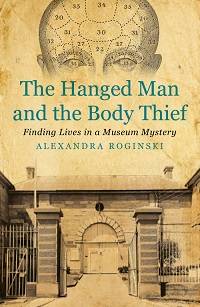
‘The Hanged Man and the Body Thief: Finding Lives in a Museum Mystery’ by Alexandra Roginski

Roginski_Hanged-Man1

2015, 79 p & notes.

Great title and a good little book.  There are, in effect, three mysteries rather than just one- and all within 79 pages, grounded in careful research and a sense of humility towards the unknown and unknowable.

The first mystery explored in Chapter One, is the identity of the skull in Museum Victoria.  Catalogued as ‘Jim Crow’ and part of the Hamilton collection that was gifted to the National Museum of Victoria in 1889,  the skull had puzzled museum curators for some time. The matter had assumed a more urgent, human significance in the wake of the international trend towards repatriation of indigenous artefacts from collecting institutions.  The label on the skull designated it as ‘Jim Crow’,  a name frequently cast on indigenous men and evocative of African-American blackness, but physical tests suggested that the skull was that of a female.  It was only with a re-reading of the ambiguity of the analysis, and a preferencing of the historical record over the skeletal one, that opened up of the possibility that the skull was male after all. Roginski makes no secret of the conditional and still uncertain nature of this classification.  It might indeed be the skull of the man known as Jim Crow, and from this suggestion the rest of the book flows.

Jim Crow’s death certificate indicates that his birthplace as Clarence Town, near Maitland.  We know little of his origins, but we do know his end: hanged for rape in 26 April 1860 at Maitland Gaol.  Jim Crow bursts into the historical record on 24 January 1860 when he visited a farmhouse near Dungong and asked for water, and then- according to Jane Delanthy’s  deposition- asked “Will you give me rape Missus?”. In Chapter 2 Roginski unpicks the case, weighing it against other rape cases involving white prisoners. Although, as she acknowledges, we will never know what really happened, she suggests that the evidence did not appear strong enough to secure a guilty verdict.

But Jim Crow – or at least, his body- was to leave a longer trace in the historical record. Three months later, the noted  showman-phrenology  Archibald Sillars Hamilton (known professionally as A. S.Hamilton) approached the sexton at the Anglican Church at East Maitland asking where the bodies of Jim Crow and another man hanged at the same time were buried.  The sexton felt uncomfortable enough about the request to report it to his superior who then reported it to the police magistrate.  Hamilton was committed to stand trial for inciting another person to exhume corpses from a burial ground.  After a widely reported trial, Hamilton was acquitted, but his purpose was achieved when ‘someone’ disinterred the bodies.  Chapter 3 deals with this case, and explains the ‘science’ of phrenology as an international and then Australian phenomenon.  A. S. Hamilton led a colourful and disreputable life, and his attitude towards indigenous people is complex.  His slipperiness as a character further complicates the identity of that skull in the museum.

Chapter 4 deals with the provenance of the Hamilton collection and how it came into the possession of the Board of Trustees of the Public Library, Museums and National Gallery of Victoria.  Hamilton’s third wife, Agnes, gifted them as a phrenological collection to an organization embedded within the cultural and scientific life of Melbourne. A rather rueful note in the author’s acknowledgments notes that an Overland article by Jill Dimond about Agnes Hamilton (which she cites quite a bit in this final chapter) appeared just as she submitted her thesis (and here we all experience a collective shudder of fellow-feeling).  This chapter, however, is broader than just Agnes Hamilton, as it widens out to consider the collecting policies of the Melbourne institution more generally.

This is only a small book, but it is told in an engaging voice and makes reference to many larger academic arguments without becoming bogged down in them.  The introductions and conclusions bear the hallmarks of the thesis genre, and she has been served well by Monash University Publishing which has allowed her the academic accoutrements of decent footnotes and -bliss- a separate bibliography.  It’s a rollicking good read, but weaves together important questions with rigour as well.  ‘Jim Crow’ is no longer mere artefact.

Other review: Tom Gilling’s review in The Australian
aww-badge-2015-200x300I’ve read this as part of the Australian Women Writers Challenge 2015
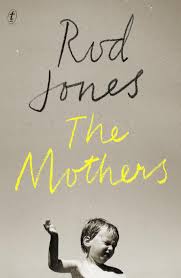
‘The Mothers’ by Rod Jones

themothers

2015, 334 p

Spoilers ahead.

By rights, I should have loved this book.  It’s a family saga, focussed firmly on the female characters; it’s based largely in Melbourne; it covers 1917-1990 and is rich with social history. It is written in five parts, encompassing seven separate chapters.  Each of the chapters is named for its female protagonist, followed by location and year (e.g. Alma, Footscray 1917; Anna, Cockatoo 1990.) So it is a book firmly anchored in its characters who are embedded into a particular place and time- usually a structure and concept that I enjoy. However, in this case, I found myself dissatisfied.

There are four mothers in this novel.  The book opens with Alma, who has walked out on her adulterous husband with her two children in 1917, at a time long before Supporting Mothers’ benefits and in the midst of WWI.  Homeless and without support, she is taken in by Alfred Lovett and his mother. It is  when she falls pregnant to Alfred that the relationship sours, and under pressure from his mother, Alfred pays for Alma, her two children and her new daughter Molly to shift to Seddon.  When this arrangement falls through, Alma cannot afford to support her daughter and so young Molly is sent to the Melbourne Orphan Asylum in Brighton. Jones writes a nuanced account of Molly’s time at the orphanage: it is not a horror story of deprivation or cruelty, but a stripped down, anxious time. Molly does rejoin her family and marries, but does not fall pregnant.

The second mother is Anna, an unmarried, pregnant twenty-year old girl from Cockatoo who is brought to the Salvation Army ‘Haven‘ in Alfred Cres, near Edinburgh Gardens in North Fitzroy in 1952.  But this institution was no haven: instead it was part of the twentieth-century adoption process-line so heartbreakingly detailed in the Senate Inquiry into Forced Adoption Practices of 2012.   I read this section with a sinking feeling of inevitability and found it the most compelling part of the book.   It comes as no surprise, really, that the adoptive mother- the third mother in the book- is Molly who, in many ways, projects the insecurities of her orphanage experience onto her adopted child, David.

The fourth mother of the book is Cathy, David’s girlfriend in 1975. Cathy, too, is pregnant but it’s a completely different scenario in Whitlam’s Australia than the one faced by David’s unknown biological grandmother Alma when she fell pregnant in post WWI Footscray.  David, the father of Cathy’s child, is prickly and restless, reluctant to engage with the bourgeois conceit of marriage.  He is aware that he had been adopted but unwilling at that stage to follow it up any further.  It is not until the 1990s, in the final chapter of the book, that there is a coming together – an awkward, tentative and inconclusive coming together- of his birth and adoptive mothers.

So, why didn’t I fall in love with this book?  Part of it, for me, was its rather self-conscious attempt to be historically grounded.  Much as I love Trove,( and I truly do), I wonder sometimes if it’s not strangling Australian historical fiction by enticing writers to indulge in a form of literary product placement.  There were too many details that Jones seemed unable to omit, and rather than adding authenticity, I felt as if I were being conducted around a movie set.

This was compounded by the very simple writing style that Jones uses.  I found myself craving something that was meatier- although not in an emotional sense because he did manage to get inside his characters’ consciousness, and equally well for both his male and female characters.  But this was achieved through a succession of many short sentences, and I felt as if I was being written-down-to. This is  a book about hard things, and I wanted the language to match it.

In an article written by Jane Sullivan about an interview with the author, we learn that Rod Jones was adopted and that this very much is his story.  Perhaps we need to read it as fictionalized memoir, and acknowledge the pain that seeps through it.  But it’s much more than the “penitential exercise, however worthy” that Peter Pierce denigated it as in his review in the Australian, and it has an emotional integrity that shines through.  I just felt that it was smothered by the period detail and short-changed by the writing.

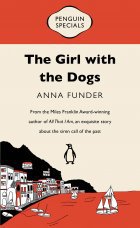
‘The Girl with the Dogs’ by Anna Funder

girl_with_the_dogs

2014,  57 p.

This book is published as a Penguin Special, a series that is spruiked as

“concise, original and affordable… short enough to be read in a single setting- when you’re stuck on a train; in your lunch hour; between dinner and bedtime.”

Looking through the other titles in the series at the back of the book, they’ve engaged some good writers, mainly but not exclusively fiction.  I see that this novella was originally published as “Everything Precious” by Paspayley.  Paspayley? Publishers?  It’s only now, as I write this blog entry that I’ve remembered reading about this: Anna Funder (winner of the Miles Franklin back in 2012) was funded to write a short story aimed at a young female demographic by Paspayley Pearls.  The company had come in for some adverse publicity through a Four Corners episode in 2012 investigating the death of one of its pearl divers, and the company contracted Special Group advertising agency to produce a campaign aimed at a market that had not, until then, seen pearls as a fashion item.   A chapter of the book was released online each day, accompanied by a video clip featuring an actress wearing Paspayley pearls.  At the end of the week-long campaign, the whole book was available for download as a free e-book and in hard copy.  Of course, if I’d read the back cover, I would have known that it had been published online under a different title.

Learning all this changes the direction of my thinking about this book. I wonder how Penguin came to publish it, when it’s available online anyway? Is that why they changed the name?   I think I’d feel a little cross if I shelled out the $9.99 to buy it, only to find that I’d downloaded it for free six months earlier under another title.

In fact, I’d been thinking about the pricing of this book, even before I learned of its digital incarnation.  I read it in 45 minutes, and $9.99 seems rather expensive for less than an hour’s reading.  Then I remembered Weight Watchers (of all things). They consciously price their sessions to be the same price as a cinema ticket- enough to twinge, but a price comparable to a fairly common entertainment activity.  I suppose that movies go for about 100 minutes at $20.00 for a full-price ticket at Hoyts, so I guess that an hour’s reading (I’m a fairly fast reader) at $10.00 makes the book and a movie  somewhat comparable.  This all seems rather grubby and mercenary, but I must confess to feeling emboldened to pursue the idea now, knowing that the book was funded as a commercial venture in the first place.  Although all books are, I suppose: the difference lies in the fact that instead of a publisher funding it, a jeweller did.

As for the book itself: it is very much a modern story.  Tess is the mother of three children and the daughter of a widowed Judge now in an aged care facility; she has a career as a legal editor that takes her to international conferences; she has been married for seventeen years to Dan, an academic.  It’s a life of school-runs, mobile phones and i-pads. All this technology both suffocates and liberates, and it is through technology that she can find a man she knew and loved long ago.

Despite its modernity, the story is told in a detached, rather interior fashion, and to my shame, it was only when I read the Saturday Paper review of Funder’s book that I realized that it’s a Chekhovian voice that I’m hearing.  The story is a riff on Chekhov’s short story The Lady with the Dog (available online here), and realizing this, I have even more respect for what Funder has done with it. I shouldn’t imagine, though, that there will be many readers who will make the connection with the Chekhov story- I certainly didn’t.

This story is strong enough to stand as a novella in its own right, and I think that it would be stifled by being in a collection of short stories.   Tess is a nuanced character and her lifestyle and thoughts completely plausible, even for someone a good fifteen years older than she.  In my 45 minutes of reading, I experienced a full range of emotions: fear for her, a gooey warmth at the romance of it, an ending that satisfied.  In all this, the book is thoroughly self-sufficient. Nonetheless,  I can still imagine that Paspayley would have been delighted that she’d encapsulated their target market (Western, educated, wealthy, approaching middle aged without admitting it, female) so well.

aww-badge-2015-200x300I’ve read this as part of the Australian Women Writers Challenge.

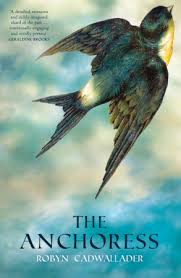
‘The Anchoress’ by Robyn Cadwallader

anchoress

2015, 320 p

If writing were diving, then this book would be a reverse 4.5 somersault tuck (degree of difficulty 4.5).  After all, the main character is a seventeen year old anchoress nun, walled up in a small cell beside a church in 1255 England.  Where on earth does a writer go with that?  And just to escalate the degree of difficulty to a reverse 4.5 somersault pike (degree of difficulty 4.8), the author of this book has a  PhD in medieval studies, focussing on St Margaret and attitudes towards women.  Where another author might be tempted to spice it up with an illicit affair and a daring escape, we would rightly expect that Robyn Cadwallader would be sensitive to the spirituality that would draw a young woman to such a drastic, and to us unfathomable, spiritual choice.

I first came across the concept of immurement in the book The Nun of Monza where ‘walling up’ was used as a form of punishment.  Sister Sarah’s election to become an anchoress is, however, an act of relative free choice.  Nor is she completely isolated.  As Mary Laven showed in her book The Virgins of Venice, set four centuries later, when women were financially supported by wealthy men to devote their lives to prayer for the souls of their sponsors, this transaction often ensured that bonds of obligation survived.  Sister Sarah’s cell was attached to the shaded side of the village church, nine paces by seven, within earshot of the life continuing outside, with curtained windows through which she could receive food, talk to her two servants and give counsel to women who came to her for spiritual encouragement.  She was visited regularly by Ranaulf, a young monk usually employed in the scriptorium of the local monastery, who reluctantly took the place of an older spiritual guide charged with the care of the anchoress women.

The story is told from alternating viewpoints: the first person voice of Sister Sarah interwoven with the third-person perspective of Ranaulf.

The real strength of this book takes place within the four walls of Sister Sarah’s cell.  The door is nailed shut; the bones of an earlier anchoress lie in the dirt at her feet.  In the flickering candlelight, she refuses food and in the lightheaded melting of reality, self-flagellation and erotic fantasies about the physicality of love for Christ unhinge her.  We learn of her grief for the death of her sister in childbirth, and gradually piece together her reasons for making the choice to become an anchoress.  Ironically, although seclusion was supposed to quash the senses, it instead heightened them.

I was less convinced by the outside world, though.  Sir Thomas, the landlord’s son, is a two-dimensional villain, and I found the conversation with Eleanor, a small child who attaches herself to any passerby for companionship, unconvincing.  Perhaps it was the abbreviation of the name (‘Ellie’), but the Eleanor character seemed far too much a twenty-first century invention.

Those qualms aside, Cadwallader remains faithful to the religious impulse that drove Sister Sarah to make the choice she did, and to the power and authority relationships that supported the whole conceit of an anchoress.  It is a strange book to us, because it is a strange situation, and Cadwallader’s quiet, dignified tone – in itself somewhat strange to us- carries it well.

aww-badge-2015-200x300I have read this as part of the 2015 Australian Women Writers Challenge

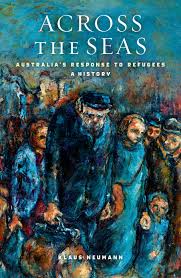
‘Across the Seas: Australia’s Response to Refugees. A History’ by Klaus Neumann

neumann

2015, 300 p. plus notes

There’s often a frisson of  defiance among non-Coalition voters when singing  the second verse of our national anthem, the dreadful ‘Advance Australia Fair’.  Irony of ironies, in our national anthem, we declare

For those who’ve coming across the seas

We’ve boundless plains to share

knowing full well that Australia currently funds off-shore detention centres in Nauru and Manus Island  that were deliberately designed to ensure that those who come across the seas do not (by ‘hook or by crook’) share in our boundless plains.

In the introduction to his book, Neumann declares his intention to make the present appear unfamiliar, by drawing attention to both radical differences in Australia’s refugee policy in the past, and at the same time, to identify continuities and parallels in past and present policies.  His account is chronological, commencing with Federation in 1901 and concluding in 1977.  Why 1977? Because it was then, he argues, that the public response to refugees to which we are now accustomed had been fully formed.  I finished reading this book, having read the obituary to Fraser govt Immigration Minister Michael MacKellar that very morning, and Neumann has convinced me that his endpoint of 1977 is an appropriate one.

Continue reading

‘We That Are Left’ by Clare Clark

wethatareleft

2015, 450 p.

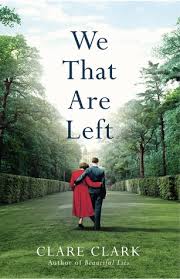
What’s not to like about this? It’s a ‘Big House’ book, set in the years following World War I, with blurbs by Hilary Mantel and Amanda Foreman.  I’m a sucker for Big House books- Brideshead Revisited, Atonement, Molly Keane novels- and I really enjoyed the post WWI setting of Sarah Waters’ The Paying Guests. The front cover (complete with a picture of backs)  and the large font of my copy made me feel as if I was reading a Mills & Boon novel and so I nestled into this book as if it were a comfort read.

It’s probably more than that.  It is carefully researched  (perhaps a little too carefully researched in places) and it picks up on themes like the dearth of men after WWI; the rush to spiritualism by bereaved families; and the effect of rising death duties on the Big House in a twentieth century that no longer pays deference to them and their crusty families.

Nonetheless, there are some well-worn tropes here.  Oskar Grunewalk, his name anglicized to Oscar Greenwood in those anti-German days, is the young outsider boy who flits around the edges of the golden family ensconced  in the Big House, humiliated by and ill-at-ease with the favoured children of the family.  There are two sisters, each very different from the other.  Oscar is a mathematics prodigy, with an almost autistic fascination with numbers and details, and although treated as an interloper by the glamorous Melville family, he loves the old house, Ellinghurst.

The book opens with the funeral of Sir Aubrey Melville, and we know that Oscar now -somehow-  has charge of Ellinghurst.  The question of how this has come about is the narrative thread that draws you through the book, and it did it well enough to find me reading the book in snatches, furtively, wishing that it wasn’t so cliched  and yet enjoying the fact that it was.

My rating: 7.5

Sourced from: Yarra Plenty Regional Library

Read because: it was sitting there on the ‘New Books’ shelf.

‘Black Rock White City’ by A. S. Patrić

blackrockwhitecity

2015, 248 p.

“I never taught you how useless words are, did I?” says Jovan, encountering a former student, who offers her stilted condolences on the deaths of Jovan’s children in a far-off country in a far-off time.   Ah, but words are not useless to Jovan, nor to this novel, which interweaves graffiti, poetry and silence in an exploration of grief and displacement set in bayside Melbourne during the 1990s.

Jovan had been a Bosnian poet and, like his wife  Suzana, an academic  in the former Yugoslavia,  but that is in the past. Now, newly arrived in Australia,  Jovan is a hospital cleaner, while Suzana does domestic work.  They are distanced from each other, but joined by a raw, inarticulate grief over what they left behind in Sarajevo.  Jovan is sleeping around, Suzana teeters on the edge of mental illness and buries herself in literature.

At the hospital where Jovan works, an unidentified graffiti artists carves, daubs and etches cryptic messages that become increasingly violent and unhinged.  This mystery is the hook that draws you into the book, but by half-way through you realize that the story lies elsewhere.  Not that the thriller aspect is abandoned completely, because it certainly drags you by the hand in the closing pages which were quite unputdownable.  But for me the real strength of the book was in the layering of Jovan and Suzana as characters, and their tentative negotiation of a new life in a new place.

The book is written in present tense, which usually I bridle against. But in this case, I barely noticed.  Many of the sentences are short, and the text is disrupted by bursts of poetry. The duality of the book is reflected in the title: Black Rock (the bayside suburb) White City (the literal translation of ‘Belgrade’).

The cover carries a blurb from Christos Tsiolkas, and there are resonances here of Tsiolkas’ book Dead Europe.  However, it’s very much an Australian book, and its darkness is set against a hot dazzling Australian summer.  It’s very good- I’m detecting murmurings of ‘Miles Franklin’ and I think they’re right.  Reviewers often use the word “powerful” too often to describe a book that is either engulfing or a steamroller.  This book is powerful, but quietly powerful in terms of the depth of its observation, the handling of different genres and purposes, and the poetry of its writing.

My rating: 9/10

Sourced from: Yarra Plenty Regional Library

Read because: I’d heard of it.

REVIEWS

The Saturday Paper review

Lisa’s review at ANZLitLovers

SMH review by Owen Richardson

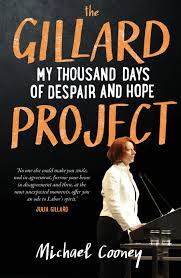
‘The Gillard Project’ by Michael Cooney

cooney

2015,  288 p.

Near the end of this book Michael Cooney admits that its working title was “We weren’t as bad as we seemed at the time” (p253).  While the actual title is a good one, capturing as it does the slow-motion car crash that was the Gillard government, the working title was pretty apt too.  This book proudly proclaims  the fact that, despite the drama and intrigue, this was a government that passed a huge amount of  progressive legislation (especially in comparison with its successor) and that there was a definite Gillard Project of education, health, employment and disability funding.

Until I’d read Don Watson’s Recollections of a Bleeding Heart, I hadn’t particularly considered the nature of a speech-writer’s role. I found it hard to distinguish the voice of the invisible speech-writer from the speech-giver (and still do)  in such a strangely symbiotic relationship.   Michael Cooney came to the job as Gillard’s speechwriter as a Labor man after working as policy director for Kim Beazley and Mark Latham, and as founding policy director of the progressive think-tank Per Capita during the Rudd years.  He comes from the Catholic right-wing of the party, a pedigree which I’m not particularly keen on, and which I find puzzling given that Gillard was from the left.

But there is no doubt of his admiration for Julia Gillard.  My favourite chapter of the book is an interlude titled ‘The Shy Child’, extracts of which appeared in this Fairfax article, where he emphasizes her humour and downright decency.  It comes through in the other chapters as well, as he chronologically traces through the frenetic “just do it” attitudes of the early months of the Gillard government, her performance overseas, and then the awful, drawn out ending.

The political speech today is a strange beast.  Although Parliament and politics in general are largely despised sideshows,  speeches probably have a longer lifespan now than in the past with the advent of YouTube.  But they often appear as a soundbite, or in a truncated form, and we don’t have the patience to listen to a whole speech for the overarching argument.  Gillard’s misogyny speech of course springs immediately to mind, as does her speech after her overthrow – neither speech written by Cooney.  But there are other speeches as well, and this book gives Cooney the opportunity to revisit them, as well as the speeches that he wrote but were never given.  In particular, Gillard’s speech to the Mineral Council of Australia on 30 May 2012 (the ending of which she rewrote) is powerful stuff, even if proved only transitory by subsequent events:

Now I know you’re not all in love with the language of ‘spreading the benefits of the boom’. I know everyone here works hard competes in a tough global environment; you take big risks and you earn the big rewards. You build something. Australians don’t begrudge hard work and we admire your success.

But I know this too: they work pretty hard in car factories and an panel beaters and in police stations and hospitals too. And here’s the rub: you don’t own the minerals. I don’t own the minerals. Governments only sell you the right to mine the resource. A resource we hold in trust for a sovereign people.  They own it and they deserve their share…

The facts endure. Our economy is the envy of the world. Our mining industry is the envy of the world. And there’s nowhere in the world you’d be better off investing. And there’s nowhere in the world where mining has a stronger future.  And this is Australia, and it has a Labor government. (p 191)

Cooney fesses up, as well, to the speeches that bombed, most particularly the “we are us” speech that she gave to the 2012 ALP conference, to which he devotes a whole chapter.  Because this is a book written by a speech-writer, he is able to give the draft of the speech that was not given, but he doesn’t resile from responsibility for the “we are us” phrase that was ridiculed so widely. “The speech” he admits “was by far the worst moment for the prime minister that I had real responsibility for” (p 136).

I had starting reading this book some weeks ago after picking it up from the ‘New Books’ table at the State Library while waiting for material to be delivered to the Manuscripts Reading Room.  It engaged me instantly, and so I suggested that it be purchased by my local library, which subsequently obliged. I must confess that I found it harder to get into the second time, but by half-way through I was hooked again. It’s an insider’s book, with names dropped and allusions made,  very Canberra-centric and Cooney does not make any pretense over where his loyalties lie.  We’ve had the recent, depressing airing of “The Killing Season” and it’s certainly an antidote to that, just as it’s an antidote to the Government’s announcements of its carbon reduction target and quashing of the marriage equality bill.  I doubt that it will have the longevity of Don Watson’s Recollections of a Bleeding Heart but it’s a good read for now.

‘Sir William a’Beckett’ by J. M. Bennett

WilliamABeckett

Sir William a’Beckett J.M. Bennett, Federation Press, 2001.

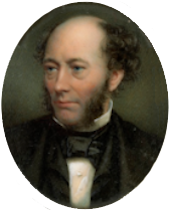
This blog is called ‘The Resident Judge of Port Phillip’ as a tribute to the first resident judge, John Walpole Willis, but there were in fact four Resident Judges of Port Phillip. William a’Beckett, the fourth and final one, is an interesting man. His main claim to fame is that he was the first Chief Justice of the Supreme Court of Victoria, after having served as Resident Judge in Melbourne since 1846.

As proud Victorians, it suits us to forget that until July 1851 the area that we now know as Victoria was instead just the “Port Phillip District” of New South Wales.  La Trobe was a mere ‘Superintendent’; the Legislative Council sat in Sydney where Port Phillip affairs were an afterthought, and all administrative functions were directed from Sydney.  The court was part of the Supreme Court of New South Wales and while the Resident Judge in Melbourne had some degree of autonomy, appeals went automatically to the full Bench in Sydney.  The Resident Judge was still a member of the full court, but distance ensured that in a practical sense he was sidelined from the activities of his brother judges in Sydney.

William a’Beckett was Resident Judge when the Supreme Court of Victoria was finally established under the Supreme Court (Administration) Act 1852. This act brought to an end a rather ambiguous seven-month hiatus where it was assumed, but not definitely stated, that  a’Beckett would continue in his position until Letters Patent were issued by the Queen or colonial legislation would be passed to make him Chief Justice of the new court.  The Colonial Office made it clear that it wasn’t going to issue the Letters Patent or any new Charter, so it was up to the new Victorian legislature to pass the necessary legislation. It eventually did so, and a’Beckett was sworn in as Chief Justice on 24th January 1852, with Redmond Barry (the former Solicitor-General) as first puisne (or assistant) judge, joined by Edward Eyre Williams in July 1852. Continue reading

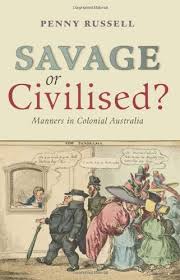
‘Savage or Civilized? Manners in Colonial Australia’ by Penny Russell

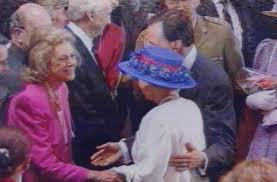
You may remember a number of years back when Prime Minister Paul Keating had the audacity to place his hand on Her Majesty’s back to gently steer her in a crowd.

lizardofoz

He was quickly dubbed “The Lizard of Oz” by the English press, always quick to jump on colonial brashness with a snort of derision at ex-convict temerity (a taunt which carries little significance in Australia itself).  Historically, however, the colonial/convict trope was far more influential, as demonstrated in Penny Russell’s book Savage or Civilized? Manners in Colonial Australia.

This book is about the complicated rules and the even more complicated lived experience of colonial manners (p 5)….Manners are not only about the different observances of form and ritual that make a past (or a foreign) society seem quaintly strange.  They are also about the ways we acknowledge and respect the humanity of others, extending due consideration to their feelings, preferences, prejudices and sense of how things should be done.  The ultimate rudeness is to deny a fellow human being that degree of consideration. (p. 14)

Not everybody cared about manners, but this book concentrates on those who did.  It explores what she calls four ‘contexts’: the pastoral frontier; convict society; the domestic world and the new public space that opened up in the the latter part of the nineteenth century.  The book is not necessarily chronological, as these ‘contexts’ were continuous throughout the late eighteenth and nineteenth century time period, but there is nonetheless a chronological trajectory in the narrative.  She describes this as “layered” rather than chronological, and is at pains to stress that she is not discussing the rules of civility as spelled out by the imported ‘politeness’ literature that flooded the empire, but instead looks at

how manners affected the daily lives of individuals, how they played out not in principle but in practice, not in precept but in people. (p 13)

In other words, the sort of history I enjoy most.

russell_savageorcivilized

2010, 362 p.

In Part One, she starts on the frontier, that site of colonial theatricality so well explored in Inga Clendinnen’s Dancing With Strangers.  Handshakes, in particular, are the focus of attention (as they are also in Tiffany Shellam’s Shaking Hands on the Fringe). In each section, she presents a small number of characters to exemplify the arguments she is making, almost as if she is bringing them onto the stage for us.  Robert Dawson was an employee of the Australian Agricultural Society who was viewed as a “good man” and the author of The Present State of Australia in 1830 where he sought to rescue the reputation of Indigenous people at Port Stephen. It was, however, a respect overlaid by paternalism, praising docility, tractability and goodwill- and in the final analysis, he took their land. Neil Black, on the other hand, felt adrift within the moral wilderness of settler society, rejecting the commonly-held premise that a young gentleman could break out of the expectations of his class and status and then take them up again at will.

Part Two, “High Society”makes the point that British manners were themselves evolving at the beginning of the 19th century. Although there was still a belief in a social pyramid, this view was challenged by the rising bourgeoisie and evangelical domesticity which placed great store on reputation, good name, and ‘credit’.  The networks between the colonies ensured that this strategically reimagined ‘England’ was a common reference point as the colonies erected their own strictly-policed social boundaries to mirror what they conceived to be the situation at ‘home’.  Government House in the colony served as a microcosm of these relationships , as Russell demonstrates with the example of the much-studied Lady Jane Franklin in Tasmania (a theme she also explored in her book This Errant Lady which I viewed here.)  When Sir John Franklin fell out with his private secretary Alexander Maconochie, it not only caused a split in society, but also leached into the personal relationships within the domestic sphere, as the two families lived in close proximity.  Professionalism was another arena of conflict, as she shows with her example of two doctors: Dr Farquahar McCrae (the brother-in-law of Georgiana McCrae in Port Phillip) and Dr William Bland, an emancipist who had been transported to the colonies for a duel.  When the two doctors disagreed about the appropriate treatment for a patient, the dispute was played out through the newspaper columns of the Sydney Herald, spilling into a meeting of the Benevolent Asylum Society, one of those philanthropic organizations through which middle-class men underscored their respectability.

Part Three examines ‘Domestic Worlds’, and while I found this an emotionally engaging section, I did find myself wondering whether enough was made of the effect of colonialism on domestic relationships.  This was not so much with the dissatisfied governess Margaret Youngman, who reminded me of Sybilla in My Brilliant Career, which was itself an Australian working of the governess story.  It was more with the the story of Mary Ann Tankard who was deserted by her older, often-absent husband, and the wife of the Reverend Andrew Ramsay who was left behind to ‘keep up appearances’ while her husband sailed back to Scotland to deal with church business. Both these stories of desertion could have easily been mirrored by deserted women in England.

The final section moves more into the second half of the nineteenth century and the burgeoning of a public and  political sphere where women and aspiring working men  became more visible.  Transport and urbanization brought the courtesies of meeting strangers to the forefront of public discourse, especially for ‘girls’ during the 1890s.  The fiesty Annie Britton, who was arrested for parading in the volunteer uniform of Captain Gilbee, brought the captain’s family into the public arena, while the arrival of the Duke of Edinburgh brought colonial manners under the censure of the ‘home’ reading public- or at least, it was imagined that it would-just as Paul Keating was to do 130-odd years later. In the midst of the celebrations Henry Parkes, chair of the organizing committee, stepped forward to shake the Duke’s hand.  Parkes was himself of dubious background and doubtful morality given the indecent haste with which he married his mistress after his first wife’s death, and the new Governor the Earl of Jersey and his wife later ensured that the new Lady Parkes was excluded from Government House.

As Russell notes in concluding her book, hers is not a discussion of ‘real’ Australian values and nationalism- not then, and not by historians later. Instead, these carefully and sensitively drawn people and their dilemmas and social and domestic dramas

…were telling representations of the hundreds of thousands of individuals who moved into, and sometimes out of, the Australian continent; tiny atoms in the sprawling world of settler colonialism, but constituent atoms nonetheless.  At the end of the nineteenth century, as much as at its beginning, many if not most colonists understood themselves a privileged members of the Anglo world, and yearned to blend unnoticed with a cosmopolitan community upon terms of cultural and social equality, not to be marked out an uncouth barbarians or brash colonials. (p. 259)

aww-badge-2015-200x300My review is linked to the Australian Women Writers Challenge site.

It’s also 1/20 of my TBR20 Reading Challenge- my vow to read twenty of the books I already have on my shelves.