Category Archives: Book reviews

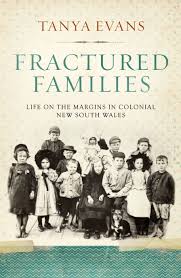
‘Fractured Families’ by Tanya Evans

evans

Tanya Evans Fractured Families: Life on the Margins of Colonial New South Wales,

2015, 252 p & notes

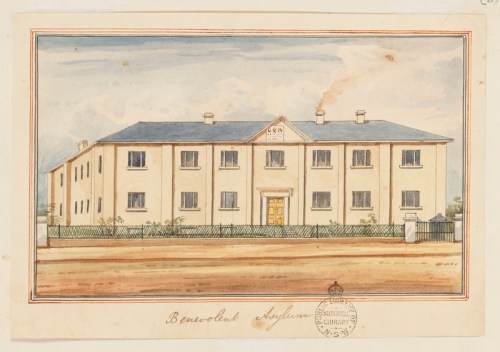
When I picture a ‘Benevolent Asylum’, I have a mental picture of  greyness, thick walls, lancet windows and forbidding ecclesiastical air. It came as surprise, then, when I found this image (below) from the 1840-1850s which did not appear quite as funereal as the name of the institution suggests.

SydBeneAsylum

Sydney Benevolent Asylum Artist disputed c. 1840-1850, State Library of New South Wales

The Sydney Benevolent Asylum was Australia’s first (and oldest surviving) charity, founded in 1813, with the avowed intention NOT to operate like the Poor Laws back in England.  The Poor Laws in 1813 were still based on the old parish system, where the indigent and needy were shuttled back to their parish of origin, to be supported grudgingly by the parish. There were workhouses, but the truly punitive workhouses of our Dickens-tinged consciousness arose out of the Poor Law Reform of 1834, some twenty years after the establishment of the Sydney institution. Unlike in England, there was an acceptance that the State “was responsible for moulding the structural circumstances of the poor in early New South Wales” and without a tradition of elite obligation to the poor, it could be said that New South Wales was ‘born modern’.

Continue reading

‘The High Places’ by Fiona McFarlane

highplaces

2015, 275 p.

And so here I am again, having finished a book of short stories, and quite at a loss to know how to review them.  It’s certainly a very accomplished selection and there wasn’t a single story where I turned the page only to wonder ‘what was THAT all about?’ when the story had unexpectedly ended. These are all well-shaped stories, with a sense of wholeness in the small slice-of-life that is their focus.  Several of them have a rather old-fashioned,  parable-like, ‘once-upon-a-time’  narrative tone which I liked.

My favourite ones? The opening story ‘Exotic Animal Medicine’ is excellent, jumping between a young vet’s treatment of an animal in her care, and an excruciating present-time car-crash and giving comfort to an injured man.  I very much enjoyed ‘Unnecessary Gifts’ which had a similar slow-motion disaster as two brothers go missing in a deserted shopping centre at Chrismas time, and ‘The Movie People’ where a township is changed by the experience of having a movie set move in, and then move on.  ‘Violet, Violet’ reminded me of O. Henry.  In fact, there’s not a single weak story here, and as I flip through I think – “oh yes, that one was good too..and that one…and that one.”

And this is only McFarlane’s first book of short stories? And she has only had one (very well-received) novel?  What pleasures await us….

I have posted this review in the Australian Women Writers Challenge.

aww2016

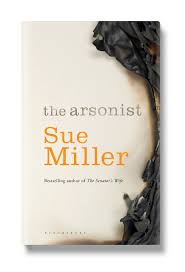
‘The Arsonist’ by Sue Miller

miller_arsonist

2014, 304 p.

Sue Miller and Anne Tyler are my comfort food reads.  I must confess to occasionally confusing the two authors and their works, but I happily grab either of their new books when I see them on the shelves at the library. (Having said that, I realize that I haven’t read Anne Tyler’s Spool of Blue Thread which has probably received the most ‘literary’ recognition of any of her recent books in terms of its recent Booker Prize shortlisting).

Even though Sue Miller has a couple of years on me, I feel as if I have ‘grown up’ with her, right from the first book of hers that I read, The Good Mother (long before I started this blog). I’ve followed her characters through marriage separations, repartnerings, and more recently through her autobiographical book on watching a much-loved parent subsiding into dementia.  I like her domesticity, the leaving and returning to home, the regrets and anxieties and the lived-in-ness of her books.  Yes, there is a similarity between them all, set as they usually are, on the east coast of America amongst educated, progressive-leaning middle-class people who seem familiar.

This book follows the pattern. Set in 1998,  Frankie, a forty-ish aid worker has recently returned from Kenya (ah! snap! another synchronicity!  She’s obviously been to Lamu, as I have, too!). After yet another failed romance and rather jaded by the whole humanitarian aid phenomenon, she’s not quite sure what her next career move is to be, so she takes a few months at her parents’ home in Pomeroy, New Hampshire. Her parents, Sylvia and Alfie, have retired full-time to Pomeroy to what had been the family holiday home, but it is becoming increasingly clear that Alfie is sliding into a type of dementia. Meanwhile Frankie finds herself gradually drawn into the small Pomeroy community as it becomes increasingly edgy and brittle after a series of fires are lit in the empty, or darkened, homes.  She is attracted to Bud, another recent arrival to Pomeroy who has come to take over the ailing local newspaper, and her feelings are reciprocated.

I concede that many readers would find this soporific and banal (and a little part of me feels this at times). As with other Sue Miller books, these characters live very much in their heads. But perhaps this is why I enjoy her books so much: reassurance that other people have their own internal dialogues as well!  The question of the arsonist’s identity serves as a who-dun-it device to tie the book together, but really- I just enjoyed observing and vicariously living through the characters who seem familiar enough to be friends, but different enough to be interesting in a domestic, voyeuristic way.

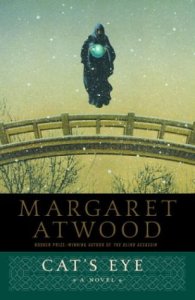
‘Cat’s Eye’ by Margaret Atwood

Cat's_Eye_book_cover

1988,  498 p.

You don’t look back along time but down through it, like water.Sometimes this comes to the surface, sometimes that, sometimes nothing. Nothing goes away.

Nothing has gone away for Elaine Risby, the main character and narrator of Atwood’s 1988 novel, Cat’s Eye. Returning as a fifty-year old artist to her childhood home of Toronto as the star  of a retrospective of her work, memories return of her unhappiness amongst a small group of neighbourhood childhood ‘friends’. The experience has stayed with her, even though she shrugged free of their power and went on to establish herself as a notable painter. As she walks through the gallery retrospective of her painting – a legacy that she is well aware could be turned to cinders in seconds with a splash of  fire accelerant and a match –  we see from her descriptions of her paintings that she has been painting out the pain from this childhood experience for the rest of her life.

Elaine’s early years were unconventional as her peripatetic family followed her father, an   entymologist, on his research field trips. Once she and her brother reached school age the family settled in suburban Toronto which, in these post-WWII years, was staid and judgmental. Although her parents did not attend church, Elaine did so with Grace Smeath, a neighbourhood friend.  Her mother, whose unguarded comments revealed her hypocritical disdain for Elaine, appeared  over and over in Elaine’s paintings for decades afterwards. The small friendship group was joined by Cordelia , a supercilious, controlling bully, who manipulated Elaine by spurning, then sporadically embracing, her as part of the ‘in’ group, the ultimate intermittent reinforcement (and punishment). Atwood captures well the small degradations and the petty cruelties that girls, in particular, seem to be able inflict on each other, seemingly invisible to parental observation.  This isn’t completely true though, because Elaine’s mother was clearly aware of the bullying and Cordelia’s part in it, but obviously felt at a loss to know how to deal with it.

So, it came as somewhat of a shock when, suddenly emboldened, Elaine shrugged free of their influence and, paradoxically, began to bully Cordelia herself.  I began to suspect that Elaine was an unreliable narrator, and that perhaps she was a bigger monster than Cordelia.  But instead Atwood held this change in roles in an uneasy tension, although I don’t know that I’m completely convinced by the sudden switch in power in the relationship. Bullying is a complex phenomenon, though, with such paradoxical emotions and manoevres being played out, and our expectations of adult intervention have changed a lot in the last decade.

I suspect that much of this book is autobiographical, if not in its exploration of relationships, then in its depiction of post-war Toronto and the artistic life. Atwood handles switches in chronology deftly, as you’d expect a writer of her calibre to do. I read the book with an insistent sense of doom, expecting with each page-turn that Cordelia would re-emerge or that the bullying would suddenly reveal itself as a much darker, more insidious act.  Atwood does well to hold her reader in this anxious state for so long- not that it’s a particularly pleasant place to be.

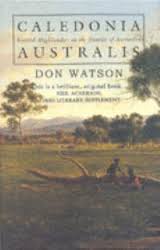
‘Caledonia Australis’ by Don Watson

caledonia

1984, republished  1997 (this review) and 2009. 255 p. & notes.

Actually, I hadn’t intended reading this Don Watson book at all.  I was reading the first chapter of his more recent, award-winning book The Bush and found myself reminded that before Watson was a Monthly correspondent, a commentator on public discourse or Paul Keating’s speechwriter, he was a historian.  His book Caledonia Australis was already on my bookshelves, and having recently had the experience of reading two books from the edges of a historian’s career as I did with Michael McKernan (see here and here), I decided to put the more recent book aside in order to return to Watson’s earlier book.  After all, I reasoned, it would do a disservice to the earlier book to read it after the larger, more mature work, honed by over thirty years of writing.  My assumptions were unfounded. I haven’t yet returned to The Bush but Watson’s Caledonia Australis,  a more consciously historical work, stands proudly on its own two feet.  Watson was a damned good writer in 1984, just as he’s a damned good writer in 2016.

We see in this 1984 book the subtlety that Watson would later display in his exploration of Paul Keating in his Portrait of a Bleeding Heart.  It does not have the trappings of an academic text: it does not have footnotes or an index and its reference list is only loosely tied to the chapters.  It does, however, make a strong historical argument which has maintained its currency- has indeed become stronger- since its initial publication in 1984 and reissue in both 1997 and again in 2009.

The first part of Watson’s book is not about Australia at all, but instead the Scottish Highlands.  I’d heard of the Highlands clearances, but I’d assumed that people were shifted directly from their Highland ancestral homes onto ships to the New World as part of a global diaspora.  But, as Watson points out, there was an in-between period where Highlanders were forced onto the coastal edges where they were forced to work in kelp-harvesting. Kelp was prized as an industrial additive for the soap, linen and glass industries and had become lucrative when imports of Spanish barilla (a salt-tolerant plant) were heavily taxed during the 1790s.   The shifting of the Highlanders to the coast and the attempted suppression of the language and culture of this ‘backward’ people was seen as an ‘improvement’ measure that, fortuitously for the large lords, freed up the land for the importation of sheep. When the duties on barilla and salt were reduced in the 1820s, the kelp market collapsed, and it was at this juncture that the ‘improvers’, especially on the isles of Skye and Mull,  looked to emigration and particularly the large, clan-based Scottish emigration schemes in Canada and Australia.

And so, by Chapter 4, we have ‘Highlanders at Large- the Kurnai at Home’. Both by an accident of timing and also as a result of clan networks, Scottish settlers explored and appropriated the lands of the Kurnai people of what we now know as Gippsland but which  Scottish explorer Angus McMillan christened ‘Caledonia Australis’.   Across the seas come the Highlanders, a clan-based culture, where the land was the basis of their identity, where history and legend were passed through song and dance, where the supernatural world co-existed with the natural one. And here in Chapter 4 they meet the Kurnai with a parallel culture, with similar qualities to their own:   clan-based, with land as the basis of their identity, history and legend passed through song and dance, with a co-existent supernatural and natural world. There was, however, no recognition of these affinities. Charged with their Calvinistic faith, the former Highlanders dispossessed the Kurnai, turning over their land to sheep just as had happened to them in Scotland.

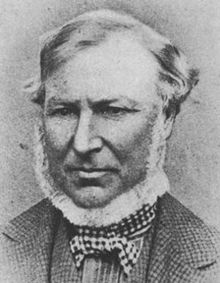
In the second half of the book Watson hones in on Angus McMillan,  who has been lionized as one of the pioneers of Gippsland in both myth and physical memorials. McMillan is, in effect, the Highlander in Caledonia Australis writ large.
Angus_McMillan_portrait

Angus McMillan Wikipedia

Watson traces the rivalry between McMillan and the driven, publicity-conscious professional explorer Strzelecki in their competing claims to have ‘discovered’ Gippsland. The Highland temperament manifested itself in both exploration and frontier settlement behaviour.  Clan connections and a shared sense of righteousness drove the Scots settlers into their dogged but ultimately fruitless search for the White Woman of Gippsland. Their prickliness, pride and sense of mission had a much darker side as well.

Watson writes:

There were three types of squatters on the Australian frontier: those who thought that their right to the land was qualified by an obligation to treat the Aboriginal inhabitants with kindness; those who believed that their right was conditional only on extermination; and those who combined murder with kindness. (p. 223)

The squatters of Gippsland, Watson writes, were fickle and dangerous and McMillan exemplifies this third type of squatter. McMillan

-half steering his way, half being blown-arrived in the new province and from that moment seemed to embody every paradox the frontier could throw up: making its history and being made by it, writing its story and engineering its secrets, living through all manner of triumph and torment and leaving a legend which put his life beyond our reach, ending up a cliche, a block of stone (p. xix)

When the nephew of his patron Captain Macalister was killed by Aborigines, McMillan was most probably responsible for drawing together the ‘Highland Brigade’ of his neighbours and retainers who, bent on revenge, massacred between 60 and 150 Indigenous Australians at the Warrigal Creek massacre, and beyond.  Yet, this same man was also lauded for his “sympathetic interest” in indigenous people and became in the last years of his life the Aborigines’ protector.  Murder and kindness: a chilling combination.

In his introduction to the 1997 edition of this book, Watson writes that his original intent in writing this book was

to give a more sympathetic portrait of the pioneers than any I had ever encountered.  I wanted to give them blood as well as bones; religion, motives, choices, memories, identity, ancestors, an inheritance of their own (p.xxvii)

This doesn’t sound like the aspirations of a historian whose work, through this book,  became associated with those derided by the New Right as promoting ‘black armband history’. We know, from Watson’s later work on the deadening effect of managerial language and ‘Weasel Words’ that he is impatient and dismissive of ‘political correctness’. But, he argues, “It can hardly hurt a mature society to know that its founders were capable of evil as well as good.  An immature society can only benefit”(p. xxvi)

Hence the importance of McMillan:

The harder we look at McMillan the more we see the patterns of our collective experience and the elements of our contemporary dilemma.  The harder we look at him the more signs we see of the kindness and brutality, self interest and charity, memory and amnesia, decency and hypocrisy that has characterised public and private dealings with Aboriginal Australia from the beginning to the present day.  And the harder we look at the society McMillan came from the more we see how the dispossessed everywhere tend to follow the same path to material and spiritual poverty: in the nineteenth century the Australian Aborigines were not the only ones to be first cast as dangerous and unruly savages, and then left stranded between pity and contempt- and then thrown still further adrift from humanity by Social Darwinism. (p. xxviii)

No: this process had engulfed Highlander society, which in turn subjected the Kurnai people to the same fate.  The last words of Caledonia Australis are “..the irony was lost”. Irony, at its most powerful, does not need a spotlight or announcement, but emerges quietly and insistently out of the material itself.  Just as it does in this book.

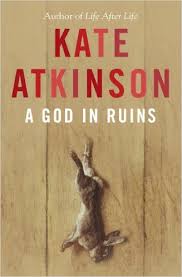
‘A God in Ruins’ by Kate Atkinson

atkinson_godinruins

2015, 400p.

This book is a ‘companion’ to Atkinson’s earlier book Time After Time. It’s odd- my recollection is that I very much enjoyed that book and yet when I look back at my review, I obviously had reservations.  It’s strange how one’s lasting impression of a book can differ from the response immediately upon finishing it.

SPOILER

In the earlier Time After Time, Ursula Todd’s brother Teddy, RAF pilot, was missing after a bombing raid over Germany, presumed dead. The  Ursula character had several alternative lives presented within the pages of the one book, and in one of those Teddy reappears at the end of WWII after two years in a German POW camp.

It is this particular scenario that  is explored in this more recent book A God in Ruins. In this stand-alone iteration, Teddy survives over 70 flights and three tours of duty, an almost incredible feat given the attrition of pilots in bombing raids over Europe, and lives to a very old age.

This later book glances off Time after Time, but is not at all dependent upon it.  In fact, you could read this book without any awareness that there is another book until, perhaps the last few pages.  It’s a narrative told straight, albeit with chronological jumps between Teddy’s childhood, his old age, his marriage to his childhood sweetheart Nancy, the birth of his daughter Viola and her anger at him that blights his old age and the childhoods of his grandchildren.  There are rather long stretches of his flying experience which are obviously carefully researched and stop at just the point where the reader’s interest wanes- one of the hallmarks of a writer well in charge of her material but conscious of her readers.

The book seems as if it’s going to be a departure from Time After Time in that there’s only one plot, albeit chopped up and rearranged in its narrative structure.  It was a plot that engaged me completely as I found myself laughing at Teddy’s grand-daughter’s wry asides, feeling disturbed by Viola’s harshness with her father when he was such a good man, and sad to watch illness and old age gradually quash people I had come to care about.  And then, in the last pages, down come all the narrative walls as Atkinson again throws the whole conceit of the book back up into the air, just as she did in Time After Time. I felt disappointed, as if she’d revealed herself to be a bit of a one-trick pony.  The book closed with a fairly academic essay on the nature of fiction.

I suppose that my dissatisfaction with the ending proved the points she made her theorizing about fiction and narrative but dammit- I felt betrayed.  Mind you, as soon as another book comes out, I’ll forget about it just as I did when I opened this book with such anticipation thinking to myself “I love Kate Atkinson”. Perhaps it’s a love where absence makes the heart grow fonder.

My rating: 8.5/10

Sourced from: CAE bookgroups

Read because: a face-to-face bookgroup read

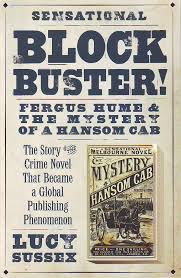
‘Blockbuster: Fergus Hume and the Mystery of a Hansom Cab’ by Lucy Sussex

sussex

2015, 257 p. & notes,

Fergus Hume’s book The Mystery of a Hansom Cab (my earlier review here) has the dual ‘honour’ of being both the best selling detective novel of the nineteenth century and the ultimate one-hit-wonder in a career that generated over 130 novels and numerous stories and articles. Self-published in 1886, it became an instant best-seller both locally – and more importantly for an Australian book at the time- internationally.  Lucy Sussex’s book Blockbuster is a book about the book.  You don’t even have to have read The Mystery of a Hansom Cab because Sussex’s work is far more focussed on the author and his milieu, the commercial trajectory of the book and the provenance of the remaining copies, rather than the book itself.

As she points out in the introduction, Hansom Cab is a thoroughly Melbourne book, starting as it does at the thoroughly respectable corner of Russell and Collins Street outside Scots Church,  passing the thoroughly respectable streets of East Melbourne and meandering its way through the slums of Little Lonsdale Streets and shabby-genteel St Kilda.  Its author, however, was not Melbourne-born but was originally from Scotland, having emigrated to New Zealand as a child when his father took up a position as a master of a lunatic asylum, a job he had also undertaken in Scotland.  Despite a yearning for the stage – a yen that both his sisters were allowed to fulfil-  Fergus was channeled into the law by his father, until he ‘escaped’ with his sisters ‘across the ditch’ so that they could further their stage careers. Once in Melbourne and freed from paternal oversight, he tried to get his scripts accepted for theatrical performance but to no avail.  He wrote The Mystery of a Hansom Cab as a novelistic attempt to get noticed in order to further his theatrical career.  It was an unintentional best-seller that somehow failed to make him a rich man, or substantially boost his theatrical profile.

I was surprised to learn that The Mystery of a Hansom Cab is one of a trilogy of Melbourne novels (the others being Madam Midas, a Realistic and Sensational Story of Melbourne Mining Life [1888] and Miss Mephistopheles [1890]).  The retailing and licensing of the book is a tawdry tale, with Hume selling  the international copyright for only 50 pounds to promoters who certainly promoted it well and made their fortune from it.  In trying to work out the numbers of volumes actually sold, it is hard to tell what is puffery and what is fact. I found the information about the provenance of the remaining collection of editions held here in Australia fascinating.

Although Hume’s books reflect the milieu in which he circulated, there is not a large archive of personal correspondence or autobiographical writing for Sussex to draw on beyond his book When I Lived in Bohemia. She looks, therefore, for resonances of his personal life in his writing and speculates about his homosexuality from the lives of men around him.

Even though I read a lot, I am a stranger to the world of Literary Studies (with capital letters) and I found myself nonplussed at times at the wide-ranging and digressive nature of Sussex’s writing.  Sussex has written on the previously-undiscovered Australian writer Mary Fortune, and at times I found myself lost as she turned her attention to other writers and theatrical figures of the time before returning her focus to Hume.  The historical parts of the book follow the usual historical conventions of footnoting and referencing but when she interviews present-day writers, their commentary is woven into the narrative as a source that she assumes you’re familiar with. It’s almost as if the reader is overhearing a conversation among a group of people who all know what they’re talking about together, but from which the listener is rather excluded.  Certainly one can enjoy the book without having read Hansom Cab but I felt rather short-changed in the frequent references to the other two Melbourne books which I (among many many others I should imagine) have not read.

The book has a large number of short chapters, which usually I would find annoying, but in this case the short chapters maintained the forward chronological thrust of the narrative. However,  I did find the ending of the book untidy, with a postscript, followed by epitaphs of the minor characters and reviews and opinions of Hansom Cab over time. I wasn’t quite sure where the book ended.

That said, though, I did enjoy the book- a lot.  I suspect that my reservations are grounded in my unfamiliarity with Literary Studies, rather than the book itself.  It was awarded the History Publication Award in the 2015 Victorian Community History Awards.and as a historian, I very much enjoyed the way she captured the theatrical and intellectual climate of boomtime 1880s Melbourne and the economics of literary publication within the colonial book-trade.

aww2016 This review has been posted in the Australian Women Writers Challenge 2016

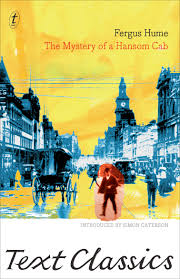
‘The Mystery of a Hansom Cab’ by Fergus Hume

hume_cab

1886. Re-released by Text in 2012;  e-book

I decided to read this in preparation for reading another book: Lucy Sussex’s Blockbuster which is next on the reading pile.  I’d seen the recent television adaption but, as is often the case when I watch crime shows on television, I am left with only fleeting impressions and no memory of detail at all.

This book very much lies within the 19-20th century detective novel genre, but what is significant here is that it predates Sherlock Holmes by a year and marks the cross-over from popular 19th century sensation fiction into what we now know as detective fiction.  Moreover, it was the first internationally-acclaimed novel set in Melbourne- a feat that has not really been replicated (I’m not sure that Kerry Greenwood’s Phrynne Fisher or Peter Temple or Shane Maloney’s novels have international standing?  I could, however, be wrong).  This is Marvellous Melbourne in all her 1880s glory here, before the 1890s depression blew its cold draught into her streets and houses.  As a Melbourne reader with more than a little affection for the town, I enjoyed reading about the Little Bourke Street slums, the somnolent stuffiness of the men-only Melbourne Club, the genteel Powlett Street surroundings of East Melbourne.

The story is typical nineteenth century detective fiction fare: mistaken identities, shameful disgrace, illegitimacy, reputation etc. with the requisite fragrant young lady love-interest, the decent but wronged young man, and the Dickensian hag who holds secrets.  I must admit that, as a historian, I found the descriptions of the slums and the cockney accents of the working-class characters the least authentic part of the book.  I know that buildings were densely packed into the lanes surrounding Collins and Bourke streets, but I felt that the descriptions and dialects owed too much to Charles Dickens’ foggy London.

[Actually, this has raised quite a question for me about the depiction and reality of working-class life in early urban Australia i.e. 1840s and 1860s. I sense that it should be different from England, given hot weather, dust and the relatively small size of towns surrounded by huge expanses of countryside even in Sydney and Melbourne.  I must look more carefully for it. Martin Sullivan looked at it in Men and Women of Port Phillip (my review here) but from memory, it was more an economic and political appraisal rather than an experiential one.]

The book commences with the quite modern touch of a newspaper report and at times combines notional non-fiction elements alongside the standard plot-driven narrative novel. The story moves along at a cracking pace, with a surprise or dangling thread at the end of most chapters.  There’s a chuckling, rather condescending omniscient humour that pervades the book, with its observations about Fate and human nature.  I enjoyed his observations of people- most especially the desiccated, crackling landlady Mrs Sampson. It’s all brought together with the written death-bed confession and everyone lives happily ever after with the truly deserving maintaining their respectability.  It is a nineteenth-century novel after all.

Sue at Whispering Gums also reviewed the book, which has been re-released recently.

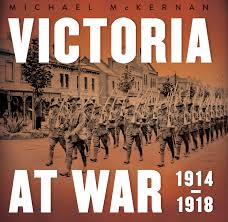
‘Victoria at War 1914-1918’ by Michael McKernan

mckernan3

2014, 221 p.

I always think it’s interesting when a writer returns after many years to something that they had created much, much earlier in their career, and takes up the topic again with the benefit of years of experience, reading, and later research.  This is the case in Michael McKernan’s book Victoria at War which was commissioned by the (then Liberal Party) Victorian Government of Victoria to mark the centenary of the Gallipoli campaign in 2015.  McKernan had written Australians at War over thirty years earlier (which I reviewed here), a book that had been reissued unchanged in 2014 albeit with the author’s own awareness of its inadequacies, but no major rewriting.

However, with this 2014 book, McKernan had the opportunity to revisit his earlier book, within the specific context of Victoria and in the wake of the deluge of World War I research that has been undertaken in recent years, especially leading up to the Gallipoli centenary.  Not only was the scope and purpose of the book different, but he himself as a historian and writer would have been influenced- as have most of us- by the trend of using smaller stories to tell larger ones and the emphasis on emotions.  I finished this book with a deep sense of what a good writer McKernan is; something that did not particularly strike me with the earlier, more utilitarian, book.

McKernan starts this history by reminding us that, at the time war was declared, Melbourne was the capital city of Australia.  The parliament sat  here; the governor lived here and the federal bureaucracy was based here.  This, perhaps combined with early twentieth century ‘liberalism’, may have contributed to  a deeper commitment to the war effort in Victoria than in other states- something McKernan hints out but does not state definitely. Certainly the school effort was strongest here, and Victoria did vote ‘yes’ at the first conscription referendum (alongside Western Australia and Tasmania) although it rejected it by a small majority in the second 1917 referendum.  Melbourne was also the home of Archbishop Mannix, the most prominent anti-conscription voice.

Although Victoria may be more closely settled than other Australian states, with the seat of political power based in  Melbourne, McKernan places much emphasis on small Victorian towns and the impact of enlistment on the emotional and economic life of small country towns.  In particular, he looks at Casterton as a microcosm.  He brings forward the stories of specific families where several sons enlisted, or where older men left several children.  There are urban vignettes as well, but it is probably the country ones that seem most plangent. He notes the role of the local clergy who were charged with delivering the telegrams bearing bad news, and your heart sinks at the thought of families receiving two, three, four such visits.

It hadn’t really occurred to me that battalions were broadly geographically based, most particularly the 14th Battalion.  He follows Victorian volunteers to the army camps surrounding Melbourne, most particularly Broadmeadows, and across to the theatre of war. His book does trace the progress, or lack thereof, of the Victorian battalions, but most particularly in regard to how the news was received back home.

He places much emphasis on the role of the Red Cross, which was organized through Government House, and for some reason I found this description of ‘comforts’ brought me to the verge of tears:

How a man living in the barbaric conditions of the dugouts of Anzac responded when he received a parcel from one of these groups can only be imagined.  His normal food was hardtack biscuits, bully beef and tea- when there was water available.  Imagine opening a parcel from the Red Cross or the Australian Comforts Fund, to find clean, hand-knitted socks, a couple of lice-free, for the moment anyway, pairs of underpants, a fruitcake, possibly some tobacco or cigarettes, some dried fruit and ‘sweeties’, and writing paper for a letter to the folks at home.  The love and commitment that was poured into these parcels would have provided, to even the hardest lag on the Gallipoli battlefield, the whiff of home and of peacetime civilities, the gentler ways of life. (p. 121)

This is a beautifully presented book.  The idea of a coffee-table WWI book seems a bit glib, but the beautiful layout of the book and the large, crystal clear photographs that adorn nearly every page are a form of tribute in themselves.   The end of each chapter is marked by a khaki-coloured,stand-alone reflection on an individual or a specific theme.  Most of all, this book is marked by its respect for individuals, some of whom we have encountered several times in various places throughout McKernan’s narrative.  Their sacrifice is noted with humility and a sense of shared humanity, but not ‘celebrated’ with chest-beating or overt sentimentality.  It is a mature, thoughtful, appropriate response.


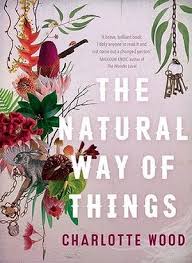
‘The Natural Way of Things’ by Charlotte Wood

wood1

2015, 313 p.

As it happened, I was exactly half-way through Charlotte Wood’s book The Natural Way of Things when I learned that it had won the Stella Prize.  I was already engrossed in it: staying up way past my bedtime to read just a few pages more. After it won the Stella I felt that the noble thing to do was to stay up until 1.00 a.m. this morning finishing it so that I can return it to the library for others to enjoy.

Although is ‘enjoy’ the right word? Probably not, because this is a bleak book set in outback Australia where young women who have been publicly shamed through the media and corporate power networks have been incarcerated and ‘removed’ from society’s gaze and conscience.  Real-life parallels spring to mind: Monica Lewinsky, the St Kilda School Girl, women on reality TV.  In its depiction of the paradox of bleak openness and yet claustrophobia, it reminded me a little of Janette Turner Hospital’s Oyster ( a book that I felt didn’t receive sufficient recognition) and of course has resonances with Lord of the Flies and other such books.

What would people in their old lives be saying about these girls? Would they be called missing?…Would it be said, they ‘disappeared’, ‘were lost’? Would it be said that they were abandoned or taken, the way people said a girl was attacked, a woman was raped, this femaleness always at the centre, as if womanhood itself were the cause of these things? As if the girls somehow, through the natural way of things, did it to themselves. (p. 176)

The book is divided into three parts, tracing the progress of the year Summer, Autumn and Winter, and the book is so grueling in places that it felt as if the action took place over a much longer period. There are no numbered chapters as such, and the sections vary between present and past tense.  The book opens from the drugged, disoriented point of view of one of the captives and this confusion takes some time to clear for the reader as well, as the reason for their incarceration emerges.  There is throughout the sense of suspended menace- not enough to make the book unbearable, but sufficient to compel you to keep reading in horrified fascination.  It’s no coincidence, I’m sure, that it’s this horrified fascination that we often feel when watching a public shaming occurring throughout media.

In awarding the Stella Prize, the Stella Prize judges described it as ‘a novel of – and for – our times’ and ‘a riveting and necessary act of critique.’  I’m mindful that this book has been awarded in a climate of heightened awareness of domestic violence and misogyny, but I don’t think that topicality is its only virtue. I’ve found myself thinking about the book all day, and I think that its bleakness and power will make it memorable and uncomfortable in the future, much as Cormac McCarthy’s The Road does in a different genre.

It’s good, and it deserves the acclaim it’s receiving.

aww2016

I’ve reviewed this as part of the Australian Women Writers Challenge 2016.