Category Archives: Book reviews

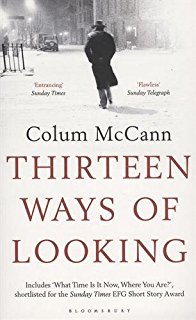
‘Thirteen Ways of Looking’ by Colum McCann

mccann

2016, 256 p

Written by the author of one of my favourite books (This Side of Brightness) this is a really strong collection, comprising a novella and three short stories.  Each one of them is memorable in its own way.

The heart of the book is the eponymous novella with which it opens ‘Thirteen Ways of Looking’.  It is told in thirteen chapters, each of which is headed by a stanza from Wallace Stevens’ poem ‘Thirteen Ways of Looking at a Blackbird’. It was not clear to me that the stanzas had a direct connection with the chapter: they seemed to act more as an organizing device.  The octogenarian Manhattan judge Peter Mendelssohn is murdered after lunching at a nearby restaurant with his boorish, self-centred son. The thirteen chapters follow Mendelssohn through this last day as he wakes and is tended by his live-in nurse, dresses, shuffles to the restaurant, eats, then leaves.  Some chapters are his lengthy, wordy inner monologues which flesh him out as a character; others are more detached descriptions of the vision captured by the CC cameras with which wealthy Americans, in particular, surround themselves as a way of insulating themselves from danger.  We see, and yet do not see the one thing we need to know: who killed him?  We have multiple perspectives, and have been given knowledge things that the judge and jury in the ensuing murder trial do not know- but the ending of the story is abrupt and frustrating. The question is not answered definitively, but in many ways it doesn’t matter.

I was perhaps less taken with the second story, “What Time Is It Where You Are” which is a rather postmodern story of the construction of a story- in this case, about a female soldier in Afghanistan on New Years Eve. Just as in ‘Thirteen Ways of Looking’, there are choices in how a story can be told.  ‘Thirteen Ways’ utilized CC cameras as its way of creating a narrative, and in this story it is the unnamed author who is weighing up which facts to include or omit, and which twists of plot to introduce or not.

The third story, ‘Sh’khol’, riven through with a raw, keening anguish, counterbalanced the archness and self-consciousness of the second story.   An Irish mother, separated from her partner, is holed up in a cottage beside a raging ocean, with her thirteen year old deaf son who was adopted from Russia.  She has given him a wetsuit as a present. The next morning she wakes and he is gone.  Sick with dread, she searches for him on the windswept beaches and in the swirling waves.

I thought that the final story was as good as the one with which the collection opened.  In ‘Treaty’, an elderly nun has been enfolded back into her Irish convent when she is confronted with the sight of the  right-wing guerilla fighter who had kidnapped and raped her in the South American jungle many decades earlier. She’s not sure whether this re-fashioned ‘peace negotiator’ really is the man she thinks he is, and like Peter Mendelssohn in the opening story, her grasp of past and present is slippery.

I often find myself thinking about the editorial decision to select one short story over another in a compilation like this, and whether and how the individual stories contribute to the overarching unity of the collection.  These stories, very different though they are, are linked by their exploration of multiple perspectives, the elision of past and present and the contingency of fate. I enjoyed each of them, most particularly the first and final stories. Perhaps it’s because there were only four of them, but each of them is clearly defined in my mind in its own right – something that doesn’t always happen when reading a book of short stories. Or perhaps, as I suspect, it’s because Colum McCann is a very, very good writer.

Source: E-book from Yarra Plenty Regional Library

My rating: 9/10 (high praise for short stories from me!)

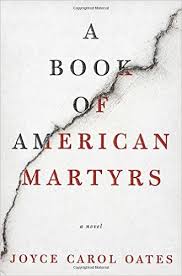
‘A Book of American Martyrs: a novel’ by Joyce Carol Oates

americanmartyrs

2017, 736 p

It’s been a while since I last read a book by Joyce Carol Oates. What a prolific author she is! Her bibliography lists 41 titles, with one book published each year since 1994. Some of them are gritty, edgy (often icky) novella-length books (e.g. The Beasts at 130 pages) while others, like  My Heart Laid Bare (531 p.) are real door-stoppers. There are themes she revisits in many of her books – emotionally lost female protagonists, infatuation, and the rippling effects of a crime on a family – and they’re all here in A Book of American Martyrs.

Here, though, they’re placed within the cultural and religious chasm between pro-life and pro-choice activists that has ruptured American politics for years.  Luther Dunphy is a zealous evangelical Christian, convinced that God has chosen him to assassinate an abortion provider, Gus Voorhees, in the driveway of the clinic where he is employed. Both men pay with their lives, in different ways.

Rather unusually for a fiction book, it has a table of contents. The book is divided into five sections, each divided from the next by a grubby, much-handled page that suggests that the book is a series of smaller, covered books, each separate from the other.  The first section focusses on Luther Amos Dunphy ‘Soldier of God’ and leads us up to the shooting. It is followed by a section ‘The Life and Death of Gus Voorhees’, subtitled ‘An Archive’. This archive, collected by Voorhees’ daughter Naomi, is her way of trying to make sense of her father’s death. It comprises a disparate and unsorted collection of documents, interviews and narratives from different members of Gus Voorhees’ family, some no longer than a paragraph, others some thirty pages in length.  The reader is left to make her own sense of all this.

The remaining three sections are arranged chronologically. ‘The Hammer’ turns to Edna Mae and Dawn, Luther Dunphy’s wife and daughter, in the years leading up to Dunphy’s execution in 2006. (I read this book in May 2017, very much aware of the multiple executions being lined up in Arkansas, where the drugs used to kill the prisoners are due to expire. It all seemed very pertinent) Now there are two martyrs: Dr.Gus Voorhees who died for the pro-choice principle, and Luther Dunphy who revels in his role as the man God chose to save the babies that Voorhees was about to ‘murder’ that day.

In the fourth section ‘The Embrace’ (2006-2010) and the final section ‘The Consolation of Grief’ (2011-2012) the two daughters, Naomi Voorhees and Dawn Dunphy come into each other’s orbit.  Both are damaged by their fathers’ deaths, each in their own way. Dawn, poorly educated and marginally employed, is achieving minor success as the female boxer, D. D. Dunphy. Naomi, who has spent most of her adolescence and adult life so far in obsessively collecting the ‘archive’ in Part Two is freed by wealth and connections from any real necessity to make a living. For both women, though, their families have fractured.  The two girls are united by their fathers’ martyrdom, but politically and culturally they are far separated.

This is a very long book at over 700 pages, but I didn’t find myself wishing that it were shorter, and I even felt sorry when it came to an end.  The Dunphy characters – Luther and Dawn- are more fully drawn than the Voorhees family, who always seemed rather insipid. I don’t know enough about small-town Evangelical working-class Americans to know whether Oates is being clear-eyed or loading on the stereotypes- I suspect a bit of both.  There is a lot of detail about boxing which probably could have been trimmed, although given that Oates wrote a series on essays On Boxing, it’s probably no surprise that so much attention is paid to the sport.

Oates herself does not come down on one side or the other of the abortion question. She gives each of the ‘martyrs’ a worldview that makes sense of their actions, however they might appear from the outside.

Source: Yarra Plenty Regional Library

My rating: 9

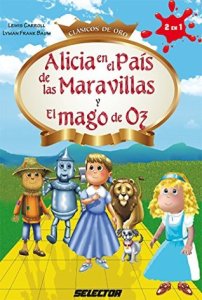
‘Alicia en el Pais de las Maravillas y El Mago de Oz’

aliciaenelpais

155 p.

I feel a bit as if I’m cheating counting Spanish books as ‘books read’ but – dang it- they take me as long to read as any 400 page novel, so count it I will! This book is not overtly aimed at the Spanish learner, in that it does not have vocabulary or questions at the back although its author information at the start seems to be aimed at an adult audience. The font is large, with a large illustration on the facing page, and the chapters are relatively short (i.e. a couple of pages). Of course, being Alice in Wonderland, strange vocabulary pops up and you think ‘Surely that can’t be right!’ but then you remember that yes, croquet is played with flamingos etc.  The Wizard of Oz story was easier to read because there was more repetition and the story followed a more conventional arc.

Does it work for me, reading a children’s book in Spanish? Yes, on one level, given that both are familiar stories which makes guesswork easier. But it certainly was a very abridged version, tracing plot alone, and in Alice in Wonderland particularly, it depended a lot on prior knowledge of the story with one event piled on another with little connection between them.  Come to think of it, though, that’s very much how Alice in Wonderland is, I suppose.

Source: Borrowed from my Spanish teacher Renato

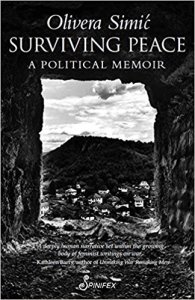
‘Surviving Peace: A Political Memoir’ by Olivera Simic

simic

2014, 188 p

It’s not often that I open up a book and find myself thinking “Hey! I was there!” I did in this book, though, where Olivera Simic starts by describing an encounter at a law and history conference in Melbourne. [Those of you who have been with me since 2010 might vaguely remember that I was involved in the organization of the ANZLHS Law and History Conference that year. For me, any recollection of the conference is completely overwhelmed by the accompanying memory of leaving quickly after the last session to sit with my mother at her nursing home. She died the next day.]

Olivera Simic’s recollection of that conference, though, involves a quick interaction she had with the chair of the panel who asked how he should introduce her.  ‘Where are you from?’ he asked. ‘Yugoslavia’ she replied. ‘But that country doesn’t exist!’ he countered, finding the interchange sufficiently bewildering to share it with the audience.  Several people came up to afterwards, saying that it was very unusual to hear someone still introducing herself as Yugoslav.

But I do. I am a Yugoslav without Yugoslavia. I identify with the country I was born in; I am homesick for the place that exists only in my distant memory: the beautiful old towns, rivers and mountains, and the part of the Adriatic coast that was Yugoslavia. I speak a language that was declared dead when the war broke out in 1992. I was fortunate not to lose a close family member, but like many Yugoslav people, I lost so much.  The beginning of the war meant the end of my physical belonging to the country I was born and grew up in, the country I loved, the country I left and soon abandoned.  I tried to move on, to forget destruction and war, to run away from it all… The further I was from home, the closer home was to me, to my heart, to my mind.  The connection to my homeland was not severable to distance but, as many migrants will know, on the country, was made stronger by it. The smell, the sound, the sky and the sun of my home haunt me. They are always with me. (p.10)

We hear and read of people surviving war, but less often surviving peace. Simic was born in 1973 and spent her childhood in Banja Luka, the second-largest city in Bosnia and Herzegovina (BiH). Her parents are Orthodox Serbs and were members of the Community Party before the 1990s in what she regarded as “a heterogenous multicultural, multilingual and multireligious community.” (p11) When war broke out in 1992, her parents sent her as a nineteen-year-old to neighbouring Serbia, her mother’s home country, where she was granted refugee status and enrolled in law school. She lived in Serbia, with occasional dangerous trips home to see her parents, from 1992 through to the 1999 NATO bombing during which, for 78 days,  she along with her fellow residents, lived in a permanent state of fear and anxiety. She was –  and still is – angry at the world for allowing this to happen, and after September 11, the emotional and existential burden of this experience devastated her in the form of PTSD.  At the end of the war, she was no longer ‘Yugoslavian’  but, on the basis of her surname, was designated to be Serbian – “a specific, but somehow alien ethnic identity”  that it had never occurred to her to apply to herself previously (p.21). Her mother-tongue, Serbo-Croation ceased to exist, replaced by other languages (Serbian, Croatian and Bosnian).

Our labels of ethnicity have overridden our very being and make it impossible for us to be recognized first as people, and only then as an ‘ethnicity’. (p.25)

In 2001 she started work with Human Rights Watch in Washington DC. She completed an M.A. in Gender and Peacebuilding in Costa Rica. Since 2006 she has lived in Australia, and after gaining her PhD., worked as an academic writing on genocide and war crimes, most particularly (but not only) those committed by Serbs, and on trauma more generally. It’s an academic path that her parents and neighbours back in BiH try to dissuade her from, seeing her as a traitor to their concept of the Serbs as both victims and heroes.  She is aware that she is part of the ‘industry’ of postwar recovery and reconciliation, organizing seminars and workshops, receiving grants to carry out research on armed conflicts.

One of the paradoxes of experiencing violence first hand is that it can give unconditional power and authority to one’s voice, and people who have not had these experiences might feel as if they cannot say anything worthwhile (P 102)

She is aware, when faced with representatives of Srebrenica (where thousands of Muslim men and boys were slaughtered by members of the Serbian forces) that she, like other academics, could be seen “as ‘conference tourists’, building our careers on the misery of survivors.” (p. 104) It doesn’t sit well with her.

I have summarized her story as a continuous, chronological narrative, which is not the way she has structured this book. There is a timeline of Yugoslavia’s disintegration as an appendix, but it acts more as an organizing device after reading her memoir, rather than during it.  Instead, her chapters are titled as paradoxes and opposites:  Journeying through War and Peace; Traitor or Truth Seeker? Moving from War to Peace; The Past Is Present; Victims and Survivors; Between Remembering and Forgetting.  There is no narrative tension of wondering if she will survive or not: no tales of want or deprivation.

Instead, this is a memoir of the intellect. She refers often to other writers and theorists and her bibliography is rich with academic references.  I was puzzled by her subtitle ‘a political memoir’ because this is so much a memoir of the head AND heart, until I remembered that old feminist touchstone ‘the personal is political’.  The blurbs on the back cover clearly place it within a feminist tradition, and in her preface she explains:

In feminist research women are considered to be experts regarding their own lives who communicate and reveal the narratives about the events that took place in their lives, their feelings about those events, and their interpretation of them (Foss and Foss, 1994 . 39) … Although mine is an individual story, I believe that on many levels it is also universal . My experiences of war and survival are similar to those of other war survivors…This is…why I have been motivated to embark on this emotional journey which sometimes links intimate experiences with existing scholarship. (p. 2, 3)

It is, then, her story but analyzed from an academic perspective, and interwoven with literature, history, genocide studies, trauma studies, human rights and peace studies.  It’s not the sort of memoir that will make you cry, but it will make you think.  I watch television and those streams of Syrians, carrying children and one or two plastic bags (what do you pack?); I hear predictions that partition might be the only solution for Syria and I think of Simic’s resistance against having an ethnic identity forced upon her by war.  I think of Simic’s need to weave her own experience into a larger philosophical and intellectual web – to make it mean something more.  It reminds us that the victims of war need to become survivors of peace, as well.

Source: Yarra Plenty Regional Library

My rating: 8.5/10

aww2017-badge I have posted this review at the Australian Women Writers Challenge website.

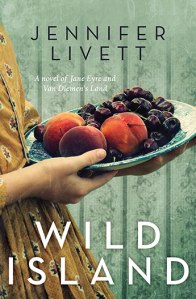
‘Wild Island’ by Jennifer Livett

livett

431 p., 2016

From the opening lines of this book, you hear echoes of a book you have read before:

Reader, she did not marry him, or rather, when at last she did, it was not so straightforward as she implies in her memoirs. Jane Eyre is a truthful person and her story is fascinating, but some things she could not bring herself to say. Certain episodes in her past, she admits, ‘form too distressing a recollection ever to be willingly dwelt upon’ .. My name is Harriet Adair, and forty years ago on that ship I was Jane Eyre’s companion (xii)

Thus begin Harriet Adair’s own memoirs, written forty years later.  Readers of Jane Eyre have met her before, as Grace Poole, caring for the mad Bertha Mason at Thornfield.  But in this telling, Bertha did not die in the fire thus freeing Edward Rochester to marry our Jane.  The woman we knew as Grace Poole was really Harriet Adair, and Bertha was instead  Anna – not Antoinette as in Wide Sargasso Sea, a model for this book in extrapolating and subverting Jane Eyre into a new story. There was a way in which Edward would be free to marry Jane, but it involved sailing to Van Diemen’s Land to seek out Captain Booth, now a commandant at Port Arthur Penal Settlement, who was the only man who could confirm an earlier marriage that would invalidate Edward’s marriage to Anna (Bertha). Part way along the journey it is decided that Edward and Jane will return to England, and so off they sail back into the northern hemisphere to become shadowy, background characters who tether this book to its original inspiration but play no further role.

There have been other books that have sprung from a much loved story – Wide Sargasso Sea is one; Pemberley is another- but in this book Jennifer Livett has added another level of difficulty.  The opening pages have two lists of characters: the first a list of historical characters drawn from the real-life inhabitants of Van Diemen’s Land in the late 1830s and early 1840s; and the second a list of fictional characters, some of whom have been taken from Jane Eyre, others created to mingle with the real-life Hobartians.  The research for this book is exhaustive- and exhausting.  In her acknowledgments at the rear of the book, the author mentions that this book has been forty years in gestation, and I believe it.

From my own research into Port Phillip at the time that this book was set, I know these historical characters and, for me, there was a little leap of recognition as if I’d seen Tulip Wright (who later turned up in Melbourne) in his brilliant-hued waistcoat, disappearing around a corner.  You probably know them too. We’ve met Sir John and Lady Jane Franklin in several books previously (see here and here),  and Mathinna from Richard Flanagan’s Wanting makes an appearance. John Gould the bird-artist and his wife Eliza are here too, and there’s even Mad Judge Montagu and Charles Swanston, the bank director whose finances propped up the Port Phillip expedition, now immortalized in one of Melbourne’s main streets.

Livett has a beautiful turn of phrase: take for example her description of black swans, heads-down feeding, looking “like black mops floating on the surface” (p. 245).  Her ear for dialogue and her historical felicity are first rate. The details are absolutely accurate but -oh- there are so many of them and I often found myself wondering if a reader less steeped in Tasmanian/Port Phillip politics would find them overwhelming.

One of my favourite quotes about Port Phillip society is the Port Phillip Gazette’s observation that “Melbourne boils over like a bush cauldron with the scum of fierce disputes”. It’s a characterization of colonial life which holds true for many of nineteenth century port towns across the British Empire including Hobart. In this book we are taken to the factional conflict  between Sir John Franklin and his colonial secretary John Montagu, an adherent of the Arthurite faction who had prospered under the long governorship of Franklin’s predecessor Lieutenant Governor George Arthur. We are taken to the politics of the transportation policy and its change over time, with the cessation of the assignment system.  At times the narrative becomes a vehicle for explaining the politics, and at this point, it threatened to collapse under the weight of so much didacticism and so many peripheral characters.

And yet, even for a reader familiar with this period of Tasmanian history, reading this book brings this history alive, especially the world of middle-class women who have been swept up into the circuits of empire through the postings of their husbands to official positions throughout the Empire.  Livett captures well the jostling for position, the grabbing at opportunities that opened up in a settler-colonial economy, the importance of patronage and   the censoriousness among women restricted to a round of visiting and levees and balls. She is completely at home with the ‘networks of empire’ conceptualization of colonialism that underpins much recent historiography:

…there are always more connections than we know about, across the widest spaces. So many links between the colony and England, most of them fluid. Water, ink, blood, each carrying its own cargo. Frail ships criss-crossing the seas, their holds packed with innocent-looking objects as dangerous as guns: china tea sets; bolts of flannel; packets of seeds and bank drafts. All bearing the message that there are certain ways in which life must be lived, and ways in which it most assuredly must not.” p 44

At the same time, the author is pulling the strings of the Jane Eyre connection, with the question of whether Rowland Rochester  (Edward Rochester’s brother) had ever lived in Tasmania providing the narrative pull of the story. St John Wallace, Jane Eyre’s rather wet (in my opinion) cousin is here with his wife Louisa, and Anna (the former mad Bertha) moves in and out of the story.

It’s a long book, but Livett has maintained Harriet’s narrative voice throughout the alternating chapters which switch between Harriet’s first person point of view and a third-person omniscient narrative.  It is this high-wire act of playing out a twist on the Jane Eyre story, while maintaining such historical integrity that most impresses me about this book. But then I find myself wondering: is there such a thing as too much historical integrity? I suspect that there is; and I think that the book threatened to be engulfed by it, even for someone familiar with and appreciative of its fidelity.

And so, my praise for Wild Island is not completely unalloyed.  Livett has aimed high, but much though I admire the accuracy and richness of her historical rendering of Van Diemen’s Land, I wonder if it ensnared her in details and explanations that stopped this book from really soaring.

Source: Yarra Plenty Regional Library

My rating: 8/10

I’ve posted this review at the Australian Women Writers Challenge website. aww2017-badge

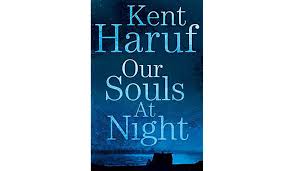
‘Our Souls at Night’ by Kent Haruf

haruf

2015, 179 pages.

What an absolute gem of a book!  It’s only 179 broadly spaced pages long, but it’s gentle and wise and sad and when I finished it too late into the night, I sat in bed and cried.

Addie Moore is a widow in a small country town and one night she knocks on the door of her long-time neighbour, Louis.  They have known each other a long time, both their partners have died, and their children are grown up. “Will you sleep with me?” she asks- not sex, but just sleep.

No, not sex. I’m not looking at it that way. I think I lost any sexual impulse a long time ago. I’m talking about getting through the night. And lying warm in bed, companionably.  Lying down in bed together and staying the night.  The nights are the worst. Don’t you think? (p 5)

It’s ironic that I recently read a book called Reading in Bed that involved older characters. I disliked it for its shameless milking of ‘older reader’ characteristics and preferences.  The theme of being in bed as an older person ties the two books, and yet they couldn’t be more different.  Reading in Bed was trivial and bloated: Our Souls at Night is restrained and dignified and says more in its 180 pages than the other book did in 344.

I even had a little chuckle at the end of the book when the author rather cheekily referenced one of his own books – Plainsong – which I read many years ago (and even remembered!)  It was a little wink to the readers of his other work, and I felt like saluting him. This book was published posthumously, Haruf having died in 2014 at the age of seventy-one.

This is a simple, affirming, grown-up book.  I loved it.

My rating: 9.5 /10

Source: Yarra Plenty Regional Library.

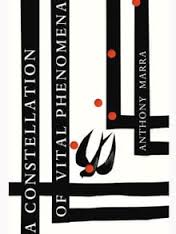
‘A Constellation of Vital Phenomena’ by Anthony Marra

constellation

2013, 400p

Reading the debut book of a writer whose second book you really liked is a bit of a gamble. What if s/he only found firm footing with the second book? What if the first was a dud?

I needn’t have worried. There are similarities between Anthony Marra’s second book The Tsar of Love and Techno in that both books have sections set in Chechnya (in fact, the whole of Constellation is set there) and they both have oblique titles,  but this book focusses more on a small group of people and is ‘straighter’.

It is set over five days, and the book is divided into three sections (The First and Second Day;  The Third Day; and The Fourth and Fifth Day). But within these three sections the narrative slides chronologically- and I use the word ‘slide’ deliberately because each chapter is headed with a timeline spanning 1999 to 2004 with the year in which the chapter is set marked out in bold type. In 2004, in a small snow-covered village in Chechnya, the good hearted Akhmed watches as his life-long neighbour Dokka is arrested and his eight year old daughter Havaa flees into the woods.  Akhmed finds her, and knowing that they will come back for her too, he takes her to a Russian doctor in the city, Sonja Rabina, who is struggling to hold together her bombed-out hospital.  There’s lots of backstory to be filled in: why Dokka has been arrested; who informed on him;  who this doctor Sonja is, the relationship between the villagers, and the tension between Chechnyans and Russians. I know very little Chechnyan history, but I feel that I know more having read this book- and what an easy, seductive way to learn it.

All of this written with wisdom and compassion and with landscapes and people described so clearly that you can see it. Is this really only his second book and is he really only the age of my son? He’s good. Very good.

Delia Falconer wrote a very good review in the Sydney Review of Books.

My rating: 9.5

Read because: I so much enjoyed his second book.

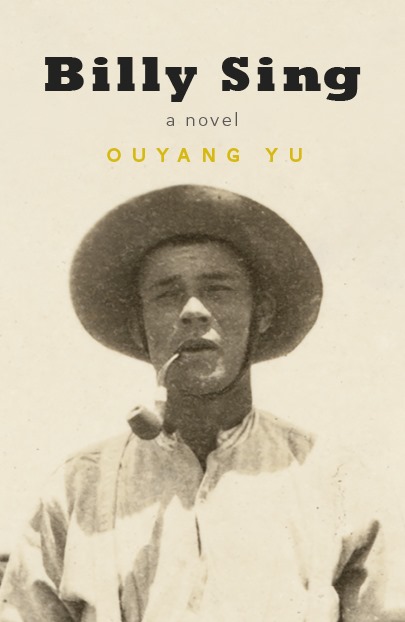
‘Billy Sing: A Novel’ by Ouyang Yu

Billy-Sing-front-cover-for-publicity

2017,  135 p. Transit Lounge

In my grave my spirit lingers, the undead, if you believe that sort of thing, which I think you ought to, you beings so materialistic you forget that life is not just one life but multiple ones, so that, for certain people not tied to possessions and property, life travels forward as it travels back, in time, one’s spirit interconnected to spirits of a similar persuasion, with a mind large enough to encompass all times, all places and all people. Still, as I lie here, I envisage that in some future time someone will stop by and put his ears to my heart, separated by cement and stone, and find himself whispering into the ears of my spirit. I shall listen. I have done enough sleeping in life to live death awake. Conversely, if you have not lived enough death in life, you’d better mind your own business. (p.36)

The voice is that of the dead Billy Sing, a real-life Gallipoli sniper nicknamed ‘The Assassin’ by his fellow soldiers. But it’s an imagined voice- and here the subtitle ‘A Novel’ is important – and it’s a voice that probably belongs more to Ouyang Yu than the character he has created.  In writing this review, I googled ‘Billy Sing’ because,  I admit, I had never heard of him. In the Wikipedia entry, mention is made of a television mini-series made about Sing, which cast him as European.  Queensland National Party member Bill O’Chee, a member of the Billing Sing Commemorative Committee criticized this decision to ‘white-out’ Billy Sing, saying “When a person dies, all that is left is their story, and you can’t take a person’s name and not tell the truth about their story.”  Ouyang Yu couldn’t be accused of ‘whiting out’ his Billy Sing. Instead Billy’s mixed race, in an Australia which saw the White Australia policy as a founding issue, is a fundamental part of his personality and story, permeating not just his reputation but also the language with while Ouyang Yu tells his story. The issues of racism and national identity bookend Billy Sing’s life, silenced only by his stint in the trenches at Gallipoli where he shucks off his humanity to become a disembodied killing machine.

The subtitle of this book is ‘a novel’. As it happens I finished reading this book just as I read Judith Armstrong’s  rumination on the relationship between facts and fiction in her own writing of what she calls ‘biographical novels’ of Sonya Tolstoy and more recently, Dymphna Clark (wife of historian Manning Clark). She describes both these books as  a “hybrid method of rigorous research coupled with intuitive interpretation”  but found that there was strong marketing and cataloguing resistance to accepting them as ‘novels’, even though that is what she insists they are. Hilary Mantel recently raised similar questions in relation to her own historical fiction, where she described fellow historical-fiction writers as ‘cringing’ when they attached a bibliography.

  You have the authority of the imagination, you have legitimacy. Take it. Do not spend your life in apologetic cringing because you think you are some inferior form of historian. The trades are different but complementary”

More than ‘fictionalized biography’, these novels – for they all clearly identify themselves as such – stake for themselves a place for imagination and supposition. The authors do not claim to be writing history or biography: it’s a novel. In Ouyang Yu’s case, he has tethered his narrative around a number of factual, documented fenceposts.  One is the author Ion Idriess’ diary entry about Billy Sing, another is Sing’s Distinguished Conduct citation.  These he cites in a small bibliography at the back.  Beyond these, however, the author has let his imagination play.

When an author is faced with a dearth of documented material, which is the case here, that very absence can be turned into part of the character him or herself, and this is certainly the case here. Billy Sing asserts that others may scribble, but he will not write.

Every time I saw him pick up a pen and put something down in his notebook, a green-covered one featuring a thin blade of corn across the cover, I’d wonder what that would lead to and if, in the writing of things the person vacated himself, a husk of a being, hollow inside and substance emitted.  It would be infinitely preferable to just go and dream and go on dreaming, in a sleep that never ended, and, better still, in  a sleep that was coupled with love or the act of it… If I had the ability to put it down, it would not amount to much, either. I’d just let it go as most things in my life would do. (p. 73)

I found this a difficult book to get into. The language was poetic, but strange and didn’t seem to go anywhere.  It may be the historian in me speaking here, but it was only when I reached those footnotes and realized that there was a factual basis, that I felt as if I were no longer scrabbling on gravel, trying to get a foothold. It’s the sort of book that I enjoyed more afterwards, once I found out more about the real Billy Sing.  The dream-like, insubstantial nature of his telling of his marriage mirrors the historical uncertainty over whether his wife ever came to Australia or not.  Dreams and a sordid, visceral reality are intermingled, and it’s a slippery book to read.

Did I enjoy it? I really don’t know how to answer. It is only short, and I was able to suspend my anxiety over whether I was ‘getting it’ over 135 pages, while I doubt that I could have done so had the book been 300 pages instead.  It’s the sort of book that I enjoyed more after finishing it, and once I’d established the ‘facts’ I was better able to appreciate the artistry and lyricism of the fiction. Somehow, I suspect that this is not the way the author intended his book to be read.

Lisa at ANZLitLovers, who has read a lot of Ouyang Yu’s work has reviewed Billy Sing here.

Source: Review copy

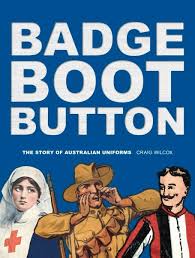
‘Badge Boot Button: The Story of Australian Uniforms’ by Craig Wilcox

badgebootbutton

NLA Publishing, 2017, 141 p & notes  $44.99 RRP

It’s a paradox that even though a uniform is supposed to mark its wearer out from the general population, we often become so inured to them that they become invisible.  Craig Wilcox’s book Badge Boot Button brings the uniform to our focus as an expression of institutional intent. Covering 200 years of Australian history, from convicts to Olympic Games volunteers, Wilcox casts a wide net in his analysis of uniforms, describing their design and manufacture and probing the purposes for which they were prescribed.

On the basis of his association with the War Memorial, and through his work on the Boer War, it’s not surprising that military uniforms appear multiple times during Wilcox’s  chronological account.  Wilcox has written several books based on military themes and he mounted a spirited , and I think completely appropriate, challenge to the historically anachronistic attempts to ‘pardon’ Breaker Morant. However, in this book he ranges further to discuss school uniforms, airhostesses, nurses and sportsmen.

As Wilcox explains in his introduction:

Uniforms are authority’s signature, its sartorial sound bite, speaking to a local community, a city or state, sometimes the entire world. And like any language, they reveal origins, status, aspirations and insecurities…. But there are always two voices speaking at once- that of authority, naturally, but also that of the individual. Unofficial variations in uniforms, or simply the angle at which a hat is worn, hint at personal attitudes to school, to an employer, to work, to life itself.  (p.1)

The book is structured chronologically. The first chapter ‘The Age of Livery’ starts with the military red coat that  constituted authority in convict-era Australia but which, as he points out, was often not worn on a day-to-day basis.  There were, after all, no army inspectors to enforce dress standards, and soldiers themselves began to modify their costume.  Nonetheless,  when governors and troops needed a display of authority, they donned their red coats and gold epaulets. Think, for example, of the picture of Governor Bligh being hauled out from under the bed by three members of the NSW Corps in full dress. Bligh was in his ceremonial outfit too, although as he himself admitted, he had put it on just before his arrest. “Just before I was arrested, on learning [of] the approach of the regiment, I called for my uniform”. Think too of Bungaree, Governor Macquarie’s go-betweeen with the Kurringgai people, in his red army coat.  Convicts wore a uniform too, the degrading motley of the ‘magpie’ convict uniform of grey and yellow.  The red coated soldiers were there at Eureka too, that conflict between uniformed upholders of the established order and their un-uniformed challengers.  Meanwhile, naval officers wore blue (think James Cook), and this was adopted by the mounted police seconded from the military garrison as a type of cavalry and the military pensioners who were used for civil policing on the goldfields.

In Chapter 2 ‘Civic Authority & National Identity’ Wilcox traces through the adoption of uniforms by civilians. The ‘Volunteers’ local citizen army, part of a world-wide movement in English-speaking countries during the 1860s,  adopted the grey uniform chosen by their English counterparts. A civic blue uniform was worn by police and railway staff, and increasingly by post-men and firemen.  When NSW sent a military contingent to the Sudan in 1885, their red coats were quickly substituted  with the empire-wide  khaki by their British army quartermasters.  The khaki was not enthusiastically adopted by all and the slouch hat seemed alien at first, with some describing it as “the worst and ugliest” military costume, strongly resisted by citizen soldiers in the cities.  However, during WWI it became visual shorthand for the AIF and it took on “some of the aura of an athlete’s laurel wreath” (p. 65).  The AIF was disbanded after the war “but there seemed no question of the militia wearing anything other than the uniform that had just toured the world” (p. 69).  But uniforms extended beyond the military. Sporting teams adopted uniforms: footballers wore caps and coloured jerseys and guernseys (including Melbourne Football Club in their startling magenta) ;and cricketers’ whites were enlivened by a sash around the waist and necktie. Nurses wore veils evoking the nunnery, and adopted the British red cape or tippet- much to the resentment of British nurses.  Australian maid-servants – always a more contingent and undisciplined class than in Britain- resisted wearing the mob-cap because it was perceived as a sign of servility.

Ch. 3 ‘Loosening up’ notes the waning of the authority of the policeman, priest and school master  as uniforms became more practical. Sports gear changed as footballers adopted shorts, women began playing tennis, and bathers became common.  However, khaki maintained its sway, although during WWII it shifted towards camouflage gear for fighting men. Groups like Boy Scouts and even the Girl Guides wore khaki between the war, and during WWII women in the Australian Land Army were dressed in masculine army attire above the waist.  Early air-hostess and pilot uniforms had a military influence at first. Although nurses’ uniforms remained uncomfortable and in need of careful ironing (itself a form of discipline), school uniforms and the uniforms of transport workers became less formal. Although the liberalization of uniforms may have moved slowly, the image of Sir Robert Menzies receiving his gong as Lord Warden of the Cinque Ports highlighted how antiquated the naval outfit with its tail coat, cocked hat and ceremonial sword had become.

In Ch. 4 ‘Promotion, Protection and Equality’, Wilcox moves to the second half of the twentieth century and the rise of designer-created corporate livery.  Now extended to commercial costume – think airhostesses, banks, hotels- he attributes the spread of corporate uniform to several factors.  First, publicity units began driving changes in organizations. Second the clothing industry wanted industry contracts  and, especially with trade liberalization and the flight of the TCF sector to Asian countries, was happy to make the Australian-made uniform a marker of patriotism.  Third, commercial emulation meant that  if one company adopted a corporate uniform, others were sure to follow.  Fourth, taxation law made the cost of providing and laundering uniforms a deduction for companies and employees. Fifth, the idea had the imprimatur of overseas practice and here I think of fast food companies. Finally, a corporate uniform was ‘sold’ to employees as a ‘wardrobe’ from which employees could ‘choose’.  Sportspeople have become a virtual working billboard for their sponsors. After a trend towards abolition, school uniforms have again become a marker of educational earnestness, supported by Julia Gillard’s statement that “Part of a high-quality uniform is learning how to present yourself to the world and that’s what a school uniform is all about”(p 133).  Meanwhile, when authority figures want to exert a frisson of menace, they turn to dark uniforms- and here I think of the Border Force uniforms and Victoria Police’s eschewal of the pale blue shirt for a dark blue one evoking New York coppers (both choices that I find sinister). While even judges’ costumes (I think they’d baulk at the term ‘uniforms’) have liberalized, they still remain set apart. His discussion of the semiotics of the vestments worn by Bishop Barbara Darling at her consecration was instructive.

The book is generously leavened with photographs and illustrations, with ‘break out’ displays every couple of pages that gave the feeling of looking at an exhibition rather than reading a book. While they lightened the reading experience, I did find that they disrupted the reading of the narrative.  Sometimes I’d stop and read the break-out then and there; other times I’d follow the narrative and then go back and read the break-outs later.  I suppose that it’s a book design that mirrors hypertext, but I found it disruptive. The book concludes with an encouraging list of further reading, references and sources for illustrations.

However,  I was rather non-plussed by the ending of the book, which seemed abrupt and overwhelmed by break-outs- almost as if  the author had been shunted out of the room by examples.  It was a pity- I’d enjoyed the presence of Craig Wilcox as a friendly and informed guide, and I felt that the end of the narrative deserved better.  My awareness of the uniforms depicted in historical images and around me in everyday life has been piqued by this book as another way of ‘reading’ history and society more generally.

Source: Review copy Quikmark media

‘The Case Against Fragrance’ by Kate Grenville

grenville_fragrance

2017, 173 p & notes.

The genesis for this book was Kate Grenville’s own increasing sensitivity to the fragrances of perfumes, room fresheners, cleaning products and cosmetics.  She found herself overwhelmed by the perfume of a fellow audience-member at the opera; she reeled back from women’s scent at book signings and book festivals, and covered her face with her scarf as she sprinted through scented hotel lobbies.  (I must confess that part of me whispered “first world problem” at this stage.)

It was when she went looking for an accessible, user-friendly book about fragrance that she found there was none. This, then, is the book she wanted for herself: “straight-up, reliable information- a book for the general reader that gathered together what people knew about fragrance” (p. 13). She turned to published studies in scholarly journals where she could, and used science reviews funded in the interest of public health by the United States, EU and other governments.

This book aims to balance things out, not by trying to persuade, but by presenting some of what’s known about fragrance.  Armed with a bit of information, readers can make up their own minds.  Using fragrance is a choice, and my hope is that this book might give people the chance to make that choice an informed one. (p. 15)

Yes- but there is a tone of the wagging figure that pervades this book.  Her studies- and they are exhaustive in this footnoted but confidently and engagingly written book – make much of the chemical complexity of the products she is examining with the full, multi-syllabic names written out in full, as if to emphasize their foreignness. I found myself reflecting, though, that the whole world examined at molecular level like this is a convoluted jumble of unpronounceable and convoluted terms.  I turned to my fragrance-free moisturizer and its tongue-twisting list of ingredients, and it sounds just as chemically-daunting as the fragranced cosmetics and perfumes she describes.

I am not a scientist, and neither is she. I don’t know how to talk back to her description of these studies and the conclusions she takes away from them.  For that reason, I was interested in Ian Musgrave’s (Senior Lecturer in Pharmacology at University of Adelaide) commentary on the book in the Conversation. While generally positive about the book and especially its accessibility, he provided qualifications about some of the claims in the book, especially in relation to hormone disruption.

Yes, it is true that fragrance is produced and pushed by industry, and supported by its own lobbyists and funded research bodies. It is true that we layer one fragranced product over another, probably skewing any tests of side-effects conducted on a single product alone by compounding it with countless other similarly-fragranced products.  Yes, I agree that, just as we look back in bewilderment at how meekly we accepted having cigarette smoke blown all over us, one day wearing a strong perfume will be seen as similarly inconsiderate.

aww2017-badge

I have posted this review to the Australian Women Writers Challenge website.