Category Archives: Book reviews

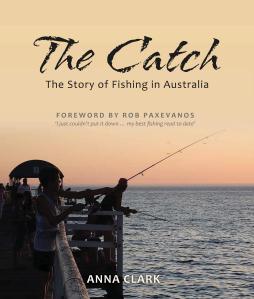
‘The Catch: The Story of Fishing in Australia’ by Anna Clark

clark_thecatch

2017, NLA Publishing, 145 p.

In a beautifully presented book, the “story” (but really, the “history”) of Australian fishing is told by historian and fellow fishing enthusiast, Anna Clark. This shared love of fishing permeates the text of this  book, not just in the “we” language that Clark deploys, but also in the carefully crafted ‘fisher’s-eye’ paragraphs that commence each chapter. Here, for example, is the start to the chapter ‘Early Industry’ that takes us right into the boat with a single fisherman in his small boat:

The boat glides out of Albany and sails across the sheltered waters of Princess Royal Harbour. A breeze skims across the bay and fills the sails- just enough to push the little boat along into the incoming tide to set the nets.  There’s plenty to catch here, and the fisherman fills his woven baskets with herring, whiting and bream, with a few skipjack and pike thrown in for good measure.  But there’s not much point chasing the big hauls, since the fish go putrid after a day or two ashore- and anything left over has to be buried. (p 49)

Or here we are on a modern commercial fleet ship:

The engine’s running and its gentle throb can be felt through the humming deck. Filleting knives are neatly lined up by the cutting boards near the ship’s bow, someone’s hosing off the blood from this morning’s catch and there’s a constant and slightly unpleasant smell of fish.  In the centre of the deck is a little hatch with a lid. Inside, a steel ladder drops down to the icy hold below. It’s dark and filled to the brim with neatly stacked ten-kilogram boxes of fish fillets, snap frozen by the boat’s powerful compressor. They sit waiting to be unloaded and taken away by refrigerated truck to the city’s markets. (p.97)

As well as capturing the tone of the narrative, these two opening paragraphs encapsulate many of the themes of the book: the joy of fishing, the deceptive abundance of fish, the problem of wastage and storage and the effects of technological change.

Published by the National Library of Australia, this lavishly illustrated book shares the high production values of its other volumes, and draws generously on the holdings of the library in photographs, maps and diagrams.

The book starts with indigenous fishing, which was described at length by Cook and Banks to illustrate the abundance of the eastern coast, and which was captured in many of the early drawings and paintings of New South Wales.  The amputation of the pinky finger on Eora fishergirls made it easier to use a line for fishing. It attracted the attention of these early commentators and was clearly shown in convict artist Thomas Watling’s drawing of Dirr-a-goa in the 1790s, while the term for the amputation, “Mal-gun”, was noted in William Dawes’ notebook of translations of Eora words.   However, as Clark notes:

While early colonial sketches and paintings give wonderful snapshots of Indigenous fishers, they do so from a distinctly European perspective.  Written accounts are similarly revealing – and we should be grateful for the faithful record of fishing practices and winning catches they’ve produced- but we can’t forget that these early settlers viewed Indigenous society through a distinctly colonial lens. (p. 17)

Indigenous perspectives on fishing come through the presence of scar trees where bark has been excised to build canoes, the remnant fish traps in rivers, shell middens and through indigenous carvings and paintings of fish.  This indigenous perspective is not relegated to the obligatory opening chapter, but instead continues through the book, with the continuation of fishing at riverside and coastal Aboriginal missions and Traditional Owners claims on traditional fisheries.  As she points out, fishing participation rates among in the Indigenous population sit as high as 92% in some communities, and it is an integral part of connection to country and cultural knowledge. (p. 132)

The abundance of fishing was reported by Captain Cook, and the First Fleet was well equipped to take advantage of it. However, Governor Phillip was less effusive, reporting that some days the fish were there- other days not. The photographs in the book – taken specifically to celebrate the size  of the catch – highlight abundance, but the text tells another story as fishing grounds are fished out and one species of fish collapses after another.

Another theme is the ongoing contest between competing interests. Colonial gentlemen craved the manly sport of fly-fishing and introduced European species into Australians waters with sometimes catastrophic results. (I knew about the European carp, but to be honest, I didn’t realize that the trout was an introduced fish- shows how little I know!) The government supported the establishment of commercial fisheries and the storage and infrastructure requirements to transport fish to lucrative markets, but in response to political pressure, it has more recently championed recreational fishing and set aside no-go zones to increase stock numbers. The emergence of Senators representing recreational fishing interests is likely to keep this political contest alive.

I did find myself wondering who this book is aimed at.  Its appearance just prior to Christmas is, I’m sure, well-planned. Its copious and beautiful illustrations mark it out as a coffee-table book, but the text ranges beyond the ‘whoa! look at that!’ response to a photograph of a big fish. Its author, Anna Clark, is well known in academic circles for her work on public history and history teaching and she brings to the book an awareness of sources and a keen sense of finding history in the everyday.  Most importantly, she brings her own love of fishing to the text, and I think that this is what fishers will respond most to in this book.

Sourced from: Review copy from Quikmark Media and N.L.A.
aww2017-badge

I’ve included this book in the Australian Women Writers Challenge.
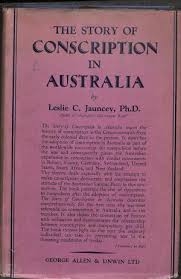
‘The Story of Conscription’ by Leslie C. Jauncey

jauncey

1968 reprint with foreword by Patrick O’Farrell, 1935 original text, 365 p.

Even though I have an ambivalent relationship with the tsunami of commemorative activities related with WWI, there may be a little flurry of book reviews related to the 1916/7 Conscription debates over the next month or so. As part of my work with Heidelberg Historical Society, I write a feature in our newsletter that looks at the Heidelberg-Ivanhoe district a hundred years ago. In December 1917 the second ‘referendum’ about conscription was held, and I’m speaking to our December meeting about how this Australia-wide political event played out at the local level a hundred years ago. Hence, my interest in conscription over the last year or so though historic walks (see here and here), a conference and the books in which I’m immersing myself at the moment.

A year ago I attended the launch of recently-published The Conscription Conflict and the Great War, which I reported here.  I finally started reading it this week (books sit around on my desk for a long time!) In the introduction it was noted that there was little discussion of the conscription conflict as a distinctively Australian experience, and that “there has been no book length treatment of the conflict since Leslie Jauncey’s effort to document some of the key actors, development and sources in 1935″(p.6).  Well, I thought, I don’t know anything of what Jauncey said, so I shut The Conscription Conflict and chased down Jauncey’s book The Story of Conscription in Australia instead. After all, if a book is offering “new interpretations”, perhaps I should know what the old interpretations were first.

Jauncey? Where have I read that name before? Then I remembered that it was a section on the Honest History website, where various authors took on the mantle of blogging as Jauncey.  As well as writing The Story of Conscription, Jauncey also wrote about the Commonwealth Bank, visited Russia, lived in America and was of interest to the FBI as a possible (but unproved) Communist.  What is interesting about this 1935 book is that it was republished with a foreword by Patrick O’Farrell (historian of the Irish and the Catholic Church in Australia) in 1968, during the Vietnam war when conscription was again to become so controversial. This foreword, now itself nearly 50 years old, criticizes the book for its one-sidedness (a very valid criticism) but also for its downplaying of factors in 1916/7 that were seen in 1968 to be far more significant than Jauncey suggested: most particularly, the role of the Catholic Church, farmers concerned about their labour supply and the socialist and industrial movements.

I’m not sure that Jauncey dismissed these factors as much as O’Farrell accused him of doing in 1968, but it is certainly true that Jauncey’s approach privileged the religion-based groups who opposed compulsion, both in relation to conscription and to the Compulsory Military Training scheme which preceded it.  As O’Farrell points out, Jauncey draws heavily on a book published in 1919 by J. F. Hills and John P. Fletcher, members of the Society of Friends (Quakers),  called Conscription Under Camouflage. In this post-war book, Hills and Fletcher had compiled newspaper clippings, pamphlets and official materials relating to compulsory military training, which they and the Australian Freedom League (formed 1912) opposed, even before the commencement of WWI.

It is this approach based on document-collection that Jauncey takes up in The Story of Conscription in Australia. As Jauncey writes near the end of the book:

Those people in Australia who have during the past twenty-five years collected valuable data on militarism and suppression should pool their priceless information so that it might be available at a minute’s notice. To-day [i.e in 1935] this material lies scattered all over Australia, being in cellars, lofts, sheds, and other places. Every year some of it is lost. If this data is not soon gathered and catalogued, it will be lost for ever. (p.348)

It’s perhaps no surprise that, as O’Farrell points out, Jauncey’s book could easily be called ‘Selected Documents of the Anti-Conscription Movement’ (p. ix). Many of these pamphlets and letters are reproduced in full, and there is an emphasis on the manifestos and motions passed during meetings of anti-conscription and pacifist groups. There is, as O’Farrell points out, no ‘behind the scenes’ material, and “one is left with a host of questions about motivations and feelings and atmosphere”.(p. xi)

Nonetheless, even if this book is, as O’Farrell says, “a chronology of what happened rather than a detailed analysis of why”(p.xi), then it has to be said that it does the ‘what happened’ well. It is organized chronologically, taking its starting point from the introduction of Compulsory Military Training and the Defence Acts of 1903-1912. Pacifist groups opposed the compulsory nature of this training from the start, but their critique was muted in the early days of World War I, when there was almost unanimous support for the war. During the early days of publicity for the first conscription ‘referendum’ (a technically incorrect term, but in general usage), the ‘yes’ side was ascendant, but Hughes’ decision to issue a ‘call to the colours’ for all men of fighting age just prior to the actual vote shifted the sentiment, leading to a narrow over-all ‘no’ result.  Because of the closeness of the result, and  the pro-conscription Hughes’ election victory soon after the referendum, it was not surprising that a second referendum was foisted on the people in December 1917. In explaining the increased ‘no’ vote in this second referendum, Jauncey emphasizes the influence of the pacifist groups and their publicity of the plight of conscientious objectors in Britain and New Zealand under their conscription schemes. His treatment of the second referendum is relatively brief, comprising the final third of the book.

His closing pages, written in 1935, are interesting, knowing as we do what happened just four years later.  He celebrates the Peace Ballot, held in England in 1934-5 where supporters went door-to-door, polling 11.6 million people, 38% of the adult population, and half the number who voted in a general election five months later.

The results of the peace vote in England in June 1935 was a ray of hope in a European sky overcast with the threatening clouds of war and oppression. Over ten million people asked for continued affiliation with the League of Nations… By six to one voters in the peace ballot favoured the abolition of the manufacture and sale of armaments for private profit…Over 92 per cent of the ballots favoured economic and non-military measures against an aggressive nation, while the vote for military action against an aggressor was under three to one. (p. 351)

He noted the increasing expenditure on armaments, and the moves towards increasing the periods of compulsory military training in Switzerland and France, and English moves towards compulsory air-raid drills.  He predicted:

In general the peace movement today like all reform groups is waiting for something to happen that can be used to its advantage.  It is likely that actions of the militarists during the next few years will bring together large sections of the peace movement, resulting in an active organisation that will go further than ever before in the direction of removing the causes of war. (p. 355)

I wish he’d been right.

He ends his book with an affirmation in the faith of the ‘ordinary man’.

The anti-conscription movement in Australia showed that very little faith should be placed in the over-whelming majority of leaders as bulwarks against militarism. Archbishop Mannix of the Roman Catholic Church was the only authority in the Commonwealth who vigorously opposed conscription. Six out of seven of the Australian governments, together with almost all political, economic, and religious leaders, demanded compulsion. Yet against all this power and against the suppression and censorship of the time the will of the people prevailed against conscription. A determined people won. The “No” votes were those of the ordinary man and woman and of the ordinary soldier in the trenches.  The peace movement must concentrate on the ordinary citizen. After all, it is he who has to put up with most of the hardship of wars. A well-developed and organized public opinion against war and conscription can prevail. (p.353)

But it was not just Jauncey’s book that was overtaken by other events. In O’Farrell’s foreword, written in 1968, he notes that “…in 1943 or 1964, the conscription question did not become again a matter of such deeply divisive national passion” (p.xiv).  Although perhaps true for the introduction of conscription in 1964, the Moratorium marches of 1970 and 1971 eventually gave the lie to that statement, and perhaps vindicated for just a while, Jauncey’s more optimistic view of the power of mass political protests. Not for long though, when millions of protesters world wide were impotent to stop the Iraq war in 2003.  In the face of increasing expenditure on weaponry, and the sabre-rattling of ‘Little Rocket Man’ and ‘the Dotard’, I suspect and fear that we’re just as impotent today.

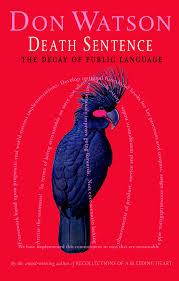
‘Death Sentence’ by Don Watson

deathsentence_watson

2003, 191 p.

I must confess that my heart sank when I saw that my CAE reading group book for this month was Don Watson’s Death Sentence. I had read it when it came out in 2003 and now  I struggled to re-read it for our meeting.  It seemed repetitive and unstructured, with just one argument repeated over again. So I was interested to dip back into my reading journal from 2003, prior to starting this blog, to see what I thought of it then. Here’s what I said in 2003:

An interesting reading experience, given that at the time I was reading RMIT’s Teaching and Learning Strategy as part of an assignment. This is part-diatribe, part-essay about the intrusion of managerialist language into places where it doesn’t belong. It certainly makes reading the ads in Saturday’s Age, policy documents and government advertising at all levels an exercise in cutting out ‘clag’. Knowledge Management as a discipline comes in for a particular serve. In many ways this is an extension of Orwell’s ‘Politics and the English Language’ but longer, and at times less disciplined. Good critique of the use of public and political language, but just a bit self indulgent. 8/10

I’m surprised now that I rated it so highly, but perhaps it was a new perspective back in 2003. After all, in the midst of a Howard Government, we hadn’t at that stage been deluged with Rudd’s verbal sludge, which made Watson’s critique almost self-evident.

The book itself has several unnamed chapters, marked only by a blank page separating them from the previous chapter. It’s hard to work out quite how one chapter differs from the next, or if there is a theme to distinguish one chapter from the other, especially as the book goes on.  The pages have a wide margin, in which are quotes from other texts: some pithy and elegant; others the type of verbal glue that he declaims against.  I can’t help feeling that the book is too long: that it would have been better served in a Quarterly Essay format of a lesser length.

Some fourteen years on, I suspect that Watson’s howl of anger is more about the application of managerial thinking as a construct, rather than the language itself (although the two are, admittedly, inseparable). It’s something that I abhor too, and I’ll have more to say about it anon.  However, I think that programs like the ABC’s brilliant parody of the National Building Authority Utopia have done much to skewer it, far more than this book with its arch tone could ever do.

Read because: CAE bookgroup choice

My rating (now): 6.5

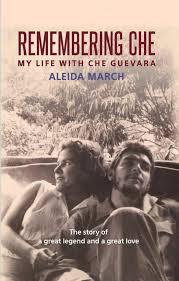
‘Remembering Che: My Life with Che Guevara’ by Aleida March

remembering_chev

2012, 146p. (e-book) (translated by Pilar Aguilera)

I was spurred to read this book more by my recent trip to Cuba than anything else, but it is particularly apposite given that it is the fiftieth anniversary of the death of Che Gueverra in Bolivia on 10 October 1967.

Moreover, there has been a little bubble of fictional books recently, told from the perspective of the unheralded wife of a famous man:  Mrs Cook, and Emma Darwin “the inspirational wife of a genius”.  This book, however, is told in Che’s wife’s own words. It is the translated work of a woman who is not a natural writer, and it is a rather stilted and at times hagiographic work. But beyond this, the restrictions and even mundaneness of life with a man lauded as a revolutionary hero (and criticized for his inflexibility and his ruthlessness in exacting ‘revolutionary justice’ too) comes through in this book, despite its limitations.

Aleida March was quite a bit younger than Ernesto Che Guevara, and when she first met the man already dominant in revolutionary circles, she did not think of him romantically at all.  He was already married, and she was working as a teacher as well as circulating on the edges of the leadership of the revolution.  She had brought contraband goods to the revolutionaries, taped to her body, and she needed his assistance to remove the tape that had adhered to her skin. After this rather intimate start, they were married only for eight years, and had four children in that time.

As might be expected in such a book, there are a lot of names, as various people are name-checked and credited. She assumes, as might be expected in a book written in Spanish and published in Cuba, a familiarity with the events and people of the Cuban revolution that readers on the other side of the world might not necessarily have.  There are short, but useful, footnotes giving some of the details that March has skated over, but I wish there had been a map as well.

Despite all his revolutionary ardour, Che seems to have held fairly traditional views of gender roles, and his wife seems to have been just as much relegated to the stage-curtains of obscurity as other wives of famous men.  He was quite blatant in his preference for sons over daughters, and it was quite clear that the mission of spreading revolution in Africa and other South American nationals was paramount over any other family or personal ties.

Which is not to say that it was easy. I was really touched near the end of the book when she relates how Che disguised himself as an old man to return clandestinely to Cuba, before leaving for Bolivia where he met his death.  He wanted to see his children, but they could not let the children know who he was, because they were too young to be able to be trusted completely not to tell others. So he put on padding, and dubbed himself ‘Uncle Ramon’ and visited the family for one day under the guise of being an old family friend. When his daughter fell and hurt herself, he tended her injury (he had been a doctor). She came up to her mother afterwards and whispered to her “I think that man loves me”. How sad that he couldn’t tell her who he was: how poignant that she sensed it anyway.

The circumstances around Guevara’s death are given little space. She was left in her thirties, with four young children. She did remarry, but gives few details. In fact, she is rather absent in this book, which is more about her husband than herself.

Sourced from: Yarra Plenty Regional Library

My rating: 7/10

‘Jetties and Piers: a background history of maritime infrastructure in Victoria’ by Jill Barnard

jetties-and-piers

2008, 65 p. & notes

I came upon this publication by chance a few months back, while I was looking up ‘quarantine’ for my  posting about Port Phillip during March 1842.  The report had been divided up into separate PDF files, and my interest piqued, I set about finding the rest of the publication.

Update: The author has since made the whole publication available on their website. Thank you! You can find it at http://livinghistories.net.au/our-work/commissioned-histories/

The author, Jill Barnard, is one of the team from the Living Histories group of professional historians. As part of her conclusion, she  cites the  founding member of the Australian Association for Maritime History  historian Frank Broeze , who pointed out that Australia’s maritime identity is as important as “sheep and land, railways and goldmines, bushrangers and bankers” in shaping Australia’s identity. It’s certainly an argument that has been reinforced for me in reading about Melbourne’s earliest days through the three Melbourne newspapers. The shipping news took up nearly 3/4 of one of the four pages in each issue; people were constantly falling off boats and jetties; and overseas news finally arrived long after the event, on account of the vast sea distances being covered.

This publication, sponsored by the Heritage Council of Victoria focuses as its title denotes, on maritime infrastructure and thus reflects a ‘heritage’ approach, based mainly on structures and their usages. The report is divided into two parts: Part 1 deals chronologically with 1800-1850, then Part 2 adopts a thematic approach, adopting the Australian Framework of Historical Themes (2000, 2001). No longer being involved in curriculum development and coming from a historical rather than heritage perspective, I was completely ignorant of such frameworks. The Framework is explained in detail here, and the Victorian Framework (2010) which was developed to respond to it is here (ah- Federation at work!)  I suspect that the impetus for ‘frameworks’ reflects the late 20th-early 21st century desire for checkboxes,  wall charts and verb-driven, economy-focussed competencies and I must confess that the whole process passed me by completely. Will I live long enough to see this whole approach to conceptualizing history itself historicized? I wonder.

I suspect that the two-part structure of this report reflects the constraints that such a framework placed on the author. As she points out, during the earliest years of Victoria’s white settlement there was a scramble by both private investors and governments to provide sufficient infrastructure to keep pace with the ever-increasing needs, and such infrastructure served a variety of purposes for immigrants, merchants, fishermen, postal services and customs officers. Her Part 1, reflecting the years 1800-1850 progresses chronologically. In Part 2 she adopts a thematic approach, with the chapters directly linked into one of the categories or subcategories of the Australian framework:

1. Improving Victoria’s Ports and Harbours (Theme 3 Developing local, regional and national economies)

2. Migrating to Victoria (Peopling Australia)

3. Moving People ( Theme 3.8 Moving Goods and People)

4. Moving Goods and Cargo (ditto)

5. Defending Our Shores (Theme 7.1 Governing Australia as a Province of the British Empire and Theme 7.7 Defending Australia)

6. Commercial Fishing (Theme 3.4  Utilizing Natural Resources)

7. Making Ports and the Coast Safe (Theme 3.16.1 Dealing with Hazards and Disasters)

8. Boat and Ship Repair and Building (Theme 3.8 Moving Goods and People)

9. Accommodating Seamen (Theme 3.22 Providing Lodgings)

10. At the Beach: Using the Sea for Recreation (Theme 8 Developing Australia’s Cultural Life)

As Barnard points out in her introduction, this thematic approach does not necessarily serve her well. Different sites have changed their functions over time and do not fit into the neat themes of ‘recreation’ or ‘moving people’ that she has selected. Moreover, the thematic approach gave rise to a degree of repetition. As she admits, “it is difficult for the reader to simply follow particular sites or themes through from the beginnings of European settlement to the present day”. She’s right.

Notwithstanding  the author’s own misgivings , I found this an interesting read. Although Victoria has a long coastline, there are few deep-water harbours. The Heads made the whole entry to Port Phillip treacherous, and both Melbourne and Geelong ports were ringed with sandbars. The settlement of Melbourne  on the Yarra River up on the Falls (which I’ve often mentioned in this blog ) meant that there was no direct connection to the ocean, although a canal was mooted for some time. She doesn’t just deal with Melbourne and Geelong: she also discusses  Portland, Port Fairy, Port Albert, Warrnambool and Lakes Entrance, as well as fishing and boat-building ports along the Bay.   Coastal shipping remained dominant for a long time because overland transport was so slow to develop, and the development of railways often bolstered port activity.  Nonetheless, the infrastructure for getting goods on and off ships remained primitive for some time. She cites the example of timber-loading at Mt Martha (on the Mornington Peninsula) where logs would be tossed off the cliff-face, where they fell to the beach to be loaded onto small boats and from there, onto larger ships. No wonder the container, which reduced double- and triple- handling, made such a difference to maritime transportation.

Most immigrants and passengers arrived at Melbourne, although during the 1840s and 50’s  there were attempts to channel immigrants directly to the pastoral stations that were crying out for their labour by landing them at Geelong and to a lesser extent Portland. Vessels for specifically inter-state travel continued until 1961 when they were replaced by international liners who had several ports on their itinerary. Her analysis extends up to the mid-twentieth century as she traces the demise of Station Pier and other passenger wharfs, especially after the opening of Tullamarine Airport in 1970.

It was fascinating to read about the early defence arrangements for the gold-rich Port Phillip Bay, in what are now inner suburbs like South Melbourne and St Kilda. Although sometimes the fortifications took so long to construct that military technology rendered them largely redundant, by 1890 Victoria was assessed as being “the best defended commercial city of the empire” (p.42)  Fort Nepean has the dubious distinction of being the site for the first British shots fired in both the First and Second World Wars.

I’d heard of Sir John Coode and the straightening of the Yarra, but I hadn’t realized how much of a ‘go-to’ man he was for infrastructure works on all Victorian ports.  The cost for infrastructure like beacons and lighthouses was borne by the colonies because they benefitted directly from the port activity, but after Federation the Commonwealth government took responsibility for ocean or ‘highway’ lights. I’ve seen sheds cantilevered over the water on the side of jetties and didn’t realize that they were rescue boats, and now I have a new appreciation for the rocket and mortar sheds where a ‘breeches buoy’ , similar to a pair of trousers, allowed a person to sit in them to be winched to shore.

My favourite part was the final chapter ‘At the Beach’ which reflected popular cultural use of the beach, as distinct from the largely economic focus of the other chapters.  Promenading at the beach was more important than swimming at it during the middle of the 19th century. At first sea bathing was forbidden between 6.00 a.m. and 8.00 p.m. because men swam nude, although this restriction was relaxed in 1917.  I’ve long been amused at the presence of life saving clubs at the mill-pond like bay beaches (e.g. 1912 Black Rock, Elwood and Hampton) and ‘baths’ separated out from the sea but these no doubt reflect the change from ‘taking the waters’ for health reasons to recreational swimming. The seawall that runs along Sandringham, Brighton etc. was constructed between 1935 and 1939 using stone recycled from city buildings including the old Melbourne gaol.  Other fences were made of ‘basketwalling’ made of ti-tree (which I can just remember). Boat sheds and private jetties reflect the purchase of beach-houses by well-to-to Melburnians.

All in all, an informative and well-told read for those of us interested in Victorian history.  It does assume a familiarity with the ports and places under examination, so it’s a fairly localized publication. It’s an interesting exercise to see the narrative limitations when a thematic framework is imposed onto a narrative, especially when dealing with an extended 150 year timeline.  I also found it a challenging idea to restrict the focus to activities that leave a physical presence in the form of infrastructure.  This object-based,  heritage-focussed approach is not one with which I’m particularly familiar (or, I admit, completely comfortable), but is is one that probably reflects the economic and public uses to which history is put today.

aww2017-badgeI have posted this review to the 2017 Australian Women Writers Challenge website.


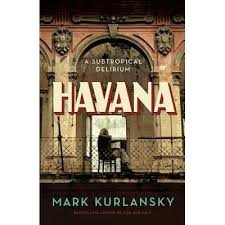
‘Havana: A Subtropical Delirium ‘ by Mark Kurlansky

havana_kurlansky

2017, 229 p. & notes

I’ve read this book twice within six weeks. First I read it before leaving for my trip to Cuba, vowing that I’d write up my review in South America with all the free time at night I anticipated.  Well, most of the free time was spent blogging on my little phone, so the review wasn’t written. Then I borrowed it again a couple of days ago, to refresh my memory before writing this review and I was immediately drawn into a second reading, recognizing things and places that I’d seen and kicking myself for the things I’d missed.

Mark Kurlansky is an American writer who has spent over thirty years visiting Cuba, and so he writes from an American, rather than Cuban perspective. He is a prolific author, with many of his non-fiction works centring on an object like Cod, Salt or Oysters, as well as the histories of the Basques, European Jewry or the effect of baseball on San Pedro de Macoris.  In this book, he writes the history of Havana with affection, but you’re always aware that it’s an outsider’s perspective.  It’s a very literary history, with many allusions to Hemingway, Marti and other more contemporary Cuban authors. The author is aware that these works might not be familiar to his readers, and so he translates his quotations and gives sufficient context to make them meaningful. The book meanders its way through a cornucopia of themes in a basically chronological fashion, although the revolution itself is not described in much detail.  It is illustrated with 19th century woodcuts from magazines, and Kurlansky lets his words rather than images do the describing.

I was a little disappointed in the ending, which trailed off into a discussion of baseball, but having now seen the crowded baseball bleachers at a local small-town match, I have a better understanding of the Cuban love for the game.

That criticism aside, I really enjoyed this book, both before visiting Cuba and even more afterwards. In fact, I think that I inadvertently stumbled on the very best way to read it.

Sourced from: Yarra Plenty Regional Library (although if you’re visiting Cuba, why not buy the e-book for $12.50 AUD and take it with you)

Rating: 8.5/10

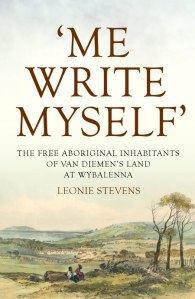
‘Me Write Myself’ by Leonie Stevens

MeWRiteMyself

2017, 331 p.

It’s not often that I close up a history book with a “Well done!”, but I did with Leonie Stevens’ beautifully written Me Write Myself. Right from its quietly restrained front cover, through to its ending which rounds off and yet expands and invites further conversation, this is a exquisitely crafted book.  It works on so many levels: as narrative, as critique and as history.

Stevens mounts her argument right from the subtitle on the cover:  ‘The Free Aboriginal Inhabitants of Van Diemen’s Land at Wybalenna’.  “Wybalenna?” you may ask. It’s more commonly known as Flinders Island, most often characterized as the doomed settlement off the coast of Tasmania, where the remnants of the Tasmanian Aboriginal tribes were shunted to be forgotten in silence by colonists and colonial officials alike, in the 1830s and 1840s.  And “free inhabitants?” Wasn’t this a form of concentration camp, on the way to what was seen to be an inevitable extinction? In Stevens’ hands, we see that  these are not victims but “free aboriginal inhabitants” and not silent, even though historians may silenced them, often while bemoaning their fate.

Flinders Island, for a place so small, has attracted the attention of historians, right from James Bonwick in 1870 through to Henry Reynolds.  The publication in 1987 of N.J.B. Plomley’s gigantic Weep in Silence,  with its 1034 pages, might have been thought to have exhausted all there is to say on Wybalenna. Not so.

Stevens starts her book in a crowded, metaphorical baggage-room where we ‘check-in’ our assumptions, narratives and language.  First there’s the question of names, often Europeanized and of slippery orthography. Then there’s scientific racism, underpinning the rationale of colonialism and assuaging guilt, and seeping through much of the historiography of Wybalenna, right up to recent writing, which sees it as a narrative of tragic and helpless death. Then there’s the question of credibility of sources and this is where Stevens steps right up. She takes historian Ann Laura Stoler’s term “the hierarchy of credibility” and turns it upside down to give priority to the VDL texts over European texts.  This is where Stevens’ approach is new.  She depicts the texts relating to Wybalenna as a pyramid.  The deluge of government reports, memoirs, newspaper reports and journals from which other historians have drawn their work form the large base of the triangle. Up from them are the texts recorded by Europeans where VDL First Nations people ‘speak’ as their words are transcribed and collected. Right at the apex are the texts written by VDL First Nations people themselves: texts that have been largely sidelined by historians and dismissed as ventriloquistic curiosities, parroting the views of white chaplains and superintendents, and of little worth in themselves. By placing them at the top of the hierarchy of credibility, “the VDL word takes on an urgency and new level of insight, revealing a more nuanced, personal, human story.”(p. xxx)  Finally, the metaphorical baggage-room is full of historians, especially white historians, who have either “made such fervent use of the extinction myth” or “fetishised frontier violence under the guise of critiquing it.” (p.xxxi). Stevens is only too aware that she is “a white 21st century mainland writer studying VDL history” and she is “mindful of her position on the metaphorical dance card” (p. xxxii)

This history, on which we now embark, is one constructed, wherever possible, from VDL sources. The mantra will be We do not need yet another European history of VDL people. It is the simplest way of keeping the baggage in check. ( p.xliii)

The organization of the book is basically chronological, but the VDL texts lend a thematic approach. The first two chapters set the scene, with the short Chapter 1 placing VDL within the 45,000+ years of pre-contact history, and briefly sketching the Black War of 1830 and its aftermath. Chapter 2 deals with the establishment of Wybalenna and its place within the wider humanitarian response across the empire. From this point on, the chapters become longer, focussing around the texts generated by the free inhabitants of Wybalenna.

Chapter 3 ‘The Promise of Wybalenna’ draws on hand-written newspaper The Flinders Island Chronicle, written between September 1836 and December 1837 by two teenaged boys, Walter George Arthur and Thomas Brune, who had received a brief education at the Orphan School outside Hobart, before returning to Wybalenna.  The forty-two editions and drafts of the Chronicle have only been partially published, and generally dismissed by historians as an obvious and clumsy attempt at Christian indoctrination and control. But, as Stevens shows

In fact, the Chronicle is much more than a mouthpiece for the Commandant. Those editions dominated by religious indoctrination actually contain a great deal of information, if effort is invested in peeling back the layers of meaning. (p. xxxvii)

We learn from these two boys, falling over each other to publish their own separate edition of the ‘weekly’ paper (which often appeared more often than weekly) that the Commandant was never really in ‘control’ of the settlement, most particularly the women. Wybalenna was part of archipelago of islands visited by sealers and whalers, and news and rumour swirled around amongst officials, convicts, traders and the free aboriginal inhabitants. We see the ‘Protector’ and Superintendent, George Augustus Robinson carefully painting house numbers on the doors of the cottages, in anticipation of a visit from Governor Franklin which turns out to be a fleeting affair. We see games being played, deaths being mourned, changes in relationships.

Chapter 4 draws on the school room examinations and written and spoken sermons generated as part of the Christianizing mission. In them, Stevens finds insights into language diversity, the persistence of ritual and the balancing of original and introduced spiritual beliefs. (p. xxxix).  She has to work harder here, as the texts are so heavily overlaid with the interpretations of Christianity that are being used as a form of control: keep your house clean, the insubordination of the women, the promise of God’s good country.  It is during this chapter that Stevens integrates the journey across Bass Strait to Melbourne in 1841 undertaken by George Augustus Robinson and the ‘family’ he took with him,  including the two former newspaper writers, Walter George Arthur and Thomas Brune. Two of the group are noted for being the first men hanged in Melbourne – Tunnerminnerwait and Maulboyheener.  I’ve read much about them in my own work on Port Phillip, but they always seemed (and were) men out of place, a disembodied group brought into the colony and then sent away again. Through the picture that Stevens has built up of Wybalenna, we see this ‘family’ and their importance, and why Robinson chose them, in particular, to take across to Port Phillip. They become distinct people, not just the ‘VDL Blacks’.

One of the things that I like most about Steven’s approach is that Wybalenna changes, in response to the people living there and those appointed there. It’s not a passive, inert place. Events unfold, relationships form and breakdown, alliances shift. In Chapter 5, the revolving door administration since Superintendent Robinson’s departure throws up Doctor Henry Jeanneret as new Superintendent, a ‘problematic individual’ who is dismissed, challenges his dismissal back in England, then is reappointed to Wybalenna again.

It is the dissatisfaction with Jeanneret’s reappointment, and desire to shift to a different model of living, that leads the Wyballena inhabitants – most particularly through Walter George Arthur- to write again in Chapter 6. This time they adopt the petitioning and epistolary form of colonial bureaucratese, as they write to the Governor on the Tasmanian mainland, making their complaints against Jeanneret, and asking the Queen’s intervention.  The authorship and authenticity of the letters was challenged by Jeanneret at the time, leading to the appointment of a one-man commission of inquiry which itself generated its own paper trail. The way that later historians, most particularly Plomley in Weep in Silence, have dealt with these letters, reflects the ‘taking sides’ amongst the white characters that historians are wont to do.

This assessment, naturally, gives no credit whatsoever to VDL activism or agency, besides Walter Arthur. Weep in Silence is essentially a European history, about Europeans running a European settlement, with a few inconsequential VDL faces thrown in (p. 321)

Through her careful reading, Stevens embodies these “inconsequential VDL faces” into living, active, resisting people. Naming is important, and the footnotes at the bottom of the page give a small biography for each one so that Wybalenna is literally ‘peopled’. How blessed she has been as an author, too, with a publisher that respects footnotes on the page (and not squirrelled away at the back of the book), letting the historian acknowledge sources and accuracy right then and there.

This is an absolutely beautifully written book. Stevens engages and challenges other historians, but more with urgency and invitation to share, rather than oneupmanship.  The chapters are long (possibly a little too long?), but the narrative flows, capturing shift and change.  It moves, as Wybalenna moves. This is academic history written with head and heart, and with eyes and ears open.  I hope and expect to see it shortlisted for history and non-fiction prizes over the next year. Read it.

Source: Purchased from Readings

My rating: 10.

aww2017-badge I have linked this to the Australian Women Writers Challenge 2017

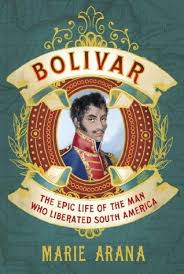
‘Bolivar: The Epic Life of the Man Who Liberated South America’ by Marie Arana

arana_bolivar

2013, 603 p.

One of my favourite podcasts is Revolutionspodcast.com. The presenter, Mike Duncan, is working his way through various revolutions in the world and I’ve gone along for the ride: The English Civil War, the French Revolution, the American Revolution, the Haitian Revolution and most recently for me, the Bolivaran Revolution in South America. (He’s since moved on to the 1848 Revolution but I haven’t caught up with that yet).

My interest in reading this book was piqued by the podcasts – what a fascinating, complex, tragic man Bolívar was – but it was also a way of compensating for some of the limitations of the podcast genre.  When you’re waiting for the weekly podcast, you can forget things from one week to the next, and I suspect that the weekly production scheme nudges the writer/presenter into looking at hour-long, self-contained episodes.  As a historian, I am very fond of the episode as an organizing device, used fruitfully and frequently by the so-called Melbourne School of Historians, but it does have its drawbacks too.  I found that, while I relished each episode as a historiographical ‘episode’,  I didn’t really have a big picture and lost all sense of time. Worse still, I had no sense of place either. Although Duncan does have maps on his website, I was listening to these podcasts as auditory input only. I’m not very familiar with South America as a continent, and I had no idea where the places he mentioned (in his rather poor Spanish accent that even I can detect)  were , or the distances involved.  Hence, when I saw this book on the library shelves, I snapped it up.

It’s written by a novelist and journalist, but I need have had no fear of that as a historian. There are copious footnotes (although they are not signalled in the text) and she has obviously immersed herself in the various historigraphical debates about Simon Bolívar. I have often been critical of Australian historians who parse debates under the anondyne label of “some historians” but I now realize how much my discomfort springs from being an insider and knowing who those historians are. In reading as a general reader about South American and Simón Bolívar, all these arguments fly completely over my head, just as the Australian references to “some historians” for a general reader would too.  It’s been a sobering little lesson.  Perhaps I shouldn’t be quite so critical of the practice.

And if you’re not sure about who Simón Bolívar is, you could check here and here.

This is a long book at 468 pages of smallish text. It is told completely chronologically, following Bolívar’s life from his wealthy upbringing as in a Creole (white, South American born) family, his education in Europe, his multiple failed attempts to foment the overthrow of the Spanish colonial powers, his eventual success in multiple places all over South America over a period of just eleven years, and his inability to harness the ambitions or treachery of the officials and soldiers left in command while he hared around the country (they didn’t call him ‘Iron-Ass’ for nothing).

It has a map, and I found myself turning to it frequently.  As might be expected, most of the action took place in what is now Venezuela, Columbia, Panama, Equador, Peru and Bolivia, as it was in these countries that Bolívar sought to create a pan-South-American federation, powerful enough to have influence on the world stage. He would fight the battles, appoint one of his generals and then move on to the next challenge. He was often appointed as President and dictator, preaching equality and liberty and declaiming all the time that he didn’t want to be a politician. He accepted the positions nonetheless.  His armies included soldiers from all over the continent, and members of the British Legion from across the British Empire. But he ended his life embittered and impotent as violence spread over the new states he had helped establish.

Nearly every reference to Simon Bolívar that I have read his ended up using Gabriel Garcia Marquez’ title for his book The General in his Labyrinth. But it certainly seems that his long drawn-out death was probably the worst way for a revolutionary hero to die: enfeebled and disillusioned, with people wondering when he would eventually die.

I’m really pleased that I read this book, because it helped to contextualize the podcasts that I’d spent so many enjoyable hours listening to. I just wish I’d read it before listening to the podcasts, instead of after!

Sourced from: Yarra Plenty Regional Library

My rating: 7.5

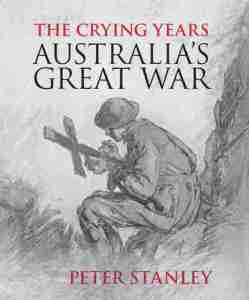
‘The Crying Years: Australia’s Great War’ by Peter Stanley

cryingyears

2017, 239 p. & notes

It’s a rather touching thought that even a historian as steeped in knowledge of World War I as military/social historian Peter Stanley could be inspired by a cache of Great War images.  After all, his thirty five year career spawned thirty publications, he worked at the Australian War Memorial for 27 years and has been involved in many of the debates about Australia’s military heritage.  But, as he explains in the introduction, he was introduced to a collection of images – many of which he had never seen before- in a talk given to the Canberra Great War Study Group by Nicola Mackay-Sim, the Pictures Curator at the National Library of Australia in 2012. The NLA featured many of those images in its Keepsakes exhibition in 2015, but this book, The Crying Years is not, as Stanley is at pains to point out, a catalogue of that exhibition.  Instead, this book that Stanley wrote in conjunction with the  NLA, draws on other images and artefacts held by the National Library of Australia and integrates them into an informed and nuanced chronological account of the Great War seen through the eyes of Australians as

civilians and soldiers, men and women, adults and children, rich and poor, pro- and anti- conscription, powerful and powerless, white and black, at home and overseas. (p.vi)

By widening the lens in this way, Stanley is arguing that the popular idea that the war can be equated with the AIF’s part is “egregiously mistaken” (p.vii). You’ve seen the shelves of such weighty paperback books that see the war solely in terms of men and battles overseas,( probably moved closer to the front of the store for Father’s Day), where the name of the male author is as big as the particular wartime battle that he’s choosing to focus on.  Instead, Stanley is one of several prominent historians, who under the Honest History umbrella, promote the precept of ‘not only, but also’.  The Honest History website proclaims that “Australia is more than ANZAC, and always has been”. Likewise, the Great War is more than men and battles, and it was here in Australia as well as overseas, and this approach underpins this book.

The book is arranged in six chapters, one for each year of the war.  He includes 1919, and extends beyond that year to touch on the soldier settlement schemes and ANZAC commemoration in succeeding years.  This approach is similar to Joan Beaumont’s Broken Nation, and indeed this book forms an excellent illustrated companion to Beaumont’s book.  Not only does a year-by-year structure emphasize the length of the war, but it also captures the emotional swells of the wartime experience as the news from the front filtered ‘home’ and the media and organs of power acted in concert to promulgate ‘unity’ in patriotism.  The tenor of the text closely follows the lines of Stanley’s section of The War at Home, in an even more accessible  format.

The text weaves between images of photographs, maps, letters, cartoons, newspaper articles, posters, artwork and ephemera, with bracketed numbers directing the reader to the image on that or the succeeding page.  In coffee-table books like this one (although the designation ‘coffee-table’ seems terribly inappropriate) the text and images often can become separated, but in The Crying Years the connection is maintained well.

There are breakout boxes that focus on some 28 Australian individuals who lived at the time, and whose affairs were affected by the Great War to varying degrees.  Walter and Marian Griffin’s vision of Canberra, for example, was challenged by the Government’s focus on the war and German internees; Sir John Hubert Murray was administrator in Papua; Justice Henry Bournes Higgins (of the Harvester case) was grief-stricken when his son was killed in Sinai in 1916 at the age of 29; the ‘bohemian’ writer Zora Cross wrote the poem ‘Elegy on an Australian Schoolboy’ after the death of her injured brother from the meningitis epidemic that swept the AIF, from which the ‘the crying years’ of the title for the book is taken.  Some of the people he has chosen seem rather tangential to the war, but this underlines his point that the war did not touch ‘every family’ directly (p. 182). Others selected for breakout treatment, like  ALP politician and anti-conscriptionist James Catts, demonstrate the complexities of political thought and allegiances of the time.

The quality, clarity and diversity of the images is impressive.  These are not your usual WWI warfront photos: instead, they are uncensored photographs taken by the soldiers themselves.  There are jarring photographs of the different manifestations of patriotism at home, like the Aboriginal children from the Point Pearce mission dressed up as ‘a Band of Loyal Workers’ as Japanese, nurses, policemen and sailors, brandishing a large Union Jack.  It is quite clear that not all men of fighting age enlisted, as the photograph of shearers playing two-up outside a shearing shed shows.  I have read about ‘button days’ as children and young women sold patriotic buttons as fundraisers, but I have never before seen such a variety of them.

This is a beautifully curated book, where the text is every bit as important as the images.  Even if you’ve decided to steer clear of all the World War I commemoration tsunami, you could read and look at just this one book alone and gain a nuanced, rounded and informed perspective on the war, not just on the front but in the suburbs and small towns of Australia as well.

Source: Review copy courtesy of NLA through Quikmark Media.

‘Human Croquet’ by Kate Atkinson

atkinson_humancroquet

1999, 352 P.

Kate Atkinson is one of our favourite authors amongst The Ladies Who Say Oooh, a.k.a. my CAE bookgroup. We have read five of her books over the last ten years or so. I first encountered Kate Atkinson with Behind the Scenes at the Museum, and that book stood out for me as a 10/10 read.  After that, I read Emotionally Weird and was disappointed, because it felt like a re-hash of her earlier book.  I was quite sure that I had read Human Croquet years ago and found it similarly derivative, but I can’t find any sign of it in my reading journals which predate this blog.

So, convinced that I was reading this for the second time, I found myself pleasantly surprised by Human Croquet. It is similar to Behind the Scenes in that in this case there is a missing mother, and the grief and questions that follow the disappearance of a person.  Atkinson picks up on the same multiple realities/time warp themes that she would use again in Life After Life and A God in Ruins. She writes of  a white-bread, Blytonesque 1960s England that is familiar to Australian readers of a certain age, but it’s a darker world with incest and abuse. There’s a lot going on here: Shakespeare, the lost forests of Olde England, the theatrical stage, destiny and timetravelling. It’s too convoluted to even try to explain what the plotline is, but there most definitely is one, even though it has been embroidered with other possible scenarios and counterfactuals.

I’ve looked through my other reviews of Atkinson’s books here in the blog, and I’m becoming Atkinsonesque myself in my sense of deja vu when reading her second book here. I do enjoy the experience of reading her books, but there’s a sameness about them that is becoming rather stale.

My rating: While reading it, 8.5.  Thinking about it afterwards: 7.

Source: CAE bookgroups.