Category Archives: Book reviews

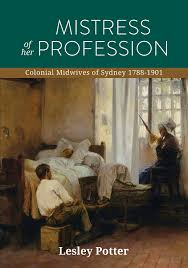
‘Mistress of her Profession: Colonial Midwives of Sydney 1788-1901’ by Lesley Potter

Mistress_Profession

2017, 133 p plus notes.

I suspect that, of all the different types of historians, family historians are probably the most attuned to the world of the midwife. In their family trees they trace those successions of births just two years apart, often over two decades; those births of the baby followed by the death of the mother in the days and weeks afterwards. Most probably, other women were present at these events, but they are largely invisible. It was this invisibility that attracted me to this book.

The author of Mistress of her Profession emphasizes the difficulty of finding these midwives within the sources, but she has managed to locate and name some of them. Having done so, Lesley Potter then aims to

discover not only midwives’ attitudes to midwifery and to understand the kind of midwifery they employed, but also to discover the attitudes of others (patients, doctors, coroners and others in authority) towards them…. the purpose is to bring the colonial midwife to life, to encapsulate her humanness, fraught with all her faults, ideals, values and anxieties: to explain and interpret her past to the present generation. (p. 6)

Her book starts with a case study, one of the eight which separate the chapters. Sarah Ann Hopkins, who boarded the Steadfast from London in 1848 as an emigrant to NSW was a trained midwife, possessing a diploma from Westminster Lying-in Hospital. As a trained midwife, she accepted the temporary position of matron on the Steadfast, working under the supervision of a Dr Read. Seven confinements took place on the ship, and not all had happy outcomes. Twenty-four year old Lydia Lever went into premature labour, triggered by dystenteric diarrhoea (it doesn’t do to think about just how awful that must have been). Her premature baby died, and she died about six weeks later. That same day a second baby was born, this time to 26 year old Jane Calder. The baby died at five days, and the next day Jane Calder’s one year old child died. Twenty year old Matilda Humpreys developed ‘epilepsy’, which was often the diagnosis of eclampsia at the time. Nor did this baby survive.   Four of the babies and mothers did survive, and one of these was Sarah Ann Hopkins herself. Just in this one case study, we have writ large the uncertainty of childbirth in the early nineteenth century.

Potter divides the midwives of colonial Sydney into several groups. First there were the convict midwives, many of whom only became midwives after transportation, using midwifery as a way of gaining respectability and a economic foothold in the colony. The second group were free immigrant midwives, often widows, who had been practising as untrained midwives in their own communities prior to immigration. Third, as the century drew on, overseas-trained midwives emigrated for a range of reasons. Finally, there were colonial-trained midwives who appeared at the end of the 19th century, some of whom were registered with the Australasian Trained Nurses Association.

The books starts with Aboriginal birthing. Probably as a result of the curiosity of early officials and naturalists, there are quite detailed descriptions of indigenous births. Although (and because?) the details in these descriptions sprang from the mindset of ‘otherness’ held by their male writers, they provided more information about actual practices in terms of pain relief and rituals than the European sources about European births did.

Where Potter was able to find such information was in the coroners’ inquests, but even in these there is not the detail that she as historian, and I as reader, wanted to know in terms of pain relief and the actual birth. What is interesting is that most 19th century cases involving midwives charged with misdemeanours associated with childbirth did not advance to higher courts (p. 41). Most often the verdict was ‘visitation by God’ or ‘natural causes’, reflecting the ignorance of an all-male jury.

Of more concern was the charge of ‘for want of medical aid’ , which spoke to the authority relationship between male medical doctors and female midwives- a familiar story even today. Midwives and nurses operated in a legal system that did not recognize them or consider them part of the health system. The law had no precedent  whereby a midwife at fault could be prosecuted, and as a result several midwives whose care was deficient, escaped sentencing. Likewise, the number of midwife-abortionists is unknown, and here too the courts were reluctant to convict.  But as the century progressed, their activities increasingly fell under the purview of the law.

The book traces through the beginnings of maternity care in Sydney, from the Female Factory in Parramatta, through the unsuccessful efforts of Dr Tierney to establish a private lying-in hospital, the development of the Benevolent Asylum, which did not have trained midwives until after 1879 and the gradual increase in private lying-in and maternity homes, especially in the 1890s. Midwifery was a commercial enterprise for women acting independently, and after midwifery training was instituted in the late nineteenth century, employment opportunities within an institutional setting increased. In terms of training, Australia followed the British trends, and midwifery became a certificated qualification, earned through on-the-job training in hospitals. However, as in Britain, midwifery training was kept separate from the training of medical men (although as Potter notes, there were men-midwives). Legislation and registration had to wait until the twentieth century.

I enjoyed the case studies which separated the chapters of these books, which generally illustrate the chapter to which they are attached.  They vary in the amount of detail that Potter was able to uncover, and unfortunately some of them are rather bare-bones, factual accounts. But even this highlights the difficulty of the task Potter set for herself.

I found the law chapters in this book the most illuminating, but even they do not really answer my questions about what it was like to give birth in colonial times. Did they sit? stand? lie? What was the attitude towards making noise? And even the most basic question- what did they do with all that boiling water that people were sent off to fetch in the movies? (or was that just a way of keeping them busy?) I recognize the paucity of the sources, but I do wonder if Potter had access to the records once training moved into more institutional settings which might have shed more light on this. Were there textbooks? Did new, more standardized techniques  replace traditional, ‘old wives tales’?

Potter has brought many of these women out of invisibility by naming them, but I’m not sure that she actually achieved her aim of bringing them to life or explaining and interpreting them to the present generation. I think that perhaps, given the limitation of the sources, her aim may have been too ambitious, and for me, still unmet.

Sourced from: Yarra Plenty Regional Library.
AWW-2018-badge-rose-199x300

I have included this book as part of the Australian Women Writers Challenge.
 

‘One Hundred Years of Presbyterianism in Victoria’ by Aeneas Macdonald

1937,  179 p.

I warned you. Yet another commissioned history of the Presbyterian Church, this time to celebrate 100 years since the Rev. James Clow held the first Presbyterian service in Geelong in late 1837. He was in Melbourne to check out the opportunities to set himself up as a landowner: indeed, he bought up big during the November 1837 land sale, purchasing four half-acre blocks on the south-west corner of Swanston and Lonsdale Streets.  His wife and family arrived on Christmas Day 1837 from Hobart. He started his work as a Presbyterian minister informally, encouraging Presbyterians to set up congregations and preaching on Sunday afternoons.

This centenary history covers much the same material as the other histories of the Presbyterian Church in Victoria that I have read. Macdonald is a more lively writer, however, and more attuned to other social and economic events outside the Church.  As it was written post-WWI, he incorporates an assessment of the churches’ cheerleading role during the war, which he admits has changed in the twenty years since then.

He spends two chapters on the Charles Strong controversy in 1883, regretting that

It was the misfortune of Dr Strong and of our Victorian Church that they ever came together, and especially that they came together when they did…In a later generation the story might have told itself in different words and worked itself to a different conclusion (p. 135)

Even writing fifty years later about Charles Strong, Minister of one of the largest and most popular churches in Melbourne, who split from the Presbyterian Church and started his own Australian Church, Macdonald admits that the written record is not sufficient:

The relevant minutes and documents of church courts, the columns of contemporary newspapers and the reminiscences of the few survivors have given us the groundwork of our narrative. On these, too, have been founded such comments as have been made. But had we been able not only to evoke the sequence of events as each arrived, as we have tried to do, but also to show each against the full colour of the background, we might have felt constrained to tell our story differently. That background has now faded completely from the canvas, but then it played what was sometimes a major part in leading men on that side and on this to act as they did and to determine as they did. With it before us what perplexes us now might perplex us no longer; what seems to demand our sympathy might be seen to deserve it not at all. (p. 137)

Ah, welcome to the historian’s world, Rev Macdonald, instead of the world of the chronicler!

In talking about the Church’s shift to social, as distinct from purely theological activity, he talks about Selina Sutherland, the child welfare reformer, who fell out with the Presbyterian Church over its attempt to restrict its welfare to Presbyterian children only. The former Sutherland Childrens Home in Diamond Creek is quite close to where I live, and it had never occurred to me to wonder what it was named after.

He also tells about the Rev P. J. Murdoch, the clerk of the Presbytery of Melbourne South, who was jailed in 1909 for contempt of court  for refusing to hand over a document to Mr Justice Hodges in the Victorian courts. It evoked all the questions of State Vs. Presbyterian court rights which had prompted the Great Disruption in Scotland,  and flowed through Presbyterian churches all over the world. Obviously the question hadn’t been completely resolved in 1909, and indeed there are shades of it still in the churches’ responses to the  Royal Commission into Institutional Responses to Child Sexual Abuse this very year. In a rather chilling final sentence in this chapter that foreshadows the fight again Hitler, he writes from his 1937 perspective:

…the division between the things of Caesar and the things of God has not yet been clearly and finally made. It is conceivable that we might yet have to fight again along that frontier even as the Confessional Churches are having to do in Germany to-day. (p.169)

So- now I’ve read all the ‘official histories’ that I can find about the early Presbyterian Church in Melbourne. Next stop- Malcolm Wood’s history which the blurb tells me is written from a “secular, critical perspective”. I must say that I welcome that. I think I’ve had enough commemorative histories by true believers.

‘The Presbyterian Church of Victoria: Growth in Fifty Years 1859-1909’ by D. Macrae Stewart

PresJubilee

1909, 129 p.

This book was written to celebrate the golden anniversary of the creation of the Presbyterian Church of Victoria in 1859, combining the Synod of Victoria, the Synod of the Free Presbyterian Church of Victoria and the Synod of the United Presbyterian Church of Victoria. There was one section of the United Presbyterians who didn’t join until after 1870, but in terms of golden jubilees, 1859 was the date. (Mind you, the earlier book I read about Presbyterianism in Victoria dated the coming together of different strands of Presbyterianism to 1867 instead.)

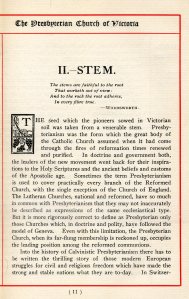
Written as a celebration publication, the text is laid out quite beautifully, with red margins and decorated inhabited initials to mark the start of each chapter. Stewart has used a planting metaphor to organize his chapters, which are titled ‘Seed’ ‘Stem’ ‘Branching’ ‘Pruning and Grafting’ etc.

As this book goes up to 1909, it covers the Charles Strong controversy of the 1880s, which of course had not occurred when Sutherland published his earlier history of the Presbyterian Church in 1877. Charles Strong, who had been the pastor of Scot’s Church in Melbourne (probably the premier Presbyterian church in Melbourne)became the first minister of  the Australian Church in 1885 after being charged with  promulgating unsound and heretical doctrine and resigning his position from Scots Church.  I think that if I’d been alive at the time, I would have been attracted to the Australian Church.

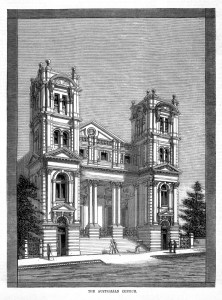
the australian church.

The Australian Church at the eastern end of Flinders Street (near Spring Street). It seated 1200 and opened in 1887 but the Church shifted to more economical premises in 1922. The Australian Church was finally dissolved in 1957. From the Australasian Sketcher. SLV http://handle.slv.vic.gov.au/10381/258170

The book has several plates showing prominent churchmen, mainly of the past but with some contemporary men (in 1909) as well. So many beards!  There are few mentions of women, but there is a section on the Presbyterian Mission Womens Union, famous for its cookbook. I only now realize that I always called it the PWMU rather than PMWU.

The book is curiously silent about the 1890s depression. Perhaps in 1909 it was too soon to discuss such things.

‘The History of the Presbyterian Church of Victoria’ by Rev. Robert Sutherland

1877, 516p.

“Why on earth is she reading this?” you may ask. It’s the first of a few books that I’ll be reading over the next month about the Presbyterian Church and Scots immigration to Victoria, in preparation for an exhibition that Heidelberg Historical Society will be putting on later in 2019.

This book was published in 1877. At the time, it would have been very current as it covers the time “from the foundation of the colony down to the abolition of State Aid in 1875”.  It is steeped in the Presbyterian attitudes of the time in relation to Sunday observance and temperance, and many of the ministers of whom Sutherland writes in a historical sense were still alive (and no doubt, readers of his book) when it was published.  He is careful to note the illustrious sons – always sons- of early ministers of the church who became wealthy contributors to the Presbyterian church and/or members of the Legislative Council of state Parliament. Being an MLC was obviously the ultimate form of success.

In Chapter 1, several women are named. The first is Mrs Turnbull, who was a friend of Rev James Forbes, the first Presbyterian minister appointed to Port Phillip. Mrs Turnbull was

a lady of vigorous understanding, of religious character, and thoroughly acquainted with business. She fully returned to the minister as much information as she received from him, and they were both mutually edified (p. 14)

Then there was Mrs Cumming, whose husband was a fellow-countryman of Rev Forbes:

After speaking a few words with Mr Cumming, the conversation was afterwards principally engrossed by Mrs Cumming, who was a lady fully equal in mental powers to Mrs Turnbull, and of as much firmness. (p. 14)

Miss Drysdale and Miss Newcombe of Geelong get a mention too. “That’s a good start!” I thought.  Unfortunately, after Chapter 1 there are no other women at all in this book, which seems quite amazing, given the emphasis on family in 19th century Christianity.

The attitudes towards aboriginal people are of their time. Given recent research on indigenous land practices described by Bill Gammage in The Biggest Estate on Earth and Bruce Pascoe in Dark Emu, this description of Rev. Clow’s journey to Port Phillip in 1837 is rather discordant:

Moving slowly along the windings of the Yarra Yarra, he saw its broad meadows covered with sterility under the gaze of savagedom, but soon to be clothed with fertility by the hand of civilization (p.10)

In speaking of missions to indigenous people, Sutherland subscribes to a view that Australian aborigines had descended (in both senses) from races with a highly developed civilization. Although now debased, it was felt that on the basis of their complexity of language and marriage practices, there must have been a more sophisticated earlier culture. He supposed that

It is most likely that the aboriginal settlers of Australia were of the poorer classes, who had drifted to the land, in consequence of having lost their way at sea. (p. 424)

Much of the book deals with the Australian replication of the Great Disruption that occurred within the Church of Scotland in 1843.  Just as in Scotland, the Victorian Presbyterian church split: one group adhering to the Established Church of Scotland, another to the Free Church of Scotland and a third distinguishing itself from the other two by eschewing any government financial aid. There are pages and pages of letters and resolutions going one way and then the other.  It seemed as if the schism was about to be resolved in 1855 but no – it all blew up again until 1867 when finally union was achieved (well, nearly completely).  In 1870 when State Aid to churches was discontinued, there was another gathering-in of Presbyterians.  I’ve heard talk of “stiff-necked Presbyterians” and it’s certainly an apt description of these disputes.

There’s much talk of church buildings, particularly in rural areas. In the late 1860s and early 1870s covered by the book, many suburban churches were rebuilt, replacing the earlier wooden buildings that had first been constructed. I was interested to read of St Enoch’s in Collins Street, directly across the road from the current Scots Church. During the schism St Enoch’s was part of the United Presbyterian Church of Scotland bloc, whereas Scots’ Church was aligned the Established Church of Scotland group.

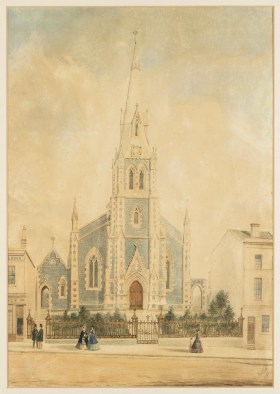
St. Enochs United Presbyterian Church 96 Collins Street East Melbourne

St Enoch’s 1864. State Library of Victoria http://handle.slv.vic.gov.au/10381/403500

St. Enoch’s was built in 1851 and renovated and enlarged in 1864. Once the different branches of the Presbyterian Church re-united in 1867 there was little need for two large Presbyterian Churches directly across the road from each other, so it was turned into an Assembly Hall instead. It was demolished in 1911 and replaced by The Auditorium, while a new Assembly Hall was built on the Scots Church side of Collins Street.


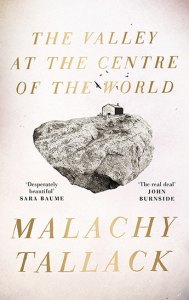
‘The Valley at the Centre of the World’ by Malachy Tallack

tallach

2018, 352p.

I can’t remember quite why I borrowed this book when I saw it on the ‘New Books’ shelf at the library. Perhaps I’d heard good reviews of it or maybe it was its setting in Shetland that attracted me. I enjoy Shetlands on the ABC and I heard a cracking interview with the author of Vera and Shetlands, Anne Cleeves. What ever drew me to it, it’s a beautiful book that I almost didn’t want to end. It surprises me that the author is a young man. The book felt as if it were written by an older person (think, perhaps Marilyn Robinson’s Gilead or perhaps Elizabeth Strout’s work) in terms of its treatment of the relationships between people, infused with a sensitivity to place and space.

The Valley at the centre of the world is exactly that – a single valley with just five houses clinging to The Road that runs above and parallel to ‘The Burn’, the waterway that runs to the sea. The use of ‘The’ is intentional: there is only one. In its harsh but beautiful isolation, there is a timelessness about The Valley, although people are coming and going. Older man David has lived there all his life, as did his father and grandfather before him. Although he does not consciously think of it this way, he owns the valley.  His wife Mary, came there thirty years ago and their daughters Kate and Emma have both shifted away.  Sandy, a newcomer, was their daughter Emma’s partner and came back with her to the Valley but the relationship has broken up. He stayed on when Emma left, and with a respectful relationship to his inlaws (do you have inlaws if you’re not married?) and now landlords, he takes over the cottage and croft left vacant when Maggie, a very old inhabitant dies. There is Terry, a morose alcoholic single father, and Jo and Ryan, who have shifted into the Red House from the city, with Ryan a go-getter spiv taking advantage of the cheap rent. Finally, there is Alice, a crime writer (who reminded me not a little of Anne Cleeves herself) who has moved to the valley after the death of her husband. She has decided, somewhat presumptuously I think, to write about the Valley and is particularly drawn to Maggie as a character, hoping to find some secret or depth about this woman who had spent her whole life in the Valley.

The book revolves around the lives of this small group of people, who each have their griefs and flaws. It is a slow book, just as life itself in The Valley is slow. Soap opera? Perhaps, but it’s soap opera written with insight and generosity.

What is striking is the use of dialect in the conversation. There’s a glossary at the front, but it’s more the sentence construction and small words that slows you down as a reader. I don’t subvocalise or even mentally vocalise when I read, so this was a strangely auditory reading experience for me.

I really loved this book, and didn’t want it to finish.

My rating: 9/10

Sourced from: Yarra Plenty Regional Library


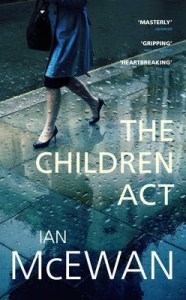
‘The Children Act’ by Ian McEwan

McEwan_ChildrenAct

2015, 224 p.

Like On Chesil Beach which preceded it, this book is quite short and has a similar tremulous, sinking, hold-your-breath feeling about it. It is named for the UK legislation of 1989 the Children Act which rules that “When a court determines any question with respect…to the upbringing of a child… the child’s welfare shall be the court’s paramount consideration”.

The child in this case is Adam Henry, just three months short of his eighteenth birthday, who along with his parents, is refusing a blood transfusion rendered necessary by treatment of cancer because they are Jehovah’s Witnesses.  The hospital, aware that time is running out, brings the case to the court, where it rests before High Court judge, Fiona Maye.

‘My Lady’ Justice Maye has come before other excruciating moral cases before in her capacity as judge with the Family Division, most particularly a case about the enforced separation of conjoined twins. In deciding this current case under such tight deadlines, she decides to go to the hospital to visit Adam Henry, who she finds to be highly intelligent, articulate and engaged. McEwen really knows how to built the tension as he reports her long-winded finding to the court, just as it would have been experienced by the gallery filled with family and journalists.

At the same time that professionally Fiona Maye is dealing with this, her own personal life is unravelling. After a long marriage with both partners working, her husband Jack announces that he wants to have an affair, now that the spark has gone from their marriage.  She is hurt, furious and ashamed. She has seen many ruptured families in her professional life, but somehow felt aloof from all that.

A professional life spent above the fray, advising then judging, loftily commenting in private on the viciousness and absurdity of divorcing couples, and now she was down there with the rest, swimming with the desolate tide (p.49)

It’s only a small book, and I don’t want to give too much away. At heart is the question of how much responsibility Fiona has for Adam’s wellbeing both professionally and personally.

Adam’s case is just one in a long professional life, and I felt that McEwan turned too didactic in his backgrounding of the other cases she had heard. It felt clunky and contrived.  The ending is not as I expected it to be, and could perhaps be seen as a letdown. I didn’t see it that way, however.  I don’t believe in karma, and there is often no symmetry or fairness in consequences. The book has the same chilliness that many of McEwan’s books express, while dealing with pain and regret. Somehow it seems a very English combination.

I read this for my bookgroup, and it was my choice from about two years ago. It has taken some time for us to receive it! As it happened, we read it in November, just as the film was on general release.

My rating: 8.5

Read because: CAE bookgroup

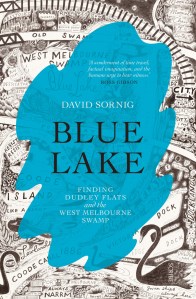
‘Blue Lake: Finding Dudley Flats and the West Melbourne Swamp’ by David Sornig

sornig

2018, 361 p.

My ‘best book’ choice for 2018!

About thirty years ago, my then-husband and I won a prize in a raffle. It was a bus trip to and from Adelaide and two nights accommodation there.  (In fact, given that it takes a good 10 hours to travel to Adelaide from Melbourne, I’m starting to think that this might have been a second prize!) We left from Spencer Street (Southern Cross) station and drove through West Melbourne to get onto the freeway to Ballarat. I could still see the city skyscrapers on the right hand side of the bus – but what was this deserted flatland that we were driving through?  Warehouses, empty streets, great stretches of railway, blocks of containers, barren flat open areas. Where on earth was I?

Without knowing it, I was driving through the former Dudley Flats and West Melbourne Swamp, the focus of this excellent book. Even now, thirty years later, despite the construction of quays and high-rises, it’s an area that seems to resist taming. It’s almost as if it’s cursed. They build ferris wheels there, and they break down for years on end. They build high-rises, cover them with cladding, and they catch fire. Meanwhile, the wind sweeps along the newly-built boulevards, where trees struggle to grow.

Sornig starts his book with a death: the particularly gruesome death in 1942 of Elsie Williams, a Bendigo-born singer of Afro-Caribbean origin. Her body is savaged by the half-starved offspring and remainders of over 60 dogs that were kept by Lauder Rogge on his stranded ship, the John Hunt some six years earlier. She is discovered by Jack Peacock, the king of the Dudley Flats tip scavenging community.  These three characters – Elsie, Lauder and Jack – are the linchpins of this beautifully written narrative as Sornig traces through the attempts by governments, railways, do-gooders and now Border Force, to clean up and control what he calls The Zone.

Sornig describes himself a writer and a psychogeographer, not a historian (p. 152). I hadn’t heard of the term ‘psychogeography‘ before, but I have become aware that geography writing has changed over recent years, looking at space as well as place, tracing deep time as well as calendar time, revealing palimpsest as well as topography and emphasizing the connections between human individuals, their networks and ecology.

But Sornig is underselling his skills as a historian. He starts with the Blue Lake, known variously as Batman’s Swamp, Batman’s Lagoon, the North Melbourne or West Melbourne swamp,  covered with flowers, and described in idyllic and nostalgic terms by Edmund Finn (Garryowen) and George Gordon McCrae.  He traces through the various engineering manipulations that turned it into a wetland, and most importantly, the economic and social influences that drew the marginalized to its flats – the unemployed, alcoholics and homeless people. By the time it was known as Dudley Flat in the 1930s, it was notorious: my father remembered being taken to see the tin shanties as a young boy, and somehow government bureaucracies fell over each other in trying to move people on, resulting in their long-term residence on the flats.  His telling of the whole lives of his three main characters – Elsie, Lauder and Jack- encapsulate twentieth-century social history of the marginalized in a more human and nuanced way than any other I have read.

Like a Sebald book, this book is punctuated by black and white pictures, sometimes details of a larger picture, that is gradually revealed. There is a map, but it only appears 2/3 of the way through the book: a rather curious decision.  The narrative shifts back and forward as the narrator walks – literally – the Zone, while he also delves archives, sifts newspapers, follows up family history links.

It is beautifully written and very easy to read. It’s the best book that I have read all year, and one of the best books about Melbourne that I have encountered. Will it clean up in the non-fiction and history awards next year? It deserves to.

My rating: an unequivocal 10/10

Sourced from: Yarra Plenty Regional Library

‘Major Pettigrew’s Last Stand’ by Helen Simonson

simonson

2010, 359 p.

This was a bookgroup selection and I’d left it late to start reading it. So, in the one night I was catapulted from Vichy France and Nazi interrogators in Lovers at the Chameleon Club  into  English village life, retired Army Majors and golf-club gossip in Helen Simonson’s Major Pettigrew’s Last Stand. A very abrupt change of pace!

I was surprised to learn that Helen Simonson is an American writer, albeit British-born, who has lived in America for the past twenty years. She captures village life remarkably well. Midsomer Murders is a cliché, but when I visited my brother who lives near a village outside Maidenhead, I was stunned to find myself in a village that looked very much like that murderous locale, right down to the village green with the white posts and looped chain fence. This is the sort of place in which  68 year old Major Pettigrew (retired) makes his last stand.

Not that you’d know it from the opening pages of the book where, numb after the death of his brother, he has put on his deceased-wife’s floral housecoat. The doorbell rings, and he answer it to find Mrs Ali, the widow of the local general-store owner. With self-assured pomposity and casual racism, he had barely been aware of her except to buy his blended tea from her, but they strike up a friendship.  They are drawn into the disastrous plans by the local golf club to have as their party theme ‘The Last Days of the Maharajah’, an ignorant and insensitive event which conflates India and Pakistan, the Mughals and the Empire. Both the Major and Mrs Ali are quietly resisting the suffocating oversight of their son/nephew, both of whom are insufferable in different ways. The book does become rather hyperactive at the end.

Is it the persistence of Baby Boomers as a reliable reading market that has led to a rash of older-person ‘twilight’ relationships? I’m thinking of Our Souls at Night, Elizabeth Strout’s Olive Kitteridge, or Australian author Josephine Wilson’s Extinctions, all of which have older protagonists who are being pressured by their offspring.

This book is a comfortable read that reveals a wry sense of humour. I was reminded of Barbara Pym, and perhaps even shades of Jane Austen. I hadn’t ever heard of it, but it was a very enjoyable escape that made you squirm at time with embarrassment, roll your eyes at pretension and prejudice, and rejoice in a happy ending that didn’t necessarily tie up all the ends too neatly.

Sourced from: CAE bookgroups (a reading selection for my bookgroup)

Rating: 7.5/10

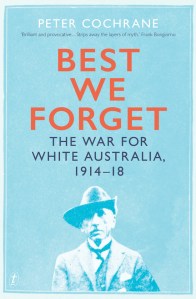
‘Best We Forget: The War for White Australia 1914-1918’

cochrane_bestweforget

2018, 272p

There are some books whose time has come, and I think that Peter Cochrane’s latest book falls into that category. Released by Text – a general publisher as distinct from an academic one – it comes at the end of a five-year tsunami of books and features about World War I and our ‘birth as a nation’ and ‘ANZAC character’.  These tropes have been pushed very heavily by governments, particularly (but not exclusively) by the present conservative government. But in this book, with its cleverly twisted title, Cochrane argues that the seeds of Australia’s involvement in World War I began in the half-century before 1914, when a self-governing and increasingly prosperous Australia began to feel the chill of its geographical location so far from ‘mother’ England, and the ominous size of the Asian populations that surround this island nation. It’s almost impossible to read this book today without a consciousness that, with the rise of China in the 21st century and the United States led by an erratic president, there is much in common between us today and the politicians and leaders of 1914.

Cochrane’s  book starts and finishes with a discussion of myth-making. Much of the popular ‘birth of a nation’, ‘mateship’ and ‘ANZAC character’ rhetoric springs from the writings of war-correspondent Charles Bean. But as Cochrane points out, Bean had been developing his argument that the Australian was a new type ‘hammered out of old stock’ and imbued with all the qualities necessary for military greatness, particularly mateship, long before World War I (p.7).  The true ‘Australian native’ was a clean man, a cleanness found ‘in the blood’ of the Anglo-Saxon race. He took this mental template with him to his WWI reporting and to his magisterial The Official History of Australia in the War of 1914-1918 which shaped Australia’s view of WWI for decades after. As he notes in his closing chapter, Bean’s characterization has strongly influenced popular memory, most particularly the shock jocks, right-wing politicians and allied intellectuals (and I would add, ambitious Directors of the Australian War Memorial as well) ever since.

But, Cochrane argues, this is not the whole story. It’s a rather uncomfortable fact that the first issue that the newly federated Commonwealth of Australia dealt with in Parliament was the Immigration Restriction Act, more popularly known as the White Australia policy.  Australia had passed race-based legislation right from the 1850s, in response to Chinese migration, and in 1901 as its opening act, it reasserted its identity as a ‘white man’s country’. This could be, and was, framed as an pledge of loyalty to the British Empire, but Britain for her part, by now had her own strategic interests in encouraging and protecting her relationship with Japan instead.  And as Germany became more bellicose and Europe more volatile, Britain proposed outsourcing responsibility for the security of the Indian Pacific to Japan – Japan!!- as a well-resourced ally instead. Cochrane argues that Australia’s willingness to fight in Europe was a way of proving our loyalty to Britain, to whom we were tied by race and culture, and leveraging that loyalty to ensure that Britain continued to look to the interests of her daughter Australia, and not the new ally, Japan.

As Cochrane argues

…this idea of Australia as an Anglo-Saxon citadel, the last bastion of the purest and finest white blood, entirely ‘clean’, shaped defence thinking in Australia from the late colonial period onwards, in company with the fear that Australia might be left to fight an Asian invader alone. More importantly, this fear was the strategic concern behind Australia’s commitment to the First World War. The primary objective, of course, was the defeat of Germany, the survival of Britain and the empire, and the maintenance of those strategic, economic and sentimental ties that most Australians cherished. But most Australians also cherished their racial purity and that too was at stake, or so it seemed in the years before the war and during the war itself. (p. 9)

We are uncomfortable with the Immigration Restriction Act today, but at the time Australian politicians on all sides – liberals, conservatives, labour interests- saw racial purity as fundamental to upward progress of this newly federated nation.

The White Australia policy was not merely about keeping other types out. It was a desirable end in itself, racial homogeneity being a precondition for social reform and a high standard of living, for the constitutional vigour of the race, the high ideals, the upward evolutionary trajectory associated with the new Commonwealth. There was a vast reservoir of emotional investment in the coming nation.  ‘Race pollution’ was akin to ruin, while race purity was embraced as a positive ideal, the indispensible prerequisite for the principles on which white Australian social and political life was based. (p.46)

Cochrane’s book traces through the increasing anxiety from the 1870s onwards as Europeans moved into the South Pacific, evoking fears that a foreign power such as France, Germany or Russia might use Pacific islands as a launching pad for attacks, or worse – invasion, of Australia. British garrison troops were withdrawn from Australia in 1870, and Britain remained largely unmoved by Australian pleas to annex New Guinea, the New Hebrides, and the Solomons, as they had done with Fiji. Britain by this time was more concerned with European stability. Australia’s fear of Asiatic races was long established, burnished by the veneer of Social Darwinism.  The Anglo-Japanese commercial treaty of 1894 gave Japan, a powerful nation state with its own imperialist visions, honorary membership of ‘civilized Europe’ (p.41)  This set up an immediate conflict between the new Commonwealth of Australia, which saw itself as the last citadel of Anglo-Saxon race purity in the Pacific, and Great Britain which wanted its ally and business partner Japan exempted from the Immigration Restriction Act.

This anxiety over Japan explains Australia’s willingness to expand its military preparedness prior to World War I, introducing its civilian military scheme, and its panting readiness to assist Britain as a show of good faith. It’s as if Australia were the jilted child, jealous and edgy when a new adopted child is showered with favours. There is a strong sense that Australia was being ‘played’ by Britain.  While not sanitizing Billy Hughes as such, the book does make sense – if you accept the White Australia premise- of Hughes’ desire to introduce conscription to keep the troop numbers up, in order to bolster Australia’s position in the Pacific in the post-war carve-up at Versailles.

At the domestic level, politicians made no secret at all of the anxiety over Japan and Asia. It’s right there in their speeches, alongside fear of Germany and distress over Belgium. It was voiced on all political sides, and often. Cochrane doesn’t have to look hard to find examples, although just a quick survey of the newspapers of the time on Trove highlights that Germany was portrayed as the more potent foe. As with other histories that pack a punch, once a historian has alerted the reader to a phenomenon, it suddenly seems to be everywhere, hidden in plain sight. There seemed to be no embarrassment about proclaiming and defending whiteness and ‘cleanliness’ at the political level. However Cochrane does not conflate this political rhetoric at a national level, with the personal motivation that an individual soldier might have felt to enlist.

Cochrane does not deny the potency of the other spurs to military action, like fear of Germany and disgust over Belgium, but he does raise the question over why the anti-Asiatic rhetoric has been expunged from our popular memory of World War I.  This is a theme that he returns in the final chapter of the book, especially in the light of the Centenary of WWI:

Best We Forget is an ironic title. We do well to remember the Great War: the battlefield ordeals and the soldiers’ sacrifice. Yet, in the course of bringing a nation into being and fostering it to maturity, sacrifice takes many forms. We might also remember that nations are built as much in peace as in war; negotiators and conciliators count as much as warriors; inventors and visionaries have shaped Australia’s evolution as least as decisively as have the great generals; and, thankfully, debate and compromise have done more to shape our political culture than have the bayonet or the gun. (p. 229)

I think that, especially coming at the end of a long period of historical reflection, this book will be a stayer. Once alerted to the anti-Asian racism that underpins much of Australia’s war rhetoric, you can’t unsee it.  Nor can you sing ‘Advance Australia Fair’, written in 1878, without remembering that the word ‘fair’ can  (and at the time, did) have racial overtones.

This is an important book, well written as all of Cochrane’s work is, accessible and controversial. It places the war within a continuum of Australian history, rather than as a purely external disruptive event, and forces us to expand our view of ‘loyalty to the Empire’ to encompass uncomfortable truths.  Perhaps it’s not so much ‘Best to Forget’ but certainly ‘Best to Recognize’.

Sourced from: Yarra Plenty Regional Library

My rating: 9/10


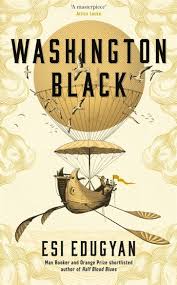
‘Washington Black’ by Esi Edugyan

edugyan

2018, 432 p.

George Washington Black (‘Wash’), a slave child in the sugar plantations of Barbados, was triply marked. First: he was marked by his colour when he escaped to Nova Scotia on the run to avoid being framed for a murder he did not commit. Second: he was marked by the brand ‘F’ burned into his skin for the ironically-named ‘Faith’ plantation when it was taken over by  a ruthless plantation-manager named Erasmus Wilde. And finally, he was marked by scarring from burns he received when a ballooning attempt went wrong.

So how did a young boy from the canefields of Barbados end up in places as diverse as the Arctic, Nova Scotia, England and Morocco? In the opening part of the book he, along with Big Kit – an older woman who has taken him under her wing-  is brought up to ‘the house’. There he catches the eye of Christopher ‘Titch’ Wilde, the cruel plantation-manager’s brother, who judges him the right size to be ballast for a balloon-prototype he was constructing. Titch soon recognizes Wash’s sharp mind and drawing skill, and he engages him as a research assistant and valet, much to his brother’s disgust. It is while assisting with the ‘cloud-cutter’ balloon that Wash is injured in a gas explosion. Titch and Wash escape for America when Wash witnesses a death that they both know will be blamed on Wash. A generous reward is posted by Erasmus Wilde for his capture and return, and so Wash’s journey begins.

This book works on a big canvas, reminding me oddly of a Dickens novel in its scope. It crosses the globe, and it has big characters. For me, the most powerful part of the book was in 1830s Barbados, where the historian in me approved the author’s depiction of both slavery and the paltry nature of the Apprenticeship scheme that paraded as abolition.  The narrative voice is restrained and educated, in a rather formal and antiquated way. Interestingly, there is no framing device for the narrative: you just take the story as given. It is at heart a quest novel, although shot through with yearning, injustice and beautiful description.

My rating: 9/10

Sourced from: Yarra Plenty Regional Library