Category Archives: Book reviews

‘Vida: A woman for our time’ by Jacqueline Kent

2020, 284 p.

Perhaps biographies are like buses….nothing for ages, and then two or three arrive all at once. Vida Goldstein, the subject of this 2020 biography by Jacqueline Kent, did not receive a full-length biography until 1993, when Janette Bomford published her book That Dangerous and Persuasive Woman: Vida Goldstein, which I reviewed here. She featured in Claire Wright’s You Daughters of Freedom in 2018, and appears as a minor character in Caroline Rasmussen’s recent joint biography of Maurice and Doris Blackburn The Blackburns (2019). She has always appeared as part of the network surrounding Stella (Miles) Frankin and Catherine Helen Spence, but in terms of full length biographical treatment, the two main works have appeared in the last 27 years.

In her introduction to this biography, Jacqueline Kent notes that Goldstein is briefly mentioned in almost every history of women in Australia, but “her name is not particularly well known outside scholarly circles”. (Voters in the federal seat of Goldstein, in the bayside areas of Melbourne might beg to differ. As Kent points out, the electoral division might be named after her, but it has never sent a female MP to the House of Representatives). Kent writes that her biography

…seeks to show how much Vida was not simply a woman of her times, but someone whose views and beliefs are refreshingly contemporary – and so who is equally a woman of our time.

(p.xv)

Kent has written other biographies, but she is best known for her biography of Australia’s first female Prime Minister, Julia Gillard The Making of Julia Gillard (2009) and a smaller work Take Your Best Shot: The Prime Ministership of Julia Gillard (2013). Gillard remains a touchstone throughout this biography of Vida Goldstein as well, with Kent inserting present-day comments drawing parallels between Goldstein and Gillard’s experiences in parentheses in various places throughout the text. This connection comes to the fore in the epilogue, where Kent claims that Vida and her colleagues would have been “delighted to see Julia Gillard confirmed as the country’s first woman prime minister” which she follows with a four-page summary of Gillard’s prime ministership. This presentism is foreshadowed in the subtitle ” A woman for our time”.

When writing her biography, Janette Bomford bemoaned the lack of a cache of personal papers that would reveal the inner Vida Goldstein. Kent has had to work from the same straitened resources, and a quick glance at the footnotes reveals Kent’s debt to Bomford’s earlier biography. As a result, I’m not going to reprise Goldstein’s life here – instead I refer you to my review of Bomford’s book – because the events are much the same, which is to be expected when both authors are working from the same sources. Kent briefly raises, but then shuts down, speculation that Goldstein may have had a lesbian relationship with her friend and colleague Cecilia John. I’m not sure that it is a useful suggestion as there is absolutely no evidence for it, but perhaps it was prompted by Kent’s attempt to frame Vida as “a woman for our time”.

So where, then, does the difference lie in the two biographies? Unfortunately, I must have borrowed Bomford’s book because I can’t find it on my shelves, so I don’t have the two texts on my desk to compare. I can only work from impressions.

First, Kent’s book seems more Melbourne-oriented than I remember Bomford’s book being. Although she travelled to both U.S. and U.K, and although she had connections with feminists in other states, Goldstein lived and worked at the Victorian level in trying to get female representation in Parliament. Although given importance in the text and forming stepping stones in her life’s chronology, these national and international personal networks do not play an integral part in Kent’s narrative. Instead, Goldstein comes over as rather isolated and toiling away single-handedly here in Victoria, estranged both from party politics (which she abhorred) and by her conflicts with other feminist groups and political forces.

Kent gives us a good picture of Victorian political and intellectual life in the first twenty five years of the twentieth century. Paradoxically, Victoria was the last state to grant female suffrage in 1911, and the right to stand for State Parliament in 1923, even though white women had been able to vote in federal elections and stand for Federal Parliament since 1902. Although the first suffrage society in Australia was the Victorian Women’s Suffrage Society in 1884, and despite Victoria’s relatively progressive intellectual life, the Legislative Council was able to stymie women’s suffrage and representation long after South Australia, Queensland and New South Wales had granted it. As a result, Goldstein’s many attempts to stand for Parliament involved federal elections, not state ones.

However, her main base of support was in Victoria, centred on the Book Lovers Library, run by her sister and brother-in-law in the city, and Oxford Chambers at 473-481 Bourke Street which for a while, became “something of a Goldstein compound” where the family members lived and worked. Her two newspapers, the Australian Woman’s Sphere (1900) and the later The Woman Voter (1909) were published in Melbourne.

Second, Kent gives full weight to Goldstein’s spiritual commitment, first to Rev Charles Strong’s Australian Church and then to First Church of Christ, Scientist, which was to remain her lodestar throughout her life. It was a commitment that caused tension with her friend Stella (Miles) Franklin, and it became increasingly important to Goldstein in her later life as a conscious choice in career direction. Perhaps it’s because I too am a Woman of a Certain Age, but I’m increasingly interested in how biographers deal with the latter years of their subject’s life. Kent handles this well, tracing through Goldstein’s contributions to public debate long after she had given up on unsuccessfully standing for Parliament.

Third, Kent’s biography has a lightness of touch that was less evident in Bomford’s more academic book. This is partly because of the parenthesized present-day asides, but also because Kent has a good eye for the visual image and the lively event. I’m not sure, though, that she has moved our understanding of Goldstein forward by much beyond what Bomford had already told us. But through the striking cover, the title with its present-day hook and the engaging writing style, Kent has probably broadened awareness of Vida Goldstein to a wider audience.

My rating: 7.5- maybe 8/10

Sourced from: Yarra Plenty Regional Library
I have included this on the Australian Women Writers Challenge 2020.
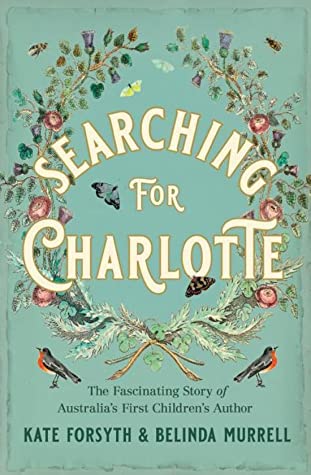
‘Searching for Charlotte’ by Kate Forsyth and Belinda Murrell

2020, 304 p.

On a mid-summer day, established Australian authors Kate Forsyth and Belinda Murrell are in the Queen Elizabeth Hall at Southbank, London. They had planned to meet outside to share a gin and tonic and conversation with Emma Darwin, Charles Darwin’s great great grand-daughter. Emma has written several historical fiction novels, but she has also published This is not a book about Charles Darwin, a hybrid of memoir, family history and fiction. Forced inside by pouring rain, Emma has words of advice for the two sister authors, who were embarking on a similar challenge:

In fiction I am empress of all I survey. I can make up my own rules. I only need make my story seem authentic. The problem with non fiction is that a well-documented archive can be a potential censor…The kind of book you are writing is akin in fiction in many ways, and that means that the inner life can be explored as well as the outer. The interior life is the novelists’ true work.

(p.162)

This book is, as Emma Darwin noted, “akin to fiction”. Or as Kate Forsyth noted “We are taking historical fact and framing it within our own personal lives, creating what might be called a hybrid memoir.” (p.241) I am glad that as authors, they are clear-eyed about what they are doing. This jointly-written book is not a straight biography: instead, like a Who Do You Think You Are? episode, this is just as much about the searchers and the search as it is about the quarry. As in Who Do You Think You Are? there is an emotional attachment through ancestry that draws out empathy, and a degree of identification that arises only because they are family.

In this case, the two authors, who are sisters and each a published author in her own right, feel a particular affinity for their great-great-great-great grandmother, Charlotte Waring Atkinson who wrote the first Australian children’s book A Mother’s Offering to her Children by a lady long resident in New South Wales in 1841. Charlotte’s daughter, Louisa Atkinson, published two books also under the name “an Australian lady”, as well as serialized works, and is recognized as a botanist and illustrator.

But there was more than this professional connection amongst authors set 180 years apart from each other. The story of James Atkinson, early settler and agriculturalist, his marriage to Charlotte, and the construction of the family property ‘Oldbury’ in the Southern Highlands of NSW was part of family lore. Much of the book involves the sisters travelling overseas in a type of investigative pilgrimage, visiting homes, churches and inhaling the spirit of Jane Austen and the Bronte sisters, whom they mentally link with Charlotte. There is a lot of imagination in this book, but it is clearly identified as such. I must confess to not feeling comfortable with these flights into fiction, but I would have bridled more if they weren’t edged with qualifiers like “perhaps” and “maybe”.

There is an almost innocent transparency about their speculations, even if I find myself balking at them. Historians and biographers weigh evidence all the time, but don’t often show the workings. In the chapter ‘Changing the World’, Kate Forsyth speculates about the possibility that Charles Darwin may have met with Charlotte during his trip to New South Wales. The genealogical origins of the Forsyth/Murrell project are very obvious here. Charles Darwin’s great great grandmother Anne Waring was the third cousin of Charlotte’s great grandfather Richard Waring, making Charles Darwin the 5th cousin once removed of Charlotte – surely a connection that only a genealogist could love. (p144) In family lore, Charles Darwin met with Charlotte in Sydney. However, there is no hard evidence that he did. His diaries are silent about it and the timing for him to ride to Berrima to visit her for just one night is tight. The clues that she offers are just that: clues, based on Darwin’s interest in the Waring family, and his use of Waring as a middle name for a child. Forsyth provides her evidence and holds it up for scrutiny, admitting that it is slight. It is.

Nonetheless, there is considerable research that has gone into the book, although the lack of reference to the footnotes section in the body of the work tends to obscure this. There is rich material here, without needing to be bolstered with the present-day framing narrative. Charlotte came out to Australia with a job lined up as a governess with Hannibal Macarthur, the nephew of John Macarthur and son-in-law of former governor Phillip Gidley King. On board, she met James Atkinson, one of the well known Atkinson brothers who were early settlers in New South Wales. They married, and had four children. Two years after her husband died she remarried, apparently hurriedly, to George Bruce Barton, a man who along with Charlotte suffered a bushranger attack. Forsyth and Murrell struggle to make sense of this hasty marriage to her fellow crime victim. Whatever Charlotte’s motives, it was a poor choice, as the marriage was abusive and they separated. This thrust Charlotte into the public eye as the defendant in a significant court case mounted against the executors of her first husband’s will over Charlotte’s fitness to be appointed guardian to her children (see Atkinson v Barton). She received a sympathetic hearing from Chief Justice Dowling and was granted guardianship (had my own Justice John Walpole Willis still been in Sydney at the time, I do wonder if she would have received the same outcome). Disapprobation attached to a remarried and separated woman fronting the courts against the highly respectable executors of the will, and it may have been this need for anonymity as well as income, that led her to write her book for children under the coy nom de plume “a lady long resident in New South Wales”.

Kate Forsyth contributes several chapters discussing A Mother’s Offering, taking it largely on its own merits and within the context of Australian literature. In fact, the question-and-answer format within a framing domestic story occurs in other settings across the empire in the mid 19th century as well. For example, here I reviewed Tales of a Grandmother by Mrs. A. Carmicheal, based on stories of St Vincent in the West Indies, published at exactly the same time- 1841- and also dealing with plant life, climate and geography, as well as the benefits of slavery. For many years the identity of the “lady long resident in New South Wales” was thought to be Lady Gordon Bremer until booklover and bibliographer Marcie Muir identified Charlotte as the author in 1980. Patricia Clarke’s biography Pioneer Writer: The Life of Louisa Atkinson, Novelist, Journalist, Naturalist publicized Muir’s discovery even further.

Forsyth reads A Mother’s Offering closely, noting Charlotte’s excursions into paleontology, mineralogy, conchology and cetology (p.243). She winces at Charlotte’s depictions of indigenous people and the imperial bombast of stories of shipwrecks and the death of “little Sally the black child”. She moves beyond A Mother’s Offering to examine P.P’s tales, mentioned briefly in a newspaper advertisement and which she suspects may be Amusing and Instructive Tales by Peter Prattle, reviewed in 1837 but given as a gift in 1832. A second Peter Prattle book Instructive Tales by Peter Prattle was listed as a ‘new publication’ in British newspapers in 1842. The evidence for Charlotte’s authorship of these other two books is, as Forsyth admits “circumstantial evidence, but suggestive nonetheless”(p.271). The book has been generously illustrated with colour plates from Charlotte’s sketchbook, showing her skill in drawing plants, birds and insects.

But Charlotte’s story is only one aspect of this book. Like Kate Grenville’s Searching for the Secret River, it is the story of a search. It is also the family story of two sisters who have their own careers as authors, and as such, it is also story about writing, both in the 1840s and in the 2020s. Their childhoods, their parents, unexpected family secrets and their responsibilities as part of the ‘sandwich generation’ between children and elderly parents are also interwoven into their search for Charlotte.

Ten of the chapters are written by Belinda, particularly at the start of the book, and eight by Kate. The chapters blend together fairly seamlessly, and I was not particularly aware whether I was reading a Belinda chapter or a Kate chapter. There are, for me, too many descriptions of food and sightseeing and at times it reads like a travel diary. Just like the television program Who Do You Think You Are? the search, and not just the discovery, becomes the story.

I think that a reader’s response to this book will depend heavily on how strictly they interpret the ‘rules’ of biography. For myself, I found the present-day family history rather unnecessary, the imaginative writing superfluous and the speculation unstable. However, for other readers I’m sure that the humanizing and integration of the past and present would have a strong appeal. The authors claimed to be taking historical facts and framing them within their own personal lives. That’s exactly what they have done.

Source: Review copy from NLA via Quikmark media

I have included this on the 2020 Australian Women Writers Challenge.

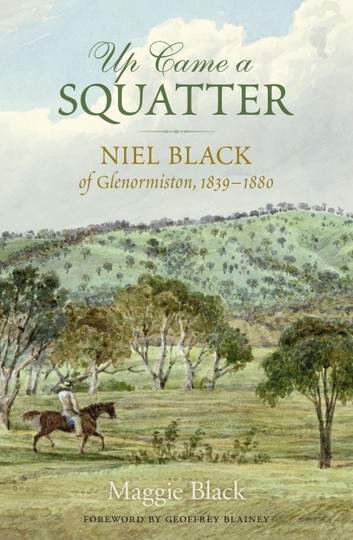
‘Up Came a Squatter: Niel Black of Glenormiston 1839-1880’ by Maggie Black

2016, 292 p. plus notes

The term ‘squatter’ has had different connotations over time. In the 1980s it suggested young people living in empty houses. In the song ‘Waltzing Matilda’, written in 1895, we had the squatter riding up mounted on his thoroughbred, accompanied by the troopers. And even further before that, in early 1840s Port Phillip we had squatters who were often young single men from wealthy families, who went up country, lived rough in huts, grew beards and came back to Melbourne to drink and carouse before heading back outback again. Generally, the squatters have had bad press in Australian history, seen as selfish landgrabbers, oblivious to the destruction of indigenous culture on the land they had appropriated, keeping the little man off the land, and using their power in the Legislative Council to protect their interests.

Much of the celebration of squatters has sprung from familial and parochial pride at our ‘forebears’: men celebrated by their families for establishing the family wealth, and communities grateful for the extensive but often patriarchal contribution made by squatters as civic characters. As Tom Griffiths showed us in his excellent Hunters and Collectors, these tributes to great men, which spawned books and statues (e.g. the 1920s cairns to the squatter Angus McMillan in Gippsland) were particularly created in the late 19th and early 20th century when it was felt that ‘the pioneers’ were passing away. Consciously framed as celebrations, the inconvenient matter of expropriation and massacre was framed as ‘clearing’ and ‘dispersal’. Even Margaret Kiddle’s beautifully written Men of Yesterday, which I discussed here, is silent about the indigenous groups that most certainly lived in, and fought for, the Western Districts of Victoria.

And so enter Niel Black. A 35 year old tenant farmer from Argyllshire, Scotland, he arrived in Melbourne 1839 as part of a Scots-based syndicate that aimed at taking leasing land, raising sheep, selling the wool, making money and then getting out and heading back ‘home’. One of the striking things about this book is its demonstration of Scottish capitalism at work. The sleeping partners of the syndicate back in Scotland wanted their dividends from their investment and were less interested in buying up land to create one unified landholding. But Niel Black, being the partner on the spot, increasingly saw things differently, developing a desire for his land after living and working here and becoming involved in politics to maintain squatter primacy in Victoria.

Black was very much in the ‘improving’ mindset, and fits in well with the descriptions of Scots Presbyterians who established early churches in the Port Phillip area that I read last year. He brought his own farmworkers with him, and maintained an interest in Scots-based emigration schemes that provided indentured labour to work on pastoral properties. In this, he adopted a patriarchal stance, but was happy to support good workers who established their own properties.

Writing about an early pastoralist inevitably raises questions about the relationship between the squatter and the indigenous people that he displaced. By moving into the Western District, Black was shifting to an area where there was a great deal of settler/aborigine conflict. He was keen to buy land that had already been ‘pacified’ and ‘cleared’ of aborigines because of his discomfort with the violence that new settlement entailed. At first he seems to be relatively critical of the harsh treatment of these “poor ignorant” creatures, and adopted a frighten-away policy of galloping after them or discharging his gun in the air when they encroached onto his land. However, over time, he became more sympathetic to settlers who had ‘clashed’ with aborigines, including the Whyte brothers who perpetrated a massacre near Wando Vale in March 1840, and was himself involved in a posse searching for those responsible for the death of a shepherd on an adjoining run. Gradually he joined in the general disparagement of ‘blacks’ and late 1842 he joined in the squatters’ criticism of La Trobe’s inactivity. Like many squatters, he felt that the Aboriginal Protectorate was a misguided, incompetent scheme, but he had quite good relations with Protector Charles Sievwright, even though many others did not.

Instead, most of his clashes occurred with either the Commissioner for Crown Lands Foster Fyans, or with neighbouring squatters. Particularly once the government began passing legislation forcing squatters to pay for some of their land, he was often reluctantly engaged in the same shady practices as other squatters in trying to gain control of contiguous expanses of land. This drive to consolidate land holdings was not understood or supported by some of his Scotland-based partners, and a breakdown in the relations with one of the partners in particular forced him to abandon his home to shift to another subdivision of the run where he built another, grander, home. It was largely to protect his holdings that he went into politics, but he seemed to be a rather diffident politician, operating behind the scenes but not publicly prominent. Lobby groups are always unlovely when you look at them close up, and the squatter lobby is no exception. Maggie Black is clear-eyed about the anti-democratic tendencies of this group of men acting politically in their own interests.

His story demonstrates the mobility of wealthy settlers who, even while achieving prominence in the colony, still viewed the UK as ‘home’. Black journeyed ‘home’ twice in search of a wife, and his business interests with his partners kept him financially tethered to Scotland, even though his wealth was entirely accrued in Victoria. His partners were happy to send their sons out to Glenormiston for the pastoral experience, and his nephew Archie, sent across from Scotland after his father suffered from mental illness, became a trusted, but later embittered, fellow squatter.

Niel Black wrote journals and voluminous letters – particularly to his business partner T.S. Gladstone, and these have been drawn upon heavily by historians of the Western District. They were all very nearly lost to history during the paper shortages of WWII, but were squirrelled away and later shown to Margaret Kiddle when she was researching for her Men of Yesterday. The wealth of his writing has enabled Maggie Black to write a well-rounded biography that makes explicable the convoluted Selection Acts legislation that tried to curb the power of the squatters. In his writings we see the mechanics of imperial – in this case Scottish – capitalism at play, and the emotional tensions that emerged when finance, family and competitive pressures made their demands.

Niel Black has had not one but two moments in the sun during the 2000s. There is this book, published in 2016 by Niel Black’s great-granddaughter, and an earlier book Strangers in a Foreign Land released eight years earlier, based on Black’s journal and other voices from the Western District, written by Maggie MacKellar. (I will confess to wondering at one stage if they were both the same author using different surnames, but this is not the case). I know that an erstwhile reader of this blog, Kevin Brewer, has been working on Niel Black for some time and he is acknowledged in Maggie Black’s book.

In the wake of the conflict with his former partners, the Glenormiston holding was split up between them, and lots were drawn for the different portions. Although his house was on the other section, Black had to settle for the Mount Noorat section, and after living for some time in Melbourne, in 1875 he decided to build a grand house that even he acknowledged would be “the crowning folly of my life”. The 38-room, two-storey, stuccoed Italianate mansion, which took years to construct, was better suited for a town, rather than a pastoral estate in the Western District. He was to live in it for only two years before his death in 1880. Despite its grandeur, it was demolished in the early 1940s – a life shorter than that of its builder.

Niel Black lives on through his journal and letters, never intended as public documents, that draw and inspire historians – particularly the three Margaret/Maggies (Kiddle, MacKellar and Black)- to write so beautifully about him, and in the case of the MacKellar and Black books, to be able to contextualize him in the light of later historiography.

My rating: 9/10

Sourced from: Yarra Plenty Regional Library

I have included this on the Australian Women Writers Challenge for 2020.

‘All the King’s Men’ by Robert Penn Warren

1946, [reprint 1974], 479 p.

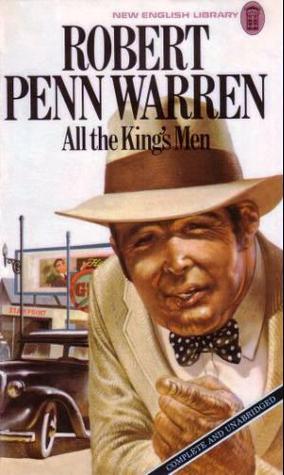
You have to hand it to New English Library publications – they have the most hideous covers. (I’m not the only one who thinks this: check out this posting on ‘Risque and Exploitative New English Library Covers from the 1960s and 70s‘. I now realize that the cover of this book is positively tasteful in comparison.) There are many other editions of this Pulitzer-Prize winning novel, originally published in 1946, but it was republished ‘Complete and Unabridged’ for a British readership in 1974. I’ve had in on my shelf for years and no doubt picked it up at some fete or something, having seen it mentioned on several people’s lists of ‘Great American Novels’ or suchlike. I really had no idea what it was about

From the blurb on the back, and the 1974 introduction, I learned that it was loosely based on Huey Long, who was planning on challenging Franklin D. Roosevelt for the Presidency in 1936, but was gunned down by an assassin the year before. I had heard mention of Huey Long in passing, in one of the excellent Heather Cox Richardson’s history chats, but I only knew him as a corrupt populist. I resisted the temptation to Google him, and I’m glad that I did, because I just took this book on its own merits.

The Huey Long character in this book is Willie Stark, a man who starts off as a small-town ‘squeaky wheel’ agitating for a straight deal to build a new schoolhouse in his town. He ends up Mason County City Treasurer, and it’s at this point that he meets Jack Burden, a journalist for the local Chronicle newspaper. Burden is a failed PhD candidate, brought up in the small town named for his family, Burden’s Landing. Burden starts following Stark’s career, as he takes on the entrenched political machine. At first Stark is unsuccessful and used as a pawn in other people’s political machinations. He is a poor public speaker, too focussed on facts. Burden gives him some off-the-cuff advice and Willie Stark, the populist politician and political boss is born.

Burden believes that he can be just a disinterested observer, like the historian he aspired to be, but he finds himself drawn into Stark’s orbit. When Stark asks him to ‘find some dirt’ on Judge Irwin, an older family friend from Jack’s hometown Burden Landing, Jack complies, although at first he holds on to the information that he uncovers. Jack’s childhood friends Anne and Adam Stanton are also drawn into Willie Stark’s machinations, and it is the compromises that Jack asks them to make at Willie’s behest, that leads to the climax of the novel.

This is a novel just as much about Jack Burden as narrator as it is about Willie Stark, the ostensible main character. It is about populism, power and political games, and I can well see why so many people have seen parallels with Trump, another populist ‘outsider’ to Washington. It’s also about history and personal choice, ethics and compromise. It reminded me a little of The Great Gatsby, with its narrator off to the side as Nick Carraway is, and also of Frank Hardy’s Power Without Glory in its exploration of politics and power.

It really is beautifully written. Warren is a confident author, with convoluted but always controlled sentences and an incisive eye. How about his description of a man who has just been shafted by Willie Stark? “[His eyes] were as numb and expressionless as a brace of gray oysters on the half shell”.(P. 155) [I shall not look at oysters the same way again!]

The book was written in 1946, echoing events which had occurred ten years earlier, so it was a contemporary book that, for us as 21st century readers, is set in an earlier time. As a contemporary author, however, Warren feels no need to set up the stage as in a historical fiction. It is jolting, however, to encounter the frequent and unembarrassed use of n—– and an insouciant racism that would disqualify it instantly as a school text.

Because, surprisingly, that’s what it has been. My hideously-covered book belonged to ‘A Major’ of 6C, (Form 6 later became Yr 12), and from his/her notes at the front, the book was obviously read. It is 479 pages of very dense print, and I just can’t imagine that you would ask any 17 year old to read it today, notwithstanding the racist language.

This was the ‘complete and unabridged’ version. The earlier version, for American readers, omitted a long chapter about Jack Burden’s PhD thesis. Even though if found it personally interesting, the book would not have suffered from its omission.

I can see why this book has appeared on ‘100 Best American Novel’ lists. It is well written, it has a complex chronological structure, and it carries its dual main-character nature well. It might have sat on my bookshelf for years, but it was well worth keeping and reading.

My rating: 9/10

Sourced from: My own bookshelves!

‘See What You Made Me Do’ by Jess Hill

2019, 416 p.

On February 12, 2014 a woman stood in her driveway, raw with grief and changed Australia’s mind about domestic abuse. Her 11 year old son had just been killed by his father. She had been warning for years that her former partner was a danger to her son and now her fears had been realized. Family violence can happen to anyone, she said, irrespective of how nice your house is, or how intelligent you are.

Jess Hill pinpoints this moment as when Australia began to listen. It was not that there had been no debate previously: Heather Osland’s imprisonment for murdering her abusive husband had caused controversy; Julie Ramage was the face of the middle class victim of domestic abuse, and there have been countless other terrible cases where the partner and/or children were murdered, often with the suicide of the perpetrator. But somehow Rosie Batty’s articulate composure in the midst of horror made the whole country listen.

Hill’s book explores domestic abuse in Australia today and she carefully identifies it as domestic abuse rather than domestic violence, because often coercive control is subtle and non-physical. But coercive control has many common features as if, as she says, there was a perpetrator’s handbook. Although the focus of her book is on male abuse of their intimate partners, she also addresses the violence of women, although noting that even though male victims fear the consequences of their abuser’s actions, they are not usually in physical fear of their lives. She looks at the effect on children, as well as on parents. One chapter near the end addresses the issue of domestic abuse within indigenous communities and the many indigenous women who have spoken out against it.

It’s a fairly analytic book, especially in the early chapters, where she sets up dichotomies, interspersed with individual stories, often given under a pseudonym. There’s a narrow line to be drawn here: honoring the story and the woman who has entrusted it to her; showing complexity; and yet not presenting a cavalcade of narratives. There is also a fine legal line that she needs to tread, to avoid identification of children. For the male perspective, she relied mainly on court documents and affidavits.

Those legal and ethical writing considerations notwithstanding, I must confess that for much of the book, I felt as if I were reading an extended Saturday newspaper article or a Quarterly Essay. I don’t know whether it was the book, or whether it was me, but it seemed to really tighten up with the chapter looking at the legal system and the perverse outcomes that have arisen from legislation to amend the Family Court, especially during the Howard years, in response to men’s rights groups. ‘Parental Alienation Syndrome’ was a thinly-researched argument which resulted in women (especially) acquiescing in arrangements that their children were baulking against, lest she be designated the hostile party and be banned from seeing the children at all. I was reading this book while the newspapers were reporting the Coroner’s inquest into John Edwards’ murder-suicide of his two children, Jack and Jennifer, and his wife Olga’s later suicide. It was like watching Hill’s description of the perversity of the court system and the power of the independent lawyer appointed to represent the children’s interests being brought to life.

She closes the book with a critique of the Federal Government’s domestic abuse strategy and its wishy-washy targets which look at attitudes and systems but not the most telling and easily computed statistic of all: that of the number of women killed by intimate partners. And lest it all seem too hard, she identifies policing strategies that have worked, although her North Carolina community-justice approach made me just a bit uncomfortable about public shaming. Shame, Hill argues at the start of the book, is what turns impotence into omnipotence and I do wonder about a causal factor being used as the corrective.

This book won the Stella Prize for 2020. The prize has gone to Non-fiction previously. The winner in 2019 was a memoir with The Erratics; Alexis Wright won it with a biography with Alexis Wright’s Tracker in 2018, and in 2014 Clare Wright received the Stella Prize for The Forgotten Rebels of Eureka.) The Stella Prize website describes itself as “a major literary award celebrating Australian women’s writing, and an organisation that champions cultural change.” I do find myself wondering, though, whether this book received the prize more for the second part of the mission statement than the first. The writing is clear and analytic and it integrates policy and personal narrative. But is it ‘literary’? (whatever ‘literary’ means). I think I’d be looking for an unusual structure, or an imaginative approach, or vivid imagery – something more than ‘investigative journalism’. I don’t deny that the book is important, both in its breadth and its analysis, and its emphasis on domestic ‘abuse’ as distinct from ‘violence’ it may well have shifted the conversation. But I guess that’s my problem – that it’s part of a conversation- rather than a distinctive and imaginative voice that somehow soars above the hubbub.

My rating: 8/10

Sourced from: ebook from Yarra Plenty Regional Library

I have included this book in the Australian Women Writers Challenge

‘The Enlightenment of the Greengage Tree’ by Shokoofeh Azar

2017, 268 p. Translated by ‘Adrien Kijek’

I knew that this book had been shortlisted for both the Stella Prize for Australian women’s writing, and also for the Booker International. It has been translated into English by a translator whose pseudonym appears only in the bibliographic details at the front of the book. Having only recently become sensitized to the nuances of translation by learning another language myself, at first I felt a frisson of annoyance that the translator was so invisible. However, I learn from a review of the Europa edition of the book, where the translator is designated ‘anonymous’, this was at their request and for reasons of safety. The fear and repression felt by the translator pervades the book too, where the political and personal grind remorselessly against each other. The magical realism with which the book is imbued is a relief, both in terms of self-protection for the characters and for us as readers.

Roza, the mother of three children Sohrab, Beeta and Bahar climbed the tallest tree in the grove, a greengage plum tree, and it was there that she received enlightenment at exactly 2.35 p.m. on August 18, 1988, the very moment that her son Sohrab was hanged under the instructions of the Supreme Leader Ruhollah Khomeini. The family had fled Tehran in the wake of the Iranian Revolution in 1979, but the unrest followed them to the small village of Razan as well. Not that her daughter Bahar physically followed them to the remote village: she had been killed during 1979 and as our narrator, is now a ghost, still present to her family, but dead.

The book combines historical detail – the mandate of wearing headcoverings, the appearance of men bristling with guns in the back of utilities, the disappearances and hangings – alongside a world of dragonflies, riotous growth of plants, jinns and mermaids. It’s a rather discombobulating book to read, with frequent time shifts and a permeable edge between the traditional and historical, and between the spirit and political worlds. The men with guns may have come, with their fundamentalist theology, but the traditional Persian beliefs in the spirit world underlie outward compliance and inward resistance. So too does the traditional way of story-telling, with a long story-within-a story that wreathes without a full-stop for ten pages.

This is also a family story, as each member responds in their own different way to the challenge of living through traumatic times. Roza, after her three-day stay in the greengage tree, leaves her diminished family; Beeta turns into a mermaid; her father Hushang immerses himself in his books before returning to his family home in Tehran, where the family has sequestered itself. His brother Khosro turns to mysticism, as a way of inuring himself from changes that he does not support. And Bahar moves among them restlessly, with love and impotent compassion, waiting for them to join her.

This is not an easy book to read, especially if you dislike magic realism. For myself, I see it playing a dual role in this book: as a way of laying claim to a way of viewing the world, but also as a form of resistance. Given that this book was trumped in the Booker International by the bleak and shrivelling The Discomfort of Evening, there is much more to hold on to in this book, which would have been a more worthy winner, in my view.

My rating: 8.5/10

Read because: Shortlisting on Stella and Booker International prizes

Sourced from: Yarra Plenty Regional Library

I have included this on the Australian Women Writers Challenge.

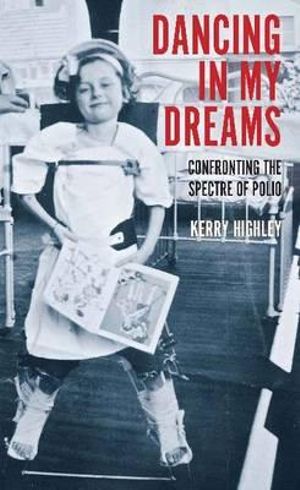
‘Dancing in my dreams: confronting the spectre of polio’ by Kerry Highley

dancing-in-my-dreams

2016, 177 p. plus notes

I admit that it might seem rather perverse to read about polio epidemics during our own coronavirus pandemic. But with the government’s attempt to highlight COVID infections amongst younger people as well as in older populations to highlight the seriousness of the situation, my mind has been turning recently to the polio epidemics of the past, and particularly the significance of age during a pandemic.

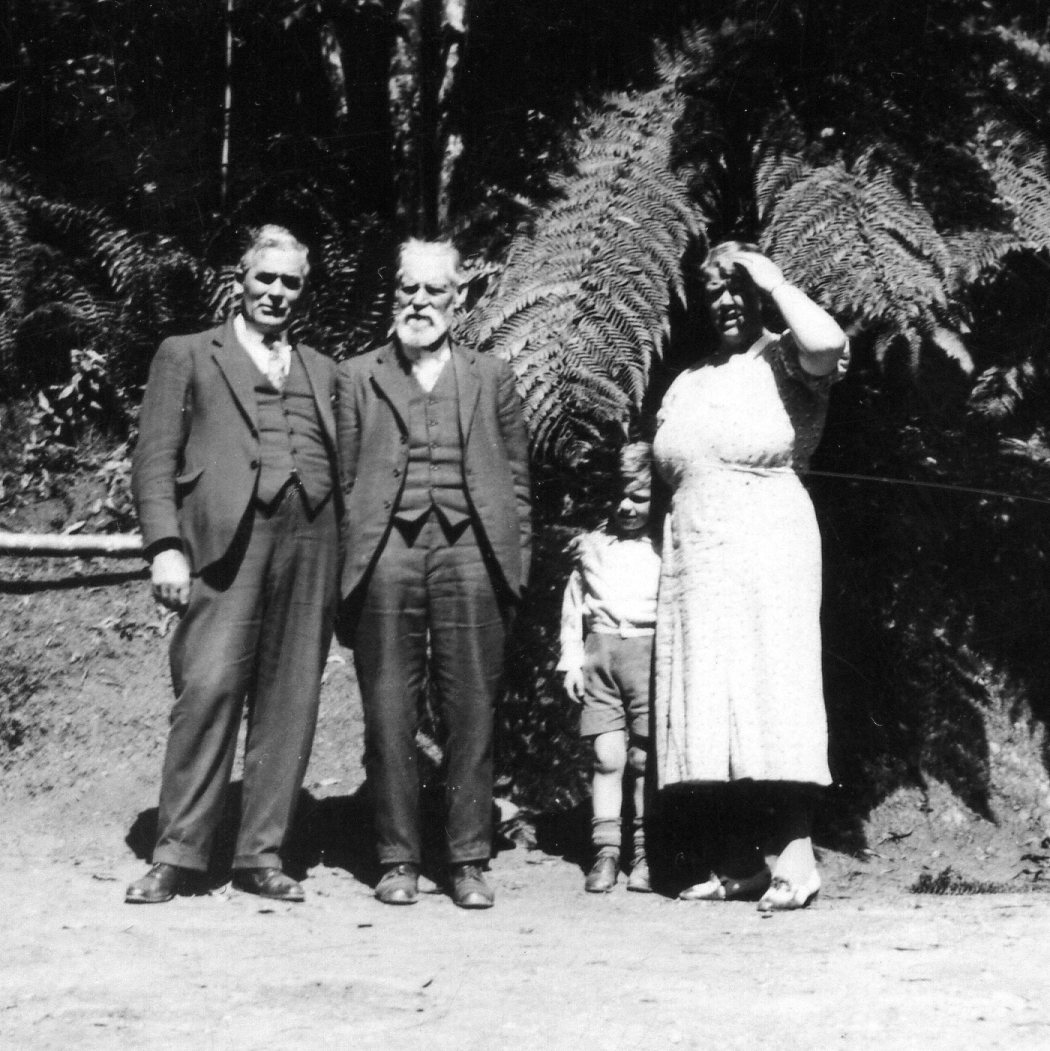
My father was the second child of the family, with a much older half-brother born to a previous marriage (as was too often the case, my grandfather’s first wife died in childbirth). Effectively brought up as a much-doted only child, my eight-year old father was sent to the family property up in Healesville to stay with his grandparents when the polio epidemic of 1937 struck, far from the contagion of the city. 

img518

My father with his father (left), grandfather and mother at Healesville

Through Highley’s book Dancing in My Dreams: Confronting the Spectre of Polio, I now know that the government tried to discourage parents from doing exactly this, no doubt fearful of spreading polio even further. The streets in 1937 were deserted, she writes, and the picture theatres empty. Schools were closed, and states rushed to close their borders, something that the Federal Minister for Health, Billy Hughes, declared was unconstitutional. (Federal politicians obviously don’t like to be reminded that state borders still exist.) I still shake my head in disbelief that I have seen the same thing in 2020.

But, in fact 1937 was not the most virulent polio epidemic that Australia has seen.  That distinction belongs to the early 1950s, when polio affected 32.30 in every 100,000 of population and affected states across Australia (compared with 14.10 in 1936-40, which mainly affected Victoria.) Nor was it necessarily infantile paralysis, as it was more formally known. The improvements in sanitation in the early twentieth century meant that very young infants, who seemed to be less severely affected, were less likely to catch it. Instead, older children from about 6 and up, teenagers and young adults contracted it. In European, industrialized countries, it changed from an endemic disease to an epidemic one, and one that affected middle class children and young adults, and not just ‘the poor’.

Epidemics prior to 1951 affected particular states, rather than the country as a whole. In 1904 it was Queensland and NSW; in 1908 Victoria; and then in New South Wales in 1931-2. During 1916 New York was afflicted with an epidemic that evoked many of the public health responses we have seen recently: six (!!) weeks quarantine of patients and contacts; food delivered to the front door, funerals held in private, schools closed, public meetings banned.  The public perception that there was a correlation between polio and dirt was challenged when Franklin D. Roosevelt became President. That myth may have been crushed, but the perception that to be “crippled” (to use the terminology of the day) was a matter of shame continued for decades.

During (and after) the 1937 epidemic, there were two competing treatment regimes and much of Highley’s book describes the personalities, history and politics that affected the dominance of one regime over the other.  These clashes took place within a particular historical context.  The 1908 Medical Act established the dominance of the medical profession over the chemists, dentists, midwives, herbalists and homeopaths who had operated in the medical sphere previously.  Nurses, although trying to emphasize their professionalism through groups like the Australian Training Nurses Association,  were very much under the control of doctors and the British Medical Association in Australia organization was very powerful. Interestingly, due to the influence of Christian Scientists and chiropractors in the United States, this strict delineation was not a feature of the American medical scene. In Victoria, the ‘fever hospital’ (later Fairfield Infectious Diseases Hospital) opened in 1904, and in 1937 all polio cases were sent there.

The official response was headed by Dr. (later Dame) Jean Macnamara, who graduated from the University of Melbourne in the stellar year of 1922 (along with pediatrician Dr. Kate Campbell, hematologist Dr Lucy Bryce and medical scientist Dr (late Sir) Sir Frank Macfarlane Burnet). She was appointed resident of the Children’s Hospital the following year, then became clinical assistant to the Children’s out-patients physician and entered private practice specializing in poliomyelitis in 1925. When a polio outbreak occurred that year, she began testing the use of immune serum in her patients and continued to do so even when other international results called its efficacy into question. (Another resonance today- serum is being tested for COVID as well.) Her method involved the splinting of children into a Thomas Splint – a flat, almost crucifix type structure-  for months if not years until the damaged nerves had recovered. Her preference for splinting also extended to treatment for knock-knees and postural problems. In Highley’s somewhat critical depiction, she took a rather utilitarian view of illness, with an emphasis on the economic costs of the ‘cripple’ who would need an invalid pension in the future.

The competing treatment was pioneered by Sister Elizabeth Kenny,  a nurse – not a doctor- from Townsville. Instead of waiting for the inflammation to subside, the Kenny treatment involved hot flannels for the pain (something that Macnamara’s treatment did not prioritize) and early massage and manipulation of the muscles. As Highley points out, Kenny was in many ways her own worst enemy. She was evasive about her own background, which did not include general nursing training, and it  was her experience during WWI that qualified her to call herself ‘Sister’. She was adamant in distancing herself from what might be construed as ‘quack’ medicine, which meant that she did not ally herself with the increasingly-accepted discipline of physiotherapy, which probably would have been to her advantage. Not part of the medical establishment Kenny herself was pugnacious and often alienated people who could have assisted her. Her methods were more accepted in America, where the medical establishment did not have the same stranglehold, and in New Zealand. Although some of her methods were integrated into Australian treatment, the Kenny-dedicated clinics dwindled, and ‘Kenny-like’ treatments diluted the significance of early intervention.

So much was not known about polio at the time: how it was transmitted, its effect on the body, the prognosis for an individual. Just as today, there was a frantic race to find a vaccine against polio, and the tragic mis-steps in this process bring a note of caution to our current world-wide race to find a COVID vaccine.

But the focus of this book is very much on the individual, and his or her  experience of polio. She traces through the diagnosis and early crisis of the disease, the responses of child and adult patients to this rupture in their lives, the differing experiences under the Macnamara and Kenny treatment regime, the long period of rehabilitation and family and societal responses in the years and decades afterwards. The text has liberal quotations of oral testimony, drawn from a variety of sources, and you never forget that you are reading about people. It is engagingly written, with equal attention to personality, politics and science.

And no, it wasn’t depressing reading during a pandemic.  It was oddly reassuring to read that communities had been frightened by a disease that was unknown, and that the current measures of quarantine, isolation and, yes, border closures are not some 21st century draconian infringement on our liberties or a conspiracy dreamed up on the edges of the internet. It was interesting to see two women competing within the medical sphere, and the power dynamics at play. There were mis-steps and misapprehensions, but knowledge of polio as a disease gradually expanded. The book captures attitudes towards illness and disability that are best left in the past.  The story of the polio vaccine and its tragic failures prompted by haste carry a warning (I’m speaking to you, Trump), but eventually confirm the importance of vaccination and rigorous testing. I’m glad that I read this book.

My rating: 9/10

Sourced from: read online through State Library of Victoria.

I have read this as part of the Australian Women Writers Challenge 2020

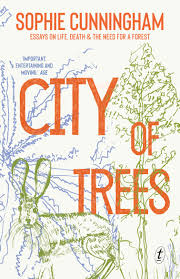
‘City of Trees: Essays on Life, Death and the Need for a Forest’ by Sophie Cunningham

2019, 224 p.

As might be guessed from the full title City of Trees: Essays on Life, Death and the Need for a Forest this book of essays ties together a number of disparate topics: trees, the natural world, human heedlessness, loving and dying. Each of the essays, many of which have been published elsewhere previously, is prefaced by a pencil sketch of a particular tree- the Coast Live Oak in America, the Giant Sequoia, the Ginkgo, Eucalyptus, Moreton Bay Fig, Coolibah etc. Then follows a short piece of writing about the tree, sometimes interwoven with personal reflection or historical anecdote. A more substantial essay then ensues, not necessarily closely related to the shorter preface.

So why trees? Sophie Cunningham has been photographing trees on her Instagram account for some time. The act of walking past a tree, stopping to photograph it, and to in effect ‘curate’ it as part of a collection means that she looks at trees closely. The trees are rooted in different countries- most particularly North America and Australia- reflecting Cunningham’s own journeyings between these two countries. So too the essays which combine personal reflection, and non-fictional writing. As one might expect from an author who has lived in America for a few years, there is a strong American focus, while at the same time, having written the Melbourne volume of New South Books series on Australian capital cities, the book is replete with stories of Melbourne and its history.

So there has been a concerted attempt to create a unity out of these disparate elements through the ‘sketch/small essay/big essay’ structure of the book. The essays themselves are very discursive, like jumping from one branch to another in a huge tree. This seemed particularly true of the earlier essays, particularly ‘The Fall’ and ‘Staying with the Trouble’, which ricocheted from one idea to the other. I don’t know whether I became more accustomed to her writing, or whether this digressive writing was reined in by the later stories. Call me a stickler for a narrative thread, but I preferred the more disciplined ones.

Given the effort that had gone into crafting an identity for this set of essays as a entity, I was startled and disconcerted by the inclusion of a chapter from a previous book Warning: The Story of Cyclone Tracy. I was reading this as an e-book, and perhaps if it had been a print version I might have been alert to the ‘additional advertising’ nature of this final chapter. As it was, the sense of ’rounding off’ that came in her final chapter, Mountain Ash, was ruptured. A poor choice, I thought, on someone’s part.

I always find it difficult to review short stories and books of essays. Despite the care in creating an overarching structure for these essays, I did find them particularly – and at time, too – discursive within themselves. The ache for the environment comes through strongly, but in many ways I preferred the more intimate human stories.

My rating: 8/10

Sourced from: Yarra Plenty Regional Library e-book

I have included this on the Australian Women Writers Challenge 2020.
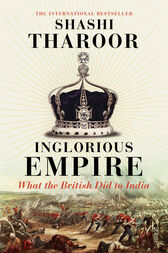
‘Inglorious Empire: What the British did to India’ by Shashi Tharoor

tharoor_inglorious_empire

2017, 261 p. plus notes

I’ve spent quite a bit of time dabbling around in 19th century Colonial Office papers, albeit only between 1825 and 1848. The correspondence files to and from the colonies in the British Public Records Office are bound in huge volumes, arranged alphabetically by colony for each year, in fading brown (previously black) copperplate writing, with fascinating little side notes scribbled in the margins from various Colonial Office officials at different levels of the hierarchy. But you won’t find the Indian correspondence in these volumes: instead, it was dealt with and bound completely separate from the other Colonial Office mail. Within the Colonial Office bureaucracy, there was an ‘Indian’ track and an ‘Other Empire’ track, and never the twain did meet. It struck me as strange at the time, but I can understand it a little better after reading Tharoor’s Inglorious Empire. Although there was a template to all British-colony interaction, in India the expropriation and British-centredness of policy outstripped that of other colonies, and no doubt it suited the Colonial Office for that particular corporate approach and memory to remain corralled away from other colonial exploits.

This book had its genesis in a 2015 debate at the Oxford Union on the proposition that ‘Britain Owes Reparations to her Former Colonies’. Tharoor, speaking on the affirmative side, argued that – yes, reparations were owed- but given the impossibility of calculating them and the passage of time, they should be set at one pound per year for each year of British colonization. His arguments during the debate, he thought, needed little repetition, but when his contribution to the debate went viral, he realized that indeed, many people were not aware of the deliberately rapacious colonial policy that underpinned Britain’s treatment of India.

“Ah, but we gave India its railways, its facility with English, its bureaucracy, its parliamentary and legal system, tea and cricket!” those nostalgic for Britain’s Greatness – including historians Niall Ferguson and Lawrence James – protest. One by one, Tharoor unpicks these claims, although conceding the tea and cricket.

In Chapter 1 ‘The Looting of India’ he points out the financial rape of India’s economy through exorbitant taxation, manipulation of currency and the forced payment of pensions for Europeans who spent time in India before returning ‘home’ (a practice that settler colonies also had to comply with, although some Colonial Office appointees did remain in their adopted colonial home). The British government protected its own industries – the fabric industry, the steel and ship building industries – by insisting on the importation of  British manufacture by its colonies and using excises to decimate the Indian export industries. It wasn’t, he claims, that India “missed the bus” of industrialization: instead, it was thrown right under it.

Chapter 2 explores the question “Did the British give India political unity?” He argues that there had already been several empires that had united the landmass of India, and veering somewhat into speculation, that there was no reason why it could not have happened again without British interference. He points out that, unlike in the settler colonies, there was never any intention to give India self-government. The entire focus of the famed Indian Civil Service was British-focused, providing no route for Indian-born employees to progress, and forming a pool of eligible, bored British bachelors who were snared by the ‘fishing fleets’ of Englishwomen looking for European husbands with whom they would return to England after fulfilling their requisite period of luxurious exile.

Ch. 3 turns to ‘Democracy, the Press and Parliamentary System and the Rule of Law’ – those features that Niall Ferguson describes as Britain’s “gifts” to their colonies. Certainly, India adopted (blindly, Tharoor asserts) the British parliamentary system and form of democracy.  Certainly, there was a lively press in India, but it was subjected to far more scrutiny than the Anglo-Indian press which often promoted violence and prejudice. Certainly, India adopted the British ‘rule of law’ but this law took no heed of the existing traditional legal system (just as happened with indigenous law in Australia) and it was overwhelming used against Indians. He points out that India still has laws on its books, especially in regard to sexuality, that have since been repealed or abolished in Britain.

Chapter 4 ‘Divide Et Impera’ argues that it was the British was conceptualized and reified the idea that religion and caste divided India. Tharoor concedes that religion and caste certainly existed before the British arrived, but they were not the monoliths that Britain claimed and there was more interaction between them than Britain conceded. There had been intra-religious violence among religious and caste groups, but he suggests that this violence occurred at times of political crisis. During the grudgingly-conceded Independence and the disastrous Partition, Britain favoured Jinnah and the Muslim League, and Congress allowed itself to be imprisoned and sidelined.

Ch. 5 returns to ‘The Myth of the Enlightened Despot’. He points out that the Spanish Flu affected 1/3 of the population – 125 million cases- and caused 12.5 million deaths (out of the estimated 50 million world wide). During the Raj, there were famines in 1770,  1783, 1866, 1873, 1892, 1897 and lastly 1943-44. There have been no famines since Independence. British history remembers Peterloo (18 deaths 400-700 injuries) and the Boston Commons ‘massacres’ (5 deaths, 6 injuries) but these pale into insignificance against the Jallianwala Bagh massacre  where British troops fired on a crowd of Indian men, women and children in a confined space, killing at least 376 people and wounded 1137.

Ch 6 ‘The Remaining Case for Empire’ looks that those other Good Things that Britain is said to have gifted India: the railways (they were exorbitantly built for freight, but not people), language (yes, but the literacy rate was only 16% and it was certainly not intended to be a route to equality), tea – yes and cricket -yes.

In Chapter 7 ‘The (Im)balance Sheet’ Tharoor turns particularly to Niall Ferguson and to a lesser extent Lawrence James and other apologists for the British Empire, refuting their arguments and pointing out the moral consequences of colonial policies. He continues this into Ch 8 ‘The Messy Afterlife of Colonialism’ which deals with imperial amnesia (or even more chillingly, its resurrection as part of Brexit yearnings). Although not calling for financial reparations, he does look to Kohinoor Diamond, now part of the British Crown Jewels collection.  He points out that colonialism, not just in India, has a long afterlife with arbitrary national divisions drawn on maps as in the Sykes-Picot carve up of the Middle East, spurious racial claims as with the Hutus and Tutsis in Rwanda and the militarization of Pakistan.

Certainly, taken together this is a damning record. There was much that I had glimpsed from my studies of settler colonies, but had not really understood when drawn to its extremes in India. This is of course, a polemical book, following a single argument as fits its genesis in a debate, but it is well written, measured and draws on a lot of recent research. However, his excursions into speculative history unnerved me, and I wonder whether the current COVID tsunami in India, the increasing inflexibility and belligerence of  Narendra Modi’s BJP, and the prickliness on the Kashmir border support or challenge his argument.

My rating: 8/10

Sourced from: Yarra Plenty Regional Library e-book

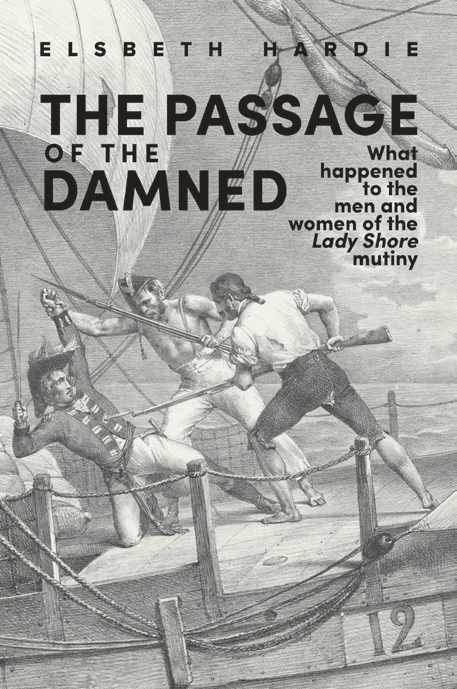
‘The Passage of the Damned’ by Elsbeth Hardie

Hardie_Passage-of-the-Damned

2019 335p.

SPOILER ALERT

At a time when we’re all locked in our houses because of coronavirus, it seemed apposite to read about other people who had also been locked down. I had been sent this book for review an embarrassingly long time ago, and so I settled down with it, expecting to read about a convict transport ship bearing mainly women passengers bound for New South Wales. I was surprised to end up in a completely different continent, with many of its female convict passengers integrating into a Spanish-speaking community, in many cases leaving their convict history far behind. It’s quite a rattling tale, and one with which I was not familiar.

The convict ship Lady Shore set sail from Portsmouth on 22 April 1797 with 66 female prisoners, 2 male prisoners, 40-something ship’s officers and some 70-odd members of the New South Wales Corps, some of whom were accompanied by their wives and children (the sources give differing numbers). It never made it to Sydney. On 1 August the ship was seized by mutineers, largely drawn from amongst the French, German and Spaniard prisoners of war who had been conscripted against their will into the New South Wales Corps.  One wonders why the British government ever thought that this would be a good idea. With the rallying cry “Vive La Republique!” they took control of the ship near the Brazilian coast, supplemented by other disaffected Irish and English members of the NSW Corps. The captain, chief mate and one of the mutineers were killed. A longboat, containing 29 people including officers, soldiers and some sailors, wives and children, was set adrift from the commandeered ship, reaching shore at San Pedro Rio Grand the next afternoon.  They gradually made their way to Rio de Janeiro, and in many cases, back to London where the mutiny was reported to the government.

Meanwhile, the mutineers and their cargo of female convicts set sail for Montevideo. Because France had defeated Spain during 1794 as part of the Revolutionary Wars, the mutineers felt (correctly) that they would receive the protection of the Spanish government, and they were eventually released, and even financially benefited from taking the ship as a prize of war. One of the ringleaders finally faced British justice and was hanged for the murder of Captain Willcox when he was apprehended some time later. There was little British concern about the female convicts, many of whom converted to Catholicism and blended into Buenos Aires society.

The author, Elsbeth Hardie is a journalist in New Zealand. Before writing this book, she had written another non-fiction book The Girl Who Stole Stockings, based on the life of her maternal ancestor, Susannah Noon, who was sentenced to transportation for the theft of stockings when she was twelve years old. Although this 1794 journey of the Lady Shore carried female convicts, they play a minor role in this book- as, indeed, they did in the eventual outcome of the mutiny.

The book is written as a chronological narrative history, divided up by subheadings but not into separate chapters. While this does drive the action forward, there is little shaping of an argument as such. The author describes the drawn-out nature of imprisonment prior to embarkation on a convict transport ship, and gives a good picture of the New South Wales Corp ‘enlistment’ which verged on impressment during the Napoleonic Wars, when any half-decent soldier was deployed in fighting rather than guarding convicts on the other side of the world.  I did find myself transfixed by the ‘what next?’ nature of the first part of the book, especially during the mutiny and the immediate aftermath. It was much written about at the time, by both participants and in the newspapers, and Hardie balances competing (and somewhat self-serving) narratives to give a detailed account of events.

The narrative splinters somewhat when it comes to tracing the outcomes for the women convicts. Here Hardie relies- with appropriate acknowledgement- on the work of Argentinian scholar Joseph M. Massini Ezcurra in the 1950s, whose work was taken up by Juan M. Méndez Avellanada writing from the 1980s and whose book Las Convictas de la Lady Shore was published in English in 2008. When the female prisoners arrived, they were located in a Bethlemite convent called La Residencia in Buenos Aires. From there, they found work as servants in Buenos Aires families, married, and disappeared into respectability or – in relatively few cases – moved into prostitution and petty crime. Most converted to Catholicism, either through conviction or as a survival mechanism, and blended into society. Their names in the records were often rendered into their Spanish translation e.g. Susannah King became Susana Rey; Lucy Whitehouse became Lucia Blanco. Sometimes their names were written phonetically; other women reverted to their maiden names or adopted another names. At this point, the genealogical detail of the hunt tends to swamp the narrative.

The discussion of sources appears, rather strangely, at the end of the book. This could be the author’s way of bringing the story into the 20th and 21st century.  Texts and sources continued to appear as recently as 2012, when Sotheby’s sold the diary of Thomas Millard, the ship’s carpenter, which was purchased by a private buyer and has disappeared since. It was a strange way to finish the book, and I felt that it cried out for a concluding chapter, drawing out the major themes and rounding off the story.

I found myself likening this book to Cassandra Pybus’ Truganini (my review here), not in terms of content, but in its avoidance of secondary literature and sidestepping of academic work that would have added so much to this book. In this case, I don’t know whether it is because Hardie has a journalist, rather than historian, background or whether, as in Pybus’ case, it is a more deliberate authorial choice. In her descriptions of the prison system and the women’s crimes, I found myself thinking back to E.P. Thompson’s Whigs and Hunters (my review here) which explains the ‘mission creep’ of the Black Act in the protection of property and the distortions it created in sentencing decisions and leading to so many commutations of life sentences to transportation. Greg Dening did such an excellent job in talking about naval discipline, leadership,character and mutiny in Mr Bligh’s Bad Language, which I would have loved to have seen Hardie draw on when discussing the rather pusillanimous (and young) Ensign William Minchin of the NSW Corps. And what would Kirsten McKenzie, one of my favorite historians and author of Scandal in the Colonies and A Swindler’s Progress (my review here) done with Major James Semple, imposter extraordinaire and one of her most robust characters and informants? In Semple’s life (or rather, lives), and in the lives of the women convicts, Hardie gives us multiple examples of the slipperiness of identity in colonial port cities that McKenzie explores so well.

Nonetheless, I am again wishing for a different book, rather than the one I have in my hands.  By her focus on one example, Hardie draws a vivid picture of global politics as it played out on the high seas during the Revolutionary Wars. She captures well the coerced nature of life in the NSW Corps, and highlights the elisions between role of prisoner, guard, sailor and soldier. Far from a lonely ship sailing off onto the high seas, she paints a picture of a network of ships, criss-crossing the globe and circulating different ports, not unlike those maps of flight paths in the back of the airline magazine when we used to be able to fly. Particularly the first half of her book is engrossing narrative history, and I must admit that I  have not often had to put ‘Spoiler Alert’ at the start of a review of a history!

Sourced from: review copy from Australian Scholarly Press.