Category Archives: Book Reviews 2025

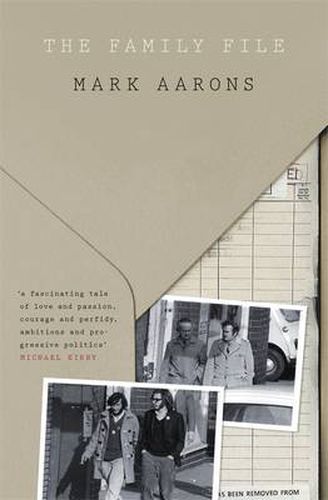
‘The Family Files’ by Mark Aarons

2010, 368 p.

Some years ago I was attending the Melbourne Unitarian Peace Memorial Church when someone mentioned the almost certain presence of ASIO spies at the service. I really don’t know if they were there or not – (certainly this church and its attendees would have been under surveillance over many years, I’m sure)- but it had just never crossed my mind to think that they would be there amongst the silver-haired people in the pews that day. I have wondered about the presence of ASIO agents when I’ve attended rallies, but the whole world of ASIO and espionage is something completely outside my consciousness.

Not so for the Aarons family though, with four generations of Communist activity under their belt. When Mark Aarons finally got access to the ASIO files on his family (including him!), they amounted to 209 volumes and 32,000 pages. Carefully noted was where they went, with whom, and what was said- for a family researcher, almost like one long home-movie over several generations.

Aarons’ great-grandparents Louis and Jane Aarons were founding members of the Communist Party of Australia. Louis had grown up in Whitechapel, part of the influx of Russian, Polish and East European Jews who flooded into Britain in the wake of the Russian pogroms of the late 1880s. He had arrived in Australia in November 1889. His wife, Jane, was from Brooklyn. In Melbourne, they lived in Carlton, where there was a large poor working-class Jewish population, then they moved to Sandringham and Balwyn, which would have been very outer suburbs at the time. Like many radical socialists of the day, Jane could speak Esperanto fluently, and they joined the Sandringham branch of the Labor Party around 1910. Their children attended the Victorian Socialist Party Sunday School, and during WWI Jane and Louis threw themselves in with the revolutionary socialists, joining the Victorian Socialist Party as active members, leading to Jane’s arrest for flying the Red Flag. They were foundation members of the Melbourne Communist Party of Australia in 1921 and Jane travelled to the Soviet Union to join a May Day parade in 1932.

Their son, Sam, was very involved in the Western Australian CPA, and drifted in and out of the Melbourne and Sydney branches when visiting. After his first marriage ended, he moved to Sydney and opened a While-U-Wait shoe repair business in Pitt Street near Martin Place. He was fired up by a speech by a CPA member after the execution of American anarchists Sacco and Vanzetti, and rejoined the Sydney CPA branch in late 1929. He travelled overseas, and was part of the International Brigade in the Spanish Civil War.

His son Laurie was born in Sydney in 1917 to Sam and his first wife. The family had moved to Melbourne, but then returned to Sydney after Sam’s marriage broke up in the early 1920s. At the age of 14, Laurie decided to become a professional revolutionary. He was the head of the Young Pioneer’s Section of the Communist Party. He was a prominent paid member of the CPA for 33 years, and probably the most notorious of the Aarons family.

His son and the author of this book, Mark Aarons was what was known as a “red-diaper baby”, born and bred in the Communist Party. His brother Brian campaigned against the Vietnam War, supported the environment and advocated for Indigenous rights and reconciliation. In 1965 Brian was involved in the Freedom Ride for Aboriginal Rights (in fact, I read about him just the other day now that it’s the 60th anniversary). When conscripted to fight in the Vietnam War, he became a draft resister. Mark himself was also a member of the Communist Party until 1978, and ended up a journalist and senior advisor to the NSW Labor government between 1996 and 2007.

I found myself wondering about family interests handed on for four generations. Do families still ‘hand on’ organizational affiliations like this? I suppose that church affiliation runs between families, as does private school affiliation (a good argument for State education, I reckon). Professions and football affiliations run in families too. Military involvement tends to run in families too, but that might be a reflection of the times, rather than personal choice. But, given the propensity for 20th century children to run a mile from anything their parents are involved in, I find it quite remarkable that the CPA was able to ‘hold’ four generations. Its Socialist Sunday School and the Eureka Young League made membership a family affair.

The book focuses on the Aarons family, and ASIO’s interest in them, but running alongside it is a history of Australian left radicalism as well. Right from his great-grandparents’ involvement in WWI anti-conscription and suffrage politics, his family was involved in the radical edge of mainstream Australian politics. The influence of the Soviet Union on Communist parties internationally was overpowering, which became problematic during WWII when, at first, the Soviet Union and Germany were in alliance. For Jewish families like the Aarons – albeit Jewish by heritage rather than religious practice- this was a challenging choice to be forced to make. Once Russia had joined with Britain and France, members of the Communist Party were freed up to enlist, and members of the Aarons family now did.

Post War, the Communist Party was particularly targeted by Prime Minister Menzies, epitomized by the photograph of Evdokia Petrov being escorted from the country by burly Russian embassy minders. The Communist Party was declared illegal in 1940. There were many accusations of Soviet agents in the Communist Party of Australia, and although he was never charged with treason, party member Walter Clayton later finally admitted to Laurie Aarons in an oral history, that he had been a Soviet agent. It’s rather odd having Laurie Aarons bursting into the narrative as an oral historian in his own right, juxtaposed against the secret service surveillance which covered his whole life.

A further challenge to lifelong Communist Party members came when Kruschev distanced himself from Stalinism, and when the Soviet Union invaded Hungary and Czechoslovakia. Just as generational Catholics had to confront their church’s covering-up of sexual abuse in recent years, Communists whose families had been aligned with the Communist Party for generations, needed to decide where they stood. The Aarons family had to do that, too, and Mark in particular found himself returning to the Labor Party that his great-grandparents had joined at the start of the 19th century.

There are lots of names in this book, and I’m sure that people involved in radical politics would see agendas and paybacks running through this book to which I’m oblivious. I could only read it against my knowledge of the broader sweep of Australian history, not the minutiae of Communist/Socialist Party politics.

But as a family narrative, it is a satisfying one, particularly with the closing of the circle when Michael Thwaites, who had been the head of counter-espionage organization that had tracked Laurie Aarons for over 20 years, wrote to Laurie in 1987. He told him that he had enjoyed an interview that Laurie Aarons had given to Caroline Jones’ The Search for Meaning, telling him that he admired his honesty about the influence of Czechoslovakia on his thinking, and wishing him success in the book he was writing. Likewise, in old age,Laurie mended bridges with Jack McPhillips, with whom he had feuded for decades. So much scrutiny, so many arguments… and in the end, they were all old men facing their inevitable ends. As are we all.

My rating: 8/10

Sourced from: purchased e-book
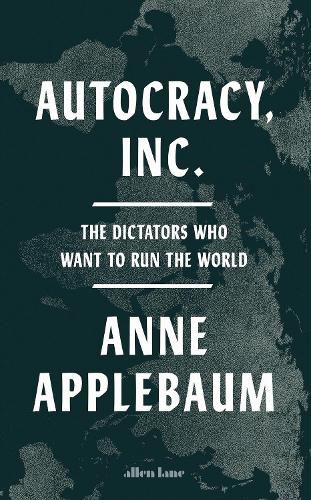
‘Autocracy, Inc: The Dictators Who Want to Run the World’ by Anne Applebaum

2024, 240 p.

I’ve had this book reserved at the library for some time, and when I finally received it I was disappointed that it seemed to be a rehash of the excellent podcast series that I mentioned back in November 2024, before this whole Trump 2.0 nightmare began. But it isn’t. Her podcast was called ‘Autocracy in America’, and in the podcast she applies the principles that she spells out in this book Autocracy Inc to the American context, with much prescience, I’m afraid.

She notes that the old cartoon image of the ‘bad man’ autocrat is outdated.

Nowadays, autocracies are run not by one bad guy but by sophisticated networks relying on kleptocratic financial structures, a complex of security services- military, paramilitary, police- and technological experts who provide surveillance, propaganda, and disinformation. The members of these networks are connected not only to one another within a given autocracy, but also to networks in other autocratic countries, and sometimes in democracies too. Corrupt, state-controlled companies in one dictatorship do business with corrupt, state-controlled companies in another. The police in one country may arm, equip, and train the police in many others. The propagandists share resources- the troll farms and media networks that promote one dictator’s propaganda can also be used to promote another’s- as well as themes: the degeneracy of democracy, the stability of autocracy, the evil of America. (p.2)

In this book, she sweeps her searchlight onto the strongmen who lead Russia, China, Iran, North Korea, Venezuela, Nicaragua, Angola, Myanmar, Cuba, Syria (possibly outdated), Zimbabwe, Mali, Belarus, Sudan, Azerbaijan in particular- although she mentions some three dozen others. What a depressingly large list! Autocracy Inc, as she calls them, collaborate to keep their members in power by ignoring multiple international agencies, buoyed by a conviction that the outside world cannot touch them.

Her opening chapter ‘The Greed That Binds’ looks particularly at Putin, and the schemes he established to enrich oligarchs in the breakup of the Soviet Union. These oligarchs have invested in America and Britain.

Her second chapter ‘Kleptocracy Metastasizes’ turns to Chavez’s Venezuela, where Autocracy Inc. stepped in after Chavez’s death in 2013, where Russian and Chinese money poured into the country to enable Chavez and then Maduro to postpone any kind of financial reckoning as they destroyed the economy. Cuba joined with Venezuela in an anti-American agenda, and Maduro and Turkey’s Recep Tayyip Erdogan share a dislike of democracy and anti corruption movements in their own countries. Improbably, Venezuela and Iran, despite their many differences, relate on the basis of shared grievance, with Iranians buying Venezuelan gold, and sending food and gasoline in return and assisting with the repair of Venezuelan oil refineries. She looks at Uebert Angel, an evangelical pastor and British-Zimbabwean businessman who is involved in gold-smuggling schemes, some associated with Zimbabwe’s ruling party and its president Emmerson Mnangagwa. The ruling party has a long standing relationship with the Chinese Community Party and Putin’s Russia.

Chapter 3, ‘Controlling the Narrative’ looks at cybersecurity and firewalls as a way of rewriting history, as for example, in China with Tiananmen Square. Spyware and surveillance is a way of autocracies justifying their abuse of electronic technologies. Domestic propaganda in Russian state television devotes huge slabs of time to America’s culture wars. China has made an enormous investment in international media, which makes possible the spread of misinformation internationally, and RT (Russia Today) has sites which writes material, is translated into other languages, and published on ‘native’ sites to make them seem local. Yala News, run by a Syrian businessman for example, has taken material from Russian state media and spread it through Arabic news sites. As we know, websites and videos can be fake.

Chapter 4 ‘Changing the Operating System’ looks at the ‘rules-based order’ (something that powerful countries feel themselves exempt from) and the removal of language that constrains Autocracy Inc from the international arena altogether. Instead of ‘human rights’, China wants to prioritize the ‘right to development’. The term ‘sovereignty’ is used in different ways. ‘Multipolarity’, a word preferred by the Russian information networks, is meant to be fair and equitable, but is now the basis of a whole campaign systematically spread on Russia Today in English, French, Spanish and Arabic, and repeated by information-laundering sites such as Yala News. Alternative institutions in a ‘multipolar’ world agree to recognize each other’s ‘sovereignty’, not to criticize each others’ autocratic behaviour and not to intervene in each other’s internal politics. Not every member of BRICS and the Shanghai Cooperation Organization is an autocrat, but she asserts that

…if the old system was designed to inculcate the “rule of law”, these new institutions are meant to promote “rule by law”- the belief that “law” is whatever the current autocrat or ruling party leader says it is, whether inside Iran, Cuba, or anywhere else in the world. (p. 107)

She looks particularly at the Syrian Civil War and the Russian-led campaign against the White Helmets, and the involvement of the Wagner Group.

Chapter 5 ‘Smearing the Democrats’ looks at ways that the people have fought back in Poland, Venezuela, Burma and Hong Kong- although this is a very discouraging list (except for Poland). The response of autocratic government to challenge is to mount smear campaigns and make accusations of foreign interference. More sophisticated autocracies have moved beyond just killing their opponents, and now prepare legal and propaganda campaigns in advance, designed to catch democracy activists before they gain credibility or popularity.

Applebaum’s book is dedicated “for the optimists” but it’s hard to find much cause for optimism here. Her epilogue ‘Democrats United’ brings the book even more up to date by looking at Ukraine and Israel. She emphasizes that in no sense is the modern competition between autocratic and democratic ideas and practices a direct replica of the 20th century cold war. Many countries do not fit neatly into the category of either democracy or autocracy and divisions run inside countries as well. She urges a reconceptualization of the struggle for freedom as not against specific states or countries, but against autocratic behaviours, where-ever they are found- in Russia, China, Europe and the United States. She spells out a number of steps

  1. Put an end to transnational kleptocracy through ending the whole financial system that makes it possible e.g. in real estate transactions and money-laundering and through an international anti-kleptocracy network.
  2. Don’t Fight the Information War- Undermine it by challenging the information systems at a government level (fat chance, with Musk in power) and joining forces to make Reuters, the Associated Press and other reliable outlets the standard source of global news instead of Zinhua (China) and R.T. (Russia)
  3. Decouple, De-risk and Rebuild – ensure that countries do not remain dependent on other autocracies

She finishes by noting that:

There is no liberal world order any more, and the aspiration to create one no longer seems real. But there are liberal societies, open and free countries that offer a better chance for people to live useful lives than closed dictatorships do. They are hardly perfect. Those that exist have deep flaws, profound divisions, and terrible historical scars. But that’s all the more reason to defend and protect them….They can be destroyed from the outside and from the inside,too, by division and demagogues. Or they can be saved. But only if those of us who live in them are willing to make the effort to save them (p. 176)

I feel as if much of this book has been superseded by recent events in America, which is really demonstrating where these links between autocracies are operating. There is one serious omission. Until the afterword, she is largely silent on Israel (I think that she herself is of reform Jewish heritage) and its provision of surveillance and military technologies to autocracies, that was described in Antony Loewenstein’s The Palestine Laboratory (which I see is now a documentary). There are other chapters earlier in the book when she could have looked at Israel earlier.

However, particularly since Trump’s inauguration, her articles in The Atlantic, bring her analysis to current events at both the American and international level, and she is an active and articulate participant in current political commentary. This book ranges over a huge number of countries and their leaders, and she told us quite clearly how Trump fits into the Autocracy Inc. model in her recent podcast. Americans can’t say that they weren’t warned, and the whole word is bearing the consequences.

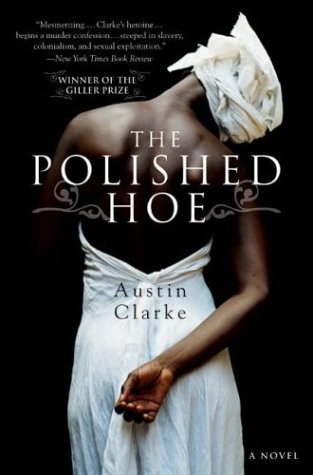
‘The Polished Hoe’ by Austin Clarke

2005, 513 p.

Well, Scheherazade may have been able to spin out her story over One Thousand and One Nights, but Mary-Mathilda, the mistress of plantation owner Mr Bellfeels, and the mother of his only sons, takes only one very long night to tell her story. But it’s a very long night, and the story takes over 513 pages. Alone in the Great House on the plantation, she has called the police station on a Sunday night to confess to a crime. The Constable is dispatched to house to “pacify Miss Bellfeels” until the Sergeant, whom she has known since childhood, can arrive to take her statement. This is the story of that night, and the conversation that flows back and forth between Miss Bellfeels and first the Constable and then the Sergeant, before they take her statement about a crime that she has committed.

The story is set post-WW2 in Barbados, called Bimshire by the locals. The world, and Britain in particular, was happy enough to celebrate the 200th anniversary of the abolition of slavery in 2007 but the reality is that even after the expanded Slavery Abolition Act of 1833, plantations continued in British colonies, with former slaves designed ‘apprentices’ until 1838, and then subjected to a form of indentured labour after that.

Mary Gertrude Matilda was born ‘free’ on the plantation, presumably in the early 20th century. Her mother, who also lived on the plantation was probably born ‘free’ too, but the power relations of the plantation still held sway. Mr Bellfeels, the plantation owner, had taken Mary’s mother as one of his -what do you call it? Not a lover, not a mistress, nor a concubine- perhaps sex-slave (?) and Mary is only a very young girl when Mr Bellfeels corners mother and daughter in a church-yard. Still mounted on his horse, runs his whip up and down Mary’s body, claiming ownership when she is a bit older. By the time she is an adolescent, he has raped her, just as he did her mother, and he continues to abuse her, albeit more as mistress than slave, setting her up in a house on the plantation where she bears his only son. With the malicious irony of the oppressor, the boy is baptized Wilberforce (who had campaigned for the abolition of slavery) and Mary Matilda occupies an ambiguous place in Bimshire society: shunned by white planter society, and treated with a mixture of deference and scorn by black society.

Mary has a hoe, that she used in the fields as a field-worker before she was sequestered away in the Great House. She has kept this hoe carefully sharpened, and it doesn’t take much imagination to know what she has used it for. The Sergeant, who has secretly been infatuated with Mary Matilda since they were children together knows too, and he is reluctant, but obligated, to take her statement. And so the story weaves around, backward and forwards, over Bellfeels’ abuse of both Mary and her mother over decades, the control of workers on the plantation, the birth of Wilberforce which places her in a different category to the other field-workers, leading eventually to Mary Matilda’s crime. It is a very slow telling.

Much of the book is dialogue, in a Barbadian patois, with Mary Matilda’s meandering narrative, interspersed with conversation with first the Constable, then the Sergeant. The book is told in three very long parts, with nary a chapter heading anywhere. This felt rather oppressive, especially reading as part of a compendium of Clarke’s writing on an e-reader, with no way of knowing how much longer the chapter or the book was going to continue for. For me, it made it feel even longer.

This book won the Commonwealth Writers Prize, the Giller Prize and Ontario’s Trillium Book Award. It is a striking book but too long and too slow for most readers -including myself- I would say.

My rating: 7/10

Sourced from: hard copy from my own bookshelves, supplemented by an e-reader version while I was on holidays.

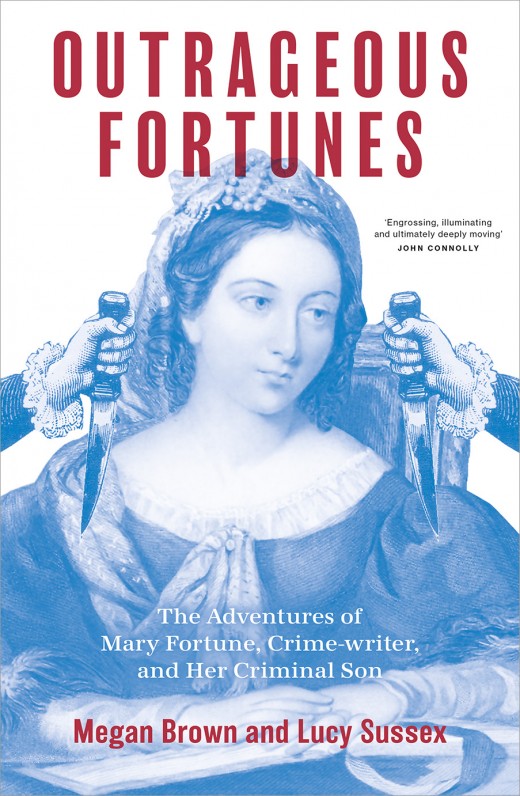
‘Outrageous Fortunes’ by Megan Brown and Lucy Sussex

2025, 288 p. & notes

If nominative determinism was a real thing, this book would be about a wealthy woman, her affluent son and their convention-shattering lives. Instead, Mary Fortune worked all her life as a writer and died in poverty, and her son George Fortune spent much of his adult life in jail.

However, ‘Mary Fortune’ is a wonderful name for a writer, even though she always wrote under many other pseudonyms, especially Waif Wanderer and W.W. Although many in literary bohemia knew her real name, it was not widely broadcast. Between 1855 and 1920 she wrote articles, serialized novels, poetry and short stories in various local periodicals, particularly the long-running and popular Australian Journal. From 1868 she contributed a column called ‘The Detective’s Album’, featuring a male detective Mark Sinclair, under the initials W.W. This eventually amounted to over 500 narratives and formed the basis of her book The Detective’s Album, published in 1871 and the first book of crime short stories published in Australia, and the first detective collection by a woman in the world. In her Ladies Page columns, writing variously as Mignon, Nemia, Nessuno and Sylphid, she was both journalist and flâneur (flâneuse) walking the streets and observing – an unusual thing for a woman- and she wrote lively descriptions of Melbourne life, similar to those being penned by Marcus Clarke at the same time, but from a woman’s perspective. She wrote a fictionalized memoir in the 1880s, Twenty Six Years Ago but there is little other personal correspondence. When you read her lively, whip-smart writing you find yourself wondering why you haven’t heard of her before.

She was born Mary Helena Wilson in Ireland, and emigrated with her father to Canada probably in the early years of the Great Famine. They were Protestant, and her father worked as an engineer. In 1851, aged 18 she married surveyor Joseph Fortune, who was to give her that very rather theatrical surname. When the gold rushes erupted in Australia in 1851, her father left, and in 1855 so did she, leaving her husband behind. She and her three year old son George, travelled to Scotland, then on to Australia to find her father, no easy feat in this raucous colonial colony where identities could be erased and redrawn easily. A woman leaving with her child, especially the only child of an only child in a fairly prosperous family, was unusual but she lived an unusual life. She had a second illegitimate child while living on the goldfields, and said nothing of her earlier marriage when she married policeman, Percy Rollo Brett, claiming widow status. The marriage did not last long and they separated, throwing Mary onto her own resources, first on the goldfields, and then in Melbourne.

In the introductory chapter, the authors write:

When the search behind this biography began, little was known beyond her name: Mrs Fortune. To find her meant following her lead as a detective writer, seeking the clues hidden in her vast bibliography. A process of literary detection began. Her game was to drop self-referential fragments- names and events from her life- into her writing. Reading an author through their work can be a trap: the biographical fallacy- the assumption that writing always derives from life. Such was not true in Mary Fortune’s case, for she had a wild imagination. She could write as vividly of a vampire or a vengeful Roma sorceress as of the Victorian goldfields. Yet even at her most sensational her default mode was realist, fed by a tenacious memory. She held grudges interminably and rehashed them in print. Details repeat through the decades of her work, and – thanks for the increasingly digitised world of archives and newspapers- they can be investigated and explained. (p. 4)

Despite the availability of her work in digital form, few readers are likely to immerse themselves in Mary Fortune’s prolific output, and thus to a certain extent we have to take on trust that Mary’s writing does throw light onto her biography. I, for one, think that the authors have identified sufficient parallels and repetitions between Mary’s life and her literary output to validate this as a way of proceeding. That said, though, without Mary’s writing, it would have been a rather thin biography.

One of the most fascinating aspects of this biography, and one which the authors bring out really well, is the paradox that Mary Fortune built her literary reputation (albeit under a nom-de-plume) on criminal activity through her ‘Detective’s Album’ columns, while her only son was completely enmeshed in the criminal system as perpetrator and prisoner. George Fortune’s life, from the age of fourteen was a series of arrests and imprisonments, starting with his arrest for stealing a hat in July 1871. From here he was committed to industrial schools, farm placements, youth imprisonment at Pentridge and eventually long stints in jail in both Victoria and Tasmania. There was no glamour in his criminal history of crime and recidivism.

Mary Fortune had been married to a policeman, and in many ways she mined this connection for the rest of her life. She may have herself been a ‘fizgig’, a police informant. The ambiguous relationship between law and crime lies at the heart of any number of detective series, and it is given an extra frisson in relationships between police and informants, especially women informants. However, her literary career and her son’s criminality came into collision when she published a column in the Ladies Pages of the Herald, where she wrote as ‘Nemia’, that described her visit to Pentridge jail in Melbourne to visit a young, unnamed man. Soon after, for fear that ‘Nemia’ would be linked to the prisoner George Fortune, Mary was sacked from the Herald. She would not return to the newspaper for several years, and then only with fiction.

Mary Fortune lived in the ambiguous space between ‘upper’ and ‘lower’ Bohemia. Other writers knew her, and she conducted a long rivalry with Marcus Clarke whose Peripatetic Philosopher columns were a masculine version of own columns. She would ever only be a contributor, and an anonymous one at that, while her rival Clarke became ‘conductor’ of the Australian Journal in 1871, and as a result her presence in the journal declined. But she was a denizen of ‘lower’ Bohemia as well, with constant money worries, arrests for drunkenness, and a stint in the Benevolent Asylum in North Melbourne before shifting as a lodger between various charitable women. Her son predeceased her, dying in jail in Tasmania, and she died penniless and for many years forgotten.

But not by Lucy Sussex, who had first encountered Mary Fortune when she was working as a researcher for Professor Stephen Knight at Melbourne University, who was researching the history of Australian crime fiction. She wrote her PhD and a subsequent book on the Mothers of Crime Fiction, and a novel based on her search for Fortune called The Scarlet Rider. She edited and published a selection of Mary’s memoirs and journalism in 1989 as The Fortunes of Mary Fortune. Megan Brown completed her PhD on Mary Fortune, and they have co-presented at various conferences. In a closing chapter, Sussex describes an academic joust with another historian whom she dubs ‘Rival Researcher’ who took a rather malicious glee in obscuring her sources, and interactions with Melbourne historian Judith Brett, a descendant of Mary’s policeman ‘husband’, who helped her to start to look at Mary’s son George as a narrative thread in piecing together Mary’s life.

I’m always interested by books that are a collaborative venture because, to me, writing seems such an individual and personal endeavour. The authors only present separately in their closing chapter, yet I wonder if the seams between the authors can still be detected (the book has infected me, now I’m playing detective too!) The introduction frames the authors’ search as a game of literary detection and certainly the conclusion, which evokes the academic rivalry of A. S. Byatt’s Possession, returns to this topic. This theme of literary detection runs subtly through the narrative, reappearing when the authors interview current-day detectives and undertake computer-based forensic linguistic testing of Mary’s writing style to clarify her authorship of individual stories. While cautioning against the perils of applying modern day diagnoses to peoples’ behaviour in the past, they do so nonetheless, suggesting that George Fortune today might be diagnosed with Anti Social Personality Disorder. The reference to Nicola Gobbo as police informer was instructive for me as a Melburnian, but it will date the text and soon be irrelevant. I wonder if these eruptions of current-day commentary reflect the preferences of one of the two authors, or whether they both saw these present-day parallels. Likewise, the introduction of subheadings on just three occasions seemed to jar a little from what was otherwise a flowing narrative, and perhaps reflects the joint authorship- but I don’t know.

Mary Fortune’s good fortune was to have two biographers in Lucy Sussex and Megan Brown who have worked hard over so long to bring her name, and her full-rounded life story before 21st century readers. Their biography is deeply researched, readable and imbued with admiration and sympathy for a trail-blazing woman writer, whose writing is still brisk and lively today.

My rating: 8/10

Sourced from: Review copy from Black Inc., with thanks

‘Shining Like the Sun’ by Stephen Orr

2024, 312 p.

Each time I picked up this book, the line from Amazing Grace sprang into my mind “Bright Shining as the Sun”. Orr didn’t refer to this in the three epigraphs that open the book: instead he quoted religious philosopher Thomas Merton (so, related I guess.)

In Louisville, at the corner of Fourth and Walnut, in the center of the shopping district, I was suddenly overwhelmed with the realization that I loved all those people, that they were mind and I theirs, that we could not be alien to one another even though we were total strangers. It was like waking from a dream of separateness…This sense of liberation from an illusory difference was such a relief and such a joy to me that I almost laughed out loud…As if the sorrows and stupidities of the human condition could overwhelm me, now what I realize what we all are. And if only everybody could realize this. But it cannot be explained. There is no way of telling people that they are all walking round shining like the sun.

This book isn’t set in Louisville: instead, it’s in the small South Australian rural town of Selwyn, population 300. We’ve all been to towns like this: the pub, the school, the IGA, pharmacy, an indifferent restaurant, the fish and chip shop, the icecream shop. We see people like those who live in Selwyn when we watch ABC programs like ‘Back Roads’ or ‘Rosehaven’ and we see them, unfortunately, when floods and fires in rural towns are being reported in the news. Within a few pages, you relax into the presence of the main protagonist, Wilf Healy, the 80 year old Selwyn personality, living at the pub since his wife died. He has ended up being bus-driver, vegetable deliverer, postman -only some of which he is paid for- and he knows everyone, their stories, and their histories. Selwyn is a dying town, with nothing for its young people, and it’s a place that people escape from, rather than come to. His brother Colin escaped to a different world in America, another brother had died, and here we have Wilf, still in Selwyn, his niece Orla dying of cancer, and her son Connor drifting aimlessly through life, with vague dreams of becoming a musician, but lazy, self-centred and without purpose.

The pace of this book is slow, and you find yourself slowing down to match it. Nothing much happens. The schoolkids he picks up on the bus, day after day, have a future as flat as the farmland around town. There’s Sienna, his first pick up, constantly wedded to her phone. There’s Luke, who is writing an interminable horror story, Trevor a quiet boy, struggling with his sexuality, and Darcy, insolent and indulged. There’s nothing for kids to do except hang around the Scoop n’ Smiles ice-cream shop which is selling kids more than ice-cream. There’s no heavy plot-development here, instead life just goes on with people doing the best they can, sometimes succeeding, other times not.

Wilf is a man who stayed: his brother left. He has a nostalgic dream of returning to Louth, the small off-shore island where he grew up with his brothers and a violent father but there are too many strings holding him to Selwyn. To stay or to go? Is he a man unfulfilled, cocooned in his small-town life and hemmed in by obligations? Or is he rich in connections, true to himself and his upbringing, “shining like the sun” just as the people around him do too?

This is a gentle book, steeped in nostalgia, and Orr captures small town life and dialogue perceptively. It’s generous in its approach to people, and respectful of our shared humanity, with all its foibles.

You can find reviews at:

ANZLitLoversLitBlog https://anzlitlovers.com/2024/04/02/shining-like-the-sun-2024-by-stephen-orr/

Whispering Gums https://whisperinggums.com/2024/10/11/stephen-orr-shining-like-the-sun-bookreview/

Inreview https://inreview.com.au/inreview/books-and-poetry/2024/04/18/book-review-shining-like-the-sun/

My rating: 8/10

Sourced from: Yarra Plenty Regional Library

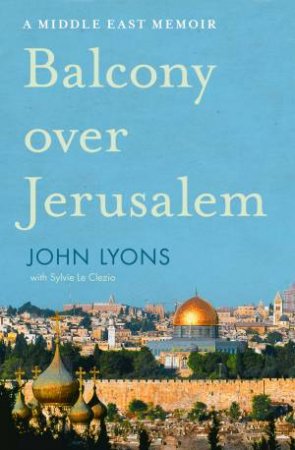
‘Balcony Over Jerusalem’ by John Lyons

2017, 376 p

This book, co-written with his wife Sylvie Le Clezio in 2017 was another amongst the selection of books handed to Australian MPs by a number of prominent local writers. It is a memoir of the six years that Lyons spent based in Jerusalem as Middle East correspondent for the Australian, not a newspaper that I read often. He has worked for most of the media groups in Australia: Murdoch with the Australian, the Sydney Morning Herald and now for the ABC as their Global Affairs Editor. I must say that I will now watch his reports from the Middle East in the wake of October 7 with added interest because, not only does this book deal with the swirling constellation of Middle East politics between 2009 and 2015, but also it highlights the heavy influence of the Israel lobby in Australia in shaping the news for an Australian and Jewish/Australian audience to reflect an even harder line here than in Israel.

The book is named for the large balcony in their apartment that overlooked a vista which encapsulated Palestinian/Israel history: Old City of Jerusalem, modern Jerusalem, the headquarters of the United Nations, and the concrete wall that separates Israel from the occupied West Bank. In front of their balcony was the ‘peace park’, where six days of the week Israelis would place their picnic baskets on the upper parts of the park, and the Palestinians would picnic on the lower parts. Except for Friday evenings, when on the sound of a siren announcing Shabbat, Israelis would leave the park and walk home for their Shabbat dinners. On cue, the Palestinians would appear carrying plates of kebabs and tabouli and move to the higher parts until, on Saturday evening, the Israelis returned, taking up their place on the top of the hill, and the Palestinians would move back down again.

In his opening chapter he declares that

As for my own perspective, I approach reporting of Israel from a ‘pro-journalist’ stance. I’m neither ‘pro-Palestinian’ nor ‘pro-Israel’. My home is in Australia, on the other side of the world. To use an old Australian saying, I don’t have a dog in this fight. (p. 12)

This is not, however, the conclusion that he comes to by the end of the book, which has documented the pervasiveness of Israel control, particularly in the West Bank, and trenchantly criticized the role of Benjamin Netanyahu in particular for making a two-state solution impossible. In spite of Israeli finessing to obscure the fact by withholding and withdrawing Palestinian residency status in the West Bank, the demographic tipping-point between Israelis and Palestinians has been reached: during Lyons’ stay the number of Palestinians in Israel, the West Bank and Gaza equalled (or, depending on your sources, passed) the number of Jews in Israel and the West Bank. As he sees it, in coming years, there will be tragic consequences of this policy.

This tragedy now seems inevitable. Almost 3 million people in the West Bank cannot be denied all civil rights for more than 50 years without dire consequences and almost two million people in Gaza cannot be locked forever in the world’s largest open-air prison. One day many of those five million people will rise up. (p. 357)

As Middle East correspondent generally, his brief extended to countries beyond Israel. He was there to witness the Arab Spring uprisings and subsequent crackdowns in various countries and the political permutations in Iran, Egypt, Libya, Lebanon and Syria. His conclusion was that the Arab Spring failed because the step between dictatorship and democracy was too large, especially without the in-between establishment of independent institutions like police forces and civil services (p.355).

However, his major emphasis is on Israel, and the politics that have shaped the United States response, which flies in the face of world opinion which is gradually hardening against Israel (and, I would suggest, has hardened even further in the last year). He writes honestly and persuasively about the power of the Israeli-lobby group, particularly the AIJAC (Australia/Israel & Jewish Affairs Council) headed by Colin Rubenstein, in pressuring the Australian media and targetting particular journalists (including him) in their reporting. He writes about its influence on politicians, especially through the generous ‘study’ tours that are provided to MPs – several of whom have attended on multiple trips hosted by Melbourne property developer Albert Dadon- which give a one-sided view of the Israeli/Palestinian situation. He particularly focuses on Labor politicians- Rudd, Carr, Gillard- because of the mismatch between party policy, the views of party members, and Government policy- and the way that Israeli policy became caught up in the leadership ructions during the first decade of the 21st century. He highlights the importance of language used in reporting- for example, whether East Jerusalem is described as ‘occupied’ or not and whether ‘occupied’ has a capital ‘O’ or lower case ‘o’; or whether SBS should use the word ‘disputed’ territories.

As might be expected, this book was criticized by politicians and commentators who take a different line to him. But, as he says

…those who’d read my reports over these six years could have been confident that they were reading facts, not propaganda….That, in the end, is what journalists should do: report what’s in front of them. Then it’s over to the politicians and the public to decide what they do with that information. But without facts, they cannot know what they are dealing with (p.356)

Having read this book, and knowing his own personal and professional opinion, casts a different light on his dispassionate, fact-based reporting for the ABC, reporting that saw him named Journalist of the Year at the 2024 Kennedy Awards. On the one hand, it fills me with admiration that he’s even able to report so calmly and authoritatively. On the other hand, though, I’m now aware of the editorial pressure and careful vetting that would have gone into his reports- and no doubt, for this book. It stands the test of eight years well, especially the last 18 months, and is a sobering analysis of not just the ‘facts’ of Israeli/Palestinian conflict day after day, but the political and public relations filter that screens and shapes what we receive as readers and viewers- and our responsibility to question it.

My rating: 8/10

Sourced from: Yarra Plenty Regional Library

Read because: it was one of the 5 books given to MPs, but I have had it on reserve at the library for months previously.