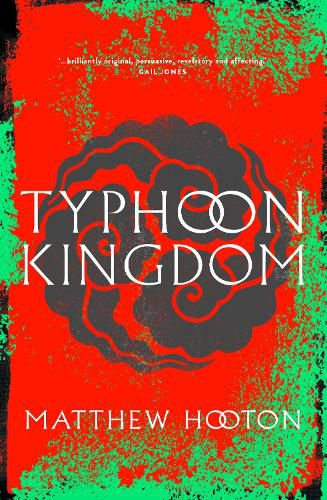
In my quick and rather shallow dive into Korean literature to accompany my visit there in April 2025, I feel as if I have come full circle with this book. Matthew Hooton’s Typhoon Kingdom is written in two parts, separated by 290 years. The first section is set in 1652 when Dutch accountant van Persie is shipwrecked on Jeju Island en route to a trading post in Japan. Six other sailors survived too, and were sent to the Emperor in Seoul. Van Persie is captured too and taken to a shaman, who slashes his tongue (not permanently) before he is handed over to a fisherman Hae-Jo who is charged with taking him to the Emperor Hyojong of Josean to join the other six sailors. Before embarking on the journey, his wounds are tended by one of the diving women of Jeju Island, and he carries this vision of his healer with him, as he is forced to place his fate in the hands of Hae-Jo as they traverse the kingdom on route to the emperor. The present tense narrative is told by three narrators: Van Persie, Hae-Jo and Emperor Hyojong himself.
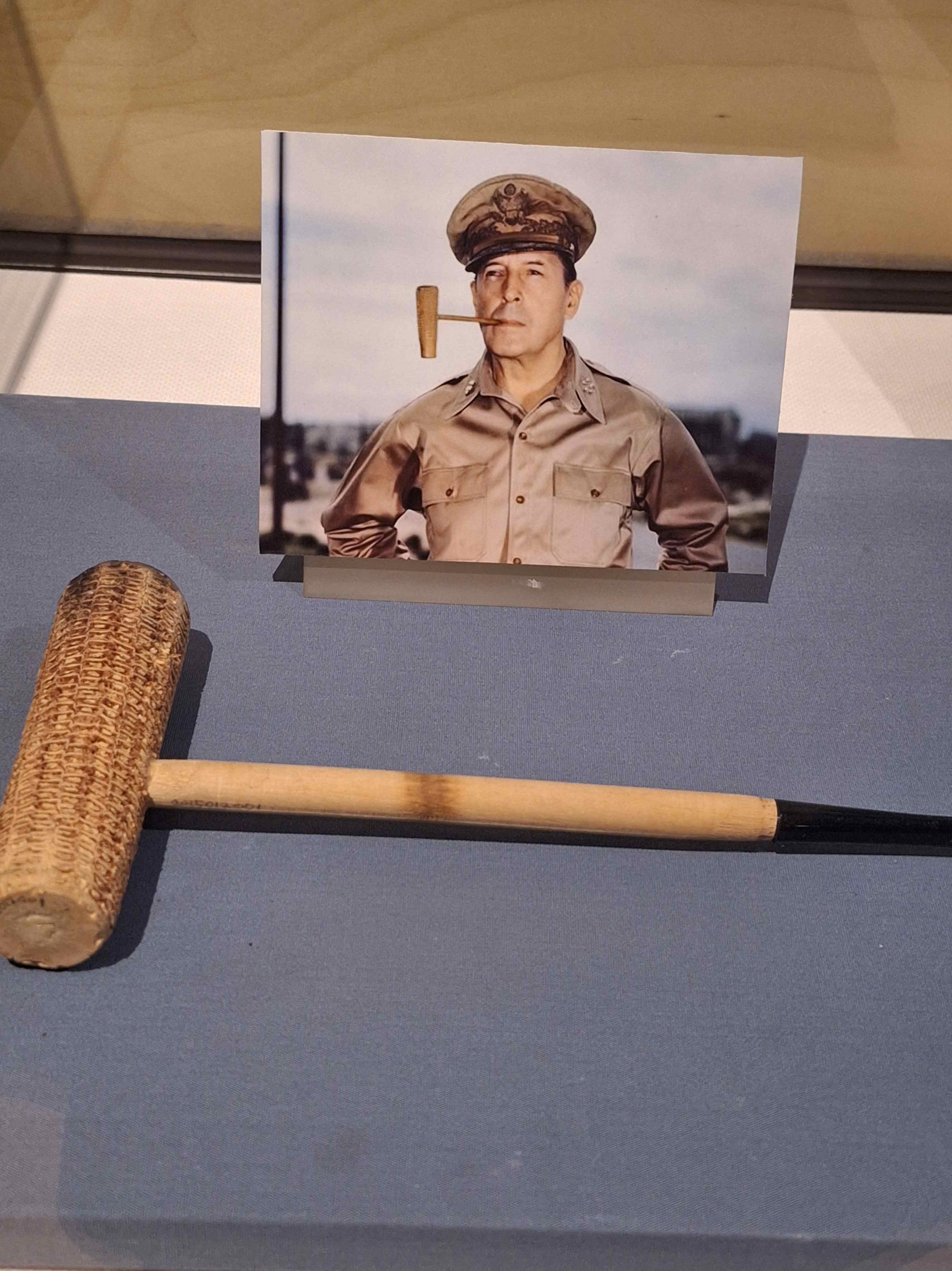
The second part of the book is set in 1942, and it too is told by three narrators in the present tense. One is General Macarthur, impatient to take the fight to Korea after being forced to withdraw by his American commanders( I saw one of his corncob pipes in the Seoul War Memorial- I didn’t realize that it was ACTUALLY a corncob!)
The other two narrators are Yoo-jin, a young woman who uses her healing skills to treat a young villager with blue eyes, Won-je, who has joined the resistance to the Japanese occupation. Yoo-jin is captured by the Japanese (who have already been in control of Korea for the past 30 years), who use ‘insurgent’ women as ‘comfort women’ for the Japanese troops. In the chaos of the immediate post-war period, as Yoo-jin travels south to return home, Won-je continues to look for this woman healer.
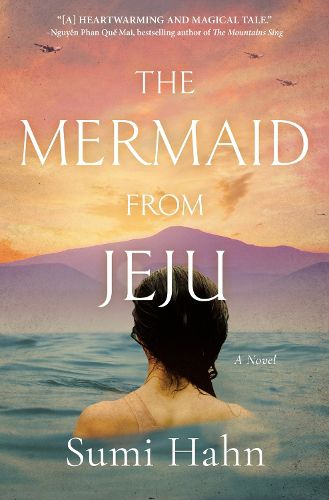
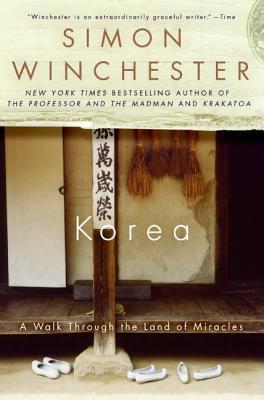
Now, as it happens, two of the Korean books I read dealt with several of these themes. In Simon Winchester’sKorea: A Walk Through the Land of Miracles, he traverses South Korea following in the footsteps of Hendrick Hamel, the shipwrecked Dutch sailor, on whom the character of Van Persie is based. The Mermaid from Jeju dealt with the insurgency against the Japanese which then transformed into an insurgency against the post-war Nationalist soldiers, many of whom had fought with the Japanese previously. Yoo-jin’s family has come from Jeju Island, and it is there that she had learned her healing skills from generations of healers in her family.
Hooten’s depiction of the life of the comfort women was confronting and well-written. I was slightly surprised that a man was writing about the comfort women’s experiences, and I was impressed that he captured so well the rawness and physical pain of rough and unwanted sex. The abandonment of the ‘comfort women’ after the Japanese surrender led only to more danger as men’s allegiances shifted through self-interest and opportunity.
I found the second part of the book more – what to say? engaging, compelling, affecting- than the first and I wondered if the first part of the book was even necessary, given its distance from the events in the second part. But on second thought, there is a slight narrative link between the two section, and the events are a mirror-image of each other. In both, there is a woman who heals and in both there is a search to find the healer again; one narrative heads up towards Pyongyang, the other heads south back to Jeju Island. This is probably of more structural, rather than narrative, interest and perhaps added an extra dimension to the book. However, I felt that the second section was the stronger, and could have easily stood alone. It was certainly better written than The Mermaid from Jeju, although I found the consciously literary opening paragraph of many of the chapters a little too performative. That’s a small quibble: otherwise the narrative was well handled, the pace moved well and the landscape was rendered carefully.
It makes even more aware, though, of the complexity of the strained relationship between Korea and Japan, two countries that we tend to conflate as ‘Asia’ but which have a long and bloodied history.
My rating: 9/10
Sourced from: e-book from Yarra Plenty Regional Libary
Read because: I visited South Korea.
Other reviews: Lisa from ANZLitLovers enjoyed it (her review here) and Rohan Wilson reviewed it here.
As preparation for my trip to South Korea earlier this year, I read books with a South Korean setting, which is why I ended up reading this book. As it turns out, I read two books based on Jeju, a large island south of the South Korean mainland. It is an oval shaped island, with a large mountain Hallasan in the middle. The Jeju people are indigenous to the island, and have been there since Neolithic times. It is famous for its haenyeo, traditional women fishers who free-dive to gather molluscs and seafood in a semi-matriarchal society, where their wages formed the basis of the family income. Shamanism remained an important part of social and religious observance. Jeju was annexed by the Japanese (as was the rest of Korea) in 1910, and it became a hotbed of independence: a stance that remained when the US-sponsored South Korean government took over from the Japanese after WW2. It was this desire for independence and reunification which led to the South Korean government, led by Syngman Rhee, to see it as a potential hotbed for Communist insurgency. In 1948-9 the government led an ‘eradication campaign’ against these supposed insurgents, arising from the April 3 Incident in 1947, resulting in between 14,000 and 30,000 people (10 percent of Jeju’s population) being killed, and 40,000 fleeing to Japan.
This is the political background of the novel, which focuses on a young girl Goh Junja, who is coming into her own as a haenyeo diver. She encourages her mother to let her travel inland to swap sea produce for a pig, and on this journey she meets Yang Suwol, the son of a wealthy family on the mountain. They are instantly attracted to each other, but on her return from the mountain, she finds that her mother has died from injuries which at first she believed came from a diving accident. As the political situation intensifies, Yang Suwol becomes involved in insurgent activity, and Junja realizes that her own family is more politically involved than she realizes. The whole community is endangered by political currents at a world level that are manifested through cruelty and repression as it becomes increasingly difficult to work out whose side anyone is on.
The book is told in two parts. The first part commences with Mrs Junja Moon in Philadelphia in 2001, wife to Dr Moon, who is about to suffer an embolism. The story then backtracks to Jeju in 1944 as Junja nearly drowns while diving, then jumps ahead to 1948 and Junja’s meeting with Suwol. Part Two returns to Philadelphia, and as a reader you are wondering how Junja ended up being married to Dr Moon. Who’s he? What happened to Suwol? Dr. Moon decides to return to South Korea for the first time in many years, where he meets up with his old friend Dong Min. The book then alternates between 1944, 1948 (when Dr Moon- or more properly- Gun Joo were sent to the island as conscripts) and 2001 as the two men consult a Shaman and return to the mountain to learn the truth of what happened there some fifty years earlier.
The book starts with a timeline of political events, which is important as it frames the story. Unfortunately, it is a fairly sketchy timeline and it does not mention the word ‘nationalist’, even though it is used frequently during the book. The author does give political information, but it feels rather didactic, and I didn’t ever feel that I really understood the politics. The dual timeline, which is becoming rather hackneyed in historical fiction, made the book feel as if it were two separate books- as if she started writing one book, scrapped it, then started on another.
That said, the relationship between Junja and Suwol was well-handled and I found myself caring about what happened to them both, and pleased that it wasn’t tied up with an easy ending. However, the book seemed to be lacking something and I doubt that I would have persevered had I not had an interest in the setting.
My rating: 6/10
Sourced from: ebook borrowed from Yarra Plenty Regional Library
Read because: I was going to South Korea. I’m a little sorry that I didn’t go to Jeju now.
I was going to Korea: I like Simon Winchester. So of course I was attracted to reading this book which was originally published in 1988, and has been recently republished in its second edition. However, there is little evidence that the book has been re-edited in any way, and so it was a very dated travel description of South Korea by an English writer, who spoke minimal Korean, and who reflected the sexism and anti-Americanism of the time.
The premise of the book is that Winchester decided to follow the path of Hendrick Hamel, the Dutch soldier who was shipwrecked on Jeju Island in 1653 on his way to Japan. He was prevented from leaving by the isolationist policies of the Josean emperor, and spent 13 years in what is now Korea, before escaping back to the Netherlands and writing the first western account of Korea. Winchester followed Hamel’s route up into what is now North Korea, but he could not cross the Demilitarized Zone at that time (even though, as he tells us in the preface to the second edition, he did manage to visit later). His route takes him up from Jeju Island to the central and western side of South Korea, where he meets mainly with monks and US servicemen, as well as some ‘ordinary’ South Koreans.
I found the book very dated in its outlook, and I felt uncomfortable about his pontifications on South Korean life and national characteristics from such an Anglo-centric perspectives. Although I am usually a magpie for interesting details, especially when I am travelling in a country that I have read about, I didn’t really gain much from the book to bore my fellow-travellers with (“Hey, did you know that…..”)
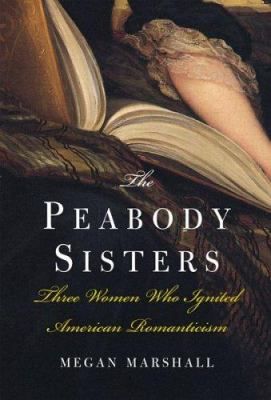
At our Unitarian Universalist fellowship, I usually volunteer to take the March service because March is Women’s History Month here in Australia, and I like to look at the stories of significant women and groups- some Unitarian, others not- who have grappled with living our their commitment to social justice and yearning for spirituality. Over the years I’ve looked at Martha Turner, Catherine Helen Spence, Mary Montgomerie Bennett, the Women’s International League for Peace and Freedom, and this year I decided I’d look at the Peabody Sisters- three Unitarian women born in New England during the first decade of the 19th century.
I had vague memories of visiting the Peabody Museum in Salem (same family, different branch) and other than that I knew nothing about them. I’d heard them mentioned in passing in a course on Unitarian Theology (yes, there is such a thing), and a reference to the book by Megan Marshall, so I chose them as my Women’s History theme for the month.
Marshall’s book The Peabody Sisters starts and finishes with a wedding. It starts with Sophia Peabody’s wedding to the author Nathaniel Hawthorne on July 9 1842, and it ends with her sister Mary Peabody’s wedding to the politician and education reformer Horace Mann on May 1 the following year. All three sisters were to live to beyond middle age (indeed, Elizabeth the eldest was to live to the age of ninety) but Marshall has chosen to end her book here. Perhaps it’s because a married woman’s life was so easily obscured by her husband’s, especially if he was prominent in political or literary affairs, as was the case here. Perhaps there was a drying up of the source material at this point, or perhaps Marshall’s interest was more in the sisters as a unit: she doesn’t make it clear.
The three girls had three brothers, but the brothers seem to have been a rather lacklustre group, perhaps because of the tepid example of their father, Nathaniel Peabody, who struggled to make a living as a doctor, dentist and later, farmer. The girls, on the other hand, were spurred by their mother Eliza, to become teachers or to earn their living in some way. Their mother Eliza conducted a boarding school in their home for the daughters of the local town, and was herself a creative and progressive teacher in her own right. The family was on a downwardly mobile trajectory, but Eliza herself had memories of her grandfather’s house at Friendship Hall and the library that was available to her to educate herself. The strong matriarchal influence in the household dynamics put Eliza’s daughters in good stead.
The eldest was Elizabeth, born in 1804, a brilliant linguist, teacher and conversationalist. Her mother came from a Unitarian background, but the young Elizabeth was transfixed by Unitarian luminary William Ellery Channing, known as the ‘Father of Unitarianism’ who preached at her church when Elizabeth was about 8 years old. She threw herself into Unitarian literature and a wide range of reading with such enthusiasm that one summer she was banned from reading anything but the Bible, which she did, reading the New Testament thirty times over a summer, each reading directed towards a different aspect of doctrine. She developed a close friendship with Channing, and as the group that came to be known as the ‘Transcendentalists’ forged links with, and then sometimes broke away from, Unitarianism, she and her sisters were brought into the heart of intellectual life in Boston. She learned ten languages, and through her translations of European texts, she introduced men like Ralph Waldo Emerson, Henry Thoreau and others to Continental and Romantic thought that fed into Transcendentalism. She was loud, gregarious and talkative, but heedless to her personal appearance and dress, much to the chagrin of her mother.
She was a strong sibling to contend with, but her youngest sister Sophia (with emphasis on the ‘i’ when pronouncing her name) was a strong personality too. She did not compete directly with Elizabeth, but instead took to her bed, prostrated by headaches, and the family came to a silent halt so as to not distress her further. She warned her sisters to have no expectations of her, and they didn’t, thus relieving her of the need to financially contribute to the family on a regular basis. Eventually her family, fearing for her life, turned to William Ellery Channing’s physician brother Dr Walter Channing. His interests were in women’s health, and particularly the ‘bed case’ of young women whose poor health confined them to their bedroom. He was skeptical that there was any physical sickness. He was more critical of the medical establishment for letting young girls like Sophia linger in bed for decades, and less critical of Sophia the patient. It was interesting watching Marshall negotiate this issue of female illness and its relationship with emotional and power relationships. She notes that neurologist Oliver Sacks, who wrote at length on migraines, also suggested an emotional bind that is set up in the ‘situational migraine’. As seemed to occur repeatedly with the sisters, once Sophia had the handsome Dr Walter Channing as her confidante, she became infatuated with him, and later infuriated with him when she sensed that he was judging her.
In between these two strong forces was Mary Peabody, the quintessential middle sister. She was said to be the most beautiful of the sisters, but the remaining photograph of her doesn’t show her in a particularly flattering light. She was often swept along in Elizabeth’s plans to re-establish her school in different towns after the school had failed to make money through economic downturns or as the result of scandalous gossip. Elizabeth took up all the oxygen in the room, and although she may have been interested in the conversation, Mary had no wish to be in the centre of it. However, when she was called upon to accompany her sister Sophia to Cuba in the hope that the climate would improve Sophia’s health, her social conscience was assailed by the sight of enslaved people working on the plantation, sparking her interest in social justice.
The relationship between the sisters was at its most fraught and tense when potential partners came onto the scene. Elizabeth competed with both her sisters over men that they had fallen in love with, although she channelled this into a more ‘sisterly’ vein once their sisters had landed their catches. That said, I wouldn’t trust Elizabeth at all.
She threw herself into the intellectual milieu surrounding the Transcendentalists, becoming a writer in her own right (although the little bit of her work that I read was turgid and indigestable) and editing the sermons of William Ellery Channing and writing up Ralph Waldo Emerson’s lectures. She was involved as a teacher in Bronson Alcott’s Temple School, and wrote a book that publicized it, although they fell out over it later. She is credited with the establishment of kindergarten education in America. In 1840 she opened a bookshop in Boston- the first woman to do so. It was bookstore, a lending library, and a place for scholars, liberal thinkers, and transcendentalists to meet. It stocked transcendentalist material and foreign books and shipped books to interested readers. Margaret Fuller began holding ‘conversations’ there in her discussion group comprising both men and women. Elizabeth recorded those too. She began publishing in her own right as well, and became the publisher of ‘The Dial’, the journal of the Transcendental Club.
Group biographies can be difficult, especially family group biographies where one family member may be perceived to overshadow the others. Elizabeth is best remembered by history, but Marshall has worked very hard to provide a family context and bring forward the achievements of the other Peabody sisters beyond marrying prominent men. The book was well received, earning Francis Parkman Prize, the Mark Lynton History Prize, the Massachusetts Book Award in Nonfiction, and it was a finalist for the Pulitzer Prize in biography and memoir. Marshall paints a vibrant picture of intellectually engaged, active women who, although not as well known as the men with whom they socialized, were contributors to Transcendentalism, and American society more generally, at a time when women’s roles were becoming increasingly circumscribed.
My rating: 9/10
Sourced from: Kobo e-book via subscription
Read because: I gave a presentation at my Unitarian Universalist Fellowship to celebrate Women’s History Month.
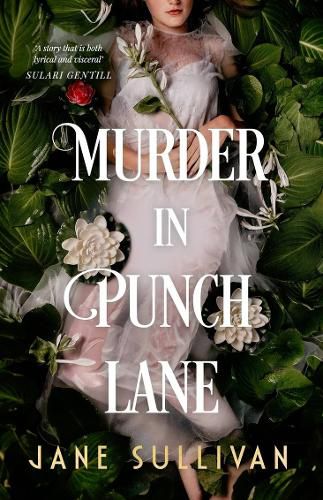
There’s a particular frisson of delight when you’re reading a novel set in your own town. You recognize the streets and you have a mental landscape painting of the setting, even if it is set 160 years earlier. Jane Sullivan, herself now a Melbourne resident after emigrating from England decades ago, takes us to post-Gold Rush Melbourne, and in a way not unlike Kerry Greenwood with her Phrynne Fisher novels, introduces us to a feisty, intelligent amateur detective who is less sidekick and more spur to her co-investigator Magnus Scott, a journalist who styles himself as ‘The Walking Gentleman’.
The novel starts in a bedroom, as a doctor tries to revive a beautiful young actress Marie St Denis from what appears to be, and is later characterized as, an accidental laudanum overdose. Her closest friend, aspiring actress Lola Sanchez, is not satisfied by such a neat explanation, and she enlists the help of journalist Magnus Scott, one of the few people who wrote a sympathetic obituary for Miss Dennis, to investigate. Fired up by the techniques and success of the detectives in the penny-dreadful crime literature she enjoys, Lola undertakes some amateur sleuthing to uncover multiple footprints in Miss Dennis’ room- but to whom do they belong? Lola devises a list of possible suspects, many of whom belong to the highest echelons of Melbourne society, and disguising herself as a young boy, breaks into houses and sneaks around bedrooms looking for clues. In the meantime, Magnus himself is on a rollercoaster of financial events, and it seems that indeed, there are shadowy forces at work, who may or may not be the same men that Lola is suspecting.
I was thinking about 19th and early 20th century crime fiction, and its reliance on plot, coincidence and red herrings, especially compared with the detective stories of the 21st century and their emphasis on the character and motivations of the detective, just as much as of the perpetrator. This book is truly in the former category, complete with cliff-hangers and diversions that at times strain credulity.
For the historian of Melbourne, it is gratifying to see that Sullivan has done her research, and acknowledges the assistance and friendship of writers like Lucy Sussex, whose recent Outrageous Fortunes: The Adventures of Mary Fortune, Crime-writer, and Her Criminal Son George is dealing with a similar time-span and genre. I found myself thinking of Barbara Minchinton’s work on Madame Brussells and The Women of Little Lon, although these both look at a later date. A couple of times I found myself raising a sceptical eyebrow, only to find that Sullivan was right: cold cream in 1868? ( Yes, and before then too), the Menzies Hotel? (Yes, opened in 1867) and so, yes, Sullivan has done her work.
I enjoyed Sullivan’s playful tweaking of real-life characters in creating her own Lola Sanchez and Magnus Scott. The name Lola Sanchez of course evokes the Gold-Rush performer Lola Montez, and Magnus Scott as ‘The Wandering Gentleman’ and editor of the New Bohemian bears more than a passing resemblance to Marcus Clarke. She integrates historical figures as well, most notably the enigmatic Redmond Barry, patriarch of Melbourne’s cultural scene but with his own domestic ambiguities, and Dr Nield, the coroner. She takes us to Redmond Barry’s house in Rathdowne St Carlton that later became integrated into the Royal Childrens Hospital, the Theatre Royal, Chinatown and the eponymous Punch Lane, running between the current-day Exhibition and Spring Streets. And as Sullivan explained in a talk that she gave to the Ivanhoe Reading Circle in April, there was indeed an actress Marie St Denis who died of laudanum poisoning, and the story sprang from historical events, with equally heavy doses of research and imagination.
I wonder if this is the first in a series? There’s scope, and plenty of other Melbourne murders to explore…
I visited South Korea with my son and his family, so I thought that I’d embark on a bit of South Korean literature before I went. Other than Pachinko, which is partially set in Korea, I don’t believe that I’ve read any other books set in or about Korea.
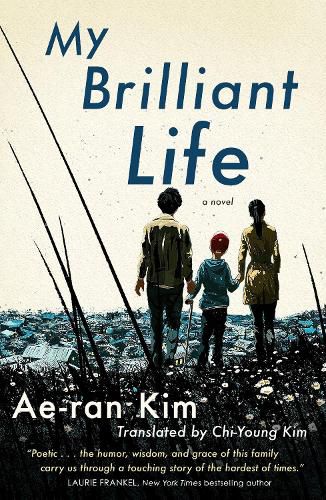
I don’t know exactly what I was expecting, but My Brilliant Life ended up being a completely different from what I thought it would be. As it turned out, I was reading it in Large Print edition (the only one I could find) which gave it an air of being a rather light, speedy read. It is narrated by sixteen year old Aerum, who is suffering from progeria, a rare inherited disease that causes premature aging. As his body gradually shuts down, he decides to write his family story, drawn together from what his parents have told him about their lives in a rural village, their meeting and early marriage and his childhood. He is a lonely child: he cannot attend school, and has no friends of his own age – for what indeed is his age in a body that is accelerating towards a premature death? The family is not rich, and the hospital bills are mounting up, and so he decides to make a paid appearance on a television show, which alleviates the financial pressure and launches him into a rather voyeuristic celebrity. Following the program, he receives many emails, and he begins corresponding with Seoha, who is suffering from cancer, and in the absence of other age-appropriate relationships, he becomes infatuated with her.
I will not divulge the end of the story. It is sad and inevitable. It’s a book about life, love and presence.
Although this is book was in Large Print format, it could possibly be an interesting Young Adult book- after all, there’s no shortage of books about teenagers dying of incurable diseases. I don’t know that I learned much about South Korea from it, but I did learn about progeria.
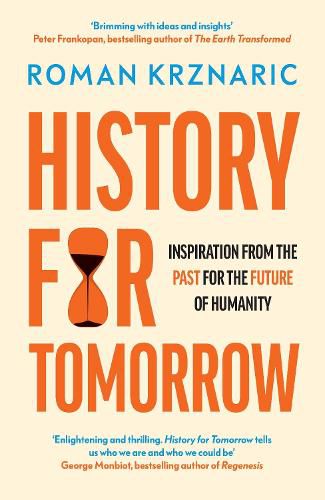
Just recently I listened to an interview by the New York Times with Curtis Yarvin, who has been name-checked by a lot of Trump’s acolytes. He talks quickly and rather disjointedly, and is fond of throwing out historical references to defend his views and give them the sheen of academe. People are quick to bring out the old saw “Those who cannot remember the past are condemned to repeat it” and there’s a danger of cherry-picking when computer engineers (in Yarvin’s case) and social philosophers (in Krznaric’s case) look back to history to bolster a present day argument. But that is unfair to Krznaric: unlike Yarvin, he admits that he is not a historian, and he acknowledges that he is very much standing on their shoulders while surveying present-day society. His book has footnotes, references and an index, and he includes in his footnotes references that make a different argument to the one that he is making. And unlike Yarvin, this is a quiet, considered, optimistic (too optimistic, I fear) book that piques your interest rather than bludgeoning you into silence with names and dates that you have no way of challenging.
Krznaric acknowledges the dangers of cherry-picking but argues that:
All writing of history is selective- requiring choices about topics, time periods, relevant actors, the importance of race and gender, the role of culture and technology, the use of quantitative data and other methodological issues. What matters is being clear about the approach. From the myriad of historical contexts, I have consciously selected events and stories that offer inspiration for tackling the ten major crises facing humanity in the twenty-first century, and actively focus on the collective struggles and initiatives of everyday people, since this is the realm in which we have the greatest potential agency. (p.7)
So what are these ten major crises, and what historical events does he use to discuss them? His opening chapter ‘Breaking the Fossil Fuel Addiction’ draws parallels between the vested interests supporting the continuation of slavery in Britain in the early 19th century, and the fossil fuel interests that are undercutting action on climate change. I’ve though about this connection previously, and the distasteful thought that, as with slavery, it may be necessary to ‘buy out’ fossil fuel interests, in the same way that the compensation for slavery went not to the enslaved, but to their enslavers. As well as emphasizing the importance of creating coalitions across party lines and the potency of the ‘radical flank’ to make the comparatively moderate thinkable, he also notes the place of violence. The Captain Swing civil disobedience led to the 1832 Reform Act, which diluted the power of the slavers and their lobbyists in British Parliament; while the Caribbean slave revolts made continued enslavement unattainable. I think that this chapter was the strongest in the book, and it stands alone well.
Question Two involves the nurturing of tolerance. He starts off with his own family story, with his father arriving in Melbourne from Poland in 1951 as part of Australia’s post-war migration, a story which seems from the distance of 70 years to have been successful but which may not have felt so rose-tinted at the time. He looks back to the Islamic kingdom of Al-Andalus, where Muslims, Jews and Christians co-existed, although the backlash of the Reconquista is a salutary warning, I think. He looks to the early years of Chinese immigration when, as Marilyn Lake and Henry Reynolds note, Australia led the world in ‘drawing the global colour line’ at the turn of the 20th century (a reference that he should have referenced, but did not). He also looks at Ghana and the post-independence leader Kwame Nkrumah, who came to power in 1957 and embarked on a series of policies and programs to create a unifying Ghanaian national identity. He talks about the importance of city design in nurturing tolerance, looking at Singapore’s public housing which even today has a quota system where each estate must reflect the national percentage of Singapore’s main racial groups.
The third question is that of over-consumption in ‘Kicking the Consumer Habit’ where he turns to the Edo period of Japan between 1603 and 1868, which ran on a circular economy where almost everything was reused, repaired, repurposes or eventually recycled. Rationing during WWII prompted similar behaviour.
Chapter 4 ‘Taming Social Media’ looks back to the printing revolution and the rise of the coffee house culture in Georgian times as examples of disruptive technologies that drove political change. He notes that the development of print formed the ‘typographic brain’ that is linear, sequential and rationalist; and suggests that the digital age could prompt changes in the way we connect ideas and organize information.
Chapter 5 ‘Securing Water for All’ is subtitled ‘Water Wars and the Genius of the Commons’, and it’s an important chapter, warning in its opening sentence that “we are a civilisation heading towards aquacide”. He looks back to China’s Qing dynasty in the mid-18th century where Chen Hongmou, a government official, managed the building of irrigation and drainage systems. He championed the construction of water wheels and ensured regular repair work on ditches, dams and wells (p. 109). But his work could not survive the Opium Wars, the Taiping Rebellion, and the El Nino of 1876-8. He looks to Valencia’s Tribunal of Waters, which meets every Wednesday outside the Cathedral to resolve water conflicts as it has since the fifteenth century. However, water can be used as a tool of war, like the Cochabamba Water War in Bolivia in 2000 which led to civil unrest when the water services were privatized in 1999 under pressure from the World Bank and the IMF. Israel has long used water as a tool against Palestinians in the territories that they occupy, but he looks to initiatives like the Good Water Neighbours Program in the Lower Jordan Valley as cause for hope (although I wonder how it’s holding up now) and the International Commission for the Protections of the Danube River. However, seeing the debacle that our own Murray River scheme in Australia has become, I am not hopeful.
Chapter 6 ‘Reviving Faith in Democracy’ involves rediscovering the communal democracy of the past, and he goes way back to Djenné in West Africa between 250 BCE and 1400 CE, a complex trading centre which at its height was home to 40,000 people. He points out that the modern ideal of representative government was designed to prevent democratic politics, not enable it. He goes back to Athenian democracy and the Rhaetian Free State which emerged between 1524 and 1799 in what is now Switzerland, and even Kurdish confederations and the Rojava Revolution in Syria- although I’m not sure what the status is since the fall of Al-Assad. I see that their jailed revolutionary leader Abdullah Ocalan has declared a ceasefire of the PKK against Turkey- one of the problems with writing a topical book!
‘Managing the Genetic Revolution’ looks back to medieval alchemy, in essence returned as genetic engineering. He sees the genetic revolution as one of the rare turning points in history that fundamentally changes the trajectory of the human journey (p. 153). He turns to the past for warnings, looking first at the Eugenics movement and the Better Babies Contest, and Nazi Germany’s adoption of eugenics as the basis for its race-based state in Germany. Rather more hopefully, he looks at the March of Dimes and the crusade against polio where medical innovation was directed towards the common good. He warns of the ‘enclosure movement’ related to biodata, and the Wild West commercialization of the US biotech sector.
‘Bridging the Inequality Gap’ starts with the Black Death, which brought about such huge economic changes. But as he notes, the idea that substantive reductions in wealth inequality can only be brought about by warfare, state failure and pandemics is depressing and disempowering, because it suggests that all well-intentioned peaceful attempts to tackle inequality are unlikely to change the status quo. He looks to the Indian state of Kerala which was a global pioneer of mass education in the 19th century, with women at the forefront. Its government has alternated between a Communist Party and a Congress Party generally supportive of social democracy. In the Global North, the spotlight usually falls on Scandinavia, and especially Finland, which has also been at the forefront of women’s education and egalitarianism.
Chapter 9 ‘Keeping the Machines Under Control’ looks at the rise of capitalism and the extraordinary capabilities of AI- two phenomena that have deep connections. He looks to financial capitalism with the Dutch East India Company, Scottish financier John Law and his schemes under King Louis XIV of France. He argues that both financial capitalism and AI develop into a vast, complex supersystem, with the risk of contagion where any problem in one area spills over into other areas, especially with fake information, mass technological unemployment, and the potential for military use. The final similarity is that both are non-sentient human creations. He looks to the early distributed ownership models like the co-operative movement and mutual aid societies, although he admits the difficulty of breaking the ownership model of the AI industry- even worse since Trump came to power.
His final chapter ‘Averting Civilizational Breakdown’ ( a rather gloomy title) tells us that we face the Great Simplification, where too many ecological limits have been breached. Will society bend or break? He admits that we are currently facing the break scenario. He reminds us that
No civilization lasts forever: empires and dynasties are born, they flower and then die, sometimes abruptly but usually over decades or centuries. (p. 223)
He suggests that there are three broad features that are likely to give a civilization the ability to adopt and transform over time. The first is asabiya, or the power of collective solidarity, which was described in 1375 by an Arab scholar Ibn Khaldun. We see this in the wake of natural disasters (when every country proclaims that the united action of its citizens reflects that specific nationality and its ‘spirit’). It thrives on competition between states, but the problem is that the ecological emergency does not have an external enemy that we can act in solidarity against. The second is biophilia where we develop a sense of ecological stewardship for the whole web of life (or as the 7th principle of Unitarian Universalism puts it “respect for the interdependent web of all existence”). He looks back to the mass planting that took place after the publication of John Evelyn’s book Sylva in 1664 and the vestiges of pagan traditions of nature worship, as well as indigenous worldviews of intimacy and independence between humankind, the land and the living world (p. 230). The third feature is crisis response, when we think historically about the meaning of ‘crisis’ itself, popularized by Malcolm Gladwell’s popularization of the idea of a ‘tipping point’. He looks to radical change undertaken during war (e.g. WW2 industralization), in the wake of disasters (the Dutch government response to the floods in 1953), and in the context of revolution (Chinese land reform- not a good example; the Cuban National Literacy Campaign).
Krznaric makes no secret of his politics or his priorities. He has been personally involved in Extinction Rebellion, which he characterizes as the ‘radical flank’ of the environmental movement, and he himself was involved in citizens’ assemblies on Biodiversity Loss, even though he ended up being rather disenchanted with them. He calls for ‘radical hope’ because
Disruptive movements can change the system (e.g. slavery, the women’s movement)
‘We’ can prevail over ‘me’ (e.g. Valencia’s Tribunal of Waters, al-Andalus, soup kitchens in the wake of the San Francisco earthquake)
There are alternatives to capitalism (e.g. Edo Japan, the ‘entrepreneurial state’)
Humans are social innovators
Other futures are possible (classical Athens, the West African city of Djenné-Djeno, and the Raetian Free State in Switzerland.
At a personal level, history can do much more than help us realise that there is hope for transformative change: it can also spur us to become one of the changemakers ourselves. Whether in our communities, or workplaces, or anywhere else where we may want to make a difference, we can look to the past as an array of possibilities. From joining a protest movement or setting up a cooperative enterprise to taking part in a citizens’ assembly, history reminds us that we are part of the great traditions of active citizenship that stretch back into the past. (p. 253)
I wish that I shared his ‘radical hope’. While I acknowledge that the past does give examples of alternatives, using them as templates is fraught with contradictions and impossibilities. They can only be shards of hope, and the fact that so many of his examples are drawn from societies than no longer exist is not encouraging. As he admits, no civilization lasts forever, and I’m very much aware that our epoch of industrialization, democracy, and post WW2 peace is just a fleeting smudge on the timeline of human existence. I’m reading this in early March 2025, when the world is becoming a darker place, and at the moment those forces of untrammeled power wielded by strongmen, tech bros and lobbyists seem too strong for ‘radical hope’.
My rating: 8/10
Sourced from: Yarra Plenty Regional Library
A personal aside: Krznaric grew up in Sydney and Hong Kong, and he’s a player of real tennis. My brother’s family is very involved in real tennis too. I wonder how the real tennis fraternity deal with this colonial’s radical views?
For the first time in over 20 years, I didn’t finish the book for my CAE bookgroup. Partly, it was because I forgot that we had changed the day of our meeting, bringing it forward. But also it was because at 367 small-print pages this is a far longer, denser book than I anticipated.
The story is narrated by an elderly professor, Leo Hertzberg about his life in New York between about 1975 and 2000. It is prompted by the discovery of five letters written to his neighbour and friend, the artist Bill Wechsler by Violet, the woman who was to become Bill’s second wife. They were to become neighbours, with Bill and his first, then second, wife living upstairs with their son Mark, and Leo and his wife Erica living on the floor below with their son Matt, who was of a similar age. Marriages disintegrate under the pressure of infidelity and tragedy. Leo finds himself acting as an indulgent-uncle type figure to his friend Bill’s son Mark, who proves himself unworthy of the love and indulgence extended to him as he disappears into the rave culture of New York and comes under the influence of the menacing artist Teddy Giles.
Leo is an art historian (one of the wankiest genres around, I reckon) and Bill is an artist and so there are long- far too long- descriptions of Bill’s contemporary artwork. Violet researches hysteria, anorexia and representations of the body and identity, and this is described at length too. Indeed, there is much in this book about representation and reality, and it all became rather precious and over-intellectualized.
The book starts off fairly slowly as a domestic narrative within a New York setting, but becomes far more urgent and fast-paced- dare I say, a thriller?- in the second half of the book. It really feels like a book of two halves. Leo is a gracious, self-deprecating first-person narrator, and so it felt comfortable to be in his company. The second half of the book was compelling enough that I continued to read it, even though our book group meeting came and went, but I found the descriptions of art and the self-conscious intellectualizing of the book rather tedious.
My rating: 6.5/10
Sourced from: A left-over book from the former Council of Adult Education
Read because: it was The Ladies Who Say Oooh (ex CAE) bookgroup selection.
Near the end of her book, Helen Garner writes: “I longed to write a lament for Joe Cinque” (p.281).
And she has done so, because as she tells us many times, to keep front of mind, “Joe Cinque is dead”.
This is the third time that I have read Joe Cinque’s Consolation, and each time I see it somewhat differently.
It was published in 2004, when the term “intimate partner violence” wasn’t as common as it is today. When I read it earlier, I think that I saw it more as a deliberate murder, rather than as a manifestation of domestic or intimate partner violence. But I find myself wondering whether “intimate partner violence” which disproportionately involves a female victim, is the right description. Even though Joe Cinque and Anu Singh were intimate partners, the murder doesn’t appear to have been committed within an environment of violence or intimidation. Somehow “intimate partner violence” doesn’t do justice to the self-centredness and premeditation of Joe’s murder. Nonetheless, it something that is more visible in 2025 than it was in 2004.
When you return to a book after 20 years, you are a different reader too. I now read this book as the mother of adult children who themselves have young children. When on the news I see the stricken family of the murder victim outside the court, it seems to me to be the ultimate betrayal, and a crime that I don’t think I could forgive. How dare that person take the life of my child, and all the future that was ahead? As Garner keeps reminding us, Anu Singh and Madhavi Rao’s lives went on; they woke each morning to another day; but Joe Cinque was dead. The knowledge that Singh went on to write a PhD thesis on “Offending Women: Toward a Greater Understanding of Women’s Pathways Into and Out of Crime in Australia” is even more galling. Apparently she doesn’t write about her own case in her thesis, but it’s still all about her.
Garner’s response to Anu Singh is hostile from the start, drawing largely on the visceral dislike of some other women that develops from girlhood. There is, too, a generational aspect to it as well: an impatience with the self-centredness of ‘young people these days’. There’s an irony that it’s Helen Garner who is writing this; the same Helen Garner who wrote of her junkie friend Javo in Monkey Grip; the same Helen Garner who inhabited the world of university share-houses and parties. The Canberra Garner depicts is a meaner, edgier drug world than the inner-Melbourne 1960s drug haze of her novel, and she herself is aware that she is not the same person. Her third marriage had just broken up in 1999 when she first learned of the case, and she was living in Sydney. There is a strong element of the more mature woman here, although she finds her certainties about justice, memory and truth being shaken as she follows the case. She measures both Singh and Rao against what she thinks she would have done in the same circumstances, but finds herself unable to identify with Singh. Alongside her quickly-established empathy for and with Joe Cinque’s mother, in particular, she draws on her own moral, as distinct from legal, compass. Like Maria Cinque, Garner can scarcely believe that Singh receives an effective sentence of only four years.
I had forgotten about the Madhavi Rao case that followed Anu’s sentencing for manslaughter. She does not have the same knee-jerk reaction to her as she did to Singh- indeed, she sees her as largely invisible and pliable- but because Rao seems to be more comprehensible, that same moral compass makes Rao seem culpable because Garner can envisage what she would have done had she seen Joe Cinque lying, blue and breathing shallowly, on the bed. Yet, given that Singh has evaded the verdict of ‘murder’ (being found guilty of manslaughter instead), surely the two women’s actions are not comparable. Justice clearly cannot lie in the degree to which you can identify with the accused, and yet at gut-level Garner baulks at the clinically logical approach undertaken by Rao’s defence lawyer, Lex Lasry, that sees her acquitted of any charges.
In spite of this being my third reading of Joe Cinque’s Consolation, I found myself instantly drawn into conversation with Helen Garner. I can even see her in my mind’s eye, head cocked to one side, like a small sparrow, simultaneously morally certain and yet scrabbling to find her feet in a quicksand of competing arguments, judgements and ‘shoulds’. I want to sit beside her, to talk with her. I do find myself wondering about the title though. Consolation? Certainly, a lament for Joe Cinque; a tribute to Joe Cinque; or her own consolation for Maria Cinque? Joe Cinque is dead: he can not console, or be consoled by, anyone.
My rating: 9/10
Read because: CAE bookgroup – although it’s not CAE anymore and this is one of the ‘left-over’ CAE books.
Had I been watching this on television, I would have thrown the remote at the television when the closing credits scrolled down the screen. As I read it in its a lengthy book form, I found myself beseeching Charles Dickens to come back and show how to tie up a complex story with a definite ending (send the main characters to Australia, drown them, send the car over the cliff- anything that finishes the story off!)
I had heard that this book was about a car-yard closing down, which did not seem a particularly promising premise for a book. Indeed, it is about a family-owned car-yard closing down, but it’s also about the implications on the family – Dickie, Imelda, Cass and PJ- as their financial situation tightens.
It’s set in Ireland, but it took me quite a while to shake off the sense that it was an American story instead. Certainly, there are mentions of the Magdalen convent in the middle of the town that nobody talks about, and the weather is often wet, but I still didn’t have a strong sense of its Irishness. Perhaps the car-yard, which seems a particularly American phenomenon, led me astray.
Dickie and Imelda married about 20 years ago, largely on the rebound from the death of Dickie’s brother, the local football hero Frank. Frank and Imelda had been engaged to be married, and after his death, Dickie and Imelda both sought solace from grief in each other’s arms. Dickie had long been slated to take over the family car-sales yard from his father Maurice, after completing a degree at Trinity College in Dublin. But other events had intervened, and so we find Dickie and Imelda, living in what had been the large family home on a large tract of land, deeply indebted and with the car yard in trouble. Their daughter, Cass, is in her final year of school, trying to work out her place with her friend Eileen and her own sexuality as she, too, goes to Trinity College. Their son PJ spends much of his time online, where he is being taken beyond his depth.
The story moves around, concentrating on different characters in turn, some written by a detached narrator, others told as a stream-of-consciousness where thoughts and verbal utterances are intertwined. As with all families, there are the family stories but here they are unpacked and challenged as the spotlight shifts from person to person, and through flashbacks and back-story. Each of the characters is being lured by a different way of being, and there is an underlying pessimism about the outside world with its physical and emotional violence. Sex in the book is largely sordid, either physically or emotionally, and there are many near misses as events could have taken an even more calamitous turn.
The book is fairly heavy-handed in its preaching on climate change and societal collapse, although it does play a part in the plot. It does add to the ‘going to hell in a handbasket’ vibe of the whole book.
The action speeds up at the end of the book, with increasingly short chapters told from different characters’ perspectives until the narrative is a series of short paragraphs, as all the characters converge on one spot. But what happened? I think that perhaps, there was no near-miss here.
I enjoyed the book, although particularly in the first third I felt an oppressive sense of dread and doom every time I picked it up again. Despite the underlying pessimism of the book, and the unrelieved bleakness, Murray had filled out his characters enough for you to care about them as fellow humans, with whom we share vulnerabilities and thwarted dreams. My son said that it was the best book he read last year: I wouldn’t go that far, but I could barely put it down the further into it I went. So for me, not the best, but pretty damned good.
My rating: 8.5/10
Read because:Ivanhoe Reading Circle selection- and then I couldn’t attend the meeting because of COVID!!

 The Resident Judge of Port Phillip