Category Archives: Book Reviews 2025

‘A Spot of Bother’ by Mark Haddon

2007, 503 p.

I read in succession two books that start off with the sudden death of a middle aged man, and writing this review some time (too long) after reading the book, I find myself getting confused between this book and J. R. Rowling’s The Casual Vacancy (reviewed here). Both are set in England, both have unlikeable characters and treacherous families, and neither shows off the author’s skills to best effect.

George is a 61 year old retiree who would certainly qualify for the Dull Men’s Club. The secret of contentment, he thinks, lies in ignoring many things completely. Things like his wife’s affair with his ex-colleague or the wisdom of his daughter marrying a man who seems to be nearly as dull as George is. But when George discovers a lesion on his hip, he is convinced that it is cancer and spirals off into his own whirlpool of paranoia, planning to kill himself or, literally, to take matters into his own hands. Meanwhile, his wife Jean is recapturing her lost youth with George’s business partner David, an affair that she sees as something romantic and beautiful, but which, when George discovers them having sex, is unattractive and embarrassing between two “old people”. When George and Jean learn that their daughter Kate is going to marry Ray, a tradesman with a strong northern accent, they both disapprove, as does Kate’s gay brother Jamie. Somehow weddings often seem to bring out the worst in families. Jean’s meddling, Jamie’s huffiness over whether his boyfriend Tony should be invited and how he will be received, and tension and uncertainties between Kate and Ray make this whole wedding seem a disaster in waiting. The whole thing teeters into farce, which undermines somewhat the rather acute and poignant observations that Haddon had made along the way.

The story is told from the varying perspectives of the characters, each of them rationalizing their stance, as we all do. What Haddon does well is butt these perspectives up against each other, challenging the veracity of the various points of view. Jean, for instance, sees herself as a vibrant and attractive older woman, where George sees her as a slightly repellent, plump, aging woman with witch-like hair. George sees himself as a slightly ironic, logical older man, where Jean sees him as a rather pathetic, lost retiree looking for relevance. Kate values Ray for how good he is with her young son Jacob; Ray is bemused by how angry Kate is all the time.

This book had none of the endearing charm of The Curious Incident of the Dog in the Night-Time, and it felt as if it could have been written by any number of middle-ranking English authors. The ending was just ridiculous, and I finished the too-lengthy book – and its unlikeable characters- feeling as if I was glad to leave them all behind.

My rating: 6/10

Sourced from: ex- CAE Bookgroups stock

Read because: my ex-CAE Ladies Who Say Oooh Bookgroup chose it from the dregs of the books left over now that CAE has closed.

‘The Robin Hood Guerillas: The Epic Journey of Uruguay’s Tupamaros’ by Pablo Brum

2014, 402 p.

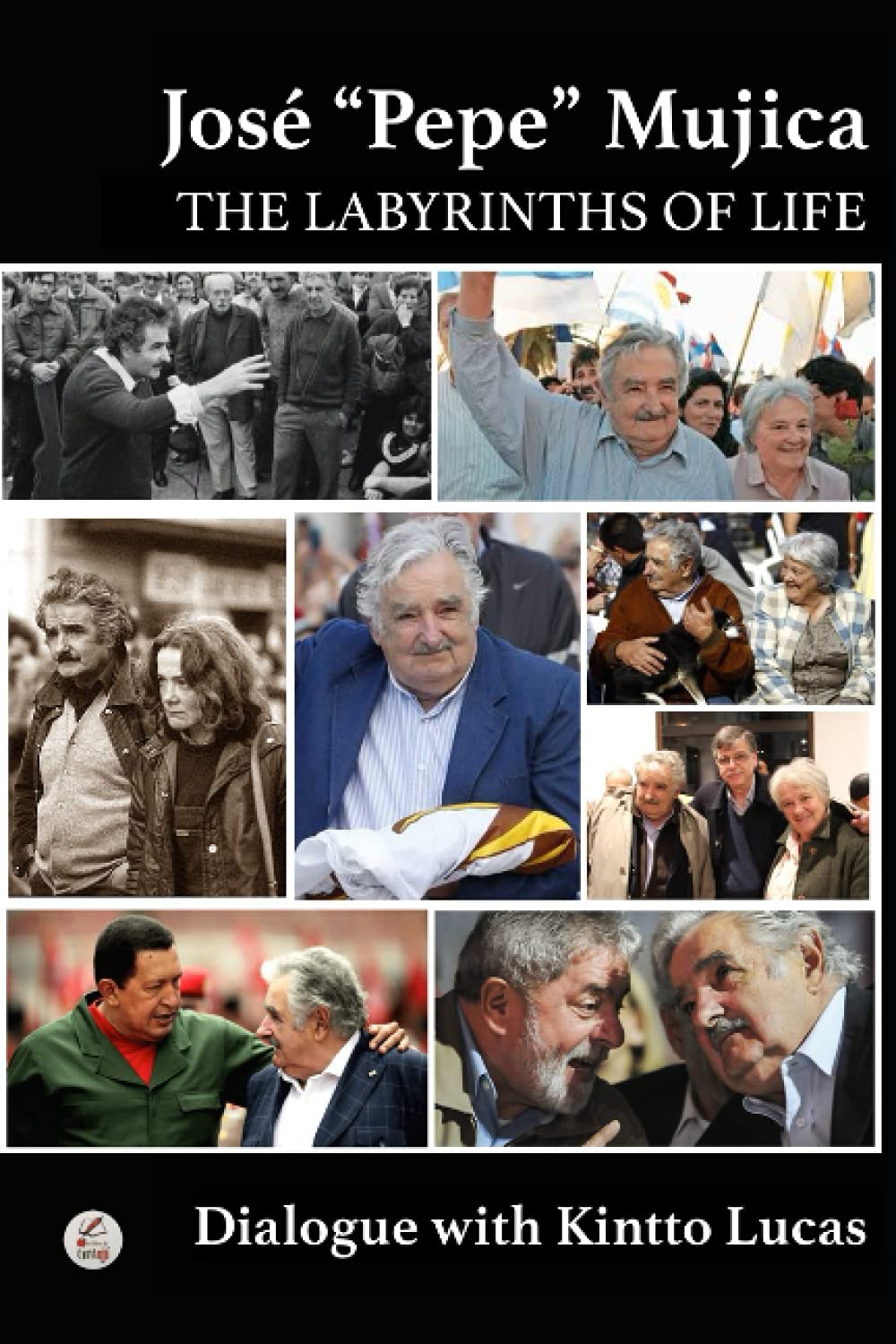
I’ve been dipping into books about Uruguay- a place I’ve never been- and about Jose (‘Pepe’) Mujica, the ex-President of Uruguay who died recently. I haven’t been able to find many English-language books about the Tupamaros, especially recent ones, and this book, written in 2014, seemed to be as recent as I was going to find. I know little about the historiography of Latin America, and Uruguay in particular, or the author (who was/is an American international security analyst – whatever that is) so I can only take the book on its own terms. To my admittedly untrained eye, the book seemed to be fairly even-handed, and easily read by a newcomer to the area, although an index for the huge range of characters would have been useful.

So the Tupamaros- what a strange name. This Marxist-Leninist urban guerilla group took its name from Tupac Amaru II, the leader of a failed Andean rebellion against the Spanish in Peru, who was executed in 1781. The group, more properly known as Movimiento de Liberación Nacional – Tupamaros, MLN-T formed in the early 1960s, and one of their first acts was to steal weapons and ammunition from the Tiro Suizo, a shooting range in Colonia, Uruguay. The weapons, supplemented by stolen police uniforms, enabled them to conduct a range of audacious hold-ups and kidnappings which earned them the sobriquet ‘The Robin Hood Guerillas’. Their mode was ‘armed propaganda’ which combined the mostly harmless brandishing of weapons with a healthy (if somewhat tedious) dose of ideology and propaganda to which they subjected their victims. At first there was, indeed, a Robin Hood element, when they combined social justice and retribution against corruption in their criminal activities, often undertaken both as a form of armed propaganda and in order to procure more weapons, ammunition and money to conduct further raids.

Despite admiration of both the Cuban and Chinese revolutions, and the sympathy the leaders had for the agricultural workers (particularly by Raul Sendic and Jose Mujica) it was decided that they would eschew the examples of other peasant-based revolutions and instead undertaken urban guerilla action. This was largely a result of geography: as a small, flat country there were none of the mountain hideaways that guerillas could melt into, and at times when both Brazil and Argentina had right-wing governments, they could not count on fleeing over the border.

At first, they seemed to have widespread, if often tacit support. They could call on doctors to repair their injuries, and lawyers, bank officials, government employees and others enabled them to infiltrate and provide intelligence about their targets. Brum reveals a grudging admiration for the audacity of their raids, and their sheer ingenuity and logistical planning of escapes when the police rounded them up. Their escapes- especially when 100 prisoners tunnelled out of the Punta Carretas – made them seem invincible (in much the same way, unfortunately, as the drug cartels in South America have seemed inthe past).

Brum spends some time on Alejandro Otero, the police commissioner with formidable MLN-hunting skills, who in a Javier/Jean Valjean type of struggle with the Tupumaros, exhibited a mixture of fixation and grudging admiration, as did the Tupumaros with him.

But over time, as more of the original Tupamaros were arrested or fled into exile, the movement became more violent. They lost support when their kidnap hostages were murdered, rather than set free after a few months, and in many ways their actions prompted the takeover of the military, albeit with the acquiescence of the civil authorities. The murder of rural labourer, Pascasio Baez, by lethal injection of penothal also cost them support.

Once popular support leached away from them, and the grip of the military hardened, the Tupumaros disappeared from the headlines. But Brum follows them into their imprisonment, divided into groups of three, held in prisons with varying degrees of cruelty.

I gather that Brum makes some contested points in this book. He argues that it was not certain-indeed, he leans towards refuting- that U.S. government official Dan Mitrione, who was murdered in 1970, actually trained the police in torture methods. He suggests that during 1972 and 1985, when the nine most prominent Tupamaros were imprisoned, and moved from one military base to another, the Tupamaros themselves sent out feelers to the very military that was imprisoning them, to see if they could work together.

He finishes his book with a ‘where-are-they-now’ survey, current as of 2014. Raul Sendic, the icon of the Tupamaros, suffered appalling facial injuries in a shoot-out, and died in 1989. Some, like Jorge Zabalaz and Mauricio Rosencof retained their radicalism. Brum is bemused, and amused, by the popularity of Jose Mujica that saw him become no less than President. As he points out, a surprising number of the players in the 1970s still had sons involved in politics fifty years later.

Brum criticizes the barbarity on both sides- on the part of the Tupamaros who drifted away from the somewhat romantic (and romanticized) view of the Robin Hood guerilla, and on the part of the military who honed their cruelty on the nine Tupamaros leaders under their control. Despite the audacity and logistic brilliance of their early exploits, Brum’s linking of them with their ideological descendants like the Californian Symbionese Liberation Army who kidnapped Patty Hearst, or the Weather Underground, or the urban guerilla Rote Armee Fraktion in Germany, or the Italian Brigate Rosse is rather chilling. He closes his book with the observation that, despite Mujica’s proclamation that he “fought for a fatherland for all”

…many individuals were left behind in shootings, executions, and torture chambers: civilians, insurgents, policemen, and soldiers. For them there really was no more fatherland.

I enjoyed this book, although I was mystified by the curious insertions of #### and ++++++ to denote endnotes, as well as nearly 600 footnotes throughout the text. It was supportive of a reader with little knowledge, and he established the major characters sufficiently clearly that you could trace them throughout the narrative, although they threatened to be swamped by so many minor characters mentioned in person. Jose Mujica, whom I admire, once said

I am still a Tupumaro. I never stopped being one. A Tupumaro is someone who rebels against injustice.

After reading this book, I think I understand a little better what he meant.

My rating: 8/10

Sourced from: purchased Kindle book

‘Bombard the Headquarters! The Cultural Revolution in China’ by Linda Jaivin

2025, 128 p.

Since the Orange One has launched his mayhem on the world – did this second presidency really only start in January?- China and Xi Jinping are presenting themselves as a calm, considered and stable presence on the world stage in comparison. It’s a seductive thought, but after reading this small book, I came away convinced that there is a fundamental difference between China and Western democracies in terms of both means and ends that we ignore at our peril.

Many historians mark 16 May 1966 as the start of the Cultural Revolution, when Jiang Quing (Mao’s fourth wife) and Mao circulated a document amongst the Party members which warned of ‘counter-revolutionary revisionists’ who had infiltrated the Party, the government, the army and cultural circles. This document was only made public a year later, but it was popularized in August 1966 by “Bombard the Headquarters”, a short text in written by Mao Zedong himself and published widely. It was a call to the students, who were already confronting their teachers and university lecturers, exhorting them that ‘to rebel is justified’. Yet the headquarters he was urging them to target were the headquarters of his government; of his party. Within three months there would be 15 to 20 million Red Guards, some already in university, others as young as ten. They were urged to ‘smash the Four Olds (old ideas, culture customs and habits) to make was for the creation of a new revolutionary culture. Mao did not explicitly call for the formation of the Red Guards, but he harnessed them as an alternative source of power to the government and, at first, beyond the control of the army until it also joined in the Cultural Revolution in January of 1967.

With Khruschev’s denunciation of the cult of Stalin, Mao felt that Russia had betrayed the revolution and that China needed to return to the dictatorship of the proletariat. Even though 1966 is seen by many as the starting point, Mao had been moving towards this point for several years, moving against the deputy mayor of Beijing and historian Wu Han, removing the People’s Liberation Army chief of staff and premier Luo Ruiquing, and splitting with the Japanese Communist Party because it failed to call out Soviet revisionism.

Some of his party colleagues, most especially Liu Shaoqui, Deng Xioping and Zhou Enlai, held qualms about Mao’s call for continuous revolution led by the Red Army. And well they might have, because quite a few of Mao’s judgment calls – The Great Leap Forward and the Hundred Flowers Campaign- brought unseen (to him) consequences, and the schemes ended up being abandoned. But despite any reservations his colleagues may have held, the Great Proletarian Cultural Revolution went forward, with the Red Guards murdering 1800 people in Beijing alone in Red August 1966. The Red Guards were joined by the workers in late 1966, and the Army in January 1967.

At a dinner to celebrate Mao’s 73rd birthday on 26 December 1966, he proposed a toast to “all-out civil war and next year’s victory”. He got his civil war. Children denounced parents; both the Red and the conventional army split into factions. The targets of the Cultural Revolution were the Five Bad Categories- landlords, rich peasants, counter-revolutionaries, bad elements and ‘rightists’. Temples, churches and mosques were trashed; libraries set alight, hair salons and dressmakers’ shops attacked, and even the skeletons of a Wanli emperor and his two empresses were attacked and burned. The verb ‘to struggle’ came to have a new meaning as ‘enemies’ were “struggled” into the airplane position, forced to bend at the waist at 90 degrees with their arms straight behind, with heavy placards hung around their necks and hefty dunce caps on their heads. Teachers, academics, musicians, writers, local officials were all ‘struggled’, with day-long interrogations that ended with instructions to return the next day for more after being allowed to go home overnight. No wonder so many people committed suicide.

By September 1968, the civil war was declared over, with ‘the whole nation turning Red’. However, with the deteriorating economic situation, and with a perception that people living in the cities were not pulling their weight, Mao decided that ‘educated youth’ needed to receive re-education by the poor and middle-class peasantry (p. 68). In 1969 as many as 2.6 million ‘educated youth’ -including present-day president Xi Jinping- left the cities for the country side. Some did not have to go too far from home, but others were exiled to the brutal winters of the Great Northeast Wilderness, or the tropical jungles of Yunnan in the south-west. Some villagers were ambivalent about these ‘soft’ teenagers, although they welcomed the goods and knowledge that they brought with them. The young people were often shocked by the poverty and deprivation in the villages, which contrasted starkly with the propaganda of the happy prosperous countryside they had accepted.

The Cultural Revolution had morphed in its shape, with the 9th Party congress declaring that the Cultural Revolution was over in April1969, and Mao criticizing his wife Jiang Quing and her radical associates in the ‘Gang of Four’ in May 1975. The outside world was changing too. A border war with USSR in March 1969 provoked fears of nuclear war, and the United Nations recognized the People’s Republic of China over Taiwan. President Nixon visited China in February 1972 (Australia’s Gough Whitlam, then opposition leader, had visited in July 1971) and Mao died in September 1976, eight months after the death of Zhou Enlai. In 1981 the Party declared that the Cultural Revolution had been a mistake, and that Mao had been misled by ‘counter-revolutionary cliques’. All at the cost of at least 4.2 million people being detained and investigated, and 1.7 million killed. Some 71,200 families were destroyed entirely. It has been estimated that more people were killed in the Cultural Revolution than the total number of British, American and French soldiers and citizens killed in World War II (p. 106)

The Cultural Revolution may seem an event of the 20th century it’s not that far away. Xi Jinping and his family were caught up in the Cultural Revolution, and tales of him toiling alongside the peasants in the countryside is part of his own political mythology. We here in the West are well aware of the Tienanmen Square protests of 1989, but there is no discussion of them in China. When Xi Jinping took power in 2012, discussion of the Cultural Revolution, the Great Leap Forward and the resulting famine, were all increasingly censored. Xi Jinping abolished the two-term limit to presidential office in 2018, making it possible for him to be President for life. New generations of nationalist fanatics have arisen, likened (for good or bad) to the Red Guards.

This is only a short book, running to just 107 pages of text. In its formatting and intent, it is of a pair with Sheila Fitzpatrick’s The Death of Stalin (reviewed here), and both books deal with hinge-points that, although taking place some 50 years ago, resonate today with even more depth. As with Fitzpatrick’s book, Bombard the Headquarters opens with a timeline and a cast of characters, but I found the brevity of Jaivin’s character list made it harder to establish the various protagonists in my mind, exacerbated further by unfamiliar names. What I really did like was the way that she interwove the stories and experiences of individuals alongside the ‘massed’ nature of this revolution. When we see the huge crowds of people in Tiananmen Square, and the chilling precision of the Chinese army at the parades that dictators are so fond of, it is hard to find the individual, but she has worked hard to keep our attention on the people who lived through, suffered, and did not always survive such a huge experiment in social engineering.

My rating: 8/10

Sourced from: Review copy from Black Inc. books, with thanks.

‘The Casual Vacancy’ by J.R. Rowling

2012, 503 p.

As I have related several times in this blog over the years, when I was young I read Hans Christian Anderson’s The Snow Queen. In that story, a shard from an evil, broken mirror entered the eye of a little boy, Kay, who from then on could only see ugliness in everything. I think that J. R. Rowling may have a similar shard in her eye, at least in this book. It was her first book for adults, written after the Harry Potter series that had captured young readers and accompanied them into adulthood. It is ugly, snarky and ends in a tragic melodramatic conclusion. I was hooked, after a very slow start, but in the closing pages of the book, I just thought “this is ridiculous”.

I’ve always thought that Rowling is very good with her beginnings, particularly in her Cormonan Strike books- three pages and you’re in. She starts well here too, with a death in the first few pages, but instead of jump-starting the book, the impetus dissipates as various people in the fictional town of Pagford learn that their local councillor Barry Fairbrother has died. The ‘casual vacancy’ caused by his death prompts a local election to fill his seat, and Rowling introduces a wide range of people who are taking a particular interest in this election.

Pagford is an older town, established in the days when ‘parishes’ were the backbone of local government, but time has brought many changes. A council estate called rather ironically The Fields, with low-income and social housing, had been built nearby and had been attached to the Pagford Parish. At the time of Barry’s death, the council had been engaged in negotiations to sever The Fields, and have it come under the jurisdiction of the larger, more modern city of Yarvil. For many Pagford ratepayers, this would shift the problem of drug addiction and social dislocation onto another council but Barry Fairbrother, as a former Fields boy himself, was leading the push to have The Fields remain in Pagford. The now-vacant seat on the parish council was a means to influence the outcome.

There is a huge range of characters in this book, and it took quite a while for me to embed who-was-who into my mind. They’re a rather unsavoury lot: the morbidly obese Howard Mollison who is angling to get his son onto the council; Colin ‘Cubby’ Wall, the school principal, who is tortured by the fear that he may have molested students without retaining any memory of the fact; local doctor Parminder Jawanda who supports keeping The Fields in Pagford, although her opinion is possibly influenced by her infatuation with Barry Fairweather; and Terri Weedon, a drug addict and prostitute from The Fields, whose daughter Krystal takes responsibility for caring for her young brother Robbie- among many other characters. Their partners and children resent each of them, all for various reasons, and there is barely a happy person amongst them. It’s all rather sordid in a petty, pathetic way. It’s not surprising, then, when posts under the name ‘The Ghost of Barry Fairweather’ begin appearing on the parish’s online forum, spilling the dirt on one person after another.

The narrative swings from one family constellation to the next, and gradually tightens its focus on two tragic deaths that make the election seem tawdry and petty. By this time, the pace of the book had really picked up and the majority of the characters were firmly established. But I just found myself saying “This is stupid!” as the ending became increasingly fast-paced and melodramatic. The ending was just as bleak as the whole scenario had been, and I felt as if some of the grubbiness of the book had rubbed off on me.

I gather that much of the ire against this book comes from a disappointment that it had none of the magic of Harry Potter. There’s certainly no magic here. Because of its provincial town setting, some have likened it to Middlemarch which likewise has a large cast of characters, going about their small, ultimately insignificant lives. But this is much grittier and nastier than Middlemarch, with its complexity laced through with snarkiness.

My rating: 7/10

Sourced from: a gift.

‘Everything lost, everything found’ by Matthew Hooton

2025, 304 p.

Are there more books being published about the slide into dementia and confusion, or it just that I perceive it that way because of my own fears? Writer and academic Matthew Hooton is rather too young to be facing this situation himself, but he captures well the slipperiness of memory in this beautifully written book. If you’re looking up ‘Matthew Hooton’ to find out more about him, you’ll find that unfortunately for him, he shares his name with a former National Party politician from New Zealand. But there’s a certain irony in that because Jack, the narrator of Everything lost, Everything found also shares a name with another Jack in Henry Ford’s rubber plantation in the Brazilian Amazon, where he travelled with his parents in 1929.

There are two threads to this book. One is Jack’s memories of Fordlandia in Brazil, a cookie-cutter American suburb transplanted into the Brazilian jungle, under the control of the morality agents charged with carrying out Henry Ford’s vision for a colonial outpost to establish rubber plantations in the jungle, while gradually easing out reliance on native rubber-gatherers. The second thread is that of Jack’s life in Michigan, in what is now a deserted Ford Factory town, as his wife Gracie is sliding into dementia and a slow death with cancer.

The descriptions of the jungle are just gorgeous, and the jungle itself seems to take on a personality. But it is a malevolent personality: taking Jack’s mother’s life in a caiman attack on the river, and driving Jack’s father into his own madness in searching for his wife’s body in the jungle. A man half-dead from exposure and the jungle’s flesh-eating insects staggers into Fordlandia, and Jack himself is not sure whether it is his father or not. Young Jack himself is forced into a battle with the jungle as he and Soo, a young Korean girl who had worked in the sanatorium laundry, try to escape the morality agents who have shopped her to the Japanese.

I read this book because I had recently read Hooton’s Typhoon Kingdom (review here) and at first I was struck by the difference in setting between his earlier book and this one. But Korea (where Hooton lived and worked for some time) works its way into this book as well, when Soo explains that she is Korean royalty has escaped the Japanese in their takeover of Korea early in the 20th century. I’m not sure whether this strains credulity or not.

But there is no difficulty at all in watching the older Jack, seventy years later, defiantly trying to stay in his family home as his life revolves around visiting his wife in the nursing home. Jack’s relationship with his divorced daughter Jess is strained, and his grandson Nick is a mixture of solicitous and off-hand adolescence as he is trying to negotiate his own relationship with his father.

In fact, one of the things that really impresses me about Hooton’s writing is the way that he is able to emotionally inhabit someone that he clearly is not: a Korean comfort woman in Typhoon Kingdom and an old man here. His characters have an authenticity and layers of complexity, and their dialogue and tone is distinctive and convincing.

The two story lines become increasingly intertwined, as Jack himself becomes more addled, and as the past colonizes the present, not unlike the colonization attempt of Fordlandia. Jack’s narrative voice is comfortable and engaging, and as a reader you want things to be better for him.

I really enjoyed this book. In one of those little twists of coincidence, I read a review from 1925 of Henry Ford’s rather burnished autobiography, which was written before the establishment of Fordlandia and some of the more unsavoury aspects of Ford’s politics. Moreover, I had only recently read Hooton’s earlier Typhoid Kingdom, and so the Korean aspect was familiar to me as well. But quite apart from that, I just enjoyed the beauty of the descriptions, the poignancy of loss and grief, and the sheer humanness of it all.

My rating: 9/10

Read because: I enjoyed Typhoon Kingdom and I saw that he had a new book out

Sourced from: Yarra Plenty Regional Library

‘The Lover’ by Marguerite Duras

1984, 128 p.

One of the very best things about belonging to a book group is when you go along, thinking that a book is a bit mediocre, and you leave having been introduced to a swathe of subtleties and themes that you just hadn’t thought of before. This is what happened with me at the Ivanhoe Reading Circles’ discussion of Marguerite Duras’ The Lover.

The Lover starts and ends with the reflections of a 70 year old woman, which was the age that Marguerite Duras was when she wrote the book. Although she later distanced herself from the book, claiming that it was a “pile of shit” that she wrote while she was drunk, it closely follows the contours of her own life and could probably best be classed as fictionalized memoir. It is set in Indo-China, then under French rule, in the late 1920s. Both the title and much of the narrative revolve around an affair she conducted with a man twelve years older than her, when she was aged only fifteen. It is a consensual relationship, although she treats her lover with a rather patronizing pity, knowing that as a Chinese man he cannot hope to marry her as a white woman. The 70 year old narrator claims that the girl (who alternates between ‘she’ and ‘I’) is no victim here; that she is hungry for the physical act and that she gains confidence and status through the affair. She does not love him, or at least she claims this, but he is humiliated by the relationship, and later confesses that he has always loved her. I found myself thinking of Nabakov’s Lolita written from Dolores’ point of view, (acknowledging that Dolores was younger, and Humbert was older), in this case without the lens of paedophilia and in this case further complicated by issues of class and colour.

The title and the reputation of the book rest on the affair, but that is only part of the story and on the second reading I found myself even more aware of the other aspects of the novel. The girl is white, her family being French in a French colony. Her mother is a widowed schoolteacher and the family is poor after her father’s death and following the disastrous financial purchase of a ‘concession’ in the rural countryside. The girl’s mother, who suffers from bouts of mental illness, is nonchalant and even complicit in her daughter’s affair with this rich Chinese older man (although twelve years is not an excessive age difference, and in France then and now the age of consent is 15). He gives her money, and the family needs it, especially as her older brother is siphoning money from his own family to feed his opium addiction. Her hatred of her older brother is sustained throughout her life, especially when her younger (but still 2 years older) brother dies.

The book is not easy to read. Many times she returns to the image of the girl on a ferry crossing the Mekong River, dressed in a faded silk dress with a belt belonging to her brother, gold lame shoes and a pink-brown fedora. This is how her lover first saw her, and this is how the 70 year old her sees herself looking back. The narrative is shattered, switching repeatedly between first and third person, interspersed with flashbacks and flashforwards. There is a flatness of tone throughout, as if the book were being narrated at a distance in a monotone.

I’m pleased that I read it a second time. I realized on second reading that the repetition and fragmentary nature of the narrative was not going to resolve itself miraculously at the end, and I slowed down to savour it more. Her affair – or whatever you would call it- as a 15 year old, her childhood in French Indo-China, her yearning to write, the paradox of ‘pleasure unto death’, memory and madness are themes that she returned to again and again in her writing. She might have decried it as a pile of shit, but it’s not.

My rating: on second reading 9/10

Read because: Ivanhoe Reading Circle selection

Sourced from: purchased e-book.

Other reviews: Anthony Macris in The Conversation

‘Oscar Wilde’ by Richard Ellman

1988, 554 p & notes

I can hardly believe that I have read this enormous tome not once, but twice. The first time was in 2002, when I read it for an online Literary Biography book group, and this second time was for my former-CAE bookgroup (which I nicknamed ‘The Ladies Who Say Oooh’, which is what my daughter used to call us). The CAE has disbanded its bookgroups and farmed out its book collections to groups, no doubt to save themselves the hassle of getting rid of thousands of books. None of us actually chose this book, but we were happy to read it. That was before the group members realized how long it was, and how small the font was. I think that I was the only one to actually finish it, largely because I knew that I enjoyed it the first time. But I think that I was more impatient with it this time.

Richard Ellman’s biography of Wilde won both the National Book Critics Circle Award and the Pulitzer Prize. It has been described as the ‘definitive’ biography, and I certainly don’t think that another Wildean fact could possibly to be dredged up that hasn’t been included in this exhaustive and exhausting book.

The first time I read it, I was largely unaware of Wilde and his story. I knew that he wrote plays, that he wrote ‘The Happy Prince’, that he was homosexual and that he ended up in jail. Perhaps my enjoyment of the book the first time was that it was all new to me then, although I have since watched Stephen Fry’s wonderful performance in the movie ‘Wilde’, seen an excellent local performance of David Hare’s The Judas Kiss and read Fanny Moyles’ Constance: The Tragic and Scandalous Life of Mrs Oscar Wilde.

Ellmann certainly leaves no stone unturned, starting right back with Wilde’s birth and and going through to rather graphic details of his death. He draws parallels between Wilde’s writing and his own life, and then (as now), I found myself regretting that I have never read The Picture of Dorian Gray. The courtcase that led to his downfall does not appear until about 4/5 of the way through the book, so there is plenty of time for Ellmann to establish Wilde’s large circle of artistic friends – including even Australia’s Charles Conder and Dame Nellie Melba- and Wilde’s conscious creation of ‘aestheticism’ as a cultural movement. In the late 1880s-early 1890s, he seemed to be everywhere: in print, on the stage, amongst the wealthy, the glittering and the cognoscenti. Ellman’s sympathies are clearly with Wilde, although he shows us his fecklessness (especially in relation to his wife Constance), his recklessness and his odd mixture of weakness and doggedness.

This second reading, however, found me impatient at the denseness of the prose and overwhelmed by the minuscule level of detail. It is as if he could not bear to leave a single fact out, and if he couldn’t squeeze it into the text, then he would carry it on in the lengthy footnotes at the bottom of the page. (That said, I was grateful that he included translations of the French in the footnotes as well). I read now that Ellman completed the book just before his death with Motor Neurone Disease in 1987, and that he was not able to revise it or correct errors which have since been corrected by another writer. Perhaps, had he had more time, he might have stripped the book back a bit, which would not have harmed it in any way and indeed may have enhanced it. As it is, Ellmann has covered Wilde’s life so exhaustively that any further biographers could not compete in thoroughness, only in incisiveness.

My rating: First time 8.5. This time round 7.5?

Sourced from: ex-CAE bookgroup stock

Read because: book group selection.

‘Station Eleven’ by Emily St John Mandel

2015, 384 p.

I had heard about this book during the COVID pandemic, and no wonder. Published in 2014, some six years before the world locked down, it describes a world where 21st century Western industrialization has collapsed in the wake of a virulent influenza that has wiped out 90% of the population. What cheering reading during a pandemic!

However, reading it ten years later and with those COVID years behind us, does Station Eleven stand on its own two feet? I think it does. Right from its opening chapter, which starts with a Shakespearean actor, Arthur Leander playing King Lear, collapsing on stage, I was hooked.

As Arthur falls to the floor, a member of the audience, Jeevan Chaudhary, a trainee paramedic rushes to give him CPR, watched by a little girl Kirsten Raymonde who stands in the wings. Returning home, he takes a phonecall from a friend who is a doctor, who warns him that the Georgia flu is rampant, and to take his girlfriend Laura and his brother, and to get out of town.

The narrative then jumps ahead twenty years and takes up again with Kirsten, now an adult, with only scattered memories of that night at the theatre, before everything changed. She is now part of the Travelling Symphony, a rag-tag group of actors and musicians, who move from settlement to settlement to perform music and plays. Electricity, gasoline, the internet and all the things enabled by these had ceased, and in the first years after the pandemic, life had reverted to a light-governed, subsistence struggle against other frightened groups, who were themselves fighting for existence. After twenty years, things had stabilized, albeit at a stagnant level, but a level of menace had been recently introduced by the rise of the Prophet, drawing on a mixture of messianic religion and violence to consolidate his power.

If this sounds at bit like Cormac McCarthy’s The Road, it is. I certainly had the same feeling of dread in the pit of my stomach as I read. But unlike The Road, there is not the same relentless hopelessness. This is a world that is trying to hold onto the best in music and literature, and trying to collect as many artefacts from the old world as possible so that the ‘before’ world is not completely lost. The world still looks for beauty. The book’s ending, while ambiguous, is hopeful.

It is beautifully written with strong control of the narrative, as Mandel slips back and forward between the ‘before’ and ‘after’ worlds, moving from one character to another. How prescient she was, and how chilling it must have been to pick up this book in the early days of COVID. But as a piece of writing, it doesn’t need the experience of the last few years to give it strength: it’s a very human, well-crafted book that celebrates creativity and the best of being human, giving hope without sentimentality.

My rating: 9/10

Sourced from: the op-shop.

‘Sneaky Little Revolutions’ by Charmian Clift

2022, 448p.

[Warning: discussion of suicide]

This book, edited by Clift’s biographer and former daughter-in-law Nadia Wheatley, is marketed as ‘selected essays’. More properly, they are a selection of 80 of her 225 newspaper columns published mainly in the Sydney Morning Herald and Melbourne’s Herald between 1964 and 1969, when they came to an abrupt halt with her suicide.

The newspaper columnist was (is?) a curious beast. Although there are innumerable bloggers and sub-stack writers, there seemed to be something rather special about turning over the page of a print newspaper, and seeing an article by a regular columnist, in its accustomed place on the page. I used to enjoy the columns of Sharon Gray (who I see is actually Adele Hulse), Pamela Bone and Gillian Bouras who ended up living in Greece – all women- and Martin Flanagan in the Age. I know that Anne Deveson wrote a regular column, but I only know of her through her daughter Georgia Blain. The only physical newspapers that I still receive are the Saturday Paper and The Age on Saturdays and although they have a stable of staff writers and comment columns, the only one who comes close to my perception of the ‘newspaper columnist’ in the Charmian Clift mould is Margaret Simons with her gardening columns in the Saturday Paper, and perhaps Kate Halfpenny and Tony Wright in The Age. Somehow you feel as if you know them, and that you could plonk down beside them in a coffee shop and just take up talking with them.

Of course, it’s all artifice because despite the appearance of confidentiality and intimacy, columnists project a particular view of themselves, and one that is often quite removed from reality. This is the case with Charmian Clift whose columns brim with confidence and warmth, when instead she had lived, and was still living, a life that was far removed from the suburban Australian life of many of her readers. She and her husband, writer George Johnson, circulated in an artistic and intellectual milieu on the Greek island of Hydra that could simply not be found in Australia (barring, perhaps, the communal living at places like Heide in Bulleen). There’s little sign in her columns of the infidelities and arguments that wracked her marriage. She never mentioned her family members by name, and referred only obliquely to her husband’s long hospitalization with TB. The birth of an illegitimate, and relinquished, daughter when she was 18 years old was coded as “a wrong road…that led me to disaster”.

I could find only one mention of her alcoholism:

A whole human life of struggle, bravery, defeat, triumph, hope, and despair, might be remembered, finally, for one drunken escapade.

One can only read with hindsight her essay about her husband’s forthcoming semi-autobiographical second book Clean Straw for Nothing, which she had not dared read, for fear of what he might reveal about her through the character Cressida Morley

I do believe that novelists must be free to write what they like, in any way they liked to write it (and after all who but myself had urged and nagged him into it?), but the stuff of which Clean Straw for Nothing is made, is largely experience in which I, too, have shared and … have felt differently because I am a different person …

Indeed, several commentators have linked her apprehension about the publication of this book with her suicide in July 1969 at the age of 45- a suicide that seems so paradoxical with the fiesty, intelligent personae that she had curated through her columns.

Wheatley has titled this book ‘Sneaky Little Revolutions’, echoing a rather condescending but also self-effacing comment that Clift made about her own columns to her publisher in London:

I have been making my own sneaky little revolutions …writing essays for the weekly presses to be read by people who don’t know an essay from a form guide but absolutely love it….

Some of her essays are disarmingly suburban, but there are many others that are subversive and indeed, “little revolutions” for the mid-1960s, deep in the midst of the Menzies-era. She resisted the smugness of white-Australia that expected her gratitude for returning to comfortable Australia from a ‘foreign’ country; she supported the rights of women and decried their ‘second-class’ status; she said “sorry” some forty years before the Australian government did; and she revelled in young ‘protestants’ (i.e. protesters) who challenged the complacency of the 60s. In an essay that was not published at the time, she criticized the contingency and unfairness of the National Service draft, which left some men untouched and diverted the life course of others.

As a middle-aged (who am I kidding?) woman myself, I loved her essay ‘On Being Middle Aged’.

…the middle-aged drag time around with them like a long line of fetters, all the years that they cannot escape, the mistakes that can never be undone, the stupidities that can never be uncommitted now, the sames and humiliations and treacheries and betrayals as well as the prides and accomplishments and happinesses and brief moments of wonder…. I often think that middle-aged people have two lives, the one they’ve lived, and a parallel life, as it were, that walks around with them like a cast shadow and lies down with them when they go to sleep, and this is the life they might have lived if they had made different choices in that time when time was so abundant and the choices were so many.

There is a run of essays in the volume about her trip to central and northern Australia. At a time before cheap airfares and mass international travel, her beautiful writing brought to life a view of Australia from above- something that not all Australians had seen. In ‘The Centre’:

Pitted pores. Dried out capillaries of watercourses. Culture slides of viridian clotting thick creamy yellow. Wind ridges raised like old scars, and beyond them the even, arid serrations of the Simpson Desert, dead tissue, beyond regeneration. And yet, the tenderness of the pinks, the soft glow of the reds, the dulcet beige and violet seeping in.

She has a distinctive voice, although one that is not completely unlike my own with her colons and lists and parentheses and made-up words. The genre of the newspaper column does impose a straitjacket of must-haves: an engaging introduction, a set word length, and a rounding-off last paragraph. I found myself longing for a longer essay than the requisite six pages in my e-book and something more thorny and less self-contained.

Is there any point to re-publishing seventy year old newspaper columns? Yes, I think there is in exceptional cases, and few newspaper columnists have that honour bestowed upon them. I think that it rescues some good thought, good thinking and prescience from the flow of ephemera and evokes a humility in us to remember that many others have held certain political positions and made similar observations in the past.

My rating: 8/10

Read because: Ivanhoe Reading Circle selection

Sourced from: purchased e-book

‘The Fig Eater’ by Jody Shields

2001, 352 p.

I must admit that this book was nothing like I imagined it would be. From the front cover (yes, I know don’t judge etc etc) I assumed that it would be a historical fiction but instead found that it was a detective story, and a not terribly satisfying one at that.

We meet the victim in the opening pages of the novel as a young woman’s body is being examined in the presence of the Inspector (who is never named) who, steeped in the methodology of crime investigation and influenced by the ideas of psychoanalysis swirling around early 20th century Vienna, calls in his wife, the Hungarian artist Erszébet to make a painting of the 18 year old Dora’s body in the morgue for later reference. Erszébet and her young friend, British governess Wally, embark on their own investigation, separate from and deliberately kept from the Inspector. The two investigations run in parallel, the Inspector’s being dominated by his theories of investigation and the role of the investigator, and Erszébet’s drawing on Hungarian folk tales and tropes. The ending seems to go off on a frolic of its own, straining credulity and it seemed to be an abrupt way of bringing the story to the end.

The book is set in Vienna in 1910 and the book has a detailed map at the start of the book. The text makes specific reference to particular places in Vienna, which can be seen on the map, although without an index, locating the buildings and parks was rather tedious, and I eventually realized that locations were rather incidental to the plot. Despite the care with which Shields has delineated the city, the Vienna location itself does not play an important role in the plot, unlike for example Patrick Süskind’s Perfume. There are many details in the book about figs, folklore and photography, and I began to suspect that the author was unable to let go of the research she had undertaken, and was going to put it in the book regardless of whether it actually added anything.

It was only when reading the notes that came along with the book (it was a bookgroup choice) that I realized the resonances between the victim Dora, and Sigmund Freud’s patient, Dora, on whom he based much of his theory of psychoanalysis. This clever resonance was clearly intended by the author, and yet she left it implicit in what is otherwise a very didactic book.

The relationship between the Inspector and Erszébet is a complex one, and I was pleased that she didn’t overlay the young Wally’s infatuation with Erszébet with a lot of anachronistic gender ideology. She had a light touch here, which could have been highlighted by a more overt interweaving of Freud’s theories, and their destabilizing of ‘reality’ and relationships.

The book was only 352 pages in length, but it felt much longer than that. All in all, not a particularly satisfying read.

My rating: 6/10

Sourced from: a former CAE bookgroup book. To liquidate their stock, they sent boxes of books to the disbanding bookgroups and we’re reading our way through them.

Read because: a bookgroup read.