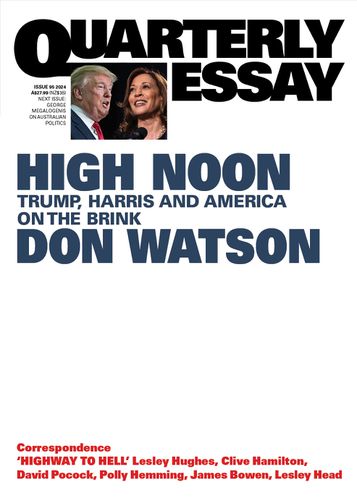
As my son could no doubt tell you, I have a bad habit of leaving journals and magazine unread and wrapped up in their plastic for months…well, years… but with the US election bearing down on us next week, I thought that I’d better read Don Watson’s most recent Quarterly Essay before it was completely out of date.
Don Watson has been writing about America for some time, and he wrote his Quarterly Essay 63 ‘The Enemy Within’ in 2016, deploring the prospect of a Trump victory the first time around. In fact, how ironic that Trump is using the phrase ‘The Enemy Within’ during this campaign to describe the people he will target after becoming president.
In this most recent Quarterly Essay he adopts a similar methodology to the one he used in his earlier essay, and in his book American Journeys where he travels to American cities to talk with voters of both Republican and Democratic persuasions. In Enemy Within he focussed on Wisconsin, and in this most recent iteration he focusses on Detroit and Kalamazoo. The essay is dated 23 August, and the narrative moves as events unfold, including the assassination attempt and Joe Biden’s withdrawal from the candidacy, opening the way for Kamala Harris. Just as in his earlier essay, he has nothing but contempt for Trump, but recognizes that people’s motivations for supporting him have to be at least acknowledged.
Could there possibly be anything left to say about Trump? Probably not, at this stage of the game although events continue to highlight some of the points that he makes in this essay, most of which have been also made by other people. Most particularly, he talks about Trump’s connection with wrestling:
Trump has turned Republican politics, and therefore much of American politics, into the wildly adversarial and addictive world of TV wrestling, an entertainment he used to make money and forge his public persona…TV wrestling involves a lot of boasting, posturing and abusing, as well as body slamming. The wrestlers are real, but not real…. Fans enter the world of TV wrestling as they enter any other fiction, knowing it’s make-believe but open to its seduction. They boo and hiss and shout, much as kids used to at Punch and Judy shows, much as we all do during elections. By making politics like TV wrestling, Trump created a fictional setting for his fictions. He can be as abusive and as untruthful as he likes. In a fictional world, to lie and keep on lying is a requirement…You can sound demented, might even be demented; the more demented you are the more you blend with the environment. (p. 4)
When I saw Trump at Madison Square, with the audience brandishing their signs behind him on cue, it certainly evoked a wrestling match. Not just the presence of Hulk Hogan on stage with him, but also the booing and braying of an audience looking for goodies and baddies and enjoying the ‘show’. Don Watson is not the only person to note the Trump/wrestling connection, but it certainly sprang to mind after reading his essay so recently.
It’s rather discouraging to think that by the time the next Quarterly Essay hits the shelves, with the correspondence responding to this essay, we’ll know the outcome. For better or worse.
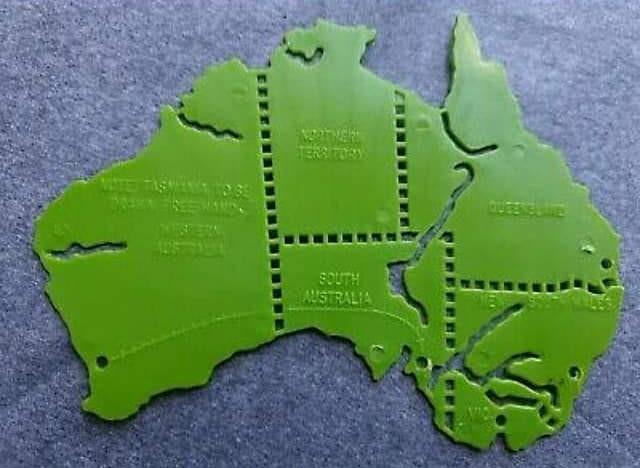
As I remember, it was in about Grade 5 that we “did” Australian history – the first taste of ‘aborigines, explorers, gold and Eureka’- and we used a plastic template to draw Australia. Poor old Tasmania didn’t even get a look-in, but I was also disconcerted by the borders of Victoria, which started with off the solid line of the Murray River before trailing off into dotted lines, like the other state boundaries. Not that the dotted lines were any use: they were impossible to fit a pencil point into, anyway, but they did give a visual sense of state borders. (And emphasized the importance of water compared to boundaries, even though that water might disappear completely from time to time).
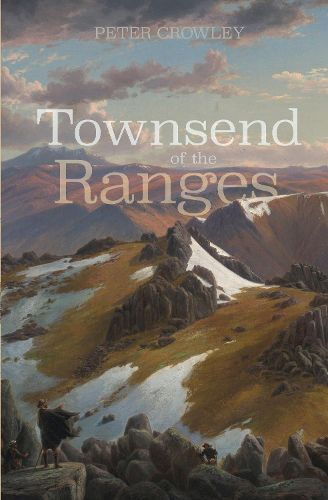
Australians are not unaware of surveyors in their history. Travelling around South Eastern Australia, one often encounters the ‘Major Mitchell Trail’, or markers of the trail of Hume and Hovell, more often described as ‘explorers’ but at early stages of Australia’s colonization, the distinction was perhaps less clear cut. Many Australians are aware of Goyder’s Line that separates arable from drought land in South Australia, and the final proclamation of the Black-Allan line in 2006, more than 130 years after it was surveyed, brought the names of surveyors Alexander Black and Alexander Allan to (somewhat) public notice. But I must confess that I had never heard of Thomas Scott Townsend, the subject of this biography, although his name was given to the second-highest mountain in Australia and Townsend Corner marks where that solid line dissolved onto dots on my plastic school template. The author of this book, Peter Crowley, felt that Townsend had been short-changed:
As far as I am aware, this is the first biography dedicated to Townsend, a man who was the pre-eminent field surveyor of the south-east during the squatter age…I felt for Townsend and his family and wanted to restore his memory to the place it deserved. His triumphs and his travails were of compelling human interest, a tale of suffering and sacrifice endured in service to the public, and they were always going to be the backbone of this narrative. (p.18)
Narratively, Crowley gets you in from the outset. He starts with a suicide in 1869, more than twenty years after most of the action in this story, when the reclusive and belligerent Townsend kills himself by cutting his own throat. What could have led to this “pre-eminent field surveyor” taking his own life?
Thomas Scott Townsend was born in England in 1812. He, along with his parents and 10 siblings, lived at Woodend House in Buckingham Shire. His older brother Joseph was apprenticed to a land surveyor and then began his own surveying business, and it was later noted by Major Thomas Mitchell, the explorer and Surveyor General of New South Wales that Thomas Townsend had been “bred in a surveyor’s office in England”. Thomas had arrived in NSW at the age of 17, and after being unable to find employment, was the recipient of a recommendation to the Surveyor-General from the MP for Oxfordshire, generated no doubt as part of the lobbying and patronage network which underpinned colonial mobility around the empire. He was initially appointed as a draftsman in a temporary capacity in 1831, but remained an employee of the survey department for over 20 years. Those same patronage networks, deployed to the advantage of other new arrivals, were to stall his progress up the career ladder when other aspirants were appointed over him on the basis of similar recommendations from ‘home’. He had to wait under 1845 to be promoted to the position of ‘surveyor’ and the highest position he reached was Acting Deputy Surveyor General of New South Wales.
In these twenty years he was appointed to various projects: laying out towns in Albury, Geelong, Eden; acting as Surveyor-in-Charge of the Port Phillip District; surveying coasts in Gippsland and the South Coast; ascertaining the source of the Murray River; and traversing the Main Range of the Snowy Mountains, making an ascent of the then-unnamed Mt Kosciuszko. Even though the Surveyor-General, Major (Sir) Thomas Mitchell, was able to inveigle long periods of leave for himself to return ‘home’, it seemed that each time the opportunity for a voyage or desired excursion arose, the government found Townsend indispensable and directed him to another suddenly-urgent project. Located far from Sydney and beyond the reach of official orders, he devised his own surveying activities as well, using the time when snow and floodwaters made surveying impossible to go back over areas that had been surveyed in haste earlier. He was ridden hard by the government, but he was a self-driven man as well : perhaps there is a streak of madness in all explorers and surveyors? He was not the first man to enter these areas – he found that squatters had preceded him nearly everywhere he went, following generations-old indigenous paths to find open pastures – but the methodical, documented act of surveying was a form of exploration in its own right.
Surveying involved long periods living in tents in the bush, unless the territory was so impenetrable that supplies had to be left with the oxen and horses so that the surveying party could move unencumbered, sleeping in the open at night – surely a daunting prospect in south-east Gippsland and in the Great Dividing Range. Surveyors used the ‘chain and compass’ method, using a Gunter’s chain to measure distance and taking bearings and angles with a compass. Sometimes they had access to a circumferentor, a compass mounted on a tripod with a sighting arm, or later a theodolite to measure angles. They recorded information in field books, from which they later plotted their data onto maps. At this stage they did not use contour lines, but instead depicted ridges, spurs and valleys by parallel lines known as hachures. Thus, those early maps look quite different to the contour maps we are accustomed to today, and certainly they have their own beauty.
Townsend was instructed to record the indigenous names for the geographical features he surveyed, even though those other names were later overlaid by British names awarded as an act of homage to patrons at ‘home’. Crowley emphasizes throughout the presence of indigenous clans and nations across the whole area that Townsend surveyed. Indigenous guides could easily be procured from squatting stations, and Charley Tarra (or Tara) was a member of several surveying parties. Crowley notes the massacres associated with various squatters, although he does not interrogate the role of the surveyor in a political and legal sense. Certainly guns and violence led to appropriation of the land on-the-spot by the squatters, but it was the legal act of survey and resultant gazetting that imposed British title and sovereignty over Aboriginal land.
Townsend’s work was directly impacted by colonial politics. When he first arrived, the NSW government had already lost control of the squatters outside the Nineteen Counties, and pastoralists were moving into the Port Phillip district from across Bass Strait. When he arrived in Port Phillip as Surveyor-in-Charge, there was already a large backlog of work awaiting him, which only increased further with the influx of population during the gold rush. With the cessation of transportation, the source of cheap surveying teams dried up, and it became difficult to find men prepared to face the isolation and sheer hard work of the task. Squatting regulations introduced a degree of urgency into surveying work, with the imperative to mark out town reservations close to water supplies, to avoid them being swallowed up into large estates. Separation in 1851 brought politics into surveying, with suggestions of a border on the Murrumbidgee which would have placed the Riverina and the later Canberra district within Victoria. Townsend had his own opinion about where the boundary should be, suggesting that instead of rivers being used (which can, after all, expand and shrink depending on climate), mountain ridges and port access should guide the decision.
Crowley depicts well the arduousness of surveying work. It seems that Townsend suffered more from the heat of surveying the Murrumbidgee than he did the snowdrifts and dankness of the south-east. Men could get lost just when stopping aside to relieve themselves; sometimes ticket-of-leave and convict team members were unruly or absconded; and the sad death of Major Mitchell’s son 18 year old son Murray, who accompanied Townsend on his survey of the lower Snowy River, highlighted the isolation and dearth of medical assistance out on the field.
The isolation, the incessant work and the rootlessness of surveying work over such a long period of work did not augur well for a desk-bound job in Sydney once Townsend finally achieved the promotion he craved. In fact, he was quite clear with the governor that he felt that he still needed to be in the field to ensure the accuracy of the surveys conducted by men under his supervision. He married, but seemed unsettled and increasingly paranoid about his wife’s fidelity and sure that he was being ‘watched’. Many people were concerned about him, and felt that a trip back ‘home’, which had been postponed for so many years might alleviate his mental distress. This was not to be… and here we are back at the start of the story, with Townsend’s suicide. I had felt at the start of the book that Crowley had laboured the ‘ignored hero’ point a bit, but by the end, I no longer felt that way. Townsend has been overlooked. Strezlecki has garnered most of the praise for his exploration of the Great Dividing Range, and Alexanders Black and Allen received acknowledgement for tracing the Murray River that Townsend had surveyed twenty years earlier.
Crowley tells the story well, interweaving the biographical with the historical. He draws on official correspondence between Townsend and his colleagues and superiors, Colonial Office files with and about Townsend (which reflect the usual aggrieved tone of correspondents and pompous tone of Colonial Office officials), Townsend’s maps and drawings, and in quite a coup, family correspondence that fills in the last years of Townsend’s life. At times, particularly at the start of the book, I felt that he was distracted by the weeds a bit, giving more context and background information than was necessary. The book does not have an index, which would have been appreciated, but the old fashioned chapter summaries at the start of each chapter helped you to locate information. There was a single list of footnotes that spanned across all chapters. The book did seem to take an inordinately long time to get started, with a note about measurements, geographical notes about what constituted the Great Dividing Range, or the Murray River, a cast of characters, a timeline, acknowledgments and an introduction- all before we get to chapter one. Much of this could have gone at the end of the book.
The one thing that I cannot understand, however, is the dearth of clear, modern maps in this book. With the National Library of Australia as publisher, use of historic maps and documents is to be expected but they were virtually illegible once reduced in size and rendered into grayscale. For much of the book I had no idea where Townsend was or where he was going and no sense of distance or remoteness. This was a book that cried out for a visual representation of land: something to which Townsend devoted his whole life.
But these are quibbles about decisions that may well have been beyond the author’s control. Crowley captures well the incessant demands of the work, the beauty and intimidation of the lands he was surveying, and Townsend’s inexorable spiral into mania. It is both a very human story, and yet one placed within the vastness of unsurveyed territory. Townsend may have had to have wait more than 150 years for his biographer, but with Crowley’s book he receives the recognition earned and withheld for so many years.
Sourced from: review copy from Scott Eathorne, Quickmark Media
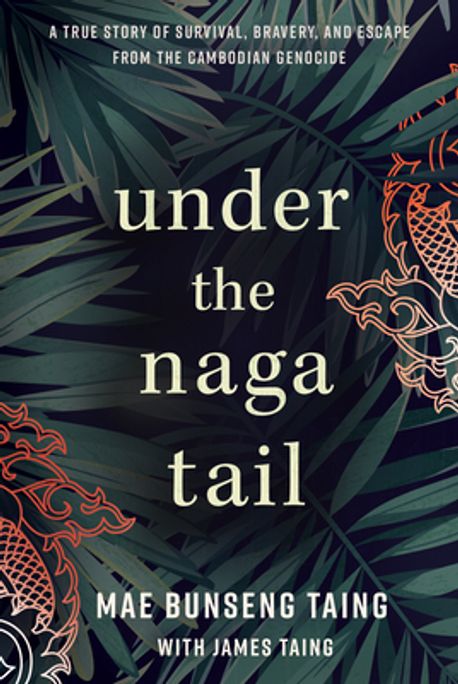
I was in Cambodia, and I wanted to read something Cambodian, but most of the fiction involved the Khmer Rouge period written by people who have escaped to Western countries. This book falls into this category too, although it is slightly different in that the narrator, Mae Bunseng Taing, is of Chinese ethnicity, living in Cambodia. I was interested to know what difference that would make. Unusually, all of Mae’s siblings survived, which is not true of many Cambodian families.
Mae was a teenager and living a fairly affluent life with his entrepreneurial family when the Khmer Rouge marched into Phnom Penh. As with other stories I have read, there was the utter bewilderment as Phnom Penh was completely emptied of people, urged (forced) to leave on the pretext that the Americans would bomb the city. He and his family were forced into the provinces to undertake agricultural work- a far cry from their trading activities in Phnom Penh previously. The family was split up as siblings were sent to different agricultural projects and communities, while his elderly and ill father was left behind in a village. They had secreted away some jewellery, so they were not completely penniless, but under the surveillance of soldiers and ‘Angkar’ operatives, they were only safe if they could merge in amongst other people. The book gives a good glimpse into the ideology that the Khmer Rouge were imposing on their countrymen, who were reduced to a form of slavery.
He finally decided to escape into the jungle, and survived several heart-stopping confrontations. With the defeat of the Khmer Rouge, he decided to cross back over into Thailand and look for his family amongst the refugee camps there. But there had been a change in Thai government policy, and now refugees were being returned to Cambodia, taken into the jungle, and left to find their own way through the explosive-laced jungles at Preah Vihear. It was an inhumane form of mine-clearing, using desperate refugees who were left screaming alone in the jungles, limbs missing, after standing on mines. Mae was, in many ways, in more danger now than he had been under the Khmer Rouge.
This, then, was a second form of Killing Fields. I found myself feeling ashamed at the kindness and the prejudice and indifference that these refugees faced, all too aware that our refugee policy some fifty years later has elements of both. The story was written down by Mae’s son James, who makes an unheralded and abrupt appearance during the narrative, and clearly Mae found his way to a Western country to start a new life.
There is a film by James Taing that you can see on You Tube here. (If you can stand the incongruent ads)
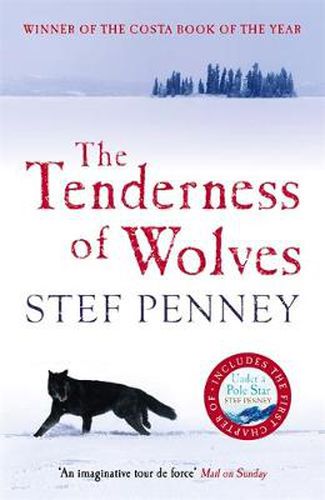
I’ve read Big House mysteries; I’ve read Outback Solitary Aussie Bloke mysteries; I’ve read London-based mysteries. But I don’t think that I’ve ever read an Upper Canada mystery before, especially one set in 1867 which is relatively familiar territory for me because my Judge Willis (the real Resident Judge of this blog) served there in the late 1820s. It is rather strange -and rather amazing, given how vividly she writes- that the author Stef Penney has never visited Canada. The snow and isolation and colonial machinations that she describes in this book all spring from her desk research alone.
Set in the last days of the fur trade, Mrs Ross, a local resident, discovers a brutal murder in the small hut occupied by Laurent Jammet, a French trapper. Suspicion falls on her adopted 17 year-old son, Francis, who was friends with the trapper, and his disappearance from the village only heightens speculation that he is the killer. Donald Moody, an accountant with the Hudson Bay Company, is sent out to investigate the murder, along with Mackinley, the sarcastic and bullying Company Factor from Fort Edgar. They are accompanied by Jacob, Moody’s self-appointed native American protector. They arrest half-Indian William Parker, who was apprehended searching Jammet’s hut after the murder. After Parker is ‘roughed up’ by Mackinley and Scott, the wealthy storekeeper in whose shed Parker is confined, Parker and Mrs Ross go off in search of Francis. There is someone else who is eager to search Jammet’s hut as well: Thomas Sturrock, who believes that a bone tablet which may be of archeological significance is in Jammet’s possession. He has been to the small settlement of Dove River before, having been there years earlier in search of the twon local Seton girls, who disappeared in the forest, never to be found.
And so, we have various people all heading off into the frozen wastes: Francis in search of the man he thinks is the murderer; followed by Mrs Ross and William Parker who are in search of Francis; and then Mackinley and the love-sick Moody who are in search of William Parker. The only nearby settlement is a Lutheran Norwegian community in Himmelvanger, and they take in all of these groups as they stumble in from the snow and icy marshland. Attention then turns to the nearby Hanover House, the company Trading Post, administered by James Stewart. As in the best Mystery Novel tradition, there are many red-herrings and subplots.
The book starts with Mrs Ross’ first person account, and it alternates with other present-tense chapters told by an omnipotent writer, who knows all the characters’ thoughts and backstories. There are rather a lot of characters, and because the book is written in very short chapters without chapter numbers, I found myself getting a bit lost with all the Mr. This and Mr. Thats.
I’m rather mystified by the title, though. There are certainly wolves in this story, surrounding the various groups as they trudge through the snow, and the colonists are all frightened of them. They keep their distance though, and the closest they come is when they sniff around one of the tents at night, breathing over the sleepers and leaving paw-prints. The wolves are certainly less violent than the trappers.
Most impressive of all, though, is Penney’s depiction of the bitter cold and isolation. The landscape, along with the short chapters, makes it a very filmic novel and I wasn’t surprised to find out that she is, in fact, a screenwriter. The book won a Costa Book of the Year in 2007
To be honest, I thought that Homage to Catalonia was a novel, and it never even occurred to me that it might be an eye-witness account, written in the year after his return from fighting in Spain. The book starts in Barcelona, where he embarks on rudimentary training using antiquated equipment before heading for the front. He had joined to support the Republican government from an ideological commitment, entering Spain under the auspices of the Independent Labour Party and by chance ended up with the POUM militia (Partit Obrer d’Unificació Marxista) an anti-Stalinist communist party.
His account, which was written after the event, traces his arrival in Barcelona, and his time on the front first in the hills around Zaragoza and his later deployment with a group of Englishmen to a position at Monte Oscuro, within sight of Zaragoza. He is then sent 50 miles away to Huesca where he takes part in an attack, throwing two bombs which he thinks may have hit their target. After three months on the front, which seem mainly to have been a time of lice-picking and boredom, he returns to Barcelona where the Republican forces have turned on each other. Disillusioned by the political infighting, he returns to the front, where he is shot through the throat, shuffled from hospital to hospital and finally discharged from duty. At this point, the internal Republican politics mean that he is in danger because of his previous involvement with POUM and so he and his wife decide to leave Spain.
The political infighting amongst the Republicans was completely unknown to me. I had always thought of the Spanish Civil War as being Republicans vs. Franco’s Nationalists. But the battle was just as much one within the Republican forces. At one stage while reading, I became completely overwhelmed by the acronyms for the various Republican groups and just happened to notice a footnote that referred to ‘Appendix 1’. (I was reading this as an e-book, and footnotes at the bottom of the page are awkward, clunky things). Lo and behold, there were two chapters attached as appendices, completely about the politics and machinations of the various Republican groups that had previously been part of the text, but had been later shifted to be appendices lest they disrupt the flow. I found these two fairly long chapters illuminating, describing the ideological differences between the Russian government and the other communist groups over the role of proletariat and whether they were ‘ready’ for Revolution. Once I had this sorted out in my mind, I could return to the rest of the book.
[Was it the right decision to excise these chapters from the main text? Probably, because he does get into the ideological weeds here. But I would have struggled on with the acronyms had I not followed up on the footnote to the appendices. Perhaps he should have sign-posted the appendices better.]
As a journalist, Orwell is a keen observer, and he captures well the boredom of trench warfare, interspersed with times of frantic, bumbling terror. His description of being shot reminded me a little of Tolstoy’s account of the battlefield in War and Peace. I must say, though, that he seems to be a particularly inept soldier, with little solidarity with the Spanish soldiers he was fighting alongside, with whom he could barely converse with his rudimentary Spanish.
And I can see why Anna Funder in Wifedom looked at the space around “my wife” in Orwell’s work and wondered about Eileen O’Shaughnessy. In Orwell’s book, she is this nameless, shapeless figure bobbing around behind the lines (literally), sending parcels, warning her husband, fleeing with him, but always just “my wife”.
My rating: 8/10
Sourced from: free as part of Kobo subscription. Inspired to read it by the film ‘The Teacher Who Promised the Sea’.
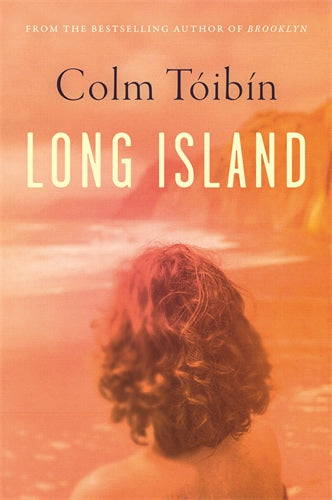
Good grief. Have we become so Netflixed that we can´t have a definitive ending any more? Is everything written with an eye to the next installment in the series? In a video prepared for Oprah’s Book Club, Toíbín speaks of a writer’s pact with the reader not to spell out everything, but to allow the characters to have a life after the events of the book come to a close. Not this reader, Mr Toíbín. I felt cheated by the ending and as if I had been toyed with. I have read the ending several times, and I’m still no clearer on what happens.
I very much enjoyed Brooklyn, which Toíbín claims was not written with a second book in mind. Reading back on my own review, I obviously enjoyed it more than my book group ladies, but I think that I enjoyed it even more after seeing the movie, which left me in floods of tears and which was perhaps more explicit in the ending than the book was. With Long Island (rather oddly named, as most of the action does not occur there) we take up with Eilis more than twenty years after Brooklyn. She returned to marry Tony, and now has two adolescent children. On the surface, everything is just as Brooklyn presaged: the family did build four adjacent houses and the brothers and parents live close to each other in a cul-de-sac in Lindenhurst on Long Island; Tony is still a plumber and Eilis has not returned to Ireland since she left so abruptly, leaving behind the other option of marriage with Jim Farrell. Then a man turns up on her doorstep – no spoiler here: it’s in the blurb- furious that Tony has impregnated his wife and insisting that he will take no responsibility for the child, which he will leave on her doorstep.
I wasn’t completely convinced by Eilis’ response. She is furious that Tony has brought this problem into her life, and insists that she will not allow the baby under her roof. I can certainly understand that, but it seems odd to me that she does not seem to feel hurt, or betrayed. I acknowledge that, with age, the desire for continuity and comfort can quash flashes of wounded pride or anger (although Eilis is not that old). Is it because she has always felt superior to Tony? Is that why her response is more “You stupid boy” rather than one of hurt at Tony’s disloyalty and faithlessness?
She certainly feels betrayed by the rest of the family. She thinks that they don’t know, but she soon discovers that they do, and that Tony and his mother have cooked up a scheme by which her mother-in-law will care for the child in the house next door, and that Tony will eventually adopt it. The Italian family ‘closeness’ has become suffocating, and there is no room here for her own opinions and preferences. She has not, for some time, attended the regular Sunday lunches where the conversation level grows higher and higher, and where she is firmly put down when expressing thoughts contrary to the family. And so she packs up and leaves for Ireland, ostensibly to attend her mother’s 80th birthday, which her children will come across later to attend.
In a repetition of Brooklyn, she arrives back in Enniscorthy, marked out by her Americanness and her glamour. Enniscorthy is just as suffocating as Long Island is, abounding in intrusive eyes and vicious tongues, and with everyone knowing everyone else’s business, . Her mother is as manipulative and dreary as she ever was, living in a house barely touched by the second half of the 20th century without refrigeration or laundry appliances. Jim Farrell, who had been blindsided by Eilis’ sudden departure twenty years earlier, has not married although he is in a private relationship with Nancy, Eilis’ erstwhile best friend. Nancy and Jim are moving towards making their relationship publicly know… and their Eilis arrives.
And so, as a reader you find yourself back where you were while reading Brooklyn: aware that someone is going to get badly hurt, able to see and sympathize with all sides, and despairing that it is all such a bloody mess. This is what I loved most about Brooklyn, and it’s what I loved about Long Island as well, but the lack of definition in the ending made me feel that the book is trafficking in this emotional turmoil.
How would I rate it? I just relaxed into picking up on Eilis’ life once more, and Toíbín has drawn his characters so clearly that you feel as if you are watching a real life. I was both discomfited and intrigued by the situation in which they had all found themselves and how it was going to be resolved. But- oh- the ending! Toíbín would go down in my estimation if I thought that he left it just so that he could squeeze out a third novel- I think, I trust, that he is a better writer than that. I know that real life doesn’t have definitive endings either (beyond the ultimate definitive ending) but the scope (responsibility?) of the author to create an ending is part of the pact with a reader, too. Otherwise, it’s just soap opera.
My rating: Who knows. 9 for the enjoyment? Or 6 for the ending??
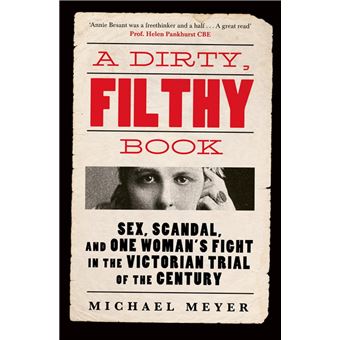
Some people seem to live not just one life, but many. Annie Besant was one such woman who went from parson’s wife, to public speaker and publisher, social worker and activist, to university student and Theosophist. Michael Meyer’s book, subtitled ‘Sex, Scandal and One Woman’s Fight in the Victorian Trial of the Century’ focuses particularly on the court case in which she and her colleague Charles Bradlaugh were charged with “unlawfully wickedly knowing wilfully and designedly” printing and publishing “a certain indecent lewd filthy bawdy and obscene book called Fruits of Philosophy” which would bring the subjects of Queen Victoria into “a state of wickedness lewdness debauchery and immorality”, as well as offending against the peace and dignity of the Queen. (p. 140)
Neither of the accused had actually written the book, which was quite an old text written forty years earlier by an American doctor, Charles Knowlton. In fact, Charles Bradlaugh didn’t think much of the book at all, but it was more the principle of making knowledge available at a cheap price (sixpence) that drove Annie and Charles to defend publishing the book in court. They wanted a high profile case, and they got it. Conducted in Westminster Hall (before it burnt down), it was a jury trial held before the Lord Chief Justice Sir Alexander Cockburn. Already an accomplished public speaker, albeit completely untrained in the law, Annie conducted her own defence, and from the extracts published in the newspapers in this widely-discussed trial, she did a damned good job of it too.
She, even more than her co-accused Charles Bradlaugh, had a lot to lose. She had married a clergyman, Rev. Frank Besant at the age of 18, without actually loving her husband but hoping, as a devout Christian, that the role of minister’s wife would be a way through which she could serve the Church and her fellow man. It was an unhappy marriage from the start. She had two children, a son Digby and daughter Mabel, and managed, through her brother, to procure a separation from her husband but he kept custody of her son, and refused a divorce. If found guilty, Annie would lose custody of her daughter as well.
She had lost her faith during her marriage, and after her separation became heavily involved in the National Secularist Society, where she met Charles Bradlaugh. They were very close, although Meyer does not explore whether their relationship was sexual or not. Both were still married, and as public figures, could not expose themselves to scandal. She wrote numerous articles for the National Reformer weekly newspaper published by the NSS and was an accomplished public speaker. It was this experience of debate and public discourse that stood her in good stead in the courtroom at Westminster Hall, but did not shelter her from the fallout of the case. Charles Bradlaugh went on to have a successful political career, being repeatedly re-elected and repeatedly refused being able to take his seat in Parliament because, as a secularist and atheist, he refused to swear on the Bible. As their lives split off in different directions, the obloquy of her atheism prevented her from being able to graduate from the University of London, once they accepted female students, even though she was clearly a brilliant student. She threw herself into social activism in the East End, particularly in leading the Match Girls strike about working conditions and the use of white phosphorous in making lucifer matches at Bryant and May. Over her life, she had been a devout Christian, a strident atheist, and eventually she moved into Theosophy, to which she devoted the latter part of her life. She abjured her earlier publications, and especially the book about birth control methods that she wrote after the court case which was even more explicit than Fruits of Philosophy. It really is as if she had several careers.
In the book, there are parallels drawn between Besant and two other women. The first of these is circus performer Zazel (Rossa Richter) who drew fame for being shot out of cannon, night after night. The second is Queen Victoria herself, who had a much happier experience of married life than Annie Besant did, and whose politics were diametrically opposed. Queen Victoria was not particularly aware of Besant, but she did record her disapproval of Bradlaugh in her diaries.
When I first started reading this book, I enjoyed its breezy tone and discursive narrative but I soon tired of it. In trying to contextualize Besant and her various campaigns, he draws on newspapers to illustrate what else was occurring at the time, and in the end it became a distracting lack of attention- as if he couldn’t bear to let a juicy tidbit pass, without reporting it. I enjoyed his reporting of the court case itself, but the lack of discipline elsewhere in the book detracted from his analysis of the case and its aftermath. Like the court case itself, it all felt a bit tabloid.
The author is a travel writer, which did not surprise me. He is also Professor of English at the University of Pittsburgh, which did.
Nonetheless, it’s a really interesting story and, despite his digressions, Meyer tells it in an engaging and entertaining style. I just wish that there had been a little less ‘colour’ and more analysis.
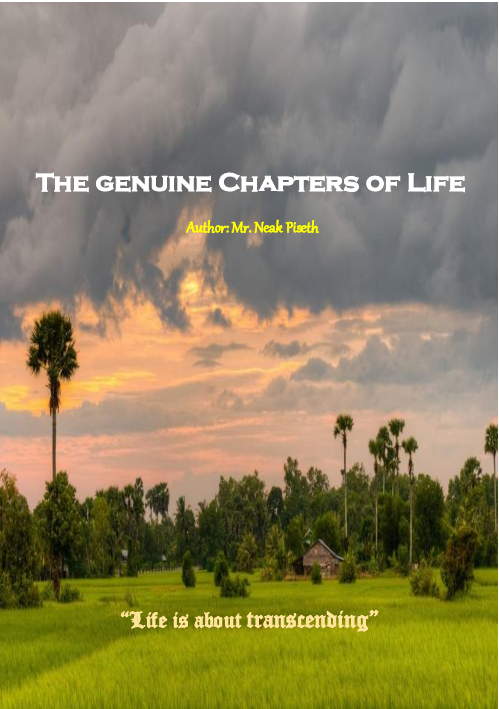
I’m not sure how I stumbled on this e-book which you can access through academia.edu or through issu. In fact, I’m not really quite sure what it is: on one level it is a memoir of a young man growing up in rural poverty in the 1990s to attain his dream of high education at the Royal University of Phnom Penh. But at another level, particularly near the end, it seems to become a scholarship application document where he outlines his vision for changes that he would make to his society were he successful in studying overseas. It must have worked, because he received a scholarship to pursue his master’s degree in Non-Formal Education at Chulalongkorn University in Thailand in 2019, continuing on as a PhD candidate from 2022. He has been working as an English Lecturer and as a lecturer in the Faculty of Education at the Royal University of Phnom Penh and has a number of publications under his belt.
His grandparents died under the Pol Pot regime and he was born to poor parents in 1994 with, at that stage, only one older sister. His father, an illiterate orphan, had inherited a one-hectare plantation in a village, and the family lived in a crumbling cottage while his father worked as a motor taxi driver in the city. In 1999 they received a contract to grow rubber trees on their plantation, but this necessitated moving to another dilapidated thatched, earth cottage closer to the trees. After the contract expired, they used the money they had earned to move back into the village where the author and his sister began attending school. They walked the three kilometres to school, and had to help after school looking after their three cows, while their parents worked in a small business, arriving home at midnight. In 2003 his mother had another daughter, who was often sick, and his father had to stop working to assist his mother at home. This meant that, in order to keep attending school, the author and his sister had to sell banana cakes after school to support the family. The family remained in poverty, especially after an accident on the rubber plantation resulted in his father’s blindness. Despite his father’s violence against his mother, the author deeply respects his father, and craves his approval.
He gives a fairly damning view of education in Cambodia. Teachers often took on private students as tutors in order to get additional money, which meant that they often did not teach the full curriculum at school, or charged for teaching and examination materials as a way of gaining extra students. The tutored students often received passing grades, to encourage their parents to continuing paying out for tutoring. Some students’ parents bribed the teachers, and many teachers arrived late.
Despite these difficulties, he was a very conscientious student, spending hours at night rote-memorizing his work. He really struggled to learn English- and indeed, this text is clearly written by a second-language learner- and he lacked confidence to speak in English, even when he knew the answers. By sheer hard work, and the good and well-earned fortune of a scholarship, he was able to attend Western International School in Phnom Penh. He lived in a small, dark room, continuing to rote-learn as much as he could. By the end of the book, his hard work is paying off, despite the discrimination against poor kids from the provinces.
I hadn’t expected to encounter Jane Austen and Bill Gate (i.e. Gates) in this book, but each chapter closes with an inspirational quote that he has gleaned as part of his studies. Beyond this, though, I’m really glad that I read this book while I’m here in Phnom Penh. I’ve found myself looking at the school children walking to their schools, and tuk-tuk drivers who are possibly working for their families in the provinces, with new eyes.
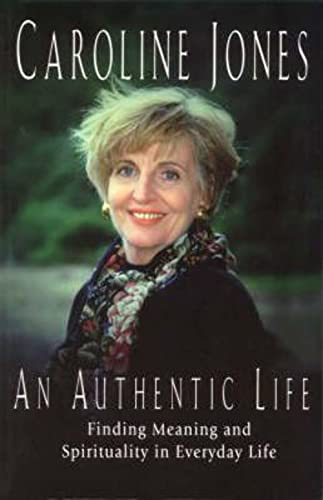
Could there possibly be a worse way to read this book than as a selection for a book group? I doubt it. It has to be read by a certain date; you have an implicit obligation to at least attempt it as a ‘good’ bookgroup member; it’s a book that someone else has chosen in their time, and not yours.
And in my case, it’s by Caroline Jones to whom I developed a deep antipathy after reading her book Through a Glass Darkly (you can see my snarky review here). I can hear her rounded vowels and caramel tones in my head, see her slightly tilted head, and so bloody earnest. She annoys me so much.
It’s odd, because under different circumstances (and that’s the crucial thing) I would probably quite enjoy this book. I am drawn to a spiritual life; my identity as a Unitarian Universalist is important to me; in fact, I spend Sunday mornings a couple of times a month exploring exactly the things that she does in this book.
But that’s on my terms: I can ‘think myself’ into a spiritual mindset before even embarking on thinking about things of the spirit; it’s a commitment that I have made with myself, by myself. It’s not a reading assignment I have to have completed by a certain date, like homework. All of this book feels like hard work. It was because I knew that 300 pages with Caroline was going to be so tedious that I actually started reading the book a fortnight before our bookgroup meeting, instead of my usual practice of starting three nights before the meeting and finishing the book at some ungodly hour on the Thursday morning before the meeting on Thursday afternoon. I knew that one chapter at a time of this book would be as much as I could handle, and I was right. I feel as if I have been harangued and bible-bashed for 300 pages.
So, wrong book, wrong author, wrong mode of reading it.
A post that has been sitting in my ‘Drafts’ folder for quite a while….
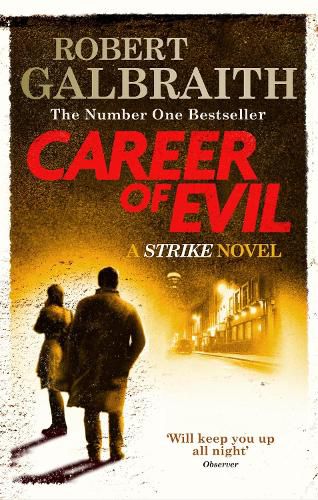
I’ve been rather underwhelmed by the last few books that I have read recently, so I decided that I’d go for something that would draw me in instantly and engross me for a while. And even though I’m not a great detective-fiction fan, what better than the next Robert Galbraith novel in the Cormoran Strike series? So I purchased the third book Career of Evil as an e-book (yes, purchased!) and within five pages I was completely hooked. After all, how could you ignore a woman’s leg, carved off at the knee, arriving in the post onto the desk of Robin Ellacott, Cormoran’s off-sider. Although addressed to Robin, Cormoran is convinced that it is a way to get at him, and he has a short-list of four possible suspects. Two are men that he met during his career in the Special Investigations Branch of the army; another is a gangster against whom Cormoran had testified in the past; and the final, more personal one, is his own step-father, whom he blames for his mother’s death. Of course, because private investigators always need to be in conflict with the police hierarchy, Cormoran’s theories are dismissed, even when the number of gruesome murders and mutilations mount up. So he and Robin embark on surveillance and investigation of their own.
It is a rather well-worn trope that the investigators -especially young female investigators- themselves become the target of the suspect- after all, how many times can Nicki in Prime Suspect be threatened, blackmailed and kidnapped?- and Robin herself is unwittingly in peril as the unnamed murderer begins trailing her, dubbing her “The Secretary”, and planning her murder as another way of bringing Cormoran undone. The murderer is a revolting, sick man. The narrative is interspersed with thankfully short chapters where he gloats over the body parts he has hacked from his victims and where he reveals his repugnance for ‘It’, his partner, who is a foil for his sordid activities. Meanwhile, the Unresolved Sexual Tension between Cormoran and Robin is still unresolved, as Robin’s wedding day to the rather wet Matthew draws closer.
This book is rather dark and graphic, with its mutilations and perversions and I found myself feeling quite sickened by the short chapters from the murderer’s point of view, and glad to turn the page and leave them behind. I am wearying a little of hearing about Comoran’s prosthetic leg and the pain in his stump, although in this case, these descriptions had a plot purpose. And one of the delights of Unresolved Sexual Tension is the fact that it is unresolved, although we are left with quite an emotional cliff-hanger.
I wanted something that would draw me in, and this book suited perfectly. As it turned out, I ended up with COVID, which gave me an excuse to sit and just read. I found myself consciously choosing not to read it before falling asleep because, in spite of feeling exhausted, I knew that I’d keep reading just one more chapter when I really wanted to go to sleep. Rowling (who writes as Robert Galbraith) is such a skilled story-teller that there’s no faffing about for fifty pages while you decide whether you want to make the investment of reading nearly 600 pages. One chapter and I’m in, and relishing the opportunity to return to the next book in the series.


 The Resident Judge of Port Phillip