Category Archives: Australian Women Writers Challenge 2021

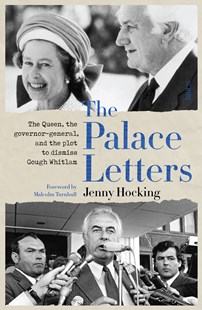
‘The Palace Letters’ by Jenny Hocking

2020, 288 p.

If you’ve been following my blog for a while, you’ll know that I’m rather uncomfortable with the current trend to write history as a quest, interweaving the researcher/narrator’s perspective on the search with the actual history itself. Initially, I loved it as something brave and humanizing. But after at least a decade, it’s becoming a bit tired, and I feel that it is often resorted to as a symptom of the paucity of sources, as much as anything else. Ah, but I’ve said this again and again, and now I’m even boring myself.

But sometimes the historian genuinely is part of the history, and this is certainly the case in The Palace Letters. Jenny Hocking has written a two-volume biography of Gough Whitlam, and has been working on the Dismissal for many years. Indeed, if it were not for her persistence, and the generosity of pro-bono legal representation, historians would only have been able to work with retrospective accounts of the leadup to the 1975 dismissal of the Whitlam government. The real-time documentation leading up to the November 11 1975 events was held at the pleasure of the Queen as ‘personal’ documents instead of the Commonwealth records that they are. After the National Archives refused Hocking access to the correspondence between Sir John Kerr and the Queen’s Private Secretary Sir Martin Charteris after the statutory period had elapsed, she embarked on a ten-year battle to resolve the status and ownership of these documents as part of the historiographical record of Australia. This book is the story of that fight.

I have been following her battle for several years , especially through her recent book The Dismissal Dossier and I think I even threw some money towards her crowd-funding campaign to fund her legal expenses. After the papers were finally released, I can remember feeling somewhat disappointed that there was no ‘smoking gun’ of a Palace conspiracy, but rather the self-serving and pompous bleatings of Sir John Kerr, the Governor-General who did not cover himself with glory in November 1975 or in the years afterwards. But having read, The Palace Letters there is, at the personal level on the part of the Queen’s Private Secretary Charteris, a passive encouragement to Kerr, and certainly a structural effort to keep this communication hidden on the part of the National Archives, Liberal/Coalition governments over the decades and the Palace itself.

The book is written in the first person, with remarkably little self-promotion and puffery on Hocking’s behalf, even though she could have easily trumpeted her credentials for writing this book. It starts off in the archives, where all historians love to be, and her discovery that there were actually two copies of the letters: the first, the actual letters and the second, a photocopy made at night by David Smith, the Governor-General’s official secretary in order to send to Kerr to write his Journal. When both copies were placed under an embargo by the Palace on the grounds that they were personal papers, she thought that she would never see them. It was when she read Sydney barrister Tom Brennan’s blogpost ‘Australia owns its history‘ that she realized that there were legal allies with whom she could join forces.

The book then moves to the various court cases that the issue moved through, and the arguments that were made on both sides for or against the release of the letters. She was a participant, rather than a disinterested observer, and the National Archives does not come out well, in her retelling, taking advantage of tactics like unequal access to information, obfuscation and courtroom time-hogging. Headed by David Fricker, a former deputy director-general of ASIO, it becomes clear that the Archives are more than just a repository for documents but a political actor in their own right. There is even a National Archives whistle-blower who, infuriatingly, conveys important information at such a late stage that it cannot be used. The Murdoch-owned Australian is a player here too, and it is not surprising that Australian journalists Paul Kelly and Troy Bramson have published The Truth of the Palace Letters as a counter to Hocking’s analysis of the letters, once they had been made available.

Hocking gives a good sense of the imbalance of this fight: the National Archives are able to draw on their government-provided budget (albeit at the expense of their other activities) whereas Hocking could be held personally responsible for court costs. Although she was able to negotiate a capping of these costs, and was able to draw on the cream of Australia’s legal system for pro-bono representation, there must have been many times when she felt sick to her stomach at the implications of the losses in court. For losses there were, and it was only when it went to the High Court and received a 6:1 victory, that the long battle had been vindicated.

The final third of the book looks at the content of the letters themselves, and the aftermath of the Dismissal for Kerr himself as the Palace distanced itself from both Kerr and the decision. At one stage Sir Martin Charteris referred Kerr to a book written by conservative Canadian politician and expert on the reserve powers of the Crown in former dominions, Eugene Forsey, which enlarges the scope of the question beyond just Whitlam and Kerr into a broader historical question. However, after the dismissal, the time for book recommendations had passed, and Charteris becomes frostier, with Kerr’s actions now in the past.

While, of course, tales of the archives and courtroom stories will appeal to a particular type of reader, this book itself is very accessible. Who said that historians can’t be heroes? If you’re tempted to read it, read Hocking’s The Dismissal Dossier first (which will probably get you fired up) and then read this book, almost as a type of morality tale, to see the Mighty Fallen and the rewards for persistence and the courage to put yourself on the line – for our right to know our own history.

My rating: difficult to rate…8?

Sourced from: e-book from Yarra Plenty Regional Library.

Interesting article: https://auspublaw.org/2020/08/the-constitutional-historiography-of-the-palace-letters/

I have included this on the Australian Women Writers Challenge 2021.
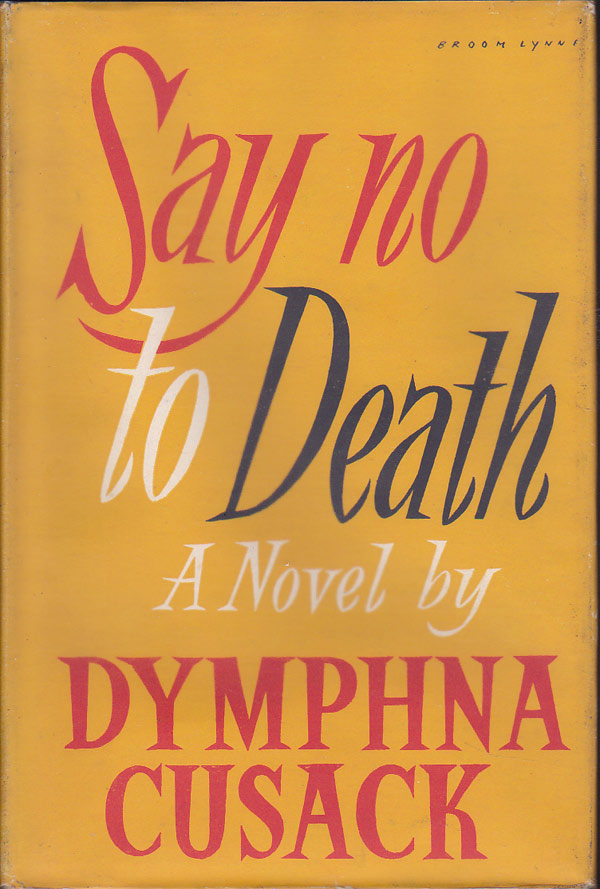
‘Say No to Death’ by Dymphna Cusack

1951 (1967 edition) 259 p of very small print!

I’m old enough to remember the TB van coming round for compulsory chest x-rays and I believe that I had one before the mobile Xray program concluded in 1976. Amongst the sunspots and wrinkles, my arm bears the fifty-year old scar of a BCG vaccine shot against TB. I remember the secondary-school rite of passage of lining up for the Mantoux test on the inside of your wrist, eyeing it anxiously to make sure that there was a bit of a reaction but not too much. Then the fear of lining up for the TB injection itself, which school rumours depicted as being huge and excruciatingly painful (neither rumour was true). I’ve read about the local uneasiness in my own suburb of Heidelberg about the TB Sanatorium at the Hospital for the Incurables (now the Austin) and for returned soldiers at Mont Park and Gresswell. TB is still the world’s deadliest disease, but in Australia public anxiety decreased to the point where the school-based BCG vaccination was discontinued in Victoria in 1984-5.

This was not the case in 1951, when Say No to Death was published. Tuberculosis had carved out its own literary space: think Thomas Mann’s The Magic Mountain, Novalis and his love for Sophie von Kuhn in Penelope Fitzgerald’s The Blue Flower, John Keats, Anne and Emily Bronte, Mimi in La Boheme – and probably many, many more. But in urban, post WWII Australia there was little romance or lyricism in TB. As this book shows, public health provision was under-funded with very uncertain outcomes, while private provision was overwhelmingly focussed on commercial profit-making considerations. People were afraid of TB, and there was blatant discrimination against sufferers in finding and keeping accommodation.

Jan lives in post-war Sydney with her older sister Doreen, both their parents having died. They live together in a small, basement level flat. When Jan goes to meet Bart’s ship returning to Sydney after a stint in occupation-era Japan after serving in WWII, her sister does not approve and she approves even less when Jan and Bart go off to a deserted beach shack for ten days together. This beach-shack holiday becomes a talisman for them both when Jan is diagnosed with tuberculosis. Despite his initial nonchalance about their relationship, he falls in love with Jan and is thrust into the role of carer in the small family.

I haven’t read a modern, urban (if you can call 70 years ago ‘modern’) TB story before. It reminded me a little of those cancer tear-jerkers that seemed popular in the 1980s (Molly dying in A Country Practice; the movie Sunshine) but there’s more critique of the medical system in this book than in purely emotion-based stories. Jan is not diagnosed for some time; the proprietor of the private hospital is a financial leech; there is much better care for returned soldiers who contract tuberculosis than for civilians; and if just a fraction of the money spent on war was directed to health funding, the public system wouldn’t have to be so threadbare and overworked.

Despite the gloomy subject matter, I ‘enjoyed’ this book. Cusack’s descriptions of landscape, especially at the sanatorium in the Blue Mountains, are evocative and she captures well the powerlessness of illness. She deals with betrayal, loyalty and trust, and I found myself worrying for the characters, as well as about them. Of course, it was a contemporary book when it was published, but I found it interesting as a piece of social history, despite the dated language. Somehow reading it during a time of pandemic, when we are again at the mercy of a disease, gave it an added poignancy as well.

My rating: 8/10? It’s dated, but I suspect that it will stick in my memory

Sourced from: my own bookshelves. I had read praise of it somewhere years ago, and when I saw it second-hand, I snapped it up.

Other reviews: Wad Holloway reviewed it as part of his Australian Women Writers Generation 3 series on his The Australian Legend website.

I have included this on the Australian Women Writer’s Challenge 2021

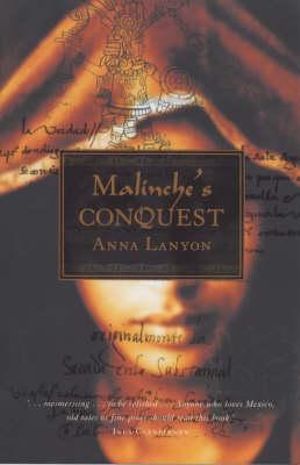
‘Malinche’s Conquest’ by Anna Lanyon

1999, 256 p.

I don’t often read books twice, but I’ve just read this book for the second time. I first read it in 2007, when I had just started my post-grad studies at La Trobe University. The author, Anna Lanyon had quite a claim to fame within the history faculty at the time for having published not one, but two, books before embarking on her PhD. I enjoyed the book then, but felt that the combined travel/history format with the author playing an active role in the narrative was becoming rather hackneyed (although it may have been more unconventional in 1999 when the book was first published). Now thirteen years later, the historian-as-character is even more ubiquitous and my reservations about this well-worn technique are even stronger.

So who was Malinche, or as she is also called, Malintzin or Marina? She was a Nahau woman who acted as translator to the ‘conquistador’ Hernan Cortez. She had been either sold or kidnapped into slavery to a group of Maya, where she learned the Mayan language. When this group met with Cortez’ conquistadors, she was passed on to Cortez. It was transaction for both Cortez and Malinche that had personal and historical ramifications. When Cortez and his men encountered the Nahuatl- speaking Moctezuma, it was possible to set up a four-way translation chain between the Spanish-speaking Cortez, the Spanish/Mayan-speaking Jerónimo de Aguilar, Mayan/Nahuatl-speaking Malinche and Nahuatl-speaking Moctezuma (and back again). She soon learned Spanish herself, and acted as Cortez’s interpreter, advisor, intermediary and lover. She is variously seen as traitor or victim, and her story has been incorporated into the La Llorona legend.

So why am I re-reading this book now? I was prompted to read it after watching the excellent series Hernan on SBS On Demand, which is available until February 2022 (Spanish, with English subtitles). I’ve been learning Spanish for a few years now, and am far more attuned to the issue of translation, which runs through this book. There has also been increasing emphasis on contact history in relation to indigenous/British history in an Australian context. The BLM protests have raised questions about contested commemorations, and Malinche’s contribution to Mexican history is certainly controversial. I’m more attuned to Latin American history now. While I haven’t been to Mexico City (alas, it was on my to-do travel list which will probably not be fulfilled), I have been to other South American countries and am more familiar with Spanish colonial architecture and town layout, and Latin American culture. So, the book remains the same, but I have probably changed as a reader.

For all these reasons, I think that I enjoyed the book more the second time around. It is very much a travel/history amalgam but apart from some rather clunky dialogue with people she met on her travels, there is also considered, informed reflection on language, representation, memory and agency during first contact. While she does describe her lodgings and her work in the archives, she does not resort to details about the food or the weather as the less adept of these historian-as-character books do. While I recognize the appeal for readers and hence the encouragement of publishers, I still suspect that this genre tends to roll the historian onto centre stage when the historic record is thin. That is not to say that I don’t like seeing the historian at work – I do -, but I prefer eavesdropping on their questions and ruminations as professionals rather than reading their itinerary.

I do have her second book The New World of Martin Cortez and I’ll be interested to see whether the approach is the same.

My rating: When I read it the first time back in 2007, I rated it a 7. It’s gone up in my estimation and is now an 8.

Sourced from: purchased e-book

I have included this on the Australian Women Writers Challenge database.

Australian Women Writers Challenge 2021

I’ve signed up for the 2021 Australian Women Writers Challenge. I’ve been doing this challenge since 2012. It was originally established to overcome the gender bias in reviewing of books written by Australian women. As a historian, I have a particular interest in history written by Australian women, and I have been the ‘History Memoir and Biography’ convenor for the challenge for the last few years. Memoir and biography written by women are thriving away very happily, but the ‘history’ category has fewer contenders. So, I have found myself challenged to seek and review history written by Australian women historians.

This year I aim to read 25 books by Australian women writers. I’ll continue to champion history, but I will try to read a little more fiction.

Want to join me? Here’s where you sign up: https://australianwomenwriters.com/sign-up/

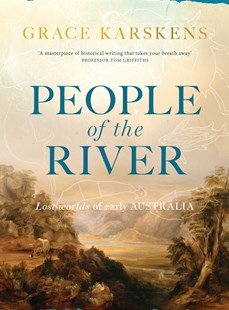
´People of the River´by Grace Karskens

2020, 525 p plus notes and appendices

What a difference a name makes. This book is the history of contact on Dyarubbin. “Where?” you might ask.

Dyarubbin is the name of the river that Europeans named the ‘Hawkesbury’ and the ‘Nepean’. Where white explorers saw two rivers, the people of the river saw just the one. Its sinuous progress through cliffs, opening up into cleared ‘reaches’ with fertile soil attracted indigenous people 50,000 years ago. And from the earliest months of British settlement, it attracted the soldiers of Sydney Cove too, led by Governor Phillip, searching desperately for farming land to grow the food to support the increasingly precarious convict settlement.

This book, which has been shortlisted for many historical and literary prizes during 2020, is a companion volume to Karsken’s earlier book The Colony about early Sydney and the Cumberland Plains. The argument that she makes in both books is the same: that both indigenous and settler peoples were thrust into a new relationship with each other, in tension over the land.

This is a long book, divided into four sections. Part I, Deep Country, starts as many books do (and indeed Karsken’s earlier book does too) with the geology of the land being discussed in the opening chapter ‘Old land, first people’. In this case, however, there are people in this landscape, shifting and adapting as conditions change. Conscious as we are of climate change, here perhaps we see a possible future with communities forced to flee to new places and lifestyles because of changes in the climate. The second chapter ‘Dyarubbin’ looks at the artefacts left by these people, sought out and collected by amateur and local collectors in a way reminiscent of Tom Griffiths’ Hunters and Collectors.

Part II Frontiers, starts with an an explanation of the intent of the Sydney Cove settlement. Chapter 3 ‘The Great Experiment’ is far more in the vein of John Hirst than Robert Hughes in emphasizing the intent that, right from the start, small-scale farming be offered to convicts who had either worked out their sentences or been pardoned, rather than the penitentiary hell-hole of post 1820s described in Hughes’ book . There was an ambivalent attempt to create a more prosperous and settled larger farmer elite through the provision of larger acreages to ex-soldiers. This inevitably brought conflict with the indigenous people of Dyarubbin whose women had dug for yams in those loamy reaches for generations. Chapter 4 ‘Contact and Crossings’ is a short chapter, describing those early contacts between Governor Phillips’ party which included indigenous Eora men who were strangers to the Dyarubbin too. She explores the role of intermediaries, who included John Wilson, who after serving his time, slipped among the Dyarubbin people where he passed himself as a returned tribesman. In return, they named him Bunboé (buna means ‘to jest or make believe’ and boé is the word for ‘dead’ so perhaps they were on to him.) Chapter 5 ‘Conflict: Given No Peace’ describes the inevitable conflict where the people of the Dyarubbin took the corn which grew on the land that had offered up yams for generations. Both sides practised communal punishment: in indigenous law ‘payback’ didn’t apply only to the guilty individual but could be and was directed to family and associates; for settlers, unable to find the perpetrators, a group of defenceless women and children were collateral damage. The fighting was most ferocious at Sackville Reach, a deeply spiritual place, where the settlers withdrew for a while, unable to cope with the relentless violence.

Part III New Old Land has four component chapters. Ch.6 Forests and clearings explains that the European settlers were moving into a manipulated environment, although they did not realize it. Those clearings and friable soil did not happen by accident. Ch 7 Farming in the bush emphasizes that in early years, farms were small shacks, with a fenced vegetable patch, surrounded by impenetrable bush. Wide-scale clearing and forestry did not happen until later. Ch.8 Floods and flood-mindedness explores the frequent flooding of Dyarubbin, which often came completely unexpectedly from rain inland that the farmers were unaware of, sometimes filling the narrow canyons and making the river flow backwards. Chapter 9, Commoners and Strangers looks at the change in policy in the 1820s that made Sydney a purely penal colony, and the encouragement of large estates to replace and control that earlier small-scale haphazard development. It looks at the accommodations and strategic friendships made between some settlers and indigenous families. When settlers found their ‘commons’ – large spaces for free grazing and pasturing – been appropriated by government policy to regularize land ownership, their anger was closer than they realized to the people of Dyarubbin who resisted being alienated from their own ‘commons’.

In Part IV of the book, there is a change of narrative direction. Titled ‘People of the River’ it shuttles back and forth between white and indigenous experience in alternating chapters. Family Fortunes (Ch. 10) looks at the interweaving of settler families through marriage, whereas Family Survival (Ch.11) examines the practice of taking children from indigenous families. The cultural lives of both groups are explored separately in People’s Pleasures in Chapter 12 (settler society) and Transforming Cultures (indigenous society) in Chapter 13. Christian spirituality in a new land is explored in Ch. 14 Sacred Landscapes while Ch. 15 Sacred Company looks at both the persistence and malleability of indigenous spirituality. These descriptions of indigenous beliefs were more detailed than I would have expected -in fact, I felt a little uncomfortable reading this section, as if I were intruding. At the end of the book, in a satisfying narrative circularity, we are brought back to the beginning of the book with the rock art and stories told on the cliffs overlooking Dyarubbin.

At 523 pages of text, this is a very long book – probably too long. In fact, I wonder if its length kept it on the ‘highly commended’ section of prizes instead of on the winner’s lists. Could Part IV, with its different narrative approach and far more focussed on individuals acting within social mores, have been a separate book in itself? It’s strange: I looked back to my review of Karsken’s The Colony, and I made a similar comment about a change of direction at the end of that book too. In both of her books, up until the last section of the book, settler and indigenous experiences had been interwoven and integrated, and the last section broke the thread by dealing with them separately.

Because what comes strongly through this book is that both groups of people – white and indigenous – had had to make accommodations and changes. Many of the white ex-convict farmers had been, until recent years, rural people back in England and Ireland, still influenced by the premodern ideas of the commons and small-scale farming. Some farmers recognized, or at least tolerated, indigenous people taking the corn from what had been their commons. Those who acted as intermediaries, on both sides, were being stretched – linguistically, socially, intellectually and spiritually- by having to move beyond the familiar into the truly unknown.

The Hawkesbury has received quite a bit of literary attention in recent years. Most famously, on the basis of her own genealogical connections Kate Grenville set her The Secret River on the Hawkesbury, and Julie Janson has reciprocated in her Benevolence, an indigenous response to settler family stories. In this book Karsken takes on the hugely popular Secret River, not so much in terms of the fiction/history debate, but more for its depiction of the Dyarubbin people as largely uncomprehending, unknowable and eventually massacred into disappearance. She takes particular issue with Grenville’s scene where William Thornhill tries to introduce himself to what she depicts as an uncomprehending Aboriginal man. Instead of just mimicking a settler naming himself, Karsken notes that the Aboriginal people of the Hawkesbury were very particular about names and gestures of friendship. The brutal Smasher Sullivan in Grenville’s book would have not survived long because his brutal treatment of his woman would have been swiftly avenged. In the closing grotesque scenes there are poisonings, massacres and the burning pile of black bodies. Karsken points out that Grenville herself admitted that she drew on the Myall Creek Massacre of 1838, twenty years after the story depicted. She points out that Grenville’s book and the miniseries it inspired was also a throwback to the 1980s Aboriginal history that focussed on massacres.

However, by the time Grenville’s The Secret River appeared, historians were rethinking the portrayal of Aboriginal people only as passive victims of all-powerful whites, and recovering very different histories: the stories of resistance, and of the long war that Aboriginal people fought in defence of their Country. These new histories were more holistic too, recognizing other important aspects of cross-cultural contact- diplomacy, negotiation, conciliation, cooperation, friendship, intimate relations and the living exchange of things, words and ideas.

p. 125

Karsken’s work very much falls into this ‘new history’ category. There is something almost wistful about the possibilities at early contact. There are what-ifs in her history, most particularly concerning Governor King who after meeting with a delegation of men from the Dyarubbin, stopped making land grants further down the river – a policy that was swiftly overturned by the next governor sent out by the colonial Office. She looks for womens’ stories, and finds them. She seeks individuals, and names them, and searches for continuities. At the end of the book, she describes her discovery in the archives of Rev. John McGarvies list of ‘Native names of places on the Hawkesbury’ which brought the names of country out of the silence. It now forms the basis of a collaborative project with Darug knowledge-holders, historians, linguists and archaeologists.

I am not familiar at all with the Hawkesbury/Dyarubbin region, and I found myself having to consult the maps at the front repeatedly. I suspect that someone from New South Wales would appreciate the book much more than a Victorian would. In many ways, these early-contact histories right across Australia are similar in that they are all freighted with a common longing and regret for the closure of opportunities that were once open. But each one is also different, and best known to people familiar with the location, because they are so deeply embedded in ‘country’, and as a result each is particular to itself.

This is a beautifully written book, that has its broad-ranging and yet detailed research interwoven on every page. It combines archaeological, ecological, local, spiritual research that keeps its focus on individuals, in the agency they possess, and the choices they make.

My rating: 9/10

Sourced from: Yarra Plenty Regional Library.

This is the first book I have included on the 2021 Australian Women Writers Challenge.