Category Archives: Australian history

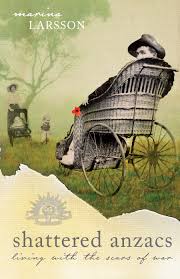
‘Shattered Anzacs’ by Marina Larsson

larsson

2009,  281 p. & notes.

There’s a striking pamphlet reproduced in the opening pages of Marina Larsson’s book Shattered Anzacs.  It’s a recruiting  leaflet for WWI, enticingly titled “Free Tour to Great Britain and Europe”.  You can see it here.   It spruiks “A Personally Conducted Tour whereby you can see the world and save money at the same time” and advises of the wages and separation allowances provided.  In best Fawlty Towers tradition, it doesn’t mention the war: only the ‘Great Adventure’.  But adjacent to the breezy exhortation to join the tour, it also has a chart of the pensions payable on return to the soldier, his wife and children should there be disablement or death.  The consciousness of injury and life afterwards was there right from the start and became even more sobering as men began arriving home.  For those who survived, it was most often literally ‘home’, to parents, wives, siblings and children who, as the subtitle of this book notes,  found themselves “living with the scars of war”. Continue reading

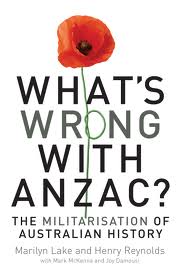
‘What’s Wrong with Anzac?’ Marilyn Lake and Henry Reynolds.

whatswrongwithanzac

2010, 167 p.
I doubt that this book will be reissued in the next two years. I’m sure that the publishers have had an asterisk against 2014 and 2015 as bumper years for military history, with the centenary of WW I in 2014 and the Gallipoli centenary in 2015. This book, originally published in 2010, is not likely to sit comfortably on the shelves with big books with big blokey authors that would have been scheduled specially to take advantage of all this interest. But many of the sentiments expressed by the historians who have contributed to it will continue to bubble along underneath all the ceremony, emotion and hyperbole.  You can find it manifested in the Honest History website.

In 2009 historian Marilyn Lake was invited by the History Teachers Association of Victoria and the University of Melbourne to give a lecture on ‘The Myth of Anzac’ in a series on mythologies. A condensed version of the address was published in The Age soon afterwards.

In it, she argued that in the 21st century Australia should reclaim the values of equality and justice which in an earlier era was thought to define a distinctive ‘Australian’ ethos. She suggested that it was inappropriate for “a modern democratic nation to adopt an Imperial, masculinist, militarist event as the focus of our national self-definition in the twenty-first century.” (p.3)

A furore erupted online- a “mixture of hostility and support, personal abuse and thoughtful reflection”. In her introduction to this book, she briefly mentions the abuse but outlines in more detail some of the more reflective responses posted onto the Comments section of the Age website.

This book is a compilation, then, of chapters written by a number of authors (both male and female) in response to the questions raised by Lake’s article and the commentary that surrounded it. Continue reading

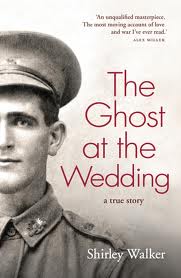
‘The Ghost at the Wedding’ by Shirley Walker

walker_ghost

2009, 247 p

It has often struck me that I am part of a blessed generation that has lived in a time of peace and ,with only a few blips of recession, continued economic growth.  My father was too young to have fought in World War II, my brothers too young for Vietnam, and unless world war breaks out within the next ten years, my son is unlikely to have to fight (and indeed, I find it hard to imagine the scenario that would prompt him to volunteer to do so).  An earlier, blighted generation, however,  experienced World War I,  the Depression and World War II again in what must have seemed an almost never-ending succession of difficulties and disasters. Jessie Walker, who is the subject of this book, stood at the pier to wave off her brothers and their friends in World War I and then sent off her own sons and younger brothers to the Second World War.  It is a war story, but told from the point of view of the women left behind.

The author, Shirley Walker, describes this book as “a memoir of my mother-in-law, Jessie and… an imaginative reconstruction of her family’s truth“. She has used letters, diaries, service records and family documents but she writes “the inner life of each character, especially that of Jessie” from the imagination.  She draws on the existing paintings that Jessie created in later life as a way of reconstructing Jessie’s inner life, but imagines and describes other paintings never made.  The mother-in-law and daughter-in-law relationship is often tentative- it is, after all, the love of the same man in the different guises of son and husband that links them-  and you sense Shirley Walker’s sensitivity to the wider family in writing this book. She has changed some names to protect some family members.

The book opens in 1983 with Jessie in a nursing home, and from here the  chronology of the book skips back and forth.  The author (the daughter in law) identifies herself as “I” and Jessie’s story is told in the third person.  There is limited dialogue. Although Jessie is the focus of the book, it also describes at third-hand or through letters, the war experiences of sons, fathers, nephews and uncles. It is a book very much grounded in Jessie’s life with her husband and sons on the peninsular island that emerges from the waters of the Clarence River, but it traverses much further.

It is a beautifully written, lyrical book.  The men of the Walker family were alive to the sights and sounds around them, and it comes through in Shirley Walker’s retelling. The book comes with high praise from the novelist Alex Millar whose blurb reads:

An unqualified masterpiece.  The most moving account of love and war I’ve ever read.

I must confess, though, that even though I was saddened by the book and the thought of so much death across several generations, I was not moved to tears.  Perhaps it was the author’s restraint in telling another’s story, or perhaps it was the ethical distance that her relationship with the subject imposed on the author, already a published academic.

Like Lisa at ANZ Litlovers, I would have appreciated a family tree, as different generations were named after their forebears.  I’m still a little perplexed by the title, which does not seem to refer to any particular wedding, but perhaps that is intentional.  The story here of one individual woman is a generational story, and as such, one that I hope women yet unborn never have to experience.

We are sure to read many biographies and histories of World War I this year, and next year, the centenary of Gallipoli which has assumed such importance in popular Australian historiography.  There is, among some historians, an uneasiness about the overwhelming prominence given to ANZAC -hence the Honest History website which notes:

There is much more to Australian history than the Anzac tradition; there is much more to our war history than nostalgia and tales of heroism. Honest History is being set up to get those two messages across. Our approach is ‘not only Anzac, but also [many other strands of Australian history]’. We see history as complex with many interwoven, competing evidence-based strands. This sort of history should be the mainstream; hyperinflation of a particular strand is an anachronism.  Editorial and moderation policy, Honest History website

The bookshops already seem to be stuffed full of Big Books of War, generally written by men, many of whom have a journalistic background. I’m thinking Les Carlyon, Peter Fitzsimons etc. and of course, the author of the biggest Big Book of War of them all, Charles Bean.   Where women have written about war, the focus tends to be less on battles and more on the men themselves; less on valour and bravery and more on loss and suffering. (I must confess to not having read Patsy Adam-Smith’s The Anzacs, and so I don’t know whether this holds true for her book or not). The Ghost at the Wedding fits into this more person-centred approach that encompasses both the warfront and the homefront, those who stayed behind and those who returned.

My rating: 8.5/10

Sourced from: Yarra Plenty Regional Library

Read because: I want to post it to the Australian Women Writers Challenge 2014.

awwbadge_2014

‘A Swindler’s Progress’ by Kirsten McKenzie

Image

2009, 303 p. & notes

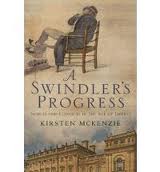
A couple of weeks ago I thought that I had finished the best book that I would be reading during 2013.  I was premature in my declaration.  This is the best book that I have read this year, and in this case, I have no qualms at all about the  behaviour of its author as a professional historian.  Kirsten McKenzie’s earlier book Scandal in the Colonies is one of the books that has shaped my approach to my own research.  Her portrayal of colonial life in the early nineteenth century as a criss-crossing of networks and connections between different colonies across the globe rings true for ‘my’ judge and the other officials that he encountered during his career, as a quick glance through the Australian Dictionary of Biography will attest.  She writes clearly, with humour, and interweaves human stories into a robust and insightful theoretical framework.  She’s the sort of historian I wish I could be.

In fact, as she explains in the epilogue,  it was her concern as a professional historian with the accuracy of her footnotes just as Scandal in the Colonies was about to roll off the press that brought her to writing this book.  As part of the History Wars of the Howard era, Keith Windschuttle challenged the historiography of aboriginal/settler conflict, largely on the basis of the accuracy of footnotes.  Like many historians, I should imagine, McKenzie became increasingly “twitchy” (as she puts it) over her own footnotes, and so, suffering “footnote paranoia”,  she returned to the story with which she opened Scandal in the Colonies and found it even more fascinating than when she encountered it the first time.  It was the case of  the putative Viscount Lascelles – in reality, the implausibly but actually named John Dow- a convict who served out his time in Van Diemen’s land after being transported for swindling using yet another false identity. On the expiry of his sentence, he traversed the NSW interior, claiming that he had been commissioned by the Secretary of State to inquire into the proper treatment of assigned convicts.  He claimed that he was the eldest son of the second Earl of Harewood- a claim haughtily denied by the Earl back in England whose eldest son, in fact had been disinherited after making a series of disastrous liaisons. As part of his ruse as Commissioner of Inquiry, ‘Viscount Lascelles’/John Dow eloped with a young woman and ended up in the Sydney Supreme Court in an unsuccessful attempt to rescue her from her parents who had reclaimed her, only to see her married some time later to the nephew of the future Chief Justice Dowling who heard the case. He was subsequently returned to the Supreme Court after his deception was discovered- where, yes! he encountered ‘my’ Judge Willis!  In Scandal in the Colonies, the anecdote takes less than two pages. In A Swindler’s Progress it effortlessly fills 300 pages.

The distance and dislocation of the colonies gave scope to false identities and reinventions.  There are many famous ones both in literature and in real life: Robyn Annear’s book The Man Who Lost Himself about the Tichborne Claimant springs to mind. But this book is much more than the story of an antipodean imposter. McKenzie shuttles between the real Earl of Harewood and his son, bringing in parliamentary politics in 1807, West Indian plantation ownership, elopements and disinheritances, and the imposter son Viscount Lascelles and his deceptions in England, Scotland and New South Wales.  The real skill of her book is integrating the two stories, on opposite sides of the globe to explore the way in which the British world was convulsed in this period by debates about identity, wealth, demeanour and masculinity.  Note that it is “the British world”- an arena which interweaves both metropole and peripheries as a conceptual transnational whole:

As I began my hunt for Dow and the Lascelles, scholars of empire were calling for histories that recognised that developments in British and colonial societies were part and parcel of the same process.  The problem was: how to write it? How could this miracle of synthesis be achieved in anything like a readable manner?  How could you show it was happening? And how could you show what it was like to be caught up in these interconnected events?  Here I had the story of two men: of one who had come to vanish, and another who had stolen that identity to pursue his own ends.  But their fates were part of far bigger events. (Epilogue, p. 296)

Her earlier book Scandal in the Colonies is a tapestry of such stories, woven between Sydney and Cape Town between 1820 and 1850.  It has many theoretical insights that make you stop, reread, and realize that things are falling into place.  In this second book, she makes this theory come alive as she meanders along a story that crosses years and oceans, looping back on itself, with deceptions and evasions and disappointments and anxieties in multiple settings.  It is not necessarily a straightforward chronology, first in one country, then the other, although the structure of the book does support this rather simplistic approach.  The book is far more discursive than this, stopping to explore phenomena and events only tangentially connected with the main narrative thread. It is far more a ‘life and times’ of a phenomena than a biography of Lascelles in both his authentic and false identities.

Her epilogue betrays a slight defensiveness about her use of narrative to explore these all-too-human responses in the face of sweeping social change:

Is narrative simply a way for historians to smooth over the mess that is the past; to re-arrange it into comfortingly familiar patterns that have beginnings, middles and ends?  and yet, for all our scholarly suspicion of the neatening effects of stories, they still possess a powerful explanatory energy.  What was it like to be buffeted by those forces that were transforming so profoundly the British imperial world in the late eighteenth and early nineteenth centuries? Those caught up in them would not live their lives according to the synthesising arguments of scholars.  Rather, they would act according to the dictates of narrative and plot: finding opportunities, being thwarted, experiencing greed, hope despair.  To follow these twists and turns is to highlight the way their world was changing.  It is luck and chance and swindles and lies and unexpected opportunities that direct lives and fates. (p.298)

She need not be defensive.  She is a master storyteller who uses the human to enliven the theoretical, and the insights of the scholar enrich her narrative of lives lived with contingency, imperfection and incomplete endings.  This is the best book I’ve read all year.

My rating: A big fat, unequivocal 10

Read because: I enjoyed Scandal in the Colonies so much and I can reassure myself that at least I’m reading about the 19th century British empire this time

Sourced from: my shelves- a Christmas present from my husband in 2009.  Hmmm…… it took me a little while to get round to reading it.

awwbadge_2013This will be, I think, one of my last postings to the Australian Women Writers Challenge for 2013.

‘Gardens of Fire: An Investigative Memoir’ by Robert Kenny

kenny_gardensoffire

2013, 245 p.

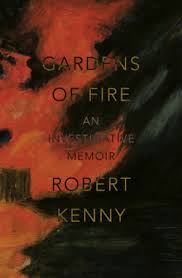
I must confess to feeling silenced by this book.  I finished it about a week ago, and have been turning over in my mind how, and whether, I should respond to it.   I’m proceeding on the basis that the act of publishing one’s writing is, on the author’s part, some form of invitation to engagement and response, and so write  I will, even though I feel inadequate to do so.

Robert Kenny is a historian formerly based at La Trobe University and now at Deakin.  I know him by sight only.  He read the opening pages of the book at a seminar earlier this year, and it seemed that the whole room held its collective breath, not just because of the beauty of the writing but also because of an awareness that we were being offered a perspective from the heart and from the head.

Fire.  When I that that word now I see a crazed red dancer surging up the slope, at whose feet I train the hose of spraying water to no effect.  Its dance mocks me.  As I face it, it has personality.  Wilful. Contemptuous.  It is the enemy at the my gate.  Literally at my gate, for I am standing at the gate of the high metal fence that protects the north side of the house.  I can feel the searing heat on the parts of my face not covered by mask or goggles.  And the flame producing the smoke provides the only light.  A dreadful light.  The wind pushes heat into me.  All there is is this fire and, behind me, my house, and inside that house my cat.  The rest of the world has gone.  (p. 4)

The fire at Redesdale that destroyed Kenny’s house on Black Saturday is told over the first hundred or so pages of this book.  But it is not told as a continuous narrative.  Instead, almost as if it is too painful to touch, Kenny steps towards telling of the physicality of the  fire, then steps back into abstractions – history, philosophy, reflection- before venturing again to try to put into words the experience of being inside the fire.  On one level, I found it frustrating that he was inching through the narrative in this way, but in many ways it reflected his own emotional response to the experience: that it was too hard to face head-on again.

These digressions are not merely distraction, however.  Instead they are the ‘investigations’, as the title suggests, of a well-read, insightful reader and historian as he ranges across European and Aboriginal mythology, colonial history, art, environmentalism and philosophy.   It is an argument, built incrementally, of the relationship between man and fire: that it is fire itself that makes us human.

Halfway through the book, the fire has ravaged and passed on.  The Redesdale fire was capricious, taking one house and leaving another.  Because the township was spared, the fire doesn’t have the public profile of  Strathewen or Marysville, where the whole town was wiped out.  His narrative shifts to the emotional and community aftermath of a fire and runs the gamut of grief, resentment, bewilderment, poor judgment and shaken pride.

Robert Kenny was well prepared for this fire.  A fire nearby some years earlier had shown him how quickly this grassland could catch, and he kept a whole fire-fighting kit beside the back door in readiness.  When I recall how oppressively and drainingly hot Black Saturday was, I can only admire his foresight and discipline in dressing himself in long trousers, woolen socks, heavy shirt, jumper and beret before venturing out with the pump and hose that was to let him down so badly.  When I see footage of people dwarfed by flames, fighting for their houses dressed in shorts and thongs,  I forget that to be better protected would involve deliberately covering up in heavy clothing before the fire was anywhere near.  My head would tell me I should, but I don’t know that I would have the determination to actually do it before it was too late.

There is bitterness in this book, and it is his anger against the co-option of grief and commemoration by people who lost nothing that makes me feel hesitant to write this response. Do I, as an outsider, kilometres away from these fires, a spectator only,  have the right to say anything here?   I found myself shaking my head in disbelief at the perverse logic that planned a community ‘celebration’ to reclaim fire for good instead of loss, so prematurely amongst people literally seared by Black Saturday.  I shift uneasily at his vehemence against commemoration by the community at large who have lost nothing and yet vicariously appropriated the trauma of Black Saturday for themselves.

This book is also the work of an academic and writer who uses his intellect and knowledge to try to make sense of an experience that is almost beyond words.  In this regard, it reminds me of John Tulloch’s book One Day in July about the London bombings that I reviewed here.  Kenny’s exegesis on the Strutt Black Thursday fire painting  is masterful, especially in comparison with Edmund Capon’s weak and cliched commentary in the recent Art of Australia documentary.  It’s offered as just one of the many  ‘investigations’ that thread throughout this book.  You are very much aware that you’re reading the work of a historian.  He engages with the recent debate elicited by Bill Gammage’s controversial and acclaimed recent book The Biggest Estate on Earth, which challenges the settler fantasy of an untouched country.  He juxtaposes Gallipoli and the multiple commemorations of fire (Black Thursday, Red Tuesday, Ash Wednesday, Black Saturday) as an expression of national identity within place.  He attends conferences; he gives papers; in the midst of his own ruptured world he is awarded the Prime Minister’s Prize for Australian History, among other accolades, for his book The Lamb Enters the Dreaming.  He has the book-lover’s grief for his library and the impossibility of replacing the spatial layout of his book collection and the memories of buying that particular book in that edition.

My books no longer survive. It is as simple as that.  I have no catalogue of what was on those shelves and what I remember is fragmentary.  Even if I could recover in my memory all the titles of those books, and manage to find copies of them all, they would not be the same books, they would not have been the physical things I handled so often over the years, and this is important. Colleagues offer me books they no longer need.  I am grateful, but puzzled- don’t they know how personal a library is? How it is the history of encounters? What would be the point of shelves of strangers’ books? (p. 161)

This is a very human book. He makes bad choices, he responds brusquely and angrily.  He is clear-sighted and yet blinded at the same time.  The fire has burnt off layer upon layer.  I can’t do the book justice. Read it.

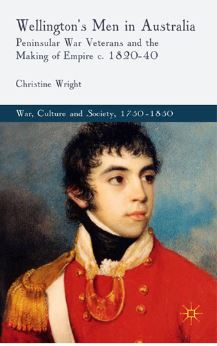
‘Wellington’s Men in Australia’ by Christine Wright

Wright_Wellington

Wellington’s Men in Australia: Peninsular War Veterans and the Making of Empire c1820-1840 by Christine Wright

2011,  178 p and appendices

I often found myself closing the book while I was reading it to look closely at the striking image on the front.   It’s a miniature of James Thomas Morisset (1780-1852), painted when he was about eighteen years old.  Those who loved him must have later regarded it with wistful sorrow, because he was shockingly disfigured at the battle of Albuera in 1811 as part of Wellington’s Peninsular campaign at the age of 21.  He is such a beautifully formed boy, and not at all like the description that the second in command, Foster Fyans, gave of his commandant on Norfolk Island some thirty-odd years later:

The Commandant, a gruff old gentleman with a strange face, on one side considerably longer than the other, with a stationary eye as if sealed on his forehead; his mouth was large, running diagonal to his eye, filled with a mass of useless bones; I liked the old gentleman, he was friendly and affable, and thought time might wear off his face affliction, which was most revolting: the one side I could only compare to a large yellow over-ripe melon  ( Fyans, ‘Memoirs Recorded at Geelong’ cited on p. 169)

Morisset is one of the men that Christine Wright deals with in her prosopographical study of men who served during Wellington’s Peninsular campaigns on the Iberian peninsular from 1808 to 1814.  Prosopography  was defined by the historian Lawrence Stone in a foundational article as “the investigation of the common background characteristics of a group of actors in history by means of a collective study of their lives”.  As such, it falls half-way between rather sketchy biography and a more statistical analysis.  I’ve read several legal prosopographies, and one or two about bureaucrats: it seems to be used mainly in the context of writing about careers (although it could just as easily be applied to any group of people).  It is well suited to Christine Wright’s endeavour. When reading local histories sited in the British colonies during the 1820s, 30s and 40’s you come across ex-military figures again and again, and in this book Wright takes this cohort of soldiers, bonded by their experience in the Peninsular campaigns, and traces the rest of their careers throughout the empire.

During the Napoleonic Wars the need for manpower rendered the old system of purchasing of commissions inadequate.  Young soldiers of limited means, who would not normally have had the capital to purchase their  positions not only had a career pathway open up for them during the war, but also were eligible for half-pay and land grants after the war.   As veterans, they were able to draw on the networks of influence to gain positions across an empire which was calling out for their skills in logistics, engineering and surveying.  The half-pay entitlement was insufficient to live on in Britain which drove veterans to look for employment overseas, and from the British Government’s point of view it was a way of cutting the cost of numbers on the half-pay list while filling appointments with skilled men and their families.

In the colonies, veterans in garrison regiments and ex-soldiers who had sold their commissions fitted particularly well into the military structures of early NSW and Van Diemen’s land.  As the colonies evolved away from penal settlements to free colonies, these ex-military men were well placed to take up civil positions of power and authority in the community.  They obtained large grants of land complete with convict labour and accrued the status that accompanied being a landowner- something that they probably never would have been able to achieve in Britain.

But the army had given them more than just military skills.  The drawing and surveying skills developed during the war were put to use in colonies that were still exploring their spaces.  Beyond their practical uses, these skills flowed into art as well, where ex-veteran painters, alert to the stark light and harshness of the Spanish terrain, were able to capture the light of  Australian landscape  in a way not seen amongst painters who had spent all their lives in the soft lights of England or wooded European settings.  Accustomed to making written reports, many of the veterans wrote their memoirs of the Peninsular campaign but extended their memoirs into their new settings as well.

Veterans were often deployed on the frontier in various roles: explorers, magistrates, Mounted Police, Border Police and as military commandants of penal stations.  The term ‘frontier’ means different things to different groups: there were different frontiers depending on whether you are talking about ‘big man’ sheep farms, ‘small man’ cattle farms and agricultural mixed farming. Some historians prefer the term ‘contact zone’ rather than ‘frontier’. Missionaries saw it as the advancement of civilization.  In military terms, though, the frontier was

a strategic boundary, a defensive line, and the front  line of colonial order.  The military saw it as the shifting boundary of British civilisation that had to be defended. (p. 152)

On this basis, Wright gives an insightful re-reading of the Waterloo Creek massacre from a strictly military viewpoint. The British Army ceased fighting on the frontier in the latter half of 1838 and it was left to the settlers or to Border or Mounted Police which, although joined by many ex-soldiers, were not counted as part of the British Army regiment numbers.  She suggests that this changed the nature of frontier ‘clashes’ and not necessarily for the better.

The real grunt-work of this book comes in the appendices which lists influential British Army Officers in the Australian colonies who were veterans of the Peninsular War.  They are listed by name, regiment, date and place of arrival, place of death, with a brief summary of the military and civil positions they occupied in Australia.  There’s many familiar names there: several governors (George Gawler in South Australia; Governors Darling, Brisbane, Gipps, Bourke, in NSW), explorers (Sturt, Major Mitchell, Lockyer), commissariats (Logan up in Moreton Bay, G.T.W.B Boyes in NSW and VDL) and commandants (Thomas Bunbury, Joseph Childs, poor damaged James Morissett in Norfolk Island), surveyors (Light in South Australia,  and many magistrates and crown land commissioners (Fyans).

The chapters are arranged thematically, each headed by a quote:

  1. ’emigration is a matter of necessity’: The aftermath of the Peninsular War
  2. ‘they make Ancestry’: Veterans as Officers and Gentlemen
  3. ‘we are in sight of each other’: The Social Networks of Veterans
  4. ‘attached to the Protestant succession’: The Religious Influence of Veterans
  5. ‘an art which owes its perfection to War’: Skills of Veterans
  6. ‘with all the authority of Eastern despots’: Veterans as Men of Authority
  7. ‘in the midst of the Goths’: The Artistic, Literary and Cultural Legacy of Veterans
  8. ‘to pave the way for the free settler’: British Soldiers on the Frontier.

The book emerges out of the author’s PhD and I think that it is still detectable there.  At times the language was a little stilted and the author’s interventions rather forced. I was mystified by the capitalization (or lack thereof) of certain names, especially the Duke/duke of Wellington.

The reader meets many of these veterans in several chapters in different guises.  The backgrounding for individual characters comes in various places.  For example, Archibald Innes’ background story comes at p. 44;  G.T.W. Boyes’ comes at p. 132 even though they have been mentioned briefly in many other places.  While spreading her net wide, there is no one place where she introduces key figures as, for example, Inga Clendinnen did in Dancing with Strangers. I found myself wondering if perhaps this might not have been a better strategy:  I found myself more interested in characters once I’d been formally introduced to them.  Certainly the ‘networked’ aspect comes through clearly as people are appointed to one position after another, often through the sticky web of the Darling/Dumaresque connections in Sydney, or through the good graces of Secretary of State for the Colonies Sir George Murray in London, himself a Peninsular veteran.

It is telling that the book takes such a short timespan  (twenty years) as its period of analysis.  By 1840 the militarized nature of Australian society had been overlaid by move towards civil appointments, bureaucratic rather than martial procedures and even representative government.

As often happens, once you’ve been alerted to a phenomenon, you tend to see it everywhere, and this is the case with this book.  If you flip through the entries for early settlers in the Australian Dictionary of Biography you’ll see the military connections with new eyes and wonder why it wasn’t more apparent before.

awwbadge_2013I am posting this for the Australian Women Writer’s Challenge under the History/Biography/Memoir section.  It is an academic text, and needs to be read that way.

‘Roving Mariners’ by Lynette Russell

rovingmariners

Roving Mariners: Australian Aboriginal Whalers and Sealers in the Southern Ocean 1790-1870

2012,  140 p & notes

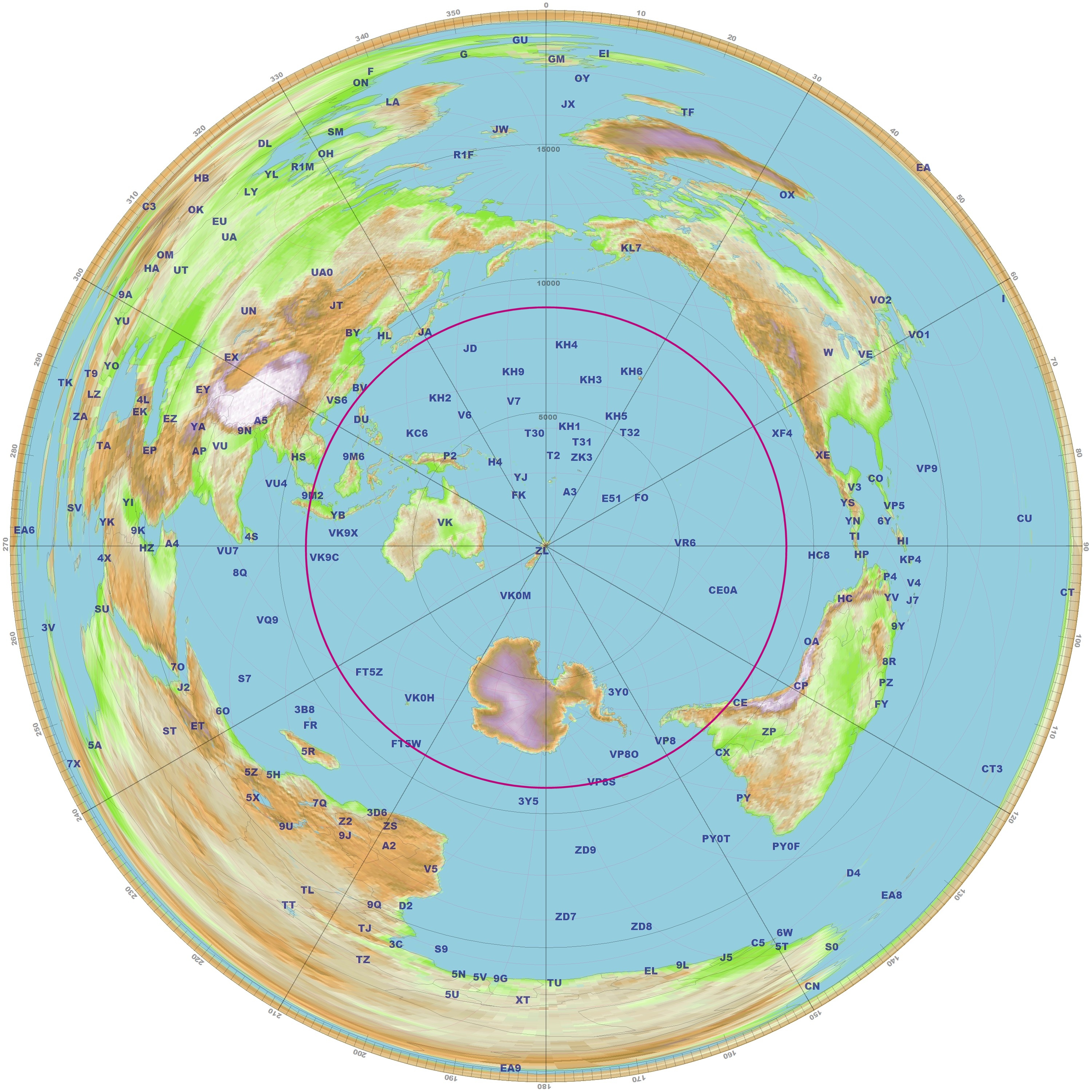
There are two decenterings that this book demands of its readers.  The first is encapsulated by a map that looks something like this:

great_circle_SM3GSJ

It’s a map showing the great circle route of the southern ocean.  Dotted around and radiating out from the centre of the circle are the islands of the southern ocean: the larger land masses of  Antarctica, Australia, New Zealand,  and although you can’t see it here, Macquarie Island, Pitcairn Island,, Kerguelen, Chatham Island, Tahiti, Society Islands,  Solomon Islands, Falkland Islands, South Georgia.  It’s a view that challenges our land-mass bias by emphasizing the ocean and the space, and the relative proximity of small islands flung into the centre of the Indian, Pacific and Atlantic Oceans.

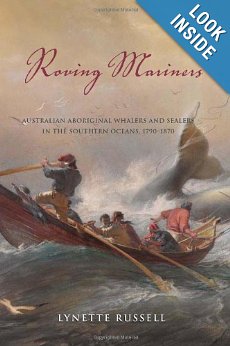
The second decentering reflects the focus on whaling and sealing in this book right up to 1870.  We’re often told that whaling and sealing were primitive, increasingly marginal endeavours which were eclipsed by the pastoral industry and then the gold rushes that super-charged the Australian economy in the 1830s, 40s and 50s.  It’s odd: I’ve been reading through 1840s newspapers for years now seeing mainly sheep, sheep, sheep but after reading this book suddenly I saw references to whaling all over the place- not long articles mind you, but the steady ongoing enumeration of whaling ships in the shipping news and, I must admit, the frequent presence of whalers and sealers in the criminal news.

Lynette Russell is the director of the Monash Indigneous centre at Monash University, and is herself of Tasmanian Aboriginal descent. Her own personal engagement with the history of whaling and sealing was prompted by a discussion she had with an elderly distant cousin who, like her, acknowledged descent from both Aboriginal and European ancestors.  He explained that his great-great-grandparents had been sealers, she a Tasmanian Aboriginal woman and he a British seaman.  When she sympathized with the virtual slavery in which Tasmanian Aboriginal women were kept, he pulled her up.  They were both sealers, he said, rather than a sealer and his ‘woman’ (p. 22).  This set her off to explore in a more nuanced way the complexity of the Southern Australian sealing industry.

In regard to her own Aboriginal identity, Russell embraces notions of undecidability and uncertainty:

As such, I emphatically state that I am neither one thing nor another.  Though I recognize that for many (perhaps most) people the desire to acknowledge one identity over all others is paramount.  For me, the binaries of Indigenous- non-Indigenous or native-newcomer- binaries that, despite their obvious artificiality, continue to be widely used- are meaningless; such simplifications hamper our understanding of the past. (p. 21)

This personal stance is reflected in the history that she writes in this book.

One of my key desires is to create a more complex and less linear narrative than has been previously produced for southern Australia.  One of the complexities I wish to develop concerns the question of the boundaries surrounding who was categorized as native, who was not, and who was described as newcomer…. I believe that these categories were not stable, and during the sealing and whaling period they were perhaps in a greater state of flux than they were either before or afterward. (p. 13)

The whaling and sealing industries of the Southern Oceans were always ethnically diverse with a strong representation of ‘coloured seamen’: African and Native Americans, Native Canadians, Pacific Islanders, Maori and Aborigines. Her sources are the archival records of the maritime industry including  logs, ships’ records, diaries, journals, visual materials including photographs and European artifacts.  After trawling through the sources, she concluded that there was ultimately a paucity of information about the ‘coloured seamen’ that she wished to write about.  This, she says, enabled space for her to imagine their lives and labours and to be “intentionally creative” (p. 16).  She plunged herself into the experience of whaling and sealing:  standing on the deck of a ship in the midst of a pod of sperm wales; standing on Kangaroo Island amongst a colony of noisy, smelly fur seals.

I must admit that there is much in her upfront description of her political stance and methodology that discomfits me (and I should imagine that within Indigenous politics, some would be even more uncomfortable), but I found little  in the text itself that unsettled me.   Instead, I sensed that she had read widely and imaginatively and that there was a strong tethering in verifiable, if diverse, sources (with one major exception where I felt that her creative imagination was straining the evidence too much).  She is very much present in the text. Her argument is strenuous and well argued, and it has the effect of challenging easy assumptions.

She focusses in particular on two men: Tommy Chaseland, and William Lanne.  Thomas Chaseland was born illegitimately to an Aboriginal woman and a white emancipist father.    He was sent to work in the shipping yards of the Hawkesbury River and signed on to the Jupiter. After a succession of stints on various whaling ships, he settled in New Zealand where he became the husband of a high-ranking Maori woman and made his home on the isolated Codfish and Stewart Islands before moving to the Fiordlands west of Stewart Island where he and his wife worked on a whaling station.

William Lanne, often incorrectly described as ‘the last Tasmanian Aboriginal male’  is more widely known, largely in terms of the outrageously disrespectful treatment of his body after his death.  Russell examines Lanne as one of three  Tasmanian Aboriginal men who pursued their luck at sea alongside Captain Henry Whalley and Walter George Arthur.  The details of what happened after his death almost obscure the life that he lived, but Russell attempts to reconstruct it.

Reconstruction of a life becomes even more difficult when she turns her attention to Tasmanian Aboriginal women.  Here she follows two other historians, Rebe Taylor who examined Kangaroo Island and Lyndall Ryan who focussed on Bass Strait and Tasmania.  She acknowledges her debt to this work, and tries to take it further by endeavouring to bring the wives and women from the shadows of the narrative.  It is a difficult task that involves reading against the sources, many of which were written by the missionaries who tried unsuccessfully to get the women to leave the islands.  She is extremely careful in her discussion of freedom, action and choices and her caution in the text behooves us to read closely and to attend to her hesitations and qualifications.

This is a beautifully written and nuanced  reflective history. It is at the same time easy to read and yet requires much of the reader as well in terms of weighing the argument and her use of sources.

A review of the book is available on H-Net.

awwbadge_2013I am posting this review to the Australian Women Writer’s Challenge under the History/Biography/Memoir section.

AHA Rethinking Indigenous Histories podcast

You might remember that I blogged about the Rethinking Indigenous Histories panel at the recent AHA conference that I attended in Wollongong.

The podcast of the session is now available at Radio National’s Big Ideas page.

The panel, chaired by Richard Broome, Emeritus Professor of History at La Trobe University  included:

Professor John Maynard
Director of the Wollotuka Institute of Aboriginal Studies, University of Newcastle. He is a Worimi man from the Port Stephens region of New South Wales and currently holds an ARC Australian Research Fellowship (Indigenous).
Professor Tim Rowse
School of Humanities and Communication Arts, University of Western Sydney
Professor Marcia Langton AO
Foundation Chair of Australian Indigenous Studies at the University of Melbourne
Professor Ann McGrath
Director of the Australian Centre for Indigenous History at the Australian National University.

Happy 178th birthday Melbourne!

30th August is Melbourne Day- a little celebration that sputters along despite the huffing and puffing of our redoubtable Lord Mayor trying to breathe some life into what seems destined to be a rather low-key ceremonial occasion.  In a way, it’s nice that it hasn’t been commercialized and corporatized.  I’ve written about it previously  here .

Port Phillip aficionado as I am, I’m duty bound to celebrate the day, and so there I was, off to the Royal Historical society to hear Robyn Annear speaking about the writing of her much-loved book Bearbrass, which was first published in 1995 and reprinted in 2005.  It is still in print and sells consistently, not only to Melbournites, but also to others interstate and overseas.

Bearbrass is  a light, happy book divided into thematic chapters that start with a map of the city grid with the locations that are discussed in the chapter marked out onto it.  It’s full of anecdotes and curiosities, with nary a footnote in sight.

Robyn Annear describes herself as a non-academic historian, and she says that at the time of writing the book she was unaware of the scholarly conventions that she had leapfrogged over in writing her funny, affectionate book.   Quite frankly,  she was oblivious to any disapproval that she might have received from academe, because it was not her world.

She was strongly influenced by the humour in Garryowen’s writing and was swept up in the naughtiness and sheer youth and exuberance of the young population in Port Phillip at the time.  Probably her favourite episodes involved the adventures of the members of the Melbourne Club, especially in view of the utter respectability and conservatism of its members today.

She spoke about the availability of Trove and the way that it would make the writing of Bearbrass a daunting prospect today.  It would be harder to draw boundaries around it, she said and perhaps there is such a thing as too much information.  Is there still room for wondering if information is so readily at hand?

It was a lovely, engaging talk – much like the book itself.  A podcast of the talk is available here  (along with other interesting podcasts from RHSV)

Happy birthday Melbourne!

‘Miss D and Miss N’ by Bev Roberts

If I were a well-travelled person, at this point I would wave airily and announce that I always try to read a book set in a place that I am visiting.  Alas, I am not;  I can claim that I read Henry James’ The Bostonians while in Boston, and Dickens while in London…but that’s about it, I’m afraid.

So, a couple of weeks ago when we went down to Geelong (a whole 100 kms away!), I decided that of course I must read a Geelong book!!  But where to find a Geelong book? you ask.  The answer is: Miss D. and Miss N.  In fact, there’s a chance that if you’re on the Bellarine Peninsula that you’ll drive right through the areas named for them: Drysdale and Newcomb.

missdmissn

2009, 326 p.

The two women share an entry in the Australian Dictionary of Biography.   Drysdale was twenty years older than her friend Caroline Newcomb.  Anne arrived in Port Phillip in 1840, aged forty-seven, with the experience of farming in Scotland under her belt, capital at hand, and determined to take up sheep farming in the booming pastoral industry of early Port Phillip.    Caroline Newcomb had arrived in Hobart in August 1833 and found a position as a governess with the family of John Batman, one of the members of the Van Diemen’s Land- based  Port Phillip Association that looked across Bass Strait to establish pastoral runs in what they perceived (incorrectly) as land for the taking.   When she arrived in Port Phillip on April 19 1836, she was one of only thirty-five women in the settlement, out of a white population of 177.  In March 1837 she shifted to Geelong, presumably as governess to  Dr. Alexander Thomson.  The two women met at Dr Thomson’s house where they formed a strong friendship, despite the twenty year age difference between them.   This friendship became a partnership that lasted twelve years when Anne asked Caroline to join her as a pastoralist on Boronggoop, a squatting run on the Barwon River at Geelong.  In August 1849 they achieved their wish “to have a piece of land &c a stone cottage” when they moved to Coriyule, a beautiful stone house that they had built (and which, it seems, still exists).

This, then,  is Anne’s diary, commenced from on board ship in Scotland in September  1839 going through to 1852 and 1853 when she fell ill and the writing of the diary was taken over by Caroline. Continue reading