Author Archives: residentjudge

I hear with my little ear: Podcasts 1-7 June 2022

History of Rome Podcast. Episode 144 The Road to Constantinople Even though he had not been brought up in the military, Julian had good success against the Germans and Franks- so much so that he was acclaimed as Augusta by his troops. But, at this stage, he declined the offer, saying that Constantius was the only Augusta. Instead of stripping the Gauls of everything in order to pay for his victory, he had the idea of cutting taxes on them, but actually collecting them, instead of allowing them to accrue debt and then write it off in a fit of debt-forgiveness. Meanwhile, over in the east, Sharpoor and the Sassanids became active again in Syria, so Constantius ordered Julian to send his troops east. But his troops didn’t want to go and Julian wasn’t prepared to force them, and this time when they urged Julian to be Augusta, he accepted, thus setting himself up for war against Constantius. Constantius was becoming increasingly paranoid after his wife (who had always championed Julian) died. Constantius was en route to engage in battle with Julian, when he died, leaving Julian as sole emperor. Once Julian arrived in Constantinople in
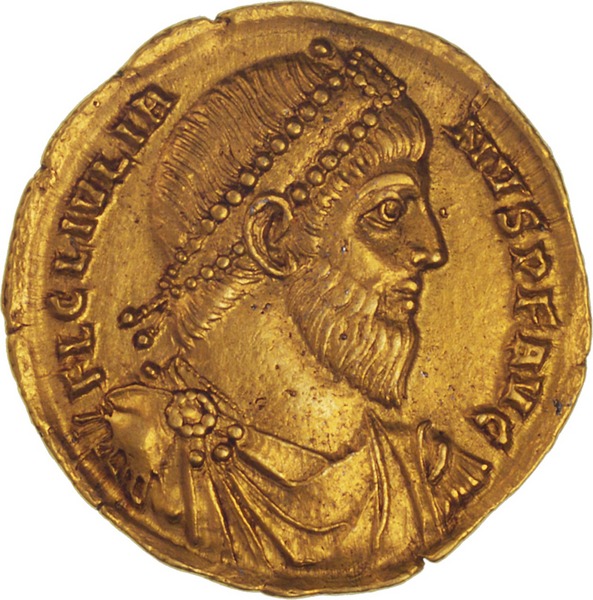
Episode 145 Julian the Apostate, he cleared the imperial court of his enemies, after appointing an ostensibly ‘independent’ commission. He looked back to the 100s C.E. and the Antonine dynasty as a model, cutting the bloat in the court and administration, and abandoning all that talk of “Living God” stuff. He kept control of defence and taxation but devolved power back to the local magistrates. He had always been a pagan behind the scenes, having rejected the Christianity of his upbringing, but now he embarked on re-paganizing the Empire. Despite his name, he didn’t make Christianity illegal. However, he opened up the civil service to pagans, and sacked the Christians, and announced that all religions were now seen as equal, which set the Christians against each other as now all sorts of heresies could arise. He didn’t actually ban Christian schools, but he banned the use of classical texts by Christian teachers, and Roman families who wanted their sons to get ahead withdrew them from Christian educators so that they could receive a proper education. Julian looked at the community and social support aspects of Christianity and tried to emulate it by uniting pagans into one Paganism- but that was never going to work. In Episode 146 The Spear of Destiny Constantius was dead, but Julian was determined to go to war against Sharpoor and the Sassanids. At first he was quite successful, but then he failed. The Sassanids engaged in a scorched earth policy, which led to starvation amongst Julian’s troops. However, he continued to lead, and it was while leading that he was speared (no-one knows by whom) because he rushed out without wearing his armour. He probably didn’t think that he was going to die, but after lingering a couple of days, he did- without appointing a successor. He was 31 years old, and had ruled for about 18 months. He dreamed big, and died young. Superficially, he was like Elagabalus in that he tried to reform religion, but he was more important than that. It’s one of the big ‘What Ifs’ of history- if he had ruled for longer, would Christianity ever re-established itself? Would the whole of European history changed?

The Real Story (BBC) China vs. the West in the East is interesting because it takes a European/BBC approach to the ‘Far East’ , which is of course Australia’s closest area of influence. It features Jonathan Pryke – Director of the Pacific Islands Program at the Lowy Institute, an Australian think tank; Dr George Carter – A Samoan Research Fellow in Geopolitics and Regionalism at the Department of Pacific Affairs at the Australian National University (ANU) and Judith Cefkin – Former US Ambassador to Fiji, Tonga, Tuvalu, Nauru and Kiribati. All speakers were keen to emphasize the multiplicity of languages, cultures and states within the Pacific, and the inappropriateness of China wanting to deal with them as a block. Dr Carter pointed out that there is no Pacific immigration at all into China, and that these family ties are important in relationships with Australia and New Zealand.

Things Fell Apart (BBC) Episode 7 A Secret Room behind a Fake Wall tells the story of Isaac Kappy, a film producer from Albuquerque whose career fell apart and ended up in Hollywood. Always attracted to conspiracy theories, he became engrossed in Pizzagate, and then went onto Alex Jones Infowars to claim a widespread Hollywood pedophilia network. He died by falling from a bridge, obviously troubled and probably by suicide, but his cause was taken up by QAnon and lawyer Lin Wood, one of Donald Trump’s ‘outside’ lawyers.

History Extra Podcast There have been fairly muted celebrations of the Queen’s 70th Jubilee here in Australia but I did listen to Britain’s transformation during the Queen’s Lifetime, featuring historian Dominic Sandbrook. Starting off with the Queen’s birth in 1926, he and interviewer Rhiannon Davies give us a picture of British life and politics decade by decade of the Queen’s life. There were no Roaring Twenties in Britain, where the ’20s were largely an extension of the pain of WWI. Perhaps that’s why the Depression did not figure as much in people’s consciousness as it did in US, although there were very different experiences in the North and South. WWII in the 40s was a seismic event, and Princesses Elizabeth and Margaret became patriotic icons. The 50’s -especially the second half- were marked by consumerism, brighter clothes, youth culture and full employment. Televisions and washing machines in particular changed society. The 60’s for families in the suburbs were not particularly ‘swinging’, and were more an extension of the 50s. Large-scale immigration from the Caribbean and India/Pakistan began in this decade, and it was unpopular from the start. The 1970s were marked by strikes, discontent and IRA bombings, co-existing with increasing affluence. The arrival of Thatcher during the 1980s accelerated changes which were already under way, but de-industrialization and austerity deepened social divisions. The 90s brought New Labor, and in many ways Thatcher had fought many of the battles for them. With the death of Diana, the Queen seemed to be a bit of a relic, but Brexit and the Queens neutrality about it, was good for the Royal Family. She was embraced again with her COVID speech, and I think that Paddington Bear endeared her to us further.

99% Invisible. Divining Provenance examines the looting of Syrian artefacts since the start of the Syrian War. Syria, of course, is replete with archaelogical sites, which have been looted for decades. But with the arrival of ISIS (many of whom were not Syrian), this looting and trafficking became a major source of funding. Over the last ten years, ordinary people have been doing it too. The UN introduced Provenance law in 1970, which made trade of anything uncovered since 1970 illegal, but different countries apply the law differently. Although buyers will turn themselves inside out proving authenticity (because who wants to buy a fake) but provenance is another matter, especially when goods are presented in a job lot. Facebook, where much of the selling takes place, claims to have a take-down policy, but it in effect leaves the whole question of provenance (or not) to the seller.
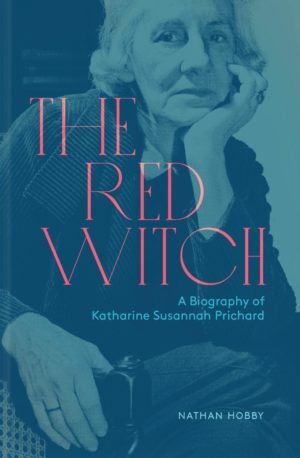
‘The Red Witch’ by Nathan Hobby

2022, 385 p & notes

Near the end of her life, the author Katharine Susannah Prichard was sorting through her papers and correspondence, threatening to burn “while there’s still time”. Her friend Catherine Duncan wrote back to her

I can understand that you should want to put a time limit on giving students access to personal papers, but in fifty years, dearest Kattie, the KSP you are now will have become someone else- she will have escaped you…Perhaps in the end it’s better to surrender the truth to posterity rather than allow one’s self to be deformed by supposition.

p.378

Well, fifty years have passed and here is Nathan Hobby’s biography of Katharine Susannah Prichard. I wonder what KSP would think of it? She was, after all, very conscious of posterity and it was the attempt of early biographer Cyril Cook to apply a Freudian lens to her biography that led her to write her own autobiography Child of the Hurricane. Time and politics have not been kind to some aspects of her legacy: for example, Coonardoo needs to be read within the time it was written and would never appear on school reading lists today, and her staunchly pro-Stalinist political views, controversial then, would appeal to an even smaller group of adherents now. But I think that she would embrace the roundedness of Hobby’s biography, which combines beautifully the personal, the literary and most importantly, the political in presenting her life.

What a complex thing it is, constructing a person’s personal life from the outside and at fifty years’ remove! What she herself said about her relationships with men, and what her son, who was her literary executor, might have written are not necessarily what an outsider decades later might have said. What we think or write ourselves about our relationships (retrospectively in a memoir, or contemporaneously in correspondence) is refracted by our need to have an emotional coherence to the story we tell ourselves and others about our choices and actions. A biographer looks for coherence too, but is more tolerant of ambiguity and inconsistency. And so, Prichard’s relationship with the older married man William Reay reads now as a compromised, rather questionable entanglement, the relationship with Guido Barracci is tinged with betrayal and her dalliance with Hugh McCrae seems opaque and puzzling. Reading from the outside, her marriage with Hugh Throssell seems an enigma. To the end of her life, in her letters to her son and friends, she declared her love for him and mourned his ongoing absence in her life. Yet they seemed to share little of her literary life (although it did sustain them financially), they spent quite a bit of time apart, the family suffered on account of his financial ineptness and I suspect that Hugh was never as politically active as she wanted him to be. Did the circumstances of his death colour the story she told herself about her marriage? And then there are her other friendships. What was it like to be her friend? There are obvious falling-outs with many friends, despite the effusiveness and overtly literary tenor of her correspondence.

To be honest, I was completely unaware that she had written so much. Certainly, this was her working job, and, especially during the Depression years and later, she needed the money from her novels, short stories and newspaper stories. But this is a lifelong job, and the to-and-fro with publishers and editors continued throughout. Competitions play a bigger part in her writing life than I would have imagined, although I guess awards (a ‘competition’ under another name?) play a similar role in our literary scene. She received a Commonwealth Literary Fund grant in 1941, but I am not at all surprised that the security service recommended in future that the names of applicants for fellowships be submitted to them “for comment” to prevent any other writers with Katharine’s political leanings from being considered. A literary biography needs to accommodate both readers familiar with the subject’s works, and those who have not read them at all. I felt that Hobby did well, giving enough of the flavour of her work for those unfamiliar with it, drawing together his own evaluations with those of readers at the time, but not labouring the work either. That said, the only one of Prichard’s works that I am tempted to read after reading this biography is the goldfields saga (The Roaring Nineties; Golden Miles and Winged Seeds). Her frequent trips to the places in which she set her novels reflects her emphasis on authenticity (within limits, of course), although the outback seems to held more allure than urban settings.

The strongest part of this biography, as reflected in the title The Red Witch, is Hobby’s examination of her politics, which enriched but complicated her life enormously. It seems to me that she projected her political commitments onto her husband Hugh, who showed only fitful involvement in politics. She both gained and lost friends through differences of political opinions. Her politics could have cruelled her career (her receipt of a Commonwealth Literary Fund grant probably stymied the chances of Communist writers who followed her) and certainly many readers and reviewers felt that the vehemence of her politics straitened her novels. Her unshakeable admiration of Stalin, when so many other colleagues dropped away, can be variously read as loyal, steadfast, inflexible or willfully blind. But her politics were so interwoven with her friendships and her writings that it is impossible to cut them out and make a judgement of her life and writings without them.

The book is arranged in five chronological parts: Kattie 1883-1907; Freewoman 1907-1919; Mrs Throssell 1919-1933; Comrade 1934-1949; Katya 1950-1969. Within each part there are multiple chapters- possibly a few too many, when some were as little as seven pages in length. The preface plays the part of the literature review, and is probably the most evident sign of the PhD thesis that preceded this book. I really enjoyed the Afterword, set in Prichard’s former home in Greenmount W.A. in 2019 when the author comes on stage properly. Nathan Hobby has been present in the book throughout, especially in his appraisals of Katharine’s writing, but it has always been behind the scenes, which is the way I prefer it. But I was glad that he stepped forward at the end.

He has been well-served by Miegunyah Press, which has given him expansive footnotes, an excellent index and a bibliography as well- something that is much appreciated instead of having to hunt through footnotes for the first reference to a source. The footnotes reveal the rich archive of correspondence that underpins Hobby’s work, and the variety of newspaper sources from which has drawn.

It is probably true that, as Catherine Duncan predicted, some fifty years after her death, ‘KSP’ has become someone else but I think that she would recognize herself in this book. The KSP of the future may have escaped her, but I don’t think that she escaped Nathan Hobby. He has presented her to us in all her aspects – as lover, mother, wife, comrade, writer, companion and public figure – with diligence, empathy and tempered admiration. No subject could ask more of her biographer.

My rating: 9/10

Sourced from: review copy Melbourne University Press

I hear with my little ear: Podcasts 25-31 May 2022

History of Rome Podcast Episode 141: Blood and Water looks at the ten years of co-existence between Constans and Constantius. The religious culture wars were not dead, and the two emperors became caught up in them: Constantius leaned towards Aryanism, while Constans was pro-Nicean. Constans in the west began losing touch with reality, spending all his time hunting and banquetting, and neglecting the army for an archery corps. This isn’t going to end well. It didn’t because he was overthrown and killed by Magnentius. Constantius took on the usurper Magnetius in 350AD, finally triumphing over him in 353 when Magnetius did the right thing and committed suicide. To ensure that a rebellion didn’t break out while he was on the other side of the empire doing this, he appointed Gallus, one of the two survivors of the Massacre of the Princes, which would free him to go after Magnetius. Episode 142: You’ve Earned It. Gallus was unpopular because he cut the food supply to the citizens in order to supply the army instead, and he was persecuting pagans as a fundraiser. In the end, Constantius killed first Gallus in 354 and then Claudius Silvanus in 355. That left him the last man standing, which was good until he started looking for a successor. There was only one male blood relative left, his cousin Julian. Episode 143 Julian the Pre-Apostate traces through the early life of Julian before he became Julian the Apostate. He was a studious lad who had been orphaned when Constantius killed his father, and he was allowed a fairly free education in the Greek-speaking East until he was summoned to Milan so that Constantius could check him out. Constantius didn’t see him as a threat, so he gave permission for him to keep travelling around for his education. When he was 23 years old, he was made a junior Caesar and Julian decided that if he had to be a Caesar, he’d do it well. Despite not being well supported by his generals, he had a good victory over the Germans at the Battle of Strasbourg, which of course made Constantius a bit twitchy again. Never a good thing.

Conversations (ABC) The Caving Time Lord introduces us to Australian geochronologist Dr Kira Westaway who has been involved in archaeological discoveries of ‘the hobbit’ (Homo floresiensis) in Indonesia, and more recently, the molar from a young Denisovan girl in Laos. And to think that for so long, we thought we were the only ones here.

Rear Vision (ABC) Sri Lanka: Failed State When Ceylon became Sri Lanka in 1948 it inherited an economic completely geared to British interests. Exports of tea and rubber to Britain brought in foreign exchange but this was directed entirely towards buying in products produced elsewhere (especially Britain). Sri Lanka has teetered on the edge economically for much of its history, forced to take IMF loans with their iniquitous hard-right political policy prescriptions. Politics has been dominated by the Rajapaksa family who dominated all the major political positions, and the war against the Tamils led to a bloating of the army at huge cost. Recent events like the abrupt suspension of imports of fertilizer, the collapse of tourism, and the decision to reduce (!) taxes has led to acute shortages of food and fuel. Although many accuse China of increasing Sri Lanka’s indebtedness, the major creditor is in fact Japan.

Things Fell Apart (BBC) Most of the issues of the culture war just wash over me, but I find the issue of the relationship between transgender rights and feminism less comfortable. I’m troubled by how quickly any discussion becomes sharp and painful- but I guess that’s just because this particular ‘culture war’ topic is one that does engage me. In this episode Many Different Lives, Jon Ronson revisits the MichFest women’s festival in Michigan in 1991, where conflict arose over whether a trans woman could attend a women’s festival run completely by women, for women. The issue splintered further- what about pre-trans women? He discusses second and third wave feminism, and the origin of the term TERF (trans-exclusionary radical feminism), which was not intended to be a term of abuse.

Wikimedia

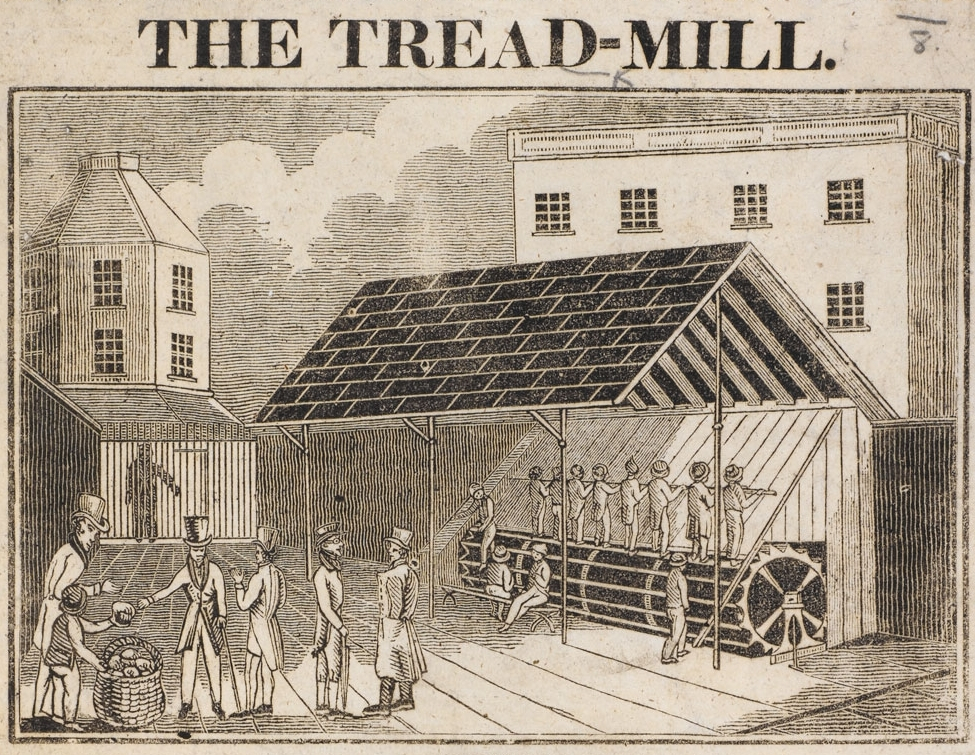
History Hit It’s rather ironic that people pay to go on a treadmill at gymnasiums. This episode The Treadmill features Rosaline Crone, a Senior Lecturer in History at the Open University who has specialised in nineteenth-century criminal justice history. The treadmill goes back to Roman times, when it was used by slaves and labourers as a form of crane for lifting heavy objects. The treadmill in a penal setting was invented by William Cubitt, who saw it as a way of giving work to prisoners in the Bridewell. He had the idea of turning the ‘hamster wheel’ type of treadmill inside out, so that the steps were on the outside. It could be- and was- used as a mill, particularly in Sydney but not in the UK. In the 1830s and 40s there was a backlash against its use, but it was revitalized from the 1860s to the early 20th century, when men could be sentenced to 6 hours on the mill. The movie ‘Wilde’ was wrong in depicting Oscar Wilde on the treadmill: like 50% of other prisoners in the 1890s, he received a medical exemption.

Australia if you’re listening (ABC) It’s not just that Australia has finally rid itself of the Coalition government, but this final episode sees light on the horizon too. The 49-year-old energy prophecy that is finally coming true goes back to 1973 and Professor John Bockris of Flinders University, who saw the dangers in the runaway production of carbon dioxide and predicted that Australia would become an energy exporter in the future, using solar energy to transform hydrogen for export overseas. This episode points out that Australia has been at the forefront of technology that has been picked up by other countries- NASA, China- but that we have sustained reputational damage from the Coalition government’s stance on climate change. In his final words of the series, Matt Bevan notes that nearly everyone he spoke to for this series said that Australia would get there in the end, but that we need vision and consistency over several decades. Perhaps, in the 2022 election, we have finally made a start.

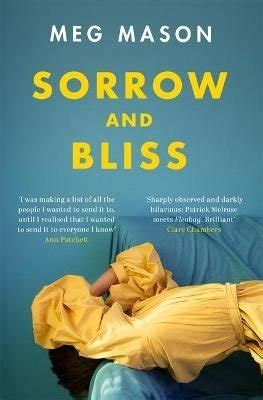
Six degrees of separation: from Sorrow and Bliss to…

Is it really the start of another month? How did that happen? Well, my calendar tells me that it’s the first Saturday in June and so it’s time for Six Degrees of Separation where you link the titles of six books to one selected by Kate at Booksaremyfavouriteandbest. You can read how the meme works here.

For June she selected Meg Mason’s Sorrow and Bliss, which I had never heard of and about which I know absolutely nothing. So, I’m going just by the title – in particular looking for titles of three words linked by ‘and’ in the middle.

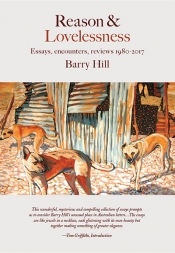
Reason & Lovelessness is a collection of essays and reviews written by Australian author and cultural critic Barry Hill over a period of thirty five years. It ranges far and wide and I must confess that I often felt left behind. This is not an easy book, written by “a truly learned man” as Tom Griffiths notes in his introduction. It demands intellectual chops and familiarity with an eclectic and erudite reading and artistic menu that strays far beyond my knowledge. I felt a bit intimidated by it, frankly.

Heat and Light, written by Indigenous author Ellen Van Neerven is in three parts. The first part, Heat, comprises a number of short stories about the Kresinger family which interweaves magic realism and contemporary indigenous family life. The stories are tangentially connected, a technique I enjoy, giving them stand-alone status within something larger. The second section, Water, contained only one story and it was probably my favourite one. Kaden is a young Aboriginal woman employed in a scientific program engaged with research on ‘sandplants’, a marine lifeform that has been found to have almost human intelligence. The blurb on the back of the book tells me that in the final section ‘Light’ “familial ties are challenged and characters are caught between a desire for freedom and a sense of belonging”. Yes, but I must confess to finding this last section bitsy and insubstantial. So, for me, a bit of a curate’s egg of a book: good in places.

From the title Sex and Suffering, you might not expect a history of the Royal Women’s Hospital, but this is what you get in this book. Historian Janet McCalman’s book follows a chronological approach, with seven sections covering roughly 20-30 year periods. The emphasis varies in the sections, from the clinical (particularly in the sections discussing sepsis and antisepsis) to the social and structural (where the judgments of upper-middle class doctors and the Board of Management were trained onto the predominantly working-class and migrant clientele). Throughout most of the book, she draws on the case notes of individual women- helpfully supplemented with a glossary of medical terms in the margin. A second thread that runs through the book is a commentary on class and gender in Melbourne where she contrasts the more feminist, women-centred Queen Victoria hospital with the the more traditional, male-dominated Royal Women’s Hospital. I enjoyed it up until she reached the 1970s, when the people she was writing about were still alive (and no doubt reading this book), at which point the book became a fairly conventional and and less incisive and critical institutional history.

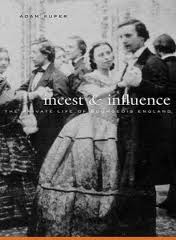
While we’re talking about sex (which we weren’t really), there’s Adam Kuper’s Incest and Influence, which isn’t really about incest either. Instead he looks at two types of marriage in bourgeois England – those between cousins, and those between in-laws- which at various times were perceived as either a thoroughly good thing or illegal. Kuper then goes on to examine three different constellations of  marriage among three prominent 19th/early 20th century circles of influence:  the Wedgewood/Darwin group, the Clapham Sect of Wilberforces, Thorntons, Stephens etc who were influential in the abolition of slavery, and finally the Bloomsbury circle.

In terms of 19th century families, who can go past Tolstoy’s War and Peace. I had started it many times, but I didn’t actually finish it until I was 54 years old! It’s not really difficult once you overcome your fear of forgetting all the names and it is just all-encompassing. I found myself unable to pick up anything else to read for some time after. In my review, I went on to talk about another three word ‘&’ work – Isaiah Berlin’s 80-page  essay The Fox and the Hedgehog (PDF full-text) so I guess that I’m cheating putting two titles in the one selection. In this essay, Berlin talks about Tolstoy and his writing of history – it’s well worth reading.

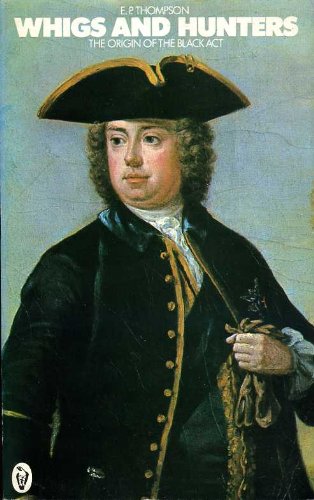
And while we’re talking about writing history, let me finish off with E.P Thompson’s Whigs and Hunters. The full title of the book is Whigs and Hunters: The Origin of the Black Act.  I knew that the Black Act referred to the death penalty applied to crimes like poaching and the cutting of trees. I had previously understood that it was the passing of the Black Act that led to so much transportation to Australia, but it is not as simple as that. One of the first surprises of this book is that the Black Act was not so called,  as I assumed,  as a description of its severity.  Instead, the “Black” refers to the practice of blacking faces to disguise the perpetrators undertaking the depredations under cover of night. Like the anti-terrorist legislation of our post-9/11 world, the Black ActS (because it was an ever-expanding suite of legislation) were introduced in haste and expanded way beyond the original intention.

Next month the Six Degrees of Separation meme will start with Wintering by Katherine May. Once again, I haven’t read it, but the title sounds very appropriate for July.

‘The Imperfectionists’ by Tom Rachman

2014, 288 p.

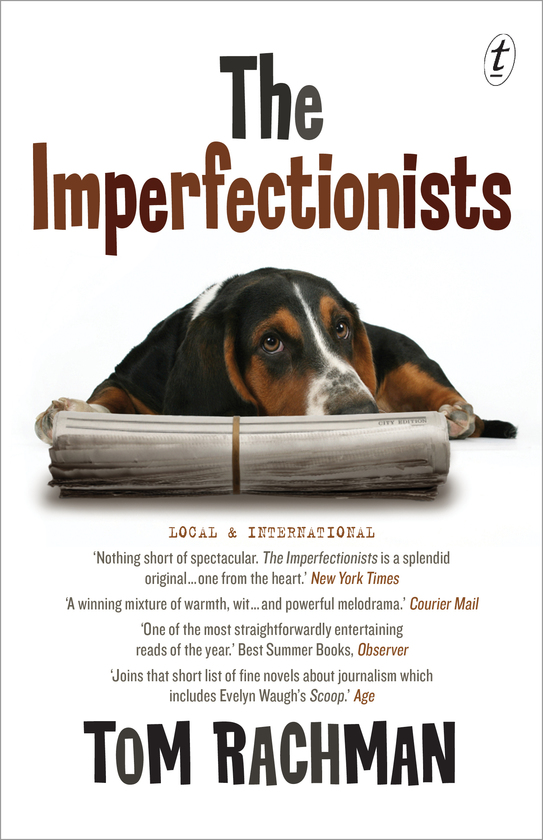
As it happened, I read two books in a row that were debut novels written by authors writing about their own profession. One of them was As Swallows Fly, based partially in a hospital, and written by a Professor of Nephrology (see my review here), and the other is The Imperfectionists, set in an English-language newspaper published in Rome, written by a former International Herald Tribune staffer. As you might expect, the language and narrative was handled much more confidently in this book which uses the chronological rise and decline of the un-named newspaper founded in 1954 by an American industrialist named by Cyrus Ott as the narrative structure for a series of chapters about different characters involved with the newspaper.

Each ‘character’ chapter has a catchy title, sometimes (but not always) referencing an article being written by the particular journalist, or more often referencing the article which bumped the character’s own work from the columns of the newspaper. In ‘Bush Slumps to New Low in Polls’ we meet Lloyd Burko, who is at the end of his career, while in ‘World’s Oldest Liar Dies at 126’ we see the career rise of Arthur Gopal, originally employed as the obituary writer who becomes fascinated by Gerda Erzberger, a dying Austrian intellectual. ‘Europeans are Lazy, Study Says’ introduces Hardy Benjamin, an insecure woman who settles for a boorish boyfriend for fear of being left alone and disappointing her father. ‘Global Warming Good for Ice Creams’ features Herman Cohen, the Corrections Editor and his relationship with his old friend Jimmy, a scammer and blow-hard. Kathleen Solson, the Editor-in Chief, is the main focus of ‘US General Optimistic on War’ and the foreign correspondent Winston Cheung, based in Cairo, meets the egotistical Rich Snyder while on assignment in ‘The Sex Lives of Islamic Extremists’. Ruby Zaga, the Copy Editor is unhappy and fears that she will be fired in ‘Kooks with Nukes’, while Craig Menzies the News Editor is besotted with Annika but they destroy their relation through their demands of each other in ’76 Die in Baghdad Bombings’. The story that I liked most was ‘Markets Crash Over Fears of China Slowdown’, where Abbey Pinnola, the Chief Financial Officer, finds herself seated on a flight next to a man who she had organized to be fired from the newspaper as part of cutbacks. ‘Cold War Over, Hot War Begins’ moves away from the writers to the reader- in this case, Ornella de Monterecchi, who read each page of the newspaper, column by column, refusing to move to the next issue until she had read the last. (This reminds me of myself, and the two last editions of the Saturday Paper still in their plastic because I haven’t finished the preceding one). Oliver Ott, the grandson of the paper’s founder, features in ‘Gunman Kills 32 in Campus Rampage’ where he is charged by the rest of the family with closing the failing newspaper down after more than sixty years.

Although each character has their own focus chapter, they are threaded through the other chapters as well, sometimes as walk-on parts, at other times as background. Meanwhile, the shaky start of the newspaper, its success and decline, are traced in the connecting chapters, and we learn from the final story that the newspaper has only ever been an act of love, and not intended to make money. But it is an act of love within an industry that is spurred by technology and communication change, but eventually sidelined by the digital media.

I enjoyed this book. Although not particularly fond of short stories, I like it when they are tied together by a theme, and when characters appear and disappear in other stories. The story-telling was very assured, capturing in short brush-strokes the personalities and career trajectories of its characters, while making an ultimately futile plea for the humble, paper-based newspaper.

My rating: 8/10

Sourced from: CAE bookgroups

I hear with my little ear: Podcasts 17-24 May 2022

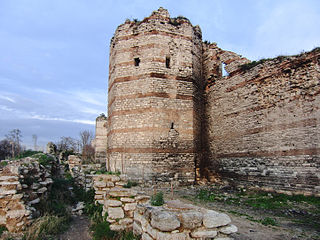
Theodosian Walls of Constantinople Source: Wikimedia

History of Rome Podcast Episode 138 The New Rome looks at the transformation of Byzantium from a small town with a population in the tens of thousands into the New Rome (‘Constantinople’ was a nickname, and it was only adopted formally later on). Many emperors had based themselves in places other than Rome, and Byzantium had the advantages of water on three sides (and thus difficult to besiege) and no religious baggage of other pagan gods. Just as in the early establishment of Rome, Constantine needed to augment its population, so he welcomed both the poor and the greedy as immigrants. It took six years to build. Quite apart from his building activities, though, Constantine embedded his power by killing off his own son Crispus. It’s not clear why, but his stepmother Fausta seems to have been involved. Then, Constantine executed his wife Fausta by locking her in a steam room. Realizing that killing your wife and son was not a good look, he sent his mother Helena on a tour of the East to identify important Christian sites. This was a very popular pilgrimage. In terms of policy and ideology, Constantine’s reign was an extension of Diocletian’s policies in terms of Divine Right of the emperor, the separation of the military and civil arms of government. Unlike Diocletian, he welcomed the role of the Senate but increased its size from 300 to 2000, thus diluting its power. He introduced a new solid gold coin which maintained its value for centuries, although there was runaway inflation with silver coins. He introduced a new and unpopular tax, payable four years in advance and embarked on an empire-wide building program involving both churches (e.g. The Old St Peters Basilica) and secular buildings. Episode 139 Wash Away Your Sins looks at Constantine’s military activity and succession plans. He continued the policy of Germanization of the empire and the army, and the failure of the Germans to integrate was to be one of the causes of the downfall of the empire. At this stage, his legions were successful against the rebellious tribes of the Rhine and the Danube. After killing off Crispus, he seasoned his remaining three sons by putting them in charge of the army. For some reason, he decided to pick a war with the Sassanids on the pretext of protecting Christians under their rule. But he died in Nicomedia, just after embarking on this battle, and got baptized just before he died. You might have thought that he would have been baptized earlier, but this could be because he wanted to be able to sin until the last minute, or more charitably, because he wanted to be pure as the driven snow when he actually died. His succession plans were messy: he left it to his three sons and two nephews. In assessing Constantine, he was certainly a transformational emperor and one of the most important historical figures in Western history. But he had his darker side too: the assassinations, the messy succession plans etc., so it’s a mixed record. Episode 140: My Three Sons. Well, three sons and two nephews isn’t going to end well. Constantius II started things off with the Massacre of the Princes at his father’s funeral, killing off most of his cousins and uncles from his aunt Theodora’s line over two days. Then the three boys (all named very similarly) Constantius, Constantine II and Constans began fighting among themselves, and getting involved on different sides of the doctrinal battles going on in the Christian church,. In the end Constantine II died in an ambush, leaving just two, Constantius in charge of the East and Constans in charge of the West.

Australia If You’re Listening. Episode 7 The Countdown on Coal Fired Power was a cracker. It starts off with the South Australian tornado in 2016 that saw electricity pylons scattered like pick-up-sticks and which was instantly blamed on renewable energy. In fact, whenever there is a power blackout, politicians in Australia and around the world tend to blame renewables. The reality is that it is the old coal-powered stations that are falling over, with near misses and disasters like the Callied Turbine failure outside of Biloela in Queensland, and the Hazelwood fires that blanketed the La Trobe Valley in smoke in 2014. This was a really good episode.

Conversations (ABC) In A History of War, Richard Fidler (who is such a good interviewer) spoke with historian Gwynne Dyer, who has recently released The Shortest History of War. I was going to give this book a miss because I thought that it would be all about military strategy, but good historian as Dyer is, he takes a much broader approach, integrating history, technology, sociology and psychology. Interesting.

Australian Book Review Frank Bongiorno on enlarging our diminished sense of political leadership looks at the elevation of the political operative and the breakdown of the party system. He points to the Australian of the Year award as an alternative form of political leadership, where in recent years the winners have been ahead of paid politicians. This was recorded prior to the election, and Frank Bongiorno is always worth listening to.

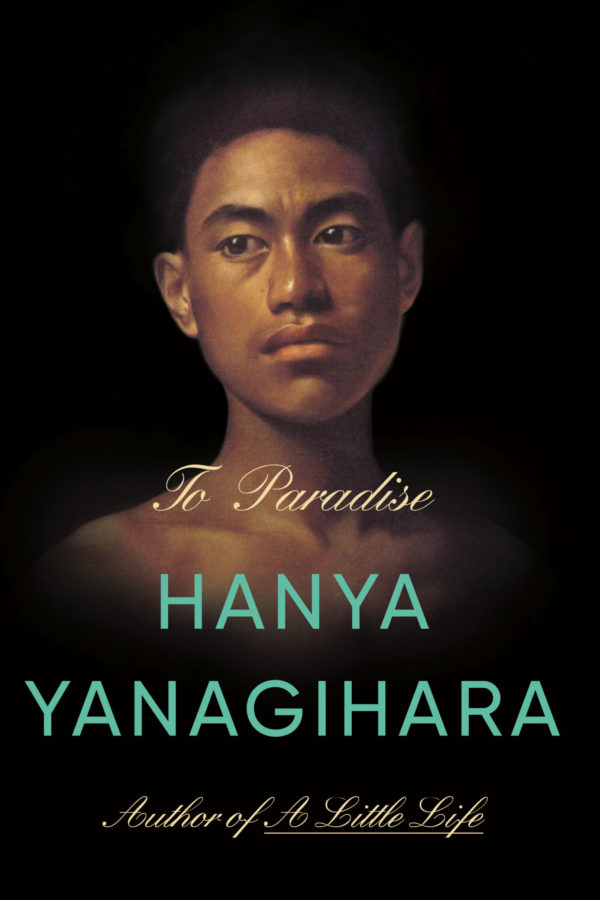
‘To Paradise’ by Hanya Yanagihara

2022, 704 p.

I admit it- I was attracted to the cover of this book, and it was only when I looked closer that I discovered that the author had written A Little Life, a big fat book that I have on my shelves but have not read, even though I know there was a lot of commentary about it. The author is obviously fond of writing big fat books, because this is another one, at 704 pages. But for the last few days I have been completely engrossed in it, and even now I don’t want it to end.

It is set in three parts, each set 100 years apart. This is clear from the start, with the opening pages consisting of three hand-drawn maps, each related to Book I, II or III. The first depicts the the United States in 1893, showing the Free States on the East Coast; the United Colonies in the ‘South’; a blank Uncharted Territories where Utah, Arizona and New Mexico are today; The Western Union comprising California, Washington State and Oregon and the American Union, comprising all the other states, in the centre. The second map is of the Hawaiian Islands in 1993, and the third map, dated 2093, shows Manhattan Island, divided up into Zones, with Central Park now ‘The Farm’ and with Washington Square marked out in Zone 8. The building in Washington Square is important, as it is going to appear in some guise in each of the three Books.

In Book I (1893) we find David Bingham, the unmarried son of a rich grandfather who has made him heir to the Washington Square house on his death. This first book was very evocative of Edith Wharton’s work, both in its focus on the nuances of upper-class life, and in its formal, mannered language. But this New York is set askew: the Free States and the United Colonies are two separate nations after all, and homosexual marriage is an accepted fact. David’s grandfather is concerned that his grandson marry, and so he encourages an arranged relationship between David and the older Charles Griffith. Despite knowing that his grandfather is acting only out of love, David becomes infatuated with an impoverished, unreliable and possibly dastardly teacher Edward Bishop, who implores David to accompany him to California, even though homosexuality is illegal there. I just loved this first part – the cushioned luxury, the restraint, set against the passion and recklessness of David and Edward’s relationship. I didn’t want to let them go as I turned to Book II, set 100 years later in Hawaii.

But hold on- here they are again – David, Edward, Charles, Eden – but they’re not the same people, even though the names are the same. Here is another aimless David Bingham, but this time he is the young partner of an older Charles Griffith, who lives in Washington Square and who this night is hosting the final party of his former lover Peter who is dying of cancer, even though AIDS is ravaging the gay community. He receives a letter from his dying father from Hawaii, another David Bingham, known as Wika (for Kawicka) who has been inveigled? coerced? by an old schoolmate Edward Bishop into stepping into his role as hereditary royalty in establishing a breakaway settlement in Lipo-Wao-Nahale. Edward and David live there, and David’s son (also named David) lived there during vacations as well, until he refused to visit any more, travelling instead to New York where he met Charles Griffith. His father, David Bingham senior, has a breakdown and is hospitalized, writing his last letter to his son. I must admit that after my initial delighting in meeting David, Edward and Charles again, this second book left me underwhelmed, with the last-supper dinner of the dying Peter seeming to stretch on interminably, mirrored by the equally prolonged death of David Bingham senior in Hawaii.

[Update: I have since learned more about the history of Hawaii through a ‘Stuff They Don’t Want You to know podcast, which I mention here, most particularly the coup d’etat by white landowners in 1893. Clearly 1893 is a significant date- but why did she set Part II a hundred years later? I’m mystified.]

Any disappointment that I felt in Book II was quickly forgotten in Book III, set in Manhattan in 2093. It doesn’t surprise me that this book was published in 2022 because it certainly bears the traces of the COVID pandemic. Now that I had realized how the book worked, I was on the lookout for David, Charles and Edward and they were here too, but in very different guises. New York- and indeed, the whole world- had been ravaged by waves of pandemic diseases, with resultant surveillance and government over-reach to quell and fend off the next epidemic. Global warming has resulted in the collapse of the food chain, there is an ongoing drought, and New York is only liveable if you wear a cooling suit while you are outside. Charlie is the grand-daughter of Charles Griffith, who has been the policy architect of a lot of the pandemic responses: confinement of infected people and their families (after initially separating children from their parents, whole families would go into confinement and inevitable death together), wholesale cremations, rigid government control. Charlie had contracted one of the pandemics as a child, and is now infertile and emotionally frozen, and her grandfather arranges for her to marry Edward, a gay man who will look after her but never love her. The narrative is in two parts here: Charlie’s story told with Ishiguro-like flatness, and as a series of letters over decades between Charles and Peter, a high-level bureaucrat in New Britain. While the letters did fill in background for how New York had ended up as it had – and a very depressing trajectory is it, with more points of verisimilitude than I like- the idea of letters being so lengthy and conversational is rather implausible.

Despite its severity, I really enjoyed Part III, as much as I did Part I and I have found myself thinking about Part III a lot since finishing reading it: for me, a sign that a book has really affected me. Reading back over this review, I see that I have likened the writing to Edith Wharton or Kazuo Ishiguro, and there is an element of pastiche about the book. There were hints that the whole thing was going to fall into place with a resounding clunk, but that never happened. Instead there were wisps of connections, and a low drumbeat of repeated themes- homosexuality, illness, searching for something better, loneliness – and the repeated names. Worth 700 pages? For me, yes.

My rating: 9.5/10 (Maybe even 10/10?)

Sourced from: Yarra Plenty Regional Library.

I hear with my little ear: Podcasts 9-16 May 2022

History of Rome Podcast Episode 135 Brothers in Name Only sees Constantine and Licinius dividing up the Empire following the death of Maximinus Daia in 313. It was similar to Octavian and Anthony, way back in Episode 47. Licinius was engaged in a contest with those ever-troublesome Sassanids over Armenia, and Constantine was involved with the Christian church which faced its own questions over what to do with the bishops who had collaborated with the Roman authorities during the Persecution. Bishop Donatus from Africa believed that they should not be admitted back into the church because they were ‘traditors‘. The Donatists (as they came to be called) were often over-ruled by those in the church who took a more forgiving line, so they repeatedly appealed to Constantine to intervene on their behalf. However Constantine emphasized unity over doctrine, as we will see at the Council of Arles. Meanwhile Licinius’ wife (who just happened to be Constantine’s sister) gave birth to a son, so the question of succession arose again. Constantine championed his own son Crispus. Eventually Constantine and Licinius met in battle. Constantine won, and restored the Tetrarchy by appointing two junior emperors- VERY junior, because two of them were babies. Episode 136 Let This Be Our Final Battle sees Constantine’s wife Faustus giving birth to more sons, while Constantine was becoming increasingly overt in his Christianity. Licinius and Constantine met in battle again in 324 CE and this time Constantine triumphed and for the first time in 40 years, Rome was ruled by just the one emperor. Licinius had ruled for 16 turbulent years, and he died in suspicious circumstances in exile. Constantine’s son Crispus came to a bad end in 326CE too, executed on his father’s orders (did he have an affair with his step-mother? Or was it the Wicked Stepmother’s Revenge -again?). Episode 137 The Christian Emperor sees Constantine stepping into his Christianity. He banned pagan worship, and returned property to Christians who had had it confiscated (but this time he didn’t recompense the people who had bought the confiscated goods- he only offered to pardon them). All Constantine wanted was a united church

Australia If You’re Listening Episode 6: Can We Keep Digging for Energy? (ABC) punctures the idea that CCS is going to solve our problems. The irony is that CCS and nuclear power will only ever be feasible if there is a price on carbon- which of course the Liberal/National government has made such a toxic topic. Gas, meanwhile, has been and will continue to be only a small part of our energy mix. However, back-tracking away from an available power source is something that humans have never done before.

In Our Time Early Christian martyrdom. (BBC) With Candida Moss (Edward Cadbury Professor of Theology at the University of Birmingham), Kate Cooper (Professor of History at Royal Holloway, University of London) and James Corke-Webster (Senior Lecturer in Classics, History and Liberal Arts at King’s College London). This episode fits in quite well with my History of Rome podcasts. By 300 CE, about 10% of Romans were Christians when The Great Persecution started with Emperor Diocletian in 303 AD and lasted around eight years. Much of this persecution sprang from an idea that Roman society had to get back to a good relationship with its own Roman gods. It is probably more correct to speak of “Christianities” (plural), and until about 90 CE, as far as the Romans were concerned, Christians were indistinguishable from Jews. Particular attention is paid to Ignatius and Polycarpus, two bishops, and the female Perpetua of Carthage.”Dying for a good cause” was an important idea in Roman society (after all, lots of Roman worthies committed suicide to avoid disgrace), and the idea of a “good death”, especially for a Christian slave, involved just a few hours of pain for the promise of eternal life.

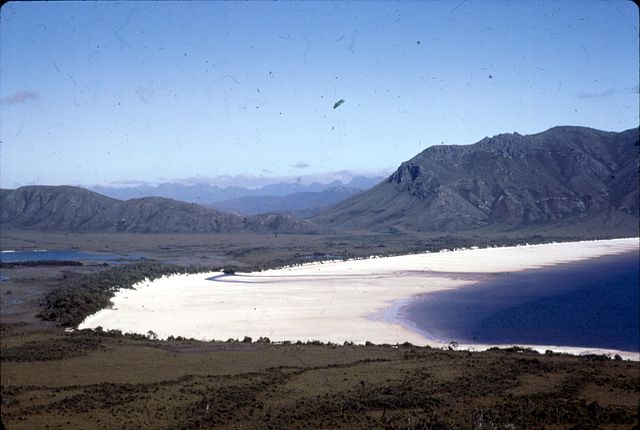
The History Listen (ABC) Buried Treasure: the story of Lake Pedder. Fifty years ago, despite protests, Lake Pedder was flooded to provide hydro-electric power as part of Eric “Electric” Reece’s grand hydro-electric plan. This episode features Rima Truchanas, whose own life is deeply tied to Lake Pedder, after her parents Melva and the photographer Olegas Truchanas joined the campaign to stop it being flooded. Olegas’ photographs were shown at slide shows around Australia, as a way of increasing awareness of this amazing sand-fringed glacial lake. But flooded it was, and six years later there were plans to build another dam on the Franklin River – and this time the protests were heeded. Amazingly, there are now suggestions that Lake Pedder could be rehabilitated as part of the UN Decade of Ecosystem Restoration. I don’t really think that it will happen, given the emphasis on hydro-electricity today.

Things Fell Apart (BBC Radio 4) Episode 5: A Scottish Jewish Joke takes us back to the very early days of the internet in 1988 when a software designer, Brad Templeton, uploaded onto a message board a joke in poor taste. The joke was chosen randomly from jokes that were sent to him, and as it turned out, it appeared on the anniversary of Kristalnacht. An MIT academic complained about the joke and tried to get him sacked and banned from Usenet. Stanford University, through which he was able to gain access to the internet, banned the page, explaining that they wanted to value people over caricatures, even if that was at the expense of free speech. John McArthur, a professor of Artificial Intelligence started a petition, arguing that we find the limits of free speech by running into the walls. And this is the Internet as we know it today.

Stuff They Don’t Want You to Know The ‘State’ of Hawaii: Union or Occupation On Foreign Correspondent the other night, they had a program ‘Keep Hawaii Hawaiian’ about the struggle of native Hawaiians for land, language and culture (that sounds familiar). This program gives a really good analysis of the 1893 coup d’etat against Queen Liliʻuokalani by predominantly white landowners in Hawaii, overseen by the U.S.S. Boston which just happened to be moored nearby. The coup was opposed by President Grover Cleveland but a joint sitting of Congress approved it. As recently as 2018 it is still being questioned at UN level. Very interesting- I wonder how many American school kids know about it?

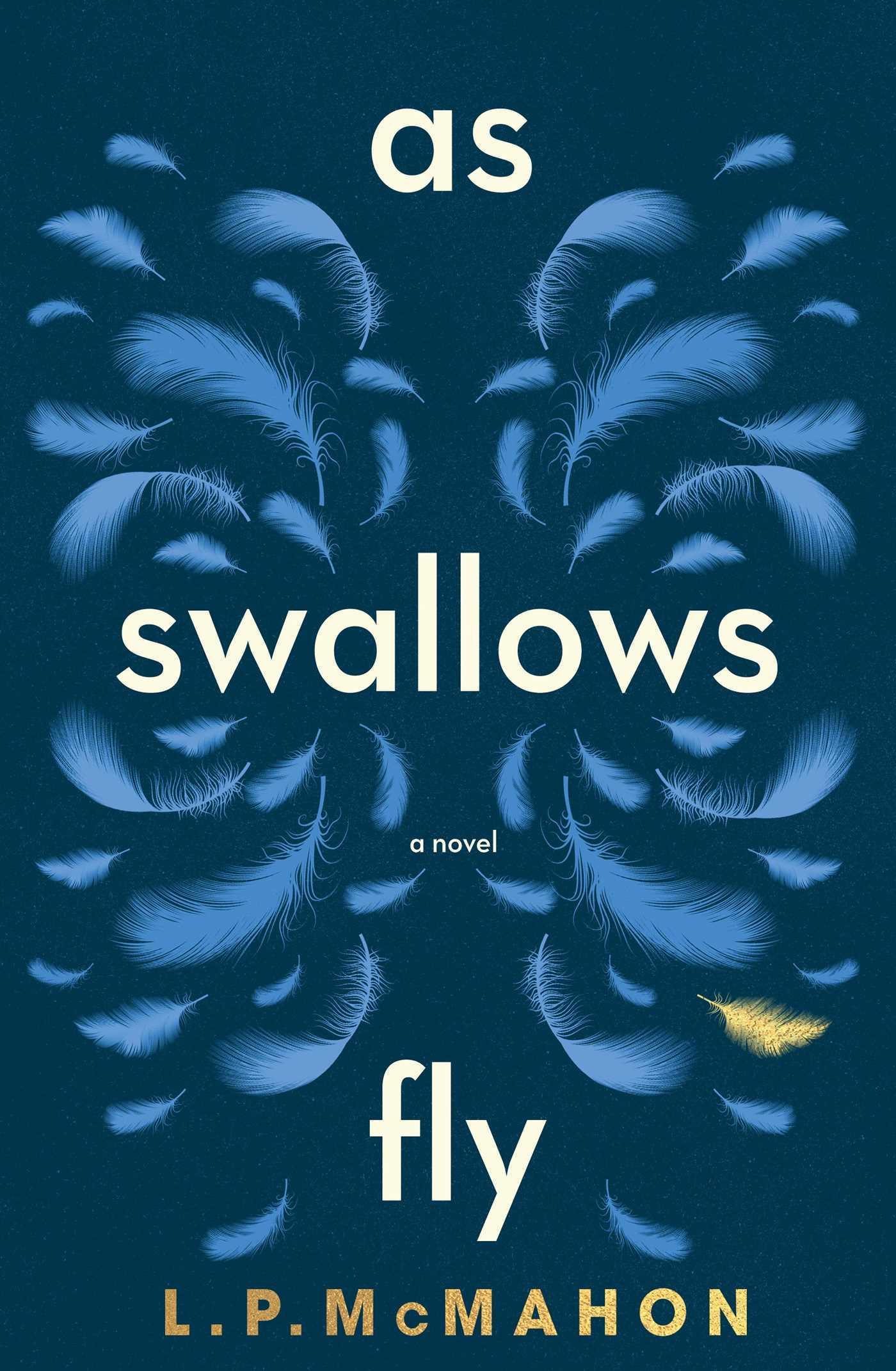
‘As Swallows Fly’ by L.P. McMahon

2021, 384 p.

I had not heard of this book, or its author until L.P.McMahon was invited to be the Ivanhoe Reading Circle’s annual guest speaker. His book, As Swallows Fly is set in Pakistan and Melbourne, but Lawrie himself hails more locally from Rosanna as a child and ended up as Professor of Nephrology at Monash University. That local connection may well have been why the Ivanhoe Reading Circle invited him to speak. His immersion in the world of medicine comes through clearly in his book, particularly at the end, and from his talk we learned that he and his wife had visited a Catholic mission in a Pakistani village which largely mirrors the village in the opening chapters of the book. So, in many ways McMahon is following the injunction “write what you know”.

Although this book is fiction, it evokes shades of the story of Malala Yousafzai, who was severely injured after a Taliban assassination attempt, and was treated in a UK hospital. In this book, however, young Pakistani and Christian Malika was attacked as a more personalized act of resentment and power, and she ended up in Australia more on account of her mathematical brilliance which was being wasted in a small village, than because of her injuries. She boarded at a private school and attended extension activities at the University of Melbourne. As a back-stop, her village priest in Pakistan put her in contact with Dr Kate Davenport, a plastic surgeon, who assumes incorrectly that Malika is hiding her face behind a veil for cultural/religious reasons. Rather implausibly, neither Malika nor Kate realize at first the possibilities for healing that the situation could provide.

The book has several ‘starts’ before arriving at the present day. The opening pages are a prologue set in Melbourne, twenty-three years earlier where we sense the tension between a teenaged Kate and her mother; Part One commences in Rural Pakistan five years earlier as we learn how Malika came to live in the Christian village and come under the care of Ayesha, her foster mother, along with Tahir, a Muslim boy, after a car accident. Part Two finally brings us to present-day Melbourne where Kate, now a successful plastic surgeon, is cleaning out her now-deceased mother’s house when she is approached to care for Malika on the weekends. Part Three takes us to Malika’s boarding school, where she struggles with the other girls, who are jealous of her brilliance. Part Four explores the evolving relationship between Malika and Kate, and expands on Kate’s own working life and the political struggles in a high-stress, ego-driven profession, along with the family emotional baggage that she is still dealing with. If you think that there’s going to be a Cinderella ending, between the plastic-surgeon and her damaged protege – there’s not.

As you can see, there’s quite a lot going on here- rather too much, I think. I was rather surprised that McMahon chose to write from the point of view of two women- Kate and Malika- and he generally carried it off sensitively, with just a few infelicities. By making Kate a plastic surgeon, McMahon was able to explore ideas of facial perfection and imperfection, but at times I felt that he betrayed his male gaze in his descriptions of women. The author’s own medical experience comes through, especially in the sections dealing with professional rivalry with other specialists, and in medical terminology when describing clinical conditions. I certainly don’t share Malika’s gift for mathematics, and I just have to take on trust that her fascination with the flocking behaviour of swallows as a mathematical problem is more than just a metaphor for being on the edges of the crowd. Some of the characters seemed rather one-dimensional: the only mentions of Muslim characters were negative, and Sam the receptionist was so brazen as to be a caricature. The narrative relied heavily on dialogue, which at times verged on the banal and the writing felt forced at times.

In spite of my reservations about aspects of this book, I found myself more emotionally engaged with the characters than I expected to be, and sat up in bed until quite late to finish the book. And I’m always attracted to books set in my own home town, and he wrote Melbourne well.

My rating: 6.5/10

Sourced from: purchased e-book.

Other reviews: Lisa at ANZBookLovers enjoyed the book (probably more than I did) and reviewed it here.

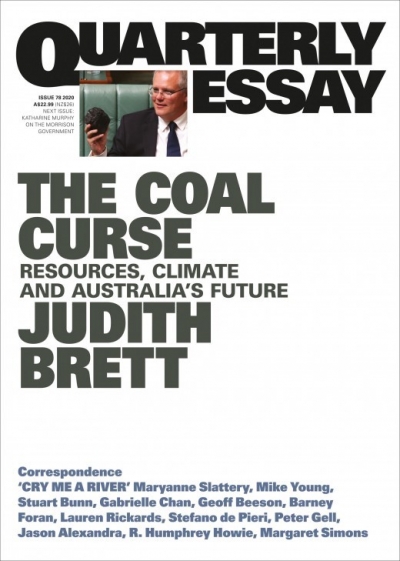
‘The Coal curse: Resources, Climate and Australia’s Future’ by Judith Brett QE 78

2020, 75 p. Follow up correspondence in QE 79 The End of Certainty, Katherine Murphy

My son will testify that I have about 50 Quarterly Essays on my shelf, most of which have not even been opened. I seem to put them aside thinking “Ooooh- I must read this after I have finished reading….” and somehow I never do. I was impelled to read Judith Brett’s The Coal Curse, released in 2020, after hearing her participation in Matt Bevan’s Australia, If you’re Listening podcast.

She started writing her essay just after Christmas in 2019, when our cities had been smothered in smoke and our newspapers carried those stark hell-red photos of people on the beach at Mallacoota, waiting for small boats to evacuate them. She finished writing it in May 2020, in the midst of our early coronovirus lockdowns. As the fires burned, she was angry. Ross Garnaut had predicted fires of this scale back in 2008 but Angus Taylor had returned from the Madrid UN-convened climate change conference, declaring that we should be proud of our climate change efforts.

I have written this essay in an attempt to do something constructive with my grief and anger, and my fear for our collective future; not just to fume and blame, but to try to understand.

p.8

As a historian, she looked for explanations in the past – in those decisions and events that have shaped our present actions and future possibilities.

This is just a fancy way of saying that history matters, but it does shift our attention from the contingencies of events and personalities to structures and institutions. This essay is about the history of Australia as a commodity-exporting nation and its political consequences. Economic history is unfashionable nowadays. Economists focus on the modelling and management of the present and historians are more interested in stories and experience, and in uncovering diversity and neglected voices. Economic history is dry and hard to narrativise. But how a country makes its living can explain a lot.

p.8

Her essay is in two parts: first, a historic overview of how Australia came to become ‘resource cursed’ and second, how the resource lobby has captured successive Australian governments, but most particularly the Liberal/National Party coalition. She notes that in 2017 Australia came 93rd out of 133 economies ranked according to the diversity and complexity of exports. New Zealand was 51. In 2018-19 seven of our top ten exports were from the quarry and one from the farm (just as Donald Horne warned in The Lucky Country). In order, they were: iron ores and concentrates, coal, natural gas, education-related travel services, personal travel except education, gold, aluminium ores and concentrates, beef, crude petroleum, copper ores and concentrates. Neither the quarry nor the farm really generates much employment, no matter how much they crow about their importance to “jobs- jobs- jobs”. When Australia was first settled, our economy relied on wool being loaded onto sailing ships for Britain, our major export destination until Britain joined the European Common Market in 1973, after years of signalling that it would do so. Australia was saved by Japan and its demand for iron ore to make steel, replacing Britain as our top export destination in 1967. In 2009-10 top spot went to China. Between 1980 and 2013 there was a tripling of coal exports. In the early 2000s liquefied coal seam gas joined the ranks of the top exports, and we are now the world’s largest LNG exporter.

Against this reliance on primary produce and mineral wealth, neither of which require a large workforce, Australia needed to industrialize in order to create sufficient jobs for its population, especially after the gold rush. Victorian liberals (i.e. colonial liberals coming from the state of Victoria) were protectionists, flying in the face of both NSW policy and the current British economic theory of Free Trade. Protection won the day when the Australian states federated, with a goal of Australians buying Australian-made goods. Australian manufacturing was turbo-charged by WWII. Migration, foreign investment and protection combined to create a greatly expanded Australian manufacturing sector, peaking in the late 50s-early60s at just under 30% of GDP. We could have developed an export-oriented manufacturing industry, but tariff protection made local management lazy. But Australia was swimming against the international tide, which was increasingly moving to cut trade barriers. Under a Liberal government, the Tariff Board under the chairmanship of Alf Rattigan itself proposed a review of tariffs in 1967; and with a change of government Whitlam cut tariffs in 1973 (although Fraser reinstated some of them). By the time Hawke came to power in 1983, neoliberalism was becoming dominant, and it was a Labor government that, with the aim of revitalizing manufacturing, floated the dollar, opened the banking and finance sectors, and reduced tariffs to a single rate of 5% by 1996, with exemptions carved out for textile, clothing and footwear, and the car industry. However, looking back, this policy failed in revitalizing manufacturing, if that was its aim. Tourism and education thrived, but manufacturing did not. From 12% of GDP in 2000, by 2006 manufacturing was just over 10% of GDP, 5.8% by 2013. Its share of employment at 7.5% was just a third of 2007’s 21% of the workforce. The rise of China and its cheap goods knocked manufacturing out completely, but the demand for iron ore disguised the effect. It was China’s demand that helped Australia weather the 2007-09 Global Financial Crisis, and by now Australia has lost the capacity to manufacture things- something brought home painfully by the COVID pandemic and the supply chain problems that continue more than two years later.

This might not be a problem, were it not for the rising carbon dioxide levels, with a discernable effect on global temperatures. But it is a problem, and the entrenched fossil-fuel industry is fighting back. At first the fight was against indigenous land rights and the ability of indigenous owners to veto mining development. In this, the Australian Mining Industries Council joined with the National Party in opposing native title, thus promoting a grizzled human face in an akubra hat to an industry dominated by machines. Having hobbled native title, the mining industry entrenched its power further by lobbying, political advocacy, donations – and most disturbingly – the churn of personnel between government and lobby groups and back again in what Guy Pearse called ‘The Greenhouse Mafia’. It is certainly alive and well. Just look at the way that the government pounced on a ‘gas-led’ recovery as the solution to COVID, our indecent haste to ship coal over to Ukraine, and most recently, the number of mining-industry-related people that the LNP government has just appointed to the Administrative Appeals Tribunal.

Two decades of cultivation of a network of climate skeptics by the Lavoisier Group, the IPA and the Murdoch press have made climate change a toxic brew for any government. Many of our politicians, predominantly on the Coalition side but also amongst Labor, have been captured by this lobby. But resistance is rising from unexpected quarters. The Lock the Gate movement opposing coal and coal seam gas developments is challenging the social licence of the fossil-fuel companies, and renewables are becoming more attractive as an investment. However, Brett is clear-eyed about the continuing power of the fossil-fuel lobby, and the probability that

…our leaders will stick with what they know and eschew innovation, like the men of the early 1960s, when Donald Horne complained that decades of tariff protection had produced a “look-no-brains attitude”. The signs are it will be more business as usual than embrace of the new.

p.73

One of the advantages of reading a Quarterly Essay months (ahem- years) after it has been published, is that you get to read the correspondence generated by the essay in the following volume. Most of the correspondents in Issue 79 concurred with Brett, although rather predictably Andy Lloyd (Rio Tinto) came out with most of the fossil-fuel lobby talking points that Peter Christoff (University of Melbourne) predicted (e.g. we don’t contribute much to carbon; if we don’t sell, someone else will; technology -especially CCS- is the answer). Tim Buckley from the Institute for Energy Economic and Financial Analysis pointed out that many investment and superannuation funds are divesting from fossil-fuel industries. I really enjoyed Zoe Whitton from Citi’s Environmental, Social and Government Research Team, who wrote of the paradox that residents of the New Jersey shore who survived through Hurricane Sandy were even less likely to believe in climate change than before. She cited George Marshall’s book Don’t Even Think About It: Why Our Brains are Wired to Ignore Climate Change, where he suggested that the desire to return to something like normal, to rebuild anew, to express solidarity and perseverance meant that people resisted the prospect that the same thing could happen again. Often the alternatives are so unappealing that we choose not to consider them.

It is outside the scope of Brett’s 2020 essay of course, but I think of the flood waters that have swirled around homes in Queensland and northern NSW multiple times in recent years, and successive floods occuring even within weeks. These ‘events’ are not one-offs anymore, and the lie in terms like ‘one in 1000 year flood’ has been exposed. The cost of rebuilding communities razed by fire, and the piling up of mountains of sodden furniture and carpets, again and again and again will eventually sap the will to persevere and rebuild.

Perhaps then we can shake off the Coal Curse.

Rating: 8/10

Sourced from: my own Quarterly Essay subscription