Author Archives: residentjudge

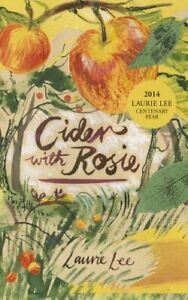
‘Cider with Rosie’ by Laurie Lee

1959, 231 p.

I’m rather appalled at the thought that I first read this book fifty years ago! How could that be? It was another of those books that seemed to lurk on the school library shelves, and I read it as a 15 year old. Segments of it felt very familiar, and I am sure that it was anthologized in various readers at Years 7 and 8 level. It is part of an autobiographical trilogy first published in the late 1950s and it seems to have been in print ever since.

It is an autobiography/memoir of a childhood spent in the Cotswold village of Slad, near Gloucester and it is an elegy for the passing of a simpler, horse-drawn, feudal village past in the years immediately following World War I. We meet Laurie (or Loll) at three years old as he is unceremoniously dumped from the cart that is taking his mother, siblings and half-siblings to a crowded, decrepit cottage on a steep bank above a lake. We learn that his father, an older man, had deserted his second wife – Loll’s mother- leaving her with four step-children and three sons of her own. Money is tight, as his father sends little financial support, and the family scrapes by financially through the networks of the village and through the wages that the older girls bring into the house when they start working.

The chapters are all pretty much self contained vignettes of different aspects of village life. They proceed more or less chronologically as Loll goes to school, joins the other boys in their adventures around the village, becomes interested in girls and as his sisters eventually marry and move away. He speaks of the two ‘Grannies’ of very different temperaments and habits- Granny Trill and Granny Warren – who live in the cottages adjoining theirs, and his uncles and their families, who loomed large in this father-less family.

Probably the most clearly developed character is his mother. After working in service in Big Houses, she returned to help her father run a pub. Tiring of dealing with drunks and her rather feckless father, she answered an advertisement for a housekeeper in the newspaper by a widower with four children. Reader, she married him. She remained in love with him for the rest of her life, even though he deserted her, leaving her with the care of his children from the first marriage. ‘Mother’, as she is always addressed in the narrative, was a rather fey, disorganized, extravagant woman: qualities that did not sit well with the poverty in which she and her family were living. In many ways, Loll was brought up just as much by his older half-sisters as by his Mother. The large family crammed into the kitchen, which was the heart of the house; food was sparse and the house-keeping was minimal.

Although steeped in nostalgia for a simpler time, there is an edge to the hierarchical, closed nature of village life. The church pews are arranged according to wealth and standing, there is poverty and hunger, lives are constrained by the village boundaries. In an essentially feudal and pre-bureaucratic system, crime is dealt with by the villagers themselves, with all the possible injustice that could entail.

Our village was no pagan paradise, neither were we conscious of showing tolerance. It was just the way of it. We certainly committed our share of statutory crime. Manslaughter, arson, robbery, rape cropped up regularly throughout the years. Quiet incest flourished where the roads were bad; some found their comfort in beasts; and there were the usual friendships between men and boys who walked through the fields like lovers. Drink, animality, and rustic boredom were responsible for most. The village neither approved nor disapproved, but neither did it complain to authority. Sometimes our sinners were given hell, taunted and pilloried, but their crimes were absorbed in local scene and their punishment confined to the parish.

p. 206

The title refers to his first sexual experience – although he is not explicit about how sexual it actually was- with Rosie, who took him under the wagon where they drank fermented cider. In a way, it’s a misleading title, because Rosie is a minor character who only appears in the second last chapter. She was one step on from some fairly innocuous ‘doctor and patient’ sex-play as an 11 or 12 year old with a younger girl. Rather more disturbing was his description of the Brith Wood rape “if it could be said to have occurred”. Half a dozen boys planned to attack sixteen year old Lizzy Berkeley, a deeply religious girl who they designated as “daft in the ‘head”. They decided to waylay her on her journey home from church and

We thought of little else but that coming encounter; of mad Lizzy and her stumpy, accessible body which we should all of us somehow know.

p.212

It seemed that Lizzy wasn’t going to arrive, but at last she did. The boys barred her path, one laid a hand on her shoulder and she hit in twice, fell down, got up, looked round “and trotted away through the trees”. Although the boys felt guilty there were no consequences. This was, he claims, because early sex-games were “formal exercises”. They were “readily forgotten; very little in the village was either secret or shocking, we merely repeated ourselves.” (p 205) It was just part of this nostalgia-tinged, gentler world, although I doubt that Lizzy would have seen it that way. The ease and chuckling tone of this chapter unnerved me, and I can’t imagine that the book, with this chapter intact, would find its way onto a school library shelf today.

Although I can’t really imagine that a 15 year old would be particularly attracted to this book anyway. A series of vignettes from a lost past might appeal to adults, or those interested in social history, but it seems particularly quaint. The writing is beautiful -indeed, some paragraphs read like poetry- but the sentence structure is formal and rather arcane, evoking the voice of an elderly British actor at the National Theatre or on the BBC. I’m not a 15 year old anymore (far from it), and I don’t need solid plots and excitement. I was happy – until that problematic ‘First bite of the apple’ chapter- to steep myself in a quiet, sepia-toned elegy that captured a lost, simpler, ordered time with beautiful language and the perspective of distance.

My rating: 8/10

Sourced from: CAE bookgroups.
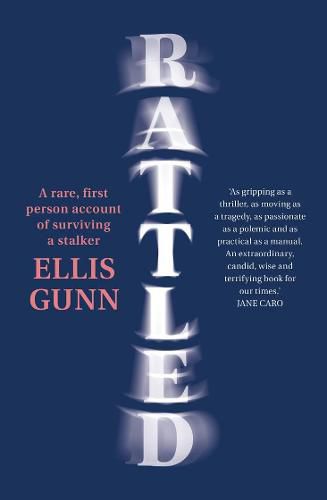
‘Rattled’ by Ellis Gunn

2022, 320 p.

I readily admit to being wary of books -especially memoirs- that deal with “current issues”, because they tend to be written very much for the zeitgeist. However, I was attracted to this book not only by the succinct, apposite title, but also because one of my colleagues was stalked a number of years ago. I don’t know if an employer would take the same approach today, but all the staff on our floor of a large university department, were aware of the possible incursion of the stalker and security was stepped up accordingly, for a long period of time. I don’t remember how my colleague’s story ends, but that’s part of the chilling intrusion of the stalker: nobody is never really sure whether it’s over for good or just in abeyance.

I glanced at the bio of the writer- Ellis Gunn- and saw that she was a poet from Scotland, with work anthologized in “100 Favourite Scottish Poems” and “Modern Scottish Women Poets”. Expecting, then, a book set in Scotland, I was a bit startled when she spoke of the rainbow lorikeets and noisy miners in the park, until I realized that she has emigrated to Australia and the book is set here. She met “The Man” at an auction, in just a fleeting interaction that she thought nothing of, until she kept running into him- or rather, he into her. He began contacting her online (although she had not given him her details) and in the tense conversations she had with him – too polite to tell him to p*** off- he let her know that he knew where she lived. She received a sympathetic response from the police, but soon realized that stalking in itself was not ‘enough’ for the police to act, and any complaints or charges from interstate were invisible to the South Australian police.

The book has 18 chapters, each headed with titles like “Back to the beginning: the first time I met The Man” or “Things I do to stay sane”. There is a regular format to each chapter, each denoted by a different font. She starts each chapter with the story of the stalking, or research that she has conducted into stalking; she then moves to her earlier memories of previous stalking, inappropriate sexual violence, rape, or violence; and then finished with an italicized list of “becauses”, similar to a rap poem. The book is firmly within the “me too” genre, and I found myself mentally thinking “me too” with several scenarios. I’m sure that most (nearly all?) women would recognize themselves here, embarrassed and shamed but too polite, intimidated or uncertain to speak up. But it’s more than just one woman’s story which, in less assured hands, could come over as a form of ‘trauma porn’. Instead it is a research report, a guide for women who are being stalked, a polemic about how things have to change, and an exemplar that demonstrates how her cognitive based therapy helps her to quell her panic by giving her clear steps to follow.

However, I found myself stunned by a single sentence near the end where she discussed health responses to the stress of stalking.

As I came to the end of writing this book, I received a further devastating diagnosis: stage 4 cancer, a rare and aggressive kind that is likely to kill me in the next couple of years

p.211

This statement seemed to come from nowhere, and was just put out there, and not picked up at all. Perhaps she felt she had to include it, in fidelity to the memoir genre that she has used to structure her book. Nonetheless, it was startling. I had to go back once I had finished the book, to see whether I really had read it, or just imagined it.

The stalking does have a resolution in this book, seemingly unrelated to this cancer diagnosis. And perhaps the wider resolution for all of us comes in a conversation with her young son where you think – you hope- that perhaps things might change, and that the sense of entitlement and self-importance that drives men to stalk, and the hesitation and politeness that keeps women silent might, just might, come to an end.

My rating: 7

Sourced from: Yarra Plenty Regional Library

I hear with my little ear: Podcasts 17-25 November 2022

Travels Through Time 1967 The Premonitions Bureau doesn’t go back in time quite so far this episode- only to 1967. The Premonitions Bureau was established at the London Evening Standard Newspaper by psychiatrist and academic John Barker who invited people to call in with their premonitions of disaster, and then matched the predictions against actual events. The experiment only lasted about 18 months. The three days in 1967 selected by Journalist Sam Night, author of The Premonitions Bureau were January 4, when the racing driver Donald Campbell correctly predicted his death in the Bluebird the previous night while playing cards; April 21 when John Barker received a prediction that he was in danger and November 5 when a train accident at Hither Green Railway Station confirmed the prediction of two of the experiment’s most accurate prognosticators, Alan Hencher and Kathleen Middleton. Unfortunately John Barker’s files were lost, and this is the object that Sam Night would most like to bring back to the current day.

Fifteen Minute History (which always goes for longer) Episode 135 Connected Histories of Cuba and the United States features Ada Ferrer, Professor of History and Latin American and Caribbean Studies at New York University and author of the Pulitzer-prize winning Cuba: An American History. She began writing her book for an American audience when Obama began opening up transit between Cuba and US. She points out that both Cuba and the US have been invested in each other’s wars and revolutions, with slaveholders having an interest in the outcome of the US Civil War, and the Spanish/US war where Cuba was seen as a possible territory (never a state). The US occupied Cuba between 1899-1902 but kept lifting the bar for the criteria of sufficient ‘self government’ for their troops to leave. The Platt Amendment ensured that the US could intervene at will in Cuban politics. As well as politics, her book has personal stories how these political machinations affected the lives of US and Cuban people.

History Hit recorded while Liz Truss was still holding on and hadn´t yet achieved the status of shortest-lived Prime Minister in British History, in Britain’s Worst Prime Minister Dan Snow asks three historians, Tim Bale, Christine Haddon and Robin Eagles, who they think are the worst. Anthony Eden, Edward Heath and the 3rd Earl of Bute contend for first place, but Pitt the Elder, Lord North and Wellington get a guernsey too.

Emperors of Rome Interlude Pax Romana is a short episode where Dr Rhiannon Evans admits that she is no fan of Augustus, who she thinks is a tyrant. “Pax” doesn’t so much mean ‘peace’ as a contract between victor and vanquished at the end of a war. During the 41 years of Augustus’ reign, he closed the Gates of Janus three times – a sign that Rome was at peace- something that had only happened twice in the previous 700 years of Romes’ history. He instigated the Goddess of Augustan Peace which was very sneaky way of getting around the prohibition of making oneself a God during your lifetime. Episode X The Augustan Succession describes Augustus’ search for a successor, which began almost immediately he came to power – not a bad idea when leaders died young. He had no legitimate son, so he married off his daughter Julia instead to possible successors, and then turned to his grandsons. But everyone seemed to die (how curious) so he turned to his stepsons instead, especially Tiberius, Livia’s son. For a long time, Augustus was hailed as a great peace-bringer but Ronald Syme wrote a very critical biography in the 1930s and since then attitudes towards Augustus have veered between the two. Currently historians (like Dr Evans herself) tend to lean towards Syme, although not to the same extreme extent. Episode XI Tiberius the Reluctant Emperor looks at Augustus’ anointed, Livia’s son Tiberius, who was better known as a good general. He had tough gigs in Hungary and Germany for 22 years until Augustus died, and he performed well. Was he reluctant? Well, he was middle-aged by the time he returned to Rome as emperor after years in self-imposed exile in Rhodes. He was hard to read and he didn’t cater to the people as Augustus had done. He was the first in the Julio-Claudian dynasty that became very tangled as different branches (and not so different) married each other. Germanicus was tipped as the next emperor but died in the East, then Drusus died too (killed by his wife, or is that just propaganda?). In 26BC Tiberius left Rome, which he never really liked, for Capri.

Source: Wikimedia

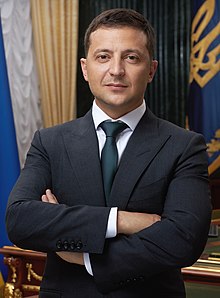
Russia if You’re Listening (ABC) Episode 2: Zelensky’s Big Call: Run Away or Stay and Fight. Putin anticipated that the invasion of Ukraine would take three days, but he wasn’t counting on Volodymyr Zelenskyy. Zelenskyy was almost an accidental president. He had been a comedian on popular and populist shows like ‘Hey Hey It’s Saturday’ or ‘The Footy Show’ (did he really play the piano with his penis? Search YouTube) but the big break came with his three-season comedy ‘Servant of the People’ where he played a teacher who ended up becoming president. Life imitated art but he found by the start of 2022 that people preferred him as a comedian rather than a politician. So Putin would have seen him as a weak target but two factors disrupted Putin’s plan. First, the Russian plan was that 3000 paratroopers would take the airport, in readiness for the landing of18 planeloads of Russian soldiers. But the CIA had warned Zelenskyy (who took some convincing)of the impending invasion and the resulting Ukrainian attack meant that the paratroopers could not hold the airport. The second important factor was Zelenskyy’s determination to stay and fight. Zelenskyy speaks three languages: his first is Russian, then Ukrainian then English. In his videos, recorded on his mobile phone, he swaps between the three, depending on the message and the audience. He has framed himself as a symbol of the state: if he stays, the state stays.

Six Degrees of Separation: from the Snow Child to….

As usual, I haven’t read the starting book that Kate has chosen for the Six Degrees of Separation at her Books Are My Favourite and Best blog. This meme involves Kate choosing the starting book (in this case The Snow Child by Eowin Ivey) and then you associating book titles by whatever obscure link you want: by title, time read, theme….whatever.

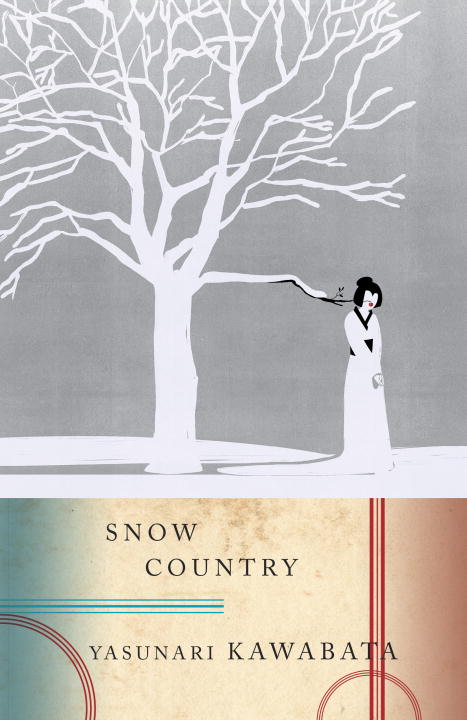
I haven’t read The Snow Child but I have read Yasunari Kawabata’s Snow Country. In it, a disillusioned and cynical writer returns to a hot spring resort in the off-season, where he meets a geisha. She falls in love with him but he never reciprocates: instead he observes her and her decline quite dispassionately. The setting is very evocative with huge snow drifts making the resort seem quite isolated and her frenetic workload,with several parties in one night, contrasts with his ennui and rootlessness.

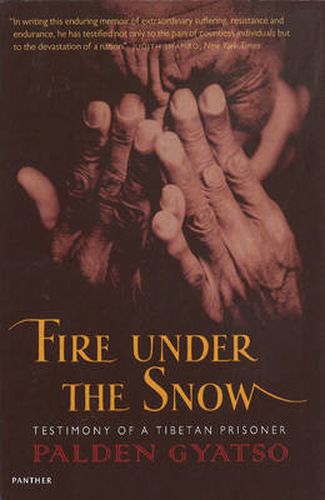
Speaking of snow, there’s also Palden Gyatso’s Fire Under the Snow but the two books are very different. This is the book that aroused my commitment to Amnesty International, as it tells the story of a Tibetan monk who was imprisoned for 33 years by the Chinese authorities. As the son of a landowner, he was particularly targeted and moved from prison to prison, where he was tortured and subjected to many beatings by his cell-mates as a form of institutionalized humiliation. If anything, he became even more radical during his second period of imprisonment and when he was finally released, he became aware of the strength of resistance within Tibet generally. It is gently told, without rancour, and it made me realize the importance for political prisoners to know that people ‘outside’ are aware of their plight and that they will not die without trace.

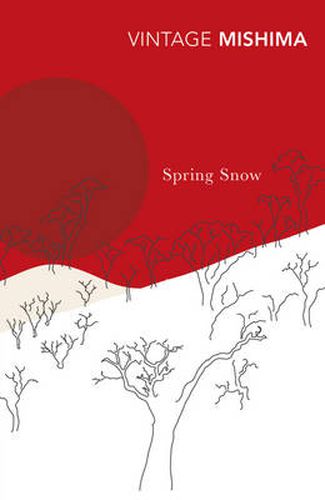
Still more snow and another Japanese writer. Yukio Mishima’s Spring Snow is the first in his Sea of Fertility tetraology. A controversial right wing figure, the author ended up committing suicide after an unsuccessful coup attempt in 1970. I don’t think I knew that when I started reading the book. Set in 1912, the main character Kiyoaki Matsugae’s family is part of the provincial elite which needs to tie itself in with the aristocracy, and as such his family encourages him to develop his gentility through the neighbours, the Ayakuras, who have adopted Western Ways. Kiyoaki is at first dismissive of the flirtations of Satoko, but when she becomes engaged to an Imperial Price, he becomes infatuated and embarks on an affair with her.

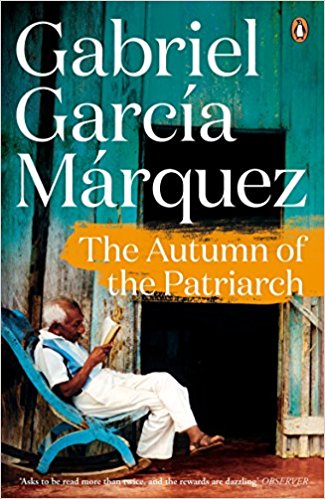
Leaving the snow behind, let’s launch into another season -in this case, autumn- with Gabriel Garciá Márquez’s The Autumn of the Patriarch. Actually, I didn’t really enjoy this book, and I found it very difficult to read, made even worse because my e-reader kept crashing as I bought it as part of an omnibus edition of GGM’s works. The story is about an unnamed dictator in an unnamed Caribbean island, who just does not die. Well – he does, ostensibly, in the first chapter where he engages a double to deflect any assassination attempts, and the double dies as a result. But in the succeeding chapters, his death is foreshadowed, but he just doesn’t die. In a decrepit palace that is invaded with creepy-crawlies during the night, the Patriarch wanders from room to room, locking up the house, playing dominoes with other old dictators that he has imprisoned, raping the young women in the women’s quarters until he finally falls asleep on the floor, his arms cradling his head, only to wake up again the next morning and do it all again. You can read my bad-tempered review here.

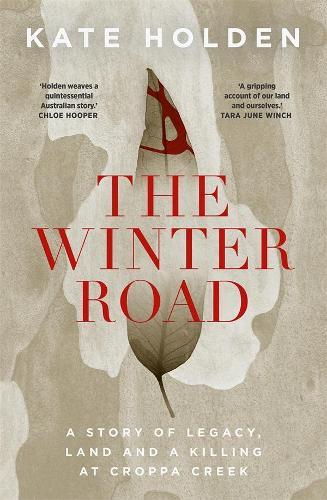
There’s definitely a killing in Kate Holden’s The Winter Road and the victim certainly does die. This non-fiction book tells the story of the murder of Glen Turner, a ranger employed by the NSW Office of Environment and Heritage by Ian Turnbull, a landholder at Croppa Creek who felt that his rights were being infringed by government regulations against landclearing. The author shuttles between reportage and reflection on a real-life crime which extends beyond a cold dirt road in Croppa Creek to a broader meditation on land, legacy and its meaning not just for Ian Turnbull and Glen Turner, but for both black and white Australians more generally. It’s excellent. Read my review here https://residentjudge.com/2022/04/09/the-winter-road-by-kate-holden/

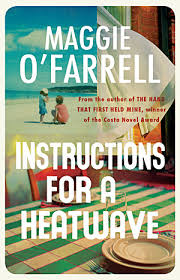
Now, I must say that the UK is not the first place that I think of when I say the word “heatwave”, although as recent summers have shown us, they are becoming more common that we could ever have imagined. Maggie O’Farrell’s Instructions for a Heatwave is set against the 1976 heatwave that roasted London with sixteen consecutive days over 30 degrees. English houses are not built for heat, and water restrictions were imposed. On a hot July morning in 1976, recently retired Robert Riordan gets up from the breakfast table and announces that he’ll pop out to get the newspaper. He doesn’t come back. His wife of 40 years, Gretta waits a little while, then calls her children. All three children come home to help find their father, trailing their disappointments, anxieties, tensions and resentments behind them. Just as oppressive as the heat was the venom of their family arguments and the burden of secrets and pain that family brings. (My review here https://residentjudge.com/2014/11/28/instructions-for-a-heatwave-by-maggie-ofarrell/)

So my six degrees has crunched around in the snow before launching into a sequence of books related to the different seasons of the year. I’ve been to Japan, Tibet, the Caribbean, outback NSW and London. All without leaving my desk.

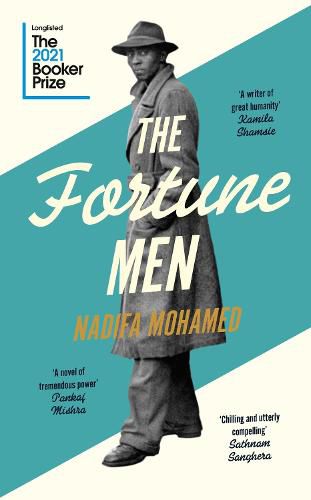
‘The Fortune Men’ by Nadifa Mohamed

2021, 384 pages

Other than How Green Was My Valley which I read about forty-five years ago, I don’t think that I’ve read any other books set in Wales. There’s no green valleys in this book, only the dockland streets of Tiger Bay in Cardiff, home to immigrants of different nationalities. Set in February 1952, as the King dies and Princess Elizabeth is named queen, Mahmood Mattan a seaman from British Somaliland is arrested for the murder of Jewish shopkeeper Violet Volacki in a run down neighbourhood. She is known to him, but he vehemently denies that he had anything to do with the murder. The police do not have a strong case. Even the murdered woman’s sister and niece do not identify him as the murderer, but he is betrayed by people around him who have been influenced, perhaps, by police coercion and the ‘encouragement’ of a reward offered by the family. Mattan is a slippery character- he lies, he steals, he cheats – and you are not sure until the end of the book whether he is telling the truth or not. Based on a true story, he finds little solace from British justice.

The book takes a little while to get going, moving from the perspective of one character after another. However once Violet is killed, the action speeds up even though time seems to stretch interminably, as well. The trial is reported in question and answer format, which I felt was perhaps a bit of a cop-out from the writer’s point of view. But after he is sentenced to death, the slow elapse of days underscores the cold-eyed indifference of capital punishment as he waits, a very small cog in a huge system that he does not fully understand and which treats him as easily dispensable.

The book teems with immigrants from many countries, and characters often break into their own language. Mattan is married to a British woman, who suffers with him the prejudice and powerlessness of people with few financial and cultural resources.

Mattan remains a rather oblique character throughout, although as his swagger and defensiveness drop away, it is possible to have more sympathy for him at the end of the book. The book ends with a newspaper article about the case and its denouement, and reading the case in its bald newspaper presentation makes you realize that Mohamed has managed to flesh out Mattan beyond the few facts that would be skimmed over by a reader at the time. There is at least some justice in the Epilogue. It certainly wasn’t there in the trial.

My rating: 6.5/10

Sourced from: Yarra Plenty Library, but then I realized that I also had an e-book of it as well.

Latin American Film Festival: La Palabra de Pablo

This film from El Salvador was loosely based on Othello in that we have one character stoking jealousy and distrust in another, and it doesn’t end well. Pablo’s father has recently taken up with a young girl who is almost his age, and in retribution for an earlier betrayal, Pablo convinces his father that his new lover has been unfaithful with his step-brother. We only learn about this childhood betrayal in cut-away shots that gradually become longer, allowing the viewer to finally make sense of this betrayal and its effect on Pablo. The whole family goes away to an island for a holiday, which provides a lot of striking scenery and a sense of mounting dread, where Pablo’s plan comes to an inevitable ending.

I hear with my little ear: Podcasts 9-16 November

Rough Translations This time, they look at Australia. The Stoop: Reclaiming Black in Australia is a discussion of Indigenous Australians and their adoption of the term ‘Black’ or ‘Blak’ to describe themselves. Two rather incredulous comperes Leila Day and Hana Baba interview Rhianna Patrick, a Torres Strait woman who used to work for the ABC. They also interview Jackie Huggins and Daniel Browning about the use of the term ‘black’ historically; the effect of American Black politics, and the delicate issue of ‘black’ as referring to colour or culture.

99% Invisible Finishing off their 500th episode three-part series on Vernacular architecture, this episode Vernacular- Volume 3 deals with the houseboats on San Francisco Bay- some very luxurious, others piled together with driftwood. They then go on to look at stone houses in Bermuda, constructed with stone roofs no less, to stop the houses being destroyed by the ‘suck-in’ effect of a hurricane. The roofs are painted white to reflect the sun and they channel and filter rainwater. They then travel to Oakland California where the Queen Anne Victorian took advantage of the slightly larger block size, and added everything possible to the decoration. Finally, the episode goes to Santa Fe, where the historic district has strict building regulation insisting on ‘earth coloured’ adobe construction – but what does ‘earth coloured’ mean? The regulations specify brown, tan or ‘local earth tones’.

Lives Less Ordinary (BBC) My Father’s Hidden Crime tells the story of an Argentinian woman, Analía Kalinec, who is an adult when she learns that her father has been arrested for crimes committed during the Pinochet regime more than 30 years ago. The rest of the family stood behind him, but when she did her own research, she decided that he was, indeed, a torturer and responsible for many kidnappings. This caused a breach with her sisters, and her father is now trying to disinherit her after she wrote a book “I Will Carry His/Your? Name” (I’m translating here, so I’m not sure).

History Extra A whistle-stop tour around the world in AD 1500 takes us, as the title promises, around the Chinese, Indian, Ottoman, Sassanid and European empires and dynasties, and nomadic kingdoms. Jerry Brotton is a Professor of Renaissance Studies at Queen Mary University of London, which is a bit difficult because he distances himself in this podcast from the European-centric term “Renaissance”. He notes that England under the Tudors is largely peripheral to the action, and that Islam was spreading like wild-fire. Europe was small and fractured, but starting to look outwards, especially after the Black Death, but it remained a bit-player. The Americas had just been “discovered”, and the Spanish tried to conceptualize them as ‘Islam’, the only reference source for the ‘other’ that they knew. The Portuguese were travelling along the west coast of Africa, where they encountered Benin. This was really wide-ranging, and enjoyable – I loved the breadth of his analysis.

Emperors of Rome Interlude: What is an Emperor? points out that, strictly speaking, what we call ’emperors’ were actually ‘princeps’ and that Julius Caesar wasn’t actually an Emperor in terms of all power being located in one man. If he had lived longer, Julius Caesar might have entrenched himself as an Emperor but we all know what happened to him, and he spent most of his time fighting a civil war. When Augustus ascended, it wasn’t clear if he was part of a dynasty or not. Under emperors, the military became more important and they began choosing their own emperors, which meant that the Emperor was always beholden to the army. The Emperor came to have the role of the Chief Priest (the Pontifex Maximus)- a name adopted by current Popes. Episode VIII The Augustan Revolution sees Octavian taking on the name Augustus in 27BCE. He did toy with the idea of adopting the name ‘Romulus’ but the name had connotations of fracticide, so he went for Augustus or ‘revered one’ instead. He was lucky to have triumphed over Mark Antony, who was the better soldier, and probably made a mistake in fleeing with Cleopatra because he probably would have won had he stayed to fight Octavian. Octavian used anti-Eastern/ anti-Egyptian prejudice to win the propaganda war too. So who was Octavian/Augustus? He was the great-nephew of Julius Caesar, which meant that he was the adopted son of a God (because Caesar was deified after his death), but he was aware of Caesar’s mistakes and was determined not to repeat them. He gave the republic back to itself, but he retained veto power and had huge authority over his tame Senate. He burnt the oracles that were unfavourable towards him, exercised censorship and assassinated those who threatened him. Episode IX Augustan Rome looks at Rome under Augustus. He consolidated the empire, mainly through Tiberius’ success. He spent a lot of money on Rome itself, and exercised good brand management.He publicized a return to “old fashioned values” by proscribing adultery, giving baby bonuses and insisting on men wearing togas).

Then jumping ahead about 190 episodes and a few years later, up to the recent Episode CC1 Actium features Barry Strauss (Bryce and Edith M. Bowmar Professor in Humanistic Studies at Cornell University, author of The War That Made the Roman Empire: Antony, Cleopatra, and Octavian at Actium). The battle at Actium was between Mark Antony and Octavian. Cleopatra -politician, Queen, good strategic thinker and Mark Antony’s banker) was present because she was Queen and because she didn’t trust Mark Antony to actually fight (she feared that Octavian would talk him into not fighting). Mark Antony had a fleet of 500 state-of-the-art warships as against Octavian’s 400 ships. But Mark Antony needed to protect his supply line and his men were not as experienced in naval battles. Actium, near Corfu, was a good base and a good crossing point from Greece to Italy. However, Mark Antony and Cleopatra were losing ships and men, and they were both sick with malaria, and planning to head back to Greece and burn their ships. The battle took place on 2 September 31BCE, and right from the start Mark Antony and Cleopatra kept their sails and masts up so that they could make a quick getaway. The battle started in the morning and Cleopatra and her sixty ships began to leave, leaving Mark Antony’s troops behind as he fled too. Professor Strauss points out that Atrium was a campaign of which this battle was only a part. If Mark Antony and Cleopatra had won, the Roman Empire would have been more Eastern and more Greek.

Russia If You’re Listening. One of my favourite journalists, Matt Bevan is back with a seventh series of his “…If You’re Listening” program. He returns to where he started with “Russia If You’re Listening” part II, dealing with the invasion of Ukraine. In Episode 1 How war weakened strongman Putin, Bevan asks why Putin decided to invade Ukraine now. It wasn’t to earn another stint as president because he had already achieved the status of ‘lifetime President’, but perhaps it was a way of deflecting talk of succession. Bevan describes the four-hour radio programs that Putin gives where he takes live questions (albeit pre-vetted) for four hours. He said that he would write an essay on Russian history, which he did, setting out his justification for the ‘special operation’. Zelenskyy was not a very effective leader, and most Ukrainian leaders ended up being dictators after a couple of years – and Zelenskyy was certainly losing support. The US warned Zelenskyy that Putin was planning an attack but Zelenskyy kept it quiet, so the US went public with their information. Zelenskyy is Jewish, so the ‘Nazi’ excuse is bullshit. More accurately, it reflects the Soviet WWII meaning of Nazism as ‘the enemy’.

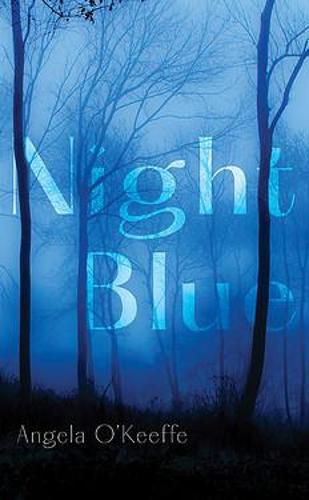
‘Night Blue’ by Angela O’Keeffe

2021, 144 p.

“A waste of bloody money! And it’s not even Australian” [Australian= Roberts, Streeton, McCubbin et.al.] !!” The purchase of Blue Poles by the National Gallery of Australia for $1.3 million dollars in 1973 was met with derision and controversy right from the start. Although the Whitlam government merely approved the purchase (rather than purchasing it in their own right), it came to be seen by conservatives as emblematic of the Whitlam government’s profligacy and pretension. It’s almost impossible for someone of my age to look at it without remembering the controversy. When I finally got to see it, decades after its purchase, I was surprised by how large it was, and that the blue poles were not really integrated into the painting but rather laid across it. Nonetheless, no trip to the National Gallery would be complete without popping in to see Blue Poles- and I will certainly go back to see it again having read this book. And profligacy- snort!- the painting has appreciated in value many times over.

This small novella ‘Night Blue’ interrogates the idea that a painting can be seen as something separate from its creator. Presented in three parts, Parts I and III are told by Blue Poles the painting itself as narrator- something that requires the reader to suspend disbelief and cynicism. It is, as Yes Minister would say, a “courageous” narrative decision. Part II is told by Alyssa, an academic art historian, who many years earlier had done some conservation work on Blue Poles. In the wake of failure of IVF -something she was ambivalent about in the first place- she decided to undertake a PhD looking at the way that women had been sidelined in Abstract Expressionism, as exemplified by Pollock’s relationship with Lee Krasner and Helen Frankenthaler. This sidelining of female artists, of course, is an old story (see, for example Drusilla Modjeska’s Stravinsky’s Lunch), exacerbated further by Pollock’s violence and self-centredness. Does ‘cancel culture’ extend to paintings? Does Picasso’s notorious personal life make his work unacceptable? Does Pollock’s? I must admit that I found this second part of the book rather unsatisfactory, although it did work as vehicle by which the author could work in the factual information about the painting.

It is common enough for a non-fiction writer to use an inanimate object as the lens through which to shape their narratives, but it is less common for a fictional writer to do so. Was she successful? Not completely. At times, I found myself holding my breath as I almost gave in to it, but then my more logical part of my brain would kick in and my credence would ebb away.

The book is beautifully written, and almost against my will I learned a great deal about Blue Poles and its creation. It is bold and imaginative, but it just didn’t quite work for me.

My rating: 7/10

Sourced from: purchased e-book. Read for Ivanhoe Reading Circle.

Other reviews: Lisa at ANZLitLovers thought very highly of it and you can read her review here. Kimbo at Reading Matters, like me, had reservations but still saw it as “an extraordinary feat of imagination”. You can read her review here.

Latin American Film Festival: Viaje a Tombuctú

I could have done with a bit of historical background on this movie, set in Perú during the 1980s and 90s. Ana and Lucho are childhood sweethearts, and they continue as lovers in adulthood. She wants to be a film-maker, and they share a love of music, swapped via cassette tapes. However, their lives are blighted by the Shining Path movement (which I really don’t know much about) and the reprisals against it where armed militias terrorize the people. More and more young people leave Perú to travel to America and Europe or even Timbuktu – a dream that both Ana and Lucho had held since childhood- but it does not work out that way. The child actors seemed incompatible with the adult actors, and so I never really believed that they were the same characters, and at times the film seemed to be merely a vehicle for some retro music and staging of the 80’s and ’90s.

It was OK.

Latin American Film Festival: Leona

Ariela is a young Jewish woman living in Mexico City, working as a muralist. She is one of the last of her friendship group to be married, and her family is keen for her to marry a Jewish man from within the close-knit Jewish community. But when she falls in love with Ivan, who is not Jewish, she comes under intense pressure from her family and the community to break off with him. The lecturer introducing the movie explained that although there had always been Jews in Mexico, there was an influx of Jews from Syria in 1918 with the breakup of the Ottoman Empire, and that they formed a tightly-held, exclusive and prosperous community in Mexico City. This was a lovely film, and the main actress was luminous. In many ways, it could have been set in any Jewish community throughout the world, but it was interesting to see this community in Mexico.

I enjoyed it.