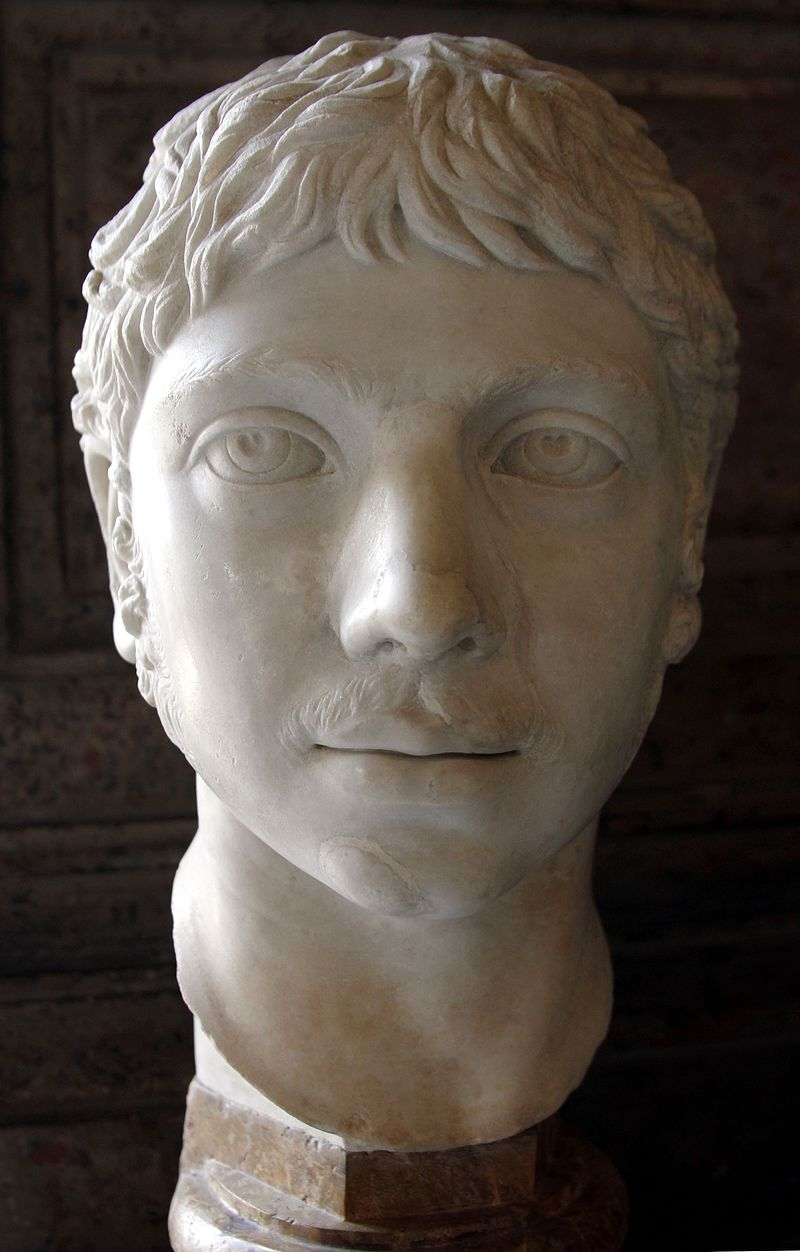
Travels Through Time218 The Mad Emperor with Harry Sidebottom. Well, there have been plenty of mad leaders over history, but Heliogabalus was right up there with them. In this episode, the producers trample on tradition as well by allowing Harry Sidebottom, historical fiction author whose most recent (non-fiction) book is The Mad Emperor to choose three separate years instead of just one. His first date is 1 May 218 CE when Heliogabalus’ grandmother sneaks him out of Emesa (modern day Homs) in Syria to start the revolt that will elevate him to the position of Emperor of Rome. He is only 14 years of age, and the empire is at the height of its power, but the wheels were starting to fall off when his predecessor Caracella was murdered by Macrinus. Heliogabalus was probably his cousin, but he portrayed himself as Caracella’s illegitimate son. The second date is Midsummer’s Day 220 when Heliogabalus holds a huge parade in Rome to demonstrate his new religion. The Romans enjoyed parades, but the PR with this one was all wrong. It was interpreted as a triumph over a defeated people as the procession headed off to the new temple that he had constructed to his god, Elagabalus. He seemed to delight in trashing convention: he married 5 times, including to a Vestal Virgin; he married men and delighted in taking the ‘lower’ position; he alienated everyone. The third scene is in March 222 when Heliogabalus is murdered on the orders of his grandmother after a controversial four-year reign. His grandmother promptly replaced him with another more tractable grandson, Alexander Severus. Sidebottom doesn’t completely see him as mad; instead he sees him as in the grip of a religious fervour.
The London Review of Books Is Alan Bennett still alive? He must be, because here he narrates his diary for 2022 On Failing to Impress the Queen. He’s been publishing his diary every year in the London Review of Books since 1983. He’ll be 89 this year, and he sounds every bit of it in this rather quotidian but elegiac reading that seems to feature a lot of funerals.
Kerning CulturesExodus was originally published in Guernica magazine and is written and read by Zahra Hankir. After the disastrous explosion in Lebanon, the author returns to a city that she had left years before, as the economy crumbled around her. She tells the story of other people who tried to immigrate as well, part of the multiple waves of immigration from the 1890s onwards, after the Civil Wars and again with the war with Israel. The economic collapse in 2019 caused another wave, with the explosion just another symptom of economic and social collapse. How awful to watch your country just fall apart through incompetence and corruption, with no political solution in sight.
In Our Time (BBC). It’s only because I’m reading Simon Sebag Montefiore’s The World that I became familiar with Hatshepsut, the second historically confirmed female Pharaoh (the first was Sobekneferu). The episode Hatshepsut features Elizabeth Frood (Associate Professor of Egyptology at the University of Oxford- and a New Zealander), Kate Spence (Lecturer in Egyptian Archaeology at the University of Cambridge) and Campbell Price (Curator of Egypt and Sudan at The Manchester Museum). It was common enough for women to rule as regents, but as Principal Wife of a Pharaoh and regent for her step-son, she declared herself full King and ruled for at least 15 years in her own right. As time went on, she was depicted as a male complete with false beard and male dress. Her step-son finally took over, and after reigning for about 20 years embarked on a project of erasing her likeness and reputation as Pharaoh, perhaps as a way of clearing the succession rather than as revenge (20 years really is a dish served cold).
You’re Dead to Me (BBC) also had an episode devoted to Hatshepsut featuring again Campbell Price from the Manchester Museum and comedian Kemah Bob- my God, what a grating voice! I don’t know how a serious historian could bear to go onto this program, but needs must, I suppose.
Emperors of Rome. Having dispatched Nero, the Emperors of Rome podcast has a little interlude here where they catch up on some biographical information about people mentioned in passing – namely Cicero, Livia, Seneca and Ovid. Episode XXV Livia looks at Augustus’ wife Livia, so memorably played by Sian Phillips in I Claudius. Livia was of impeccable patrician background, so she experienced the fall of the Republic. She and her first husband backed the wrong side in the Civil War, but she was granted amnesty. In 39BCE Octavian divorced his wife and married Livia while she was pregnant with a child from the first marriage, her husband having been ‘persuaded’ to divorce her. It seems that it was both a love match and a strategic power play on both their parts. They didn’t have any children together, which could have been grounds for divorce, but instead he adopted her children. She was very publicly visible, but there were rumours that she was responsible for a number of murders- a matter that Dr Rhiannon Evans doesn’t buy into. Certainly, her son Tiberius had mother issues. Episode XXVI Seneca the Younger is another stand-alone episode. Seneca the Younger is best known (notorious?) as the the tutor and advisor of Nero, but he was a respected stoic philosopher, a writer of tragedies, and one of the richest men in the Roman empire. He was born c. 4 BCE into a Spanish Equestrian family and his father Seneca the Elder (naturally) was a rhetorician. He didn’t get on with a number of Emperors: Caligula hated him but spared him his life because he was expected to die soon: Seneca had the last laugh here because he outlived Caligula and lived to relative old age. He also clashed with Messelina, Claudius’ wife and he was sent into exile at Corsica on rather spurious ‘adultery’ charges. He was recalled to Rome as Nero’s tutor- a rather bad advertisement for his teaching and philosophy. He was very popular as a writer during the Renaissance, and it is thought that his tragedies influenced Shakespeare’s writing. He decided to retire, but was forced to commit suicide after the Pisonian Conspiracy against Nero, even though he was probably innocent. He did so by bleeding out, but it was a difficult way to die and he advised his wife (who was also required to commit suicide) not to do it- in the end she didn’t have to suicide anyway. He was out of favour as a writer, but there has been a recent rehabilitation of his reputation. Episode XXVII Ovid started me off on a little podcast spree on Ovid. Ovid was born in 43 BCE (i.e. a year before Julius Caesar was assassinated) into a wealthy, but politically negligible, family. His wealth meant that he didn’t need patronage. He began writing while he was young, and achieved almost immediate popularity. His book ‘The Art of Love’ was seen as a subtle attack on Augustus’ marriage legislation, although there was a long time between publication and being forced into exile in Romania on the Black Sea on account of his writing. But exiled he was- and he died in exile, separated from his family. He is best known today for his work The Metamorphoses.
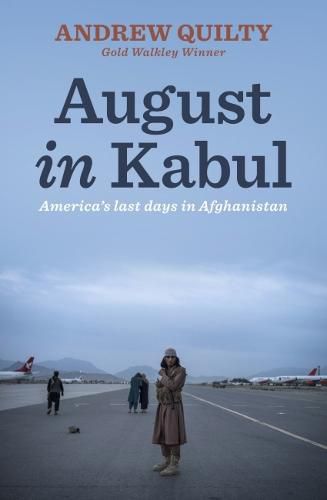
Photojournalist Andrew Quilty had been thinking about writing a book about Afghanistan since late 2020. The Doha agreement had been signed in February 2020, thousands of Taliban prisoners had been released, and the Americans were pressuring Kabul to take more responsibility for ‘active defence’ so that the US troops could withdraw as planned. In this book that he imagined writing, he intended following the theme that he’d been following for several years in his reporting: that the US refusal to deal with the Taliban had ignited the insurgency, as it had in Iraq. He would follow the lives of rural Afghans, who had experienced a very different war from that experienced from Kabul, and bring their experiences to attention.
But then August happened, and that book was put aside and this one written instead. Biden had specified a withdrawal date of 31 August, but as the Taliban took Kabul, the date was brought forward. By mid August foreign embassies were closing, expatriates were being brought home, and crowds of people desperate to escape the return of the Taliban surrounded the airport, standing in a canal of sewage, clinging to the undercarriage of airplanes. We all saw it, but the sheer press of humanity turned these people into a ‘mob’. Andrew Quilty gives them back their individuality.
The book is written chronologically in three parts, with each chapter set at a different location, with some locations appearing in all three parts. Part I is set in early August, as the rumours of the return of the Taliban become stronger; Part II is set in mid-August as the government falls apart; and Part III is set in late August as the Taliban take Kabul and those who can, try to flee. In Part I in particular, he captures some of what he intended in his earlier planned book, interviewing soldiers protecting the Antenna Post in Maidan Wardak Province, but also the villagers who, because of their own conservative beliefs and lifestyles, saw no threat from the returning Taliban. In the later sections he focuses his attention on Kabul, not only because the provinces are now Taliban-dominated and thus less accessible to him, but also because it is city-dwellers and those who had assisted the US and other foreign troops who have more to fear and more to lose as a result of the return of the Taliban after two decades.
The journalistic leanings of the author are clearly visible. Each chapter is written almost as an object of long-form journalism, with interviews and stories of colleagues and antagonists interwoven with each other. It reflects my own cultural blinkers, I know, but I did become a little confused between characters whose names seemed very similar to me, and I would have appreciated a list of characters with an identifying paragraph at the start of the book. However, the index was very useful, and most of the acronyms were spelled out in the index as well. I was bemused, though, by his insertion of a chapter of historical background which appeared in Chapter 8, two-thirds of the way through the book. I would have thought that it would have been more useful earlier.
And I don’t know if it is because I am a woman, or whether the recent closure of universities and NGO jobs to women in Afghanistan has heightened our awareness, but I responded most to the stories of women, in particular Nadia, whose oppression within the family became more suffocating as the Taliban approached. It was as if her brother was emboldened within the family home by the appearance in the streets of the Taliban perched on their jeeps, bristling with guns. The power of her older brother within the family is frightening, as he cajoles his father into stricter discipline of his daughter, and her mother averts her eyes. Then there is Hamed, a presidential staffer, who watches as all the framework of government melts away as men decide to look to their own safety first by taking advantage of opportunities of escape that were not available to those crowds surrounding the international airport. Quilty takes us to those people at the airport, some of whom manage to get inside and escape to a new, if uncertain, future and others who after days of heat, dehydration, crowding and sloshing through that foul canal of sewage decide that it is futile and return home.
There are many dangerous places in the world, but surely the most perilous time must be as one regime gives way to another. If you have made a commitment to either side, all traces need to be expunged without hesitation or sentimentality, and it becomes clear where the limits to loyalty lie. And now, as the Taliban reneges on its promises about women and as the world struggles with how to deal with this inexorably hardline government, I wonder what happened -and will happen – to the people that Andrew Quilty has brought forward into Western consciousness.
My rating: 8/10
Sourced from: Yarra Plenty Regional Library. Read because I read a review of it somewhere.
Emperors of Rome. Episode XXII What an Artist Dies in Nero finishes off the Julio-Claudian empire. Dr Rhiannon Evans points out that Nero’s reign was essentially performative. Everything was theatre: he acted as if he were low-born; he acted as if he were a criminal. He constructed his Golden House, with a huge golden statue of himself inside – the Colossus of Nero (and hence the Colosseum which was erected on its site later on). The Pisoean conspiracy was revealed at this point, and from here on the generals started moving against him – a change in the nature of Roman politics. He fled Rome and ended up getting his private secretary to kill him. Although his reputation today is terrible, he was not universally reviled at the time, and for some time rumours abounded that he was still alive. But he wasn’t, and the Julio-Claudian empire came to an end. Episode XIII Romans vs. the Christians is a stand-alone episode. Reflecting the views at the time, Dr Evans refers to Christianity as a cult, pointing out that the Romans didn’t really have problems with the beliefs of cults, but they did have problems with the behaviors that sprang from those beliefs. The Christians had meetings (as distinct from the public performances of the Romans) and they refused to comply with the deification of the emperors, which led to fear of treason. So when the Christians faced punishment, it was on political grounds rather than on account of their beliefs. Tacitus has a throw-away line about Nero punishing the Christians after the fires, but there is no evidence that they ever appeared at the Colosseum. The Romans wanted to integrate the Christians, rather than punish them. Episode XXIV- Cicero is another stand-alone episode. He was born to the equestrian ranks (i.e. second rank, rich, noble) and trained in oratory. He became Consul in his own right in 63AD as the first man in his family to join the Senate. After executing the protagonists in the Cataline conspiracy without trial, he then had to convince the Senate that he acted appropriately. He was exiled for a year, but then returned. He had a love/hate relationship with Caesar, and was even offered a role with the Triumvirate (which would have made it a Quadvirate) but he refused and withdrew into writing philosophy. He was a vocal opponent to Mark Antony, who proscribed him and had him killed by a soldier. He is sometimes described as one of the Stoics, but he was more a questioner and nowadays he is more known as a statesman.
History Extra History Extra has started a series on Conspiracies (with a capital C) and it starts off with notable historian Richard J. Evans debunking the conspiracy theory that Hitler escaped to South America after WWII. Certainly, lots of other high Nazis did, but Evans is convinced by the testimony of his adherents who witnessed his body after his suicide with Eva Braun. He points out that Stalin was responsible for quite a few conspiracy theories, and probably started this one too. He reminds us that after WWII people had Napoleon in mind (who DID come back) and historian Hugh Trevor-Roper was dispatched to discover what happened in Hitler’s bunker. Evans has written The Hitler Conspiracies
Revolutions Podcast. I’ve been listening to this podcast for years and years, first listening to different Revolutions, then going back to the beginning to listen to History of Rome. It’s still on my Stitcher feed, and when I saw Final Episode- Adieu Mes Amis I just had to tune in. Yes, it’s over but wait there’s more. He’s going to co-host a conversational podcast about history books. I wonder if there’s a market for this one?
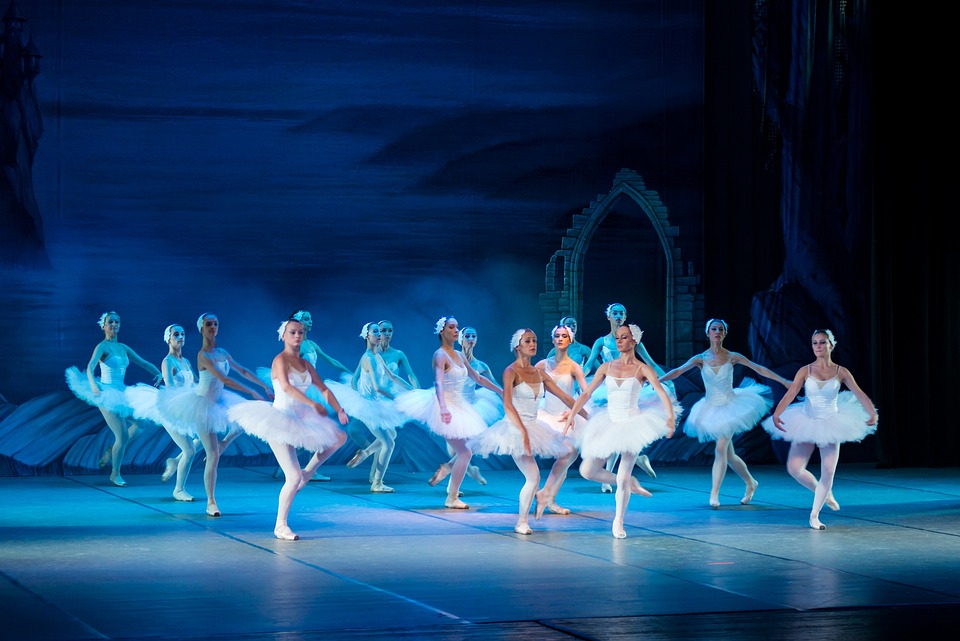
Swan Lake Ballet. Free image from Pixabay
Russia If You´re Listening (ABC) Episode 5: Has Putin finally pushed the Russian people too far? They say that intermittent punishment/reward is the most effective form of behaviour management. Putin seems to use it when faced with public dissent. Inconsistency and unpredictability is the key – and so Pussy Riot were imprisoned back in 2012, but the journalist who stepped behind the newsreader earlier this year holding a sign saying that the news was all lies was not. Despite the economic sanctions imposed by the West on Russia after the invasion of Ukraine, Putin’s popularity kept going up and up- until he conscripted ordinary Russian men. At this point, Putin’s attitude towards dissent hardened. Opposition newspapers and television programs were taken off air, choosing to view a scene of ballerinas dancing Swan Lake, a common message during Soviet times that that something’s happening. As Matt Bevin points out, historically the Imperial Family and the Soviet Union both seemed immovable, until suddenly support collapsed. With Putin’s declaration that more troops will be called up, will the same thing happen with Putin?
Lives Less Ordinary (BBC) The secrets of a slave ship in an Alabama swamp. The Clotilda was said to be the last slave ship that set off from Africa in 1860 with a consignment of enslaved people, even though the trade of slavery had officially been abolished in 1807. However, slaving continued illegally, and this last journey was largely the result of a bet. Once the 110 men women and children disembarked, the ship was burnt to remove all evidence, and the people marched through the swamp. However, the owner couldn’t help bragging about it even though he never kept the story straight about where the ship was scuttled, and the formerly enslaved people had their own stories about the burning of the ship. After emancipation, they established Africatown. Journalist Ben Raines decided to search for the wreck of the ship- and thought that he had found it – until it was ascertained that he had not. He kept looking, and….. (you’ll have to listen to it yourself).
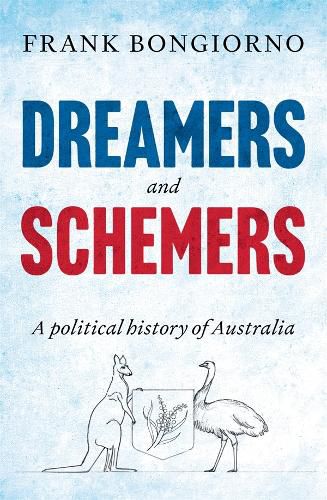
My overwhelming feeling on finishing this book is sheer admiration for the breadth of endeavour to write a political history of Australia right from pre-colonial through to COVID times. Few historians would take on such a task: even fewer could carry it off without flagging. But Frank Bongiorno does, with his customary clarity and a mischievous twinkle in the eye when he encounters absurdity and pretension.
I like Frank Bongiorno, and he is a historian who takes his role as a public commentator seriously. He is current president of the Australian Historical Association, and on the Federal Executive of the Australian Society for the Study of Labour History. He is a contributor to newspapers and journals (both academic and general) and he’s likely to pop up on politics programs on the ABC television and radio. I found myself wondering whether his own political leanings would influence his analysis once he reached the years which he would remember (he was born in 1969) but I couldn’t really detect any change in his stance. The title, while catchy, is a little misleading: it evokes a ‘Hundred Ratbags’ sort of book based on crackpots and shysters. The book takes a much more general approach than this, with more emphasis on the big sweeps and arcs of history rather than the foibles of transitory individuals. The ‘Dreamers and Schemers’ are not just found on the floors of parliamentary chambers – they are out in the pubs, meeting halls, churches and unions as well, but the main focus is on formal political structures.
We often talk today of ‘political junkies’, who delve into the minutiae of political events that many others flip past when they encounter them in the newspapers, and who see everything through a political lens. By writing a political history, Bongiorno focuses his attention on the science of politics as it played out chronologically over Australia’s white history, which means that there is necessarily an emphasis on the dead white men who dominated big-P politics, while many other forces are omitted. Women, for instance, are barely seen in the first third of the book because, politically, they were insignificant. Bongiorno starts the book with First Nations politics: something that is barely acknowledged in Australian history, and when it is, it is more anthropological than political. Indigenous politics are woven throughout the rest of the text, but reflecting the events of the time, they disappear for whole decades only to reappear 40 or 50 years later. Economic fluctuations and wars appear in the narrative, but only to the extent that they affected the politics of the day. Likewise, international events feature in the early chapters, when Australia’s nascent politics were a reflection of political currents that affected the empire generally, and they reappear in the closing chapters when a world-wide pandemic disease and cynicism over politics generally bring politics to uncharted territory.
One of the real strengths of this book is that it considers both federal and state politics alongside each other, taking care to address each of the states, and not just the most populous ones. Personalities tended to loom larger at state level, with a predominance of ‘schemers’ over ‘dreamers’. The distinctiveness of the different states is highlighted: the conservatism (by design) of the Legislative Council in Victoria; the radicalism of Queensland at the turn of the 20th century which contrasted so much with the Bjelke-Petersen era some 70 years later; the way that South Australia often seemed to be travelling its own path. This emphasis on the states means that the full range of politics is explored -not just the big moves of a Federal government, but the compromises and obligations of State governments as well.
I was interested to see how Bongiorno structured the chronology of the book. He proceeds chronologically, but decisive events like Federation, war, the Depression or the Dismissal are subsumed under broader categories, rather than meriting a chapter in their own right. The chapters are:
Autocracy, Community and Democracy: from Earliest Times to 1855 (i.e. the granting of a degree of not identical self-government to the separate colonies as part of a broader sweep towards reform across the settler empire)
Making Democracy Work: 1857-90 (which takes us far from the 1850s view of self-government to a concept of government as an entity which can transform society, alongside increasing demands – particularly through the unions- for direct representation of class
A New Australia 1891-1914 (emphasizing the importance of the ‘Deakinite Settlement’, and the rise of the Labor Party and fusion of conservative forces)
Loyalty and Interest: 1914-1939 (a big time span, collapsing WWI into the post war era until the start of another war. Labor dominance during the early years of the war, the rise of sectarianism, rise of the Country Party, first Menzies government)
War and Peace: 1939-49 (war and post-war considered together. Co-operation between Menzies and Curtin in welfare provision. The Labor Party would not have dreamt that they would be in Opposition for so long)
The Good Times 1949-1966 (Menzies’ second prime ministership; influence of Santamaria and Victorian Labor split)
Revolt, Reason and Reaction: 1966-1982 (series of Liberal prime ministers after Menzies, Victoria a brake on an ALP victory earlier than 1972, Kerr/Whitlam/Fraser conceptualized as a contest of manhood; Fraser more like a Country Party politician. A changed world- free trade, unions but reaction through Bjelke-Peterson in Qld, Charles Court in WA; rise of Australian Democrats)
Australia Remade? 1983-99 (Winding back of the protective state, much of it by the ALP; influence of globalisation and free market economics; Howard and Hanson)
‘The Glimmer of Twilight’: 2000-19 (2001 the end of progressivism- emergence of the darker side of globalization. 2005 Howard wins Senate majority and introduction of WorkChoices, Australian Wheat Board, David Hicks, the Intervention; Kevin Rudd and the Summit, Kyoto, the Apology. Gillard’s first minority government since WWII but passing of 561 pieces of legislation; lower primary vote and rise of independents and Greens; Abbott, Turnbull, Morrison – studied ordinaryiness)
Conclusion – In the Age of COVID
I’m not going to go through the details: you’ll need to read the book for them. It’s a fact-heavy book, driven by chronological events. But there are themes that arise out of this mosaic of personalities and events.
The first is the continuity of the view of an interventionist government. He devotes much attention to the Deakinite Settlement of the 1890s, which held over many decades (perhaps there are even traces of it today) and brought Australia to the forefront of progressive legislation in the early decades of the 20th century. The economic interventions of the post-WWII governments in the 1940s – and here Bongiorno echoes Stuart Macintyre, to whom the book is dedicated- continued under Menzies and were only ruptured in the 1980s. Even during the COVID pandemic, with which the book closes, there remained
a broad acceptance, no doubt stronger among some than others, that government should play the predominant role in defining where the boundaries between individual rights and the common good lie….Outside extreme libertarianism, a minority taste in Australia, there tends to be only mild political disagreement. Otherwise, most people get on with their lives, expecting the state to set reasonable parameters for individual behaviour while allowing people a wide scope to pursue their private interests as individuals and families.
p.392
Related to the early adoption of progressive electoral legislation, voting schemes continued to evolve over the early 20th century. The method of voting (preferential, above-the-line, secret) etc. continued to be experimented with as the system was finessed. Democracy was not delivered cut and dried: instead, it evolved over time.
Some issues remained constant (or intransigent) over decades. The question of land and vested interests dominated colonial politics. Free trade versus protectionism was a major dividing line between states and parties, and still underpins politics today. Sectarianism and racism (against First Nations, Chinese, immigrants) bubbled under the surface throughout Australia’s political history.
That said, another theme was the sense of roundabouts and swings. One or the other of the major parties would make a clean sweep at both federal and state level, only for the jigsaw to be quickly broken apart as the opposing parties would have electoral success and the cycle would begin again. Where there was a long period of one-party dominance, it was largely through the weakness of the opposition. The significance of sectarianism, and especially the influence of Bob Santamaria and the ‘groupers’ in Victoria is highlighted as a brake on Labor success at both federal and Victorian level over an extended time.
Despite the title ‘Dreamers and Schemers’, the relationship between individuals and the big movements of political history is a nuanced tension between practicality, complacency and continuity on the one hand, and vision and courage on the other. In this, we see Bongiorno the progressivist historian coming out. He notes:
Australian political history has had its dreamers and visionaries alongside the pragmatists and schemers…Big change of the kind that occurred in Australia in the 1850s, 1890s, 1940s and 1980s would have been impossible without the idealists and thinkers: that is, without political leaders, activists, intellectuals and movements who refused to be merely ‘practical’. Change depended on people willing to resist complacent utilitarian appeals to majority interests and consensus opinions, on refusing to accept injunctions merely to tinker rather than transform. In the end, it depended on a vision, however modest, of the good life.
p. 392
This book is written for the general reader, but the relentlessness of change and a succession of actors means that it does require concentrated reading. It provides a wide sweep of history, enabling ‘political junkies’ to step aside from their own cauldron of day-to-day politics to reflect on continuity and courage, both of which have existed across Australia’s political history. Although I have read ‘generalist’ Australian histories that take a broad-lens approach from settlement onwards, I haven’t read another book quite like this one that is so disciplined in its focus on politics as the framework of analysis. It’s an important book, and well worth reading.
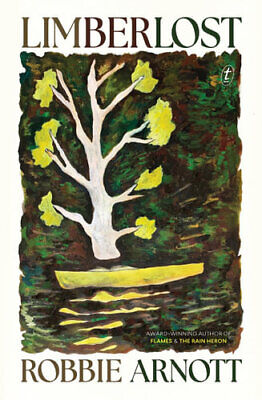
Had I given up on this book half-way through, which I was tempted to do, I would have agreed with the author’s rather rueful reflection on how the plot of this story would appear to his two older brothers, should they return from WW2
As far as his brothers would ever know – when Toby came back, if Bill came back – their warless little brother had spent a pleasant few months killing rabbits, buying a boat, repairing and then selling it before he went back to school. To them, that would be the extent of his work. That would be the story.
p. 202
That’s what I felt for much of this story. Fifteen year old Ned West lives with his widowed father and older sister on an orchard in Tasmania during World War II. Ned’s two brothers Bill and Toby have gone to fight, and no news has been heard of Bill for some time. Set over the summer school holidays, Ned embarks on his own bloodbath in trapping and shooting rabbits, selling their pelts in town, ostensibly as part of the war effect, but in reality to perhaps, one day, buy a little boat of his own. He inadvertently traps a quoll, which he hides and feed, even though it is savage and more burden than joy. Shamed by his sister into taking his limping horse to the vet, he shows the quoll to the vet who treats both the quoll and his horse without charge on condition that Ned shoots the rabbits that were overrunning her property. As a result, he accumulates more and more money until he is able to buy a shabby little boat which, after he strips the paint off, turns out to be a beautiful Huon Pine boat. But between the shooting and the sanding-back, nothing much seemed to be happening in this book. There were flashbacks and leap-forwards which made little sense, and I was just tiring of this tedious, if beautifully described, summer.
It was only in the last third that the book came together for me. Those obscure flashback/forwards all of a sudden made sense, and lifted the book into a broader story of loss, regret and love. By the end, my frustration had dissipated into admiration for how beautifully the book was written, and the control that Arnott has of a deceptively complex narrative. I don’t know if the shift was in me, or in the writing, but I’m glad that I persevered.
My rating: 8 – would have been higher had the book not taken so long to get going.
Emperors of RomeEpisode XIX Nero the Youngest Emperor introduces Nero, the 17 year old adopted son of Claudius, grandson of Germanicus, and great-grandson of Mark Antony and Octavia so he had a peerless pedigree on both sides. Yet he was not groomed for power because his mother Agrippina was exiled for plotting to overthrow Caligula until they were both brought back when Agrippina married Claudius. Claudius made both Nero and his step-brother Brittanicus co-heirs, which was pretty much a death sentence for Brittanicus who mysterious died the day before he came of age. Nero’s reign started off well for the first five years. During this time he conducted a proxy war with Parthia over Armenia but it backfired badly as a PR exercise when he insisted that the client king of Armenia come to pay obeisance to him in Rome at great financial expense. Episode XX Agrippina looks at this woman so thoroughly enmeshed in the Julio-Claudian dynasty. She was the daughter of Germanicus, Caligula’s sister and her mother Agrippina the Elder was seen as the perfect wife. The grew up surrounded by strong women and a stable empire. She was married off twice, before marrying her uncle Claudius, which even the Romans saw as a bit ‘off’. Even though she was a victim of Nero, she has been viewed as a malign influence by association because Nero was bad. Nero tried to drown her and eventually had her stabbed. Interlude Q and A is a special session where Matt and Rhiannon answer questions about themselves- who they are, how they became interested in Rome etc. Episode XXI The Great Fire of Rome in 64CE distinguishes Nero’s fire from the ones that preceded and followed it. Rome was always a fire hazard, but in this case, Nero himself was blamed FOR the fire, and not just playing his lyre during it. It’s not clear that he was really responsible, but he was happy enough to blame the Christians (although this might just be a throw-away line from Tacitus, because the Christians weren’t particularly important or visible at that time). The fire burned for 6 days and destroyed 10 of the 14 zones of Rome. Nero did put a lot of money and effort into rebuilding housing for the poor, but he also took the opportunity to build his golden house across three of the seven hills of Rome (the Colosseum is now on the site).
Russia If You’re Listening (ABC) Season 7 In Episode 4: Undersea sabotage? The mysterious pipe blasts Matt Bevan asks who blew up the Nord Stream pipelines on the bottom of the Baltic Sea on 26 September. Was it Germany? They had a long history of trade with Russia, and Germany gambled that if both countries remained mutually dependent there would be peace between them. Was it Ukraine? Ukraine was no fan of Nordstream because it went directly between Russia and Germany, thus depriving Ukraine of transit fees and political influence. Was it America? The US has long been fearful of Russia’s influence – in fact, Reagan imposed sanctions on anyone who was involved in building the pipe lines. Biden threatened that the US would bring Nordstream to an end. Was it Russia? Gazprom is under the direct control of the Kremlin, who told it to cut back. Russia had already turned off the gas in Pipe 1. All in all, the whole thing has been a disaster
Boyer Lectures (ABC) I am no great fan of Noel Pearson. I dislike his biblical, stentorian tones when speaking, his conservative worldview, his Western Canon name-dropping and his dripping contempt for ‘progressives’. However, I recognize that if the Recognition Referendum is to succeed, then it needs support from both conservatives and the Labor Party. When Pearson came out so strongly against Senator Jacinta Price and her rejection of the Voice to Parliament, I decided that I would listen to these Boyer lectures after all. Episode 1: Who we were, who we are and who we can be was very good. In many ways it encapsulated Pearson’s view of Australia as being a mixture of Aboriginal, British and multicultural elements. Episode 2 A Rightful but not Separate Place went through the history of the journey that has led to the Uluru Statement, crediting John Howard with starting the 15 year process by declaring his support for constitutional recognition if he won the 2007 election (although note that he only did this the night before the election). Pearson does, however, point out where his path and that of Howard diverged, and he comes out very strongly for the Voice to Parliament. Episode 3: A Job Guarantee for the Bottom Million revealed more of the Pearson I expected, railing against ‘progressives’ and welfare dependency, and valorizing the family as the means for improvement. In Episode 4: Transformational School Education he displays his enthusiasm for Direct Instruction, and has another dig at ‘progressives’ who have qualms about Direct Instruction as a pedagogy (Disclaimer here: I have used Direct Instruction, complete with the chanting and hand-movements. It is very effective with some children, but I would not want to build a whole curriculum on it). By this time I had had almost as much as I could stomach. Fortunately Episode 5: We the Australian People was more inclusive – arguing that we are more united by similarities than our differences. He had a bit of a rail against identity politics (although it seems to me that the right is just as guilty of this as ‘progressives’) and the dangers of constant campaigning in politics that never leaves space for governing, just campaigning. He then goes through a roll call of the dead, and asks rhetorically how they would vote in the upcoming Referendum.
History Hit Germany’s Extreme Monarchists. Good grief- what happened? Over 3000 police officers raided the ‘Reichsburger’ group comprising a celebrity chef, former police officers and serving army officers as part of an extremist coup to overthrow the government. They planned to reinstate the German monarchy with a 71 year descendent of the Hohenzollern dynasty, Henrich XIII. The world is going mad. This episode features historian Katja Hoyer who speaks about the deposing of the German monarchy after World War I, and the influence of conspiracy thinking among right-wing groups in Germany.
New Books Network: Latin America This episode features Sarah Zukerman Daly, author of Violent Victors: Why Bloodstained Parties Win Postwar Elections Based on her studies of various Latin American countries, she explores the question of how parties that commit mass atrocities in war often win the support of victimized populations to establish the postwar political order. She argues that in post-war societies, people are likely to vote for whichever party will bring peace and security, even if the party is deeply implicated in violence and atrocities. Often it’s the party that won the conflict that is rewarded, and by purging a few people, it offers security although often at the expense of justice, liberal democracy, and social welfare. This is real social science, using interviews, court transcripts, polls and statistics and at times it gets very technical. But great question, though.
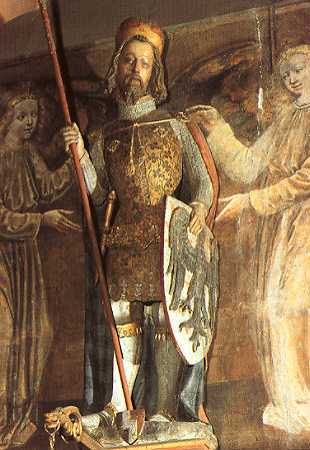
Gone Medieval It’s coming up to Christmas, so a bit of seasonal listening to The Real ‘Good King Wenceslas’ – not one of my favourite carols. Who is King Wenceslas, anyway? And when IS St Stephen’s day ?( Answer: the 27th December in the Eastern calendar- the second day of Christmas) Well, he was born around 905 CE and died in 935CE when he was murdered by his brother. He wasn’t actually a King, although he was a Duke or a Prince of a Bohemian noble family. Bohemia at that time was in the western region of the Czech republic, with its capital in Prague. Europe at this time was riven by dynastic rivalries, including the Magyars, the Franks and the Saxons. It’s not really clear why his brother killed him. He was made a saint quite soon after his death, as part of the shift to the idea of the Holy King. St Wenceslas’ Square in Prague is named after him, but his reputation suffered when the Nazis issued Medals of St Wenceslas to reward their supporters. He was embraced by both German speaking and Czech speaking Bohemians, and later kings drew on his reputation in their iconography. Dr. Cat Jarman is joined by Czech historian Dr. David Kalhous.
History This Week A bit more Christmas in my ears! The Surprising History of Christmas Gifts gives a very American-centric history of Christmas at it takes us back to New York in December 1913 when shoppers are being exhorted to ‘Shop Early’. In fact, newspapers had been exhorting them to do so since May 30th. Although the Puritans had banned Christmas, the people had been celebrating mid-winter anyway out in the streets, and in the early 19th century it was domesticated by people being encouraged to bring it inside. This, alongside the conceptualisation of childhood, led to New York becoming the centre of toy manufacture and department stores. You might think that it was avaricious department store owners who might have encouraged the ‘shop early’ theme, but it was instead Florence Kelly, a labour organizer, who wanted to protect factory and shop workers from the loophole in their labour agreements which limited the hours of work for women and children except between December 15-31, without overtime payments. Later, wealthy women patrons supported the SPUG movement- The Society for the Prevention of Useless Giving- which criticized the practice where pressure was placed on working women (in particular) to chip in to buy a present for their bosses! In recognition of the gift giving qualities of Christmas, FDR moved Thanksgiving a week forward in 1939 to give more time for Christmas Sales. Features Jennifer Le Zotte, professor of history and material culture at the University of North Carolina – Wilmington; Ellen Litwicki, Professor Emerita at the State University of New York at Fredonia; and Paul Ringel, professor of history at High Point University and author of Commercializing Childhood.
Soul Search (ABC)The Gospel of John and the poetry of belief. To be honest, I always found the Gospel of John a bit flakey, with all it’s “beginning was the word and the word was God” stuff. This episode, features Meredith Lake and Dorothy Lee and Bob Derrenback, editors of The Enduring Impact of the Gospel of John . Chronologically, Mark was the source text for Matthew and Luke, but you can find things in John that don’t appear in the other synoptic gospels. They don’t really know who the author who identified himself as “disciple that Jesus love” was. By the 2nd century CE it was assumed that it was Apostle John, but it could be John the Elder. Mark was probably written around 70AD, and Mark and Luke in 80AD. John was probably written in the 90s. Literacy rates were about 5% in the Roman Empire at that time, so while there were eyewitnesses around, there was no urgency to put in on paper. As far as Christmas is concerned, we don’t get any at all in John. In fact, Christmas is a bit of a mash-up, with the shepherds in one gospel and the wise men in the other. The interviewees then go on to talk about John as a devotional text, at which point I lost interest.
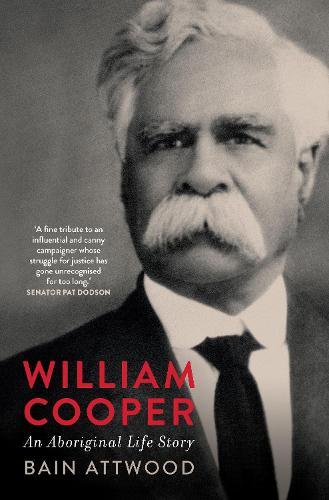
Unfortunately, I think that Australians may be more aware of African American political activists than they are of Indigenous Australian ones. William Cooper is now commemorated by an electoral district and a statue in Shepparton, but neither of these capture Cooper’s contribution to Australian history – in fact, in some ways they do a disservice to it. William Cooper’s attempt to have designated Aboriginal representation in Parliament never eventuated to this day, and the Shepparton statue commemorates an event which was only tangentially connected with his lifetime of Indigenous activism. The resolute, handsome face that stares out from the cover of Bain Attwood’s book William Cooper: An Aboriginal Life Story should be instantly recognizable to us, but it is not.
William Cooper was a Yorta Yorta man, born on the junction of the Murray and Goulburn Rivers in northern Victoria. His date of birth -sometime around 1860- is inexact, but as Attwood points out, the actual date was largely immaterial compared with the significance given to the place of someone’s birth, their family and kinship group and totem. Nor was his paternity particularly relevant. Attwood claims that that the Yorta Yorta, like other groups, tried to establish a reciprocal kin relationship with the white invaders of their country, by encouraging sexual relationships between their women members and whitefellas (p.5). Thus, several of Cooper’s siblings adopted the surname of Atkinson, for John Olbury Atkinson who worked on the nearby Moira run as overseer, while other siblings (including Cooper) adopted Cooper as their surname, perhaps for Edward Cooper – or maybe not. This meant that Cooper was “half-caste”, a distinction which he himself vehemently rejected, but which came to have ramifications as Aboriginal Mission policy changed over time. He was taken as a child to Melbourne in 1867 by the leaseholder of the Moira station, politician John O’Shanassy, and appeared to have lived with him in his Camberwell mansion Tara Estate- or maybe he worked for O’Shanassy in his New Imperial Hotel in Elizabeth – it’s not really clear. In any event, he returned to the Moira estate on his own Country as a teenager, and learned horse-breaking and pastoral skills that he drew on for the rest of his working life.
It was around 1874 when ‘Billy’ Cooper first approached the Maloga mission, established by Daniel and Janet Matthews on land selected by the Matthews brothers on the Barmah sandhills on a bend of the river Murray. This land had been traditional ceremonial grounds, and was formerly part of the Moira station – a source of later conflict. He moved there largely for the safety of his mother and younger siblings, but he himself moved away to work on surrounding pastoral stations. In 1881 the Matthews were joined by Thomas Shadrach James, from Mauritius, who worked as a teacher there and later married Cooper’s sister Ada. Cooper returned to Maloga more or less permanently from 1882, and two years later, he converted to Christianity, part of a wave of conversions amongst Indigenous men at Maloga at this time. The influence of the Matthews and Thomas James on Cooper’s political mindset was fundamental. Through their preaching, and drawing largely on the Old Testament and hymns, they gave him a framework that held that all people were God’s children and thus potentially equal, and that salvation was promised in the future for the oppressed. (p. 38) Shortly after his conversion, Cooper married Annie Murrie, but she died suddenly of respiratory illness after having two children. He remarried 21year old Agnes Hamilton in 1893 and over the next seventeen years she was to have seven children, six of whom survived infancy. However, the Maloga mission fell victim to the priorities and policies of the Aborigines Protection Association NSW which comprised white clergymen, philanthropists and leading parliamentarians under the patronage of the governor himself. Maloga was stripped bare, and incorporated into Cumeroogunga Mission, which is better known today. After initial problems, Cumeroogunga boasted 60 buildings by 1908, with three streets, gravel footpaths, a church, a meeting house, a school, a dispensary, storerooms and many outbuilding. With over 300 people, it was the largest Aboriginal reserve in NSW. But Cooper left the Mission in 1909 after conflict and controversy over the refusal to grant land blocks arose yet again, and following Agnes’ death from tuberculosis. Further deaths followed, including his eldest daughter in August 1913, his eldest son Daniel at Ypres during WWI, and several years later, Jessie the eldest daughter from his marriage with Agnes died of peritonitis after giving birth. In 1928 he married for a third time, to Sarah McRae (daughter of the artist Tommy McCrae). Cooper was to live to a ripe old age, but the reality of the foreshortened Aboriginal life expectancy, meant that he was surrounded by family deaths. In 1933 he and Sarah decided to move to Melbourne and embarked on a new phase of his activism as a seventy-year old.
Here Cooper set in train the actions for which he is best known today. He established the Australian Aborigines’ League around 1934, an organization which is often confused with the Aborigines Advancement League (of Victoria) which was formed in 1957. He was supported in this by several white supporters. The first was English-born fervent Christian and self-described “Christian communist” (p. 119), Helen Baillie, who had connections with many other Christian humanitarian networks involved in missionary work among Aboriginal people. The second was Arthur Burdeu, another fervent Christian, but wary of left-wing influences subverting Aboriginal organizations. Like Cooper, he was a strong Labor man; they had both lost family members in the Great War, and they lived relatively close to each other. He was appointed president of the Australian Aborigines’ League, even though by its constitution, full membership was only open to Aboriginal people. This raises the inevitable question of whether the League remained the voice of Cooper and other Aboriginal members, and whether the letters in Cooper’s name (generally composed by Burdeu) represented his views. By looking at the way that Cooper and Burdeu worked together, Attwood concludes that the letters in Cooper’s name by and large did represent his views, although formal statements were generally Burdeu’s work (p. 132). Cooper was joined by fellow Indigenous campaigners Shadrach James (his nephew) Anna and Caleb Morgan, Margaret Tucker, George Patten and and Doug Nicholls.
So what were Cooper’s views? Throughout all his activism – right from his time at Maloga- he drew on his Christian belief that as the first people of the land, created by God, and as British subjects, they had a rightful claim on the land, and on the government. However, ‘equal rights’ or ‘citizenship rights’ as distinct from Indigenous rights, were conditional in the sense that they rested on the capacity of their people to exercise them – not so much an entitlement as something that had to be earned (p.134). He framed this in different ways at different times.
At a time when Aboriginal people’s difference was deemed to be the cause of their plight and constituted the grounds upon which they were denied the rights and privileges enjoyed by British subjects, they emphasised their common nature with their fellow Australians and demanded the same rights as Australian citizens had. But in pressing these claims they often made reference to their difference, though the differences they had in mind were primarily rooted in their people’s history rather than culture (or civilisation) and race (or biology). Most often, Cooper and the members of his organisation invoked the fact that they were the descendants of this county’s first peoples and that the British Crown had given them an undertaking to protect them.
p.203, 204
This was exemplified in the petition that he drew up in 1933, prior to the establishment of the Australian Aborigines’ League but promoted and submitted under its auspices. It is not surprising that Cooper should turn to a petition as an instrument of persuasion. Indigenous people in Australia and across the empire, tended to look to the King/Queen as the source of power, rather than the local government, and had turned to petitions as their means of communicating with them. This petition, addressed to King George V argued that the commission issued to “those who came to people Australia” included a strict injunction that the original inhabitants and their heirs and successors should be adequately cared for. Given that the terms of the commission had not been adhered to, in that their lands were expropriated by the King’s Government and legal status was denied by the King’s Government in the Commonwealth, they prayed that the King would intervene to prevent the extinction of the Aboriginal race, give better conditions for all, and grant them power to propose a member of parliament “in the person of our own blood or white man known to have studied our needs and to be in sympathy with our race, to represent us in the Federal Parliament”. (p. 103) Actually, this was a watering-down of Cooper’s lifelong call for parliamentary representation, prompted probably by his white advisors, because he believed that white men could not “think black” and therefore they needed an Aboriginal representative in Parliament. The petition was signed by over 1800 Aboriginal people – no small feat when access to missions and permission to circulate the petition had to be sought over and over again. It was held back for some two years until after a meeting of all the administrators of Aboriginal affairs in Australia in mid 1937. It was only when this meeting failed to deliver any outcomes that the petition was finally submitted to the Australian government. However, it fell largely on deaf ears. Although Prime Minister Joseph Lyons expressed his sympathy, the petition was dismissed by the secretary of the Department of the Interior, J. A. Carrodus and was never submitted to the King. I found myself angered by such a supercilious dismissal, and the words of the Uluru Statement “the torment of our powerlessness” spring to mind.
Asking did not work: perhaps protest would. After witnessing a ceremony in Melbourne on 24 January 1937 to celebrate John Batman’s founding of Melbourne, Cooper realized that the imminent 150th anniversary celebrations in Sydney on 26th January 1938 would be of the same triumphalist tenor. Drawing on his Biblical schema of epochs and days – of Judgement and Restitution, Mourning and Hope, and eventual Deliverance, Cooper proposed “a day of mourning” to be held simultaneously with the sesquicentennial celebrations. The original idea was his, but the proceedings themselves, held at the Australian Hall, were dominated by Bill Ferguson and Jack Patten of the Aborigines Progressive Association. Cooper, Nicholls and Tucker attended, driven to Sydney by Helen Baillie in her little car, but did not play a prominent part.
Although Cooper lived in Melbourne, he and many of the League’s members retained their emotional connection to Cumeroogunga. He continued to appeal to NSW government to provide Aboriginal people with land and capital so that they could develop the land for their communities and become self-sufficient- something he had urged since his Maloga days. He urged that the services provided on reserves should be put into the hands of Aboriginal people themselves, and that regulations should ensure that no resident could be expelled from a reserve without an open enquiry. In June 1937, contrary to the wishes of the Aboriginal people, Arthur McQuiggan had been appointed as manager of Cumeroogunga, despite repeated complaints about his violence as superintendent of Kinchela Aboriginal Boys Home. Some people made preparations to leave, but were prevented from doing so by the police on the basis of “quarantine” regulations. Cooper submitted another petition signed at Cumeroogunga to the government, but this had no effect. On 26 January 1939 Jack Patten, born and bred at Cumeroogunga, returned there and addressed a gathering of the people in the church two days later, urging them to “walk off”, before they were prevented from leaving again. Cooper and Burdeu were rather ambivalent about this direct action. The League had long had a preference for representations, appeals, petitions and public meetings, and Cooper and Burdeu were apprehensive that Patten’s methods would alienate the League’s white supporters. In the end, it was socialists, communists and Labor supporters in Melbourne who backed what they saw as a “strike” at Cumeroogunga, providing moral and material support for the people who had walked off. But after nine months of hardship, the protest achieved nothing, and there was a tailing-off in the League’s activity, exacerbated by Cooper’s decline in health.
By now WWII was in train. Cooper had lost his son in World War I, and he was disillusioned by the failure of the Government to grant citizenship to the thousands of Aboriginal men who had enlisted in the AIF after World War I. He pointed out that Aboriginal men had ‘no status [and] no rights’ and ‘no country and nothing to fight for but the privilege of defending the land which was taken from him by the white race without compensation’. (p. 197) This was not necessarily a popular stance.
It is ironic that the only monument to William Cooper (presently) is the one in Shepparton, funded by Jewish philanthropists through Gandel Philanthropy. The monument depicts him holding a petition defending the human rights of Jewish people in response to Kristallnaucht, “The Night of Broken Glass” which he presented to the German Consulate in December 1938. The petition served an Indigenous purpose as well: it stated “Like the Jews, our people have suffered much cruelty, exploitation and misunderstanding as a minority at the hands of another race”. This fleeting act, which has captured and been embraced the (white) public imagination, tends to overlook the fact that several left-wing groups, churchmen, pacifists and civil libertarians had already raised their voices against the Nazi persecution of the Jews. Consistent with Attwood’s claim that this is a minor part of Cooper’s contribution, he spends only four pages on this petition, although he expands in further detail in the footnotes. I think that it says much about white Australia and its unease with Aboriginal activism, that Cooper should be commemorated for this one act of solidarity with an overseas injustice, rather than his activism against injustice here in Australia over many decades.
Attwood started his book by pointing out that, especially in relation to Cooper’s childhood, documentary sources are thin. Cooper was an eloquent speaker, but he found writing a struggle, and often turned to his white supporters to undertake this task. Moreover, members of Cooper’s family have their own stories about him, which differ in places from the stories Attwood is telling. He points out that a biographical approach can misrepresent the life of an Indigenous man or woman by casting them as exceptional.
Make no mistake: I believe Cooper was a remarkable man. But the political work for which he is best remembered was the product of a broad network of family, kin and community, and the outcome of a historical experience that he and his fellows had in common and shared with each other.
p. xiv
The book has many black-and-white photographs throughout the text, courtesy of Cooper’s family, and they emphasize both Cooper’s striking bearing but also his embeddedness amongst other activists. Attwood is writing within the academic discipline of history, and this tone pervades the book, with an essay-like introduction and conclusion, a cautious use of “I” and rather stilted cross-references in parentheses to different parts of the book. I sense a reserve in Attwood’s writing.
I’m sure that Attwood did not intend it this way, but I found the book ultimately depressing. William Cooper worked all his life for Aboriginal rights, but had little to show for it. His optimism that if only people knew; if only the King knew, then things would change- was sadly misplaced. He had a faith in white Australia that was not reciprocated. There are, of course, many resonances today. I hear shades of William Cooper in Noel Pearson, who shares his suspicion of “the left” and his deep faith in Christianity particularly in the linguistic and schematic framing of injustice in biblical terms. Cooper’s faith in white Australia echoes in the Uluru Statement from the Heart, and the call for a Voice has resonances of his call for parliamentary representation. Hopefully this time – at last- white Australia will recognize the generosity of what is being offered and finally fulfill William Cooper’s expectations.
I notice that a few book bloggers have done us a great service by compiling a list of the books that won various literary awards during the year. Doing the same for histories is a little more complex because some awards are for historians rather than histories (e.g. the History Council of South Australia, History Council of Western Australia), while others include histories alongside biographies as part of non-fiction generally. Some awards are for essays, articles, chapters and historical interpretations, with less emphasis on published books. However, here is what I have found for published full-length history books during 2022 (and I know I have probably missed some) :
Ernest Scott Prize – the most distinguished contribution to the history of Australia or New Zealand or to the history of colonisation published in the previous year. Administered through University of Melbourne
Dr. Lucy Mackintosh Shifting Grounds: Deep Histories of Tāmaki Makaurau Auckland
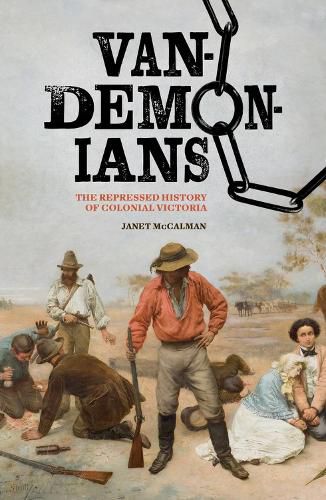
Emeritus Professor Janet McCalman for Vandemonians: The Repressed History of Colonial Victorians
W.K.Hancock Prize -for first book, awarded biennially
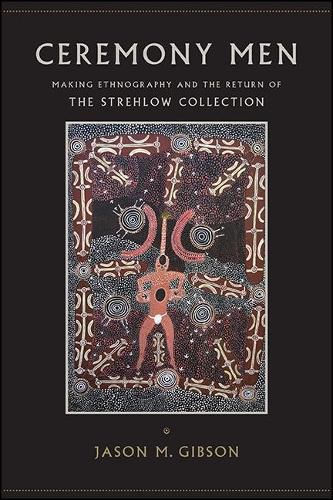
Jason Gibson, Ceremony Men: Making Ethnography and the Return of the Strehlow Collection (exorbitantly expensive! Go for the e-book)
Chief Minister’s Northern Territory History Book Award – most significant historical book about the Northern Territory (NT) published in the last 12 months.
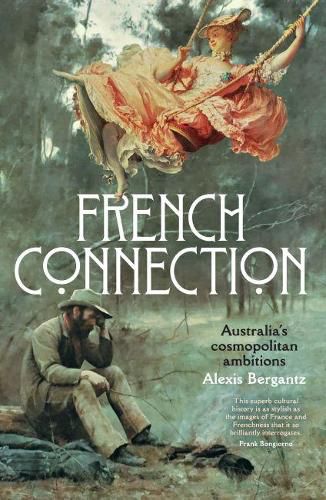
Australian History Prize: Alexis Bergantz French Connection: Australia’s Cosmopolitan Ambitions
General History Prize (International) Mina Roces The Filipino Migration Experience: Global Agents of Change
Young People’s History Award Aunty Shaa Smith, Neeyan Smith, Uncle Bud Marshall with Yandaarra including Sarah Wright, Lara Daley and Paul Hodge The Dunggiirr Brothers and the Caring Song of the Whale
Kay Daniels Award – biennial award recognising outstanding original research with a bearing on Australian convict history and heritage including in its international context.
Bill Bell, Crusoe’s Books: Readers in the Empire of Print 1800-1918
Prime Ministers Literary Awards
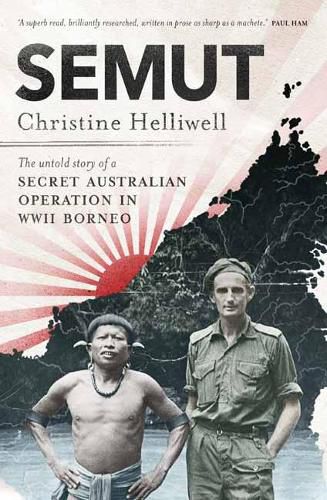
Australian History Christine Helliwell Semut: The Untold Story of a Secret Australian Operation in WWII Borneo
Non-Fiction Mark Willacy Rogue Forces: An Explosive Insiders’ Account of Australian SAS War Crimes in Afghanistan
Queensland Premiers Literary Awards
Queensland Premiers Award for a Work of State Significance Quentin Beresford Wounded Country: The Murray-Darling Basin a Contested History
University of Queensland Non Fiction Award Claire G. Coleman Lies, Damned Lies: A Personal Exploration of the Impact of Colonisation
The Courier-Mail People’s Choice Queensland Book of the Year Award Chelsea Watego Another Day in the Colony
Victorian Community History Awards
Winner Janet McCalman Vandemonians:The Repressed History of Colonial Victoria
Judges’ Special Prize David Rowe About Corayo: A Thematic History of Greater Geelong
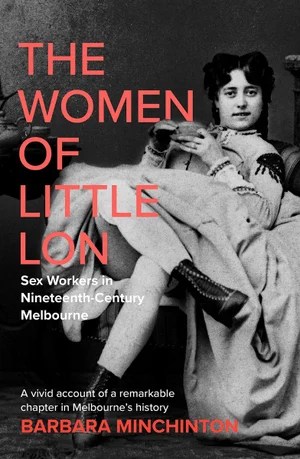
History Publication Award Barbara Minchinton The Women of Little Lon (my review here)
Community Diversity Award Alexandra Dellios Heritage Making and Migrant Subjects in the Deindustrialising Region of the Latrobe Valley
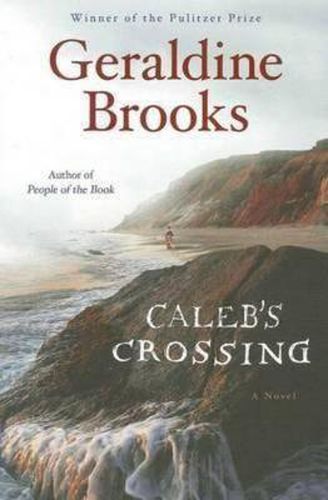
I read somewhere that when considering a film that claims to be “based on historical facts”, you should look for the most momentous, the most memorable part – and that will be the bit that was made up. I’m not sure whether this applies to historical fiction as well (it may) but I didn’t have that sense in reading Geraldine Brooks’ Caleb’s Crossing. She has kept herself strictly within established historical and biographical boundaries, which means that there is no momentous, memorable part, and that flights of fictional fancy are strictly curtailed. But I am full of admiration for the research that has gone into this book that rests so lightly in the background, and for the fidelity that such restraint lends to the story.
The book is arranged in three parts. The first two parts take place over a two year period in 1660 and 1661 while the third part is ostensibly written some 50 years later in 1715. The eponymous Caleb is a historical figure: Caleb Cheeshahteaumuck, the first Native American to graduate from Harvard College, which was then a small, struggling educational institution with more pretension than finance. A Wampanoag man, his father was sacham of his tribe. Caleb and a classmate attended school at Martha’s Vineyard, where he was born, then attended Grammar School in Cambridge, before enrolling and graduating from Harvard. He died from tuberculosis a year after graduation. These, then, are the biographical facts that Brooks needs to write around.
But she is left considerable space to invent her own character, and this is what she does in Berthia Mayfield whom we meet as a young teenager in Great Harbour where her father is a missionary to the Wampanoag. Her family has been at Noepe since her grandfather purchased land – however that purchase was understood at the time- from the Wampanoag. A bright young girl, she finds her future become increasingly circumscribed by the inevitability of her marriage and her mother, aware of this, allows her a short-lived freedom to roam the island. It is on one of these forays that she observes, and becomes fascinated by Caleb – a fascination that he reciprocates. However, when tragedy strikes the family, she blames herself and submits to a plan whereby she will be indentured to the grammar school master to enable her brother, Makepeace, to attend Harvard College. Caleb, and his friend Iacoomes who have been taken under the wing of her father, are to attend Harvard as well.
We follow her to Cambridge in 1661 in Part II. Her formal education has been sacrificed for that of her brother, but here she can secretly listen to the instruction given to the students. She observes the subtle prejudice directed towards Caleb and Iacoomes and witnesses the sexual abuse of a young Native American girl Anne by the Governor’s son. Once again, men are making decisions about her marriage. There is an unspoken attraction between Berthia and Caleb, but from the outside it appears that she has submitted to the wishes of her employer by marrying his son- only we, as readers, know that Berthia had more agency than it appears. The final part of the book is set in 1751, when Berthia is dying back in her childhood home in Great Harbour. She recalls the deaths of Iacoomes and Caleb, and the tragedy of the King Philip’s Wars as the uneasy wariness and compromises of early contact harden into violence and warfare.
Brooks has adopted an archaic, 17th century language in giving Berthia voice, and she sustains it wonderfully throughout the book. Perhaps there is an anachronistic 21st century feminism seeping through the book, but is framed within a deep religiosity. Brooks knows the line between fact and fiction and she respects it in her writing. So much research must have gone into this book, but it never feels laboured. Instead, through the narrative voice that Brooks has fashioned for Berthia, we feel as if we have been immersed into a 17th century world and worldview.

 The Resident Judge of Port Phillip