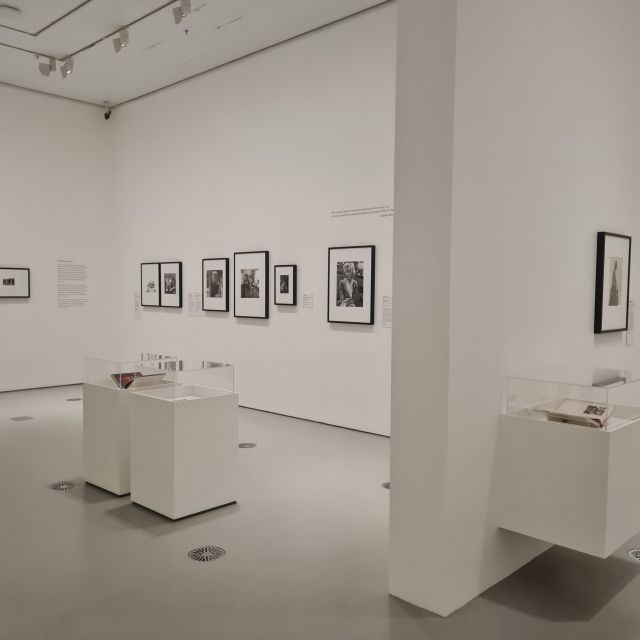
A beautiful Sunday afternoon, so I headed off to the NGV International to see the ‘Women Photographers’ exhibition – weeks and weeks before it closes on 3 May 2026. The exhibition is both chronological and thematic, starting with city-based studios in the early 1900s which captured images of families and especially children, and film stars and celebrities. The suffragettes, with an eye to publicity, used photographs to shape the public image of the suffrage campaign, aided by the use of photographs in newspaper articles. In Weimar Germany, women photographers captured modernity the ‘new woman’ fashion and you really get a sense of how the Nazi regime cut a swathe through progressive and artistic Jewish photographers as they fled for safer places. Demand for images in magazines and catalogues opened up opportunities for women photographers, and the growth of cities encouraged urban landscape photography. Female photographers were part of the avant-garde, and there are images of Pablo Picasso taken by Dora Maar, Lee Miller’s images of Man Ray and even Helen Garner in a share house backyard! Social Documentary photography was used by the Farm Security Administration to bolster support for FDR’s New Deal during the Depression. The exhibition closes with the year 1975, the first International Women’s Year, where photography was an expression of second-wave feminism.
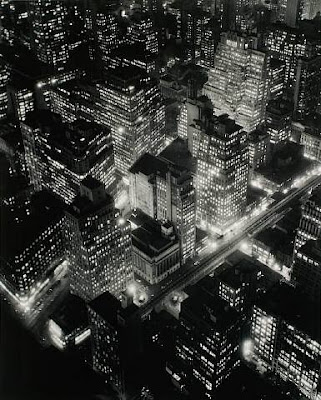
There were some extracts from documentaries as well, so I rested my weary legs and back looking at them. I was fascinated by this interview with Berenice Abbott, (in YouTube, it’s the whole interview, not just extracts) who was probably the earliest photographer featured in the film display. She left for Paris in the 1920s. She worked with Man Ray as his studio assistant in Paris in 1923-1925, and it was there that she met Eugène Atget, whose project involved photographing Paris before it was destroyed by modernity. When she returned to America, she embarked on a similar project in New York.
She talks about taking this image of New York at night. It was a 15 minute exposure, and there was only a short period of time in which it was dark enough before 5.00 p.m. to take the photo. At 5.00 p.m. all the office workers went home, and the lights were turned off, so there were only a few days of the year where both conditions were met.
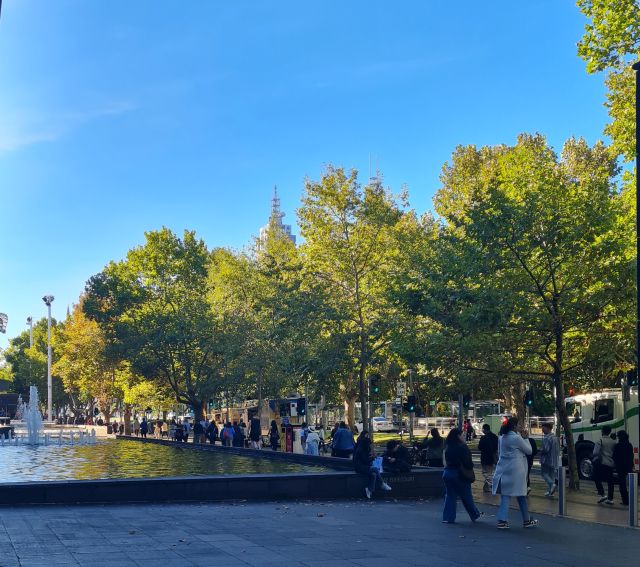
A good exhibition. I happily spent a couple of hours there (my legs and back were not quite so happy), then came out into the late afternoon sunshine of a beautiful autumn Melbourne day- my favourite time of the year.
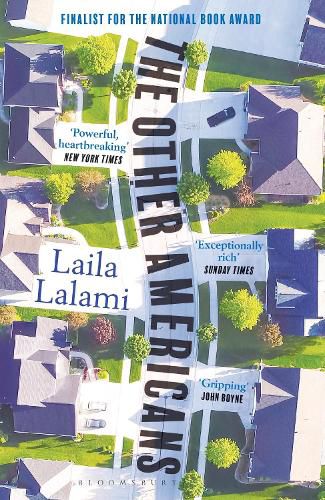
The front cover of this book shows a stylized drone-view type drawing of a suburb in America, with gabled houses surrounded by lush green lawn and trees. It looks just the way I imagine American suburbia to look, full of Leave-it-to-Beaver and Brady Bunch types. The ‘Other America’ in this book live in a rural town on the edge of the desert and the “other Americans” who live there are very different to this white, sanitized image.
Late at night in a small town in the Mojave Desert, California, middle-aged Driss Guerraoui, a cafe owner who originally emigrated from Morocco, is killed in a hit-and-run accident. It is assumed that it is accidental, but his daughter, Nora, believes that it was a deliberate ‘accident’ even though her grieving mother Maryam and sister Salma do not follow her in her obsession with finding the perpetrator. The local police are brought in, including Coleman, a female officer that we later learn is of African-American descent, and deputy sheriff Jeremy Gorecki, an ex-Iraq veteran who had grown up in the town and had long had a school-boy crush on Nora. Before the accident Nora had been living in Chicago, trying to carve out a career as a musician, and involved with a married man who had not followed through on his pledges to leave his wife. But when her father is killed, she returns to her home town and again becomes involved with the boys she went to school with, including Jeremy and A. J. and his father Anderson, who owned the bowling alley beside her father’s cafe. However, the accident did not go completely unseen. Efrain, an undocumented immigrant, saw the collision but fear of the authorities stopped him going to the police. He only came forward when Nora offered a generous reward, possible because of a bequest left to her by her father (a bequest resented deeply by her sister).
The story is told in a chorus of nine voices, including that of the dead man Driss. Because they are all telling the story from their own perspective, we learn much more than about just the accident and the investigation, which is rather an anti-climax as far as a police procedural goes. We see parallels between Driss and Efrain, both making a life in a new country; we learn of infidelities in Nora’s own family; we see racism and resentment being played out at multiple levels. Because they are told from each character’s point of view, we gain multiple perspectives on the same event but I feel that, as a writing technique, it’s a bit of a cop-out. The voices were not sufficiently different from each other and the author is relieved of the responsibility of tying them together. It has been done before, and it just felt a bit tired as a style.
My rating: 7/10
Sourced from: Yarra Plenty Regional Library
Read because: I have Leila Lelani’s new book reserved, and I thought I’d read one of her earlier works first.
The History of Iran: A Primer. This is actually a video, which can be seen on Youtube or here. You could just listen to it if you wanted to, but he has some diagrams to illustrate the various periods and dynasties He starts off by talking about periodization i.e. ancient Persia, then the Arab conquest around 630-40 leading to Islamic/Medieval Persia, then around 1800s with Western Influence in Modern Iran. He follows a string of different dynasties, some lasting centuries, other little more than two-generations. It is a little bit eye-glazing, but I learned a lot: like, for example, just how big that Mongol empire was. So, an interesting, rather pain-free 38-minute skate from 3200 BCE up to 1979 with the establishment of the Islamic Republic. I have no idea who ‘Premodernist’ is: he seems a bit shy about his name.
The Rest is HistoryEpisode 404 The Nazis in Power: The Night of the Long Knives (Part 1) I tend to think of the Nazis as all cut from that chiselled, resolute mould, but of course they had factions just like any other group. Ernst Röhm, streetfighter and flagrantly gay, headed the SA, or Stormtroopers which had 4.5 million (million!) paid up members. Röhm was from the faction calling for permanent revolution, and by 1934 he was suggesting that the SA should be the army. He was opposed by the police (who were generally Nazified too), the Army, the Old Order and Hitler’s own personal guards, the SS, who all wanted Hitler to bring everything into order, rather than embark on eternal revolution. Hitler was told (incorrectly) that Röhm and the SA were going to move against him on the one side, and that the Conservatives like Hindenberg and Von Papen were going to also move against him on the other side. So Hitler decided to get rid of all of his enemies at once, with the support of the Army, the police and the SS in the ‘night of the long knives’, which involved the arrests of SA members across Germany. In Berlin, Goering and Goebells went after the Old Conservatives. 85 were killed and Röhm was shot, declining the option of committing suicide. Hitler delivered a two-hour talk to the Reichstag, which passed retrospective enabling legislation to cover the killings. Hindenburg died, and the position of President of Germany was retired, leaving Hitler the only leader. The Army pledged an oath of loyalty to Hitler, and this was all tidied up with a referendum.
The Rest is Classified Episode 121 Kim Philby: Stalin’s Mole Inside MI6 (Ep.1) While listening to a podcast about the Spanish Civil War, all of a sudden Kim Philby’s name popped up. Who would have thought? Kim Philby has gone down in history as Britain’s most notorious double agent: spying for Stalin while running the MI6 counter-intelligence operation against him. His father was an Indian civil servant, and Kim was born in India and named after the Rudyard Kipling book, which ironically enough is about a spy. Young Kim was sent home to England during World War I while his father went to the Middle East where he became an Arabist for the rest of his life. Kim enrolled in history at Trinity College, Cambridge in 1929, then undertook economics. By then the Depression had taken hold, and there was a Labor government in England. Philby became a Marxist as an intellectual decision under the influence of Professor Dobbs. His handler was Arnold Deutsch, who recruited him to Soviet intelligence, although he was to have other handlers over his career.
Short History of…The London Underground (October 12 2025) When we travelled to London, we used the Underground a lot but as a result I had absolutely no idea of the layout of London at all. In the early years of the Underground’s operation, starting from 1863, there was an ongoing danger of ‘choke damp’, a toxic mixture of nitrogen and carbon dioxide. At first there was a multiplicity of private lines, but by 1907 many of them were brought under the umbrella of the Underground Electric Railways . Company, which was financed by the American investor Charles Yerkes (how galling!) In 1933 the decision was made to merge all the lines and buses into ‘London Transport’. Some lines were extended and new stations were designed, influenced by European modernism. The famous Underground Map was designed using the metaphor of an electrical network rather than a geographical representation (hence my confusion when we emerged into the open air!) During WW2 there was resistance at first to the idea of using them as bomb shelters because it was feared that people would stay there, but public pressure saw them opened up, even though it was not always safe underground – although surely safer than at ground level. During the 1960s and 1970s there was more emphasis on cars and highways, and the Underground fell into disrepair, leading to accidents during the 1970s and the fire at Kings Cross station in 1987. In 2000 ‘London Transport’ was transformed into Transport for London (TfL). In 2012 there was the suicide bombing described in John Tulloch’s book One Day in July (my review here). During the London Olympics, most people travelled by Underground, and the Elizabeth Line was opened 160 years after the first services commenced. Pretty amazing really, given that Melbourne has only just opened its fourth Underground station early this year.
Now, I’ll admit that this movie might not be to everyone’s taste but, attending as I do a spiritual fellowship (Unitarian Universalist) which also has its roots in 18th century non-conformism, both in UK and United States, I was interested to see this 21st century take on the Shaker religion- or as they were first known in England, the Shaking Quakers. The movie focuses on Mother Ann Lee, whose adherents believed was Christ returned in female form (she didn’t claim this herself, mind) . She was part of a general evangelical revival at the time, when there were many predictions of the Second Coming and the end-of-times. Born to a poor Manchester family, the film depicts her as always repulsed by sex, and probably takes liberties with the nature of her marriage, which resulted in four children, none of whom survived. No real wonder, then, that celibacy was one of the hallmarks of their sect, which is never good for attracting or increasing congregational numbers. On the basis of a vision, she took some of her followers to America, where they established a community and then, in order to keep the numbers up, she and, even more, her brother William travelled evangelizing and seeding new communities in different states of America. Their numbers peaked in the 19th century (i.e. after Mother Ann’s death) but now there are only three according to the internet, two according to the movie.
It took me a little while to realize that it was a musical (how strange!) and once I relaxed into that genre, it didn’t concern me so much that characters burst into song at the drop of a hat. Some of the songs were based on Shaker hymns (albeit much modernized) and the soundtrack used lots of bodily percussion with stamping and slapping during the dances.
I did find myself wondering “why this film now?” After all, films are hugely expensive undertakings and financiers need to be convinced that there’s an audience for it. Apparently director Mona Fastvold had a lot of trouble getting funding, and it was probably funded out of the pockets of Kaplan Morrison, who also produced The Brutalist. Searchlight pictures, a subsidiary of Disney, did the film distribution. I’m sure that the Christian movie production network would have distanced themselves from this heresy-filled movie, and faith and ecstasy are not a normal part of your mainstream historical movie. I found myself wondering if the movie harked back to a simpler, faith-filled time or perhaps the voluntary celibacy embraced by some young people today.
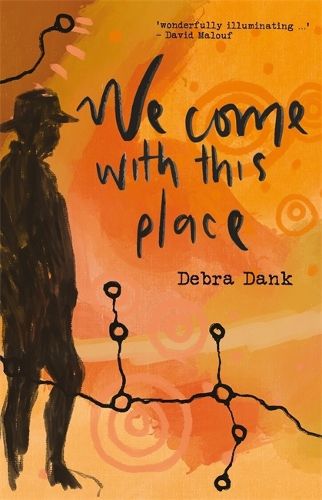
As a local historian and having lived all my life within a 10 km radius, I have a strong sense of place, but I acknowledge that it is not the same as the First People’s sense of Country. That’s Country with a capital C, and there’s no ‘the’. It’s just Country, and I respect First People’s embeddedness in it, but deep down I know that don’t really understand it in the same way. Debra Dank’s We Come With This Place is probably the best explanation and expression of it that I have read.
Dank is a Gudanji/Wakaja woman: teacher, wife, mother and grandmother. She grew up in Camooweal in Queensland but her family, are from the south-western Gulf of Carpentaria and their dreaming is the three travelling Water-women, birthed from the salt water, who became the first tellers of stories and grew the country as they moved through it. The Water-women, and the knowledge of water runs through this book, opening and closing the narrative. This is probably the only conventional part of the telling, as different generations’ stories are interwoven without clear signposting, and as pain and abuse occur over and over again.
The introduction to the Yoorook ‘Truth be Told’ report spoke of putting First Peoples’ Stories against the written, European histories. A number of years ago, historian Ann McGrath wrote a history Born in the Cattle (1989), which used oral histories to tell the stories of Indigenous people living on pastoral stations in the Northern Territory, a ‘no-shame’ job which enabled the cattle workers and their families to live on Country, maintain traditional obligations, and earn a living. It seemed a rather rose-tinted analysis even at the time, and seems even more so thirty years later with our later knowledge of the Stolen Wages, and the Massacre Map. Dank herself gives a different view of the pastoral workers’ life through her father’s story, and through her own as well, as she spent several living on stations with her family, where they were treated with varying degrees of acceptance.
Her father, Soda, was born on the banks of the birthing creek on Wakaja Country, on what became known as Alexandria Station. After witnessing his mother being raped, and accused of poddy (calf) stealing and pursued by white co-workers on the path of vengeance, he escaped the Station and crossed the Queensland border into Camooweal, where he met Dank’s mother and married her and established a family. The indigenous community is not necessarily supportive of marriage between indigenous partners: Soda’s mother-in-law, an Indigenous woman who was protective of her status in a small, tightly-knit Methodist community, reported Debra’s birth to the Aboriginal Protector, who at that time had the power to take lighter-skinned children from their families. It didn’t happen in this case. Debra’s mother, who had benefited from Westernized schooling, put a heavy emphasis on education, and indeed she oversaw not only her children’s education when the family was living on a pastoral station, but that of the station-master’s children as well. Her father could neither read nor write. Her love for both parents is unmistakable, but she is clear-eyed about domestic violence within her family, and the recurrent injustice, racism and pain that recurs across the generations.
Despite her maternal grandmother’s hostility, Dank had a close relationship with her grandparents and from them she learned about Country. Her descriptions of camping, of tramping through desert scrub looking for water, and the vast landscape are beautiful. Through a series of short chapters, she tells of the lives of her grandparents (and further back) and parents but she does not necessarily help the reader by giving a straight-forward chronological account. At times, I found myself flipping back to see whose story it was – her father’s? Her grandfather’s?- but I’m sure that this is intentional. Violence and dispossession seeped through the generations, as did the love and knowledge of Country. It’s a love and knowledge that she is giving to her children, and to us too as readers. The cyclical story pattern reflects First People’s story-telling and its sense of time and patterns. She uses language as well, without the support of a glossary at the back, and so you need to deduce the meanings of words which, ever the teacher herself, she uses several times within a few paragraphs so that you can work out the context.
I was particular struck by one passage where she describes looking for food in desert country with her father, on land that was not their country. I realized that our Acknowledgements of Country embody similar sentiments, but without the promises of benign intention.
We had been cautious when we approached. Dad had been extra careful to talk to that place and to assure the old people there that we were coming to gather some food, and to let them known who we were and where we had come from. He went on to tell them we meant no harm and we would take only enough to feed us on that day, that our country and our people, like us, were grateful to be given food there. We would leave enough to share with the turkeys that would arrive soon, he assured those that dwelt there. And they were kind to us. We had enough to satisfy our needs, but it was always like that. Talk to the country, talk to old people, talk, talk, talk. Talk your story into this place to sit there with the ancestors. (p. 104)
If only we were able to acknowledge country so honestly.
This book was shortlisted for several awards in 2023, and it won four categories in the NSW Literary awards, the Australian Literary Society Gold Medal and the University of Queensland Non-Fiction award that year. It deserved such recognition. It is very, very good.
My rating: 9/10
Sourced from: Yarra Plenty Regional Library
Read because: I borrowed her most recent book about her family story, and I realized that I should read the original book first.
Journey Through TimeEpisode 66 The Spanish Civil War: Guernica, Picasso and the Nazis (Episode 5) As well as a laboratory for totalitarianism, the Spanish Civil War also acted as a proving ground for German military equipment. This was particularly true of the three-hour aerial bombing of the market town of Guernica, carpet bombing at first, followed by incendiary bombing, then strafing the citizens as they ran away – a new form of war that was intended to break the morale of the citizens. The Italians, on the other hand, used Spain as a way of showing their massed manpower to project strength. The Republicans sorely needed a victory, which they gained at Brunete and Teruel with huge casualties, but then they gave up the advantage almost immediately. By this time Stalin’s support of the International Brigade was declining, and Republican observers were beginning to warn of the dangers of Germany and tried to raise funds to bolster the Republican side. The Battle of Ebro was the longest one of the war and again, after initial success by the Republicans, it got bogged down and culminated in four months of futility. In 1938 the International Brigades were ordered out, in the hope that Germany and Italy would withdraw- a rather mad, forlorn hope.
The Book Club I’ve heard the Goalhanger The Book Club advertised on other Goalhanger production (e.g. The Rest is History, The Rest in Politics) but I can’t find it on Podbean. It is hosted by historian and author Dominic Sandbrook and his producer on The Rest Is History, Tabitha Syrett. The first episode is Wuthering Heights: Passion, Violence and Revenge in the Moors. They hadn’t seen the movie at that stage, so they stuck to the book. They point out the nested narrators: the new tenant Mr Lockwood interrogates Nelly, who had worked at Wuthering Heights thirty years earlier, and she is not necessarily a reliable narrator. Despite the visual imagery of the moors, much of the action takes place indoors. It was already historical when it was written, and violence permeates the whole book. The book has doubling throughout, and the repetition of names from one generation to another is very confusing. They give a score at the end. Dominic gives it 7/10 and Tabitha gives it 7.5/10.
Short History Of… I’m interested when an American or British podcast deigns to tackle an Australian topic. The Australian Gold Rush starts with Rev Clarke’s discovery of gold in Australia in 1841 and 1844, and Governor Gipps’ suppression of the news because as a convict society, they feared that ‘we shall all have our throats cut’. However in 1849, after the California gold rush and the cessation of transportation in most states, Gipps changed his mind and instituted an incentive scheme where 10,000 pounds would be awarded for the first discovery. Edward Hargreaves, along with his guide, John Lister, and the two Tom brothers found gold at Lewis Ponds Creek, but Edward Hargreaves took all the glory (and the money). Hargreaves was made a Crown Land Commissioner, and the prerogative of renaming the location which he called the Ophir goldfields. The episode has a lot of emphasis on the effect of the gold rush on First Nations people with the ruination of the environment and the introduction of disease (I think that the diseases had been long introduced before that). Emphasis is also placed on the Native Police as the first law enforcers on the gold fields, something I didn’t know. It then deals with the Gold Rushes in what became Victoria, and the later small gold rushes in the other states.
Witness HistoryThe Storming of Spain’s Parliament I don’t know whether it was because the attempted coup occurred on 23 February 1981or whether it was prompted by the death Putsch leader Antonio Tejero hours after Prime Minister Pedro Sánchez declassified files detailing the seizure of parliament in Madrid. It was the second attempt at a putsch by the civil guard, and 350 members of Parliament were held captive for 18 hours. Eventually King Juan Carlos talked them down, and condemned the coup (although since then there have been questions over when the King was himself involved). It was a vivid demonstration of the fragility of Spain’s democracy which was at that stage only six years old, and it coincided with a change of democratically elected government- obviously a dangerous time!
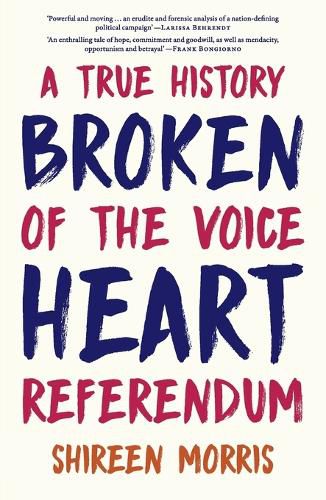
I was crushed by the defeat of the Voice referendum, appalled that such a simple request would be rebuffed by so many people through fear and -although no one wanted to own it – racism. No wonder First Peoples kept silent immediately afterwards, because the implications were just too awful. I can’t imagine how the people who had been the ‘face’ of the Yes case felt. Broken Heart by Shireen Morris tells us.
Shireen Morris starts off by explaining her own position: neither Indigenous nor white. She is of Indian Fijian ancestry, the daughter of parents who migrated to Australia in the 1970s. This placed her in an ambiguous position. It was a political reality that the Indigenous 3% minority would need supporters and the advocates from the 97% for the referendum to pass, and somehow the white constitutional lawyers and advisers, seemed revered and respected. But as a non-white ally, she was often accused of being ‘not blak’.
She is a constitutional lawyer, whose primary focus under the mentorship of Noel Pearson and the Cape York Institute over the previous 12 years had been Indigenous constitutional recognition. Now, I’m no great fan of Noel Pearson, I must admit. I find his Old Testament Prophet, hectoring tone abrasive, and his alignment with right wing politicians off-putting. However, in relation to referenda (referendums?) they will only pass with bipartisanship, and the referendum often has to be introduced by the party less ideologically likely to do so. For example, the much-vaunted 1967 referendum was introduced and carried by the Liberal Party, and the neo-liberal economic reforms of the 1980s could only have been introduced by a Labor party. It would have been far better (albeit rather galling as far as Labor voters are concerned) if constitutional recognition had been introduced by the Liberal Party. But as Morris showed in her previous book Radical Heart, once the then-prime minister Malcolm Turnbull rejected the Voice proposal in October 2017, there was little hope of bipartisanship. There was only ever bipartisanship for an amorphous and wholly symbolic form of recognition, and that proposal was explicitly and firmly rejected by Indigenous people. There were four choices: 1. accept a symbolic statement which would be rejected by Aboriginal people 2. wait for bipartisanship- but when, if ever, would that happen? 3. Abandon all hope 4. Try to win it without Bipartisanship. They went for the fourth option.
Noel Pearson and the Cape York Institute promote the idea of the Radical Centre:
Finding the radical centre requires engagement across divides, in contrast to the entrenched ideological positions and point-scoring of ordinary partisan politics. It is not simply about splitting the difference between two opposing principles to reach a lowest-common denominator. Rather, it is about harnessing the ‘dialectical tension’ in enduring disagreements to uncover a creative and ambitious reform solution… A thesis is proposed, which attracts a counterargument, the antithesis. The radical centre endeavours to synthesise these contradictory insights into a richer truth or a more correct and consensus-building position….The radical centre thus eschews simplistic categories like left and right. Finding it is an empathetic endeavour, requiring us to see the humanity and intelligence in our opponents and the kernels of truth in their opinions. (p. 26)
This is where Pearson and Morris aimed their activities, but there’s not much evidence of it here. People changed sides, allies became opponents, people lied. I wonder if they still have faith in the Radical Centre.
The book starts with a timeline, starting in 2012 through to the referendum on 14 October, when 40% voted ‘yes’ and approximately 60% voted ‘no’. It wasn’t always that way: there was around 60% support at first until mid-2023. There were many meetings and several drafts, and the accusation by the Coalition that Albanese presented it as ‘my way or the highway’ was just not true. There were many, many compromises but never from the Coalition. In retrospect, Morris thinks that they gave ground too early, which left them no where to go.
In 2014 Peter Craven, Julian Leeser, Damian Freeman and constitutional lawyer Ann Twomey proposed a constitutionally guaranteed Indigenous body to provide ‘advice to the Parliament and the Executive Government on matters relating to’ Indigenous people. Yet, at various times, all except Twomey distanced themselves from this initial suggestion. Frank Brennan opposed it from the start- he only wanted symbolic constitutional recognition. Others flip-flopped: Turnbull said yes, but with equivocation and probably did more damage by giving people reasons to vote no when he voiced his misgivings. Peter Craven seemed to live up to his name. Julian Leeser was a co-creator and longtime supporter of the Voice but then he recommended gutting the advice-giving aspect of it. But at least he had the courage of his convictions to resign his position. Morris dubs him ‘a noble politician’ for standing up for what he believed in, notwithstanding negative career ramifications. Given Leeser’s equivocation, I think she’s giving him a free pass. Ex-ministers Cheney, Peter Baume and Ken Wyatt declared that they would vote ‘yes’, and finally Leeser switched to genuine advocacy, along with Andrew Gee and Brigid Archer.
As far as Albanese is concerned, Morris claims that he committed the first error when announcing the referendum at the Garma festival without include the title of the law that was being proposed (I reckon – gees, it was a music festival, not a court of law or parliament). The announcement was a surprise, and it came over as a Labor policy. Albanese did offer to negotiate with Peter Dutton, but Dutton didn’t take up the offer. Why didn’t Albanese let that be known? And should Albanese have cancelled when the support collapsed? She suggests that perhaps Albanese thought that it better that the country reject it, rather than that he break a promise. Should he have delayed? Well, it probably wouldn’t make any difference: it was too late, not too early.
I think that she gives Jacinta Nampijinpa Price and Lydia Thorpe a free pass. I know for myself, my support wavered at the thought that Indigenous people themselves might not want it. As it turns out, there was overwhelming Indigenous support.
The Yes side made mistakes too. They were advised that most people only engage with a referendum question 4-6 weeks before hand, and that powder should be kept dry. But it was a mistake: the NO campaign got a head start, especially over Christmas when the YES campaign just went to ground. They had no answer to the NO’s objection that everyone was equal and that the Voice would divide the country by race.
There’s a lot of if-onlys here: if only the Coalition had championed a Voice during their time in government; if only Turnbull had not rejected it in 2017;if only people like Tony Abbott, Christian Porter, Jeff Kennett, Alan Jones and many others had not switched from Yes to No; if only the constitutional drafters Greg Craven and Frank Brennan had not attacked the constitutional drafting; if only the compromises Indigenous people made had been saved for when people were paying more attention. If only the Labor government had explained the constitutional change better, and been able to encourage Coalition co-ownership. If only the YES campaign had started campaigning in earnest much earlier; and if only it had better strategies for countering disinformation. If only the media had not prosecuted false balance, and had critiqued mistruths. If only we had better politicians: a bit smarter on the left and much kinder on the right.
And most importantly:
If only we were better Australians, more generous with our love and less susceptible to fear. p. 219
I don’t know where to go with this, and I don’t think that Shireen Morris does either. Her mentor, Noel Pearson, said that he would step back from politics if the Referendum failed and he has kept to his word. What a depressing book.
Short History Of….The White House. Like many others, I’ve been transfixed with horror at Trump’s circle of adoration in the Oval Office and the increasing tide of gold tat that is encrusting the walls. But Trump is not the only President to make changes to the White House, with Theodore Roosevelt and William Taft constructing the East and West Wings and expanding the Oval Office, and Truman constructing the balcony. Under Jacqueline Kennedy, the White House was actually proclaimed a museum. The original Presidents Palace, based on Leinster House in Dublin, was built between 1792 and 1800, so the paint was barely dry by the time it was burnt and sacked by British troops in the War of 1812. It was a mixed- use building: both the President’s house and workplace. The White House originally had its own staff who worked only at the White House, but today Presidents tend to bring their own supposedly-loyal staff. George H. W. Bush was the most popular president amongst the traditional White House staff, supposedly because he was accustomed to having servants. Interesting… but it still doesn’t make me feel any better about Trump’s decorating taste. At least it can be taken down when he leaves, unlike the East Wing which no longer exists.
The Rest is HistoryEpisode 639 Revolution in Iran: Death in the Desert (Part 4) After mocking Jimmy Carter mercilessly over the previous three episodes, Dominic Sandbrook and Tom Holland finally express some sympathy and grudging admiration for President Carter in this episode. After the release of the black and female hostages, there were 52 male hostages left in Iran, and after showing restraint for months, Carter became more hawkish and finally in April 1980 he imposed sanctions on Iran. Cyrus Vance was still urging diplomacy, but that same month Brzezinski (in Vance’s absence) gained Carter’s approval of a military rescue of the hostages. It all sounds very Christian: the commanders assembled in a hangar before taking off, where they prayed, read about the story of David and Goliath and sang ‘God Bless America’. (Sheesh). It was a disaster: there was a dust storm, they encountered civilian pilgrims, and the helicopters malfunctioned, leading them to pile into a smaller number of helicopters. The attempt was aborted. By now, the 1980 Presidential election was afoot, and Iran held out until Reagan’s inauguration, despite and to spite Carter’s obsession and hard work in trying to get the hostages home. And look where we are now, invading Iran again.
Journey Through TimeEpisode 65 The Spanish Civil War: Orwell V Stalin (ep. 4) The Republicans were not one united group. There were communists, supported by Russia on one side. On the other side were anarchists, who were not part of the International Brigade, who wanted revolution within Civil War. This is the side that Orwell chose, when he joined POUM (Workers Party of Marxist Unification). They began fighting against each other. The communists took over the Telephone Exchange, which was controlled by POUM, and after POUM was defeated, it was seen as the ‘enemy’ and ‘facists’ just as much as the Nationalists were. He was in real danger, and after he escaped he wrote ‘Homage to Catalonia’, which he had trouble getting published. Spain was by now a laboratory for Stalinist repression, as well as a laboratory for fascism.
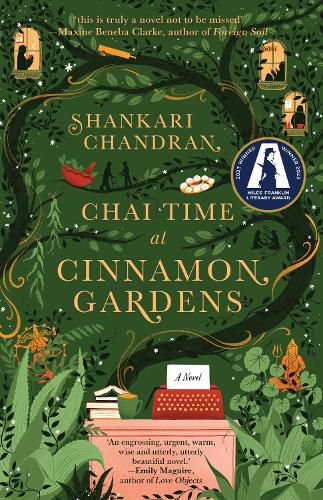
Chai Time at Cinnamon Gardens by Shankari Chandran
The Lovers by Tumna Kassab
Iris by Fiona Kelly McGregor
I’ve only read the first two of these, and it seems that I wasn’t particularly impressed with them either. Five of the authors were first-time nominees, and one was a debut author. It’s commendable to open it up to new talent, perhaps, but given that the Miles Franklin is still Australia’s premier literary prize, I don’t know that we were given six books that are going to last.
There’s nothing wrong with this book. It makes a perfectly good bookgroup book. It is packed full with issues: racism, domestic violence, PTSD, loyalty, colonialism, Tamil and Sri Lankan history. In fact, it’s probably too packed with issues. For an Australian readership, it introduces Tamil history and the violence in Sri Lanka that most of us have forgotten about (if we were ever very aware of it). It is even more relevant today than it was in 2023, with the rise of One Nation and March for Australia.
It is set in a nursing home, run by Anjali (Anji) who took it over from her mother Maya who relinquished it after her husband Zakhir left unexpectedly never to return. The narrative runs on two timelines: the present day and flashback.
The present day involves the marital strains between the home’s geriatrician Nikki,and her husband Gareth, a local councillor and hopeful political candidate, whose marriage is tense after the death of their toddler daughter Florence. Although Gareth doesn’t know it, his wife is having an affair with Ruben, a Sri Lankan worker at the home, who is clearly overqualified for the job but happy to take it. Thrashing about in his unhappiness, Gareth becomes caught up in a racist maelstrom, prompted by finding a statue of Captain Cook abandoned under the nursing home.
The flashbacks take us back to Sri Lanka (Ceylon) and the civil war between the Tamils through the terrorist group, the Tamil Tigers, and the Sinhalese army. But the flashbacks are handled awkwardly, and inserted clunkily into the text.
There’s just too much going on here. No doubt it will spark a good discussion at bookgroup next week, but I don’t think that it’s Miles Franklin material.
Jean Valjean comes over as the real good guy in the musical Les Mis but in this backstory, which actually appears in the original book, he’s no good guy. It’s 1815 and he has just been released from prison. Penniless, homeless and marked by his yellow convict passport, he is treated with suspicion by the villagers of Digne. He is taken in by Monseigneur Bienvenu, who lives with his sister and servant. He is a violent, frightening presence and he takes advantage of the opportunity to steal the silverware, only to escape punishment when the Monseigneur claims that he had given it to him.
This story was actually reprinted as ‘The Bishop’s Candlesticks’ in an anthology of children’s stories that my mother had before me and my husband said that he read it as part of a school reader when he was a kid. With its religious overtones and rather heavyhanded ethics, I don’t know that it would make it as children’s reading today (to say nothing of the language level). Although it’s an engaging exploration of forgiveness and redemption, which a child would benefit from, this is not a children’s film, with a fairly graphic depiction of imprisonment and menace.
My rating: 4/5
Seen because: it was a preview for the upcoming French Film Festival. It has English subtitles.

 The Resident Judge of Port Phillip