
SPOILER ALERT
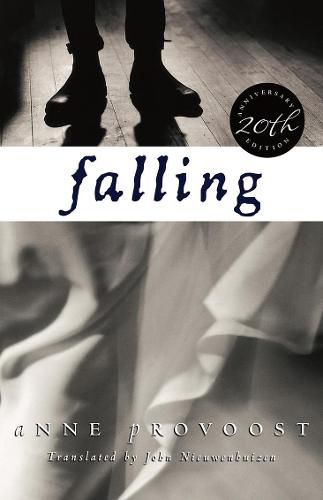
The twentieth anniversary republishing of this book has come and gone, it having first appeared in Dutch in 1995. I had heard of it, and knew that it dealt with Nazism, and assumed at first that it would be set during World War II. It came as a surprise, then, that it was set in the present day (in 1995) with themes that are probably even more resonant and urgent today than they were in 1995. My copy, collected no doubt from my local little library, had obviously been a school set-text, and the book won many Young Adult awards on its publication.
Lucas has accompanied his mother to Montourin, a small Belgian provincial town, to clean out his late grandfather’s house. The book opens with Lucas standing by the side of the road as his friend Caitlin is brought back from hospital after an accident that occurred three weeks earlier. The narrative then spirals back to explain who Lucas and Caitlin are, how she was injured, and Lucas’ part in that injury. It is written in first person, from Lucas’ viewpoint, thus aligning us as readers with his perspective of events in the weeks leading up to Caitlin’s injury.
On arriving at Montourin, he finds that there is an unspoken edge of hostility towards him and his family, exemplified by Soeur, an old nun in the nearby convent in which American-born Caitlin is staying. He does not understand why, and as he sees his mother sorting through and destroying his grandfather’s documents and belongings, he knows that something is being kept from him. He gradually learns that, after the death of one of his children during the hungry days of WW2 occupation, his grandfather denounced fifteen Jewish children and the nuns who were hiding him in the neighbouring convent, out of grief and resentment that these Jewish children were taking food rations that could have saved his daughter. Some in present-day Montourin shunned his grandfather for this action; others supported it.
Their support was generally unspoken, but outright admiration was voiced by Benoit, a young man older than Lucas, who combines menace, charisma and manipulation in his neo-Nazi outlook. Lucas is drawn into Benoit’s sphere and becomes involved, with varying degrees of culpability, in Benoit’s terrorist plans against the Moroccan refugees who have moved into the town. At the same time, he is attracted to the inscrutable Caitlin who fluctuates between flirt, friend and heartbreaker as she, too, seems to be becoming friendly with Benoit. But when Caitlin is involved in a single-car accident- the reasons for which are unclear- Lucas acts decisively, if precipitously, in a way that will change the rest of Caitlin’s life. I’m not really quite sure about the ending of the book, which is deliberately left obscure, but which struck me as a little melodramatic.
Since 1995 the presence of African refugees in Europe has only increased, as has the prominence and apparent electoral acceptability of neo-Nazi parties. This book is a warning against the slow slide towards fascism, especially for young men with no responsibilities who yearn acceptance from other young men. I can see why it would be chosen as an upper-school text, especially given its urgent relevance today. I’m not sure how it would be received by high school students though- it moves fairly slowly, and I wasn’t particularly satisfied by the ending.
My rating: 7/10
Sourced from: little library
 The Resident Judge of Port Phillip