
We don’t go into the city together much because Steve finds walking difficult, but the milder weather was such a relief today that I really wanted to do something ‘in town’. So off we went….
First stop was the Royal Historical Society of Victoria to see their current exhibition ‘The Burying of Melbourne’
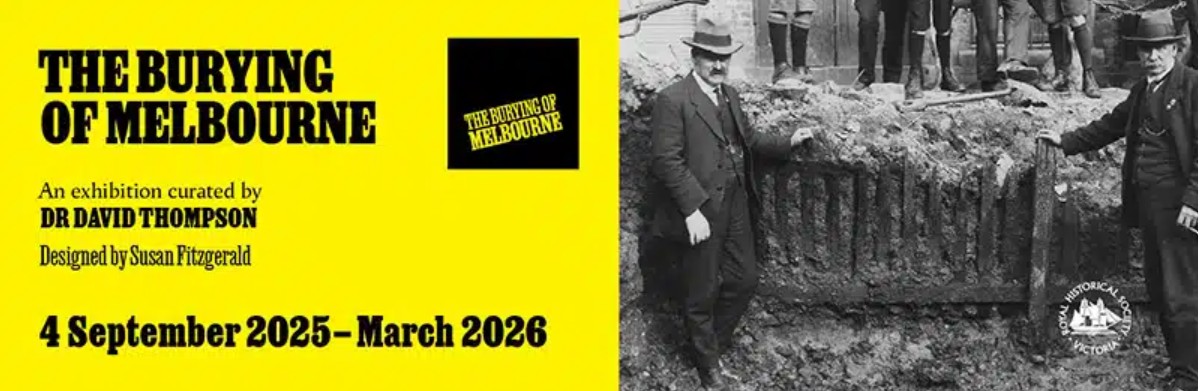
In the mid-1850s some areas of the Melbourne CBD were buried under a layer of clay at the direction of Melbourne City Council, a rather extraordinary event that until recently had been largely forgotten. It is only in recent years that archaeologists carrying out the excavations required prior to developments in the city have uncovered evidence of the clay layer.
A study commissioned by the Heritage Council of Victoria found that the burying was part of efforts by the City Council to control flooding, caused largely by the original laying out of Melbourne’s street grid without due consideration of the flow of water over the underlying topography.
The depositing of the clay layer, metres thick in some places, had a significant effect on the lives and circumstances of those affected but did result in the sealing off of a layer of archaeology stemming from the earliest days of European settlement.
This exhibition, The Burying of Melbourne, describes events leading up to the burial and looks at some of the archaeology discovered beneath the clay.
The problem was that people started building their houses before the roads were built, which meant that when the roads finally did come through, the houses were much lower than the road. As a result, the houses flooded in heavy rain. The council ordered that the properties had to be filled up to road level with clay. In some cases, particularly where the houses were not owned by the occupants, the house was in effect entombed by the clay, with new houses built on top of them. The layer of clay was located when a compulsory archaelogical inspection was made for a new development near the Wesleyan church in Lonsdale Street. Comparisons were made between the contour maps pre-filling and after-filling to identify the sites where the clay was likely to have been spread. Six terrace houses dating from the 1840s were found in Jones Lane.
This exhibition is not high-tech: indeed, it is mainly maps and photographs of the archaeological dig. There are a few of the objects on display that were located on the site, most particularly the level under the clay. But I find the idea of a whole layer sealed off by clay for 170 years quite fascinating.
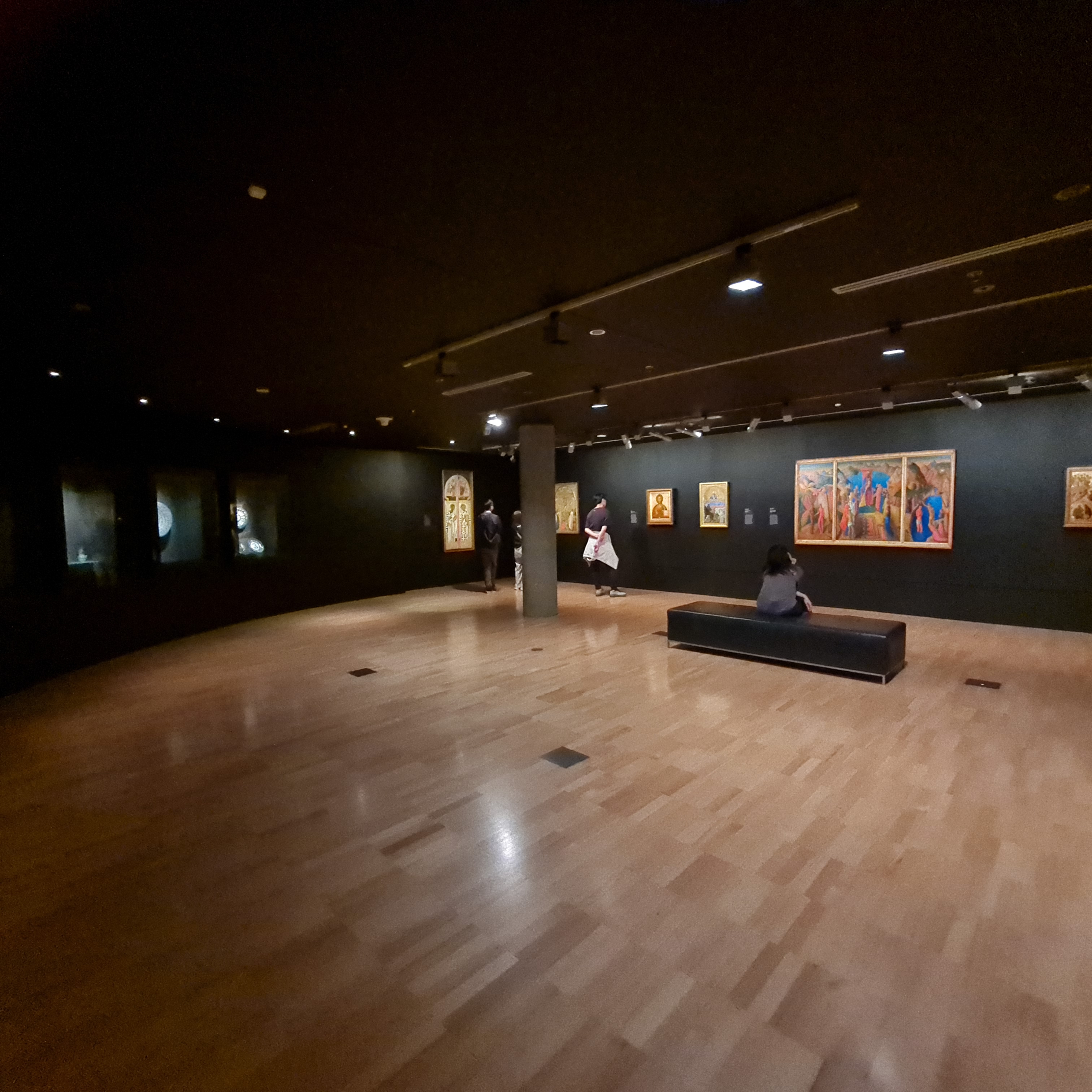
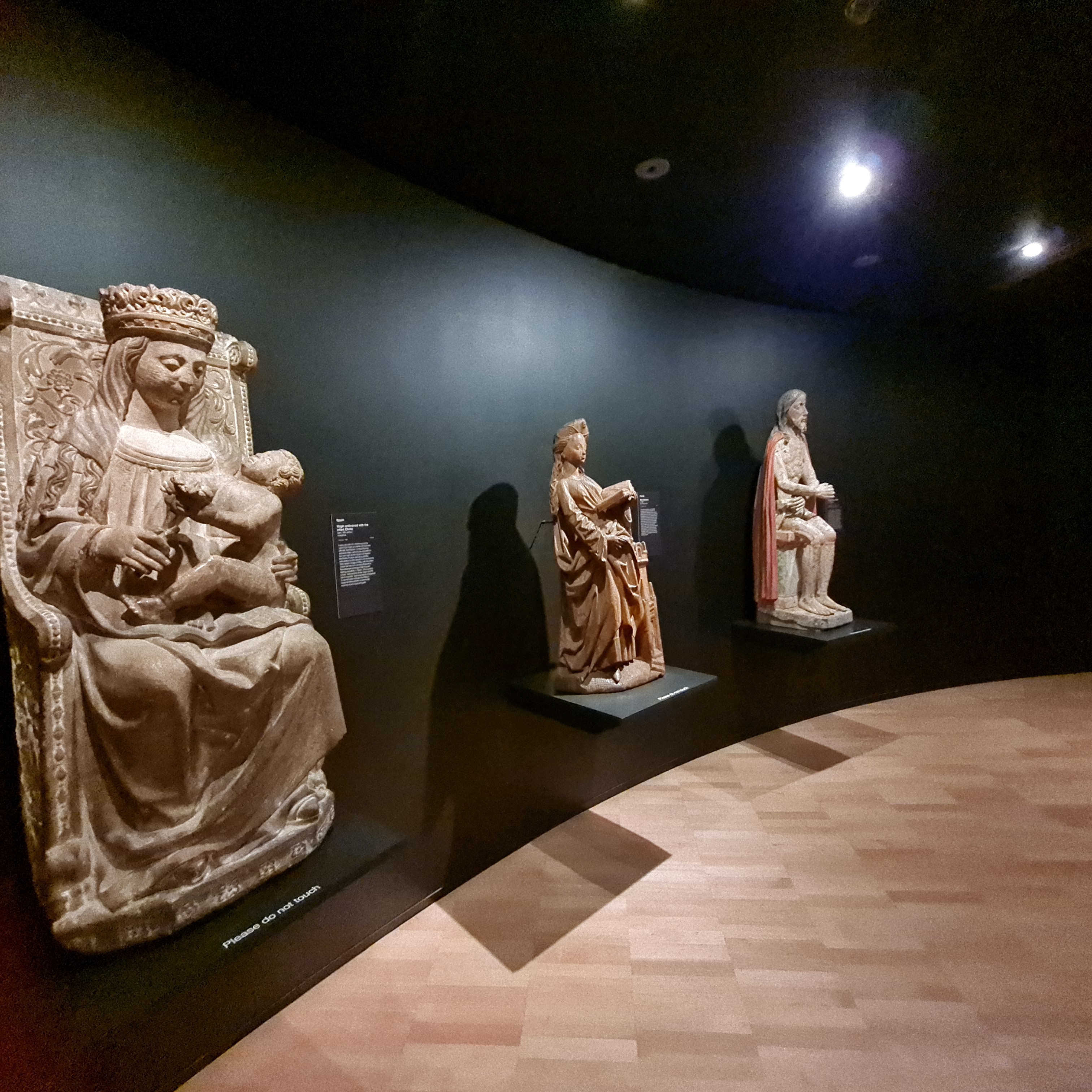
Then back onto the train and down to the Swanston Street tram for a quick trip up to the NGV International in St Kilda Rd. I wasn’t interested in the $40 Westwood/ Kawakubo exhibition (when did these exhibitions become so expensive?) and just stuck to the freebies. Somehow or other we ended up in the British and European Collection 13-16 Century, which you can see in a 3D version here if it doesn’t induce too much nausea for you. Actually you can see it online better than you can in real life because at least they turned the lights on to film it: probably because of the age of the artwork, it is very dimly lit. Their signage of the objects themselves is appalling- white print of about 12 pt font on grey behind glass. I just couldn’t read it at all. However, given that I’m not likely to visit Europe again, it was a little bit like being in a grand European cathedral close up.
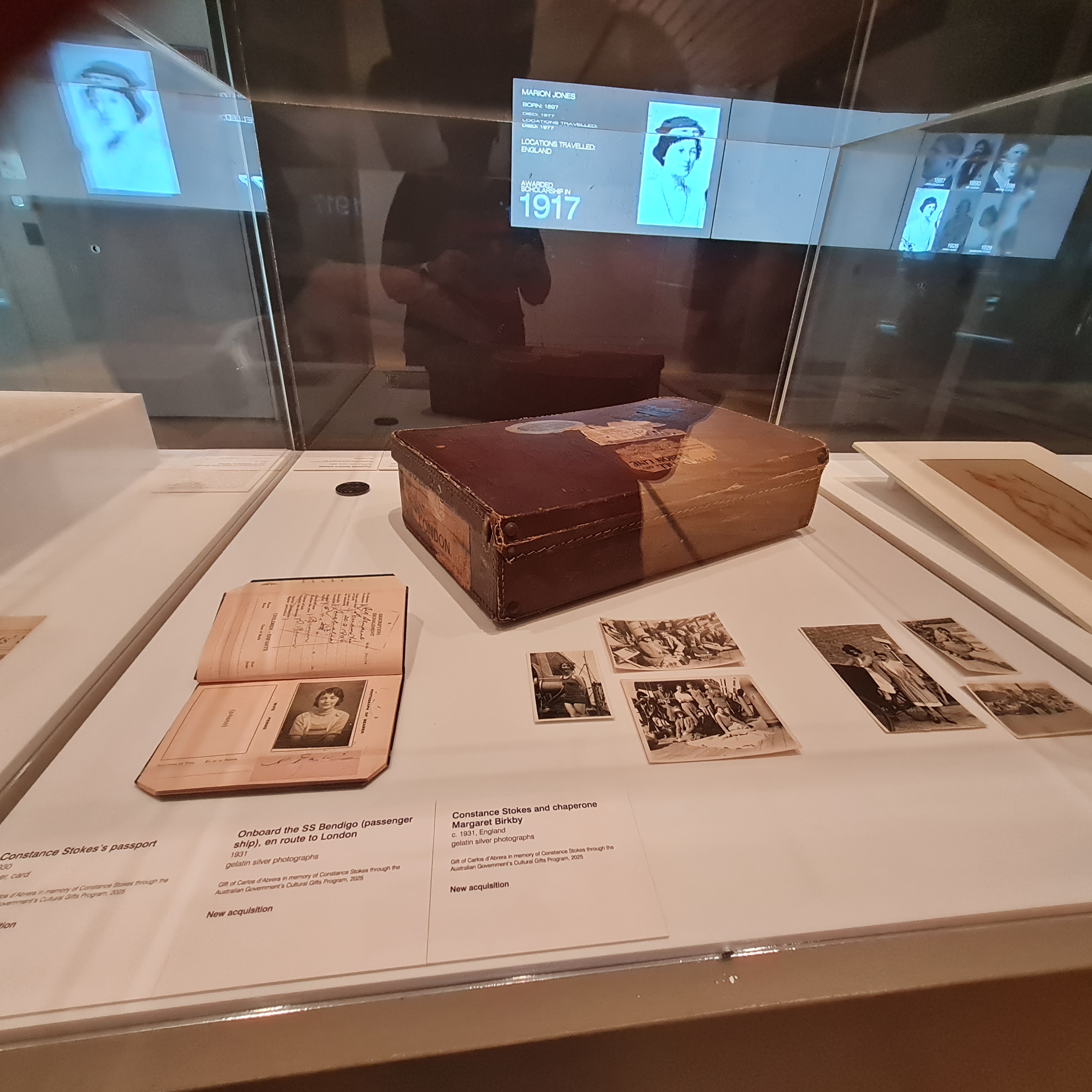
What I really intended to see was a display of the National Gallery of Victoria Travelling Scholarship. This is a tiny exhibition, tucked away on the first floor near the escalators. The NGV established its Travelling Scholarship in 1887, just 25 years after the Gallery opened. Awarded every three years, the three-year scholarship granted a stipend to study at art epicentres across Europe. Scholarship-holders were required to provide to the Gallery a replica of an Old Master painting, a nude study, and an original composition. A cheap way of increasing the size of the collection, I suppose. The exhibition is mainly just a projection on a wall, showing biographical details of several recipients (nicely balanced between male and female artists) with a few glass cases containing objects belonging to Constance Stokes (nee Parkin) trip that she received as part of her scholarship in 1929. Just a slight young girl, you get a sense of how exciting it must have been to travel over to London to study at the Royal Academy of Arts, with her passport, photographs and ball invitations.
 The Resident Judge of Port Phillip