Monthly Archives: October 2025

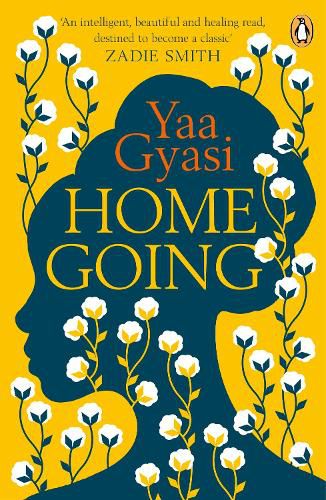
‘Homegoing’ by Yaa Gyashi

2016, 300 p.

Despite its modest 300 pages, this book covers a huge scope, covering three hundred years over two continents: Africa and America. It opens in Ghana in the mid 18th century, with two half-sisters who are unknown to each other. One sister Effia, of Fante tribal heritage, is coerced into marrying a white British officer sent to oversee Cape Coast Castle, a staging post for enslaved Africans prior to being shipped across the Middle Passage. Living in luxury at the Castle, she is oblivious to her half-sister Esi, of Asante tribal heritage, imprisoned as “cargo” in the basement holding pens, before being shipped to America. The two family trees bifurcate at this point as Effia’s line stays mainly based in Ghana, with the ongoing effects of colonization affecting the life events of generation after generation. Esi’s line is based in America, spanning slavery, Jim Crow legislation, the Harlem Renaissance and drug-fuelled urban life.

The opening pages of the book have a time line, tracing the generations in two distinct branches. The narrative alternates between the two branches, in a series of fourteen separate but linked short stories. They could be read separately because each one in effect starts again in its opening paragraphs, although there are small familial references that allow the reader to place the character within their familial context. In many ways this disjointed narrative reflects the dislocation of slavery and the rootlessness of not knowing where you come from. It was a rather jarring reading experience: you would come to be invested in a character, only to have the narrative whisk you across the ocean and time into a new story.

Running through the book is the theme of betrayal and complicity. The coastal Fante tribe capture and sell the Asante people to white slavers. In Harlem Renaissance New York, a black man who ‘passes’ as white leaves his wife to marry a white woman. Step-mothers are cruel to their step-children; families shun their gay children. There is also the theme of severance: two half-sisters growing up on different sides of the globe; and particularly in the American part of the narrative, severance between parents and children, one of the tools of enslavement, but which recurs from generation to generation. This severance lies at the heart of identity and reflects the title of the book: one of the characters, speaking of the Back to Africa movement says “We can’t go back to something we ain’t never been to in the first place. It ain’t ours anymore.”

A rather heavy-handed motif of the book was a pair of gold-flecked stones, one each given to the two half-sisters by their mother Maame. Esi’s stone was soon lost, buried in the mud of the holding cell at Cape Coast Castle, while the other stone was handed from generation to generation. I was dreading a rather mawkish resolution of the two stones at the end of the book but fortunately Gyasi was an astute enough writer not to fall to such an easy trope.

I enjoyed the book, with the equal weight given to the Ghanan and American experience, a weight judiciously and scrupulously meted out. I did find myself thinking of Alex Haley’s Roots which took a similar generational approach but from memory, there was not the bifocal approach of both African and American stories in that book.

It is particularly impressive that this is a debut novel, as the author has such control of a tightly structured dual narrative. The structure did feel a bit like a straitjacket at times, and not all characters were as fully developed as others. But it is a good exploration of slavery, colonialism, inter-generational trauma and the intersection of colour, class and gender- in many ways a book of its time, despite its historical focus.

My rating: 8/10

Read because: Ivanhoe Reading Circle selection. I wish that I had written this review soon after reading the book, instead of waiting weeks. You’d think that I’d know by now.

Sourced from: Readings paperback.

I hear with my little ear: Podcasts 8-15 September 2025

The Rest is History Episode 576 The Irish War of Independence Part I. The Rise of the IRA Between 1909-11 Britain wanted to give Home Rule, but the Northern Irish unionists didn’t want it. World War I froze any progress on the question. Then, during the war, in 1916 the Easter Uprising took advantage of the opportunity of Britain being otherwise distracted, but it was quickly crushed, leading to the arrests of between 1000-1500 people. 187 were imprisoned, and 14 were executed, including Roger Casement. The Nationalists used the deaths for propaganda purposes in the midst of UK apathy. The Unionists, who constituted about 30% had influence in the British cabinet butBritain was taking an each-way bet as Sinn Fein became more prominent. Arthur Griffith, the founder of Sinn Fein, worked as a printer, and organized boycotts and agitation and stood for by-election. Michael Collins was a military organizer within Sinn Fein, not just a gun runner. He emerged when the other leaders were jailed in 1917. De Vallera was the President, and Griffith was the Vice-President of Sinn Fein and they accepted the aim of an independent Irish Republic. In December 1918 there were elections held in the UK and Ireland with an enlarged electorate, with 70% of electors voting for the first time. It yielded a Sinn Fein victory.

The Human Subject The Man With the Artificial Windpipe was Andemariam Beyene, an engineering student from Eritrea studying in Iceland. In 2011 he was desperate for a cure for the large tumour that had been discovered in his trachea. He had tried surgery and radiotherapy and nothing had worked.Dr Paolo Macchiarini, Karolinska Institute’s star surgeon presented himself as Andemarian’s best and last option. He proposed an experimental treatment – but one that had never been done before on a human being. Andemariam would be the first. Unfortunately, he agreed to it. Macchiarini was a good publicist, and published the results of the surgery soon afterwards- too soon, because Andemarian died, as did all three patients who had this surgery. Macchiarini ended up being jailed for 2 1/2 years, and his papers were retracted.

‘No Dancing in the Lift: A Memoir’ by Mandy Sayer

2025, 227 p.

I feel a bit as if I’ve come half-way into a conversation with this book, because this memoir by Mandy Sayer is in fact her fourth (no fear of an unexamined life, here). But although it is discussing her life, it is more a love letter to her father, Gerry, addressed to him in the second person.

At my age, one attends an increasing number of funerals. I’ve often been struck by the practice in giving eulogies where the deceased person is addressed as “you”, as if they are present and listening. This is how Sayer speaks to her father, as she revisits their shared life and describes the last months of his life as she visits him daily as he moves between hospice care and her own apartment.

Her father had not been a constant presence in her life. Her parents, Gerry and Betty, separated when she was ten years old. It was an erratic, bohemian, drug-and-alcohol fuelled upbringing, and when she went to live with her mother, along with her siblings Lisa and Gene, her mother subsided further into alcoholism and toxic relationships. There were reconciliations, and further falling aparts. Her father came back into her life when, at the age of 20 she travelled with him to the United States to busk on the streets and parks of New York City, New Orleans and Colorado, he on drum, she tap-dancing. Now, in No Dancing in the Lift her own marriage has ended and she is a published author circulating in the literary scene in Sydney, and her father is dying of cancer.

Her father had been a noted jazz drummer in Sydney, playing with both local and international acts. He had a cleft lip and palate, which affected his speech badly. As I have a cleft myself, I was interested to see the child’s-eye view of the parent’s condition. It was accepted completely, and she knew that he had spent years at Westmead Children’s Hospital having surgery. (Actually, having experienced it myself, I know that surgery was more a recurrent than ongoing event, often with years in between surgeries- although it might not have been remembered that way). At one stage, her father falls asleep open-mouthed, and for the first time, she could see into his mouth and was appalled to see how incompletely the palate had been repaired.

As her father’s cancer progresses, he becomes hostile and belligerent, although this subsides after further health conditions emerge. Her siblings, having survived the same childhood that she did, are troubled people as well: either distant in the case of her sister, or manipulative in the case of her brother. Both parents had embarked on complicated relationships after the marriage breakup, and as Gerry becomes sicker, people and situations emerge from his past. But fellow musicians and writers emerge as well, and the reefers and drinks flow in what must have seemed a racketty lifestyle in the midst of the inflexibility and judgement of hospitals and institutions.

In the midst of this, Sayer meets fellow author Louis Nowra, who was married at the time and their relationship deepens from initial attraction, to a chaste and tentative friendship, then to a full-blown love affair, observed and encouraged by her father Gerry. Death and love, both becoming stronger at the same time: it is a confronting, and yet in many ways, perfectly natural conjunction.

She has not changed names in this book, and so you meet authors Louis Nowra and Linda Jaivan, musician Jeff Duff, and actors Geoffrey Rush and Cate Blanchett move in and out of the pages. It is an intensely local book, with the landscapes of Sydney and Darlinghurst described evocatively.

From the start of the book, you know as a reader how the book is going to end. What did surprise me was that these events took place twenty five years ago, as the rawness and the hollowness seemed so recent. Although I shouldn’t really be surprised because, as the child, you are always the child. Although, as she says, her father has taught her how to grow old- and in his case, unrepentantly and without necessarily growing up.

My rating: 8.5/10

Sourced from: review copy from Transit Lounge, via Scott Eathorne.

I hear with my little ear: Podcasts 1-7 September 2025

History Hit The Surrender of Japan In the broadcast to mark the surrender of Japan on August 15th, 1945 Emperor Hirohito’s voice crackled over Japanese airwaves to announce the unthinkable – the surrender of Japan. It was the first voice recording of him, and there would be many Japanese who had never heard him before. This episode, featuring Dr. Evan Mawdsley, points out the Allies wanted regime change because they distrusted the deepseated militarism of Japanese society. Technically, there was a neutrality pact between Japan and USSR signed in 1941, but on 9 August 1945 Russia entered into the Japanese arena, which meant that Japan could no longer defend Manchuria. Days later, the nuclear bombs were dropped. In a bit of what-if history, the podcast goes on to explore what would have happened had Japan not surrendered.

In the Shadows of Utopia Season 2 Episode 12 The Cambodian Civil War Begins Part 2: A Revolution Waged with Empty Hands Time Period Covered 1967-1968. In November 1967 Jackie Kennedy visited Sihanouk (in fact, I saw photos of her at the Raffles Hotel in Phnom Penh when I dropped by there one day). Sihankouk was convinced that there was a communist insurgency in his own country, surrounded by Communist countries, so he began looking increasingly to the United States.

Meanwhile, in November 1967 Pol Pot went to the north eastern base of the CPK (Communist Party of Kampuchea), which was supported by local tribespeople, but poorly armed. Both Vietnam and the CPK planned to have uprisings at New Year in 1968, but there was little support from the Communist parties in other countries: China discouraged the uprising because it was preoccupied with its own cultural revolution, and Vietnam ignored the Khmer pleas for help when skirmishes were being quashed. On January 17th and 18th the CPK attacked army and police depots in order to seize their arms, and the uprising began. It started in Battambang (over near the Thai border), where 10,000 villagers joined in, and moved into the jungles. With no support from China or Vietnam, the CPK went it alone, identifying itself as the vanguard of the revolution, and Pol Pot set himself up as leader. He lavished high praise on China, especially the Cultural Revolution and the Great Leap Forward (despite the reality) and the Chinese Student Association emulated the Big Character posters of the Cultural Revolution. All this pro-China action was too much for Sihanouk, who withdrew his ambassador from China. In January 1968 Sihanouk cracked down on the Battambang uprising, blaming everyone. He brought back Lon Nol, who undertook a scorched-earth approach against the uprising. Yet Sihanouk continued to support the Viet Cong and the Vietnamese communists who were in Cambodia, just not the home-grown ones. The United States was aware of the border camps and the Pentagon was even considering invading Cambodia, which was officially neutral, but the State Department put the kibosh on the plan. Sihanouk said that he couldn’t prevent crossings from Vietnam over the border, so he couldn’t object to the US engaging with them. He said he would shut his eyes to any American bombing. Did he know? Did the bombing start under LBJ? Meanwhile, the Tet offensive was under way in Vietnam.

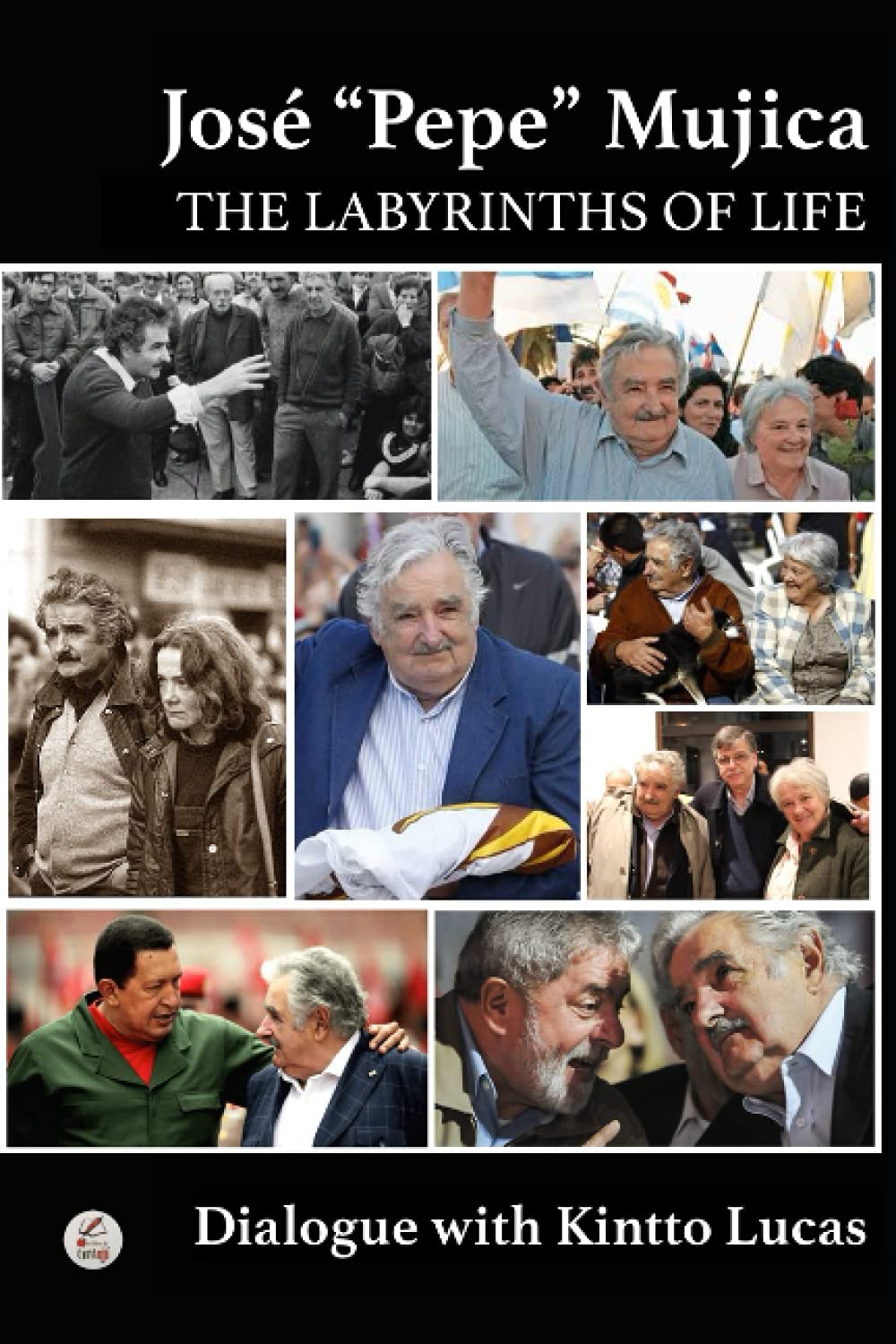
‘Jose “Pepe” Mujica: The Labyrinths of Life’ Dialogue with Kintto Lucas

2020, 119 p.

This is a dialogue between the ex-president of Uruguay, Jose Mujica, and Kintto Lucas, a journalist, writer and Vice-Chancellor and Ambassador for Uruguay under Mujica’s government. As Lucas explains in the introduction, he first met Mujica in the Punta Carretas prison in 1971, when Lucas was just eight years old. He visited his older brother, who like Mujica was a member of the National Liberation Movement – Tupamaros (MLN-T) every Saturday. This was the prison from which 106 Tupamaros escaped in 1971 by tunnelling out of the prison, but Lucas’ brother was not among them. His cell had been changed at the last minute, and he no longer had access to the tunnel. However, by 1972 he was released and exiled to Chile. Kintto left Uruguay in 1980 and lived in Brazil until he returned after the withdrawal of the military in 1985. On his return he joined the MLN as a militant and worked as a journalist on a Mate Amargo bi-weekly Tupumaro newspaper, which became the best-selling newspaper in Uruguay.

Why am I talking so much about the author, and not Mujica himself? That’s because Lucas himself is front and centre in this book, with a 54 page introduction and he certainly doesn’t take a backward step in the interview, either. I didn’t bother counting the words, but I suspect that Lucas talks as much as Mujica does, and at times I just wanted him to shut up.

There’s lots of internal Uruguayan politics in here, which went right over my head. Still, it was good to get beyond the aphorisms and homespun wisdom that Mujica repeated over and over in his many interviews with Western journalists. I’m not sure whether this book was written in English or Spanish- an editor is credited, but not a translator- but it is rather strangled English and not particularly pleasant to read. As Mujica rarely spoke English, I think that this is a transcript of a Spanish conversation translated by the author, but it does not read particularly well.

Apparently when the Tupamaros held up a bank or a cinema, they would harangue the literally captive audience about politics and justice, before letting most of them leave. Reading this, you go away feeling rather ear-bashed by both of them too.

My rating: 6/10

Sourced from: Kindle e-book.

I hear with my little ear: Podcasts 24th-31 August 2025

Rear Vision (ABC) 2014 and Ukraine’s relationship with Russia. This is a replay of an episode from 2014, just as Russia had invaded Crimea. It all seems rather prophetic now. Ukraine was the largest republic of the former USSR, and it withdrew from USSR in 1991. With hindsight, they were dudded by the Bucharest Memorandum of 1994 whereby they gave up their nuclear arms for a security ‘assurance’ – not a guarantee- of territorial integrity from their guarantors including Russia (something that Bill Clinton now regrets). In the wake of huge inflation and very low wages, the Orange Revolution took place in 2004 ending with the election of Viktor Yushchenko. At the time of recording (2014) Crimea had just been invaded by Russia. Crimea had been settled with many Russians who had been encouraged to move there by Stalin, but many of the original Tartars had since returned, and in 2014 comprised about 35% of the Crimean population. Interesting, in he light of current events.

In the Shadows of Utopia Episode 11 Mao’s Great Proletarian Cultural Revolution I listened to this just after reading Linda Jaivn’s book Bombard the Headquarters (my review here), and this makes a really good companion listen. In fact, well done young Lachlan, because this episode hangs together really well. He points out that the Cultural Revolution, as well as changing China, also acted as a test of loyalty of Mao’s officials. He draws some parallels with different phases of the French Revolution, and sees the dispersal of young people into the provinces as a way of reining the revolution back in. He reminds us of the Sino/Soviet conflicts, and suggests that China’s rapprochement with the US was an example of ‘the enemy of my enemy is my friend’ in action.

99% Invisible All About That Bass I’ve started playing bass ukulele- yes, there is such a thing- so this episode really interested me. It’s about the Roland 808 drum machine, which apparently is ubiquitous- even (drummer) Phil Collins used one on ‘One More Night’. When the Roland 808 was released in 1980 it cost $1200 (about $4600 in today’s currency), and was intended to replace drummers. It was when they realized that they could use the ‘decay’ function to replicate the bass and kick drum sound that the Roland 808 gave the bass the prominence that it now has in hip-hop and R&B.

The Human Subject (BBC) The Boy with an Ice Pick in His Brain. Actually, despite all the warnings about gruesome details that preface this episode, I didn’t find it particularly disturbing. It’s about Dr Walter Freeman, who championed the lobotomy process throughout the US, even by psychiatrists whose surgical skills must be questionable. The Boy with the Ice Pick in his brain was 12 year old Howard Dully whose step-mother arranged to have a lobotomy for ‘childhood schizophrenia’ (which sounded just like 12 year old cussedness to me). It was Freeman who operated on Rosemary Kennedy as a 23 year old, who never recovered from the surgery.

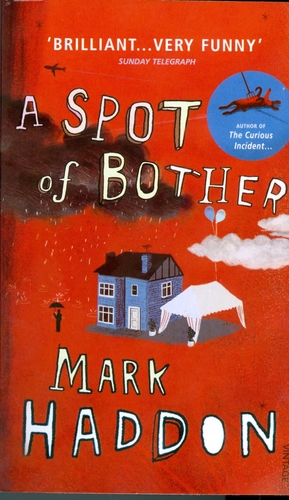
‘A Spot of Bother’ by Mark Haddon

2007, 503 p.

I read in succession two books that start off with the sudden death of a middle aged man, and writing this review some time (too long) after reading the book, I find myself getting confused between this book and J. R. Rowling’s The Casual Vacancy (reviewed here). Both are set in England, both have unlikeable characters and treacherous families, and neither shows off the author’s skills to best effect.

George is a 61 year old retiree who would certainly qualify for the Dull Men’s Club. The secret of contentment, he thinks, lies in ignoring many things completely. Things like his wife’s affair with his ex-colleague or the wisdom of his daughter marrying a man who seems to be nearly as dull as George is. But when George discovers a lesion on his hip, he is convinced that it is cancer and spirals off into his own whirlpool of paranoia, planning to kill himself or, literally, to take matters into his own hands. Meanwhile, his wife Jean is recapturing her lost youth with George’s business partner David, an affair that she sees as something romantic and beautiful, but which, when George discovers them having sex, is unattractive and embarrassing between two “old people”. When George and Jean learn that their daughter Kate is going to marry Ray, a tradesman with a strong northern accent, they both disapprove, as does Kate’s gay brother Jamie. Somehow weddings often seem to bring out the worst in families. Jean’s meddling, Jamie’s huffiness over whether his boyfriend Tony should be invited and how he will be received, and tension and uncertainties between Kate and Ray make this whole wedding seem a disaster in waiting. The whole thing teeters into farce, which undermines somewhat the rather acute and poignant observations that Haddon had made along the way.

The story is told from the varying perspectives of the characters, each of them rationalizing their stance, as we all do. What Haddon does well is butt these perspectives up against each other, challenging the veracity of the various points of view. Jean, for instance, sees herself as a vibrant and attractive older woman, where George sees her as a slightly repellent, plump, aging woman with witch-like hair. George sees himself as a slightly ironic, logical older man, where Jean sees him as a rather pathetic, lost retiree looking for relevance. Kate values Ray for how good he is with her young son Jacob; Ray is bemused by how angry Kate is all the time.

This book had none of the endearing charm of The Curious Incident of the Dog in the Night-Time, and it felt as if it could have been written by any number of middle-ranking English authors. The ending was just ridiculous, and I finished the too-lengthy book – and its unlikeable characters- feeling as if I was glad to leave them all behind.

My rating: 6/10

Sourced from: ex- CAE Bookgroups stock

Read because: my ex-CAE Ladies Who Say Oooh Bookgroup chose it from the dregs of the books left over now that CAE has closed.