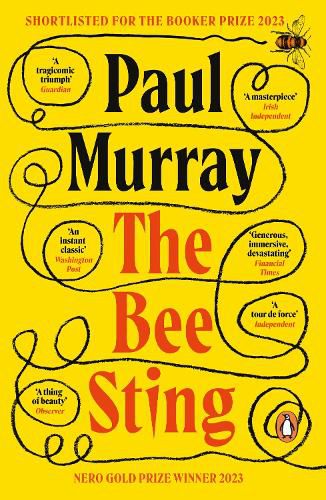
Had I been watching this on television, I would have thrown the remote at the television when the closing credits scrolled down the screen. As I read it in its a lengthy book form, I found myself beseeching Charles Dickens to come back and show how to tie up a complex story with a definite ending (send the main characters to Australia, drown them, send the car over the cliff- anything that finishes the story off!)
I had heard that this book was about a car-yard closing down, which did not seem a particularly promising premise for a book. Indeed, it is about a family-owned car-yard closing down, but it’s also about the implications on the family – Dickie, Imelda, Cass and PJ- as their financial situation tightens.
It’s set in Ireland, but it took me quite a while to shake off the sense that it was an American story instead. Certainly, there are mentions of the Magdalen convent in the middle of the town that nobody talks about, and the weather is often wet, but I still didn’t have a strong sense of its Irishness. Perhaps the car-yard, which seems a particularly American phenomenon, led me astray.
Dickie and Imelda married about 20 years ago, largely on the rebound from the death of Dickie’s brother, the local football hero Frank. Frank and Imelda had been engaged to be married, and after his death, Dickie and Imelda both sought solace from grief in each other’s arms. Dickie had long been slated to take over the family car-sales yard from his father Maurice, after completing a degree at Trinity College in Dublin. But other events had intervened, and so we find Dickie and Imelda, living in what had been the large family home on a large tract of land, deeply indebted and with the car yard in trouble. Their daughter, Cass, is in her final year of school, trying to work out her place with her friend Eileen and her own sexuality as she, too, goes to Trinity College. Their son PJ spends much of his time online, where he is being taken beyond his depth.
The story moves around, concentrating on different characters in turn, some written by a detached narrator, others told as a stream-of-consciousness where thoughts and verbal utterances are intertwined. As with all families, there are the family stories but here they are unpacked and challenged as the spotlight shifts from person to person, and through flashbacks and back-story. Each of the characters is being lured by a different way of being, and there is an underlying pessimism about the outside world with its physical and emotional violence. Sex in the book is largely sordid, either physically or emotionally, and there are many near misses as events could have taken an even more calamitous turn.
The book is fairly heavy-handed in its preaching on climate change and societal collapse, although it does play a part in the plot. It does add to the ‘going to hell in a handbasket’ vibe of the whole book.
The action speeds up at the end of the book, with increasingly short chapters told from different characters’ perspectives until the narrative is a series of short paragraphs, as all the characters converge on one spot. But what happened? I think that perhaps, there was no near-miss here.
I enjoyed the book, although particularly in the first third I felt an oppressive sense of dread and doom every time I picked it up again. Despite the underlying pessimism of the book, and the unrelieved bleakness, Murray had filled out his characters enough for you to care about them as fellow humans, with whom we share vulnerabilities and thwarted dreams. My son said that it was the best book he read last year: I wouldn’t go that far, but I could barely put it down the further into it I went. So for me, not the best, but pretty damned good.
My rating: 8.5/10
Read because:Ivanhoe Reading Circle selection- and then I couldn’t attend the meeting because of COVID!!
The Coming Storm This second series petered out with Episode 8 The Last Election, which was just basically an interview between Gabriel Gatehouse, producer Lucy Proctor and Ben Ansell, Professor of Comparative Democratic Institutions at Oxford University, in front of a live audience at the BBC’s Radio Theatre. It wasn’t really worth listening to. However, the program redeemed itself with Inauguration: A Bonus Episode where Trump’s picks for cabinet positions threw up many people that they had interviewed or come across earlier while exploring different conspiracy theories. They briefly discuss Kash Patel, but the majority of the episode is devoted to Robert Kennedy Jnr and the vast conspiracy theory he espouses that links the assassination of his uncle and father, vaccines, China, COVID and Anthony Fauci.
In the Shadows of Utopia Season 2 Episode 17 The Khmer Rouge’s New Vanguard isn’t quite as long as the very lengthy previous episode- far more manageable. Lachlan Peters returns to Cambodia, where the Workers Party of Kampuchea was working mainly through teachers at private schools. He starts with a meeting in 1960, attended by perhaps 30 people at the Phnom Penh Railway Station (I’ve been there!) where Saloth Sar, who was by now third in line for the leadership of the party, addressed the faithful with a peaceful, relevant speech. They were by now shedding the Vietnamese influence, and the students from France took a more prominent role, sidelining the veterans of the older communist struggle, who were more tolerant of Sihanouk for his anti-imperialism, and more aligned to the Vietnamese communists. The ‘old guard’ were despatched to the countryside to gain the affections of the rural peasantry. But communism was a hard sell. By 1960s Sihanouk’s father, who had taken over the throne to free Sihanouk up to stand for election, died so he put his mother in, and had himself made Head of State for life. This required a referendum, which passed with a yes vote of 99.8%. Sihanouk was popular, and getting money from China, Russia and the United States. In 1961 he relaxed the pressure internally because he was more involved with the conflict with Thailand for the first half of the year. In the second half of the year he turned his eye back to the communists, with an eye to the upcoming 1962 election. The party went into hiding, while the official Communist Party the Pracheachon were arrested. Tou Samouth, the party secretary of the clandestine party was murdered. Historians disagree whether Sihanouk’s supporter Lon Nol, or Saloth Sâr (Pol Pot) were behind the murder. Nonetheless, Sâr became acting secretary of the party in hiding. It’s hard to know when he changed from Saloth Sâr to Pol Pot. In 1963 there was a student riot at Siem Reap where anti-Sihanouk slogans were chanted. The Workers Party of Kampuchea held another congress near Central Market (I’ve been there too!) where Sâr was elected Party Secretary. In February 1962 Sihanouk published a list of 34 ‘known subversives, which included Saloth Sâr .
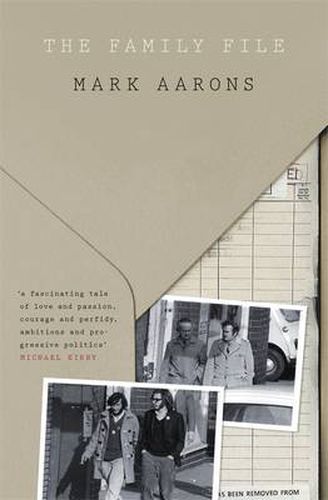
Some years ago I was attending the Melbourne Unitarian Peace Memorial Church when someone mentioned the almost certain presence of ASIO spies at the service. I really don’t know if they were there or not – (certainly this church and its attendees would have been under surveillance over many years, I’m sure)- but it had just never crossed my mind to think that they would be there amongst the silver-haired people in the pews that day. I have wondered about the presence of ASIO agents when I’ve attended rallies, but the whole world of ASIO and espionage is something completely outside my consciousness.
Not so for the Aarons family though, with four generations of Communist activity under their belt. When Mark Aarons finally got access to the ASIO files on his family (including him!), they amounted to 209 volumes and 32,000 pages. Carefully noted was where they went, with whom, and what was said- for a family researcher, almost like one long home-movie over several generations.
Aarons’ great-grandparents Louis and Jane Aarons were founding members of the Communist Party of Australia. Louis had grown up in Whitechapel, part of the influx of Russian, Polish and East European Jews who flooded into Britain in the wake of the Russian pogroms of the late 1880s. He had arrived in Australia in November 1889. His wife, Jane, was from Brooklyn. In Melbourne, they lived in Carlton, where there was a large poor working-class Jewish population, then they moved to Sandringham and Balwyn, which would have been very outer suburbs at the time. Like many radical socialists of the day, Jane could speak Esperanto fluently, and they joined the Sandringham branch of the Labor Party around 1910. Their children attended the Victorian Socialist Party Sunday School, and during WWI Jane and Louis threw themselves in with the revolutionary socialists, joining the Victorian Socialist Party as active members, leading to Jane’s arrest for flying the Red Flag. They were foundation members of the Melbourne Communist Party of Australia in 1921 and Jane travelled to the Soviet Union to join a May Day parade in 1932.
Their son, Sam, was very involved in the Western Australian CPA, and drifted in and out of the Melbourne and Sydney branches when visiting. After his first marriage ended, he moved to Sydney and opened a While-U-Wait shoe repair business in Pitt Street near Martin Place. He was fired up by a speech by a CPA member after the execution of American anarchists Sacco and Vanzetti, and rejoined the Sydney CPA branch in late 1929. He travelled overseas, and was part of the International Brigade in the Spanish Civil War.
His son Laurie was born in Sydney in 1917 to Sam and his first wife. The family had moved to Melbourne, but then returned to Sydney after Sam’s marriage broke up in the early 1920s. At the age of 14, Laurie decided to become a professional revolutionary. He was the head of the Young Pioneer’s Section of the Communist Party. He was a prominent paid member of the CPA for 33 years, and probably the most notorious of the Aarons family.
His son and the author of this book, Mark Aarons was what was known as a “red-diaper baby”, born and bred in the Communist Party. His brother Brian campaigned against the Vietnam War, supported the environment and advocated for Indigenous rights and reconciliation. In 1965 Brian was involved in the Freedom Ride for Aboriginal Rights (in fact, I read about him just the other day now that it’s the 60th anniversary). When conscripted to fight in the Vietnam War, he became a draft resister. Mark himself was also a member of the Communist Party until 1978, and ended up a journalist and senior advisor to the NSW Labor government between 1996 and 2007.
I found myself wondering about family interests handed on for four generations. Do families still ‘hand on’ organizational affiliations like this? I suppose that church affiliation runs between families, as does private school affiliation (a good argument for State education, I reckon). Professions and football affiliations run in families too. Military involvement tends to run in families too, but that might be a reflection of the times, rather than personal choice. But, given the propensity for 20th century children to run a mile from anything their parents are involved in, I find it quite remarkable that the CPA was able to ‘hold’ four generations. Its Socialist Sunday School and the Eureka Young League made membership a family affair.
The book focuses on the Aarons family, and ASIO’s interest in them, but running alongside it is a history of Australian left radicalism as well. Right from his great-grandparents’ involvement in WWI anti-conscription and suffrage politics, his family was involved in the radical edge of mainstream Australian politics. The influence of the Soviet Union on Communist parties internationally was overpowering, which became problematic during WWII when, at first, the Soviet Union and Germany were in alliance. For Jewish families like the Aarons – albeit Jewish by heritage rather than religious practice- this was a challenging choice to be forced to make. Once Russia had joined with Britain and France, members of the Communist Party were freed up to enlist, and members of the Aarons family now did.
Post War, the Communist Party was particularly targeted by Prime Minister Menzies, epitomized by the photograph of Evdokia Petrov being escorted from the country by burly Russian embassy minders. The Communist Party was declared illegal in 1940. There were many accusations of Soviet agents in the Communist Party of Australia, and although he was never charged with treason, party member Walter Clayton later finally admitted to Laurie Aarons in an oral history, that he had been a Soviet agent. It’s rather odd having Laurie Aarons bursting into the narrative as an oral historian in his own right, juxtaposed against the secret service surveillance which covered his whole life.
A further challenge to lifelong Communist Party members came when Kruschev distanced himself from Stalinism, and when the Soviet Union invaded Hungary and Czechoslovakia. Just as generational Catholics had to confront their church’s covering-up of sexual abuse in recent years, Communists whose families had been aligned with the Communist Party for generations, needed to decide where they stood. The Aarons family had to do that, too, and Mark in particular found himself returning to the Labor Party that his great-grandparents had joined at the start of the 19th century.
There are lots of names in this book, and I’m sure that people involved in radical politics would see agendas and paybacks running through this book to which I’m oblivious. I could only read it against my knowledge of the broader sweep of Australian history, not the minutiae of Communist/Socialist Party politics.
But as a family narrative, it is a satisfying one, particularly with the closing of the circle when Michael Thwaites, who had been the head of counter-espionage organization that had tracked Laurie Aarons for over 20 years, wrote to Laurie in 1987. He told him that he had enjoyed an interview that Laurie Aarons had given to Caroline Jones’ The Search for Meaning, telling him that he admired his honesty about the influence of Czechoslovakia on his thinking, and wishing him success in the book he was writing. Likewise, in old age,Laurie mended bridges with Jack McPhillips, with whom he had feuded for decades. So much scrutiny, so many arguments… and in the end, they were all old men facing their inevitable ends. As are we all.
The DailyNYT‘The Interview: Curtis Yarvin Says Democracy is Done. Powerful Conservatives are Listening Well, as far as I am concerned, anyone who is a friend of J.D. Vance is an enemy of mine, and Vance talks very approvingly about Curtis Yarvin. He is a computer engineer who has “done his own research” to come up with an argument that, to quote The New York Times “the mainstream media and academia have been overrun by progressive groupthink and need to be dissolved. He believes that government bureaucracy should be radically gutted and that American democracy should be replaced by what he calls a monarchy run by what he’s called a CEO, which is basically his friendlier term for a dictator.” His way of arguing is repellent: he machine-guns out a scattershot of historical facts, any one of which could be unpicked if he gave you time. A repellent, slipshod, bombastic man.
In the Shadows of UtopiaSeason 2, Episode 2 Maoism and the Great Leap Forward 1949-1962 In this very long episode (2 hours 43 minutes) Lachlan takes us over to China where, after the Korean and Indo-China wars finished, the Chinese Communist Party could concentrate on local matters and the need to delineate ‘the people’ from ‘the enemy’. In 1953 a five year plan was initiated on the Stalinist model, where small farmers took over the land that had previously belonged to their landlords. In May 1958 Mao looked at the countryside, and after declaring the four pests (rats, flies, mosquitoes and sparrows) embarked upon the Great Leap Forward, later described as a ‘bubble of unreality’ which pushed the country towards starvation. The small farms, only recently given, were taken back into huge communal farms, with an emphasis on agricultural targets and communal eating. There was a push towards industrialization, with backyard furnaces slowly pillaging families’ household goods in the production of poor-quality steel. By 1959, famine had taken hold, prompting cannibalism and necrophagy and culminating in the death of perhaps 30-45 million people (no-one really knows). After Mao’s Minister of Defence criticized the Great Leap Forward, Mao rachetted it up even more to prove him wrong. It was not until 1962 that conditions improved. Meanwhile, the Sino/Soviet relationship had always been testy but initially Russia showed a readiness to co-operate militarily with the new Communist regime in China. However, Krushev’s denunciation of the ‘cult of personality’ after Stalin’s death was not taken well by Mao, who was curating a cult of personality of his own. Mao can be seen as either the 3rd or 4th Great Prophet of Communism after Marx (who identified the stages of communism and the importance of class), Lenin ( who introduced the concept of the ‘vanguard’ of the revolution), and maybe or maybe not Stalin (who created the centralized command economy). Mao wanted to use the nationalist cause combined with Confucian concepts of ‘right thinking’ and built on struggle and volunteerism. He had a fraught relationship with Krushev, who he believed had betrayed communism, and as the rift between the two countries increased, Soviet advisors returned to Russia and the promise of an atom bomb was withdrawn.
The Rest is HistoryEpisode 228 Portugal: The Golden Age of Discovery Part 2 The first episode finished with the reconquest of the Muslim ‘invaders’ of the Iberian Peninsula. This led a militant edge to Christian exploration outside the known world. The Portguese had ports all around the Cape of Good Hope, so they didn’t need Columbus. During the negotiations for the Treaty of Tordesillas, the Portuguese tricked the Spaniards by getting them to shift the line 1000 km that meant that Portugal got Brazil. Vasco da Gama was chosen to lead his expedition in search of India because he was a hard man. He rounded the Cape of Good Hope, turned right at Kenya and sailed for 23 days to get to Kerula. He reached Indian, Malaysia and Japan, and was very violent towards the Muslims. The Portuguese ’empire’ was more a series of nodes, and they were not very good at administration. By now the Portuguese throne had been inherited by a Spanish king, but Portugal retained its own identity.
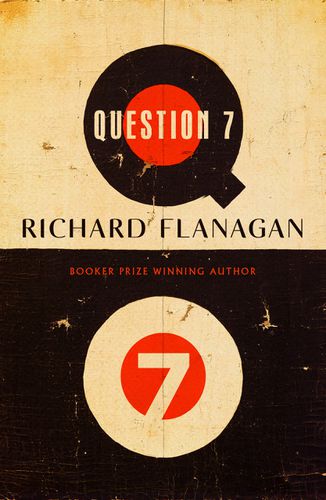
When I first heard about Richard Flanagan’s Question 7, I thought “But that’s just a rehash of everything he’s already written”. It’s true that there are flashes of his earlier work, almost as if he’s tipping his hat to it in passing. The Tasmanian section evokes The Sound of One Hand Clapping, Wanting and Gould’s Book of Fish, his mentions of his father’s wartime experience sparks memories of Narrow Road to the Deep North and his mother’s death was explored in The Living Sea of Waking Dreams, and the final chapter brings to life Death of a River Guide. But this makes the book sound like a glorified ‘greatest hits’ and it’s much, much more than that. It’s brilliant.
The title is taken from a Chekhov story, where a question is posed in the form of those schoolroom maths questions that still give me a sinking feeling in my stomach:
Wednesday, June 17, 1881, a train had to leave station A at 3am in order to reach station B at 11pm; just as the train was about to depart, however, an order came that the train had to reach station B by 7pm. Who loves longer, a man or a woman?”
Who, indeed. The real question is love, not the train or the timetable, and it’s a question that is unanswerable. So too, is the question of causality that brings each of us where we are.
Without Rebecca West’s kiss H. G. Wells would not have run off to Switzerland to write a book in which everything burns, and without H. G. Wells’s book Leo Slizard would never have conceived of a nuclear chain reaction and without conceiving of a nuclear chain reaction he would never have grown terrified and without growing terrified Leo Szilard would never have persuaded Einstein to lobby Roosevelt and without Einstein lobbying Roosevelt there would have been no Manhattan Project, and without the Manhattan Project there is no lever at 8.15 am on 6 August 1945 for Thomas Ferebee to release 31,000 feet over Hiroshima, there is no bomb on Hiroshima and no bomb on Nagasaki and 100,000 people or 160,000 people or 200,000 people live and my father dies. Poetry may make nothing happen, but a novel destroyed Hiroshima, and without Hiroshima there is no me and these words erase themselves and me with them. (p.237-8)
We meet all these contingencies and people in this book, written as a series of small shards within ten chapters: the Enola Gay pilot Thomas Ferebee, physicist Leo Slizard, the writers H.G. Wells and Rebecca West, his parents, his childhood in Roseberry, Tasmania, the Burma Railway and indigenous dispossession. Themes arise, drop and rise again, and parts of the book are an extended reflection on death and memory, encountered over and over. It’s hard to fit in into any one genre: it’s history, non-fiction, memoir and philosophy all rolled into one. The most compelling writing in the book comes at the end, when he tells his experience of nearly dying – indeed, did he die and is all this just a dream?- that he fictionalized in Death of a River Guide. My dinner was ready, and I was being summoned with increasing impatience, but I had to keep reading, even though I knew that clearly, he did, survive – and if it was a dream, then we’re all enmeshed in it too.
I have always loved Richard Flanagan’s right from Gould’s Book of Fish, which was the first of his books that I read. I’ve read interviews as part of the publicity for this book, where Flanagan said that he didn’t know if he’d write another book and I must admit that I closed it, feeling that he had written himself completely into the book, wondering how he could ever write anything else after this.
The best book that I have read in ages.
My rating: 11/10
Sourced from: borrowed for a friend (for far too long!)
The Rest is Politics USTrump’s Insurrection: A Riot or a Coup? Episode 4 Can you remember where you were on January 6th 2021? Even now, all these years later, you can still detect the absolute disbelief at the things that unfolded on January 6th. They talk about the response of Mark Milley, the chairman of the Joint Chiefs of Staff, and Republican politicians like Lindsay Graham, Mitch McConnell and Mike Pense, and the failure to convict Trump afterwards.
The Shadows of Utopia. Season 2: Episode 1 Les Khmers Rouges: Double Lives in Sihanouk’s Golden Era This episode covers 1955 to 1960, often described as Sihanouk’s Golden Era. Cambodia was a newly independent country under Norodim Sihanouk, who was very popular, owing to the introduction of ‘Buddhist Socialism’ and his canny playing of the US and Communist Cold War sides, both politically and financially. With their numbers dwindling, the ‘revolutionary organization’ or ‘Anka’ went to ground and shifted its attention to the schools, where teachers could mentor enthusiastic, progressive young recruits. Saloth Sar, who was only just now starting to be called ‘Pol’ worked as a teacher in this way. By this time he was married, not to Soeung Son Maly, a society belle with whom he was infatuated, but to fellow communist Khieu Ponnary in 1956. Despite his communist ideology, he was very traditional in relation to his marriage. By 1958 Sihanouk needed another election. This time the Democrats, who Sihanouk detested, didn’t even contest it after Sihanouk humiliated them in a 3 hour public debate which sounds very Trumpian. In the end the election was only contested by the official Communist Party which, compromised by a traitor among their ranks, won just 1% of the vote, with the other 99% to Sihanouk. By this time the US were getting a bit concerned about Cambodia’s association with the Non-Aligned movement, and so plots were instituted by the CIA against him. Meanwhile Saloth Sar, Nuon Chea and Ieng Sary found themselves in high-ranking positions in the newly formed Communist Party of Kampuchea which Sihanouk dubbed the ‘Khmer Rouge’
The Rest is HistoryEpisode 227 Portugal: On the Edge of the World I don’t think that I’ll ever get to see Portugal, sadly, so I’ll just have to listen to Tom and Dominic telling me about its history. The alliance between England and Portugal goes back 650 years, the oldest surviving alliance in Britain’s history. Invaders came from the Mediterranean, but they very much saw it as being on the edge of the world. Portugal was annexed by Rome after the defeat of Carthage, and the whole Iberian peninsular was known as Lusitania (it was not divided into Portugal and Span until much later). In Lusitania, as in Britain with Boudicca and Gaul with Vercingetorix, there was a bloody response to Rome. After Rome, the invasions kept coming. There were the militantly Christian Visigoths, then the Muslims, but the north held out against them (as occurred in the north of Spain). After the Reconquista, the area that would later be Portugal became a vassal of Leon. Afonzo I became the first King of Portugal between 1139 and1185. During the Siege of Lisbon, he called on Britain, with whom there was a trading alliance, to come to their aid. In 1386 the Treaty of Windsor saw the English Phillipa of Lancaster married to King John I of Portugal, and their son Henry the Navigator invaded North Africa. He was fascinated by the legend of Prester John (a mysterious King who was supposed to be surrounded by infidels and in need of rescue), and awed by all the riches coming from the East. The Portuguese weren’t really interested in Columbus’ proposals because they were already sailing the coast of Western Africa. Slavery was common within the Mediterranean, and Africa provided a good source of enslaved workers for Lisbon and the plantations.
The Coming StormEpisode 7: Wonderland At one stage, Gabriel Gatehouse asks if he is becoming a conspiracy theorist himself, and I think that he is. Although given the madness of the United States since Trump’s inauguration, perhaps there really is a conspiracy after all. In this episode he talks with futurist thinkers who emerged in the 1990s who call themselves Extropians (the opposite of Entropy). They imagine a world of augmented human bodies, nanotechnology, cryptocurrencies and artificial intelligence. He focuses on the spectrum that stretches from Max More and his wife Natasha Vida More, who are transhumanists, and see themselves as ‘accelerationists’, through to Eliezer S. Yudkowsky who champions ‘friendly’ artificial intelligence and has been dubbed a ‘doomer’. Gatehouse refers to the sacking of Sam Altman from Open AI, and then his re-instatement. He picks up on ‘The Singleton’, which Wikipedia defines as “a hypothetical world order in which there is a single decision-making agency at the highest level, capable of exerting effective control over its domain, and permanently preventing both internal and external threats to its supremacy” – exactly what conspiracy theorists have been talking about all along. It could be democracy, a tyranny, or a single dominant Artificial Intelligence. All of a sudden, seeing all those Tech Bros at Trump’s inauguration seems even more frightening.
The Human Subject (BBC) This rather gory podcast looks at the origins of modern medicine, which often lay in trauma and exploitation of its ‘patients’. Episode 1 The Man with a Hole in his Stomach tells the story of 18 year old Alexis St Martin who was accidentally shot in the stomach outside an American Fur Company store in 1822. He was not expected to live, but his stomach formed a gastric fistula which led straight into his stomach. His life was saved by ‘Dr’ William Beaumont, who had seen similar injuries as an army surgeon. Previously the stomach had been seen as merely mechanical, munching up the food, but the fistula gave Beaumont an opportunity to experiment on the stomach through this direct access, without triggering the gap reflex. He gave St Martin a job as a servant, and wrote a sort of contract for the experimentation, although it was a complex master/servant relationship. St Martin, who was illiterate, tried to run away several times and nonetheless managed to father 17 children who lived with his wife ‘elsewhere’. As it turned out, St Martin outlived Beaumont by 17 years, even with a gaping hole in his stomach.

 The Resident Judge of Port Phillip