The Coming Storm. This is the new season of The Coming Storm which continues on the rise of conspiracy thinking in America. After a very long introduction Episode 1 The Yogi tells the story of Allan Hostetter, an ex-policeman and former yoga teacher who seemed to be set off by COVID regulations and went further and further down the conspiracy theory rabbit hole. No doubt, he welcomes Trump’s victory and the prospect of release.
Dan Snow’s History HitHenry VIII’s Tudor Christmas Dan Snow is doing a series on The Origins of Christmas at different times in mainly British history. Here he wanders around Hampton Court with Historic Royal Palaces chief curator Tracy Borman, going from room to room and imagining Christmas being celebrated there during Henry’s time. As they point out, the nature of the Tudor Christmas changed over time, especially as Henry aged and couldn’t be bothered with it all. The Tudor Christmas didn’t put particular emphasis on 25 December: instead, it was a 12 day festival with two large meals every day served up to over 1000 people. It was also a predominantly religious festival too, with Henry attending chapel twice a day, and later Elizabeth spent the whole of Christmas Day in prayer.
I recently watched the Netflix series based on this book, and instantly wanted to read the memoir on which it was based. My curiosity was piqued by a comment in the ‘Making of’ documentary, also on Netflix, that they had changed the modern day part in the television series because the author is still a young living, working, active writer in Germany, and they didn’t want the series to affect her present-day life. When I was about 7/8 of the way through the book, and she was still in New York, I realized that the book and the series were quite different.
Deborah Feldman was raised by her grandparents in Williamsburg, Brooklyn. Her family was part of the Satmar sect of Hasidic Judaism, a sect with Hungarian roots that had been very much shaped by the Holocaust. Believing that God had allowed the Holocaust as punishment for assimilation and Zionism, the group embraced extreme conservatism in custom, dress and language, speaking only Yiddish. Her father, who was largely estranged from his daughter, seemed rather intellectually and socially challenged, and her mother had deserted the sect while Deborah was small. Although her aunts, particularly Aunt Chaya, have an influence on her upbringing and prospects, it is actually her grandmother Bubby and grandfather Zeidy, who bring her up in a loving but strict environment, where family and religion are paramount. Being brought up by elderly grandparents gives her freedoms that she would not have had in a family of siblings: she is well-educated for a Satmar girl, and she becomes an inveterate reader. As she approaches womanhood, the family orchestrates her arranged-marriage to Eli, a man equally in thrall to his own family and religion. Although Eli is in many ways more liberal than some other men, he can veer between domination and permissiveness, and when they cannot consummate their marriage, they are both under pressure from each other and their families.
There are some important differences between the book and the television series. In the book, her liberation comes not through music but through surreptitiously attending higher education, and it occurs in America, not in Germany. She leaves after she has her child, not before; indeed it is her desire to protect her son from the misogyny and strictures of Hasidic Judaism that impels her to leave her husband who, initially at least, seems just as happy to have the marriage fail as she is. She is largely silent about the custody arrangements for their son, Yitzy.
The memoir (i.e. book) was written in 2012, when she was still in the midst of act of leaving. The entire memoir is written in the present tense, but the present becomes closer and closer. As a result, the pacing of the book moves from fairly slow reflection and narrative, to a present-day rush of emotion. Because it is a memoir, the narrative is shaped completely by her viewpoint and her own flaws and strengths. (An interesting critical review of the book by another Satmar woman who also left the community can be found here.) Is it a well-written memoir? Possibly not: there is no overarching theme, beyond that of grievance and longing for freedom, perhaps. For a memoir, it has a lot of dialogue which tips it into some other genre.
Nonetheless, I found this memoir fascinating, and hard to put down. Part of that stems from my curiosity about Hasidic Judaism, particularly within enclaves like in Williamsburg. (There’s an interesting photo-essay about Williamsburg here). Yes, I have borrowed her sequel as well, a recent retelling of her 2014 follow-up Exodus.
The Documentary (BBC) The Global Jigsaw: The rebels who retook Aleppo I listened to this as the Assad regime fell in Syria, but the program was actually first broadcast in 2023. It looks at Hayat Tahrir al Sham (HTS), led by Abu Mohammed al Jawlani (although I note that this is his ‘nom de guerre’ and he’s now going by Ahmed al-Sharaa. In 2023 when this was recorded, there was scepticism about his transformation from islamic terrorist to the leader of the ‘Salvation Government’ that he was leading in Idlib province. This government allowed in aid, re-opened schools, shops and churches, and as leader he wanted to appear statesmanlike, trimming his beard and wearing casual clothes, moving around openly in Idlib. Like many, I have been appalled by the repression of the Assad government that is now being fully revealed. Let’s hope that Syria has a better future.
The Rest is HistoryEpisode 455 Fall of the Sioux: The Ghost Dance (Part 2) This is all so sad and has so many resonances with Australian Aboriginal history. From their webpage “Following the tragic death of Crazy Horse and the ruthless cessation of the Sioux way of life, the last of the great Native American leaders were gradually picked off or repressed by the U.S. Government. Few though had so pitiful a fate as the once mighty Lakota War Chieftain, Sitting Bull. Having fled to Canada in search of peace from the relentless harrowing of his people, Sitting Bull finally returned and arrived at the Standing Rock Reservation in 1883. He was unprepared, however, for the changes wrought upon his people. With the explosion of railroads and the decimation of the already flailing buffalo populations, the Great Plains had been transformed into a desolate, barbed wasteland. While, the Native Americans within the reservations were increasingly coerced into Christianity by missionaries, or controlled by Federal agents. Then, news reached Sitting Bull and his people of a messianic figure from beyond the Rocky Mountains, who would come to liberate them from their plight. With him he brought the answer to their troubles: the Ghost Dance. Would it see the drums of war sound once more?” When Sitting Bull returned to Standing Rock, everything had changed. He joined the Buffalo Bill tour, and the restaging of Custer’s last Battle. Then we have the ‘second coming’ narrative of spiritual leader Wovoka, whose Ghost Dance, if performed properly would reunite the living with spirits of the dead, bring the spirits to fight on their behalf, ending Westward expansion and bring peace and prosperity. This is not going to end well.
History ExtraA Victorian Cult: Inside the Strange World of the Agapemone I tend to think of cults today as being an American phenomenon, but especially during the 19th century, Britain had its fair share too. The Agapemone (originally called the Princites), named for Henry James Prince, who believed that he had a direct line of communication with the Holy Spirit. The Holy Spirit told him to establish himself in Somerset, in a house purchased from the ‘donations’ of his wealthy, mainly female followers in 1856. Those who could not afford to donate their money donated their labour instead, working in the kitchen. There they were to wait for the second coming, and as they were already saved, then they weren’t going to die- which became a bit embarrassing when they DID start dying off- but no matter, because John Hugh Smyth-Pigott quickly took his place, as cult leaders tend to do. The commune limped on until the 1960s when it had become a type of old-people’s home. The episode features Stuart Flinders, the author of A Very British Cult: Rogue Priests and the Abode of Love (Icon Books, 2024).
We went to see this just before Christmas. It was wonderful. Such talented actors: singing, dancing AND playing instruments. Even a cellist, walking around with his cello strapped to his front like a low slung piano accordian. Strong Australian accents, strong Australian story: I felt so proud.
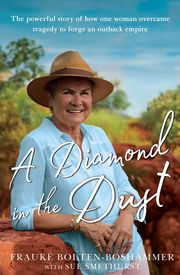
Is it wrong to judge a book by a cover? Sometimes, but bear in mind that the publisher chooses a cover that will attract what they perceive to be the audience. I don’t think that I’m this audience. As soon as I saw the picture of the woman in the Akubra hat against a background of the Australian outback, I thought of all those rural romances and inspirational biographies (Sara Henderson et al) that I avoid like the plague.
German-born Frauke Bolten was a reluctant migrant to Australia. She arrived at a small outback airstrip in blistering heat at Kununurra in northern Western Australia with her children, her husband Friedrich having purchased a property on the Ord River Scheme without even discussing it with her. As a woman of faith who believed in her wedding vow to “obey”, she negotiated a two-year trial of living there with her husband (which turned out to be forty years) and the company of a nanny to assist with the children. She and her husband had previously farmed in Rhodesia, before returning to Germany to establish a farm and family which she thought would establish them back home forever. This new endeavour in Western Australia, grudgingly undertaken on her part, threw up many challenges at first, largely through her husband’s pigheadedness and ill-advised innovation, then as the children left home for boarding school in the city and the financial problems mounted, Friedrich’s depression increased.
And then her husband committed suicide. Shocked and heartbroken, she found herself resisting the assumption by the families ‘back home’ that she would of course return home: the widow, the daughter, the daughter-in-law forever. Her children did not want to return to Germany either, and so they stayed. She remarried Robert Robert Boshammer, ten years her junior and of similar German heritage. From a small-scale backyard tourist venture she started selling diamonds from the nearby Argyle Diamond mine, gradually increasing the business to a large tourist enterprise in the town. Further tragedy was to come, with her son Peter committing suicide too, and the suicide of Doris, who managed the shop for her. As her children married and went on to have children, Frauke herself had to confront cancer.
The book is co-written with journalist Sue Smethurst, and I found myself wondering what Smethurst added to the book because the prose itself is very clichéd and pedestrian. Perhaps her assistance came in negotiating the narration of the suicides, a subject that needs to be treated carefully.
This is Bolten-Boshammer’s story, but it a very blinkered and shallow one. Both in Rhodesia and Kununurra, she lived in a German-centred community, seemingly oblivious to the social and political environment in which she was living. There is not a word of the bubbling tension that will emerge with independent Zimbabwe, or the edgy relationship in Kununarra between its large indigenous population and its white community, attracted by the technological hubris of the Ord River Scheme. It felt a bit like reading of the British ex-pats in Happy Valley in Kenya, with their own self-contained world that tried to re-create ‘home’ in a starkly different environment that existed in a bubble, completely independent of the country around them. Their Christmas customs, the gap year holidays back in Germany for her children where they clearly had enough German language to communicate with their family, the values she drew from her religion and from her culture- these are all German.
The writing itself was flat and banal. It felt like a series of photocopied Christmas letters, with their forced jollity, catching up with the children’s latest ventures, the marriages, the grandchildren, the celebrations. I know that English is Frauke’s second language, but there’s no idiosyncrasy of phrase here: it’s just turgid sludge.
I complained the whole way through.
My rating: 4/10
Read because: It was an Ivanhoe Reading Circle selection. I am really surprised that this book was on the program because the books are usually of much better quality than this. The presenter for the night did a wonderful job in extracting the few good points about it.
Sourced from: purchased e-book. Thank God I didn’t spend the money on trying to track down a hard copy.
History Hit. The Clinton Body Count to the QAnon Shaman: Conspiracy Theories in American Politics Gabriel Gatehouse, from the BBC, has a second series of The Coming Storm, which I listened to back in 2022. This episode is a bit of a rehash of the first series, which focussed on the conspiracies swirling around the Clintons, but brought up to the January 6 riot and its fall-out. He says that now conspiracies revolve more around “hidden actors”, which has an element of truth to it (says she, frustrated by the influence of lobbyists and miners on Australian politics).
The Rest is History. Episode 454 Fall of the Sioux: Death of Crazy Horse (Part 1) From their own summary: “Though the Battle of the Little Bighorn seemed for the triumphant Lakota and their allies – the largest gathering of Plains Indians ever assembled – a miraculous victory, it was for them the beginning of the end. A great council was held near the battlefield in which they made the fateful decision to split up. Meanwhile, in Washington, Custer’s death and the military defeat of the army was being politicised, and the public rallied against the Lakota. Red Cloud, their political leader through so many of their struggles, was replaced with a puppet interloper. Then, during the winter of 1877, a contingent of ruthless and fiercely effective U.S. officers, including General Crook and General Miles, chased and harried the retreating Sioux contingents through the snows, leaving them starving, beleaguered and desperate. At last, in March 1877 the once formidable war chiefs Crazy Horse and Sitting Bull found themselves cornered, and their people left with little choice but to admit defeat. What then would be their fate?Dominic and Tom … discuss the annihilation of the Plains Indians and the dissolution of their extraordinary culture and nomadic way of life, along with the tragic death and downfall of one of the most mesmerising and mysterious characters of the entire story: Crazy Horse. “
We Live Here Now (The Atlantic)Thank you for Calling President Trump The presence of their neighbours from the ‘Eagles Nest’ at the vigils outside the Washington DC jail attracted the attention of politicians, most particularly Sebastian Gorka, who took up the cause of Ashli Babbitt with enthusiasm. As part of the vigil, people would telephone in, and these calls were often broadcast out loud. President (at this stage ex-president) called in as well.
I Bet It’s a January 6 case There were over 1500 arrests after January 6, and in a small jurisdiction like Washington DC, many locals were called up for jury duty in January 6 cases. And so, Lauren gets the call up and she is part of the jury that convicts Taylor Johnatakis for obstruction of an official proceeding; civil disorder’ and assaulting, resisting, or impeding certain officer and a handful of misdemeanors. His sentence was more than seven years. (Trump walked away scot-free). Lauren feels bad about it, and Hanna Rosin visits his wife, Marie and after learning that he has five kids, that his wife is a sad, forgiving woman, and that they may well lose their house, then Hanna feels bad about it too.
Shadows of UtopiaEpisode 13 The Royal Crusade for Independence. This episode is only 1.5 hours long, and it comes three years (!!) after Lachlan Peters embarked on this project. It deals with the year 1953. By this time, the IndoChina was becoming known in France as the ‘Dirty War’. All sides- the French, the Nationalists, the Viet Minh were appallingly violent, and this violence was spreading across all three territories of Indochina. The narrative divides in half here: looking at the diverging paths of Saloth Sar (the future Pol Pot) and King Sihanouk. Saloth Sar returned to Cambodia, charged by the Communist students back in France with compiling a report about the different groups, and which group they should throw their weight behind. He wrote back to Paris saying that the Khmer Viet Minh was the only viable force, but that the Cambodians should work for independence from within the tent. He joined the Kymer Viet Minh, but found that despite the name, the group was dominated by the Vietnamese who looked down on them. Meanwhile, Sihanouk decided that he was going to get independence from the French for ‘his’ country, so he got involved with international diplomacy which was getting increasingly complex now that it was overlaid by Cold War diplomacy. In the end the French, who were domestically becoming increasingly uncomfortable with this ‘dirty war’, decided that they had to go along with Sihanouk’s proposal because of the Communist threat, so independence was declared in November 1953. But the Nationalists led by Than and his Kymer Srei and the Viet Minh did not accept Sihanouk’s takeover. So we had Sihanouk with French and US support against the Khner Viet Minh supported by Vietnam, China and Russia.
Global Roaming (ABC) I enjoy Global Roaming with Geraldine Doogue and Hamish Macdonald, two of my favourite ABC journalists. Maori vs the King: Who owns NZ? picks up on the large recent protests in New Zealand (involving both Maori and Pakeha) over the bill before their Parliament to rewrite the terms of the Treaty of Waitangi. Although there is little chance of this bill being passed, the fact that it even came before Parliament says a lot about the times we are living in. Features Taiha Molyneux, Māori News Editor Radio New Zealand .
Rear Vision (ABC)Treaty of Waitangi It might be flawed, it might be contested, and is continually being discussed and reconceptualized but I think that the attempts to ‘rewrite’ the Treaty itself are absolutely appalling. I suspect that NZ politicians were emboldened by our recent Voice referendum over the ditch. It’s interesting that two of the speakers in this episode have died so it really does take on a historical perspective. The speakers are Judith Binney, was Emeritus Professor of History at the University of Auckland. She died 15 February 2011, Claudia Orange is a historian and Director of History and Pacific Cultures at Te Papa, the national museum of New Zealand and Dr Ranginui Walker was a Māori academic and writer. He died 29 February 2016. I just had a look at the Waitangi Tribunal reports page: it’s telling that of the five ‘urgent’ reports issued there, four of them arise from this year.
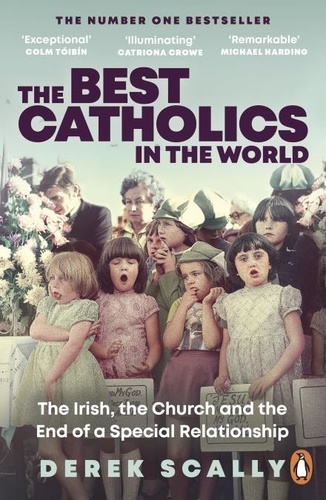
It amazes me that, of all countries in the world, IRELAND should have voted for gay marriage and legal abortion. My impression of Ireland is that it is mired in religion and conservatism, and I don’t think that I’m alone in this perception. In this book, Derek Scally, after many years of living in Germany, returns to Ireland, the land of his childhood, and asks himself how these changes came about. It is a story both of his own personal journey from a weakly-held Catholicism into a consideration of how Ireland, as a country, can come to terms with its past.
The book is divided into three parts. In Part I, ‘The Leaning Tower of Piety’, he writes of his own Irish upbringing and his own contact through St Monica’s Church with Father Paul McGennis, who was later to plead guilty to four counts of indecent assault. In going through the church archives, he learns of the league table on donations that existed between the parishes, and through speaking to old parishioners he learns of the suspicions about Paul McGennis, and the inability of parish priest Michael Geaney to impose any authority on him. In Part I he challenges the perception that there is a special type of ‘Celtic Christianity’, suggesting that this is the result of previous centuries’ public relations, generating important political momentum, emotional comfort and offering touchstones against historical events like the Penal Laws and Protestant/English occupation. It was not enough: he suggests that Irish Catholics perceived themselves the Most-Oppressed-People-Ever. Yet, when he looks back to his own education within the Catholic system in the 1980s by revisiting the text books used at the time, he feels patronized and short-changed by the experience.
Part Two ‘Implosion’ looks at the effect of the clerical sexual abuse revelations in the 1990s. He focuses on Fr. Brendan Smyth, who was investigated in 1975 but went on to abuse children for a further sixteen years. The fallout, when it came, spread beyond his own activities: Cardinal Brady, who was involved in the 1975 investigation, was also accused of cover- up. He interviews Sean Brady, a man whom some see as a modest figure who knew which boats not to rock; while others see him as a coward and an accomplice to a predatory paedophile priest. Australian readers will see parallels with Archbishop George Pell. He goes on to explore the Magdalene laundries and the treatment of inmates in religious-run institutions. He argues that when the Catholic Church lost its monopoly on giving meaning or creating a sense of community, coupled with the sense of betrayal over the hypocrisy and intransigence of the church regarding sexual abuse, many left the church.
In Part Three ‘Among the Ruins’ he talks about the reformulated religion that transformed Famine-era faith into an earnest, Rome-focussed Sacred Heart Catholicism. He draws on his experience of living in Germany to wonder if Ireland does not need some form of national reckoning, as a form of healing and reconciliation. He considers the roles of museum and memorials in this process. At the end of the book he writes:
This journey has taken me from apathy to ambivalence, then anger to acceptance…[For] whatever anger I harbour towards the Irish Church, echoing the anger of those whose lives were ruined by its institutional inhumanity, I see remnants of its noble aspirations through the many ordinary Irish people who tried- and try- to lead better, Christian lives. No one can draw a line under the past, or airbrush away their role in it, but- for perhaps the first time ever- Irish people can approach their history on their own terms. That is, if they want to. (p. 307)
I’m not quite sure how to rate this book, and my reading was interrupted by a two-week holiday and so I did not read it as a continuous whole. I was happy enough to pick it up again, but I don’t know if I really grasped his argument well. In fact, summarizing it here gives me a better shape of the argument than the actual experience of reading the book did.
Autocracy in America. This really is a very good series. Episode 5 Join the Kleptocracy In a kleptocracy, those in authority are united by the need to undermine the rule of law and to suppress the people in order to steal. A financial elite emerges slowly, hiding its money. From the shownotes: “Since the earliest days of the republic, America’s international friendships have shaped domestic politics. And some of those friendships helped America strengthen its democratic principles. So what happens if America’s new friends are autocrats? John Bolton, former national security adviser for President Donald Trump, and Senator Sheldon Whitehouse of Rhode Island argue that if America no longer leads the democratic world and instead imports secrecy and kleptocracy from the autocratic world, American citizens will feel even more powerless, apathetic, disengaged, and cynical.” They particularly discuss the nexus between Venezuela, China, Russia, Iran and Cuba. Within America itself, we have the emergence of SuperPACs, and the baleful influence of Elon Musk (I just can’t believe how much like a cartoon villain he is). They look at Ukraine, where the present government came to power as a rejection of strategic corruption- and look where it got them. The U.S. is vulnerable.
Episode 6 Politicize Freedom From the shownotes: “Freedom in the United States is a word that has had more than one meaning. It has meant freedom for some people and the repression of others. In a democracy, freedom also means the right to take part in politics. So how can that freedom best be secured? ” Apparently all America is united by an attachment to ‘freedom’, but I must admit that I’m always suspicious of it, especially in its American form. There is freedom in democracy but also the freedom to act in defiance of government. It’s a paradox that often those who demand ‘freedom’ most vehemently want to control the government so that they can transform the central power into their own vision. Is everything hopeless? (especially since this series was broadcast prior to Trump’s victory?) They turn to the Suffragettes, who managed to make sufficiently strong alliances with people whose politics were opposite to theirs, in order to make a common cause over the thing most important to them.
The Rest is History Episode 451: Custer’s Last Stand: The Charge of the 7th Cavalry. Do you know, I am so ignorant of ‘Cowboys and Indians’ that I don’t even know who won the Battle of Little Bighorn? From the shownotes: “The U.S. was cast into a spiralling panic following the economic depression of 1873, and waves of paramilitary violence swept through the south as the debates surrounding Reconstruction swirled on. Amidst this uncertainty, the government, under the leadership of Ulysses S. Grant and his chief advisors, began drawing up a cold blooded plan to strike into the heart of Montana and settle the issue of the Plains Indians once and for all. Meanwhile, the drumbeats of war were sounding amongst the newly united Lakota and Cheyenne themselves, spearheaded by their war chiefs Crazy Horse and Sitting Bull, as the pressures of white settlers and the railroads increased. Their numbers swelled in the wake of a failed winter campaign lead by General Crook, as swarms of refugees accumulated into Sitting Bull’s village – the largest assembly of Lakota ever seen on the Plains. The stage seemed set for a mighty reckoning in the summer of 1876, as the Federal government geared up for another assault. Much to his delight George Custer, spared from the brink of disaster by his reckless impetuosity, was recruited to the 7th Cavalry marching on one of the armies closing in on the Lakota encampment near the Little Bighorn River…the Battle of the Rosebud that followed would see a six hour struggle of monumental violence.”
Spoiler alert: Custer is going to die. Tom and Dominic sheet quite a bit of blame to Benteen, but there was ambiguity in Custer’s instructions to him to come quickly and bring firearms (even though this would cause delay). It was a gruesome battle, although Custer wasn’t as mutilated as he might have been, as the Native Americans probably didn’t recognize him. News of the defeat reached New York on the 5th July, the day after America celebrated its centenary. New Yorkers read a 40,000 word report of the battle, which took the reporter 22 hours to dictate). Custer was described a slight, but vivid, figure in history.
We Live Here Now (The Atlantic). Sneaky Atlantic- it played this episode at the end of ‘Autocracy in America’ and I was hooked. It features Lauren Ober and Hanna Rosin, journalists and partners in Washington DC whose liberal and progressive neighbourhood was jarred by the arrival of a black SUV plastered with January 6 decals.
Episode 1 “We’re Allowed to Live Here’ sets the scene as Lauren and Hanna realize that their new neighbours in the house called ‘The Eagle’s Nest’ (shades of Hitler, anyone) are supporters of the January 6 rioters, and that one of them is in fact Micki Witthoeft, the mother of Ashli Babbitt, the only person shot by a Capitol Police officer that day, after she climbed through a broken glass panel.
In Episode 2 “You’ve Got to Get Your Militias Straight” they visit their new neighbours, and one of them accompanies Micki to the nightly vigil that she holds outside the ‘DC gulag’ where the January 6 insurrectionists are either incarcerated or awaiting jail. There they see how January 6 is mythologized, and see how the story has been changed over time.
History HitThe Golden Age of the Country House. I need to get away from all this American stuff. What better than a good old British Country House? This episode features Adrian Tinniswood, the author of The Power and the Glory: The Country House Before the Great War (Vintage, 2024) His book spans 1870 to 1914. He points out that there is no ‘typical’ owner of a Country House: there were traditional owners, nouveau riche, industrialists and Americans (like Astor, Carnegie and Rothschild) and outsiders (like Sikh princes). This tolerant upper class milieu reflected Edward 7th (the former Prince of Wales) who was tolerant of ‘new’ people. Quite a few of these people built their country houses from new, often reflecting medieval, chivalric ideals. A religious presence in the village through attendance at church services and philanthropy was important in cementing the owners’ place in the community. Despite the Downton Abbey scenario, most domestic servants (who by this time were almost all women) shifted jobs quite often, and only had a ‘career’ in domestic service of about 12 years. Country houses did have their share of murders and ghosts. The Country House phenomenon continued after WWI, but by then it had lost its confidence.
As we get older, we approach the ‘senior’ category that covers adults from 60-100, a forty-year age range. It would be unthinkable to conflate, say, a 10 year old and a 50 year old, but somehow after 60 all ‘old people’ are lumped in together. I wouldn’t be the first person, I’d wager, to regret that there were conversations that I didn’t have with my parents as a ‘senior’ myself, and questions that I didn’t ask about their earlier lives..
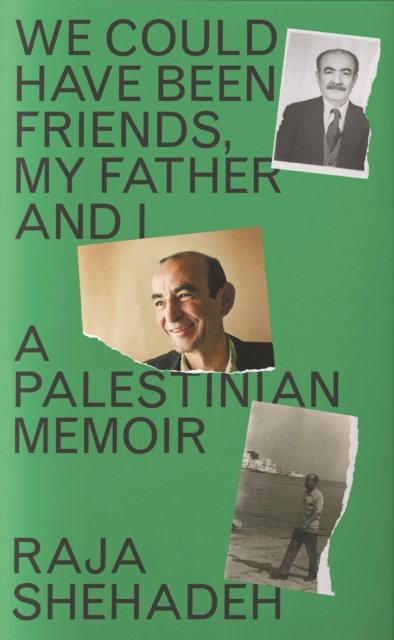
Palestinian Human rights lawyer and author Raja Shehadeh has even more regrets. When his 73-year-old father was assassinated outside his own home by a disaffected litigant in 1985, Raja was 34 years old and working in his father’s law firm. The murderer was a squatter on land belonging to the Anglican Church, and his father was handling the case for his eviction. The Israeli police closed the case, assuring the family that they were doing everything they could to find the murderer, but they knew who the murderer was and did not want to charge him. (p. 13) After his mother nagged him into going and collecting his father’s papers, Raja ended up with a cabinet of papers, which he stored on the bookshelf. He opened them, and found everything meticulously arranged, but felt overwhelmed by it all. The last case they worked together on involved plans for roads to be constructed throughout the West Bank. His father directed him to the documents he should consult, but showed only moderate enthusiasm for the case, which he left mainly in his son’s hands. Still smarting from this rejection, for many years he viewed the documents as nothing more than “a source of years of hardship and trouble”. (p. 17)
It was only when a friend brought him a photocopy of the Palestinian telephone directory for Jaffa-Tel Aviv dated January 1944, a city to which his father could not return after 1948, that his father’s long history of activism became real to him.
When I began reading, I realised with what impressive clarity my father had set forth his thoughts, and how his pioneering ideas were deliberately distorted by Israel, the Arab states and even some Palestinians. For so long his written attempts at setting the record straight had met with failure. I felt guilty that all these years had passed before I could spare the time to study the files in the cabinet and finally do what I had failed to do during his life: understand and appreciate his life’s work. (p. 17)
This book, then, is the story that was revealed through those documents. It is a history of the years immediately surrounding the Nakba. It illustrates the perfidy of Great Britain and Jordan in the establishment of Israel, the intransigence of the PLO and the whole generational cycle of Palestinian history that existed before the author’s birth. His father and other Palestinians at the time, rejected the creation of UNRWA (which is currently in the news now because Israel wants to outlaw it) because it made the Palestinian cause one of humanitarian response rather than justice.
His father took up the cause of Palestinian savings, which were frozen by the banks leaving Palestinian refugees unable to exchange their Palestinian pounds into pounds sterling or any other Arab currency. In February 1949 the Israeli government ordered that Barclays Bank in Britain and the Ottoman Bank formally transfer all ‘frozen’ Palestinian funds to the Custodian of Absentee Property, which after a while proceeded to liquidate the assets as if they belonged to the State. His father mounted a legal challenge against Barclays Bank at the District Court in Jerusalem, which was part of Jordan at the time. He won.
He decided to run as a candidate in the Jordanian parliament, but found himself arrested instead. He proposed the establishment of a Palestinian state next to Israel along the 1947 partition borders, with its capital in the Arab section of Jerusalem. This put him at odds with the PLO, which wanted a secular democratic state over the whole of Palestine, not a Palestinian state alongside Israel. His father was clear-eyed about Israel’s deceptions over various peace initiatives, and always believed that it was preferable for the Palestinians themselves negotiate with Israel, rather than have Arab states negotiate on their behalf ( as occurred during the Trump-inspired Abraham Accords, and is still occurring over any possible ceasefire in Gaza).
Too late, there was so much that the Raja of today could have discussed with his father, had he lived. It’s revealing that, despite their shared interests and objectives, the emotional tenor of the father/son relationship overpowered their intellectual one. He was intimidated by his father and he resented his dependence on him in the office.
For years I lived as a son whose world was ruled by a fundamentally benevolent father with whom I was temporarily fighting. I was sure that we were moving, always moving, towards the ultimate happy family and that one day we would all live in harmony. When he died before this could happen, I had to wake up from my fantasy, had to face the godlessness of my world and the fact that it is time-bound. There was not enough time for the rebellion and the dream. The rebellion had consumed all the available time. I turned around to ask my stage manager when the second act would start and found that there was none. I was alone. There was no second act and no stage manager. What hadn’t happened in the first act would never happen. Life moves in real time. (p. 12)
The language in this book is a little stilted, but any adult child can feel this same remorse for lost opportunities, and the jolt of being alone on the stage, once one’s parents have died. This book gave me a good sense of the generational injustice that is still being fought out in Gaza and the West Bank today, and the pettiness and duplicity of many of the main actors. Colonialism up-close, and without the patina of centennial celebrations and ‘age-old’ traditions is an ugly, ugly thing.
I’m not usually a fan of short stories, but I have read and enjoyed a couple of Claire Keegan’s novellas, and I thought that I’d like to read some of her other writing. I think I’ve finally worked out the best way for me to read short stories, too: just one at a sitting, then put the book away until I find time to read another. And what’s more, I think I’ve finally worked out the best way to write about them too: to acknowledge that some of them will slip by without making an impression, and just hold on to the ones that do.
For me, there were two really strong stories in this collection. The first, ‘The Parting Gift’ is an absolute masterpiece in concise, measured writing and I am in awe of her skill in packing so much backstory and nuance into just 14 pages. It’s written in the second person, present tense – not a narrative style that I’m attracted to, I must admit
In her bedroom your mother is moving things around, opening and closing doors. You wonder what it will be like for her when you leave. Part of you doesn’t care.
Our narrator is packing to leave for New York, and her brother Eugene is to take her to the airport. Her mother orders the narrator to go upstairs to say goodbye to her father, who is in bed (presumably ill). She doesn’t want to: there have been years of sexual abuse, tacitly accepted by her mother. Her mother expects that her husband will give her some money as a parting gift, but he does not. Her brother, who has done his best to protect her from her father, vows that he will leave home too, but she knows that he will not.
The second story that I really enjoyed was ‘Night of the Quicken Trees’ about a wild, unkempt woman, Margaret Flusk who moves into a detached cottage on the outskirts of a rural Irish village. The house was left to her by her cousin, a priest, with whom she fell in love and eventually ended up bearing his child, who later died. She is superstitious and independent, but she gradually yields to the equally independent man in the adjoining cottage, Stack, who lives in filth and sleeps with his goat Josephine. When her periods return, she has the urge to have a child and so they knock a hole between the two cottages, until Margaret leaves him, taking the child with her. The story is told like a fairy-tale, full of portent and warning.
The other stories are mainly set in Ireland, except for ‘Close to the Waters Edge’, which is set in America where a young man celebrates his 21st birthday with his mother and his arrogant, aggressive millionaire step-father. He is gay, but cannot tell his mother and step-father, and so he returns to Harvard, without having told them. With its American setting, this story doesn’t seem to fit in with the others. There’s a unity to the other stories with the sexual indiscretions with priests, the claustrophobia of the small village and many eyes and tongues, and the flat depression of unfulfilled lives.
I’m mystified as to why she (or the publisher) chose ‘Walk the Blue Fields’ as the title. In that story, a priest has just conducted a wedding service where the bride seems unhappy, and there is tension between the groom and his brother, the best man. We learn that in the past the priest had had sex with the bride- the second story in this collection where there is sex between priest and parishioner. But if by choosing one story over another for the title suggests that it is the strongest one in the collection, I beg to differ. For me ‘The Parting Gift’ is the absolute stand-out story, and one that I will remember.


 The Resident Judge of Port Phillip