Monthly Archives: November 2024

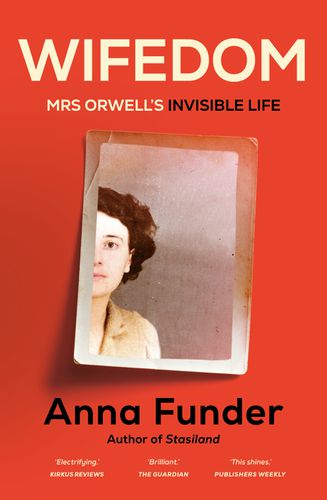
‘Wifedom’ by Anna Funder

2023, 384 p.

Sometimes a writer takes on a task, knowing that it is risky. Funder did, and in a way, Orwell himself made her do it. After the age of 30, he writes, people almost abandon the sense of being individuals at all, and live for others or are smothered under drudgery. Not writers, however, who belong to a minority class of gifted, wilful people who are determined to live their own lives to the end. Was this true of Funder herself? An award-winning Australian writer and historian, she knew that despite intending to share the responsibilities of life and parenthood with her husband Craig, she had been doing the lion’s share. As a writer and a wife, she found herself envying the titantic male writers for the

…unpaid, invisible work of a woman [to create] the time and -neat, warmed and cushion-plumped- space for their work….To benefit from the work of someone who is invisible and unpaid and whom it is not necessary to thank because it is their inescapable purpose in life to attend to you, is to be able to imagine that you accomplished what you did alone and unaided…Invisible workers require no pay or gratitude, beyond perhaps an entire, heartfelt sentence in a preface, thanking ‘my wife’. ..As a writer, the unseen work of a great writer’s wife fascinates me, as I say- out of envy. I would like a wife like Eileen, I think, and then I realise that to think like a writer is to think like a man…But as a woman and a wife her life terrifies me. (p. 53, p.55)

When she read a piece that Orwell had written in his private notebook, close to his final illness, she recoiled from the misogyny and repugnance that he showed towards his wife: that same wife who had made his writing possible. She turned her attention from Orwell to his wife Eileen. She had thought of fictionalizing her picture of their marriage, but the publication of Sylvia Topp’s Eileen: The Making of George Orwell in 2005 and the recent discovery of six letters from Eileen to her friend Norah caused her to change her mind. Eileen’s voice had been suppressed for so long, and she didn’t want these six, so rare, letters to be swallowed up into the maw of source material. And so she writes this book as a ‘counter-fiction’, marking out Eileen’s words in italics so that they keep their own integrity and distinctiveness, but fictionalizing the context in which they are written as she traces their marriage from 1935 and their first meeting through to Orwell’s death in January 1950.

A long-time admirer of George Orwell’s work, Anna Funder had immersed herself in Orwell scholarship, reveling in his essays, combing through his six biographies, doing the Orwell Pilgrimage to Catalonia and Jura, and revisiting his books. She is aware of the risk she is running, in these ‘cancel culture’ times

…Orwell’s work is precious to me. I didn’t want to take it, or him, down in any way. I worried he might risk being ‘cancelled’ by the story I’m telling. Though she, of course, has been cancelled already- by patriarchy. I needed to find a way to hold them all- work, man and wife- in a constellation in my mind, each part keeping the other in place. (p. 23)

There is a lot going on in this book. She mounts a feminist attack against patriarchy; she reflects on the writing process and the needs of writers; she combines Orwell’s biography and her own autobiography; she trails Orwell and Eileen through their marriage chronologically, and she takes Orwell’s other (male) biographers to task for their unthinking acceptance of the minor role of “my wife”. Is there too much going on here? Perhaps, although by drawing on her own reflections on the writing process and the role of her partner in a prize-winning, internationally recognized writing career is to provide a new perspective on this other writing career of a largely-ignored writer nearly one hundred years ago.

As it happens, I read this book immediately after reading Orwell’s Homage to Catalonia. I had been disconcerted by Orwell’s erasure of Eileen through the sparing references to “my wife”, but having now read Funder’s account of their time in Spain, I feel angry that his account stands unchallenged. All those passive sentences of how urgently-needed supplies miraculously appeared or arrangements were made, suddenly made sense. Even the scene in which Eileen appears in the hotel lobby to warn Blair that he was in danger elides completely the fact that she had been waiting literally days for him and downplays the very real peril that Eileen herself was facing. That self-deprecating humour and false humility is all a charade.

Like Funder, I am angered too by the manipulation of quotes and shuffling of facts by his earlier biographers in lionizing the man and expunging Eileen. Funder has obviously read these biographies with one finger holding open the footnotes page, and she has followed up each one.

From a 21st century perspective, in the light of ‘me too’ and awareness of ‘coercive control’, Orwell does not come out of her analysis well. As his late-life reflection on the “incorrigible dirtiness” and “terrible, devouring sexuality” of women (p.11) shows, he had a deeply embedded repugnance for women. He was constantly unfaithful, and by immuring themselves away in a dishevelled cottage in the country – at his insistence- far from the city, he separated her from her friends and their milieu. He thought nothing of going off to follow his own desires and interests: over to Spain to report on the Civil War, off to Europe while Eileen is dying, absent again when she was facing court to gain custody of their adopted son. She was his typist, his editor, his sounding board; she cooked, she gave up her comforts for his. She pandered to his ‘bronchitis’ while he largely ignored her pain from cancer. He was jealous of their friend Georges’ infatuation with her, yet he revelled in the ‘permission’ she granted for him to have affairs – a permission harangued and co-erced from her, or freely given? He pursues her friends (because they are her friends?) and “pounces” on women, after her death, in order replace her and the day-to-day burdens she had carried, as quickly as possible.

But without wanting to excuse him- who knows what goes on in a marriage? The story goes that Orwell instantly declared on meeting her “Eileen O’Shaughnessy is the girl I want to marry”. Conversely, Eileen told her friend “I told myself that when I was thirty, I would accept the first man who asked me to marry him.” What was her attraction to him? She had won a scholarship to Oxford where she read English alongside Auden, Spender and MacNeice, but failed to get a first (no women were given firsts in 1927, the year she graduated), and she relinquished her own writing. She was undertaking a Master Of Psychology at University College London, but this too was sublimated to Orwell’s demands for quiet, food, the country lifestyle. She seemed heedless to her own safety during the Blitz, and opted for the cheapest treatment of her cancer, a treatment that killed her. People and relationships are complex.

I enjoyed this book a great deal. I appreciated Funder’s rigour in interrogating Orwell’s biographies and biographers, I liked the respect with which she treated Eileen’s own words in the letters. Once you move beyond a slavish chronology, all biographies are an argument, and Funder’s argument is right there on the cover with the title “Wifedom: Mrs Orwell’s Invisible Life”. I could have had a little less of Funder’s 21st century writerly angst, but it comes from a place of knowledge and identification. Reading it immediately after Homage to Catalonia convinced me completely of Funder’s thesis: that “my wife” was a real, living, intelligent woman who was a fundamental, and completely obscured, part of one of the most lionized literary marriages.

My rating: 9/10

Read because: Ivanhoe Reading Circle September selection. It was an open meeting, and the paper presented by Meredith Churchyard was excellent.

Sourced from: purchased.
I hear with my little ear: Podcasts 1-7 November 2024

Shadows of Utopia Episode 11: Khmer Issarak/ Pot Pot in Paris I This episode covers the period 1945 – 1950. Just like an abusive partner promising to reform after a stint in jail, after the Japanese capitulation the French government returned, promising to be better. They had plans for a Colonial Federation of the states under their control (Vietnam, Laos and Cambodia). This triggered the French/Vietnam war, which was a matter of prestige for the French, and a matter of nationalism for the Vietnamese who had claimed their own independence during the war. As far as Cambodia was concerned, in 1946 there was a Cambodian/French modus vivendi which returned to Cambodia the territory in the west that had gone to Thailand, and provided a new constitution (albeit under French oversight). The King and the National Assembly would be voted by universal male suffrage, and three political parties, each led by Princes, emerged. Although Than had been sidelined, the Democratic Party became the heir of the early Khmer nationalists, and won 50 out of 67 seats at the first election. Outside of official channels Khmer Isserak became more prominent. In 1946 they seized Siem Reap in a guerilla action that united monks, criminals, warlords, and Thai-influenced communists, as well as freedom fighters and independence supporters. But when the Prince heading the Democratic Party died, the democrats fractured. Meanwhile, in October 1949 the future Pol Pot, Saloth Sar, arrived in Paris after gaining a scholarship to a trade school to study radio technology, possibly through his royal connections. The Communist Party was strong in France at this time. He went to work in Yugoslavia as part of a labour force during his holidays (shades of what was to come in Cambodia), and was introduced to communist ideology and Marxist-inspired politics in Paris through a group of students including Ieng Sary, Thioun Mumm, Keng Vannsak.

The Rest is History Custer’s Last Stand: The Charge of the 7th Cavalry (Part 6) Again, from their website: “The U.S. was cast into a spiralling panic following the economic depression of 1873, and waves of paramilitary violence swept through the south as the debates surrounding Reconstruction swirled on. Amidst this uncertainty, the government, under the leadership of Ulysses S. Grant and his chief advisors, began drawing up a cold blooded plan to strike into the heart of Montana and settle the issue of the Plains Indians once and for all. Meanwhile, the drumbeats of war were sounding amongst the newly united Lakota and Cheyenne themselves, spearheaded by their war chiefs Crazy Horse and Sitting Bull, as the pressures of white settlers and the railroads increased. Their numbers swelled in the wake of a failed winter campaign lead by General Crook, as swarms of refugees accumulated into Sitting Bull’s village – the largest assembly of Lakota ever seen on the Plains. The stage seemed set for a mighty reckoning in the summer of 1876, as the Federal government geared up for another assault. Much to his delight George Custer, spared from the brink of disaster by his reckless impetuosity, was recruited to the 7th Cavalry marching on one of the armies closing in on the Lakota encampment near the Little Bighorn River…the Battle of the Rosebud that followed would see a six hour struggle of monumental violence.

Autocracy in America. Bear in mind that I was listening to all this before the American election, when I was still cautiously hopeful that Harris would win. Or more to the point, Trump winning was just too frightening to contemplate- especially after listening to this podcast. It features historian Anne Applebaum (who I have a lot of time for- see my review of Twilight of Democracy here) and Peter Pomerantsev. It’s produced by The Atlantic. Episode 1 Start with a Lie argues that the lie is the litmus test of loyalty – and haven’t we seen plenty of those coming from Donald Trump’s mouth? Evidence is irrelevant, and truth becomes a subset of power. They speak with Steven Richter, the county recorder in Maricopa county who was accused by Trump and his acolytes of ridiculous vote tampering in 2020 (e.g. shredding the Republican votes, feeding them to chickens and then burning the chickens) but the sheer absurdity of the lie is part of the test. They speak of belief in the lie as being part of belonging, rather than an intellectual choice. Episode 2 Capture the Courts In an authoritarian state, the public has no real access to justice. This episode features Renée DiResta, a scholar who researches online information campaigns. After putting out a report ‘The Long Fuse’, she struggled to counter false accusations leveled against her after a series of courts accepted them without investigation. They then go on to discuss Justice Cannon’s ruling on presidential immunity, and the distinction between rule BY law and rule OF law.

The Money (ABC) Yet another pre-election podcast. Oh to be able to return to that still-hopeful time! This episode was As America goes to the polls, the economy is doing well, but people aren’t feeling it. There were three speakers, but I was most interested in the last one, who I think is Christopher Rugaber. Who ever it was, they spent a day at the King of Prussia shopping mall in Pennsylvania. He made four observations. First, that people are quick to blame the government when things go wrong, but when they get a new job or a raise etc. they attribute it to their own individual effort. Second, that despite years of predicting the demise of the department store, they are actually booming with the car parks filled with workers’ cars long before the stores open. This is the flip side of deficit spending: that people DO actually spend the money they are given. Third, after paying $10.00 for an ice-cream that would have cost $7.00 last year, he realized that this is what people remember- not tax reductions, not extra childcare payments, not reduction in inflation, but the $10.00 ice-cream. Finally, that people (like himself) continued to buy brands like Levi, no matter how much they put up the price. They would complain about the price-rise but it was not enough to make them change brands. Interesting.

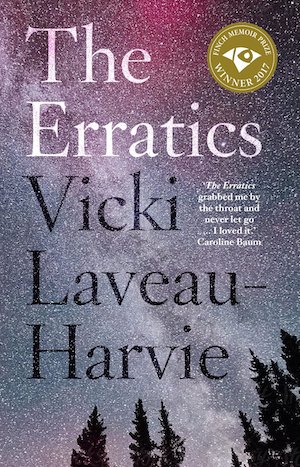
‘The Erratics’ by Vicki Laveau-Harvie

2019, 224 p.

I confess that I started this book warily. “Mad as a Meat Axe” write two daughters on their mother’s medical chart at the end of the bed, sniggering at the thought that the initials MMA might prompt some medical profession to treat their mother for MMA and kill her. The two daughters, who are never named, are visiting their mother in rehab for a broken hip, even though their mother denies their existence, and has had nothing to do with them for eighteen years. I would not want these daughters.

Obviously much has gone on in this family, but we are never told. Our narrator tells us that, for her:

My past is not merely faded, or camouflaged under the dust of years. It’s not there, and I know a blessing in disguise when I see one. I have managed to shake free and flee to far-flung places where I feel reasonably safe because I do not carry a lot of my past. (p.140)

And yet, after 18 years, this Canadian academic returns home to see her father, whom her mother has announced “doesn’t have long”, and her mother whose hip has disintegrated. Along with her sister, who has remained in Canada despite the 18 long years of estrangement from her parents, they arrange (conspire?) for their mother to be moved into some form of care, so that their father can escape from her clutches. Her mother has long since given power of attorney to someone else, and she announces that her daughters are only after her money. Are they? Who is mad as a meat axe here?

It took a while for me to shake my suspicion of the narrator. I wonder if this book is some sort of Rorschach test: I have been the child left (albeit in a completely different situation) and so perhaps I read it differently. As older sister, the narrator has fled to Australia and established a marriage and career there, while her younger sister, just by virtue of being in Canada, carries the memories, the hurt and responsibility. The narrator knows this, but this does not change her actions:

…However different we are and however badly she judges me, whatever gulf already separates us, she is my sister. I do not want the gulf to fill with the seething resentment she will feel because she is doing it all, but I know this will happen. I am telling her that I know this will happen. I know she will feel violent annoyance with me when I suggest something because I’m not there and I don’t know, and I’m not the one doing it and I, on my far away island continent, will sit quietly, gnawed by guilt. (p. 157)

We never learn what has happened in this marriage and family. We have little back-story for her parents, beyond the fact that her father made money through the oil industry and that he fought in WWII. We have no images of a courtship, a marriage or a family life with young children. Everything is refracted through the narrator’s rage- which oddly enough, she deflects onto her sister.

No, I see rage here. A rage expressed by staying on the other side of the world, and by allowing her younger sister to carry this burden. A justified rage, from the snippets that we received, but rage nonetheless, despite protestations of guilt.

This is a memoir, and as such the author has ultimate freedom and responsibility to shape the narrative however she wishes. The memoir starts with a preface, describing the Erratics, huge boulders deposited by the Cordilleran Ice Sheet as it moved through Alberta and Montana. The Erratic that sits in the Canadian town of Okotoks, where the memoir is set, has cracked and fallen in on itself, posing danger to anyone approaching it. On the final pages, we revisit this image of the Okotoks Erratic with the spirit of her mother sitting atop it, beside Napi the Trickster.

To be honest, I’m still not sure who the Erratic is here: mother or daughter. But either way, it feels as if there is some sort of space here for release.

My rating: 8/10

Sourced from: purchased e-book

I hear with my little ear: Podcasts 24-31 October 2024

Being Roman Soldiering for Softies Well, obviously not ALL Roman Soldiers were of chiselled jaws and flinty demeanour. In this episode, Mary Beard introduces us to Claudius Terentianus, who spends most of his letters moaning to his father, and asking for the most basic of equipment from sandals to swords. After a lifetime spent complaining, he eventually moves up the ranks a bit and ends up being able to retire quite comfortably.

History Extra. Native Americans: A History of Power and Survival. I’ve been listening to The Rest is History, where they are looking at Custer, Sitting Bull and Crazy Horse, so I thought I’d catch up on this more generalized history of Native Americans. I’ve always been mystified by the way that indigenous/European relations in Australia draw on ‘black’ language and politics of African Americans, when Native American/settler relations are far more relevant. This episode features Kathleen Duval, whose book Native Nations just won the Cundill Prize, a Canadian award for the “best history writing in English”. Her book looks at 1000 years of Native American history, starting in the year 1000 when Native American society was at the height of its organization, and comparable to cities in Europe at the time. The Medieval Warm Period made urbanization possible, and when it ended, people left the cities by preference. Native American nations were marked by trade, reciprocity and consensus decision making in confederencies that ebbed and flowed. The second part of her book goes from 1750 onwards. Spanish and Dutch colonization hadn’t changed the power balance, but this was to change from this point on. Part III looks at rebirth into nations. It sounds good.

Dan Snow’s History Hit The British Agent Who Tried to Kill Lenin tells the story of Robert Bruce Lockhart, a British diplomat, spy, and propagandist. He was born into a wealth Scots family and intended to go to Malaysia to work in the rubber industry, but was waylaid by scandal (I didn’t note what the scandal actually was!). He was restless and proudly Scottish. He ended up in Russia during WWI where he was an astute observer and politically agnostic. He became a “British Agent”, not an official position, but a conduit to the British government and their man on the spot. He was tasked with getting the Russian government back into the war after the Communist takeover and withdrawal in a plot by France, English and the US to use disaffected Latvians to overthrow the Bolsheviks. He was arrested and imprisoned by the Checka when he was betrayed by Latvian plants, but he was released under a prisoner exchange. He continued to hang around the Foreign Office where he worked as a Rogue Agent.

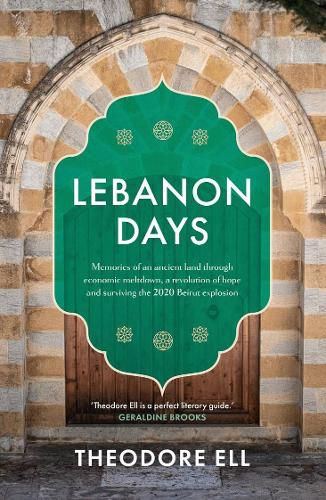
‘Lebanon Days’ by Theodore Ell

2024, 352 p.

In 2021 Theodore Ell won the ABR Calibre Prize for his essay ‘Facades of Lebanon’ which described the Lebanese revolution and the Beirut port explosion. (I must admit that this essay probably languishes in the towering pile of journals that I haven’t got round to reading yet.) The explosion, caused by a stockpile of nearly 3000 tonnes of ammonium nitrate, dominates his essay which was written in 2020, as part of his way of processing what had happened. As he says:

I wrote an essay ‘Facades of Lebanon’ with the aim of making sense of the abstractions behind the port explosion at the level of personal feeling. If people were to know what the Lebanese knew and what Lebanon had brought me to know, they needed to know what the explosion felt like. They needed an invasion of violence, debris and deafening noise through the window, just as the Lebanese themselves so often had been invaded, over their rooftops and fields as much as over their doorsteps. (p. xix)

But this book, written in the wake of the critical acclaim for the essay, and with more distance of time, deals more with what happened in the periods before and after the explosion. The book is in five parts, and the explosion is just one of these parts. It is the story of the two-and-a-bit years between the end of 2018 and the beginning of 2021 that the author spent in Beirut as the partner of an Australian Embassy official- a time in which Beirut roiled under street protests as part of the thowra (i.e. revolution) which was eventually put down by Hezbollah (or as he writes it ‘Hizballah’) and the COVID lockdowns, during a time of economic collapse exacerbated by government corruption, which in turn laid the conditions for the Beirut port explosion that changed his life.

As the partner of an Embassy employee, he was not allowed to undertake paid employment and so he spent quite a bit of time walking the city, venturing further afield with his wife Caitlyn on weekends, doing odd job volunteer work where he could find it, and writing. As is often the case with Embassy staff, their social circle mainly revolved around other Western diplomatic and aid workers, with most of his contact with local Beirut residents through observation on his travels, and amongst taxi drivers, shopkeepers and businesses catering for young Western expatriates.

Much of this book resonated with me, having spent time with my son and daughter-in-law in both Kenya and Cambodia where they, too, live as expatriates, albeit living (as do Ells and his wife) outside an expatriate enclave. Their description of the succession of new expatriate arrivals and the development, and then breaking apart, of friendships makes sense to me, as does the distance between the expatriate community and local workers in the diplomatic and aid milieu. How clearly I identified with his frustration with learning Arabic which, despite learning basic Spanish and Portuguese, “awed [him] with its complexity” and with which he failed utterly – a feeling I often have when trying to learn Kymer.

The book is divided into five parts, with short unnumbered chapters in each part. Part One ‘Partitions’ explores the 1926 constitution, adopted under French tutelage, which ossified the sectarian divides by designating certain political posts for particular religious and ethnic groups. This arrangement embedded power in the majority Christian group at the time, but given that there hasn’t been another census since 1932, that demographic scenario has been superseded without any corresponding political adjustment. Part Two ‘Phoenicia’ is more travel-based, as he explores regions further afield, and the sway of the historical ‘Phoenician’ culture as part of Lebanese identity. Part Three ‘Thowra’ is his report of the huge protests that brought Beirut citizens out into Martyr’s Square, demanding an end to the corruption that immobilized Lebanese politics, leaving it impotent to deal with the economic collapse. Part Four ‘Shuttered’ describes the effect of the COVID lockdown which Hizbollah and the government leveraged to quell the protests, dwarfed by the Beirut port explosion during which, living in an apartment that directly overlooked the port, they were lucky to survive. There’s some really evocative writing here of the sheer power of the explosion, and its physical and psychic effects. He is clearly suffering PTSD, while Caitlin throws herself into Embassy Emergency Mode. The final Part Five ‘Closing’ deals with the months when they are waiting to return to Australia, which is limiting inbound flights because of COVID. They return to living in West Beirut, where they had first lived when they arrived, imbued with a sense of grief for what had been lost, fearful of Israeli invasion, and yet acutely aware that, as Australian citizens, they can leave, and although able to appreciate the citizens’ fears, they are not their fears.

This is beautifully written, with a fantastic, clear map that lets you locate yourself in the city and in Lebanon more generally. There is a very good glossary at the back for Arab terms he uses frequently, and the whole book supports the unfamiliar reader better than many other books that I have read recently. He integrates travel description, history, political analysis and personal response in what he hopes is a ‘tapestry’ rather than a ‘tableau’ of landscape with figures.

This is a great book. I devoured it on the plane over to Cambodia, and finished it the next day. I can’t wait for the kids to read it- and you should too.

My rating: 9/10

Sourced from: Yarra Plenty Regional Library

I hear with my little ear: Podcasts 16-23 October 2024

History Extra Imperial Spectacle: Inside Britain’s 1924 ‘Empire Exhibition’. In this episode Matthew Parker takes us to the Empire Exhibition at Wembley Park. The 200 acre site was ten times the size of the exhibition at the Crystal Palace in 1851, and it included the Wembley Stadium, which still stands. It was opened in April 1924 by King George V on radio, and he was heard by 10 million listeners worldwide. Held after World War I, it was an expression of gratitude for the Empire’s contribution to the war effort. Europe and the banking system was in tatters, and it was hoped that the Empire, at that time at its territorial height, could replace it. With the rise of fascism in Europe, the Exhibition tried to engage the working class, but there was a rather patronizing snobbery when describing the appeal of trashy exhibitions to them. Even then there seemed something rather old-fashioned about the Exhibition with its ‘living exhibits’ of exotic races. It closed in October 1924 but re-opened the following summer, running from May 1925 through to September.

7.00 a.m. White Australians of a progressive bent are challenged by Alice Springs. The footage from a few months back of young kids rioting and trying to break into heavily reinforced hotel doors was confronting, and the Country-Liberal Party’s recent election victory in the Northern Territory with an openly ‘tough on crime’ policy, knowing full well that it will fall mainly on indigenous kids, raises many reservations. Yorta Yorta journalist Daniel James has a three-part series on 7.00 a.m. Episode 1: This is Alice Springs: Children of the Intervention takes up back to the Howard government Intervention, which is widely blamed by First Nations people today for being the root cause of the problems today. Is it? I don’t know, but it’s repeated again and again here, and I have to take it at face value. Episode 2: This is Alice Springs: The Coppers Race relations and the futility and delay of looking to white systems of justice came to the fore with the police shooting of Warlpiri teenager Kumanjayi Walker. Zachary Rolfe was acquitted, and the coronial inquest continues at the end of November this year. Episode 3: This is Alice Springs: Mparntwe picks up after the Country-Liberal Party victory, when many people in Alice Springs are packing up and leaving town (I can’t help thinking that this is the purpose of the CLP policy). Daniel James interviews one of the locals who is staying to teach kids to be ringers on cattle stations ( and here I found myself thinking of Ann McGrath’s Born in the Cattle). But even this example is not quite what it seems. An interesting, thought-provoking series.

The Rest is History Ep. 450 Custer’s Last Stand: Death in the Black Hills (Part 5) Once again, I’ll use the podcast’s description of the episode: “In the wake of the barbaric Washita River massacre, George Custer found himself drifting; addicted to gambling, at odds with his wife, and failing in his efforts to take advantage of the American gold rush in New York. Finally, Custer was sent to Kentucky to suppress the terrible post war fighting there, but again found himself alienated from many of his companions by his controversial views on Reconstruction. Restless and dissatisfied, the chance for danger and action finally came Custer’s way, thanks to the ambitions of the Northern Pacific Railway. With plans to build it right across Lakota territory, the venture was intended to and would fatally threaten their way of life, by spelling the death of the bison. With this threat on the horizon, the mighty Lakota war leaders, Sitting Bull and Crazy Horse lead violent raids against the survey party sent to prospect the land, hampering and halting their efforts. So it was that in 1873 another expedition was sent, and with it went George Custer, bringing him into contact for the first time with the two mighty warriors who would shape his destiny. A fearful, bloody game of cat and mouse would ensue, culminating in an epic confrontation…” They point out that the Black Hills were considered “unceded Indian Territory”, a rather ambiguous status, but they were not traditional, sacred lands as we understanding Indigenous Country here in Australia. Rumours about gold finds also increased the population pressure.

Six Degrees of Separation: from ‘Intermezzo’ to …

First Saturday is Six Degrees Day, so once again I refer you to Kate’s page at BooksAreMyFavouriteandBest where she hosts this meme. It involves Kate choosing a starting book – in this case Sally Rooney’s Intermezzo and then you finding six other books that spring to mind. You can conceptually leap from one title to another, or you might have six books all joined thematically- it’s up to you.

I rarely have read the starting book, and this month is no exception. I haven’t read any Sally Rooney at all. So where to go? Well, ‘Intermezzo’ has a double z in it, and I’m rather fond of double-z because I have one in my surname. So… books with double z it is! The zz might be in the title, or in the author’s name.

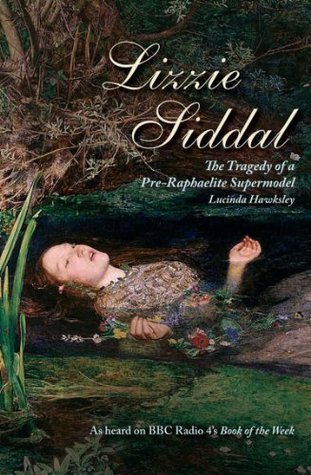
  1. Lizzie Siddal: The Tragedy of a Pre-Raphaelite Supermodel by Lucinda Hawksley. You’ve probably seen Lizzie Siddal because appears in many of the pre-Raphaelite paintings: thin, pale with long red hair. Working as a shop assistant in a hat shop, she was brought into the Pre-Raphaelite Brotherhood, a group of seven students who criticized the teaching of art in art schools, harking back to the rich colours and animated subject matter of Botticelli and other early Italian artists. She fell in love with Dante Rossetti, one of the original Brotherhood, but he had affairs with many other women and she became addicted to laudanum. This is a non-fiction book, written by historian Lucinda Hawsley, (Charles Dickens’ great great great grand-daughter), who often appears in British documentaries, especially about Victorian England. My review here.
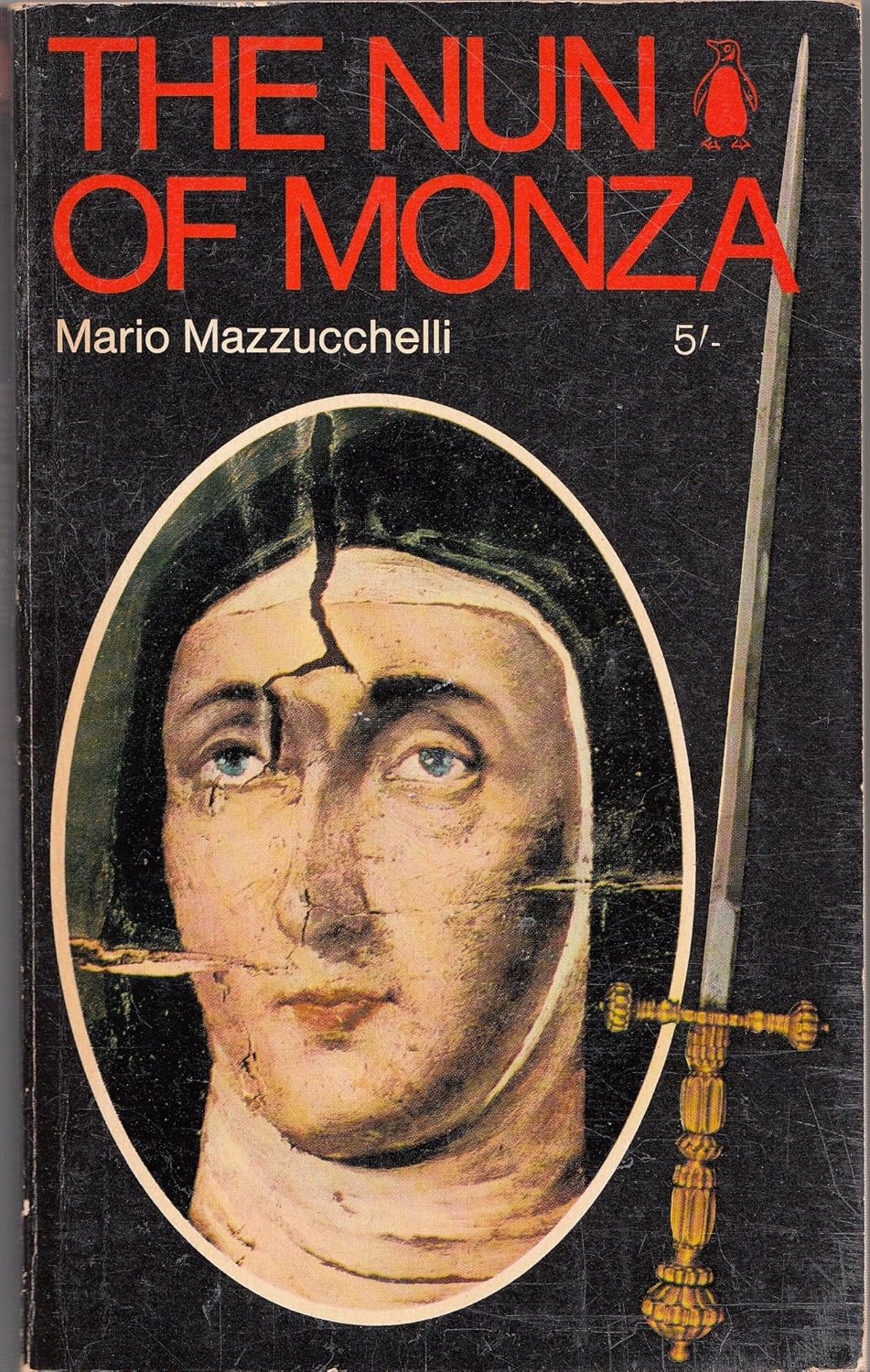
  2. The Nun of Monza by Mario Mazzucchelli I read this back in 2001, so I can’t remember all that much about it. It’s popular history, and it tells the story of Sister Virginia de Leyva, a nun in a convent in Spanish-controlled Milan in the 17th century. She has an 11-year affair with Gian Paolo Osio, the local rake. The one thing that stays with me (as a claustrophobe) is the horror of being ‘walled up’ as punishment for the affair.
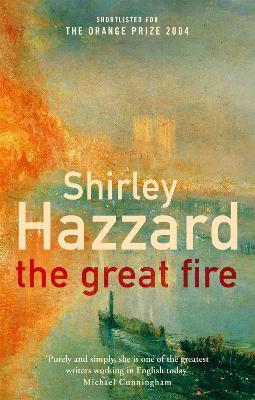
  3. The Great Fire by Shirley Hazzard. It’s only her double z that gets her onto this list, because I really didn’t think much of this book at all, even won the Miles Franklin and the National Book Award for Fiction in 2004, and was short-listed for the Orange Prize. It’s set in post WWII Asia, and it captures the stiffness of colonial pretension but it was wordy and complex and I didn’t like it one bit. You can read my review here (if I haven’t already put you off)
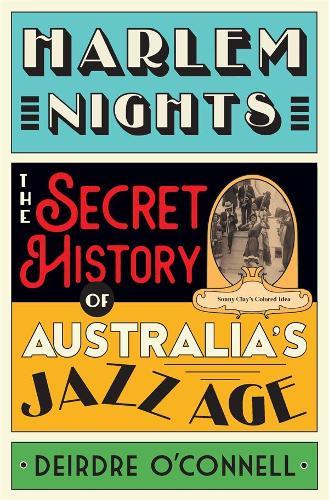
  4. Harlem Nights: the Secret History of Australia’s Jazz Age by Deirdre O’Connell On the 19th January 1928, the SS Sierra drew into Circular Quay. On board were seventeen members of the Colored Idea, an all-black Jazz revue comprising dancers, comedians, vocalists and musicians. They were deported from Australia less than three months later. Harlem Nights is the story of the Sydney and Melbourne legs of the Colored Idea’s Australian tour, but it is much more than that. It is the story of the international rise of African-American jazz; White Australia ; anxieties over the rise of the ‘girl’; media and celebrity; right-wing politics, and police corruption. It’s written by an academic historian, and it’s much more than just the story of a tour. You can read my review here.
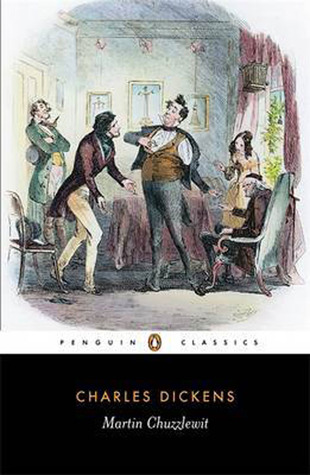
  5. Martin Chuzzlewit by Charles Dickens Another read from 2001. This is typical Dickens, with its tangled plot, a perceptive and satirical social and political eye, wonderful memorable characters who have become the stuff of English language itself (Sairy Gamp; Pecksniff) and a happy ending extolling the virtues of goodness and families. It was laugh-out-loud funny in places, and he really does get stuck into America and Americans.
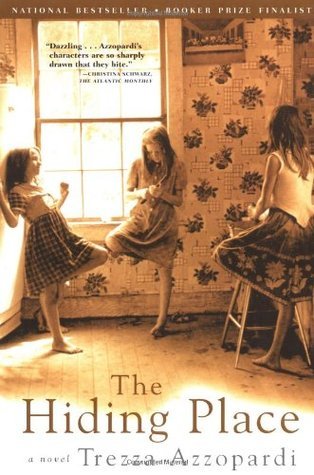
  6. The Hiding Place by Tezza Azzopardi. Two z’s is good; four is better. I read this about twenty years ago too. Despite the author’s z-laden name, it is actually set in Wales and it’s reminiscent of Angela’s Ashes in its depiction of poverty and childhood unhappiness. It was a Booker Prize finalist.

I’m quietly relieved that it’s only six degrees of separation, because I had come to the end of my list of books with zz. I hope I haven’t zzzz-d you to sleep!