Monthly Archives: October 2024

Six degrees of separation: From ‘Long Island’ to…

At last! I have actually read the book with which Kate at BooksAreMyFavouriteandBest has started her Six Degrees meme this month. The idea is that she chooses a book, then you identify six titles that are linked either to the starting book or to each other: you can see the instructions here. The starting book is Colm Toibin’s Long Island (and you can read my review here)

So where does Long Island take me? Well, the main character Eilis leaves Brooklyn to return home to Ireland, and so this catapulted me to Michael Chabon’s Kavalier and Clay, which is also set in New York- but I read it before I started my blog. One of the images that stayed with me from Chabon’s book is of the young girls jumping to their deaths from the burning building of the Triangle Shirtwaister factory.

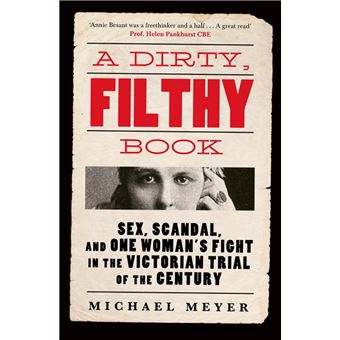
There was industrial bastardry on the other side of the globe in the early twentieth century too, and Annie Besant (pronounced to rhyme with ‘pleasant’) agitated on behalf of the London matchgirls working for Bryant and May. But this was just part of her amazing, varied life, described by Michael Meyer in his book A Dirty Filthy Book (see my review here) which focuses on the obscenity trial that Annie Besant and Charles Bradlaugh faced over their re-publication of a sex-education book. Annie was later to distance herself from this book when she embraced Theosophy.

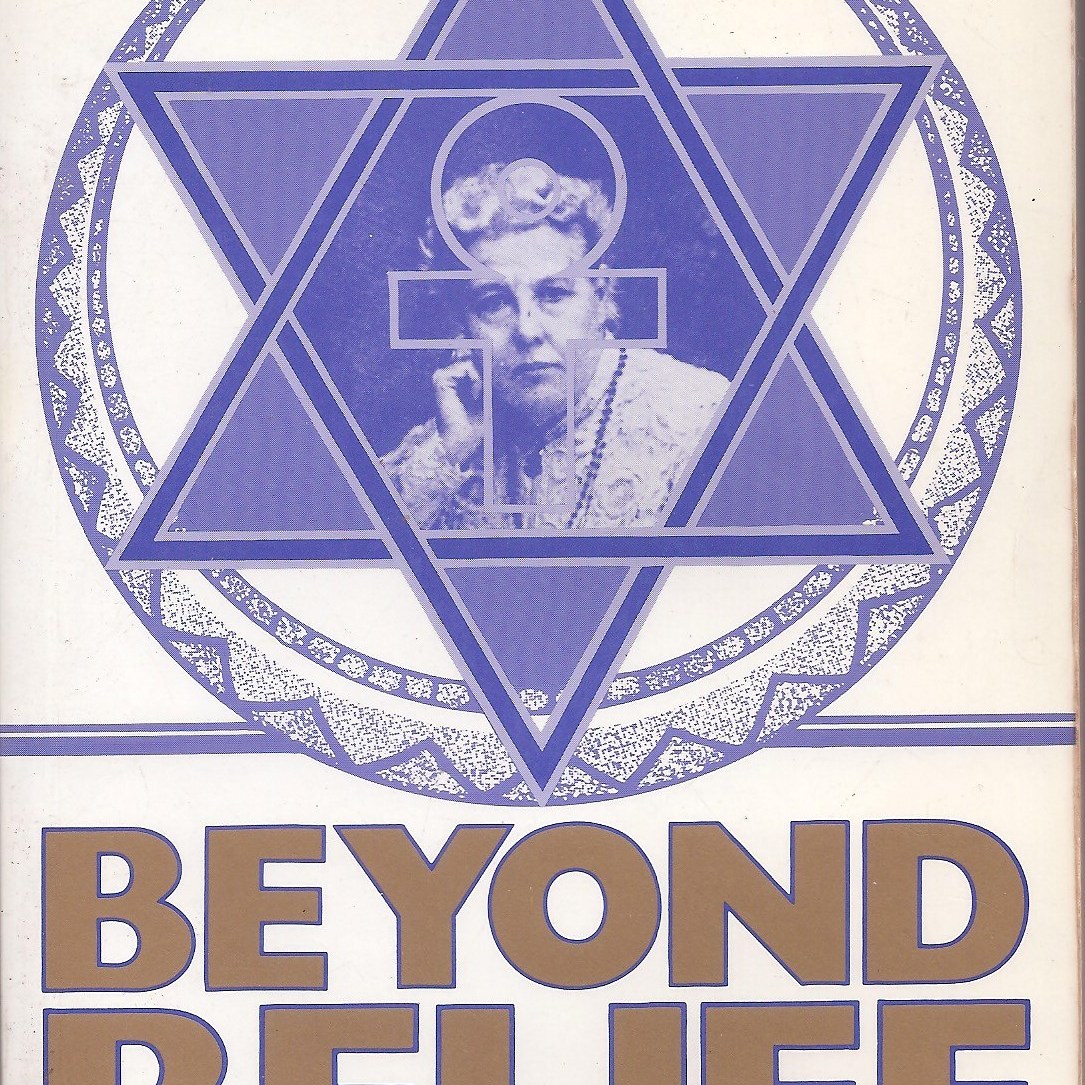
As an important figure in Theosophy, Annie Besant has a starring role in Jill Roe’s Beyond Belief: Theosophy in Australia 1879-1939 (see my review here), a 1986 book which I’m pleased to see has been republished as Searching for the Spirit: Theosophy in Australia 1879-1939.

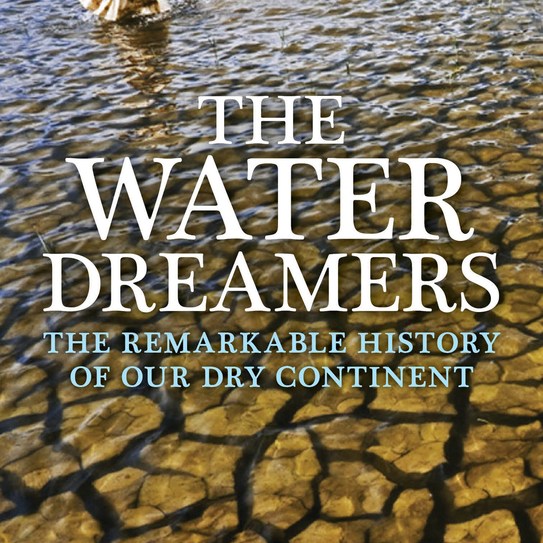
Theosophy sparked the publication of a number of novels based on a belief in Lemuria- an Atlantis-like mega-continent encompassing the Himalayas, Madagascar, Tasmania, Greenland and Siberia before sinking into the sea because of volcanic activity. In these Lemurian novels, the centre of Australia was not desert, but instead an inland sea. Michael Cathcart talks about them in his book The Water Dreamers (my review here) .

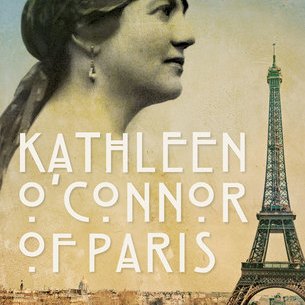
A man who dreamed of bringing water to Central Australia was C. Y. O’Connor, who committed suicide when the water in the Goldfields Pipeline did not arrive when it was expected that it would. His daughter Kathleen saw herself ‘of’ Paris, even though she was born and died in Australia, after a long sojourn in Paris. Amanda Curtin tells her story in Kathleen O’Connor of Paris (my review here)

Poum and Alexandre: A Paris Memoir is Catherine de Saint Phalle’s memoir of her parents. The book is written in three parts: ‘Poum’ dealing with her mother Marie-Antoinette, nicknamed ‘Poum’ because of a childish game in bouncing down stair ‘poum, poum, poum’; ‘Alexandre’ dealing with her father; and then a final short coda involving both parents. The author was raised in England, away from her parents, and when she rejoined them in Paris, she could barely speak French and was thrown back into dependence on her eccentric and rather irresponsible parents. My review is here.

So I guess that I’ve globe trotted a bit here: from New York, to Australia, and then over to France. Where did your Six Degrees take you?
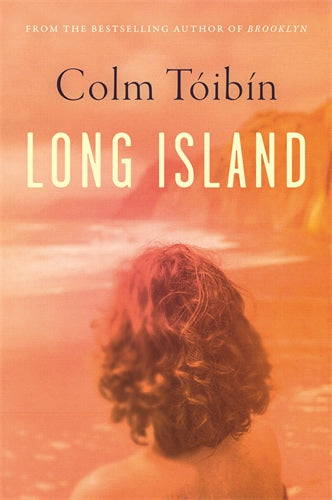
‘Long Island’ by Colm Toíbín

Spoilers below:

2024, 288 p.

Good grief. Have we become so Netflixed that we can´t have a definitive ending any more? Is everything written with an eye to the next installment in the series? In a video prepared for Oprah’s Book Club, Toíbín speaks of a writer’s pact with the reader not to spell out everything, but to allow the characters to have a life after the events of the book come to a close. Not this reader, Mr Toíbín. I felt cheated by the ending and as if I had been toyed with. I have read the ending several times, and I’m still no clearer on what happens.

I very much enjoyed Brooklyn, which Toíbín claims was not written with a second book in mind. Reading back on my own review, I obviously enjoyed it more than my book group ladies, but I think that I enjoyed it even more after seeing the movie, which left me in floods of tears and which was perhaps more explicit in the ending than the book was. With Long Island (rather oddly named, as most of the action does not occur there) we take up with Eilis more than twenty years after Brooklyn. She returned to marry Tony, and now has two adolescent children. On the surface, everything is just as Brooklyn presaged: the family did build four adjacent houses and the brothers and parents live close to each other in a cul-de-sac in Lindenhurst on Long Island; Tony is still a plumber and Eilis has not returned to Ireland since she left so abruptly, leaving behind the other option of marriage with Jim Farrell. Then a man turns up on her doorstep – no spoiler here: it’s in the blurb- furious that Tony has impregnated his wife and insisting that he will take no responsibility for the child, which he will leave on her doorstep.

I wasn’t completely convinced by Eilis’ response. She is furious that Tony has brought this problem into her life, and insists that she will not allow the baby under her roof. I can certainly understand that, but it seems odd to me that she does not seem to feel hurt, or betrayed. I acknowledge that, with age, the desire for continuity and comfort can quash flashes of wounded pride or anger (although Eilis is not that old). Is it because she has always felt superior to Tony? Is that why her response is more “You stupid boy” rather than one of hurt at Tony’s disloyalty and faithlessness?

She certainly feels betrayed by the rest of the family. She thinks that they don’t know, but she soon discovers that they do, and that Tony and his mother have cooked up a scheme by which her mother-in-law will care for the child in the house next door, and that Tony will eventually adopt it. The Italian family ‘closeness’ has become suffocating, and there is no room here for her own opinions and preferences. She has not, for some time, attended the regular Sunday lunches where the conversation level grows higher and higher, and where she is firmly put down when expressing thoughts contrary to the family. And so she packs up and leaves for Ireland, ostensibly to attend her mother’s 80th birthday, which her children will come across later to attend.

In a repetition of Brooklyn, she arrives back in Enniscorthy, marked out by her Americanness and her glamour. Enniscorthy is just as suffocating as Long Island is, abounding in intrusive eyes and vicious tongues, and with everyone knowing everyone else’s business, . Her mother is as manipulative and dreary as she ever was, living in a house barely touched by the second half of the 20th century without refrigeration or laundry appliances. Jim Farrell, who had been blindsided by Eilis’ sudden departure twenty years earlier, has not married although he is in a private relationship with Nancy, Eilis’ erstwhile best friend. Nancy and Jim are moving towards making their relationship publicly know… and their Eilis arrives.

And so, as a reader you find yourself back where you were while reading Brooklyn: aware that someone is going to get badly hurt, able to see and sympathize with all sides, and despairing that it is all such a bloody mess. This is what I loved most about Brooklyn, and it’s what I loved about Long Island as well, but the lack of definition in the ending made me feel that the book is trafficking in this emotional turmoil.

How would I rate it? I just relaxed into picking up on Eilis’ life once more, and Toíbín has drawn his characters so clearly that you feel as if you are watching a real life. I was both discomfited and intrigued by the situation in which they had all found themselves and how it was going to be resolved. But- oh- the ending! Toíbín would go down in my estimation if I thought that he left it just so that he could squeeze out a third novel- I think, I trust, that he is a better writer than that. I know that real life doesn’t have definitive endings either (beyond the ultimate definitive ending) but the scope (responsibility?) of the author to create an ending is part of the pact with a reader, too. Otherwise, it’s just soap opera.

My rating: Who knows. 9 for the enjoyment? Or 6 for the ending??

Sourced from: Yarra Plenty Regional Library

Read because: I loved Brooklyn so much.