
First Saturday of the month means Six Degrees of Separation day. This meme is hosted by Kate at BooksAreMyFavouriteandBest. The idea is that she gives a starting title, then associates six other books with it- and then invites her readers to do the same. The starting book is Anna Funder’s Wifedom, which of course I haven’t read, but at least this time I have actually heard of it. I know that it’s written about George Orwell’s wife Eileen Blair, who was eclipsed into oblivion by her husband’s career and fame. And here I’m going to do the same by jumping straight to her husband Eric Blair.
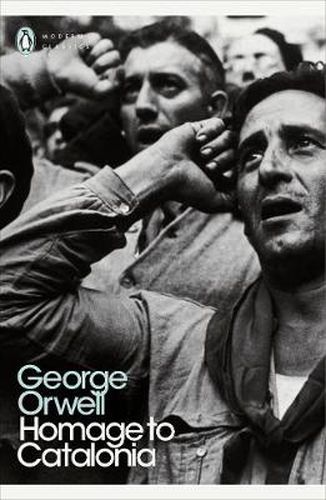
George Orwell fought in the Spanish Civil War with the Partido Obrero de Unificación Marxist against Franco’s Nationalist Forces. Homage to Catalonia is his response to this experience. He writes so well: such an astute observer, self-deprecating, and willing to admit shades of grey and possible error.
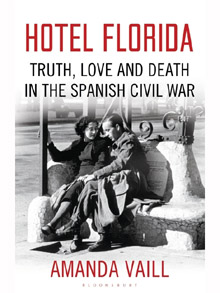
George Orwell was just one of a shifting cast of writers and intellectuals who travelled to Spain to fight in the Spanish Civil War in Amanda Vaill’s Hotel Florida: Truth, Love and Death in the Spanish Civil War. In her author’s note, Vaill writes that it is a “narrative, not an academic analysis”. The linchpin of her narrative is the once-deluxe Hotel Florida, a hotel in Madrid, frequented by government figures and journalists. The six main ‘characters’ of her book all stay there at one time or another: writer Ernest Hemingway and journalist Martha Gellhorn, war photographer Robert Capa and Gerda Taro, and press officers/censors/propagandists Arturo Barea and Isla Kulscar. (See my review here)
But to be honest, I don’t really know much about the Spanish Civil War, which is why I read Giles Tremlett’s Ghosts of Spain: Travels Through a Country‘s Hidden Past before I visited the south of Spain a few years back. Throughout the book he refers to the ‘two Spains’ – the conservative, religious Spain and the outward-looking, liberal if not socialistic Spain – that still exist in Spain today. The first three chapters are about Franco and the Spanish Civil War and the general agreement to look the other way and leave well enough alone. (See my review here)
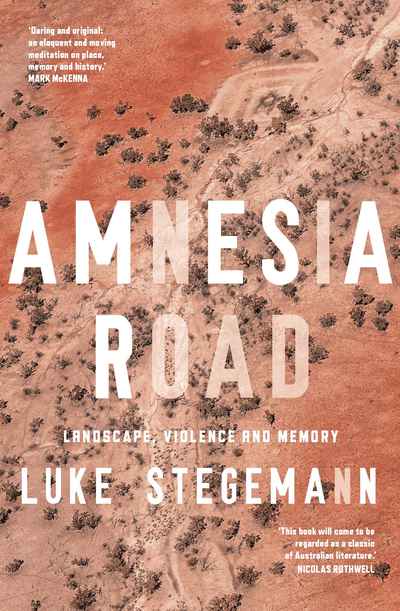
“Leave well enough alone” has been the attitude towards murders and injustice, not just in Spain but in Australia too, and that’s what Luke Stegeman addresses in Amnesia Road. He travels the backroads of Queensland as a boxing referee, while he refers to Spain as his ‘second patria‘. Deeply familiar with both, he brings them together in what is described as a “literary examination” of landscape, violence and memory in the two places. (See my review here).
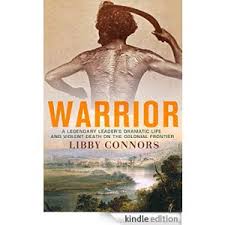
Moving from south-west to south-east Queensland, Libby Connors’ Warrior takes us to south-east Queensland during the pre-Separation days of the frontier. She does this through the story of Dundalli, a Dalla man who was executed in January 1855 for the murder of Andrew Gregor and his pregnant (white) house-servant Mary Shannon in an attack on the Caboolture River. What this book does is hone in on one particular location; one constellation of tribal groups; a set of named, individual leaders.(My review here).
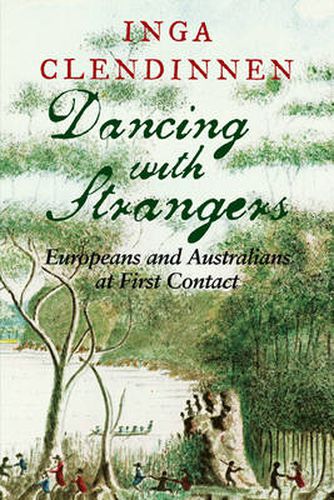
Which brings me finally to one of my very favourite books, Inga Clendinnen’s Dancing with Strangers about a short window of opportunity, in the very first days of white invasion, when perhaps things might have been different. With the Voice referendum uppermost in my thoughts there are many other books that I could have linked to here, but I keep returning to Clendinnen’s beautiful prose and historical imagination.
So, in fitting with a book about the personal and political in the form of Eileen Blair, I’ve travelled to Spain, back to Queensland, and right back to the shores of Port Jackson. Next month’s starting book is I Capture the Castle– one of my very favourite books from my long-ago adolescence.
 The Resident Judge of Port Phillip
Excellent chain. Reminder–I need to finish Hotel Florida–I had to give it back to the library when it was new without getting all the way done.
A most interesting chain, and yes, that book by Giles Trembath was one I read before I went to Spain, and I’m so glad I did, it ensured that I didn’t ask any tactless questions!
Once again I am plagued by insomnia (neighbours with a noisy new central heating system *sigh*) and so I am listening to Hemingway’s For Whom the Bell Tolls narrated by Campbell Scott. The Hotel Florida is called Gaylord’s in the novel, and it’s interesting to hear how the central character changes his response to it. At first he objects to the luxury of it which peasants can never experience, but as his weeks of fighting go by, he begins to see it as a refuge from hunger, discomfort and danger, and that he doesn’t need to feel guilty about looking forward to going there for a break when it’s all over. Some critics dismiss this as Jordan being corrupted, but I think it’s an honest recognition of the guilt that foreign aid workers feel when they return to normal life.
Yes, I recognize a couple on your list, Janine – I don’t think I recognized any of Lisa’s. I recognize Homage to Catalonia (and I’ve read a bit about the Spanish Civil War but it’s sooo confusing to me). Then comes Dancing With Strangers which I loved reading (and read more of Clendinnen’s work). I’m thinking about this and I might be able to put a list together myself which will have to include “I Hotel”
The Spanish Civil War really interests me, so I have read both the Orwell and the Tremlett, but now I shall look for it. I suspect our remaining three might not be readily available in the UK, but they look interesting reads. A great chain!
Oh, some interesting ones here. I too don’t know much about the Spanish Civil War. Thanks for the ideas for books to read about it.
Pingback: Six Degrees of Separation … | Becky's Books –
I did my thing at:
https://mybecky.blog
I hope this makes it through.
I posted my 6 Degrees at:
https://mybecky.blog
A fascinating chain that covers two things I would like to know more about – the Spanish Civil War and issues of violence and memory in Australia. When I was there in 1968 as a fourteen year old mainly in Sydney, we were very unaware of the racism at the time – both to aboriginal people, who we barely saw, and to immigrants who in those days were only white. There is so much to learn and so little time…