
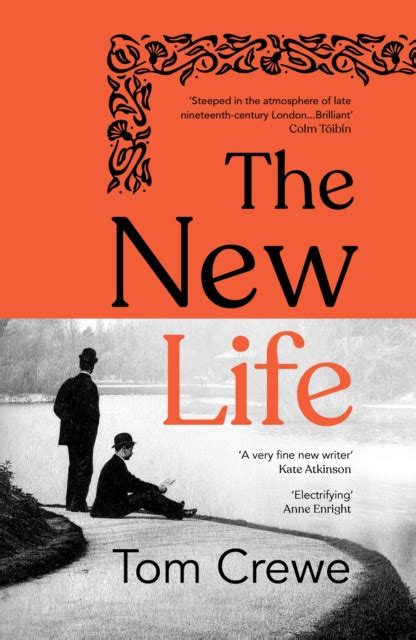
I can’t remember why I ordered this book from the library – perhaps I read a review of it somewhere- but I didn’t expect a sex scene in the first chapter..and the one after that…and the one after that. Although the term ‘sex scene’ isn’t quite right because what we see in this book is secret, often thwarted, desire and shame and fear. It is the fictionalized story of John Addington (in real life, John Addington Symons) and Henry Ellis (in real life, Havelock Ellis) who together wrote a book called Sexual Inversion in the 1890s. Wealthy John Addington had married the very respectable Catherine, largely out of an attempt to escape and give cover for his homosexual desires. Despite three children, these desires were just as strong, and gave way to an affair with Frank, a working-class printer, whom he met by the river where men would strip off to bathe. Meanwhile, the shy and academic Henry Ellis, enmeshed in the free-thinking and radical intellectual circles of the day, married Edith, an intellectual and lecturer in her own right, for companionship and as illustration of the “new life” of relationships that they hoped would open up in the twentieth century. Although friends, they do not share a house, and Edith has her own relationship with Angelica, who is more radical than both of them and who comes to play an in-between role.
These two three-way constellations of relationships exist independently of each other, until Addington and Ellis decide to co-write a book about homosexuality, based on interviews they have conducted themselves, and drawing on German research at the time which argued for ‘inversion’ as an inborn condition, and not a criminal or immoral act. At first their writing arrangements are carried out through correspondence only, but once the book is published, and runs into legal problems, they find their writing partnership ruptured by their different feelings about their own homosexuality and marriages.
The book is divided into four parts, following the seasons of the year. The narrative swaps evenly between Addington and Ellis. Part One June-August 1894 is in summer, as they both embark on their ‘new life’, with all the excitement and potential that holds. Part Two October-November 1894 emphasizes the fog that engulfs London, and the thickening complications of these unconventional relationships. Part Three, from February-September 1895 sees their book being caught up in the Oscar Wilde trials (in fact, the real book was not published until 1897) and the differing responses to Wilde’s recklessness amongst other homosexual men, who were endangered by the publicity the trial engendered, and who felt pity and anger towards Wilde- sometimes both at the same time. Part Four covers December 1895-March 1896 as their own book is drawn into the courts through the arrest of Higgs, who sold copies of their book. The two men take very different approaches to the court-case, and the prospects for their book in a new world which has not yet taken shape.
The descriptions in this book are exquisite: you can almost smell the fog, the bursting of spring, the languor of summer. You can feel the blushing embarrassment of sexual ignorance, and the breathy urgency of repressed desire. London life of the time is carefully drawn with such attention to detail, and where as an ex-historian, he has played with the facts, he owns his alterations and time-shifts. After all, as he says in his afterword “Truths needn’t always depend on facts for their expression”. It is a book truthful to the time, while bringing a 21st century identification to the issues of sexuality, crime, repression and radicalism. It’s very good.
My rating: 9/10
Sourced from: Yarra Plenty Regional Library – and I have no idea why I read it.
 The Resident Judge of Port Phillip
If I remember correctly this was longlisted for something, which is why I have it on my radar now – 9 ouot of 10 – that’s a pretty ringing endorsement – thanks!