
The Documentary (BBC) Ukraine: The Men Who Don’t Want to Fight I can remember reading and hearing reports of Russian men who were leaving Russia because they didn’t want to fight, but I wasn’t aware so much of reports of Ukrainian men doing the same. I’ve always had sympathy for men who didn’t want to fight in foreign wars in other people’s countries, but is it different if men are being asked to fight for their own country? I think that it is, although I’d be hard pressed to answer why. This episode looks at the more-than 6,000 Ukrainian men of military age who have been granted protection in Romania since the beginning of the war. Some did not want to fight for a variety of reasons; others had been on the frontline and walked away (‘deserted’?) Some had an easy escape; others died in the attempt. A different perspective on an old problem.
Emperors of Rome Episode LXXIX – Epicureanism Here’s something different. Matt Smith is nowhere in sight, and it’s Dr Rhiannon Evans who interviews Dr Sonya Wurster about Epicurianism, a Greek philosophy based on the idea that the greatest good is to seek modest pleasures- quite different from the high-status, elite idea that Epicurianism suggests today. It had four principles: 1. Don’t fear the gods 2. Don’t fear death 3. What is good is easy to get 4. What is bad is only of short duration. Many writers were hostile to Epicurianism because it was so laid-back that it didn’t fit into the Roman ideal of the politically involved citizen. Interestingly, many of the papyri that were discovered at Herculaneum (buried by Mt Vesuvius in 79CE in the same eruption that destroyed Pompeii) were works by Epicurian philosophers – in fact,in March 2023 a contest was launched to decipher the scrolls using AI. Throughout this series, Dr Rhiannon Evans and others have been referring to Dio Cassius (or Cassius Dio, take your pick) and in Episode LXXX – Dio Cassius he finally get his moment in the sun. He wrote about 80 books, of which we only have about 1/3 in their original form, but there are fragments and epitomes (i.e. summaries) of many of the others. He actually witnessed some of the things that he wrote about, which is always a bit tricky for a historian- at what point does the history become biography or journalism? This isn’t a problem that Livy fell into, as we learn in Episode LXXXI – Livy featuring Professor Emeritus Ron Ridley from Melbourne Uni who sounds like the quintessential classics scholar, enlivened by arcane debates about the past, and deeply embedded in all things ancient. Livy spent his whole life writing an exhaustive history of Rome – all 142 books, of which we have the first quarter. However, Livy was careful to stop before he got too close to the time when he was writing. They have been hugely influential on all the other histories that were written after him.
History Extra Having listened to the podcast about Ukrainian men avoiding fighting, I thought that I’d listen to Fight Like a Man? Masculinity in WW2 There was little relation between the two. This episode features Luke Turner, the author of Men at War: Loving, Lusting, Fighting, Remembering 1939-1945. As you might guess from the title, this book and podcast takes a gender/masculinities lens to look at WW2 and homosexuality, cross-dressing and gender-crossing during a time of such disruption, and when so many men lived in close proximity. It didn’t feel particularly new to me.
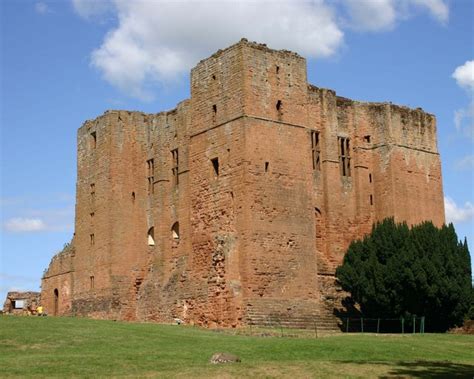
History Hit Part 3. Story of England: Tudor Feuds, Explorers and Fanatics takes us to (nearly) everyone’s favourite English period, the Tudors. Dan Snow starts off at Kenilworth Castle where he speaks Dr Joanne Paul who tells the intricate story of the powerful Queen Elizabeth I and her mutual infatuation with Sir Robert Dudley, to whom she gifted the castle. She points out that although Henry launched the Reformation as a way of getting round the problem of a lack of an heir, he remained Catholic in his practices e.g. he heard a Latin mass, and he had the Catholic last rites. Sir Robert Dudley spent a fortune on a 19-day visit by Elizabeth to his castle -1000 pounds a day on an income of 5000 pounds a year, and sent the family broke in the process. He then goes on to speak with Angus Konstam who explains about the Elizabethan Sea Dog (Drake, Raleigh, Hawkins), privateers who were both traders and explorers, and who laid the basis of England’s maritime power. He ends up at Boscobel House, where Charles II hid in the oak tree. Listening to Charles I’s bullying of the Parliament has a new relevance, now that we can see so many ‘strong men’ in erstwhile democracies, trying to subvert the power of the people.
Now and Then In There’s Something in the Water historians Heather Cox Richardson and Joanne Freeman look at the provision and privatisation of water in the development of American cities, focussing particularly on New York and Los Angeles. Coming in the wake of recent announcements about controls on the extraction of water from the Colorado River, it all seems rather reminiscent of our own struggles over the Murray River, with the conjunction of competing state interests, capitalism, exploitation and denial of the commons.
 The Resident Judge of Port Phillip
One of the casualties of the war on truth and the one-sided coverage of the proxy war in Ukraine, is that we have been treated to propaganda about how terrible the Russians are for using conscripts, and how these conscripts don’t really want to fight etc… but unless they saw footage of it at the time, people would not know that tearful families were separated at the Ukrainian border because men of conscription age were not allowed to leave Ukraine.
FWIW I don’t agree with conscription in any circumstances.
There’s Something in the Water, interests me. Sadly I have to listen online without being able to download, just like our ABC now. But thanks for the mention of it. It should be interesting. I just read today that some US states have plenty of water and some don’t, yet there is uniform federal legislation laws about water.