Monthly Archives: March 2023

I hear with my little ear: Podcasts 17-24 March 2023

Travels Through Time The Great Debate: 1860. This episode features Nicholas Spencer, who has recently published Magisteria, The Entangled Histories of Science and Religion, (no small history, this one) He points out that science and religion were not necessarily in tension: that it was more a question of authority. They are both modern terms, coined in the 18th and 19th centuries. ‘Science’ prior to the 19th century often included natural philosophy, maths, natural theology while ‘religion’ as a term arose during the Reformation. He points to John Draper’s 1876 book on the conflict between science and religion, published at a time when the Catholic church was asserting its authority and during a time of European immigration. He also points to the rise of fundamentalism in the early 20th century and the hijacking of evolution by the eugenics movement, leading southern Protestants to become fearful, a defensiveness that was reflected in the Scopes trial. His three scenes were: Scene One: Charles Darwin receiving a letter from clergyman and novelist Charles Kingsley, in November 1859, congratulating him on the Origin of Species, an advance copy of which he has just read. Scene Two: The publication of the most controversial book of the age – not On The Origin of Species but Essays and Reviews, in March 1860, igniting a passionate debate about Biblical texts. Scene Three: The famous Oxford debate between T.H. Huxley (‘Darwin’s bulldog’) and Bishop ‘Soapy’ Sam Wilberforce in late June 1860.

Conversations (ABC) The Life of Doctor Norman Swan. During the coronavirus pandemic, Dr Norman Swan and Tegan Taylor were must-listens for a daily rundown on coronavirus and the political policies set in place. In this episode from July 2021 (I’ve been meaning to listen to this for some time!) Norman Swersky (his name until his father changed it after WWII) talks about his family background in Odessa after 1905, and the attempt to emigrate to United States until the ship’s captain learned that the US migration cap had been reached. He studied medicine and unsuccessfully auditioned for the Royal Academy for the Dramatic Arts- but ended up being a radio celebrity after all!

History Extra Sirens, Succubi and Sex Symbols Featuring Sarah Clegg, author of the new book Woman’s Lore, this episode examines the different myths about female monsters, across time and cultures. Often depicted as a child killer who attacks mothers and babies, these myths reflect the male fears of women’s sexuality and the female fears of childbirth, and as a way of deflecting responsibility for death in times when medicine could offer little escape. She notes that various figures have been adopted by 21st century communities: e.g. Lilith (Adam’s first wife) by the LGBTQI community, and mermaids by the trans community.
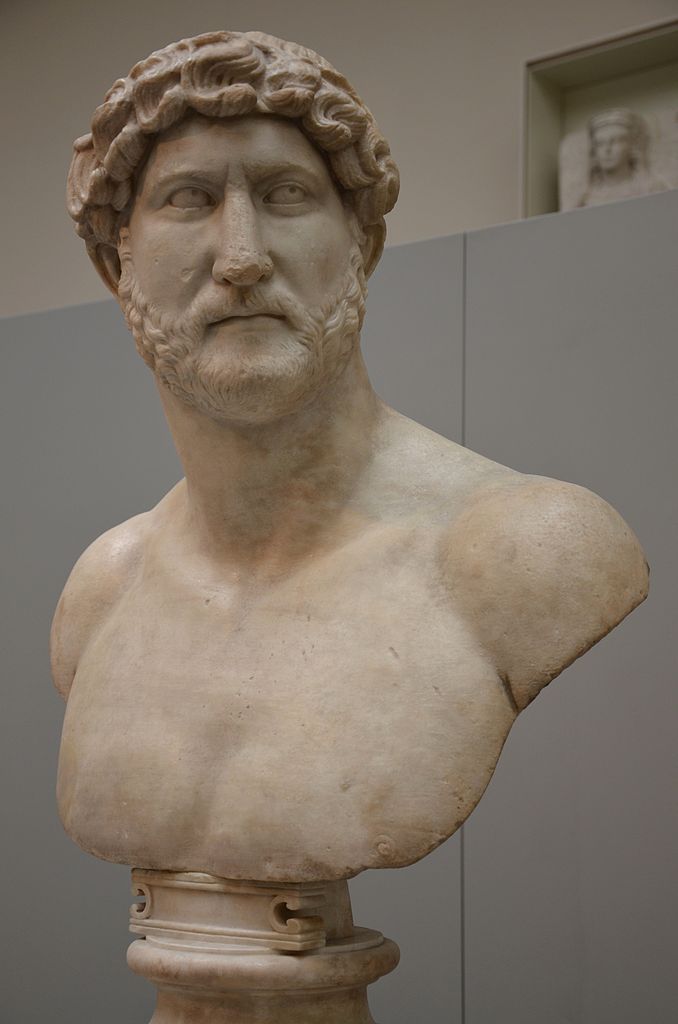
Emperors of Rome Frontinus. That’s funny, I thought, I haven’t heard of Emperor Frontinus. That’s because he never was an Emperor but instead was a military man and the writer of treatises especially on military strategy and on aqueducts. He was born in Gaul from Equestrian background, and was obviously very trusted by Domitian, Nerva, and Trajan. He was Governor of Britain betweenn 74-78, and was Consul three times (very unusual). He wrote a technical book on land surveying, then an anecdotal book on military strategies, followed by his most famous work on aqueducts, written after he was made Water Commissioner. He wanted ‘the textbook’ and decided to write it himself, but also to prove that when Senators were given an administrative office, they rose to the challenge. The aquaducts separated water by source and use, and he also dealt issues of fraud and leakage. Episode LII – Hadrian the Little Greek points out his loose family connection with Trajan, although Trajan adopted him anyway as a ward while Trajan was a general. He later married a relative of Trajan, thus forging an even strong link. He was more literary than Trajan, and enjoyed a long period of mentorship. He was never formally adopted as Trajan’s heir (or if he was, it happened just before Trajan died) and there are hints that Trajan’s wife Plotina was behind his accession as emperor. Hadrian quickly deified Trajan, so that he could say that he was the heir of a deified emperor, and he set out finished some of Trajan’s unfinished building projects. Episode LIII – Rome Welcomes Hadrian To cement his position, he had four influential Romans ‘murdered’ before they cause him any problems, although he was careful to distance himself from their deaths. Nonetheless, it was a bad first impression, so he worked hard at dispensing lots of welfare and army provisions and clearing people’s debts. He returned to the Augustan rule of thumb- don’t cross the Euphrates, and divested himself of some of the recently gained territories and installed client kings there. He took the scenic route back to claim his emperorship, taking some two years, and surveying the provinces as he did so. And he started a bit of a fashion trend by wearing a beard- the Greek philosopher look.

Archive on 4 (BBC) Writing Our Mothers. I just loved this episode. Presented by feminist writer Jacqueline Rose, it is structured in 7 ‘chapters’: 1. The Mother as the Angel of the House 2. Mother Looking in 3. Add odds with motherhood 4. The mother as autobiography 5. The Mother, Madness and Rage 6. The Mother and Acts of Violence 7. The Mother and the Erotic. It has readings and archival interviews with a huge range of writers: Arundhati Roy, Edna O’Brien, Sylvia Plath, Maya Angelou, Jeanette Winterson among others, and readings from Toni Morrison, Elena Ferrante and others. I really enjoyed this.
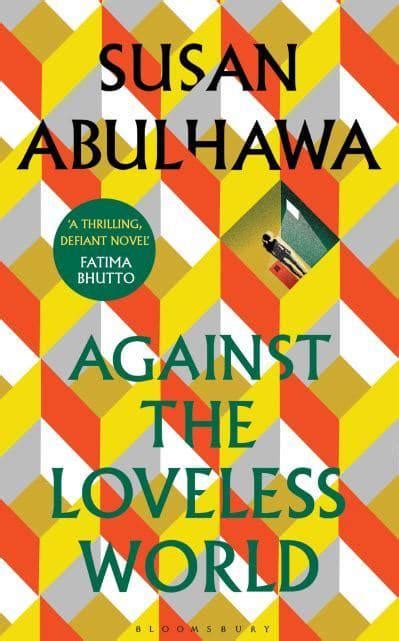
‘Against the Loveless World’ by Susan Abulhawa

2020, 360 p.

I’m not proud of the fact that I have never read a book about Palestine, until this book. It is a book that is framed completely within the Palestinian viewpoint, written by a writer who is forthright and active in promoting Palestinian rights and decrying Nazism and Zionism and suggesting their connection with Ukraine (as we can tell by recent tweets that have prompted withdrawals of other speakers from the Adelaide Writers’ Festival). The front cover of my version referenced the structure that the author has used in her narrative: that of the cube with its East, West, North, South, Up & Down orientations and the Unreachable Beyond. We meet the Cube in the opening pages, a nine-square-metre, high-tech solitary confinement cell in which Nahr is imprisoned for years, visited occasionally by international inspectors, and a passive-aggressive journalist accompanied her highly-constrained but sympathetic translator. Eventually given a notebook and pens, this is Nahr’s memoir through which we learn how she came to be in the Cube and why.

Superimposed over this ‘cube’ device are the locations in which the book is set, and they are many, because this is a story of dispossession and flight. Nahr’s family originally came from Palestine, but as Israel increased its grip on Palestinian territory, they moved from country to country as refugees. Part I is based in Kuwait, Part II in Iraq, and Part III in Jordan after the geo-politics surrounding Saddam Hussein and the US-led invasion of Iraq forced them to find a more welcoming environment. Part IV is based in Palestine, Part V a quick return to Jordan, then Part VI Palestine, Always.

Nahr actually has three names: Nahr (meaning ‘river’); Yaquoot (insensitively chosen by her father after the name of his lover) and Almas, the name she adopted when she becomes involved in prostitution as a way of supporting her family, who had no idea of how she was earning the money that supported her brother’s studies. She marries early, but the marriage fails. She travels to Palestine to obtain a divorce from her first husband, only to find herself drawn into her former in-law’s family and the Palestinian struggle to hold their land against Israeli settler encroachment.

The title is taken from the James Baldwin’s Letter to my Nephew, making the political point of the link between the African-American struggle in the US and Palestinian oppression. There’s a lot going on here in terms of educating Western readers, especially in its explanation of the implications of Middle East policy for Palestinian families. Too much preaching? Maybe, but I found myself thinking about Australia’s own history of settler-colonialism. I watch the spasms of violence in Gaza and the West Bank; I know about the check-points; I am familiar with the thrusting appropriation of land by the settlers. I know about all these things, but with this book the oppressiveness of colonialism and occupation over everyday life is made real, highlighted by the author’s description of landscape and sense of home.

My rating: 8.5

Sourced from: Yarra Plenty Regional Library.

I hear with my little ear: Podcasts 9-16 March 2023

Emperors of Rome Episode XLVIII – Trajan: Optimus Princeps is the last episode about Trajan, known as the greatest emperor since Augustus (to be honest, the others weren’t much chop). He behaved the way that the elites expected him to, he built lots of infrastructure to keep the masses happy and coming to power at the age of 42, he had neither the recklessness of youth or the sluggishness of old age. The only slight criticism of him is that he was “devoted to boys and wine” but neither of these affected his judgement so that was okay. In 113CE he embarked on war with Parthia, after an earlier foray to fix up Armenia, in order to re-establish Roman authority. At this point, the empire was stretched to its greatest expanse, and things started to unravel a bit. He died unsuspiciously after an 18 year reign. Episode XLIX – Suetonius has been referred to often during these podcasts. He was possibly born in Algeria of an equestrian family and was active during Emperor Hadrian’s time. He was mentored by Pliny and became a librarian and archivist which gave him access to the sources to write his most famous book ‘The Twelve Caesars’. He may have travelled with Hadrian, and it is thought that he may have fallen out with him at some stage. Nonetheless, he is pretty reliable as distinct from….Episode L – Historia Augusta which is a series of biographies, starting with Hadrian and going through to the late 3rd century CE with a gap in the middle. It wasn’t called The Historia Augusta at the time- that name was given to it later. It’s best to think of it as a fun text that gets more and more bizarre, with spurious supporting documents- a bit like a mockumentary. But we have to use it in the absence of other sources.

Lives Less Ordinary (BBC) I Didn’t Know I was Part of an Experiment tells the story of Helene Thiesen, who was born in Nuuk, in Greenland, in 1944. Greenland was a colony of Denmark.At the age of seven, after her father’s death, two men came to see her mother, offering an opportunity to find out “which child is the brightest”. Her mother refused twice, but in the end, she reluctantly relented. Helene was promptly sent 3500 km away to Denmark where she was placed with a foster family. She was sent back to Nuuk after a few years, but not to her mother: instead she was sent to a children’s home. When she finally reunited with her mother, she no longer spoke the same language, and her mother remarried and moved away. Helene was 50 when she found out that she was part of an experiment into changing the environment for children from Greenland and its effects on the child- a bit of a nature/nurture experiment. She still hasn’t forgiven her mother.

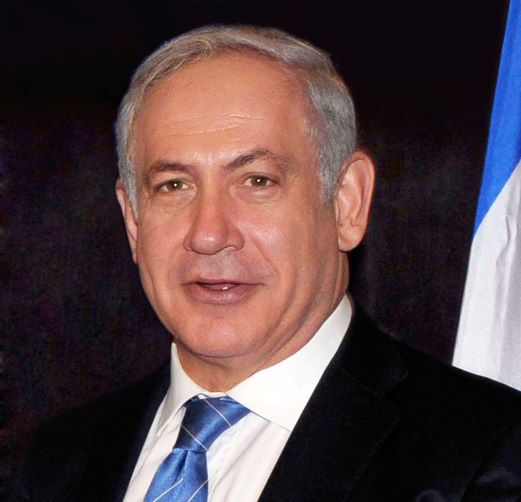
Take Me To Your Leader (ABC) Benjamin Netanyahu As we see the footage of huge crowds protesting on the streets after Netanyahu’s ‘reforms’ of the courts, this episode is even more relevant than on 22 February 2023 when it was released. ‘Bibi’ has served a total of 15 years as Prime Minister and his most recent stint is his third comeback, after acting as PM in 1996 (with a narrow victory over Shimon Perez) for just three years; 2009 when he came back for 12 years; and now since December 2022 in an coalition with hard-right colleagues. A ‘prophet of doom’ type politician, in the past he tended to campaign as hard right but become more centrist once he achieved power, but now he needs the cover of the hard right to avoid his own legal entanglements. He is a divisive character, and Israeli politics has splintered into for- and against- Netanyahu politicians. He fears a nuclear armed Iran as a threat, and so he has cosied up to Putin and former President Trump. Guests include Ayala Panievsky, Gates Cambridge scholar, former journalist Haaretz newspaper and research associate at ‘Molad’, The Centre for the Renewal of Israeli Democracy; Mitchell Barak, former aide to Benjamin Netanyahu (who said that he was a horrible boss) and political analyst  Dave Sharma, Australia’s former Ambassador to Israel (who is not Jewish- I assumed he was).

Rear Vision (ABC) The War in Ukraine- the military story. This is Part I of a two-part series, released as part of the first anniversary of the invasion of Ukraine. I’d heard much of it before. Russia expected a weak response, as occurred when they invaded Crimea, but by the end of March the Russian troops were withdrawn from Kyiv. There are three elements of military strategy: Physical (i.e. troops and weapons), Intellectual and Moral. It is in effect a war of opposing political systems, and both sides are using propaganda. One difference between this war and the invasion of Crimea is the use of open source intelligence, especially aviation, and the use of autonomous systems like drones and robots.

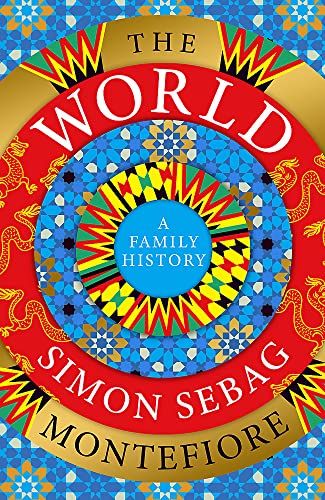
‘The World: A Family History’ by Simon Sebag Montefiore

2022, 1263 p.

Thank God that’s over! Never have I complained so much about a book that took me so long to read. So long, in fact, that it is massively overdue and the library has blocked my account. But once I had committed to about 500 pages, I felt that I had to keep going partly out of obtuseness (no big fat 1200 page book was going to beat me!) and because, flicking ahead, I’d find parts that interested me and wanted to reach them. But after probably six weeks of reading, was it worth it? Probably not.

It started well. I was interested in the book after reading an interview with the author, well known as a Russian historian, and the sheer scope of the endeavour impressed me. Starting off with the footsteps found in Happisburgh, England, of a man and four children, dating from between 950,000 and 850,000 years old, Montefiore looks to the family – “the essential unit of human existence”- as a way of linking great events with individual human dramas. By focussing on individuals, families and coteries, he admits that the families and characters that he follows in this book are exceptional, but they also reveal much about their era and place.

It is a way of looking at how kingdoms and states evolved, at how the interconnectivity of peoples developed, and at how different societies absorbed outsiders and merged with others. In this multifaceted drama, I hope that the simultaneous, blended yet single narrative catches something of the messy unpredictability and contingency of real life in real time, the feeling that much is happening in different places and orbits, the mayhem and the confusion of a dizzying, spasmodic, bare-knuckle cavalry charge, often as absurd as it is cruel, always filled with vertiginous surprises, strange incidents and incredible personalities that no one could foresee

xxxv-xxxvi

One of the things that I very admired in this book was his attempt to cover the whole of human endeavour, looking at all the continents across time. Admittedly, Australia gets pretty cursory treatment but both Americas, Africa, the Middle East, Asia and Europe are all dealt with in his chronological swirl throughout human history. The book itself is divided into twenty-two chronological acts, identified not by dates but instead by world population size. Within each ‘act’, there are a number of sections identified by family surname, often conjoining ruling families from very different parts of the globe. Taking Act Eight, for instance, when the world population was 360 million, its four sections set in the 1100 and 1200s are:

  • Genghis: A Conquering Family
  • Khmers, Hohenstaufen and Polos
  • The Keitas of Mali and the Habsburgs of Austria
  • The Tamerlanians, the Ming and the Obas of Benin.

Its final ‘act’ 22, with a world population of 4.4 billion takes us right up to the present day with:

  • Yeltsins and Xis, Nehruvians and Assads, Bin Ladens, Kims and Obamas
  • Trumps and Xis, Sauds, Assads and Kims

I had expected more of an emphasis on dynasties, which certainly do appear in this book, maintaining a presence across several ‘acts’ (e.g. Hapsburgs, Hohenzollerns). Nonetheless, quite a few of his actors are not part of a multi-generational power base (e.g. Yeltsin and Obama in Act 22) but are instead individuals who flame up and then events move beyond them. He does not particularly consider ‘the family’ as a unit of analysis, or identify ways in which it changed in any great depth. However, as he points out in his introduction, by taking ‘the family’ as his frame, it is possible to pay more attention to the lives of women, both as shapers of the men who dominate the main narrative, but who also formed the sinews of dynastic control, stepping in as regents, and as court powers in their own right.

There were some rather surprising omissions. I would have thought that the War of the Roses might have been dealt with, given that family and dynasty were fundamental to it. Perhaps Australia could have got a look in with the Murdoch family that we have inflicted on the late 20th-early21st century Anglo-sphere.

But the book is already overwhelming in many ways. Not only is there the kaleidoscopic effect of shifting from one continent and culture to another, but there is just so much. I gave up trying to keep it all straight, and just let it sweep me along, not even attempting to create my own internal mental narrative while reading.

I was also disconcerted by infelicities that I could detect that undercut my confidence in him as a historian somewhat (and who knows how many went undetected). He starts with Egypt, Africa, Athens, Persia and India, and I must admit that this part read a bit like the ‘begats’ section of the Old Testament. For me, it was only really with the arrival of the more familiar (to me) Romans that the narrative seemed to become more human-based instead of “one damned thing after another”. Now, I am no expert on Rome, beyond listening regularly to two podcast series on Ancient Rome, but one thing that the historians in these podcasts have highlighted is the slanted nature of the remnant narratives available to us today, shaped by the agendas and perspectives of their classical authors. There was no hint here of the cautiousness with which these historians embroider every statement: instead contested events and interpretations were presented as fact. So, likewise, I found myself reading of the truly horrific cruelties imposed by powerful men on the powerless with a similar twinge of skepticism. While not at all doubting man’s ability and perverse imagination in torturing other men, what was the purpose of counting and recounting these chilling punishments?

My wariness was increased further when I learned that:

The first outsiders to reach Australia were not Europeans (the Dutch landed there in 1606), but African sailors from Kilwa [near Tanzania], as evidenced by the discovery of copper Kilwan coins, inscribed in Arabic with the name of an amir of Kilwa, dug up on Marchinbar Island, Northern Territory.

p. 268

What???? Thanks to Google, I found that indeed copper coins, inscribed in Arabic were indeed found in the Northern Territory, but even though their origin remains a mystery, there is little credence given to the idea that they were brought by African sailors in the tenth century CE. Who was he reading? I wondered, to come up with this rather out-there hypothesis, but there was no bibliography. I only found out once I finished the book that there was an online bibliography available so as not to add to this already lengthy book.

Of course, a book focussing on the family is going to deal with sexuality, which was often only tangentially linked to marriage and the passing-on of DNA. But I did find myself wondering what was the point of frequent tales, especially in the footnotes, of perversion and sexual oddity, and the narrative and political purpose such anecdotes served in the histories from which they were drawn. In fact the footnotes, while often interesting and quirky, seem to act as a bit of a catch-all for the facts that he had uncovered that he couldn’t bear to leave out, even if they were only obliquely related to the text.

However, one thing that came through clearly was the distorting effect of slavery – probably the most anti-family activity man ever invented. Not just Atlantic slavery, but across all societies and often as a by-product of warfare, slavery enriched some families and dynasties, and the consequences of that wealth stretched across centuries, furthering further empire-development and discovery.

This book was published in 2022, and particularly the last chapters are narrowing in on Ukraine and Russia, the author’s specialty. I suspect that events yet to come will render these chapters out-of-date and possibly downright wrong. In a book which has travelled so far, across so much time and geography, I am surprised that he is risking rendering his scholarship obsolete by such presentism. His frequent coy references to “this author” in referring to his own interviews with influential political actors remind us that his work has not just been desk research, but that he has been a player in present-day politics as well. That said, I was interested that in a footnote in the closing pages, he rebutted Putin’s argument about Ukraine’s Muscovite and Russian origins by pointing out that Ukraine has, over time, been ruled by Ottomans, Habsburgs, Polish kings and Lithuanian dukes, and peopled by Cossacks, Tatars, Poles, Jews, Italians and Greeks, as well as Russians and Ukrainians (fn. p.1231)

This book was written “during the menacing times of Covid” (p. xxviii) and perhaps that accounts for its length. I was drawn to keep reading but I found myself resenting the sheer weight and length of the book, and the relentless piling on of actors and actions. I found myself wishing that he would take a break from the narrative, to take stock and analyze for commonalities and change, before continuing on.

Am I glad that I read it? Probably, in that I will probably take away flickers of recognition of names and cultures, and from the effect of seeing events that occurred contemporaneously that I had only seen in isolation previously. But it was damned hard work and I just don’t know -yet- whether it was worth it.

My rating: My God, how does someone rate a book about the whole of human written history? 7/10?

Sourced from: Yarra Plenty Regional Library. Please, YPRL and the borrowers waiting for me to return it, forgive me for holding on to it for so long. But I bet that few future borrowers will be able read it in four weeks either.

I hear with my little ear: Podcasts 1-8 March 2023

New Books Network This came up on my New Books related to Latin America, but it’s a pretty tenuous connection. Instead, in Beyond Belief: How Pentecostalism is Taking Over the World, Australian journalist talks about her recent book of the same name, aimed at a general rather than academic readership. She defines ‘pentecostalism’ in terms of the influence of the Holy Spirit, going back to William J. Seymour in 1905, who instituted the Azusa Street Revival in about 1905. She then moves to the 1950s and Norman Vincent Peale, and then to the Jesus People of the 1960s New Age movement. A fourth wave, possibly, is now with the spread of Pentecostalism into Latin America, Korea, Brazil and Nigeria. There is no central authority, and the pentecostal churches tend to reflect the society in which they are embedded e.g. the Catholic influence in Latin America, Shamaanism in Korea. There is still an element of the prosperity gospel at play, but it’s more an emphasis on health and wealth, both of which tend to improve when people get their lives together. Pentecostals have always been good at leveraging the media. After radio in the 1950s, in the 1960s and 1970s it was cassette tapes that people could listen to in their cars. Hillsong has always used music as part of its business model. She explores the link between right-wing populism and Pentecostalism, and notes that both use entertainment and stagecraft and draw on the feeling of being ‘besieged by wokeness’.

Rough Translation This is a two-part program about smuggling pills for a medical abortion into Ukraine. Part I Under the Counter, a young German doctor, Vicki, reads of the shortage of abortion pills (mifepristone followed by misoprostol) in Ukraine. She and her boyfriend Ari find a supplier based in Africa who can source the pills from India, and then he offers a huge quantity- far more than ever anticipated. The only problem is that they have to travel through Poland, where abortion is illegal. Part II The Handoff follows this unlikely group of smugglers into Ukraine, where they learn that there are complications in both pregnancy and abortion during war time. I really enjoyed these two podcasts.

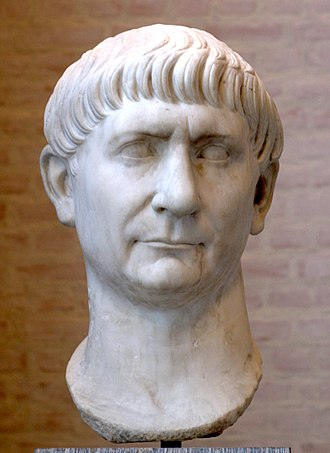
Emperor Trajan: Wikimedia

Emperors of Rome Interlude: Valerius Flaccus. I’d never heard of this Roman poet, from the Flavian period, who wrote an 8-book epic The Argonautica that retold the well known (at that time) story of Jason and the Golden Fleece. He drew fairly heavily on Apollonius of Rhodes ‘ more famous epic, but he was also strongly influenced by Virgil as well. The episode features Dr. Peter Davis. And now, back to the Emperors with Episode XLV In Trajan We Trust . Trajan was born in 53 CE in Italica in Spain. His father had been Consul, had fought in the Jewish Wars and had been governor of Syria. We don’t really know much about him before he became Emperor, because there’s a Big Black Hole of Biography. He started his military career in Syria with his father, then moved to the Rhine. He became guardian of his cousin’s children, one of whom was Hadrian- spoiler alert! He was a good choice for Emperor, because he was a successful military leader. Pliny is almost nauseating in his praise of Trajan, but he was generally regarded as virile and active. His accession to become Emperor was largely violence free (except for the murder of some potential enemies), and he promised to work well with the Senate. Episode XLVI Trajan vs Dacia sees Trajan heading off to Dacia (present day Romania), at a time when the Roman Empire was at its largest extent. Dacia was a client kingdom, headed by the Dacian king Decebalus. Trajan had a victory in the First Dacian War 101-102 CE, then headed back in 105CE when Decabalus started sabre-rattling again. Trajan built a huge bridge across the Danube as a statement of strength, and leveled the capital. The defeat of Dacia brought huge wealth into Rome, and Trajan partied with a 120-day triumph.

File on 4.(BBC) Three Friends Emily, Nadia and Christie met each other when they were admitted as 18 year olds to the Tees Esk and Wear Valley Mental Health Trust with severe mental problems. They all died within 8 months of each other, in a medical environment that did not keep them safe. Their families are left blaming themselves, and the hospital.

Lectures in History (C-Span) Gays and Lesbians in Colonial America. This lecture in a university seminar class is given by Santa Clara University professor Nancy Unger. She starts off by challenging the denial of homosexuality by many African-Americans (particularly religious African-American groups) and Africans who claim that homosexuality was “un-African”. Instead, she argues, there was an African tradition of boy-wives. She argues that in early 17th century American colonies, there was a recognition of same-sex relationships among slaves. At this early stage, there was no emphasis on reproduction as there was later, and so same-sex relationships were tolerated. As time went on, the official view was that homosexuality was unacceptable, and amongst colonists it was a capital offence. But there were only two men executed, partially because the law required two witnesses and also because there was a labour shortage at the time. She then goes on to look at case studies of gay and trans-sexual court cases. One was of Nicholas Sension in 1677, who despite his high status and marriage, had a 30 year history of homosexuality. The court case was reluctantly brought because the community was concerned that he was bringing them into disrepute. Steven Broughton was a church leader, who was voted back into his leadership position by 2/3 of the congregation when he was reported. Thomas/Thomasina Hall was declared to be both a man and a woman because of their ambiguous genitalia.

Take Me To Your Leader (ABC) Vladimir Putin I’ve heard few podcasts and seen a few documentaries since the Ukraine invasion about Vladimir Putin, but this one was particularly interesting because Hamish Macdonald talks with former (?) ABC journalist Monica Attard, who has a rather different perspective on Ukraine than we usually get. All of the guests agreed that Putin was likely to continue as President up to his death.

At my local library: Women Write History

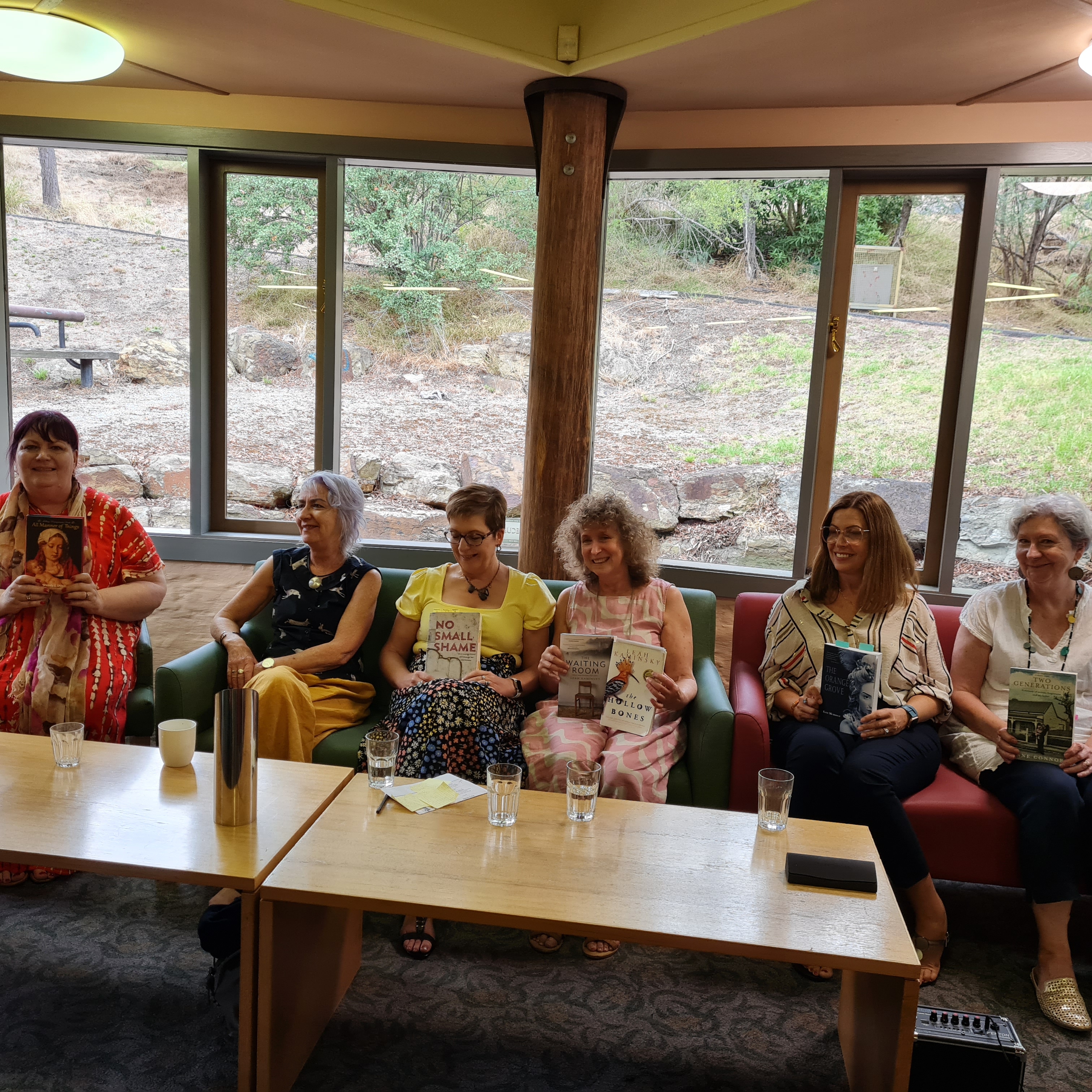
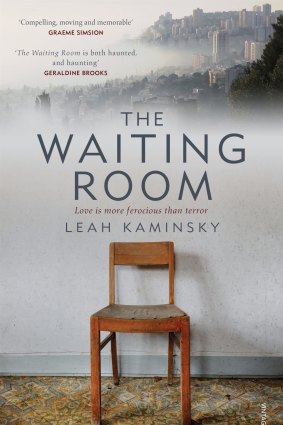
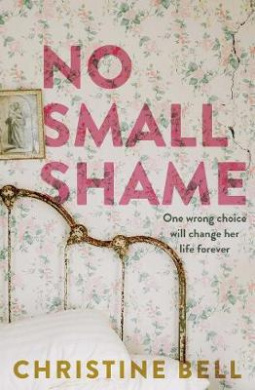
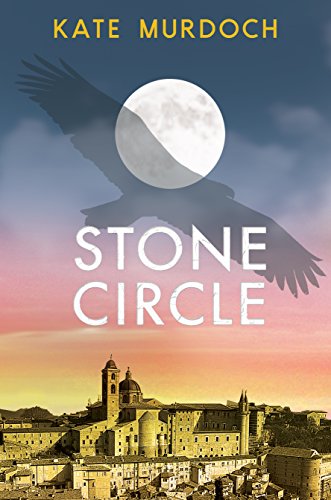
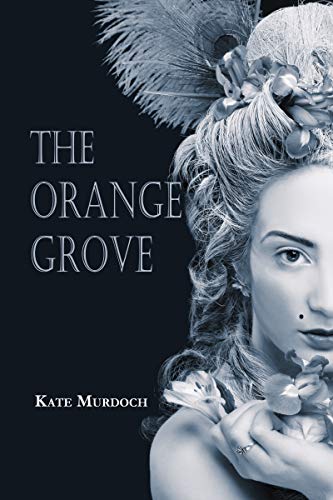
From left: Wendy J. Dunn, Keren Heenan, Christine Bell, Leah Kaminsky, Kate Murdoch, Anne Connor

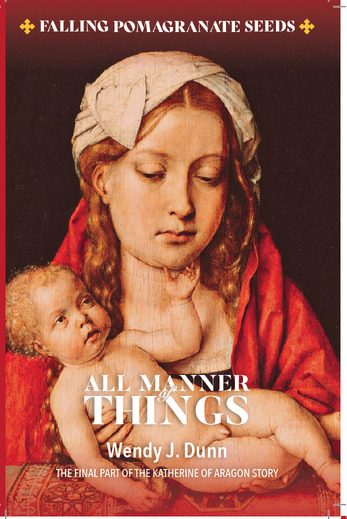
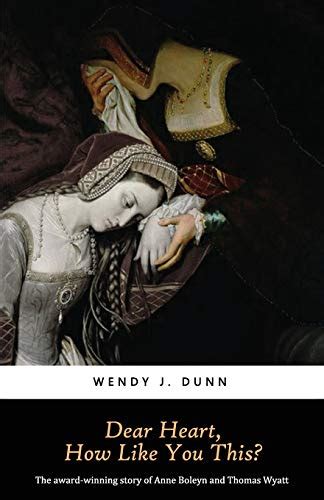
I felt a frisson of imposter syndrome at Eltham Library on Saturday, as they held their annual Women Write History day. I rather foolishly thought that it was women writing History/History (with a capital H), but instead it focussed on local women historical fiction writers. “But I read historical fiction too!” I reassured myself, although I do find it hard to take off my historian’s hat when I do so.

Eltham Library is a beautiful mud-brick, octagonal building designed by Greg Burgess and it received the RAIA Institutional Architecture Award 1995. There’s a statue of Alan Marshall, who lived in the area, by local Eltham sculptor. It has a huge wrap-around verandah, and it’s very pleasant sitting there in the shade on a warm afternoon having coffee, overlooking Alistair Knox park opposite and the old trestle railway bridge.. But Saturday was more than warm – although not as hot as expected- and it was equally pleasant to enjoy the airconditioning inside.

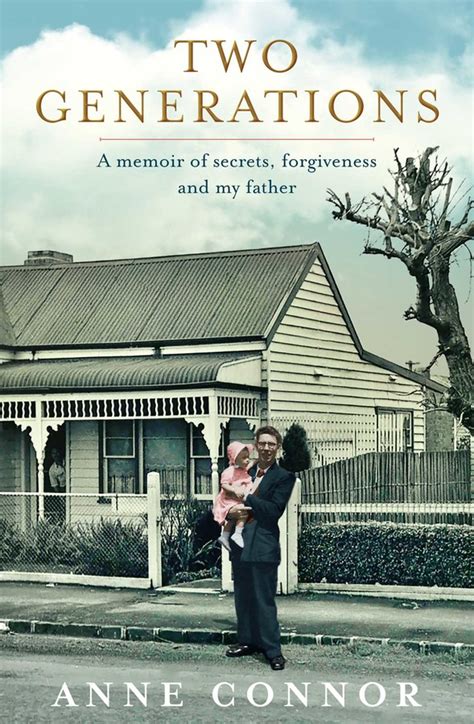
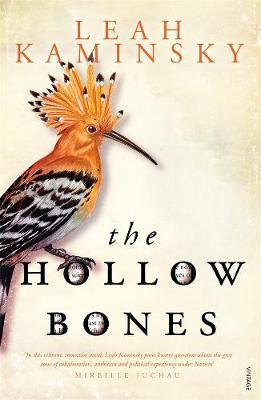
The speakers were Kate Murdoch, Christine Bell, Leah Kaminsky, Keren Heenan (short story writer) and Anne Connor. The seminar was organized by Wendy J. Dunn. Unfortunately Eleanor Limprecht and Glenice Whitting were scheduled, but could not attend.

The day was divided into four sessions, one of which ran concurrently with a workshop. Feeling somewhat out of place amongst all these aspiring writers, as I did, I stuck to the sessions. The sessions dealt with Character, Setting, Plot and Conflict and Resolution, and each panel had three or four of the guest speakers. Each session started with a reading from one of the author’s works. As you might expect with four such closely related topics and a relatively small panel of guests, there was quite a bit of overlap.

In the Character session, they discussed issues of appropriating and whitewashing, the responsibility owed to real-life characters and the idea of giving voice to the dead. Most of the writers enjoyed the research process, even though much of it was discarded. They spoke here of the distinction between ‘plotters’ who have everything worked out ahead of time and ‘pantsers’ who fly by the seat of their pants. (I misheard this as ‘panthers’ and assumed it meant writers who just prowled around hunting. Oops.) They noted that much of the research was in order to give a flavour, and to weed out what was possible from impossible. They spoke of the danger of writing what-if history. Given that most of these women writers were writing about other women, there was a question about depicting agency as a character at a time when women didn’t generally have agency. Both Christine Bell and Anne Connor answered that their female characters displayed agency as a series of small decisions.

In the Setting session, several of them revealed that they started off with a visual image. Ann Connor recommended actually visiting the places written about, but as Kate Murdoch noted, this was not possible during COVID so she relied on Google maps and virtual tours. Keren Heenen only writes about places she knows, although in her novella Cleave she lifted her knowledge of one country town to create a fictional one. They were asked which was the last historical fiction they read with a strong setting? Hilary Mantel’s Wolf Hall was mentioned by Anne Connor; Kate Murdoch nominated Where the Crawdads Sing, and Keren Heenan named Jack London’s short story To Build a Fire (which I had never heard of).

It seemed, in terms of Plot, that several of these authors are Pantsers (they could be panthers too- who knows!). Some used dialogue as a starting point, while others used a visual image or an event. Some knew what the book was going to be ‘about’ in a wider sense.

By the time we reached the final session Conflict and Resolution, it had already been pretty much discussed under the other sessions. The panel were asked whether, as readers and writers, they needed a clear ending. Keren Heenan liked endings that reflect the beginning, without necessarily tying everything up neatly. Leah Kaminsky and Anne Connor were more concerned about the language in the novel, than the actual ending; Kate Murdoch didn’t like abrupt endings, although she didn’t need everything tied up either. The discussion then moved to AI-generated writing, especially within genre fiction. There was a reluctance over reading a book written by someone with no lived experience, but they acknowledged that perhaps this is a generational resistance, and that perhaps we need to see how it works. (Having seen multiple-hundreds output of Nora Roberts, writing also under the names of J.D. Robb and Jill March, I wonder if she is AI)

So, all in all, a very pleasant way to spend a hot Saturday afternoon

I hear with my little ear: Podcasts 24-28 February 2023

Kerning Cultures Bone of Contention tells the story of paleontologist Nizar Ibrahim who went public in 2014 with the information that he had uncovered fossilized bones of the Spinosaurus in the Moroccan Sahar. What’s more, he claimed that Spinosaurus was a water-dwelling dinosaur- something that is still contested. Originally bones from Spinosaurus were found and documented by German paleontologist Ernst Stromer before WWI. He was no fan of Hitler, and during WWII he ended up in a Russian prison camp. When he was released he returned to the Bavarian Museum where he had deposited the specimens and begged the director to shift them to a safe location. But the director, a staunch Nazi, refused to do so, and when the museum was bombed, the bones were destroyed. Fortunately Stromer had taken meticulous notes, and when Nizar bought some bones from a fossil hunter in Morocco, he was able to compare them with Stromer’s notes. Nizar believed that the bones were of a Spinosaurus, and he had to find the fossil hunter to learn where they had been excavated. Amazingly he found them, and was able to excavate about 1/3 of the bones. He has since promulgated the controversial theory that Spinosaurus was water-dwelling: something that would upend the popular view of dinosaurs.

Radio Ambulante My Spanish is finally improving enough to be able to follow (just!) a 40 minute program on Radio Ambulante, a Latin American program in Spanish distributed through NPR. I’ll confess that I read the transcript after listening to it to find all the bits that I missed, then listened to it again – a rather time-consuming exercise. Mi padre y mi papa is the story of two Colombian children who remembered their father as a loving stay-at-home dad, until he supposedly died in a car accident while they were young. They later learned that this was just a lie, obscuring the truth that their father had been a terrorist, responsible for serious crimes. There’s an English transcript.

The Documentary (BBC) The Parallel Universe of Russia’s War This podcast is very similar to a program on a similar theme on Foreign Correspondent. (Actually, I think that Foreign Correspondent was better, because you can see subtitled clips from the programs they discuss). Somehow or other, Russians have been convinced that they are the ones under threat, not from Nazis anymore but from LGBTQI people and western permissiveness.

Rear Vision (ABC) The Battle for the Soul of the Catholic Church. With the death of George Pell, there has been renewed attention on his authorship of a letter highly critical of Pope Francis. This episode talks about the recent history of the Catholic Church since Vatican II and the battle between conservatives and less-conservatives in the Vatican. What a poisonous nest! Quite apart from all this politicking, there is the widespread disillusionment of ordinary generations-long Catholic families at the sexual abuse revelations that have soiled the Catholic Church forever, I would guess.

Revisionist History From Inside Voice: Lake Bell and the Sexy Baby Phenomenon. This is actually one long advertisement for Lake Bell’s Inside Voice: My Obsession with How We Sound. She and Malcolm Gladwell discuss “baby voice”, exemplified by Paris Hilton or Real Housewives, and why women might want to adopt it. She starts off apologizing for being judgmental – but she´s too apologetic – judge away, I reckon. She goes on to talk about how to identify your natural pitch, the phenomenon of vocal fry, and Lake Bell demonstrates her own vocal mimicry skills.

Emperors of Rome Rhiannon and Matt are having a bit of a break from the narrative of emperor after emperor and they´re answering listeners´questions instead. Episode XLIII Virgil goes through Virgil´s life and writings. As they point out, anyone who has watched an ‘epic’ has benefitted from Virgil’s work, as he in effect wrote the template for the genre. He was born in Northern Italy and was thoroughly steeped in Greek and Roman literature. He used Greek genres but wrote them in Latin. He worked under the patronage of Octavian/Augustus but his work had a bit of a political edge to it (e.g. his early work on pastoral life and farming). He is most famous for the Aeneas, where he picked up on the myth (and it was a myth) that Rome was based on the Trojan Wars. In this way, he was riffing on Homer, but with a different ending, using a mythological past to explore the present. Episode XLIV Roman Sexuality moves beyond the image of orgies to explain this highly patriarchal society where adultery was not a problem for men, as long as it wasn’t with a respectable married women (so slaves, unmarried women, and prostitutes were fair game). However, if a man showed an out-of-control appetite for anything – food, fame as a gladiator, and sex- it was seen as a weakness of character. As Pompeii has shown us, images of sex where everywhere. Women moved from the control of their own family to that of their husband, but their family connections and loyalties remained. Divorce was common was part of the family power play, and women were often remarried to older men. The tolerance of adultery did not apply to women. Homosexuality was widely accepted, generally with an older man with a younger boy, as long as the older man did not take the ‘submissive’ part. This tolerance didn’t apply to lesbianism either. Interlude Q&A II has Rhiannon answering readers’ questions. Q: What did the British think about Ireland? A: That it was inhabited by incestuous man-eaters. It was too far away for the Romans to invade. Q:What happened when someone was banished? There were degrees of banishment. Some people lost their property and were sent to an island. Others were denied ‘fire or earth’ in Rome- i.e. they were shunned. Others again were sent to a specific place e.g. Ovid. Q: How did the Romans count their years, especially BCE? A: In the Republic, generally by identifying who was Consul in that year. Once there were emperors, they counted the years of the reign or in relation to 753BCE when Rome was supposedly established. Q: Why did emperors have beards after Hadrian? A: At first consuls had beards, then they were clean-shaven, and then beards came back into fashion. Hadrian liked Greece, and the ‘philosopher’ look. Q: What did it mean to lose the standard in battle? A: A source of great shame, akin to running away. Q: How trustworthy are Caesar’s commentaries? A: They were written relatively soon after the battles, so Caesar couldn’t exaggerate too much. On the other hand, he did take poetic liberties. Q: What would Julius Caesar have been like if he hadn’t been assassinated? A: Who knows. He certainly would have continued declaring himself a dictator, but he probably would have been a successful leader. But…who knows.

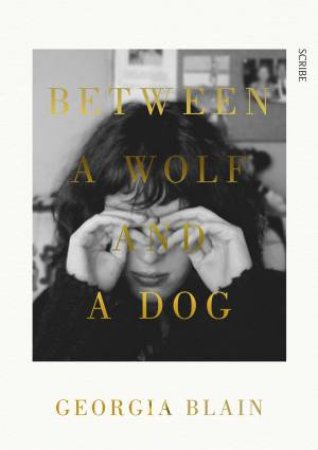
´Between a Wolf and a Dog´ by Georgia Blain

2016, 320 p.

SPOILER ALERT

I have often thought that one´s response to a particular book is often shaped by the books you have read immediately prior. Sometimes a brilliant book casts everything else into the shadows and dulls your appreciation for whatever comes after, but sometimes it works the other way too. Immediately before reading this book, I read a dialogue-heavy political novel and I’m still reading a very long survey history non-fiction book. There’s no ‘singing’ prose in either of them. But right from the first page of Georgia Blain’s book I just relaxed into her precise and confident prose, knowing that I was reading a writer who can really write.

Much of the action in the book takes place over one day – a dank, wet Sydney day with the rain pouring down almost without stopping. We learn in the early pages that 70-year old Hilary is very ill, but she is keeping this knowledge from her two adult daughters, April and Ester. The two sisters have been estranged for three years, after April and Ester’s husband Lawrence had a brief fling. There had always been an underlying tension between the two siblings. Ever since childhood, April has had a scant regard for possessions, and freely takes what she desires. However, ‘taking’ Ester’s husband is a far cry from the ‘borrowed’ clothes and pilfered jewellery from their childhood. Ester and Lawrence’s marriage breaks down, and the two parents are negotiating the shared care of their children.

The phrase ‘Between a Wolf and a Dog’ refers to that twilight time when the shape of things is blurred, and it is no longer clear whether an animal is a wolf – a threat- or a dog -potentially friendly. Likewise, all the characters in the novel are at a pivot of change. Ester, a counselor, has met a man who might be a possibility; Lawrence’s career reputation is about to come crashing down; April and Ester are both wearying under this long estrangement, and Hilary is facing big, life-and-death decisions.

The narrative focus swaps from one character to the other, while the book itself is divided into sections ‘Now’ and ‘Three Years Ago’. I didn’t find all parts equally compelling. Following Ester through her counselling consultations as she negotiates around other people’s pain seemed superfluous, and could easily have been omitted. April and Lawrence’s separate irresponsibility and obliviousness to consequences was repellent, but Blain captured their own self-absorption and recklessness well. One character who remained shadowy was Hilary’s husband and the girls’ father Maurie, a successful artist whose reputation continues to grow after his death from heart attack. His widow Hilary is curling into her own ball of pain, and the closing scenes were poignant as she meets separately with her daughters who are blithely unaware of what is about to come.

The most beautiful writing in this book is in her descriptions of that drumming, streaming rain which lowers like an oppressive cloud over the family. Particularly the two opening scenes, where Lawrence and Ester wake up in their separate houses to the sound of the rain on the roof brought me right into the room with them.

Georgie Blain’s own experience of the same cancer that Hilary faced is a tragedy of irony, but it would be wrong to read this book solely in terms of the author’s own illness. The characters were so real to me that I found myself wondering what happened next, even while reminding myself that it is fiction. That doesn’t mean that it doesn’t hold its own truth.. It is a beautifully written, domestic novel, carefully constructed and balanced.

My rating: 8.5

Sourced from: CAE as our February 2023 bookgroup read.

I hear with my little ear: Podcasts 16-23 February 2023

The Explanation (BBC) There has been much about Turkiye and Syria in the news since the recent earthquakes and so I decided to go back and review what has happened in Syria in recent years. How Syria’s Peaceful Uprising Became a Civil War takes us back to July 2000. Lina Sinjab, a BBC Middle East correspondent, explains how the conflict in her native country began. Bashar al-Assad had inherited the presidency from his father and Syria became, in effect, a dictatorship without a dictator. In 2011 the Arab Spring emerged across the Middle East, evoking a military crackdown in Syria despite the peaceful nature of the demonstrations. Russia and Iran backed the government, while the Americans backed the Kurds and Islamic groups. This U.S. support changed in 2013 when ISIS became involved, prompting the US and a coalition of Arab states to fight against ISIS. Assad used chemical weapons against his people, something that Barak Obama had seen as a ‘red line’ but no action was taken. By this time, Russia’s support for the regime was overt. A huge refugee flow ensued, cutting Syria’s population from 21 million to 6 million. Then the podcast finished with a very abrupt ending.

The Daily (NYT) A Crisis Within a Crisis in effect picks up where the previous podcast left off and asks why, after the earthquake, it has been so hard to get aid to Syria. It returns briefly to the Arab Spring, and the clampdown by the al-Assad government, and the fleeing of doctors from the country once hospitals began being targetted. Western sanctions were imposed against the as-Assad government, although the United Nations continued operating within Government-held areas with Al-Assad’s permission after agreeing to recognize the sovereignty of his government. In 2014 a UN resolution enabled the UN to send aid into areas that were not under the control of the Al-Assad govt. As a result, aid groups established bases containing workers and supplies on the border of Turkiye and Syria as a staging ground to move into Syria. This is the area that was impacted by the earthquake. It took four days for the first supplies to arrive from Turkiye to Syria, and even then it was a shipment that had been put together before the earthquake, so it contained none of the emergency supplies or help that was required. Since then Al-Assad has agreed to open two more crossing points. The Syrian government is asking for sanctions to be lifted, but the UK and US are unlikely to send direct aid. The earthquake has come at a time when the US had already begun easing sanctions, and the Syrian government had begun re-engaging.

Archive on Four (BBC) What Has Media Training Done to Government? Featuring a wealth of mainly-British political interviewers, this episode looks at the rise of ‘media training’, often conducted by former interviewers themselves. As the episode points out, media training comes from a place of fear- fear by the interviewer that they won’t get anything; fear from the interviewee that they will says something they didn’t mean to say. It is now an industry in its own right, where the journalists become celebrities themselves, making the whole field more competitive. It is marketing-oriented, and it weaponizes the unintentional.

Emperors of Rome Episode XL What is an Emperor? goes back to look at the way that the concept of ’emperor’ had changed from the time of Julius Caesar through to the death of Domitian. In that 150 years, the republic was almost back to a monarchy in all but name. Caesar was not an Emperor officially, because he was not a Princeps. He saw himself within a Republican mould, taking on the title of ‘dictator’ -itself a Republican term- and just extending his term again..and again.. and again. Augustus was the first emperor because he could veto anything, getting his powers from the Senate. The influence of the army became increasingly important, as did the power of the imperial household. Deification after death gradually became normalized. So why didn’t the Senate reassert its power? Probably because the conjunction of the interests of the military and the emperor had become normalized. Episode XLI Nerva. Nerva was one of the last Italian emperors, coming to power after Domitian was assassinated. We don’t know much about his early life but he came from a high-born consular family and was close to the imperial family- for example, his grandfather went into voluntary exile with Tiberius, although he distanced himself later. Nerva is seen as the first of the ‘five good emperors’. The senate put him forward as emperor, so there was no return to the Republic, but he never had the support of the army. The army insisted that he nominate a successor, so he named and adopted Trajan from the military ranks. He was only there for 16 months before dying of natural causes. Episode XLII is a bit different- it’s called A Lesson in Latin followed by Interlude Latin Pronunciation (Actually, I’d quite like to learn Latin). Rhiannon and Matt start by going through some common Latin phrases that are still in use today. But how do we know what Latin sounded like? Mainly from grammarians, especially Quintillian, who declared that if people spelled correctly, the pronunciation would be correct. (A bit like Spanish, really)

Kerning Cultures Viva Brother Nagi. Nagi was a Yemeni immigrant to America, where he worked in agriculture- as many Yemini immigrants do. He was born in Yemen, where he was politically active and moved to America as a 20-year-old in 1967, part of a wave of immigrants from Yemen who arrived after the 1965 Immigration Act removed quotas. There had been industrial action in the agricultural section since the 1970s, and in 1973 strikes broke out again when the Teamsters Union contracted a sweetheart deal with the growers. Nagy became a picket captain in the grape strike led by Cesar Chavez. He was beaten to death by a county sheriff outside a restaurant in Lamont California. A huge funeral march was held, and a boycott of grapes and fruits took off amongst consumers. Two years later in 1975 the law was finally changed to allow farm workers to assemble, have union representation and bargain.

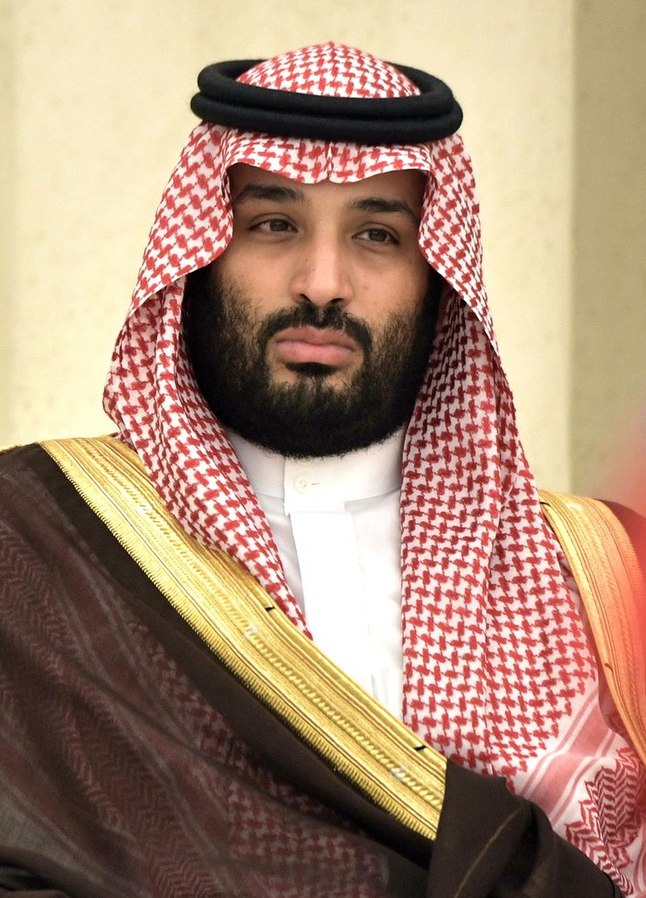
Take Me To Your Leader (ABC) In this episode Hamish Macdonald looks at Mohammed bin Salman. Along with journalists Graeme Wood and Karen House, he interviews ‘Sultan’, a gay Saudi journalist, who sought and received refuge in Australia after a journalist he was ‘minding’ went rogue. MBS is the grandson of King Abdulaziz, and probably the most ‘Saudi’ amongst possible heirs as he did not have the Oxford University/Rich British life that many of his other relatives had. Young people see him as a progressive modern, but not Western, leader. In November 2017, now Crown Prince, as part of an anti-corruption purge, he ‘held’ 400 members of the elite in the Ritz Carlton Hotel and forced to repay their debts. He has developed Vision 2030 which envisions a modern, cutting edge city housing 9 million people on a 170 km. block of land. He had a close relationship with Trump, but not Biden, and he takes Putin’s calls but not Biden’s.

Six degrees of separation: from ‘Passages’ to.. a swamp

First Saturday of the Month, so Six Degrees of Separation day again. This meme is hosted by Kate at Books Are My Favourite and Best where she chooses a starting book and then you link six titles to her starting book. You can find further details here. As usual, I hadn’t read the starting book which this month is Gail Sheehy’s Passages (in fact, I had never heard of it). From a quick Google, it seems that it is about the various chronological stages of adult life, and their challenges. Twenties, thirties, forties, fifties….

The idea of stages of life brought to mind Georgia Blain’s Births Deaths Marriages: True Tales. This memoir is crafted as a series of autobiographical essays, many of which had been published in literary journals.

We all move through life, but what if you got stuck, dying over and over? This is the conceit behind Kate Atkinson’s Life After Life. I’m a sucker for time-travel books even though they do my head in, and I usually love Kate Atkinson’s work, but I was a bit disappointed in this one.

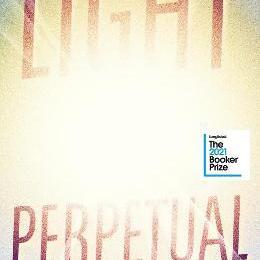
But what if you didn’t die when you really did? In Light Perpetual, Francis Spufford takes the real-life death of 168 people who died in the New Cross Road branch of Woolworths in November 1944 in a V-2 attack on a Saturday lunchtime, with the shop crowded with shoppers. Fifteen of those 168 were aged under 11. He drops the bomb in the first pages, then jumps forward as if the five children were not killed. In fact, they were not even in the store. Instead, they lived lives untouched by that November 1944 attack.

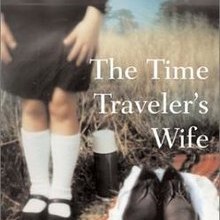
Or what if you couldn’t die? In Audrey Niffenegger’s The Time Traveller’s Wife Henry travels back and forth through time, and his love for Clare, who would become his wife. The structure is confusing at first, with the chronology jumping back and forward, with Henry at varying ages as Clare plods through her allotted life span as Henry appears, disappears and reappears again. Actually, I didn’t think much of this book, either the first or second time I read it.

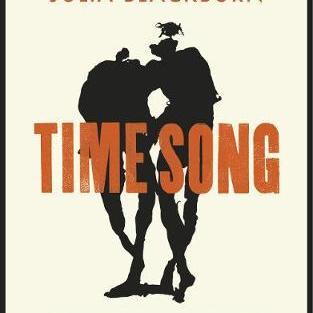
The mention of ‘time’ took me to Julia Blackburn’s beautifully written Time Song. It’s about Dogger Bank, the last remnant hint of Doggerland, which existed in the North Sea and English Channel 18,000 years ago, making what we now know as the United Kingdom a contiguous part of Europe. It was submerged by the rising North Sea as part of the climatic changes over time.

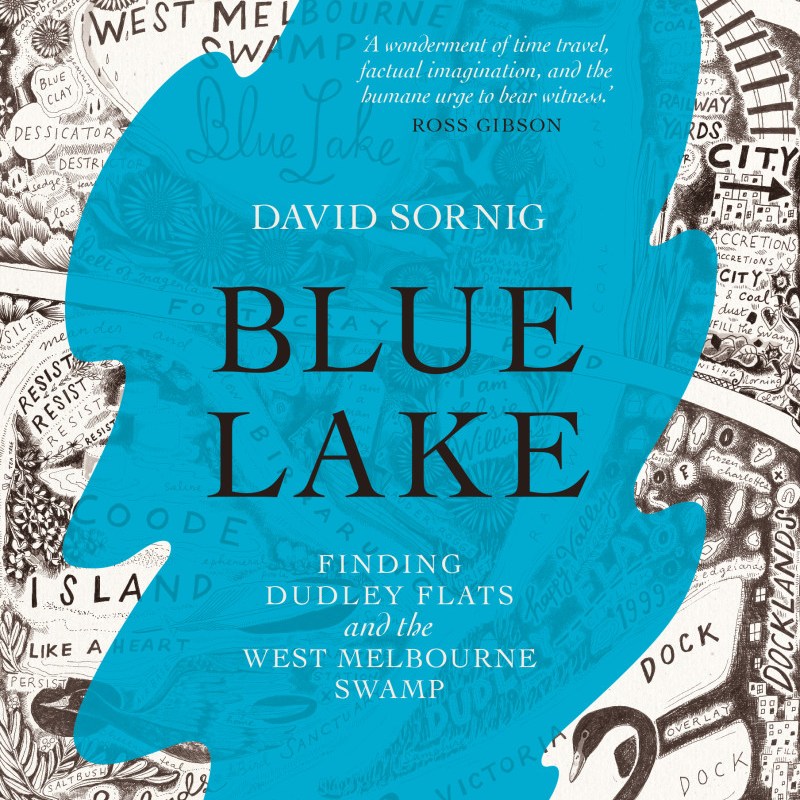
The opposite of an island being submerged is a lake being filled in, and this is what has happened with Dave Sornig’s Blue Lake: Finding Dudley Flats and the West Melbourne Swamp. What had been a swamp covered in blue flowers became a wetland and then a windswept no-mans-land which still exists despite the construction of quays and high-rises. It’s an area that seems to resist taming.

So, somehow or other I have gone through the passages of an adult life through to a swamp. I’m sure that has a deeper meaning somewhere.