Yearly Archives: 2022

I hear with my little ear: Podcasts 1-8 July 2022

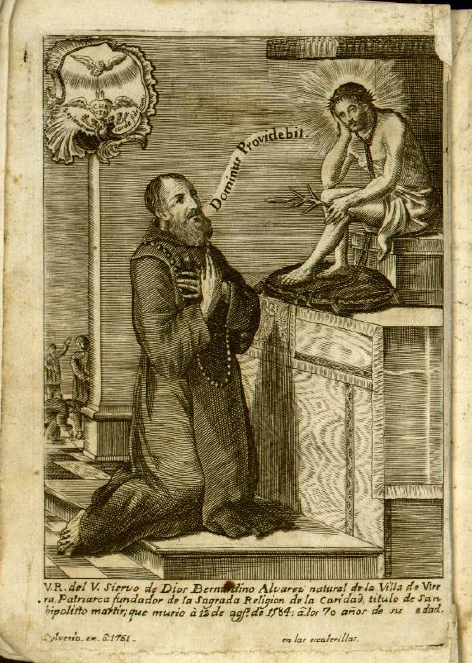
Bernardino Alvarez, founder of the Hospital de San Hipólito. Source: Juan Díaz de Arce, Libro de la vida del próximo evangelico, el venerable padre Bernardino Alvarez (Mexico: 1762).

New Books in Latin American Studies. Bedlam in the New World. Most of the books in this podcast are academic texts published in the US, and not likely to be readily available in Australia – and if they are, they are usually prohibitively expensive. So this podcast is a good way of becoming familiar with the books without reading them. Christina Ramos was originally a historian of science and medicine and it sounds as if she was rather railroaded into Latin American history. Bedlam in the New World: A Mexican Madhouse in the Age of Enlightenment tells the story of Mexico City’s oldest public institution for the insane, the Hospital de San Hipólito, founded in 1567 by the Catholic Church. It finally closed in 1910 when a secular asylum was opened. Other historians and theorists have spoken about the medicalization of madness, and the use of the asylum as a form of social control, but her book looks at the relationship between religion and the asylum. Over such a long period of time, the Church moved from an idea of madness as a form of bewitchment or possession to a view of it as illness, and this played out through the activities of the Inquisition which wanted to probe into issues of intent and veracity – concepts not usually considered in asylums. Hospital records can be bald and bureaucratic, but the Inquisition’s rich records capture the voices of people who appeared before it. She speaks of the Spanish Enlightenment, which I confess I had never thought of before and closes her book at the point where the medical model took over from the spiritual model in the early 20th century.

Rear Vision (ABC) Zero COVID in China: the social, economic and political cost looks at the continuing policy of lockdown that China is following, after the rest of the world has decided to ‘live with COVID’. At the moment it seems that China’s government is just as ideological by not wanting to give up on its success in quashing COVID during 2020, as Western governments are in their determination to shut their eyes and chant ‘COVID-normal’. The inactivated vaccines produced by the Chinese government are less effective than MRNA, especially against Delta and Omicron, and there has been no herd immunity developed. They started with vaccinating front-line workers rather than the elderly, so there is a very large group of vulnerable citizens. Despite the disruption to the economy internally and supply chains globally, there is no sign of a change in policy, with the Chinese government cancelling the 2023 Asian Cup which was going to be held there.

History of Rome. Episode 156 Jockeying for Position. The three forces of Maximus, Theodosius and Valentinian were fairly evenly balanced. They could each hold their own, but were not strong enough to overthrow the others. This state of balance meant that most of their actions were PR stunts backed by diplomacy. Once Bishop Ambrose arose in Milan, both Maximus and Theodosius knew how powerful he was, and both positioned themselves as defenders of the Nicene Creed- in fact Theodosius became a bit fanatical about it all, but at this stage he just went after Arians, rather than pagans generally. Maximus wanted to show his chops too, so he ordered executions for heresy (which Ambrose opposed) and ordered the closure of Arian churches in Milan. Valentinian and his mother Justina were Arians, which was a bit awkward as they were based in Milan, with the strongly anti-Arian Ambrose. There was a stand-off between Ambrose and Valentinian and his mother over the occupation of a church, and in the end Valentinian and his mother Justina fled Milan.

Episode 157 Only the Penitent Man Shall Pass sees Valentinian (and Mum) and Theodosius joining forces in a war against Maximus. Maximus’ troops eventually handed him over and he was beheaded. Now Theodosius had to face Ambrose and reached out to him, but Ambrose was stubborn. There was an anti-Semitic uprising by monks that Ambrose supported. Theodosius humbly went to the Senate to shore up his authority but his position was undercut by the Massacre of Thessalonica (Greece) where imperial troops violently put down unrest over the arrest of a chariot racer over an alleged homosexual rape. When the general was killed, Theodosius ordered the slaughter of the crowd at the next chariot race. He regretted his decision, and tried to countermand it, but it was too late- although all of the details about this massacre are murky. Ambrose took the high moral ground and announced that he could no longer associate with Theodosius until the emperor made a personal apology. In the end, Theodosius grovelled and prayed – so Ambrose won. This is seen by some as a watershed moment that emphasized the Church’s power over the soul. Once forgiven, Theodosius turned his attention to stamping out paganism – and this may (or not) have been responsible for the destruction of the Library of Alexandria (no-one really knows who destroyed it).

Episode 158 An Imperial Suicide When Theodosius finally left Milan to go back to the east, he appointed General Arbogast to mind the shop, even though Valentinian was by now twenty years old. When Arbogast began making his own appointments of minister, Valentinian became depressed over his lack of power and committed suicide. Even though this was convenient for Arbogast, he probably wasn’t behind it, because as a Frank, he couldn’t have become emperor anyway. When no news came about who should be Valentinian’s successor, Arbogast named Eugenius, who had noble links. Eugenius set about reinstating pagan practice and restored the pagan Temple of Venus and Roma and the Altar of Victory, after continued petitions from the Roman Senate. It was, in effect, the last gasp of the pagan empire, even though both Arbogast and Eugenius were themselves Christians.

The Wheeler Centre. Well, it’s a video rather than a podcast, but I’ve just re-read Ruth Park’s The Harp in the South for my upcoming book group, and I found this talk by Alice Pung at the Wheeler Centre in January 2015. Actually, it was a bit too gushing for me, and I had hoped for something more critical. Pung drew on her own working-class origins to talk about Park’s treatment of class in the novel, although as the child of Vietnamese refugees, her working-class experience was very different from that of the Darcy family.

The Daily (NYT) In the wake of the terrible news on the overturning of Roe v Wade in the U.S. Supreme Court, An Abortion Rights Champion of the 1970s on Life Before and After Roe is fascinating. Fifty years ago Nancy Stearns was a NY lawyer who was preparing to mount a case in the New York court system challenging the ban on abortion in effect at that time, arguing that the impact of an unwanted pregnancy led to inequality in terms of liberty and the equal protection of the law, both of which are protected under the Constitution. However, just as the case was about to reach the court, New York legalized abortion, rendering the case moot. Roe v Wade made its argument for abortion reform on the grounds of privacy, not the Constitution (which I remember Ruth Bader Ginsberg also thought was a weakness), and as we have seen, an originalist can reject ‘privacy’ as a right because it is not protected by the Constitution. Nancy Stearn’s argument was never tested. Nonetheless, she thinks that even her arguments would be overthrown under the current Supreme Court, and she urges people to keep fighting even though she doesn’t think that she will live long enough to see safe abortions re-established in the United States.

Lives Less Ordinary (BBC) You probably think you don’t know Abi Morgan, but if you are an ABC viewer, you probably do. She is the screenwriter of The Iron Lady, Shame, and The Split, but in this episode My husband thought I was an imposter, she felt as if she were in her own nightmarish television series. When her husband Jacob, who suffers from MS, was rapidly taken off a drug-trial, he became so gravely ill that he was placed in a medically-induced coma. When he awoke, he suffered from Capgras Syndrome, where the sufferer becomes convinced that someone close to them has been replaced by an impostor. In this case, Jacob believed that his wife was an imposter -only his wife- and they have had to rebuild their relationship to accommodate this belief.
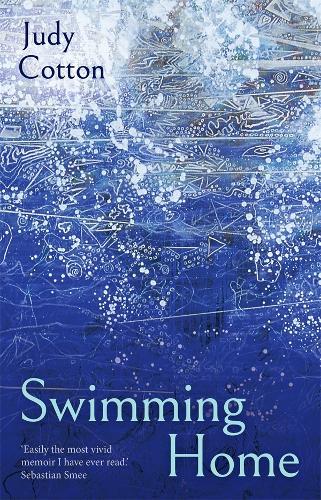
‘Swimming Home’ by Judy Cotton

2022, 240 p in paperback

So what do you do when you have a memoir in your hand, but know absolutely nothing about the author? One option is to start Googling so that you have some context into which to slot the biography, and to gauge some sense of authority of the writer. The other is to just read it as a piece of writing, on its own terms, and then Google afterwards. This is the approach I took with ‘Swimming Home’ by Judy Cotton.

So, drawn from this memoir, who is Judy Cotton? She is an artist, based in New York, but born in Australia during WWII in Broken Hill. Her father, later to be the parliamentarian and U.S. ambassador Sir Robert Cotton, trained for the RAAF but was posted to Broken Hill by the Dept of Supply during WWII because of his familiarity with mining. He and his family later shifted to Oberon in NSW to establish a timber industry, another crucial war-time industry. Judy was one of three children born to Robert and his wife Eve. The children were sent to boarding school in Sydney where Judy’s older sister Anne received treatment for crossed-eyes. Her father embarked on a parliamentary career with the Liberal Party and her mother, an accomplished pianist became involved in sheep-breeding. Judy attended university and married a diplomat who was posted to Korea. Her marriage broke up, and she and her son Tim went to Japan, and then to New York where she worked as a journalist and successful artist, until contracting Lyme disease which forced her to change her artistic direction. Her parents moved to America too, when her father was appointed Consul-General in New York between 1978-81 and U.S. Ambassador between 1982-85 before returning with Eve to retirement in Sydney and then Palm Beach. Her mother died in 2000, her father six years later in 2006, having re-married.

All of this sounds quite straightforward, but I have imposed an order that does not exist onto this memoir, thereby leaching it of its power and beauty. You have to work hard as a reader to piece a chronology together: indeed, I could only do it by going back to read it again. The chronology does move forward at a chapter level, but each chapter splinters into shard from different times, identified by year, but fused together. It is more like a mosaic than a canvas. Although a memoir, many aspects of Cotton’s own life are left oblique – her first marriage, her success in New York, her 40 year relationship with Yale.

The book opens in 1923 with ‘Eve’ playing imaginary scales while hiding under the fig tree. She was somewhat in awe of her beautiful older sister Jean, protected by her mother Ollie from her drunken father Archie. We soon learn that ‘Eve’ was Judy Cotton’s mother. And the cracks in the author’s relationship with her mother are quickly revealed:

Eve rated my sister and me by the same terms, and we both lost in the equation. She scored us on looks, clothes and marriages, having decided that achievement in the world was best left to my father. She worked hard to even things up between my sister and me, tying me down by one metaphorical leg so that I could not run faster than my blue-eyed sister

p.14

I must admit that my heart sank a bit when I read this. As I explained in my review of Nadia Wheatley’s Her Mother’s Daughter (see my review here), I am not particularly comfortable with the parental memoir genre, and the sense of grievance that seems to pervade it. It’s certainly in evidence in this book, as Cotton stores up the injustices and harsh comments committed by her mother in a form of emotional ledger.

What are Judy Cotton’s accusations against her mother? Sending her two daughters away from their country town in NSW to boarding school ; her parents’ (especially her mothers’) response to Judy’s divorce “they wanted to see the wreckage for themselves…they left me stranded and penniless in Korea in the hope that it would force me to stay married and not embarrass them”. Once divorced and living in Japan with her son “Eve [her mother] waged a relentless campaign for me to return to Australia so she could ensure I did not take lovers and become like Jean [her mother’s sister]”. Her mother, by then living in New York with her husband who was US ambassador, had a heart attack: “Eve worked up a good set of arterial blockages in preparation for a massive heart attack. She had talent and she used it”. On her mother’s return to Australia, she remained imperious to the last. She had a clear sense of how things should be, rejecting things that were ‘not just exactly right’. She was blunt, with a pertinent charm: ‘Horizontal stripes are unkind to your hips’ ‘Oh dear, not grey again’.

She commented on inappropriate clothing, husbands and haircuts, on roots showing, a vase of flowers or world news not arranged to her liking. She pecked at tiny flaws and big ones, a hen in the yard after grain, a pianist aiming for precisely the right note

p.105

In these lists of wrongs, I sense little of the adult (with her own secrets, compromises and vulnerabilities) appraising another adult (with her own secrets, compromises and vulnerabilities), only the resentful, hurt child. And yet, from the outside, Cotton would seem to be very much the dutiful, loving daughter. When her mother is elderly and failing, she flies back and forth over the globe, sitting by her hospital bed, being as supportive as an expatriate child can be. She is both made by her mother’s life, and unmade by her mother’s death.

It is this sense of being drawn away and yet returning that is captured in the title ‘Swimming Home’ and in the frequent descriptions of shores that are repeated throughout the book. It is there right in the opening preface:

Undertow is perilous, the Pacific riptide hauling me hand over hand like a movie on rewind as I watch from the plane. Landing, I struggle to take off instead, but no matter how many times I leave, the land has me by the ankles with a grasp that won’t let go

Dedication

She returns again and again to the sea, just as she returns again and again to Australia with its light, its smells, its birds, its trees. It is a wide Australia on a huge canvas: it is also a prison, steeped in the blood of dispossession and injustice. The ocean represents openness and distance, and yet also a treacherous pull. Her descriptions of the sea are beautifully created images. I think of George Orwell’s injunction against worn-out metaphors, and certainly she has imbued each of her descriptions of the sea with new, completely original images. The Pacific “hiccuped its briny breath”, it has “goosebumps”, the waves are “an ancient island’s rasping breath” and, most evocatively “the sea shivering in filmy layers as if it were sheer fabric pulled diagonally in ruched pleats one across the other ” (p. 103).

Her final words encapsulate the expatriate’s tug and flow.

Then I will leave again, attempting to evade the land and people that still hold me prisoner, shake off its fierce undertow…I resist the invisible feelers that creep like tiny heat-seeking missiles to cut to my core. I cannot afford to feel. Age has taught me that. I leave again.

No one’s story can explain the past.

No one story

p. 126

I must admit I found myself relieved that this memoir was relatively short (my e-version has 131 pages; the paperback book appears to have 240 pages). The writing is almost too sharp, too crystalline, almost as if you were reading a whole book of poetry in one sitting. I found myself gaining a new appreciation for the book in the second reading I was compelled to undertake, in order to be able to write this blogpost. And this written, now I’ll look at her work.

My rating: 8/10 (hard to say)

Sourced from: review copy from Black Inc. books.

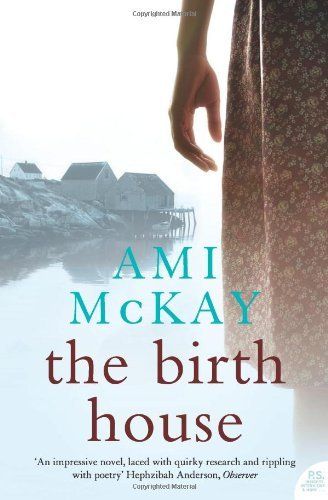
‘The Birth House’ by Ami McKay

2007, 352 p.

One of the ongoing debates in literary and historical circles revolves around the question of the dividing line between fiction and history. Just this morning, I read another contribution: Between Fact and Fable: Historical Fiction or Non Fiction Novel? I must confess to my own wariness when historians include speculation in their histories, and am critical of historical fiction that does not display fidelity to the time that it is depicting. In reading this book, however, which was nominated for the International IMPAC Dublin Literary Award, I find myself disconcerted by yet another variation on the conundrum. Is this a novel, or mainly a device upon which to hang the author’s research?

The subject matter interests me: I have always been interested in midwifery practices in the past, and the nature of women’s knowledge about their bodies. Set in Scots Bay in Nova Scotia (a real place) during and immediately after WWI, its main character is Dora Rare, the first female Rare in six generations. She is treated with suspicion by the people in the small town, and is drawn to Miss B. the town midwife, who is similarly ostracized (and feared?) by the locals. Out of love for Miss B. and drawn by her own interest, Dora becomes a trainee midwife. However, both Miss B. and Dora find their knowledge and skill questioned when Dr Thomas, an obstetrician in the employ of Farmers Assurance Company of King’s County, arrives in town. He talks up the advantages of health insurance, and deprecates the old folk ways of midwives, which are under threat not only from him but from legislation and regulations encouraging ‘safe’ hospital births.

Despite ‘catching’ many babies, Dora herself struggles to fall pregnant. Faced with no other real alternative and eager to have her own child she has married Archer Bigelow, a feckless man who enjoys the unfettered access to his wife in order to impregnate her. This marriage and her own maternity does not turn out the way she envisaged it would. Forced to leave Scots Bay, she travels to Boston where she meets liberated and unconventional women involved in the suffragette movement. There she develops an independence which helps her to return to fight, along with her friends from the ‘Occasional Knitting Society’, for the rights of Scots Bay women to give birth as they wish.

By its very nature, the author of historical fiction chooses a particular time and place in which to set the novel. By establishing her book in 1916-1920s, a range of fascinating historical situations opens up for Mackay. There’s the Canadian contribution to WWI; the Canadian homefront and attitudes towards men who did not enlist; the Spanish flu epidemic; women’s suffrage; the rise of the ‘girl’ and changing attitudes towards women and their sexuality and maternity. She has clearly researched all these things, but I found myself wondering if the plot was being driven too much by the search for scenarios in order to utilize all this research. While reading it, I don’t think that I ever lost the consciousness that I was reading a book and that there was an author pulling the strings – and for me, that’s not a good thing.

My rating: 6/10

Sourced from: CAE book groups

AHA Conference 2022 Day 3

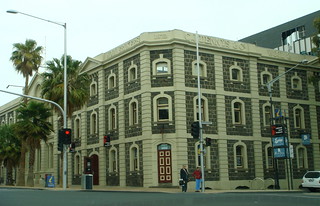
National Wool Museum, Geelong. Flickr: Andrea Williams https://live.staticflickr.com/3294/3069486544_cee717d90f_n.jpg

This blog post is a week late, the AHA conference having wound up a week ago. Nonetheless, better late than never.

So, I was up and at it again by 8.30, tuning into the ENVIRONMENTS AND INSTITUTIONS stream. Rachel Goldlust started off with a presentation on A History of Australian Housing: A view of and from the environment. After tracing through early approaches to developing an Australian vernacular of housing through the Arts and Crafts movement of the 1890s, the Garden City movement of the 1920s, and the development of the Queenslander, she then turned to the Small Homes Service and Robin Boyd. One of the architects that Boyd featured was Alistair Knox who championed earth housing. At first, this was largely a response to the shortage of building materials after WWII, but Knox was increasingly drawn to the artistic community at Montsalvat, who provided the labour force for mud brick construction (always the most expensive aspect). Eventually, Knox came to see mud brick as a challenge to the modernism promoted by Robin Boyd, and it is still at the core of sustainable housing today.

Josh Woodward following with Making a Modern Marketing Machine: NSW Government Tourist Bureau 1905-1915, starting off with a meeting at the Australia Hotel in Sydney between former and current Premiers and ministers of the NSW Government, and Hunter, the Head of the NSW Tourist Bureau and (former?) editor of the Daily Telegraph. Since Hunter’s employment in 1906, the NSW Tourist Bureau had shifted to a central location, and had the biggest plate glass window in Sydney. In his advertising, Hunter challenged the stereotypes of poisonous snakes and ‘savage Aborigines’ in Sydney, announcing that there were absolutely no hostile ‘blacks’ and that the danger of snakes had been exaggerated- thereby placing indigenous people in the ‘fauna’ category. Photography of the Blue Mountains, a focus of NSW Tourist Bureau Advertising, drew on 19th century ideas of the ‘sublime’ which had been largely superseded by then, leavened with scientific information.

There was another presentation after that one, but I had to leave for a Spanish Conversation Class.

Después de mi clase, I missed the start of the COMMUNITY AND BELONGING stream, but I was able to catch it up later on-demand (a wonderful advantage of an online/hybrid conference). Alex Roginski spoke on Charismatic Careering in Spiritual and Religious Movements: Leadership and Rupture in Melbourne’s Free Christian Assembly, starting her presentation with an image of the anti-vaccine protests seen on our streets recently. She noted that the feeling of ‘persecution’ acts as a binding force on protestors acting from a variety of impulses, and that ‘persecution’ has long been a part of Christianity as well. She illustrated this through the case of the charismatic preacher John Alexander Dowie (1847-1907). He emigrated to Australia as a child, but returned to Edinburgh for his theological training. He was ordained into the Congregational Church, but left it in 1878 to become a street preacher. He was employed as a relieving minister at the Collingwood Baptist Church in 1881, but turned on the church over its attitudes towards alcohol, and started his own Free Christian Church in Fitzroy. By 1888 he was in Chicago where he started the Zion Tabernacle, which offered divine healing, with its own protection guard in paramilitary uniform with bibles in their holsters. By 1901 he established a city in Illinois called ‘Zion’ , attracting 7000-8000 followers where he declared himself to be the prophet Elijah. However, by 1904 Zion City (which was on pretty dubious financial foundations) was mired in abject misery, and he died in 1907. Fascinating.

Amanda Burritt’s presentation LGBTQI+ Christians: Mainstream Churches and welcoming Christian Communities in 1970s and 1980s Melbourne took us back fifty years to the decriminalization of homosexuality (South Australia in 1975, Victoria in 1980 and 1984 in NSW). Just because it was no longer a criminal offence did not mean that attitudes had changed, and she took us through the varying responses of the Anglican, Uniting and Catholic Churches. Homosexuality was a contentious topic, with attitudes varying from a literal Biblical declaration that it was sinful; to a view that because of The Fall it was an inferior type of relationship, through to the idea that homosexual Christians were capable of reflecting the nature of God in a different way. Some churches banned all involvement in the sacraments, while others recommended acceptance and love. Even before this theological tussling, the ‘Acceptance’ group had started in Melbourne in 1973 to discuss change in the Catholic church, and the L.A.-based Metropolitan Community Church started a branch in Melbourne in 1973. Many attendees at Metropolitan CC maintained their affiliations with other churches, but also formed relationships with many Uniting Churches. In 1979 the Gay Christian Collective started at St Mark’s in Fitzroy as an activist group, and at the same time the Christian Lesbian Collective started at the Fitzroy Uniting Church. Today, 50 years later, things are better, but LGBTIQ+ Christians are still not free from condemnation.

Lunch time – and no little grand-people this afternoon, so I could indulge myself in history all day! The ROUNDTABLE: URGENT HISTORIES OF AUSTRALIAN CAPITALISM featured contributors to a special issue of Labour History released in 2021. Hannah Forsyth spoke about ‘Industriousness’, particularly as it applies to schooling, which was seen as a way of being more productive (most apposite, given the recent free childcare during COVID as a stimulus mechanism, and the prospect of a funded year’s play-based learning preschool). Julie McIntyre spoke about the need to include nature in histories of capitalism, noting that agriculture is dependent on soils – an observation made by Marx who noted that under capitalism there was co-exploitation of the soil and the worker- leading to the question of why labour history and environmental history do not progress in tandem. Adonis Piperoglou gave a personal view of ethnic entrepreneurship through his family history, with his father growing up in a series of milk bars and fish and chip shops, leading to the purchase of a double-garage home in North Balwyn. He noted the role of chain migration, the ‘hard worker’ image and the scope for exploitation. The discussant of the session Sophie Loy-Wilson noted that the AHA conference at Deakin is being held in a repurposed wool-shed, which is very fitting. Wool depends on grass grown on soil, with the labour of Australian workers through the supply-chain, and is destined for overseas consumption.

My final session for the day and for the conference (unless the recordings remain available after the conference) was the HEARING AUSTRALIAN HISTORIES roundtable, with seven (!!) participants, who focused on the methodology of hearing history. Andrew Hurley spoke about his study of silence, which is often seen as a metaphor, or a paradox through descriptions of ‘noisy silence’. Often historians need to look for information about sound in written texts, and in particular he has looked at Robyn Davidson’s Tracks. Henry Reese‘s work has focused on sound recordings that no longer exist, but are shown in photographs. In particular he looked at Douglas Archibald, one of several promoters who travelled the theatrical circuits, demonstrating new sound technologies. Julia Russoniella used the printed arrangements and pencilled annotations of violinist Cyril Moss in order to recreate his performances in Sydney in 1900-1940s- literally, on her violin during the presentation. Amanda Harris spoke about listening to colonial songs through the printed music published in the 1830s and 1840s that claimed to be tribal songs. She looked at a concert held in 1826, at which, it was claimed Bungaree was banned from entering. Jakelin Troy spoke about reclaiming these early printed songs when local indigenous groups stripped out the ‘improvements’ imposed by these early European song-transcribers. Chris Coady spoke about Dean Dixon, an African-American musical director, who was tapped to lead the Sydney Symphony Orchestra in 1963. There were differing responses to his appointment both in Australia and internationally: some saw it as a celebration of dismantling the White Australia Policy; others thought that nothing would change; others were surprised, and many Australians framed him as the ‘ideal migrant’. Finally, Toby Martin described song-writing collaborations, as a way of history-telling in itself. He spoke about two projects, one in 2018 that created ‘Toi La Ai’ (Who Am I?),and the second Black Tears Tracks with Uncle Roger Knox, who recorded in song his mother’s experience as part of the Stolen Generations.

And that was the end of AHA conference for me. It’s not the same, of course, as being there but I probably wouldn’t have been involved at all had the Zoom option not been available. In a way, having a limited number of options available was almost a relief, as when you attend in person there are always competing sessions that require you to make a choice. Even though I might not have chosen the session that was available, each time I found that there was something of value and new knowledge. So perhaps there really is something that we can thank COVID for, after all.

Guest blogger: Willow Jade Gilbert

I’ve never had a guest blogger on my website, but I’d like to introduce a very special guest , my granddaughter Willow Jade Gilbert, aged six and a half. It warms the cockles of this Nanna’s heart to see her reading so fluently and with such enjoyment and she’d like to share a book review with you.

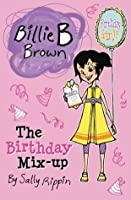
I have a book with twelve stories all about Billie B. Brown. The first one is The Birthday Mixup. Billie has to invite 10 friends only and it should have been 12.30 BUT she wrote 2.30!!! When her teacher said “Did you eat jumping beans for breakfast?” I LAUGHED.

The next story is Billie B. Brown and the Little Lie. She was playing with her friend Jack. Her last toy arrow went on the roof of the shed and then she fell off the fence and at school she lied about how she broke her arm.

The next one will be The Deep End. In the book, Billie’s class is going to swimming lessons and Billie is scared because there is a deep end. When she thinks about it she feels sick. Billie doesn’t want her name to be read out, but it isn’t, because she is one of the Swordfish. There are three groups: The Sharks,(the really good swimmers); Stingrays (good at swimming but not as good as the Sharks) and Swordfish (they aren’t as good as any of the other groups).

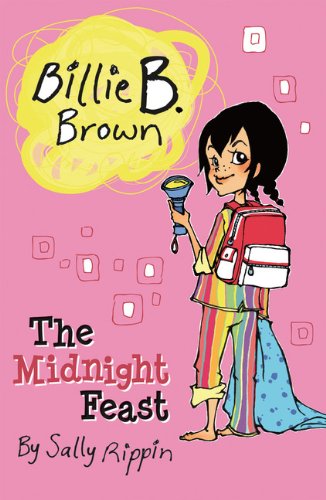
And now we’re moving on to The Midnight Feast. Billie and Jack are camping. Billie has rice crackers and dip, and Jack has two packets of chips. Jack’s dad pokes his head into the tent flap ‘Hey kids, dinner’s ready’ he says. Billie wants to watch TV because it’s Finding Nemo and Billie’s favourite is Finding Nemo. Once the movie has finished, they have to brush their teeth but Billie says “But you don’t brush your teeth when you’re camping” but Billie’s mum says “Yes you do!!” When they go back to the tent, it’s really dark outside. Billie was saying “If Jack’s not scared, neither am I” and then Billie asks the time and Jack says “Nine fifteen”. Billie isn’t sure if she likes camping in the dark. “Maybe we could have the feast now” says Jack. “No, Silly” says Billie “that would be a 9.15 feast”. Once I’ve been up till 4.44, which was past midnight! And then Billie and Jack think that there is a monster because there is a low growling sound and then it becomes bigger and louder. Then a big shadow goes over the tent. That’s why they’re scared. And then they accidentally fall asleep before midnight, and Billie is saying “Marshmallows for breakfast” in her sleep.

And that’s enough for now. See you next time.

I hear with my little ear: Podcasts 24-30 June 2022

History of Rome Podcast. Episode 153 Adrianople takes up with the Goths angry and their armies on the loose. Valens left a skeleton force of troops in the East after a shaky truce with Sharpoor, which allowed him to free up troops to head back west. He went to Constantinople where he received a frosty reception, and decided not to wait for Gratian to quell the Allemani but rode out by himself. The battle of Adrianople started prematurely, but the Romans were in front until an extra contingent of Goth cavalry arrived, and the Romans were defeated. Valens was killed in battle. Duncan refutes the idea that it was the horses that swayed the battle, noting that the Romans had been using the cavalry for 100 years. But certainly, it was the worst crisis that the Empire faced since the Battle of Cannae in 216 BCE (wow- that’s going back 500 years!) and it left a 19 year old and a 7 year old as emperors. Episode 154 The Gothic War. So who are you going to call in this parlous situation? Why- a successful general, that’s who. The only problems was that Theodosius Snr, who had previously been the go-to general had been executed in Africa, probably as part of the post-Valentinian political realignment. Fortunately he had a 32 year old son, also called Theodosius, who was brought back as military commander to restore order. In 379 CE Theodosius was made Augustus of the Eastern Empire. The Gothic War was at a stalemate. The fortified cities held, but the Roman army was stretched by a general manpower shortage across the Empire, exacerbated by the big landowners who kept their best workers from the reach of the army. By continuing the Gothic War, the Roman Army was on a hiding to nothing. So when Athanaric, the King of the Goths, came to Theodosius and asked asylum from the Huns, Theodosius seized the olive branch. The Goths and Romans contracted a peace treaty which allowed the Goths to live in large groups under their own internal leadership- a big change to the old policy of scattering and Romanizing the enemy. Episode 155 The New Bishop of Rome takes us back to Brittania, where Magnus Maximus, a Roman general, led a revolt against Gratian, who had never been a soldiers’ soldier. Gratian ended up being executed by Maximus’ troops after his own troops deserted him. Maximus’ way was smoothed by Ambrose, the former Consular-Prefect, who was now the Bishop of Milan, even though he had never been a priest and was more-or-less coerced into the position. Ambrose negotiated an arrangement with Theodosius I and Valentinian II whereby Maximus was recognized as Augustus in the West.

Things Fell Apart (BBC). This final episode, made in March 2022, features an interview between Jon Ronson and Louis Theroux, two documentary makers who have a similar approach to similar themes. It’s a bit of a re-hash of the whole series, and you’d probably be better off listening to the series itself rather than this rather cozy summing up.

Sydney Writers Festival. A few weeks back I posted a review to Hanya Yanagihara’s weighty tome To Paradise. I enjoyed this podcast from 22 June 2022 where she talks about the book, and her previous equally weighty tome A Little Life. And how good that the question time was dominated by women, reflecting the demographics of a writer’s festival audience.

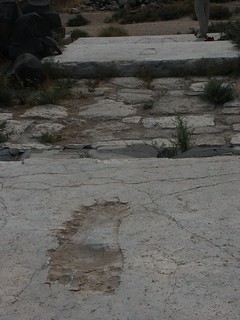
These were the giant footprints at Ain Dara Temple in Syria, a temple which is thought to be very close in design to- if not the same as- King Solomon’s Temple in the Bible. Photographer Klaus Wagensonner, Flickr https://flic.kr/p/5QdrMQ Appallingly, this temple was destroyed by Turkish airstrikes in January 2018

The Ancients (History Hit) I really enjoyed the episode The Image of God, featuring Professor Francesca Stavrakopoulou, whose latest book ‘God: an Anatomy’ has been shortlisted for the Wolfson prize. She points out that the Old Testament is actually an anthology of writings from the 8th Century BCE through to the 2nd Century CE. The God we find in these writings is an anthropomorphic god, with footprints, hands and a body real enough that Moses had to go into a cave where God covered him with his hand so that Moses would only see the back of him. He was a mobile god, who could slip away from temples when they were destroyed, and his image gradually changed from a good looking, red-coloured god to an old man with a beard. I found this fascinating: I think I’ll look for the book.

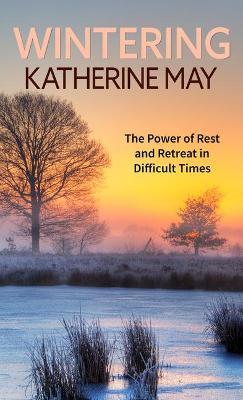
Six degrees of separation: from ‘Wintering’ to…

It’s first Saturday of the month (already!) and so it’s time for the Six Degrees of Separation meme, hosted by Kate at Booksaremyfavouriteandbest. The idea is that she chooses the starting book, and then off you go on a riff of your own choosing, linking to six other books for whatever reason you decide.

This month the starting book is ‘Wintering’ by Katherine May which, although published in 2020, I haven’t even heard of. Nonetheless, where is it going to take me?

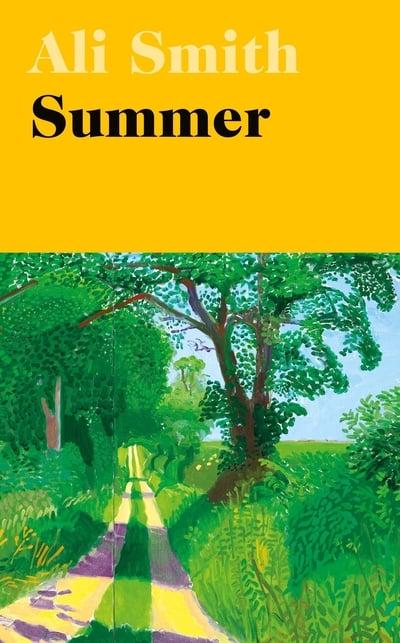
Naturally enough, if one thinks of ‘winter’, the mind leaps immediately to ‘summer’. I’ll go even further, thinking of all four of the seasons in Ali Smith’s Seasonal Quartet. Ali Smith wrote and released each book in successive years, starting with Autumn, and they were written in real time (i.e. each set in the year in which it was written). I really wanted to enjoy this quartet, but I found myself a bit disappointed in it. You can read my review of Summer, the final book in the quartet here.

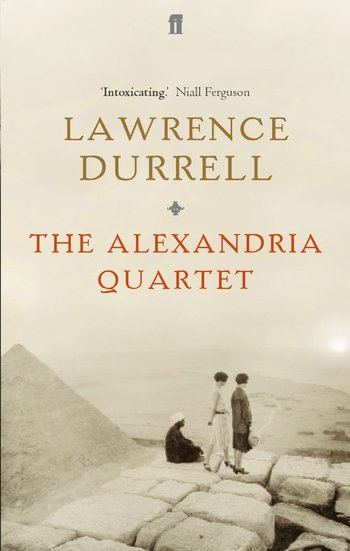
Have I read any other quartets? I don’t think I have. If fact, the only quartet I can think of is Lawrence Durrell’s Alexandria Quartet, published between 1957 and 1960. I haven’t read it/them but am tempted to do so, especially after the soft Saturday night viewing of ‘The Durrells’ where Josh O’ Connor plays Lawrence Durrell- (and hasn’t he done well?) Even though he seems a rather pretentious prat in ‘The Durrells’, his writing has survived his younger brother’s skewering of him.

But I have read Naguib Mafouz’s Cairo Trilogy, which was written just a little earlier than Durrell’s books (i.e. 1956, 1957), but not translated into English until the 1990s. I really loved its perspective on traditional Egyptian life and the repercussions of the political upheaval in Egypt in 1919.

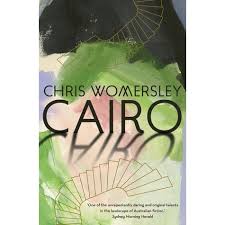
And thinking of Cairo, let’s jump to 1980s Melbourne with Chris Womersley’s Cairo, which refers not to the Egyptian city, but to the Cairo Flats that still stand opposite the Exhibition Buildings in Melbourne. We had a friend who lived there! (See my review here) I see that Womersley has recently released a followup, The Diplomat, which follows on from the very Melbourne story of the theft of Picasso’s ‘Weeping Woman’ from the National Gallery of Victoria.

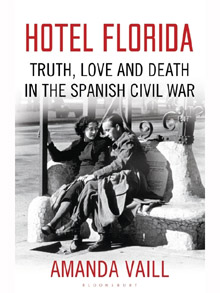
Picasso is best known for his painting ‘Guernica’ which brought the Spanish Civil War to world consciousness. It was a war that drew writers and intellectuals from the world over. Amanda Vaill’s Hotel Florida describes itself as a ‘narrative, not an academic analysis’ of six real-life characters: writer Ernest Hemingway and journalist Martha Gellhorn, war photographer Robert Capa and Gerda Taro, and press officers/censors/propagandists Arturo Barea and Isla Kulscar. All six stayed at the once-deluxe Hotel Florida in Madrid. (See my review here).

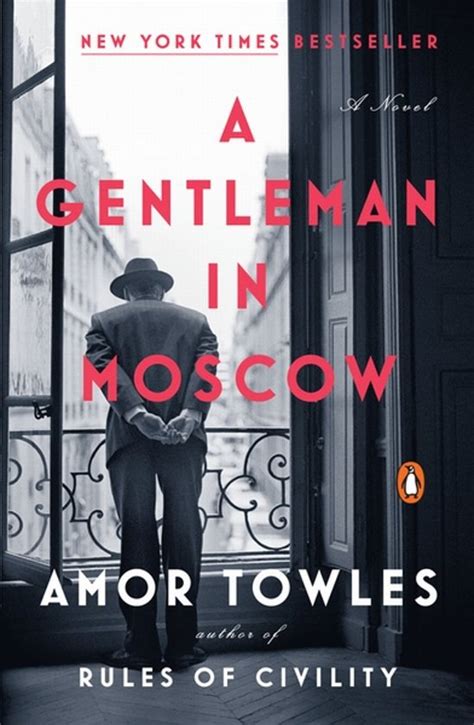
Another famous literary hotel is the Hotel Metropole in Amor Towles’ A Gentleman in Moscow. Like the Hotel California of the Eagles’ song, this was a hotel where “you could check in any time you like, but you can never leave”- if you’re Count Alexander Ilyich Rostov. As the vast history of twentieth-century Russia unfolds outside the walls of the hotel, he is under a form of house-arrest which means that he cannot leave the hotel and his world becomes encapsulated in the varying fortunes of the people who live and work there. (See my review here).

Well, I seem to have travelled quite some distance – UK, Alexandria, Cairo, Melbourne (!), Madrid and Moscow. Not quite ‘Rest and Retreat in Difficult Times’, eh?

I hear with my little ear: Podcasts 16-23 June 2022

History of Rome Podcast Episode 150 The Perils of Mismanagement. After the shock of the British uprising, Valentinian wanted to reaffirm Roman power. He started with the Allamani, near Heidelberg. He tried to get another tribe, the Burgundians to fight the Allamani but that didn’t work, so he sent Theodosius Snr. (again) to sort it out. Then there was Africa where Romanus, the Roman appointee was busy extorting taxes and threatening the citizens that he would set the Moors on them. In 372 a Berber Numidian prince named Firmus led an uprising, and Theodosius again was sent to sort this mess out. Even though Firmus was justified in leading a rebellion against the venal Romanus, he suicided after being betrayed. As part of his plan to reaffirm Roman power, Valentinian ordered that Roman military bases be established in Quadi lands on the upper Danube. They were not happy, so Marcellianus was sent to calm things down, but instead he killed their King. The Quadi were so enraged that they chased the Romans back over the Danube. Valentinian launched a punitive expedition in response, but eventually there was a peace treaty contracted with the Goths.

Episode 151 Bursting a Blood Vessel. Over in the east, the Goths had allied themselves with Procopius (Julian’s cousin) in Constantinople. Valens wanted to teach them a lesson, so that if he needed to leave Constantinople, he needed not fear an uprising in his absence. Meanwhile, Sharpoor was causing trouble in Armenia again, so the Romans appointed Prince Pap (what a name!). Unfortunately he was a bit of a dud so Valens arrested him, which brought Sharpoor back into Armenia. Meanwhile, Valentinian died of a stroke while was berating the Quadi ambassador. He had ruled over a transitional period, and although sort of successful in suppressing uprisings, there would never again be a powerful emperor.

Episode 152 The Storm before the Storm When Valentinian died, the troops anointed his 4 year old second son Valentinian as emperor. The older son, Gratian, who was 16, did not fight it, as he was no soldier. That meant that there were now three emperors: Valens, Gratian and Valentinian II. Meanwhile, there was a huge influx of Goths into the empire, who were fleeing the Huns who had come down from the Central Eurasian Steppe on their horses, with their powerful composite bows. The massing Goths on the border were treated badly by the Romans who rounded them up into refugee camps, where they were forced to sell their children into slavery, their leaders were arrested and the people were starved.

Things Fell Apart This is the final episode and ironically, Jon Ronson himself becomes part of the culture wars that he has been describing when parents starting protesting against his book ‘So You’ve Been Publicly Shamed’. Episode 8 A Mock Slave Auction looks at a social media racial pile-on at a majority-white secondary school in Michigan which prompted the school to pass a policy that they were going to address the issue. This became hugely contentious, and the resultant public meetings dragged up many of the things that Ronson has discussed: child pornography, gender identity, abortion and now the question of structural racism and unconscious bias. He interviews Robin DiAngelo, the author of ‘White Fragility: Why It Is So Hard for White People to Talk About Racism’. Wow- she is very confronting.

The Comb (BBC) I usually hear this advertised in the middle of the night while I’m listening to BBC World when I can’t sleep. Escaping the City looks at the phenomenon of admittedly middle-class, educated Kenyans moving out of Nairobi after lockdown. I was interested to hear the interviewee, Mugambi, talking about the changes in Nairobi during the 1980s and 1990s which saw it become ‘Nai-robbery’ and the resultant construction of glass-topped security walls and frisking on entry to any public building. This is the Nairobi that I knew when I visited my son over there, and it was interesting to hear that it hadn’t always been like that.

Soul Search (ABC) A friend told me about this interview with Joan Chittister on renewing community in a changing world. She is a Benedictine sister, and a feminist. She talks about her life, her spirituality and community, and her views on feminism.

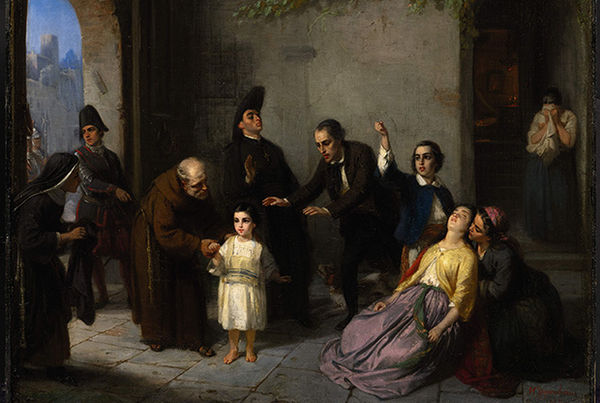
The highly inaccurate depiction of the ‘rescue’ (abduction) of Edgardo Mortara by Moritz Daniel Oppenheim, 1862 Source: Wikimedia

History This Week The Church Kidnaps Edgardo Mortara tells the story of a six year old Jewish boy, Edgardo Mortara, who is kidnapped by the papal police in 1858, on the grounds that he has been secretly baptised and thus must be removed from the corrupting influence of his parents. His parents fight back, challenging the claim and attracting international attention. It doesn’t look good for Pope Pius IX, who is fighting for his own authority in the heaving political scene of the Risorgimento, the political movement that led to the creation of the Kingdom of Italy. Even though the Pope’s power as a secular ruler was eroded, at a personal level, you’d have to say that the church won, as Edgardo ended up a Christian priest.

AHA Conference 2022 Day 2

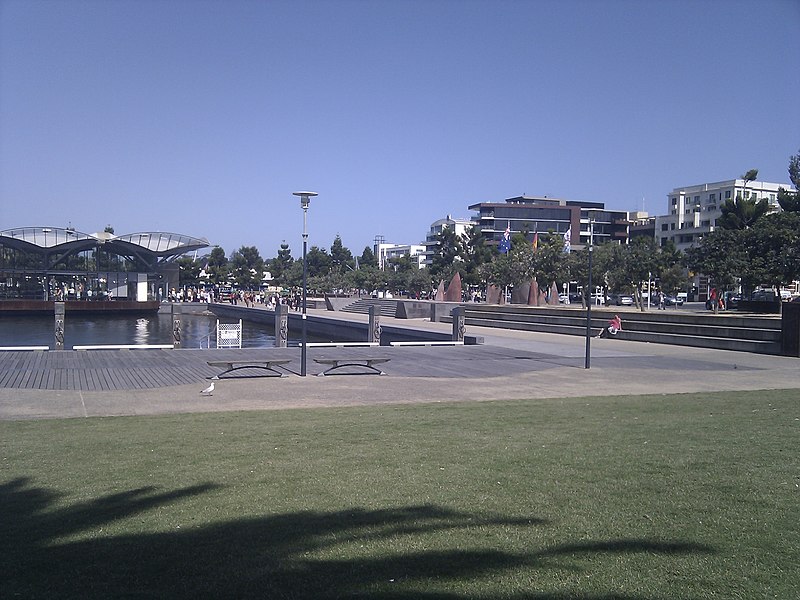
Geelong Waterfront 2011, Dtfman, https://commons.wikimedia.org/wiki/File:Geelong_Waterfront.jpg

I started off the day early (8.30 a.m.) with a session on Jimmy Blacksmith/Jimmy Governor. Grace Brooks started off with a paper on Indigenous Labour History on Film which focused on Schepisi’s ‘The Chant of Jimmy Blacksmith’ (1978) and Warwick Thornton’s ‘Sweet Country’ (2017). This is part of her PhD research into depictions of labour relations more generally in Australian film. She argues that while not expecting film as a genre to be strictly historically correct, both films were successful in depicting indigenous labour history, rupturing the myth of Australian egalitarianism promulgated by blokey films like ‘Sunday Too Far Away’ or ‘Waterfront’. She notes that ‘Jimmy Blacksmith’ challenged the myth of indigenous indolence, and she suggested that the schoolteacher McCready acted as a mouthpiece for Schepisi’s own political views. She sees Thornton’s film, set in 1929 Northern Territory as a subversive form of the western, but without a musical score until the final credits. It utilizes non-linear storytelling, reflecting a First Nations approach and historically, it captures well the pastoralist and domestic service settings of Indigenous employment. Interestingly, both Schepesi and Thornton’s film depicted featured fence-building as the labour undertaken by their protagonists- a particularly resonant task given the appropriation of indigenous land. She suggests that Thornton’s film is more nuanced- that we are all angels and bastards. It seemed to me that Brooks was largely unaware of Keneally’s book (as distinct from the film) and his present-day discomfort with its telling of the story of Jimmie Blacksmith from the black perspective.

The second paper by Richard Evans was titled Jimmy Governor: Revisiting a Story of Murder and Consequences. As a criminologist and historian, he looked at Jimmy Governor as a historical/legal case, and focussed on Jimmy Governor rather than the fictionalized Jimmy Blacksmith. Like the earlier speaker, he does not expect film to live up to historical accuracy either, but he noted that Jimmy Blacksmith (both in film and book) did not feature the murder of the heavily pregnant Elizabeth O’Brien and her son, and the fairly credible allegations of rape that were not tested in court. He suggested that the victims of Governor’s crime tend to be pushed to the background, and that there is perhaps a degree of “what-about-ism” that arises when you are talking about violence within a colonial-violence environment. He noted the particular grudges that Governor held, and suggested that the shootings fit into the American “spree shooting” phenomenon that we speak of today. Rather refreshingly, he commented that he had hoped to mount an academic study of Governor but then found that it had already been done by Laurie Moore and Stephen Wilkins in their The True Story of Jimmy Governor (2001) some twenty years ago. At this point, I remembered that I have read this book (which is quite difficult to find today although can be print-on-demand) so I headed back to my own Reading Journal from 2003 to see what I thought of it.

I read this more for its connections with Keneally’s Jimmy Blacksmith than anything else. Written by a family descendent who lived in Jimmy Governor’s neighbourhood- in fact, a family ancestor actually arrested him- I think that this in some way compromises the authors. They are certainly restricted to white documentary sources but they are, to their credit, aware of this.

Main differences in the accounts of Jimmy Blacksmith vs. Jimmy Governor:

1. There is no spiritual dimension in the Governor story at all- no mission, no Rev. Neville, no ‘womb’, no initiation

2. The relationship with Governor’s wife Edith was far sounder than Keneally suggests, and the child was his son

3. There was no school teacher, kidnapping etc. as depicted in the Blacksmith story- was this just a vehicle for Keneally to give a potted white/black history?

4. The murders were, if anything, worse- and there was a rape.

I found the lack of footnotes disconcerting, but it was a readable and interesting account in its own right, with good maps, and the book acknowledged the lack of indigenous input

My reading Journal March 2003.

Evans remarked on this latter point too, but noted that (white) researchers have encountered a real and understandable reluctance by indigenous groups to engage in the question of Jimmy Governor/Jimmy Blacksmith- and this, he suggests, is perhaps a research area for another person at another time.

I was able to follow this early-morning session with the next session titled ‘Pandemics and Vaccines’. Gabrielle Wolf started with a paper ‘From Black Death to COVID-19: Infectious Diseases and Legal Challenges‘. She noted that neither epidemiologists or legal historians were surprised by COVID and the legal responses it spurred, as we had seen this story before. The Black Death in the 1350s saw the legally-enforced introduction of trentina, and then quarantina (30 days and 40 days respectively) of isolation. In the wake of the labour shortages caused by so much death, the Statute of Labourers was introduced in 1351 which limited wages and worker mobility, fixed prices and created the crime of vagrancy. During the smallpox epidemics of the 18th century, vaccine mandates were introduced, leading to anti-vaccination resistance. [At this point my new washing machine arrived, and so I missed the part on legislative responses to the 1918-9 Influenza epidemic.] During the HIV epidemic, stigmatization led to anti-discrimination laws on the one hand, and the criminalization of behaviour likely to spread HIV on the other. In 1951 the United Nations introduced International Sanitary Regulations, renamed the International Health Regulations in 1969, a revised edition of which operates today. Pandemics and epidemics are seen at the time as seismic events with which the law must wrestle, but the laws produced are often challenged because of their effects on individual rights, social cohesion and scapegoating.

Chi Chi Huang gave the next presentation ‘Preventing Smallpox in Australia’s North: the politics of who to vaccinate’. Smallpox was seen as a disease that came from ‘over-seas’, and as a result there was concentrated surveillance of coastal areas with interaction with shipping, fishing and pearling. The various states of Australia had differing smallpox vaccination programs, but these programs were all largely ineffective and ended by the early 1920s. There was a state-based reluctance to implement mandates, and they may not have been necessary anyway as NSW had a similar rate of vaccination to the other states, even though it was not compulsory there. Two compulsory smallpox vaccination programs in the early 20th century took place in the Northern Territory, where the Federal Government did not have to engage with state politics (shades of 2020). The first was conducted by John Elkington in the Torres Strait Islands in 1912, where he vaccinated the Thursday Islanders on the mission. The second was on Bathurst Island and in Darwin in 1933 where Dr Cecil Cook, the Chief Protector of Aborigines and Quarantine Officer for North Australia, and Dr. J. H. L Cumpston, the Director-General of the Department of Health vaccinated 212 Aboriginal people out of concern that smallpox would be passed on by ‘alien’ pearl shell workers- but they did not vaccinate the pearl fishers themselves, largely through a lack of jurisdiction.

The third paper was titled Bacterial Vaccines during the 1918-19 Influenza Pandemic and it was given by David Roth. I was interested in this, because while writing my ‘Hundred Years Ago’ column for the Heidelberg Historical Society newsletter, I had noticed a council-administered vaccine program during 1919, and I wondered what was in the vaccine. Everything that I had read (written both at the time and later) had suggested that the vaccines were largely ineffective, but this appraisal is challenged by David Roth who argues that the doctors of the time recognized the role of secondary infection and that there were vaccines that reduced morality significantly. Using the studies at the time, Roth argues that these vaccines had an efficacy/efficiency rate of about 30%, which is similar to the influenza vaccines sometimes administered today against particular strains of influenza.

And by this time, we had connected up the new washing machine and I wanted to see how it worked! Besides, another grandchild had arrived and we spent the afternoon playing in the box that the washing machine had arrived in. So that was the end of my Day 2.

AHA Conference 2022 Day 1.5

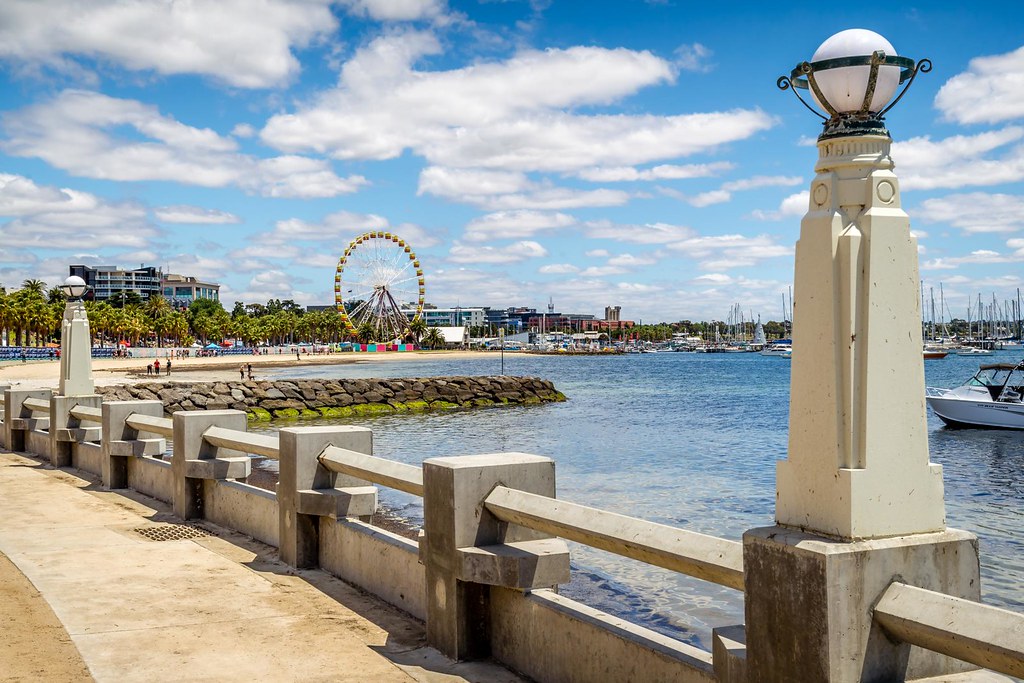
Geelong Foreshore 2015 Source: Flick Russell Charters https://www.flickr.com/photos/russellcharters/23366900146

Am I in Geelong for the AHA (Australian Historical Association) conference? Why no, I’m right at home here in Macleod. During lockdown I was craving the whole conference experience: the plenaries, the decision about which session to attend, the regret at not attending the other session instead, craving stewed coffee, muffins, sandwiches. But somehow when the AHA conference rolled around again this year, I just didn’t think that I could be bothered going down to Geelong- it’s too close but it’s also too far. So I opted for the online ticket instead, and am squeezing it in between lunch with friends, online exercise classes, grandchildren and Spanish conversations. I don’t know that I’m going to be able to carve out much time, but I’ll catch what I can.

And what’s the .5 day, you ask? Well, it’s the Presidential Address given on the first evening of the conference, after a day of sessions for Early Career Researchers etc. This year the address was given by outgoing AHA President Melanie Oppenheimer, who after talking about the achievements of the AHA in a suitably presidential style, then went on to talk about volunteerism which has been a long-term research interest of hers. She mentioned that she had written a book about volunteerism years ago, where she had posited that there was an Australian way of volunteering, drawing on our British origins (where there was a tradition of voluntarism) and informed by Indigenous concepts of obligation and reciprocity. She pointed out that many in the audience were volunteers and that despite the ageist, gendered view of ‘volunteers’ being little grey-headed ladies (like me) or Lady Bountiful or Mrs Jellyby-like women, the largest group of volunteers are in the 39-45 age group. However, when she started her research, many historians saw volunteerism as a ‘light-weight’ topic, and the third-sector is still under theorized and at times seen as in conflict with feminism, or seen as unproductive. She recalled her early research into volunteer organizations in WWII, and it was only when she stumbled on the term ‘patriotic funds’ that the wealth of resources opened up before her. She finished by talking about the changes to concepts and locations of work (especially casualisation), and speculating about how that will change volunteering especially when people are less willing to make a regular volunteering commitment, oting instead for episodic volunteering.

Then this morning (my Day 1) I started off with the Keynote address on Historicizing Domestic Violence given by Zora Simic. She is part of a team working on an ARC grant on domestic violence, with her area of interest in the 1970s onwards, with an emphasis on the 1980s and 1990s. She noted the opening of the Elsie Women’s Shelter in 1974 and the Royal Commission on Human Relationships between 1974 and 1977. She identified important books like Tor Roxburgh’s ‘Taking Control’ in 1989 which was written for women escaping violence or to protect their children; O’Donnell and Saville’s survey on Family Violence in Australia which emphasized the relationship between financial dependence and violence, and Jocelynne Scutt’s ‘Even in the Best of Homes’ in 1983 which pointed out that domestic violence was not only physical. A survey by the Office of Women in 1988 found that 22% of respondents saw domestic violence as justified in a range of situations, and the Personal Survey has illustrated the intractability of domestic violence. (And then a grand-child arrived, so that was the end of that for me).

The grandchild left with his grandfather to go to Bunnings, so I was able to catch Rebe Taylor talking on ‘Extinction, survival and resurgence: European Imperial and Indigenous Histories‘. She started by talking about cultural diversity loss, especially through languages, which is even more stark than species diversity loss. However, as language reclamation projects have shown, languages can be recovered, and the reported ‘extinction’ of cultural groups is instead a history of resurgence and resilience. She went on to talk about four ‘last women at the end of the world’ – none of whom really were last women: Fanny Smith in Tasmania, Santu Toney in Newfoundland, Dolly Penreath in Mousehole, Cornwall, and Christina Calderon in Patagonia. She noted the role of gender and geography in these cases. She finished by talking about the way that ‘extinction’ on account of climate change is now being framed as something that faces us all (however ‘us’ is defined).

The next paper in the session was Annemarie McLaren talking on ‘Indigenous Intellectual History? Black People, White People and the Process of Racial Estrangement in early Brisbane‘. Unfortunately it was really hard to hear her, but I did understand that she drew on the diaries of German missionaries who were working in the Brisbane area. These missionaries, who spoke a heavily accented English, noted beliefs about skin colour – i.e. the belief that when Indigenous people died, they would go to England and become white- and the bestowal of ‘brother’ relationships between blacks and whites. However, when strychnine-laced flour was distributed in the Kilcoy Massacre, this led to a hardening of indigenous attitudes towards the profound differences between those with white skin and those with black. But it was really hard to hear what she was saying – wouldn’t you think after two years of Zoom, that sound would be better (I often think that when listening to podcast interviews conducted over Zoom too.) Then it was time to go meet a friend for lunch, and the grandchild had been joined by his sister, and a Spanish Conversation session beckoned…so that was it for me!