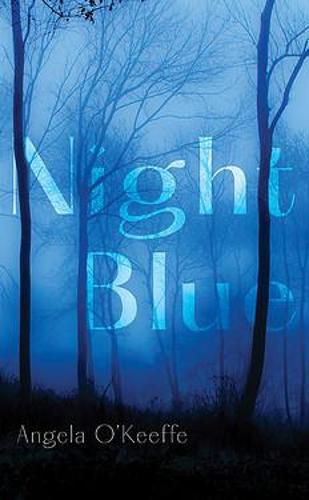
“A waste of bloody money! And it’s not even Australian” [Australian= Roberts, Streeton, McCubbin et.al.] !!” The purchase of Blue Poles by the National Gallery of Australia for $1.3 million dollars in 1973 was met with derision and controversy right from the start. Although the Whitlam government merely approved the purchase (rather than purchasing it in their own right), it came to be seen by conservatives as emblematic of the Whitlam government’s profligacy and pretension. It’s almost impossible for someone of my age to look at it without remembering the controversy. When I finally got to see it, decades after its purchase, I was surprised by how large it was, and that the blue poles were not really integrated into the painting but rather laid across it. Nonetheless, no trip to the National Gallery would be complete without popping in to see Blue Poles- and I will certainly go back to see it again having read this book. And profligacy- snort!- the painting has appreciated in value many times over.
This small novella ‘Night Blue’ interrogates the idea that a painting can be seen as something separate from its creator. Presented in three parts, Parts I and III are told by Blue Poles the painting itself as narrator- something that requires the reader to suspend disbelief and cynicism. It is, as Yes Minister would say, a “courageous” narrative decision. Part II is told by Alyssa, an academic art historian, who many years earlier had done some conservation work on Blue Poles. In the wake of failure of IVF -something she was ambivalent about in the first place- she decided to undertake a PhD looking at the way that women had been sidelined in Abstract Expressionism, as exemplified by Pollock’s relationship with Lee Krasner and Helen Frankenthaler. This sidelining of female artists, of course, is an old story (see, for example Drusilla Modjeska’s Stravinsky’s Lunch), exacerbated further by Pollock’s violence and self-centredness. Does ‘cancel culture’ extend to paintings? Does Picasso’s notorious personal life make his work unacceptable? Does Pollock’s? I must admit that I found this second part of the book rather unsatisfactory, although it did work as vehicle by which the author could work in the factual information about the painting.
It is common enough for a non-fiction writer to use an inanimate object as the lens through which to shape their narratives, but it is less common for a fictional writer to do so. Was she successful? Not completely. At times, I found myself holding my breath as I almost gave in to it, but then my more logical part of my brain would kick in and my credence would ebb away.
The book is beautifully written, and almost against my will I learned a great deal about Blue Poles and its creation. It is bold and imaginative, but it just didn’t quite work for me.
My rating: 7/10
Sourced from: purchased e-book. Read for Ivanhoe Reading Circle.
Other reviews: Lisa at ANZLitLovers thought very highly of it and you can read her review here. Kimbo at Reading Matters, like me, had reservations but still saw it as “an extraordinary feat of imagination”. You can read her review here.
I could have done with a bit of historical background on this movie, set in Perú during the 1980s and 90s. Ana and Lucho are childhood sweethearts, and they continue as lovers in adulthood. She wants to be a film-maker, and they share a love of music, swapped via cassette tapes. However, their lives are blighted by the Shining Path movement (which I really don’t know much about) and the reprisals against it where armed militias terrorize the people. More and more young people leave Perú to travel to America and Europe or even Timbuktu – a dream that both Ana and Lucho had held since childhood- but it does not work out that way. The child actors seemed incompatible with the adult actors, and so I never really believed that they were the same characters, and at times the film seemed to be merely a vehicle for some retro music and staging of the 80’s and ’90s.
Ariela is a young Jewish woman living in Mexico City, working as a muralist. She is one of the last of her friendship group to be married, and her family is keen for her to marry a Jewish man from within the close-knit Jewish community. But when she falls in love with Ivan, who is not Jewish, she comes under intense pressure from her family and the community to break off with him. The lecturer introducing the movie explained that although there had always been Jews in Mexico, there was an influx of Jews from Syria in 1918 with the breakup of the Ottoman Empire, and that they formed a tightly-held, exclusive and prosperous community in Mexico City. This was a lovely film, and the main actress was luminous. In many ways, it could have been set in any Jewish community throughout the world, but it was interesting to see this community in Mexico.
Emperors of Rome. I wish I had known that this live session was on- it was in Melbourne on 4th October at ACMI. It’s a bit of a re-hash of their much earlier episode years ago when the podcast first started. Cleopatra and Antony (Live in Melbourne) starts off in 41 BCE as Cleopatra joins Mark Antony in Tarsus (Turkey) after a delay to emphasize that she was not at his beck and call. Dr Rhiannon Smith emphasizes the political advantages of their relationship, playing down the romantic element. She points out that Cleopatra was obviously in control of her fertility, as she was not constantly pregnant as many female rulers were, in order to ensure a line of succession.
My Marvellous Melbourne. I haven’t listened to this for a while, and unfortunately there hasn’t been a new episode since March 2021. Episode 8: Sixpenny Restaurants, the Buxtons and Isaac Selby has plenty of variety. It starts off with the murder of Sisto Malaspina, the owner of Pellegrini’s Restaurant in Bourke Street in 2018, then goes on to talk about the Sixpenny restaurants that were established in Melbourne from about 1874 to WWI. They were a fixed price menu, often of three courses, with quite a bit of choice between courses. At first they attracted ‘foreigners’ but from the 1880s onward they began catering for working men, and even working women with the ladies’ restaurant upstairs. Then Peter Yule talks about his book The Buxtons: 150 Years of Developing Melbourne. I hadn’t realized that the Buxtons had spawned so many different businesses over their six-generation history- Becton, MAB as well as the Buxton Real Estate company. They contracted and expanded according to the financial cycle, and managed to shift their huge loss on 333 Collins Street onto the South Australian government. MAB developed Docklands. Yule drew on the company archives, now at Melbourne University, but also historian Kathleen Fitzpatrick’s memoir as a Buxton granddaughter. Finally Isaac Selby was a lecturer in Melbourne and Melbourne historian with a colourful episode where he tried to shoot the judge in an American courtroom after his wife sued for divorce after becoming a Unitarian! The RHSV had an exhibition on Isaac Selby in 2019, when this podcast was recorded. There are sound clips of Geoffrey Blainey talking about his contact with Isaac Selby, who died in 1956.
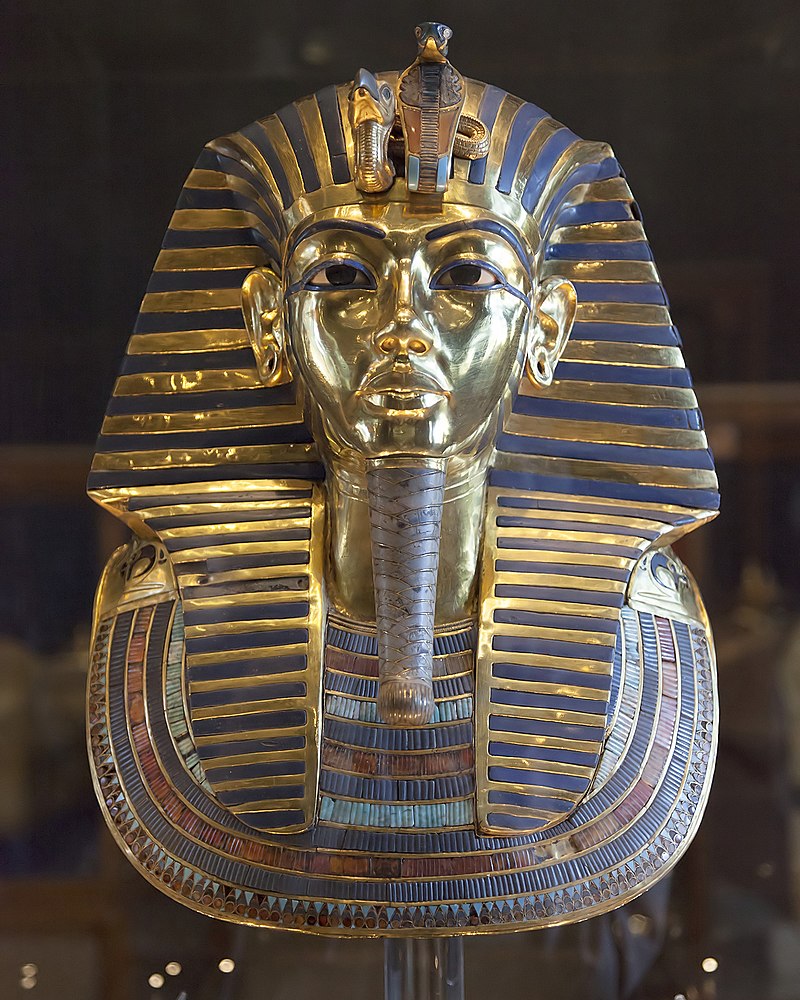
History Hit. It’s the centenary of the discovery of Tutankhamun’s tomb in November 1922. Did you know that Tutankhamun- or, at least, his death mask – is one of the reasons why I’m a historian? There was a colour picture of his death mask, with all that glorious gold and blue, in my Form I history textbook and I just fell in love with history classes just to look at the picture. History Hit have a four part series on Carter’s discovery of the tomb. Episode 1 Tutankhamun: The Valley of the Kings starts off by describing the valley, which was carved out of the desert by infrequent flooding, leading to deep ravines. Tutankhamun’s tomb was actually in the valley floor, which became covered with small rocks. He was one of the “new” kings around 3000 BCE, as distinct from the “old” Kings of 4500BCE who constructed the Sphinx and the pyramids. There were over sixty tombs in the Valley of the Kings, which was never “lost” as such because it was a tourist attraction even in Roman times. There was an increased interest in all things Egyptian after Napoleon’s invasion. There were other explorers before Carter- including Giovanni Belzoni, the 6ft 7 inch strongman who was responsible for sending the head of Ramsesses II back to the British Museum, and John Gardner Wilkinson, the so-called ‘Father of British Egyptology’ who numbered all the existing tombs at the time. And of course, Howard Carter, who arrived in Egypt at the age of 17.
Episode 2 Tutankhamun: The Discovery of a Lifetime focuses on Howard Carter, starting off in the house that he built in Egypt, in order to be close to the diggings. He became the Inspector of Antiquities, but was dismissed when he sided with his Egyptian workers in a dispute. In 1907 he met Lord Canarvon (of Highclere, the site for Downton Abbey), who went on to sponsor him for many years. Canarvon received the concession to work the Valley of the Kings in 1914, but after finding nothing for eight years, he finally threatened to pull the plug on Carter’s work. But Carter encouraged him to allow one year more. One day a water boy was moving some rocks to set up a water stand, when he noticed a square rock, different from the rest.
Episode 3 The Life of a Boy Pharaoh turns to Tutankhamun himself. On 4 November 1922 Carter wrote to Canarvon, telling him to come over. Tutankhamun died at 19. His reign followed that of his father Akhenaten, who had converted Egyptian polytheism into monotheism worshipping the God Amun. Tutankhamun reversed this, as well as his father’s centralization of power. He died of malaria and a broken leg.
Episode 4 Inside the Tomb is recorded inside the tomb, which was a poor choice because the acoustics are bad. It looks at the politics surrounding the announcement of the discovery, with it being framed as a ‘British’ discovery despite the 1922 Egyptian independence movements at the time. The presence of a photographer meant that people could actually see this intact tomb (although the photographs were staged afterwards). Egyptian regulations meant that an intact tomb had to stay in Egypt, which is why it is still there today) although poor old Tutankhamun himself was pulled apart to register the various artefacts, which numbered over 5,500. It took 10 years to register and clear the tomb. Tutankhamun captured the public imagination instantly, with his androgynous, if highly stylized, features on the death mask and in the wake of WWI, his image captured young, dead boys across time. Canarvon died soon after, as the result of an insect bite, feeding rumours of a ‘curse’. Carter ended up rather embittered by his lack of academic acclaim, and the British focus of the publicity despite the presence and contribution of his Egyptian co-workers.
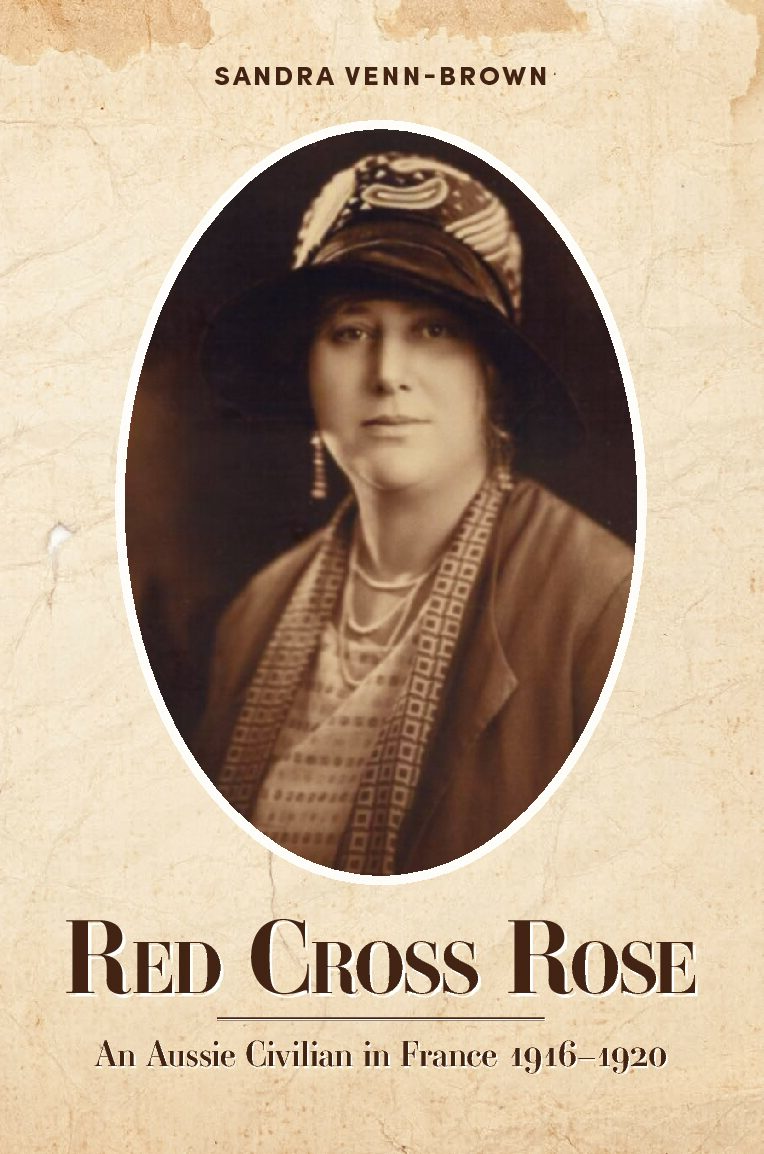
When we think of Australian women during World War I, we tend to think of them as either nurses (and less often, doctors), or as sock-knitters. But there was a small group of Australian women, generally from middle to upper-class origins who did make their way overseas as volunteers with the Red Cross, or in the case of Rose Venn-Brown, as an administrator with the YMCA. The Armytage sisters from Como, for example, also made their way over there; so too did Vera Deakin. This book, written by Rose Venn-Brown’s grand-niece tells the story of one of these ‘Aussie girls’ in France between 1916 and 1920. Although the Red Cross also drew on her services, her main interest was the YMCA, and after the war ended she was attached to the Australian Graves Detachment based at Villers-Brettoneux in France.
When WWI broke out in August 1914, Rose was working as Assistant Registrar at the Royal Hospital for Women at Paddington. Coming from an affluent family, there was no economic necessity for her to work, but the family of thirteen (!) siblings seemed to gravitate towards white-collar professions after their father died quite early. She would have been expected to resign on marriage, but the war intervened, and marriage never beckoned. She felt that her administrative skills might have been of use “over there”, but she was generally discouraged by the military authorities, who would only send trained nurses. Eventually she circumvented them by travelling to New Zealand and embarking from there as a civilian. Through contacts, she found herself commissioned with the task of organising the medical records of the Australian War Office in Horseferry Road, London. She was asked by the wife of the NSW Agent-General in London to help organize the War Comforts Fund Association for Australian soldiers (which so many women were involved with back home in Australia), and was offered canteen work for the Young Mens Christian Association (YMCA). As far as she was concerned, she didn’t travel all that way to do canteen work, but she pulled some strings to be appointed to look after the finances of the canteens, which had been in a poor state until then. By 11 April 1916, her permits were cleared to cross to France to work for the YMCA, something that men employed by the YMCA were not impressed by. The men called a protest meeting, and it was agreed that Rose would spend a certain amount of time working in the camps – which was, of course, exactly what she wanted in the first place.
Rose later published her letters back home, and her diaries from her time at the front. The author has drawn heavily on both of these sources, and Rose certainly wrote well. As a descendant rather than a historian, Sandra Venn-Brown does not interrogate these sources or their production in the same way that Janet Butler has done in Kitty’s War (my review here).
If Rose Venn-Brown were working today, we would call her an Events Organizer, as much of her work revolved around organizing lectures and concerts for the men in the YMCA ‘huts’ located behind the front. It was acknowledged that the men needed leisure activities as they cycled between periods on the frontline and then back at base, and she liaised with performers and lectures to schedule and stage these events and organized dances and concerts among the men themselves. By this stage, three of her brothers had enlisted and she enjoyed being able to catch up with them when she could. Much of her identity revolved being an “Aussie girl” and the comfort that the Australian troops drew from hearing a familiar accent from a “girl” who could just as easily come from their home towns. Travelling from one part of the Western Front to the other was not easy, and in a letter home Rose gave a graphic description of visiting Gamaches, 62 kilometres north of Amiens, in early 1919 when hostilities had ceased. The journey was about 190 kilometres but took a full day, with the car bursting into flames several times and requiring multiple repairs along the way.
She finally returned home, but lost money in organizing a tour for her friend Flora Sandes, an entertainer from Serbia, whom she met as part of her work for the YMCA in Europe. Rose seemed to have been afflicted by the restlessness that many soldiers felt on returning home, and after three years she left for Shanghai, then travelled back to England and France, where she revisited the old battlefields with a friend Daisy Daking, a leading folk dancer who was sent out from England to entertain the troops and teach folk dancing (a rather surreal image, I must admit, all those soldiers folk-dancing). In the 1930s she returned to be with her family, moving from one family member’s home to another. She never married and never had a family of her own. She died in Chatswood, aged 69, seen by some in her family as “a bit full of herself” and “strange”.
This book presented the “Aussie Girl” in a WWI context that was uncommon at the time, and now too, when the focus is more on soldiers and nurses. The book is interlaced with the author’s own commentary and recollections from various tours overseas, which gives it a more homely feel. The author has been badly let down in the proof-reading, because there are multiple errors that mar the text- a rather surprising oversight in a book published by Australian Scholarly Publishing. Nonetheless, as the blurb on the back says, it does give new insight into battlefield life during the Great War, and it has presented Rose’s own lively recollections and anecdotes to a wider audience.
My rating: 7/10
Sourced from: Yarra Plenty Regional Library in preparation for a presentation I gave to Heidelberg Historical Society about George Lort Phillips, a local man who ended up commanding the Australian Graves Services unit until 1921.
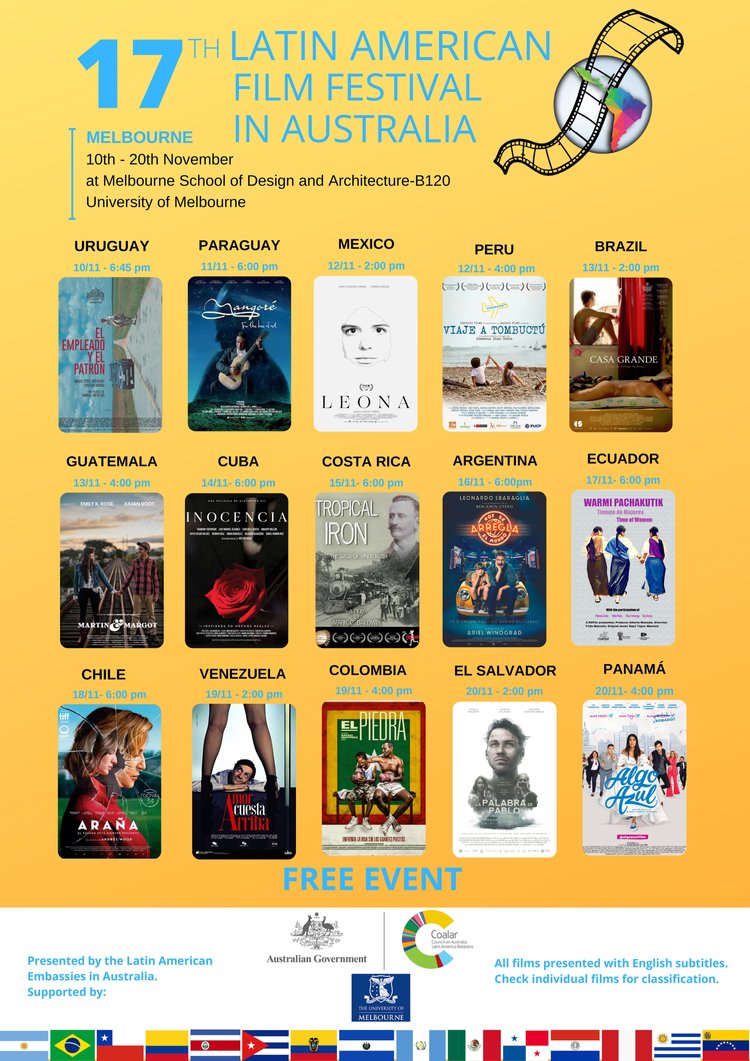
The Latin-American Film Festival is being hosted at the University of Melbourne over the next two weeks- and it’s free!
I went to the opening film last night. The woman who presented the film emphasized the contemplative, reflective nature of Uruguayan films, and mentioned that the ending left open many questions. “Oh no!” I thought “Another film where nothing happens” but El Empleado y El Patron was not like that at all. There are two young men, each with a young baby. The first is the son of the wealthy plantation owner, who is given responsibility for bringing in the harvest of soybeans; the second is a farm worker who puts aside his dream of riding his horse in a long cross-country horse race to help bring in the harvest before the rains come. The young overseer is not your typical overseer: he is vegetarian, modern and desperately worried about his young baby son who is ill. Despite the apparent power imbalance, there is a shift after a tragedy occurs- although, as we were warned, there is no clear-cut resolution. I enjoyed it.
You’re Dead to Me (BBC) This program has a ‘serious’ historian paired with a comedian, and they discuss a historical topic. Julius Caesar’s Rise to Power features Dr Shushma Malik from Cambridge who published on Nero, was a lecturer in Australia at the University of Queensland and has worked with Dr. Caillan Davenport from ANU (who features on the Emperors of Rome podcast) to write ‘Mythbusting the Roman Empire‘ for The Conversation. The comedian is Ahir Shah, and I know nothing about him. Things I learned: first, how Roman names worked: Given name first (e.g. Gaius) , Family name second (e.g. Julius), Branch of the family third (Caesar). Caesar was pronounced Kaiser. Second, there were rumours that JC was in a homosexual relationship with the King of Turkey, but the rumours weren’t so much about the homosexuality itself, as the power relationship within it. The program finished with ‘Nuance Corner’ where Dr Malik talked about the sources, pointing out that both Suetonius and Plutarch were writing biographies rather than histories, reflecting the perspective that personality influences history.
History ExtraChaos, ruin and renewal: Germany in 1945 looks at Germany in the aftermath of WWII. As Harald Jähner (author of Aftermath: Life in the Fallout of the Third Reich) points out, the war didn’t finish on one specific day but instead was a series of surrenders. By researching life in Germany in the years immediately afterwards, he found that despair and joy co-existed. It took a generation for Germany people to face the enormity of their acquiescence and guilt, and that to give their children some sort of moral compass, they could not admit to what had happened. He points out that one’s politics are often swayed by emotion, and that after the war, the development of the Cold War meant that former enemies became allies.
The DailyRunning an election in the heart of election denialism features an interview with Stephen Richter, a conservative, lifelong Movement Republican who was elected as recorder at Maricopa County in Arizona in 2020. When Arizona went for Joe Biden, Arizona became a nerve centre for election deniers, with a company called Cyber Ninjas brought in to investigate Arizona as part of the Stop the Steal Movement. They found (incorrectly) that files had been deleted, something that was palpably false, and the threats and intimidation have continued. Although a Republican himself, he is now in the position of hoping that election deniers do not win in the mid-terms, for the sake of democracy in the future.
History Listen – This is the final episode in the 3-part series on Loveday Internment camp in South Australia. Miyakatsu Koike was a mild-mannered Japanese bank official who was arrested by the Dutch East Indies authorities in Indonesia after the bombing of Pearl Harbour. He was sent to Australia under terrible conditions overseen by the Dutch and was initially treated with compassion by the Australians, who were not yet aware of the Japanese treatment of Australian POWs. Never a soldier, only a citizen, he was interned for more than four years.
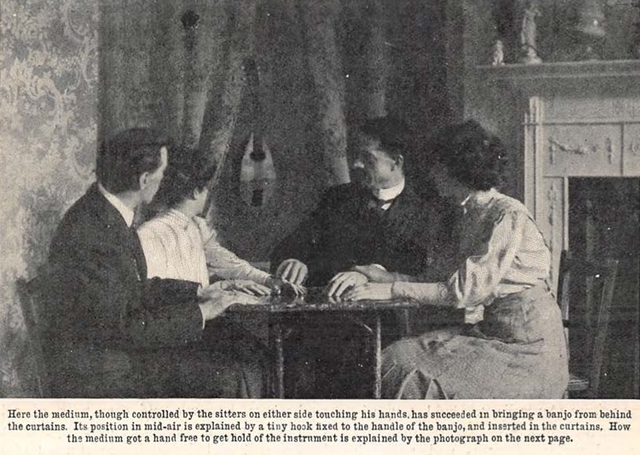
History Hit It’s Halloween as I write this, so how about A Short History of Seances. This features Lisa Morton, an expert on Spiritualism and author of Calling the Spirits: A History of Seances. Necromancy and talking to the dead existed from ancient times and in many different cultures, but seances as a public, group and usually money-making performance are a different thing. The first seance in America was conducted by Kate and Maggie Fox in 1848, who later confessed to cracking their toe knuckles to get the rapping sound. They ended up poverty-stricken alcoholics and admitted their fraudulence in 1885. They were just the start of a string of other fraudsters conducting seances. Houdini and Arthur Conan Doyle sparred over the authenticity of seances, with Houdini outraged by Doyle’s wife claiming to have spoken to his mother.
Witness History (BBC) “Our” Julia Gillard makes it onto Witness History in a 10 minute segment on Julia Gillard’s Misogyny Speech, commemorating the 10th anniversary. It features an interview with Julia herself and some context. I’d forgotten that Abbott actually attacked her about hypocrisy in appointing Peter Slipper, rather than making a sexist comment as such. No matter- off she went, with good reason.
Good grief- what am I going to do with Jamie Oliver’s The Naked Chef as the starting book? I don’t even really like cook books much. The Six Degrees of Separation meme on the first Saturday of each month is hosted by Kate at Books Are My Favourite and Best, starting with the book that Kate has selected – in this case, The Naked Chef . You then associate it with six other books you have read, making the links between titles in any way you like.
But The Naked Chef? Perhaps all those years of Sunday School paid off because the only thing that I could think of was from the Bible. (Not a book that I’m in the habit of quoting).
For I was hungry and you gave Me something to eat, I was thirsty and you gave Me something to drink, I was a stranger and you took Me in, I was naked and you clothed Me, I was sick and you looked after Me, I was in prison and you visited Me.
Matthew 25: 35-36
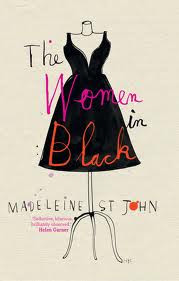
Okay- “naked and you clothed Me”. The Women in Black by Madeleine St John is set in the Ladies Cocktail Dress department of F.G. Goode in Sydney- a thinly disguised David Jones. The main character is Leslie, who has adopted the more sophisticated name ‘Lisa’, and she works as a young casual alongside the older permanent women as one of the “women in black”, changing from their street clothes into the black uniform of F. G. Goode before starting work. She just works the one Christmas/New Year period, then she moves on. I think that St John has captured the early 1960s well here: the wariness and yet curiosity about ‘New Australians’ who seem cultured and exotic with their strange food, coffee and wine; the stifling embarrassment about sexuality even among married couples, and the world of promise opening up with universities that is stretching the expectations of women for their lives. It is an intellectual coming-of-age book too, in a way, as Lisa finds herself feeling embarrassed about her home-made clothes and dipping her toes into adult social life. (My review here).
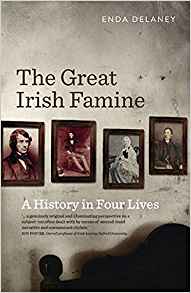
“I was hungry and you gave Me something to eat”. I’ve read several books about famine, but one that stays with me is Hungry: The Great Irish Famine. A History in Four Lives by Enda Delaney. The four lives that Enda Delaney has chosen, because of the limitation of the sources, are not the victims. Instead, they were at the other end of the famine. There is John MacHale, the Catholic Archbishop of Tuam, who at first saw the famine as God’s punishment on his flock for their sins. Over time, he became increasingly critical of the British Government response. There is the radical nationalist John Mitchel, a leading member of the Young Ireland and Irish Confederation “movements, who ended up in Van Diemen’s Land for his seditious activities. There is Charles Trevelyn, the assistant secretary to the Treasury, who has often been depicted as the Main Villain because of the policies implemented by the British Government. Finally, there is Elisabeth Smith, the Scottish-born wife of a Wicklow landlord, whose sympathies for the Irish peasantry became increasingly rigid. The power of this book is seeing these politics of ideology, and the politics of resistance being expressed in the words of individuals, and watching their positions harden as the crisis continued. If you’re looking for ‘getting to know’ these individuals at an emotional or moral level, this is not the book for you. The book does work, however, at the level of personalizing the political. (My review here)
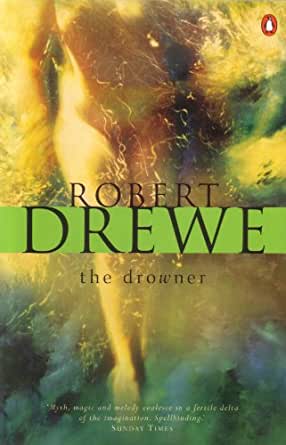
“I was thirsty and you gave Me something to drink.” They were thirsty on the Western Australian goldfields, and C.Y. O’Connor’s ill-fated project was to bring water from Mundarring Dam to Kalgoorlie. Robert Drewe’s book, The Drowner fictionalizes this endeavour, with his main character William Dance employed as a water engineer on O’Connor’s scheme. I enjoyed the book, but found it very disjointed, and I wondered how someone who did not know about O’Connor would make sense of it. No review- it was before I started blogging.
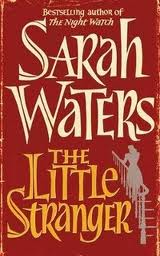
“I was a stranger and you took Me in”. Well, there’s a stranger in Sarah Waters’ The Little Stranger, but I don’t think it’s the sort of stranger Jesus might have been thinking about. Instead, it’s a ghost. It is a gentle, slow tale told by the local doctor, Dr Faraday, who becomes enmeshed in the distress of the local gentry Ayres family, whose house harbours a ghost. Their home, Hundreds Hall is falling into disrepair with tangled gardens, vermin, leaking roofs and windows and the family- the vague, aristocratic Mrs Ayres, her son Roderick who has returned from the war with a leg injury and ‘nerves’, and the practical, plain daughter Caroline- cling futilely to a vanishing world of servants, farm labourers and estates. (My review here).
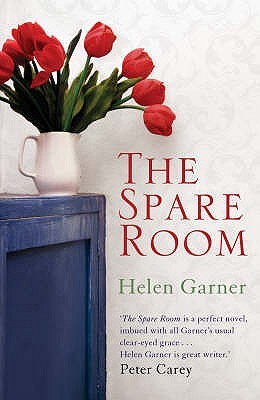
“I was sick and you looked after Me”. In Helen Garner’s brutally honest The Spare Room Helen offers to look after her friend Nicola who is coming to Melbourne to seek an alternative therapy for advanced cancer. Nicola’s death is not really the core of this story: instead the drama of the book is Helen’s rage and inadequacy in the face the demands of friendship, and her frustration at her friend’s relentless faith in a “cure” that Helen feels is quackery. (My review here).
“I was in prison and you visited Me”. Well, not visited but certainly wrote letters. The full title of this book is Just Send Me Word: A True Story of Love and Survival in the Gulag. In this book historian Orlando Figes brings his deep knowledge of Russian history and society to contextualize the archive of almost 1300 letters that were written between Lev Mischenko and his partner Svetlana Ivanova while he was imprisoned in the gulag, working in the wood-combine generator that powered the timber works in the frozen forests at Pechora Labour camp. But the real, real strength of this book is Lev and Sveta’s story, and the beautiful, nuanced, tender letters that they shared over this time. They met at university and went out together for three years. When war was declared, Lev rushed to enlist but was soon taken captive by the Germans. He was able to speak German, and as a prisoner-of-war, used his linguistic skills to translate camp orders. When the prisoner-of-war camp was liberated, he was arrested almost immediately and falsely accused as a ‘fascist collaborator’. The trial was a farce, he was tricked into a confession, and sentenced to ten years at Pechora. For the first few years, he struggled silently to survive in the cold and deprivation. It was only then that he dared to write to an aunt and asked, almost in passing, whether Svetlana and her family had survived the war. Svetlana, who had thought that he was missing in action, wrote immediately on learning that he was still alive. And so the correspondence began. My review here.
Well- I’ve travelled quite a distance from Jamie Oliver. Who would have thought?
In the British Film Festival advertisement, they spruiked this as an “atmospheric tale of infinite creativity”. That’s for sure, except that all the creativity was on the screen writer’s side. All films play with the truth, but this was a complete conflation of author and work. Humph!
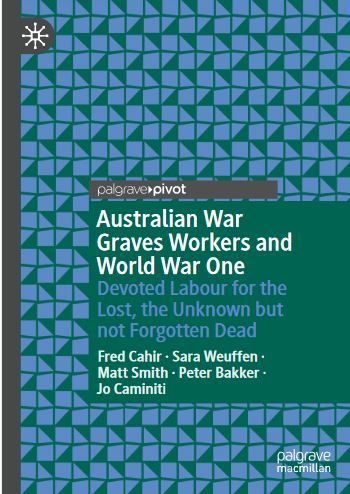
The subtitle of this book is ” Devoted Labour for the Lost, the Unknown but Not Forgotten Dead”, which gives an indication of the stance towards war graves workers adopted in this book, several chapters of which were contributed by descendants. Published in 2019, it moves into the commemorative space left open after all the WWI centenary celebrations by looking at the physical and emotional work that followed the suspension of fighting, most particularly through the men who were attached to the Australian Graves Detachment.
The book opens with two very good context-setting chapters that explained the bureaucratic structure of the grave-worker organizations, both in relation to the British Army and to the AIF. It describes what was involved in grave work: opening the grave, checking for ID disks, paybooks and other identifying objects, wrapping the body in a blanket, sewing it up and marking it with an identifying tag. Bodies were collected and buried in designated cemeteries, some of which were later consolidated into larger cemeteries. Photographs of the relocated graves were sent to next-of-kin in Australia. The Australian Graves Detachment, comprising over 1000 men, was created in March 1919 when there was still a large number of soldiers waiting repatriation back home. It ceased to exist on 20 August 1919, when demobilization was largely complete, at which time its functions devolved to the much smaller Australian Graves Service.
The book then moves to biographical sketches of different men involved in the Australian Graves Detachment. These chapters start off with descriptions of the men’s military experiences (with the exception of Private William McBeath, who arrived too late to see military action, although he did undertake training in England in case the Armistice did not hold). Their military involvement explains the reality of war experience that they brought to their war graves tasks, both in terms of personal bravery but also in terms of the camaraderie of being ‘one of the men’. This camaraderie influenced -for good or bad- their leadership style with the AGD. This is seen in the case of Major John Eldred Mott, featured in Chapter 3, who as an ex-German POW, had displayed great ingenuity in escaping prison camp, and was seen as a largely sympathetic man-of-the-men. His leadership style was more consistent with management of civilian workers than a hard-and-fast military approach, but this was of course one of the ambiguities of the AGD. Drawn from a volunteer army, they were no longer operating under the rules of war.
Frank Cahill (also known as ‘Carr’), in Chapter 4, was one of the 1914 men who were promised an early return to Australia under the ‘first in, first out’ demobilization strategy, but he decided to stay on and volunteer with the photographic section, a division of the AGD that came in for criticism for the number and quality of their images. He returned to Australian in 1921 but could receive only a 25% pension for an injury to his wrist. He committed suicide in 1928, and his widow had to struggle to have her husband’s death acknowledged as “materially hastened by war service”.
In Chapter 5 Peter Bakker and Fred Cahir identify four indigenous soldiers who worked with the ADG: Edward “Darkie” Smith from Queensland, William Charles Miller from Tasmania, George William Mitchell from Queensland and John Ogilvie from Western Australia. Smith continued to work with the Australian Graves Services and was Australia’s longest serving indigenous WWI soldier, clocking up six years, two months and five days of continuous service. However, it is notable that the only court-martial within the AGD was the stabbing of Private Ogilvie- a manifestation of racism within the group?
Chapter 6 looks at Captain Allen Charles Waters Kingston, who was caught up in the Court of Inquiry in March and April 1920 which was critical of Kingston’s command of the AGD in Villers-Brettoneux. He was suspended as a result of the Court of Inquiry, and returned home on the same ship as two of his most trenchant critics.
Chapter 7 is probably the most personal of the biographical chapters, as it incorporates diaries and letters from the author’s grandfather. Private William Frampton McBeath enlisted in June 1918 after completing his carriage-making apprenticeship, and the war was over by the time he arrived. He was drafted into the Graves Detachment, where he kept a brief diary- one of the few kept by graves workers. He arrived back in Australia on 13 November 1919, along with 1300 other troops.
The biographical approach taken by this book, particularly when the chapters were written by descendants, leads to a fairly terse dismissal of van Velzen’s “tabloid” book Missing in Action which is more critical of the AGD and its successor, the Australian Graves Services. However, there is no getting around the fact that two inquiries were held into the graves services division, which highlights not only the troubles and conflicts within the units themselves, but the political sensitivities over graves work back here in Australia, something that Bart Ziino’s A Distant Grief captures well. The individual stories told in this book underline the physical and psychological difficulty that soldiers- not just graves workers- had when re-adjusting to life in Australia, as highlighted in Marina Larsson’s Shattered Anzacs.
The book closes by enumerating the enormity of the task undertaken by the graves workers. Between February and August 1919 nearly 70,000 Allied (not just Australian) soldiers were located, exhumed and reburied by the AGD. One hundred years on, the stark beauty of Commonwealth War Graves Cemeteries have washed clean the sheer drudgery and horror of their creation.
My rating: 7/10
Sourced from: SLV as an e-book. Read in preparation for a talk on George Lort Phillips at the Heidelberg Historical Society.

 The Resident Judge of Port Phillip