Monthly Archives: December 2022

Movie: The Lost King

The University of Leicester is not at all pleased at how they were depicted in this film, which tells the story of the discovery of the grave of Richard III in a car park. Using maps and original sources, amateur historian Philippa Langley becomes convinced that Richard’s body was buried in what had been Greyfriars Priory. She is confirmed in her ‘feeling’ that the body is there by frequent apparitions of Richard III himself. After joining the Richard III Society, she approaches the archaeology department at University of Leicester who initially dismiss her claims, only to pick them up again when it seems that their university funding is going to be cut. When a body is not found immediately, her funders drop out and she turns to crowdsourcing instead among Richard III aficionados world wide. However, the University of Leicester is quick to take credit when a body is found that turns out to be Richard III. The dispute between Langley and the University of Leicester continues.

It must be hard to tell a story when right from the start everyone knows that the body was found and that it was Richard III. Lee Ingleby plays a suitably greasy university administrator and bean-counter, and Sally Hawkins plays a vulnerable but driven young woman. But certainly the University has been damaged by this film: I found myself raising an eyebrow at the recent news of the discovery of a Roman mosaic in Rutland- something that I would never have taken notice of previously. But I found my credulity stretched by the apparitions scenes and the baddies seemed over-written.

My rating: 3 starts

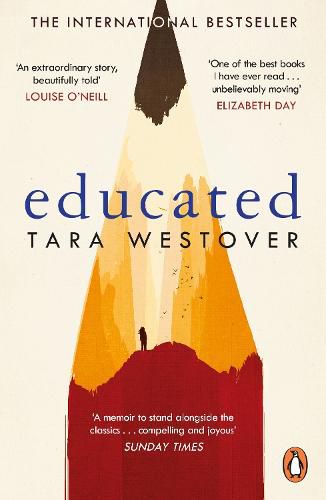
‘Educated’ by Tara Westover

2018, 400 pages

There was a lot of hype about this book back in 2018, when it was released. Barak Obama nominated it as one of his five favourite books over summer that year, Bill Gates put it on his holiday reading list. It was named as one of the best books of the year by The Washington Post, O, The Oprah Magazine, Time, NPR, Good Morning America, The San Francisco Chronicle, and The Guardian. And I think that here in Australia, I recommended that my library buy it (which it probably would have done in any case) and then I took four years to actually read it- by which time I’d bought it on special on my Kobo instead.

I can see why it received such acclaim in the United States. I can see the appeal of a story of a young Mormon girl from Idaho – could anything be more American than a Mormon?- who overcame her father’s paranoid survivalist beliefs about government and her rudimentary home-school education to attend elite universities in both United Kingdom and America and to achieve her PhD. The book has that rather furtive appeal of trauma narratives: a genre and publishing phenomena that is starting to devour itself by becoming rather too commonplace.

Tara is the youngest of seven children to Gene and Faye Westover. The family’s financial success rested very much on her mother’s work as a midwife and herbalist/healer, while Gene enlisted his children in his metal recovery business which sprawled over their farm property. There was an extended but estranged family, because both grandmothers disapproved of Gene and his anti-government stance. This was a threadbare upbringing, isolated even from other congregants in their Mormon church, whom Tara’s father thought too wishy-washy. The children received little encouragement to undertake their home schooling and they were expected to labour in a dangerous work environment alongside their father. At various stages, members of the family including her brother and father received horrendous injuries that were treated within the home. Her older brother Shawn is a menacing presence throughout the book, physically and emotionally, and I would not have been surprised had it been sexually as well (although she does not say this). It was another older brother, Tyler, who encouraged her to follow his example in leaving home to go to college. This involved essentially a period of self-education from textbooks, and she achieved entry to Brigham Young University. Although a Mormon university, here she was challenged by living with Mormon girls whose upbringing had been much freer than hers had been. She did well, and eventually achieved a scholarship to Cambridge University in UK where she received encouragement from historian Professor Jonathan Steinberg and Professor David Runciman. It is quite amazing to think of someone coming to undergraduate-level material with absolutely no pre-exposure to academic conventions and ‘received’ wisdom, context or media exposure. I guess that there would be a purity there, but also a type of shallowness as well- to say nothing of the sheer hard work it must have taken to cover what other students would have absorbed almost by osmosis. She completed her PhD and seems to have returned to the United States.

The book is written in a fairly simple, unadorned style and at first I found myself wondering whether she had the writing skills to complete a PhD. But once she started writing about her subject matter, the writing kicked up several notches in complexity and abstraction- as you would hope it would, when writing about one’s academic field. The final part of the book was devoted to the family fall-out both from her pursuit of an academic career, and after a confrontation with her parents over Shaun’s abuse of her and her other sister. Members of the family distanced themselves from her, and she learns that although her mother may appear sympathetic, her loyalties will always lie with her husband. It’s almost a love letter to her family, shot through with grief.

I hope that Tara Westover becomes known for more than just this memoir. Google Scholar suggests that she is a topic for academic consideration, rather than an academic contributor herself. She is still very young and I wish that she had waited ten years before writing this memoir.

My rating: 8/10

Sourced from: purchased e-book

I hear with my little ear: Podcasts 26-30 November 2022

History Extra: Desk Killers. I’ve reserved Dan Gretton’s book I You We Them, which examines the psychology of individuals who organised and implemented some of the worst crimes against humanity, from the Holocaust to human rights violations in Nigeria. Actually, all the examples that he gave in this podcast were either from the Holocaust or from a study of the culpability of oil corporations in Nigeria in 1993, when Ken Saro-Wiwa was executed on trumped-up charges by the military government to protect the oil concessions. He notes the light sentences of ‘desk killers’ (a German term) who oversee atrocities compared with the low-level guards who carry them out -for example the law professors who drew up the Nuremberg laws who escaped with very light punishments.

Wikimedia

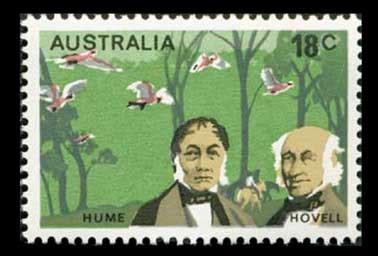
The History Listen (ABC) Hume and Hovell and the Pathfinders. What a pain in the arse William Hovell must have been. Appointed over the young currency-lad Hamilton Hume, he seemed to want nothing more than to turn around and go back home all the time when Hume and Hovell were sent off by Governor Brisbane to chart a route between Sydney and Westernport Bay. I bet the Indigenous groups that helped them along the way came to regret their assistance.

Emperors of Rome Episode XII Tiberius the Gloomiest of Men. Tiberius set himself up over the Capri, where he may or may not have indulged in orgies. He set up Sejanus as his political gate-keeper but the senators resented this as Sejanus was only an equestrian. Tiberius passed strong laws against treason, and Dr Rhiannon Evans likens Rome at this time to East Germany, where neighbours informed on neighbours. When Sejanus had an affair with Livilla (Drusus’ widow) he was accused of treason and summarily executed. When Tiberius died, most people agreed that he was a gloomy character, and he didn’t build much. Episode XIII The Rule of Caligula looks at “Bootikins” as Matt Smith rather endearingly calls him. Caligula’s real name was “Gaius” and he never used the name Caligula (i.e. Little Boots) for himself. He had the best family tree of any of the emperors. He only reigned for 4 years. He was popular at first, spending a lot of money doing everything that Tiberius had not done – but that didn’t last. There is speculation that his cruelty was prompted by a personality change after illness, but the timelines don’t work. Episode XIV The Madness of Caligula. We get most of our information about Caligula from Suetonius, who wrote a biography of him. Caligula broke a number of taboos: he spoke about himself and his sister as gods (thereby breaking the taboo against incest and deification while still alive); he stole statues from Greece; he didn’t respect the senators or elites. He was extravagant, building a bridge direct from his home to the Temple of Jupiter directly over Augustus’ temple. He completely burnt off the residual affection that people may have had towards him on account of being Germanicus’ son.

Start the Week (BBC) Power Plays and Family Dynamics. I hadn’t heard of any of the works discussed in this program, but the topic sounded interesting. The program starts with a quote from Samuel Johnson “if a kingdom be … a great family, a family likewise is a little kingdom, torn with factions and exposed to revolutions.” One guest is A. M. Homes, whose most recent book The Unfolding looks at an American ‘patriot’ maddened by Barak Obama’s election, who collects together a band of like-minded men to spread their (Trumpesque) version of the American dream. Another guest is Nick Hytner who is directing a new production of Ibsen’s John Gabriel Borkman about a disgraced financier while the third guest is historian Simon Sebag Montefiore who has a new book out called The World: A Family History Of Humanity, which looks at world history through the lens of particular families (sounds good, actually). Three very diverse books, and an interesting conversation.

Talking Politics I have just read Tara Westover’s Educated, and in Episode 232 Tara Westover-Educated here she is with David Runciman, who was actually one of her academic mentors. The episode was recorded in March 2020, during the COVID lockdowns and as someone who spent most of her life isolated from ´normal´social life, it made no great change to her life. There is then a replay of an earlier interview that Runciman undertook with his former pupil from February 2018 when her book was just published.

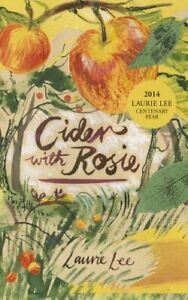
‘Cider with Rosie’ by Laurie Lee

1959, 231 p.

I’m rather appalled at the thought that I first read this book fifty years ago! How could that be? It was another of those books that seemed to lurk on the school library shelves, and I read it as a 15 year old. Segments of it felt very familiar, and I am sure that it was anthologized in various readers at Years 7 and 8 level. It is part of an autobiographical trilogy first published in the late 1950s and it seems to have been in print ever since.

It is an autobiography/memoir of a childhood spent in the Cotswold village of Slad, near Gloucester and it is an elegy for the passing of a simpler, horse-drawn, feudal village past in the years immediately following World War I. We meet Laurie (or Loll) at three years old as he is unceremoniously dumped from the cart that is taking his mother, siblings and half-siblings to a crowded, decrepit cottage on a steep bank above a lake. We learn that his father, an older man, had deserted his second wife – Loll’s mother- leaving her with four step-children and three sons of her own. Money is tight, as his father sends little financial support, and the family scrapes by financially through the networks of the village and through the wages that the older girls bring into the house when they start working.

The chapters are all pretty much self contained vignettes of different aspects of village life. They proceed more or less chronologically as Loll goes to school, joins the other boys in their adventures around the village, becomes interested in girls and as his sisters eventually marry and move away. He speaks of the two ‘Grannies’ of very different temperaments and habits- Granny Trill and Granny Warren – who live in the cottages adjoining theirs, and his uncles and their families, who loomed large in this father-less family.

Probably the most clearly developed character is his mother. After working in service in Big Houses, she returned to help her father run a pub. Tiring of dealing with drunks and her rather feckless father, she answered an advertisement for a housekeeper in the newspaper by a widower with four children. Reader, she married him. She remained in love with him for the rest of her life, even though he deserted her, leaving her with the care of his children from the first marriage. ‘Mother’, as she is always addressed in the narrative, was a rather fey, disorganized, extravagant woman: qualities that did not sit well with the poverty in which she and her family were living. In many ways, Loll was brought up just as much by his older half-sisters as by his Mother. The large family crammed into the kitchen, which was the heart of the house; food was sparse and the house-keeping was minimal.

Although steeped in nostalgia for a simpler time, there is an edge to the hierarchical, closed nature of village life. The church pews are arranged according to wealth and standing, there is poverty and hunger, lives are constrained by the village boundaries. In an essentially feudal and pre-bureaucratic system, crime is dealt with by the villagers themselves, with all the possible injustice that could entail.

Our village was no pagan paradise, neither were we conscious of showing tolerance. It was just the way of it. We certainly committed our share of statutory crime. Manslaughter, arson, robbery, rape cropped up regularly throughout the years. Quiet incest flourished where the roads were bad; some found their comfort in beasts; and there were the usual friendships between men and boys who walked through the fields like lovers. Drink, animality, and rustic boredom were responsible for most. The village neither approved nor disapproved, but neither did it complain to authority. Sometimes our sinners were given hell, taunted and pilloried, but their crimes were absorbed in local scene and their punishment confined to the parish.

p. 206

The title refers to his first sexual experience – although he is not explicit about how sexual it actually was- with Rosie, who took him under the wagon where they drank fermented cider. In a way, it’s a misleading title, because Rosie is a minor character who only appears in the second last chapter. She was one step on from some fairly innocuous ‘doctor and patient’ sex-play as an 11 or 12 year old with a younger girl. Rather more disturbing was his description of the Brith Wood rape “if it could be said to have occurred”. Half a dozen boys planned to attack sixteen year old Lizzy Berkeley, a deeply religious girl who they designated as “daft in the ‘head”. They decided to waylay her on her journey home from church and

We thought of little else but that coming encounter; of mad Lizzy and her stumpy, accessible body which we should all of us somehow know.

p.212

It seemed that Lizzy wasn’t going to arrive, but at last she did. The boys barred her path, one laid a hand on her shoulder and she hit in twice, fell down, got up, looked round “and trotted away through the trees”. Although the boys felt guilty there were no consequences. This was, he claims, because early sex-games were “formal exercises”. They were “readily forgotten; very little in the village was either secret or shocking, we merely repeated ourselves.” (p 205) It was just part of this nostalgia-tinged, gentler world, although I doubt that Lizzy would have seen it that way. The ease and chuckling tone of this chapter unnerved me, and I can’t imagine that the book, with this chapter intact, would find its way onto a school library shelf today.

Although I can’t really imagine that a 15 year old would be particularly attracted to this book anyway. A series of vignettes from a lost past might appeal to adults, or those interested in social history, but it seems particularly quaint. The writing is beautiful -indeed, some paragraphs read like poetry- but the sentence structure is formal and rather arcane, evoking the voice of an elderly British actor at the National Theatre or on the BBC. I’m not a 15 year old anymore (far from it), and I don’t need solid plots and excitement. I was happy – until that problematic ‘First bite of the apple’ chapter- to steep myself in a quiet, sepia-toned elegy that captured a lost, simpler, ordered time with beautiful language and the perspective of distance.

My rating: 8/10

Sourced from: CAE bookgroups.

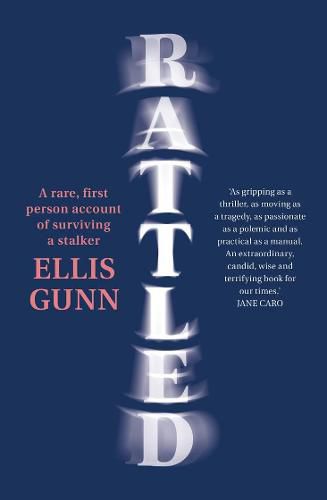
‘Rattled’ by Ellis Gunn

2022, 320 p.

I readily admit to being wary of books -especially memoirs- that deal with “current issues”, because they tend to be written very much for the zeitgeist. However, I was attracted to this book not only by the succinct, apposite title, but also because one of my colleagues was stalked a number of years ago. I don’t know if an employer would take the same approach today, but all the staff on our floor of a large university department, were aware of the possible incursion of the stalker and security was stepped up accordingly, for a long period of time. I don’t remember how my colleague’s story ends, but that’s part of the chilling intrusion of the stalker: nobody is never really sure whether it’s over for good or just in abeyance.

I glanced at the bio of the writer- Ellis Gunn- and saw that she was a poet from Scotland, with work anthologized in “100 Favourite Scottish Poems” and “Modern Scottish Women Poets”. Expecting, then, a book set in Scotland, I was a bit startled when she spoke of the rainbow lorikeets and noisy miners in the park, until I realized that she has emigrated to Australia and the book is set here. She met “The Man” at an auction, in just a fleeting interaction that she thought nothing of, until she kept running into him- or rather, he into her. He began contacting her online (although she had not given him her details) and in the tense conversations she had with him – too polite to tell him to p*** off- he let her know that he knew where she lived. She received a sympathetic response from the police, but soon realized that stalking in itself was not ‘enough’ for the police to act, and any complaints or charges from interstate were invisible to the South Australian police.

The book has 18 chapters, each headed with titles like “Back to the beginning: the first time I met The Man” or “Things I do to stay sane”. There is a regular format to each chapter, each denoted by a different font. She starts each chapter with the story of the stalking, or research that she has conducted into stalking; she then moves to her earlier memories of previous stalking, inappropriate sexual violence, rape, or violence; and then finished with an italicized list of “becauses”, similar to a rap poem. The book is firmly within the “me too” genre, and I found myself mentally thinking “me too” with several scenarios. I’m sure that most (nearly all?) women would recognize themselves here, embarrassed and shamed but too polite, intimidated or uncertain to speak up. But it’s more than just one woman’s story which, in less assured hands, could come over as a form of ‘trauma porn’. Instead it is a research report, a guide for women who are being stalked, a polemic about how things have to change, and an exemplar that demonstrates how her cognitive based therapy helps her to quell her panic by giving her clear steps to follow.

However, I found myself stunned by a single sentence near the end where she discussed health responses to the stress of stalking.

As I came to the end of writing this book, I received a further devastating diagnosis: stage 4 cancer, a rare and aggressive kind that is likely to kill me in the next couple of years

p.211

This statement seemed to come from nowhere, and was just put out there, and not picked up at all. Perhaps she felt she had to include it, in fidelity to the memoir genre that she has used to structure her book. Nonetheless, it was startling. I had to go back once I had finished the book, to see whether I really had read it, or just imagined it.

The stalking does have a resolution in this book, seemingly unrelated to this cancer diagnosis. And perhaps the wider resolution for all of us comes in a conversation with her young son where you think – you hope- that perhaps things might change, and that the sense of entitlement and self-importance that drives men to stalk, and the hesitation and politeness that keeps women silent might, just might, come to an end.

My rating: 7

Sourced from: Yarra Plenty Regional Library

I hear with my little ear: Podcasts 17-25 November 2022

Travels Through Time 1967 The Premonitions Bureau doesn’t go back in time quite so far this episode- only to 1967. The Premonitions Bureau was established at the London Evening Standard Newspaper by psychiatrist and academic John Barker who invited people to call in with their premonitions of disaster, and then matched the predictions against actual events. The experiment only lasted about 18 months. The three days in 1967 selected by Journalist Sam Night, author of The Premonitions Bureau were January 4, when the racing driver Donald Campbell correctly predicted his death in the Bluebird the previous night while playing cards; April 21 when John Barker received a prediction that he was in danger and November 5 when a train accident at Hither Green Railway Station confirmed the prediction of two of the experiment’s most accurate prognosticators, Alan Hencher and Kathleen Middleton. Unfortunately John Barker’s files were lost, and this is the object that Sam Night would most like to bring back to the current day.

Fifteen Minute History (which always goes for longer) Episode 135 Connected Histories of Cuba and the United States features Ada Ferrer, Professor of History and Latin American and Caribbean Studies at New York University and author of the Pulitzer-prize winning Cuba: An American History. She began writing her book for an American audience when Obama began opening up transit between Cuba and US. She points out that both Cuba and the US have been invested in each other’s wars and revolutions, with slaveholders having an interest in the outcome of the US Civil War, and the Spanish/US war where Cuba was seen as a possible territory (never a state). The US occupied Cuba between 1899-1902 but kept lifting the bar for the criteria of sufficient ‘self government’ for their troops to leave. The Platt Amendment ensured that the US could intervene at will in Cuban politics. As well as politics, her book has personal stories how these political machinations affected the lives of US and Cuban people.

History Hit recorded while Liz Truss was still holding on and hadn´t yet achieved the status of shortest-lived Prime Minister in British History, in Britain’s Worst Prime Minister Dan Snow asks three historians, Tim Bale, Christine Haddon and Robin Eagles, who they think are the worst. Anthony Eden, Edward Heath and the 3rd Earl of Bute contend for first place, but Pitt the Elder, Lord North and Wellington get a guernsey too.

Emperors of Rome Interlude Pax Romana is a short episode where Dr Rhiannon Evans admits that she is no fan of Augustus, who she thinks is a tyrant. “Pax” doesn’t so much mean ‘peace’ as a contract between victor and vanquished at the end of a war. During the 41 years of Augustus’ reign, he closed the Gates of Janus three times – a sign that Rome was at peace- something that had only happened twice in the previous 700 years of Romes’ history. He instigated the Goddess of Augustan Peace which was very sneaky way of getting around the prohibition of making oneself a God during your lifetime. Episode X The Augustan Succession describes Augustus’ search for a successor, which began almost immediately he came to power – not a bad idea when leaders died young. He had no legitimate son, so he married off his daughter Julia instead to possible successors, and then turned to his grandsons. But everyone seemed to die (how curious) so he turned to his stepsons instead, especially Tiberius, Livia’s son. For a long time, Augustus was hailed as a great peace-bringer but Ronald Syme wrote a very critical biography in the 1930s and since then attitudes towards Augustus have veered between the two. Currently historians (like Dr Evans herself) tend to lean towards Syme, although not to the same extreme extent. Episode XI Tiberius the Reluctant Emperor looks at Augustus’ anointed, Livia’s son Tiberius, who was better known as a good general. He had tough gigs in Hungary and Germany for 22 years until Augustus died, and he performed well. Was he reluctant? Well, he was middle-aged by the time he returned to Rome as emperor after years in self-imposed exile in Rhodes. He was hard to read and he didn’t cater to the people as Augustus had done. He was the first in the Julio-Claudian dynasty that became very tangled as different branches (and not so different) married each other. Germanicus was tipped as the next emperor but died in the East, then Drusus died too (killed by his wife, or is that just propaganda?). In 26BC Tiberius left Rome, which he never really liked, for Capri.

Source: Wikimedia

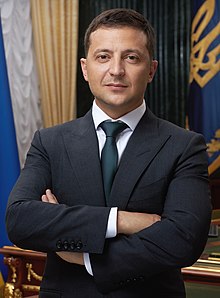
Russia if You’re Listening (ABC) Episode 2: Zelensky’s Big Call: Run Away or Stay and Fight. Putin anticipated that the invasion of Ukraine would take three days, but he wasn’t counting on Volodymyr Zelenskyy. Zelenskyy was almost an accidental president. He had been a comedian on popular and populist shows like ‘Hey Hey It’s Saturday’ or ‘The Footy Show’ (did he really play the piano with his penis? Search YouTube) but the big break came with his three-season comedy ‘Servant of the People’ where he played a teacher who ended up becoming president. Life imitated art but he found by the start of 2022 that people preferred him as a comedian rather than a politician. So Putin would have seen him as a weak target but two factors disrupted Putin’s plan. First, the Russian plan was that 3000 paratroopers would take the airport, in readiness for the landing of18 planeloads of Russian soldiers. But the CIA had warned Zelenskyy (who took some convincing)of the impending invasion and the resulting Ukrainian attack meant that the paratroopers could not hold the airport. The second important factor was Zelenskyy’s determination to stay and fight. Zelenskyy speaks three languages: his first is Russian, then Ukrainian then English. In his videos, recorded on his mobile phone, he swaps between the three, depending on the message and the audience. He has framed himself as a symbol of the state: if he stays, the state stays.

Six Degrees of Separation: from the Snow Child to….

As usual, I haven’t read the starting book that Kate has chosen for the Six Degrees of Separation at her Books Are My Favourite and Best blog. This meme involves Kate choosing the starting book (in this case The Snow Child by Eowin Ivey) and then you associating book titles by whatever obscure link you want: by title, time read, theme….whatever.

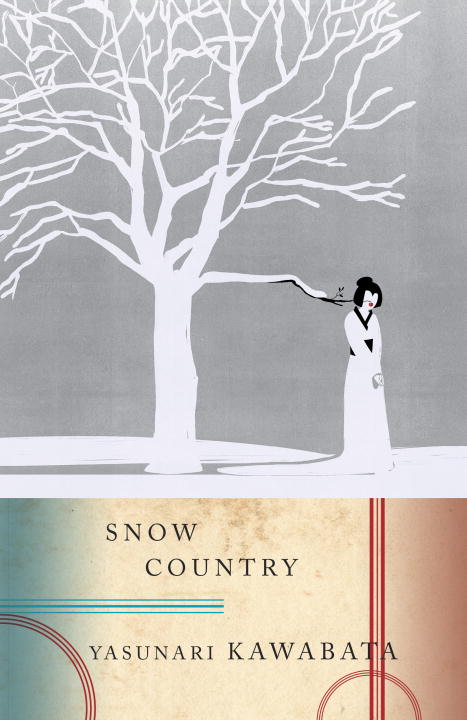
I haven’t read The Snow Child but I have read Yasunari Kawabata’s Snow Country. In it, a disillusioned and cynical writer returns to a hot spring resort in the off-season, where he meets a geisha. She falls in love with him but he never reciprocates: instead he observes her and her decline quite dispassionately. The setting is very evocative with huge snow drifts making the resort seem quite isolated and her frenetic workload,with several parties in one night, contrasts with his ennui and rootlessness.

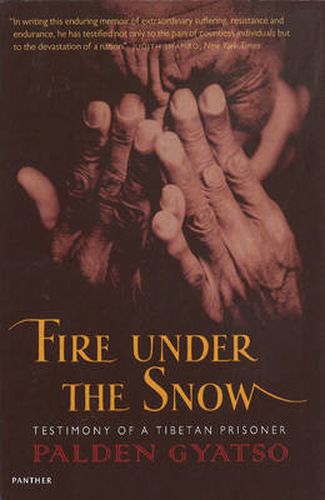
Speaking of snow, there’s also Palden Gyatso’s Fire Under the Snow but the two books are very different. This is the book that aroused my commitment to Amnesty International, as it tells the story of a Tibetan monk who was imprisoned for 33 years by the Chinese authorities. As the son of a landowner, he was particularly targeted and moved from prison to prison, where he was tortured and subjected to many beatings by his cell-mates as a form of institutionalized humiliation. If anything, he became even more radical during his second period of imprisonment and when he was finally released, he became aware of the strength of resistance within Tibet generally. It is gently told, without rancour, and it made me realize the importance for political prisoners to know that people ‘outside’ are aware of their plight and that they will not die without trace.

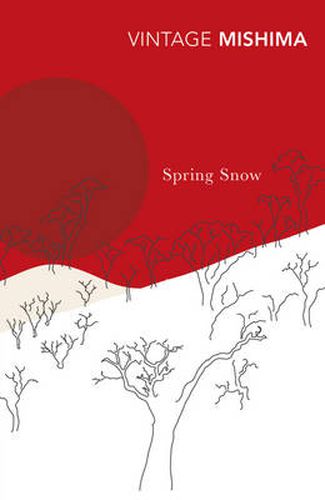
Still more snow and another Japanese writer. Yukio Mishima’s Spring Snow is the first in his Sea of Fertility tetraology. A controversial right wing figure, the author ended up committing suicide after an unsuccessful coup attempt in 1970. I don’t think I knew that when I started reading the book. Set in 1912, the main character Kiyoaki Matsugae’s family is part of the provincial elite which needs to tie itself in with the aristocracy, and as such his family encourages him to develop his gentility through the neighbours, the Ayakuras, who have adopted Western Ways. Kiyoaki is at first dismissive of the flirtations of Satoko, but when she becomes engaged to an Imperial Price, he becomes infatuated and embarks on an affair with her.

Leaving the snow behind, let’s launch into another season -in this case, autumn- with Gabriel Garciá Márquez’s The Autumn of the Patriarch. Actually, I didn’t really enjoy this book, and I found it very difficult to read, made even worse because my e-reader kept crashing as I bought it as part of an omnibus edition of GGM’s works. The story is about an unnamed dictator in an unnamed Caribbean island, who just does not die. Well – he does, ostensibly, in the first chapter where he engages a double to deflect any assassination attempts, and the double dies as a result. But in the succeeding chapters, his death is foreshadowed, but he just doesn’t die. In a decrepit palace that is invaded with creepy-crawlies during the night, the Patriarch wanders from room to room, locking up the house, playing dominoes with other old dictators that he has imprisoned, raping the young women in the women’s quarters until he finally falls asleep on the floor, his arms cradling his head, only to wake up again the next morning and do it all again. You can read my bad-tempered review here.

There’s definitely a killing in Kate Holden’s The Winter Road and the victim certainly does die. This non-fiction book tells the story of the murder of Glen Turner, a ranger employed by the NSW Office of Environment and Heritage by Ian Turnbull, a landholder at Croppa Creek who felt that his rights were being infringed by government regulations against landclearing. The author shuttles between reportage and reflection on a real-life crime which extends beyond a cold dirt road in Croppa Creek to a broader meditation on land, legacy and its meaning not just for Ian Turnbull and Glen Turner, but for both black and white Australians more generally. It’s excellent. Read my review here https://residentjudge.com/2022/04/09/the-winter-road-by-kate-holden/

Now, I must say that the UK is not the first place that I think of when I say the word “heatwave”, although as recent summers have shown us, they are becoming more common that we could ever have imagined. Maggie O’Farrell’s Instructions for a Heatwave is set against the 1976 heatwave that roasted London with sixteen consecutive days over 30 degrees. English houses are not built for heat, and water restrictions were imposed. On a hot July morning in 1976, recently retired Robert Riordan gets up from the breakfast table and announces that he’ll pop out to get the newspaper. He doesn’t come back. His wife of 40 years, Gretta waits a little while, then calls her children. All three children come home to help find their father, trailing their disappointments, anxieties, tensions and resentments behind them. Just as oppressive as the heat was the venom of their family arguments and the burden of secrets and pain that family brings. (My review here https://residentjudge.com/2014/11/28/instructions-for-a-heatwave-by-maggie-ofarrell/)

So my six degrees has crunched around in the snow before launching into a sequence of books related to the different seasons of the year. I’ve been to Japan, Tibet, the Caribbean, outback NSW and London. All without leaving my desk.