Back again for the second day of the Yarra Valley Writers Festival that very presciently selected ‘Resilience’ as the theme. The current lockdown, announced on Thursday night, meant that the organizers had to pivot to the curated Zoom stream which they had fortuitously prepared in advance- that’s resilience for you!
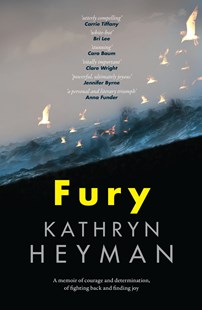
The day started off with Kathryn Heyman’s Fury. I have heard her interviewed before: she has a beautiful speaking voice, and now I see is a really engaging screen presence as well. This book is a memoir of both her childhood, a sexual assault, and her time on a fishing trawler which helped her reclaim her own body and pre-assault identity. She had always been ‘a reader’, reminding me of the SRA reading cards (I loved SRA although I suspect that poorer readers did not). She raises the question of whether there is today a class dimension to unwanted sexual attention as a child. (Interesting question.) She talks about the title (Fury) which she chose, and had to fight for. I don’t know- I think I’m on her British publisher’s side here. The book is not written from a position of anger – she had worked that out of her system through the fishing trawler experience – something that is not suggested from the title. On the other hand, I haven’t read it, so what would I know. Interesting to see the authors who are present through the chat box: Robyn Cadwallader, Eleanor Limprecht and the historian Marguerita Stephens.
The next session ‘Believe It To Be True’ is about belief and faith, but I was about to engage with my own belief and feeble faith with my Unitarian Universalist Fellowship, so I attended the service and will watch this one later. I also missed the session on Motherhood.
I tuned back in for the panel discussion led by Hilary Harper (from Life Matters). I hadn’t read any of the books A Room Called Earth by Madeleine Ryan, Sorrow and Bliss by Meg Mason and My Year of Living Vulnerably by Rick Morton. I know that you’re encouraged to attend sessions at Writers Festivals where you know nothing about the books, but I found this session a bit hard to follow. There was discussion about neurodiversity and labelling, autism and fear of touch and the interesting comment from Meg Mason that she toyed with making one of her main characters imaginary. The session did finish off with some lovely advice about long-term relationships: feeling adored to the point that you wonder about your partner’s sanity.
I’ve heard several interviews with Helen Garner, and each time she has been thoughtful, respectful of the question and you can just see her thoughts whirling as she responds . In her interview with Sean O’Beirne, she starts off with reading entries from her second volume of her diaries One Day I’ll Remember This (something that I wish they would do in each panel, to give a taste of the writing for those who haven’t read the book). In relation to the discipline of writing a diary each day, she quotes the AA aphorism “a fearless and searching moral inventory”. In this volume of her diaries, she writes about the breakup of her relationship with ‘V’ (whom she did not consult before publishing her diary, although she did for many other people) which she saw as a cautionary tale for women. He certainly doesn’t come out of this very well. I could listen to Helen Garner for hours and hours.
And then some bird watching!! I’m a frustrated birdwatcher, and I am determined to turn all my grandchildren into bird nerds too. Both my granddaughters are co-operating, with the older one very aware of rainbow lorikeets and the younger one able to recognize kookaburras. I wish I was walking along that path with Sean Dooley.
The final session featured Kate Mildenhall and Sally Hepworth, speaking about Hepworth’s book The Good Sister. I haven’t read books written by either of these bubbly young women. It seems that it’s yet another book about a neurodiverse character, which fits in with the Ryan/Mason/Morton interview with Hilary Harper. My ukulele strumalong is calling me- think I’ll call it a day.
And so, for me, ends the Yarra Valley Writers Festival. They did such a good in rescuing what could have been a disaster. Perhaps NEXT year.
I realized the other day that I am missing two things in particular under COVID restrictions: writers’ festivals and conferences. I miss the lining up, the bookshop to browse in, the ‘housekeeping’, the stewed coffee, the nametags, the plenaries and the person standing up at the end to say “this is a comment more than a question” before rambling on while everyone shuffles their feet.
So when I saw that the Yarra Valley Writers’ Festival was going to be on in Warburton this weekend, I thought – right, I’ll go on the Saturday! But then on Thursday night the lockdown descended again, and that was the end of that. But not quite, because forced online last year, the YVWF already had a ‘curated’ Zoom stream set up as well as their face-to-face offering. With this fifth lockdown (I can’t believe I’m writing ‘fifth‘) the focus shifted to the online program instead. When I learned that the links would be available for 7 days after, I decided that I was still ‘in’. I wouldn’t watch everything: I really wanted to go for a walk because I haven’t been outside for 2 days, and the thought of sitting staring at a screen all day didn’t fill me with joy.
The morning started with Don Watson, who has released a collection of his writing called Watsonia. I’ve read many of his books over the years, and even though I find his public persona rather dry and prickly, I do enjoy his writing. Either he has mellowed, or I am getting dry and prickly myself, but I enjoyed this wide-ranging session. He displayed his usual diffidence about the act of writing, and his dislike of managerial sludge. He spoke about the influence of Gabriel Garcia Marquez on his history writing, and his regret that Recollections of a Bleeding Heart fractured his relationship with Paul Keating, while rebutting the charges of ‘betrayal’ that were levelled against him. He talked about the press gallery then and now, and the way that Trump has upended the idea that if a politician attacked the interviewer, the political argument was lost. He finished by noting that liberating ideas always have their dark side: the scientific revolution led to Hiroshima; Christianity led to the Inquisition, the dream of a neoliberal society with a strong safety net destroyed the ALP. I realized again how much I enjoy his writing, and I’m tempted to buy the book.
I hadn’t read either of the books for the next session (Kokomo and A Lonely Girl is a Dangerous Thing). It was time for a walk while the rain held off, and by the time I returned the poetry session with Ellen Araluen and Tony Birch was half-way through. I’ll catch it up later.
By the time I finished lunch, the next session was underway. ‘Putting Music into Words: Music Industry Writings, Murmurings and Generation Change’ featured Stuart Coupe, Brian Nankervis and Phillip Frazer (who I had never heard of, but I learn that he was involved with Go-Set, my teenage bible). It was a bit ‘old blokes sitting round yarning’ and name-dropping- although both Stuart Coupe and Brian Nankervis had enviable bookshelves.
I caught half of ‘ Can I Pay for Dinner with my Postcode’ with Dennis Glover (Factory 19), Glyn Davis (On Life’s Lottery) and Rick Morton (On Money). I’ve often seen Rick Morton on ‘The Drum’ and I like his writing in the Saturday Paper. This will be another one to catch up on, because I had to leave to talk with my Spanish-speaking friend Diego for our regular Saturday one-hour 1/2 Spanish 1/2 English conversation.
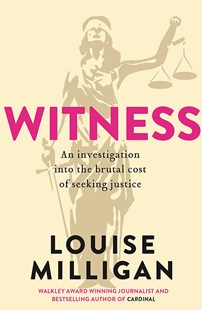
Finally Louise Milligan spoke with Kerrie (as distinct from Kerry) O’Brien about her recent book Witness which explores the effect of our justice system on those who appear as victims and witnesses in our courts. As a Four Corners reporter, she has broken several big stories over recent years about Cardinal George Pell, and more recently against the Attorney-General Christian Porter. She is fearless in her reporting, but I fear for her as reporter.
All in all, a pleasant way to spend a cold, wet, locked-down Saturday. In fact, I enjoyed myself so much that I’ve signed up for tomorrow again, for another day’s viewing that will be punctuated by my Unitarian Universalist Fellowship, a Spanish movie that is only available tomorrow and a ukulele strumalong.
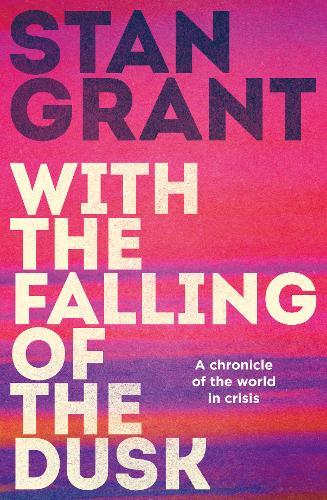
When I saw the title of this book I assumed, incorrectly as it turns out, that it was responding to that ANZAC day exhortation “At the going down of the sun and in the morning, we will remember them”. Well, not only did I get the words wrong, but the title is in fact a quote from Hegel: “The owl of Minerva spreads its wings with the falling of the dusk”. It appears as the very last sentence in this book, and in many ways it encapsulates the preceding 314 pages with its appeal to Hegel and its ultimately pessimistic tone.
As a well-known journalist and – increasingly – public intellectual, Stan Grant has been writing about himself, his indigenous/Irish heritage and themes of identity and Australianness for many years. I was interested to read this book because he steps beyond these themes to reflect on the present historical moment, informed both by his own experience as a foreign correspondent and as an indigenous commentator on identity and history. Subtitled ‘A chronicle of the world in crisis’, I must confess to being more interested in ‘the world’ rather than Stan Grant himself.
Grant’s various postings form the narrative skeleton of this book. The prologue starts on a train to China on Christmas Day, with his wife and children still asleep, at the commencement of his posting to Beijing as CNN’s foreign correspondent. He stares at an old man in a field, and thinks about all the things that this man would have seen during his life: the birth of the People’s Republic, the veneration of Chairman Mao, the Cultural Revolution and now the urbanization of the new generation. He then launches into his Introduction, which reflects on COVID, suggesting that it has centralized government control, revealed the fragility of democracy and brought the looming threat of authoritarianism. (I do not agree with him here). He suggests that we find ourselves at ‘a hinge point in history’ (p. 22), where the United States is staring down China, with democracy challenged by “the blood of identity, poured through the strainer of history” (p. 29) and COVID overlaying “this mix of great power rivalry, fear of war, rising authoritarianism, retreating democracy, political populism, nationalism, tribalism and toxic weaponized identity” (p. 31).
Finally, at p 37, he starts the book proper, although his opening chapter ‘The End of History’ continues with this scene-setting introduction, drawing particularly on Hegel’s philosophy of history. He is rather fond of ‘hinge points’ and ‘turning points’, and after acknowledging that ‘received wisdom’ sees 1989 as a turning point, he nominates instead 1979. Why 1979? Because the Clash released ‘London Calling’, Margaret Thatcher led the Conservatives to power and the Red Army invaded Afghanistan. Not, I feel, a strong defence of his choice of 1979, but he does return to the year 1979 a number of times during the book. Chapter 2 ‘The Return of History’ is the start of his own recounting of his life as a foreign correspondent, where he talks about his employment by CNN and deployment to Hong Kong as the first step of this new career.
In the chapters that follow, he gives a good overview of recent Chinese history, interwoven with his own biography. (Grant currently hosts a weekly program China Tonight on the ABC). He devotes several chapters to China: its history, Mao, the rise of Xi Jinping, and the rise of a China determined to reclaim its place after a century of humiliation. He then moves to other countries as his overseas postings lead him to North Korea, to Pakistan, Afghanistan. He feels the pull of identification with the people he meets through his own indigenous identity:
I was not born of the West, but the West was certainly born in me. By the time I was born, Australia was opening up for my people. I was always acutely aware that I was a bridge between my parents’ lives and mine. They had been locked out, segregated, denied the West’s greatest promise: progress. Change was long and hard, and we still walk that road. My people- Aboriginal people – are the most impoverished and imprisoned in Australia (p.81)…
The things I have seen weigh heavily on my soul. It isn’t just the violence and the misery that I reported on, but the stories of these people, which connected deeply with my own. When I looked into the eyes of a child or a parent in a refugee camp, I saw the eyes of my own family. Reporting the world was my way of trying to understand myself. Like the people of Afghanistan, Pakistan, Iraq or China, I had been shaped by history. My family’s story, too, was one of invasion, occupation, colonisation and oppression. We had been left on the margins, excluded, impoverished and imprisoned. I knew how easy it was for small peoples everywhere to feel the humiliation of history, to feel angry and grow bitter at some still-open wound, and to hate the people you believe inflicted it
p.219
After travelling through these Asian and Middle Eastern countries, he closes the book by turning to America, and the flabby impotence of liberalism, “a timid faith, a tepid, bloodless idea but one with which white people have ruled the world.” (p. 266) He despises Trump, but is equally damning of Obama and Clinton. He sees Biden as part of the same problem of meritocracy, entitlement and inequality. It’s a bleak vision
We are all on the highway of despair. As for the idea of truth, there is debate now about what that even means. Democracy itself has broken with liberalism, hijacked by demagogues who use it as a cover for tyranny. The champions of liberal democracy…now confront the prospect that their great faith itself will not outlast history.
p.313
I was drawn to read this book after hearing Grant give the Manning Clark lecture, which you can hear on Big Ideas. I now realize that much of that lecture was drawn verbatim from this book. I had thought that Grant had laced his lecturer so heavily with references to histories and other secondary sources because it was the Manning Clark lecture (Manning Clark was, after all, the Grand Old Man of Australian History). But I now realize that the whole book is like this, combining personal reminiscence with analysis bolted together with quotes from numerous sources. I found myself frustrated by this frequent recourse to the juicy quote, without the footnotes needed to check it further, and I found myself wondering, rather unkindly, why he felt that he needed to cloak his own work with so many words and works of other people. The book sorely lacks an index, and I was surprised that it was marred by so many small proof-reading errors. If you have seen or heard Stan Grant, you will know that he speaks in the cadences of the prophet or the preacher, and yet in several places his prose takes on the awkward, somewhat obsequious ‘well-done-that-fellow’-tone that you find in military histories and the letters inserted in Christmas cards:
I worked closely with an Iranian-American cameraman, Farhad Shadravan, who was the most talented camera operator I had ever worked with; he also became one of the closest friends I have in the world. His family is my family, and we are bonded in ways that can never be broken.
p. 216
The final chapters of the book look at current events. He is not the first commentator to parallel the 1930s with current events:
What happened then, and how can we learn from that today? I can break it down to four things: hubris, history, resentment and identity. Each feeds the other: the hubris of victory and a faith in moral or political universalism inflicts humiliation that breeds anger and resentment – a victim looking for someone to blame- and this hardens into an identity of ‘us versus them’
p.291
He may speak in the tones of the preacher, but there is no redemption in his final pages. Instead, he leaves us in the gloom of the dusk, and I could find little of the “capacity for negotiation, forgiveness and hope” mentioned in the blurb on the back cover.
I also wanted to read this book as part of my contribution to Lisa’s Indigenous Literature Week that has now finished on the ANZLitlovers page. Stan Grant is probably one of the best-known indigenous commentators in Australia’s public life today. His politics do not fit into an easy right/left category, and I often feel uncomfortable with his opinions. I wanted to read this book precisely because Grant’s questioning of identity and history are played out on a broader canvas than just Australia. But if the theme of NAIDOC this year was ‘Heal Country’, then there’s little healing, comfort or hope on offer here.
Lectures in History(C-span) Prof. Alan Kraut starts his lecture The 1920s American South talking about Southern progressives- something that I had never heard of – in relation to child labour laws, and pointing out that Woodrow Wilson, who was generally acknowledged for his progressive ideas, was born in the South. He points out that Wilson made sure during WWI that some of the economic benefits flowed to the South. With the flight of African-Americans to the north, mills were constructed that kept the wages of their white workers low (so that they could compete with cheap Asian labour) but were supplemented by paternalistic side-benefits that kept workers poor and ‘stuck’. Innovations supported Southern manufacturing (at least at first) with the tobacco industry inventing cigarettes and marketing them to ‘flappers’ and modern women, and the creation of Coca-Cola. Government policies extended protection to Southern industries because the Southern Democrats, who kept getting elected, achieved seniority in congress committees and could push the interests of the south. It was a different story for African-Americans. At first the South was happy to see them move north until monied interests realized that they were losing a cheap labour-force. There was the second rise of the Ku Klux Klan, and its link to the ‘Birth of a Nation’ movie. However, as far as white society was concerned, before the Crash that presaged the Depression, the South was looking forward. I hadn’t heard such a benign argument towards the South before, although I was struck by how clearly Kraut had to distinguish between white and black conditions.
Big Ideas (ABC) Stan Grant presented the 2021 Manning Clark lecture An all historical fever: how history may yet be the death of us on 17th June. It’s a beautifully written and presented lecture, although it does have a little too much of the pulpit in its delivery for my liking. He makes an important point about the use of history as the basis for popularism and hyper-national politics, and spends quite a bit of time on China and Xi Jingping. He posits the idea of consciously deciding to forget history – an interesting idea. I think I might look out for his new book, where he talks about what he has learned from his foreign assignments.
The Real Story (BBC) I’ve often wondered how Palestinians feel about their government when Israel responds with such force against them. ‘Palestinians turn against the leadership’ features three Palestinian commentators, DanaEl Kurd – Palestinian academic; author of ‘Polarized and Demobilized: Legacies of Authoritarianism in Palestine’; Nour Odeh – Palestinian politician and former journalist and Mariam Barghouti – Palestinian writer based in Ramallah, in the West Bank. None of them have any great love for either Abbas or Fatah, and are angered by endemic corruption and frustrated by the recent cancellation of elections which might bring change. What a mess.
2020, 139 p. Translated from the French by Sam Taylor
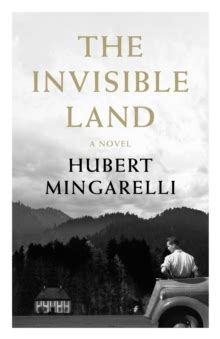
This book felt so similar to another of Mingarelli’s books that I had read, Four Soldiers(see my review here) that I had to go back to check to see if it was a sequel, or whether indeed I was inadvertently re-reading a book I had read earlier. But no, this is a different book, dealing with soldiers from a different country, who have fought in a different war. The sameness of Mingarelli’s probing of the effects of war on the men who fight is, in itself, a commentary on the universality and tragedy of war.
Once again, this is only a small book of 139 pages. It is set in the days of July 1945 in Germany, after the fighting has stopped. We know nothing of the war that the unnamed narrator, a British soldier, has had. But now, after being present after the liberation of a Nazi labour camp, he decides that he wants to photograph German families outside their homes. He approaches his colonel, who, like him is haunted by the sights he saw in the camp. When he requests a car and a driver, in order to take his photos, the colonel asks him why. He cannot answer. When a young driver, O’Leary, is assigned to him, he asks him as well.
I hesitated, and said: ‘My work, O’Leary. I’m going to take photographs’.
p.28
These are not benign photographs. The narrator and O’Leary drive into the countryside, not really sure of where they are going, soldiers from the victor’s side travelling through what had been, until a few weeks earlier, enemy territory. Often they demand food, as well as the photographs, and many of the photographs are taken at gunpoint. I really can’t imagine that these would be ‘happy snaps’. I’m sure that the subjects were resentful, hateful, frightened and bemused. At one house, the narrator demands that a new husband wake his wife on the morning after their wedding, so that he can take their photograph. This is not art: it is a power relationship.
I don’t think that our narrator knows why he wants to take these photographs, and neither does O’Leary. He is a young soldier, originally with the Signals Corps, who arrived to fight just as the war finished. He has his secrets too, but is unwilling to divulge them with the narrator. There is a dreamlike quality to their journey, but it’s more like waking from a nightmare. Neither man pushes the other for any explanation, and so we as readers are none the wiser either. I’m not quite sure that I took the meaning from the ending, but it works well enough for me.
I read from the back cover that Mingarelli died during 2020. Apparently he has written numerous novels, but he is best known in English for this collection of small novels comprising A Meal in Winter (longlisted for the Booker in 2019), Four Soldiers and now this one. It’s interesting that the front cover of each identifies it as ‘A Novel’, despite their short length, and I wonder what the effect would be on the reader to have them bound within the one volume. With two set in Germany and one in Russia, amongst German, Russian and now English soldiers each book explores the question of what war does to a soldier when the immediate rush of adrenaline subsides.
I’ve joined up for the short films presented by Instituto Cervantes during July for their LGBTQI short film festival.
‘Después también’ is short indeed at only 25 minutes. A young boy, Edu, learns that he has been exposed to HIV by a gay ex-lover and he now has to tell his new girlfriend. “I have something to tell you” he says. And then it ends. What did she say? Did they stay together? I guess I’ll never know. Unfortunately the trailer doesn’t have subtitles.
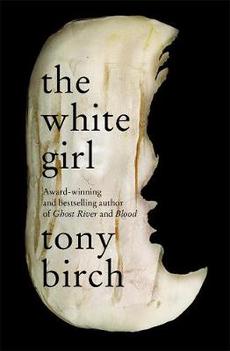
Love and fear. Those are the emotions that permeate this novel by Koorie writer Tony Birch, each heightened by the other.
Set in 1960s rural Australia, prior to the 1967 referendum, Odette Brown is bringing up her granddaughter Sissy after Odette’s own daughter Lila ran away, leaving the year-old baby with her grandmother. Lila had never divulged who the white father was, and Sissy, now 13 years old, has no memory of her mother. All that Odette has of her daughter is a few hastily written letters from Lila from years earlier, saying that she has a job in a restaurant in the city. Odette and Sissy live in a small, rudimentary house in Quarrytown, an abandoned mining camp where Aboriginal men from the mission had lived with their families while they worked the nearby quarry, after the mission was closed. Quarrytown is on the outskirts of Deane, itself a dying town, a place of dirt roads and junk-yards, peopled by broken men (there do not seem to be any white women) whose employment prospects plummeted once the mine closed.
Odette and Sissy lie low. The local policeman, Bill Shea, grew up in Deane himself, and he doesn’t want to stir up trouble curbing the troublemakers in town, most particularly the Kane boys, themselves brutalized by their father. Shea’s lazy, alcohol-infused passivity does not protect Odette and Sissy, but it doesn’t threaten them either. This changes when Shea is replaced by a new policeman, Sergeant Lowe who, imbued with his authority as ‘local protector of aborigines’, is determined to clean the place up and ‘sort out’ the problem of half-caste children. A blackboard in his office records the living arrangements and conditions of every Aboriginal family in Deane, with Sissy the only child unaccounted for. When Odette falls ill, she realizes that she needs to locate Lila to care for her daughter, in case she can no longer do so herself. Odette applies for a permit to travel to the city, which is withheld by Sergeant Lowe but provided by Bill Shea, and grandmother and granddaughter take the train to the city, pretending to be an Aboriginal ‘auntie’ escorting a young white girl.
One of the many things that rings true in this book is the network of connections between Odette and Sissy and the aboriginal people they meet – often overlooked and insignificant – who co-exist quietly in the white world, keeping their heads down. They recognize each other instantly. One of the most affecting parts of the book is when Wanda, the receptionist in the Temperance Hotel in which they are staying, sees through their ruse and tells Odette of her own life as one of the Stolen Generation.
‘Can I have a hug?’ she asked, in a tone so hushed Odette could barely hear her.
Odette smiled. ‘Yes, Bub. Yes’.
The women embraced. Wanda savoured the scent of Odette’s hair, the touch of her skin and the warmth and strength of the older woman’s body against her own. She listened for Odette’s breathing and the rhythm of the older woman’s heartbeat. It was the first time Wanda had felt the touch of an Aboriginal woman since the day she had been taken away from her own mother
p.139
Another Aboriginal man, Jack Haines, is hiding in plain sight too but this time protected by the Exemption Certificate he carries. They meet on the train journey down to the city, and at first Odette recoils from Jack’s decision to eschew his family links in order to escape the legislation that both she and Sissy are fleeing. How odd- I only just became aware of these Exemption Certificates recently in Black, White and Exempt, and here they are again, just as fraught with perceptions of betrayal and compromise as I thought they might be.
This is a simply told story of love, that hums with the tension of fear. Fear of ‘the welfare’, fear of the police, fear of the Kane brothers- all of these things keep Odette’s eyes down. Sergeant Lowe is like Inspector Javert in Les Miserables in his dogged determination to pursue Sissy, but his pettiness and bureaucratic paternalism is no exaggeration. Yes- “the torment of our powerlessness”, as the Uluru Statement puts it. But just as importantly, there is love: the intimate, all encompassing love of a grandmother for her granddaughter and her grief for her own daughter. There is the network of kin that stretches across town and country, ruptured by government policies that Sergeant Lowe relishes, but instantly recognizable in a look, a face, a name.
Birch tells his story straight, with little commentary. His descriptions of the fictional Quarrytown and Deane evoke visions of those outback towns that can be found right around the coast, and the menace of Sergeant Lowe and the Kane boys is palpable. Dialogue carries much of the action, and Birch has a good ear for it. He captures ‘outback gothic’ well, but there is a deeply human aspect to it. He brings to life the shameful history of the Stolen Generations and the Exemption Certificate section through characters whose dignity and resilience exemplifies the strength of love over fear.
China if you’re listening (ABC) Huawei and the new technology Cold War looks at the rise of Huawei as a global technology giant, and the fall-out from Australia’s decision to ban Huawei from the 5G network, a stance that America, NZ and Britain also took. Personally, I think it was a good call.
Rear Vision (ABC) I can remember protests at uni about the ‘Timor Gap’. I didn’t really know what it was (nor did I try very hard to find out, I confess) but what I have learned about Australia’s maritime borders with Indonesia and East Timor does not reflect well on us. How to carve up the riches of the sea- Australia, Indonesia and the sea boundaries looks at the advantageous treaties that Australia signed under the claims of the Continental Shelf, a policy of international law which has changed over recent decades. It doesn’t mention Witness K, but it will be interesting to see if Australia renegotiates with Indonesia, and it was pressured to do with East Timor.
The History Listen (ABC) How hypnosis brought the CIA to Australia. Martin Orne was a world-famous psychologist dealing in hypnosis and in the 1960s he came to the University of Sydney to conduct experiments there. He didn’t let on to his Australian colleagues that he was funded by the CIA, who were interested in mind-control as part of the Cold War arsenal. He may have taken their funding, but he largely acted as a brake on the CIA’s application of hypnosis by his emphasis on the scientific method.
Archive on 4 (BBC) I haven’t read Edward Said’s ‘Orientalism’ but I certainly have heard of it. Covering Edward Said: 40 years of Islam, media and the West looks at Said’s contribution as a public intellectual. He was originally a literary theorist and ‘Orientalism’ looked at the way the West defined ‘the East’ through art and literature. After the Iranian Embassy hostage situation, he turned his attention to the way the media conceptualized Islam, and continued to speak out as a counterbalance to the ‘othering’ approach of the Western media. When the fatwah was pronounced on Salman Rushdie after the publication of The Satanic Verses, he took a more nuanced approach than many others.
Saturday Extra (ABC) Once a month, Geraldine Doogue has a segment ‘A Foreign Affair’ where she looks at events in a particular country. Political shifts in Latin America features two commentators from American universities, discussing recent events in Colombia, Peru and Chile. In Columbia, it has been in response to a right-wing government’s attempt to repair the budget after coronavirus; in Peru it is a closely contested election between right and left wing extremes, and Chile it is a constitutional process to change the Pinochet-era constitution.
Latin America in Focus (AS/COA) I must admit that I’m not sure about the impartiality of this Free-Trade, private-enterprise-oriented group but they do have quite interesting podcasts. What Happened to Latin America’s Anti-Corruption Push looks at a recent study which ranks the capacity to combat corruption across Latin America. It identifies Uruguay, Chile and Costa Rica as the most robust, with Brazil, Mexico and Colombia declining over the last year. Bolivia and Venezuela come bottom of the pack.
Españolistos Speaking of Colombia, I don’t very often include the Spanish-speaking podcasts that I listen to, but Españolistos, produced by Spanishland School with whom I learn Spanish online, has a good 2-part series on current events in Colombia, Andrea’s home country called ¿Qué Está Pasando en Colombia? (ie. What is happening in Colombia?) You can ask for a transcript in Spanish.
History Hour (BBC) This is a magazine-type podcast that has four or five different segments dealing with recent (i.e. 1950s onwards) history. In the episode The Confederate Flag and America’s Battle over Race, they look at the young woman who pulled down the Confederate flag flying in the South Carolina state house, in protest at the Charleston church shooting in 2015, long before the recent protests involving flags and statues. It then examines the history of the East German Trabant car, the development of Mindfulness, and a ground-breaking documentary screened in the 1980s that changed many attitudes towards rape. There is also an interview with Liang Hong, the author of the best-selling (in China) book China in One Village: The Story of One Town and the Changing World which deals with the urbanization of China over the last 40 years. It sounds good.
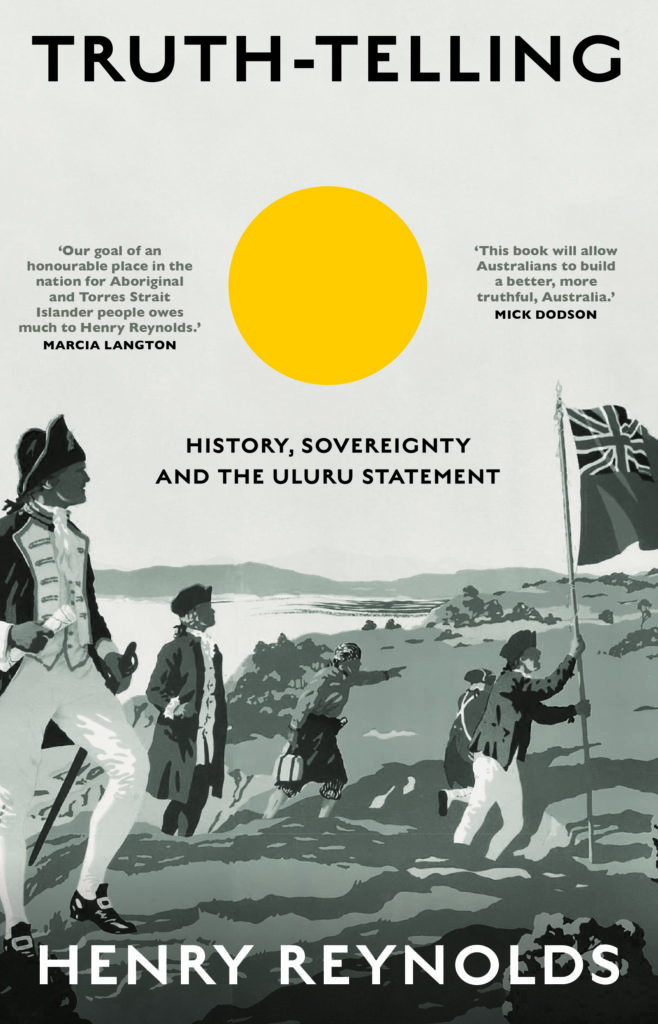
It’s fitting that this book should start with the Uluru Statement from the Heart, written out in full. I wonder if in decades to come, this statement will be as well known to Australians as the Gettysburg Address or John of Gaunt’s ‘This Sceptred Isle’ speech. I’d like to think that it will be.
In his foreword, Reynolds notes that there was not universal Indigenous support for the statement, but that it was undoubtedly the most widely canvassed document addressed to the wider community by First Nations representatives, drawn from over 1000 participants, meeting at 12 locations around the country.
It was also a masterpiece of forensic advocacy – succinct, with scarcely a wasted word, utilitarian where necessary, elegant, even poetic in places. It is a document that will endure. But its lasting political impact is yet to be determined.
p. 2
He points out that most of the political discussion so far has been about the Voice to Parliament, which reflects the strategic choice of the Referendum Council to go for Voice- Treaty – Truth. The response by the Australian government was quick and dismissive. (I wonder how Malcolm Turnbull feels about that now?) In this book, however, Reynolds concentrates on the starting premise of the Statement: the issue of sovereignty.
Our Aboriginal and Torres Strait Islander tribes were the first sovereign Nations of the Australian continent and its adjacent islands, and possessed it under our own laws and customs… This sovereignty is a spiritual notion: the ancestral tie between the land, or ‘mother nature’, and the Aboriginal and Torres Strait Islander peoples who were born therefrom, remain unattached thereto, and must one day return thither to be united with our ancestors. This link is the basis of the ownership of the soil, or better, of sovereignty. It has never been ceded or extinguished, and co-exists with the sovereignty of the Crown.
How could it be otherwise? That peoples possessed a land for sixty millennia and this sacred link disappears from world history in merely the last two hundred years? With substantive constitutional change and structural reform, we believe this ancient sovereignty can shine through as a fuller expression of Australia’s nationhood.
The Uluru Statement from the Heart, reprinted p. viii and ix
Now, I admit that sovereignty is not exactly the most gripping topic. It is mired in the 17th and 18th century international jurisprudence that was triggered by Spanish, Portuguese and British colonization in the Americas, Africa and Asia. Even the names are offputting: Grotius, von Pufendorf, Heineccius, de Vattel. This international law formed the basis of American court cases in the 1820s and ’30s when settlers were moving across the American continent. It’s a pretty specialized area, and doesn’t lend itself easily to the much-vaunted and Americanized ‘water cooler conversation’. But in essence, Reynolds argues here that Britain stuffed up colonization in Australia from the very start, acting in ways that were inconsistent with received international law at the time. Despite some hand-wringing from the Colonial Office as a result of humanitarian pressure-politics, the error was perpetuated and entrenched when the Australian colonies achieved self-government. It is was inconsistent then, and it is inconsistent now with the United Nations Declaration on the Rights of Indigenous People, adopted by the General Assembly in September 2007 and ratified by Australia in 2009. If blame has to be apportioned, it can be directed at the British government up until 1856 but from then on, it lies at Australia’s feet.
In the introduction Reynolds explains his own ignorance of the fraught relations between White Australians and the Aboriginal and Torres Strait Islander people until he went to teach at James Cook University in Townsville, where his students were living this history. From there, the book is divided into 2 parts.
Part 1 ‘The First Sovereign Nations’ explores different aspects of sovereignty. Chapter 1 ‘Taking Possession’ looks at Captain Cook’s ceremony on Possession Island off the NW coast of Cape York in August 1770 where he took possession of the country in His Majesty’s name, together with all the bays, harbours, rivers and islands situated on the coast. Right here we have a glitch: according to his secret instructions of 30 July 1768 he was instructed to ‘with the consent of the natives take possession of convenient situations’ or if he found it uninhabited, ‘take possession by setting up proper marks and inscriptions, as first discoverers and possessors’. He did not find it uninhabited, nor did he seek or gain consent. When the First Fleet landed in 1788, Arthur Phillip’s commissions on 12 October 1786 and 2 April 1787 made no mention of consent. Immediately on arrival, Phillip wrote back that there were far more Aboriginal people than Sir Joseph Banks and James Matra, who had advised the Colonial Office, had suggested. Nor was inland Australia uninhabited.
Chapter 2 ‘This Ancient Sovereignty’ explores the dawning realization that Aboriginal people lived in tribal groups, in specific districts with known boundaries, and that there were no ‘unpeopled’ lands. Each First Nation contested the encroachment on their traditional lands, and fought for their own country and nowhere else. By the time Ralph Darling was appointed as governor to NSW in 1825, his instructions were to treat Aboriginal nations no longer as British subjects but ‘as if they proceeded from subjects of any accredited State’.(p. 41) This stance was reversed in 1837 when they were again ‘considered as Subjects of the Queen’ (p. 72).
Chapter 3 ‘Whose Land?’ looks at the concept of terra nullius and the acceptance within Australia that, even if this was a mistaken characterization, it was an understandable and even appropriate decision on the part of the British government as a consequence of the failure of Aboriginal society to reach a designated level of ‘civilization’. However, this flew in the face of late 18th and early 19th century international law and the recognition of Native American property rights elsewhere in the Empire, especially in the American Supreme Court led by Chief Justice John Marshall between 1801 and 1835 and in New Zealand courts in 1847. By the mid 1830s, humanitarian reformers, previously involved in the slave trade, turned their attention to the fate of Indigenous peoples in British colonies, especially through James Stephen, the permanent under-secretary. Aboriginal protectors, governors (particularly George Arthur in Tasmania, to whom Reynolds gives credit) and eventually the Secretary of State argued that pastoral leases should not allow the driving off of the ‘Natives’ who “have every right to the protection of the law from such aggressions”. (p. 68) Once the colonies gained self-government, this stance was largely ignored.
Chapter 4 ‘Effective control?’ highlights the concern that the Australian government had over the ’empty’ north. The question of ‘effective control’ was important in international law and applied by the British government elsewhere in the world. Britain refused a Portuguese claim to territory in central Africa between Angola and Mozambique because there was no sign of Portuguese jurisdiction or authority and no real occupation. The same issue arose in Nicuargua, when claims of being a successor state to the Spanish Empire were rejected. If the standards of international law as they were understood at the time of Australian federation were applied, neither the states nor the federal government exercised effective control over large areas of Australia.
Ch. 5 ‘Australia and the Law of Nations’ returns to international law. There is, Reynolds claims “clearly more support in international law for the Uluru Statement than many Australians likely imagine.” (p. 90) He turns to the Australian cases of R. v Murrell in 1836 (and I’m surprised that Reynolds did not reference ‘my’ Justice John Walpole Willis here at all) and Cooper v Stuart (1889), both of which cast long legal shadows. He then jumps ahead to the Mabo case of 1992.
Ch. 6 ‘Treaty yeh, Treaty now’ looks at George Augustus Robinson’s ‘peace treaty in all but name’ that brought the Black Wars in Tasmania to an end. Reynolds is dismissive of John Batman’s attempt at a treaty in Port Phillip, pointing out that treaties can only be negotiated by the Crown. The British government, however, abandoned the policy of treaty-making in Australia, even though it ratified treaties in North America, thus condemning hundreds to violent deaths (p. 122). This did not mean that there were not informal ‘treaties’.
There seems to have been some common characteristics of successful negotiations, including understandings about access to water, and about hunting parties avoiding sheep and cattle. In exchange, animals were regularly slaughtered and given to the local band in return for a promise not to spear them out on the range…But an even more significant factor was the provision of young men, who quickly acquired the new skills that, when added to traditional bushcraft, made them valuable additions to any station’s workforce. Young women were provided to be trained in domestic work and to provide sexual comfort. It was often done with reluctance but with an understanding that if not mutually arranged the women would be taken by force. But a frequent underlying consideration was that with a negotiated settlement the station in question became a relatively secure haven away from ambient violence. The ‘white boss’ became a defender of ‘his’ blacks, even able at times to protect them from violent neighbours and marauding police patrols.
p.116
But if we are to move beyond the informal, ad-hoc and contingent, as the Uluru Statement urges us to do, a treaty is needed. To a certain extent, some state governments are picking up the baton after Bob Hawke promised to negotiate a treaty at Barunga in the NT thirty years ago. But, despite state-level treaties, there will still need to be a treaty between the national government and First Nations.
Only then will the vexed problem of how to deal with what in the Statement from the Heart was called ‘this ancient sovereignty’ be resolved
p.125
Part II of the book is titled ‘Searching for Truth-Telling’ takes the reader into the politics within which the Uluru Statement from the Heart has been launched.
Chapter 7 ‘The Truth about 26 January’ deals with the almost-annual controversy that emerges every January, and points out that the date has been problematic for some time. It was clearly on display in 1938 (150th anniversary) when the Sydney re-enactments were accompanied by a Day of Mourning in Victoria and New South Wales. Claims that 1788 brought the rule of law are inconsistent with the subversion of existing international law represented by Phillip’s instructions and later actions.
Chapter 8 ‘Settlement, Conquest or something else?’ points out that although the term ‘settlement’ suggests coming to rest, or establishing tranquility, it is a term far removed from the “gritty, turbulent and often bloody business of colonisation.” (p. 143) Although within a generation, observers in NSW and Tasmania recognized that the distinct First Nations had their own forms of law and government, a conceptual dissonance developed between the way the law was understood on the frontiers, and the way it was dissseminated in books, newspapers, speeches and sermons. This chapter describes this conceptual dissonance, which has bubbled along quietly for the past 150 years.
Chapter 9 ‘The Cost of Conquest’ highlights the widespread knowledge of the violence of the frontier, contrasted against the ‘great forgetting’ described by WEH Stanner in the 1960s and 1970s. Here he returns to his own ignorance of the violence, and his attempts to enumerate the deaths on the frontier. His first attempt was in a Meanjin article in December 1972 (perhaps 10,000-12,000 as a guess), followed by The OtherSide of the Frontier in 1981 where he hazarded 20,000 deaths for the country as a whole, a number which remained unchallenged until the ‘history wars’ between 1996-2002. Of course, in 2002 Keith Windschuttle’s The Fabrication of Aboriginal History whipped up a storm of controversy.
In Chapter 10 ‘Queensland was Different’ he points out that there were two distinct phases in the conquest of Australia. The first unfolded over the first 70 years, the second played out in the second half of the 19th century as colonists pushed into the top third of the continent north of the Tropic of Capricorn. Although Queensland had been settled in the first phase, the conquest of the second phase took place as an Australian project, not a British one. The squatters of this second phase took with them the attitudes shaped by violent conquest in NSW. They rejected the idea that Aboriginal people were British subjects, and that killing an Aboriginal person left one open to a charge of murder (p.179). The most egregious departure from the rule of law was the deployment of the Native Police force from NSW, with the purpose “to kill Aboriginal people in sufficient numbers to terrorize them into submission” (p. 184). Raymond Evans and Robert Orsted-Jensen have sampled the remnant records that ended up in other government documents and came up with a figure of 40,000 Aboriginal men women and children killed by the Native Police, and another 20,000 violent deaths at private hands. It is true that this is Aboriginal people killing other Aboriginal people, and Reynolds points out that the truth-telling called for in the Uluru Statement will need to deal with this as well (p. 198)
Governors and settlers had long characterized this conflict as ‘warfare’ and in Chapter 11 ‘Remembering the Dead’, Reynolds contrasts this silence about frontier violence, and unwillingness to recognize Aboriginal warriors as patriots (in the truest sense of the word) with Australia’s remembering and commemorating of Australian citizens who have died in overseas wars. This is exemplified by the expense lavished on the Australian War Memorial, and its steadfast refusal to include frontier wars under its aegis. He suggests that a formal ceremony of placing a tomb for the unknown warrior in the heart of the War Memorial next the the grave of the unknown soldier would have been an event of “immense national importance, a symbol of respect, inclusion and reconciliation”. (p.207) He acknowledges that there is little chance now that this will ever happen.
Chapter 12 ‘The Consequences of Truth-Telling’ looks at the removal and replacement of statues in South America, the southern states of the United States, the University of Cape Town in South Africa, Georgetown University and in Britain. He looks at the daubing of statues in Sydney’s Hyde Park in 2017, and a new statue of Lachlan Macquarie erected in 2013 which received similar attention. This chapter includes a potted summary of the rest of the book from p. 215 – 219 which seems rather oddly placed so late in the narrative. He points out that Australians have been ready to call the early governors – Phillip, Macquarie, Brisbane, Arthur and Stirling – to account, but less likely to pay attention to Sir John Forrest (WA), Sir John Downer (SA) and Sir Samuel Griffith (Qld), who as premiers and attorney-generals in the late 19th century and early 20th century oversaw the violent suppression of Indigenous resistance. They have suburbs and universities named after them; in some cases their families are still prominent in political and legal circles.
He continues this train of thought in Chapter 13 ‘Inescapable Iconoclasm’ where he particularly looks at Sir Samuel Griffith. Reynolds has read the foreword that appears in every volume of the well-regarded Griffith Review, praising Sir Samuel Griffith as ‘one of Australia’s early great achievers” and claiming that their publication emulates Griffith’s ‘sceptical eye and a pragmatically reforming heart and a commitment to public discussion”. (p. 226) What about Griffith University? The Australian Electoral Commission removed the names of Batman and McMillan as Victorian electorates on the basis of their involvement in frontier warfare – what then about the Brisbane seat of Griffith?
[Griffith] oversaw far more bloodshed than the two frontiersmen. But is it a case of it being much easier to take symbolic action against the foot soldiers than against the high command and knights of the realm?
p.231
I think he’s right: it’s easy to attack ‘early’ perpetrators, especially when they are clothed in British imperialism, but less easy for more recent, ‘home-grown’ public figures, whose names are attached to institutions and intellectual endeavours that we value.
His final chapter ‘Conclusion: The Resurgent North’ returns to the Uluru Statement. It will always be associated, he suggests, with “its peremptory rejection by Prime Minister Malcolm Turnbull”, a rejection that was unexpected and “profoundly disrespectful”. (p. 237) The claim in the Statement that sovereignty had “never been ceded or extinguished, and co-exists with the sovereignty of the Crown” was more than a rhetorical flourish, and “it sits there unanswered in the inboxes of the nation’s leaders in both our parliaments and our courts.” (p.245)
This is a timely book, given the insistence of the Referendum Council in pushing the Uluru Statement forward, despite the wish by many politicians to sweep it away. In many ways, the book encapsulates many of the ideas that Reynolds has been putting forward over many years in his other publications, including The Other Side of the Frontier, Why Weren’t We Told? and This Whispering in our Hearts(which I see has been recently republished). Like his other books, it is quietly and doggedly argued. Reynolds is a historian, not a legal scholar, but by necessity this book has had to deal with a great deal of legal argument in order to underscore the illegality, in international law terms, of what we have long taken for granted. It is quietly but passionately argued, from a deep conviction. It raises important questions that, if we are to tell the truth, we will need to face eventually. The questions can be forced upon us by international bodies and treaties, or we can stand up ourselves with First Nations people who, through the Uluru Statement, have invited Australians “to walk with us in a movement of the Australian people for a better future”. I know which I’d prefer.
Sourced from: Yarra Plenty Regional Library
My rating: 8/10 (It feels a bit odd even giving it a rating).
The Thread. Actually, even though I heard this 3 part series on the Election Day Massacre on The Thread, it is actually part of the Flashback series. Episode 2 picks up with the white mob outside July Perry’s house in Ocoee, Florida, wanting to send a message that black people shouldn’t vote. There were gunshots exchanged- no-one really knows quite what went on- but two white men were killed, and this was why the massacre achieved national and international attention. Meanwhile, fifty car-loads of white men drove into Ocoee. Perry escaped, but was found in a cane field and later lynched. Norman was never found. Episode 3 looks at how the black population fled Ocoee in what can only be called ethnic cleansing, and did not return for about 50 years. They left their orange groves, which were sold off to white buyers with the stipulation that they could not be sold to blacks. This land was later taken over by Disney World and is worth a fortune. It is only really with the centenary that the story is being told, and a freeway was named after July Perry.
Latin American History Podcast And finally I come to the end of the Conquest of Mexico series. Episode 13 points out that even though the Spanish conquest of Mexico and Central America was complete, it was a very tenuous conquest, better seen as a series of islands of Spanish influence, rather than the takeover than the word ‘Conquest’ suggests. He follows through some of the descendants of Cortez and Moctezuma – in fact, the House of Grau-Moctezuma de Toleriu still exists in Spain today. Moctezuma’s daughter Isabel had quite a life, being married off six times, to 3 Aztec emperors and 3 Spaniards and also had an illegitimate daughter with Cortez himself.
99% Invisible I must admit that I hadn’t noticed it, but at many of the Black Lives Matter protests there have been Red Black and Green flags flying. Flag Days: the Red, the Black and the Green looks at the history of this flag, which was created by Marcus Garvie in 1918. The podcast talks about the clash of ideologies between W.E.B Du Bois and Garvie, who believed that people of African descent all over the world should reclaim Africa from colonialism and create a new society there. There’s also a coda to the podcast about the Juneteenth flag, which I hadn’t seen before. Really interesting.
The History Listen (ABC) There’s a series of programs called ‘An Object in Time’ presented by Sarah Percy from the University of Queensland (but obviously of North American background). In the episode An Object in Time: The Umbrella, she looks at the use of a poison-tipped umbrella to silence a Bulgarian dissident named Georgi Markov during the Cold War. Hmm. Things don’t change.
The Documentary (BBC) Continuing on with their series on Syria during the civil war and beyond Syria’s decade of conflict: The battered champions of Aleppo was recorded in 2016 when the narrator looked at a photo of a football (soccer) team from Mare’a, in Aleppo in the 1980s. During the 1980s Assad’s father was still in control, and your success in soccer depended on your connections with the government. By 2016, when this was recorded, Syria was plunged into civil war, and those boyhood friends were often on different sides. As with the other programs in this series, they then follow up again from 2016 to the present day. Many of the men had moved to other countries, and it really doesn’t sound all that much better yet.



 The Resident Judge of Port Phillip