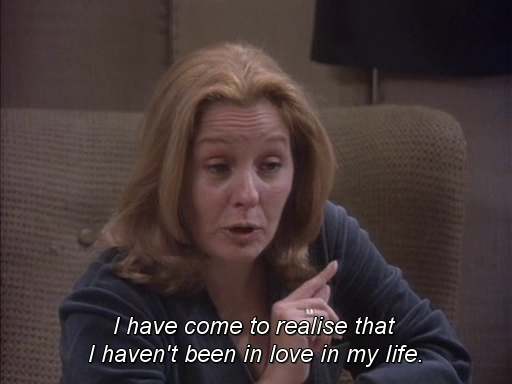
This one really stretched me.It felt a bit like a stage play, with a long-separated couple raking over the ashes of their failed marriage. There was a lot of dialogue, and I frequently had to stop to look up words. But it was brilliantly acted, especially the female lead Lola Herrera – in fact, I don’t know if it even was acted, because the actors played themselves. It felt like a constructed documentary. Perhaps I should have watched it with the English subtitles instead.
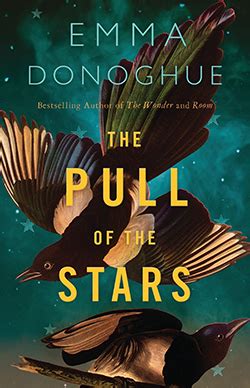
One of the closest historical parallels to our current COVID pandemic is the ‘Spanish’ flu epidemic of 1918-20. The publication date of this book, commenced prior to COVID, was brought forward, no doubt to respond to this renewed interest in how a society deals with a world-wide rapidly-spreading illness, especially in Western industrialized settings. The book is set in Dublin during November 1918, just prior to the announcement of the armistice, when the flu was raging. It is set in a small quarantine ward for expectant mothers in a large hospital that is being over-run with influenza cases, at a time when many women would still have given birth at home had they not been suffering from influenza at the time.
I must confess that I guiltily enjoy the odd episode of “Call the Midwife”, and the prospect of a book about a midwife working during the influenza pandemic appealed to me. I studied the ‘Spanish’ flu in some detail a couple of years back, albeit at a very local level here in my own suburb, and I was interested in a fictional account. However, this book combines many themes – possibility too many themes – including Irish involvement in the British war, Sinn Fein, the Catholic Church mothers and babies homes, lesbian love, as well as childbirth practices and the influenza pandemic. Clearly Donoghue has done her homework on all these topics, and the research lays heavily over the story. It is overly didactic in places, and as a reader you tend to feel “told” much of the time.
SPOILER ALERT
The book is set over only three days in the small ward for expectant mothers in a hospital completely stretched by the influenza pandemic. Sister Julia Powell, who is just about to turn thirty, lives with her brother who has returned from the warfront, struck mute with shell shock. She is the day nurse in this small ward, turning her patients over to the care each night of Sister Luke, a harsh and rigid nun from the nearby convent. With their resources stretched by influenza cases, she welcomes a new volunteer to the ward, a young girl called Bridie Sweeney who comes from the same convent as Sister Luke. In these three days, both birth and death hover around this small ward, as Julia and her untrained assistant deal with a string of obstetric emergencies, with the fleeting attendance of Dr Katherine Lynn, a real-life doctor, who had been arrested for her Sinn Fein activities.
Even though I was frustrated by the ongoing presence of the author’s research that encrusted the story, I also found that I was completely engrossed in the book. Birth-stories have their own narrative shape – perhaps it’s the Call the Midwife effect – and the small anteroom seemed like a self-contained if somewhat claustrophobic little world, set against larger historical forces. The ending seemed a little melodramatic, and given the depth of information conveyed about influenza, the frightening rapidity of onset was underplayed, given that it is a major plot development. Nonetheless, it kept me reading late into the night.
My rating: Difficult to say – I was engrossed with it, but frustrated by the clumsiness in inserting the research into the narrative. Let’s go with 8/10?
The Forum (BBC). People really must have put up with a lot of pain before modern dentistry. I’m such a wimp in my old age that just the thought of having a feeling without a needle now makes me feel quite faint (even though most of my early fillings were done without anesthetic because my mother, who was paying the bill, didn’t believe in needles “now that drills are so fast”). Adventures with dentures: The story of dentistry is fascinating. Makes you glad to be alive in the 21st century
Rear Vision (ABC) Now that the COVID supplement is coming to a close, the government has given a risible $4.00 a day increase to the Jobseeker allowance. (The name has changed from Newstart – which was always a false promise- to Jobseeker – just to remind the recipients that they’re looking for a job) The struggle for work – why are the unemployed expected to live below the poverty line looks at the history of unemployment benefits.
Saturday Extra (ABC) I haven’t yet read Judith Brett’s essay in the Monthly (because I am so behind in reading The Monthly) but she talks about her essay here and perhaps I won’t have to. In Our Universities, the Humanities, Our Society she had this old humanities-loving-baby-boomer nodding her head in agreement. Then there was a fascinating piece on Wikipedia turns 20. Apparently one of the biggest threats to Wikipedia now is that people just look at the Google ‘snippet’ and don’t both going to the article. So, there’s a belated New Years Resolution- go to the article.
Heather Cox Richardson. I’m not sure if her series on Reconstruction finishes here or not. On February 26 she starts off with a good summary of the ground that she has covered over the past few weeks (and I was thinking that if you were joining the series here, this would be a good place to start – but if it’s the end, then don’t bother!) She talks about how the South became solidly Democrat (until Barry Goldwater) and in effect a one-party state. The Republicans in the north were pretty dodgy, adding states to keep power, even though there almost certainly wasn’t the population to sustain it. She finishes with the Wilmington coup of 1898 which was, until recently, America’s only coup.
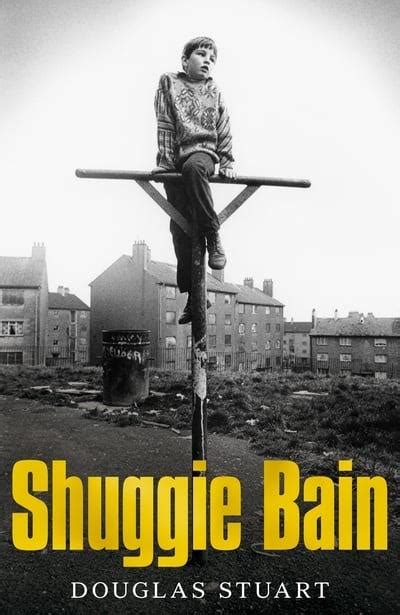
This month I have actually read Shuggie Bain the book that starts off this month’s Six Degrees of Separation meme. Look at the ‘rules’ for Six Degrees of Separation on Kate’s Books are my Favourite and Best website but essentially, Kate chooses a starting book, then you link other titles that spring to mind.
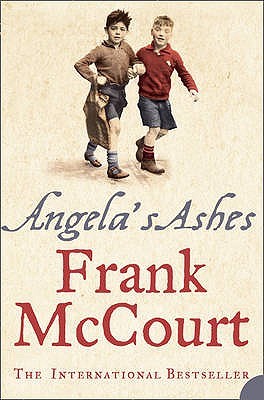
I know that Shuggie Bain won the Booker Prize, but I found it reminding me a lot of Angela’s Ashes. I read Angela’s Ashes long before I started blogging and it was certainly a best-seller when it was published in 1996. It wasn’t eligible for the Booker Prize at the time because the author was American, and I don’t know if it would have won it if it were. However, it’s one of the few books that I have read twice, drawn in when flicking through the pages one day.
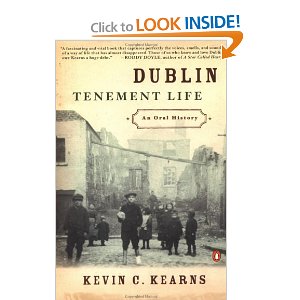
A similar book is Kevin Kearn’s Dublin Tenement Life: An Oral History. In my review, I likened it to ‘Angela’s Ashes: The Documentary’ because many of the same themes emerge. There are some introductory chapters that explain the rise of the tenement and a chapter that encapsulates many of the themes that are repeated in the oral histories that follow. The book was a bit repetitive, but it was interesting social history.
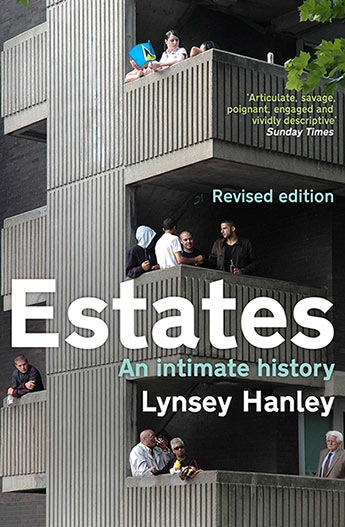
Another social history/memoir is Lynsey Hanley’s Estates: An intimate history, written by a woman who grew up in the Birmingham housing estate at Chelmsley Wood in the 1960s and 1970s. Even though It is mainly a historical approach, interwoven with her own experience, with closing chapters that bring us up to the present day.
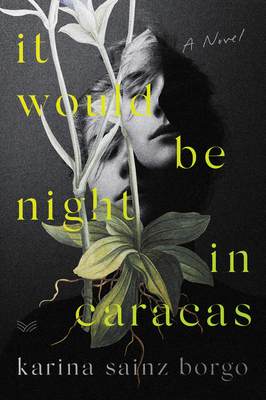
A more frightening aspect of living in an apartment tower is found in Karina Sainz Borgo’s It Would Be Night in Caracas. Set in present-day Venezuela, a young journalist who has returned to Caracas after her mother dies, finds her apartment taken over by a female-led gang. It is poignant and frightening to see a formerly-wealthy country spiralling into collapse and lawlessness.
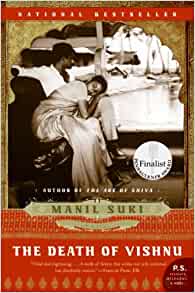
At least the people in The Death of Vishnu by Mani Suri could leave their apartment building in Mumbai. But in doing so, they had to encounter their aging, alcoholic houseboy who lay dying on the steps. We move from apartment to apartment as the residents bicker over what to do with the dying Vishnu.
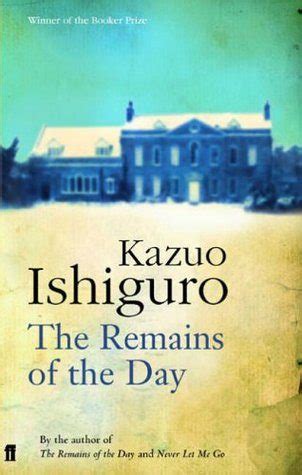
Now, could you get further away from a Mumbai apartment building than a grand old English house? (Well, actually, possibly the grand old English house was purchased with money made in India, as William Dalrymples The Anarchyshows us). But it’s not the building, but the idea of an old servant, Stevens, that makes me mentally link these two books. The book won the Booker Prize in 1989 and was made into a film starring Anthony Hopkins and Emma Thompson.
I started with one Booker Prize winner, and finished with another. I’ve gone from Scotland to Ireland to England, to Caracas, to Mumbai, and back again to England. What an exhausting trip!
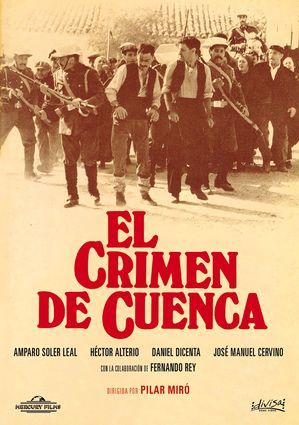
Based on a true story, this film is set in 1910 when two men are accused of the murder of another man in their village. There is no body and no evidence and at first the case lapses, with the man declared only “missing”. Two years later, a new judge arrives in town and despite their “vehement denials”, the two men are arrested and tortured. This was pretty violent – especially when I had to keep looking to read the subtitles to see what they were screaming. Anyway, eventually the missing man turned up after the two men had narrowly escaped execution to serve many years in jail. It was a good film but (shudder) too violent for me. It is a very famous film, and was originally banned for two year, even though it was a democratic government at that time. Once it was released it achieved great success.
When Shuggie Bain won the Booker Prize, I had heard of neither the book, nor the author. Having just completedThe Shadow King, which was also shortlisted, I thought that the winner must have been an outstanding candidate to top Maaza Mengiste’s book. Now having finished the ultimate winner, I feel a little disappointed. It’s not that Shuggie Bain is not a good book: it is. It’s well written and will stick in your mind for some time after reading it. But it’s a little too much Angela’s Ashes for me (again- well-written and memorable but not Booker Prize material, not that it was eligible at the time), and I wonder if Stuart will be able to move beyond books steeped in his own experience. Time will tell, I suppose.
The book is a thinly disguised autobiography. Shuggie Bain is the youngest of three children, always fastidious and conscious of appearance. The woman whose appearance meant most to him was his mother, Agnes, whose attention to her dress, hair and makeup masked increasingly futile attempts to disguise her alcoholism. As the youngest and rather effeminate child, there was an intimacy between Shuggie and his mother as they slept and bathed together, and chose outfits together. Increasingly Shuggie became familiar (in a non-sexual way) with her body as he undressed her and put her to bed in yet another drunken stupor.
The book is set in a Glasgow ravaged by Thatcher’s economic policies. It is circular in its narrative, starting and finishing in a bedsit on the South Side (of Glasgow) in 1992, then backtracking to Sighthill 1981 where Shuggie is living in his maternal grandmother’s house with his parents Big Shug and Agnes. In 1982 Big Shug moves his wife, daughter Catherine and two sons Leek and Shuggie to Pithead, a former mining village that has been closed under Thatcher’s economic rationalism. He then promptly leaves the family. By 1989 Shuggie and his mother move to the East End, his older siblings having escaped the continuous degradation and betrayal caused by their mother’s drinking. By 1992, in the final section of the book, Agnes is no longer Shuggie’s burden.
And burden she is. She drinks through the Monday and Tuesday social security money as soon as she receives it. She breaks into the various meters attached to the utilities in a user-pays society to scrounge change. She goes out with men- too many men- and uses her body to get the money to drink. There is too much vomit and too many sprawled bodies. That one bright year when she finally breaks free of her addiction is even more tragic for how it ends. She is in no place or state to respond to her children’s needs. Near the end, when she has spent all the money and without a single bite of food in the house, she deflects Shuggie’s complaints of hunger by scoffing that at least he gets a free lunch at school. Not so. Shuggie is being bullied, and his lunch passes are extorted from him.
For Shuggie has his own needs and his own problems. Identified by everyone- his own family, neighbours, other students – as ‘not right’, he is struggling with his own sexuality. He would have stood out as a figure of fun. As a five-year-old, just moved into the Pithead house, he interrupts his mother as she is meeting the neighbours- a toxic scrabble of vicious women who congregate around the fence gossiping and bitching- to express his dissatisfaction with their new house.
The front door opened again, and Shuggie came out on to the top step. Without addressing the women he turned to his mother and put his hands on his hips; he trust a foot forward and said as clear as Agnes had ever heard him speak, “We need to talk. I really do not think I can live here. It smells like cabbages and batteries. It’s simply unpossible.” (p.101)
p.101
Despite his older brother Leek’s attempts to get him to walk in a more masculine way by ‘not being so swishy’ and making ‘room for your cock’ (p.152), Shuggie is a target and he suffers.
‘Social services’ is remarkably absent in this book. This is no surveillance state: instead it is a state of neglect. Would Shuggie have been better off, removed from his mother? No, I don’t think so. She is the centre of his world – too much- but his sense of obligation and persistence in keeping on hoping, keeping her sober, catching her beauty, lies at the core of his existence. Other people just drop away- his own siblings, his grandparents, his own father, her partner – none of them can withstand the selfishness and energy-draining repetition of Agnes’ drunkenness. An illness, yes, but one for which it is hard to have sympathy.
Why do I feel short-changed with this book as a Booker Prize winner? It is a long book at 430 pages, and it feels every bit of it without actually moving far (which is of course, a function of the stuck-ness of Agnes and her family). It tells a narrative well, its use of dialogue is good, the emotional tenor of Shuggie’s bond with his mother is nuanced, and Stuart imagines himself sensitively into Agnes’ befuddled mind. It is all of these things, but for me it didn’t have the literary heft that I would want a Booker Prize winner to have. It is, at heart, a misery memoir, self-contained within its own world. A worthy short-list contender, but for me not ‘winner’ material.

 The Resident Judge of Port Phillip