Monthly Archives: January 2020

An Australian beach summer

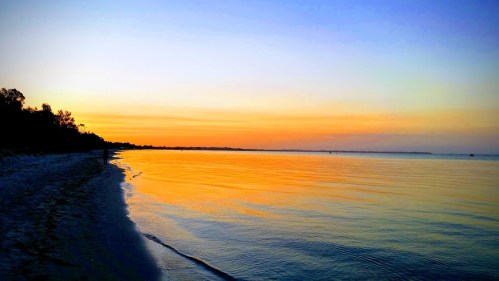
09Jan2020_beach

I’ve always loved summer, but it has an edge now.  I know why that sunset is so orange. For the first time in my life, I think, I heard a forecast of a 35 degree day as being a “bad” day instead of a beautiful day, a stunning day, a fantastic day.  I’ve been down by the beach – a somewhat unprepossessing bayside beach, really – and I’ve been aware of those Australians whose summer holiday dream has become a nightmare, and those whose retreat in the country has been blasted by flame. And it just keeps going on, day after day.

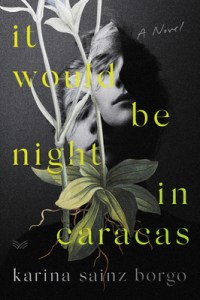
‘It Would be Night in Caracas’ by Karina Sainz Borgo

borgo

2019, 223 p. Translated from Spanish by Elizabeth Bryer

Now that the rest of South America seems to be blowing itself up politically, Venezuela has fallen out of the world news a bit. However, given that Nicolás Maduro is still in power and Juan Guaido isn’t, the situation in Venezuela probably remains much as it has been for the last couple of years. Millions of Venezuelans have left their country, driven out by hyperinflation and shortages.

This novel is set in current-day Caracas. A young journalist Adelaida Falcón has just buried her mother, who has died of cancer despite Adelaida spending the last of their money on what turned out to be useless drugs. Adelaida was the only child of a single mother, and the two women were close. As Adelaida packs up her mother’s belongings, her world becomes increasingly small, focussed just on her own apartment building.

However, it is not just the loss of her mother than is driving Adelaida’s isolation within her apartment.  Out on the streets, vigilante gangs, often under the protection of the government, are roaming and shooting. One day she returns home to find that her apartment has been taken over by one of these gangs, headed by the intimidating female gang leader La Mariscala. When she turns to her next door neighbour for help, she finds her neighbour is lying dead in her apartment, presumably through natural causes. Her neighbour’s death provides a way of escaping her increasingly claustrophobic situation. Meanwhile, she is joined by the brother of a university friend, who had been scooped up into the government’s paramilitary scheme to turn protestors into henchmen. His presence is both comforting and dangerous.

This is a very female-driven book. The two women form a family unit, and the now-deceased woman next door is crucial to the plot. Interestingly, the Spanish title of the book translates to “The daughter of the Spanish Woman”, a title which makes more sense once you have read the book. While the male gangs outside are intimidating, it is the women led by La Mariscala who are occupying and violating Adelaida’s home next door, who are the most terrifying. Meanwhile, we have the whole idea of ‘motherland’ and exile.

There are a lot of coincidences in the plot of this book, and it doesn’t do to think about them too much lest the whole scenario fall apart. Instead, I more enjoyed the tension of not knowing whether she was going to escape, especially in the closing pages of the book. Even more, I was interested in (‘enjoyed’ is not the word) the exploration of a society which is breaking down completely, leaving individuals to fend for themselves.  I suspect that the author hasn’t had to imagine too much here, and that she is drawing on her knowledge of current events in Venezuela.  It is poignant and frightening to see a formerly-wealthy country spiralling into collapse and lawlessness. It has made me read the news even more carefully.

I read this book in translation from the Spanish. While reading the book in English, I stopped at the sentence “Only a small difference in sound separates ‘leave’ from ‘live’“. That’s true in English, I thought, but I wondered what the original sentence was, because it doesn’t work in Spanish.  As if she had been reading my thoughts, the translator Elizabeth Bryer wrote a note at the end, explaining that sentence, and how hard she had had to work on it.  The original was “Tan solo una letra separa ‘partir’ de ‘parir'” ( translation: Just a single letter separates “to leave” from “to give birth”) . I think that she did a damned good job finding two English words that evoke the same idea, while having a similar sound – although the connection with motherhood doesn’t come through. Nonetheless, well done that translator!! I bet there were shouts of “Yes!” and high-fives all round when she worked it out.

My rating: 7/10

Source: Yarra Plenty Regional Library

Read because: I read a review somewhere (can’t remember where) and I like reading books from Latin America.

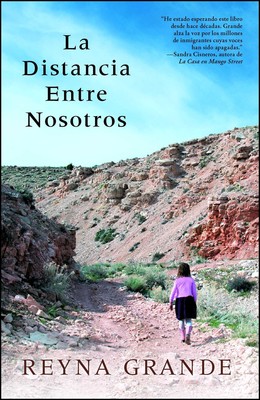
‘La Distance Entre Nosotros’ by Reyna Grande

grande_distancia.jpg

2012,  354 pages

Yes! 354 pages in Spanish! I read this book as part of my Parceros participation with Spanishland School. Our teacher Andrea held a weekly podcast where she would ask questions and discuss one or two chapters, but I fell behind on the podcasts and just kept reading, two pages per night.

The book is probably aimed at Year 7 and 8 kids in American schools. It was written in English by the author, who was born in Mexico and learned English as a second language, and then translated into Spanish.

The author, Reyna, was born in a small village in Mexico and both her parents left in order to work illegally on the ‘other side’ (i.e. America) when she was a very young child. First her father left, then he called for his wife to join him, so the children were left with their paternal grandmother, who because of her clear dislike for the children’s mother, distrusted that they were indeed even her own grandchildren. Their mother returned alone, when she found that her husband was cheating on her, and the children ended up with their maternal grandmother while their mother went back to America with another man.

In Part 2 of the book, their father returns with his new wife and grudgingly takes the three children over the border. A violent and hard man, their lives are still hard and it is only Reyna who breaks free of the poverty in which they are living. Through it all, she desperately wants her father’s approval.

Reading only 2 pages a night meant that Reyna’s long howl of abandonment wore a little thin by the end, but I came away with a much richer understanding of the ‘Dreamers’ and the desperation with which illegal immigrants try to achieve a better life.

The level was JUST right for someone who has Intermediate level Spanish. I generally had to look up about 4 or 5 words per page, which was not enough to slow me down, and I found that I could easily guess many unfamiliar words.  It is well written and poignant- I really enjoyed it.


I hear with my little ear: Podcasts 26-31 December 2019

Russia If You’re Listening (ABC) Matt Bevan’s third series on Putin, Trump and Russia has come to a close. In Episode 8 “How Russia’s rotten gas got Trump into Trouble”, he backtracks to explain how Ukraine used the nuclear weapons that were left on its soil after the breakup of the Soviet Union to negotiate gas supplies from Russia and cold hard cash from the United States.  In Episode 9, the final one, “Putin’s greatest victory- a conspiracy theory so good it got Trump impeached” he looks at Trump’s support of Putin’s accusation that Ukraine is the baddie here, and how it benefits no one but Russia. And how deliciously ironic that our Australian Matt Bevan should have a name so similar to Matt Bevin, the republican governor of Kentucky who is making some very questionable pardons.

Earshot (ABC) This podcast from  August 20189 has been rattling round on the phone for a while. Naponi’s story: Loving a man with schizophrenia tells the story of a Sudanese woman now living in Toowoomba, whose husband has been committed to a psychiatric facility for the last fourteen years. After a long history of domestic violence against Naponi, her husband was diagnosed with schizophrenia, but this is rejected by many of the male elders in the Sudanese community, who accuse her of using domestic violence as a way of getting rid of him. Australian law, witchcraft and domestic violence all come together in a confronting case.

Torn Curtain: The Secret History of the Cold War (ABC) During summer, the ABC saves money by recycling programs from the previous year’s broadcasting. They dug quite a bit deeper than that in Torn Curtain, which was originally broadcast in 2006 as part of the still-missed Hindsight.  The fact that it’s now fourteen years old doesn’t matter: it’s a fantastic program. How could I know so little about my own century? I found Episode 2 Science, Spies and Australia’s bid for the bomb to be absolutely fascinating. Much of the material has been available only in the last twenty years or so. It tells the story of  Tom Kaiser, a Melbourne PhD student in London (very good paper on him by Phillip Deery here), who was a member of the Communist Party and fell under the scrutiny of Australian authorities who wanted to prove their ‘diligence’ so that Australia would be included in Britain’s plans for nuclear weapons. Episode 5 The Nuclear War we nearly had in 1983  was excellent too, about the build up of nuclear weapons in Western Germany and the horrifying potential for inadvertent nuclear war that they provoked.  It’s really worth listening to the whole five episodes.  How did I not know these things?

99% Invisible While in the Christmas mood, I listened to Episode 334 from December 2018. Called Christmas with the Allusionist, it’s a cross-promotion of the Allusionist podcast program, a podcast about language. This episode has two stories. The first is about an events manager in Birmingham England who decided to promote Winterval (a portmanteau of Winter and Festival), a 40 day event of which Christmas was a part, only to be accused of “Political Correctness Gone Mad”. The second part was about a re-creation of a ‘Dickensian’ village and the effect of Dickens in shaping our consciousness of Christmas ‘tradition’.

Challenging myself again…

I’ll be doing the Australian Women Writers Challenge again for 2020, hoping to read twenty books during 2020. I’ll try to read a little more fiction this time.

And while I’m at it, I’ll nominate the same number of books on the Goodreads challenge – sixty- which I achieved this year by the skin of my teeth.

So off I go into 2020…..

‘The Shelf Life of Zora Cross’ by Cathy Perkins

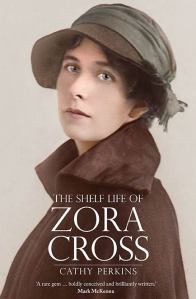
perkins_zora_cross

2019, 243 p & notes.

“Twenty pounds and you shall have her” and thus were the publishing rights for Songs of Love and Life transferred from a small self-publishing bookshop to that of the publishing behemoth, Angus and Robertson in 1917.  This book of sixty erotic love-sonnets was to become a literary sensation, going through three reprints and selling a respectable 4000 copies. Its author,  27 year old Zora Cross, wrote about love and sensuality from a woman’s perspective – something shocking in 1917.  Norman Lindsay, the artist whose own work abounds with nudes,  refused to illustrate the book, saying that women couldn’t write erotic poetry because their ‘spinal column’ was not connected to their ‘productive apparatus’. He did, however, condescend to provide a mythologized front cover which, to my eye, has nothing like the impact of an alternative cover design of  a bedroom scene with a present-day man talking off his coat, with his lover covering him with kisses.

But the sale of the publishing rights, and the choice of front cover and illustrator were not in the hands of this young, barely-published author. This book, which is a biography of the now-forgotten Zora Cross, is also an exploration of the Australian writing and publishing scene of the first half of the twentieth century, particularly in Sydney and Melbourne. I had flutters of half-formed recognition of many of the names in this book, and the author has used them as anchors in each of the chapters that move roughly chronologically through Zora Cross’ life.  As Cathy Perkins writes:

I set out to write a conventional biography, but I was drawn to an idea of a life that was made of up relationships. Each of Zora’s relationships shows a different side of her personality and each has its own tensions. (p. xii)

The opening chapter, then, is subtitled Ethel Turner, who as well as the author of the much-loved (by me!) Seven Little Australians, also wrote the children’s page in The Australian Town and Country Journal. Children would send in their contributions and letters (I remember doing the same to ‘Corinella’ in the Sun during the 1960s) and ‘Zora Cross of Pie Creek Road Gympie’ was a frequent contributor. When she grew too old for the children’s page, she finally met her mentor in person.

Ethel Turner suggested that she try her luck with the Lone Hand, the sister publication to the Bulletin, and thus Cross started up a rather fervent correspondence with the editor, Bertram Stevens, who features in Chapter 2. In this chapter we learn of Cross’s employment as a school teacher and her strange, short marriage to fellow-student Stuart Smith, with whom she had a child who died soon after birth.  Pregnant again to an unnamed father in 1913, Cross travelled northern Queensland with a theatre company, and became editor to the small Bohemian newspaper of arts and social news.

She also wrote poetry for the Bulletin, and it was through this connection that Norman Lindsay, for whom Chapter 3 is titled, was asked to provide the artwork for Songs of Love and Life.  It was published by George Robertson, who features in Chapter 4, who carefully oversaw the sales and  reviews of the books under his imprint.  She wrote copious letters to him, too, and on the walls of his office he had a copy of the beautiful portrait that graces the front cover of this book. However, despite his success with Songs of Love and Life, he declined to publish other manuscripts of Cross’, along with the manuscripts of many other women writers who were to go to fame including Katherine Susannah Prichard, M. Barnard Eldershaw and Christina Stead.

She achieved success writing about the losses incurred in WWI, in Elegy on an Australian Schoolboy written in tribute to her brother John Skyring Cross (Jack), who is explored in Chapter 5. He died of illness after being injured on the Western Front.  In 1919, George Robertson asked his assistant, Rebecca Wiley, to go on a month’s holiday with Zora, who was feeling run-down. Chapter 6, named for Rebecca Wiley, explores the often tense relationship between these two women, especially once Zora had shifted to Glenbrook in the Blue Mountains with her partner, Bulletin editor David McKee Wright, who features in Chapter 7. They never married because David was still married to his previous wife, and she was pregnant to another man when they partnered. They had two daughters together, and David legally adopted her son. He died suddenly in 1928.

Now widowed, Cross continued to write, especially for the Australian Woman’s Mirror, an offshoot of the Bulletin which predated the still-extant Australian Women’s Weekly. Chapter 8, subtitled ‘Bernice May’ refers to her pen-name in much of the writing she did for ‘women’s pages’ . After falling out with George Robertson, she embarked on a series of interviews with fellow women poets and novelists for the Mirror, including Jean Devanny, Eleanor Dark, Dulcie Deamer, and Mary Gilmore.  A long-standing presence in Cross’s life was John Le Gay Brereton, Chapter 9, a friend of Henry Lawson, chief librarian and later professor of literature at the University of Sydney. His access to resources assisted her to write a series of books about Classical Rome, which were not well received (and sound pretty dire). As president of the Fellowship of Australian Writers, Brereton was a constant source of support when Cross made frequent, and generally successful applications, for Commonwealth Literary Fund pensions and grants.   Another longstanding friend was Mary Gilmore (Chapter 10) who was punctilious in overseeing her bequest of papers to the Mitchell Library. She died in 1963 and a year later, Zora Cross died of a heart attack.

This is a very skillfully written biography, maintaining its chronological trajectory while using various friends and colleagues as a prism through which to explore Zora Cross’s personality and writing.  Cathy Perkins, the author,  who is the editor of SL magazine and other publications at the State Library of NSW inserts herself several times into the narrative, in her research and  advocacy for Zora Cross.  As well as a biography, the book explores the literary industry and the whole issue of literary presence after death. Perkins’ decision to use relationships as an organizing device emphasizes the interconnections between writers and publishers, something that is often invisible to the reader.

She captures well the breadth of Cross’ writing, and quotes generously from her unpublished works, without necessarily championing its sometimes rather dubious quality, leaving it instead up to the reader to decide.  She portrays Cross as a fully rounded character: unconventional mother and partner, hard-working, flirtatious, sometimes needy, mother, grandmother and community member. But most importantly, as a prolific and life-long writer, even if she has been -until this biography- completely unknown today.

My rating: 9/10 A really accomplished biography

Sourced from: Yarra Plenty Regional Library.
aww2020

This is my first read for the Australian Women Writers Challenge 2020