Monthly Archives: April 2019

Movie: Bohemian Rhapsody

I saw this a few weeks ago. Probably everybody else in the world has seen it too.

Yes, Rami Malek captures Freddie Mercury well. Yes, it was good to hear all that Queen music again. But the first half of the film just felt like a lame Saturday afternoon “I know boys! Let’s start a band!!” matinee film (for those of us old enough to remember matinee films). I couldn’t believe just how bad it was.

But then the Live Aid concert started, and it was very, very good (especially when you compare the real footage with the film.)

https://youtu.be/-XqPBEODZ4s

So, it just goes to show – the old saying was right: it’s not how you start but how you finish.

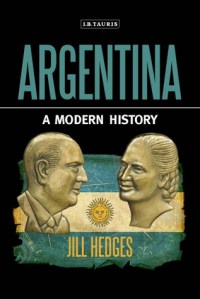
‘Argentina: A Modern History’ by Jill Hedges

Hedges_Argentina

2011, 336 P.

I purchased this book on e-reader to take with me to Argentina, which I was visiting at the time. As is the way of such things, I was so tired at night that I couldn’t concentrate enough to read it, and ended up finishing it in Colombia. [In turn, the book that I purchased to read about Colombia I finished reading in Chile!]. I wanted something readable and relatively current, with enough ‘back story’ to make a ‘modern’ history intelligible.

This book certainly fitted the bill. The author received a PhD in Latin American Studies from Liverpool University, and at the time of publication was Senior Editor for Latin America at Oxford Analytica since 2001. It is eminently readable, and does not assume much prior knowledge, which is just as well for me.

The book starts with the constitution of 1853, which still stands today. The first two chapters deal with national consolidation, and the ‘golden age’ of the Argentinian economy, and especially its relationship with Britain and emulation of European elite lifestyle. The rest of the chapters deal with the twentieth and early twenty-first centuries.

The book focuses on political players, most especially Peron and the generals who followed him during the dictatorship. She gives a really good explanation of Peronism (which exists in some form today) although she is critical of its populism and lack of philosophical/political principle. She points out that  the conditions under which leftist groups were ‘disappeared’ during the dictatorship started after Peron returned for a third term in the 1970s, and certainly her retelling of his political manoeuverings makes it difficult to space him on the political spectrum. While Peronism was explained well, the Dirty War was not as clearly described.

Perhaps because of this political narrative, the book also has a strong economic emphasis as well (are the two separable, I wonder, in any history or especially in this one?). The recurrence of broken promises and endemic corruption is depressing, as is the volatility of the economy and the democratic compromises it brings in its wake. This is very much a top-down analysis, focused on the political sphere, with little attention paid to social or cultural conditions.

I’m not in a position to take issue with any of its arguments – indeed, to even identify where her perspective differs from others’ – but I found it very readable and informative, and it enhanced my enjoyment of Argentina, even if I did finish it after I’d left it!

Dollies

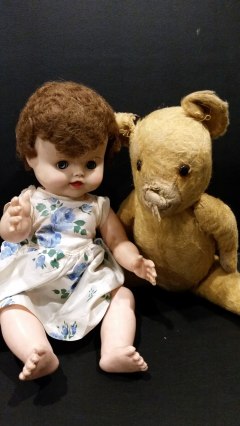
Meet Susan and Teddy.

Debbie_and_Teddy

It’s funny the things that survive sixty years. Teddy looks chewed because he was chewed, especially that nice sawdust-filled nose, and his ear has fallen off several times. Susan is a wetting doll, which seems a particularly perverse thing to give a child. You’d squirt water into her mouth and it would instantly come out a hole at the other end.

In fact, Susan wasn’t even my favourite doll. That honour went to Debbie, who was made of a type of china, with closing eyes with eyelashes, and Jenny who was an early transgender doll whose head could be pulled off to transform her into Peter (what Anglo names!) She/he was made of a rather unfortunate orange rubber.  I still have Peter’s head somewhere but the body seems to have gone missing.

As has Sindy, the British version of Barbie. I never liked Barbie with her pointy boobs and mutilated feet. I saved up for Sindy myself over a year – a whole $7.99 – but tragically her head fell off. (There is a bit of a theme here- what is it about heads detaching themselves??) My cousin Wayne took her to the doll hospital because he worked in the city, and she came back with a rod stuck up her neck giving the distinct appearance of goitre. She had auburn hair, and I think I even had the houndstooth skirt set worn by blonde Sindy here. I can remember being fascinated by the word “houndstooth”.

So why am I indulging in all this nostalgia? Well, the State Library of Victoria has a fascinating post about Elizabeth Batman’s doll, which it holds as part of their collection. John Batman moved to Port Phillip with his family, including six-to-seven year old Elizabeth, in 1836. He died three years later, leaving a complex will that ended up in the courts for years, splitting the family.

Anyway, have a look at Elizabeth Batman’s dolly and her clothes, which although fragile, prefigure Sindy and Barbie by some 125 years. You’ll find the post here.

I hear with my little ear: podcasts 24-31 March

Revolutionspodcast.com  Ah! The Mexican Revolution is finished at last. In the final episode, Mike Duncan explains that when he first had the idea of looking at revolutions, it was the Mexican Revolution that he had in mind, even though he actually dealt with several other revolutions (French, Bolivarian, 1848 etc) before he got round to Mexico. It took him 27 episodes, and he found it hard to decide when exactly the revolution finished because it didn’t quite fit the trajectory of many of the other revolutions he has dealt with. Anyway, Zapata is dead but his ideas live on; Pancho Villa is dead; it all becomes rather respectable….. and so Mike moves on to the Russian Revolution in May after a very well-deserved rest.

Conversations.(ABC) Where has Richard Fidler gone? Oh well, Hamish Macdonald is a perfectly good replacement. It was a pleasure to listen to Anton Enus’ modulated tones as he spoke about his childhood in South Africa as the ‘Cape Coloured’ son of a wrestling legend ‘The Masked Marvel’.

BBC World Documentary Podcasts. I often listen to BBC World News when I wake up in the middle of the night. They advertise their documentaries, but I’d never bothered to look for them by light of day. But they’re all here- and they’re fantastic. Sweeping the World is a poetic reflection on the act of sweeping, as it plays out across the world.  I remember when I stayed with my son in Nairobi, you could hear the sound of the housemaids sweeping the carpark outside, crouched over with a small stick broom, one hand behind their back. My former mother-in-law used to love sweeping, starting from one end of the big garden and sweeping right through to the gutter at the front. This podcast talks about sweeping in third-world countries, the role of the broom in the depiction of witchcraft, and historical brooms kept in museums.

The Minefield (ABC) Waleed Aly has received more exposure in the last fortnight after the Christchurch massacre than he’s probably ever had in his life. (For readers overseas, here is the clip from The Project that I’m referring to)

Waleed Aly and Scott Stephens present The Minefield every week on Radio National, and the podcast version has an additional twenty-odd minutes of the program. They take a current topic and complicate it no end and add words like ‘epistemological’ and ‘ontological’. I can’t decide whether I really enjoy the show or whether I just find it pretentious. But two very good episodes here: the first, after Christchurch, asks “What Does the Christchurch Shooting Demand of Us?” and the second “Why does antisemitism cut across the political spectrum?”, featuring Deborah Lipstadt (the subject of the film Denial – available on SBS On Demand [only in Australia])