Yearly Archives: 2018

I hear with my little ear: Podcasts 30 Nov- 6 December 2018

Rear Vision It’s the 20th anniversary of the Good Friday agreement in North Ireland, but I was more attracted to these podcasts, broadcast earlier this year, in relation to Brexit and the fears of a ‘hard border’ in Ireland again. It’s a two-part series, with Part I looking at The Troubles and Part II looking at the agreement. It’s really good to revisit the history of the Troubles brought right up to date. I didn’t realize how fragile the ‘peace’ is.

Another Rear Vision episode that I’ve had saved for a while is Red Marauder: A History of Drought in Australia. An interesting idea: that drought only really entered settler consciousness after the Selection Acts of the 1860s and 1870s that made it possible for small-scale farming, rather than earlier when squatters could just move their flocks and herds if one area became dry. An interesting review of drought policy over the last 30 years, too, and the way that really good policy was unstitched to return us to ad-hoc drought relief again.

Russia, if you’re listening. This episode is called “Why are news networks calling Paul Manafort an idiot?” but it also goes on to talk about Russia and the naval standoff with Ukraine. And interesting to go back to the Felix Sater episode, now that he’s popping up in the news again.

Revolutionspodcast. Episode 9.13 The Plan of Ayala. Francisco Madero decides to rile up his old friends, including Emiliano Zapata who issues the Plan of Ayala, a blue-print for third-world agrarian revolutions everywhere.

Duolingo Podcasts. These really are good. La voz de la calle is about a man in Buenos Aries who had fallen from a job, his own home and family into homelessness in the Argentinian economic crisis of 1999. My Spanish teachers had mentioned the Argentinian pronunciation of words with double-L, and it’s certainly apparent here.


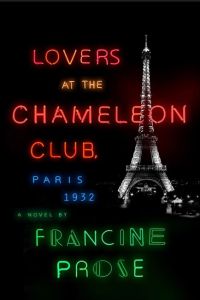
‘Lovers at the Chameleon Club: Paris 1932’ by Francine Prose

prose

2014, 436p.

It’s just as well that one of the rules I set for myself when reading is to give a book at least 100 pages before I give up on it. I didn’t know anything about this book and for the first fifty or so pages I was just confused.

There are multiple narrators here, speaking through different genres. Gabor Tsenyi, a Hungarian photographer, writes long letters home to his parents that do not quite conceal his incessant asking for money. Lionel Maine is an American novelist of the big, baggy, gossipy type who has written a memoir of his time in Paris pre-WWII called ‘Make Yourself New’. Suzanne Dunois Tsenyi, who becomes Gabor’s wife, writes an unpublished memoir of the events, with the instruction that the memoir be burnt at her death. Wealthy art patron Baroness Lily de Rossignol, who has married into an auto company, writes her own jauntily named memoir ‘A Baroness By Night’. The sections titled ‘Yvonne’ are written in the third person by an unnamed omniscient narrator. The heft of the book appears in the fictional biography of athlete and motor racer ‘The Devil Drives: The Life of Lou Villars’ by Natalie Dunois.

Told from these varying voices and agendas, these characters are drawn to the Chameleon club, a Parisian nightclub which attracts gays, lesbians, cross-dressers and artists. As Hitler’s politics begin to filter beyond Germany’s borders, the club increasingly falls under scrutiny, and adapts to fit the political milieu.  The main interest of the book is a regular cross-dressing customer of the club, Lou Villars.  A former athlete and motor racer, she is spurned by her girlfriend Arlette and becomes drawn into National Socialism, becoming a notorious Nazi informant and interrogator.

I only gradually realized that this book is  based in fact, albeit with fictional names and imaged events. The photograph around which much of the action revolves was taken by Brassai entitled ‘Fat Claude and her girlfriend at Le Monocle’ (see here) and Lou Villars is a barely disguised Violette Morris, (see also here) who gave the Germans information about the Maginot Line and members of the French Resistance.

I was conscious that my approach to the book changed dramatically once I realized that it was based on fact. I resisted the temptation to start googling the characters, and instead let the fictional book take me where it wanted me to go. There is a ‘Cabaret’-style artifice to the book, which became increasingly dark as the narrative went on. By having multiple narrators, the author is not bound to ‘explaining’ her Lou Villars character, or her seduction into National Socialism, although the multiple narrators give her scope to speculate.  I’m glad that I didn’t give up at 100 pages in, but I do wonder if my response to the book would have been different had I realized what the author was doing, earlier on.

Sourced from: Yarra Plenty Regional Library

Read because: I had heard of Francine Prose

My rating: 8

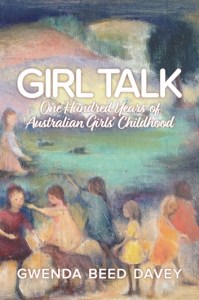
‘Girl Talk: One Hundred Years of Australian Girls’ Childhood’ by Gwenda Beed Davey

girl_talk

2017, 210 pages

As it happened, I started reading this book during International Day of the Girl  (October 11). It’s telling that there is no International Day of the Boy- and nor should there be, considering the straitened and frankly bleak lives that many girls live throughout the world compared to their brothers.

The very first picture in the opening pages of this book, subtitled ‘Group of girls with the Leones and the di Giglio Band, St Kilda, 1911’ shows a musical band of men, with young girls in the background, dressed in white, looking for all the world as if the characters from Picnic at Hanging Rock had turned up at a musical soiree. The text of the book itself starts at a very different place with the ‘sexting’ events of 2016 where young girls texted images of themselves to two boys, only to find their images shared and viewers invited to vote for ‘slut of the year’. It seems hard to even place those 1911 girls, all hatted and demurely dressed in white, in the same analytic frame as those internet images.

This is what Gwenda Beed Davey does in this book. As she writes in her introductory essay ‘Being a Girl in Australia’,

This book looks at the changes in girls’ experiences and behaviour through their own words, their ‘girl talk’. The book will consider what has changed and what has remained the same. Ten women, all born in Australia, have recorded their recollections of their childhood, in decades from ‘around 1910’ to ‘around 2010’ (p.2)

She defines childhood as ending at around 13 years of age, when puberty sets in and childhood games are often abandoned.

In an article for the National Film and Sound Archive, where Davey worked as a Research Fellow, she explains that she more than twenty years ago she had  recorded a number of oral histories for the National Library of Australia. Some of these interviews were made available for the body of this book, supplemented by more recent interviews which brought the book up to 2016.

After the introduction, each chapter is devoted to each interview which is presented as a separate continuous first-person account, with the questions removed. However, the presence of the questions lingers in the topics addressed, with a common emphasis on games played and rhymes recalled, reflecting the author’s interest in childhood games through her earlier involvement in the ‘Childhood, Tradition and Change’ research project (see its fascinating database here). As they are interviews, there is not a lot of narrative shaping, and the endings are rather abrupt. Davey has prefaced each chapter with a paragraph-length introduction, and each interview is seen as being emblematic of a particular decade.

So who are some of the women we meet here? Ethel Carroll, born in 1914, grew up in a series of rented houses with her extended family. Her father was a strong unionist, and worked as a bootmaker. She was brought up in the Methodist church, and through gaining a 1/2 scholarship, was able to attend Stott’s Business College.

Maxine Ronnberg was born in 1920 and lived in Mortlake in rural Victoria until she was thirteen. Her father was a stock agent, and she grew up in the family home where there was a governess, cook and housemaid, as well as the stockmen and drovers.

Jean Phillips was born in 1925 and moved from Collingwood where her father was employed in a boot factory to the nascent Canberra in 1927 where her father worked as a doorman at the ‘new’ Parliament House. They lived in Ainslie in a government house where the rent never changed. She left school at 14 because she didn’t like it and became a dressmaker.

From this point on, the interviews were conducted between 2011 and 2016. Dorothy Saunders was born in Sydney in 1932 and came to Melbourne when she was two. Her father was an industrial chemist educated at Sydney Tech, while her mother was a secretary. She lived at Seaholme, near Altona, which was an undeveloped suburb at the time. During the polio epidemic she went to live in the Blue Mountains for 6 months, and the family later shifted to Ferntree Gully when her father feared that Altona would be bombed during WWII. She had a wide extended family, but her father was very bad-tempered.

Claire Forbes was born in 1940. Her father fought in WWI, and he was left a life-long Pacifist. He was 55 years old when she was born, and he died when she was 15. She was part of a huge Catholic family, and they lived in a small Queensland country town and holidayed in Coolangatta with her large extended family. She had a rural school upbringing, with the Art Train and the Rural School on the ‘rail motor’ bringing extra curricular education to this remote area.

Sue Broadway was born in 1955, if not ‘in a trunk’, then certainly surrounded by vaudeville and greasepaint. Her mother was an entertainer who made the transition to television. Sue herself participated in eisteddfods and followed her mother to the Royal Show and shopping centres. Her father was a teacher and she went on the Moratorium marches.

Patricia Ciuffetelli, born 1961, grew up in Queanbeyan and then Canberra. Her parents were both born in Italy and came to Australia in the late 1950s. She did not speak much English when she started Catholic school. She had a large extended family, the result of waves of chain migration from Italy.

Tara Gower, born in Adelaide in 1981, is a Yawaru woman who dances with the Bangarra Dance Theatre. She was born in Adelaide but shifted to Broome where her father’s grandparents lived, and where many people were ‘coloured’ in Broome’s highly multi-cultural community. She went to St Mary’s, the ‘black’ school but later went to the ‘white’ high school. She considered that her childhood ended  at 12, when her father died.

Jodene Garstone was also of indigenous identity, and 12 years old when this interview was recorded in 2011. This is the only  one of the interviews with an informant who was a ‘girl’ at the time, rather than a retrospective account. She too was born in Broome, but at the time of recording lived in Kununarra, and was at Geelong Grammar on a scholarship. While recalling a childhood eating bush food with friends, she had aspirations to be a surgeon, while her brother was studying law.

I found myself wondering about the author’s role in this book, given that the body of the work is the interviews. An oral history interview is always a shared production. While the questions by the interviewer might steer the shape of the interview, the real wealth of the interview comes from the participant.  In terms of the book itself, as distinct from the interviews from which it is formed, the main contribution of this author lies in the choice of interviews, the selection of pictures, the crafting of the small prefaces before each chapter and her introductory essay ‘Being a Girl in Australia’.

The introduction performs three roles here, and I’m not sure that they combine effectively.  Perhaps if Davey had spelled out more specifically her intent in writing this introduction, it might have been easier to know how to approach it. She has chosen a number of themes, where first she gives a historical precis of the theme across the hundred years covered by her informants; second, she provides a commentary on current (i.e. 2017) events in relation to that theme; then third, draws out illustrations from the interviews themselves.

It’s interesting to look at these themes.  She starts by looking at education, then moves on to health.  There is a long section on past-times and games, which perhaps reflects her earlier research interest in childhood games in the  ‘Childhood, Tradition and Change’  project.  Her discussion then takes a more contemporary approach in exploring ‘The Age of Fear’ and ‘Sexualization, Representation and Experience’. These sections roam far beyond the interviews to discuss helicopter parenting, Bill Henson and Safe Schools. Her theme of families is more firmly rooted in the interviews, but the section on diversity includes the contemporary question of single sex schools and detention centres. She returns to a historical narrative to deal with the 1920s strikes, the 1930s depression and the three major wars. Her section headed ´War, Bereavement and Loss´includes the Stolen Generation and child migrants.

While it is important that the stories revealed in these interviews are placed within their historical context, some of the themes that she identified seem to have been imposed onto the data from a 2017 perspective, rather than emerging from what her respondents said.  Today ‘Class’ sounds rather old–fashioned and 1970-ish as a historical and analytic theme, but it just leapt out from the interviews, as did the influence of extended family. Nor was church observance explored, even though many informants mentioned it. Although class, family and religion don’t have the currency of topics like Female Genital Mutilation, Social Media or Offshore Detention mentioned in the introduction, they are the themes raised by these women, many of whom were middle-aged or older when interviewed.

That said, I enjoyed reading each of the interviews, particularly the ones set further back in the past. Each chapter is between 15 and about 30 pages in length, and the women´s voices come through the narrative. Even though they are mainly told from an adult perspective, they capture the diversity of lived experience across one hundred years, in a range of settings, focused on a life–stage that is too easily overwritten by later events and sensibilities.
AWW-2018-badge-rose-199x300

I have included this book in the Australian Women Writers Challenge.


Source  Review copy courtesy of Australian Scholarly Publishing.

I hear with my little ear: Podcasts 22-29 November 2018

Revolutionspodcast.com continues with the history of the Mexican Revolution. In Episode 9.11 Not Quite President Madero, Francisco Madero has seen off Porfirio Diaz, but he hasn’t yet been elected in his own right. He thought that it would be a shoo-in, but all of a sudden all these other contenders come out of the woodwork. And (spoiler alert!) after finally being elected, in episode 9.12 No Peace, he finds that incumbency doesn’t necessarily mean that your problems are over.

BBC Outlook has some interesting true stories, often (but not always) related to crime. In The Fraud and the Missing Boy, a private investigator has his suspicions when missing American schoolboy re-appears after three years. His family is overjoyed…but is this really a happy ending?

The History Hour.  A one-hour program contains about four stories of events from history, told from an eyewitness perspective. Vera Brittain: Anti-Bombing Campaigner has five very different stories.  Vera Brittain wrote Testament of Youth, her autobiographical account of World War I. But this is about World War II, when she spoke out against the saturation bombing of Germany. There’s also a segment on the Omagh bombing in Ireland in 1998, the biggest single atrocity in the Troubles, killing 29 and injuring some 220. It also looks at the arrival of television in South Africa in the 1970s, going straight to colour,  the African-American photographer whose coverage of Martin Luther King’s funeral won him a Pulitzer Prize, and the invention of the instant noodle.

WWI: Britain’s Conscientious Objectors examines the treatment of Britain’s First World War conscientious objectors. It also revisits the nuclear weapons inspections in Iran, the CIA’s first coup in Latin America in Guatamala in 1954 from the point of view of the son of deposed president Jacobo Arbenz Guzman, what happened to Eastern Europe’s dancing bears, and the culling in Wales of a sacred bull.

Rough Translations This American program produced by NPR looks at an American issue from the perspective of somewhere else in the world. But this time is really IS about translation, because the episode The Apology Broker looks at the concept of “sorry” and the way that it is interpreted in different languages.  Japanese has many gradations of “sorry” and they came into focus when a Japanese woman living in America orchestrated an apology from the Mitsubishi company to one of the few living POWs who were sent to Mitsubishi as slave labour during WW2. It’s a really good episode.


Movie: A Translator (Un Traductor) Cine Latino Film Festival

Set in the ‘Special Period’ when the Cuban economy plummeted after the demise of the Soveiet Union, a taciturn, aloof Professor of Russian Literature is sent to a Cuban hospital to translate for Russian patients and their parents who have travelled to Cuba in the wake of the Chernobyl nuclear accident. The closing credits point out that over 20,000 Russian children were part of this program that continued until 2011. A father himself, the translator becomes increasingly drawn towards the Russian children, to the detriment of his marriage and relationship with his own son. It is filmed in Cuba, so I enjoyed seeing places I’d visited. The language is really hard to understand, although if you look (or rather, listen) to the trailer, the dialogue is very muffled.

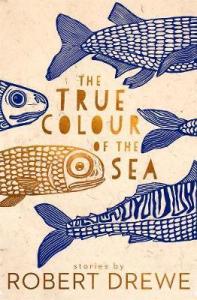
‘The True Colour of the Sea’ by Robert Drewe

Drewe

2018, 209 p.

It would come as no surprise that this collection of short stories should coalesce around the theme of the sea. Several of Robert Drewe’s earlier works reference water: The Bodysurfers collection of short stories, The Drowner (which, admittedly was more about the arid outback than water) and his own memoir The Shark Net.  But it’s not just the Australian sea that provides the background for many of these stories: instead we travel to a Pacific Island and to Cuba, as well as more recognizable beach-side settings.

I always find it hard to review a collection of short stories as a precis often gives the whole story away: by its very nature a ‘short’ story doesn’t have a lot of flesh to cut away. I tend to flip through, and if I can remember the scenario, then I feel that the story has worked for me.

On that basis, I enjoyed ‘ Another Word for Cannibals’ where an earnest, progressive, European couple returns to a Pacific island to complete the genealogical circle of their great-great-great grandfather’s missionary endeavour. ‘Varadero’, set in a down-at-heel Cuban hotel really appealed to me, as it captured Cuban tourism so well. ‘Lavender Bay Noir’ is slightly creepy in a domestic sunlit, sea-kissed setting. ‘Spotting Killer Whales’ involves an adult family gathering together in a restaurant overlooking the sea after their father has died. The eponymous ‘The True Colour of the Sea’ has a historical setting, where a colonial artist is left an a rock in the Arafura Sea.

These eleven stories were just the right length as far as I’m concerned. They were long enough to get your teeth into, but were easily read as a story-before-bedtime read. Drewe is such an accomplished writer, confident and clear-eyed.

Sourced from: Yarra Plenty Regional Library

Read because: I saw it there on the library shelf

My rating: 8.5/10

I hear with my little ear: Podcasts 14- 21 November 2015

Background Briefing (ABC)  Progressives here in Australia feared for the effects on the availability of abortion after Brett Kavanagh’s ascension to the Supreme Court. But we shouldn’t be too smug about the provision of abortion here in Australia. At the time of this recording, abortion was still illegal in Queensland under a 119 year old law (it has since changed), and the provision of late term abortion is very difficult to access. This podcast looks at the Marie Stopes provider in Maroondah, known as The Clinic of Last Resort for women all over Australia seeking a late surgical abortion.

Rear Vision (ABC) In celebration of Armistice Day, Rear Vision put out an excellent episode The Centenary of Armistice: Australia and World War I. There’s been so much about WWI and this encapsulates Australia’s war both overseas and domestically in just half an hour. Features Robert Bollard, Rae Francis from ANU and Meleah Hampton from AWM. So if you want to listen to just one podcast about the war- this could be it!

I recently read Laura Spinney’s book on the influenza epidemic and I saved Rear Vision’s The Influenza Pandemic of 1918-19.  The broadcast is actually from 2009, and it draws quite heavily on Geoffrey Rice’s book ‘Black November: The 1918 Influenza Pandemic in New Zealand’.

History Today And other podcast about the influenza epidemic, this time from History Today. The Spanish Flu pandemic features author Catharine Arnold, whose book Pandemic 1918: The Story of the Deadliest Influenza in History takes a more biographical approach to the spread of disease, particularly in Britain

Revolutions PodcastEpisode 9.10 Chickens Coming Home to Roost is a bit of a stop-and-take-a-look-back type of episode. The presenter Mike Duncan was on a book tour so in  his absence,  he reads an essay that he wrote in grad school on the fall of the Porfirio Diaz’s long regime. I enjoyed this episode because, when you’re listening to something as elongated as this, you wonder if you have forgotten important things along the way. It’s reassuring to find that I haven’t.

Movie: The Accused (2018) -Acusada- Cine Latino Film Festival 2018

An Argentinian film about a young girl, Dolores, who finally, after two and a half years, faces the court after the murder of her best friend. This friend had posted a sex tape of Dolores, leading to a falling-out between the two girls, and when the friend is found stabbed on the couch after a drunken party, Dolores is accused of the murder. Now she faces the court, her parents having mortgaged the house to employ the best lawyer they can.  The young actress reminded me of Demi Moore in Ghost, and she is very good in manipulating your feelings about her. Is she innocent, exhausted, manipulative or a good liar?

It’s subtitled in English, which is just as well because I could barely follow a word.

My rating: 3.5

Movie: Roma (Cine Latino Film Festival 2018)

I saw this as part of the 2018 Latin American film festival. It’s directed by Alfonso Cuarón, who also directed Gravity and Children of Men. It’s filmed in black and white, and it looks at a year in the life of a middle-class family in the Roma suburb of Mexico City. It reminded me a lot of that other black and white film Of Time and the City, (which in that case was about Liverpool), in that the director is almost writing a love letter to the city of his memory. Lots of observations about class, being a woman, betrayal – and in beautifully clear Spanish! (subtitles in English). It’s very good

My rating: 4.5 stars

I hear with my little ear: Podcasts 6 -13 November 2018

Well, the mid-term elections are done and dusted, Jeff Sessions has been ordered to let himself out the door- what does it all mean? There’s a new Trumpdate episode of Russia If You’re Listening.

News in Slow Spanish Latino Episode #282

99%Invisible Episode 326 Welcome to Jurassic Art has a podcast about the depiction of dinosaurs and how it has changed as artists have been liberated to draw from analogy and imagination. I’ve often been amused looking a sketches of a dinosaur that show the one little tiny bone that has been discovered.

Big Ideas. Kirsten McKenzie is one of the historians who influenced me most when I wrote my thesis on Judge Willis (see my review of A Swindler’s Progress which she released in 2009 ). In this podcast A scandalous empire she talks about colonial scandals – Viscount Lascelles in NSW and Chief Justice Wylde in the Cape Colony- and what they tell us about respectability and anxiety, and the bringing of social change. It’s a lecture recorded on 4 October 2018 at UWA Institute of Advanced Studies. The recording has not been kind: it’s rather shrill, (says she who is very self-conscious about her own voice) but the content is excellent.

Conversations.  Everybody’s favourite interviewer Richard Fidler talks with David Marr, who is so witty, arch and caustic. A rather more tentative and emotional interview subject is Louisa Deasey who talks about how she completely re-evaluated her view of her long-deceased father when she received a Facebook message from a stranger about a cache of letters a French family had found amongst their grandmother’s possessions. The episode Discovering a father’s secret life in France ties in with Deasey’s book A Letter from Paris. The interviewer Sarah Kanowski sure has to work hard to get this story out of a very nervous interviewee.