
Monthly Archives: August 2011

Bishopscourt

It was Melbourne Open House on Sunday, and on such a magnificent winter day, I just had to call into one of the locations while I was in the area.  We had come across Toronto’s Open House while we were there, and London’s too for that matter, but I think that Open House days are meant for the residents of a city rather than visitors.  Some of the sites are open year round so there was no great appeal there (unless you went to parts of the building not normally accessible), but I was more drawn to places that are not normally open to the public.  I was walking past Bishopscourt and had always been intrigued by it- so Bishopscourt it was!
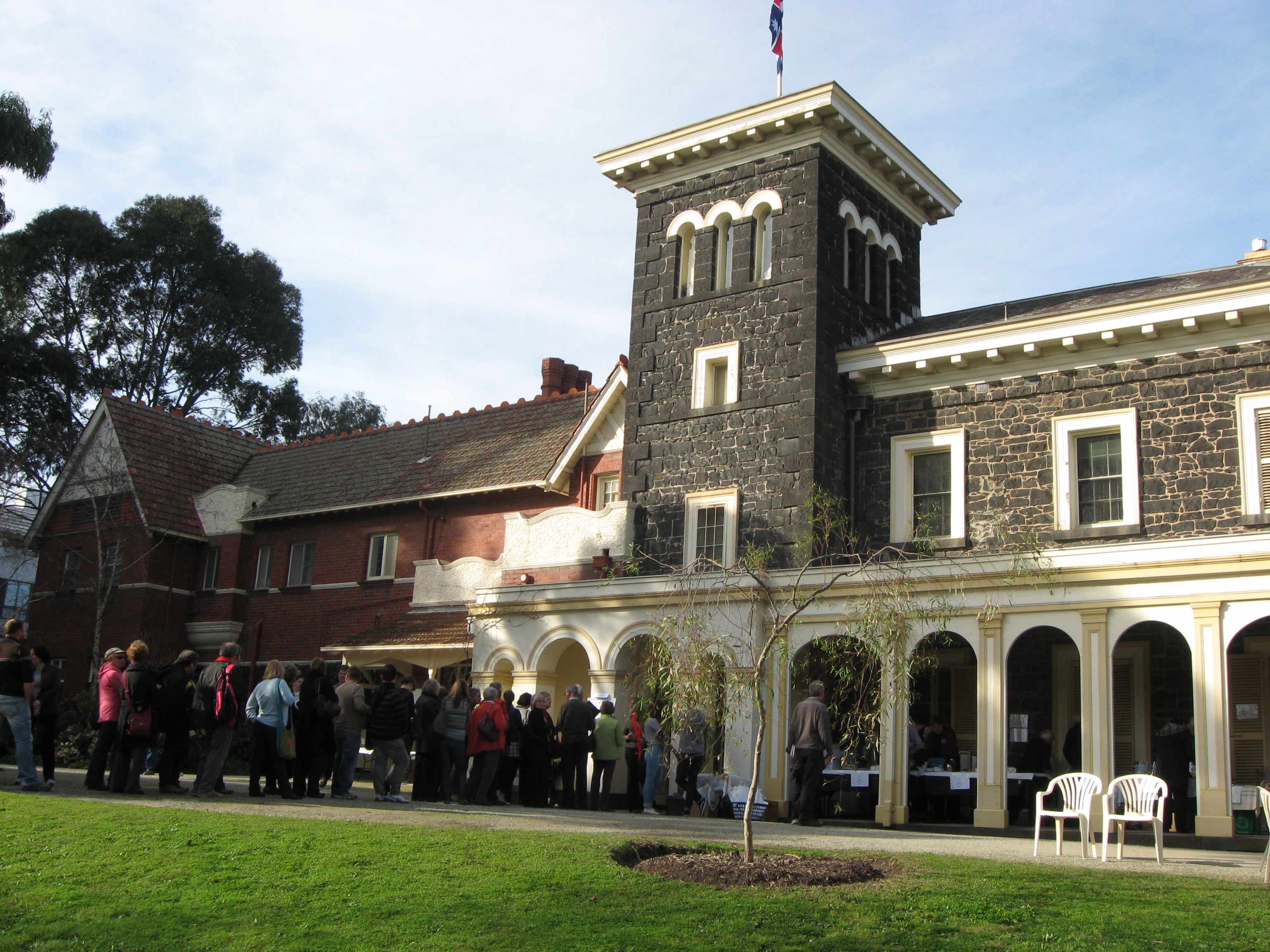
Bishopscourt is located in Clarendon Street, opposite the Fitzroy Gardens.  It has been the family home of the Anglican Bishop and later Archbishop of Melbourne since it was built in 1853.

If it looks a bit of a hodge-podge, that’s because it is.  The first Bishop of Melbourne, Bishop Perry, selected the location so that he could walk into Melbourne itself, while being close to the site that was originally considered for the Cathedral between Hotham and George Streets in East Melbourne .  It was later decided to construct the Cathedral in its present location on the corner of Swanston and Flinders Streets. Construction of  Bishopscourt began in 1851 but because of the shortage of building labourers in these goldrush years, the house was not completed until 1853.  Sixty years later it was decided that a grander house was required. One of the bluestone wings was demolished in 1903 and replaced with the rather discordant red-brick wing, resulting in its rather schizophrenic  appearance.

Although constructed in wealthier gold-rush days,  the design of the bluestone section evokes an earlier, more Georgian influence with its French windows and shutters, wide doors and simple architecture.
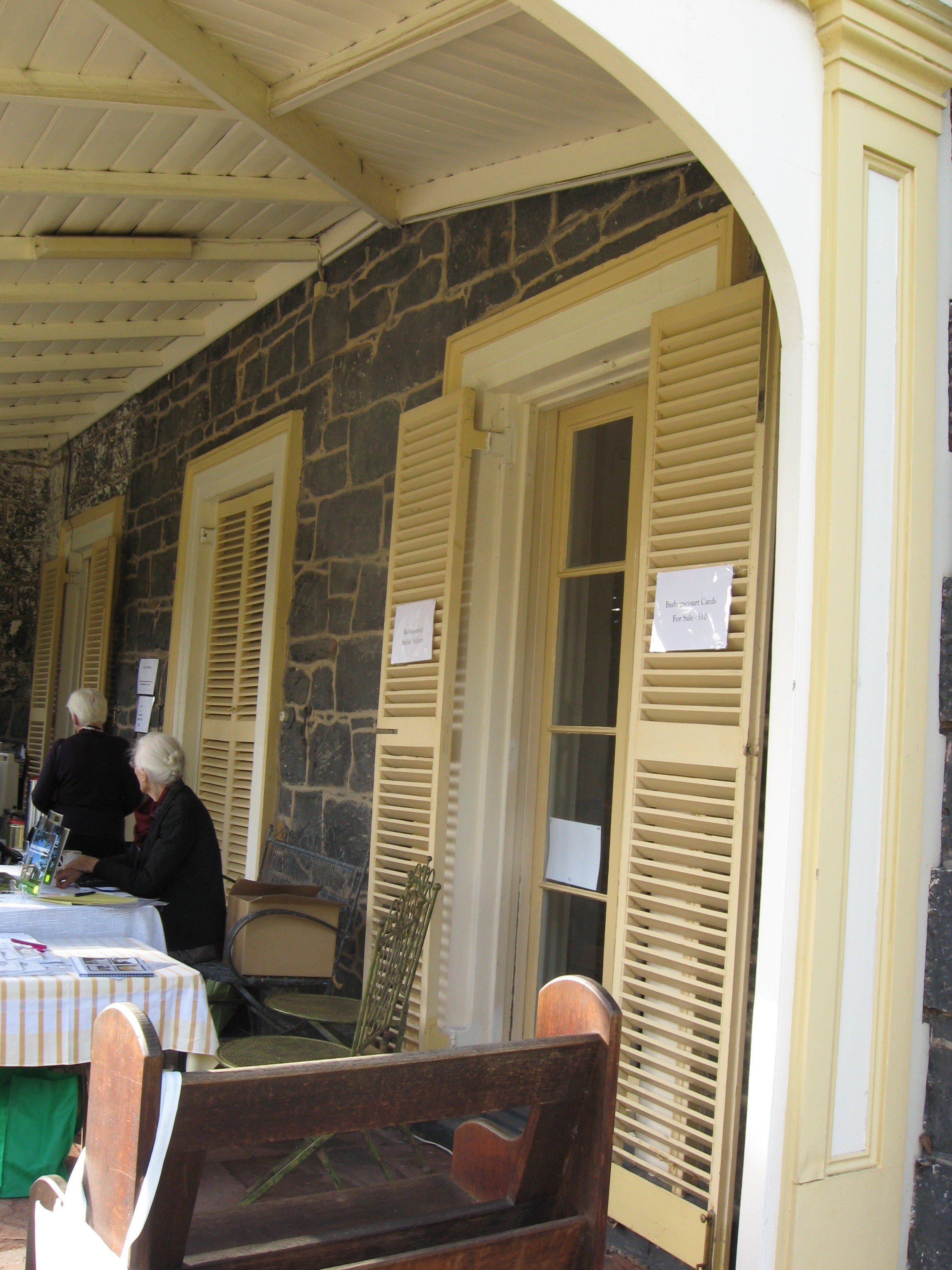
The bluestone is rather roughly laid on the front and side of the house, and it has been suggested that perhaps it was intended that the facade be stuccoed at a later time.  The new red-brick section included a large dining room and a private chapel which was a warm, intimate space that might hold perhaps twenty people.  I wish they had let us take photographs, because the chapel was very special place, with many of the furnishings and decorations donated by previous occupants.
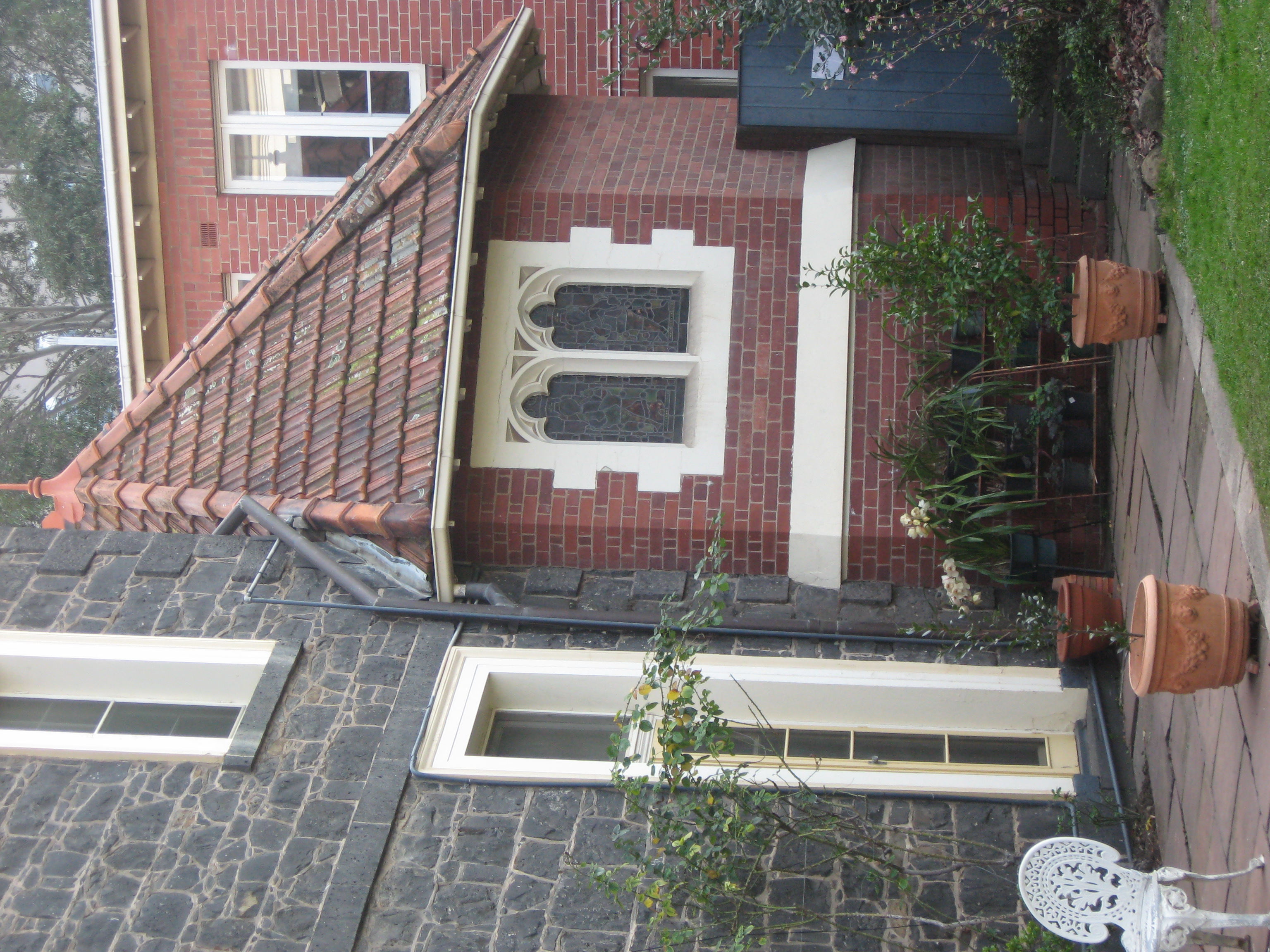
The chapel from the outside

Tours ran approximately every half hour and you were ushered from one room to another, where someone who had previously lived at Bishopscourt spoke about their memories of the room as part of their family home.  The Archbishop of Melbourne was there in the drawing room, decked out in his purpleness, and the daughters and daughter-in-law of the former Archbishop Frank Woods spoke in the morning room, dining room and chapel.  Unfortunately we were restricted to the ground floor- I was intrigued by the staircase which was carved with silhouettes of bishops’ mitres- but I suppose that some privacy was in order as the house continues to be used as a family home: the only pre-gold rush estate still to be used for its original purpose.

The gardens have been rescued from disrepair by a dedicated band of volunteers and they were in beautiful condition.
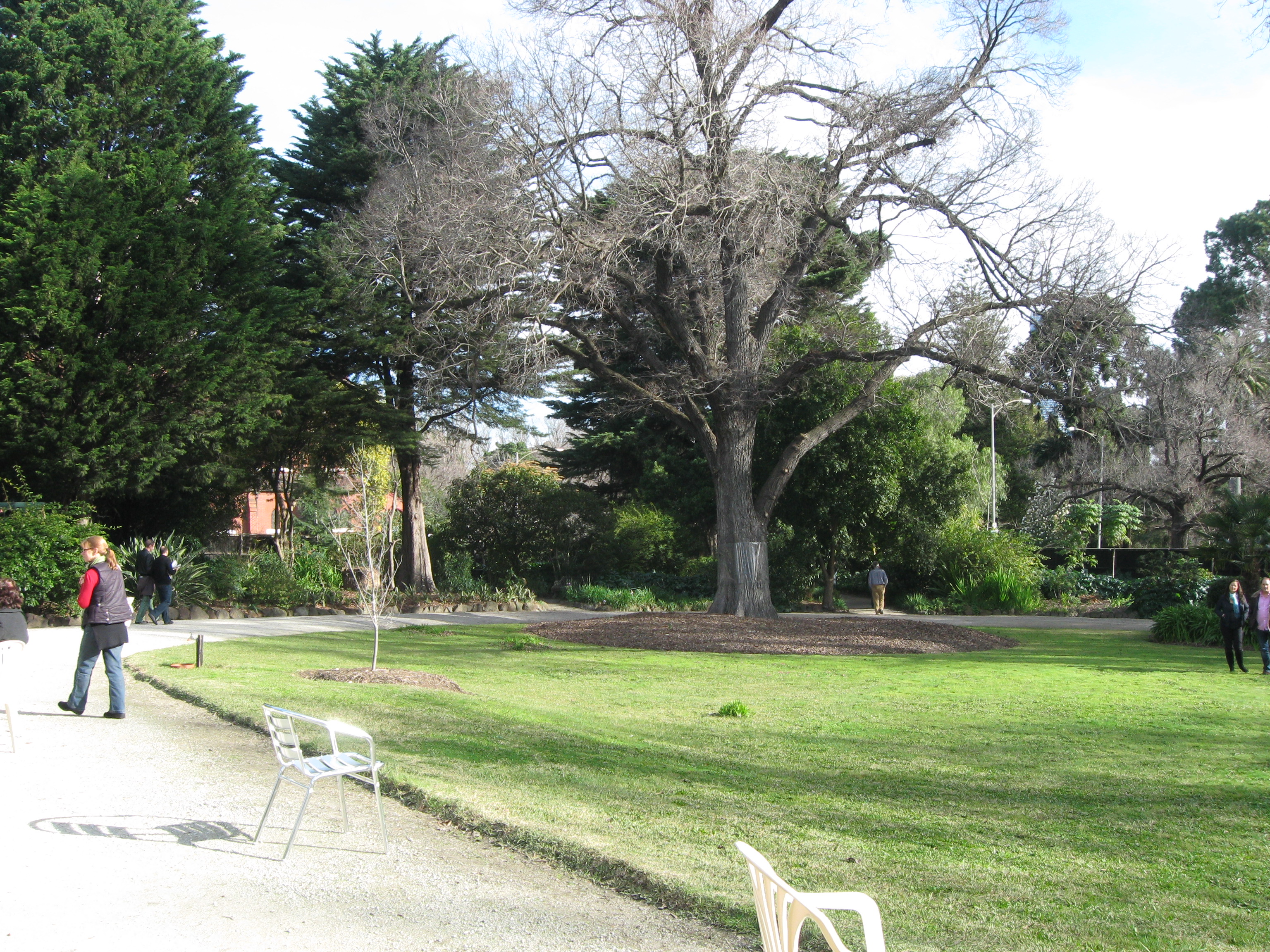
As I left, there was a religious pilgrimage of a different type through the Fitzroy Gardens as the crowds headed towards the MCG for the Collingwood/Essendon match.
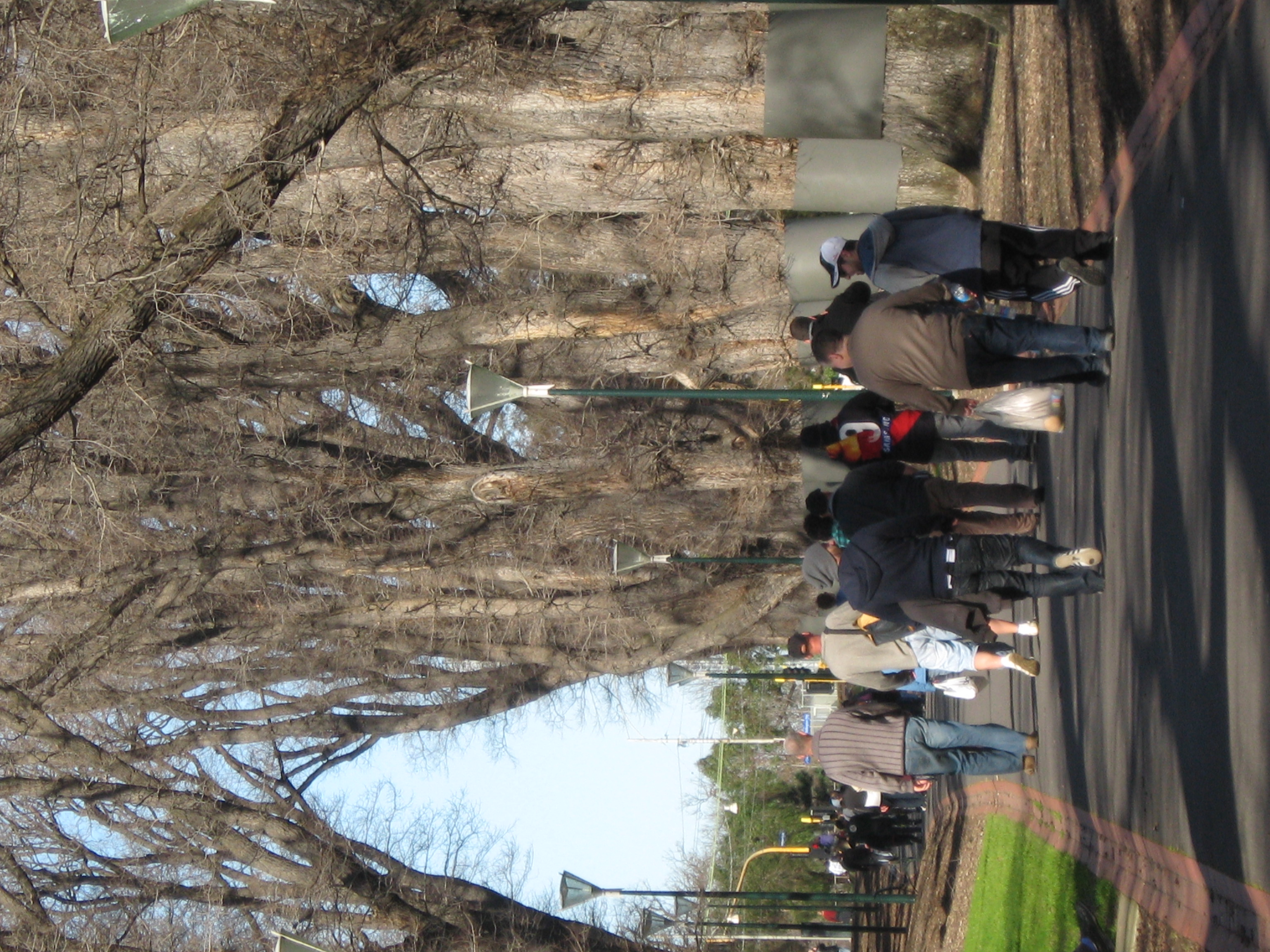
The processional to the 'G
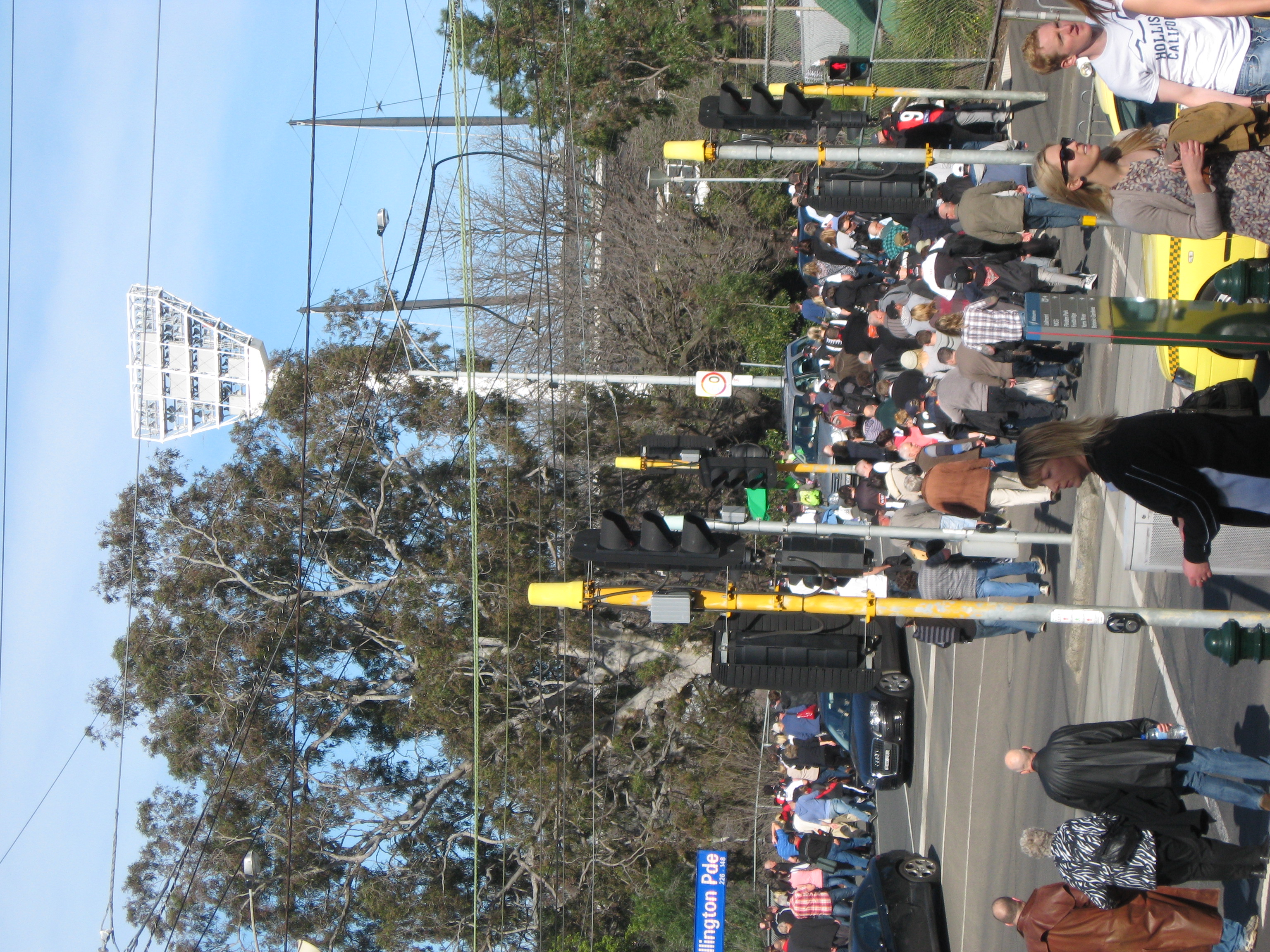
Ah- the footy and the MCG on a sunny winter afternoon- hot pies (unfortunately), seagulls, the Footy Record and Jolimont railway station. Who could want for more?

By the way, I wasn’t the only one checking out Melbourne Open House.  Andrew at High Riser had a very busy day and more success photographing than I did.

‘New Voices’ at Eltham

On Saturday I went up to the “New Voices” Writers’ Festival up at St Margaret’s Church in Eltham.  Apparently it’s been running for a number of years but to be honest, I hadn’t heard of it before- or perhaps I just didn’t notice.

I was attracted by the first two sessions in particular that focused on the memoir as a genre: Rodney Hall- twice Miles Franklin winner- speaking about his memoir Popeye never told you, followed by cultural historian David Walker conversing with the biographer and historian Jim Davidson about Walker’s own memoir/reflection Not Dark Yet: A Personal History.

Although distrustful of autobiography as a genre, Hall was spurred to write Popeye never told you mainly for his siblings.  The book covers his childhood in wartime Britain from the ages of 5 to 9, and he intentionally adopted the voice of a child with short sentences, and a child’s eye perspective of size, relationships and causality.  Hence, he chose episodes  for their impact on him rather than their historic or narrative significance, and drawing on the rather linear and black-and white reasoning of a child, he limited his conjunctions to words like “and” “but” “so” etc. It’s a brave, and perhaps rather contrived narrative stroke, and one that could fail disastrously.  However, this review suggests that Hall succeeded well.

The second speaker of the day, David Walker, also moved out of his accustomed genre in writing Not Dark Yet: a Personal History.

After a long career in academe, Walker’s eyesight deteriorated suddenly in 2004 as a result of macular degeneration.  With the term “A personal history” as the rider to his title, this book is not just a memoir (or perhaps an ‘auto-ethnography’ as Walker himself has described it) but also a reflection on family history, history more generally,  memory and storytelling.    When he was  (rather chummily) discussing the book with fellow-historian Jim Davidson, it brought to my mind Inga Clendinnen’s Tiger’s Eye, one of the most personally influential books I have ever read.  In fact, it’s not going too far to say that you would not be reading this blog, at least in the guise it is,  had I not read Tiger’s Eye. Historians, I think, approach memoir and autobiography with a particular wariness and cannot completely divorce their professional academic skills from the shaping of their own life-story, so I’m interested to read this book. Certainly Tom Griffiths’ review (another historian I deeply admire) suggests that it will be well worthwhile.

I’m not really a writers’ festival sort of person, which may surprise you, given that I love reading so much.  I do, however, enjoy hearing non-fiction writers talking about grappling with a body of evidence in some form (lived experience, research, primary sources) and shaping it into an argument and narrative.  There’s an independence of the material beyond the author, and a  responsibility on the author’s part for some degree of fidelity.

However,   I’m less drawn to hearing fiction writers speak about their craft.   For me, it’s a bit like reading an artist’s or art critic’s statements about a work in a gallery: a self-consciousness and layering of meaning that seems sometimes contrived and retrospective.  Listening to fiction authors talking about their work- a creation of their own making-  is a discussion that really requires you to have read the book in question, in a way that is not necessarily true for a non-fiction book, and so after a rather good lunch, I left early in the afternoon.

As well as drawing on sponsorship from publishers  and the local council, the day was conducted under the auspices of the Eltham Bookshop. I was saddened to read in the local paper that after 14 years this bookshop, like so many others, is really struggling.  Its proprietor, Meera Govil, is a generous contributor to the cultural and literary life of Eltham and surrounding districts, and the leafy north would be the poorer for her shop’s demise.  I shift a little uncomfortably in my chair as I write this: I rarely purchase books but instead borrow them from libraries or buy them second hand.  I’ve bought from Amazon and Book Depository, and I am drawn by 10% loyalty schemes for the few books that I do buy.  Although I’m still chafing at the e-reader experience, I know that I’ll succumb increasingly if the digital versions are priced attractively enough.  At one stage I promised myself that I would buy one book a month, but that resolution has gone out the window.  I look in despair at the deluge of new books that keep on tumbling into the market, and I am saddened to hear of such small print runs and the out-of-print status of so many precious works. Perhaps print-on-demand might be one form of salvation, but it’s  such a bland and stripped down product in its present form.  It’s all beyond me.