Monthly Archives: December 2008

The Drunken Nurse

saireygamp

The Port Phillip papers are certainly full of drunkards.  Judge Willis himself has plenty to say about the perils of alcohol, and the Police Court is dominated by brawls and crimes connected with alcohol.  But I was particularly taken with this  Sairey Gamp character from the Port Phillip Herald 1 July 1842.

AN AFFECTIONATE WIFE.  For several months past, a man of the name of Henry Hayward a much valued servant of the firm of Campbell & Woolley, had been seriously ill, so much so that it was thought advisable by his medical attendant, Dr Campbell, to send for his wife to take charge of him, who, at the time, was following her occupation of monthly nurse in the family of his Honor Mr La Trobe.  This woman had hitherto been engaged as a nurse in some of the most respectable families- Captain Lonsdale’s, and many others.  The poor sufferer, whom we personally knew as an excellent and faithful servant, was at this time in a most precarious state, being attacked with that frightful disease, dysentry, and although a strong robust man, was evidently sinking fast: the attention of his wife, of course, became necessary, and his Honor the Superintendent being apprised of the circumstance, forthwith sent her to her husband, and himself kindly called to see how the sufferer was doing.  At this stage of the disease the doctor was sanguine of success; but to his extreme mortification he found on each visit that the wife, who had hitherto been supported by the first people in the colony in her vocation as nurse, was a confirmed drunkard; and that she was in the habit of not only getting beastly intoxicated and lying on the bed of her suffering husband, but made it a practice to drink the port wine and brandy, which the medical attendant had ordered for his patient, and thus leave the poor sufferer without succour.  Enraged at this atrocious conduct, Dr Campbell, at his own expense, engaged a respectable woman as nurse, to see that his orders were attended to, and that the wretched wife should not ill use her husband, which he had been informed she was in the habit of doing.  The nurse was unremitting in her attentions, but was frequently obliged to flee the house in consequence of the violent and drunken conduct of the dying man’s wife.  Often has Dr Campbell called upon his patient and seen the wife in a state of intoxication, lying almost senseless beside her husband! and often has he endeavoured, by every means in his power, to prevent such heartless conduct; but his exertions were all in vain; the poor man still lingered on, and the depraved wife pursued her unnatural conduct till the sufferer died! and this took place but a few days ago.  We have been particular in mentioning these circumstances to prevent ladies being imposed upon by such a wretch as the wife of Henry Hayward- a woman who has hitherto gained her living in the first circles as  “a monthly nurse” but who ought, in our opinion to be publicly and soundly whipped through the town for her fiendish conduct to her departed, and as far as she is concerned, her murdered husband.  We have the authority of the doctor for stating that had the wife performed her duty properly the deceased would in all probability have recovered!

There’s not many references in the papers of the time to women working- although how much work Mrs Hayward would gain after this exposure is doubtful! I was intrigued to find out what a “monthly nurse” was,  wondering if it was a nurse engaged for “that time of the month” but instead, it seems that a monthly nurse was a kind of mothercraft nurse who would move in after the baby’s delivery to care for the mother and baby for a month after confinement.  There’s a fascinating article called “The Remembrances of a Monthly Nurse”  in Fraser’s Magazine for Town and Country (1836)that manages to combine celebrity gossip with a quite affecting account of the birth of a baby with cleft lip and palate, all from the perspective of the monthly nurse.

I had seen advertisements placed in the Port Phillip Herald by doctors calling for wet nurses, but this was the first mention of a monthly nurse that I had seen.  It appears that she gained her work largely through word of mouth between the “first families” of the colony.  The reference to His Honor Mr La Trobe, the superintendent of Port Phillip, relates to the birth of his daughter Eleanor Sophia La Trobe born 30 March 1842.  It seems, therefore, that Mrs Hayward was still with the La Trobes longer than the usual month, but as Georgiana McCrae noted, her friend Mrs La Trobe was often in poor health, and the La Trobes would have been first among first families!

I wonder how this marriage between the employee of Campbell and Woolley, a prominent mercantile firm in Port Phillip at the time, and a monthly nurse would play out.  No doubt she would be absent from home for extended periods of time. There’s no mention of other family.

It’s hard to tell what the actual outrage is here.  Was it her drunkenness- taking the port wine and brandy meant for her husband, leading no less to her “murdering” him by not doing her “duty” for him?  Was it her slatternly behaviour, lolling around the bed drunk with the dying man?  Was it her violence to the respectable nurse paid for out of Dr Campbell’s own pocket? Or was it, perhaps, the scandal and trickery by which this drunkard had worked her way into the  domestic households of respectable families, placing them all unknowingly in peril?  Whatever- publicly and soundly whip the woman around the streets- that’ll teach her!

References

Dianne Reilly La Trobe: The Making of a Governor

Hans Heysen exhibition, Adelaide

heysen2

As an Australian of a certain age, I am well familiar with the typical Hans Heysen painting of gum trees that seemed to adorn every school corridor during the 1960s and 70s.  I wonder if the Education Department had/has  a warehouse with hackneyed Australian paintings- rows of faded “Shearing the Lambs”, a couple of hundred doleful Dobels and forests of Heysen gum trees.

I’ve been over in Adelaide the last week for the Australian and New Zealand Legal History Society conference.  I intentionally arrived one day early to check out the galleries and museum before the conference began.  I approached the Heysen exhibition with some trepidation, wondering if it would be gum tree after gum tree.

I was pleasantly surprised.  I hadn’t realized how much acclaim Heysen received at the time, winning scholarships and prizes overseas, and following that well-worn path to French art-school.  I particularly liked this painting of turkey bums- a painting which he noted for its complex structure with the movement of the turkeys through the saplings.

heysen

It was interesting to see the way that he had to recalibrate his eye for landscape once he went into the Flinders Ranges which were so different from the Adelaide hills and Hahndorf where he made his reputation.

The exhibition will be travelling to different locations in regional galleries next year.  It’s well worth a look, if nothing else to challenge your weariness over yet another Heysen gum tree.

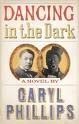
‘Dancing in the Dark’ by Caryl Phillips

dancingdark

2005, 214 p

W. C. Field described Bert Williams, the real-life subject of this novel, as “the funniest man I ever saw, and the saddest man I ever knew”, and this paradox is just one of many in this book.  Bert Williams was a light-skinned West Indian but adopted as his stage persona a black-faced “coon” character.  He consciously adopted this stage identity as he applied his cork makeup, and scrupulously removed both after the performance: something that his fellow negro performers could not do.  Despite the increasing discomfort of his colleagues with his depiction of a shuffling, feebleminded “coon” , he responded to the acclaim of white audiences by continuing to play the character, eventually as the only “blackface” amongst Ziegfield’s Follies.  And yet, his act raised the profile of Negro performers, heading Booker T. Washington to note that “He has done more for our race than I have.  He has smiled his way into people’s hearts, I have been obliged to fight my way”.  And yet, this “smile” is so ambiguous and shallow: white audiences boycotted his attempts to move beyond the “nigger” stereotype, and he was trapped into continuing to play the character in order to maintain his popularity.

This book is told from multiple points of view, particularly from the middle of the book onwards.  I’m not sure if this narrative style was as prominent at the start, but I certainly noticed it as the book went on, and it seemed to mirror the increasing disintegration of his inner personality, marriage and stage success as it was perceived more and more by others.  The narrative is interspersed with film scripts, newspaper reports etc (that I assume are fictional, but I wouldn’t know) in a sort of papier-mache, constructed effect that emphasizes the emptiness of the man underneath.

The tone of the book is fairly simple and direct.  It raises big issues, though, about race, identity, performance and popular acclaim through the story of one man.

A job in Higher Education?

I always have a little browse through the Higher Education columns of the Career insert of The Age.  In an earlier life, I have worked in educational design at university and TAFE level, and I like to just keep my eye on what’s around.

Ah, here’s a job for a Senior Educator.

img432

Senior Educator in hairdressing???  Not instructor, mind, but educator…

And the school of Hair Beauty and FLORISTRY??

Carmen Miranda, maybe.

carmen_miranda

Or perhaps a little topiary?

topiary

‘Rock and Roll Nerd’

My niece Louise sometimes commented that when she was performing on stage, she could look down and see her poppa’s bald pate reflecting the footlights and a steadily widening smile crossing his face as he sat a little taller in his seat, bursting with pride.  That’s all she could see- the forehead and the teeth.

minchin

I thought of that today, as I sat watching the documentary ‘Rock and Roll Nerd’ grinning away in a kind of maternal pride (even though I do not know the man) and with my eyes welling with tears at his vulnerability, resilience, humanity and the mixture of unfairness, joy,  hard work, exhilaration, edginess and yes, dagginess, of his life.

I’ve always liked Tim Minchin (who physically bears ABSOLUTELY no resemblance to the other Tim Minchin I know).  Ever since I first saw him on The Sideshow, (was it?) I was blown away by his intelligence, talent and outrageousness, even though I’m old enough truly to be his mother.

This is a great documentary- very human and very affirming.  Go see it.

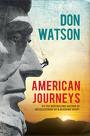
‘American Journeys’ by Don Watson

images

2008,  326 p.

I haven’t been to America.  And I don’t normally read travel books.

That said, Don Watson’s American Journeys strikes me as a rather unusual specimen of the genre.  It starts off conventionally enough, with a map of America with snail trails all over it, zigzagging right across the country.  It’s only when you embark on the book that you realise that these are indeed, journeyS plural, undertaken just for the pleasure of seeing what’s there, and that the experience of travel- i.e. moving from point A to point B- is just as important as the final destination.

This feeling of disembodiment- moving across- the continent is reinforced further by the blandness of the table of contents- just Chapter 1, Chapter 2 etc.  It’s really quite hard to locate favourite sections again in this book- it all just flows past.

Nonetheless, there are some truly memorable chapters- the New Orleans chapter in particular is damned good reportage- and indeed, as I flip through the book, I find good segments throughout that I had enjoyed but passed on over without them really making a strong impression on me. Is this shallowness intentional?

But there’s also a repetition about the book.  Again, I can’t work out if this is a weakness, or whether it’s a commentary on the nature of America itself.  Fast food strips, the shambolic nature of privatized public transport with Amtrak, the narrow fundamentalism, the puffed-up boasting, the distance…all these themes crop up again and again, right across his journey.  But then I think about how few concepts one really takes from a book when the last page is turned, (maybe four at best??) and if leaving with a multi-stranded memory of a book is a sign of success, then this book succeeds admirably.

Most of all, this book gave me a more nuanced understanding of American freedom, although I probably still don’t ‘get’ it.  In the past, I have bristled at the smugness and selfishness of George W. Bush’s ‘fridom’ that was so disrespectful of that of other nations.   Don Watson explains it much better than I could paraphrase, so I’ll let him do it:

Freedom is such an old chestnut of American rhetoric that it does not impress outsiders as perhaps it should.  The more the president speaks of it, the less meaning it registers.  When he says ‘Our enemies hate us for our freedoms’ we cringe, even though we know that, down the years, Americans have died in tens of thousands for the cause. In any case, we think, it’s less for the freedoms that they hate you, and more for the influence you exercise. ‘Our enemies hate us for our power, our hegemony’ would be a truer statement, and little would be lost by stating it in these terms.

And yet, when one travels in America, the chestnut sheds at least some of its shell. You come to see that, to Americans, freedom means something that we incurable collectivists do not quite understand; and that they know freedom in ways that we do not.  Freedom is the country’s sacred state.  Freedom is what must be protected.  All over, they will tell you what is wrong with America, but freedom is the one thing they think right.  And whatever the insults to my social democratic senses,  that is what I find irresistable about the place- the almost guilty, adolescent feeling that in this place a person can do what he wants…

If I am American, I am as free as a person can be.  If I am free, I can do- or dream of doing- all the things that it is in my nature to do or to dream; no other place on earth need interest me.  So long as I am guaranteed this freedom, I will forgive the things my country does that are not in my nature or my dreams.  I will be ‘spared the care of thinking about them’.  That is, of course, unless my country or some other place threatens freedom.  (. 325)

The blurb on the back of my book quotes Watson saying “Love and loathing come and go in about the same proportion”, and he conveys this ambivalence so well.

It’s Council Election time

Ah democracy!  This weekend has been local election time in Victoria and my enthusiasm for compulsory voting EVEN extends to council elections, shabby and petty little events though they are.  Many councils opted for postal-vote only, but my council had ‘proper’ elections, complete with flyers, Victorian Electoral Commission staff, the little cardboard booths and the stubby pencils.  Although I could have probably survived without this exercise in local democracy, in general I’m very pleased that we have government-funded, compulsory elections.  I look at the queues of people at American elections, and the skewing of issues on all sides to “get out the vote” and I’m glad that there’s no question about it here: you just have to vote.  It only takes ten minutes out of your life because it’s funded on the knowledge that everybody will attend.

condell

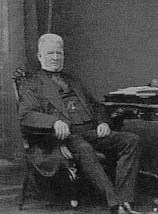
Henry Condell, first mayor of Melbourne

The first council elections in the Port Phillip district were held in Melbourne on 1st December 1842. This was a time when the “anxiety” about Judge Willis was reaching a peak, before subsiding briefly to re-emerge the following year.  They were not the very first elections held in the district: there had been elections for the Market Commission in 1841, but few voted for it.

In Britain, the Municipal Reform Act of 1835 provided the first English municipal elections, and the Colonial Office was keen to extend this rudimentary form of ‘representative democracy’ to the colonies as well.  Given the influx of migration into Port Phillip after 1839, many people would have experienced  this new phenomenon of municipal elections ‘at home’, and certainly the English influence on the election process is very noticeable.

Even before the Government announced the final arrangements for the Melbourne Town Corporation election, there was jockeying between factions about how it would be managed.  There was one private meeting that sought to ensure that the ‘right’ sort of people were elected, drawing I suspect, on the British tradition of sorting it all out between gentlemen and avoiding an unseemly election at all costs.  In defiance of this concept of ‘hole and corner meetings’, a public meeting was held in opposition to proclaim the openness of the election to all qualified comers.

The bill for the Melbourne elections was passed in August 1842, providing for four wards.  Candidates had to possess real estate worth 1000 pounds or live in a residence with an annual rental value of 50 pounds. In order to vote, electors had to occupy property with an annual rental of at least 25 pounds.

On 12 September ‘collectors’ were dispatched to inspect properties to see if the rental value was worth 25 pounds.  As rental properties worth less than 25 pounds were exempt from taxation, the occupants were not qualified to vote.  Such a regulation also ensured that tenants had an incentive for downplaying their rental to avoid taxation.   After the Burgess List had been published, its valuations were challenged by a Committee, which heard appeals.

Prior to the election, all candidates were furnished with ‘queries’ – not unlike the questions posed today in more recent times by lobby groups today before an election.  However, these queries were not so much about policies, but more about establishing the integrity of the candidate.  The questions also reflect an intention, at least, to avoid the secrecy, patronage and jobbery of Old Corruption back in England.  Not all candidates answered the questions.  The questions were (roughly paraphrased)

1. Do you have the time and energy to devote to the position?

2. Will you vacate your position if requisitioned by 2/3 of the burgesses?

3. Will you vote for open-door proceedings? (one of the first actions of the newly elected council)

4. Will you select the mayor and aldermen from among the elected council? (because under the Act, outsiders could be appointed )

5. Will you stay in your seat unless faced with uncontrollable circumstances or requisitioned by 2/3 of the burgesses?

6. Will you oppose the election of any candidate to an office in the gift of countil unless their moral character will bear strict scrutiny ?

7. Have you pledged yourself or put yoursdelf under any obligation?

The election itself was treated as a ‘festival’, but not a public holiday as such.  A hotel in each ward was designated as an ‘alderman court’, and it opened at 9.00 a.m. Electors would take their ballot paper to the polling room in the hotel, check their name against the Burgess list, then their registered vote was read aloud to the gathered throng- thus reinforcing the ‘pledge’ that would often be given before the election to vote for a particular candidate.  Electors had more than one vote to bestow- for example, in the Lonsdale Ward each elector had three choices and could, if desired, spread the vote among three individual candidates, or ‘plump’ all three votes for the one candidate of their choice.  The tally was announced hourly and ‘treats’ were laid on.  At 4.00 p.m. the final total was declared, speeches delivered, bands playing and celebrations and commiserations all round.

And where does our Judge Willis fit into all this?  The newly elected town council trooped before him for a public reception followed by cold corned-beef sandwiches where he was noted for wearing a hat of remarkable construction (the mind boggles).  Garryowen has a good description:

“Judge Willis was fidgetting impatiently on the Bench, commanding the crier to keep order; and the Court, now thronged, to be cleared, commands impossible to be enforced, for the crier was irrepressible with excitement, the spectators were in no humour to be trifled with, and this was one of those occasions on which Willis condescendingly left his bouncing unnoticed.  The Judge as he appeared robed on the Judgement-seat cut a rather grotesque figure.  His coiffure was constructed upon an admixture of two or three orders of hat-architecture, a tripartition of the billy-cock, the shovel, and cocked-hat.  It was not unlike the “black cap” in which Judges pass capital sentences, but it was winged, padded, enlarged and ornamented in such a manner as to be unrecognisable. “

Judge Willis’ own contribution to this newly-minted representative democracy was rather equivocal. He declared that the elections were constitutionally invalid because they had not received the Royal assent, even though he was sure that it would be received in due course and even though the Colonial Office had strongly encouraged the holding of municipal elections.  As a result, the new Town Corporation was unable to levy rates for some time.  Furthermore, the candidates split quickly along class, sectarian and ‘party’ lines to the extent that cases were launched in Judge Willis’ court when disagreements amongst councillors reached such a pitch that they refused to sit together in the same room!

doyle

All in all, happy times.  Welcome to the Lord Mayorship, Robert Doyle (but don’t even THINK about reintroducing cars to Swanston Street!)

References:

David Scoullar’s uncompleted Ph D thesis in SLV

Bernard Barrett The Civic Frontier: the origin of local communities and local Government in Victoria

M. M. H. Thompson The Seeds of Democracy

Garryowen