
Tag Archives: palestine

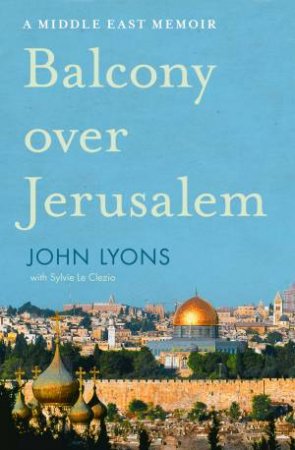
‘Balcony Over Jerusalem’ by John Lyons

2017, 376 p

This book, co-written with his wife Sylvie Le Clezio in 2017 was another amongst the selection of books handed to Australian MPs by a number of prominent local writers. It is a memoir of the six years that Lyons spent based in Jerusalem as Middle East correspondent for the Australian, not a newspaper that I read often. He has worked for most of the media groups in Australia: Murdoch with the Australian, the Sydney Morning Herald and now for the ABC as their Global Affairs Editor. I must say that I will now watch his reports from the Middle East in the wake of October 7 with added interest because, not only does this book deal with the swirling constellation of Middle East politics between 2009 and 2015, but also it highlights the heavy influence of the Israel lobby in Australia in shaping the news for an Australian and Jewish/Australian audience to reflect an even harder line here than in Israel.

The book is named for the large balcony in their apartment that overlooked a vista which encapsulated Palestinian/Israel history: Old City of Jerusalem, modern Jerusalem, the headquarters of the United Nations, and the concrete wall that separates Israel from the occupied West Bank. In front of their balcony was the ‘peace park’, where six days of the week Israelis would place their picnic baskets on the upper parts of the park, and the Palestinians would picnic on the lower parts. Except for Friday evenings, when on the sound of a siren announcing Shabbat, Israelis would leave the park and walk home for their Shabbat dinners. On cue, the Palestinians would appear carrying plates of kebabs and tabouli and move to the higher parts until, on Saturday evening, the Israelis returned, taking up their place on the top of the hill, and the Palestinians would move back down again.

In his opening chapter he declares that

As for my own perspective, I approach reporting of Israel from a ‘pro-journalist’ stance. I’m neither ‘pro-Palestinian’ nor ‘pro-Israel’. My home is in Australia, on the other side of the world. To use an old Australian saying, I don’t have a dog in this fight. (p. 12)

This is not, however, the conclusion that he comes to by the end of the book, which has documented the pervasiveness of Israel control, particularly in the West Bank, and trenchantly criticized the role of Benjamin Netanyahu in particular for making a two-state solution impossible. In spite of Israeli finessing to obscure the fact by withholding and withdrawing Palestinian residency status in the West Bank, the demographic tipping-point between Israelis and Palestinians has been reached: during Lyons’ stay the number of Palestinians in Israel, the West Bank and Gaza equalled (or, depending on your sources, passed) the number of Jews in Israel and the West Bank. As he sees it, in coming years, there will be tragic consequences of this policy.

This tragedy now seems inevitable. Almost 3 million people in the West Bank cannot be denied all civil rights for more than 50 years without dire consequences and almost two million people in Gaza cannot be locked forever in the world’s largest open-air prison. One day many of those five million people will rise up. (p. 357)

As Middle East correspondent generally, his brief extended to countries beyond Israel. He was there to witness the Arab Spring uprisings and subsequent crackdowns in various countries and the political permutations in Iran, Egypt, Libya, Lebanon and Syria. His conclusion was that the Arab Spring failed because the step between dictatorship and democracy was too large, especially without the in-between establishment of independent institutions like police forces and civil services (p.355).

However, his major emphasis is on Israel, and the politics that have shaped the United States response, which flies in the face of world opinion which is gradually hardening against Israel (and, I would suggest, has hardened even further in the last year). He writes honestly and persuasively about the power of the Israeli-lobby group, particularly the AIJAC (Australia/Israel & Jewish Affairs Council) headed by Colin Rubenstein, in pressuring the Australian media and targetting particular journalists (including him) in their reporting. He writes about its influence on politicians, especially through the generous ‘study’ tours that are provided to MPs – several of whom have attended on multiple trips hosted by Melbourne property developer Albert Dadon- which give a one-sided view of the Israeli/Palestinian situation. He particularly focuses on Labor politicians- Rudd, Carr, Gillard- because of the mismatch between party policy, the views of party members, and Government policy- and the way that Israeli policy became caught up in the leadership ructions during the first decade of the 21st century. He highlights the importance of language used in reporting- for example, whether East Jerusalem is described as ‘occupied’ or not and whether ‘occupied’ has a capital ‘O’ or lower case ‘o’; or whether SBS should use the word ‘disputed’ territories.

As might be expected, this book was criticized by politicians and commentators who take a different line to him. But, as he says

…those who’d read my reports over these six years could have been confident that they were reading facts, not propaganda….That, in the end, is what journalists should do: report what’s in front of them. Then it’s over to the politicians and the public to decide what they do with that information. But without facts, they cannot know what they are dealing with (p.356)

Having read this book, and knowing his own personal and professional opinion, casts a different light on his dispassionate, fact-based reporting for the ABC, reporting that saw him named Journalist of the Year at the 2024 Kennedy Awards. On the one hand, it fills me with admiration that he’s even able to report so calmly and authoritatively. On the other hand, though, I’m now aware of the editorial pressure and careful vetting that would have gone into his reports- and no doubt, for this book. It stands the test of eight years well, especially the last 18 months, and is a sobering analysis of not just the ‘facts’ of Israeli/Palestinian conflict day after day, but the political and public relations filter that screens and shapes what we receive as readers and viewers- and our responsibility to question it.

My rating: 8/10

Sourced from: Yarra Plenty Regional Library

Read because: it was one of the 5 books given to MPs, but I have had it on reserve at the library for months previously.
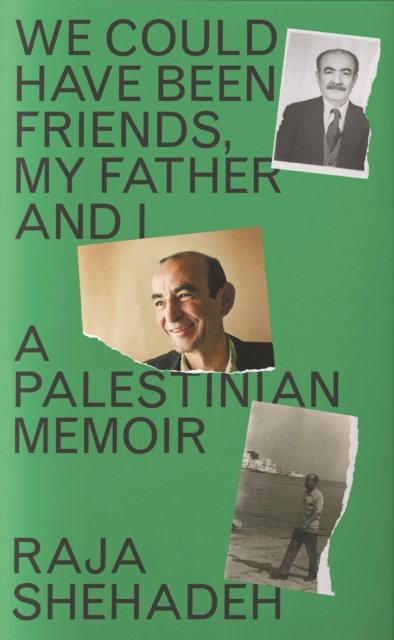
‘We Could Have Been Friends, My Father and I: A Palestinian Memoir’ by Raja Shehadeh

2022, 152 p

As we get older, we approach the ‘senior’ category that covers adults from 60-100, a forty-year age range. It would be unthinkable to conflate, say, a 10 year old and a 50 year old, but somehow after 60 all ‘old people’ are lumped in together. I wouldn’t be the first person, I’d wager, to regret that there were conversations that I didn’t have with my parents as a ‘senior’ myself, and questions that I didn’t ask about their earlier lives..

Palestinian Human rights lawyer and author Raja Shehadeh has even more regrets. When his 73-year-old father was assassinated outside his own home by a disaffected litigant in 1985, Raja was 34 years old and working in his father’s law firm. The murderer was a squatter on land belonging to the Anglican Church, and his father was handling the case for his eviction. The Israeli police closed the case, assuring the family that they were doing everything they could to find the murderer, but they knew who the murderer was and did not want to charge him. (p. 13) After his mother nagged him into going and collecting his father’s papers, Raja ended up with a cabinet of papers, which he stored on the bookshelf. He opened them, and found everything meticulously arranged, but felt overwhelmed by it all. The last case they worked together on involved plans for roads to be constructed throughout the West Bank. His father directed him to the documents he should consult, but showed only moderate enthusiasm for the case, which he left mainly in his son’s hands. Still smarting from this rejection, for many years he viewed the documents as nothing more than “a source of years of hardship and trouble”. (p. 17)

It was only when a friend brought him a photocopy of the Palestinian telephone directory for Jaffa-Tel Aviv dated January 1944, a city to which his father could not return after 1948, that his father’s long history of activism became real to him.

When I began reading, I realised with what impressive clarity my father had set forth his thoughts, and how his pioneering ideas were deliberately distorted by Israel, the Arab states and even some Palestinians. For so long his written attempts at setting the record straight had met with failure. I felt guilty that all these years had passed before I could spare the time to study the files in the cabinet and finally do what I had failed to do during his life: understand and appreciate his life’s work. (p. 17)

This book, then, is the story that was revealed through those documents. It is a history of the years immediately surrounding the Nakba. It illustrates the perfidy of Great Britain and Jordan in the establishment of Israel, the intransigence of the PLO and the whole generational cycle of Palestinian history that existed before the author’s birth. His father and other Palestinians at the time, rejected the creation of UNRWA (which is currently in the news now because Israel wants to outlaw it) because it made the Palestinian cause one of humanitarian response rather than justice.

His father took up the cause of Palestinian savings, which were frozen by the banks leaving Palestinian refugees unable to exchange their Palestinian pounds into pounds sterling or any other Arab currency. In February 1949 the Israeli government ordered that Barclays Bank in Britain and the Ottoman Bank formally transfer all ‘frozen’ Palestinian funds to the Custodian of Absentee Property, which after a while proceeded to liquidate the assets as if they belonged to the State. His father mounted a legal challenge against Barclays Bank at the District Court in Jerusalem, which was part of Jordan at the time. He won.

He decided to run as a candidate in the Jordanian parliament, but found himself arrested instead. He proposed the establishment of a Palestinian state next to Israel along the 1947 partition borders, with its capital in the Arab section of Jerusalem. This put him at odds with the PLO, which wanted a secular democratic state over the whole of Palestine, not a Palestinian state alongside Israel. His father was clear-eyed about Israel’s deceptions over various peace initiatives, and always believed that it was preferable for the Palestinians themselves negotiate with Israel, rather than have Arab states negotiate on their behalf ( as occurred during the Trump-inspired Abraham Accords, and is still occurring over any possible ceasefire in Gaza).

Too late, there was so much that the Raja of today could have discussed with his father, had he lived. It’s revealing that, despite their shared interests and objectives, the emotional tenor of the father/son relationship overpowered their intellectual one. He was intimidated by his father and he resented his dependence on him in the office.

For years I lived as a son whose world was ruled by a fundamentally benevolent father with whom I was temporarily fighting. I was sure that we were moving, always moving, towards the ultimate happy family and that one day we would all live in harmony. When he died before this could happen, I had to wake up from my fantasy, had to face the godlessness of my world and the fact that it is time-bound. There was not enough time for the rebellion and the dream. The rebellion had consumed all the available time. I turned around to ask my stage manager when the second act would start and found that there was none. I was alone. There was no second act and no stage manager. What hadn’t happened in the first act would never happen. Life moves in real time. (p. 12)

The language in this book is a little stilted, but any adult child can feel this same remorse for lost opportunities, and the jolt of being alone on the stage, once one’s parents have died. This book gave me a good sense of the generational injustice that is still being fought out in Gaza and the West Bank today, and the pettiness and duplicity of many of the main actors. Colonialism up-close, and without the patina of centennial celebrations and ‘age-old’ traditions is an ugly, ugly thing.

My rating: 8/10

Sourced from: Yarra Plenty Regional Library

‘This is Not a Border’ ed. Ahdaf Soueif & Omar Robert Hamilton

2017, 328 p.

The first Palestinian Festival of Literature was conducted in 2008, and this volume of writing was produced to celebrate its tenth anniversary. We in Australia take for granted that if we want to go to a writing festival in our own city, or regional area, or interstate for that matter, then there is nothing to stop us. That isn’t the case for the residents of the Gaza Strip (especially now) or the West Bank, who face checkpoints and turnstiles and outright prohibitions against travelling from one place to another. So the founders decided that if people couldn’t go to the festival, then the festival would come to them. Attracting noted Western authors, the presenters were bussed from region to region, intentionally exposing them to what the Israeli government does not want outside visitors to see, with the hope and expectation that these authors would return home and use their words – their tools of trade- to expose what is happening.

So who are some of these authors? Among others: J. M. Coetzee, Geoff Dyers, Alice Walker, Deborah Moggach, Henning Mankell, Michael Ondaatje, Michael Palin, Chinua Achebe, and China Mieville, and many other Middle Eastern writers I am not so familiar with.

Most of the contributions are only about 4 pages in length, or else single-page poems, and I must confess to feeling a bit as if I were reading a lot of “What I Did on my Trip” responses. As you might expect from writers of this calibre, they are all well written, but the length constraint (and perhaps the task itself) imposed a sameness and almost a banality in most of the short chapters. In spite of this, certain images repeated: the Allenby Bridge and Qualandia checkpoints where unseen young Israelis surveil the waiting lines through CCTV; the wire netting constructed over markets where settlers in high rise buildings throw their rubbish, urine and faeces onto the street below; the incessant tunnelling conducted by Jewish settlers (facilitated by the Israeli government) under Palestinian homes and mosques, with the risk (expectation?) that the honeycombed land will collapse completely. For me, the power of a book can be measured by how much I tell other people about it, and I have been bailing up anyone who will listen with “Hey, there’s this book I’m reading and did you know….?”

The most powerful pieces in the book for me where when the author was able to exceed the word limit, particularly China Mieville’s piece that was actually illustrated with photographs of the checkpoints, even though photography at checkpoints is prohibited. It was followed by a longer chapter by one of the current trustees of the festival, Omar Robert Hamilton who speaks of the importance of J. M. Coetzee’s short half-page contribution where, after resisting attempts to urge him to name the situation ‘apartheid’, he defines South African apartheid then describes Palestine in exactly the same words and invites us to “draw your own conclusions” (p. 35). Hamilton highlights the importance of words in describing what is happening in Palestine, resisting the neutrality of language that we use for fear of being labelled ‘anti-Semitic’.

I’m struck by the injustice and the sheer vindictiveness of small power plays against the Palestinian people, carried out over and over again, day after day. This book was published years before October 7, but it’s all of a piece. I’m so far trying to resist seeing what is happening in Gaza in binary terms, but it’s becoming harder to do so, and this book has largely contributed to this.

My rating: Hard to say. As individual stories, perhaps an 8/10 but taken as a whole, and in terms of impact on me, 9.5/10

Sourced from: Yarra Plenty Regional Library

Read because: of my distress about what is happening in Gaza