
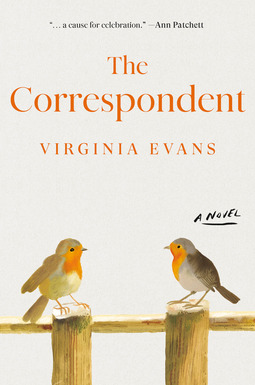
It’s the first Saturday of the month- quite literally- and so it’s Six Degrees of Separation day. This meme, hosted by Kate at BooksAreMyFavouriteandBest involves her choosing a starting book, and then you linking six other books to it. Almost inevitably she chooses a book that I haven’t even heard of, much less read, and this month is no exception with the starting book ‘The Correspondent’ by Virginia Evans.
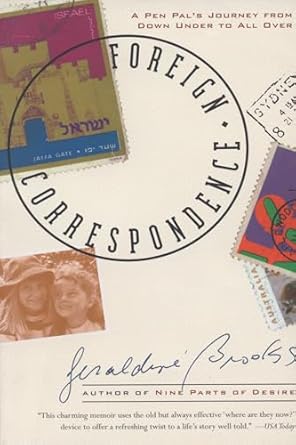
My first thought about a ‘correspondent’ is that of being a foreign correspondent. Geraldine Brook’s Foreign Correspondence, written in 1998, is a book in two halves. The first half is a memoir of growing up in Australia and collecting a number of international penfriends back in the day when you had to wait weeks for a letter from overseas. The second half is about her life as a foreign correspondent, who in her off-duty times catches up with her erstwhile penfriends to ‘investigate’ how their lives have turned out. It’s a great book for baby-boomers and laugh-out-loud funny in places.
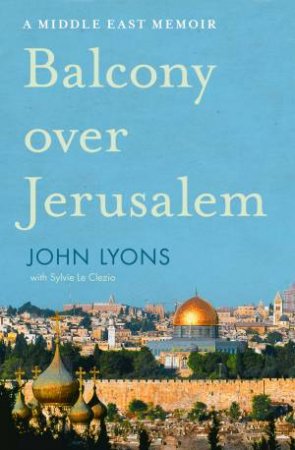
One of the foreign correspondents on ‘our’ ABC that I respect deeply is John Lyons, who is often the target of criticism particularly by conservatives and pro-Israel groups, but whose observations I always find honest and not always comfortable. Balcony Over Jerusalem (see my review here) is a memoir of the six years that Lyons spent based in Jerusalem as Middle East correspondent for the Australian, not a newspaper that I read often. He has worked for most of the media groups in Australia: Murdoch with the Australian, the Sydney Morning Herald and now for the ABC as their Global Affairs Editor. As Middle East correspondent generally, his brief extended to countries beyond Israel. He was there to witness the Arab Spring uprisings and subsequent crackdowns in various countries and the political permutations in Iran, Egypt, Libya, Lebanon and Syria. However, his major emphasis is on Israel, and the politics that have shaped the United States response, which flies in the face of world opinion which is gradually hardening against Israel. It was one of the 5 books given to Australian MPs for summer reading in 2025 on the Israeli/Palestinian conflict for summer reading, endorsed by both Australia Palestine Advocacy Network (APAN) and the Jewish Council of Australia (JCA), and sent with a letter signed by more than 50 writers including Tim Winton, Michelle de Kretser, Charlotte Wood, Benjamin Law, Anna Funder, Trent Dalton and Hannah Kent.
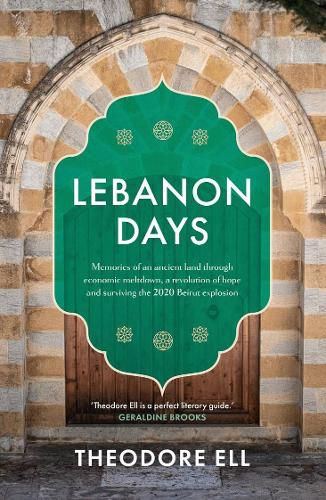
Also in the Middle East is Lebanon Days by Theodore Ell (my review here) It is the story of the two-and-a-bit years between the end of 2018 and the beginning of 2021 that the author spent in Beirut as the partner of an Australian Embassy official- a time in which Beirut roiled under street protests as part of the thowra (i.e. revolution) which was eventually put down by Hezbollah (or as he writes it ‘Hizballah’) and the COVID lockdowns, during a time of economic collapse exacerbated by government corruption, which in turn laid the conditions for the Beirut port explosion that changed his life.
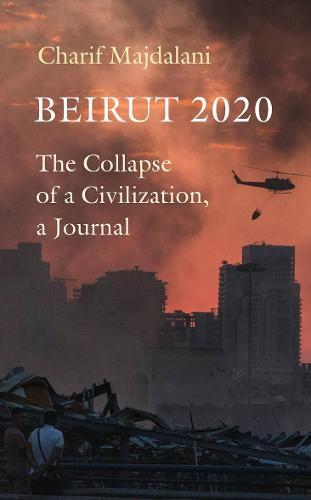
The Beirut Port Explosion of 2020 is the central theme of Beirut 2020: The Collapse of a Civilization by Charif Majdalani (my review here). The English language version starts with a very useful preface ‘Lebanon: the lessons of complexity’ which provides a potted history of Lebanon over 9 pages. It then moves to a series of journal articles, starting on 1 July 2020. His diary entries are interspersed with short explanatory chapters, which expand on the information given in the preface about corruption, protest, the piles of rubbish. The presence of COVID and the refugee influx are mere background details. Still the book inches closer to the explosion that we know is going to happen. This book tries to end on an optimistic note, but it rings rather hollow- especially now.
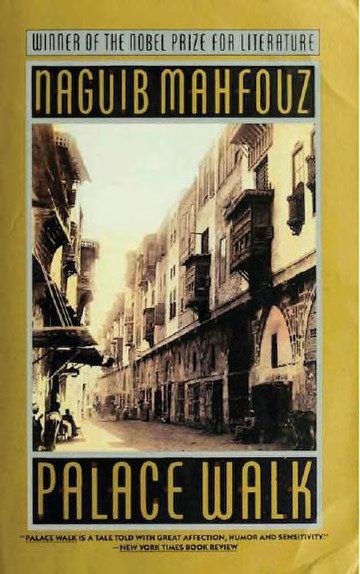
Still in the Middle East, but now historically, with the fantastic Cairo Trilogy by Naguib Mahfouz. Palace Walk is the first book of the trilogy. It is set in Egypt in 1919 during the uprising for independence against British occupation. It is the family story of Al-Sayyd Ahmed in a time of rebellion, when modernity and the adult independence of his children chips away at his sense of traditional authority.
And to round off and to return to the theme of correspondence, I finish with another historical book, Just Send Me Word: A True Story of Love and Survival in the Gulag’ by Orlando Figes (my review here). Moving out of the Middle East to yet another of the world’s troubled areas, this book is based on an archive of letters between Lev Mischenko, who spent eight and a half years on the extreme edge of Russia in one of the gulag camps in the Arctic Circle after WW2 and his partner Svetlana Ivanova. There are maps, photographs, explanations and Figes explains not only the minutiae of labour camp life, but also the sweep of Soviet politics on the outside during the time that Lev was imprisoned. But the real, real strength of this book is Lev and Sveta’s story, and the beautiful, nuanced, tender letters that they shared over this time.
It must be a sign of the times and my own unease over where the world is heading that has dominated my choice of Six Degree books this month. Sorry…but all of these books were excellent, in a time when I think it’s important that we keep looking outwards when all we want to do is curl up and wait for it all to go away.
 The Resident Judge of Port Phillip