I hear with my little ear: Podcasts 25-31 May 2021

Duolingo. These are joint Spanish/English podcasts, but you would get the gist of the podcast even if you can’t speak Spanish. Buscando a los 33 (Looking for the 33) is about the rescue of 33 miners who were trapped in a copper mine in the Atacama Desert in Chile in 2010. It is told by a young woman, Sandra Jara, who worked with the software to determine where to drill to find the tunnel in which it was hoped the miners were sheltering after the mine collapse. They were finally rescued after 2 months.

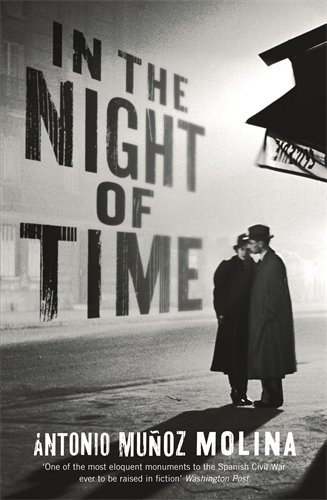
Travels Through Time. I read Giles Tremlett’s Ghosts of Spain before I visited Andalusia in the days when you could still travel. In this episode The International Brigades in the Spanish Civil War, Tremlett chooses the year 1936, when the civil war broke out. He chooses July 19 1936 in Barcelona, on the day when Franco’s failed coup reaches Barcelona; October 10 in Paris when the poets and artists are milling around the Quai d’Orsay railway station, waiting to travel to Marseilles, and November 8 when the same people are now marching up the Gran Via in Madrid to the University City. His book The International Brigades, Fascism, Freedom and The Spanish Civil War sounds a good, but hefty (800 page) read.

Fifteen Minute History. It really IS a 15 minute episode this time. I’m on a bit of a Spanish Civil War kick at the moment. Foreign Fighters in the Spanish Civil War features Lisa Kirschenbaum who wrote  International Communism and the Spanish Civil War: Solidarity and Suspicion (Cambridge University Press 2015). Her focus seems to be on individuals who joined the International Brigade- not the poets, but the Communist Party members from America and European countries, following them through to their post-Civil War lives.

My Marvellous Melbourne This rather scratchy episode, Jewish Melbourne in the Nineteenth Century was recorded from a virtual seminar hosted by the Australian Jewish Historical Society on 20 August 2020. In it Sue Silberberg talks about her new book A Networked Community: Jewish Melbourne in the Nineteenth Century. She points out that most of the Jews who emigrated to Melbourne were English-speaking, and that they did not face the many political and cultural barriers that Jews in other countries did. And quite a few of them were Masons, which I didn’t realize. It sounds an interesting book. Just add that one to the To-Be-Read pile

Witness to Yesterday. This is a Canadian podcast, presented by the Champlain Society, whose mission is “deepening awareness of Canada’s documentary past and of the people who created it”. Beauty Contests and Settler Femininity is based on Patrizia Gentile’s book Queen of the Maple Leaf: Beauty Contests and Settler Femininity. The author talks about ‘settler femininity’ as the way that beauty contests championed the idea of the nation of Canada, both geographically and in terms of the shared identities of the participants (I think that’s what she said). She goes back to the 1920s in her analysis, although the trademarks of various beauty contests were not sold until the 1940s. She notes the paradox that the organizers of pageants clearly declaimed that they are not beauty contests, when they obviously are. An interesting concept- I wonder if a study of Australian beauty contests would come up with different findings?

Rough Translation is presenting a called Home/Front in their new season. It’s about the divide between the military and civilian population. Now only 1% of American families have a direct contact with someone in the military, and they are deployed for one tour after another because there are so few serving. I must admit that I know only one person who has served in the military. I don’t know if there’s much that can be said about the topic beyond this introduction, so I probably won’t persist with it.

How It Happened. This is a podcast by Jonathan Swan (son of Dr. Norman Swan). He hasn’t posted anything for a while after a series describing the last days of Trump’s presidency. But he recently added this podcast Trump’s Last Stand: An Off-The-Books Mission about Trump’s ad-hoc decision to withdraw all the troops from Afghanistan- something that he had wanted to do from the start. But not like this- and he was talked out of it, only to have Joe Biden announce it instead.

Archive on 4 (BBC) The presenter of The Tulsa Tragedy that Shamed America hadn’t heard of it, even though he grew up as part of the black community in Oklahoma (I had- thank you Heather Cox Richardson). It’s the centenary today (31 May) and this podcast has lots of oral histories recorded earlier this century with people who witnessed it as children. Apparently after the torching of the prosperous Black area of Greenwood in Tulsa, the suburb had rebuilt by the 1940s only to be decimated again by urban renewal, the placing of a freeway through the middle of it, and ironically, desegregation. For many years it was just not spoken of, by both white communities who threatened historians who spoke out, and black communities, who didn’t want later generations to be burdened by it.

‘The Lying Life of Adults’ by Elena Ferrante

Translated by Ann Goldstein, 2020, 322 p.

SPOILER ALERT

A new Elena Ferrante book! I’ve just finished watching Season 2 of the television series ‘My Brilliant Friend’, which reminded me just why I loved the Neapolitan Quartet so much. Having snaffled this new one off the library shelves, I held off reading it until I finished the television show, fearing that I might become confused between the two. It was a good decision. Much as I love Elena Ferrante, there are many – possibly rather too many – similarities between the Neapolitan Quartet and this new book.

Giovanna is an only child, living in one of the upper class suburbs above Naples, the daughter of two teachers. At the age of twelve, and in trouble because of her poor grades and attitude at school, she overhears her father complaining that “she’s getting the face of Vittoria”. Vittoria is her father’s estranged sister, who still lives in the industrial area of Naples, down in the valley below, from which her father had escaped. Hurt and defiant, she decides to seek out this aunt, whom she barely knows, as a way of resisting her parents and finding her own identity.

She learns that the definitive break between her father and her aunt occurred over Vittoria’s affair with a married man, Enzo, who later died leaving his wife Margherita, and three children Tonino, Guiliana and Corrado. Both Vittoria and Margherita mourned the same man, and created an odd alliance where Vittoria was known as ‘Aunt Vittoria’ to Enzo’s children. In developing her relationship with her aunt, Giovanna is drawn into this unusual family circle and their friends as well.

At the same time, her own small family splinters as her father leaves her mother to move in with Costanza, the wife of a former colleage and close family friend. Giovanna in effect inherits two step-sisters, Ida and Angela, with whom she was already close.

As with the Neapolitan Quartet books, Ferrante is so good at capturing adolescent female friendships, and the physical awkwardness and fervour of changing bodies. As with My Brilliant Friend, there is a friendship that shifts between intimacy and betrayal; there is an intelligent young girl who drifts away from and later embraces her intellectual aptitude; there is an academic male over whom the main character and her friend compete; there is fascination coupled with revulsion against men, their testosterone-driven sexuality and their power; and again there is the industrial area of Naples (now seared in my mind by the television series, and completely different from how I pictured it when I was reading the original Neapolitan books).

There is an element of fairy tale here too, in the form of a family bracelet with a provenance that reflects the evasions and untruths that Giovanna learns all adults generate. So too, Giovanna, as a seventeen year old, learns to lie and betray as she steps into her own adult world, replicating many of the entanglements that her own family members perpetrated before her.

The ending surprised me – why did she do that? – and I wonder if this is not the first book in another quartet. Does it matter if this book is so similar to the other books for which Ferrante has become so well-known?After all, Jane Austen mined similar characters and social settings for many of her books. Is it a stretch to link Austen and Ferrante? I don’t think so. Both are brilliant in capturing the nuance and treachery of female friendship, and the experience of feeling your way into your identity within a network of expectations. And when the next Ferrante comes out, I’ll snaffle it off the shelf too.

My rating: 9/10

Sourced from: Yarra Plenty Regional Library

Six degrees of separation: from Bass Rock to….

First Saturday of the month, and so it’s Six Degrees of Separation day. To find out how it works, please check out Booksaremyfavouriteandbest where Kate hosts this meme. Basically, Kate chooses a starting book, then you think of other books that lead off from it.

This month Kate leads with Evie Wyld’s Bass Rock, which won the Stella Prize this year.

As usual, I haven’t read it, although I did read All the Birds, Singing which is set on a farm on a dour, dank, unnamed British island, and has the motif of birds running through it as the narrative switches between the island and outback Australia.

Another book with a bird theme running alongside another narrative is Carrie Tiffany’s Mateship with Birds, which I enjoyed much more than Wyld’s book. It, too, is set on a farm but this time in Cohuna in the 1950s with a soundtrack of magpies and kookaburras accompanying a story about neighbours. I described it in my review as quirky and sly.

Another quirky and sly book based on a ‘nature’ motif is Murray Bail’s Eucalyptus, where an antipodean Scheherazade-like figure weaves stories from the landscape. Each story is named for one of the eucalyptus trees planted on a property. The first time I read it, I was underwhelmed: the second time I read it, I thought it was absolutely brilliant. Unfortunately, both reads took place before I started my blog.

Speaking of trees, there’s Sophie Cunningham’s collection of essays, City of Trees: Essays on Life, Death and the Need for a Forest. Each of the essays, many of which have been published elsewhere previously, is prefaced by a pencil sketch of a particular tree- the Coast Live Oak in America, the Giant Sequoia, the Ginkgo, Eucalyptus, Moreton Bay Fig, Coolibah etc. Then follows a short piece of writing about the tree, sometimes interwoven with personal reflection or historical anecdote. A more substantial essay then ensues, not necessarily closely related to the shorter preface.

Sophie Cunningham wrote about trees, but the mother in Shokoofeh Azar’s The Enlightenment of the Greengage Tree climbed a tree instead, and there she received enlightenment, just as her son Sohrab was hanged under the instructions of the Supreme Leader Ruhollah Khomeini. Set in Iran, the book combines historical detail, magic realism and a family story.

Greengages are plums and that leads me to another even grimmer book, set this time in Ceausescu’s Romania. I found Herta Muller’s The Land of Green Plums oppressive and disturbing and rather unfortunately- very memorable, which is why it ended up on this list.

I seem to have alternated between darkness and light a bit here, and travelled from Scotland, the outback, Iran and Romania.

I hear with my little ear: 17th to 24 May 2021

The Last Archive. When I was a kid, I absolutely loved the movie ‘The Search for Bridie Murphy’. Repeat after Me, the most recent episode in the Last Archive, looks at the amateur hypnotist Morey Bernstein and his purported hypnotism of Virginia Tighe, a Colorado housewife, who revealed that she had had a past life as Bridie Murphy, an Irish woman who supposedly died 59 years before. The two presenters on the podcast didn’t think much of the Bridie Murphy story, and even less of the 1956 film.

Heather Cox Richardson Her History Chat of 30 April looked at ‘isms’. It took her a while to get around to socialism, fascism, liberalism etc. but I found her starting point more interesting. She compared the Declaration of Independence with the Constitution – two documents written for different purposes, and different audiences. She made the point that people without rights turn to the Declaration of Independence; people who are trying to hold on to their rights turn to the Constitution. Then, on to the -isms, much of which she has said before.

History of Latin America In The Conquest of Mexico Part 11, attention turns to Honduras. By this stage, Cortez and his men had stopped fighting the Aztecs and were just fighting other Spaniards with their eyes on treasure and loyalties to either Cortez or the guy back in Cuba (whose name I have forgotten).

Background Briefing (ABC). In recent years we have had both state and federal inquiries into institutional child sexual abuse. What makes The memo that erased a scandal particularly distressing is not only that the the man who is accused of causing so much misery is still alive, unable to be tried in court because of his dementia, but that it seems to have been covered up at the highest levels of the Victorian (Liberal) government in the 1960s. Sir John Dillon, Sir Henry Winneke and the Attorney-General Sir Arthur Rylah – they are all named, and are all dead.

‘Black, White and Exempt’ by Lucinda Aberdeen and Jennifer Jones (eds.)

2021, 184 p.

Aboriginal and Torres Strait Islander people are respectfully advised that this publication contains names and images of deceased persons and culturally sensitive information.

I think that one of the most damning and poignant phrases in the Uluru Statement from the Heart refers to “the torment of our powerlessness”. I think about the massacres; I think about the Stolen Generations and now, after reading this book, I add the ‘certificate of exemption’ to this grim array of injustices.

The exemption legislation, introduced across Queensland (1897), Western Australia (1905), Northern Territory (1936), South Australia (1939) and New South Wales (1943) is almost breathtaking in its condescension and its nonchalance to its implications. Although the legislation differed between the states, it involved a process by which individual Aboriginal people could apply for a certificate to declare that they were exempt from the ‘Protection Acts’ on the grounds that they were more ‘assimilated’ than other Aboriginal people – lived moral lives, didn’t drink too much, had steady jobs – and didn’t participate (at least as far as the government was concerned) in Aboriginal culture or socialize with other ‘unexempt’ Aboriginal people. This exemption could be revoked at any time: likewise, it could be imposed without consent on ‘troublemakers’ to separate them from the community.

Ironically, some white Australians, wanting to challenge and negate Indigenous narratives, today deride their authors as “not real Aborigines” (yes, I’m looking at you Andrew Bolt). Yet the Australian government deliberately encouraged this conscious self-rejection of Aboriginal identity, which passed as a matter of course to their children.

This book arose from a two-day symposium called Rethinking and Researching 20th Century Aboriginal Exemption in Australia, held at La Trobe University’s Shepparton Campus in October 2018. Elders directed the planning committee and community member involvement, and there was input from the Aboriginal and Torres Straight Islander Cultural Arts Centre for Koorie Education at GOTAFE. Separate ‘yarning circles’ were held for Indigenous and non-Indigenous community members, academics and students. Of the eleven authors who contributed chapters to this collection, all but one are women, and four are Indigenous. This affects the type of book it is. A collection of papers presented as part of a conference or symposium has a different structure and tempo from a volume written by one person alone. Because they are written to reflect a timed, oral presentation, there is a fairly standard length and each one is self-contained, taking its own ‘bite’ at the question. Within each one there is a structure of introduction-evidence-conclusion, but unless there is a final, integrating chapter (and in this collection, there is not) there is often no over-arching conclusion. The La Trobe University connection between the authors comes through very clearly, with a strong representation of La Trobe academics and alumni.

Australia was not the only country to introduce exemption legislation. John Maynard, in the opening chapter, points out that historically, there were similar processes in French and Belgian colonies – not that looking to the Congo for policy is much of a recommendation (p. 14) Both Canada and America had similar policies with their Indigenous populations, starting with Canada in 1857 and in America in 1906. Rather disingenuously, the Queensland legislation of 1897 was called the Aboriginal Protection and Restriction of the Sale of Opium Act, even though only 6 of its 33 clauses related to opium, the remaining all directed towards control of Indigenous people.

So how did one get exempted? When the individual Indigenous person initiated the process, it involved writing a letter to the responsible authority, providing references, then attending an interview. It was intrusive and judgmental. All of this correspondence, and the government reports that led to either the approval or rejection of the application are part of the National Archives of Australia collection. As Katherine Ellinghaus noted in her chapter where she reviews the history of the exemption legislation, “the archives of exemption are incredible: vast, intimate and confronting”. They make judgements on intimate details of Indigenous lives: the cleanliness of their houses, whether or not they drank alcohol, who they were married to, if they were ‘troublesome’.

Those [records] that remain contain evidence of cruelty, misfortune and sadness, but also resistance, activism and survivance [sic]. Even the simplest and most everyday applications for exemption should be seen as documents of negotiation…[containing] extraordinary detail of people’s lives and families, often rendered in racist and unkind bureaucratic language

p. 40

As a result, the records are on restricted access, available only to their families, which is only right. Some families have allowed historians to access them, with names redacted. Other Indigenous people have drawn on these records in telling their own stories in the form of biographies and memoirs. Other stories are in oral form only. In this book, Indigenous contributors Aunty Kella Robinson and Aunty Judi Wickes draw on their own family stories, while in other chapters families have given permission to the historian, with names changed.

From these stories, we see that people sought exemption for a number of reasons. Sometimes it was because other welfare provisions were tied up with it- that you could only get a Commonwealth old-age pension if you held a certificate of exemption. For other people, it was a way of escaping the mission and taking up work opportunities elsewhere. Even there was no specific legislation in Victoria, families sought to escape the involvement of the Aborigines Welfare Board in their lives by seeking ‘self-determined exemption’ (p.85) from the vagaries of changing government policies, as explained in Jessica Horton’s chapter. Ella Simon, a revivalist preacher associated with the evangelical United Aborigines Mission, despised the certificate of exemption she gained in 1957. As Jennifer Jones shows in her chapter, gaining exemption meant that she could undertake her travelling ministry without being exposed to segregation, but it meant that she had to officially abjure her links with the Purfleet UAM mission, which was an integral part of her identity and faith. Karen Hughes’ chapter looks at the examples of two US War Brides, whose certificate of exemption enabled their journey to the United States, where they faced new forms of discrimination. Leonie Stevens’ chapter ‘Smash the Exemption System’ examines the Northern Territory, where at the time of introduction, Indigenous people (themselves a multi-cultural group) were the majority of the population, outnumbering the non-Indigenous population 4:1(p. 167). The Half Caste Progressive Association played an integral role, first in achieving the legislation in the 1930s and then attacking it in the 1950s. The Northern Australian Workers Union, active in the Pilbara strikes, and other networks drew on the United Nations Declaration of Human Rights, widening the pressure for change beyond the Territory to a national and international level.

At the same time, these stories highlight the precariousness of the status awarded by a certificate of exemption. If it was rescinded, families were forced to return to the mission, where there was a strong chance that their children would be taken. As part of their powerlessness, if the policies changed, their lives changed too. Beth Marsden’s chapter ‘Destination of Pupil ‘Unknown” shows the fluidity of family relocations along the Victorian/NSW border as children were enrolled in school, often with vague information provided by the parents, and then withdrawn to escape the scrutiny of the state and the fear of removal. In NSW segregated schooling had developed when school principals requested to exclude Aboriginal children on the grounds of complaints made by white communities (p.109) Shifting back and forth across the border was a way of maintaining family networks and resisting the bureaucracies of both states, but it must have affected the childrens’ education.

I was appalled, reading these stories, one after the other. I understand completely the sensitivities and pain involved in telling family stories, where the decisions of one generation about identity and identification cascade through into succeeding generations. These stories, and the judgments and prejudices that prompted them, are for the family to tell. But the repetition of these injustices, in one family and then another and another, highlights that this was a structural, government-sanctioned process. It should be better known, and it needs to be part of the Truth Telling that must, eventually, come.

As Ellinghaus says:

The history of exemption must be fully told, not just to historians and stakeholders, but to mainstream Australia as part of the truth-telling that this nation sorely needs. There should be public recognition of the damage that has been done by these policies, perhaps in the same way that we have seen for the Stolen Generations. Not just recognition, apologies and reparations, but the inclusion of these people who have suffered through this policy in the narrative of settler colonialism in Australia.

p. 41

On the basis of the editorship and the predominance of female contributors, I have included this book in the Australian Women Writers Challenge.

‘Oh Happy Day: Those Times and These Times’ by Carmen Callil

2020, 282 p.

Somehow or other I have ended up with a second-hand copy Carmen Callil’s earlier book Bad Faith on my bookshelf. When I purchased it from who-knows-where, I did not know who Callil was, but I was aware that her book had been well received. Even though Bad Faith remains unread, I now know that Carmen Callil is Australian, even though she has lived in England since 1964, and that she started Virago Press and has worked in the field of publishing and literature ever since. So I picked up her most recent book Oh Happy Day: Those Times and These Times when I saw it at the library.

The blurb on the back reads:

Carmen Callil explores her roots in a book that is a miracle of research and whose writing is fuelled by righteous anger…Carmen Callil not only reclaims from obscurity the lives of these ordinary men and women who were sent to Australia as convicts or domestic servants, but also draws telling parallels for our own times. Oh Happy Day is a moving story of poverty, social injustice, Empire and migration.

As I have said many times before on this blog – so many times that I’m boring myself too- I am drawn to ‘Who Do You Think You Are’-type books and programs, and I am usually disappointed. I like the history; I like the stories of largely unknown people, but I find the displays of emotion on the part of the searcher to be maudlin and somewhat self-centred. The tears are triggered more by a sense of identification – “that’s MY great-grandmother” – rather than from a sense of injustice that anyone endured such sorrow or deprivation. Probably the best family history/quest I have read is Graeme Davison’s Lost Relations, and re-reading my review here, I again find myself nodding in agreement with Davison’s reservations about the endeavour, many of which I share. Callil’s book is not unlike Davison’s in that it takes a broad view of the context, then embeds the individuals within it, rather than the other way round. And that’s the way I like it.

The three sets of family trees in the book, one at the front, two in the appendices, makes it patently obvious that this is going to be a book based on genealogy. In her introduction Callil writes that she intended to write about all her English, Irish and Lebanese emigrant ancestors, but then decided to focus on three: Sary Lacey; George Conquest, the father of one of Sary’s children, and Mary Ann Brooks, who married Sary’s son. All three ended up in Australia via different routes; all three are found on branches of Callil’s family tree; and all three are used as vehicles by which Callil tells her story of nineteenth century working class life.

I’m not going to go into the details of these individuals’ lives. As often happens with family historians, the researcher feels a familiarity (on first name basis no less) with the individuals on their family tree and the minutiae of their lives, that can become eye-glazingly tedious to outsiders. I’m more interested in the bigger themes that she draws out.

The first theme is the effect of technological change on the stocking frame workers in Leicestershire. Until now, I wasn’t particularly clear on what a stocking frame even was. The home-based stocking frame workers had a rhythm to their working week – collecting the wool, working feverishly for about four days, taking back the finished product then a few days later collecting the wool to start the whole cycle again. They rented their frames from middle-men, who took their own cut. However, the fashions changed, new machines that did not fit inside a house were invented, and the trade shifted into factories instead, with those few stocking frame workers clinging to the old ways offered less and less for a product that no one wanted.

Second, I knew about the changes to the Poor Laws in the 1830s, but I hadn’t quite realized the ‘like it or lump it’ approach it took to the destitute who sought assistance: it was the Poor House or nothing. Her telling of Sary’s life in particular illustrates the contingent and precarious nature of working class life, and the thread of relationships that could keep a family just outside the Poor House walls. The stories of Callil’s ancestors emphasize the physical proximity of family, shifting from street to street, generally staying close to other family. She hints – because she can do no more than that- at an incestuous relationship. She suggests the ruses and half-truths that enabled Sary to work the system sufficiently to survive. She notes the importance of Nonconformist religion amongst the working class and highlights the political turmoil amongst the working class at the time, even though there is no evidence that her family was involved.

Third, only one of her three ancestors is transported to Australia, but she devotes considerable space to the convict system as it changed over time, and as George Conquest experienced it. Here I feel that she faces the similar hazard as Babette Smith confronted in her Defiant Voices (my review here) where the dramatic and cruel is emphasized, but the examples in the book reveal the opposite. Callil is not a historian, but she does engage with the academic literature. Her own dispute with John Hirst’s argument that the convict system was more negotiable than, say Robert Hughes’ depiction of systematized violence and terror, is played out more in the footnotes than in the text. In a footnote she describes Hirst’s Convict Society (my review here) as “an exquisite example of Australian revisionist history, revealing much about its writer and little about the experience of convicts- and others of the time” (p. 308). Even though she spends many pages describing whippings and brutality, her ancestor George Conquest was not sent to a secondary penal settlement, and there is no evidence that he was whipped. In fact, he was almost a poster-child for the opportunities that could open up through transportation, partially through the benevolence and assistance of a magistrate-settler to whom he was assigned, and also through his own astuteness and hard work in taking advantage of the situations that presented themselves. Even though the convict system was intended to keep convicts on the other side of the world, George Conquest was even able to visit England again, returning by choice to Australia and finding himself in a position to help family members.

In her introduction Callil wrote that she had a present-day purpose in writing this book:

So I decided to tell only the story of Sary, George and Mary Ann, natives of England’s labouring poor – the paupers, asylum seeks and refugees of their day. Their story raised a question: had so little changed in Britain in the last 200 years, that generation could succeed generation, each one repeating their grim experiences?

p. xvi

I don’t know that she really explores this question in much depth in the book. Where she does draw parallels with the present day, it is in passing or concentrated within the closing pages of the book, almost as a polemic about refugees, Brexit, indigenous affairs, rather than engaged with as a serious question. I was disappointed, too, that she did include her Lebanese forefathers at the end of the book after all, despite her intention to concentrate on Sary, George and Mary Ann. It is such a cursory treatment that I felt it weakened the book, rather than strengthened it. Sary, George and Mary Ann are strong characters, whose lives provide much to work with, and I think that she should have stayed with them alone. Her research into the Britain they left, and the Australia to which they came is detailed and rich, especially for people who are unknown to all but family, but I’m not sure that the book meets the expectations for present-day commentary that the title and her introduction suggest.

My rating: 7/10

Sourced from: Yarra Plenty Regional Library.

I have included this on the Australian Women Writers Challenge.

Con subtítulos en español: Una corriente salvaje (A Wild Stream)

Another Instituto Cervantes documentary.

Well, that’s seventy minutes of my life that I’m not going to get back again. I have no idea what this film was about, and I doubt if I would have understood it any better had I used the English subtitles instead of the Spanish ones. Two men, one living in a campervan, the other in a shack, are living beside a lake in the mountains. The scenery is magnificent, but they seem to be the only two men alive on earth. Each living in their own place, they get up each morning, they fish – sometimes alone, sometimes together – they fix nets, they burn their rubbish, they chop wood. At night they talk. Who are they? Where did they come from? Are they lovers? Where did one of them go in the end? I kept expecting a story, but there isn’t one. You may as well just watch the trailer.

Obviously someone got more from it than I did. Here’s a review in English

I hear with my little ear: Podcasts 9-16 May 2021

Travels Through Time. I was in the car driving down to Airey’s Inlet, listening to podcasts through Spotify and it just went from one episode to the next. So I heard Dr Diane Atkinson, who chose 1914 as her year to discuss, looking at The Suffragettes and their actions during this first year of the war. Her three scenes were a drawing room in the industrial city of Preston during January 1914, at Charing Cross Station at the same time, and then on 21 May 1914 at the gates of Buckingham Palace.

She was followed by Sir Michael Palin, no less, talking about HMS Erebus in From Pole to Pole. He cheated a bit by spanning seven years from 1841 to 1848. Still, I guess you don’t pull rank on Michael Palin.He started off in Hobart on 1st June 1841, at the Erebus and Terror Ball, where the best of Hobart Society were there to celebrate the two ships- the Erebus and the Terror. His second scene was the New Year celebrations in the Antarctic, but his final scene was 22 April 1848 off King William Island in the Arctic, where HMS Erebus and Terror were abandoned.

New Books in Latin American Studies Diana Arbaiza The Spirit of Hispanism: Commerce, Culture and Identity Across the Atlantic.1875-1936. In this podcast, she looks at the idea of the ‘Spanish world’ and how it was leveraged as a form of nostalgia for ‘lost glory’ even before Spain lost the Phillipines in 1898. She chose 1875 as her starting year because that was when the Bourbon Monarchy was restored in Spain, and closed off her narrative in 1936 with the Spanish Civil War. She argues that ‘hispanism’ has served different purposes in Spain (nationalism, commerce through the book industry) and that it gave support to the contested idea that the Spanish Empire was less materialistic than British and Dutch imperialism.

History Extra Podcast. I’d never really thought about Ethiopia as an alternative seat of Christendom (in fact, it had been since the 4th century) but in this episode Medieval Ethiopa’s Diplomatic Missions, Verena Krebs discusses the diplomats who were sent to Europe during the 15th and 16th century by the Ethiopian Christian leaders. It was relatively easy for Ethiopians to travel to Europe, compared with the difficulty of Western Europeans going the other way. Although it has often been supposed that the Ethiopian diplomats were seeking military assistance, she suggests instead that they sought religious artefacts (saints’ fingers etc.) out of a clear sense of confidence in their Christianity.

Earshot (ABC) ‘Trough Man’ was an almost mythical figure in the pre-AIDS Sydney gay scene. An afficionado of ‘water sports’, he could be found in the men’s toilets of Oxford Street bars, enjoying a long golden shower. In Searching for Trough Man, the interviewer decided to try to find him, some 30 years later.

Heather Cox Richardson I continue to listen to her Thursday history podcasts, which she is now presenting as ‘one-offs’ rather than following a theme. Her talk of 15 April Why the Civil War Still Matters marks the anniversary of Lincoln’s assassination but it’s very much an encapsulation of her arguments over the last couple of years. She starts off by talking about her horror at seeing the Confederate flag in Congress during the January insurrection, and talks more personally about how reading the Civil War through a single Chicago newspaper gave her just a small taste of the shock that people felt when Lincoln was assassinated. She rounds it off by bringing it back to current events. This is a really good podcast- if you haven’t listened to her before, this is a really good place to start!

History of Latin America In The Conquest of Mexico Part 11, attention turns to Honduras. By this stage, Cortez and his men had stopped fighting the Aztecs and were just fighting other Spaniards with their eyes on treasure and loyalties to either Cortez or the guy back in Cuba (whose name I have forgotten).

Background Briefing (ABC). In recent years we have had both state and federal inquiries into institutional child sexual abuse. What makes The memo that erased a scandal particularly distressing is not only that the the man who is accused of causing so much misery is still alive, unable to be tried in court because of his dementia, but that it seems to have been covered up at the highest levels of the Victorian (Liberal) government in the 1960s. Sir John Dillon, Sir Henry Winneke and the Attorney-General Sir Arthur Rylah – they are all named, and are all dead.

‘Our Shadows’ by Gail Jones

2020, 320 p.

As a child of a 1960s education, I’ve often thought that the stories we read in our School Reader have a particular endurance in our memories. Perhaps it was because it seemed that the whole curriculum seemed to centre around the School Reader, or because as a fast reader, I was condemned to reading and re-reading the story until the slower readers caught up. When I read the italicized preface to Gail Jones’ Our Shadows, where a young girl is remembering a story of a trapped Italian miner named Modesto Varischetti waiting to be rescued, something snagged at me. It was only at the end of the book that Jones brings this preface back into focus. It was a story in the ‘Fifth Book’ of the Victorian School Readers. There had been a mining accident; the water rose too quickly in the mine; he was trapped on a ledge; then divers came for him, with those huge circular diving helmets. And for any of us who read and remembered that story with its blurry black-and-white sketches, it all sprang into life again with the rescue of the boys in the Tham Luang Cave Rescue in 2018.

This story is part of the clever bookending that Jones employs in Our Shadows. The past and the present jostle against each other, just as they do in the threaded narrative of the book. There are multiple strands. One is Paddy Hannan, famed as the discoverer of the gold that made Kalgoorlie and Coolgardie famous as ‘Wild West’ gold towns during the 1890s. Fleeing the Irish Famine that has winnowed out his family, the discovery of gold and his notoriety is just one part of his long life as he escapes to Melbourne where he drifts around St Ambrose’s church in Brunswick and the domed, green lamp-lit State Library.

The other, more substantial strand is the Kelly family, who lived in Kalgoorlie. In the present day, there are two sisters, Nell and Frances. Their mother Mary died after Frances was born, and their devastated maternal grandparents, Fred and Else, took over the care of the very young girls. Their father, Jack, left and the girls grew up completely in the care of their grandparents. Now Fred has died, and Else is in a nursing home. The two sisters, while not estranged, are awkward and tentative around each other. Nell suffered with mental illness as a teenager, while Frances has recently been widowed when her husband died with mesothelioma from a childhood spent in an asbestos mining town. Frances, the younger sister, is perhaps more grounded than her older sister, and when they agree to look for their father, it is Frances who travels back to the family home, now occupied by their embittered aunt Enid.

At first I thought that this was going to be a multi-generational family history story and I felt that Gail Jones was punching below her weight to adopt such a clichéd narrative structure. I should have trusted her more, because the writing is much more complex than that. One of the shadows that falls over the sisters is their innocent acquiescence in the erasure of their mother’s memory by their grief-stricken grandparents, and the dominance of the maternal side of the family when their father disappears. So the narrative skips back and forth between the present day, and their grandparents’ own story, and the sisters’ childhoods. The interweaving of Paddy Hannan’s own story complicates the narrative even further.

Jones writes landscape beautifully, and I think that her Western Australian sensibility shows through here. Her writing, in this as in her other books, is very carefully wrought, although at times over-wrought. Frances deciding to go for a run for its ‘ravishing repetition’, and feeling the ‘delectable’ pull of her muscles when doing hamstring stretches feels like the writing of a much less experienced, polished writer. I have read several of Gail Jones’ books, although I only reviewed Five Bells (see my review here) and it seems that I have had similar reservations about her other books as well.

As the winner of the Prime Minister’s Literary Award for The Death of Noah Glass (which I have not read), Gail Jones is often regarded as a ‘literary’ and ‘hard’ writer. I do not find her this way, but this book is probably more accessible than her other books because of its apparently familiar family-history structure. It is much more complex than that, picking up the themes of her other books – estrangement, guilt, white response to indigenous dispossession, strained relationships – explored within family bonds. Her control of the different strands and time shifts is masterful, and it is a ‘meaty’ book with multiple themes and reflections.

My rating: 8.5

Sourced from: Yarra Plenty Regional Library

I have included this review on the Australian Women Writers Challenge database.

I hear with my little ear: Podcasts 1-8 May 2021

Fifteen Minute History from the University of Texas. Episode 132 History of the Second Ku Klux Klan features historian Linda Gordon who wrote The Second Coming of the KKK The Ku Klux Klan: of the 1920s and the American Political Tradition in 2017. She argues that the KKK has had several iterations: after the Civil War, in the 1920s, during the Civil Rights Movement and more recent events. During the 1920s, the second iteration, she suggests that between 4-6 million Americans were members (or at least agreed with their politics). It was a sort of pyramid scheme, and it was the financial improprieties that largely led to its temporary decline. There were women KKK members who even leaned towards feminism, while still maintaining KKK beliefs. Interesting- and you don’t need a lot of background knowledge to enjoy it.

New Books Network. I seem to be on a bit of a Paraguayan ‘thing’ at the moment. My friend Diego mentioned the Triple Alliance War (which I had never heard of), and sent me an article from BBC Mundo. Then I watched the movie ‘Guarani’. I also listened to this podcast Road to Apocalypse: Paraguay versus the Triple Alliance 1866-1870. Historian Thomas Whigham discusses his second volume on the war- the result of 20 years work- where he has accessed the archives of Brazil, Uruguay, Argentina and Paraguay, something that few Latin American historians would have the funding to do. It’s a really interesting podcast, and doesn’t require back ground knowledge (although a glimpse at a map first wouldn’t hurt).

History Extra Podcast. I wasn’t very impressed when I heard Simon Winchester speaking about his book Land: How the Hunger for Ownership Shaped the Modern World earlier. But this podcast on History Extra How Our Hunger for Land Shaped History gives him more scope to talk about the book in a wider context than just ‘settler colonies’. Perhaps I would be interested in it after all.

Duolingo Spanish Podcast The podcasts presented by Duolingo, the language learning program, are excellent. They alternate between Spanish and English, and even if you don’t speak Spanish, you could probably understand them anyway. Episode 81 La lucha libre de hoy is about José Luis Hernández, whose stage name is “El Demasiado” (The Too-Much) and he \’free fights’ (i.e. think World Championship Wrestling on Sunday Mornings in the 60s and 70s) in drag.

The Daily I was wondering why I hadn’t heard much about ‘herd immunity’ any more. This NYT podcast Why Herd Immunity is Slipping Away discusses vaccine hesitancy and refusal in U.S. and the idea that COVID might end up like measles (which Orthodox Jews refuse to vaccinate against) which continues to kill unprotected people, but is just seen as inevitable.

Travels Through Time I’ve been hearing good things about Kate Fullagar’s book The Warrior, the Voyager and the Artist which recently won the Premier’s Prize for General History and the Douglas Stewart Prize for Non-Fiction in the recent NSW literary awards. Unfortunately it is eyewateringly expensive at $76.00. So I listened to her instead, on the History-Today associated podcast Travels Through Time and the episode named for the book The Warrior, the Voyager and the Artist. The ‘rules’ are that the visiting historian/guest has to choose one year in history and three scenes to visit. She/he has to just observe, without changing anything. Kate Fullagar chose 1776- in fact just one day (10 December)- in three places: Somerset House in London, a Cherokee town in the Southern Appalacian Mountains and the Indian Ocean. These places pick up on the three main characters in her book: Sir Joshua Reynolds and the exotic ‘ambassadors’ Ostenaco of the Cherokee nation and Mai, one of the Pacific Islanders who accompanied Captain Cook.

Nothing on TV. I do enjoy Robyn Annear’s podcast series, and the first episode in her second series Agnes and Geraldine was as delightful and discursive as those of her earlier series. It tells the story of Agnes Simmons, a swimming teacher at Hegarty’s Baths in St Kilda and her very good friend Geraldine Minet who was deeply involved in spiritualism. Together they launched a coal mine at Red Bluff in St Kilda, which despite being directed from ‘beyond the grave’, never made money.