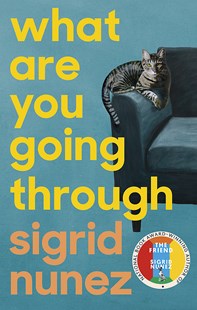
First Saturday. Six Degrees of Separation Day. This meme, hosted by Kate at Booksaremyfavouriteandbest involves Kate choosing a book title, then you linking the details and your reviews of six books which spring to mind. It is a rare month when I have read her starting book and this month is no exception. She chose What are you going through by Sigrid Nunez, which apparently deals with two friends and an assisted death.
Well, I haven’t read this book by Sigrid Nunez but I have read another of hers, which sounds remarkably similar in theme to Kate’s starting book. I then embark on a succession of books about suicide and death, so it’s a gloomy string of titles this time. You may not be in the mood for such unrelieved sadness.
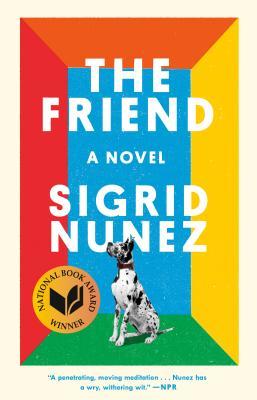
Sigrid Nunez’s earlier book The Friend (2018) is constructed as a series of short paragraphs, addressed to an unnamed male friend who had recently committed suicide. These paragraphs have been written by a similarly unnamed female narrator who teaches creative writing at a university. The paragraphs to her friend are spoken in the second person “you”.
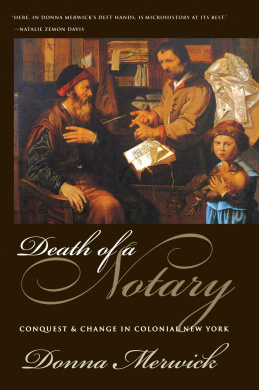
Another suicide is announced in the opening pages of historian Donna Merwick’s Death of a Notary (1999), the story of Janse, the Dutch-speaking notary in Albany, who commits suicide in the late 17th century, a number of years after the English have taken possession of New Amsterdam. The book is written in two halves, the first a conversational present-tense narrative of Janse’s life and death, and the second an extended form of footnotes which I described as “the historian with her hard-hat on”.
Johanna Adorjan’s An Exclusive Love (2010) tells us from the first pages that the author’s grandparents committed suicide together in 1991. The book examines their last day in detail, interspersed with a family history drawn together from the accounts of relatives and her grandparents’ surviving friends.
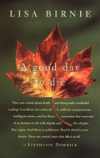
A Good Day to Die (1998) by Lisa Birnie is about death too, but involves a series of cases and interviews from McCulloch House, a palliative care centre attached to Monash Medical Centre, where Birnie was writer-in-residence. In a way, this does sound a little like Nunez’s What are you going through, but as I haven’t read it, I’m not sure. Written some 20 years before assisted dying legislation was passed in different states in Australia, I wonder how she would feel now.
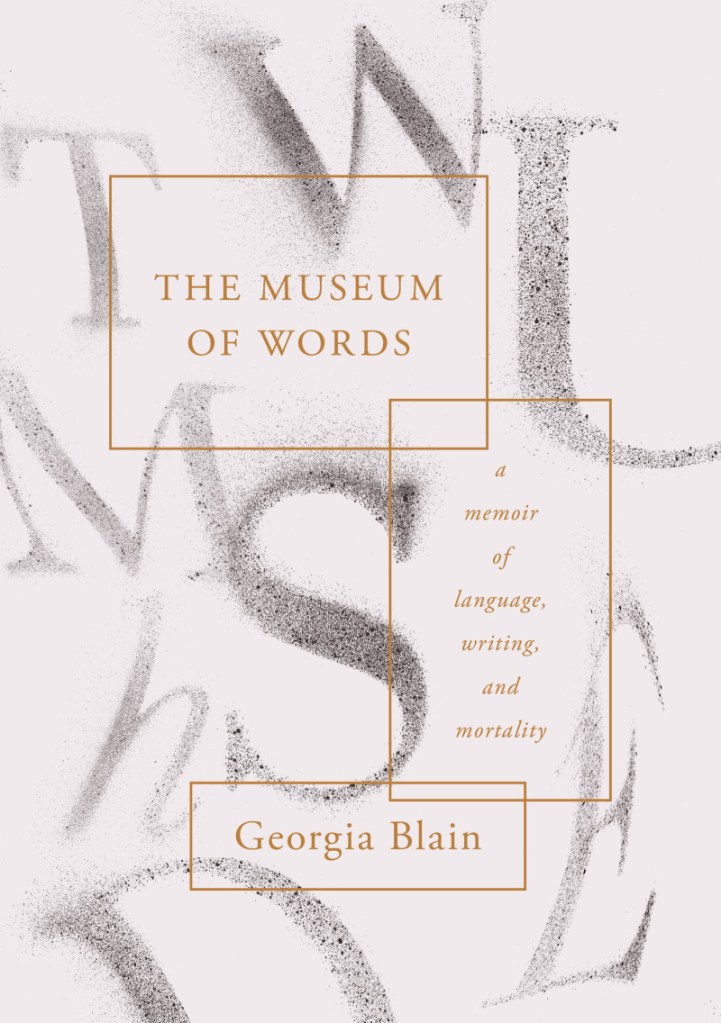
A young writer, who died too soon is Georgia Blain and her amazing book The Museum of Words (2017). Dying with brain cancer, with a glioblastoma the size of a golf ball, she writes of the experience of her illness, threaded by perverse coincidence with the illnesses of her mentor, friend and human rights activist Rosie Scott, who was dying with exactly the same condition, and her mother who was dying with Alzheimers. This book is in many ways a love letter to all three of these women, to the act of writing, and in her final paragraph, an assertion of gratitude for life itself.
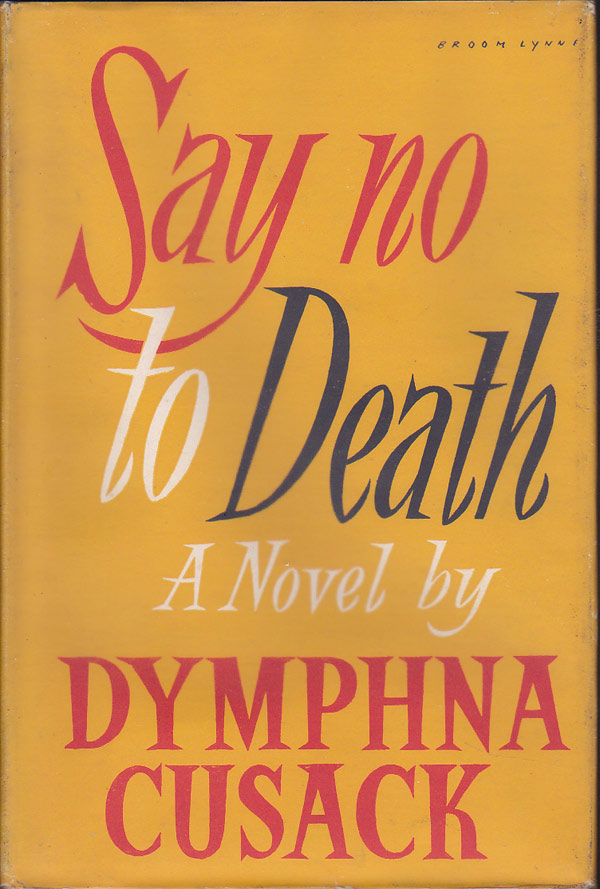
Finally, I feel I need a book with a more uplifting title at least. Dymphna Cusack’s Say No to Death (1951) is set in post-WWII Australia where a young woman, Jan, is diagnosed with tuberculosis, then an incurable disease. This is in the time before Medibank/Medicare, when much of the health spending was being directed towards returned soldiers, and when the discrepancy between private and public health treatment was stark. The book is dated, and is best read as social history, but I must say that it has stayed with me long after I read it.
What a depressing chain. What’s next month’s starting book? Ethan Frome by Edith Wharton. I just read the Wikipedia summary: it sounds similarly gloomy. I’ll have to work hard to think of more uplifting links.
I don’t know what to think about China. I read Peter Hartcher and I see all those meticulously drilled soldiers parading in Tienanmen Square, and I feel very, very apprehensive. Then I read Hugh White or listen to Bob Carr or Paul Keating (albeit with increasing scepticism) and I think that we’re over-reacting. It seems that commentators on China have backed themselves into a particular position, and you almost know what they’re going to say before they start. And yet these commentators do not always come from the traditional left/right field. Clive Hamilton, for example, who is such a strong advocate for the environment and sustainability, is one of the most trenchant critics of China.
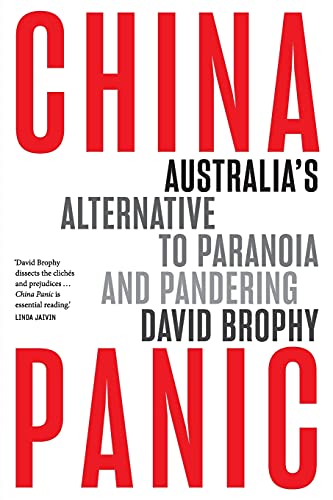
So who is David Brophy, and why should I listen to him over anyone else? He is a historian of modern Chinese history at the University of Sydney, and he wrote his PhD on Uyghur nationalism, and wrote UyghurNation. Increasingly he has found himself called upon to comment on current events in China, and was himself involved in demonstrations in support of Hong Kong at the University of Sydney in August 2019. Although I would by no means instantly give credibility to a historian over any other commentator, a historian is probably a little more likely to take a view longer than the last election, and has no party policy to conform with.
In China Panic, Brophy starts by identifing the different players in the China Commentary field. He points out that security agencies have led the way in Australia proclaiming itself ‘the canary in the coal mine’ regarding China’s rise. ASIO has taken on an increasingly public role, and the Australian Strategic Policy Institute has also talked up the risks. He notes that ASPI receives sponsorship from arms companies, and has received grants from Canberra and the US State Department. (p. 13). Then there are the parliamentary self-styled bipartisan Wolverines- Andrew Hastie, Eric Abetz, Kimberley Kitching (ALP), Raff Ciccone (ALP), James Patterson among others. Commentators more often found on the ‘left’ like Richard Denniss and Clive Hamilton,urge Australia to take a stronger role. Brophy points out that Fairfax Media and the ABC, in particular through ‘Four Corners’, have been major conduits for security warnings in relation to China.
But then there is Hugh White, who argues that as America’s pre-eminence wanes, Australia should accommodate China’s rise. The former secretary of the Department of Defence, Dennis Richardson warns that ‘national-security cowboys’ are endangering Australia’s interests. Angus Houston, chief of the ADF 2005-2011 maintains that China is a partner, not an enemy. (p. 15). The Australia-China Relations Institute at UTS continues to champion continued trade growth. Twiggy Forrest and the Minerals Council represent business that is keen to maintain trade links.
The book has eight chapters, which are topped-and-tailed with an introduction and conclusion. The chapters are: 1. China and the World 2. The US-China Rivalry Today 3. Influencing the Region 4. Interfering with Democracy 5. Cold-War Campus 6. Human Rights and Xinjian 7.The Battle for Hong Kong 8. Sovereignty, Values and Racism.
As you can see, this is a very current list. One of the dangers of writing a book so close to current situations is that events that have occurred subsequent to publication can change the trajectory of the argument. For example, the AUKUS agreement sees Australia very much throwing its hat into America’s ring, with all of the implications for our own sovereignty, all the while proclaiming that “it’s not about any one country!!” (as if).
So where does Brophy locate himself? As a historian of Uyghur nationalism he is, as you might expect, critical of Chinese policies in Xinjiang. As one of the convenors of the ‘Let’s Talk about Hong Kong’ Chinese-language forum at the University of Sydney, he is committed to providing a platform for debate and exchange amongst Chinese citizens in Australia themselves. However, he points out that Australia and America (in particular) hold China to international standards that they themselves hypocritically sidestep when it suits their purposes. In matters of undue political influence or academic freedom in Australia, he notes that curbs and oversight of these matters for all countries, not just China, would be of benefit to Australia’s democracy. He argues that the move to the Right in contemporary responses to China in Australia’s politics will only provoke a similarly nationalistic response from China. He suggests that instead, we need to live up to our profession of universal values (p. 20) and to strengthen our own democracy.
He concludes:
We need something very different. Not a politics that shies away from necessary criticism of China: that has no future in Australia. But we do need to remove today’s national-security lens and replace it with a more genuinely critical one. On that basis, Australia’s new consciousness of China as a global actor can still point to important truths about China itself, the global system of which it is a part and the deficiencies of Australian democracy…. We need an alternative that combines a vision of a better China with a vision of a better Australia.
p.230
I usually give a book a ‘rating’ but I feel at a loss here. I read the book precisely because I don’t know what to think, and I have no way of evaluating his material or mounting counter-arguments. But he says that the question is too important to leave to specialists. Instead,
…to get out of the rut into which Australia’s China debate has settled, we need to recentre it on the interests that ordinary people in Australia and across Asia share in both combating oppression and resisting warmongering.
p. 21
One of the more reassuring programs on China that I have seen recently was on Foreign Correspondent (yes, it’s on the ABC). Called China’s Future, it focussed on three young people who had rejected the expectations of their society, and the hopes of their parents, to choose a different future. One was a transgender young person involved in ‘Voguing’, a dance culture that started in New York in the 1980s queer scene. Another was a woman who had given up her career to return to organic farming in her home village, much to the disappointment of her mother. The third had been an editor with a renowned publishing house, but threw it in to become a shopkeeper with a small corner shop in the hutongs. While I wonder how they will fare in Xi Jinping’s increasingly interventionist society, there was something very human and relatable in their parents’ bewilderment at their children’s choices, set against their determination not to lose their relationship by rejecting them. Love, a future, safety, peace – things that ‘ordinary people’ crave. Perhaps this isn’t a bad place to start.
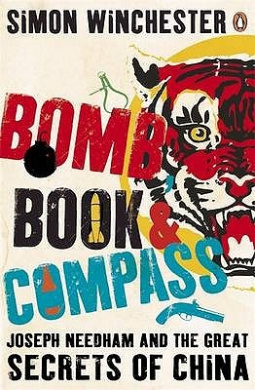
I must confess that I had never heard of ‘Science and Civilisation in China’, a 24-volume (and counting) series described by its publisher, Cambridge University Press, as “one of the most remarkable works of scholarship in the twentieth century”. Nor had I heard of Joseph Needham, its original author. When I saw the title of this book Bomb, Book and Compass, I immediately thought of Jared Diamond’s Guns, Germs and Steel and expected that I would be reading a history of Chinese invention and technology. Joseph Needham, I assumed, would be a missionary/explorer type, perhaps from the 1840s after the Opium Wars, when China was opened up to British trade. But I was wrong on many counts. This is a biography of Joseph Needham, the Cambridge biochemist, who arrived in China in 1943 (100 years after I expected!) and began the research that led to this huge multi-volume work on China which is still continuing, even after his death.
Born in 1900, Joseph Needham was already established as a biochemist and academic at Gonville and Caius College Cambridge when three Chinese postgraduate students arrived at the university in 1936. One of them, Lu Gwei-djen, became his lover and through his fascination with the Chinese language and writing, he was chosen to be a director of the Sino-British Scientific Cooperation Office in Chongquing. This organisation, with its aim to provide practical academic support to Chinese universities during the Sino-Japanese War, gave him the opportunity to travel around central China to remote areas, collecting books and materials and exposing him to the history of invention and technological development in China which had been largely ignored by the Western World. On returning to Cambridge, he embarked on writing a book which expanded into a ten-year seven volume project, that ended up occupying him for the next six decades.
Tall, handsome, driven and charismatic, Needham also enjoyed nudism, morris-dancing and a radical form of Anglicanism at Thaxted parish church. That was not all that was radical about him. His wife, Dorothy, a fellow bio-chemist and his mistress Lu Gwei-Djen lived just a few doors from each other in a congenial relationship. Winchester seems rather sceptical that this relationship was warmly embraced by all three protagonists, but I suspect that this is his own morality at work here, and not necessarily that of Joseph, Dorothy and Lu Gwei-Djen. The arrangement seemed to be open knowledge.
Not only was Needham imbued with a very healthy ego (flattered no doubt by the women with whom he flirted throughout his life) but he also was observant and curious. He plunged headlong into learning Chinese, devising his own rigorous and methodical way of learning a difficult language. On watching a Chinese gardener grafting a plum tree on his first day in China, he recalled that an American missionary had confidently claimed that botany was wholly unknown to the Chinese. This, he realized was one of hundreds of techniques that the Western world discounted:
Needham felt he needed to write his new book largely to overcome ignorance like this and to purge the western world of prejudices against the Chinese that were based on such a wholesale lack of knowledge and understanding. Should a book ever be published, then observations like this, and the scores of others he now knew he would make…would be sure to be included….Everything he was about to see- how a Chinese farmer plowed, how a Chinese bridge was built, how iron was smelted in China, what pills a Chinese doctor handed out, which kinds of kites were to be found in a Chinese playground, what a Chinese siege cannon looked like, how a dam, a haystack, or a harness was built in China- was useful to him….The Chinese, he kept discovering again and again, had the longest imaginable history of invention, creation and the generation of new ideas.
p. 66-67
Certainly China gave Needham the experiences and practical examples to develop his project, but this was not a one-way street. He perused markets and purchased books and documents, and sent home a steady stream of documentation -some rare, some freely available- in diplomatic bags. Once he had returned home, he was the recipient of other material, sent to him from a supporter in China. He was aware that some of this material was sold out of desperation, and there is an element of safe-keeping, particularly during the Cultural Revolution. But part of me wonders whether this is not another form of Western culture-stripping, and whether any of it has been the subject of repatriation demands.
So what was his plan for all this material? The original proposal, reprinted in Bomb, Book and Compass, was for a book addressed to
all educated people whether themselves scientists or not, who are interested in the history of science, scientific thought and technology, in relation to the general history of civilisation, and especially the comparative development of Asia and Europe
p. 171
He identified his question early:
STATEMENT OF THE PROBLEM. What exactly did the Chinese contribute in the various historical periods to the development of Science, Scientific Thought and Technology? Why did their science always remain empirical and restricted to theories of primitive or mediaeval type? What were the inhibiting factors in their civilisation which prevented the rise of modern science in Asia? It is suggested that, apart from numerous theoretical and psychological factors which demand attention, the concrete factors which moulded asiatic civilisation differently from that of Europe are: a) geographical b) hydrological c) social d) economic
p. 171
I think that it’s important to remember that Needham was a biochemist, not a historian. The way that he went about answering his question, I believe, reflects this. He decided initially to make a historical list of every mechanical invention and abstract idea that had been first conceived and made in China. It took him five years. They were, as Winchester notes, “all about detail. They were assembled with a painstaking concern for even the smallest facts of Chinese life.”
The larger question, since dubbed “The Needham Question” was not answered in his own work. As Winchester notes:
Joseph Needham never fully worked out the answers. Perhaps it was because he was too close to the topic, seeing many trees but not enough forest. And though he makes an attempt at offering some answers in his final volume, he never seems fully convinced of his own arguments and never fully explains his reasons. It has been left to others to take up the challenge in his place.
p. 260
The initial volumes received acclaim even though there were many who, resentful of his discipline-hopping, willed them to fail. His work was seen by many as an eccentric folly, but this view was tempered once they became the jewel in the Cambridge University Press catalogue.
In many ways, the initial volumes salvaged his reputation, which had plummetted in the early 1950s. His interest and language skills may have snagged him the position with the Sino-British Scientific Cooperation Office in the first place, but he was now widely acknowledged as a China Expert. In 1952 he led an International Commission delegated by the World Peace Council to investigate the alleged use of chemical warfare by the US during the Korean War. A committed Socialist throughout his life, and a supporter of the Communist Party, he confirmed the Chinese claim that they had been the targets of American bacteriological weapons. The response of the Establishment was swift. He was declared persona non grata in the United States, his academic position became more tenuous, and the senior members of his college at Cambridge froze him out. He was excoriated in the press, denounced in Parliament and shunned by many.
His reputation was rehabilitated largely on the strength of Science and Civilisation in China, and he continued to champion left-wing causes. Even though he was dismayed by the drabness and conformity in Mao’s China when he visited in 1952, he does not seem to have gone through the same crisis of the soul that many left-wing supporters of the Russian Communist Party suffered when news of Stalin’s activities reached the West.
Simon Winchester is a master story-teller, and it comes through in this book. It is as if Winchester has walked around Joseph Needham, describing him from different perspectives: as an academic, as a sexual being, as a political activist, as a researcher. The maps are right where you need them, and they show you just want you want to know. The text is interspersed with photographs of Joseph Needham, which help you to fix him in your mind’s eye. However, I was a little alarmed at Winchester’s blithe acceptance that the Chinese ‘discovered’ Australia, mentioned in passing and without reference to Gavin Menzies, whom I am assuming Winchester is citing. Without footnotes – beyond his quirky asides at the bottom of some pages – the reader needs to put her trust in Winchester alone, something which never sits well with me.
However, both Needham and Winchester were prescient in asking about China’s historical role, and Winchester’s contribution to a better knowledge of it- especially since China is now so prominent in Australians’ sense of security. I found this book fascinating, exposing me to a person and his research that were completely unknown to me. A prolific popular historian/journalist Winchester, is obviously drawn to men who devote their lives to a passion – e.g. James Murray and the Oxford English Dictionary in The Surgeon of Crowthorne and William Smith in The Map that Changed the World. Joseph Needham was one such man, and I’m glad that Winchester introduced him to me.
My rating: 8/10
Sourced from: CAE Bookgroups. I read this with my face-to-face bookgroup.
The History of Rome Podcast. Episode 60 No Better Slave, No Worse Master The six months between Caligula’s taking power and getting sick was just a breather before Caligula embarked on his four-year reign of terror and madness. He was only 28 when the Senate and the Praetorian Guard and courtiers arranged to have him killed. Even allowing for the prejudices of the sources, he was Rome’s first really terrible emperor. We meet Claudius in Episode 61 What, me Claudius where the rather embarrassing and scholarly uncle of Caligula is chosen as the next Emperor. Expectations were at rock bottom after Tiberius and Caligula, but he turned out to be what Mike Duncan considers to be amongst the Top Ten of Emperors. He introduced bureaucratic reforms and oversaw the invasion of Britain, something that Julius Caesar had not managed. However, despite his victory of Caratacus in Britain, he made several unsuccessful marriages, as seen in Episode 62 Take my wife…please. He divorced his first wife Plautia Urgulanilla for adultery; he divorced the second Aelia Paetina because, as Sejanus’ relative she was a political liability. He then married Valeria Messalina who married her lover Silius while Claudius was at Ostia, so she and Silius were executed. Finally, he married Agrippina the Younger, his niece and Germanicus’ daughter. Episode 63 A Farewell to Claudius sees Claudius off the stage, helped it is said by Agrippina who had been raised by Livia and imbibed plenty of her strategies. Like Livia, Agrippina had her son Nero adopted by the emperor, and like Livia she was very ambitious for her son. Mike Duncan notes that there is no hard evidence that Agrippina poisoned Claudius, but he leans towards it. As for Claudius’ long-term legacy, he increased the size of the empire, and reinvigorated the role of censor to control his enemies in the Senate. He also made the Senate more multicultural, reflecting the increased size and diversity of the empire- something that probably contributed to its longevity.
Because of Anita In this second episode The Aftermath, three African-American women speak about the effect that the Anita Hill trial had on them. Professor Barbara Ransby rallied Black women in a historic show of visible support that still reverberates today by organizing for the publication a full-page advertisement with the signatures of (black?) women. Carol Moseley Braun ran for office—and won, becoming the first Black woman in the Senate (which until 1991 had only 2 white women). Drew Dixon, a young record producer grappling with sexual abuse in her own profession, had to make difficult decisions with the long shadow of the hearings looming over her. Through Anita Hill’s experience, she learned that Black people (both men and women) were critical of Black women who ‘dobbed’, thus giving succour to the ‘black rapist’ trope that could be used against all Black people. But she also learned that it takes courage to actually stand up and speak.
The History Listen (ABC)The Illusory Life of Esme Levante. Born in 1920 into a show-biz family, Esme performed from the age with her father The Great Levante. An escapologist, magician and cabaret artist, she travelled the world, first with her family, and then with her own show.
Background Briefing (ABC) Reconciliation gets pointy when it is your own family who was involved in massacres. The narrator of The Ghosts Are Not Silent Sam Carmody, is part of the Bussell family after which Busselton in Western Australia is named. The family had taken great pride in their ancestor John Garret Bussell, but they gradually became aware of stories that a member of the Bussell family had murdered a 7 year old girl, and that the surrounding area was known as a massacre site. Sam decided to speak to traditional owners, many of whom were reluctant to be
Second Boer War Source: Wikipedia
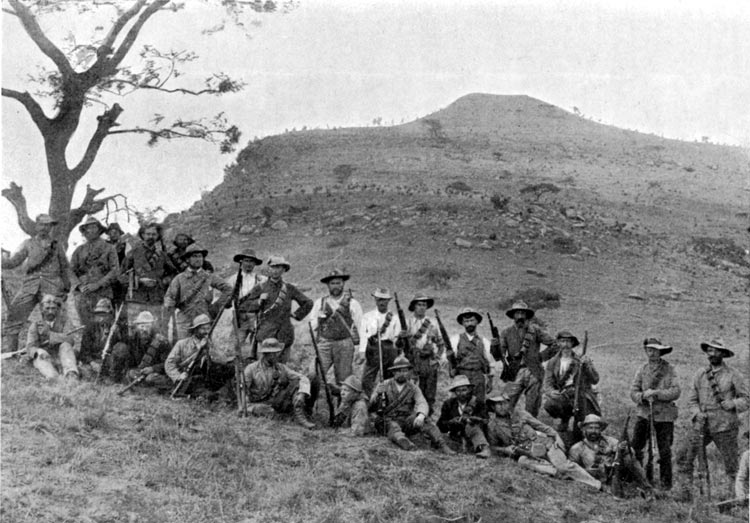
History Extra podcast. Apparently historians now prefer to talk about the ‘South African War’ rather than the Boer War (which is certainly the way it is remembered in Australian popular memory). The Boer War: Everything You Wanted to Know is an episode based around listeners’ questions through social media, so its structure and organisation is a bit haphazard. Saul Dubow is the Smuts Professor of Commonwealth History at the University of Cambridge and a Professorial Fellow of Magdalene College, Cambridge. I hadn’t realized that the trigger for the war was the British government’s desire to federate the separate colonies, charged by the discovery of gold and diamonds. He points out that the impetus for the concentration camps was to deprive the farmers of the ability to draw resources (physical and emotion) from ‘home’
I read Kristen Lavransdatter about twenty years ago, and I have never forgotten it. My enthusiasm for it built up over the three volumes in the trilogy, and I ended up viewing it as one of my favourite books of all time (FBOAT). I even ended up with two copies of the trilogy at one stage, because my face-to-face group decided that as a Christmas Kris Kringle we would each buy a second-hand copy of a book that we had loved during the year to put in the Kringle. My recipient returned it to me unread, because she said that it was just too long to be bothered reading. Ah- her loss!I can’t find the second copy now, so perhaps I have inflicted it on someone else.
To be honest, I don’t think I know anyone else who has read it – perhaps this posting will bring them forward?- and so I was very excited when I saw that the hosts of Lit Century, a podcast that chooses one emblematic book for each year of the 20th century, had chosen it for 1922. Their podcast on the book, hosted by Sandra Newman and Catherine Nichols, extended over two sessions. In the first, On Desire (and its Absence), they talk about Kristen Lavransdatter and whether it fits within the ‘romantic novel’ genre, given that it deals with 14th century Norway, with its medieval mentality. In the second episode On Catholicism and Doomscrolling they are joined by Timothy Paulson, whose great-grandfather won a Nobel Prize for Literature (as did Sigrid Undset, largely on the strength of Kristen Lavransdatter.) He is of Norwegian heritage, and first read the book as a Lutheran 13-year old. He spoke about the sense of betrayal that Lutheran readers felt when Kristen converted to Catholicism. They also discussed whether it was a feminist book back in the 1920s when it was released, given the emphasis on the whole life of a female character, and decided that it wasn’t.
So what I did I write about it back in 2001? I wasn’t blogging then, and my reviews tended to focus on the plot of the book, largely as a reminder to myself.
In relation to Part 1 ‘The Garland’, I wrote:
Set in medieval Norway Kristen is betrothed to Simon, but falls in love with Erland. Her father opposes the marriage because Erland has been living with a married woman by whom he had had two children. Kristen eventually marries him, pregnant and scared of her father finding out, and wracked with guilt over the murder/suicide of Erland’s paramour Eline.The story finishes at her wedding, where her father realizes that she is no virgin, but then he learns that his own wife, Ragnfrid, had not been faithful either. Sort of like Heidi meets Anna Karenina.
What an odd coupling- Heidi and Anna Karenina?- what on earth did I mean? Anyway, by January 2002 I was back for more with Part II ‘The Mistress of Husaby’. I wrote:
Second in the Kristen Lavransdatter trilogy. Kristen has not forgiven herself, or Erland, for betraying her father’s trust, and despite fifteen years of marriage and the birth of seven sons. Their marriage is tortured- she can see Erland’s shortcomings and lack of discipline. She holds grudges for literally years, and is quite a shrew. Both her parents die and her younger sister marries Kristen’s former fiance Simon. Erland is arrested for treason for plotting against the King, but Simon intercedes for him and gains a pardon for him at the cost of forfeiture of Erland’s goods.
In July 2002 I finished the final book in the trilogy ‘The Cross’. This time I wrote:
A long break between Volumes 2 and 3, and I found it hard at first to pick the story up again. Kristen is still a hard woman, ready to throw at the slightest provocation the criticism that Erland is not the man her father was; that he had cheated on her, and that he had lost their lands as part of his punishment for treason. Erland and Simon argue when Simon declares his lifelong love for Kristen, and the two families are estranged. Simon dies, with Kristen nursing him. Erland and Kristen also separate, with Erland going to a farmhouse in the mountains. As part of her promise to the dying Simon, Kristen goes to the mountain and reconciles with her husband and falls pregnant again. But neither will budge- Erland will not come down and she will not leave her children to go to him. When the child dies, she is devastated. She takes one of her sons to be confirmed and is confronted by the gossip that Ulv Haldersson (a long time servant) is said to be the father, and when set upon by the villagers who resent her return, Erland comes to the rescue. But he is injured in a fight for her honour and dies.
Kristen is left with fewer sons as they die, travel abroad and marry. When she feels usurped by her daughter-in-law, she decides to become a nun in Trondheim. She catches the Black Death and dies.
What I really liked about this trilogy is the unity of the medieval world view- family, Church and King. The language is archaic, and constantly maintained throughout the whole trilogy. Her characters are all flawed, and yet good- as in life- and act with an authentic mixture of wisdom and stupidity.
I admit that it all sounds a bit melodramatic, when you see it all laid out. Now that I’m older than when I read it the first time, I appreciate even more taking a woman’s life from childhood right through to old age. These are all complex characters, often governed by unworthy motives. I’m pleased to learn from the podcasts that Undset’s treatment of the historical background has held up well, informed by extensive research into Norse medieval culture and literature. I might even read it again if there is another lockdown (perish the thought!)
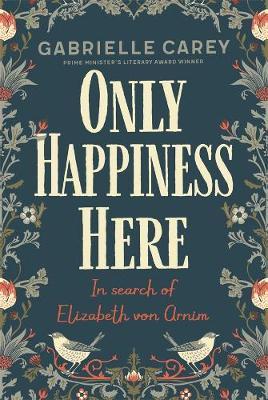
I gave myself a stern talking-to before I started reading this book. After all, the subtitle is ‘In search of Elizabeth von Arnim’. I have often grumbled here about biography-as-search books, especially once the biographer starts talking about their own clothes and lunches. “You know you’re going to be reading a biography-as-search book here, when it’s in the title” I told myself. “So NO grumbling about researcher-emoting, food or clothes”.
I didn’t need to be so hard on myself. This book does none of these things. Yes, the author is very much present but it’s more a biography-as-memoir if I need to think of a hyphenated term for it. She engages at an intellectual and emotional level with the writings and life of Elizabeth von Arnim (the two were very closely associated), relating them to her own life. You learn about Elizabeth von Arnim, but you learn about Gabrielle Carey as well.
Gabrielle Carey. Gabrielle Carey? Where did I know that name from? I was part-way through when I remembered that Gabrielle Carey was one of the co-authors of Puberty Blues, the 1979 coming-of-age novel co-written with Kathy Lette (in fact, she mentions this). She has since written about her parents and the writers Randolph Stow and Ivan Southall.
Carey’s fascination started with Elizabeth von Arnim’s own writings:
My quest to learn more about Elizabeth von Arnim was born of an intense admiration of her writing, especially her light touch when satirising the men who were continually trying to thwart her irrepressible spirit. I was also fascinated by her ability to love, laugh and mother five children, while also managing to write a comic novel, on average, every year. somehow she could do all that and still find time to enjoy picnics and read poetry in the sun. The truth was that I wanted to be her: talented, accomplished, funny and also, fairly regularly, rapturously happy
p.4
What attracted her was that von Arnim wrote about being happy – hence the title, which was the motto inscribed over the door of Elizabeth’s Swiss Chalet. At a time in her own life when she was not happy, Carey decided to re-read every one of von Arnim’s twenty-one books again:
The first time round I had read them for enjoyment and entertainment- because they made me laugh. This time I would read them with a question: what did Elizabeth von Arnim understand about happiness that no other writer I’ve ever come across did? And is it something I too might be able to learn?
p.7
So, the book is a search for Elizabeth von Arnim’s Principles for Happiness, which she nicely presents as a single page certificate at the end of the book. She finds nine: freedom, privacy, detachment, nature and gardens, physical exercise, a kindred spirit, sunlight, leisure and creativity. Each of these is discussed in turn throughout the book, appearing as a subheading in a book without chapters. This is not just a one-way distillation of wisdom from on high. Carey brings her own life to the search, particularly with the concept of ‘privacy’ which recent events prior to embarking on the book had brought to the front of her own consciousness.
Carey is not the first to write about von Arnim, and nor has she been the last, because Joyce Morgan’s The Countess from Kirrabilli (see my review here) has appeared even more recently. I had read Morgan’s book prior to this one, which probably took over some of the biographical heavy lifting for me. I’m not sure what it would have been like to read this book first, and then the Morgan biography.
Out of the two biographies, Carey gives a better feel for von Arnim’s writing, I think. Both writers quote from from von Arnim’s letters, but it was Carey’s book that propelled me to purchase an e-book of her collected works- and I’m loving it. Carey’s tone mirrors that of von Arnim’s: there’s a chuckle in her voice and an intimacy with the reader. I didn’t really get the sense from Morgan’s biography that von Arnim’s books were comedies, albeit dealing with some rather grim topics. Morgan has more about her relationships with her several daughters, while Carey focuses on her relationship with her estranged daughter Felicitas, making more overt the connection between the real life Elizabeth/Felicitas relationship, and the book Christine, written by von Arnim but published under a pseudonym.
It’s odd that I often, without meaning to, find myself reading books that address similar themes. I was reminded while reading this book, of Dale Kent’s The Most I Could Be (my review here). Both books share a clear-eyed assertion of sexual autonomy and an almost defiant ownership of decisions that others have criticized. And as for Carey’s wish to be Elizabeth von Arnim? Well, in her closing words, as she returns to her home in COVID lockdown after her research, she takes her lunch (hah! there’s food!) outside into the garden:
…as the world turned in turmoil, I lay in the dappled sunlight pretending I was Elizabeth von Arnim. And even though I was far from Elizabeth’s enchanted places- the Swiss Alps, the bay of Portofino, the south of France- I discovered that my own ordinary, unsophisticated suburban garden could also be a genuine place of enchantment
p.242
A garden, sunlight, leisure, freedom, privacy. Five out of von Arnim’s nine principles. That sounds pretty much like happiness to me.
Travels Through Time 1549: The City at the Hub of the World. So which city do you reckon? London? Instanbul? Venice? Paris? Amsterdam? Nup- it’s little old Antwerp, which today is part of Belgium but in 1549 was part of the Holy Roman Empire. Even though it was ruled from Spain by Charles V, the city was fairly independent (for the time) and it’s not surprising that it was a haven for Protestants and Jews. An important trading hub with access to the North Sea and the river system throughout Europe, it became a market for everything, particularly art, which it turned into a commercial ‘product’. Historian Michael Pye, who has recently published Antwerp: The Glory Years has chosen 1549 as his year, with Charles V coming for a ceremonial visit; the King of Sweden sending Jacob Binck to Antwerp to check on the progress of a tomb he had commissioned and Italian merchant and conman Simone Turchi’s luck beginning to run out.
The History of Rome Podcast Episode 56: The King is Dead: Long Live the King. When he died, Augustus is said to have said that he found Rome a city of brick and left it a city of marble. Not only did he do that. He established a bureaucracy, and set Tiberius up well to take over from him when he died. Near the end of his life, he visited his grandson Agrippa Postumus to check him out, adopted him so as to carry on the bloodline, but didn’t intend him to actually become Emperor because he was brutal and unsuitable. In the end Agrippa Postumus died anyway (was it Livia again? or Tiberius? or on the orders of Augustus himself?) just after Augustus himself died on August 17, 14 A.D. Although Mike Duncan is not completely won over by Augustus, he claims that he was one of the most important men in Western Civilisation. Episode 57: Germanicaus goes back to look at Germanicaus, Tiberius’ nephew and adopted son. He was married to Agrippina (Augustus’ granddaughter) and had several children, the youngest of whom, Gaius, he dressed up as a legion soldier, leading to his name ‘little boots’ (i.e. Caligula). Tiberius was becoming increasingly jealous of him, particularly when, after being sent to the Rhine, Germanicaus avenged to some extent the rout at Teutoberg. So what do you do with a rival? Have him die in suspicious circumstances of course, having clashed with Piso, the governor of Syria. Episode 58: Partner of My Labours sees Praetorian Prefect Lucius Sejanus take increasing power after Tiberius’ son Drusus dies. Drusus was Tiberius’ son and after Germanicaus died, he seemed to be Tiberius’ heir. But then he died too, apparently of natural causes, although some suspect Sejanus, to whom Tiberius had turned over the practical running of the empire. Mike Duncan backtracks a little here, to explain the praetorian guard, and how they came to have so much power. Sejanus seduced Drusus’ wife Livilla, and it is said that she introduced the poison that killed Drusus. Perhaps. But in the end, Tiberius turned against him, brought him to the Senate, and had him tried and executed and thrown down the Gemonian Stairs. Episode 59 To the Tiber with Tiberius sees Tiberius becoming even more tyrannical and paranoid, using treason trials to expunge all of Sejanus’ supporters. Mike Duncan mentions at the start of this episode just how bloody the politics of this time had become. When Tiberius finally died, people rejoiced, saying that surely things couldn’t get worse. Wrong. Caligula (‘Little Boots’) was really Gaius, Germanicus’ third son. Tiberius had adopted him, but his mother Agrippina and his older brothers were exiled, killed, or starved to death. When Tiberius died, Caligula was only 24 and he hadn’t been trained for the position at all. For the first few months, he seemed that he was going to be alright as an emperor, but then he got sick and when he recovered, the madness started.
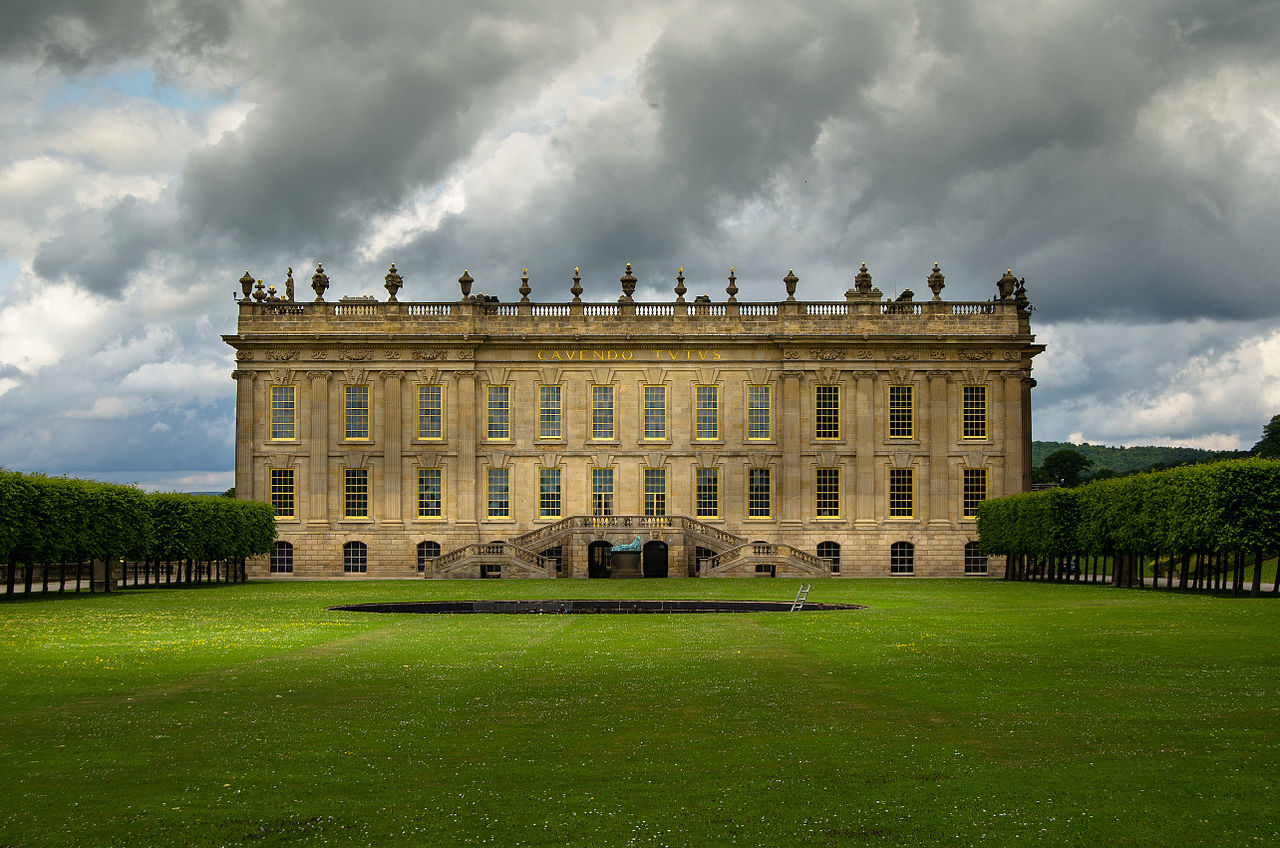
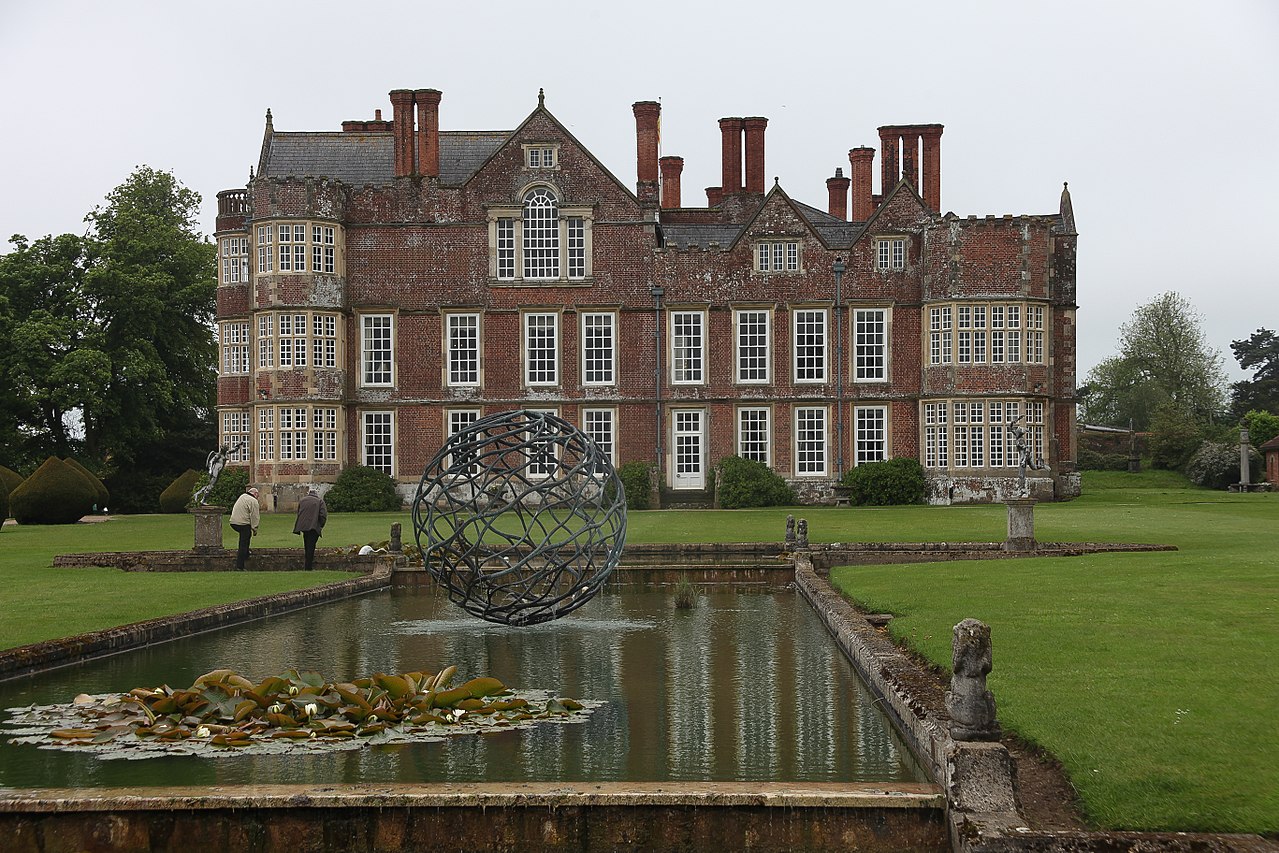
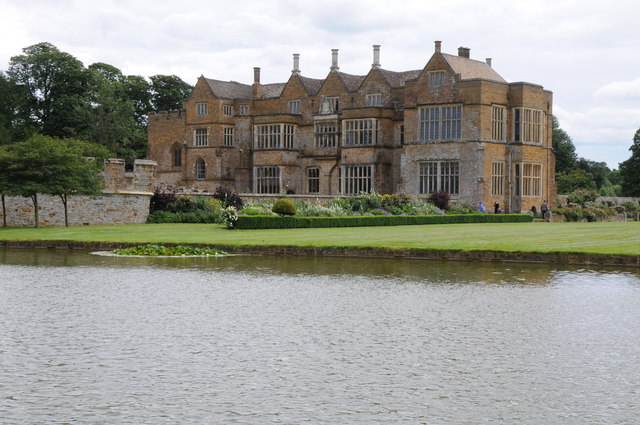
History Extra Publicizing his new book The Story of the Country House: A History of Places and People, Clive Aslet talks about the history of the country house up to the current day. Although the episode is called From Roman villas to Downton Abbey, there weren’t many Roman villas in it, because he started his story in medieval times. At first, the value was not in the house, but in the land that surrounded it, and very wealthy landowners would progress from house to house, taking everything with them. Many houses were ruined during the English Civil War, and rebuilt later. I thought he would have made more of the Georgian/Victorian era and the renovations that reflected new wealth, and he acknowledged but also excused the influx of money through slavery. The low point for the country house came in the 1970s, after two world wars (the first of which removed many potential heirs from their heritage), the decline in agricultural wealth, and the oil shock that made heating the houses impossible. However, with Downton Abbey there has been a resurgence, as people have moved back into country houses as their principal residence, especially in COVID times. I wish that the quality was better in this podcast- the interviewer sounds like he’s on another planet. Here are his three favorite country houses. The big image is Chatsworth, which I have seen in nearly every Jane Austin film, Burton Agnes in Yorkshire which dates from the 1600s and Broughton Castle which I’ve seen in movies too.
Because of Anita During the confirmation hearings of Brett Kavanagh, many people remembered the confirmation hearings of Clarence Thomas. This four-part series revisits the testimony- which so many of us (myself included) think of being the trial of Anita Hill, instead of Clarence Thomas. In Episode 1, The Testimony, I was disturbed to hear Joe Biden overseeing the pile-on of questions, many of which were really offensive. There were other women prepared to testify, but the senators just ran down the clock and their testimony was just attached as written statements.
Rear Vision (ABC) Who/What is this Tigray Liberation Front that I keep hearing about? Rear Vision’s recent episode on Ethiopia refers back to an earlier podcast from August 2018 Peace: Ethiopia and Eritrea when the new elected Ethiopian Prime Minister Abiy Ahmed reached out to his counterpart in Eritrea and began a peace process that people hoped would bring the 20 year civil war to a close. This newer episode Hopes dashed- Ethiopia ripped by ethnic violence from July 2021 returns to the same commentators three years later to see how it all worked out. Not well. Abiy Ahmed used the COVID crisis to postpone elections indefinitely, and the Tigray People’s Liberation Front, which had been instrumental in overthrowing the military junta in 1991 but sidelined when Abiy Ahmed took power, announced that it was holding its own elections in the Tigray region. The Ethiopian government, with its army, said that this was illegal and hostilities broke out in November 2020 when the rebel TPLF attached an army base. And so it goes….
I´ve been watching all those streams of Haitian refugees streaming towards the US-Mexico border. I read about a man who had been forcibly returned to Haiti after spending about four years in Chile before embarking for the US. “Why would anyone want to live here?” he asked, and he’s right. I listened to Mike Duncan’s series about the Haitian Revolution, but knew nothing of Haitian history from the early 19th century to the present day. Haiti- the background to an assassination highlights just how duplicitous the US has been in interfering in Haiti’s politics.
Some Unitarian listening. Those of you who know me know that I attend a Unitarian-Universalist Fellowship here in Melbourne. But I enjoy listening in to services from other UU groups as well. This week I listened to an address by Jennie Dyster from Adelaide Unitarian Church called Now I’m a Believer which provides some of the context behind biblical verses used as exemplars of ‘love’ – Corinthians 13 and the Book of Ruth. She then goes on to pay tribute to Bishop John Shelby Spong, who died recently, who stressed the importance of ‘context’ when using inspirational quotes and readings.
Blindspot: The Road to 9/11 In Episode 3: The Bomb, the World Trade Centre suffers its first, bungled bombing in the basement (I’d forgotten all about it- in fact, did I even know?) NYPD Detective Louis Napoli and FBI Special Agent John Anticev manage to get their mole Emad Salem to infiltrate the Blind Sheik’s terror cell again, and now he becomes the personal assistant of Omar Abdel-Rahman (a.k.a. the Blind Sheikh) himself. This series is based on the TV series of the same name.
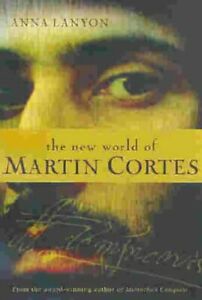
In January of this year I re-read Anna Lanyon’s Malinche’s Conquest (see my review here) and by the end of it I had resolved that I would read her follow-up book, The New World of Martín Cortés. Martín Cortés was the ‘natural’ son of Hernán Cortés and Malinche, thus making him one among the early mestizo children born in the New World. But he was not to stay in the New World for long, as his father took him back as a six-year-old to the Old World, Spain. This was part of the Conquistador’s attempt to seek forgiveness for, technically, being a rebel against the Crown when he embarked for Mexico against the orders of the Governor of Cuba. He also lobbied for recognition of his achievements and landholdings in the New World. Martín obtained a position in the court of Charles V and later, as a page to Phillip II. As part of embedding his respectability, his father arranged for him to be an initiate into the Order of Santiago. Both he and his father fought for the Spanish Crown in Algiers. Thus, this child of the New World, was integrated into the Old World, while his mother Malinche remarried and died within two years of her son leaving for Spain.
Just as she did with Malinche’s Conquest, Anna Lanyon presents this story as a search within the archives, and visits to significant locations, both in Spain and in Mexico. Perhaps my resistance to this way of narrating history is abating, or perhaps she spends less time in this book on journeying than in the earlier book: in any event, there is more about the archival search within the documents and less about travel.
The major complication Lanyon faced was that Hernán had three sons, and he named two of them “Martín”, a family name. He brought his first son Martín (Malinche’s son) back to Spain with him, but then had another two sons when he remarried in Spain, naming the first of those Martín as well. Hernán was appointed the Marqués del Valle de Oaxaca for his ‘discoveries’ in Mexico, and this title was handed to his second, legitimate Martín, whom Lanyon helpfully distinguishes from Malinche´s son by designating him ´the marqués´. Although Hernán went to considerable effort to have Malinche´s son and other three other natural children declared legitimate, the title and the wealth went only to the marqués.
It´s a pity that the wealth and title didn´t go to the older Martín. After Hernán died, all three sons returned to Mexico, to take up their father´s landholdings. Although the marqués was enjoined by his father´s will to provide for the older but illegitimate Don Martín, he did not do so. Moreover, the marqués became involved in the local South American politics, where the children and grandchildren of the original conquistadors were in dispute with the Spanish crown. By royal order, their right to enslave the indigenous people had been curtailed, and they could only inherit New World land to the second generation, after which it would revert to the Crown. When the marqués arrived, he was hailed by the conquistador sons as the leader of a resistance to these royal decrees that would undercut their patrimony. There were rumours of a rebellion, with the marqués at its head. When he went down, he took his brothers, half-brothers and friends with him, although luck continued to smile on him.
Lanyon knew the broad contours of Martín’s life before she started her research but even she felt sickened and saddened by the latter part of his life. Coming with no knowledge at all about Martín Cortéz, I felt that way too. Courage isn’t just found on battlefields: it is found just as much, if not more, in the dank cells of torture, where men are truly alone.
Both this book and Lanyon’s earlier Maliche’s Conquest have beautiful covers and black and white illustrations distributed throughout the text. I was intrigued by the handwriting embossed on the front cover, and which was watermarked on the opening page of each chapter. Lanyon did not have much direct documentary material to work with, and that which she did have was always complicated by the issue of exactly which Martín Cortéz she was reading about (don Martín or the marqués) but she did find his signature on one document- a tangible mark of his presence all those centuries ago. This is the handwriting that appears on the front cover and underlies the text.
The paucity of sources has forced Lanyon into a great deal of speculation and inference. She clearly marks this in the text through using modifiers like ‘perhaps’ and by framing statements as questions. She is aware of the danger of making such assumptions, such as when discussing Martín’s mestizo status in a community and time when ‘race’ was not necessarily the defining feature. For example, Martín may have been one of the first mestizo children to be taken back to metropolitan Spain, but it was a Spain with heavy Jewish and Muslim influences, and Martín may have looked no different from many other young boys there at the time. We are wrong to infer that he, or anyone else, might freight the issue of race with the significance it has now.
As with Malinche’s Conquest, I enjoyed this book that combined research, reflection and history-as-search. It’s a fairly easy read, and Lanyon is a gracious companion. And as with Malinche’s Conquest, she has settled on an ambiguous title. Martín Cortés may have been a child of the New World, but his upbringing and fate were moulded by the expectations and politics of the Old World, even in a New World setting.
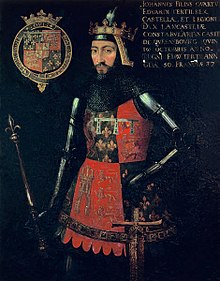
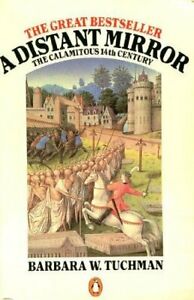
Travels Through Time I recently read Barbara Tuchman’s A Distant Mirror: The Calamitous 14th Century and I’m on a little bit of a medieval kick as a response. Helen Carr has recently released a book on John of Gaunt called The Red Princeand she features in a couple of podcasts as part of her publicity campaign. I listened to this podcast after the History Extra one, but because this podcast is longer and more detailed, you’d be better off listening to this first. John of Gaunt suffered ‘3rd living son of a King’ syndrome, being the son of Edward III, uncle of Richard II, Father of Henry IV and progenitor of the Tudor dynasty. Carr chooses 1381, a year when the Peasant Army blew up his home the Savoy Palace, and when his nephew Richard II rejected his assistance.
History Extra Podcast also had a session with her in John of Gaunt: prince without a throne. It is a bit shorter, and I felt that it didn’t go back and start from the beginning as well as the Travels Through Time podcast did.
The History of Rome. I’m about a quarter of the way through! Maybe I will finish it in 2021! Episode 50 The Donations of Alexandria sees Mark Antony having another crack at Parthia, but he had to withdraw. After that he went back to Egypt, and Cleopatra (even though he was still married to Octavia, Octavian’s sister). He started putting his own children in positions of power. Meanwhile Octavian was off fighting in the Balkans, something that redeemed his pretty shonky reputation as a general. His friends and advisors were Maecenas and Agrippa, and together they plotted war against Mark Antony. The 10-year old Second Triumvirate was dissolved, and after Octavian got hold of Mark Antony’s will that was stored with the Vestal Virgins and learned of Mark Antony’s plans to put his family into power, war was declared. Episode 51 Actium starts off with Mike Duncan reflecting on how people during the 1century BC kept being forced to take sides in a series of civil wars. Mark Antony and Cleopatra escaped battle at Actium in 31BC but by now Octavian was determined to annex Egypt completely. The suicide pact between Mark Antony and Cleopatra veers into Romeo and Juliet territory, although she ended up outliving him. Octavian insisted on having Alexander the Great’s mausoleum opened. Even though most people were humbled by how much the 33 year old Alexander achieved, in the case of Octavian (who was also 33) he used the example of Alexander to promote his sense of destiny. In Episode 52 Caesar Augustus, the victorious Octavian was determined to completely expunge Mark Antony’s name. He embarked on a marketing campaign, with Virgil writing The Aeneid and the construction of two temples, one to Apollo and the Pantheon. When he threatened to retire, the Senate begged him to remain, and the Senate bestowed upon Octavian the title Caesar Augustus during the constitutional settlement of 27 BC. Four years later Augustus and the Senate altered their power sharing agreement. He changed his name to Augustus (meaning ‘revered one’) but even he realized that ‘Princept’ (i.e. first citizen) might be a better title. In Episode 53 Reigning Supreme, we see Augustus with 90% of the power he needed. First he turned his mind to foreign affairs by neutering (although not actually defeating) Parthia, then he turned to internal matters. He tried to reduce the size of the Senate from 1000 to 300 by increasing the wealth requirement (not completely successful in this) , he had the Praetorian guard under his control, and he instituted pro-family, anti-adultery measures. As the wealthiest man in Rome, he personally bankrolled roads and communication improvements. Episode 54 All in the Family sees Augustus looking to his grandsons through Julia and Agrippa to continue the line. But they were too young so he appointed his stepsons, Livia’s sons Tiberius and Drusus to high office long before they were technically eligible. He had a plan that the Elbe and Danube Rivers form the boundary of the Empire, and he sent them off to fight there. His friend Agrippa died, and he forced Tiberius to divorce his wife in order to marry the widowed Julia- neither Tiberius nor Julia wanted this marriage- and so Tiberius went into self-imposed exile, and Julia embarked on a series of adulterous affairs. His friend Maecenas died too, then his stepson Drusus died from a horse-fall. Episode 55: Teutoburg Nightmares. Augustus was having a rough time personally: his daughter Julia was exiled as a punishment for her promiscuity, and both his grandsons Lucius and Gaius died, leaving Tiberius the last one standing. He was getting a bit tired of exile, so he came back. Mike Duncan just teases with the question of whether Tiberius’ mother Livia really did kill off all the opposition to smooth the way for her son- he says that there is no real evidence beyond the fact that she did promote her sons (which any mother would do). Meanwhile, there was an uprising in Germania and a severe loss for the legions in the Teutoburg Forest, which Germans in the 19th century used as a historical high point. This marked the end of expansion on the Rhine- Augustus was happy to let the German tribes squabble amongst themselves.
C-Span Podcasts in History Edward Ball has written two books springing from his own family history. The first, Slaves in the Family seems to have disappeared completely, even though it won the National Book Award in 1998. His most recent book Life of a Klansman was published in 2020, and it looks at another branch of his family where, as with his estimate of 50% of white Americans alive today, he has a white supremacist ancestor. There are 2 podcasts in this long (1 hr 50 min) episode Edward Ball: Slaves in the Family and Life of a Klansman. The first one, dealing with Slaves in the Family seems to be a Zoom-based symposium with students who have used his book as a text, and the second one, which has much better sound quality, looks at his most recent book.
Conversations (ABC)Jimmy Barnes: A Broken Homecoming One of the joys of lockdown has been watching Jimmy Barnes perform in his kitchen/lounge/bedroom with his wife Jane. I just loved his Working Class Boy (which I was sure that I had read, but could only find my response to the documentary here). This interview traverses some of the same material from Jimmy’s early childhood, but then extends later into the time dealt with in his later books (which I must read). Gees- he could talk the leg off a chair, this bloke!
When it became clear that Melbourne’s sixth lockdown was not going to be the ‘short sharp’ affair that was promised, I decided that if I was going to live in the most locked-down city in the world, then I should use the time to do something that I had intended doing for some time: take Barbara Tuchman’s A Distant Mirror off the bookshelf and read it.
Barbara Tuchman was an American narrative historian who was born in 1912 and died in 1989. Two of her books won Pulitzer Prizes: The Guns of August in 1963 dealing with the leadup to WWI, and Stillwell and the American Experience in China 1911-1945 in 1972 (never heard of it!). I have not read either of these books, but I did read The Proud Tower: A Portrait of the World before the War 1890-1914, which I very much enjoyed. She was not an academic historian, and relished the freedom of being able to write ‘popular’ history.
Her books tend to be long at over 500 pages and this book at 597 very closely-set pages is no exception. Although I read it in hard copy, my Kobo e-reader rather discouragingly told me that it would take 23-25 hours to read, and I can testify that it did. So why did I read it, and why now? Partially because I knew that, because the rest of life is on hold, such an opportunity to spend day after day reading a book will not come again (hopefully). But secondly, because in a time of pandemic, with increasing alarm about China, the rise of right-wing extremism, climate change, the underground rumble of the terrorism threat, the debacle of the Afghanistan pull-out and the tragedy for Afghanistan women who are left, and Trump lurking – why not read about another time when the world seemed to be going to hell in a handbasket too?
The 14th Century certainly qualifies as a ‘calamitous’ century. The Black Plague cut a swathe through the world population, peaking in Europe between 1347 to 1351, but it returned in 1360–63, 1374 and 1400. The Papal Schism between 1378 and 1417 saw two competing Popes, one based in Avignon and the other in Rome, each claiming to be the ‘true’ Pope. The Hundred Years War between 1337–1453 saw generation after generation of English and French dynasties leaching the wealth from their countries to embark on a bloody game of chivalry and honour, and where royal women were seen as bargaining chips and allegiances were swapped pragmatically. There were popular uprisings in both Britain and France: The Peasants’ Revolt in England in 1381 and peasant uprisings in Rouen and Paris. Returning soldiers formed gangs of thugs, robbing and raping their way around the countryside. Meanwhile, the Ottomans were at the Danube at Nicopolis, prompting another Crusade, paid for by taxes and imposts.
The map at the start of the book shows Europe in the 14th century and although the silhouette looks the same (of course), there are no hard borders, just regions. England at the time had holdings in France and the Holy Roman Empire dominated the present countries of Germany, Belgium and Switzerland. A century is a long and rather arbitrary measurement; indeed, historians often talk of the ‘long’ 18th century etc. to avoid the tyranny of the year OO cut-off. As a way of giving focus to such a large canvass, Tuchman decided to focus her attention on the life-span of one man: Enguerrand VII de Coucy(1340 – 1395), the last of his line. His ancestral home Coucy Castle, built in the 13th century, was located in Picardy in France. At the time it was a dominating feature in the landscape with an almost impregnable donjon (although WWI took care of that). There are no images of Enguerrand, and all that we know of him comes through the chronicles of the day, particularly through Jean Froissant the medieval author and court historian. Contradictions, exaggerations, slippery dating, and flattery/disparagement warp the histories that have come to us, and accords with her wry ‘Tuchman’s Law’ : “The fact of being reported multiplies the apparent extent of any deplorable to five-to-tenfold” (or any figure the reader would care to supply“. (p. xx)
None the less, Coucy was right in the centre of things. He first fought against the English at the age of 15 and he was one of 40 nobles taken hostage by the English in exchange for the release of the future King John II of France. He was in England for six years as a guest of the Royal Court (no fetid dungeon for him) and ended up marrying King Edward III’s daughter, Isabella of England. This gave him a prominent position as a negotiator and mediator between the French Crown and his father-in-law.
After his wife’s death he married Isabelle, the daughter of the Duke of Lorraine and threw his loyalties completely behind the French throne. In the schism between the popes, he took France’s side and was involved in campaigns in Italy against the Roman Popes’ allies. He was involved in putting down the Flemish uprising, and when the idea of a crusade against the Ottomans at Nicopolis was raised to try to heal disunity caused by the papal schism, he took a leading role. It was his last battle. Taken prisoner by the Ottomans, he died of bubonic plague in Turkey while waiting for a ransom to be paid.
By having one person as her focus, Tuchman solved the problem of narrowing her field, although her choice of subject was constrained. She could not choose a king or queen because they are, by their nature, exceptional; commoners and women were not documented; and clerics or saints were outside the limits of her comprehension. This limited her to a male member of the nobility. Nonetheless, by choosing one particular person as the vehicle of her narrative:
Apart from human interest, this has the advantage of enforced obedience to reality. I am required to follow the circumstances and the sequence of an actual medieval life, lead where they will, and they lead, I think, to a truer version of the period than if I had imposed by own plan.
p.xvi
However, even without this narrowing spotlight, this is still a vast canvas, stretching across regions and alliances. I couldn’t keep up with the detail – there is just too much – and I decided to just go with broad impressions and enjoy the story as it was right on that page, without trying too hard to connect it with other events. It is very much chronologically driven, with one thing happening after the next, and if there was a broader argument, I couldn’t detect it.
Despite the title ‘A Distant Mirror’, it is difficult to find our own reflections here, beyond the physical, corporeal connection of being embodied humans. As she points out:
Difficulty of empathy, of genuinely entering into the mental and emotional values of the Middle Ages, is the final obstacle. The main barrier is, I believe, the Christian religion as it then was: the matrix and law of medieval life, omnipresent, indeed compulsory. Its insistent principle that the life of the spirit and of the afterworld was superior to the here and now, to material life on earth, is one that the modern world does not share, no matter how devout some present-day Christians may be. The rupture of this principle and its replacement by belief in the worth of the individual and of an active life not necessarily focused on God is, in fact, what created the modern world and ended the Middle Ages.
p.xxi
However, this was not lived out in practice. As she warns us
There never was a time when more attention was given to money and possessions than in the 14th century, and its concern with the flesh was the same as at any other time. Economic man and sensual man are not suppressible. The gap between medieval Christianity’s ruling principle and everyday life is the great pitfall of the Middle Ages.
p. xxi
This is writ large in the huge, obscene disparities in wealth between the nobles, with their castles and tournaments and feasts and display, and the peasantry. The principle of chivalry as the dominant political idea of the ruling class is just as inscrutable to us today. Both mentalities confirm that as 20th and 21st century readers, we are not medieval and that this mirror, perhaps, will always remain opaque to us.
Because she focuses on the life of one very well-connected noble, her emphasis is mainly at the elite level, which is mostly what the sources gave her to work with. ‘The people’ get rather less attention, and the parts of the book that I enjoyed most were where she digressed to give small details as illustration. For example, the habit of displaying people in effigy on their sarcophagus as a 33 year old, no matter how old they were when they died (because Jesus was said to die at 33) gave way to showing them old, thin and decrepit as the Cult of Death advanced over the century. I found the chapter on the Black Death particularly interesting, as it was so indiscriminate in its toll. But overall, the book deals more with statecraft and rivalry, more than social conditions.
Did I feel any better about our current world by the time that I finished? Not really. But, believe me, if a time machine lands on my front lawn, I’m not choosing the 14th Century to visit.
My rating: 8/10
Sourced from: My own bookshelves where it has sat for years. Purchased 2nd hand


 The Resident Judge of Port Phillip