Movie: Emily

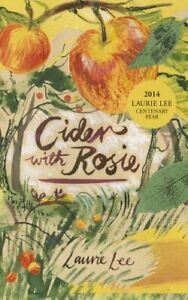
In the British Film Festival advertisement, they spruiked this as an “atmospheric tale of infinite creativity”. That’s for sure, except that all the creativity was on the screen writer’s side. All films play with the truth, but this was a complete conflation of author and work. Humph!

‘Australian War Graves Workers and World War One’ by Fred Cahir, Sara Weuffen, Matt Smith, Peter Bakker, Jo Caminiti

2019, 143 p.

The subtitle of this book is ” Devoted Labour for the Lost, the Unknown but Not Forgotten Dead”, which gives an indication of the stance towards war graves workers adopted in this book, several chapters of which were contributed by descendants. Published in 2019, it moves into the commemorative space left open after all the WWI centenary celebrations by looking at the physical and emotional work that followed the suspension of fighting, most particularly through the men who were attached to the Australian Graves Detachment.

The book opens with two very good context-setting chapters that explained the bureaucratic structure of the grave-worker organizations, both in relation to the British Army and to the AIF. It describes what was involved in grave work: opening the grave, checking for ID disks, paybooks and other identifying objects, wrapping the body in a blanket, sewing it up and marking it with an identifying tag. Bodies were collected and buried in designated cemeteries, some of which were later consolidated into larger cemeteries. Photographs of the relocated graves were sent to next-of-kin in Australia. The Australian Graves Detachment, comprising over 1000 men, was created in March 1919 when there was still a large number of soldiers waiting repatriation back home. It ceased to exist on 20 August 1919, when demobilization was largely complete, at which time its functions devolved to the much smaller Australian Graves Service.

The book then moves to biographical sketches of different men involved in the Australian Graves Detachment. These chapters start off with descriptions of the men’s military experiences (with the exception of Private William McBeath, who arrived too late to see military action, although he did undertake training in England in case the Armistice did not hold). Their military involvement explains the reality of war experience that they brought to their war graves tasks, both in terms of personal bravery but also in terms of the camaraderie of being ‘one of the men’. This camaraderie influenced -for good or bad- their leadership style with the AGD. This is seen in the case of Major John Eldred Mott, featured in Chapter 3, who as an ex-German POW, had displayed great ingenuity in escaping prison camp, and was seen as a largely sympathetic man-of-the-men. His leadership style was more consistent with management of civilian workers than a hard-and-fast military approach, but this was of course one of the ambiguities of the AGD. Drawn from a volunteer army, they were no longer operating under the rules of war.

Frank Cahill (also known as ‘Carr’), in Chapter 4, was one of the 1914 men who were promised an early return to Australia under the ‘first in, first out’ demobilization strategy, but he decided to stay on and volunteer with the photographic section, a division of the AGD that came in for criticism for the number and quality of their images. He returned to Australian in 1921 but could receive only a 25% pension for an injury to his wrist. He committed suicide in 1928, and his widow had to struggle to have her husband’s death acknowledged as “materially hastened by war service”.

In Chapter 5 Peter Bakker and Fred Cahir identify four indigenous soldiers who worked with the ADG: Edward “Darkie” Smith from Queensland, William Charles Miller from Tasmania, George William Mitchell from Queensland and John Ogilvie from Western Australia. Smith continued to work with the Australian Graves Services and was Australia’s longest serving indigenous WWI soldier, clocking up six years, two months and five days of continuous service. However, it is notable that the only court-martial within the AGD was the stabbing of Private Ogilvie- a manifestation of racism within the group?

Chapter 6 looks at Captain Allen Charles Waters Kingston, who was caught up in the Court of Inquiry in March and April 1920 which was critical of Kingston’s command of the AGD in Villers-Brettoneux. He was suspended as a result of the Court of Inquiry, and returned home on the same ship as two of his most trenchant critics.

Chapter 7 is probably the most personal of the biographical chapters, as it incorporates diaries and letters from the author’s grandfather. Private William Frampton McBeath enlisted in June 1918 after completing his carriage-making apprenticeship, and the war was over by the time he arrived. He was drafted into the Graves Detachment, where he kept a brief diary- one of the few kept by graves workers. He arrived back in Australia on 13 November 1919, along with 1300 other troops.

The biographical approach taken by this book, particularly when the chapters were written by descendants, leads to a fairly terse dismissal of van Velzen’s “tabloid” book Missing in Action which is more critical of the AGD and its successor, the Australian Graves Services. However, there is no getting around the fact that two inquiries were held into the graves services division, which highlights not only the troubles and conflicts within the units themselves, but the political sensitivities over graves work back here in Australia, something that Bart Ziino’s A Distant Grief captures well. The individual stories told in this book underline the physical and psychological difficulty that soldiers- not just graves workers- had when re-adjusting to life in Australia, as highlighted in Marina Larsson’s Shattered Anzacs.

The book closes by enumerating the enormity of the task undertaken by the graves workers. Between February and August 1919 nearly 70,000 Allied (not just Australian) soldiers were located, exhumed and reburied by the AGD. One hundred years on, the stark beauty of Commonwealth War Graves Cemeteries have washed clean the sheer drudgery and horror of their creation.

My rating: 7/10

Sourced from: SLV as an e-book. Read in preparation for a talk on George Lort Phillips at the Heidelberg Historical Society.

‘Missing in Action’ by Marianne Van Velzen

2018, 240 p. plus notes

Australians are familiar with the War Memorials that stand in nearly every suburb and country town. They are so much just a part of the built environment now that we barely see them, except on Anzac and Remembrance Day when you walk past and see wreaths of flowers placed on them. At times I stop and look at the names, and shudder at the groups of names from one family, but more than 100 years on from World War I, they do not have a particular emotional resonance. That was not true at the time they were constructed. As Ken Inglis explores in Sacred Places, war memorials in every small town were a surrogate – however inadequate- for an individualized grave.

Quite apart from the practicalities and logistics of repatriating so many dead bodies from World War I, the decision was made at a Commonwealth level that all soldiers from Commonwealth countries would be buried in the Commonwealth War Cemetery closest to where they fell. But they had to be located first. In battlefields that were bombed repeatedly, with weapons that could blow a man to pieces and without time for careful record keeping, this was no easy task. At first it fell to the Australian Graves Detachment, which worked alongside the English Graves Registration Unit in identifying and burying Australian bodies. At the end of 1919, the remaining soldiers working for the Australian Graves Detachment merged into the smaller, newly founded Australian Graves Services. The tasks of digging up bodies remained with the English Graves Registration Unit- after all, who knew what nationalities were going to be uncovered?- but once located, the Australian Graves Services (AGS) would inspect the body and its remaining clothing, looking for identification to ascertain if it was an Australian soldier, and if so, who it was. It was hard work, physically and emotionally, and soldiers who worked in these deployments were cut some slack, especially in terms of their leisure time activities. But the families at home did not know that, and the government wanted to keep it that way. And when questions began being asked at home, often prompted by disgruntled ex-employees, there was a concerted effort to keep any inquiries out of the news.

This book is the story of the two inquiries that were held into the Australian Graves Services unit in the first two years following the war. Quite apart from the difficulties of the job, this was a unit riven by jealousy, ego, incompetence and deviousness. It was overseen from Australia House in London, with three main bases over in Europe: Somme/Amiens; Villers-Bretonneux and then Poperinghe up on the Belgian border. Each of the officers who headed these bases loathed the others, for various reasons. Van Velzen approaches the story from multiple viewpoints, moving from one officer to the other, retelling events from their perspective. This leads to a certain degree of repetition, but it does also allow for actions and people to be viewed in different lights. Nobody comes out of this well. Jealousy, obstruction and rorting look bad no matter how you describe it.

After an initial inquiry cleared out the initial ‘troublemakers’ (who returned to Australia to make even more trouble there), there was a reshuffle of authority and a forging of an alliance between George Lort Phillips at Australia House, and Alfred Allen, a Quaker who had come to the AGS through the Red Cross, who was in charge at Poperinghe . Exonerated and perhaps emboldened by the first inquiry, Allen had become increasing sure of his ability to find bodies through ‘divining’, and it was this confidence that brought him into collision with Cecil Smith who had been charged by his wife’s uncle Col. James Burns with locating his son, Robert Burns. James Burns was wealthy and influential (he was the Burns in the Burns-Philp shipping company) and he had the money and contacts to persist when Phillips and Allen began stonewalling Cecil Smith in the search for Robert Burn’s remains. Smith alerted the politicians back in Australia, who wanted to keep all this out of the newspapers, leading to a second inquiry which was quietly shelved, just as the first one was. And as for Robert Burns’ body? Well, you’ll need to read the book.

Van Velzen has relied heavily on the 790 page report ‘Court of Inquiry: To inquire into and report upon certain matters in connection with the Australian Graves Services’. Bart Ziino’s also drew on this source in his more academic text A Distant Grief (my review here), as did a recent article “Suppressing an ‘undesirable public controversy’: Corpses, the Department of Defence, and the Australian Graves Services, 1919–1921” by Romain Fathi in the most recent edition of History Australia (Vol 19, Issue 3). However, in this longer, and less academic book, Van Velzen draws more heavily on the evidence given to the inquiry in a more conversational style, using it to bolster the varying viewpoints as she moves from character to character. The tone is rather sensationalist, tending to look for good guys and bad guys. However, by locating the inquiry within the very human story of Robert Burns and his grieving father, you as a reader do not lose sight of the fact that it is a young man who has died here, even though the other players in this grubby affair may have.

You are left with a sense that everyone comes out badly here. Perhaps it is just as well that people ‘back home’ did not know, and perhaps there was a justification at the time for keeping it quiet. As is often the way of things, it is deputy heads that roll.

Marianne Van Velzen has written a very readable if populist book, with neat narrative framing around Robert Burns. Your attention is captured anew with each new character, with a satisfying ending, which is not something that you can often say about military books. Its marketing might be a bit sensationalist, but it’s a well-constructed story that uses its sources well in an engaging, but thought-provoking way that emphasizes the human and the political over the military

My rating: 8/10

Sourced from: Yarra Plenty Regional Library

I hear with my little ear: Podcasts 17-24 October 2022

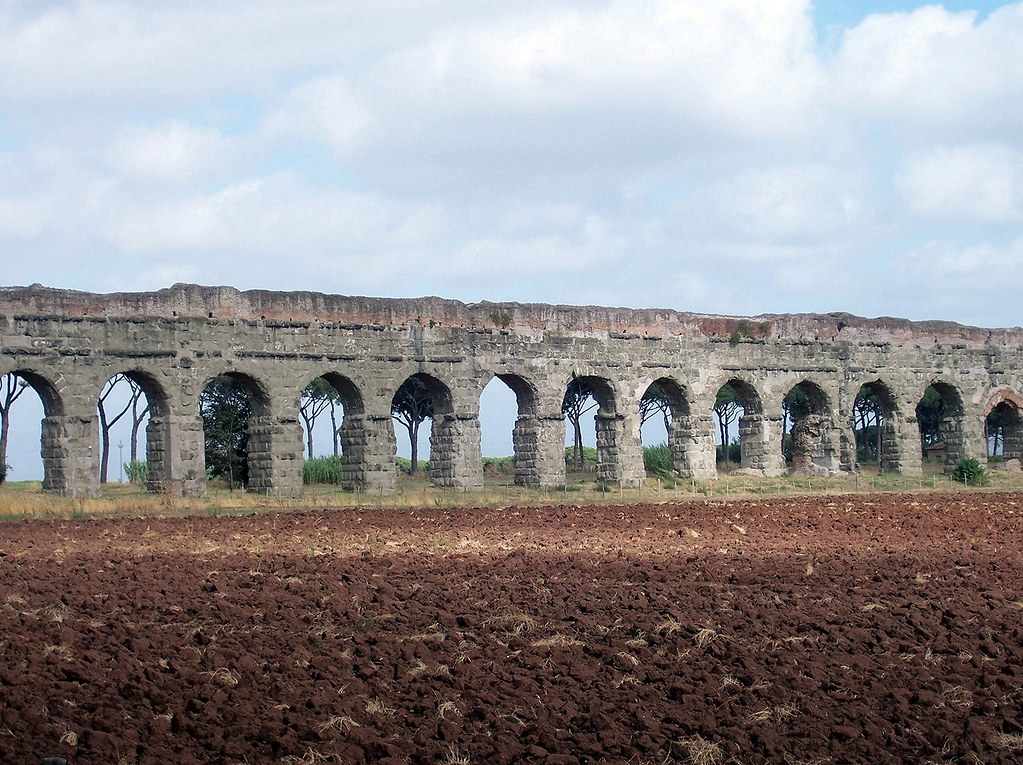
Emperors of Rome Going back and continuing on with Julius Caesar with Dr Rhiannon Evans (Lecture in Mediterranean Studies, La Trobe University and host Matt Smith. Episode V Caesar and Civil War has lots of parallels with current day (not that they make them- I do). Julius Caesar (hereafter JC) had enemies in the Senate but they couldn’t charge him if he was still Consul or Pro Consul (shades of Trump?). The crossing of the Rubicon with his troops (it was not allowed to bring your army with you) shows the transference of loyalty from the Roman Empire to the individual instead. The triumvirate was no longer operational: Crassus had died, and Pompey (by now JC’s rival and enemy) was killed by the Ptolomys in Egypt. Cleopatra was installed. Dr Evans questions the romance of Cleopatra’s relationship with Caesar, given the view of marriage as a form of alliance at the time. JC had made himself dictator for 10 years and then for life- so many rules and norms were being broken by that time (shades of Xi Jinping?) Episode VI The Death of Caesar JC remained popular with the people but he had enemies in the Senate- not the majority of the Senate but enough- who resented him taking on the trappings of monarchy lie a throne, a diadem, wearing purple etc. He had been merciful to his enemies, which was a mistake. The assassination happened on the Ides of March because he was going to leave with his armies the next day. His assassins had to flee, and his bloodied toga was displayed on a statue outside the Senate. Episode VII The Legacy of Caesar. For someone who didn’t rule for long, he had a big impact. Augustus claimed lineage from him (he was actually JC’s great-nephew); JC had embarked on a big building program; and he went on to be embraced by many dictators, including Mussolini. Jumping ahead a bit then to Episode LX Cleopatra, recorded live at the Wheeler Centre on 22 November 2016. Cleopatra was from the Ptolomy family from Greece, which kept itself apart from the Egyptians and intermarried within itself. However, unlike the rest of her family, Cleopatra actually learned the Egyptian language and championed herself as the Queen of Egyptians the people, as well as the territory. She was intelligent, and not necessarily beautiful. I’m rather ashamed to admit that I knew so little about this that I thought she was having it off with Caesar and Anthony at the same time, but Caesar was long dead by now.

New Books Network. You should thank me because I listened to this podcast so that you don’t have to. The Small Matter of Suing Chevron was of course not a small matter at all and in this podcast the author of the book of the same name, Suzana Sawyer talks about the case, which ended up taking up 200,000 pages and running for decades. Texaco, later taken over by Chevron, had been drilling for oil between 1964 and 1992 close to the Amazon. It was a very contaminating activity, and they left behind more than 300 wells and pits to bury the waste products from the extraction process. An Ecuadorian court ruled in 2011 that Chevron was liable for $9 billion, mainly for remediation but 2 weeks before the ruling was handed down, Chevron commenced a case in a New York court. Armed with 2000 lawyers, Chevron had the case overturned, arguing that the Republic of Ecuador had already signed off on the remediation process with Texaco and therefore the findings were overturned. It ended up in a court at The Hague determined that the Ecuadorian judgment had been procured through fraud and was unenforceable. Sawyer is an anthropologist, not a lawyer and not a historian, and she had worked with indigenous groups in the Amazon prior to the launching of the case. She talks in rather convoluted ways about finding a grammar based on chemistry to talk about the legal process, which is in itself very complicated. But chemical/scientific concepts like “valences” and “exposure orbitals” are not particularly useful in talking about legal argument and this was a very hesitant, disjointed and abstruse podcast. I would have given up but I was already too far in.

99% Invisible Vuvuzela Remember the South African world cup and that dreadful vuvuzela? Tuned at Bflat, it can play only one note, and has since been banned by FIFA (thank God). The origins of the vuvuzela are murky, but it seems that it was invented by a man called Saddam Maake, who used a bicycle horn at first, and then modified it. But somehow or other the ownership got tied up with a plastics manufacturer, who also claims to be the inventor. Soccer is very popular in South Africa, and during the apartheid years, it was the only way that activists could meet together without being arrested because – hey, they were just watching the football. Although 99% is an American podcast, this episode is presented by James Parkinson, with a lovely familiar Australian accent

In Our Time (BBC) I hadn’t heard of Berthe Morisot, but she was one of the French Impressionist painters who has been overlooked in the 20th century. She was born into a wealthy family, had the support of her mother to become an artist at a time when women required chaperones to sketch at the Louvre and were not encouraged to undertake formal training. She married Eugene Manet (Edouard Manet’s brother) and she had extensive networks within the artistic world. She exhibited six times at the Salon de Paris, and in eight Impressionist exhibitions alongside Cezanne, Degas, Monet, Pissarro and Renoir. She painted in plein-air, but she also painted family interiors, often featuring her sister Edma (who was also a gifted artist until she married) and her daughter Julie. I was fascinated by her painting of Edma who was heavily pregnant (and looking rather fed up with the whole thing). I’d never heard of her- check out her paintings. This episode Berthe Morisot features Tamar Garb (Professor of History of Art at University College London) Lois Oliver (Curator at the Royal Academy and Adjunct Professor of Art History at the American University of Notre Dame London) and Claire Moran (Reader in French at Queen’s University Belfast) and an increasingly-decrepit-sounding Melvyn Bragg. I just looked him up- he is 83 and sounds every bit of it.

All in the Mind (ABC) I seem to be listening to a few podcasts about the ethics of experiments recently, and here’s another one, part of All in the Mind’s series on Unethical Experiments. Childhood attachment, animal rights and the ‘pit of despair’ looks at the experiments conducted by eminent psychologist Harry Harlow at a time when animals were not considered to have feelings or emotions at all. I remember pictures of ‘cloth mother’ and ‘metal mother’ and baby chimps from first year Psych. Ironically, it was the resistance to the type of experiments that Harlow conducted that spurred the animal rights movement.

‘Hateship, friendship, courtship, loveship, marriage’ by Alice Munro

2002, 323p

That’s quite a mouthful for the title of a book, and unfortunately instantly forgettable if someone asked you “What was that Alice Munro book of short stories that you read?” I read this book as part of a book club read and although we all enjoyed the stories enough while we were reading them, we found it very hard to remember enough details to discuss the stories in any depth. I often find this with short stories, although I enjoyed the longer length of these nine stories (most of about 30 to 40 pages in length). They were was long enough to become engrossed in the characters and too long to just turn to the next story once you had finished.

As you can see, Munro writes of a particular milieu- Canadian, middle-class, middle-aged- with a particular sympathy towards women. The stories are a bit like a short-form Anne Tyler, and I was not particularly aware of a distinctive narrative voice to distinguish one story from another. Perhaps this is why I, and my fellow book-clubbers, could not really remember the stories as discrete entities when we came to discuss them. We could remember particular events or people- but which story were they from?

So, indulge me while I summarize the stories so that I can remember them in the future- and beware of spoilers!

The title story ‘Hateship, Friendship, Courtship, Loveship and Marriage’ is set “years ago, before the trains stopped running on so many of the branch lines”. Johanna is a middle-aged, rather plain woman who is working as domestic help for Mr McCauley, who is caring for his teenaged grand-daughter Sabitha. Sabitha’s mother has died, and her father Ken Boudreau lives at some distance, writing occasionally to his former father-in-law for money. Sabitha and her friend Edith, intercept Ken’s letters and devise a hoax whereby Ken declares his love for the rather drab Johanna. Johanna takes her meagre savings and goes to Ken, who is oblivious to the letters that Johanna has received that have been written under his name. But Johanna has the last laugh: on meeting the rather pathetic Ken, she turns to caring for him instead, marries and has a child.

In ‘Floating Bridge’ middle-aged Jinny is returning home from an appointment with her oncologist. Her husband Neal, is brazenly flirting with Helen, a young woman whom they have hired to help around the house during Jinny’s chemotherapy regime. Neal insists on driving the sullen Helen to her home, and staying there for dinner, leaving his frail and washed- out wife to wait in the car. But Jinny has not received bad news from her doctor: instead her cancer is in remission, and she is no longer facing death. When a young man, Ricky, approaches her while she is waiting in the car, she acquiesces in going with him into the fields, where he kisses her on a floating pontoon bridge over a lagoon. She laughs.

‘Family Furnishings’ is about Alfrida, who is a journalist who writes several columns under different pen names in the local paper – Round and About the Town, and Flora Simpson Housewives’ Page. Her cousin and his wife and their young daughter, the narrator, were rather in awe of her, and referred to Alfrida as a career girl. As the narrator grows older, she goes to university in the same town where Alfrida is living, but she resists going to visit her. When she finally does, she is struck by Alfrida’s poverty and lack of sophistication. The narrator takes a story from Alfrida’s childhood and becomes a successful writer, a form of theft that Alfrida grudgingly admired.

In ‘Comfort’, a woman returns from her tennis match to find that her husband, who had been suffering from a neurological illness, has committed suicide. A teacher at the local high school, he had been increasingly targetted by fundamentalist Christian students and their teachers and forced to resign. She searches for a suicide note and removes all signs of suicide before calling the local undertaker, with whom she had gone to school. It is the undertaker who finds a note in Lewis’ pyjama pocket- a bitter and sarcastic note in riposte to his critics.

In ‘Nettles’ a woman recalls a boy she was friends with when they were both children. He was the son of a well-digger, who came round each year to work on the wells in their town. She meets him again, years later, at the house of a mutual friend. Even though he is married, the attraction she felt for him years ago is still there. They go for a walk along the golf course, and get caught in a sudden storm. He divulges a tragedy that he and his wife have faced, and she knows that their relationship will go no further. When they return home, their legs are itchy with welts from the nettles and weeds in which they took shelter.

In ‘Post and Beam’ Lorna recalls many years ago, when she, her husband Brendan and two children were living in an architecturally distinctive Post and Beam house. Brendan is a university lecturer and one of his most brilliant students was Lionel, who had a nervous breakdown. Lionel now works for the church, and is poorly paid and still troubled and he starts writing poetry to Lorna. Lorna’s cousin Polly, five years her elder, comes to stay with them and is needily judgmental of Lorna’s life. When Lorna and Brendan have a weekend away for a wedding, Lorna is terrified that Polly will have committed suicide in their absence, and she makes a deal with God- or whoever. The deal is not honoured, and life goes on.

‘What is Remembered’ is set in Vancouver and Meriel and her husband Pierre are travelling to a funeral for Pierre’s best friend Jonah. Meriel decides to visit her elderly Aunt Muriel at a nearby nursing home, then return home later that night. Dr Asher offers to drive her there, and he accompanies her into the nursing home. They have a brief dalliance that he puts a firm end to, and they go their separate ways. She remains married to Pierre, but is always aware of that other life that she could have had.

‘Queenie’ and Chrissy are step-sisters, but Queenie suddenly leaves home and runs away with the widowed older man next door, Mr. Vorguilla. After eighteen months, Chrissy finds out where Queenie is living, and comes to stay with her before starting Teachers College the next year. Mr Vorguilla is emotionally coercive and mean, gaslighting Queenie over a Christmas cake that she had saved money to buy. As Chrissy goes on to her life as a teacher, marries, has children, and travels in retirement, she learns that Queenie has left her husband. She thinks that she glimpses her in different places, but is never quite sure.

The first and last stories in this book were both made into films, and they are the strongest stories in the collection. They were, too, the only ones that we were able to remember well enough to discuss. ‘The Bear Came Over the Mountain’ was adapted into the film ‘Away from Her’. Fiona and Grant had a long, happy marriage, but when her Alzheimers forces him to place her in care, she transfers her affections to another patient, Aubrey. When Aubrey’s wife Marian can no longer afford to keep him in care, she takes him home and Fiona is heartbroken. Grant meets with Marian, and starts up a relationship with her in the hope that this is a way that Fiona and Aubrey can meet again. The ending was ambiguously written.

As you can see, there is a sameness about these stories. Munro was awarded a Booker International, which is for a body of work, and I can see that she is insightful and masterful in weaving real complexity and emotional truth into a short work. I think that her writing would appeal much more to older than younger readers, and she has a compassion and indulgent tolerance for the mis-steps and compromises that we all make to keep living. Perhaps compiling such similar stories into one volume does them a disservice. Perhaps they are better left as they were originally published- many of them in the New Yorker and other magazines- where their similarities are less obvious and where they can stand alone and their strengths shine.

My rating: 7/10

Sourced from: CAE bookgroups (aka The Ladies Who Say Oooh)

Immigration Film Fest III

I only have two more days left on my pass, so time to watch some longer films.

My DACA Life (69 minutes)

DACA means Deferred Action for Child Arrivals, which was a Obama-era program which put a hold on deportation of young people who had arrived in America as children when their parents moved there. Because their parents did not receive official entry, their children had no documents either. This meant that they could not get a driving licence, obtain scholarships, or travel out of America. Maribel was born in Mexico, but had never been there. There she meets her extended family for the first time. Being given a one-off work permit, she is allowed to travel to Mexico and by being registered returning to America, to finally receive entry documentation. But then Trump gets in, and everything changes.

I Come from Away (58 minutes) Nyamoun Nguany Machar (aka Moon) is a 30-year old African woman who arrived in Portland, Maine with her Ethiopian mother and Sudanese father as a refugee in 1995. Portland is the second whitest state in America. She experiences racism, but nonetheless Portland manages to accommodate 600 asylum seekers arriving from the Congo, under the influence of progressive activists, churches and communities which make them welcome. One of these asylum seekers, David Zwahila Mota, tells of his six month journey from Africa to Central America, up through Mexico and into Maine.

Los Hermanos/ The Brothers (84 minutes)

This was so good. Cuban pianist Aldo López-Gavilán stayed in Cuba while his older brother, violinist Ilmar travelled to Russia as a 14 year old and ended up in the United States. Until Obama, they could not perform together but for just a few years they could. All brought undone by Trump.

Mango House (58 minutes)

What a truly good man. Dr PJ! is a general practitioner who developed Mango House, a combined health/dental clinic, meeting space and food court/mall where refugees could start their own businesses. The documentary covers the clinic’s activity during the COVID pandemic, and shows the myriad ways in which Mango House meets the needs of refugees.

The Garcia Family (28 minutes).‘Stop Time’ looked at the Sanctuary movement from the point of view of the refugee seeking sanctuary. This documentary looks instead at the family outside, supporting and agitating for refugee law reform. Alex Garcia has spent over 700 days in sanctuary at the United Church of Christ in St Louis, Missouri. His wife Carly is American, and they have had five years together. There is no pathway for him to get citizenship, even if he returns to Honduras for 10-15 years. It is only with the Biden administration that the law is changed on Feb 21 2021 and Alex can finally step outside onto the church steps to thank his supporters.

Ocean Wings (12 minutes)

A man and his daughter are walking away from war-torn Syria to join people-smugglers who will take them by sea. But the journey does not turn out as they thought it would.

And so finishes the Immigrant Film Fest 2022. There were far more films there than I could watch, but I feel that I received sufficient value for my $100 (damn you, AUD/US exchange rate!) Given that this was such an issue-based film festival, I guess the ultimate test would be whether I did anything new as a result of it. Yes, I did. Asylum Seeker Resource Centre (https://asrc.org.au/)

Immigration Film Fest II

Stop Time. Plenty of Spanish in this one! Lucio is the father of four who has sought sanctuary in the First Congregational Church at Amherst, Massachusetts. He was born in Guatemala, left school early, and then went to pick coffee in Mexico at the age of 15. He left for America at the end of 1999 but was arrested as an undocumented migrant while in Dunkin’ Donuts on a trip with his children. He lived in the church for 1128 days, until the court gave him a stay on his deportation while his case was heard. He was one of 70 undocumented migrants who sought sanctuary in churches during Trump’s presidency.

One, If By Land (14 minutes) looks at the journey of three undocumented immigrants. One is a woman travelling with a coyote across the Mexican border, for the sake of her five year old son who she has left behind. Second is a Chinese migrant who arrives by ship, jumping into the water near New York only to find himself handcuffed in a hospital when he regains consciousness. Third is the imagined story of the Angolan migrant who stowed away on a plane flying to London, who fell to his death from the wheel well.

Crisis. A short (15 minutes) film about a young Korean man working in his father’s restaurant in Croatia during the COVID lockdown. As he rides around Zagreb making home deliveries, he encounters various people who look down on him but he still has dreams of enrolling to study, rather than taking over his father’s restaurant as his father wants him to do.

Voices and Locks. This 20 minute Turkish film has two children, one Armenian and one Turkish, growing up in a remote village. Gaspar (I think the Armenian boy) returns back home after 40 years in America, suffering from what looks like Parkinson’s Disease, hoping to recapture his childhood memories. But the village has been taken over by the Turkish authorities, who confiscate their land and search for gold that they (incorrectly) assume the impoverished Armenians have buried.

Un barco para mi mamá. A very short (6 minutes) black and white film where a mother recounts her two attempts to get into the United States. They are caught and deported after the first one, and the second time they go through a tunnel to get across. I don’t know whether the second time was successful or not.

I hear with my little ear: Podcasts 9-16 October

Revisionist History I’ve telling everyone I meet about a three-part series of podcasts on Malcolm Gladwell’s Revisionist History program about the Minnesota Starvation Project. In the first episode, The Department of Physiological Hygiene, he describes what this experiment was about: during the last year of WWII 36 men volunteered to undertake a year-long experiment in what happens when you are put on a starvation diet that results in a loss of 25% of your body weight? Three months were spent measuring and regulating calorific intake and output, then six months on a very stringent diet and exercise regime, then three months to return to health. In Episode Two, The Rise of the Guinea Pigs, Gladwell challenges the scientific consensus that such an experiment would never be conducted today for ethical reasons. He digs deeper into the process by which the experiment was set up, and found that the volunteers were genuinely volunteers- they were conscientious objectors who wanted to do something for the war effort but did not want to fight. Most of what we know about nutrition and starvation comes from this experiment, why not repeat it with genuine volunteers (as these men were) now that we could monitor what was happening with much more precision than was done sixty years ago? (I don’t agree). Episode Three The Mennonite National Anthem looks more closely at the volunteers’ motivations for enlisting in the experiment, many of which related to their religious beliefs. They look at one volunteer, Lester Glick, who kept a diary throughout, and using the oral histories provided by many of the participants, note that none of them regretted their involvement. This is really good.

The History Listen (ABC) The Loveday Trilogy Part I looks at German Oskar Speck, who decided in 1932 to paddle his kayak single-handed to Cyprus but then kept on going- all the way to Australia. By now, Hitler’s National Socialist Party was the government of Germany so his relationship with Nazism is confused but either way, he ended up in Loveday Internment Camp as an enemy alien. Fancy going all that way, only to end up interned!

Now and Then When the news came out that Rudy Giuliani was drunk on election night, Heather Cox Richardson and Joanne Freeman dive back into American history to see other times when the tide and tenor of American politics may have been affected by alcohol. Alcohol in American Politics starts with Franklin Pierce (never heard of him), but moves onto Warren Harding’s hypocrisy during Prohibition, Teddy Kennedy’s alcoholism that led to Chappaquiddick and Gerald Ford hiding his addictions under the cover of his wife Betty.

The Ancients Much as I might want it, it’s almost impossible for me to even conceive of a mindset where race is completely irrelevant. But in this episode Race in Antiquity it seems that this might have been the case in Egyptian, Greek and Roman cultures. The Kushite pharaohs, Septimus Severus, Peter the Great’s son – being ‘black’ was described much the same way that being ‘blonde’ might be described today. Features Luke Pepera who is writing a book Motherland: 500,000 Years of African History, Cultures, and Identity (big topic!) which will be published next year.

History Hit In Russia Falters in Ukraine: Parallels with World War I historian Alexander Watson, author of the award-winning book The Fortress: The Great Siege of Przemysl, talks about the Eastern front during WWI- the one that we hear less about. Although he is cautious not to say “history is repeating”, there certainly are parallels. After the Russo-Japanese war, Russia made a huge investment in its army in an attempt to project great-power status. The Russian people were never as enthusiastic about the war as the political elites were, and there were draft riots in 1914 (I think of the lines of cars leaving Russia in the wake of its recent draft). Russia came into WWI ostensibly to protect Serbia (I think of Putin designating Ukraine “Little Russia” and the need to “defend” the territories annexed through his recent “referendum”). Because of the huge size of the Russian army, people thought that its force would be overwhelming (just as many thought would be the case with Ukraine). The parallels (so far) stop once the elites lose legitimacy after 1916 and a string of defeats, and once revolution breaks out. Dare we hope?

Inside the SLV. Jamie Wang Flickr CCCC BY-SA 2.0

Nothing on TV It’s time to hear a good Aussie voice, and who better than Robyn Annear. She hasn’t done a podcast for ages, so I’m having to delve into her back catalogue. Clean Hands starts off with the theft of soap from the front entrance to the Melbourne Public Library (now State Library of Victoria) – the soap was carefully cut into small pieces the size of a domino, but people were quite annoyed by the thefts. But not as outraged as they were when people stole the books, cutting out the Melbourne Public Library stamp on p. 91 (always), and erasing the stamp on the front and back pages. The Melbourne Public Library was open to everyone, which was a principle quite unusual at the time, and one which Redmond Barry vigorously defended. There were suggestions that there be a special room for people who just came into the library to lounge instead of read, but that never happened either. Although thinking back to nights at SLV, before the roof was opened up and everything was plunged into an eternal twilight lit by little green lamps, I think that there were many people there then too, in overcoats and smelling of alcohol, who were not actually ‘reading’.

Free-Day Friday in my own city

On Fridays, I usually volunteer down at Brotherhood Books in Kensington. I catch the train to the very sparse Kensington South station and walk along Childers St./Hobsons Rd, crossing Kensington Road. But as I left the station last Friday, a passerby warned me that I wouldn’t be able to cross Kensington Road. He was right. I looked up Hobsons Rd and thought “no-one’s going to be working there today”. And I was right. Brotherhood Books has been closed all week, after the Maribrynong river washed through our warehouse. (If you click on the images, you can see a larger version).

So, I had the rare experience (for this year) of a free Friday. It felt like a holiday! We decided to go in to see the ‘Lust Love Loss’ exhibition at the Shrine of Remembrance, then to pop in to the NGV International.

I haven’t been to the Shrine for probably 30 years. Its new galleries underneath the hill on which the Shrine is placed and the unobtrusive entrance received well-deserved architectural acclaim. The Shrine is such a strange place: built to last for hundreds of years in stone and marble, with lots of Egyptian references combined with classical figures and marble reliefs of battles (which reminds me that I really must read Ken Inglis’ Sacred Places one day).

I was impressed with the three exhibitions: Lust Love Loss (which closes 20 November 2022), Defending with Pride, the first of its kind for an Australian war memorial (closes July 2023) and For Kin and Country (until 26 March 2023) the history of First Peoples’ service in the Australian Defence Force, a display which makes you feel angry and ashamed of the discriminatory treatment that they received on returning home.

I really liked the human scale of these exhibitions, with none of the big-boys-toys approach being pushed by Brendan Nelson at the Australian War Memorial. But I am mystified that with all the ‘professionalism’ of the GLAM sector, so many signs were difficult/impossible to read. Why would you put black print on a dark khaki background in a dimly lit gallery? I don’t want to go through a gallery with the catalogue on my phone, drawing my eyes constantly to a 15 cm screen that pings messages at me: I want to look at the exhibition. The artworks and photographs had only rudimentary signage beside them on the walls, and there were only two printed catalogues available (which we returned for someone else to use).

Then off to the NGV International. When was Deborah Halpern’s Angel sculpture moved out of the moat? (Ooops! 2006. Why hadn’t I noticed earlier?) I was keen to see Richard Mosse’s Broken Spectre but it was so loud and dark – and the chairs at the back were taken and it was too dark to see if there were any other chairs there, and no way was I going to sit on the floor in the dark for 74 minutes…..and yes, I’m sounding like a grumpy old lady. So we went up to the Jewellery and Body Adornment display on the balcony which was interesting, although again with rather baffling signage. I liked the malicious glee of the Gold Makes Blind, Bracelet (the middle bracelet). Covered in rubber, there is (supposedly) a gold bracelet underneath the rubber, but you need to destroy the bracelet to see if it is really there.

I liked the pieces that had some social history attached to them. I had heard of Josiah Wedgwood’s Anti-Slavery medallion, but never seen one. I was rather taken with Sylvia Pankhurst’s Holloway Brooch (in the middle in the image below) which was awarded to women who had been imprisoned. The two medals with the green, white and purple ribbons were awarded by the Women’s Social and Political Union to women who had endured hunger strikes while in prison. Fewer than 100 of these medals were awarded.

Off to lunch at Roule Galette in Flinders Lane- and yes, the city still is much quieter than it used to be- then back home for a grand-daughter pick up from school. I haven’t ever done the pick-up run because I’m usually down at the Brotherhood- and hopefully, things will have dried out enough that I can be down there again next Friday. Says she, with thunder rumbling outside.

Movie: The Quiet Girl

This was absolutely beautiful. Set in rural Ireland in the 1980s, Cait lives in a squalid farmhouse with her parents and her many siblings. She is not coping at school, and she just goes into herself to escape life. Distant middle-aged relatives, whom she had never met, offer to take her for the summer holidays, and she just unfurls with their gentle treatment. Although she is told that there are no secrets in their house because secrets spring from shame, she does find that there is an unspoken fact that lies under their quiet life. The last scene brought me to (copious) tears, and I kept hoping that the film might start again after the credits so that I could learn what happened next.

Five stars from me.