I hear with my little ear: Podcasts 24-31 August 2023

Reflecting History Who presents this program? I have no idea. Anyway, in looking at his Fall of the Roman Republic series, he mentioned that he did some episodes on The Social War earlier on in his podcast, so I thought I’d go back and find them. Episode 10: The Social War: The Beginning of the End takes us back to 140 BCE and the end of the Punic Wars. There were three main issues festering away. First the question of citizenship. Rome’s practice up until then was to conquer, wait two or three generations, and then grant a form of citizenship. The second issue was land displacement. Generals wanted to be able to give land to their soldiers as a reward, but the liberalization of land tenure meant that aristocrats could buy up land and slaves, transforming small-scale agriculture into a large cash crop enterprise. Thirdly, the Senate had been corrupted by the inflow of wealth through expansion. Politics divided into the optimates and the populares. Tiberius Gracchus was criticized by the Senate for the peace terms he contracted to bring the Numantine War to an end in Spain, and when he became Tribune of the Plebs, he was determined to get his revenge. He proposed land reform, which was blocked by the Senate, leading to gridlock. In the end, it was passed, but it didn’t apply to the Italian city-states allies. But the Senate arranged for Tiberius to be killed. After a while, his brother Gaius Gracchus stepped into his place – probably the worst guy for the job because he wanted revenge and would not compromise. He proposed a “Latin rite” whereby all the benefits of citizenship except the vote would be extended to the Allies. This was sensible, but the Senate refused it, first because it was Gracchus who suggested it, and second because they feared being swamped. The Senate and Consuls decided to purge all the Graccan supporters, and Gaius committed suicide. The Gracchus brothers might be gone, but the problems were still there.

If You’re Listening (ABC) Why is Russia Meddling in West Africa? This is only a 15 minute podcast, so it doesn’t go into much detail. Niger had a coup a couple of years ago, and it has happened again as Gen Omar Tchiani took power before he could be fired by the president President Bazoum. Niger has huge reserves of uranium, and this attracted French companies. There has been unrest across the Sahal (i.e. the shoreline of the Sahara). In Mali, the French invaded to repel Islamic extremists, but this led to huge waves of refugees which France didn’t want to end up in France, so the French stayed there and called for NATO assistance. Waves of jihadist uprisings began in Mali which were put down by the military generals who had seized power, with “white men” soldiers arriving by helicopters- Wagner mercenaries which were called in by the military government, paid for by gold. In 5 months there were military coups in Guinea, Sudan and Burkina Faso, and they now all have deals with Wagner or the Russian government . Niger was the last to have a democratic government, but recently it had a coup too, not orchestrated by Russia or Wagner, but where people waved Russian flags and attacked the . Eleven surrounding pro-Western countries threatened to invade if the president wasn’t reinstated. Mali and Burkina Faso have declared that they will fight to defend the coup leaders. This podcast is also presented as a video, found here (actually it’s worth watching the video version for the old footage)

Rear Vision (ABC) Rear Vision had a segment on Niger as well. Niger and the Legacy of Colonization looked at French colonialism more generally. Under de Gaulle, France embarked upon a relationship of ‘cooperation’ with its former colonies including Niger, Mali and Burkina Faso whereby technological, medical provision and defence would be provided by France, in return for military bases and access to mineral resources. Needless to say, this arrangement worked more in France’s favour than Niger’s. Also, currency was tied to the French franc, which provided a form of economic stability but also led to economic dependence on France, and the flow of wealth outwards. In the 1990s, there was a movement towards democracy, and the erstwhile President Bazoum’s party has been in power since 2011, with increasing levels of corruption and economic instability. Niger’s economic woes were exacerbated by COVID, and intensified by the increasing population, the youngest and fastest growing in the world. Islamic extremism in Mali saw French and US troops stationed there, and the Sahal has become a hotbed of Islamic terrorism. There have been five coups in former French colonies in recent years. ECOWAS (The Economic Community of West African States) at first threatened intervention, but is now having second thoughts and looking to dialogue instead. The former French colonies are looking for alternative support through Russia and China.

New Books Network Australian and New Zealand Studies Tanya Evans talks about her new book in an episode of the same name: Family history, historical consciousness and citizenship: a new social history. Evans, who is now at Macquarie University, started her academic life in the UK where she studied non-conventional families (e.g. unmarried mothers in the 18th and then in the 20th centuries). As part of this work, she became aware of the importance of family histories, and when she wrote her book on the NSW Benevolent Society (Fractured Families – see my review here), she collaborated with family historians. Family history started off as being about ‘pedigree’ but changed during the 1970s, especially in settler colonies. She argues that family history transforms people in the present e.g. in their attitudes towards refugees, sexism and classism that they seen in their own family, and that family historians see themselves as professionals, with qualifications and peer review. In the past, people were embarrassed about convicts and illegitimacy in their families – a situation that has certainly changed, but this does not extend to mental illness, which is still seen as a source of shame. She speaks about the sniffyness amongst academic historians towards family historians (guilty as charged) and then launches into a rather lame argument about the economic value of family history. She suggests that family history is often derided as being for ‘mature women’, but then talks about generativity, the feeling of wanting to leave a legacy, that Erikson’s (1959) psychosocial stages of development identified between the ages between 40 and 65.

Sydney Writers Festival. If this festival is anything to go by, then we sure need an infusion of new blood in talking about politics. Same old people talking to each other. In This is Their Life, Laura Tingle interviews Paddy Manning, Niki Savva and Margaret Simons, all of whom have written recent political biographies.

Now and Then. The recent publication of Donald Trump’s mugshot arose from the charges he is facing in Georgia, and as Heather Cox Richardson and Joanne Freeman explain in Pardons: Politics and Power, this Georgia case is the one that might actually land him in jail. Georgia is one of only 6 states in the US that has an independent pardons board, which only swings into action when someone has been jailed for 5 years. They then go through different times when pardons were offered e.g. George Washington with the Whisky Rebellion, and post Civil War when Democrat Vice-President Jackson offered pardons to Confederate soldiers. Georgia instituted its board when E. D. Rivers, a New Deal democrat during the 1930s sold off pardons to prisoners and friends of his black chauffeur. It was so corrupt that even Georgia set up a pardons board. Pardons are an expression of power, which was the central question of the constitution.

99% Invisible Melanie Speaks. In the days before the internet, it was harder to access ‘self-help’ about beyond a book, cassettes and then later video. This was particularly true of voice-training. For trans women in the 1990s salvation came through a videotape where ‘Melanie’ gave advice on how to achieve a more feminine voice. While doing so she was aware that it was anti-feminist, but she encouraged her listening to “become the stereotype” of a woman. The trans presenter of the program and her cismale producer decided to try and track down ‘Melanie’, but they later agreed among themselves not proceed, given that ‘Melanie’, despite being a prolific writer, had adopted a separate, private identity. The episode finishes with an interview with Roman Mars, where they discuss voices and the way that we all adapt our voices over time. I wish the presenter would stop saying “like” every second sentence. It’s bad enough hearing it on the train: surely a podcast should be free of it.

Movie: Barbie

This was such good fun. Visually it was stunning, with its plastic pinks and shiny surfaces, and I loved the way that Robbie and Gosling’s faces became more expressive as the film went on. You could take a 7 year old to see it, although much of the rather obvious commentary would go over their heads. I loved it.

My score: 4.5 stars

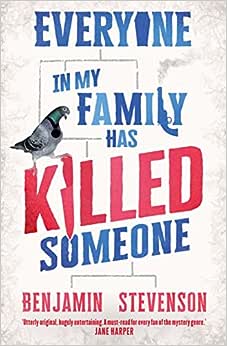
‘Everyone in my family has killed someone’ by Benjamin Stevenson

2022, 384p.

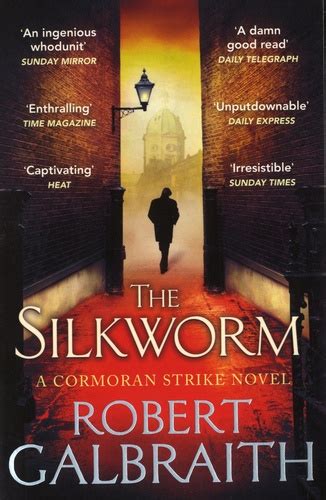
Notwithstanding my recent dalliance with Robert Galbraith, I am not a great fan of murder mystery fiction- as I have said many times before. But if someone’s going to take the mickey out of it while writing it, then count me in.

The book starts with the real-life Ronald Knox’s 10 Commandments of Detective Fiction from 1929, namely:

  1. The criminal must be someone mentioned in the early part of the story, but must not be anyone whose thoughts the reader has been allowed to follow.
  2. All supernatural or preternatural agencies are ruled out as a matter of course.
  3. No more than one secret room or passage is allowable.
  4. No hitherto undiscovered poisons may be used, nor any appliance which will need a long scientific explanation at the end.
  5. No Chinaman must figure in the story. (although Stevenson omits this one because of its culturally outdated historical wording)
  6. No accident must ever help the detective, nor must he ever have an unaccountable intuition which proves to be right.
  7. The detective must not himself commit the crime.
  8. The detective must not light on any clues which are not instantly produced for the inspection of the reader.
  9. The stupid friend of the detective, the Watson, must not conceal any thoughts which pass through his mind; his intelligence must be slightly, but very slightly, below that of the average reader.
  10. Twin brothers, and doubles generally, must not appear unless we have been duly prepared for them.

He then introduces his narrator, Ernest Cunningham, aficionado of crime novels, who proceeds to tell the reader the page numbers on which deaths will occur. He promises the truth, and “only one plot-hole you could drive a truck through”. For a genre in which the writer is the invisible puppet-master, Stevenson through his narrator Ernest Cunningham, is front and centre.

In best ‘big-house’ detective fiction tradition, he sets his novel in an Australian ski-resort, which provides the requisite isolated location and circumscribed number of protagonists. He devises a number of deaths through asphyxiation of fine cinder dust, some near misses, and even brings all the characters into the library to unveil the eventual murderer, which he does so clearly that even I understood it. The whole book is a spoof of the genre, and an extended exercise in metafiction, with frequent asides to the reader. I feel that this book is a bit of a one-off – this piss-take would be wearying carried onto other books – but I certainly enjoyed the ride far more than other detective stories with their cynical and inscrutable protagonists

My rating: 8/10

Sourced from: the Little Library in Macleod Park

Read because: Ivanhoe Reading Circle pick for July 2023.

I hear with my little ear: Podcasts 16-23 August 2023

If You’re Listening (ABC). Because I am learning Spanish, I take quite an interest in Latin American affairs and events. I just can’t imagine what it would be like to live in a society with 100% inflation. In The decision that saved Australia from Argentina’s 100% inflation nightmare Matt Bevan starts by looking at life in Argentina, where the monthly food bill has increased from $4000-$5000 per month five years ago to $35,000 per month today. Yet restaurants are full, because there is no point saving for anything because the value of the money will decrease so quickly- better to spend it while you have it. In 1951 Australia and Argentina were almost twin economies, and both were facing inflation on account of America’s expenditure on the Korean War. The war caused scarcity of wool, meat etc. – both of which were export staples for both countries- brought large and unexpected wealth to both countries, and both were facing inflation. In Australia, Country Party treasurer Arthur Fadden greatly increased income tax, which people screamed about, but which eventually reduced inflation. In Argentina, on the other hand, the Perons were in power, and they spent the windfall on popular policies like food subsidies, printing money to meet any shortfall. Ever since they were removed in a military coup, the Argentine economy has been like a rollercoaster, with the one constant being a high rate of inflation. The stimulus measures under COVID have triggered another disastrous bout of inflation, leading to the current situation.

Reflecting History Episode 59: The Fall of the Roman Republic Part V-The New Normal The slave rebellion led by Spartacus in 73BCE was put down by the warlords Pompey and Crassus, making Pompey the most powerful man in Rome by 71BCE. He was successful militarily, and like Putin with Prigozhin and the Wagner group today, Pompey resisted disbanding his private army but eventually did so. Crassus was very wealthy, and as for Julius Caesar, he was amiable and saw himself as heir to the populare tradition. Meanwhile, the Senate had its own personalities. Cato was old fashioned, while Cicero was a smart-arse. The Cataline conspiracy in 63BCE was an attempted coup d’etat to overthrow the consuls Marcus Tullius Cicero and Gaius Antonius Hybrida. Cato wanted to execute the conspirators, but Caesar said no, showing that the battlelines that would crystallize during the Civil War were already apparent. Meanwhile, Pompey was trying to get land reforms through, so that his veterans could be rewarded after battle, all leading to a political gridlock. Caesar was in Spain, inciting uprisings so that he could have victories that he could celebrate with a triumph back in Rome. He wanted to stand as Consul again, but that involved him physically being in Rome. In the end, Caesar Pompey and Crassus decided to form what came later to be known as the First Triumvirate as a way of getting things done now that everything had come to a standstill. It wasn’t actually a three-way form of governing: more, it was them just agreeing not to get in each other’s way while they did what they did best (make money, fight, get legislative reform etc). They were not actively looking for the end of the republic, but they did draw on popular anti-establishment feeling. Caesar got his Consulship and he read Pompey’s land reform bill sentence by sentence to the Senate, getting their assent in the particulars, and then arguing that if they agreed with each sentence, then the Senate had to agree with the whole. He then took the bill to the people, thereby by-passing the Senate. One of Caesar’s big mistakes was to not reign in Publius Clodius Pulcher, who managed to gain entry to the female-only Bona Dea religious rites, disguised as a woman, apparently with the intention of seducing Caesar’s wife Pompeia, but was discovered in the course of the evening. Pulcher then renounced his noble status so that he could stand as Tribune of the plebs- all very irregular. In the chaos that followed, Pompey became Dictator in Caesar’s absence. By this time Crassus was dead, and so was the Triumvirate. Caesar wanted yet another Consulship (again, very irregular) and by now Pompey was representing the system. We’re heading for war.

The Documentary (BBC) Heart and Soul: German, soldier, Jew. After what happened during the Holocaust, would Jewish Germans want to join the army? Yes, today there are 300 practising Jewish military personnel, and since 2021 they have had their own chaplain, the first chief rabbi in 90 years. The first Jew to join the post-war army was Michael Fürst who enlisted in 1966. He was criticized by his Jewish friends in the United States for doing so, but his family supported him. He saw himself as German first, then a Jew. However, at this time there were still World War II soldiers in the ranks, and they were very resistant to giving up the ‘hooked cross’ (i.e. swastika) iconography in their uniforms etc. The first Jewish woman enlisted in 2006. She had converted to Judaism as a teenager, and went to a Jewish school. Conscription was still in force in Germany until 2011, but Jews were exempt. Now in the German army, soldiers need no longer follow orders without question: instead they need to follow their own conscience.

Let’s Talk About Sects. Ep. 38 The Brisbane Christian Fellowship sounds so benign, but it’s not. It was the subject of a Four Corners investigation and a book by Morag Schwartz Apostles of Fear: A Church Cult Exposed. All the usual components are here: the powerful leader who creates his own family dynasty of leadership; the shunning; the threats. And all in plain view in Brisbane and Melbourne.

The Daily (NYT). Australians are familiar with bushfire, and watching the footage from Hawaii and Canada looks like a re-run of Black Saturday. But I hadn’t quite registered the horror of wildfire (I’ll go with their term as I’m talking about Hawaii) during a hurricane. How a Paradise Became a Death Trap is gripping listening, as Ydriss Nouara, a resident of Lahaina and the pool and grounds manager of a Hilton property, tells his story. The idea of having to swim amongst the huge waves whipped up by the hurricane in order to escape the fire, and of winds that literally flayed your body is just horrific.

History Hour (BBC) This program compiles episodes of ‘Witness History’ into one longer podcast. Judy Garland’s Legacy and the Benin Bronzes is a bit of a hodge-podge, as you might imagine by the title. There’s a segment on the theft from the Judy Garland Museum of one of four pairs of Dorothy’s slippers from the Wizard of Oz, and then an interview with Rosalyn Wilder who was responsible for getting the ailing and broke Judy Garland on stage during her appearances at the Top of the Town. There’s an interview with Retired police officer Tim Awoyemi, whose chance encounter led to the return of two of the looted Benin Bronzes, ancient artworks which were among thousands stolen from Benin City by the British Army in 1897. Finally, there’s an interview with Matt Berger who discovered the Australopithecus sediba fossil in South Africa as a 9-year old boy, fossicking with his father in 2008. It’s rather sweet to hear his interviews at the time, and then his reflection back on the discovery now.

Six Degrees of Separation: From Wifedom to…

First Saturday of the month means Six Degrees of Separation day. This meme is hosted by Kate at BooksAreMyFavouriteandBest. The idea is that she gives a starting title, then associates six other books with it- and then invites her readers to do the same. The starting book is Anna Funder’s Wifedom, which of course I haven’t read, but at least this time I have actually heard of it. I know that it’s written about George Orwell’s wife Eileen Blair, who was eclipsed into oblivion by her husband’s career and fame. And here I’m going to do the same by jumping straight to her husband Eric Blair.

George Orwell fought in the Spanish Civil War with the Partido Obrero de Unificación Marxist against Franco’s Nationalist Forces. Homage to Catalonia is his response to this experience. He writes so well: such an astute observer, self-deprecating, and willing to admit shades of grey and possible error.

George Orwell was just one of a shifting cast of writers and intellectuals who travelled to Spain to fight in the Spanish Civil War in Amanda Vaill’s Hotel Florida: Truth, Love and Death in the Spanish Civil War. In her author’s note, Vaill writes that it is a “narrative, not an academic analysis”. The linchpin of her narrative is the once-deluxe Hotel Florida, a hotel in Madrid, frequented by government figures and journalists.  The six main ‘characters’ of her book all stay there at one time or another: writer Ernest Hemingway and journalist Martha Gellhorn, war photographer Robert Capa and Gerda Taro, and press officers/censors/propagandists Arturo Barea and Isla Kulscar. (See my review here)

But to be honest, I don’t really know much about the Spanish Civil War, which is why I read Giles Tremlett’s Ghosts of Spain: Travels Through a Country‘s Hidden Past before I visited the south of Spain a few years back. Throughout the book he refers to the ‘two Spains’ – the conservative, religious Spain and the outward-looking, liberal if not socialistic Spain – that still exist in Spain today. The first three chapters are about Franco and the Spanish Civil War and the general agreement to look the other way and leave well enough alone. (See my review here)

“Leave well enough alone” has been the attitude towards murders and injustice, not just in Spain but in Australia too, and that’s what Luke Stegeman addresses in Amnesia Road. He travels the backroads of Queensland as a boxing referee, while he refers to Spain as his ‘second patria‘. Deeply familiar with both, he brings them together in what is described as a “literary examination” of landscape, violence and memory in the two places. (See my review here).

Moving from south-west to south-east Queensland, Libby Connors’ Warrior takes us to south-east Queensland during the pre-Separation days of the frontier. She does this through the story of Dundalli, a Dalla man who was executed in January 1855 for the murder of Andrew Gregor and his pregnant (white) house-servant Mary Shannon in an attack on the Caboolture River. What this book does is hone in on one particular location; one constellation of tribal groups; a set of named, individual leaders.(My review here).

Which brings me finally to one of my very favourite books, Inga Clendinnen’s Dancing with Strangers about a short window of opportunity, in the very first days of white invasion, when perhaps things might have been different. With the Voice referendum uppermost in my thoughts there are many other books that I could have linked to here, but I keep returning to Clendinnen’s beautiful prose and historical imagination.

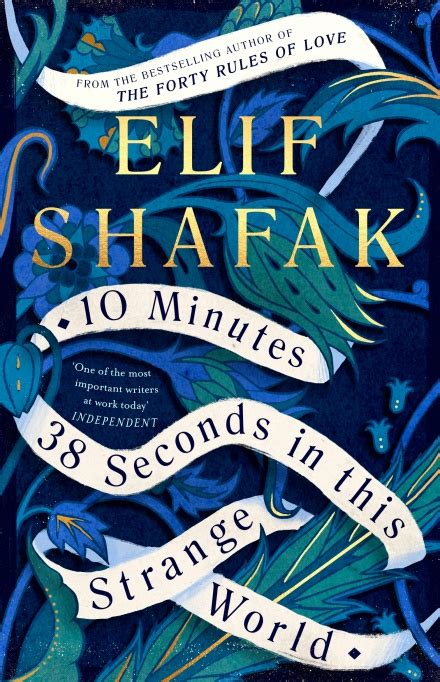
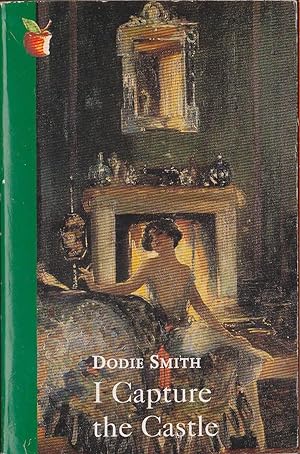
So, in fitting with a book about the personal and political in the form of Eileen Blair, I’ve travelled to Spain, back to Queensland, and right back to the shores of Port Jackson. Next month’s starting book is I Capture the Castle– one of my very favourite books from my long-ago adolescence.

Movie: Godland

I seem to be attracted to films about the colonialism/religion nexus at the moment. Where The New Boy, was set in the baking Australian outback, with Godland we are taken to Iceland, where a young Danish priest Lucas is sent to the island of Iceland as part of the extension of Danish influence. He doesn’t speak the language, so he is allotted a translator, but when the translator dies he is left under the care of his Icelandic guide, Ragnar. He is a photographer, and he takes with him his cumbersome camera equipment, and the legs of the tripod appear like a form of spired cathedral on his back. They also cart with them a heavy wooden cross (just like in The New Boy) but the cross is lost. The Icelandic villagers are mainly hostile towards this Danish imposition, and Lucas despises the boorishness of the Icelanders. The film is shot in an aspect ratio that gives it the appearance of a square on the screen, and I was reminded of watching a slideshow (fitting, given Lucas’ interest in photography). It’s beautifully filmed, but oh so bleak and isolated, and the film itself is very slow. I don’t know whether it was the stark photography, or whether the airconditioning in the theatre was too high, but I came out chilled to the bone.

My rating: 3 stars.

‘No Place for a Nervous Lady’ by Lucy Frost

2002 (1984), 230 p.

If you were to rely on the ‘Australian Bush canon’ penned by male writers (Lawson, Furphy, Paterson) etc. you’d think that there were no women in the Australian bush at all. That’s not true of course, but until Barbara Baynton wrote her Bush Studies, they were largely invisible in the ‘bush legend’ genre. Historian Lucy Frost, whose books mainly deal with lost and abandoned women and children in 19th century Australia, presents the letters and diaries of a selection of women who emigrated to Australia between the 1840s and 1880s. The women she features are not well-known, but in many ways they are the stuff of legend.

The way that she has arranged these women within her chapters is interesting. The first chapter starts with letters written home after the sea-voyage from Britain to Australia. She starts with a long letter written by Anna Cook to her mother in 1883 which brims with Anna’s own enthusiasm and positivity. Blessed with a constitution immune to sea-sickness, Anna depicts shipboard life as a small village, with plenty of food, and a conscientious captain and doctor. This is very different from the journey described by Ellen Moger who travelled to Australia in 1840, losing three of her four children on a trip that claimed the lives of thirty passengers and, one suspects, her own sanity as well. No doubt striking dread into the recipient, Moger starts her letter “I have very melancholy accounts to give” and it certainly is a sad epistle that follows. Frost has reversed the chronological order of these two letters, perhaps reluctant to start with such a pessimistic account, but in doing so loses any sense of improvement in ship conditions over the forty-three years that separate them.

Her second chapter deals with just one woman, Louisa Clifton, who travelled as a 25 year old with her parents and multiple siblings to Australind, near Bunbury. She had chosen her mother over her suitor and was disappointed in love, but one senses – but cannot know because the letters cease- that she will find love again. I was sorry that Frost did not give more history of the Australind settlement, which was established on Wakefieldian principles but was plagued by indecision over where it should be established, and failed within a few years.

The third chapter, which was my favourite, featured Annie Baxter (later Annie Baxter Daubin) whose diary commenced in 1834 as a 17-year-old bride, joining her 20-year-old husband Lieut Andrew Baxter for Van Diemen’s Land. They left VDL for ‘Yesabba’, a pastoral run in the Macleay River valley in NSW. Frost concentrates on the period 1843-4, when their marriage has soured, partially because of husband’s affair with a ‘lubra’, and then because he discovered in the pages of Annie’s diary her passion for Commissioner of Crown Lands, Robert Massie. Because he destroyed pages of the diary, we do not know exactly the nature of their relationship, but she certainly rebuffed his attempts to re-establish marital relations, fearful that she would fall pregnant. Her journal is gossipy and lively, emphasizing the importance of the social life, limited though it might be, amongst other settler families in the district. I’m rather excited to find that I already have Lucy Frost’s A Face in the Glass: The Journal and Life of Annie Baxter Dawbin sitting unread on my bookshelves.

Penelope Selby wrote a series of letters to her extended family back in England between 1840 and 1851. Her strong Protestant faith sustained her through a series of stillbirths, with her final child living only a few hours, which was perhaps even more heartbreaking. She formed a strong friendship with her neighbour Mrs Dawson, whose demise she seemed to predict regularly every letter, but ironically it was Mrs Selby who was to die suddenly after a fall from a horse.

These single-subject chapters are followed by a chapter drawing on the correspondence of four women who came to Australia to work as governesses under the auspices of the Female Middle-Class Emigration Society. These are mostly dissatisfied letters, with only Louisa Geoghegan expressing any enthusiasm for this new life. The snippy letter from the Society’s patron in Australia, Mrs a’Beckett, makes it quite clear that she is not going to meet these women at the wharf, or help them to find a position, and the high costs of the boarding house funded by the Society provided little assistance to women if they could not find a position immediately.

Ann Williams (1882) and Lucy Jones (1883) both wrote diaries of their travel from one part of Australia to another- and what an ordeal inter- and intra-state travel was for women, expected to wash and cook as their drays took them through rough country, with young children to care for. Sarah Davenport also wrote in her memoirs of her travel across bush, with her feckless cabinet-maker husband who seemed incapable of doing the two things she really wanted: to gain a paying job, and to bring back her daughter who was separated from them.

We read this book for my CAE bookgroup, and I was interested to see what the others thought of it. I am drawn to primary sources (especially by those written by women) in small colonial societies, but this repository of letters, diaries and memoirs do not form a shaped narrative and resist a tidy ending. Letters and diaries just stopped; once their pen stopped writing, Frost can only turn to biographical details of locations, births, deaths and marriages. We all enjoyed it, with an admiration for the matter-of-factness with which they dealt with circumstances over which they had little control, and the sheer courage needed to embark on a journey to the other side of the globe, with so few certainties.

My rating: 8/10

Sourced from: CAE bookgroups.

I hear with my little ear: Podcasts 8-15 August 2023

Faithful Politics. I prepared a session on religious (especially Pentecostal) nationalism for my Unitarian fellowship, and it has taken me to Christian podcasts that I wouldn’t normally (ever) listen to. Seven Mountains Mandate with Katherine Stewart features Katherine Stewart, an investigative reporter who has published The Power Worshippers: Inside the Dangerous Rise of Religious Nationalism. Fortunately, only the political host Will Wright (former atheist, liberal progressive) was on this episode, because the republican conservative Pastor Josh Burtram was absent. She sees Christian nationalism as a combination of ideology and a political phenomenon that exploits religion as a quest for power. Seven Mountains dominionism is the conviction that hyperconservative Christians should rightfully dominate the main peaks of modern civilization in the United States and, ultimately, the world. It is very much a leadership driven movement, utilizing pastor networks- those same pastors that we saw circling Trump and laying hands on him. She mentions groups like the Family Values Research Centre and the New Apostolic Reformation.

The Philosopher’s Zone Gaslighting was chosen as the Merriam-Webster Word of the Year for 2022. This episode, featuring Paul-Mikhail Catapang Podosky, Lecturer in Philosopher, Macquarie University Sydney, looks at the phenomenon of gaslighting philosophically, pointing out that it is a form of testimonial and epistemic injustice. It is generally inter-personal, between people of differing power relations although he explores whether it can be structural as well- has Trump ‘gaslit’ a nation or is that he has given licence for people to gaslight others at an inter-personal level? But am I gaslighting if I think that the bar for ‘moral gaslighting’ seems very low?

The Explanation (BBC) Unspun World: What’s it like reporting on the war from inside Russia? Not just Russia- the venerable BBC reporter John Simpson speaks with foreign correspondents from Russia, Myanmar where no-one seems to be taking any notice of the civil war, Croatia where tensions are rising again and China about Covid. It seems that the fingers of the Wagner group are all over quite a few of these hotspots.

You’re Dead to Me Al Andalus features Prof Amira Bennison and comedian Fatiha El-Ghorri discussing Al Andalus between 711 and 1492. The Muslims moved in after defeating the Visigoths. Abd al-Rahman escaped to the Iberian peninsula, fleeing the Abbasids, who had overthrown his family in Damascus. He conquered Córdoba, where he proclaimed himself emir in 756, and made it an important centre of culture and learning. One of Cordoba’s most important people was Ziryab, a polymath, musician and ‘influencer’ who led changes in hair, clothing and meal etiquette by introducing the idea of courses. In 929 Abd al Rahman III declared himself Caliph. In the late 900s, there were rebellions and civil war and the Christians began moving down. In 1086 the Almoravid ruler of Morocco, Yusuf ibn Tashfin, was invited by the Muslim princes in Iberia to defend them against Alfonso VI, King of Castile and León, and he managed to hold the line for another 100 years or so. In the ‘nuance window’ section of the podcast, where the historian is given 2 minutes to be serious, Prof Amira Bennison questions the idea that the ‘Golden Age’ was marked by conviviencia, the peaceful co-existence of Muslim, Jewish and Christians within Al Andalus. She argues that this is a 20th century idea, created by General Franco’s opponents. She also highlights the continual movement of people across the strait of Gibraltar over time- it wasn’t necessarily an ‘invasion’.

Reflecting History Episode 58: The Fall of the Roman Republic Part IV-You Win or You Die. By now, violence was normalized, opening the way for Gaius Marius- the outside, new man, who once he had become consul, changed the regulations so that landless men could join the army. He had multiple terms as consul, pretending to still be on the side of the populares in terms of land reform but betraying them at the last minute. Violence and overpopulation were still problems, and there was the increasing anger of the Italian allies which led to the Social War – rather ironically, a war between Rome and its allies to unite themselves (instead of a war over independence). Marius and Sulla turned the tide, but then Rome decided to give the Allies what they wanted anyway- Roman citizenship. Sulla was able to take advantage of the war against King Mithradates to assert himself over Marius. When his troops triumphed over those of Marius, he put himself back in charge and went off to fight the war, without realizing the enormity of what he had done by spilling Roman blood on Roman land. Sulla took power and ruled as dictator, although he would have said that he was returning the republic to what it was before Marius corrupted it. He killed his enemies, proscribed them to that others would kill them, and confiscated their property. But he also introduced reforms like making equestrians part of the Senate, ensuring that tribunes could no longer by consuls, putting time limits on tenure. But when he retired in 79BC, he hadn’t really solved anything.

History This Week History’s Undelivered Speeches features speech-writer Jeff Nussbaum, author of Undelivered: The Never-Heard Speeches That Would Have Rewritten History. As speechwriter for Vice-Presidents Biden and Gore, and Senate leader Tom Daschle, he understands the role of the speechwriter, and the fact that politicians sometimes write their own speeches without any assistance. He looks at Richard Nixon’s resignation speech, which Nixon’s own speech writer Ray Price wrote on his own initiative, hoping that Nixon would use it instead of the non-resignation speech that Price also wrote. Interestingly, the two speeches (resignation and non-resignation) used the same arguments to different ends. He then discusses General Eisenhower’s alternative D-day speech in the event that the US troops were overrun and stranded. In writing it, Eisenhower edited out the passive voice, taking responsibility instead for the decisions he made. Apparently General Grant said “‘I’ am a verb”- which is an interesting thought. Finally, he looks at Hillary Clinton’s victory and concession speeches after being defeated by Trump. If she had won, she would have cited her mother’s life and the changes that had been wrought in that time; when she lost, she apologized.

Movie: The New Boy

At the end of watching this film, I wasn’t particularly thrilled about it. It seemed very ponderous, with imagery and metaphor laid on thick. But I’ve found myself thinking about it more than I thought I would afterwards.

Cate Blanchett plays a nun, Sister Eileen, in an outback (very outback) mission station during WW2, where she and two indigenous co-workers, another nun (played well by Deborah Mailman) and a brooding overseer/worker played by Wayne Blair, collude in covering up the death of the resident priest. We don’t learn how he died, only that Sister Eileen (who has her own demons with alcohol), is still talking to him, and that she doesn’t want another priest appointed in his stead. A ‘new boy’ is delivered by the police to the mission, who is completely tribal, does not speak English and knows nothing of western ways. He is also invested with a form of magic, and is particularly drawn to a large wooden crucifix that is erected in their small church in the middle of the desert. Sister Eileen comes to believe that the New Boy is sent by God, and baptizes him….and I think that you know the rest.

There are aspects of magic realism, alongside a commentary of colonialism and religion, and its incomprehension of the wealth of indigenous spirituality. A bit heavy-handed though.

My rating: 3.5 stars

I hear with my little ear: Podcasts 1-7 August 2023

Jose Mujica 2016 es.wikipedia.org

Witness History (BBC) José Mujica Have you heard of this guy? He was the President of Uruguay between 2010 and 2015 when he was known as “the world’s humblest head of state”. I admire him so much. He had been a guerrilla with the Tupamaros (a Marxist-Leninist urban guerilla group) and he was tortured and imprisoned for 14 years during the military dictatorship in the 1970s and 1980s. As President, he was an outspoken critic of capitalism, and certainly of the left. He is now retired, and lives in very humble circumstances outside Montevideo. You can see a video about him here.

Reflecting History I really am enjoying this series. I still don’t know who the presenter is, and he relies heavily on the work of other popular historians (in this case, Edward J Watts, whose book Mortal Republic I have purchased; Mike Duncan’s The Story Before the Storm whose podcast I listened to, and whose book I am currently reading; and Tom Holland whose Rubicon I am on the lookout for.) In Episode 57: The Fall of the Roman Republic Part III-The Gracchan Revolution starts by highlighting the tension between amibition and equality which was built into the Roman republic. It focusses on Tiberius and Gaius Gracchus. They were born of an aristocratic family, but came to head populist political movements that ended in assassination for both of them. Tiberius came first. When the Senate rejected his peace terms contracted in the Numantine War on the Iberian peninsula, he looked to the people who supported the end of the war- i.e. the ordinary people who would have to fight in them. To maintain their support, he introduced land reforms to break up the big estates that were causing an influx of landless peasants into the cities. Although historians argue over how committed he really was to this land reform, he shut down the government in order to get it passed, using the Tribuneship in a way that it had never been used before. The law passed after an influx of funds from the foreign King Attalus III of Pergamum, but it’s questionable whether the legislation was worth breaking so many norms in order to be passed. He was murdered in a riot instigated by his political enemies. The legislation was picked up by his brother Gaius a few years later, but again the Senate resisted, outbidding Gauis in the legislation without ever intending to introduce it. Gauis was voted out, and killed by decapitation.

History Hit The Creation of the NHS marks the 75th anniversary of the introduction of the NHS in Britain. The first calls for a national health service came in 1909, and were later picked up by the Fabians in 1920s and 30s. By the 1930s there was a web of local government, insurance, private and philanthropic health services. During and after WWII, there was a sense that soldiers and their families deserved better, especially when the limitations of urban health provision were made more visible when city children were evacuated to the country. In 1944, the Conservative Party also proposed a health system, but it fell to Nye Bevan, the outspoken Welsh Labor Party member, to introduce it as Minister for Health and Housing. It involved nationalizing the existing system, rather than building a new system, as there were no new hospitals built until the 1960s. It was based on the principles that it should be free and centralized from Whitehall, and in spite of resistance from doctors and Enoch Powell’s plan to rationalize it in 1961, it has continued. The degree of public love varies from time to time- for example, in the 1980s it really was under threat until people got behind it, and today everyone acknowledges that it is a stressed system.

History Extra Big Questions of the Crimean War: aftermath and legacy. This is the third and final episode in this series featuring Professor Andrew Lambert. The Crimean War (which the Allies won) affected different countries in different ways. Russia realized that it had to undergo great change, leading to the abolition of serfdom, industrialization, the rebuilding of coastal defences – and 20 years later they were back at war again in the Russo-Turkish War. France was full of Second Empire bluster, with Louis-Napoleon embarking on rebuilding Paris and looking to control the whole of Europe. Britain was content to bask in its naval superiority, and indulged in a display of technological mastery afterwards, while the Ottomans kept quiet, with the pressure of nationalism building in the Balkans, which would erupt in WWI. It’s hard to know how many people died in the conflict, especially because the French figures are dodgy. There were a number of firsts: the British used the first factory made standardized rifles, which could be fixed easily. The first submarine was used (although it didn’t do anything), and water mines were deployed. The fighting style was hybrid: in spite of the rifles, they still used tight formations and hand-to-hand fighting. It was hard for the British and French to fight together after the relatively recent Napoleonic Wars. Photography was used as the basis for engraving; telegraph communication was possible but too expensive to use for journalism. What the telegraph did do was make it possible for governments to give orders, far from the battle front, undercutting the generals. Florence Nightingale was the press’s middle-class hero- in fact, she wasn’t very middle class because she was very posh with good connections. She was more into management than nursing (although she did have a good sense of sanitation), and she wasn’t the only woman- the Russian and French also had women on the front. It was Army doctors who solved the problem of disease: her main success was publicity. The “Crimean War” as distinct from ‘The Russian War’ as it was known, was a late Victorian construct, and we need to think of it as a navy war, not a terrestrial one. Parallels with today? Yes. The Russians have under-estimated the Ukrainian army, just as they did the Turkish army in the Crimean War and Britain strangled the Russian economy through controlling its exports in both wars. Putin is a great admirer of Tsar Nicholas, and we need to remember that Russia is a creation of the Mongols, which is still evidence in a huge cultural division between Russia and other European nations.

If You’re Listening (ABC). Oh, good! Matt Bevan is back with his ‘If You’re Listening’ series. Instead of devoting all episodes to one theme, he’s taking a weekly approach with a different topic each week. This is also available as a video on I-View, but I prefer to listen while I’m doing other things. This must be the world of the new ABC. How “General Armageddon” and a bromance almost brought down Vladimir Putin looks at the friendship between Yevgeny Prigozhin, the head of the Wagner Group, and General Sergei Surovikin, overall commander of Russia’s “special military operation” in Ukraine. The two men were friends, but when Prigozhin launched his whatever-it-was against Putin, it was Surovikin who was tapped on the shoulder to bring him aback into line. Surovikin hasn’t been seen for a while- he’s ‘resting’. And from today’s news of Prigozhin’s death in an air accident, it’s even more doubtful whether we’ll see Surovikin again.